‘Angola Three’: US’ Longest-Held Solitary Confinement Inmate Released
Sputnik – 20.02.2016
Albert Woodfox, the last imprisoned “Angola Three” inmate, who has spent over four decades in solitary confinement, was released from a Louisiana prison Friday, on his 69th birthday.
As he was released, he was asked by a reporter, if he could go back in time to April 1972, would he change anything. He responded, “There’s forces beyond your control, there’s not a lot you can do.”
Woodfox pleaded no contest, while not admitting guilt, on Friday to lesser charges of manslaughter and aggravated burglary. He was previously indicted for a decades-old murder for the third time last year after it had been overturned twice.
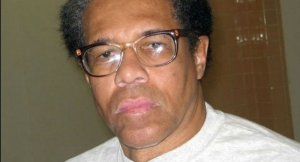 Woodfox spent the better part of 44 years in solitary confinement, a period believed to be the longest of any US inmate, and his attorney explained that Woodfox has earned enough credit for time served to be released.
His imprisonment is from two convictions, both of which were previously overturned, for the stabbing murder of Angola’s Louisiana State Penitentiary prison guard Brent Miller in 1972. Woodfox has consistently maintained that he is innocent and was set up due to his activism and connection to the Black Panther Party while in prison.
Miller’s wife has long called for Woodfox to be released, stating that she does not believe that he was her husband’s killer.
“I think it’s time the state stop acting like there is any evidence that Albert Woodfox killed Brent,” Miller’s wife, Teenie Rogers, said in a statement.
“After a lot of years looking at the evidence and soul-searching and praying, I realized I could no longer just believe what I was told to believe by a state that did not take care for Brent when he was working at Angola and did not take care of me when he was killed.”
The Angola Three refers to Woodfox, Herman Wallace, and Robert King. In the 1970s the trio held protests and hunger strikes inside the prison in opposition to inhumane conditions, including prison rape, racial segregation, and general corruption. The three also worked to form a chapter of the Black Panther Party within the prison walls, and helped to teach other inmates how to read, write, get their high school degrees and prepare legal documents.
Wallace was released in October 2013 when his conviction for Miller’s death was overturned, but he died two days later from cancer complications. Among his last words were, “I am free. I am free,” the New Orleans Times reported, following his death.
King was convicted of killing another inmate, and was exonerated and released in 2001 after spending 29 years in solitary.
Woodfox was originally sent to the Angola prison on charges of armed robbery, a sentence that would have allowed him to be released decades ago.
China to Ban Online Foreign Media After March 10 – Statement
No Chinese Spring
Sputnik – 19.02.2016
BEIJING – Foreign companies will be banned from publishing online in China from March 10, the Ministry of Industry and Information Technology and the State Administration of Press, Publication, Radio, Film and Television said in a joint statement Friday.
“Sino-foreign joint ventures and foreign businesses shall not engage in online publishing services,” the regulations state.
The rules apply to “informative, ideological content text, pictures, maps, games, animation, audio and video digitizing books and other original works of literature, art, science and other fields.”
Joint projects are required to apply for special permission to carry out such activities from the State Administration of Press, Publication, Radio, Film and Television, according to the new rules.
Domestic online media are required to inform the relevant authorities about their sources of funding, expenditure, personnel, domain name registration as well as being required to keep all servers and equipment in China.
Online outlets are prohibited from publishing information that may cause “harm to national unity, sovereignty and territorial integrity,” “spread rumors, disturb social order or undermine social stability,” and harm “social morality or endanger national cultural tradition,” among others.
Foreign websites, including Google, Facebook, Twitter, and a number of Western publications remain inaccessible in China. Beijing has adopted a series of normative and ideological directives in recent years requiring national internet providers and media to closely monitor the quality of information disseminated online.
UK Israeli boycott ban contradicts official govt business guidelines

RT | February 18, 2016
Britain’s ban on the public boycott of goods from Israel’s occupied territories contradicts its own official business guidelines, documents have revealed.
The controversial new law, which would ban local councils, student unions and other public bodies from boycotting goods for political reasons, was announced by the government on Monday and has been implemented without parliamentary debate or vote.
However, documents first seen by the Independent show the Foreign Office’s Overseas Business Risk assessment for Israel states that the government does “not encourage or offer support” to business with the occupied territories, apparently contradicting the new regulation.
“Settlements are illegal under international law, constitute an obstacle to peace and threaten to make a two-state solution to the Israeli-Palestinian conflict impossible,” the document reads.
“There are therefore clear risks related to economic and financial activities in the settlements, and we do not encourage or offer support to such activity.”
The new rules do not apply exclusively to Israel, but would ban institutions that receive the majority of their funding from the government from participating in procurement political campaigns, choosing not to buy products from companies on political grounds. The only exception would be nationwide boycotts mandated by the government.
The Palestinian Liberation Organization (PLO) has attacked the new law, saying it undermines the democratic rights and freedoms of public bodies.
PLO Executive Committee Members Dr Hanan Ashrawi and Dr Saeb Erekat released a joint statement after meeting with Middle East Minister Tobias Ellwood on Wednesday.
“This represents a serious regression in British policy and it would empower the Israeli occupation by sending a message of impunity,” said Ashrawi and Erekat.
“In order to accommodate the Israeli occupation, the British government is undermining British democracy and their own people’s rights.”
The Labour Party has panned the new measures as an “attack on democracy.”
“This government’s ban would have outlawed council action against apartheid South Africa. Ministers talk about devolution, but in practice they’re imposing Conservative Party policies on elected local councils across the board,” Labour Party leader Jeremy Corbyn said.
The government, however, has defended the anti-boycott measures, saying they are necessary for “community cohesion” and national security.
“There are wider national and international consequences from imposing such local level boycotts. They can damage integration and community cohesion within the United Kingdom, hinder Britain’s export trade, and harm foreign relations to the detriment of Britain’s economic and international security,” ministers said in a procurement policy note sent out to public authorities.
Coinciding with the law’s announcement, Cabinet Minister Matthew Hancock, who has recently come under fire for accepting a £4,000 donation from a right wing think tank, weeks before announcing a crackdown on lobbying by charities, is currently in Israel promoting business and trade links with the UK.
Read more:
Like Thatcher with apartheid: UK to ban public bodies from boycotting Israeli West Bank goods
Combating BDS Act of 2016
Congress Moves against BDS
By Lawrence Davidson | To The Point Analyses | February 17, 2014
It was bound to happen – an attempt by the U.S. Congress to sanction the attacks on the Boycott, Divestment and Sanctions movement already taking place in some states and municipalities. The strategy is to legitimize an increasingly standard approach to undermining the boycott of Israel, an approach wherein the investment of any state funds, including pension funds, in any business or organization that boycotts the Zionist state is forbidden.
Bipartisan pairs of senators – Mark Kirk (R-IL) and Joe Manchin (D-WV) – and Congressional Representatives – Robert Dold (R-IL) and Juan Vargas (D-CA) – introduced into both houses the “Combating BDS Act of 2016” (S.2531 and H.R.4514). We can be sure that all four of them are doing this at the coordinated behest of Zionist special interests to which they are financially tied. In other words, acting in their official capacity, their behavior on things that touch on Israel-Palestine is a payback for money and other forms of assistance offered by the Zionists to facilitate the politicians’ elections and reelections. Sadly, this is the way the U.S. campaign system works. Unless you are very wealthy, you are constantly scrounging for money. Under such circumstances one’s pathway to success is made easier if you don’t know the difference between ethics and your elbow.
Our four sponsors of the “Combating BDS Act” would, of course, deny any such tainted motives. Rather, they would insist that theirs is an effort to weigh in against anti-Semitism and defend the integrity the “only democracy in the Middle East.” If they really believe this is so, the kindest thing that can be said for these legislators is that they are profoundly ignorant about Israel and its true character. It is also possible that they know the truth about their patron, but really don’t care. It is all about the money.
Intimations of the Real Israel
For instance, are Senators Kirk and Manchin and Representatives Dold and Vargas aware that the Israeli legislature, the Knesset, recently voted down a bill to include the principle of equality among citizens in the wording of the country’s “Basic Law” on Human Dignity and Liberty? Basic Laws stand in for a constitution in Israel. The bill was introduced by one of the few Arab-Israeli MKs (members of the Knesset) , Jamal Zahalka, who noted that “All constitutions in modern countries begin with stressing the principle of equality amongst their citizens.” That did not matter to a majority of the Knesset who, following inherently discriminatory Zionist ideals, do not believe in equality between Jewish and non-Jewish citizens. Yet to Israel’s supporters in Washington the Zionist state remains a “democracy” much like the United States. Such an unquestioning assumption, so wide of the mark, displays a level of closed-mindedness that ought to require intensive remedial critical-thinking training before allowing someone to stand for office.
Are Senators Kirk and Manchin and Representatives Dold and Vargas aware that the Knesset “Ethics Committee” has suspended three Arab-Israeli MKs, including Mr. Zahalka, from participating in legislative sessions because they met with families whose members had been killed while violently resisting Israeli occupation? The aim of the meeting was to assist the families in recovering from Israeli authorities the bodies of their slain relatives. The Israelis refuse to recognize the truism that the violence of the oppressed will eventually reach the level of the violence of the oppressor. Instead, any violent blowback occurring in response to their own violence is conveniently characterized as “terrorism.”
In order for the action of the Arab MKs to make sense to most Israeli Jews and their Zionist supporters abroad, there has to be recognition of the historically established fact that the occupation of Palestinian land is real. This the Zionists will not do, and apparently, part of their deal with the U.S. politicians in Congress is that they too must echo that same denial.
Are Senators Kirk and Manchin and Representatives Dold and Vargas aware that the respected human rights organization Amnesty International has recently released a report accusing Israeli forces of using “intentional lethal force” against Palestinians in situations where such force was “completely unjustified”? Amnesty spokesman Philip Luther asserted that the Israelis had “ripped up the rulebook” by “flouting international standards” when it came to the use of force. For the politicians in Washington who have made their pact with the Zionists, such behavior, if noted at all, is rationalized as self-defense on the part of the Israelis. However, suppression of resistance to illegal occupation cannot not be judged self-defense either legally or logically. Who in Congress is aware of the Fourth Geneva Convention?
There are many other practices and policies of the State of Israel that must be ignored (including Israel’s support of al-Qaeda in Syria) if Senators Kirk and Manchin and Representatives Dold and Vargas are to carry on with clear consciences. But this might be based on a false assumption that these politicians have a conscience to which they pay attention. After all, our system of politics, which all but demands submission to special interests, may well select for amoral personalities.
Ignoring the Question of Constitutionality
The apparent indifference of Senators Kirk and Manchin and Representatives Dold and Vargas goes beyond Israel’s flouting of international law. It carries over to these politicians’ own disregard for the U.S. Constitution, which each gentleman has sworn to uphold.
Ever since the early 1980s the Supreme Court has regarded domestically initiated boycotts as a legitimate form of political speech. There is little excuse for our four defenders of Israel not to know this. And what are we to say of them if they do in fact know? Only that they, like their patrons, are willing to “rip up the rulebook.” They are willing to act as if what is unconstitutional is, after all, acceptable when it protects the interests of a foreign rogue state on whose payroll they happen to be. Just how long can they get away with this? Is the answer really just as long as the Zionist money keeps coming?
Congressmen and senators tied to Zionist special interests will eventually have to rethink these alliances. Their connection with a state that has no compunction about violating international law has led them to become accomplices in the undermining of U.S. law. Thus, the actions of politicians such Kirk, Manchin, Dold and Vargas act as a barometer indicating the degree to which under-regulated special interests have corrupted the U.S. government. Those involved are walking a path that can lead only to on-going ethical decline and policy failures.
West Springfield police had to give up their grenade launchers
PrivacySOS | February 16, 2016
 Back in the summer of 2014, the ACLU of Massachusetts published a report about the militarization of the police. Based off of publicly available materials and documents obtained from government agencies through the public records process, the report found that Massachusetts police departments had acquired some highly unusual military equipment. The West Springfield police department, for example, got two grenade launchers from the US military. Fewer than 30,000 people live in West Springfield.
That same year, the national ACLU released its own report about police militarization. And just a few months later, the world watched in horror as protesters on the streets of Ferguson were confronted with tanks and sniper rifles.
The public debate around the militarization of the police led the Obama administration to issue new rules governing which kinds of weapons could be transferred from the Department of Defense to state and local cops. No longer would law enforcement agencies be allowed to receive, gratís, things like grenade launchers or tracked armored vehicles.
The new rules didn’t go far enough, but they trimmed the most ridiculous excesses of the 1033 program, which allows state and local police to acquire old military equipment for the cost of shipping it. Thanks to Obama’s changes, police departments in Massachusetts have had to give back some of their toys. The West Springfield police department no longer has two grenade launchers. Additionally, the Norfolk police and state Department of Corrections both gave back tracked vehicles, and the Clinton cops returned 27 bayonets.
Police in Norfolk don’t seem too concerned about having to give their armored vehicle back to the feds. The department is part of a regional SWAT effort called MetroLEC, which has an armored personnel carrier called a BearCat. That’s just one example of how, while the new regulations about military transfers to police are a step in the right direction, they alone won’t fundamentally change the culture of militarization at police departments nationwide.
That’s because police can obtain militarized police equipment through other programs, including federal grants from the DOJ and DHS. And it’s also because equipment is just one part of the police militarization problem. The other is policy.
As records obtained by the ACLU show, police militarization is largely driven by the war on drugs. While it’s great that the West Springfield police don’t have grenade launchers anymore, this victory won’t put a dent in the routine police practice of sending militarized police into people’s homes in the middle of the night to look for drugs. Obama’s equipment rules don’t address night-raids or no-knock warrants, or the use of SWAT teams to serve them.
So while President Obama’s recommendations and the ensuing equipment transfers are a step in the right direction, if we want our police to act like public servants instead of war fighters, we’ve got a lot more work to do. Of primary importance in that work is moving from rhetoric to action on the war on drugs, and ending it once and for all. After all, if we don’t want our police to act like soldiers, we should stop treating the bulk of their work like a war.
Targets of the surveillance system: People with unpaid student debt?
PrivacySOS | February 16, 2016
An alarming story out of Houston, where US Marshals have arrested a man over unpaid student loans dating back to the 1980s:
Paul Aker says he was arrested at his home last week for a $1500 federal student loan he received in 1987.
He says seven deputy US Marshals showed up at his home with guns and took him to federal court where he had to sign a payment plan for the 29-year-old school loan.
The local Fox affiliate reports the Marshals have been ordered to arrest between 1,200 and 1,500 people after private debt collectors secured arrest warrants from judges over unpaid student loans.
Since at least 2007, the US Marshals’ service has been flying planes equipped with powerful cell phone surveillance tools, called dirtboxes, above US cities. The technology makes it possible for the Marshals to precisely locate someone using signals from the target’s cell phone.
Now we know the Marshals have been enlisted to find and arrest about 1,500 people who allegedly owe student loan money. Are the Marshals going to use these cell site simulators to find them? That would be surveillance mission creep in the extreme. After all, we’ve been told law enforcement needs these powerful and privacy-invasive surveillance tools in order to arrest the most dangerous criminals, like terrorists. While the banks might not like student loan defaults, the people who refuse to pay are hardly terrorists.
UK to outlaw boycotts of Israeli settlement goods
MEMO | February 15, 2016
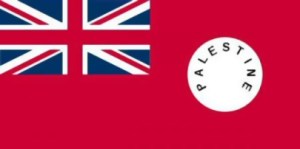 Public bodies in Britain are to be prevented from boycotting “unethical” goods, such as those from illegal Israeli settlements in Palestine, under a plan expected to be announced later Monday, local media reported.
Publicly funded institutions such as local municipalities and universities will face “stiff penalties” if they bar products from companies involved in the arms trade, fossil fuels, tobacco or West Bank settlements, The Independent newspaper reported, citing ministers.
The proposals – due to be announced by Cabinet Office Minister Matthew Hancock – are being put forward on the grounds that bans on products are harming community relations and fuelling anti-Semitism.
“The new guidance on procurement combined with changes we are making to how pension pots can be invested will help prevent damaging and counter-productive local foreign policies undermining our national security,” Hancock told The Independent.
Some public bodies around the U.K. have refused to buy goods from Israeli settlements in recent years and they would have to reverse those decisions under the plans.
In Leicester, a city in the East Midlands, elected officials agreed in 2014 that the municipality would not buy settlement produce. That year the devolved government in Scotland issued a notice discouraging trade and investment with settlements by Scottish councils.
The government’s plan was criticized as an attack on local democracy.
Amnesty International’s Economic Relations Program Director Peter Frankental said the proposal could encourage human rights abuses.
“All public bodies should assess the social and environment impacts of any company with whom they choose to enter into business relationships,” he told The Independent. “Where’s the incentive for companies to ensure there are no human rights violations such as slavery in their supply chains, when public bodies cannot hold them to account by refusing to award them contracts?”
Israeli settlements in the West Bank, East Jerusalem and the Golan Heights — lands occupied by Israel in 1967 — are considered illegal by the international community and a major impediment to peace with Palestinians.
British schoolboy questioned for wearing ‘Free Palestine’ badge
MEMO | February 15, 2016
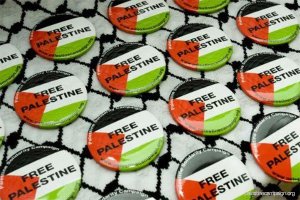 A schoolboy has been questioned by anti-terrorism police because he wore a “Free Palestine” badge to school, The Independent newspaper reported.
Rahmaan Mohammadi’s teachers at Challney High School for Boys in Luton referred him to police under Prevent – the controversial government anti-radicalisation programme.
The pupil was also wearing pro-Palestine badges and wristbands. He had previously requested permission to fundraise for children affected by the Israeli occupation.
Mohammadi said he had previously been warned by police not to talk about Palestine in school, and claimed that staff members approached his 14-year-old brother and pressured him to tell him to “stop being radical”.
Obama regime seeks to roll back human rights conditions on aid to Egypt
RT | February 11, 2016
Despite reports that state repression in Egypt is taking place on a greater scale than it has been for generations, the Obama administration is seeking to roll back human rights conditions Congress had placed on foreign aid to Egypt’s military.
The request, which was tucked into the Obama administration’s 182-page budget proposal, seeks foreign aid to Egypt’s military regime and “the sale of crowd control weapons to ‘emerging democracies.’” The discovery was made by The Intercept.
If the new proposal, which was released on Tuesday, is adopted, it would end a Congressional restriction stipulating “that 15 percent of aid to Egypt is subject to being withheld based on human rights conditions.”
Interestingly, Congress was able to temporarily waive those restrictions in a foreign aid bill in June of 2015, arguing it was in the national security interest of the United Station, according to Al-Monitor. The conditions were that Egypt would have to hold “free and fair” parliamentary elections and take steps to foster democracy and protect human rights for an additional $1.3 billion in military aid to be released.
The US State Department issued a scathing report in May of 2015, arguing that “while Egypt had implemented parts of its ‘democracy roadmap’ the overall trajectory of rights and democracy had been negative.”
It pinpointed restrictions on freedom of expression, the press, and freedom of association, as well as lack of due process. It further said that “impunity remains a serious problem in Egypt.”
It was well known at the time the Egyptians were “infuriated” by the report.
Cole Bockenfeld, deputy director for policy at the Project on Middle East Democracy, told The Intercept that the White House probably didn’t want to explain why it had to waive restrictions this year.
“They had to basically do an assessment. … Here’s how they’re doing on political prisoners, here’s how they’re doing on freedom of assembly, and so on,” Bockenfeld said.
The Guardian reported in January that Egypt has jailed more journalists than any other country on earth except China under President Abdel Fattah al-Sisi. Three reporters were imprisoned, one forcibly “disappeared” and was later charged with being a member of a banned organization, and six were referred to judicial hearings because of their work.
Also in January, Italian academic Giulio Regeni, who was researching labor unrest and independent trade unions in Egypt, went missing during a security crackdown on the fifth anniversary of the beginning of Egypt’s revolution. His body was discovered nine days later by the side of the road marked with cigarette burns, bruising, and multiple stab wounds. The Guardian reported more than 4,600 academics worldwide have signed an open letter protesting his death and demanding an investigation into the growing number of forced disappearances. Egyptian officials appear to be cooperating with the investigation, according to the Italian foreign minister.
The budget also contains a request that would remove a provision from a law passed in 2012 in reaction to the Arab Spring protests that prohibits the transfer of tear gas and other crowd control weapons to countries that are “undergoing democratic transition.”
“It’s basically going to be free for all,” Husain Abdulla, executive director of Americans for Democracy and Human Rights in Bahrain, told the Intercept when speculating on the results of the administration rolling back that provision.
Among the Middle Eastern countries seeking this equipment are Egypt, Saudi Arabia, and Bahrain – all of which are simmering with pro-democracy challenges.
Turkey’s Revival of a Dirty ‘Deep State’
By Jonathan Marshall | Consortium News | February 10, 2016
Turkey’s embattled President Recep Tayyip Erdogan is resurrecting the “deep state” alliance of secret intelligence operatives and extreme rightists that he so notably challenged just a few years ago while putting hundreds of military officers and other opponents on trial for conspiring against Turkish democracy. In a remarkable about-face, Erdogan is now emulating the ruthless tactics of previous authoritarian rulers at the expense of Turkey’s evolution as a liberal state.
Like many of his secular predecessors, Erdogan has reverted to waging an all-out war against radical Kurdish separatists, the PKK. He is dramatically expanding the once discredited National Intelligence Agency, which in years past recruited Mafia criminals and right-wing terrorists to murder Kurdish leaders, left-wing activists and intellectuals. And he appears to be forging an alliance with ultranationalist members of the National Action Party (MHP), who supplied many of the ruthless killers for those murderous operations.
These developments should alarm U.S. and European leaders. They are ominously anti-democratic trends in a country that once promised to meld the best of Western and Near Eastern traditions. They are also helping to drive Turkey’s secret alliances with Islamist extremists in Syria and its violent opposition to Kurdish groups that are leading the resistance to ISIS in that country.
Erdogan successfully cultivated a democratic image after his moderate Islamic party, the Justice and Development Party (AKP), gained a two-thirds parliamentary majority in the November 2002 elections. Then in 2008, with public support for his party sagging, Erdogan oversaw the mass indictment of more than 200 former military officers, academics, journalists, businessmen and other opponents of the AKP.
The 2,455-page indictment alleged a vast conspiracy by members of an alleged “Ergenekon terrorist organization,” named after a mythical place in the Altay Mountains, to destabilize Turkish society and overthrow the government.
The alleged Ergenekon plot drew credibility from an all-too-real alliance of intelligence operatives, criminals and rightist terrorists exposed in the aftermath of the so-called “Susurluk Incident.” A car crash in the Turkish town of Susurluk in 1996 connected one of the country’s leading heroin traffickers and terrorists with a member of the conservative ruling party, the head of the counterinsurgency police, and the Minister of Interior.
Subsequent investigations linked this “deep state” network to a former NATO program — sometimes known by the name of its Italian version, “Operation Gladio” — to foment guerrilla resistance in case of a Soviet occupation of Turkey.
In contrast to the legitimate revelations that grew out of the Susurluk affair, the Ergenekon proceeding at times resembled a Soviet show trial. A court handed down life sentences to a former head of the Turkish military and several top generals, the heads of various intelligence organizations, a prominent secular ultranationalist, secular journalists, and a prominent deputy from a secular opposition party, among others.
A separate proceeding, known as “Sledgehammer,” convicted more than 300 secular military officers of involvement in an alleged coup plot against the AKP government in 2003.
Critics accused the Erdogan regime of using the cases to neutralize its potential rivals as part of its broader suppression of political dissent.
“The intimidation and the number of arrests have steadily risen in the last 10 years,” Der Spiegel observed in 2013. “Many journalists no longer dare to report what’s really happening, authors avoid making public appearances and government critics need bodyguards. The anti-terrorism law is an effective instrument of power for the government as the supposed terrorist threat is an accusation that’s hard to disprove. It plays on a deep-rooted fear among Turks that someone is trying to destabilize and damage the nation.”
The two big trials that fanned that fear were based on falsified evidence and a politicized judicial system. The injustice was effectively recognized by Istanbul’s high criminal court in 2014 when it freed the former army chief of staff convicted in the Ergenekon case. In March 2015, a prosecutor admitted that evidence submitted in the Sledgehammer case was “fake” and 236 convicted suspects were acquitted.
However, just as Erdogan had used those two cases to purge the Turkish power structure of his secular critics, so he used the discrediting of those cases as an excuse to purge supporters of another rival, the exiled moderate Muslim cleric Fethullah Gülen. Erdogan accused them of terrorism and of creating a “parallel state” to challenge his rule. The crackdown followed judicial actions and news leaks, attributed to Gülen followers, that implicated Erdogan’s family and supporters in high-level corruption. As the New York Times observed, Erdogan turned his back on those show trials “for the simple reason that the same prosecutors who targeted the military with fake evidence are now going after him.”
Now, in a complete reversal of his previous warnings about the dangers of the deep state, Erdogan is actively cultivating the very institutions that were at its core.
For example, the government is planning a 48 percent increase in spending for the National Intelligence Agency (MIT) in 2016, on top of a 419 percent increase over the past decade. The new money is slated to pay for construction of a big new headquarters building and to expand the agency’s operations.
According to Turkish expert Pinar Tremblay, “What we are observing here is a national intelligence agency that has become a prominent player in the decision-making process for Turkish politics. … [MIT head Hakan] Fidan acts as a shadow foreign minister. He is present in almost all high-level meetings with the president and prime minister. It is an open secret that both the president and the prime minister trust Fidan more than any other bureaucrat.”
After MIT trucks were caught in 2013 and 2014 smuggling ammunition, rocket parts, and mortar shells to radical Islamic groups in Syria, Erdogan’s allies put police and other officials involved in the raids on trial for allegedly conspiring with Gülen against the government.
A recent report also suggest that Erdogan is also seeking support for his Syrian adventures from members of the National Action Party (MHP), sometimes known as the Grey Wolves. Once openly neo-fascist in ideology, the party figured prominently in terrorist violence in the 1970s and 1980s with backing from military and police officials. Mehmet Ali Agca, the terrorist who tried to assassinate Pope John Paul II in 1981, was a member of the Grey Wolves.
Members of a youth branch of the MHP are reportedly now fighting in Syria to support that country’s Turkish ethnic minority, the Turkmen, against Syrian Kurds. (The Turkmen are also being armed by the MIT.) At least one MHP notable was killed recently by a Russian bombing raid; one of the mourners at his funeral was the Turkish gunman who murdered the pilot of the Russian jet shot down by Turkey in November.
A leading Turkish expert on the Grey Wolves, journalist Kemal Can, says they are drawn to supporting the Turkmen less for ideological reasons than because of state recruitment. “I think that, directly or indirectly, the state link is the decisive one,” he said. “The ultranationalists are the most fertile pool for secret operations.”
Many members of the MHP are also drawn to the cause by their violent opposition to the Kurds and other non-Turkish minority groups.
After PKK militants attacked Turkish soldiers and police last summer and fall, Grey Wolves attacked 140 offices of the HDP, the Peoples’ Democratic Party which supports the rights of Kurds and other minorities, according to the leftist Turkish journalist Sungur Savran, setting many offices on fire:
“Ordinary Kurds were hunted on the streets of the cities and towns of the Turkish-dominated western parts of the country, intercity buses stopped and stoned, and Kurdish seasonal workers attacked collectively, their houses and cars burnt down, and they themselves driven away en masse.”
Such polarizing violence suited the needs of Erdogan’s AKP party, which wants to eliminate the HDP from parliament in order to gain the super-majority it needs to revise the constitution to enhance Erdogan’s powers as president.
Last September, intriguingly, one leader of the ultranationalist MHP urged restraint against ordinary Kurds, saying that “equating the PKK and our Kurdish-origin siblings is a blind trap” that would ensure wider ethnic conflict. Further, he claimed that groups acting in the name of the Grey Wolves to attack Kurds were actually “Mafia” fronts for President Erdogan.
His claim about the “Mafia” may have been more than metaphorical. Following Erdogan’s recent denunciation of hundreds of Turkish academics as “traitors” for protesting the government’s vicious crackdown on Kurdish communities, an ultranationalist organized crime boss – who was briefly imprisoned for his alleged role in the Ergenekon conspiracy but is today chummy with Erdogan – promised to “take a shower” in “the blood of those so-called intellectuals.”
So there you have it: The Erdogan regime has revived an alliance of intelligence officials, right-wing ultranationalists and even organized criminals to crush Kurdish extremism, to cow political critics, and to support radical Islamists in Syria.
The Erdogan regime, once the great scourge of alleged anti-democratic conspirators, has recreated the Turkish deep state as part of a menacing power grab. It represents a direct threat not only to Turkish democracy, but to Turkey’s neighbors and NATO allies, who will bear the consequences of Erdogan’s ever-more risky, erratic and self-serving policies.
Jonathan Marshall is author or co-author of five books on international affairs, including The Lebanese Connection: Corruption, Civil War and the International Drug Traffic (Stanford University Press, 2012).
Featured Video
Seyed M. Marandi: US-Iran War Inevitable: Kuwait and Bahrain May Fall
or go to
Aletho News Archives – Video-Images
From the Archives
USS Liberty Massacre: A Pivotal Moment in the Hostile Takeover of America
By Kevin Barrett | Crescent | Dhu al-Qa’dah 24, 1445
In corporate America, hostile takeovers are commonplace. They occur when an aggressor—a larger corporation or rich individuals—seizes control of a smaller corporation without asking permission.
What few recognize is that the United States itself has been subjected to a hostile takeover. Since the aggressor, the illegitimate settler colony known as “Israel,” is much smaller than the US, the takeover has necessarily been surreptitious.
As of June, 2024, Israel’s gradual takeover of the US has become obvious and undeniable—a proverbial “elephant in the living room.” … continue
Blog Roll
 Aletho News
- Seyed M. Marandi: US-Iran War Inevitable: Kuwait and Bahrain May Fall
- Leaders Condemn Ansarallah Attack on Saudi Arabia While Ignoring Illegal War Against Yemen
- Leaked: Britain’s Covert Iraqi Psyops Network
- Yemeni Armed Forces Warn Airlines Against Using Saudi Airports, Exempt Mecca and Medina
- Iran security chief says powers greater than US tried to conquer Iran but ended in ‘dustbin of history’
- Europe’s mounting social chaos… chickens coming home to roost for proxy war against Russia
- US-Russia Diesel Deal Becomes Massive Defeat for Ukraine
- Hormuz and the Looming Economic Catastrophe
- Dhubab offensive, media blitz and the rapid unraveling of Saudi-backed coalition’s new gambit
- Putin Conveys to Trump Iran’s Vision on Possible Conflict Resolution – Kremlin
- If Americans Knew
- Gaza: Ceasefire Anniversary Marks Year of Failed Promises
- The American Conservative: Mike Huckabee Should Resign
- A C-Section in Shackles: A Palestinian Woman’s Harrowing Birth in Israeli Detention
- ‘He’s Desperate’: AIPAC Begins Spending Against Abdul El-Sayed to Boost Mike Rogers:
- Trump, Hormuz, and the Looming Economic Catastrophe
- For three years, Israel has killed a child in Gaza every 71 minutes – Daily Update
- Israeli forces kill another child in Gaza – Daily Update
- Gaza ceasefire exists in name only, say more than 100 organizations
- Nearly 2 Million in Gaza Need Urgent Shelter Assistance as Winter Looms: IOM Chief Warns
- Suppressing Palestinian resistance: US charity under fire for AI monitoring of Gaza classrooms
- No Tricks Zone
- Germany’s Green Energy Debacle: High Energy Costs Force Kahla Porzellan to Close After 182 Years!
- New Study: 50 Years Of The Most Aggressive ‘Net Zero’ Policies Can Only Affect The Global Climate By 0.03°C
- US September “Heat” Was No Record…Many Records Set Decades Ago
- Latest European Green Energy Debacle; Portugal’s Largest Flagship Solar Park Insolvent!
- Green Energy Debacle: German Expert Professor Fritz Vahrenholt Warns Of Severe Economic And Social Consequences
- Two More Paleo Reconstructions Affirm Meters-Higher Sea Levels Across Ireland, Brazil 7000-6000 Years Ago
- New Study: Earth And Venus Surface Warmth Largely Explained By Convection And Lapse Rate, Not CO2 Or Radiation
- 2025 Nature Paper Claiming Worsening Global Drought Gets RETRACTED …Heavily Flawed
- New Study: ‘Global Drought Shows No Detectable Recent Acceleration Under Climate Warming’
- Economic Masterminds: German Socialists Suggest Taxing Productivity Gains Stemming From Using AI

