Go figure: Soros-funded watchdog says populist politicians ‘undermine fight against corruption’

George Soros Image © Maurizio Gambarini / http://www.globallookpress.com
By Robert Bridge | RT | January 30, 2017
With the EU elite threatened by a populist insurgency aiming to end free and easy immigration programs and promote nationalism over globalism, an influential think tank says populism will only – wait for it – fuel the fires of corruption.
Transparency International, a Berlin-based anti-graft group, warned in its annual Corruption Perceptions Index about the purported perils of populism, a political animal that on occasion rolls through nations like a force of nature to contend with the excesses of an out-of-touch, elitist minority.
“Populism is the wrong medicine,” stated TI chair Jose Ugaz, without offering any alternative prescriptions. “In countries with populist or autocratic leaders, we often see democracies in decline and a disturbing pattern of attempts to crack down on civil society, limit press freedom, and weaken the independence of the judiciary.”
“Instead of tackling crony capitalism, those leaders usually install even worse forms of corrupt systems,” Ugaz continued.
With regards to corruption, the watchdog attempts mind-reading by asserting that populist politicians “have no intention of tackling the problem [of corruption] seriously.”
The report takes to task some firebrand politicians, including Donald Trump (USA), Marine Le Pen (France), Jaroslw Kaczynski (Poland) and Victor Orban (Hungary), among others, who are currently topping the popularity charts among their constituents by declaring open season on the moribund establishment.
Transparency International sounded the alarm over these political “con artists” who are “reactive, nativist and often right-wing…” while alleging that these disruptive newcomers “have been able to exploit the disenchantment of people with ‘the corrupt system’ and present themselves as the only ‘way out’ of the vicious cycle described… ”
While deliberating upon the potential risks associated with the new agitators on the block, the report conspicuously failed to mention the reasons why so many voters today are disaffected with the same old run-of-the-mill politicians, who are guilty, it must be said, of far worse crimes than mere corruption.
In all too many cases we are talking about complicity in actual atrocities, from bloody regime change in places like Iraq, Libya, Afghanistan, with efforts underway in Syria, to the wholesale destruction of Western civilization due to the unchecked immigration of war refugees without the consent of the governed. If NATO member states are feeling pangs of guilt over their direct complicity in the serial murders of nation states, forcing the refugees of these war zones onto the territory of their people is undoubtedly not the answer.
In light of these unsavory actions on the part of many NATO countries, concerns over high level corruption may seem a bit exaggerated and misplaced. At the risk of sounding cynical, separating corruption from the world of politics is tantamount to separating the chicken from the egg, and, as the popular riddle reminds us, very difficult to say what came first.
And speaking of corruption. The scale of corruption in the Clinton camp, revealed by WikiLeaks in the run up to the 2016 presidential election, is simply astounding and should be enough to preclude any lectures on good behavior by the folks at Transparency International.
For starters, it was revealed in November that the Clinton Foundation received a $1 million ‘gift’ from Qatar without telling the State Department, thereby breaking an agreement requiring it to reveal all foreign donations. The check was reportedly a gift to former President Bill Clinton in 2011 for his 65h birthday. A meeting was to take place between him and Qatari officials at some point, according to an email published last month, but it is not clear if this ever happened.
At the same time, it was also established that Saudi Arabia and Qatar were not only donating heavily to the Clinton Foundation but were also arming and funding the militants of Islamic State. Now if that isn’t the worst case of political corruption then I don’t know what is.
It is, therefore, no coincidence that populist politicians, simply responding to the market demand for fresh leadership, appeared around the world at just about the same time. The fact that France has its own version of Donald Trump in the form of Marine Le Pen would only come as a surprise to those people who don’t follow world events, or who are not told the truth about them.
Now that so many Western politicians and their affiliated parties are facing the threat of eviction this year (The most influential EU member states are witnessing a fierce struggle in the ranks amid the spectacular rise of anti-establishment, far-right politicians, like Le Pen in France, Geert Wilders in Holland and Frauke Petry in Germany), it is somewhat ironic that Transparency International would release a report warning voters that they are about to be hoodwinked by rabble-rousing, right-wing demagogues.
But there is a simpler explanation for the one-sided nature of this report, and it is due to a massive conflict of interest on the part of its sponsors.
Take it away, George
If you were doing consumer research on a particular product, would you trust the manufacturer of that product to carry out the research, or would you prefer some independent body to handle the job? I think most people would agree that the most reliable, trustworthy method would be to commission some third party with no connections to the company to provide its consensus. That would dramatically reduce the chances of inaccurate results due to something called ‘self-interest.’
And therein lies the glaring problem not only with this report but with Transparency International as a watchdog group.
A brief perusal of its supporter list should remove any doubt as to why Transparency International is extremely wary about populist politicians rocking the European boat of power.
Aside from receiving from a number of foreign governments (Germany, United Kingdom, United States, Ireland, Estonia and Finland, to name a few), TI is sponsored by the some of the most dubious names in democracy today, brought to you by none other than investor and philanthropist George Soros himself.
The Open Society Institute (OSI) and Open Society Initiative for West Africa (OSIWA) ranks just behind the National Endowment for Democracy (NED), a soft power non-profit sponsored by the US government, on the list of TI’s supporters.
Clearly, this is the last organization one should trust for providing an objective look at the rise of new political parties across the world. Indeed, George Soros himself has been largely responsible for the massive influx of refugees to the European Union, going so far as to offer cash incentives to refugees who wish to make the long, dangerous journey from the Middle East to the European continent.
Never mind that none of these displaced peoples, who have every right to our sympathy, will live in the same neighborhood as Mr. Soros, who can well afford all the personal protection that is certainly desirable when embracing such reckless policies. But for the average European citizen, who must accommodate these millions of new people who do not share the same religious, social and cultural predilections, nor in many cases the same high level of education, this social experiment carried out on the whim of a billionaire is the epitome of reckless behavior.
In fact, it should come as no surprise that the TI report singled out Hungarian Prime Minister Victor Orban. Just this month, Szilard Nemeth, a vice president of the ruling Fidesz party, said it would use “all the tools at its disposal” to “sweep out” NGOs funded by the Hungarian-born financier, which “serve global capitalists and back political correctness over national governments.”
But all that pales in comparison to an award that Transparency International bestowed upon none other than former US Secretary of State Hillary Clinton in 2012 for “her emphasis on the importance of increasing transparency and countering corruption as part of US foreign policy, with the award addressed solely to those contributions.” Needless to say, that award drew a lot of raised eyebrows around the world.
There is a breathtaking degree of conflict of interest in this TI report, which, like so many closed halls of power in the EU today, is just begging for the transparent light of day.
Robert Bridge, an American writer and journalist based in Moscow, Russia, is the author of the book on corporate power, “Midnight in the American Empire”, released in 2013.
Vast Majority of Americans Back Trump’s Blast Against Washington Establishment
Sputnik – 25.01.2017
WASHINGTON – Nearly three quarters of all Americans agree with President Donald Trump’s charge that a group of elitists in Washington has grown wealthy at the expense of the United States, a Rasmussen national poll reported.
“Seventy-two percent of likely US voters agree with this statement,” Rasmussen said in a release on Tuesday.
The survey found that only 17 percent of the US public disagreed with Trump’s claim while 11 percent were not sure.
Trump in his inaugural address delivered on Friday charged the Washington, DC political establishment with profiting for many years at the expense of ordinary Americans, pledging to end the practice immediately, the release explained.
The survey of 1,000 likely voters was carried out on Sunday by Rasmussen Reports, the company said.
Belgrade Breathes Easier As Trump’s Win Marks End to Clinton-Era Interventionism
Sputnik – 22.01.2017
Donald Trump’s election victory has brought an end to the Clinton era of intervention in Serbia’s internal affairs, including the murky web of connections between NGO’s in the US and abroad, experts told Sputnik Srbija.
When the US election results were announced in November 8, representatives of Serbia’s NGO elite were in attendance at Belgrade’s Crown Plaza Hotel, where the US Embassy had organized a get-together.
In a straw poll conducted of those present, Hillary Clinton was the clear winner, and her defeat was greeted with disbelief and disappointment by those who have grown used to getting support from American government and non-government organizations.
Political analyst Branko Radun told Sputnik Srbija that supporters of Clinton among Serbia’s pressure groups can be divided into two groups – those who were thinking with their heads, and those who were thinking with their wallets.
“I would divide the pro-Clinton elite in two. The first group is parties, NGO’s, the media and individuals which are ideologically close to American liberals and Democrats and are connected with them in various ways, including ideologically. The second group is parties, organizations and individuals which following the overthrow of Milosevic got used to a situation whereby we have a pro-Clinton elite. In order to survive on the political scene, they made compromises and deals with domestic ‘Clintonistas’ and with the global elite, comprised above all of American Democrats, that liberal, pro-Soros global elite,” Radun said.
Radun said that changes to Serbia’s political situation will take some time to become clear.
“These changes will come in phases. Firstly, of course, there will be a change in the structure of the State Department, so those who have links there will immediately feel the change. Others, who may have ties to other structures, will feel the changes later. I think those changes don’t seem dramatic and visible at the moment.”
Analyst Dejan Vuk Stankovic said that Serbian NGO’s have had good reason to promote liberal American values in Serbia, thanks to funds from organizations such as US AID, the National Democratic Institute (NDI) and the International Republican Institute (IRI). The NDI and the IRI are affiliated with the Democratic and Republican parties, respectively.
“This is an interesting network of individuals, the non-governmental sector, some opposition parties, I would not rule out that there are also some people within the current governing structures. But in general, (they are) the post-Milosevic political elite and the remnants of their media and NGO, their open or hidden allies in the robes of civil society or independent societies of journalists, lawyers and so on,” Stankovic said.
“I think the choice of Trump is not good news for NGO beneficiaries of American grants. This does not mean that there won’t be any, there will be, but on a much smaller scale. I doubt that Trump will have any particular engagement with what Democrats were engaged in when in power. That political work which had various forms of subversion: the preparation for and the destruction of political regimes via the non-government sector with the help of opposition parties. I think Trump will put politics in some kind of official context, as a politician he will be without ideological vices. He will hold negotiations in the way in which business deals are made.”
Radun said that despite the disappointment in some quarters, a Clinton victory would not have benefited Serbia. In fact, a Clinton administration was likely to raise tensions in the Balkans by inflaming the situation in Kosovo and neighboring Bosnia.
“First of all, pressure on Republika Srpska would have increased and in the direction of its suppression. There would also have been an attempt to complete the constitution of Kosovo as an independent state. On the other hand, with Trump somehow we start from scratch. The situation is uncertain, but compared to the other side (Clinton), which would certainly have been negative, uncertainty is better because with uncertainty you have a chance,” said Radun.
Trump has Opportunity to End Obama/Clinton Weapons Sales to Anti-Woman Tyrants
I attended the women’s rights rally in Portland, Oregon, today to support women worldwide and urge Trump to end Obama and Hillary Clinton’s record weapons deals with the most repressive state for women in the world, the totalitarian dictatorship of Saudi Arabia.
In 2010, the Clinton state department organized the biggest weapons sale in US history. The sale was to strongman Abdullah Abdullaziz, who had women executed as punishment for being raped. The Kerry state department followed the deal with a sale of almost a billion dollars worth of illegal cluster bombs to the dictator. Obama approved both deals.
Bloomberg reports Clinton’s weapons sales to woman-oppressing dictators increased dramatically after the tyrants ‘donated’ to what Harper’s magazine calls the Clintons’ ‘slush fund’, the Clinton Foundation.
An unfortunate aspect of much of the current anti-Trump upheaval around the country is that similar actions were not undertaken when policies Democrats would or will oppose if Trump carries them out were not opposed by Democrats when Obama and Hillary Clinton performed them.
However, this is largely because the general public is kept ignorant of most of these policies. Such actions, Dr. Chalmers Johnson has noted, are “kept secret” from the US-American public.
Respected analysts this week highlighted the disparity between Obama’s treatment in the neoliberal press and his actual record.
John Pilger quotes a typically sycophantic example of a description of Obama, this one from The Guardian:
“But the grace. The all-encompassing grace: in manner and form, in argument and intellect, with humour and cool … [He] is a blazing tribute to what has been, and what can be again … He seems ready to keep fighting, and remains a formidable champion to have on our side … The grace … the almost surreal levels of grace …”
Nicolas J S Davies outlines the reality: Obama, whose political career has been sponsored by, among many other similar elements, lethal weapons manufacturer General Dynamics, “has increased U.S. military spending beyond the post-World War II record set by President George W. Bush. Now that Obama has signed the military budget for FY2017, the final record is that Obama has spent an average of $653.6 billion per year, outstripping Bush by an average of $18.7 billion per year (in 2016 dollars).
In historical terms, after adjusting for inflation, Obama’s military spending has been 56 percent higher than Clinton’s, 16 percent higher than Reagan’s, and 42 percent more than the U.S. Cold War average…”
Under Obama, “… the U.S. and its allies dropped 20,000 bombs and missiles in his first term. In his second term, they have dropped four times that number, bringing the total for Obama’s presidency to over 100,000 bombs and missiles striking seven countries, surpassing the 70,000 unleashed on five countries by George W. Bush.”
Pilger notes Obama ordered an average of 72 explosive devices to be planted and detonated every day in 2016.
Davies continues that Obama has used the US’s Central American model of favoring proxy-armies and death-squads over sending in US troops, and has thus provided arms and ignited and fueled conflicts that have killed hundreds of thousands around the world.
But the strategy has also included “a massive expansion of U.S. special operations forces, now deployed to 138 different countries, compared with only 60 when Obama took office.”
Pilger notes this “amounted to a full-scale invasion of Africa.”
Highlighting what these US operations and hegemonic expansion mysteriously achieve, Oxfam this week released a report noting that about 8 people now control as much wealth as half the world’s population. This is down from 16 people within the past year or so, and around 70 people before that.
Within the US, while thousands of the poorest people in places like Detroit had their water turned off in violation of the universal declaration of human rights, Obama allocated a trillion dollars to the nuclear arsenal, in violation of legal obligations and agreements.
And while he has refused to prosecute torturers and war criminals from the Bush Jr. regime (let alone his own), he has waged a campaign of persecution against those who have exposed torture and war crimes.
Amnesty International and other groups note a highlight of Obama’s presidency was his recent commutation of the sentence of US political prisoner Chelsea Manning, who released documents exposing some US war crimes. But the commutation came after an offer from another, higher-value whistle-blower and political prisoner, Julian Assange, to accept extradition to the US in exchange for clemency for Manning.
Others note Obama has deported millions of people and increased military aid to human rights violators like Israel and Saudi Arabia more than any other president.
While at least some Democrats would express opposition to these actions if they were performed by Trump, this cannot necessarily be called hypocrisy, since the US and Western propaganda model (corporations dumping billions into favored media outlets to overwhelm the market) prevents the vast majority of them from knowing Obama undertook the actions himself.
This is not new. Similar demonstrations expressing disgust were carried out by Democrats and others during the inauguration of Bush Jr., but not in opposition to policies carried out by Clinton such as his genocide in Iraq that killed some 500,000 children, his support for terrorist Paul Kagame in Rwanda, which has contributed to the deaths of millions, or Clinton’s aggression against Yugoslavia.
Continuing to illustrate how these and other crimes are “kept secret” from or distorted for the US and Western public, Reuters this week said the US/NATO aggression against Yugoslavia was carried out in response to Serbia “killing about 10,000 ethnic Albanian civilians there.”
But Noam Chomsky and other US/Western propaganda analysts note that according to the West’s own monitors, including the British Parliamentary inquiry into the matter, this is a reversal of the chronology.
In the year before the US/NATO attack, about 2,000 people were killed due the conflict in Yugoslavia, with more killings attributed to the KLA – the terrorist-integrated guerilla force backed by the US and Western countries – than to the Serbs. Before the US/NATO attack, the killings had mostly subsided, but the KLA continued to carry out provocations to, as it stated, try to instigate NATO intervention on its behalf.
Wesley Clarke, the NATO commander at the time, said bombing Yugoslavia would cause more deaths and atrocities than would occur without Western bombing. Others agreed, but, with Hillary Clinton’s urging, Bill Clinton began bombing the country, leading to the “about” 10,000 deaths Reuters this week says the bombing was a response to.
The Reuters article also mysteriously fails to mention that if the US had intervened to prevent atrocities, it would not have been supporting what Dr. Michael Parenti, in a book on the topic written under the supervision of Balkan experts, notes were worse atrocities carried out by Turkey (against the Kurds) and other regimes around the world.
Through countless similar distortions and omissions, the US/Western propaganda model thus continues to keep Democrats uninformed and thus complacent or supportive of politicians who carry out actions Democrats sometimes vehemently oppose when the same actions are planned or carried out by Republicans.
Comparable dynamics are also true in reverse.
Robert J. Barsocchini is an independent researcher and reporter whose interest in propaganda and global force dynamics arose from working as a cross-cultural intermediary for large corporations in the film and Television industry. His work has been cited, published, or followed by numerous professors, economists, lawyers, military and intelligence veterans, and journalists. Updates on Twitter.
The DNC Hands the Democratic Party Over to David Brock and Billionaire Donors
By Michael J. Sainato | CounterPunch | January 17, 2017
The Democratic Party establishment has responded to Hillary Clinton’s election loss the same way they would have responded had Hillary Clinton won, by changing absolutely nothing. Clinton’s overt embrace of wealthy donors and establishment figures from both political parties repelled thousands of voters toward third parties, voting for Trump, or apathy.
This trend embodied by Clinton’s candidacy has resulted in Democrats losing over 900 state legislature seats and failing to recoup majorities in both houses of Congress. Instead of figuring out how to reconnect with working and middle class voters across the country, Democrats are handing the keys of the party directly over to wealthy billionaire donors while attempting to maintain the facade they care about the common voter.
Despite formal complaints, a lawsuit, and ethical concerns, billionaire donor and close ally to former DNC Chair Debbie Wasserman Schultz, Stephen Bittel was elected by the Florida Democratic Party establishment to serve as its new Chair on January 14. Next weekend in Florida, billionaire donors will gain even more ground in the Democratic Party at a private retreat hosted by Clinton propagandist David Brock, where each candidate for the new DNC Chair will participate in a forum to woo support from the Democratic Party’s donors.
David Brock became notorious after his attacks on Anita Hill, who accused 1991 Supreme Court nominee Clarence Thomas of sexual harassment, and passed a polygraph test in addition to testifying in front of the U.S. Senate Judiciary Committee. Thomas was confirmed anyways, and David Brock became rich off a book he wrote smearing Anita Hill. In 2001, Brock admitted he based the book on lies, part of his transition from Republican hit man to Hillary Clinton’s propaganda henchman.
Now that Hillary Clinton’s machine has broken down, Brock is depending on bundling his donor network with that of billionaire George Soros’ Democracy Alliance to push back against the direction Bernie Sanders and his supporters want to pull the party in, away from wealthy donors, with the support of the Democratic Party establishment. The DNC has allowed Brock’s Super-Pac, American Bridge, to develop strategy for a “Trump War Room,” and the next DNC Chair will likely be chosen by billionaire donors at the private retreat Brock is hosting under the distraction veil afforded by Trump’s Inauguration Ceremony.
If Democrats want to constructively hold Donald Trump accountable and recoup, they need to disavow themselves from David Brock’s incompetence. Relying on smear campaigns, propaganda, and hyperbolic attacks, in an attempt to portray a stark contrast between Republicans and Democrats will backfire as it did for Hillary Clinton during the 2016 election. The Clinton Campaign, David Brock, and the mainstream narrative focused their campaign on manufacturing outrage toward Donald Trump rather than try to make meaningful connections with working and middle class voters, especially in areas like the rust belt that have suffered increasing economic anxiety over the past decade.
David Brock won’t be a part of any viable solution for the Democratic Party. As Bernie Sanders Aide Michael Briggs said during the Democratic Primaries, Hillary Clinton, “should be ashamed of her association with Brock.” The same goes for the Democratic Party if they continue to provide Brock a platform and network to perpetuate his awful ideas and strategies along with out-of-touch wealthy donors.
“Their top-down approach to politics — a service model animated by an unwavering belief in their own superior intelligence — leaves us defenseless in the face of Trump and the right-wing forces he’s empowered,” wrote Alex Press for Jacobin in November. “Their existential dread of radical change renders them suspicious of precisely the policies that could unite workers of all races and blunt Trump’s appeal. In short, the rich can’t save us.”
Michael Sainato’s writing has appeared in the Guardian, Miami Herald, Baltimore Sun, Denver Post, Buffalo News, the Hill, Alternet, and several other publications . Follow him on twitter: @MSainat1
8 richest people as wealthy as poorest half of the world – Oxfam
RT | January 16, 2017
The wealth of the 8 richest people on earth equals that of the poorest 3.6 billion, according to a report by Oxfam presented at the World Economic Forum in Davos. This vast wealth gap is a threat which may “pull our societies apart,” the report warned.
The list of the eight wealthiest individuals in the world, all men, comes from Forbes magazine’s billionaires list, and includes Microsoft founder Bill Gates, Facebook co-founder Mark Zuckerberg, and Amazon founder Jeff Bezos.
Others include Inditex clothing company founder, Amancio Ortega, investor Warren Buffett, Mexican business magnate Carlos Slim, Oracle’s Larry Ellison, and former New York City Mayor Michael Bloomberg.
Oxfam emphasized the potential connection between the growing gap between the richest and the poorest, and the increasing anger at establishment politicians.
“It is obscene for so much wealth to be held in the hands of so few when 1 in 10 people survive on less than $2 a day,” said Oxfam International Executive Director Winnie Byanyima, who will be attending the Davos Forum, according to The Chicago Tribune.
“From Brexit to the success of Donald Trump’s presidential campaign, a worrying rise in racism and the widespread disillusionment with mainstream politics, there are increasing signs that more and more people in rich countries are no longer willing to tolerate the status quo,” Oxfam said in its new report – “An economy for the 99 percent.”
According to the report, if things continue on their current course, the world will see its first trillionaire in the next 25 years.
Inequality exists not only between the rich and the poor, but is gender-based as well. “On current trends, it will take 170 years to see women paid the same as men,” the report says.
Oxfam urged an increase in tax rates for “rich individuals and corporations,” adding that tax evasion is a critical issue. The UN Conference on Trade and Development estimated that developing countries lose around $100 billion yearly due to tax evasion, the report said, adding that it would be enough money to ensure that 124 million children who currently have no access to education can go to school.
The report also slams corporate lobbying and the close relationship between business and politics.
“Crony capitalism benefits the rich, the people who own and run these corporations, at the expense of the common good and of poverty reduction. It means that smaller businesses struggle to compete and ordinary people end up paying more for goods and services,” it stated.
The revised figures come after last year’s report that 62 people owned the same wealth as 50 percent of the world’s population. The new report takes into account data from India and China.
Why Did the Al-Jazeera Expose Fail?
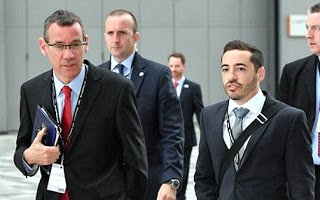
By Gilad Atzmon – January 14, 2017
“The Lobby”, the Al-Jazeerah expose of the Israeli Embassy and the Jewish Lobby infiltration into British politics is a landmark in journalism. It seems that Qatari TV outsmarted Israeli intelligence in the UK and beyond.
In the program, an undercover journalist named ‘Robin’ managed to infiltrate into the corridors of the Jewish lobby in Britain, secured the trust of a senior Israeli intelligence officer and, most importantly, managed to reveal the depths of Israeli interference in British politics.
We learned how Israel and its lobby plot against Britain and the Brits. In the program, Shai Masot, an Israeli official was caught on camera conspiring to “bring down” a British minister.
We learned how our own treacherous MPs shamelessly serve a foreign power and foreign interests. In Episode 3 we witness British politicians and Israeli lobbyists such as MP Joan Ryan caught on camera smearing a Labour voter as an ‘anti-Semite’, and practically conspiring against her own party. Ms Ryan does it all for the Jewish state, a state with a horrid record on human rights and war crimes. I wonder what is it that motivates MP Ryan? Is it greed, or is it just power seeking?
The Brits should certainly ask themselves how come it is left to a Qatari TV network to reveal the shocking news about their democracy being taken over by a foreign Lobby. Should this not be the concern for the BBC or the Guardian? And even after the Al-Jazeera expose, the British media remained silent and the question must be asked: would it have stayed as silent had Shai Masot been a Russian? Would it have stayed as silent if MP Joan Ryan was exposed as an Iranian lobbyist?
But Al-Jazeera fell into an all-too-common trap. Troubled by its own findings, it tried to soften them with the usual politically correct fluff. Instead of concentrating on the British aspect of this saga and allowing the Brits to speak for themselves, Al-Jazeera allowed an Israeli – academic Ilan Pappe to speak for us. Similarly, Jackie Walker, certainly a victim of the Israeli campaign was also asked, “as a Jew” (as well as a Black person), to spell out for us her own identitarian philosophy. All other commentators on the Israeli espionage operation came from recognised Palestinian solidarity perspectives. Despite the fact that the dirty dealings of the Israeli Embassy and the treason of members of the Israeli lobby groups in Britain is a clear offence against British sovereignty and the British people, only one Brit, journalist Peter Oborne, addressed the offence from a clear British perspective.
This is wrong. “The Lobby” exposed, above all, a gross interference with British sovereignty, a crude intrusion into the British democratic process and government. Al-Jazeera failed because it turned this British national tragedy into an internal Jewish dispute.
For obvious reasons, Al Jazeera chose not to delve into the deep, cultural meaning of the Israeli operation. Israel is, above all, the Jewish state and, as I have mentioned many times before, plotting against other people’s regimes is deeply embedded in Judaic teaching and Jewish culture. It is in practice the message of The Book of Esther, which teach the Jews how toconspire against their rulers and, by proxy, to win over their enemies. You can read The Book Of Esther for yourselves (it’s pretty short and very entertaining): http://www.jewishvirtuallibrary.org/jsource/Bible/Esther.html
Shai Masot was no junior embassy employee as claimed. He was a senior intelligence officer operating from the safety and immunity of its embassy on behalf of the Jewish state. He was working alongside Israeli Ambassador Mark Regev and the two are seen together in the film, sitting side by side, addressing various Jewish lobby groups. Shai Masot has been recalled and, I understand, is currently seeking other employment. Mark Regev should now be expelled and the matter must be investigated by MI5.
The Lobby P2: The Training Session
January 11, 2017
In part two of The Lobby, our undercover reporter joins a delegation from the Israeli Embassy at last year’s Labour Party Conference. The programme reveals how accusations of anti-Semitism were made against key Labour Party members – and how a former official at the Israeli Embassy was upset when her background was revealed.
Featured Video

Death Spikes & Rising Cancer In Our Youth Explained
or go to
Aletho News Archives – Video-Images
From the Archives
Politicians lie
By Mazin Qumsiyeh | Popular Resistance | August 18, 2013
There is no way to say this truth nicely: Politicians lie. That includes Japanese, American, Egyptian, Israeli, and Palestinian politicians! Is there something more common sense than that? Yet, so many citizens around the world believe their own politicians or wistfully acknowledge lies but think it is part of the job needed to run things. They believe even when politicians contradict themselves blatantly. This phenomenon is rather remarkable. It is a dissonance and disconnect from reality that many seem oblivious to. It is very dangerous because it can lead to accepting rationales for going to war. These can be deadly wars that lead to millions of lives lost as happened in what was called World War 1 and WW2. Even when incredible and declassified evidence abound, politicians continue to lie and old mythologies refuse to die. Here are just a few of the countless lies told to us over the past few decades… continue
Blog Roll
 Aletho News
- Iraqi resistance group vows to stage airport sit-ins over Iran aerial blockade
- Turkish parliament to review Saudi-Pakistan defense pact next month
- DEATH SPIKES & RISING CANCER IN OUR YOUTH EXPLAINED
- Iran offers Trump deal before US election
- Merz regime wants ‘secret police’ – opposition
- Israeli settlers terrorize West Bank Palestinians with state-provided drones: Report
- They see them, then kill them: Israeli quadcopters track, deliberately target civilians in Gaza
- Debunked: Trump’s egregious UNGA claims on war against Iran crumble under scrutiny
- Europe was part of the infrastructure of US aggression against Iran: Deputy FM
- New evidence on the Bucha Massacre
- If Americans Knew
- Trump betrayed voters with his campaign lies and prioritized a foreign country once he took office
- Netanyahu calls Israel’s war in Gaza ‘opposite of genocide’ in UN speech to near-empty hall
- Settler Kidnappings: Torture, Sexual Abuse and Terrorisation of Palestinian Abductees as Israel Deepens Annexation of West Bank
- Gaza winter nears as 162,000 tents become unusable, raising fears of humanitarian crisis
- Netanyahu says, “It’s the opposite of genocide”; UN says Gaza economy is world’s ‘most severe crisis on record’ – Daily Update
- Israel’s US-Backed Assault on Gaza Has Created the ‘World’s Most Severe Economic Crisis on Record’: UN
- ‘Protecting U.S. Citizens’… From Israel
- ‘This is where I live now, the back of a truck’: a day in the life of a grandmother in Gaza
- In UN Speech, Iran’s President Displays Pictures of Children Killed by US, Brings Attention to Israel’s Nuclear Arsenal
- Israel displaces hundreds of Palestinians amid wave of demolitions in West Bank
- No Tricks Zone
- New Study: Earth And Venus Surface Warmth Largely Explained By Convection And Lapse Rate, Not CO2 Or Radiation
- 2025 Nature Paper Claiming Worsening Global Drought Gets RETRACTED …Heavily Flawed
- New Study: ‘Global Drought Shows No Detectable Recent Acceleration Under Climate Warming’
- Economic Masterminds: German Socialists Suggest Taxing Productivity Gains Stemming From Using AI
- The South China Sea Has Not Been Cooperating With The Climate Change Narrative
- Energy Crisis: Germany Enters Heating Season With Historically Low Gas Reserve Fill Levels
- New Study: The Antarctic Ice Sheet Gained Mass From 2020-2024 Due To Staggering Snow And Ice Accumulation
- Study: Ocean Heating Rates From Thousands Of Years Ago ‘Dwarf’ Modern Ocean Heating Rates
- Climate Extremists Target, Attack Large-Scale Power Grid Infrastructure In Germany!
- New Study: Antarctic Ice Melt Has Contributed Less Than 1 Centimeter To Sea Level Rise In The Last 30 Years

