Steroids May Be Behind Aggressive Behavior of US Police
Sputnik – 31.08.2016
Side-effects associated with police steroid use and abuse have become a dangerous element in the ongoing debate regarding overly violent behavior and the militarized law-enforcement culture of the United States.
In 2004, the Drug Enforcement Administration (DEA) listed the many side-effects of steroid use, including mood swings, impaired judgment, depression, increased aggression, extreme irritability, hostility, and delusional behavior. Endemic steroid abuse could go a long way to explaining the aggressive and violent behavior used by American police, especially in situations that could easily have been safely de-escalated, according to the Free Thought Project. As with methamphetamine abuse, steroids bring a sense of invincibility, making the user feel indestructible.
According to the DEA, “The idea of enhanced physical strength and endurance provides one with ‘the invincible mentality’ when performing law enforcement duties.” Many examples of police brutality represent a trend in overt law-enforcement violence that could be the result of steroid abuse.
There currently is no policy to regulate the use of steroids by active-duty weapon-carrying law-enforcement employees.
Some police unions claim that drug tests, similar to those administered every day to suspects, violate their civil rights. A deeper reason why some refuse to be tested is that they are involved in selling, and using, steroids.
Santucci, a former police sergeant, got his department’s attention after he routinely took $30,000-$100,000 vacations, all on an annual salary of some $80,000, before deductions. In April 2015 Santucci was arrested for running an anabolic steroid manufacturing and distribution network.
He received a delay in sentencing twice, first to complete training to become an electrician, and second, due to “some scheduling conflicts,” according to attorney Dan LaBelle. On August 25 Santucci was finally sentenced to a mere 16 months in prison, along with two years of supervised release.
The disgraced cop sold enormous quantities of steroids to police officers, who used and further distributed his illicit product.
Santucci, however, may be the tip of the iceberg in the United States. Steroid use is a popular tactic for police officers and an epidemic, which until recently has been quietly shoved under the rug, is now revealed as the cause of much unnecessary violence and is shown to be a danger to the public.
Why Hillary is the perfect person to secure Obama’s legacy
By John Chuckman | Aletho News | August 30, 2016
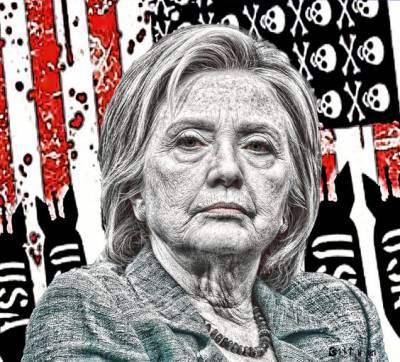
I read a piece that said Hillary, with her speech about racism and extremists taking over the Republican Party, was making a play for a one-party state. That seems rather an exaggeration, but it does contain an important bit of truth. I do indeed believe Hillary thinks along the lines of a one-party state as suggested, but without ever saying so directly, and she is not focused on the particular political party with which she is now associated.
Hillary stands for the establishment, and her views appear to include the idea that anyone without attachment to that establishment is to be designated as a kind of “plebe,” as in 1984, or even “untouchable,” as in the old Indian caste system. That’s the approach that she took in her “racism” speech. It is, if you will, very much a one-party approach to politics as well as an implicitly anti-democratic one.
And, of course, it represents a truly super-arrogant attitude.
But isn’t that the natural inclination of all tyrant temperaments? And there is every indication in Hillary’s past acts and words of a tyrant’s temperament.
Her views on the military and on a long history of events from the FBI Waco massacre (she advocated for aggressive FBI action to get the event out of the headlines) and the bombing of Belgrade (which she advocated privately to her husband) to the invasion of Iraq (which she supported as a Senator) and the death of Libya’s Gadhafi (there’s her infamous, “We came, we saw, he died. Ha, ha, ha,” quote as Secretary of State) to the employment of paid terrorists and poison gas in Syria (an operation she oversaw as Secretary of State), could provide a good working definition of a tyrant’s temperament.
And just look at her close friends and associates in, or formerly in, government, people like Victoria Nuland or Madeleine Albright, extreme Neocon advocates for violence and America’s right to dictate how others should live. Madelaine Albright is best remembered for answering a journalist in an interview, when questioned about tens of thousands of Iraqi children dying in America’s embargo, “We think it’s worth it.” She is also remembered for her dirty, behind-the-scenes work in dumping as Secretary General of the UN, Boutros Boutros-Ghali, a highly intelligent, fair-minded, and decent man who just happened to disagree with the United States once too often. Victoria Nuland’s claims to fame include being recorded talking about America’s spending $5 billion to create the coup in Ukraine. There is also her wonderfully diplomatic quote, “Fuck Europe,” and a seemingly endless stream of photos of her scowling into cameras.
And the same temperament is revealed in her record of ‘I know better than the expert’ when it comes to matters such as a Secretary of State’s protocols around computer security. Again, her record as First Lady with the Secret Service agents assigned to her protection was so unpleasantly arrogant that there is a residual of ill will still towards her in the Secret Service, enough to cause a number of past agents to tell tales out of school to journalists and in books.
Hillary likes to use language in public speeches which puts her ‘on the side of the angels’ where various social issues are concerned, but it is entirely an advertising campaign of no substance, much resembling the big, clown-like or grimacing smiles she puts on at public events. Many mistakenly associate her with the historic traditions of the liberal left in the older Democratic Party, the kind of traditions Bernie Sanders brought momentarily flickering back to life, although they are in reality now virtually dead in the Democratic Party. Her actual record of behavior, as opposed to her sound bites and slogans, just cannot support that view of her as a liberal or progressive light.
Just to start, Hillary conducted the most corrupt campaign against Bernie Sanders I can recall in my adult lifetime. It included an inappropriate insider relationship with the Chairman of the Party, Debbie Wasserman Schultz, who used every opportunity with the press and other means to disadvantage Bernie Sanders. It included voter suppression in a number of states as well as outright vote fraud in a number of others. Academic statistical analysis of the primaries’ data suggests that Bernie Sanders in fact won the nomination.
Search as you might, you will not find a history of Hillary actually being involved, beyond uttering slogans every so often, with social issues. She has no record at all. But her history does very much include such acts as being fired from her early job as a Watergate Committee lawyer for unethical behavior (the man who fired the young lawyer still has his contemporary notes of the event) and, in an early volunteer case, grinding down a 12-year old rape victim about fanaticizing over older men and getting her brutal 42-year old attacker freed, smiling in an interview later that she in fact knew he was guilty.
There is literally a line of women who were her predator husband’s lovers at one time or another who say that Hillary afterwards approached them with threats about keeping their mouths shut. And, perhaps her single clearest achievement on social issues, is her record of enabling her husband to carry on with a convicted pedophile, Jeffrey Epstein, who lives on a private island and keeps a stable of underage girls for the use of visitors. He is a very wealthy man with wealthy friends and arranges large political contributions, so he receives visitors such as Bill. Epstein actually once claimed he co-founded the Clinton Foundation, and he and associates have made large donations, tens of millions. We have a documented record of 28 trips to the island by Bill, and there is no way on earth Hillary wouldn’t know about them. Just as there is no way she could not know about important developments with the Clinton Foundation. She implicitly approved of the relationship with her often seen money-before-morals attitude.
Her husband’s office-leaving pardon of Marc Rich is often regarded as corrupt and having been paid for by Mr. Rich’s family and friends who donated large and continuing sums over time. Mr. Rich had been indicted in New York for tax evasion and fraud, but perhaps the outstanding aspect of his career, as it relates to Hillary and her slogans about social issues, is the way he made a considerable part of his fortune. He smuggled oil to the apartheid government of South Africa over time against international sanctions, and he is said to have made $2 billion doing so. Well, it does seem more than a little hypocritical to have supported a pardon for this man and then today to be giving speeches on someone else’s purported racism, and even to have been photographed, with toe-scrunching smarminess, eating fried chicken with a group of black voters.
We also have the fact of her talking, quite fiercely and recorded on video, about black “super-predators” when she was First Lady. Her husband signed legislation which likely put more young black males in prison than any other piece of legislation. Bill also bragged, as he signed another bill, of ending “welfare as we know it,” again legislation which hit poor black people hard. And, in all these acts, we know he had Hillary’s support. By a great many reports, Bill Clinton never dared do anything major of which his wife disapproved. With his years of flagrant sexual adventures and his need, on more than one political occasion, for her public lies of support when he was caught out, she had a virtual hammer over his head. Besides, Hillary has always regarded herself as having considerable acumen in such policy matters, and hers is a personality type you do not comfortably ignore.
In terms of pure competence, despite her assuming a public air of swaggering competence, her record is simply meagre to poor. We can return to that early instance, her dismissal from the Watergate Investigation for what her boss called unethical conduct and lying. Later, as First Lady, she took over the healthcare portfolio from her husband, the President, with unprecedented arrogance for an unelected person and one holding no formal appointment to office, and she failed badly in the complicated task.
As a Senator from New York, her eight-year record is remarkably undistinguished. Only three bills she sponsored became law, a bill to rename a highway, a bill to re-name a post office building, and a bill to designate a house as a national historic site. As Secretary of State, she of course ran the Benghazi operation which saw an American Ambassador and others killed, and her handling of the families of the dead afterwards, as the bodies were returned, echoes to this day with insensitivity and even brutality. She is deeply resented by family members and accused of lying.
I do believe it would be a difficult task to come up with a more fitting candidate than Hillary Clinton for carrying on the Obama legacy, a legacy of killing in a half dozen lands on behalf of America’s establishment, lying daily, and leaving your own people, the people who elected you with great hopes more than seven years ago, with nothing.
US Cultural Colonisation in Asia Pacific
By Joseph Thomas | New Eastern Outlook | August 30, 2016
Ancient Roman historian Tacitus (c. AD 56 – after 117) would adeptly describe the systematic manner in which Rome pacified foreign peoples and the manner in which it would extend its sociocultural and institutional influence over conquered lands.
Far from simple military conquest, the Romans engaged in sophisticated cultural colonisation.
In chapter 21 of his book Agricola, named so after his father-in-law whose methods of conquest were the subject of the text, Tacitus would explain:
His object was to accustom them to a life of peace and quiet by the provision of amenities. He therefore gave official assistance to the building of temples, public squares and good houses. He educated the sons of the chiefs in the liberal arts, and expressed a preference for British ability as compared to the trained skills of the Gauls. The result was that instead of loathing the Latin language they became eager to speak it effectively. In the same way, our national dress came into favour and the toga was everywhere to be seen. And so the population was gradually led into the demoralizing temptation of arcades, baths and sumptuous banquets. The unsuspecting Britons spoke of such novelties as ‘civilization’, when in fact they were only a feature of their enslavement.
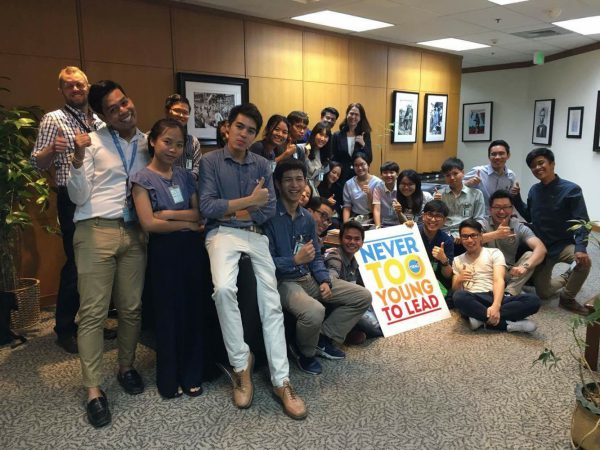
Compare what Tacitus wrote nearly 2,000 years ago with the United States’ Young Southeast Asian Leaders Initiative (YSEALI). Upon the YSEALI website, a description of the programme reads:
Launched in 2013, the Young Southeast Asian Leaders Initiative (YSEALI) is U.S. government’s signature program to strengthen leadership development and networking in Southeast Asia. Through a variety of programs and engagements, including U.S. educational and cultural exchanges, regional exchanges, and seed funding, YSEALI seeks to build the leadership capabilities of youth in the region, strengthen ties between the United States and Southeast Asia, and nurture an ASEAN community. YSEALI focuses on critical topics identified by youth in the region: civic engagement, environment and natural resources management, and entrepreneurship and economic development.
At face value, the notion of the United States “training” the “leaders” of Asia makes little sense, considering such training would be endowing such leaders with American values serving American interests, not Asia’s. Thus, their role as “leaders” is questionable. Their role as “facilitators” or “collaborators” seems like a much more accurate description.
The programme includes academic and professional fellowships to the United States.
The Academic Fellows Program is described as:
The YSEALI Academic Fellows Program brings undergraduates or recently graduated students between the ages of 18 and 25 to the United States for a five-week institute held on the campus of a U.S. college or university.
These five week institutes, held on the campus of a U.S. university or college, will include an academic residency, leadership development, an educational study tour, local community service activities, and opportunities to engage with American peers. The program will conclude in Washington, D.C., to allow for engagement with policymakers, governmental representatives, businesses, and think tanks.
This, quite literally, is the modern day version of what Tacitus described in his writings nearly 2,00 years ago, where the US is educating the youth of Southeast Asian states in the liberal arts, indoctrinating them into networks built to establish, maintain and expand American hegemony, encouraging an expressed preference for American culture, values and institutions while placing those of their homelands as subordinate.
It is interesting to note that “think tanks” are mentioned as part of the YSEALI experience. Those familiar with the board of directors and corporate sponsors of these think tanks will understand that it is within their halls, unelected policymakers representing immense corporate and financial interests, create foreign and domestic policy that is implemented regardless of who the American people vote into office and regardless of whether the American people agree with such policies or not, saying nothing of whether such policies even benefit the American people.
Those partaking in the YSEALI will likely believe they are at the cutting edge of “democracy,” while in fact, they are instead becoming extra weight behind the bludgeoner of dictatorial corporate special interests.
The Professional Fellows Program is described as:
The YSEALI Professional Fellows Program gives participants ages 25-35 the opportunity to spend five weeks in the United States, including four weeks working directly with American counterparts in individually tailored work placements with non-profit organizations, state and local government, and private-sector offices across the country. During these placements, Fellows build their practical expertise, leadership skills, and professional networks.
The Professional Fellows Program places young Asians at work places in areas including economic empowerment, environmental sustainability, legislative process and governance/civic engagement and civil society and NGO (nongovernmental organisation) development.
Just as the Roman Empire did two millennia ago, the United States is today recruiting cadres of young people from across Southeast Asia, indoctrinating them into America’s hegemonic networks and sending these cadres back to their home countries to culturally colonise them.
Instead of building up media platforms, institutions and NGOs based on local values, culture and the best interests of the people living in Southeast Asia, these cadres, with “seed funding” provided through both the US State Department and the YSEALI itself, will be building networks that serve US special interests, locked directly into the very institutions and networks YSEALI alumni met and worked with during their various fellowships.
Empire has not died. It has simply evolved, with much of that evolution being superficial and the underlying networks and methods remaining nearly indistinguishable to those employed by the Romans, British and even by 19th century American “Manifest Destiny.”
Empire has not died because the fundamental aspects of human nature; greed, the need to dominate, avarice and all other negative qualities associated with absolute power corrupting absolutely have not changed. No matter how progressive the US attempts to dress up its “fellowships,” the YSEALI and other programmes like it will continue to be spoken of by those who are drawn into them as “civilisation” when in fact they are only a “feature of their enslavement.”
Joseph Thomas is chief editor of Thailand-based geopolitical journal, The New Atlas.
Hillary and the Clinton Foundation: Exemplars of America’s Political Rot
By Eric Draitser | CounterPunch | August 29, 2016
Hillary Clinton may be enjoying a comfortable lead in national polls, but she is far from enjoying a comfortable night’s sleep given the ever-widening maelstrom of scandals engulfing her presidential bid. And while Clinton delights in bloviating about a decades-long “vast, right wing conspiracy” against her, the fact is that it’s the Clinton political machine’s long and storied track record of criminality, duplicity, and corruption that haunts her like Lincoln’s ghost silently skulking through White House bedrooms.
The latest in a string of embarrassing scandals is centered on the powerful Clinton Foundation, and the obvious impropriety of its acceptance of large donations from foreign governments (and wealthy individuals connected to them), especially those governments universally recognized as oppressive dictatorships whose foreign policy orientation places them squarely in the US orbit.
Of particular note are the Gulf monarchies such as Saudi Arabia and Qatar whose massive donations belie the fact that their oppression of women runs contradictory to Clinton’s self-styled ‘feminism’ and belief “that the rights of women and girls is the unfinished business of the 21st Century.” Is collaborating with feudal monarchies whose subjugation of women is the stuff of infamy really Clinton’s idea of feminism? Or, is it rather that Clinton merely uses issues such as women’s rights as a dog whistle for loyal liberals while groveling before the high councilors of the imperial priesthood?
What the Clinton Foundation hullabaloo really demonstrates is that Clinton’s will to power is single-minded, entirely simpatico with the corruption of the military-industrial-financial-surveillance complex; that she is a handmaiden for, and member of, the ruling establishment; that Clinton represents the marriage of all the worst aspects of the political class. In short, Clinton is more than just corrupt, she is corruption personified.
Clinton’s Dirty Dealing and Even Dirtier Laundry
In a hilariously pig-headed, but rather telling, statement, former President Bill Clinton responded to allegations of impropriety with the Clinton Foundation by saying, “We’re trying to do good things… If there’s something wrong with creating jobs and saving lives, I don’t know what it is. The people who gave the money knew exactly what they were doing. I have nothing to say about it except that I’m really proud.”
Leaving aside the fact that such an arrogant comment demonstrates Bill Clinton’s complete contempt for ethics and the basic standards of proper conduct, the salient point is that the argument from the Clintons is that the foundation is inherently good, that it helps people around the world, and that, as such, it can’t possibly be corrupt and unethical. Where there’s smoke, there’s fire – except when it comes to the Clintons who stand proudly enveloped in billowing clouds of smoke swearing up and down that not only is there no fire, but anyone who mentions the existence of flames is both a sexist and Trump-loving Putin stooge.
But indeed there is a fire, and it is raging on the American political scene. And nowhere is the heat more palpable than in the deserts of the Middle East where wealthy benefactors write massive checks for access to America’s 21st Century Queen of Mean (apologies to Leona Helmsley).
Consider the 2011 sale of $29 billion worth of advanced fighter jets to Saudi Arabia, a gargantuan deal that made the feudal monarchy into an overnight air power. Were there any doubts as to the uses of the hardware, look no further than the humanitarian nightmare that is Yemen, a country under relentless air war carried out by the Saudis. And, lo and behold, the Saudis had been major contributors to the Clinton Foundation in the years leading up to the sale. And it should be equally unsurprising that just weeks before the deal was finalized, Boeing, the manufacturer of the F-15 jets that were the centerpiece of the massive arms deal, donated $900,000 to the Foundation.
Of course, according to Bubba and Hil, it’s all conspiracy theory to suggest that the Clinton Foundation is essentially a pay-for-play scheme in which large sums of money translate into access to the uppermost echelons of state power in the US. As the International Business Times noted:
The Saudi deal was one of dozens of arms sales approved by Hillary Clinton’s State Department that placed weapons in the hands of governments that had also donated money to the Clinton family philanthropic empire… Under Clinton’s leadership, the State Department approved $165 billion worth of commercial arms sales to 20 nations whose governments have given money to the Clinton Foundation… That figure — derived from the three full fiscal years of Clinton’s term as Secretary of State (from October 2010 to September 2012) — represented nearly double the value of American arms sales made to the those countries and approved by the State Department during the same period of President George W. Bush’s second term.
The Clinton-led State Department also authorized $151 billion of separate Pentagon-brokered deals for 16 of the countries that donated to the Clinton Foundation, resulting in a 143 percent increase in completed sales to those nations over the same time frame during the Bush administration. These extra sales were part of a broad increase in American military exports that accompanied Obama’s arrival in the White House. The 143 percent increase in U.S. arms sales to Clinton Foundation donors compares to an 80 percent increase in such sales to all countries over the same time period.
Additionally, as Glenn Greenwald explained earlier this year,
The Saudi regime by itself has donated between $10 million and $25 million to the Clinton Foundation, with donations coming as late as 2014, as she prepared her presidential run. A group called “Friends of Saudi Arabia,” co-founded “by a Saudi Prince,” gave an additional amount between $1 million and $5 million. The Clinton Foundation says that between $1 million and $5 million was also donated by “the State of Qatar,” the United Arab Emirates, and the government of Brunei. “The State of Kuwait” has donated between $5 million and $10 million.
The sheer dollar amounts are staggering. Perhaps then it comes as no surprise just why nearly every single influential figure in the military-industrial-financial-surveillance complex – from General John Allen to death squad coordinator extraordinaire John Negroponte, from neocon tapeworms such as Max Boot, Robert Kagan, and Eliot Cohen to billionaire barbarocrats like the Koch Brothers, George Soros, and Warren Buffett – is backing Hillary Clinton. Not only is she good for Empire, she’s good for business. And ultimately, that’s what this is all about, isn’t it?
But of course, Hillary’s devotion to the oil oligarchs of Saudi Arabia and the Gulf goes much deeper than simply an exchange of money for weapons. In fact, Hillary is deeply committed to the Saudi royal family’s foreign policy outlook and tactics, in particular the weaponization of terrorism as a means of achieving strategic objectives.
Libya provides perhaps the paragon of Clintonian-Saudi strategy: regime change by terrorism. Using terror groups linked to Al Qaeda and backed by Saudi Arabia, Clinton’s State Department and the Obama Administration managed to topple the government of Muammar Gaddafi, thereby throwing the former “jewel of Africa” into turmoil and political, economic, and social devastation. To be fair, it was not the Saudis alone involved in fomenting war in Libya, as Hillary’s brothers-from-other-mothers in Qatar and the United Arab Emirates were also directly involved in sowing the seeds of the current chaos in the country.
And of course, this strategic partnership between Clinton and the Gangsters of the Gulf extends far beyond Libya. In Syria, Clinton’s stated policies of regime change and war are aligned with those of Riyadh, Doha, and Abu Dhabi. And, of course, it was during Clinton’s tenure at the State Department that US intelligence was involved in funneling weapons and fighters into Syria in hopes of doing to Syria what had already been done to Libya.
Huma Abedin: Clinton’s Woman in Riyadh
Just in case all the political and financial ties between Clinton and the Gulf monarchies wasn’t enough to make people stop being #WithHer, perhaps the role of her closest adviser might do the trick. Huma Abedin, Clinton’s campaign chief of staff, has long-standing ties to Saudi Arabia, the country where Huma spent her childhood from the age of two. As a Vanity Fair exposé revealed earlier this year:
When Abedin was two years old, the family moved to Jidda, Saudi Arabia, where, with the backing of Abdullah Omar Nasseef, then the president of King Abdulaziz University, her father founded the Institute of Muslim Minority Affairs, a think tank, and became the first editor of its Journal of Muslim Minority Affairs… After [Abedin’s father] Syed died, in 1993, his wife succeeded him as director of the institute and editor of the Journal, positions she still holds… Abdullah Omar Nasseef, the man who set up the Abedins in Jidda… is a high-ranking insider in the Saudi government and sits on the king’s Shura Council, there are claims that Nasseef once had ties to Osama bin Laden and al-Qaeda—a charge that he has denied through a spokesman—and that he remains a “major” figure in the Muslim Brotherhood. In his early years as the patron of the Abedins’ journal, Nasseef was the secretary-general of the Muslim World League, which Andrew McCarthy, the former assistant U.S. attorney who prosecuted the “Blind Sheik,” Omar Abdel Rahman, in the wake of the 1993 World Trade Center bombing, claims “has long been the Muslim Brotherhood’s principal vehicle for the international propagation of Islamic supremacist ideology.”
Consider the implications of this information: Clinton’s closest adviser comes from a family connected at the highest levels with the Saudi royal family as well as the Muslim Brotherhood. While right wing pundits portray the Muslim Brotherhood as some sort of straightforward international terror organization, the reality is much more complex as the Brotherhood is more an international political movement whose tentacles stretch into nearly every corner of the Muslim world. Its vast reserves of cash and political influence, backed by Gulf monarchies such as Qatar, allows the Brotherhood to peddle influence throughout the West, while also being connected to more radical salafist elements. An obvious two-for-one for Clinton.
In effect then, Abedin represents a bridge connecting Hillary with both the ruling elites in Riyadh, as well as influential clerics, businesspeople, and political leaders throughout the Middle East. Perhaps then it makes sense why Abedin, in contravention of every standard of ethics, was employed by Teneo Holdings – a pro-Clinton consultancy founded by former Clinton aide Doug Band – while also working for the State Department. Such ethical violations are as instinctive for Hillary as breathing, or calling children superpredators.
Trump, Assange, Putin, and Clinton’s Sleight of Hand
Despite being embroiled in multiple scandals, any one of which being enough to sink the campaign of most other candidates, Clinton and her army of fawning corporate media sycophants, have attempted to deflect attention away from her own misdeeds, corruption, and nefarious ties by instead portraying everyone who opposes them as puppets, stooges, and useful idiots.
Let’s begin with Republican nominee and gasbag deluxe, Donald Trump, who Clinton trolls have attempted to portray as a stooge of Russian President Putin. While it’s indeed quite likely that the Kremlin sees Trump as far less of a threat to Russia’s interests than Clinton – just look at Clinton’s roster of neocon psychopath supporters to see that Putin has a point – the notion that Trump is somehow a creation of Putin, or at the very least is working for him is utterly absurd.
And the “evidence”? Trump’s connections with wealthy Russian oligarchs. I suppose those who have made their homes under rocks these last 25 years might not know this, but nearly every billionaire investor has gone to Russia in that time, forged ties with influential Russians, and attempted to make money by stripping clean the bones of what was once the Soviet Union. Sorry Naomi Klein, I guess the Clintonistas expect no one to have read Shock Doctrine which details the sort of disaster capitalism run amok that took place in Russia in the 1990s.
And then, of course, there’s that great confabulator Julian Assange who has also been smeared as a Putin puppet by the #ImWithHer media somnambulists. I guess the lords of corporate capital didn’t like the fact that Assange and WikiLeaks have managed to expose countless dirty deeds by Clinton’s Tammany Hall of the 21stCentury. From using the DNC as a political appendage of the Clinton campaign (as revealed by the WikiLeaks dump of DNC emails) to his recent promise to make public the “most interesting and serious” dirt on Hillary, Assange has become a thorn in the side – or thumb in the eye, as it were – for Hillary.
And what would a rundown of the specters haunting Clinton’s dreams be without mention of the rabid bear of Russia, big bad Vlad? Clinton recently referred to Putin as the “grand godfather of this global brand of extreme nationalism.” Leaving aside the asinine phraseology, Clinton’s attacks on Putin reveal the weakness of the Democratic nominee, the hollowness of her arguments, and the unmitigated gall of a hypocrite for whom casting stones in glass houses is second nature.
For, at the very moment that she takes rhetorical swipes at Putin, Clinton herself is implicated in a worldwide network of extremism that promotes terrorism, rains death and destruction on millions of innocent civilians, and moves the world closer to global conflict. If Putin represents the éminence grise of a “global brand of extreme nationalism,” then Clinton is the fairy godmother of global extremism and terror. It’s a good thing she has access to the best personal grooming products Goldman Sachs money can buy as it is not easy to wash decades-worth of blood off your hands.
And so, the quadrennial danse macabre that is the US presidential election has turned into an embarrassing sideshow of dull-witted infantilism. But amid the idiocy there is wanton criminality and corruption to be exposed before the world. For while Trump is undoubtedly the bearded lady of America’s freak show, Hillary is the carnival barker.
She knows the ring toss and other games are rigged, but she coaxes the feeble-minded to play nonetheless. She knows the carnies are drunk and reckless, but she urges the children to pay for another ride anyway. She understands that her job is to sell a rigged game, and to call security when someone challenges her lies. And, unfortunately, whether you want it or not, the Hillary Roadshow is coming to a town, or country, near you.
Guns sold, guns lost: What Pentagon sent to Iraq & Afghanistan after 9/11
RT | August 24, 2016
Since September 2001, the Pentagon has listed $40 billion worth of contracts for small arms intended for Afghanistan and Iraq, supplying 1.45 million guns to both countries while only accounting for 3 percent of them, says a new report by a British NGO.
The London-based nonprofit Action on Armed Violence (AOAV) pored over 14 years’ worth of contracts issued by the US Department of Defense, documenting the purchases of small arms – defined as anything under 30mm in caliber – ammunition and attachments, such as sniper scopes or tripods. They found a massive amount of weapons supplied by the US to the primary theaters of the “War on Terror,” and remarkably little accounting of whose hands they ended up in.
“Our findings raise concerns about the DOD’s own transparency and accountability when it comes to issuing contracts,” Iain Overton, AOAV’s director of investigations, said when announcing the report’s publication Wednesday.
Not only has the Pentagon’s contract database listed only 3 percent of the approximately 1.45 million small arms sent to Iraq and Afghanistan over the years, “we also know the US government has acknowledged they don’t know where many of these weapons now are,” Overton added.
A team of AOAV researchers spent almost a year looking into every contract published by the Pentagon between September 11, 2001 and September 10, 2015, said the organization, whose mission is “research and advocacy in order to reduce the incidence and impact of global armed violence.”
What they found was just over $40 billion of solicitations for small arms, ammunition and attachments, with just under $20 billion actually paid out to contractors. Of the 412 published contracts, 137 – or 33 percent – contained errors and discrepancies.
Ten companies accounted for 65 percent of the total published contract values, the researchers found. The top five contractors were Alliant Techsystems – now split into OrbitalATK and Vista Outdoor – DRS Technologies, BAE Systems Inc., Knight’s Armament Co, and General Dynamics. The largest single contract was for the modernization of Lake City Army Ammunition Plant in Independence, Missouri, worth up to $8.48 billion.
Some 949,582 small arms were sent to Iraq, and another 503,328 to Afghanistan, amounting to 1,452,910 assault and sniper rifles, pistols, machine guns and other unspecified firearms. Yet the Department of Defense contract publications listed only 19,602 of these weapons, just over 1 percent of the total. When AOAV pressed for verification, the DOD provided itemized lists for 719,474 weapons provided through June 2016.
The numbers “tell the story of two wars that did not go as pitched,” veteran military correspondent CJ Chivers wrote in the New York Times Magazine, commenting on AOAV’s findings.
The retired Marine and author of The Gun also filled in a piece of the puzzle the researchers missed by not counting the grenade launchers and anti-tank weapons provided by the Pentagon.
“The data offer no insight into a startlingly risky aspect of the Pentagon’s arming of local forces with infantry arms: the wide distribution of anti-armor weapons, including RPG-7s,” Chivers wrote.
After the first few weeks of each war, the only armor on either battlefield was either American or allied, “which made the Pentagon’s practice of providing anti-armor weapons to Afghan and Iraqi security forces puzzling,” Chivers wrote. “Why would they need anti-armor weapons when they had no armor to fight? All the while rockets were somehow mysteriously being fired at American convoys and patrols in each war.”
Clinton gets more donations from arms industry: Report
Press TV – August 24, 2016
American weapon manufacturers have made bigger contributions to the campaign of Democratic presidential nominee Hillary Clinton, a major turnaround after years of backing the Republican ticket.
According to a report by Politico released on Wednesday, Clinton has received more donations from high-ranking employees of giant Pentagon contractors like Lockheed Martin and General Dynamics, outperforming her GOP rival Donald Trump by a 5-to-1 ratio.
According to filings with the Federal Election Committee, Trump’s campaign has banked nearly $55,000 in contributions from executives of the 25 major defense contractors, compared to $273,000 given to Clinton.
This marks a significant break from the years-old habit of supporting the Republican candidate. In fact, the arms industry has teamed with Republican congressional and presidential candidates in eight of the past 10 election cycles.
In the 2012 election cycle, for example, then-Republican nominee Mitt Romney received far more support from military contractors, compared to President Barack Obama.
Analysts attribute the change to Trump’s stance on national security, including his criticism of NATO and other military allies.
The real estate mogul said in late July that if he is elected president, the US would only aid the allies who have “fulfilled their obligations to us.”
The New York businessman has also blasted military contractors for the way they influence government spending.
Clinton, however, made a reputation for having good relations with military contractors during her run in the US Senate, where she served on the Armed Services Committee.
“I’ve worked with Republicans and Democrats of all stripes over the years, and it’s the first time I’ve seen one who scares the hell out of me if he were to become president,” said Linda Hudson, who once headed the US branch of British arms provider BAE Systems, which is the Pentagon’s eighth largest contractor.
One Republican defense lobbyist told Politico that the arms manufacturing “community is just much more comfortable with Clinton.”
“With Hillary Clinton we have some sense of where she would go, and with Trump we have none,” the lobbyist said. “He knows nothing about the system.”
Obamacare Supporters Oppose ColoradoCare
By Renee Parsons | CounterPunch | August 24, 2016
As the nation’s largest health insurance companies scale back participation in Obamacare (aka Affordable Care Act) creating what insurance jargon refers to as a death spiral, it was only a matter of time before state Democratic leaders and their agents announced their opposition to ColoradoCare (Amendment 69), a medicare-for-all health care system that will appear on the statewide November 8th ballot.
State Democratic establishment leaders who had already announced their opposition to ColoradoCare include Governor John Hickenlooper, former Governor Bill Ritter and Senator Michael Bennett who is running for re-election.
In an effort to salvage what is left of the President’s most significant (and perhaps only) legislative achievement as Obamacare struggles for relevance, ProgressNow Colorado (PN) held a press conference on August 17th (“ProgressNow Colorado Opposes Amendment 69, Calls For Nationwide Health Reform”) to announce their opposition to CC.
Featured speaker at the PN news conference was State House Majority Leader Cristina Duran, considered a ‘rising star’ who recently spoke on behalf of Hillary Clinton at the Democratic National Convention. In 2016, it has been reported that Duran received campaign contributions from at least a dozen special interest groups associated with the health insurance industry.
In addition, Colorado NARAL joined the PN news event, again voicing their opposition to CC. The lack of availability for abortions is what keeps NARAL functioning. The obvious irony is that if CC is adopted (which will allow abortions), NARAL’s raison d’etre will cease to exist and they will be able to close their doors.
Since it is essential for the President to have a functioning Affordable Care Act to top his Legacy List of accomplishments, it would be foolishly naïve to believe that the DNC’s fingerprints are not all over the opposition to ColoradoCare.
As the state’s ‘largest on line environmental and advocacy organization,’ the PN Colorado’s website identifies its vision to “act as a public relations shop promoting progressive ideals while pushing back on bad policies and bad behavior…” The archives of PN press releases reveals the organization acting as a thinly-veiled extension of the neo-liberal Democratic party as a pr flack rather than an issue-oriented, independent thinking progressive organization focused on societal concerns of Colorado citizens.
Curiously, the PN press release called for “nationwide healthcare reform” but isn’t that what the Democrats offered as the Affordable Care Act in 2010?
Since March, 2012, PN has issued twenty press releases solely dedicated to the benefits of Obamacare including “Colorado Progressives Celebrate Upholding of Obamacare” (June 28, 2012) and “Colorado Progressives Celebrate Another Big Obamacare Victory” (June 25, 2015).
In retrospect, it is now apparent that any mention of CC’s successful petition drive with 156,000 submitted signatures in October, 2015 was a deliberate omission by PN. Even as ‘Petitions Delivered Let CU Students Attend GOP Debate” earned a press release from PN on October 22, 2015, the CC ability to secure a place on the 2016 ballot (November 9, 2015), no small feat, was not applauded by the PN.
State Senator Irene Aquilar (also a doctor), one of the authors of CC, said that when “Organizations mislabeled as ‘progressive’ choose to support the status quo, choose moneyed influence over the lives of the 535 Coloradans who die each year because of lack of health care, it makes me angry.”
As the Colorado Democratic party has exposed its true nature; willing to choose narrow political gain and greed over the long-term health of their citizens, they have revealed little social conscience, except when its suits their partisan agenda.
But what do we expect from a party that has opened its doors to Wall Street money, big business that continues to send American jobs abroad, trade agreements that undermine a nation’s sovereignty, pro war neo cons, drone attacks on civilians, support for the MISI (military-intelligence-surveillance industry) and other corporate globalist leeches that care nothing about our native country or its citizens.
Originally dubbed in 2010 by the President as ‘comprehensive health reform’ and given the Act’s controversial nature throughout its short legislative life, it should come as no surprise that success of the Act relied on competition between insurance companies [and] has failed abysmally. The Act was never a panacea to provide health care; it was always a vehicle to provide insurance to cover health care costs. Therein lies a big difference between Obamacare and CC.
According to the Kaiser Family Foundation, competition among insurance companies will be completely absent in five states (Alabama, Alaska, Oklahoma, South Carolina and Wyoming).
In what promises to be a futile attempt at a legislative fix, the Democrats have come up with a ‘reinsurance’ scheme to cover insurance industry losses while attempting to cover the cost of individual coverage. The mounting evidence, however, confirms that the politics of statutory resuscitation is formidable, if not impossible.
Apparently no one at the White House realized how many sick Americans there are, how expensive it would be to provide them with insurance coverage and that healthy Americans would prefer to take the risk and pay the penalty rather than pay double digit premium increases and exorbitant deductibles. Who did not see that coming?
Who believed that younger, healthier Americans would jump at the chance to sign up, take on health care debt on top of student loan debt – just to impress the President they had supported in 2008? My faith in the millennial generation is restored knowing they have the smarts to put the numbers together.
Some of those departing big leaguers who are abandoning their health care customers due to lack of profits include Aetna which covered 900,000 people in fifteen states and has announced a cut back to four states and suffered a loss of $300 M; Humana is cutting back its coverage from 1,350 counties to 156; Blue Cross lost $715 M in just three states and the nation’s largest health care insurance company, UnitedHealthGroup lost $450 M in 2015 and is cutting back to three states.
In late July, the Department of Justice filed suit to prevent the Humana – Aetna and the Cigna – Anthem mergers from taking place. By mid August, Aetna and Anthem informed the DOJ that they would totally pull out of Obamacare unless their mergers were approved. Any bets on whether these mergers will go forward after the Presidential election?
To date, 70% of the original Obamacare insurance participants have backed out because of financial problems with only seven of the original twenty three insurance providers still offering policies.
Those insurance companies not exiting the marketplace have announced premiums with a nationwide average increase of 24% that is not affordable for many families and yet many Americans have an urgent need for health care.
With a $600,000 bank balance, CC is up against what looks like a omnipotent wall of opposition not limited to such community-minded organizations as the Sheet Metal Workers Union, the Denver Center for Performing Arts, the Colorado Black Chamber of Commerce and the International Brotherhood of Electrical Workers, all of which chose to publicly oppose the CC rather than remain in the background and thus support their fellow citizens who need reliable, affordable health care.
Meanwhile the main opposition group, Coloradans for Coloradans, which crowed about the Democrats joining the opposition, have collected $1 M from Anthem, $450,000 from UnitedHealthCare Services, Healthone Systems and Centura Health $250,000 each, Cigna Health $100,000, PHRMA $100,000, the Colorado Association of Realtors $100,000 and so forth – you might imagine the rest of the list.
Contributions from some of the very same insurance companies that have either pulled out or are dramatically scaling back their participation is indicative of how corporations can afford to sit and wait – until the Federal government sweetens the pot for their re-entry into the healthcare marketplace.
In addition, the Koch Brothers Americans for Prosperity are partners with the Democrats in pummeling Amendment 69 into the ground. This may be the first time that the Koch Brothers and the Democratic party have officially and publicly lined up on the same issue, excluding campaign contributions.
If the Democrats (along with the medical care/health insurance industrial complex and Koch Bros) succeed in defeating CC, they can expect to take the blame for depriving Colorado citizens of an alternative to Obamacare which will predictably continue its spiral.
If, by some miracle of divine intervention, Colorado voters approve Amendment 69, they are telling the Obama Administration that they have no faith in the President’s Affordable Care Act, no faith in the Federal government to fix it and no faith in the Democratic party to protect the public interest.
Renee Parsons has been a member of the ACLU’s Florida State Board of Directors and president of the ACLU Treasure Coast Chapter. She has been an elected public official in Colorado, an environmental lobbyist and staff member of the US House of Representatives in Washington DC. She can be found on Twitter @reneedove31
Featured Video

Death Spikes & Rising Cancer In Our Youth Explained
or go to
Aletho News Archives – Video-Images
From the Archives
Politicians lie
By Mazin Qumsiyeh | Popular Resistance | August 18, 2013
There is no way to say this truth nicely: Politicians lie. That includes Japanese, American, Egyptian, Israeli, and Palestinian politicians! Is there something more common sense than that? Yet, so many citizens around the world believe their own politicians or wistfully acknowledge lies but think it is part of the job needed to run things. They believe even when politicians contradict themselves blatantly. This phenomenon is rather remarkable. It is a dissonance and disconnect from reality that many seem oblivious to. It is very dangerous because it can lead to accepting rationales for going to war. These can be deadly wars that lead to millions of lives lost as happened in what was called World War 1 and WW2. Even when incredible and declassified evidence abound, politicians continue to lie and old mythologies refuse to die. Here are just a few of the countless lies told to us over the past few decades… continue
Blog Roll
 Aletho News
- China pushes back against US on Cuba, Iran
- Ukrainian Soldiers, Potential Mercenaries: Have Gun, Will Travel!
- Burnham’s UN debut… A masterclass in British disinformation
- Iran flights continue despite US aviation sanctions
- Global Tipping Points Lead the World Into a State of Entropy
- The day-after at the White House: USA and Xi Jinping
- The Geopolitical Balance in the Red Sea: The UAE Being Displaced by New Players
- Iraqi resistance group vows to stage airport sit-ins over Iran aerial blockade
- Turkish parliament to review Saudi-Pakistan defense pact next month
- DEATH SPIKES & RISING CANCER IN OUR YOUTH EXPLAINED
- If Americans Knew
- Deconstructing Netanyahu’s pants-on-fire UN rant – Daily Update
- Trump betrayed voters with his campaign lies and prioritized a foreign country once he took office
- Netanyahu calls Israel’s war in Gaza ‘opposite of genocide’ in UN speech to near-empty hall
- Settler Kidnappings: Torture, Sexual Abuse and Terrorisation of Palestinian Abductees as Israel Deepens Annexation of West Bank
- Gaza winter nears as 162,000 tents become unusable, raising fears of humanitarian crisis
- Netanyahu says, “It’s the opposite of genocide”; UN says Gaza economy is world’s ‘most severe crisis on record’ – Daily Update
- Israel’s US-Backed Assault on Gaza Has Created the ‘World’s Most Severe Economic Crisis on Record’: UN
- ‘Protecting U.S. Citizens’… From Israel
- ‘This is where I live now, the back of a truck’: a day in the life of a grandmother in Gaza
- In UN Speech, Iran’s President Displays Pictures of Children Killed by US, Brings Attention to Israel’s Nuclear Arsenal
- No Tricks Zone
- New Study: Earth And Venus Surface Warmth Largely Explained By Convection And Lapse Rate, Not CO2 Or Radiation
- 2025 Nature Paper Claiming Worsening Global Drought Gets RETRACTED …Heavily Flawed
- New Study: ‘Global Drought Shows No Detectable Recent Acceleration Under Climate Warming’
- Economic Masterminds: German Socialists Suggest Taxing Productivity Gains Stemming From Using AI
- The South China Sea Has Not Been Cooperating With The Climate Change Narrative
- Energy Crisis: Germany Enters Heating Season With Historically Low Gas Reserve Fill Levels
- New Study: The Antarctic Ice Sheet Gained Mass From 2020-2024 Due To Staggering Snow And Ice Accumulation
- Study: Ocean Heating Rates From Thousands Of Years Ago ‘Dwarf’ Modern Ocean Heating Rates
- Climate Extremists Target, Attack Large-Scale Power Grid Infrastructure In Germany!
- New Study: Antarctic Ice Melt Has Contributed Less Than 1 Centimeter To Sea Level Rise In The Last 30 Years

