Ties between Turkey and Israel are reportedly improving after a five-year rift between the two sides.
Speedy progress in talks to import Israeli natural gas by Turkey has raised expectations of a thaw in relations. Israel’s once-strong ties with Turkey soured in 2010 after Israeli commandoes killed 10 Turkish peace activists on board a ship seeking to break the blockade of the Gaza Strip. Despite the tensions, Ankara and Tel Aviv have maintained bilateral relations including military and trade ties.
When I was very young, my parents used to tell me why having “lots of toys” wasn’t a good idea. “The more you have, the more you want,” they would say. I didn’t have many toys — we were poor — so the idea of possessions feeding greed didn’t make much sense to me then.
But I’ve learned the truth of that statement from observation over the years and lately I’ve been observing Mark Zuckerberg.
Zuckerberg is a 31-year-old computer programmer who did two things that made him famous: he founded Facebook, the social networking super service, and, as a result, he amassed a fortune worth about $46 billion. His bank account is as large as the capitalization of many countries.
How he got to these lofty heights of wealth and cultural impact is a matter of often fierce debate — he’s been sued by former “partners” several times. But what’s more important than how he got control of Facebook is what he’s constructed with it: a ubiquitous presence in the lives of a billion people with the potential to frame and manipulate their communications, their relationships and, to a frighteningly large extent, their lives.
So last month, when Zuckerberg and his wife Priscilla Chan announced in a letter to their new baby — a rather novel way to package a press release — that, over the course of their lives, they will give almost all their Facebook shares to a project called the Chan Zuckerberg Initiative, the world took note.
The Initiative, they explained, would “advance human potential and promote equality” in health, education, scientific research, and energy. In short, change the world: on its face, a worthy cause. But, like many of Zuckerberg’s plans and projects, this one has another side that is darker, more cynical and, even if only partially successful, a potential nightmare for the human race.
How many zeroes are there in $46 billion? More than most of us will ever see. So it’s tough for us “average people” to fathom what a billionaire does with his or her money. Even living the most opulent life-style imaginable wouldn’t start to dent those savings in a bank — the interest alone would pay for everything you could imagine owning. That, in a sense, is Mark Zuckerberg’s dilemma. At 31, he has so much money he doesn’t know what to do with it.
So he follows a long capitalist tradition called philanthropy. In projects that range from supporting education to enhancing Internet access world-wide to tackling specific social problems, Zuckerberg has thrown money at social inequality like a park visitor throws bread-crumbs to pigeons…except the pigeons actually benefit.
When he gave $100 million to the Newark Public Schools, the money was largely wasted with very little impact on the quality of education in that embattled city. When he has joined other rich philanthropists, like Warren Buffett, in a string of similar projects — funding schools or programs in other U.S. cities, giving major endowments to hospitals or funding initiatives in Global South countries — they have usually fallen short of their expectations or projected expectations that didn’t make much sense in the long term. Some good happens but the social problems remain and often deepen.
At the same time, he’s used his wealth and power to launch Internet projects like one that brings together almost a million software developers to work on Facebook improvement and another, called Beacon, that enables people to share information with their Facebook friends based on their browsing activities on other sites (also providing a huge resource to advertisers and marketing people).
In the Summer of 2013, Zuckerberg launched “Internet.org” whose stated purpose is to bring internet access to over 5 billion people world-wide. The access, however, is partial; only certain websites will be seen by these newly connected people in part because many of the world’s governments don’t allow full access to the Internet. Users will, however, be able to fully access Facebook.
Then there’s Facebook itself which continues to expand. With over a billion users, the company has control over the information, data and communications of much of the human race. All of it is contained in an Internet protocol that feels like the conversation at a party where everyone’s had a few drinks. Short statements followed by long strings of one sentence responses, fattened by photos and videos with no real explanation of their importance and a huge “friends” section. It’s a snapshot of your life without the depth, thinking and development that makes it precious to the rest of us.
But that basic information is very valuable to advertisers and marketing companies who can use your activities and friends lists to develop a consumer profile of you. Facebook sells it to them and then fashions advertising programs that display ads that reflect your buying patterns and insert them into the flow of messages (at a premium advertising rate). It also turns the information over to government spy agencies like the NSA.
Facebook admits no sin. It claims that its user agreement allows it to “share relevant information on users” with advertisers for the users’ “convenience” (and, of course, to generate fantastic revenue) and that it can’t legally refuse to share information the NSA demands. None of which changes the reality of what it does and the potential impact that this has on people’s lives.
There’s a common thread to Zuckerberg’s projects. Those that are completely devoid of benefit to him and his company usually fall short of expectations. Projects that are at least partially successful, while they may benefit people, return a hefty benefit for Facebook.
Throughout all of this, Zuckerberg has trotted the globe projecting an image of a young genius whose altruism and concern for the planet and its people drive his daily activities. He’s written about all the time and been the subject of a major motion picture, The Social Network, although it portrays him in a less than flattering light.
What’s interesting about this record of double-edged philanthropy and innovation is that, contrary to the movie’s depictions of him as a snide self-absorbed jerk, Zuckerberg is by most accounts a friendly, open, funny and fairly humble guy. He and his wife have eschewed ostentatious shows of wealth, travelled mainly to speak with leaders and thinkers world-wide (rather than spend months lounging on beaches) and spent most of their time as a couple doing the things normal couples do (like walk around places rather than take a limousine). What’s more, people who know and work with him insist that his concern for the world is not only honest but consuming. In short, they say, he’s the real deal.
The question, however, is can the real deal be all that real using wealth generated by a morally corrupt economic system that pursues profit over any aspect of human life or well-being? In other words, can you provide a nutritious meal when the food is poisoned?
The answer, demonstrated throughout history, is “no”. You can’t and neither can Mark Zuckerberg.
Philanthropy is about control and always has been. The great philanthropists who’ve left their footprint in huge foundations and museums and universities were also among the most exploitative and viciously repressive capitalists of their time. Morally trapped by their immense fortunes, they have sought to control, not only the daily work activities of people (the source of their wealth), but our culture, education, thinking, social life and the other activities that consume every single second of our existence.
Such control protects their wealth in many ways but that’s not the principal reason for this “giving”. Their motivation is to shape our society as they shape our days. Like monarchs dictating reality from a throne, they want it all and, through philanthropy, they get it.
This is the culture in which Mark Zuckerberg functions. His projects have in common a certainty that his perspective and interests (and the system that creates them) offer a future to the human race no other perspective can. His internet projects not only develop internet skill but tie people to Facebook and the “quick message” and superficial relationship culture it drives. Even with his Internet.org project, Zuckerberg can’t conceive of a world in which people make their own decisions about where to go and what to do on the Internet. He is, effectively, trying to take control of the world.
His latest project is an illustration of that approach. Rather than create a foundation, the couple has created a limited partnership corporation, a legal form that has tax benefits, avoids much of the government scrutiny foundations deal with and allows for a much greater secrecy in its functioning and decision-making. A red flag is now flying.
That corporation, one would assume, will now dole out money to projects with potential but who decides the potential? We don’t know but since the corporation belongs to Mark and Priscilla one would assume that they have a big say. As a corporation, it doesn’t have to limit spending to non-profit ventures; it can invest in companies and profit-making projects if it wants. It can even invest in Zuckerberg companies and projects: basically, funding his own work.
While they are busy doling, by the way, Chan and Zuckerberg are still firmly in control of their assets since all that is happening is that the stock of Facebook is cashed in and put into the new company’s bank account with considerable tax benefits (since it’s a reinvestment).
Zuckerberg has yet to specify the projects his new venture will fund but, based on his past, we can confidently speculate. He will continue to encourage development as a way of molding human activity in accord with his vision of it. He will use that spectacular wealth to take even greater control of culture and education. Most of all, he will continue to spread his grasp of the Internet, the one thing that enables human interaction and resists this kind of control.
If Facebook is Zuckerberg’s vision of what on-line communications should be, the remarkable wealth of knowledge, shared thinking, compared experiences and, let us not forget, organizing that has become possible with the Internet will progressively be reduced to a ping-pong game of superficial statements and “likes”. If that vision is imposed through funding of education and other aspects of development, creativity and independent critical thinking will suffer and the kind of machine-like “competence” Zuckerberg frequently champions will hammer another nail in humanity’s coffin. If his funding is used to encourage development projects like the ones he has supported in the past, the cooperativism and the coop movement, the most exciting and potentially game-changing movement in today’s world, will find itself battling against odds that are even greater than the odds it currently faces.
In short, he would end up doing much more harm than good, playing a destructive kind of monopoly with real streets, buildings and lives.
Rich people can’t avoid acting that way and that’s why even “progressive” billionaires like Zuckerberg or Buffett are really part of an anti-future. The schemes and projects and reforms they think up in small groups and fund with large money will never improve the world fundamentally. The only way to do that is to build a world where people like them can never exist and such wealth can never be amassed. It’s hard to imagine the Chan Zuckerberg Initiative contributing that world.
Egypt, which is facing dwindling foreign reserves and a yawning budget deficit, will be getting a major boost this month, thanks to large aid packages coming in from Saudi Arabia, the African Development Bank and the World Bank.
On Wednesday, Prime Minister Sherif Ismail announced that Saudi Arabia will increase its investment in Egypt to 30 billion riyals (LE62 billion/US$8 billion), support Egypt’s petroleum needs for five years, and help boost traffic through the Suez Canal.
The announcement came after a Tuesday meeting of the Egyptian-Saudi coordination council. On Monday, Saudi Arabia announced that Egypt, along with 34 other states, was joining a Saudi-led alliance to fight terrorism.
In a Monday press conference, Ismail told reporters that during the meeting he intended to discuss the possibility of Saudi Arabia depositing funds at Egypt’s Central Bank — a more direct form of support for the government than increased investment. Official communications since the meeting have not mentioned this possibility, but an anonymous official told Bloombergnews the Kingdom is considering buying Egyptian treasury bonds and bills instead.
In related news, Egypt’s Minister of International Cooperation Sahar Nasr announced Tuesday that the board of the African Development Bank approved a US$500 million soft loan to Egypt. According to Nasr, the loan is part of a comprehensive economic development program that will loan US$1.5 billion to support Egypt’s general budget over three years, and signals the bank’s trust in Egypt’s economic and social program.
Meanwhile, the World Bank’s executive board is scheduled to meet Thursday to approve a US$1 billion budgetary support loan for Egypt. According to Egyptian officials, the loan is part of a three-year, US$3 billion package. It will be granted in accordance with the World Bank’s new Country Partnership Framework for Egypt, a document that is also expected to be approved on Thursday.
The last time Egypt received a major infusion of foreign support was April 2015, when Saudi Arabia, Kuwait and the United Arab Emirates each deposited US$2 billion at Egypt’s Central Bank. These deposits helped pushed the country’s foreign reserves to over US$20 billion.
Since then, reserves have dwindled, reaching US$16.42 billion at the end of November. In early December, Egypt’s new Central Bank governor, Tarek Amer, said the country’s reserve position was stable, and would improve in the coming months.
Theoretically, it would be a great story for the American press: an autocrat so obsessed with overthrowing the leader of a neighboring country that he authorizes his intelligence services to collaborate with terrorists in staging a lethal sarin attack to be blamed on his enemy and thus trick major powers to launch punishing bombing raids against the enemy’s military.
And, after that scheme failed to achieve the desired intervention, the autocrat continues to have his intelligence services aid terrorists inside the neighboring country by providing weapons and safe transit for truck convoys carrying the terrorists’ oil to market. The story gets juicier because the autocrat’s son allegedly shares in the oil profits.
To make the story even more compelling, an opposition leader braves the wrath of the autocrat by seeking to expose these intelligence schemes, including the cover-up of key evidence. The autocrat’s government then seeks to prosecute the critic for “treason.”
But the problem with this story, as far as the American government and press are concerned, is that the autocratic leader, President Recep Tayyip Erdogan, is in charge of Turkey, a NATO ally and his hated neighbor is the much demonized Syrian President Bashar al-Assad. Major U.S. news outlets and political leaders also bought into the sarin deception and simply can’t afford to admit that they once again misled the American people on a matter of war.
The Official Story of the sarin attack – as presented by Secretary of State John Kerry, Human Rights Watch and other “respectable” sources – firmly laid the blame for the Aug. 21, 2013 atrocity killing hundreds of civilians outside Damascus on Assad. That became a powerful “group think” across Official Washington.
Though a few independent media outlets, including Consortium News, challenged the rush to judgment and noted the lack of evidence regarding Assad’s guilt, those doubts were brushed aside. (In an article on Aug. 30, 2013, I described the administration’s “Government Assessment” blaming Assad as a “dodgy dossier,” which offered not a single piece of verifiable proof.)
However, as with the “certainty” about Iraq’s WMD a decade earlier, Every Important Person shared the Assad-did-it “group think.” That meant — as far as Official Washington was concerned — that Assad had crossed President Barack Obama’s “red line” against using chemical weapons. A massive U.S. retaliatory bombing strike was considered just days away.
But Obama – at the last minute – veered away from launching those military attacks, with Official Washington concluding that Obama had shown “weakness” by not following through. What was virtually unreported was that U.S. intelligence analysts had doubts about Assad’s guilt and suspected a trap being laid by extremists.
Despite those internal questions, the U.S. government and the compliant mainstream media publicly continued to push the Assad-did-it propaganda line. In a formal address to the United Nations General Assembly on Sept. 24, 2013, Obama declared, “It’s an insult to human reason and to the legitimacy of this institution to suggest that anyone other than the regime carried out this attack.”
Later, a senior State Department official tried to steer me toward the Assad-is-guilty assessment of a British blogger then known as Moses Brown, a pseudonym for Eliot Higgins, who now runs an outfit called Bellingcat which follows an effective business model by reinforcing whatever the U.S. propaganda machine is churning out on a topic, except having greater credibility by posing as a “citizen blogger.” [For more on Higgins, see Consortiumnews.com’s “‘MH-17 Case: ‘Old Journalism’ vs. ‘New’.”]
The supposedly conclusive proof against Assad came in a “vector analysis” developed by Human Rights Watch and The New York Times – tracing the flight paths of two rockets back to a Syrian military base northwest of Damascus. But that analysis collapsed when it became clear that only one of the rockets carried sarin and its range was less than one-third the distance between the army base and the point of impact. That meant the rocket carrying the sarin appeared to have originated in rebel territory.
But the “group think” was resistant to all empirical evidence. It was so powerful that even when the Turkish plot was uncovered by legendary investigative reporter Seymour M. Hersh, his usual publication, The New Yorker, refused to print it. Rebuffed in the United States – the land of freedom of the press – Hersh had to take the story to the London Review of Books to get it out in April 2014. [See Consortiumnews.com’s “Was Turkey Behind Syria Sarin Attack?”]
The Easier Route
It remained easier for The New York Times, The Washington Post and other premier news outlets to simply ignore the compelling tale of possible Turkish complicity in a serious war crime. After all, what would the American people think if – after the mainstream media had failed to protect the country against the lies that led to the disastrous Iraq War – the same star news sources had done something similar on Syria by failing to ask tough questions?
It’s also now obvious that if Obama had ordered a retaliatory bombing campaign against Assad in 2013, the likely winners would have been the Islamic State and Al Qaeda’s Nusra Front, which would have had the path cleared for their conquest of Damascus, creating a humanitarian catastrophe even worse than the current one.
To confess to such incompetence or dishonesty clearly had a big down-side. So, the “smart” play was to simply let the old Assad-did-it narrative sit there as something that could still be cited obliquely from time to time under the phrase “Assad gassed his own people” and thus continue to justify the slogan: “Assad must go!”
But that imperative – not to admit another major mistake – means that the major U.S. news media also must ignore the courageous statements from Eren Erdem, a deputy of Turkey’s main opposition Republican People’s Party (CHP), who has publicly accused the Erdogan government of blocking an investigation into Turkey’s role in procuring the sarin allegedly delivered to Al Qaeda-connected terrorists for use inside Syria.
In statements before parliament and to journalists, Erdem cited a derailed indictment that was begun by the General Prosecutor’s Office in the southern Turkish city of Adana, with the criminal case number 2013/120.
Erdem said the prosecutor’s office, using technical surveillance, discovered that an Al Qaeda jihadist named Hayyam Kasap acquired the sarin.
At the press conference, Erdem said, “Wiretapped phone conversations reveal the process of procuring the gas at specific addresses as well as the process of procuring the rockets that would fire the capsules containing the toxic gas. However, despite such solid evidence there has been no arrest in the case. Thirteen individuals were arrested during the first stage of the investigation but were later released, refuting government claims that it is fighting terrorism.”
Erdem said the released operatives were allowed to cross the border into Syria and the criminal investigation was halted.
Another CHP deputy, Ali Şeker, added that the Turkish government misled the public by claiming Russia provided the sarin and that “Assad killed his people with sarin and that requires a U.S. military intervention in Syria.”
Erdem’s disclosures, which he repeated in a recent interview with RT, the Russian network, prompted the Ankara Prosecutor’s Office to open an investigation into Erdem for treason. Erdem defended himself, saying the government’s actions regarding the sarin case besmirched Turkey’s international reputation. He added that he also has been receiving death threats.
“The paramilitary organization Ottoman Hearths is sharing my address [on Twitter] and plans a raid [on my house]. I am being targeted with death threats because I am patriotically opposed to something that tramples on my country’s prestige,” Erdem said.
ISIS Oil Smuggling
Meanwhile, President Erdogan faces growing allegations that he tolerated the Islamic State’s lucrative smuggling of oil from wells in Syria through border crossings in Turkey. Those oil convoys were bombed only last month when Russian President Vladimir Putin essentially shamed President Obama into taking action against this important source of Islamic State revenues.
Though Obama began his bombing campaign against Islamic State targets in Iraq and Syria in summer 2014, the illicit oil smuggling was spared interdiction for over a year as the U.S. government sought cooperation from Erdogan, who recently acknowledged that the Islamic State and other jihadist groups are using nearly 100 kilometers of Turkey’s border to bring in recruits and supplies.
Earlier this month, Obama said he has had “repeated conversations with President Erdogan about the need to close the border between Turkey and Syria,” adding that “there’s about 98 kilometers that are still used as a transit point for foreign fighters, ISIL [Islamic State] shipping out fuel for sale that helps finance their terrorist activities.”
Russian officials expressed shock that the Islamic State was allowed to continue operating an industrial-style delivery system involving hundreds of trucks carrying oil into Turkey. Moscow also accused Erdogan’s 34-year-old son, Bilal Erdogan, of profiting off the Islamic State’s oil trade, an allegation that he denied.
The Russians say Bilal Erdogan is one of three partners in the BMZ Group, a Turkish oil and shipping company that has purchased oil from the Islamic State. The Malta Independentreported that BMZ purchased two oil tanker ships from the Malta-based Oil Transportation & Shipping Services Co Ltd, which is owned by Azerbaijani billionaire Mubariz Mansimov.
Another three oil tankers purchased by BMZ were acquired from Palmali Shipping and Transportation Agency, which is also owned by Mansimovandwhich shares the same Istanbul address with Oil Transportation & Shipping Services, which is owned by Mansimov’s Palmali Group, along with dozens of other companies set up in Malta.
The Russians further assert that Turkey’s shoot-down of a Russian Su-24 bomber along the Syrian-Turkish border on Nov. 24 – which led to the murder of the pilot, by Turkish-backed rebels, as he parachuted to the ground and to the death of a Russian marine on a rescue operation – was motivated by Erdogan’s fury over the destruction of his son’s Islamic State oil operation.
Erdogan has denied that charge, claiming the shoot-down was simply a case of defending Turkish territory, although, according to the Turkish account, the Russian plane strayed over a slice of Turkish territory for only 17 seconds. The Russians dispute even that, calling the attack a premeditated ambush.
President Obama and the mainstream U.S. press sided with Turkey, displaying almost relish at the deaths of Russians in Syria and also showing no sympathy for the Russian victims of an earlier terrorist bombing of a tourist flight over Sinai in Egypt. [See Consortiumnews.com’s “Obama Ignores Russian Terror Victims.”]
New York Times columnist Thomas L. Friedman expressed the prevailing attitude of Official Washington by ridiculing anyone who had praised Putin’s military intervention in Syria or who thought the Russian president was “crazy like a fox,” Friedman wrote: “Some of us thought he was just crazy.
“Well, two months later, let’s do the math: So far, Putin’s Syrian adventure has resulted in a Russian civilian airliner carrying 224 people being blown up, apparently by pro-ISIS militants in Sinai. Turkey shot down a Russian bomber after it strayed into Turkish territory. And then Syrian rebels killed one of the pilots as he parachuted to earth and one of the Russian marines sent to rescue him.”
Taking Sides
The smug contempt that the mainstream U.S. media routinely shows toward anything involving Russia or Putin may help explain the cavalier disinterest in NATO member Turkey’s reckless behavior. Though Turkey’s willful shoot-down of a Russian plane that was not threatening Turkey could have precipitated a nuclear showdown between Russia and NATO, criticism of Erdogan was muted at most.
Similarly, neither the Obama administration nor the mainstream media wants to address the overwhelming evidence that Turkey – along with other U.S. “allies” such as Saudi Arabia and Qatar – have been aiding and abetting Sunni jihadist groups, including Al Qaeda and Islamic State, for years. Instead, Official Washington plays along with the fiction that Saudi Arabia, Turkey and others are getting serious about combating terrorism.
The contrary reality is occasionally blurted out by a U.S. official or revealed when a U.S. intelligence report gets leaked or declassified. For instance, in 2009, then-Secretary of State Hillary Clinton noted in a confidential diplomatic memo, disclosed by Wikileaks, that “donors in Saudi Arabia constitute the most significant source of funding to Sunni terrorist groups worldwide.”
According to a Defense Intelligence Agency report from August 2012, “AQI [Al Qaeda in Iraq, which later morphed into the Islamic State] supported the Syrian opposition from the beginning, both ideologically and through the media. … AQI declared its opposition of Assad’s government because it considered it a sectarian regime targeting Sunnis.”
The DIA report added, “The salafist, the Muslim Brotherhood, and AQI are the major forces driving the insurgency in Syria. … The West, Gulf countries, and Turkey support the opposition.”
The DIA analysts already understood the risks that AQI presented both to Syria and Iraq. The report included a stark warning about the expansion of AQI, which was changing into the Islamic State. The brutal armed movement was seeing its ranks swelled by the arrival of global jihadists rallying to the black banner of Sunni militancy, intolerant of both Westerners and “heretics” from Shiite and other non-Sunni branches of Islam.
The goal was to establish a “Salafist principality in eastern Syria” where Islamic State’s caliphate is now located, and that this is “exactly what the supporting powers to the opposition” – i.e. the West, Gulf states, and Turkey – “want in order to isolate the Syrian regime,” the DIA report said.
In October 2014, Vice President Joe Biden told students at Harvard’s Kennedy School that “the Saudis, the emirates, etc. … were so determined to take down Assad and essentially have a proxy Sunni-Shia war … [that] they poured hundreds of millions of dollars and tens of thousands of tons of military weapons into anyone who would fight against Assad except the people who were being supplied were Al Nusra and Al Qaeda.”
Despite these occasional bursts of honesty, the U.S. government and the mainstream media have put their goal of having another “regime change” – this time in Syria – and their contempt for Putin ahead of any meaningful cooperation toward defeating the Islamic State and Al Qaeda.
This ordering of priorities further means there is no practical reason to revisit who was responsible for the Aug. 21, 2013 sarin gas attack. If Assad’s government was innocent and Ergogan’s government shared in the guilt, that would present a problem for NATO, which would have to decide if Turkey had crossed a “red line” and deserved being expelled from the military alliance.
But perhaps even more so, an admission that the U.S. government and the U.S. news media had rushed to another incorrect judgment in the Middle East – and that another war policy was driven by propaganda rather than facts – could destroy what trust the American people have left in those institutions. On a personal level, it might mean that the pundits and the politicians who were wrong about Iraq’s WMD would have to acknowledge that they had learned nothing from that disaster.
It might even renew calls for some of them – the likes of The New York Times’ Friedman and The Washington Post’s editorial page editor Fred Hiatt – to finally be held accountable for consistently misinforming and misleading the American people.
So, at least for now — from a perspective of self-interest — it makes more sense for the Obama administration and major news outlets to ignore the developing story of a NATO ally’s ties to terrorism, including an alleged connection to a grave war crime, the sarin attack outside Damascus.
Investigative reporter Robert Parry broke many of the Iran-Contra stories for The Associated Press and Newsweek in the 1980s. You can buy his latest book, America’s Stolen Narrative, either in print here or as an e-book (from Amazon and barnesandnoble.com).
What Makes Recep Run? The Making of a Modern Pasha
Erdogan began his ascent to power as a social reformer in opposition to the power elite; he was a rabble-rouser for popular Islam and social welfare. Once he takes political power he enriches his family and the business elite and purges adversaries and rivals.
With political power and economic connections, he amasses personal wealth through illicit business transactions.
With political power and personal wealth, he seeks prestige and status among the Western elites by serving imperial interests: He shoots down a Russian military jet over Syrian territory and thereby threatens hundreds of Turkish businesses and loses a major source of personal enrichment. When the Russians threaten to cut off energy exports to Turkey, Erdogan’s opponents suggest he heat his own palace and villas with cow dung this winter.
The Two Faces of Erdogan
Turkish President Recep Tayyip Erdogan has a long and ignoble history of betraying political associates, trading partners and military allies; of pledging friendship and then bombing his ‘friends’ and murdering citizens; of negotiating ‘in good faith’ and then killing rivals; of playing democrat then behaving like an ordinary demagogic dictator.
Erdogan appeals to the plebian and austere values of the Anatolian provincial petty bourgeoisie, while building the largest luxurious presidential palace in the world – fit for a 21st century Pasha. He repeatedly pronounces his fealty to the ‘Turkish Nation’, while he robs the Turkish treasury by repeatedly accepting bribes and pay-offs from building contractors who then double charge for publically-funded projects.
More recently, Erdogan claims to oppose terrorism and fight ISIS, while the major Turkish and regional newspapers, journalists and most domestic observers document the massive flow of illegal arms across the Turkish-Syrian border to ISIS terrorists.
Erdogan’s ‘Carnal Relation’ with ISIS
Erdogan supports ISIS by bombing the Syrian Kurdish fighters who resist the jihadi mercenaries; by shooting down a Russian military jet defending the Damascus government against the terrorists; by smuggling and selling oil which ISIS had stolen from Iraq and Syria; by providing medical assistance to wounded ISIS fighters; and by training and arming ISIS terrorists in Turkish bases.
There is a reciprocal relationship: Erdogan uses ISIS operatives to terrorize his own domestic opposition, including terror bombing a gathering of Kurdish ‘socialist youth’ in the town of Suruç on July 20, 2015, which killed 33 and the massive bombing in Ankara on October 10 of a ‘peace and justice’ march, which killed over 100, targeting trade unionists, leaders of professional associations, community activists and members of a democratic Kurdish electoral party and wounded many hundreds.
During the legislative election of 2015 ISIS terrorists and thugs from Erdogan’s Justice and Development Party (AKP) attacked the offices, meetings and candidates of the opposition parties, especially of the Kurdish People’s Democratic Party (HDP), to ensure that Erdogan secured a super-majority.
In other words, Erdogan has three uses for ISIS serving his external and internal interests:
(1) To attack and destroy secular Kurdish forces resisting ISIS in Syria and Iraq, thus preventing the formation of an independent Kurdish state on the Turkish border.
(2) To attack and destroy Syria’s independent Baathist government under Bashar Al-Assad, dismantle the multicultural secular state apparatus and install a Sunni Islamist client in Damascus subordinate to Erdogan’s AKP.
(3) To attack and terrorize the Turkish domestic opposition, including the broad-based Kurdish HDP, and the leftist trade union confederation (DISK).
Erdogan has a decade-long strategic alliance with the militant Wahhabi terrorists who now make up ISIS. He intends to ‘remake’ the map of the Middle East to serve his own expansionist ambitions. In part this explains why Erdogan has provided large-scale arms and material to the terrorists, trained thousands of mercenaries and provided medical aid to wounded ISIS fighters. It also explains why Erdogan took the unprecedented and extremely provocative step of shooting down a Russian military jet over Syrian territory, which had been bombing Erdogan’s ISIS allies. Russian and Syrian Army successes against ISIS have threatened his ambitions.
Erdogan’s transformation from ‘Muslim democrat’ to bloody authoritarian Islamist ruler with pretensions of becoming the dominant Middle Eastern Pasha has to be seen in light of his rise to power over the past 40 years.
What Makes Recep Run?
Erdogan, early on, showed his affinity for extremist Islamist politics. In the 1970’s he was head of the youth branch of the Islamist Salvation Party (MSP), a virulent anti-communist, anti-secular party committed to converting Turkey, a huge multi-ethnic secular state, into a theocratic regime (along the lines of contemporary ISIS).
After the military coup of 1980 the MSP was dissolved and reappeared as the Welfare Party. Erdogan became a leader of the new (re-named) Islamist party.
Erdogan and the Welfare Party exploited Turkish mass discontent with the corrupt and authoritarian military. The Welfare Party embraced a populist social welfare program with Islamist religious undertones in order to build a formidable grassroots organization in the working class neighborhoods in Istanbul. Erdogan was elected mayor of Turkey’s largest city in 1994.
As Mayor, Erdogan over-reached his power by preaching militant Islamism and was convicted in 1998 of sedition against the secular state. He served 4 months of a 10-month sentence.
Henceforth he changed tactics: His Islamist fanaticism was disguised. He changed the party name from Welfare to the modern sounding Justice and Development Party (AKP). Erdogan then launched a series of political maneuvers, in which he cleverly manipulated adversaries to gain power and then… stabbed each of them in the back.
Erdogan: Embrace and Back-Stab
Despite his earlier conviction for sedition against the secular state, the ‘reformed’ Erdogan allied with the Kemalist, secular Republican Peoples Party (CHP) to overturn the military’s ban on his participation in politics in 2002. He was elected Prime Minister in 2003. After the AKP won the general election it cut its ties with the CHP. Erdogan was re-elected Prime Minister in 2007 and 2011.
Erdogan allied with the pro-US Islamist leader Fethullah Gülen’s Hizmet or Cemaat Movement, which was influential within the judicial system, police and army. Together they launched a purge against secular military and judicial officials, journalists and media critics.
The Erdogan – Gülenist state apparatus arrested and jailed 300 secular military officers, judges and journalists and replaced them with Erdogan and Gülen loyalists – all Islamists.
Dubbed “Operation Sledgehammer” the entire purge was based on fabricated charges of treason and conspiracy. Yet it was described by the Western media in terms that flattered Erdogan’s democratic credentials, calling it an ‘effort to consolidate democracy’ against the military.
It had nothing to do with democracy: The purge consolidated Erdogan’s personal power and allowed him to pursue policies that were more overtly neo-liberal and Islamist. The purge of the judiciary further allowed Erdogan to enrich crony capitalists and family members.
Erdogan: The Birth of a Neoliberal Pasha
Erdogan then embraced an IMF-designed ‘stabilization and recovery’ program, which reduced wages, salaries and pensions while privatizing public sector enterprises and activities. This attracted a large inflow of capital as foreign investors and cronies snapped up the goodies at bargain prices. Most emblematic of this ‘free-for-all cronies’ approach to the economy was the Soma coal mine disaster in May 2014 when over 300 miners were killed in a previously state-owned mine, which had suffered a breakdown of worker safety conditions after it had been privatized to an Erdogan-crony. Despite local and international outrage, Recep ignored the scandal and unleashed police on the demonstrating miners.
Erdogan’s combination of Islam with brutal neo-liberalism attracted support from Brussels, Wall Street and the City of London. Large inflows of speculative foreign capital temporarily inflated Turkey’s GNP and Erdogan’s wealth and ego!
In the beginning of his rule Erdogan’s concessions, tax incentives, government contracts to big capital were broadly distributed to most sectors, but especially to his crony capitalists within the construction and real estate sectors.
As the capitalist boom continued and his power increased, Erdogan became more obsessed with his role as the savior of Turkey. By 2010, a serious difference developed between Erdogan and his Gülenist partners over the division of power. Erdogan moved rapidly and brutally. He launched another massive purge of suspected ‘Gülenist officials’. He arrested, fired, jailed and relocated Gülen sympathizers among judges, police and civil servants despite the fact that these were officials who had served him well during the earlier purge of the secular military.
Erdogan is not willing to share power with any other party, movement or group. Pasha Recep wanted to monopolize power. He has attacked critical newspapers, businesses and conglomerates claiming these were ‘Gülen controlled’. Erdogan ensured that only capitalists completely loyal to him would receive regime patronage. In other words, he strengthened the size, strength and importance of crony capitalists: especially in the real estate and construction sector.
Pasha Recep’s Assault on Civil Society
Turkey, under Erdogan’s absolute power, has seen a geometric increase in corruption and mindless ‘development projects’, leading to the degradation and usurpation of public spaces. His arbitrary and destructive policies have provoked sustained civil society protests, especially in the center of Istanbul – during the Gezi Park demonstrations, which began in May 2013.
In response to civil society demonstrations, Erdogan shed all pretensions, ripping off his ‘modern democratic’ mask and brutally repressing the peaceful protestors in the heart of Istanbul– resulting in 22 deaths, hundreds wounded and more arrested and sentenced to long jail term. Erdogan subsequently targeted liberal critics and business leaders, who had criticized his brutal use of force.
2013, the year of the Gezi Park Movement, was a turning point – Erdogan and family members were implicated in a $100 million-dollar corruption scandal while liberal critics of the regime were purged.
Facing opposition from sectors of the elite as well as popular classes, Erdogan became more rabidly ‘Islamist’, chauvinistic and megalomaniacal – ‘Neo-Ottoman’.
In short order, he re-launched his attack on the Turkish Kurds and increased his support to the Islamist terrorists in Syria, including what would become ISIS. These policies were designed to complement his ongoing war against the secular Kurds in Iraq and Syria.
Erdogan: Backstabbing Secular Syria and “Best Friend” Russia
From the beginning of his rule, Erdogan cultivated the ‘best of relations’ with Syria’s Bashar Al-Assad and Russian President Vladimir Putin. He signed dozens of trade agreements with Damascus and Moscow. Putin was welcomed to Ankara and Erdogan to Moscow where they signed billion-dollar energy deals and mutual co-operative agreements.
Up to 3 million Russian tourists visited Turkish resorts each year, a bonanza for one of Turkey’s major industries.
Erdogan’s regime was ebullient, effusive, embracing Moscow and Damascus while systematically preparing the ground for more backstabbing!
By 2011, Erdogan had been deeply involved in preparing the ground for what would become the bloody Islamist uprising in Syria. Early on, hundreds of armed foreign Islamist terrorists crossed the Turkish border into Syria. Their presence overwhelmed local Syrian dissidents. Armed Islamists seized villages and towns brutally purging them of Christians, Kurds, Alawites and secular Syrians. They took over the oil fields. From one day to the next, Erdogan was transformed from loving friend to deadly foe of neighboring Syria demanding ‘regime change’ through terrorist sectarian violence.
Erdogan embraced the most extreme, sectarian Wahhabi Islamist groups because they were committed to undermining the nationalist aspirations of the Syrian Kurds as well as overthrowing the secular Al-Assad government. Erdogan’s covert alliance with ISIS and other Islamist terrorist groups was motivated by several strategic considerations, which are outlined below:
1) The alliance serves to prevent the establishment of an autonomous Kurdish enclave on the Syrian-Turkish border in the event of a Damascus defeat, which Erdogan fears would then link armed Syrian Kurds with the huge disaffected Kurdish population in southeastern Turkey and lead to the formation of an autonomous secular Kurdish state.
2) Erdogan’s alliance with jihadis in Syria has served Ankara’s ambition to impose a puppet Sunni-Islamist regime in Damascus.
3) The ISIS regime controlling the Syrian and Iraqi oil fields provides Turkey with a source of cheap fuel and lucrative profits for the regime. Recep’s son, Necmettin Bilal Erdogan owns and operates the BMZ Group which buys the contraband Syrian and Iraqi oil in Turkey and sells it overseas (especially to Israel) earning nearly a billion dollars a year for ‘the family’.
It is not a surprise that the Erdogan family directly financed ISIS, which uses the cash from contraband oil, pillaged antiquities and ‘tribute’ taxes, to purchase heavy and light arms, military and transport vehicles and communications equipment in Turkey and elsewhere to support its terror campaign in Syria and Iraq. Well-informed Turkish observers believe that Erdogan’s intelligence officials are directly involved in recruiting ISIS terrorists to operate within Turkey and attack Erdogan’s internal opposition, especially the Kurdish electoral party HDP and the broad-based Turkish left and trade union movements. Observers claim Turkish intelligence operations had a direct role in the ‘ISIS’ bomb attacks in Suruç and Ankara this year, which killed and maimed hundreds of Erdogan opponents and civil society activists.
Erdogan and ISIS developed a co-dependent relation, one of mutual manipulation. Each has publicly declared their tactical enmity to the other, while busily pursuing joint strategic aims.
Ankara uses the pretext of fighting ISIS in order to bomb the Kurds in Syria who are resisting the jihadis. ISIS uses the pretext of opposing the NATO member Turkey in order to cover its massive oil and weapons trade deals with Erdogan’s family and crony business enterprises.
The Pasha Stabs the Bear and the Bear Bites Back – One Stab Too Many
Russia’s highly effective aerial bombing campaign against the jihadi and ISIS terrorist networks in Syria was in response to a formal request for military intervention by the legitimate government of President Bashar Al-Assad. Russia has long-standing ties to the Baathist regime in Damascus. The intervention has threatened to undermine Erdogan’s regional power ambitions and illicit business operations in Syria. First and foremost, it ended Erdogan’s plan to annex a large swathe of Northern Syria and call it a ‘no fly zone’. The Turkish-controlled ‘no fly zone’ in Syria would expand Turkish military training bases for ISIS and other jihadi terrorists and secure the transport routes for ISIS oil shipments smuggled out of Iraq and Syria.
Unlike the US, which had rarely bombed the strategic Erdogan-ISIS oil smuggling operations, the Russians destroyed over a thousand oil trucks and numerous ISIS oil depots and logistical centers in the first month of its air campaign. By reducing the flow of smuggled oil, Russia cut off the main source of massive profit for Bilal Erdogan’s BMZ Company as well as for Turkish arms dealers.
Like gangsters, Erdogan, his family and cronies have been immersed in massive corrupt business activities at home and abroad; he can no longer operate within the context of the larger interests of the Turkish capitalist class with its $40 billion dollar annual trade and investment relations with Russia. Erdogan’s decision to shoot down a Russian jet in Syrian territory, on November 24, 2015, was largely motivated by his fury at Russia’s successful interruption of the ISIS oil convoys. By protecting his own family interests, Erdogan stabbed more allies in the back: The Russians, as well as large sections of the Turkish capitalist class!
Up until Erdogan’s act of war against Russia, he had publicly embraced Putin as an ally, friend and partner. The two leaders had cordial relations for over a decade. The Turkish military was fully informed about Russian military operations in Syria, including its flight paths. Then suddenly in November 2015 he risked a total rupture in relations and invited retaliation against Turkey from Russia by shooting down a Russian jet.
Russia immediately responded by upgrading its most advanced weapons systems to defend its operations and bases in Northern Syria and intensified its bombing of the ISIS – Turkish oil operations.
Russia retaliated by imposing visa restrictions and economic sanctions on Turkey, adversely affecting the multi-billion dollar tourist business. Strategic energy deals were terminated. Large-scale Turkish construction contracts were ended. Turkish agricultural exports to Russian markets virtually stopped.
The Pasha Bites His own Tail
Erdogan’s unilateral actions were clearly against the broad interests of Turkey’s large export sector. From Gezi to Gülen, from one purge to another, Erdogan, the former ‘poster boy’ of neo-liberal Turkish capital, has become a self-centered despot, acting on behalf of a narrowing circle of corrupt family and crony capitalists. Erdogan set himself up as a modern day pasha more in the image of the self-indulgent Ibrahim I (the Madman) than the far-seeing Suleyman I (the Wise).
Once Erdogan realized the damage that his fit of egomaniac fury against the Russians had provoked abroad and his growing isolation within Turkey, he rushed to NATO on bended knee to beg for support. True to his authoritarian personality, Recep Erdogan crawls on his knees before his ‘superiors’ (NATO-US) while grabbing the throats of his ‘inferiors’ (the Turkish people)!
Conclusion
Erdogan’s road to absolutist power is strewn with indiscriminate purges, terror and deceit; violence against environmental and liberal protesters in Gezi Park and moderate Gülen Islamists; jail sentences and firing of journalists and publishers, military officials and judges; repression of workers and capitalists; terror bombing against activists and democrats; and war against Kurds and Syrians.
Erdogan’s paranoid and greed-driven vision of politics precludes any trust and stable relations. He thinks he is very clever with his combination of charm and broken promises, but he fools nobody. He reignites the war against the Kurds in Turkey and Syria but they retaliate!
He attacks Russia and provokes a very costly retaliation so far limited to the Turkish economy.
He increases his personal power, but undermines the interests of the Turkish nation and its people. Erdogan believes he is the rising regional hegemon, indispensable to the West. He blackmails the EU for billions of Euros to control the flood of refugees fleeing violence in Syria and Iraq with his promises to warehouse desperate refugees in Turkish concentration camps. But Europeans must know that their money can never buy trust and loyalty from the Pasha.
His oil deals with ISIS are in tatters. Russian bombs ensure that Erdogan will have to find other sources of illicit profit. Worst of all, Erdogan’s furious actions have lost markets, allies and domestic support. He faces enemies from all sides – liberal professors, students, big business owners and organized workers in Istanbul; small business people in the tourist trade; construction and oil companies in Ankara; farmers in Anatolia, and, above all, the coal miners in Soma Manis.
Who knows under what circumstances Pasha Recep (the ‘Megalomaniac’) will be replaced?
A group of lawyers and journalists are taking Spain to the European Court of Human Rights (ECHR) over the country’s controversial “gag law,” which activists say is an attack on freedom of speech and information rights.
The coalition of activists, known as ‘Defender a quien defiende’ (DqD) launched a triple lawsuit with the ECHR, calling for the immediate repeal of the law.
The highly controversial Citizen Security Law, dubbed the ‘gag law’ by critics, was passed by the governing Popular Party (PP) earlier this year and came into action in July, despite widespread protests and demonstrations.
DqD has labeled the law “authoritarian,” with critics arguing that it restricts the right to legitimate protest and allows authorities to harshly crack down on any form of anti-government demonstration.
Under the law, the vague description of “disrespecting a police officer” can attract a fine of US$662 (€600), while those guilty of staging an “unauthorized protest” can be hit with financial penalties as high as US$662,000 (€600,000).
Many photojournalists have taken aim at the law, which also makes it illegal to photograph a police officer, with many arguing that it severely affects their ability to do their job.
DqD argues that such provisions “violate” basic freedoms, expressions and the right to protest, in turn restricting journalists and photojournalists from subsequently sharing certain pieces of information with the public.
“They are particularly affected since the law jeopardizes their main function: to report on events of public relevance,” the lawsuit states.
Photojournalists are “obliged by police to stop filming or photographing police actions for fear of being penalized,” the lawsuit says, amid fears that it may allow instances of police misconduct to go undocumented and unreported.
The law has already attracted controversy since it came into effect in July after a man was fined US$662 (€600) for calling police “slackers” on social media.
In another controversial instance a woman was fined US$883 (€800) for taking a photo of a police car parked illegally in a disabled zone, however the fine was later scrapped.
The timing of the ECHR lawsuit, which is to be officially launched with a press conference on Tuesday, comes at a critical time for the ruling controversial Popular Party (PP) ahead of the country’s December 20 election.
All three major opposition parties have vowed to scrap the highly unpopular law if they win power, with some analysts saying the controversy around the matter could influence swing voters who remain undecided on who to vote for in the national election.
In August, 2015, 57 brand new members of the U.S. House of Representatives bowed their heads and promised to obey their Israeli overlords. They allowed themselves to be taken to Israel, plied with good food and propaganda. They then returned home to do Israel’s bidding in the Congressional seats that Israel helped them win. Sixty were invited, but only three decided not to go, for unknown reasons.
But isn’t there a more innocent explanation? Perhaps they just wanted to learn more about the issue and would equally have accepted an invitation to visit Palestine and see it from a Palestinian point of view. Nothing wrong with giving equal opportunity to both sides.
The Free Palestine Movement tested this theory and found it wanting. We sent a personalized invitation to exactly the same members of Congress to come to Palestine at our expense. Not a single one accepted. Although we sent a followup to those who did not respond the first time, the vast majority never responded at all. A few said that they could not make time in their schedule, not even when we suggested that they could wait as long as their next term. Only one, Brad Ashford of Nebraska, said that he was working with some of his constituents to visit Palestine. (We have been able to find no evidence of such an initiative.)
Israel, through its US Lobby, has of course been doing this for more than half a century. There are hardly any members of Congress that have not accepted an invitation at least one time during their career, often more. Can you name any other country with such a devoted following in the U.S. Congress?
The reason, of course, is that the Israel Lobby has a reputation of making or breaking congressional careers, and that members of Congress are x-rayed to assure that they possess no detectable spine before they take office. There is more pushback from some Israeli newspapers than from the US Congress.
And why not? There has never been any price to pay for obeying Israel. In fact, candidates compete to do favors for Israel and to get donations managed by Israel’s Lobby, with little or no consideration of how much they are robbing their constituents.
But this time it’s different. We may not be able to persuade members of Congress to look at both sides of the Israel question, nor to ask why US taxpayer money is supporting an Israeli ethnic cleansing campaign against Palestinians, nor why our roads are not paved nor our bridges repaired nor our children educated. But we can show the depravity of our elected officials. We can demonstrate their hypocrisy and their bias and dishonest treatment of US foreign policy, which results in war, death and destruction for all but the tiny number of super-wealthy profiteers whose hands are covered in blood.
That’s why the Free Palestine Movement is running the ad below on the sides of buses in San Francisco. It is why we are making the same ad available at cost as a 3″ x 9″ sticker to anyone who wants to use it. It’s why we’re ready to share the cost of a display ad on buses or anywhere else with any group that wants to run the ad anywhere in the US, for as long as our funds last.
It is only a start, but we can at least begin to hold our elected officials accountable. We can make them begin to pay a price for selling out both the American and the Palestinian people to Israel.
Paul Larudee is one of the founders of the Free Gaza and Free Palestine Movements and an organizer in the International Solidarity Movement.
Ankara and Washington contravened the UN resolution on financing terrorism by failing to inform the Security Council about Islamic State illegally trafficking stolen oil, Russia’s UN envoy has said.
“We’ve got serious complaints about the implementation of [UN] resolution (#2199, banning financing of the terrorist organization),” Vitaly Churkin told RIA Novosti news agency.
“Under Resolution 2199, adopted on our initiative in February, countries are obliged to provide information (about financing terrorists) to the Security Council – if they have such information. That means the Americans had to provide such information, and of course Turkey, which should have reported any illegal [oil] trade going on there. They didn’t do it,” Churkin said.
“We’ve just been to the Pentagon and two several star generals were telling us about (US-led) coalition actions. I asked them a very simple question: you’ve been flying there for a year, we’ve been there for two months and already provided many photos showing that oil is smuggled through the Turkish border. Didn’t you know about it? They must have known, and if they did, they should have reported it to the Security Council,” the Russian UN envoy told RIA Novosti in an interview.
Vitaly Churkin has revealed that a new UN resolution on illegal oil trade is currently being prepared. “Together with the Americans, we’re drafting a new resolution tightening regulations on that kind of reporting. Possibly we could oblige the Secretary General to deliver regular reports on the issue, or it would be some sort of counter-terrorist agencies. We hope to adopt this resolution on December 17,” Churkin said.
Last week, the Russian Defense Ministry presented evidence of oil being transported by Islamic State (IS, formerly ISIS/ISIL) to Turkey. Washington said according to their intelligence, the quantity of oil being delivered to Turkey is insignificant, yet acknowledged that certain parts of the Turkish-Syrian border remain unsecured.
Vitaly Churkin also believes the US-led coalition airstrikes on the Syrian Army more than a week ago may not have been an accident and could be repeated. Last week, the Syrian Army confirmed the strike on government troop positions by a Western coalition aircraft in the Deir ez-Zor area killed four and wounded 12 servicemen.
“Naturally, there is the suspicion that it was not accidental, that despite all assurances given to the Syrian government that these strikes would not target the Syrian government’s forces, the strikes could target government troops from time to time,” Churkin told RIA Novosti.
Bulgaria has shut its busy border crossing with Turkey, which is known for notorious activities of human trafficking and smuggling.
The busy Bulgaria-Turkey border crossing at Kapitan Andreevo, which is an important point of entrance to the European Union, would remain closed until further notice.
The closure came after Bulgaria detained some 14 customs officials in an anti-corruption raid on Sunday.
“All customs officers from the morning shift, who control the entries into Bulgaria at the Kapitan Andreevo (border checkpoint) were detained within a probe against contraband,” Bulgarian National Radio (BNR) quoted Bulgaria’s chief prosecutor Sotir Tsatsarov as saying.
“We apologize to travelers” over the closure, the prosecutor added.
Media reports indicated that a queue of a dozen kilometers long of trucks, waiting to enter Bulgaria, had formed on the Turkish side.
According to Tsatsarov, State Agency for National Security (SANS) conducted about 100 raids in five towns close to the border.
Kapitan Andreevo is the largest and busiest border checkpoint in the Balkans. The crossing is also considered a major crossing point on the route between Europe and the Middle East.
In recent years, Bulgaria has deported hundreds of refugees at its border with Turkey as the poorest country of the European Union grapples with a sharp rise in the number of refugees from non-EU states.
The developments also come as European countries reportedly remain divided over how to deal with refugees, most of whom are fleeing conflict-hit zones in the Middle East and Africa.
The influx of asylum seekers into Europe has sparked pro- and anti-refugee sentiments across the continent.
Leader of several Balkan countries have repeatedly threatened to shut their borders if their northern European Union neighbors refuse to accept refugees.
Bulgarian Prime Minister Boyko Borisov recently announced that Balkan nations desired a Europe-wide solution to the crisis, but would not become a “buffer zone” for the tens of thousands of newly-arriving refugees.
Sofia has already started mobilizing hundreds of forces to its border with Turkey to stop trespassing refugees amid ongoing measures elsewhere across Europe to counter the influx.
According to the recent figures released by the International Organization for Migration (IOM), over 924,140 refugees have reached Europe’s shores so far this year while more than 3,670 people have either died or gone missing in their perilous journey to the continent.
It’s not a bank, nor an insurance company, central bank, finance ministry or sovereign wealth fund. But it advises or owns such institutions. It operates virtually unregulated, often in the background, yet there is scarcely a company, country or region of the planet that this, the world’s largest asset management firm, does not touch or influence.
At a mere 27 years of age, BlackRock manages $4.5 trillion in assets, making it the single largest investor on Earth. It manages more wealth than Japan and Germany have in GDP. In fact, only China and the United States have a larger GDP than BlackRock has assets under management. Yet when one includes assets that the company not only manages, but advises upon, the number soars to around $15 trillion, roughly equal to U.S. GDP.
It’s safe to say that BlackRock is the single largest financial institution in the world: a vast holding company that has become a major shareholder in roughly 40% of all publicly traded companies in the U.S., the largest single shareholder in one out of every five U.S. corporations, and one of the largest shareholders in companies around the world, from Canada to Brazil, Germany, Japan, China and beyond.
BlackRock’s other large holdings include Microsoft, Johnson & Johnson, Amazon, Facebook, Berkshire Hathaway, Gilead Sciences, Pfizer, Procter & Gamble, Merck, Intel, Coca-Cola, Walt Disney Company, Home Depot, Philip Morris, VISA, McDonald’s, Cisco Systems, PepsiCo, IBM, Oracle, Comcast, Lockheed Martin, MasterCard, Starbucks, Boeing and ConocoPhillips, along with thousands of other, smaller brands.
But despite its size and influence, BlackRock remains virtually unregulated as an asset management firm. Unlike a bank, asset management firms do not manage and invest their own money, but do so on behalf of their many clients. In the case of BlackRock, those clients come in the form of banks, corporations, insurance companies, pension funds, sovereign wealth funds, central banks and foundations. Gerald Davis, a professor of management and organization at the University of Michigan, described BlackRock as “the silent giant” that few know about, but which is “incredibly powerful.”
The company’s power is expressed not merely in terms of its equity (shareholdings) and bonds (debt ownership), but in its role as an adviser to governments and institutions. This role is not only played by certain divisions within the company, but by the co-founder and CEO of BlackRock itself, Larry Fink. The son of a shoe salesman and English professor, Laurence Fink started his finance career working for First Boston, trading bonds during the 1980s, and became the firm’s youngest-ever managing director at the age of 31.
Fink Ascends to the Top
In 1988, Fink, along with a handful of other traders, founded BlackRock with support from its first financial backer, the private equity firm Blackstone (notice the similar name). Within five years, BlackRock had more than $20 billion under management. But in 1994, a conflict with Blackstone’s Stephen Schwarzman led to a separation of the two companies.
Schwarzman sold Blackstone’s 32% share of BlackRock to a Pittsburgh bank, PNC, for $240 million, a transaction Schwarzman would later regret.
BlackRock went public in 1999 and began acquiring other companies throughout the 2000s. But the company’s most profitable move was its purchase of Barclays Global Investors for $13.5 billion, turning BlackRock into the world’s largest asset management firm overnight. This occurred in 2009, in the immediate aftermath of the global financial crisis, and the firm took on a vast portfolio of exchange-traded funds (ETFs) known as iShares.
But even before it earned the title of largest money manager in the world, BlackRock was raising eyebrows concerning its business advising and contracting with governments. When the financial crisis struck the U.S. in 2008, the U.S. Treasury and Federal Reserve turned to BlackRock and Larry Fink for support. BlackRock advised the government on the rescues, bailouts and purchases of Bear Stearns, American International Group (AIG), Citigroup, Fannie Mae and Freddie Mac.
Throughout the crisis, Fink would find himself on the phone multiple times a day in conversation with then-President of the New York Federal Reserve, Timothy Geithner, Treasury Secretary and the former CEO of Goldman Sachs, Hank Paulson, and Federal Reserve Chairman Ben Bernanke. Fink explained, “It gives comfort to our clients that we are being involved in some of the solutions of our economy, and it allows us to show our clients that we are being asked in these difficult situations to provide advice.”
According to Vanity Fair, one of Fink’s favorite phrases to insert into casual conversations is: “As I told Washington…” And it’s something to be said without much exaggeration. When Timothy Geithner went from being President of the New York Fed to Secretary of the U.S. Treasury, Fink’s access to the top echelons of political power grew immensely. Indeed, apart from other government officials, the BlackRock chief became “the Treasury secretary’s most frequent corporate interlocutor and an emblem of BlackRock’s growing influence in global financial affairs,” noted the Financial Times.
Using data compiled from the Treasury Secretary’s public records from 2009 to 2013, Geithner held phone calls or private meetings with Fink at least 104 times during the duration of his term. Even with Geithner’s successor at Treasury, Jack Lew, pervasive contact has been maintained with Fink.
Enter Hillary’s Right-Hand Woman
In 2013, BlackRock hired to its board of directors Cheryl Mills, a “longtime confidant and counselor to former secretary of state Hillary Rodham Clinton.” Mills was chief of staff to Clinton at the State Department, and was “among the inner circle of advisers helping Clinton chart her plans for the future.” Mills has a long history with both Clintons; she was one of President Bill Clinton’s top attorneys during his impeachment. A former aide with knowledge of the Clinton-Mills relationship explained, “There are no secrets… Cheryl knows everything and that’s a great equalizer for them.” In an interview with the Washington Post, Mills explained that she still advises and speaks with Hillary regularly.
As Hillary Clinton campaigns for the Democratic presidential nomination, her discussions of Wall Street regulations focus almost exclusively on banks – but nowhere does she mention the role played by asset management firms like BlackRock. In fact, in her comments on the subject, Clinton actually tends to parrot the ideas that have been put forward by Fink himself. For instance, after Clinton gave a speech on Wall Street reform, The New York Timesnoted that it seemed as if “she could have been channeling Laurence D. Fink.”
For years, Fink has been touted as a possible Treasury Secretary the likelihood of which may increase if Clinton becomes president. Indeed, Fink, a longtime Democrat, would be perfectly suited to such a position as the “top consigliere” of Wall Street in Washington, Suzanna Andrews writes in Vanity Fair, “and the leading member of the country’s financial oligarchy.”
And, of course, it helps that Fink and BlackRock are not simply influential within the U.S. but across the globe. BlackRock has been hired as a consultant and adviser in Europe multiple times throughout the European debt crisis, having worked with the Irish central bank, the Greek central bank, and more recently the European Central Bank to advise on its quantitative easing program.
With $4.5 trillion in assets, under management the firm is without a doubt “one of, if not the, most influential financial institutions in the world,” noted a BlackRock co-founder. And Larry Fink, the architect of “his own Wall Street empire,” could become a household name in U.S. politics soon enough.
Andrew Gavin Marshall is an independent researcher and writer based in Montreal, Canada, writing on a number of social, political, economic, and historical issues. He is co-editor of the book, The Global Economic Crisis: The Great Depression of the XXI Century.
A House of Representatives Bill, short titled “Vaccinate All Children Act of 2015,” has been referred to the Subcommittee on Health and is awaiting committee action.
HR 2232 was introduced by Frederica Wilson, Democrat from Florida and is largely modeled on the California student vaccination act, which was signed into law by Governor Jerry Brown in June of this year.
Like the California Act, HR 2232 removes all previous exemptions from vaccination, other than a medical exemption, supported by a medical doctor’s statement that a particular vaccination would be hazardous to a specific child’s well- being. Gone are the religious exemptions and philosophical exemptions.
Previously, forty-eight states had laws on the books honoring religious exemptions and nineteen states allowed philosophical exemptions.
This Act would override any state law governing vaccine exemptions, making it mandatory for all students at public elementary and secondary schools to be vaccinated. The bill would amend the Public Health Services Act to require students “to be vaccinated in accordance with the recommendations of the Advisory Committee on Immunization Practices.” (ACIP)
The bill does not, however, reveal which vaccinations would be mandatory nor does it place a cap on vaccinations.
The above cited Advisory Committee, which will be making the decisions concerning which shots are mandatory, is stacked with pro-vaccination heavyweights. Notable committee members include a Dr. Kelly Moore, Director, Tennessee Immunization Program, Dr. Edward Belongia, Director, Center for Clinical Epidemiology & Population Health at the Marshfield Clinic Research Foundation and Dr. Kathleen Harriman, Chief, Vaccine Preventable Disease Epidemiology Section with the California Department of Public Health, to name a few. Also sitting on the Committee as Ex Officio members are Department of Defense (DoD) officials as well as FDA officials and members of the Department of Veterans Affairs, among representatives from other federal agencies.
Dollars for Docs
A close scrutiny of this Advisory Committee reveals that quite a number of its members are enriching themselves through vaccine industry “donations” or grants.
For example, some of these individuals have a history which includes industry sponsorship or employment. An example is Dr. Belongia, who has been listed as Co-Principal Investigator for an industry sponsored study of effectiveness of quadrivalent influenza vaccine in children.
According to Propublica, a number of these vaccine experts on the Advisory Committee are accepting large sums of vaccine company money. Dr. Gregory Poland, who is with the American College of Physicians and also the Mayo Clinic, has received a total of $17,351.00 from vaccine manufacturers Novartis Vaccines and Sanofi Pasteur. The money changed hands, according to Propublica, for activities by Dr. Poland listed as promotional speaking, consulting and travel and food expenses from November 2013 through December 2014.
Dr. Stanley Grogg, a “Liaison Member” of the Committee and with American Osteopathic Association (AOA), was rewarded for his “promotional speaking” activities, as well as “consulting,” “travel and lodging” and of course the ubiquitous “food and beverage” — to the tune of $60,391.00. These payments were made during the period of August 2013 through December 2014 and came from a buffet of pharmaceutical companies, including Pfizer, Sanofi, Novartis Vaccines and GlaxoSmithKline, among others.
Dr. Kenneth Schmader is listed as a “Liaison Member” of the ACIP, due to his position with the American Geriatrics Society (AGS). He is a Professor of Medicine-Geriatrics and Geriatrics Division Chief at Duke University and Durham VA Medical Centers in Durham, NC. Dr. Schmader received $75,913.79 for research, paid by Merck, Sharp and Dohme Corporation during the program year 2014.
Dr. Carol Baker, a “Liaison member” and with Infectious Diseases Society of America (IDSA) , also works as a Professor of Pediatrics with the Baylor College of Medicine in Houston, Texas. Dr. Baker was also found to have received $37,514.00 from August 2013-December 2014 for speaking, consulting, lodging and eating. The usual suspects pop up as the vaccine manufacturers who contributed to Dr. Baker—Novartis and Pfizer making the majority of the contributions.
Not to be left in the dust, Dr. William Schaffner, a “Liaison Member” from the National Foundation for Infectious Diseases (NFID) and the Chairman, Department of Preventive Medicine, Vanderbilt University School of Medicine, received a total payment of $26,208 in the two year period from Pfizer and Sanofi Pasteur. The total paid Dr. Schaffner for travel and lodging came to $13,653.00.
Committee member Dr. Ruth Karron, who is listed as Professor and Director at the Center for Immunization Research, Department of International Health at Johns Hopkins Bloomberg School of Public Health in Baltimore, received $ $7,173 from GlaxoSmithKline for consulting from April-December, 2009, while Dr. Lee Harrison of Pittsburgh was paid a total of $27,663.00 by Glaxo and Pfizer, from 2009-2012.
Besides direct payments to pro- vaccine committee members from the pharmaceutical companies, there are other revenue streams gracing ACIP committee members. While this reporter did not find evidence that Advisory Committee member Dr. Arthur Reingold had received the above types of monies from Big Pharma, his name surfaced in connection with an effort to shut down a Professor whose work challenged the conventional wisdom that AIDS was mortally impacting large numbers of Africans. Reingold was assigned to “investigate” professor Peter Duesberg for “misconduct,” surrounding Duesberg’s findings that figures on AIDS deaths in Africa had been deliberately inflated.
As it turned out, Dr. Arthur Reingold had received over $37 million for AIDS research since 1988. Professor Duesberg was subsequently exonerated of the charges.
Dr. David Stephens, a voting member of the Committee, also did not show up on the Propublica list of doctors who took money from pharmaceutical companies. Stephens, whose bio states he has “led research initiatives in the School of Medicine” (at Emory University), is responsible for Emory researchers receiving “$521.8 million from eternal funding agencies in fiscal year 2014.”
Stephens also hobnobs with the Vaccine Dinner Club, which exists to “advance the practice of vaccine science by stimulating the intellectual potential and research productivity of the vaccine research community in the Southeast…”
Dinners and membership in the club are free, sponsored by Emory University and other organizations. I guess with a half billion dollars knocking around in your pocket, a free lunch for your fellow scientists wouldn’t be much of an issue.
Stephens also sits on the Board of Directors for Georgia Bio, a non-profit organization dedicated to advancing the growth of Georgia’s life sciences industry. Also represented on the Georgia Bio Board are vaccine manufacturers and pharmaceutical companies: Johnson and Johnson, Geovax, Arbor Pharmaceuticals, Immucor, Osmotica Pharmaceutical Company and Femasys.
Georgia Bio was contacted by this reporter, who wished to query what, if any, compensation Stephens received for his service on the Board. Jennifer Kauffman, Development Director, promptly hung up rather than answer.
Should HR 2232 be approved by the US Congress, it is this Advisory Committee which will decide which vaccinations American children must receive. The clear conflict of interest inherent in Committee members padding their wallets with money from the pharmaceutical industry realistically should disqualify the members from making these critical decisions.
Opaque Government
These conflicts of interest are not new for the ACIP. As reported over fifteen years ago by the National Vaccine Information Center, previous conflicts of interest ranged from the ACIP chairman owning stock in vaccine giant Merck, to other financial ties between committee members and vaccine companies. In addition, the National Vaccine Information Center reported that the mandated financial disclosures filed by committee members were incomplete, rendering a full accounting of their financial relationships with pharmaceutical companies difficult, if not impossible.
Regarding the compensation paid by the CDC to ACIP members, CDC reports that;“Appointments are not remunerated. However, members are compensated for expenses incurred by attendance at meetings. Such compensation, which includes the issuance of airline tickets, per diem to cover lodging, meals and incidental expenses will be in accordance with DHHS/CDC travel rules. An optional honorarium of $250/day for each day that a member attends an ACIP meeting is offered to voting members, who are designated as Special Government Employees during their tenure on the Committee.”
Radio show host (Wise Women Media) Anita Stewart contributed research to this report. This reporter requested that Stewart contact the CDC to query what sort of compensation the ACIP members received, as the CDC will no longer respond to public records or media requests from this reporter. This blacklisting took place following the publication of an article in Activist Post, indicating that the CDC was deflating the numbers of biological weapons labs.
Stewart, who located the above information on ACIP compensation online, was questioned by CDC media officer Sonny Dill, who kept insisting that Stewart was I. Dill also wanted to know who Stewart worked for, stating this information was necessary before answering any questions. Stewart, who was forthcoming in response, reports that Dill declined to supply the information requested.
By Mazin Qumsiyeh | Popular Resistance | August 18, 2013
There is no way to say this truth nicely: Politicians lie. That includes Japanese, American, Egyptian, Israeli, and Palestinian politicians! Is there something more common sense than that? Yet, so many citizens around the world believe their own politicians or wistfully acknowledge lies but think it is part of the job needed to run things. They believe even when politicians contradict themselves blatantly. This phenomenon is rather remarkable. It is a dissonance and disconnect from reality that many seem oblivious to. It is very dangerous because it can lead to accepting rationales for going to war. These can be deadly wars that lead to millions of lives lost as happened in what was called World War 1 and WW2. Even when incredible and declassified evidence abound, politicians continue to lie and old mythologies refuse to die. Here are just a few of the countless lies told to us over the past few decades… continue
This site is provided as a research and reference tool. Although we make every reasonable effort to ensure that the information and data provided at this site are useful, accurate, and current, we cannot guarantee that the information and data provided here will be error-free. By using this site, you assume all responsibility for and risk arising from your use of and reliance upon the contents of this site.
This site and the information available through it do not, and are not intended to constitute legal advice. Should you require legal advice, you should consult your own attorney.
Nothing within this site or linked to by this site constitutes investment advice or medical advice.
Materials accessible from or added to this site by third parties, such as comments posted, are strictly the responsibility of the third party who added such materials or made them accessible and we neither endorse nor undertake to control, monitor, edit or assume responsibility for any such third-party material.
The posting of stories, commentaries, reports, documents and links (embedded or otherwise) on this site does not in any way, shape or form, implied or otherwise, necessarily express or suggest endorsement or support of any of such posted material or parts therein.
The word “alleged” is deemed to occur before the word “fraud.” Since the rule of law still applies. To peasants, at least.
Fair Use
This site contains copyrighted material the use of which has not always been specifically authorized by the copyright owner. We are making such material available in our efforts to advance understanding of environmental, political, human rights, economic, democracy, scientific, and social justice issues, etc. We believe this constitutes a ‘fair use’ of any such copyrighted material as provided for in section 107 of the US Copyright Law. In accordance with Title 17 U.S.C. Section 107, the material on this site is distributed without profit to those who have expressed a prior interest in receiving the included information for research and educational purposes. For more info go to: http://www.law.cornell.edu/uscode/17/107.shtml. If you wish to use copyrighted material from this site for purposes of your own that go beyond ‘fair use’, you must obtain permission from the copyright owner.
DMCA Contact
This is information for anyone that wishes to challenge our “fair use” of copyrighted material.
If you are a legal copyright holder or a designated agent for such and you believe that content residing on or accessible through our website infringes a copyright and falls outside the boundaries of “Fair Use”, please send a notice of infringement by contacting atheonews@gmail.com.
We will respond and take necessary action immediately.
If notice is given of an alleged copyright violation we will act expeditiously to remove or disable access to the material(s) in question.
All 3rd party material posted on this website is copyright the respective owners / authors. Aletho News makes no claim of copyright on such material.

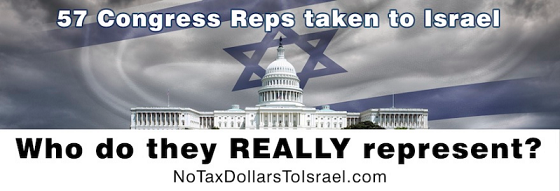

 Aletho News
