Make it happen on purpose, UK private security as terrorism vector
RT | July 18, 2013
The widening of the spiral of fear and increasing demand for ‘protection’ creates an international protection racket cartel indistinguishable, only in that they call themselves ‘legal’, from organized criminal gangs.
UK security firms Serco and G4S, described as ‘indispensable’ to Britain’s criminal justice system, have been overcharging the government by ‘tens of millions of pounds’ for criminals who had long finished their sentences or been dead for years.
How many kicks in the teeth, or near misses, can this British Government endure before it sees 21st Century ‘terrorism’ for what it is? An organized assault on our collective peace and safety with the purpose of spawning real terrorist cells.
Profit led policing
On Thursday July 11, 2013 Conservative Justice Secretary Chris Grayling delivered a progress report to the House of Commons on the privatization of UK Criminal Justice. His voice was trembling as though he himself could neither believe nor bear the consequences of what he was reading.
Two firms, he explained, Serco and G4S, have been overcharging the government by ‘tens of millions of pounds’ for electronic tagging of offenders, as well as continuing to charge the taxpayer for criminals who had long finished their sentences and some who had been dead for years.
The same week a London inquest jury delivered its verdict that Angolan deportee Jimmy Mubenga was unlawfully killed while being restrained by G4S guards. His plane was waiting to take off at London’s Heathrow airport when he died and a series of racist SMS texts were also found on the G4S guards’ phones.
Founded in 2004, G4S employs over 600,000 people in 125 countries with revenue of £7.5bn, making it the world’s largest security company. Despite its size G4S appears to have little regard for international law, taking on private prison work in Palestine/Israel which is alleged to contravene Article 76 of the Fourth Geneva Convention. Transporting prisoners from the occupied territory into the country of the occupier.
Serco and G4S are now so deep into Britain’s criminal justice system the Guardian recently described them as ‘indispensable’. Serco manage six prisons including Oakwood ‘super-jail’ and two immigration removal centres. G4S manage police custody cells, a 999 emergency response service, county control room, police station and court facilities.
Britain’s criminal justice system is indeed becoming utterly entangled in the G4S web. The initiative is shifting with immense pressure being put on Chief Constables and Police and Crime Commissioners to sign up to G4S privatization deals which promise to slash budgets. In times of ‘austerity’ private security firms are getting the whip hand.
Although the ‘savings’ may look good, privatizing the criminal justice system moves society closer to the abyss. As the profit motive creeps in and accountability leaves by the side door we may as well dispense with the word ‘justice’ entirely. US Judge Mark Ciavarella Jr, for example, was sentenced to 28 years in jail in May 2013’s ‘kids for cash’ scandal where over 4,000 children were given maximum jail terms in exchange for over $2m in bribes from the private firm that ran the jails.
Protection racket cartel
In July of 2012 London prepared to host its first Olympics since 1948. But behind the scenes one thing threatened to spoil it for everyone. The main security firm was playing games with the Olympic Committee and the government.
G4S said it was ready, all the risk assessment boxes were ticked and certified. The trouble was they were lying. With only a month to go until the great show got on the road recruitment was nowhere near the numbers required and training was pitiful.
With only three weeks to go the British army saved the day, stepping in with 3,500 soldiers to replace the senior and mid-ranking G4S staff. How that came about is a cautionary tale about private security that was never fully told by the London press.
The world’s biggest private security firm G4S had a £300m contract to hire 10,500 staff for the games. They made sure it all looked good for police and Olympic organisers on paper … but unbeknown to them media savvy G4S trainee Ben Fellows was busy collecting particulars from his G4S classmates about just what a disaster of a ‘training operation’ was unfolding around them.
On Friday June 22nd, five weeks before the opening ceremony, Ben sensationally broke cover on my Bristol radio show under the pseudonym ‘Lee Hazledean’. With quotes like “If a terrorist wants to get into the Olympics all they have to do is queue up” he detailed the G4S shambles and became an internet sensation, clocking up over 120,000 YouTube views in a little over a week.
But his story presented the London media with a problem: if printed and transmitted tens of thousands of Olympic enthusiasts might stay away. One teenage girl, initially delighted with tickets her parents had bought her, told me after she heard the interview “I don’t want to go the Olympics any more… but I don’t know how to tell my mum”.
Running straight after Fellows’ interview Oxford economist & terrorism expert Martin Summers, reminded us that lawyer Kurt Haskell spotted the 2009 Underpants bomber being allowed onto the plane without a passport… again by private security.
He also pointed out the alleged 9/11 hijackers boarded the doomed planes in Boston via private security firms. If those attacks are being carried out by a private military company ICTS & G4S could, far from preventing, be the facilitators of terror attacks said Summers.
The next week, on Tuesday 26 June 2012 the Director General of MI5 Jonathan Evans appeared on Channel 4 News. Gone was the “wide open to terror” claim. Security correspondent Simon Israel just repeated Evans’ assertion that “the Olympics Games is not an easy target for terrorists”.
Except perhaps, Evans said, there may be an Iranian, Syrian or Hezbollah attack. What these countries and factions could hope to gain from bombing the Olympics neither Simon Israel, nor Jonathan Evans, who has since been replaced, attempted to explain.
So Ben Fellows was right because with three weeks to go 3,500 British soldiers were drafted in to take charge and the story of the G4S fiasco dominated national headlines for a week. Now the fix was in the London media were safe.
With less of a fanfare, Israeli President Shimon Peres announced he would no longer be coming to London. He and his staff had been promised special permission to stay in the central athletes only Olympic Village so he wouldn’t have to walk far and could observe the Jewish Shabbat. Under the new security regime they would have to stay outside the park like everyone else. You can tell real security, nobody bypasses it.
Back in September 2004, private Israeli software firm Verint Systems were granted privileged security access to the London Underground. This was ten months before the 7/7 London bombings.
Verint won a contract to install and operate ‘smart’ CCTV. So smart in fact that all the hundreds of expected images of July 2005 alleged bombers getting onto or travelling on the three bombed tube trains were ‘lost’.
So what of this company’s bona-fides’? Verint’s parent company Comverse Technologies had an embarrassing chairman. Israeli Kobi Alexander fled the US in 2006 and went straight on to the FBI’s ‘most wanted’ list after stealing from his own firm.
Charged on 35 counts he was chased by Wall Street regulators the Security & Exchange Commission (SEC). Finally being run to ground via Germany to Namibia. In 2010 he paid a fine of $53m to avoid going to court and regain his freedom to travel.
A previous incarnation of Verint Systems, Comverse Infosys, was implicated in the US’s 2001 AmDocs spying scandal where Israeli phone software, installed on US telecom networks, was being used to warn Israeli mafia drug traffickers to switch phones and identities when the FBI were tapping their phones. 200 or so Israelis were arrested and most deported.
But what about the most recent terror attacks? The April 2013 Boston bombings has some of the most serious problems of FBI and mainstream media credibility to date. Not only does there seem to be little to connect the official suspects to the bombing but a private ‘Craft’ security guard at the scene has a black bag that seems to ‘disappear’ around the time the bomb went off.
“Hey Bro, Where’d Your Backpack Go” was one set of images from the finish line circulated to tens of thousands when CBS 60 Minutes’ Twitter account was hacked. Again it appears to anyone with the time to take a look for themselves that private security should be a prime suspect in that bombing.
Neither does mainstream press seem to question why one of the FBI’s two official ‘prime suspects’, Dzhokhar Tsarnaev, was filmed under arrest, naked, unharmed and being sat down in the back of a police car but then somehow died of horrific wounds sustained when he was previously ‘run over’ by his brother Tamerlan.
If even just a small proportion of these allegations are true then ‘double your money’ private security firms paid for providing security at an event or location may be abusing that privileged access for ‘quid pro quo’ deals. Certainly the mainstream press are simply not asking even the most obvious questions.
Unscrupulous staff, ex mercenaries as some are, can then also be paid for tip-offs, to turn a blind eye, possibly with a nod and a wink from the top. They may even actually plant bombs themselves. A ‘false flag’ attack can have a massive political impact and, if the media oblige and look the other way, be blamed on the enemy of the day.
These dangers should make it clear that secretive and profit motivated private security companies must under no circumstances be allowed to replace publicly accountable police or armed forces.
Obama administration drowning in lawsuits filed over NSA surveillance
RT | July 16, 2013
Attorneys for the Electronic Frontier Foundation have sued the Obama administration and are demanding the White House stop the dragnet surveillance programs operated by the National Security Agency.
Both the White House and Congress have weighed in on the case of Edward Snowden and the revelations he’s made by leaking National Security Agency documents. Now the courts are having their turn to opine, and with opportunities aplenty.
Day by day, new lawsuits waged against the United States government are being filed in federal court, and with the same regularity President Barack Obama and the preceding administration are being charged with vast constitutional violations alleged to have occurred through the NSA spy programs exposed by Mr. Snowden.
The recent disclosures made by Snowden have generated commotion in Congress and the White House alike. The Department of Justice has asked for the 30-year-old former Booz Allen Hamilton worker to be extradited to the US to face charges of espionage, and members of both the House and Senate have already held their share of emergency hearings in the wake of Snowden’s series of disclosures detailing the vast surveillance programs waged by the US in utmost secrecy. But with the executive and legislative branches left worrying about how to handle the source of the leaks — and if the policies publicized should have existed in the first place — the courts could soon settle some disputes that stand to shape the way the US conducts surveillance of its own citizens.
Both longstanding arguments and just-filed claims have garnered the attention of the judicial branch in the weeks since the Guardian newspaper first began publishing leaked NSA documents attributed to Snowden on June 6. But while the courts have relied previously on stalling or stifling cases that challenge Uncle Sam’s spy efforts, civil liberties experts say the time may be near for some highly anticipated arguments to finally be heard. Now on the heels of lawsuits filed by the likes of the American Civil Liberties Union and the Electronic Privacy Information Center, groups are coming out of the woodwork to wage a legal battle against the White House.
The most recent example came this week when a coalition of various organizations filed suit together against the Obama administration by challenging “an illegal and unconstitutional program of dragnet electronic surveillance, specifically the bulk acquisition, collection, storage, retention and searching of telephone communications information.” Represented by attorneys from the EFF and others, the plaintiffs in the latest case filed Tuesday in San Francisco federal court include an array of groups, such as: First Unitarian Church of Los Angeles; Bill of Rights Defense Committee; Calguns Foundation; California Association of Federal Firearms Licensees; Council on Islamic Relations; Franklin Armory; Free Press; Free Software Foundation; Greenpeace; Human Rights Watch; Media Alliance; National Organization for the Reform of Marijuana Laws; Open Technology Institute; People for the American Way, Public Knowledge; Students for Sensible Drug Policy; TechFreedom; and Unitarian Universalist Service Committee.
Cindy Cohn, the legal director of the EFF, told the Washington Post that the NSA leaks credited to Snowden have been a “tremendous boon” to the plaintiffs in recently filed court cases challenging the surveillance state. The courts are currently pondering at least five important cases, Cohn told the Post, which could, once and for all, bring some other issues up for discussion.
Since June 6, the American Civil Liberties Union, a Verizon Wireless customer and the founder of conservative group Judicial Watch have all filed federal lawsuits against the government’s collection of telephony metadata, a practice that puts basic call records into the government’s hands without a specific warrant ever required and reported to the media by Mr. Snowden. Larry Klayman of Judicial Watch has also sued over another revelation made by Snowden — the PRISM Internet eavesdropping program — and the Electronic Privacy Information Center, or EPIC, has asked the Supreme Court to vacate the order compelling Verizon Business Network Services to send metadata to the feds.
Perhaps most important, however, is a California federal court’s recent decision to shut down the government’s request to stop the case of Jewel vs. NSA from proceeding. That debate first began in 2008 when Jewel, a former AT&T customer, challenged the government’s “illegal and unconstitutional program of dragnet communications surveillance” as exposed by a whistleblower at the telecom company. That case has seen roadblock after roadblock during the last five years, but all that changed earlier this month. The government long argued that Jewel v. NSA can’t go up for discussion because the issues at hand are privileged as ‘state secrets’ and can’t be brought into the public realm.
“[T]he disclosure of sensitive intelligence sources and methods . . . reasonably could be expected to cause exceptionally grave harm to national security,” the government wrote in one earlier filing. “The very purpose of these cases is to put at issue whether the NSA undertook certain alleged activities under presidential authorization after 9/11, and whether those activities continue today. At every stage, from standing to the merits, highly classified and properly privileged intelligence sources and methods are at risk of disclosure. The law is clear, however, that where litigation risks or requires the disclosure of information that reasonably could be expected to harm national security, dismissal is required.”
Following Snowden’s recent disclosures, though, Judge Jeffrey White of the Northern District of California ruled on July 8 that there’s a way for those cases to still be heard.
“The court rightly found that the traditional legal system can determine the legality of the mass, dragnet surveillance of innocent Americans and rejected the government’s invocation of the state secrets privilege to have the case dismissed,” the EFF’s Cohn, who is working on the case, said in a statement issued at the time of the ruling. “Over the last month, we came face-to-face with new details of mass, untargeted collection of phone and Internet records, substantially confirmed by the Director of National Intelligence. Today’s decision sets the stage for finally getting a ruling that can stop the dragnet surveillance and restore Americans’ constitutional rights.”
Weighing in weeks later to the Post, Cohn said that outcome could have more of an impact than many might imagine. “It’s tremendous, because anything that allows these cases to proceed is important,” she said.
Speaking to the New York Times this week, American Civil Liberties Union attorney Jameel Jaffer said that until now the government has operated a “shell game” to shield it’s surveillance programs from litigation. “[T]he statute has been shielded from judicial review, and controversial and far-reaching surveillance authorities have been placed beyond the reach of the Constitution,” he said.
Should Cohn’s prediction come true, though, the courts could decide to weigh in and reshape the way the government currently conducts surveillance.
According to University of Pittsburgh law professor Jules Lobel, a victory there could come in more than one way. “There is a broader function to these lawsuits than simply winning in court,” he told the Post. “The government has to respond, and forcing them to go before a court might make them want to change aspects of the programs.”
“The government does things to avoid embarrassment,’’ he added, “and lawsuits are a key pressure point.’’
Interviews to the Post and the Times come just days after Sen. Ron Wyden (D-Oregon), a long-time member of the Senate Intelligence Committee, said he thought the revelations made by Snowden may influence the White House to reconsider their surveillance practices before the courts can even have their chance.
“I have a feeling that the administration is getting concerned about the bulk phone records collection, and that they are thinking about whether to move administratively to stop it,” Sen. Wyden told the Times.
“I think we are making a comeback,” he said.
Related articles
- Federal Judge Allows EFF’s NSA Mass Spying Case to Proceed (alethonews.wordpress.com)
- Privacy groups led by EFF sue to stop NSA and FBI electronic surveillance (guardian.co.uk)
- Unitarian Church, Gun Groups Join EFF to Sue NSA Over Illegal Surveillance (eff.org)
Brazil: US spying response insufficient
Press TV – July 16, 2013
Brazil says Washington has insufficiently responded to Brasilia’s request for an explanation over US spying programs, recently revealed by US intelligence whistleblower Edward Snowden.
Foreign Minister Antonio Patriota said Monday that some clarifications have been made however Brazilia views them as insufficient.
Patriota also reported that there had basically been nothing new since he appeared before Congress last week, saying he was awaiting a formal response from Washington.
Since the disclosure, the Brazilian government has set up a technical group, including representatives of the ministries of justice, defense, foreign affairs, science and technology as well as security experts, to investigate into the spying revelations.
On July 7, Brazilian newspaper O Globo published a report based on documents leaked by Snowden, showing the US National Security Agency has targeted most Latin American countries in their spying programs.
According to the report, Brazil along with Colombia, Venezuela and Mexico were among those of highest priority for the U.S. intelligence agency in Latin America.
In addition, the newspaper revealed that Washington also kept a base in Brasilia to intercept foreign satellite communications.
President Dilma Rousseff responded to the revelations that if the reports prove true, they would constitute a “violation of sovereignty and human rights.”
On July 12 during a summit, Presidents of Brazil, Bolivia, Argentina, Uruguay, and Venezuela together condemned the US for spying in the region.
Meanwhile, Latin American nations, Venezuela, Nicaragua and Bolivia have all offered asylum to Snowden, who is holed up at Moscow’s Sheremetyevo International Airport since June 23, when he landed in Russia from Hong Kong.
Related articles
- PressTV: Latin America united against US over espionage (jhaines6.wordpress.com)
- NSA Spying on Latin American Countries Included Targeting of Trade Secrets (alethonews.wordpress.com)
- Brazil expresses deep concerns over US spying activities (alethonews.wordpress.com)
Argentina Considers Taking Legal Action on US Espionage
By Kahina Boudarène | The Argentina Independent | July 15, 2013
Hector Timerman, Argentine Minister of Foreign Affairs, declared today that he will take to court a list with names of government officials allegedly spied upon by the US. The list was given to him on Friday, during the Mercosur summit.
“I can’t let the judiciary out of it,” said Timerman. ”I will briefly explain to the court what happened last Friday,” he said referring to the list he received with the names of people who have been spied on by the US government.
“I leave everything into justice’s hands,” added the minister.
Last Friday, during the Mercosur summit held in Montevideo, Uruguay, Timerman declared: “I received an hour ago, from a country present in this room, the names with the e-mail addresses and the passwords” of people that the US were spying on.
However, he refused to say who sent him the list. “They asked me to remain silent. This list has been given to me by a person that I trust.”
According to the minister, the list includes the names of “the governor of Buenos Aires, Daniel Scioli, as well as other regional representatives, secretaries, officials’ wives, and other actors of Argentine civil life.” Vice-President Amado Boudou is also mentioned.
That same day, member countries of Mercosur issued a resolution condemning the espionage activities carried out by the US government, as revealed by whistleblower Edward Snowden. The resolution states the intention of the member countries to work together for “cybernetic security”, something they describe as “an essential aspect to defend countries’ sovereignty”. They also demanded “an immediate stop to these actions” and “an explanations about [the US’s] motivations.”
“Crime prevention, as well as transnational crimes repression, including terrorism, must be done according to international law,” they added.
Related articles
- US Congress calls for sanctions against Argentina over growing Iran ties (alethonews.wordpress.com)
- S. American states to recall ambassadors from Europe over Bolivian plane incident (alethonews.wordpress.com)
EU subservient to US – Irish MP who called Obama ‘war criminal’
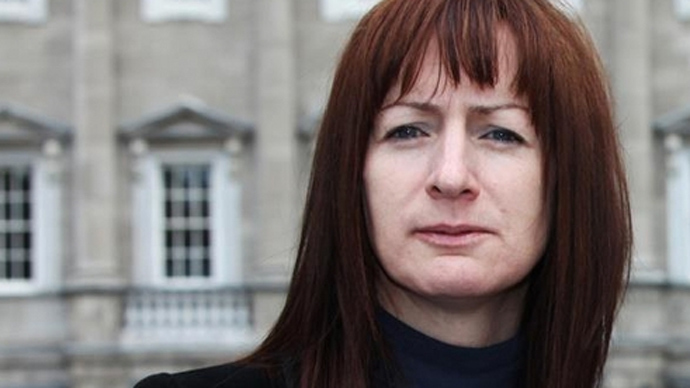
RT | July 12, 2013
Standing up to one’s government is becoming the only way for citizens to stop the spread of Western imperialism and its double standards, said Clare Daly, the now famous Irish MP who lambasted President Obama at Northern Ireland’s G8 summit.
RT recently interviewed Daly, discussing matters of politics, economics and human rights set against a backdrop of US pressure on the world to comply with its vision.
Despite hefty political backlash incurred after the summit for calling Obama a “war criminal,” Daly appeared optimistic that her views were shared by many across the world. She ultimately believes, she said, that it is those people across Europe and America who should scrutinize their politicians and demand greater accountability in foreign affairs and a lesser flexibility to US coercion where matters like war in the Middle East and the fate of whistleblowers are concerned.
Speaking of Ireland, which some may remember was the subject of her attack at the summit, she complained of the country’s “unprecedented slobbering” whenever Obama appeared on the horizon, saying that, “It’s hard to know which is worse, whether it’s the outpourings of the Obamas themselves, or the sycophantic fawning over them by sections of the media and the political establishment.”
But she also takes a more encompassing view of things, underlining the suffering of the austerity-ridden Irish.
“When Obama visited, [the government] would make no points of criticism, everything was wonderful. We must get American companies into this country to create employment, but the reality is that most of the American companies come to avoid paying their taxes at home and in Ireland, which means it is ordinary people who suffer, and the very wealthy are those who want these companies to benefit,” she said, emphasizing Europe’s economic subservience to the United States.
The political and moral implications of this subservience are Daly’s main targets.
Ireland, she says, is a neutral country. But that policy loses meaning already at Ireland’s Shannon airport: whether it is the government’s ignoring of planes armed to the teeth, or suspicious cargo that could be anything from arms deliveries for third parties, to prisoners being relayed for rendition by the CIA, there is a relationship of unquestioning submissiveness when it comes to the Irish government and the US.
“The arrangement is that when a military aircraft lands on our territory, they are not supposed to be armed, carrying explosives, weapons, not engaged in intelligence or in any military exercise. But our question is, how do we know they are not providing ammunition for Syria? We don’t know that, because the Irish government won’t investigate or carry out inspections of those flights as they should.”
“They never go on to an aircraft when the US carries people suspected of being trafficked on rendition flights – do they ask them about passports? The Irish government turned a blind eye on that.”
The opposite logic was applied to the rumor of NSA whistleblower Edward Snowden stopping over in Ireland on a commercial flight from Moscow to Cuba, with the Americans sending a provisional arrest warrant to the Irish in the hopes that they would hand him over. Daly herself is a great supporter of Snowden’s struggle and considers him an international hero.
And Daly is not surprised with the lax attitude European governments took to Snowden’s revelations about the US spying on the world and its governments. She believes those governments ultimately want the same thing, on the one hand, and on the other – they fear economic and political pressure from the US.
“They have a reason to be fearful because the United States is using its weight – its economic weight, in some instances, and its military weight in others – to intimidate those countries. I think we saw that graphically with Ecuador – threatening to take their trade preferences from them if they were to give him asylum.”
The grounding of the Bolivian president’s plane in Vienna and the collusion of every major Western European country in the incident is seen by Daly as a supreme example of this process.
Her final conclusion is that ordinary people must not give up the fight for what they believe is right. And that fight must encompass all spheres of life – from economics to politics and to the defense of people and whistleblowers of all kinds – because their governments appear unwilling to take the stance against US hegemony themselves.
Related articles
Microsoft helped the NSA bypass encryption, new Snowden leak reveals
RT | July 11, 2013
Microsoft worked hand-in-hand with the United States government in order to allow federal investigators to bypass encryption mechanisms meant to protect the privacy of millions of users, Edward Snowden told The Guardian.
According to an article published on Thursday by the British newspaper, internal National Security Agency memos show that Microsoft actually helped the federal government find a way to decrypt messages sent over select platforms, including Outlook.com Web chat, Hotmail email service, and Skype.
The Guardian wrote that Snowden, the 30-year-old former systems administrator for NSA contractor Booz Allen Hamilton, provided the paper with files detailing a sophisticated relationship between America’s intelligence sector and Silicon Valley.
The documents, which are reportedly marked top-secret, come in the wake of other high-profile disclosures attributed to Snowden since he first started collaborating with the paper for articles published beginning June 6. The United States government has since indicted Snowden under the Espionage Act, and he has requested asylum from no fewer than 20 foreign nations.
Thursday’s article is authored by Glenn Greenwald and Laura Poitras, two journalists who interviewed Snowden at length before he publicly revealed himself to be the source of the NSA leaks. They are joined by co-authors Ewen MacAskill, Spencer Ackerman and Dominic Rushe, who wrote that the classified documents not only reveal the degree in which Microsoft worked with the feds, but also detail the PRISM internet surveillance program. The US government’s relationships with tech companies are also included in the documents, according to the journalists.
“The latest NSA revelations further expose the tensions between Silicon Valley and the Obama administration,” the journalists wrote. “All the major tech firms are lobbying the government to allow them to disclose more fully the extent and nature of their cooperation with the NSA to meet their customers’ privacy concerns. Privately, tech executives are at pains to distance themselves from claims of collaboration and teamwork given by the NSA documents, and insist the process is driven by legal compulsion.”
In the case of Microsoft, however, it appears as if the Bill Gates-founded tech company went out of its way to assist federal investigators.
Among the discoveries made by the latest Snowden leaks, Guardian journalists say that Microsoft specifically aided the NSA in circumventing encrypted chat messages sent over the Outlook.com portal before the product was even launched to the public.
“The files show that the NSA became concerned about the interception of encrypted chats on Microsoft’s Outlook.com portal from the moment the company began testing the service in July last year,” they wrote. “Within five months, the documents explain, Microsoft and the FBI had come up with a solution that allowed the NSA to circumvent encryption on Outlook.com chats.”
According to internal documents cited by the journalists, Microsoft “developed a surveillance capability” that was launched “to deal” with the feds’ concerns that they’d be unable to wiretap encrypted communications conducted over the Web in real time.
“These solutions were successfully tested and went live 12 Dec 2012,” the memo claims, two months before the Outlook.com portal was officially launched.
In a tweet, Greenwald wrote that “the ‘document’ for the Microsoft story is an internal, ongoing NSA bulletin over 3 years,” and that The Guardian “quoted all relevant parts.” The document is not included in the article.
The Guardian revealed that Microsoft worked with intelligence agencies in order to let administrators of the PRISM data collection program easily access user intelligence submitted through its cloud storage service SkyDrive, as well as Skype.
“Skype, which was bought by Microsoft in October 2011, worked with intelligence agencies last year to allow Prism to collect video of conversations as well as audio,” the journalists wrote.
That allegation comes in stark contrast to claims made previously by Skype, in which it swore to protect the privacy of its users. RT reported previously that earlier documentation supplied by Snowden showed that the government possesses the ability to listen in or watch Skype chats “when one end of the call is a conventional telephone and for any combination of ‘audio, video, chat and file transfers’ when Skype users connect by computer alone.”
RT earlier acknowledged that Microsoft obtained a patent last summer that provides for “legal intercept” technology. The technology allows agents to “silently copy communication transmitted via the communication session” without asking for user authorization. In recent weeks, however, Microsoft has attacked the government over its secretive spy powers and even asked the Foreign Intelligence Surveillance Court if it could be more transparent in discussing the details of FISA requests compiling tech companies for data.
“We continue to believe that what we are permitted to publish continues to fall short of what is needed to help the community understand and debate these issues,” Microsoft Vice President John Frank wrote last month.
“In the past, Skype made affirmative promises to users about their inability to perform wiretaps,” Chris Soghoian of the American Civil Liberties Union told The Guardian. “It’s hard to square Microsoft’s secret collaboration with the NSA with its high-profile efforts to compete on privacy with Google.”
Earlier this week, Yahoo requested that the FISA court unseal documents from its own FISA battle. The court ruling in 2008 compelled Yahoo – and later other Silicon Valley entities – to supply the government with user data without requiring a warrant.
“Blanket orders from the secret surveillance court allow these communications to be collected without an individual warrant if the NSA operative has a 51 percent belief that the target is not a US citizen and is not on US soil at the time,” The Guardian reporters wrote. “Targeting US citizens does require an individual warrant, but the NSA is able to collect Americans’ communications without a warrant if the target is a foreign national located overseas.”
During a March press conference, FBI general counsel Andrew Weissman said that federal investigators plan on being able to wiretap any real-time Internet conversation by the end of 2014.
“You do have laws that say you need to keep things for a certain amount of time, but in the cyber realm you can have companies that keep things for five minutes,” he said. “You can imagine totally legitimate reasons for that, but you can also imagine how enticing that ability is for people who are up to no good because the evidence comes and it goes.”
Former CIA officer Ray McGovern expanded further on the subject to RT, remembering the Bush presidency and how unsurprising it is that this sort of breach of rights continues to exist.
“If you look at what happened when Bush, Cheney and General Hayden – who was head of the NSA at the time – deliberately violated the law to eavesdrop on Americans without a warrant, did the telecommunications companies cooperate? Verizon, AT&T…All the giants did…the one that didn’t was Quest. And what happened to Quest? Well, the CEO ended up in jail – and he still might be in jail – on some unrelated charges.”
Later the Congress voted to hold everyone in an innocent light, including the companies who were complicit in the spying. So there is absolutely no disincentive not to engage in violating people’s rights, McGovern warns.
Related article
NSA Spying on Latin American Countries Included Targeting of Trade Secrets
By Noel Brinkerhoff | AllGov | July 11, 2013
The United States has been accused of spying on numerous countries in Latin America in an effort to collect intelligence on trade secrets and military capabilities.
Using information provided by former National Security Agency (NSA) contractor Edward Snowden, a Brazilian newspaper, O Globo, published a story that said the U.S. spy agency has gathered data on telephone calls and emails from Brazil, Colombia, Mexico, Venezuela and others.
The account indicated that the NSA had collected military and security data on countries including Venezuela, while also carrying out surveillance operations to acquire trade secrets from within the oil industry in Venezuela and the energy sector in Mexico.
O Globo also published a story over the weekend saying Brazil was a major target of the NSA’s global spying on telecommunications, which involved the cooperation of American and Brazilian companies (which were not named).
It was additionally reported that the CIA and NSA jointly operated monitoring stations to gain foreign satellite data in 65 countries, including five in Latin America.
In response to the accusations, the U.S. ambassador to Brazil, Thomas Shannon, reportedly denied that Washington has been conducting surveillance operations on Brazilian communications.
News of the alleged spying upset many in Brazil and other Latin countries, which have a history of military governments—often supported by the United States—that spied on their own people.
Brazilian President Dilma Rousseff, who was jailed and tortured in the 1970s under the ruling junta, said her government would raise concerns with the U.N. Commission on Human Rights.
“Brazil’s position on this issue is very clear and very firm,” Rousseff told the media. “We do not agree at all with interference of this kind, not just in Brazil but in any other country.”
To Learn More:
U.S. Spy Spread Through Latin America (by Glenn Greenwald, and Kaz and Roberto Jose’ Casado; O Globo)
Capitals 4 Countries Also Housed the Office of the NSA and CIA (by Kaz and Roberto Jose’ Casado; O Globo)
U.S. and Britain Eavesdropped on World Leaders at 2009 Summits (by Noel Brinkerhoff, AllGov)
US NSA Spied on Venezuela When President Chavez Died, Documents Reveal (alethonews.wordpress.com)
NSA Blackmailing Obama? | Interview with Whistleblower Russ Tice
breakingtheset · July 9, 2013
Abby Martin talks to Russell Tice, former intelligence analyst and original NSA whistleblower, about how the recent NSA scandal is only scratches the surface of a massive surveillance apparatus, citing specific targets the he saw spying orders for including former senators Hilary Clinton and Barack Obama.
Saudi Arabia and UAE to lend Egypt up to $8 billion
RT | July 9, 2013
The United Arab Emirates and Saudi Arabia will give Egypt money in the wake of its political and economic crisis. The UAE will provide Cairo with $1 billion and lend it a further $2 billion, while Saudi Arabia will give Egypt a $5 billion aid package.
The UAE loan would be in the form of a $2 billion interest free deposit in Egypt’s central bank, state news agency WAM reported on Tuesday. Abu Dhabi will also to give Egypt $1 billion.
The UAE delegation to Cairo included the Gulf country’s national security adviser, foreign minister and energy minister. The visit was to “show full support to the people of Egypt – political support, economic support,” Egyptian foreign ministry spokesman Badr Abdelatty told Reuters.
The UAE was one of the first countries to congratulate Egypt following the army’s decision to oust the Muslim Brotherhood’s Mohamed Morsi.
“The UAE stands by Egypt and its people at this stage and trusts the choices of its people. Egypt’s security and stability are the basis of Arab security,” WAM quoted UAE National Security Advisor Sheikh Hazza bin Zayad as saying.
The UAE’s foreign minister also stated that the Egyptian army proved that it was a “strong shield” and “protector,” which guarantees that the country embraced all the components of the people.
Saudi Arabia also approved a $5 billion aid package to Egypt Tuesday, comprising of a $2 billion central bank deposit, $2 billion in energy products, and $1 billion in cash, Saudi finance minister Ibrahim Alassaf said. […]
Multi-billion-dollar aid from Saudi Arabia and the UAE is another sign that these two countries had a hand in the military coup which took place in Egypt, believes RT’s contributing analyst in London, Afshin Rattansi.
“We now realize it is much more a Saudi-backed military coup. And as for this General al-Sisi person, who is a former military attaché in Saudi Arabia, he is Saudi’s man… Saudi Arabia, they’ve taken over the largest country in the Arab world,” Rattansi said.
He also described the current interim leaders of Egypt – President Mansour and Prime Minister Beblawi, as “puppets of Saudi Arabia”, who will be ousted at once if they attempt to criticize Saudi Arabia or the UAE. … Full article
Worldwide corruption on the rise as public trust plummets – report
RT | July 10, 2013
A report by Transparency International has revealed the extent of worldwide corruption over the last two years, with Israel and Greece showing the highest levels among developed countries. Politicians are considered the most corrupt among all sectors.
The Global Corruption Barometer 2013, conducted by the Berlin-based anti-corruption watchdog, is a sampling of over 114,000 opinions of people from 107 countries. The survey asked participants about corruption and the institutions engaged in it.
The report shows that corruption numbers have increased over the last two years, along with the number of people exhibiting distrust toward their governments and law enforcement agencies.
Before the 2008 financial meltdown, 32 per cent of people believed their governments to be effective at tackling corruption. That figure has now fallen to just 23 per cent. Transparency International said in a press release that the report “shows a crisis of trust in politics and real concern about the capacity of those institutions responsible for bringing criminals to justice.”
The survey asked participants to rank the corruption levels of various institutions from 1 to 5, with 1 being “not corrupt at all” and 5 being “extremely corrupt.”
Political parties were perceived to be the most corrupt institutions worldwide, scoring 3.8 out of 5. Police forces came in second place with a score of 3.7. Public officials, civil servants, and the parliament and judiciary came in third place, scoring 3.6.
The media came in ninth place, although it was voted to be the most corrupt sector in Britain. The UK media has lost the respect of many residents in recent years – around 69 per cent of survey participants now believe the media is corrupt, compared to just 39 per cent in 2010.
“This very sharp jump is in large part due to the series of scandals around phone hacking, the Leveson Inquiry, and the concentration of media ownership,” said Robert Barrington, head of the British wing of Transparency International.
Business and private sectors, along with the healthcare sector, came in at eighth on the corruption scale, with the education system not far behind. The military and NGOs took the 10th and 11th places.
Although religion came in last place on the corruption scale, it still ranked among the most corrupt in certain countries, including Israel, Japan, Sudan and South Sudan.
Of all OECD members surveyed, the corruption levels of Greece and Israel came in first and second place respectively, with their political and cultural institutions ranking at the top of the corruption meter.
Over 80 per cent of Israelis believe that one must have contacts very high up in the public sector in order to get anything done. Transparency International says it sees “deep-rooted failures of governance” in Israel. A similar figure was seen in Lebanon, Russia, and Ukraine.
Arab countries have seen a rise in corruption since their 2011 uprisings, although public anger against corrupt officials was what sparked the Arab Spring in the first place. The expectation of having cleaner, more transparent regimes did not match the countries’ political and business realities.
Of the four countries that experienced regime change in the aftermath of the Arab Spring, Egypt, Tunisia and Yemen feel that corruption has only increased since 2011. While 64 per cent of Egyptians think corruption is on the rise, a staggering 80 per cent of Tunisians believe that to be the case within their country. Eighty-four per cent of Lebanese citizens believe corruption to be on the rise in within their nation, while only around half of Libyans believe that corruption is worsening.
Egypt leads the pack in anti-police sentiments, largely because police violence has injured so many people over the past year. The 80 per cent disapproval rating dropped to only 45 per cent when Egyptians were asked about the military, which just several days ago ousted former Islamist-backed president Mohamed Morsi.
To glean more analysis on the increasing slide into corruption and public distrust of political institutions, RT talked to Finn Heinrich, who is director of research at Transparency International in Berlin. He sees the world as split into two major trends. The first is petty corruption and bribery in the southern hemisphere – mostly Africa, where citizens feel there is no other way to take care of one’s day-to-day needs. The second is corruption on a more official level, which is witnessed in the northern and western parts of the world – mainly in business and politics governed by financial greed.
As a way out of the situation, Heinrich believes “you really need to be in it in a long-term. You can’t expect quick gains from the fight against corruption. So, I think what we see in many of those countries are the upheavals which you find in many countries, including many post-communist countries, after revolution where old systems are no longer intact and new systems are yet to be built. So, corruption is on the rise. We hope that the new leaders, compared to their predecessors, are really taking the challenge of setting up systems of transparency and accountability much more serious.”
Heinrich thinks that only an integral and comprehensive effort can last, and that effort must include both the government and its citizens.
Transparency International is the world’s foremost organization on fighting corruption. It has 90 chapters worldwide, which aim to raise awareness and establish methods of tackling corruption and measuring its harmful effects.
Featured Video

New positive ivermectin evidence
or go to
Aletho News Archives – Video-Images
From the Archives
Fanatical Followers of the Covid Regime: A Jim Jones-Style Cult?
By Professor Roger Watson and Dr. Niall McCrae | The Daily Sceptic | November 15, 2021
As scholars at leading British universities over recent decades, we witnessed the replacement of critical thinking and debate by narrative: facts are discrimination and scientific method is imperialism; truth, instead, is derived from ‘progressive’ values. This educational trend may be a major contributory factor to the ease in which society has been inculcated to the Covid ‘new normal’ of masking, testing, and repeated doses of vaccines for a disease of similar risk to severe influenza.
One doesn’t need much critical reasoning to observe the flawed logic of some vaccination enthusiasts, such as people who respond to experiencing any side effects, however debilitating, by saying “at least I know it’s working”, or, after contracting the disease despite their promised inoculation (over 90% effective, according to initial drug company claims), “I’d have been worse off without the jab.” … continue
Blog Roll
 Aletho News
- ‘Grave, alarming’: Iran mission on Trump’s UNGA ‘annihilation’ threats
- Najaf airport to reopen to Iranian flights within 24 hours: Ambassador
- From ‘How Will This End For Iran’ to ‘When America Walks Away’: A tale of two Economist covers
- Tehran blasts ‘baseless’ speculation linking Iran to alleged bomb plot at UK air base
- The Rise And… Rise Of ‘Color Revolutions’
- The Coming GOP Bloodbath?
- Arctic Scare Stories Melt Away
- Wrong, Euronews: Climate Change Has Not Created a Food, Energy, and Economic “Meta-Crisis”
- New positive ivermectin evidence
- Met Office Caught Fabricating Daily Temperature Record Claims
- If Americans Knew
- An error has occurred; the feed is probably down. Try again later.
- No Tricks Zone
- New Study: Earth And Venus Surface Warmth Largely Explained By Convection And Lapse Rate, Not CO2 Or Radiation
- 2025 Nature Paper Claiming Worsening Global Drought Gets RETRACTED …Heavily Flawed
- New Study: ‘Global Drought Shows No Detectable Recent Acceleration Under Climate Warming’
- Economic Masterminds: German Socialists Suggest Taxing Productivity Gains Stemming From Using AI
- The South China Sea Has Not Been Cooperating With The Climate Change Narrative
- Energy Crisis: Germany Enters Heating Season With Historically Low Gas Reserve Fill Levels
- New Study: The Antarctic Ice Sheet Gained Mass From 2020-2024 Due To Staggering Snow And Ice Accumulation
- Study: Ocean Heating Rates From Thousands Of Years Ago ‘Dwarf’ Modern Ocean Heating Rates
- Climate Extremists Target, Attack Large-Scale Power Grid Infrastructure In Germany!
- New Study: Antarctic Ice Melt Has Contributed Less Than 1 Centimeter To Sea Level Rise In The Last 30 Years

