Annual Flu Deaths Scam Unwittingly Exposed and Replaced by the COVID Deaths Scam
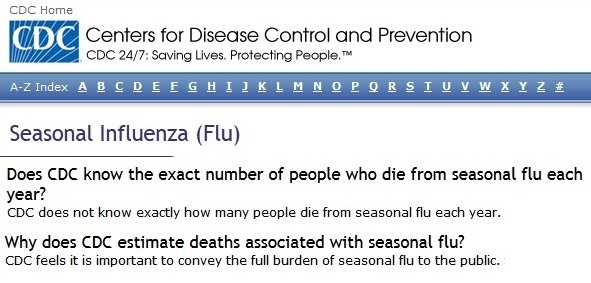
Actual text from the CDC website (which used to be here) regarding annual flu deaths.
By Brian Shilhavy | Health Impact News | February 28, 2021
During the past 10 years that Health Impact News has been publishing the truth about vaccines and exposing the corruption and lies in the pharmaceutical industry and their marketing branch, the U.S. Centers for Disease Control (CDC), regarding the annual flu statistics, we have usually run stories around this time of year explaining to people that the number of people dying from the flu according to the CDC is false, and that the CDC themselves have always admitted that they do not know the exact number of people who die from the flu each year, but instead base their data on “estimates.”
For years this was published very clearly on the CDC website for all to see, at least for those who bother to “fact check” the CDC’s claims regarding annual flu deaths.
Many others over the years have exposed this scam as well.
Here is an excerpt from an article written in 2014 by Lawrence Solomon in the Huffington Post:
The CDC’s decision to play up flu deaths dates back a decade, when it realized the public wasn’t following its advice on the flu vaccine.
During the 2003 flu season “the manufacturers were telling us that they weren’t receiving a lot of orders for vaccine,”Dr. Glen Nowak, associate director for communications at CDC’s National Immunization Program, told National Public Radio.
Flu results in “about 250,000 to 500,000 yearly deaths” worldwide, Wikipedia tells us.
“The typical estimate is 36,000 [deaths] a year in the United States,” reports NBC, citing the Centers for Disease Control.
“Somewhere between 4,000 and 8,000 Canadians a year die of influenza and its related complications, according to the Public Health Agency of Canada,” the Globe and Mail says, adding that “Those numbers are controversial because they are estimates.”
“Controversial” is an understatement, and not just in Canada, and not just because the numbers are estimates. The numbers differ wildly from the sober tallies recorded on death certificates — by law every certificate must show a cause — and reported by the official agencies that collect and keep vital statistics.
According to the National Vital Statistics System in the U.S., for example, annual flu deaths in 2010 amounted to just 500 per year — fewer than deaths from ulcers (2,977), hernias (1,832) and pregnancy and childbirth (825), and a far cry from the big killers such as heart disease (597,689) and cancers (574,743).
The story is similar in Canada, where unlikely killers likewise dwarf Statistics Canada’s count of flu deaths.
Even that 500 figure for the U.S. could be too high, according to analyses in authoritative journals such as the American Journal of Public Health and the British Medical Journal.
Only about 15-20 per cent of people who come down with flu-like symptoms have the influenza virus — the other 80-85 per cent actually caught rhinovirus or other germs that are indistinguishable from the true flu without laboratory tests, which are rarely done.
In 2001, a year in which death certificates listed 257 Americans as having died of flu, only 18 were positively identified as true flus. The other 239 were simply assumed to be flus and most likely had few true flus among them.
“U.S. data on influenza deaths are a mess,” states a 2005 article in the British Medical Journal entitled “Are U.S. flu death figures more PR than science?”
This article takes issue with the 36,000 flu-death figure commonly claimed, and with describing “influenza/pneumonia” as the seventh leading cause of death in the U.S.
As you can see from Mr. Solomon’s 2014 article, he quoted sources dating all the way back to the early 2000s where this scam was exposed. It just wasn’t published in the pharma-controlled corporate media, so those spoon-fed the propaganda from this corporate media lined up every year to get their flu shots, as Big Pharma raked in huge profits from producing over 300 million doses of the flu vaccine each year.
Dr. David Brownstein is another doctor who regularly exposed this scam, although the government has now stepped in and censored his writings scrubbing his blog clean, but we have preserved many of his articles on this topic.
In October of 2018, he wrote:
The Centers for Disease Control and Prevention estimated that the 2017-2018 flu season killed 80,000 and hospitalized 900,000 Americans. Of course, the mainstream media reported this as fact as shown in this September 27, 2018 article in the Washington Post.
The Powers-That-Be, including the CDC and the mainstream media, are using these estimates to promote the flu shot for the upcoming flu season.
Keep in mind, the 80,000 deaths and 900,000 hospitalizations are ESTIMATES. And, I can state, with authority, that they are very poor estimates.
You see, deaths from flu are always estimates because if the Powers-That-Be reported the true numbers of deaths from actual influenza infections, the numbers would be much lower and people would not be so inclined to receive a flu shot.
How does the CDC overestimate the number of flu deaths? The CDC accomplishes this by reporting a combined pneumonia and influenza death rate. Every time I try to analyze this data, I know I will have to spend at least an hour searching for the true number who died from influenza because the CDC tries to hide that data.
Why does the CDC do this? The answer is easy: The more people that receive the flu vaccine, the more money the CDC makes. You see, the CDC holds patents on many vaccines including the flu vaccine. (1)
Perhaps I could tolerate the CDC combining pneumonia with flu deaths IF the flu vaccine prevented both. However, the flu vaccine has never been shown to have any impact on the number of deaths from pneumonia.
In fact, for the vast majority who receive it, the flu vaccine has little impact on preventing the flu, but I digress.
In 2001 the CDC reported that 62,034 died from influenza and pneumonia. That year, I would bet that CDC proclaimed that flu killed over 50,000 Americans. After a painful hour of searching the CDCs database, I found the true 2001 numbers: 257 died from influenza and 61,777 died from pneumonia. Keep in mind, any death from the flu is tragic, but those numbers are out of a population of over 300 million. In 2010 (the latest year data are available) there were 55,227 deaths due to pneumonia and flu. Flu killed 4,605 while pneumonia killed the rest. (2)
So, let’s go back to last year’s flu season. The flu season lasts about six months. 80,000 deaths would lead one to conclude that 13,333 died per month (80,000/6 months) from the flu. If we further divide that number by 50 (the number of states), we can conclude that there were 267 people dying each month in every state from the flu. Since the internet provides 24-hour news cycles, I think we all would have heard that about 9 people (267/30 days per month) in every state dying daily from the flu. (3)
I have five practitioners in my office. We have over 100 years of experience in treating patients. None of us has can recall a single patient dying from the flu.
In fact, I can guarantee you that if 9 people were dying in my state daily from the flu, my partners and I would hear about it. In fact, there are always headlines on the internet when one person dies from the flu.
Studying the past CDC data shows that each year a few hundred to a few thousand die from the flu.
80,000 died last year? I say, “Fake News!”
See:
Did 80,000 People Really Die from the Flu Last Year? Inflating Flu Death Estimates to Sell Flu Shots
This annual flu death scam continued through 2019, as again Dr. Brownstein wrote:
The headline in the January 5, 2019 edition of the Wall Street Journal reads “Six Feet, 48 Hours, 10 Days: How to Avoid the Flu.”
This article, like nearly all main stream media flu articles was written to scare the reader into getting the flu vaccine. As with most mainstream medical articles about the flu, it is filled with fake news.
Let’s analyze the article.
The author starts off by writing,
“After a slow start, the flu season has taken off. Between Christmas and New Years Day, there was a marked rise in flu illnesses across the U.S.”
So far, no fake news to report.
However, as with most main stream media influenza stories, the writer misstates the true numbers of Americans who die from the flu.
“In a mild year, influenza, a highly contagious viral infection of the respiratory system, kills as many as 12,000 people in the U.S., and in a bad year, it could be as many as 56,000.”
I have two words to state here:
FAKE NEWS!
Folks, that is a blatant LIE. Over the last 38 years, neither twelve nor fifty-six thousand deaths from influenza infections occurred. In fact, the deaths from influenza are not even close to those numbers.
Why would the mainstream media and the Powers-That-Be continually lie about the numbers of people that die from the flu?
It is not hard to understand why—they want to scare the public in order to increase the number of people vaccinated with the flu vaccine.
The Centers for Disease Control and Prevention keeps annual death statistics. When searching through that data, it is easy to find the first Table (Table B) which lists the number of deaths from the top fifteen causes of death (https://www.cdc.gov/nchs/data/nvsr/nvsr67/nvsr67_05.pdf -page 6).
In fact, every year that the CDC reports the final data for deaths, the CDC combines influenza and pneumonia together as one of the top 15 causes of death. No other separate illnesses are combined, so why combine pneumonia and influenza which are two separate illnesses?
The answer is easy: the CDC artificially inflates the numbers of deaths from influenza to scare us into getting the flu shot. You see, if a very small percentage of Americans died yearly from the flu vaccine, why would so many of them want to get vaccinated for influenza?
The CDC has a direct financial interest in vaccinating the entire population since it holds multiple patents on vaccines including the flu vaccine.
In order to frighten the public to get the flu vaccine, the CDC’s scare tactics include annual statements that the flu kills 36,000 Americans per year.
See:
The Great Flu Reset 2020-21: COVID Deaths Take Over to Sell New Novel COVID “Vaccines”
So now we come to the 2020-21 flu season, where we are being told the flu has “vanished.” Hardly anyone is getting the flu. Nobody is dying from the flu.
And if you still get your news only from the pharma-owned corporate media, you are being told that the lockdowns, social distancing, handwashing, and of course masks, have worked to eliminate all those horrible flu cases and deaths.
To believe this, of course, one has to overlook that these measures did nothing to slow down COVID deaths, as according to CDC statistics we have seen more COVID deaths in January and February than all the rest of the months since the “pandemic” started combined.
The “logic” of this is so absurd, that they even hired an editorialist at the New York Times to explain to people that they should not try to figure this out, because “Critical thinking, as we’re taught to do it, isn’t helping in the fight against misinformation.”
ZeroHedge News covered this issue today:
Despite all those warnings from Dr. Anthony Fauci about COVID-19 and the flu joining forces in 2020 and 2021 to create some kind of super-deadly double-whammy viral pandemic, it’s no longer a secret at this point that worries about a super-charged flu season simply never came to pass. We’ve reported on the phenomenon of falling flu cases before.
February is usually the peak of flu season, when doctors’ offices and hospitals are packed with patients. But that’s not the case this year. Instead, the flu has virtually disappeared from the US, with reports coming in at far lower levels than the world has seen in decades. Some areas, like San Diego, have seen such low numbers, health authorities have demanded audits of COVID-positive patients to see whether some might have been misdiagnosed.
According to the CDC, the cumulative positive influenza test rate from late September into the week of December 19th was just 0.2%, compared to 8.7% from a year before.
Hospitals say the expected army of flu-sickened patients never materialized, and that nationally “this is the lowest flu season we’ve had on record,” according to a surveillance system that is about 25 years old.
One source from Maine Medical Center in Portland, the state’s largest hospital, said “I have seen zero documented flu cases this winter,” said Dr. Nate Mick, the head of the emergency department.
Ditto in Oregon’s capital city, where the outpatient respiratory clinics affiliated with Salem Hospital have not seen any confirmed flu cases.
The phenomenon isn’t unique to the US.
In the UK, data released this week show that the number of active flu cases in the country has fallen to zero. (Source.)
Of course for those of us who have followed this issue for more than a decade now, we know that the flu deaths have not gone anywhere, because they were never there to begin with.
What we actually had, based on the Department of Justice quarterly reports on settlements paid out from the National Vaccine Injury Compensation Program, is many people being injured and killed by the flu shots.
You can see this for yourself by reading their quarterly reports for the past several years here. More people were injured and killed by the annual flu shot than all the other FDA approved vaccines combined.
The CDC simply stopped estimating and inflating the flu deaths, and concentrated on COVID deaths instead, to support the TRILLIONS spent to fast-track experimental COVID vaccines which Big Pharma is now rushing to manufacture and distribute.
So has this “Great Reset” simply replaced one scam for another one?
I’ll let Dr. Scott Jensen, a medical doctor and Senator from Minnesota, tell you in his own words:
This is from our Rumble channel, and it is also on our Bitchute channel (still processing at time of publication).
See also:
FDA OK’s J & J’s Covid Vaccine for Emergency Use
By Stephen Lendman | February 28, 2021
Like Pfizer and Moderna high-risk, experimental, inadequately tested mRNA technology for covid mass-jabbing, J&J’s vaccine was rushed to market the same way.
None of the above protect. We’re being lied to by government dark forces and their media press agents claiming otherwise.
Vaccines notoriously cause diseases they’re supposed to protect against — and many others like diabetes, heart disease and autism.
Would you trust the safety and effectiveness of an unapproved, fast-tracked, experimental vaccine from a company called an “opioid kingpin” by Oklahoma’s attorney general in July 2019?
AG Mike Hunter accused J&J and other Pharma opioid producers of “greed” over public safety and health.
In August 2019, Oklahoma District Court Judge Thad Balkman ruled for the state against Johnson & Johnson, saying:
J&J “caused an opioid crisis that is evidenced by increased rates of addiction, overdose deaths and neonatal abstinence syndrome, in Oklahoma,” adding:
“(M)isleading marketing and promotion (of the company’s opioids) compromised the health and safety of thousands of Oklahomans.”
“We have proven that Johnson & Johnson have built its billion dollar brand out of greed and on the backs of pain and suffering of innocent people” — despite warnings from its scientific advisors.
Lead state attorney Brad Beckworth said “(w)e’ve shown that J & J was at the root cause of this opioid crisis,” adding:
“It made billions of dollars from it over a 20-year period. They’ve always denied responsibility” for selling hazardous to health products.
Is J & J’s entry into the covid mass-jabbing sweepstakes any less hazardous?
Who’ll volunteer as a company lab rat to find out?
Rushed to market drugs raise obvious red flags.
At a time when no emergency exists — just an invented one by US dark forces — millions of Americans have been duped to believe what risks enormous harm to their health is safe and effective.
What’s true of Pfizer and Moderna technology applies to J & J.
Yet the Pharma-controlled FDA just issued an emergency use authorization (EUA) for its experimental covid vaccine to be unleashed on an unsuspecting public in the US — likely elsewhere to follow.
J & J’s Janssen Biotech subsidiary developed the vaccine.
Court judgments against the firm forced it to pay billions of dollars in damages for its involvement in the opioid crisis.
It’s not the first time that J & J was held accountable for selling hazardous products to an unsuspecting public.
The Corporate Research Project reported what it called J & J’s “corporate rap sheet,” saying the following:
“In 2004 J&J agreed to pay up to $90 million to settle lawsuits linking the prescription heartburn medication Propulsid made by its Janssen subsidiary to several hundred deaths and many more cases of cardiac irregularity.”
“In 2007 J&J recalled four million bottles of Listerine mouth rinse for children because of bacterial contamination.”
“During 2009 and 2010 the company had to announce a string of recalls of medications, contact lenses and hip implants.”
“The most serious of these was the massive recall of more than 136 million bottles of liquid Tylenol and Motrin for infants and children after batches of the medications were found to be contaminated with metal particles.”
“The company’s handling of the matter was so poor that J&J subsidiary McNeil-PPC became the subject of a criminal investigation and later entered a guilty plea and paid a criminal fine of $20 million and forfeited $5 million.”
“It also came out during a congressional investigation of the matter that in 2008 J&J had engaged in what was labeled a ‘phantom recall.’ ”
“When faced with Motrin IB caplets that were not dissolving property, McNeil hired contractors to buy up the products in stores while making no announcement to the public.”
“Reports of operational deficiencies at McNeil operations continued to appear, and the company announced additional recalls, include one in January 2011 involving 43 million packages of Tylenol and other products.”
“In 2011 J&J responded to pressure from the Campaign for Safe Cosmetics by agreeing to reformulate its baby products to remove ingredients regarded as carcinogenic.”
“In 2013 J&J reached a deal with plaintiffs lawyers under which it would pay nearly $2.5 billion in compensation to an estimated 8,000 people who had received flawed hip implants.”
“Also in 2013 Advanced Sterilization Products (ASP), a division of J&J subsidiary Ethicon Inc., had to pay $1.2 million to settle FDA allegations that it had produced and distributed adulterated and misbranded sterilization monitoring products.”
“The following year, ASP paid a $136,800 penalty to the Environmental Protection Agency for the sale and distribution of unregistered and misbranded pesticides to veterinary clinics and laboratories nationwide.”
“In 2016 two juries awarded a total of $127 million damages to women who sued J&J claiming that their ovarian cancer was caused by the talc in J&J Baby Powder.”
“The company, which disputes the connection, appealed the verdicts but is facing more than 1,000 similar cases brought by plaintiffs’ lawyers armed with company documents they say show that J&J was concerned about a link between talcum powder and ovarian cancer as early as the 1970s.”
“An award of $417 million was made by a California jury in 2017 and a verdict of more than $4 billion was awarded in Missouri in 2018 (an appeal court later reduced that to $2.1 billion).”
“The New York Times reported in December 2018 that internal company memos from the 1970s discussed the possibility that its talcum powder could contain asbestos.”
“In 1995 a federal judge imposed $7.5 million in penalties on J&J subsidiary Ortho Pharmaceutical for shredding documents in an attempt to thwart an investigation into whether it was improperly marketing Retin-A acne cream as a wrinkle remover.”
“In 1996 J&J reached a settlement with the Federal Trade Commission under which the company agreed to stop making what the agency called false claims about the failure rates of condoms in the marketing of its K-Y spermicidal lubricant.”
“In 2010 J&J subsidiaries Ortho-McNeil Pharmaceutical and Ortho-McNeil-Janssen had to pay $81 million to settle charges that they promoted the epilepsy drug Topamax for uses not approved as safe by the Food and Drug Administration.”
“The following year, J&J subsidiary Scios Inc. had to pay $85 million to settle similar charges relating to its heart failure drug Natrecor.”
“In 2013 the Justice Department announced that J&J and several of its subsidiaries would pay more than $2.2 billion in criminal fines and civil settlements to resolve allegations that the company had marketed its anti-psychotic medication Risperdal and other drugs for unapproved uses as well as allegations that they had paid kickbacks to physicians and pharmacists to encourage off-label usage.”
“The amount included $485 million in criminal fines and forfeiture and $1.72 billion in civil settlements with both the federal government and 45 states that had also sued the company.”
“At a press conference announcing the resolution of the case, U.S. Attorney General Eric Holder said the company’s practices ”recklessly put at risk the health of some of the most vulnerable members of our society — including young children, the elderly and the disabled.”
“In a related Risperdal civil lawsuit, a jury later awarded $8 billion in damages but a Philadelphia judge reduced that by more than 99 percent to $6.8 million.”
In 2019 an Oklahoma judge ordered J&J to pay $572 million to the state for contributing to the opioid crisis; the company vowed to appeal but it faced many more such suits around the country. The amount was later reduced to $465 million.”
“In 2019 J&J and its subsidiary Ethicon, Inc. agreed to pay over $116 million to 41 states and the District of Columbia to settle litigation alleging deceptive marketing of transvaginal surgical mesh devices.”
“In a separate suit brought by California, a state judge ordered the company to pay $344 million.”
“In 2000 J&J subsidiary LifeScan pleaded guilty to a criminal charge and was fined $60 million for selling defective blood glucose monitors and giving false information about the problem to the FDA.”
“It later had to pay $45 million to settle a related class-action lawsuit.”
“In 2001 J&J agreed to pay up to $860 million to settle a class-action lawsuit alleging that the company had misled consumers into prematurely throwing away disposable Acuvue contact lenses.”
“The suits argued that the company drove up sales of its 1-Day Acuvue soft lenses by recommending that consumers use them only once, even though the product was identical to regular Acuvue lenses, which could be worn as long as two weeks.”
“In December 2016 a federal jury in Dallas ordered J&J and its DePuy Orthopaedics unit to pay more than $1 billion to six plaintiffs who claimed they were injured by the company’s hip implants.”
“In 2011 J&J agreed to pay a $21.4 million criminal penalty as part of a deferred prosecution agreement with the Justice Department resolving allegations of improper payments by J&J subsidiaries to government officials in Greece, Poland and Romania in violation of the Foreign Corrupt Practices Act.”
“The settlement also covered kickbacks paid to the former government of Iraq under the United Nations Oil for Food Program.”
“At the same time, J&J agreed to pay $48.6 million to settle a related civil case brought by the Securities and Exchange Commission.”
“In 2011 Doctors without Borders criticized Johnson & Johnson for refusing to make patents on three HIV drugs available to a program that would reduce the cost of the medicines in poor countries. The group repeated the critique in 2013.”
“In 2001 J&J Medical Inc. had to pay $3.9 million to settle federal civil claims that the company overcharged the Department of Veterans Affairs in transactions involving catheters and other medical supplies.”
“That same year, another J&J subsidiary, Lifescan Inc., paid $15 million to settle similar claims involving the VA.”
Would you trust a company’s experimental, rushed to market covid vaccine, any other medication or products related to health whose rap sheet reads like the above?
A Final Comment
J & J’s covid vaccine is being produced by its Janssen division.
Years earlier, it produced the anthrax vaccine administered to around 150,000 US forces deployed to the Persian Gulf for the 1990-91 Gulf War — even though concerns were raised about adverse longterm health consequences.
Experimental anthrax vaccines contained squalene-based adjuvants that caused severe autoimmune diseases and deaths among Gulf War veterans years later.
Illnesses included rheumatoid arthritis, multiple sclerosis, neuritis risking later paralysis, uveitis risking blindness, neurological harm, congenital disabilities in offspring, cognitive impairment, and systemic lupus erythematosus, among other health issues.
From 1990 to 2001, over two million doses of anthrax vaccine were administered to US military personnel.
Squalene adjuvants are a key ingredient in many vaccines.
J & J uses them in its covid vaccine.
Alleged safety and effectiveness of what’s being mass-jabbed into millions of Americans and others abroad were fabricated to dupe the unsuspecting to go along with what risks serious harm to health or death.
Mass Rejection of Covid Jabs by US Military Families
By Stephen Lendman | February 28, 2021
Leading promoter of hazardous experimental covid jabbing NYT expressed angst over mass rejection of getting them by US military families.
According to The Vaccine Reaction on February 21, a Blue Star Families (BSF) survey found that 53% of US military families reject being used as Pharma guinea pigs for unapproved Pfizer and Moderna experimental mRNA jabs.
According to BSF head Kathy Roth-Douquet, “military families are expressing a lot of concern about” jabbing with what they don’t trust.
One military spouse likely spoke for many others, saying she, her family, and other service members don’t want to be “guinea pigs” for what hasn’t be adequately tested or proved safe.
According to Air Force General Paul Friedrichs, the US war department cannot or will not mandate what hasn’t received FDA approval, just emergency use authorization even though no real emergency exists.
At this time — what could change ahead — to be jabbed or not jabbed for covid is a personal decision by US military personnel at all levels.
Vaccines take years to develop. Pfizer and Moderna entries into the covid mass-jabbing sweepstakes are high-risk, experimental, gene altering mRNA technology.
They’re not vaccines. They were rushed to market with inadequate testing.
Since mass-jabbing began in December, large numbers of adverse events and deaths were reported, especially among elderly nursing home residents in the US and Europe.
If what’s experimental and unapproved is mandated, it would be an unprecedented experiment with human health virtually certain to turn out badly because of what’s already known.
According to one nursing home health worker, residents and some staff are “dying like flies” after jabbed.
No credible evidence suggests that mRNA technology is safe or effective.
The same holds for Johnson and Johnson’s covid vaccine about to be granted emergency use authorization.
Joseph Mercola explained that rushed Pfizer and Moderna trials were “rigged” to produce results that aren’t credible.
Their mRNA technology wasn’t evaluated on the ability to prevent infection and viral transmission.
Last November, associate editor of the BMJ publication for health professionals Peter Doshi said Pfizer’s claim of 95% effectiveness is false.
Its risk reduction to flu-renamed covid is less than 1%, rendering it virtually useless for protection.
The same holds for Modern’s mRNA technology and most likely for J & J’s vaccine as well.
On Friday, the NYT understated the number of US military families who decline to be jabbed for covid, claiming it’s about “one-third” of US forces, mostly younger personnel.
Young healthy people need no protection for flu, now called covid.
Over 99% of young people who contract covid recover normally with no special medical intervention for help.
The Times expressed concern about millions of US military personnel who refuse to be jabbed with what may cause irreversible harm to their health, saying:
It’s “a warning to civilian health officials about the potential hole in the broad-scale immunity that medical professionals say is needed for Americans to reclaim their collective lives.”
Unexplained by the Times and other establishment media is that mass-jabbing provides no protection, no immunity, no ability to prevent covid from spreading from one person to others.
It only risks great harm to health that in some cases is lethal.
What major media should headline and repeat time and again, they suppress.
Instead of wanting public health protected and preserved, the corporate fourth estate is pushing what risks unprecedented harm to millions of people in the US and elsewhere by promoting hazardous mass-jabbing.
The Times is the lead print culprit, providing press agent services for US dark forces and Pharma profiteers — at the expense of public health.
The broadsheet falsely claimed that concerns shared by countless millions of people in the US and elsewhere is from “misinformation that has run rampant on Facebook and other social media.”
What the self-styled newspaper of record calls “misinformation” is refuted by indisputable hard evidence of mass-jabbing hazards.
Protecting and preserving what’s too precious to lose requires saying “no” to what won’t protect and risks great harm if use as directed.
The Insanity of the PCR Testing Saga Analysis
By Dr. Joseph Mercola | February 19, 2021
For several months, experts have highlighted the true cause behind the COVID-19 pandemic, namely the incorrect use of PCR tests set at a ridiculously high cycle count (CT), which falsely labels healthy people as “COVID-19 cases.” In reality, the PCR test is not a proper diagnostic test, although it has been promoted as such.
An important question that demands an answer is whether the experts at our federal health agencies and the World Health Organization were really too ignorant to understand the implications of using this test at excessive CT, or whether it was done on purpose to create the illusion of a dangerous, out-of-control pandemic.
Regardless, those in charge need to be held accountable, which is precisely what the German Corona Extra-Parliamentary Inquiry Committee (Außerparlamentarischer Corona Untersuchungsausschuss,1 or ACU),2,3 intends to do.
They’re in the process of launching an international class-action lawsuit against those responsible for using fraudulent testing to engineer the appearance of a dangerous pandemic in order to implement economically devastating lockdowns around the world. I wrote about this in “Coronavirus Fraud Scandal — The Biggest Fight Has Just Begun” and “German Lawyers Initiate Class-Action Coronavirus Litigation.”
FDA Demands Higher False Positives
An interesting case detailed in a January 21, 2021, Buzzfeed article4 that raises those same questions in regard to the U.S. Food and Drug Administration is its recent spat with Curative, a California testing company that got its start in January 2020. It has since risen to become one of the largest COVID-19 test providers in the U.S.
Curative’s most popular PCR test differs from other providers in that it uses spit swabbed from the patient’s tongue, cheek and mouth rather than from the back of the nasal cavity.
In April 2020, the FDA issued an accelerated emergency use authorization5 for the Curative spit test, but only for patients who had been symptomatic within the two weeks prior to taking the test, as the data available at that time showed it failed to catch asymptomatic “cases.”
However, the test was subsequently used off-label on individuals without symptoms anyway, and the company has been urging the FDA to expand its authorization to include asymptomatic individuals based on newer data.
In December 2020, Curative submitted that data,6 showing its oral spit test accurately identified about 90% of positive cases when compared against a nasopharyngeal PCR test set to 35 CT.7
The FDA objected, saying that Curative was comparing its test against a PCR that had a CT that was too low, and would therefore produce too many false negatives.8 According to the FDA, the bar Curative had chosen was “not appropriate and arbitrary,” Buzzfeed reports.9
This is a curious statement coming from the FDA, considering the scientific consensus on PCR tests is that anything over 35 CTs is scientifically unjustifiable.10,11,12
From the start, the FDA and the U.S. Centers for Disease Control and Prevention recommended running PCR tests at a CT of 40.13 This was already high enough to produce an inordinate number of false positives, thereby labeling healthy people as “COVID-19 cases,” but when it comes to Curative’s spit test, the FDA is demanding they compare it against PCR processed at a CT of 45, which is even more likely to produce false positives.
Medically speaking, a “case” refers to a sick person. It never ever referred to someone who had no symptoms of illness.
The FDA’s concern is that Curative’s test is missing infections and giving infectious people a clean bill of health. However, in reality, it’s far more likely that the test is accurately weeding out people who indeed are not infectious at all and rightly should be given a clean bill of health. It seems the FDA is merely pushing for a process that will ensure a higher “caseload” to keep the illusion of widespread infection going.
When Are You Actually Infectious?
A persistent sticking point with the PCR test is that it picks up dead viral debris, and by excessively magnifying those particles with CTs in the 40s, noninfectious individuals are labeled as infectious and told to self-isolate. In short, media and public health officials have conflated “cases” — positive tests — with the actual illness.
Medically speaking, a “case” refers to a sick person. It never ever referred to someone who had no symptoms of illness. Now all of a sudden, this well-established medical term, “case,” has been arbitrarily redefined to mean someone who tested positive for the presence of noninfectious viral RNA.
The research is unequivocal when it comes to who’s infectious and who’s not. You cannot infect another person unless you carry live virus, and you typically will not develop symptoms unless your viral load is high enough.
As it pertains to PCR testing, when excessively high CTs are used, even a minute viral load that is too low to cause symptoms can register as positive. And, since the test cannot distinguish between live virus and dead viral debris, you may not even be carrying live virus at all.
These significant drawbacks are why PCR testing really only should be done on symptomatic patients, and why a positive test should be weighed as just one factor of diagnosis. Symptoms must also be taken into account. If you have no symptoms, your chances of being infectious and spreading the infection to others is basically nil, as data14 from 9,899,828 individuals have shown.
Of these, not a single person who had been in close contact with an asymptomatic individual ended up testing positive. This study even confirmed that even in cases where asymptomatic individuals had had an active infection, and had been carriers of live virus, the viral load had been too low for transmission. As noted by the authors:15
“Compared with symptomatic patients, asymptomatic infected persons generally have low quantity of viral loads and a short duration of viral shedding, which decrease the transmission risk of SARS-CoV-2.
In the present study, virus culture was carried out on samples from asymptomatic positive cases, and found no viable SARS-CoV-2 virus. All close contacts of the asymptomatic positive cases tested negative, indicating that the asymptomatic positive cases detected in this study were unlikely to be infectious.”
PCR Picks Up Dead Virus for Weeks After Infection Has Cleared
Because the PCR test cannot discern between live virus and dead, noninfectious viral debris, the timing of the test ends up being important. One example of this was presented in a letter to the editor of The New England Journal of Medicine,16 in which the author describes an investigation done on hospitalized COVID-19 patients in Seoul, South Korea.
Whereas the median time from symptom onset to viral clearance confirmed by cultured samples was just seven days, with the longest time frame being 12 days, the PCR test continued to pick up SARS-CoV-2 for a median of 34 days. The shortest time between symptom onset to a negative PCR test was 24 days.
In other words, there was no detectable live virus in patients after about seven days from onset of symptoms (at most 12 days). The PCR test, however, continued to register them as “positive” for SARS-CoV-2 for about 34 days. The reason this matters is because if you have no live virus in your body, you are not infectious and pose no risk to others.
This then means that testing patients beyond, say, Day 12 to be safe, after symptom onset is pointless, as any positive result is likely to be false. But there’s more. As noted in that New England Journal of Medicine article:17
“Viable virus was identified until 3 days after the resolution in fever … Viral culture was positive only in samples with a cycle-threshold value of 28.4 or less. The incidence of culture positivity decreased with an increasing time from symptom onset and with an increasing cycle-threshold value.”
This suggests symptomology is a really important piece of the puzzle. If no viable virus is detectable beyond Day 3 after your fever ends, it’s probably unnecessary to retest beyond that point. A positive result beyond Day 3 after your fever breaks is, again, likely to be a false positive, as you have to have live virus in order to be infectious.
Even more important, these results reconfirm that CTs above 30 are inadvisable as they’re highly likely to be wrong. Here, they found the CT had to be below 28.4 in order for the positive test to correspond with live virus. As noted by the authors:18
“Our findings may be useful in guiding isolation periods for patients with Covid-19 and in estimating the risk of secondary transmission among close contacts in contract tracing.”
Testing for Dead Viruses Will Ensure Everlasting Lockdowns
To circle back to the Curative PCR test, the company argues that the test is accurate when it comes to detecting active infection, and as CEO Fred Turner told Buzzfeed :19
“If you’re screening for a return to work and you’re picking up everyone who had COVID two months ago, no one’s going to return to work. If you want to detect active COVID, what the ‘early’ study shows is that Curative is highly effective at doing that.”
Again, this has to do with the fact that the Curative spit test has a sensitivity resembling that of a nasopharyngeal PCR set at a CT of 30. The lower CT count narrows the pool of positive results to include primarily those with higher viral loads and those who are more likely to actually carry live virus. This is a good thing. What the FDA wants Curative to do is to widen that net so that more noninfectious individuals can be labeled as a “case.”
In an email to Buzzfeed, Dr. Michael Mina, an epidemiologist at Harvard T.H. Chan School of Public Health, stated that using a CT of 45 is “absolutely insane,” because at that magnification, you may be looking at a single RNA molecule, whereas “when people are sick and are contagious, they literally can have 1,000,000,000,000x that number.”20
Mina added that such a sensitive PCR test “would potentially detect someone 35 days post-infection who is fully recovered and cause that person to have to enter isolation. That’s crazy and it’s not science-based, it’s not medicine-based and it’s not public health-oriented.”21
While the FDA has issued a warning not to use the Curative spit test on asymptomatic people, Florida has dismissed the warning and will continue to use the test on symptomatic and asymptomatic individuals alike. Only Miami-Dade County is reconsidering how it is using the test, although a definitive decision has yet to be announced.22
The Lower the CT, the Greater the Accuracy
While the FDA claims high sensitivity (meaning higher CT) is required to ensure we don’t end up with asymptomatic spreaders in our communities, as reviewed above, this risk is exceedingly small. We really need to stop panicking about the possibility of healthy people killing others. It’s not a sane trend, as detailed in “The World Is Suffering from Mass Delusional Psychosis.”
According to an April 2020 study23 in the European Journal of Clinical Microbiology & Infectious Diseases, to get 100% confirmed real positives, the PCR test must be run at just 17 cycles. Above 17 cycles, accuracy drops dramatically.
By the time you get to 33 cycles, the accuracy rate is a mere 20%, meaning 80% are false positives. Beyond 34 cycles, your chance of a positive PCR test being a true positive shrinks to zero.
Similarly, a December 3, 2020, systematic review24 published in the Journal of Clinical Infectious Diseases, which assessed the findings of 29 different studies, found that “CT values were significantly lower … in specimens producing live virus culture.” In other words, the higher the CT, the lower the chance of a positive test actually being due to the presence of live (and infectious) virus.
“Two studies reported the odds of live virus culture reduced by approximately 33% for every one unit increase in CT,” the authors noted. Importantly, five of the studies included were unable to identify any live viruses in cases where a positive PCR test had used a CT above 24.
In cases where a CT above 35 was used, the patient had to be symptomatic in order to obtain a live virus culture. This again confirms that PCR with a CT over 35 really shouldn’t be used on asymptomatic people, as any positive result is likely to be meaningless and simply force them into isolation for no reason.
PCR Testing Based on Erroneous Paper
In closing, the whole premise of PCR testing to diagnose COVID-19 is in serious question, as the practice appears to be based on an erroneous paper that didn’t even undergo peer-review before being implemented worldwide.
November 30, 2020, a team of 22 international scientists published a review25 challenging the scientific paper26 on PCR testing for SARS-CoV-2 written by Christian Drosten, Ph.D., and Victor Corman (the so-called “Corman-Drosten paper”).
According to Reiner Fuellmich,27 founding member of the German Corona Extra-Parliamentary Inquiry Committee mentioned at the beginning of this article, Drosten is a key culprit in the COVID-19 pandemic hoax.
The scientists demand the Corman-Drosten paper be retracted due to “fatal errors,”28 one of which is the fact that it was written, and the test itself developed, before any viral isolate was available. The test is simply based on a partial genetic sequence published online by Chinese scientists in January 2020. In an Undercover DC interview, Kevin Corbett, Ph.D., one of the 22 scientists who are now demanding the paper’s retraction, stated:29
“Every scientific rationale for the development of that test has been totally destroyed by this paper … When Drosten developed the test, China hadn’t given them a viral isolate. They developed the test from a sequence in a gene bank. Do you see? China gave them a genetic sequence with no corresponding viral isolate.
They had a code, but no body for the code. No viral morphology … the bits of the virus sequence that weren’t there they made up. They synthetically created them to fill in the blanks …
There are 10 fatal errors in this Drosten test paper … But here is the bottom line: There was no viral isolate to validate what they were doing. The PCR products of the amplification didn’t correspond to any viral isolate at that time. I call it ‘donut ring science.’ There is nothing at the center of it. It’s all about code, genetics, nothing to do with reality …
There have since been papers saying they’ve produced viral isolates. But there are no controls for them. The CDC produced a paper in July … where they said: ‘Here’s the viral isolate.’ Do you know what they did? They swabbed one person. One person, who’d been to China and had cold symptoms. One person. And they assumed he had [COVID-19] to begin with. So, it’s all full of holes, the whole thing.”
The critique against PCR testing is further strengthened by the November 20, 2020, study30 in Nature Communications, which found no viable virus in any PCR-positive cases. I referenced this study earlier, noting that not a single person who had been in close contact with an asymptomatic individual ended up testing positive.
But that’s not all. After evaluating PCR testing data from 9,899,828 people, and conducting additional live cultures to check for active infections in those who tested positive, using a CT of 37 or lower, they were unable to detect live virus in any of them, which is a rather astonishing finding.
On the whole, it seems clear that mass testing using PCR is inappropriate, and does very little if anything to keep the population safe. Its primary result is simply the perpetuation of the false idea that healthy, noninfectious people can pose a mortal threat to others, and that we must avoid social interactions. It’s a delusional idea that is wreaking havoc on the global psyche, and it’s time to put an end to this unhealthy, unscientific way of life.
This article was brought to you by Dr. Mercola, a New York Times bestselling author. For more helpful articles, please visit Mercola.com today and receive your FREE Take Control of Your Health E-book!
Looking into Palantir: Activists want NHS to come clean about secretive deal with data-mining company
RT | February 26, 2021
Under a deal negotiated in secret with the British government, shady data firm Palantir will continue to manage NHS data for two years. Activists calling for transparency have now brought the NHS to court.
When the British government unveiled its ‘Covid-19 data store’ last March, controversial “spy tech” firm Palantir was given control of the data collected from the public, which included sensitive data such as patients’ ages, addresses, health conditions, treatments, and whether they smoke or drink, among other private information. Awarded the contract for a nominal fee of £1 ($1.40), Palantir was only supposed to hold this data until the end of the coronavirus pandemic, but was awarded a second £23 million contract in December, ensuring the data-gathering project will continue until at least December 2022.
The government’s data store – used to inform its pandemic response – was criticized last March for its reliance on US tech firms, like Microsoft, Amazon, and the aforementioned Palantir, to handle Britons’ data. According to an NHS impact assessment, Palantir processes data that includes details on patients’ sex lives, political views, and religious beliefs.
The government inked the deal behind closed doors, and large sections of the contract are redacted – including sections laying out who has access to patient data, how it will be used, and with which third parties it will be shared. Readable in the contract is a line stating that after the coronavirus pandemic subsides, the database may be repurposed for “general business-as-usual monitoring.”
Activists with OpenDemocracy and lawyers with Foxglove Legal this week sued the NHS, claiming that the renewed deal with Palantir warranted a fresh impact assessment and demanding public consultation over the deal, which was awarded without the usual tender process.
As news of the lawsuit broke on Wednesday, the Bureau of Investigative Journalism also revealed that Palantir executives had been lobbying the NHS for access to patient data since summer 2019, six months before the coronavirus first cropped up in China. According to emails seen by the bureau, Palantir’s UK boss, Louis Mosley, hosted a meal attended by Lord David Prior, chair of NHS England, in July. In the days afterwards, Prior thanked Mosley for supplying him with “watermelon cocktails,” and asked him to get in touch with ideas to help the NHS “structure and curate our data.”
In the months afterwards, Palantir offered demonstrations of its services to Prior and his colleagues at its San Francisco offices, and at the World Economic Forum in Davos, Switzerland.
In October 2019, NHS bosses reportedly met with representatives of Microsoft, Amazon, and vaccine manufacturer AstraZeneca to discuss the creation of a “single, national, standardised, event-based longitudinal record for 65 million citizens,” which would be built in the following two years and contain medical and genetic records of every single UK resident. Palantir was said not to be present at the meeting, but Mosley reportedly told Prior shortly afterwards that he had a “very positive meeting” with a top NHS official in private.
Like the mythical seeing-stone it’s named after, Palantir is a company shrouded in secrecy. Launched by billionaire Peter Thiel, Palantir received start-up funding from the CIA and counts multiple US government agencies, law enforcement departments, and military branches among its clients. Its true number of employees is unknown, and former workers are reportedly often forbidden from talking to the media.
Its software has been used by police departments to profile likely offenders and predict future crime, by the military to predict roadside bombings in Middle Eastern war zones, and by immigration authorities to help track, apprehend, and deport illegal immigrants – a partnership it has tried to keep under wraps before.
With both Palantir and the NHS seemingly keen on continuing their partnership, Foxglove director Cori Crider told the BBC that her aim is to prevent the government using “the pandemic as an excuse to embed major tech firms like Palantir in the NHS without consulting the public.”
“The datastore is the largest pool of patient data in UK history. It’s one thing to set it up on an emergency basis, it’s a different kettle of fish to give a tech firm like Palantir a permanent role in NHS infrastructure,” she added.
Western Powers Can Save Iran Nuclear Deal – By Honoring It
Strategic Culture Foundation | February 26, 2021
The international signatories to the nuclear accord with Iran have now a three-month window to salvage that landmark deal. The onus is on the United States to return to the Joint Comprehension Plan of Action (JCPOA) – as the accord is formally titled. Washington must do this unconditionally, beginning with lifting its economic sanctions from Iran. The European states have a duty to advocate Washington to meet its obligations. And all of the Western powers have a duty to honor a treaty which bears their signatures. Castigating Iran for alleged breaches is a cowardly distraction from the real problem.
This week Iran averted a further serious breakdown in the JCPOA after negotiating an interim inspection compromise with the United Nations’ International Atomic Energy Agency (IAEA). Iran has suspended so-called short-notice inspections at nuclear and military sites for three months, but will continue recording video footage at the sites which it will then provide to the IAEA for monitoring and verification purposes as required under the JCPOA. If, however, the United States does not cancel its sanctions on Iran by this period then the surveillance videos will be destroyed, and one can assume that the JCPOA will be finally doomed.
Let’s recap on how we arrived at this impasse. The JCPOA was signed in July 2015 by the United States, Britain, France, Germany (the E3), Russia, China and Iran. It was subsequently ratified by the UN Security Council. The accord took several years of painstaking negotiations to complete and was widely seen as a landmark in diplomacy and an important achievement towards improving peace and security in the Middle East – Israel’s continued possession of nuclear weapons notwithstanding.
In exchange for Iran taking the unprecedented step of severely curtailing its civilian nuclear program (a program it is entitled to pursue as a signatory of the 1970 Nuclear non-Proliferation Treaty), the other international powers were mandated to cancel a raft of Western and UN sanctions imposed on Iran.
Then Donald Trump got elected as US president in 2016 and set about sabotaging the JCPOA which he disparaged as the “worst deal ever”. Trump walked the US away from the accord unilaterally in May 2018 and promptly re-imposed crippling sanctions on Iran. This was part of a “maximum pressure” policy of aggression towards Iran by the Trump administration which was rationalized by citing baseless allegations that the Iranians were secretly building nuclear weapons and conducting malign operations in the region.
Not only that but the Trump administration threatened all other signatories to the JCPOA with extraterritorial “secondary sanctions” if they continued doing business with Iran. Russia and China have ignored those American threats, but lamentably the European Union has feebly caved in to Washington’s demands. Billions of euro-worth of investment and trade deals with Iran were scrapped by the Europeans in deference to Washington’s bullying diktat. In effect, as far as relations between Iran and the Western powers are concerned the JCPOA has delivered nothing of benefit to the Iranian people despite Tehran’s erstwhile full compliance with the accord.
The combination of the United States unilaterally abrogating an international treaty, and the Europeans complying with unlawful punitive measures against Iran, then resulted in Tehran taking subsequent steps to gradually wind down – but not revoking – its commitments to the JCPOA. Those steps include surpassing limits on enrichment of uranium and stockpiles of the enriched nuclear material. Iran is within its right to carry out these “remedial actions” under the provisions of the JCPOA if other signatories do not meet their obligations. And the US and EU have clearly not met their obligations.
The latest suspension by Iran of inspections from the IAEA must be seen in the wider context of responding to the Western powers reneging on the implementation of an international treaty to which they are signatories.
Newly inaugurated President Joe Biden has stated his intention to return the United States to the JCPOA. Biden has also dismissed the “maximum pressure” policy of his predecessor as a failure.
However, the Biden administration is insisting that it is Iran which must first return to full compliance with the nuclear accord.
It is somewhat disconcerting that the European trio of Britain, France and Germany issued a joint statement this week censoring Iran for halting inspections from the IAEA. The E3 urged Iran to resume “full compliance” of the JCPOA.
The Europeans would have more credibility and authority if they showed some backbone in censoring the United States for its egregious failure to honor the nuclear accord. The Europeans say little if nothing when it comes to holding the US to account. It is the Europeans who have aided and abetted Washington in its backsliding and abuse of sanctions.
Russia and China have, however, rightly kept the focus on the priority thing to do, which is for the US to return immediately and unconditionally to abiding by the JCPOA, including lifting all sanctions from Iran.
At a time of global pandemic and particular hardship for Iran it is morally imperative for the United States to end its unlawful and barbaric sanctions regime. The only way to build trust is for the Biden administration to reverse the violations. If the United States does not take the morally and legally honorable steps then the suspicion of an ulterior agenda will be fatal for resolving the impasse. The Biden team talks about “lengthening and strengthening” the accord. It sounds suspiciously like Washington is trying to extricate further concessions from Iran beyond the concessions that it had originally agreed to when the JCPOA was signed in 2015. Is the Biden administration pandering to its regional allies Israel and Saudi Arabia who are implacably opposed to the accord? Biden and his Secretary of State Antony Blinken have both stated publicly that this US administration will consult closely with Israel on all regional policies.
It is being reported that Europe is trying to facilitate “informal” talks between Iran and the United States. There should be no need for such cloak and dagger shenanigans. The Western powers can salvage the nuclear deal in a much more straightforward way – by honoring it.
Featured Video
New positive ivermectin evidence
or go to
Aletho News Archives – Video-Images
From the Archives
Fanatical Followers of the Covid Regime: A Jim Jones-Style Cult?
By Professor Roger Watson and Dr. Niall McCrae | The Daily Sceptic | November 15, 2021
As scholars at leading British universities over recent decades, we witnessed the replacement of critical thinking and debate by narrative: facts are discrimination and scientific method is imperialism; truth, instead, is derived from ‘progressive’ values. This educational trend may be a major contributory factor to the ease in which society has been inculcated to the Covid ‘new normal’ of masking, testing, and repeated doses of vaccines for a disease of similar risk to severe influenza.
One doesn’t need much critical reasoning to observe the flawed logic of some vaccination enthusiasts, such as people who respond to experiencing any side effects, however debilitating, by saying “at least I know it’s working”, or, after contracting the disease despite their promised inoculation (over 90% effective, according to initial drug company claims), “I’d have been worse off without the jab.” … continue
Blog Roll
 Aletho News
- Ex-Greek MEP files complaint against Israeli spyware firm over alleged Pegasus surveillance
- Troubling ideas throughout the Torah, Talmud, Mishneh Torah and Tanya
- ‘Grave, alarming’: Iran mission on Trump’s UNGA ‘annihilation’ threats
- Najaf airport to reopen to Iranian flights within 24 hours: Ambassador
- From ‘How Will This End For Iran’ to ‘When America Walks Away’: A tale of two Economist covers
- Tehran blasts ‘baseless’ speculation linking Iran to alleged bomb plot at UK air base
- The Rise And… Rise Of ‘Color Revolutions’
- The Coming GOP Bloodbath?
- Arctic Scare Stories Melt Away
- Wrong, Euronews: Climate Change Has Not Created a Food, Energy, and Economic “Meta-Crisis”
- If Americans Knew
- Netanyahu Asked UAE Leader to Deny Report on Oct. 7 Warning in Secret Visit, Sources Say
- CNN Chief Int’l Correspondent Clarissa Ward on Journalists in Gaza
- Democratic Party Consultants Surround Troy Jackson with Pro-Israel Donors
- Christian Leader Responds To Netanyahu’s Claims Regarding Palestinian Christians
- In Gaza, ‘Whoever Survives the Bombing Won’t Survive the Rubble’
- Israel kills more Palestinians, amid push to resettle Gaza – Daily Update
- Israel forces Gazans to live in constant peril – Daily Update
- Deconstructing Netanyahu’s pants-on-fire UN rant – Daily Update
- Trump betrayed voters with his campaign lies and prioritized a foreign country once he took office
- Netanyahu calls Israel’s war in Gaza ‘opposite of genocide’ in UN speech to near-empty hall
- No Tricks Zone
- New Study: Earth And Venus Surface Warmth Largely Explained By Convection And Lapse Rate, Not CO2 Or Radiation
- 2025 Nature Paper Claiming Worsening Global Drought Gets RETRACTED …Heavily Flawed
- New Study: ‘Global Drought Shows No Detectable Recent Acceleration Under Climate Warming’
- Economic Masterminds: German Socialists Suggest Taxing Productivity Gains Stemming From Using AI
- The South China Sea Has Not Been Cooperating With The Climate Change Narrative
- Energy Crisis: Germany Enters Heating Season With Historically Low Gas Reserve Fill Levels
- New Study: The Antarctic Ice Sheet Gained Mass From 2020-2024 Due To Staggering Snow And Ice Accumulation
- Study: Ocean Heating Rates From Thousands Of Years Ago ‘Dwarf’ Modern Ocean Heating Rates
- Climate Extremists Target, Attack Large-Scale Power Grid Infrastructure In Germany!
- New Study: Antarctic Ice Melt Has Contributed Less Than 1 Centimeter To Sea Level Rise In The Last 30 Years

