Timing is everything, they say. Never more so was it crucial in the case of Alexei Navalny, currently coming out of a coma in the Charité hospital in Berlin, Germany, where he was transferred last month from Omsk in Russia after collapsing on a plane. Timing in this detective story is vital to understanding the motive behind the alleged poisoning.
For the West, it is a cut and dried case. Navalny, the Russian opposition activist, was poisoned by a nerve agent ‘Novichok’, probably in a cup of tea he drank at Omsk airport. The German military, after liaising with scientists at the UK’s Porton Down laboratory, came to that conclusion after carrying out tests. The implication is that the Russian state is responsible. In what was an unusually defiant tone, Angela Merkel said that Germany was awaiting answers from the Russian government regarding Navalny’s plight. Heiko Maas, the German Foreign Minister, went further at the weekend to say that he hoped Russia would come up with a response to the allegations of Novichok poisoning, or it could affect the completion of the Nord Stream 2 pipeline project.
And herein lies the rub for the western version of events. For if the Russian state was indeed guilty of poisoning Navalny, why on earth would it allow his transfer to Germany? And why would it carry out such a criminal act during the last phase of the Nord Stream pipeline project, in which so much has been invested? Politically and geopolitically, such an act would absolutely backfire. By eliminating an opposition member such as Alexei Navalny, it would no doubt produce a furious reaction from both foreign powers and domestic opposition, only encouraging anti-government activism.
So why therefore have we not seen protestors take to the streets in Russia in support of Navalny? Partly, it is because many Russians are sceptical of the West’s allegations. Given that Russia would have so much to lose from such a state-sponsored act, the motivation is not there. There are just as many holes in the western narrative as there were with the Skripal case back in 2018. As was the case back then, the Russian state was accused of the poisoning of ex double agent Sergei Skripal and his daughter Yulia, yet no evidence of Russian state involvement was provided. We have yet to hear from the doctors treating Navalny in the Charité hospital in Berlin, just as we didn’t hear from those involved in the Skripal case. As in the Skripal case, the timing of the incident couldn’t be worse for the Kremlin. Then, it was just before the Russian world cup; in this case, it is just before the completion of Nord Stream 2 and when the Trump administration has spoken of meeting with Putin later this year. Why would the Russian state risk such an act at this time? Furthermore, if it was the nerve agent Novichok, a potent chemical up to eight times stronger than VX, why were other people around Navalny not affected? And why did he not exhibit any of the spasms associated with such nerve agents?
On the contrary, as the doctors treating him in Omsk reported, there was no indication that Navalny was suffering from poisoning by a nerve agent. They suggested various possibilities, including one of a pancreatic disorder which would fit the results of the investigations carried out, and the symptoms exhibited. Why the German experts have come up with a completely different diagnosis is not clear, as they have not released any information. The lack of transparency and in particular, lack of communication with Moscow on the detail of analyses taken, only adds to scepticism about the western narrative.
Furthermore, it’s worth considering Navalny’s popularity and reach within Russia. According to a recent poll by Levada, the opposition activist would gain around 2% of the vote in a presidential election was to be held, compared to 56% who would re-elect Vladimir Putin. In a further survey which asked people to select a candidate which they trusted the most, Navalny only came 7th, with Vladimir Putin in 1st place. Such polls reflect the consistently high approval ratings Vladimir Putin has had for years now. Navalny on the other hand, has not gained the popularity he might have hoped given his years of journalism and anti-government activism – another reason why we haven’t seen demonstrations on the streets of Moscow since his hospitalisation. Why would the Kremlin seek to annihilate someone who didn’t pose any real threat to established power?
If Navalny was indeed poisoned, then we have to look elsewhere for a motive. And here the old adage ‘Cui Bono?’ comes to mind. In the last week the headlines have been dominated by the idea that the Navalny poisoning could end the Nord Stream pipeline. What is more interesting however is the extent to which the current US administration has been fixated with the idea of stopping Nord Stream 2, no matter what. And don’t take my word for it. Mike Pompeo himself said in July this year that the US would ‘do everything’ it could to prevent Nord Stream 2. He told the Senate Foreign Affairs Committee “We need further tools. We’re prepared to use those tools should you provide them to us”. Just what exactly these tools would consist of, other than support for sanctions, is unclear. But it’s no secret that the US has tried everything in the book to stop this pipeline which would guarantee Europe’s energy supply and greatly reduce US chances of competing and exporting its own fracked gas. From sanctions, to pressurising companies and individuals, no stone has been left unturned. Now, by some twist of fate, an issue has arisen to put maximum pressure on the German government to abandon the project. The timing is extraordinary.
We don’t know yet what happened to Alexei Navalny; there just hasn’t been enough evidence released. Until it is, the western narrative cannot be taken at face value, there are simply too many things that don’t add up.
Johanna Ross is a journalist based in Edinburgh, Scotland.
In this video I expose one of the major tools that both Corrupt State Department officials & phony ‘Fact Checkers’ use to stop the spread of news that threatens their Global Corruption Racket! Are the riots in the US linked to the same shady apparatus is covering up the Ukraine scandals? Are the child trafficking cover-upperers using the tools, too?
A Columbia Journalism Review expose reveals that, to control global journalism, Bill Gates has steered over $250 million to the BBC, NPR, NBC, Al Jazeera, ProPublica, National Journal, The Guardian, the New York Times, Univision, Medium, the Financial Times, The Atlantic, the Texas Tribune, Gannett, Washington Monthly, Le Monde, Center for Investigative Reporting, Pulitzer Center, National Press Foundation, International Center for Journalists, and a host of other groups. To conceal his influence, Gates also funneled unknown sums via subgrants for contracts to other press outlets.
His press bribes have paid off. During the pandemic, bought and brain-dead news outlets have treated Bill Gates as a public health expert—despite his lack of medical training or regulatory experience.
Gates’s media gifts, says CJR author Tim Schwab, mean that “critical reporting about the Gates Foundation is rare.” The Bill and Melinda Gates Foundation declined multiple interview requests from CJR and refused to disclose how much money it has funneled to journalists.
In 2007, the LA Times published one of the only critical investigations on the Gates Foundation, exposing Gates’s holdings in companies that hurt people his foundation claims to help, like industries linked to child labor. Lead reporter Charles Piller, says, “They were unwilling to answer questions and pretty much refused to respond in any sort of way…”
The investigation showed how Gates’s global health funding has steered the world’s aid agenda toward Gates’ personal goals (vaccines and GMO crops) and away from issues such as emergency preparedness to respond to disease outbreaks, like the Ebola crisis.
“They’ve dodged our questions and sought to undermine our coverage,” says freelance journalist Alex Park after investigating the Gates Foundation’s polio vaccine efforts.
Mérida – Colombian security forces announced the arrest of four Venezuelan citizens on Thursday.
Rayder Alexander Russo Marquez, Juvenal Sequea Torres and Juven Jose Sequea Torres were captured in Bogota, while Yacsy Alexandra Alvarez Mirabal was detained in Barranquilla. The operation was jointly carried out by the Colombian attorney general’s office, police, army and migration services, with assistance from the FBI.
Colombian President Ivan Duque held a press conference after the arrests, claiming that the four were “criminals” paid by the Venezuelan government to “destabilize” the country.
The comments drew a sharp rebuke from Caracas, with Foreign Minister Jorge Arreaza condemning the “nerve” of the Colombian president.
“What nerve from Ivan Duque. Now it turns out that Venezuelan deserting mercenaries were going to destabilize Colombia,” he wrote ironically on Twitter. “We gave the Colombian government information about these terrorists and it chose to do nothing.”
According to Venezuelan authorities, Russo, the Sequea brothers and Alvarez participated in the “Operation Gedeon” failed paramilitary incursion. On May 3 and 4, two speed boats carrying armed men were intercepted by security forces. Search operations in the following days led to over 40 arrests.
The 60-man Operation Gedeon was orchestrated by former US Green Beret Jordan Goudreau, who was hired by the Juan Guaido-led Venezuelan opposition, and intended to take over strategic locations in the capital and capture several high-ranking figures, including President Nicolas Maduro.
Two other US citizens, fellow former Green Berets Airan Berry and Luke Denman, were arrested in the operation, as was a third Sequea brother, Antonio.
The Venezuelan government sustains that Russo, Juvenal and Juven Sequea took part in the Northern Colombia-based training camps where the coup attempt was prepared. The Sequea brothers took part in the April 30, 2019 failed coup attempt before deserting from the Bolivarian National Guard. Russo, aka “Teniente Pico” is accused of involvement in the August 2018 assassination attempt against Maduro.
For her part, Alvarez is said to have been behind the logistics of the operation as well as functioning as liaison between the Americans and retired Major General Cliver Alcala, another organizer behind Operation Gedeon. Alcala, who had been responsible for previous armed incursion attempts featuring Venezuelan deserters, surrendered to US authorities after being indicted on drug charges.
On July 7, 1941, a large American naval task force with a 4000-man Marine brigade arrived off Iceland. Despite British pressure, the government of Iceland refused to invite the American troops ashore. President Roosevelt ordered the Marines to invade and informed the US Congress that Marines had landed because it was in Iceland’s best interest.
HIGHLIGHTS OF MOBILIZATION, WORLD WAR II, 1938-1942; Office of the Chief of Military History; Department of the Army; Dr. Stetson Conn; 10 March 1959; https://history.army.mil/documents/WW…
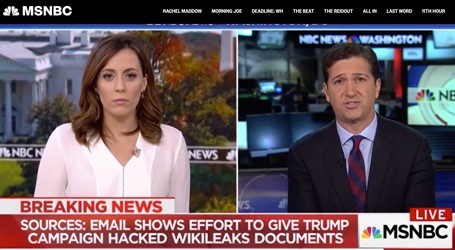
One of the most humiliating journalism debacles of the Trump era played out on December 8, 2017, first on CNN and then on MSNBC. The spectacle kicked off on that Friday morning at 11:00 a.m. when CNN, deploying its most melodramatic music and graphics designed to convey that a real bombshell was about to be dropped, announced that anonymous sources had provided the network with a smoking gun proving the Trump/Russia conspiracy once and for all: during the 2016 campaign, Donald Trump, Jr. had received a September 4 email with a secret encryption key that gave him advanced access to WikiLeaks’ servers containing the DNC emails which the group would subsequently release to the public ten days later. Cable news and online media spontaneously combusted, as is their wont, in shock, hysteria and awe over this proof that WikiLeaks and Trump were in cahoots.
CNN has ensured that no videos of the festivities are available on YouTube for anyone to watch. That’s because the claim was completely false in its most crucial respect. CNN misreported the date of the smoking gun email Trump, Jr. received: rather than being sent to him on September 4 — ten days prior to WikiLeaks’ public release, thus enabling secret access — the email was merely sent by a random member of the public after the public release by WikiLeaks (September 14), encouraging Trump, Jr. to look at those now-public emails.
Though the original false report cannot be viewed any longer (except in small snippets from other networks, principally Fox, discussing CNN’s debacle), one can view the cringe-inducing video of CNN’s Senior Congressional Correspondent Manu Raju explaining, after the Washington Postdebunked the story, that “we are actually correcting” the reporting, doing his best to downplay what a massive blunder this was (though the whole thing is fantastic, my favorite line is when Raju says, with no small amount of understatement: “this appears to change the understanding of this story,” followed by: “perhaps the initial understanding of what this email was, perhaps is not as significant based on what we know now”: perhaps):
Washington (CNN) Correction: This story has been corrected to say the date of the email was September 14, 2016, not September 4, 2016. The story also changed the headline and removed a tweet from Donald Trump Jr., who posted a message about WikiLeaks on September 4, 2016.
So mistakes happen in journalism, even huge and embarrassing ones. Other than some petty schadenfreude, why is this worth remembering? The reason is that that sorry episode reflects a now-common but highly corrosive tactic of journalistic deceit.
Very shortly after CNN unveiled its false story, MSNBC’s intelligence community spokesman Ken Dilanian went on air and breathlessly announced that he had obtained independent confirmation that the CNN story was true. In a video segment I cannot recommend highly enough, Dilanian was introduced by an incredibly excited Hallie Jackson — who urged Dilanian to “tell us what we’ve just now learned,” adding: “I know you and some of our colleagues have confirmed some of this information: what’s up?” Dilanian then proceeded to explain what he had learned:
That’s right, Hallie. Two sources with direct knowledge of this are telling us that Congressional investigators have obtained an email from a man named “Mike Erickson” — obviously they don’t know if that’s his real name — offering Donald Trump and his son Donald Trump, Jr. access to WikiLeaks documents… It goes to the heart of the collusion question….. One of the big questions is: did [Trump Jr.] call the FBI?
How could that happen? How could MSNBC purport to confirm a false story from CNN? Shortly after, CBS News also purported to have “confirmed” the same false story: that Trump, Jr. received advanced access to the WikiLeaks documents. It’s one thing for a news outlet to make a mistake in reporting by, for instance, mis-reporting the date of an email and thus getting the story completely wrong. But how is it possible that multiple other outlets could “confirm” the same false report?
It’s possible because news outlets have completely distorted the term “confirmation” beyond all recognition. Indeed, they now use it to mean the exact opposite of what it actually means, thereby draping themselves in journalistic glory they have not earned and, worse, deceiving the public into believing that an unproven assertion has, in fact, been proven. With this disinformation method, they are doing the exact opposite of what journalism, at its core, is supposed to do: separate fact from speculation.
CNN ultimately blamed its anonymous sources for this error, but refused to out them by insisting that it was a somehow a good faith mistake rather than deliberate disinformation (how did multiple “good faith” sources all “accidentally misread” an email date in the same way? CNN, in the spirit of news outlets refusing to provide the accountability and transparency for themselves that they demand from others, refuses to this very day to address that question).
But what is clear is that the “confirmation” which both MSNBC and CBS claimed it had obtained for the story was anything but: all that happened was that the same sources which anonymously whispered these unverified, false claims to CNN then went and repeated the same unverified, false claims to other outlets, which then claimed that they “independently confirmed” the story even though they had done nothing of the sort.
It seems the same misleading tactic is now driving the supremely dumb but all-consuming news cycle centered on whether President Trump, as first reported by the Atlantic’s editor-in-chief Jeffrey Goldberg, made disparaging comments about The Troops. Goldberg claims that “four people with firsthand knowledge of the discussion that day” — whom the magazine refuses to name because they fear “angry tweets” — told him that Trump made these comments. Trump, as well as former aides who were present that day (including Sarah Huckabee Sanders and John Bolton), deny that the report is accurate.
So we have anonymous sources making claims on one side, and Trump and former aides (including Bolton, now a harsh Trump critic) insisting that the story is inaccurate. Beyond deciding whether or not to believe Goldberg’s story based on what best advances one’s political interests, how can one resolve the factual dispute? If other media outlets could confirm the original claims from Goldberg, that would obviously be a significant advancement of the story. … Full article
Twelve days after the American evacuation from Saigon was complete in April 1975, the American merchant ship SS Mayaguez was carrying classified cargo from the abandoned American embassy in Saigon to an American airbase in Thailand. For unknown reasons, it foolishly sailed within two miles of a Cambodian island and was confronted by Cambodian patrol boats. The ship was seized, prompting demands from the White House for the immediate recapture of the ship and airstrikes on Cambodia. This resulted in an unnecessary and disorganized military response that killed a hundred innocent Cambodians and 41 American servicemen.
The only Lockerbie bombing convict is one step closer to his guilty verdict being overturned, however, posthumously. Abdelbaset Al-Megrahi died at home in Tripoli on 21 May, 2012, while protesting his innocence until his last breath. The Scottish Criminal Cases Review Commission (SCCRC) allowed the family to proceed with an appeal to clear his name. The case was sent to the High Court of Justiciary, Scotland’s highest criminal court, and a date for the final hearing has been scheduled to start on 24 November.
His 27-year-old son Ali, who is leading the family’s long and arduous fight to clear his father’s name, is certain that justice will prevail this time and that his late father’s verdict will be reversed. During a telephone conversation in Tripoli last Monday, he assured me: “My father’s name will certainly be cleared this time.”
The family’s lawyer Aamer Anwar, a distinguished Scottish lawyer who volunteered to take the case, in a series of emails confidently communicated to me: “We have a robust appeal.”
Winning this time seems certain. Professor Robert Black, a Scottish law authority, and the mind behind the first Lockerbie court setup in the Netherlands in May 2000, agrees with this analysis. He believes the Scottish court will “overturn the verdict” against Al-Megrahi, however, on the “narrower ground” of the crown prosecutor “withholding materials” from the defence team that could have helped establish Al-Megrahi’s innocence from the outset. Professor Black is “disappointed” that the court might not go as far as “to find that no reasonable court would have convicted Al-Megrahi.” He added, “I hope I’m wrong about this” – which would restore some of the Scottish judiciary’s reputation tarnished by the Lockerbie case and its aftermath.
The Lockerbie bombing, since 1988, became negatively synonymous with Libya, Gaddafi and its entire population. Gaddafi, firmly believing in their innocence, refused to hand over his accused citizens, Lamin Fhimah and Abdelbaset Al-Megrahi, to stand trial in the UK. This led the United Nations (UN) to adopt a series of sanction resolutions, including Resolution 731, passed on 21 March, 1992, with harsh economic and political punitive measures that not only isolated Libya, but made life extremely difficult for its entire population.
The long-held belief that the late Gaddafi was behind the attack still echoes within Western mainstream media, despite the mounting evidence to the contrary emerging over the years.
Now, it can be disclosed that Libya’s Government of National Accord (GNA), the only UN-recognised authority in the country, wants the mud to keep sticking to Gaddafi, Libya and its people too. The GNA is not enthusiastic about this latest development. The GNA have, illegally, cut the funding for the case over the last three years.
Al-Megrahi’s son Ali and the family lawyer are puzzled as to why the GNA cut funding at this critical junction of the case – when winning seems all but certain.
Lawyer Anwar does not disqualify the assumption that the GNA came under pressure from both the UK and the US to steer away from the case. The British and American narrative of the Lockerbie tragedy has always been that Libya is responsible and “that narrative must be maintained”, Anwar informs me.
However, suspension of defanging goes much deeper within the GNA, where corruption is rampant. A Scottish consultant to the legal team, speaking on condition of anonymity, yesterday clarified: “I believe funding is still budgeted, but the money disappears before getting to its intended final destination.”
Despite writing several times to the GNA to resume funding to meet the substantial mounting legal fees, Anwar received no replies until a few months ago, when his consultant was told that the GNA did not receive any messages relating to the funding of the case.
However, the consultant strongly disputes this, asserting that she “personally” handed over the file to the “highest official in the GNA” in a December 2017 meeting in Tripoli. When asked if “the highest official” meant Fayez Al-Sarraj, the GNA’s prime minister, she replied: “You think about it.”
It is not wholly unusual for the GNA to take such a position. Part of the political legitimacy in new Libya rests on the claim that Gaddafi was a supporter of international terror, and the Lockerbie bombing must have been his evil work too.
In November of 2019, the GNA’s Minister of Justice Mohamed Lamlum, personally stood before the International Criminal Court (ICC) to ask Saif Al-Islam, Gaddafi’s son, to face trial before the ICC, tarnishing the very judiciary he is supposed to protect and defend. Gaddafi Junior is wanted by the ICC for his – broadly disputed – role in quelling the 2011 troubles that ended his father’s rule over Libya.
According to different legal experts, the Libyan state is obliged to help its citizens abroad by all means necessary, including through funding in the event of legal issues. The Lockerbie case is much more than a petty case about a Libyan citizen, but it concerns the entire nation, its history and its reputation. This should elevate the case to a “national cause” for all Libyans, according to Anwar.
Indeed, Libyans across the political spectrum now consider the Lockerbie case a national issue and that Libya must continue funding the legal team, just as it did before 2011.
During the Gaddafi era, the government even established a consulate in Glasgow to closely monitor the case, and to help Al-Megrahi’s family who had to relocate to Scotland to be near their father while in jail.
It is not clear if the GNA will honour its legal obligations towards its own citizen, Al-Megrahi, albeit posthumously, but the legal team is not surrendering. They have already established a liaising team inside Libya to follow up with the chaotic authorities in Tripoli.
A group of volunteers inside and outside Libya are gearing up to explore other funding avenues if the GNA continues to reject meeting its legal obligations. In any eventuality, Al-Megrahi’s reputation, and that of Libya, will soon be restored.
MOSCOW – A provocation of Western special services cannot be ruled out in the situation with Russian opposition figure Alexey Navalny, the head of the Russian Foreign Intelligence Agency (SVR) Sergey Naryshkin said Thursday.
“This cannot be excluded,” Naryshkin said when asked if the situation with Navalny could be a provocation of Western special services.
Regarding the statement of Belarusian President Alexander Lukashenko that Germany’s claim of Navalny’s poisoning was based on false information, the SVR head said that “if president Lukashenko said so, he had reasons to do so.”
Earlier in the day, Lukashenko said during a meeting with Russian Prime Minister Mishustin that a phone call between Warsaw and Berlin was intercepted by Belarusian radar intelligence, showing that Merkel’s statements on Navalny were false in order to “make sure Putin won’t interfere in Belarusian affairs.”
“I for one, see this as a possibility,” Naryshkin said.
“Yesterday’s statement by the German authorities raises more questions than it gives answers,” Naryshkin said, stressing that Russian doctors had carried out all tests before Navalny was transferred to a clinic in Berlin and they found no poison in his system.
Russian opposition activist Alexei Navalny remains at the Charite hospital in Berlin after he was flown there from Russia’s Omsk on 22 August. On Wednesday, German doctors said that Navalny’s health condition remains serious. “The symptoms triggered by what has been confirmed as poisoning with a cholinesterase inhibitor are waning. The reason for this is a gradual regeneration of cholinesterase activity,” the clinic said in a statement.
Navalny fell gravely ill during a flight from Tomsk to Moscow on 20 August. Following an emergency landing in Omsk, he was taken to a local hospital where for the next 44 hours doctors fought for his life. According to Russian doctors, they did not rule out poisoning at the beginning but after multiple tests were conducted they found no traces of poisonous substances in Navalny’s system. They suggested that his condition was caused by an abrupt drop of glucose in his blood due to a metabolic imbalance.
The release of previously repressed studies shows that if you substitute saturated fats with polyunsaturated fats, this INCREASES the risk of cardiovascular disease. My fellow doctors need to accept the evidence.
Whilst we are in the middle of the coronavirus pandemic, it seems that all other diseases have been relegated to a position of complete irrelevance. Should this be happening? According to the British Heart Foundation, cardiovascular disease kills four hundred and sixty people each and every day in the UK. That’s just shy of 170,000 every year.
Since the start of 2020, Covid-19 has killed 40,000 in the UK, and now kills about ten a day. On the other hand, heart attacks and strokes have killed 115,000, and continue to kill 460 people a day. Which one should we be really concerned about? Have a wild guess on that one.
So I was pleased to see that someone from the other side of the world is still paying attention to the real medical killer. I was pointed to an article in The Australian, based on a study that appeared in the Journal of the American College of Cardiology (JACC). The newspaper headline was: “How dairy and fat could save your life,” with the sub-header “A new study confirms decades of research that saturated fats are good for your heart. So why do guidelines still push a non-fat diet?”
“The recommendation to limit dietary saturated fatty acid (SFA) intake has persisted despite mounting evidence to the contrary. Most recent meta-analyses of randomized trials and observational studies found no beneficial effects of reducing SFA intake on cardiovascular disease (CVD) and total mortality, and instead found protective effects against stroke.”
This is very much grist to my particular mill, as I have been writing articles and books for the past thirty years stating that saturated fat, red meat, and chocolate (dark or otherwise) are completely healthy. In addition, the ‘anti-fat’ dietary guidelines ruthlessly promoted for the past forty years or so are complete nonsense. Although almost universally accepted, they were based on absolutely no research at all. None.
When I state this, most fellow medics look at me in that certain way. Before shuffling sideways. They know, they just know, that saturated fat is bad for you. They will have read no research on the matter – they very rarely do – they have just been told this so-called fact so many times that it has become ‘The Truth’. As someone else once commented, although it is not clear who said it first, “My mind is made up; do not bother me with the facts.”
The problem is that, once someone has made up their mind, based on no facts at all, it is difficult to use facts to change their mind – but I shall have a go anyway. As the article in The Australian noted:
“A newly published study of 195,658 Brits over 10.6 years found ‘no evidence that saturated fat intake was associated with cardiovascular disease. In contrast, the substitution of polyunsaturated for saturated fat was associated with higher CVD risk.”’
Hold on – if you substitute saturated fats with polyunsaturated fats this increases the risk of cardiovascular disease? This is double blasphemy, surely. Even if saturated fats are not harmful, we absolutely know that polyunsaturated fats are healthy – don’t we?
The answer is that we don’t, and part of the reason for this is that research proving that polyunsaturated fats are unhealthy has been ruthlessly suppressed over the years.
In Australia, at the peak of its heart disease epidemic in the 1970s, researchers wanted to prove that saturated fats were bad, and that polyunsaturated fats were good. They found five hundred heart attack survivors from across Sydney and gave half of them safflower oil. They also told them to cut down on saturated fat. The other half were told to get on with life, as before.
In the safflower group, cholesterol levels fell. Hooray. Unfortunately, the group’s members were also far more likely to die. There was a fifty percent increase in deaths in the polyunsaturated safflower oil group. Not only that, but more of them died of cardiovascular disease. These figures were not published at the time. The study was, essentially, buried. However, an intrepid researcher dug the data up and published the results in the BMJ in 2013.
The key statement was this: “… substituting dietary linoleic acid (polyunsaturated fat) in place of saturated fats increased the rates of death from all causes, coronary heart disease, and cardiovascular disease.”
Another study was done in the US at around the same time, in the late sixties, early seventies. This was the Minnesota Coronary Experiment. It was far bigger, involving nearly twenty thousand men. As with the Sydney Diet Heart Study, men were split into two groups. One group was told to eat a high polyunsaturated fat diet, the other to continue with their ‘deadly’ saturated fats.
As with the Sydney study, those eating the polyunsaturated fat saw their cholesterol levels fall. Hooray again. Unfortunately, as before, they also saw the rate of heart disease rise significantly. For each ten percent fall in cholesterol levels, there was a fifteen percent increase in death.
As with the Sydney Heart Health study, the Minnesota study too was buried. The research group who discovered and published the Sydney study also found the buried data for the Minnesota study, and published it. Forty-five years after the study was completed.
But what of the other studies, I hear you cry? The ones which must have proved beyond doubt that saturated fats are bad for you? A reasonable question. The problem is that I cannot show you any, because there are none.
This may seem an extraordinary statement to make, but it can be supported. In 2015, a paper was published looking at the evidence from Randomized Controlled Trials (RCTs) to support the dietary guidelines which tell us all to avoid saturated fat. Randomized controlled trials are considered the gold standard for medical research.
It stated: “Dietary recommendations were introduced for 220 million US and 56 million UK citizens by 1983, in the absence of supporting evidence from RCTs.”
Yes, no trials, and no evidence – and none since, either. So no, the recent article in The Australian did not come as any great surprise to me. Nor did the study in the Journal of the American College of Cardiology. But it was nice to see things confirmed… again.
As for the evidence that ‘super-healthy’ polyunsaturated fats may not be healthy? Again, no surprise. These things… at least, the concentrated goop we call vegetable oils, are almost completely artificial and unknown to the diets of our ancestors.
We were not designed to eat them in any quantity. If we do, they get into our cells and our cell membranes, and gum up the works. Then, as proven by the Sydney and Minnesota studies – and many others – they cause us to die.
In truth, it is not really that saturated fats are good for us. Saturated fats are what nature designed us to eat. It is that, when we substitute them for cheap, manufactured goop, we do very badly.
Sunflower oil sounds lovely and sunny and healthy. But consume too much of it, and you won’t see too many sunrises – ever again. Stick to red meat, saturated fats, and dark chocolate. These are the things nature designed us to eat. So eat them. Like the French, who have the highest consumption of saturated fat in Europe, and its lowest rate of cardiovascular disease.
Malcolm Kendrick is a doctor and author who works as a GP in the National Health Service in England. His blog can be read here and his book, ‘Doctoring Data – How to Sort Out Medical Advice from Medical Nonsense,’ is available here.
For those of you who haven’t been following the news – Russian politician (or “opposition figure”, as he is universally referred to in the Western press) Alexei Navalny was taken ill two weeks ago. It is now being reported he was “poisoned” with “novichok”.
Here’s a quick rundown of the official story as it currently stands (bearing in mind that, as with most “official stories” it will likely be subject to instant, contradictory and retroactive changes in the coming weeks):
Alexei Navalny has never held any elected office, his political party doesn’t have a single MP in the Duma, and he polls at roughly 2% support with the Russian people.
Despite this, and in the middle of an alleged “pandemic”, Vladimir Putin deems the man a threat and orders him killed.
The State apparatus responsible for unnecessary and seemingly arbitrary acts of political murder decide to use novichok to poison him.
This decision is taken in spite of the facts that a) Novichok totally and utterly failed to work in their alleged murder of the Skripals and b) It has already been widely publicly associated with Russia.
Rather unsurprisingly, the novichok which didn’t kill its alleged target last time, doesn’t kill its alleged target this time either.
Compounding their poor decision making, the Russians not only perform an emergency landing and take Navalny straight to a hospital for medical care.
Despite Navalny being helpless and comatose in a Russian hospital, the powerful state-backed assassination team make no further attempts on his life.
In fact, seemingly determined to under no circumstances successfully kill their intended victim, the Russian government, allow him to leave the country and get medical help from one of the countries which previously accused them of using novichok.
To absolutely no one’s surprise, the Germans claim to have detected novichok in Navalny’s system.
Vladimir Putin and the Russian government are immediately blamed for the attempted murder.
He doesn’t have any evidence, of course. Instead we get sentences like this one [our emphasis]:
Over the past decade Moscow has produced and stockpiled small quantities, western intelligence agencies believe.
However, never let it be said that Luke isn’t aware of the contradictions in his story:
One other unresolved question is why Moscow granted permission for Navalny to be treated abroad, knowing that sooner or later the novichok inside his body would be detected.
But he has an answer for this:
The logical conclusion: Moscow wants the world to know.
You see, Putin wants everyone to know he did it, so he’s making it obvious. And the Kremlin’s denials are being done with “a wink and smile”. This must be some new meaning of the word “logical” I wasn’t previously aware of.
One wonders what the Russians would have done if the novichok had worked as intended, and killed Navalny before he could get to a hospital.
They couldn’t send him to Berlin then, so who announces the novichok was there? Do they do it themselves?
Oh well, at least now people will have something to talk about that isn’t the rapidly crumbling Covid narrative.
China’s Defense Ministry Wednesday firmly opposed an “extremely erroneous” report by the U.S. Defense Department on China’s military, saying it is fraught with a zero-sum game mindset and Cold-war mentality.
The Defense Ministry’s Information Office came in response to the U.S. report that hyped up the so-called “Chinese military threat” and misinterpreted China’s national defense policy and military strategies.
The office noted that the U.S. report had slandered China’s military modernization, defense expenditure and nuclear policy, aggravated tensions across the Taiwan Strait and instigated cross-Strait confrontations.
“China has always pursued a defensive national defence policy and everyone knows that China is a builder of world peace,” Foreign Affairs Ministry spokeswoman Hua Chunying said on Wednesday, as reported by the Economic Times.
On Tuesday, the Pentagon published its annual study on the evolution of Chinese military power. In this document, the U.S. authorities hold that the Asian country has equaled or exceeded U.S. military capabilities in several areas of defense.
Besides believing that China seeks to double the number of nuclear warheads in its arsenal over the next decade, Washington suggests that Beijing has made significant advances in its technical capabilities to build ships, cruise missiles, and integrated air defense systems.
The Pentagon report was released amid tensions that President Donald Trump has been generating through military exercises in the South Sea and bans to WeChat and TikTok, which the Republican politician considers a threat to his country’s national security.
Part One, The Record, treats the history of garlic as evidence. From the clay garlic bulb placed in an Egyptian grave nearly six thousand years ago, through the Ebers Papyrus, through Hippocrates, Dioscorides, Pliny and Galen, the Arab physicians under Avicenna, the medieval herbals, Culpeper, and the plague years, to the last era in which Western physicians prescribed garlic as a matter of course, which ran from 1850 to 1945. It closes with the living traditions that never stopped using it, and with the folklore of charms, vampires and the evil eye.
Part Two, The Chemistry and the Evidence, sets out what is known about why a clove has no smell until it is cut, and why the order of crush, rest and heat changes the medicine. It then reads the clinical evidence against the historical record — bacteria, blood and vessels, cancer epidemiology, metals and fatigue — and names the trials that went against garlic as directly as the trials that went for it, including the 2007 Stanford trial funded by the US National Institutes of Health which found that raw garlic, garlic powder and aged garlic extract moved LDL cholesterol no more than placebo did. It then turns to onion, garlic’s closest relative, and reads the newer evidence published since 2015, before closing with the whole of the record through the terrain lens.
Part Three, Why Medicine Set It Aside, asks the question directly. One chapter contrasts the pharmaceutical model of isolating a single active compound with the folk model of combining whole plants, and reports what the garlic evidence says about which model works better. One chapter examines the economics of research on a plant that cannot be patented. One chapter — Fire Cider — tells the story of a folk preparation whose name was taken into a United States trademark by a Massachusetts company in 2012, and won back by three herbalists in 2014 who documented forty years of prior use through Rosemary Gladstar and her students into the older tradition.
Part Four, Garlic in Practice, is the working manual — the kitchen pharmacy, traditional uses by body system, a full chapter on safety and interactions, and a complaint-by-complaint practical guide. The book closes with The Trial That Was Never Run — a one-chapter reading of the whole evidential architecture.
At the back: two appendices (a traditional list of uses, and a preparation quick-reference), a full bibliography, and a live index.
This site is provided as a research and reference tool. Although we make every reasonable effort to ensure that the information and data provided at this site are useful, accurate, and current, we cannot guarantee that the information and data provided here will be error-free. By using this site, you assume all responsibility for and risk arising from your use of and reliance upon the contents of this site.
This site and the information available through it do not, and are not intended to constitute legal advice. Should you require legal advice, you should consult your own attorney.
Nothing within this site or linked to by this site constitutes investment advice or medical advice.
Materials accessible from or added to this site by third parties, such as comments posted, are strictly the responsibility of the third party who added such materials or made them accessible and we neither endorse nor undertake to control, monitor, edit or assume responsibility for any such third-party material.
The posting of stories, commentaries, reports, documents and links (embedded or otherwise) on this site does not in any way, shape or form, implied or otherwise, necessarily express or suggest endorsement or support of any of such posted material or parts therein.
The word “alleged” is deemed to occur before the word “fraud.” Since the rule of law still applies. To peasants, at least.
Fair Use
This site contains copyrighted material the use of which has not always been specifically authorized by the copyright owner. We are making such material available in our efforts to advance understanding of environmental, political, human rights, economic, democracy, scientific, and social justice issues, etc. We believe this constitutes a ‘fair use’ of any such copyrighted material as provided for in section 107 of the US Copyright Law. In accordance with Title 17 U.S.C. Section 107, the material on this site is distributed without profit to those who have expressed a prior interest in receiving the included information for research and educational purposes. For more info go to: http://www.law.cornell.edu/uscode/17/107.shtml. If you wish to use copyrighted material from this site for purposes of your own that go beyond ‘fair use’, you must obtain permission from the copyright owner.
DMCA Contact
This is information for anyone that wishes to challenge our “fair use” of copyrighted material.
If you are a legal copyright holder or a designated agent for such and you believe that content residing on or accessible through our website infringes a copyright and falls outside the boundaries of “Fair Use”, please send a notice of infringement by contacting atheonews@gmail.com.
We will respond and take necessary action immediately.
If notice is given of an alleged copyright violation we will act expeditiously to remove or disable access to the material(s) in question.
All 3rd party material posted on this website is copyright the respective owners / authors. Aletho News makes no claim of copyright on such material.


 Part One, The Record, treats the history of garlic as evidence. From the clay garlic bulb placed in an Egyptian grave nearly six thousand years ago, through the Ebers Papyrus, through Hippocrates, Dioscorides, Pliny and Galen, the Arab physicians under Avicenna, the medieval herbals, Culpeper, and the plague years, to the last era in which Western physicians prescribed garlic as a matter of course, which ran from 1850 to 1945. It closes with the living traditions that never stopped using it, and with the folklore of charms, vampires and the evil eye.


