DOJ drops charges against ‘Russian trolls’ after they dared demand evidence in US court
RT | March 17, 2020
The US is dropping the much-hyped indictment for ‘election meddling’ against a company supposedly behind the so-called Russian troll farm, closing the opening chapter of special counsel Robert Mueller’s Russiagate investigation.
Further pursuing the case against Concord Management & Consulting LLC, “promotes neither the interests of justice nor the nation’s security,” the Department of Justice wrote to the federal judge overseeing the case on Monday, in a motion to drop the charges.
DOJ lawyers cited “recent events and a change in the balance of the government’s proof due to a classification determination,” saying only that they submitted further details in a classified addendum.
Concord was one of the three companies – the Internet Research Agency is another – and 13 individuals charged in February 2018 with waging “information warfare against the United States of America” using social media.
The DOJ rationalizes the motion to dismiss by arguing that Concord is “a Russian company with no presence in the United States and no exposure to meaningful punishment in the event of a conviction.” That has always been the case, however. What really changed since the indictment was filed is the complete implosion of Mueller’s case, helped in part by Concord fighting the case in court.
The motion inadvertently reveals that Mueller’s prosecutors never intended the case against Concord, two other entities and 13 individuals to actually go to trial, otherwise they would have anticipated what ended up happening: Concord’s lawyers demanding discovery documents from the DOJ, which the US authorities say risks “exposure of law enforcement’s tools and techniques.”
Mueller’s team tried to fight the discovery proceedings by arguing in January 2019 that Concord was leaking them to “discredit” the investigation. Within two months, however, the investigation discredited itself, by having to admit there was no “collusion” between US President Donald Trump during the 2016 presidential election.
They still insisted that Russia had “meddled” in the election, but there too the case proved a problem. Concord successfully petitioned Judge Dabney L. Friedrich in May last year to rebuke the prosecutors for presenting their allegations as facts.
This is not to say that the DOJ is ready to disavow ‘Russiagate’ as a debunked conspiracy theory, however. Though the Concord case was dropped, the charges against the Internet Research Agency and the 13 Russian individuals were not. Given that none of them have a presence in the US, and have not dignified the indictment with a response, it is unclear how – if at all – the DOJ intends to proceed with the case.
Keeping it on the books may keep the flames of ‘Russiagate’ alive, though, which is very convenient for the media and others heavily invested in the narrative of Moscow somehow menacing US elections, despite not a shred of actual evidence being presented to back it up.
Wash Your Hands—but Beware the Electric Hand Dryer
“Electric towels” were supposed to prevent the spread of contagious disease. What if they’ve been doing the opposite?
By Tom Bartlett | Wired | 03.06.2020
The spread of Covid-19 has turned us into a nation of hand-washing obsessives, citizens who vigorously interlace our fingers and circle-scrub our thumbs with an exacting, anxiety-fueled intensity. But it’s not over when you flip off the faucet: Drying your hands matters too, because damp skin provides a hospitable environment for microorganisms and, as a result, might increase the likelihood that you’ll pass on pathogens.
So now, as we confront what could be a society-altering disease outbreak, it seems worth taking a hard look at the widely reviled yet seemingly ubiquitous electric hand dryer. Are they as hygienic as paper towels, as their manufacturers claim?
The earliest pitches for hand dryers played up their supposed ability when it comes to “preventing the spread of contagious disease,” as a 1924 newspaper ad for the Airdry Electric Towel put it. More recently, Dyson, whose Airblade hand dryer promises to “scrape water from hands like a windshield wiper,” has bragged that its HEPA air filter captures particles as tiny as .3 microns in diameter, much like the N95 face masks that are now selling for AirPod Pro–equivalent prices on Amazon.
But the quality of the intake filter doesn’t address whether blowing air at high speeds is a smart idea given that it may be sending droplets and particles from your just-washed hands flying rapidly every which way. When you dig into the science on hand dryers, you’ll come across reason to be concerned. A study published in 1989 found that gentler, old-style hand dryers blew bacteria over a three-foot radius and onto the user’s clothes, which considering the era was probably an acid-washed jean jacket.
A 2018 study produced even more troubling results, finding that “potential pathogens and spores” could be “dispersed throughout buildings and deposited on hands by hand dryers.” It tested conventional hot-air models with and without filters and determined that the filters “most likely reduce the number of potentially pathogenic bacteria with the potential to colonize hands but do not eliminate the risk entirely.” A 2015 study found that super-aggro hand-dryers like the ones made by Dyson, which use higher-speed jets of air at room temperature, “produced significantly greater aerosolization of virus on the hands” than the traditional kind. Paper towels, meanwhile, were found to cause about the same amount of viral spread as hot-air models.
A 2012 analysis of 12 studies over four decades published in Mayo Clinic Proceedings concluded that “[f]rom a hygiene viewpoint, paper towels are superior to electric air dryers” and that they should be used in “locations in which hygiene is paramount, such as hospitals and clinics.” Though it could be argued that hygiene should be paramount in the restroom of, say, your neighborhood Panera Bread, too. The analysis did find that dryers like Dyson’s “led to much less bacterial transfer than hot air dryers.”
So does that tell us anything about whether hand dryers could spread a virus like the one that causes Covid-19? I called Peter Setlow, a biochemist at the University of Connecticut and one of the authors of that 2018 study. Setlow is a “spore guy” not an infectious disease expert, but he nonetheless came away from that research with a deep and abiding distrust of hand dryers regardless of the model. “Sorry, hand-dryer industry,” he told me. “My personal opinion is that they shouldn’t be used.”
There’s been understandable blowback from the hand-dryer industry, which questions the methodology of some of this research and notes that certain studies pegging hand dryers as disease vectors—including the one cited above, from 2015—were carried out by researchers who had worked as consultants for paper-towel manufacturers. This is true in some, though not all, cases. Dyson got in on the game by funding a study, published last April, that found—surprise!—hands dried with the company’s own Airblade harbored fewer bacteria than those dried with paper towels.
There’s reason to be skeptical of last year’s paper. In the study, subjects “slowly” moved their hands in and out of the machine for a full minute, something no normal human is ever going to do. Besides, Dyson says elsewhere that the model dries hands satisfactorily in a mere 12 seconds, so which is it? More importantly, that study only looked at the bacteria left behind on hands post-drying, not whether particles might have been blown onto your clothes.
It’s not just a matter of public health: There are fortunes at stake in the science war between the paper-towel and hand-dryer industries. Multifold paper towels, the kind commonly used in bathrooms, are a several-billion-dollar-a-year behemoth, and one recent estimate of the global market for hand dryers puts the number at a shade under $800 million, and growing. This is big money and obviously no company wants their products to be viewed as more likely to make people sick. Dyson has made the case that, while other brands of hand dryers might spread disease, its products are perfectly safe even in hospitals. Karen Holeyman, lead research scientist and microbiologist at Dyson, also notes via email that “Dyson Airblade™ hand dryers are proven hygienic,” and referred to its HEPA air filter.
Yet it’s hard to read the scientific papers without concluding that, well, paper is the way to go. If the science seems to lean in that direction, though, why have electric dryers continued to claim more and more tiled territory? For starters, they do have undeniable upsides. Unlike paper towels, hand dryers don’t create waste and they’re drastically cheaper over time. The annual cost for paper towels in a public restroom can easily top a thousand dollars, while the electricity required to run a hand dryer costs about a fifth of that, according to one estimate.
But focusing on paper towel prices seems a little ridiculous when epidemiologists are calculating death rates. We’re at a moment when hand-washing must be taken very seriously. The same is true for hand-drying. Electric hand dryers appear to be a modern, more responsible solution to an everyday problem—but one that may not live up to its billing.
OPCW Scandal Reaches New Height of Farce With Latest Whistleblower Allegations Over Smeared Douma Officers
By Martin Jay | Strategic Culture Foundation | March 15, 2020
How much longer can the troubled OPCW organisation continue to operate with any credibility after the doctoring of its investigations to suit a western narrative in Syria continues to be exposed and shows it is far from an independent chemical weapons watchdog?
Readers may remember that previously, towards the end of 2019, leaked emails from two key OPCW investigators who were dispatched to Douma in Syria in 2018, revealed that their original remarks – which indicated that the Assad regime could not have orchestrated the chemical attack – were removed from the final edited report. This act alone was the starter’s pistol on a rebellion which is threatening to severely damage the organisation’s credibility in the field and confirms to many that the role of it is purely as an apparatus for the West’s agenda in the field of conflict around the world, against those who stand up to the giants of NATO.
A fourth whistleblower has now emerged from the farcical debacle which will surely reach a tipping point soon either threatening to remove OPCW’s Spanish chief – the main culprit who tarnished the two officers who kicked off the scandal in the first place – or for the organisation itself to have a world-wide identity problem which will manifest itself in many countries simply refusing to allow it entry into hotspots. It’s hard to see how Syria’s Assad would continue to allow OPCW inspectors into Syria following another chemical attack after the organisation has been “hijacked” by western interests who appear to go to extraordinary levels to falsify evidence to serve a narrative.
The latest OPCW official to step forward and support the findings of the two initial inspectors, whose scandal was revealed in a series of leaked emails in May 2019, has spoken of the culture of intimidation within the organisation and how the two inspectors have been dealt a grave injustice in their work and in their determination to salvage credibility for their employer.
“The mistreatment of two highly regarded and accomplished professionals can only be described as abhorrent,” the OPCW official wrote in an email to The Grayzone website. “I fully support their endeavours, in that it is for the greater good and not for personal gain or in the name of any political agenda. They are in fact trying to protect the integrity of the organisation which has been hijacked and brought into shameful disrepute.”
Central to the dispute surrounding the two officers who have had their conclusions dismissed by OPCW’s chief, is the discovery by one of the investigators that the gas canisters on the ground appeared not to have been dropped from an aircraft but rather placed there. This finding is important as it destroys the West’s assertion that the attack at Douma was made by the Assad regime which it alleges dropped the chemicals from a plane or a helicopter.
This incendiary finding was removed from the final redacted report which leans more on the Assad theory and keeps a safe distance from the distinct possibility that the entire attack was staged by western-backed extremist groups in the area.
One of the two whistleblowers and former inspectors is believed to be Ian Henderson, a 12-year veteran of the organization and weapons expert. According to the Grayzone, “Henderson led on-the-ground inspections in Douma and conducted a detailed engineering study of gas cylinders found at the scene” and concluded that the cylinders were likely “manually placed” rather than being dropped by air. The second officer is not named but is believed to be of higher rank who wrote one version of a final report, which was ultimately rejected for a redacted version which failed to acknowledge the findings of the two investigators – ultimately that it could not have been an attack by Assad’s forces.
Their work continues to draw wrath from the OPCW’s boss General Fernando Arias who remarkably seems to be conducting a smear campaign against them slamming their work as “erroneous, uninformed, and wrong,” believed to be what has sparked a new whistleblower – believed to be British – to come forward with startling new allegations which cast a shadow over the integrity of the organisation.
“It is quite unbelievable that valid scientific concerns are being brazenly ignored in favour of a predetermined narrative,” the email reads. “The lack of transparency in an investigative process with such enormous ramifications is frightful.”
Yet the culture of arbitrary vengeance against those who question the biased narrative or working practices of its chief, is deeply worrying, as the latest whistleblower reveals in the email.
“I am one of many who were stunned and frightened into silence by the reality how the organisation operates,” the official wrote. “The threat of personal harm is not an illusion, or else many others would have spoken out by now.”
It’s unclear what “personal harm” means. But even if it is punitive measures which mean blocked promotion or even constructive dismissal, it raises a number of questions as to the integrity of the OPCW itself which will reverberate around the world’s so-called democratic centres of debate and will spark a new debate among those corridors. Does the OPCW have any credibility left?
US CDC Director Robert Redfield Admitted that Coronavirus Deaths Have Been Miscategorized as Flu
By Larry Romanoff | Global Research | March 13, 2020
The US has been lying all along.
Robert Redfield, CDC director, testifying to Congress, today admitted that virus deaths have been miscategorised as the flu.
He also stated that the standard practice has been to first test people for the flu and, if the test is positive, they stop there. They don’t test for the coronavirus.
So Japan and Taiwan were correct. Many of the US deaths attributed to the flu were actually from the coronavirus.
One Senator asked Redfield if post-mortems were performed to learn the cause of death, and he stated that such were done, and they revealed mis-diagnoses.
The infections and deaths have been knowingly mis-categorised for months, and the CDC ‘strongly’ recommended that hospitals not test for the virus except as a last resort. It is not an accident that the US has no reliable tests. They don’t want to test. Blame everything on the flu.
And now all meetings and discussions on the virus are classified, and all public information must be first cleared through the White House.
Larry Romanoff is a retired management consultant and businessman. He has held senior executive positions in international consulting firms, and owned an international import-export business. He has been a visiting professor at Shanghai’s Fudan University, presenting case studies in international affairs to senior EMBA classes. Mr. Romanoff lives in Shanghai and is currently writing a series of ten books generally related to China and the West. He can be contacted at: 2186604556@qq.com.
US Intel Agencies Played Unsettling Role in Classified and “9/11-like” Coronavirus Response Plan
By Whitney Webb | MintPress News | March 13, 2020
As the COVID-19 coronavirus crisis comes to dominate headlines, little media attention has been given to the federal government’s decision to classify top-level meetings on domestic coronavirus response and lean heavily “behind the scenes” on U.S. intelligence and the Pentagon in planning for an allegedly imminent explosion of cases.
The classification of coronavirus planning meetings was first covered by Reuters, which noted that the decision to classify was “an unusual step that has restricted information and hampered the U.S. government’s response to the contagion.” Reuters further noted that the Secretary of the Department of Health and Human Services (HHS), Alex Azar, and his chief of staff had “resisted” the classification order, which was made in mid-January by the National Security Council (NSC), led by Robert O’Brien — a longtime friend and colleague of his predecessor John Bolton.
Following this order, HHS officials with the appropriate security clearances held meetings on coronavirus response at the department’s Sensitive Compartmentalized Information Facility (SCIF), which are facilities “usually reserved for intelligence and military operations” and — in HHS’ case — for responses to “biowarfare or chemical attacks.” Several officials who spoke to Reuters noted that the classification decision prevented key experts from participating in meetings and slowed down the ability of HHS and the agencies it oversees, including the Centers for Disease Control and Prevention (CDC), to respond to the crisis by limiting participation and information sharing.
It has since been speculated that the decision was made to prevent potential leaks of information by stifling participation and that aspects of the planned response would cause controversy if made public, especially given that the decision to classify government meetings on coronavirus response negatively impacted HHS’ ability to respond to the crisis.
After the classification decision was made public, a subsequent report in Politico revealed that not only is the National Security Council managing the federal government’s overall response but that they are doing so in close coordination with the U.S. intelligence community and the U.S. military. It states specifically that “NSC officials have been coordinating behind the scenes with the intelligence and defense communities to gauge the threat and prepare for the possibility that the U.S. government will have to respond to much bigger numbers—and soon.”
Little attention was given to the fact that the response to this apparently imminent jump in cases was being coordinated largely between elements of the national security state (i.e. the NSC, Pentagon, and intelligence), as opposed to civilian agencies or those focused on public health issues, and in a classified manner.
The Politico article also noted that the intelligence community is set to play a “key role” in a pandemic situation, but did not specify what the role would specifically entail. However, it did note that intelligence agencies would “almost certainly see an opportunity to exploit the crisis” given that international “epicenters of coronavirus [are] in high-priority counterintelligence targets like China and Iran.” It further added, citing former intelligence officials, that efforts would be made to recruit new human sources in those countries.
Politico cited the official explanation for intelligence’s interest in “exploiting the crisis” as merely being aimed at determining accurate statistics of coronavirus cases in “closed societies,” i.e. nations that do not readily cooperate or share intelligence with the U.S. government. Yet, Politico fails to note that Iran has long been targeted for CIA-driven U.S. regime change, specifically under the Trump administration, and that China had been fingered as the top threat to U.S. global hegemony by military officials well before the coronavirus outbreak.
A potential “9/11-like” response
The decision to classify government coronavirus preparations in mid-January, followed by the decision to coordinate the domestic response with the military and with intelligence deserves considerable scrutiny, particularly given that at least one federal agency, Customs and Border Patrol (CBP), will be given broad, sweeping powers and will work closely with unspecified intelligence “partners” as part of its response to a pandemics like COVID-19.
The CBP’s pandemic response document, obtained by The Nation, reveals that the CBP’s pandemic directive “allows the agency to actively surveil and detain individuals suspected of carrying the illness indefinitely.” The Nation further notes that the plan was drafted during the George W. Bush administration, but is the agency’s most recent pandemic response plan and remains in effect.
Though only CBP’s pandemic response plan has now been made public, those of other agencies are likely to be similar, particularly on their emphasis on surveillance, given past precedent following the September 11 attacks and other times of national panic. Notably, several recent media reports have likened coronavirus to 9/11 and broached the possibility of a “9/11-like” response to coronavirus, suggestions that should concern critics of the post-9/11 “Patriot Act” and other controversial laws, executive orders and policies that followed.
While the plans of the federal government remain classified, recent reports have revealed that the military and intelligence communities — now working with the NSC to develop the government’s coronavirus response — have anticipated a massive explosion in cases for weeks. U.S. military intelligence came to the conclusion over a month ago that coronavirus cases would reach “pandemic proportions” domestically by the end of March. That military intelligence agency, known as the National Center for Medical Intelligence (NCMI), coordinates closely with the National Security Agency (NSA) to conduct “medical SIGINT [signals intelligence].”
The coming government response, the agencies largely responsible for crafting it and its classified nature deserve public scrutiny now, particularly given the federal government’s tendency to not let “a serious crisis to go to waste,” as former President Obama’s then-chief of staff Rahm Emanuel infamously said during the 2008 financial crisis. Indeed, during a time of panic — over a pandemic and over a simultaneous major economic downturn — concern over government overreach is warranted, particularly now given the involvement of intelligence agencies and the classification of planning for an explosion of domestic cases that the government believes is only weeks away.
Update on the OPCW’s investigation of the Douma incident
Paul McKeigue, David Miller, Piers Robinson
Members of Working Group on Syria, Propaganda and Media
- 1 Summary
- 2 Irregularities in the published reports of the Fact-Finding Mechanism
- 2.1 No comparison with epidemiology or toxicology of chlorine release incidents
- 2.2 Withholding of quantitative results of chemical analyses
- 2.3 Delay in initiating engineering / ballistics studies, inadequate reporting
- 2.4 Ignoring evidence of staging in images uploaded by opposition-linked media
- 2.5 Blending of witness interviews and exclusion of testimony that the hospital scene had been staged
- 2.6 Conduct of the investigation
- 3 What we now know about misconduct in the Douma investigation
- 3.1 Attempt to substitute a modified report for the original interim report
- 3.2 Suppression of quantitative lab results
- 3.3 Suppression of inconsistencies in the eyewitness testimony
- 3.4 Suppression of the consultation with medical experts in June 2018
- 3.5 Concealing the date and rationale for the decision not to proceed with exhumations
- 3.6 Attempt by US officials to influence the inspectors
- 3.7 Unreviewed report prepared by unknown authors presented as “the Report of the Fact-Finding Mechanism”
- 3.8 Suppression of the engineering assessment
- 3.9 The three external engineering/ballistics consultancies supposedly obtained by the FFM
- 4 The OPCW’s investigation into “Possible Breaches of Confidentiality”
- 5 The Investigation and Identification Team (IIT)
1 Summary
- As we noted in April 2019, there were defects in the published interim and final Reports of the Fact-Finding Mechanism on the Douma incident that indicated that evidence had been withheld or distorted.
- From comparing the original Interim Report drafted in June 2018, the modified report that was intended to be substituted for it, and the published Final Report, it is clear that this was not simply a divergence of opinions between experts. The misrepresentation of evidence in the published Final Report can reasonably be described as fraudulent. Specifically, the following points can be identified:
- Quantitative results on the levels of chlorinated organic compounds were suppressed. A false assertion about “high levels” of these compounds had been added to the modified report.
- An assessment based on the epidemiology of chlorine release incidents was omitted from the modified report and the Final Report.
- On-site assessments that the observations were incompatible with aerial delivery of the cylinders were omitted from the modified report and the Final Report.
- The testimony of opposition-linked witnesses interviewed in Turkey was rewritten in the Final Report so as to obscure inconsistencies about the distribution of bodies at Location 2 that would have cast doubt on the reliability of their testimony.
- The result of the consultation with medical experts in June 2018, indicating that the victims had not been killed by chlorine, was suppressed and omitted from the timeline of the investigation published in the Final Report.
- The internal engineering assessment was excluded from the published Final Report.
- In violation of Article VIII of the Chemical Weapons Convention, the Chief of Cabinet allowed US officials to attempt to influence the inspectors in July 2018.
- The evidence of fraud in the published report of the Douma investigation means that all other published reports from FFM Team Alpha, including the FFM reports on the alleged chlorine attacks in 2015 and the alleged sarin attack in Khan Sheikhoun in 2017, must also be disregarded as unreliable and possibly fraudulent.
- The OPCW’s report on 6 February 2020 of what was purported to be an investigation into the leak of the engineering assessment to the Working Group was used instead to smear two of the organization’s most experienced and highly-rated inspectors with false and misleading statements.
- It is now clear that the Director-General’s statements on 28 May and 6 June 2019 that the FFM had “examined, weighed and deliberated”, “considered” and “analysed” the engineering assessment were unequivocally false: the Team Leader and Head of the FFM had refused to accept the document in February 2019.
- The Douma investigation has been passed to the Identification and Inspection Team (IIT). A brief examination of the careers of the investigators and analysts appointed to the IIT shows that all four of them have serious conflicts of interest. This calls into question their ability to resist pressure to come up with the answers that the influential delegations of the US, UK and France want.
2 Irregularities in the published reports of the Fact-Finding Mechanism
In a briefing note posted on 11 April 2019, we drew attention to defects in the published FFM reports that indicated, to anyone who examined these reports closely, that evidence had been withheld or distorted. We review this material briefly before examining what new information has been provided by documents and briefings released from May 2019 onwards.
2.1 No comparison with epidemiology or toxicology of chlorine release incidents
The reports did not assess whether the alleged chemical attack was consistent with the epidemiology of chlorine release incidents, which typically have low case fatality rate.
The analysis of the images of victims stated that “this type of rapid collapse is indicative of an agent capable of quickly killing or immobilising” but did not explain how this opinion was compatible with release of chlorine from an intact gas cylinder on the balcony, or with the presence of foamy pulmonary edema that would take time to develop.
2.2 Withholding of quantitative results of chemical analyses
Quantitative results of lab analyses were withheld. The lack of concordance between labs suggested that chlorinated organic compounds were present only at trace levels, close to the lower limit of detection.
The reports did not make clear that trace levels of these compounds are ubiquitous in environments where industrial or household products are present.
The Final Report emphasized correctly that testing for exposure to chlorine depends on comparison with control samples, but inexplicably did not report results for the control samples that were taken.
Although molecular chlorine is not naturally present in the environment, chloride ions and many chlorinated organic derivatives exist in the natural background. For that reason it was important to gather control samples, wherever feasible, at locations not expected to have been exposed to chlorine gas.
In Table A9.3 two specimens are described as control samples:
- Control sample: debris 20 meters west of the building entry (level 0): 2018.04.21_1909_04
- Concrete dust scraping at pillar 51: 2018.05.01_1779_05
From the Evidence Reference Numbers listed in Table A5.1 we can deduce that these two control samples relate to Location 2 (numbers prefixed 2018.04.21_1909) and the hospital (numbers prefixed 2018.05.01 1779).
Results for these samples are not given.
This should have raised questions about the conduct of the investigation. If rigorous procedures had been followed, with control samples included in the same batches as putatively exposed samples and laboratory staff blinded to exposure status, the omission of control samples from analysis or reporting could only have been deliberate.
We emphasize that the issue here is not whether chlorine was released, but that the withholding of quantitative results and failure to report results on control samples is strong evidence of scientific misconduct.
2.3 Delay in initiating engineering / ballistics studies, inadequate reporting
Three engineering/ballistics consultations are mentioned in the final report: but the figures show screenshots from what appears to be only a single study using a software package for finite-element analysis, These are barely legible screenshots, not of the professional standard one would expect from experts preparing a report for an international agency. Figures 10 and A7.6 show a simulation of the impact at Location 4 with a cylinder without harness or valve, though the cylinder found on the bed had a harness and an intact valve. The barely legible graphs based on the simulation assume improbably low drop heights for a helicopter flying over defended territory. Figure 12 shows the cylinder at Location 4 bouncing off the floor at 2 m/s, which would not have allowed it to reach the bed more than 3 metres away.
There was no explanation for why, if the FFM had considered it necessary to obtain expert opinions on the possible trajectories of the cylinders found at Locations 2 and 4, they did not request on-site examinations while the FFM was deployed in Damascus in April/May, rather than six months later when inspection of the sites and cylinders was no longer possible.
2.4 Ignoring evidence of staging in images uploaded by opposition-linked media
An analysis of images uploaded on the night of 7 April showed that bodies had been rearranged between photo sessions: infants first shown separated from adults were subsequently placed on the bodies of adult women. The opposition cameramen attempted for the first few days to represent the cylinder at Location 4 as the cause of the deaths at Location 2.
2.5 Blending of witness interviews and exclusion of testimony that the hospital scene had been staged
Information obtained from interviews was summarized in the Final Report without any distinction between information obtained from witnesses in Damascus and those interviewed in Turkey (who would have been opposition supporters who had relocated to Idlib under the evacuation agreement), and without any effort to establish whether the presence of each witness at the scene was corroborated by other evidence. The report was written to make it appear as if the witnesses who reported that the hospital dousing scene had been staged were never formally interviewed by the FFM, downgrading their testimony to “other open-source video material”.
2.6 Conduct of the investigation
The Team Leader had left Damascus for unexplained “information gathering activities” in Turkey three days after arriving, before on-site inspections had begun. All evidence other than the lab results was withheld from the Interim Report released in July 2018, even though most of the evidence – witness interviews, one-site assessment of the cylinder and craters, analysis of uploaded images of victims – had already been collected. There was an unexplained delay in the investigation between June and September 2018. Both the interim and final reports were unsigned, though previous FFM reports had been signed by the Team Leader.
In summary, it was possible by April 2019 for anyone with a scientific grounding who read the published reports closely to infer, as we did, that something was wrong with the published reports of the FFM on the Douma incident. We listed most of the points above in our briefing note posted in April 2018, but missed one of the most interesting clues: that results on control samples were not reported even though these samples had been collected. From [reports] that a Russian proposal for all members of the FFM team to give a briefing on the Final Report had been voted down by the OPCW Executive Council on 14 March 2019, it was evident that there was dissent among members of the FFM team.
3 What we now know about misconduct in the Douma investigation
During 2019 more information about the Douma investigation reached the public domain. This began with the release of the engineering assessment in May 2019, continued with the briefing of a panel convened by the Courage Foundation in October 2019 and the release of more internal documents including the original draft of the interim report in December 2019, and finally the release of a written statement provided to the UN Security Council.
3.1 Attempt to substitute a modified report for the original interim report
We now know that the published Interim Report, which reported only lab results, was the result of a stand-off between the Team Leader Sami Barrek and the other inspectors. In June 2019 a secretly-prepared modified report had been substituted for the original interim report.
This original interim report had stated that “Although the cylinders might have been the sources of the suspected chemical release, there is insufficient evidence to affirm this”. The modified report asserted instead that there was “sufficient evidence at this time to determine that chlorine, or another reactive chlorine-containing chemical, was likely released from cylinders.” The section on the epidemiology of chlorine release incidents in the original interim report, which had noted that in such incidents most of those exposed manage to escape, was omitted from the modified report.
The original interim report had noted that preliminary observations on the cylinders and the impact sites raised doubts about the story that the cylinders had been dropped from the air:
The FFM team is unable to provide satisfactory explanations for the relatively moderate damage to the cylinders allegedly dropped from an unknown height, compared to the destruction caused to the rebar-reinforced concrete roofs. In the case of Location 4, how the cylinder ended up on the bed, given the point at which it allegedly penetrated the room, remains unclear. The team considers that further studies by specialists in metallurgy and structural engineering or mechanics are required to provide an authoritative assessment of the team’s observations.
In the modified report this passage was removed, and the question of “how the cylinder ended up on the bed” at Location 4 was replaced by assessing “the trajectory of the cylinder”, implicitly excluding the possibility of manual placement.
The team considers that further analysis would need to be conducted by suitable experts, possibly in metallurgy and structural or mechanical engineering, to provide an assessment of the trajectory of the cylinder, in addition to the damage caused to the bed, the roof and the cylinder itself.
3.2 Suppression of quantitative lab results
The modified report asserted that “high levels of various chlorinated organic derivatives” were present in organic samples. These chlorinated organic compounds were present mostly at levels of only a few parts per billion, not above the background levels that would be expected in an environment where industrial products were present. The quantitative results were withheld from the inspectors who had deployed to Damascus. The inspectors protested about the withholding of quantitative results, and were assured that they would be included in the interim report, only to find that they were withheld from the published version.
3.3 Suppression of inconsistencies in the eyewitness testimony
The original interim report clearly separated the eyewitness accounts obtained in Damascus from those obtained in Turkey (referred to as “Country X”). It also noted inconsistencies between the statements of witnesses that raised questions about their credibility:
There were variations (see table and footnotes below) in the numbers of bodies and their distribution throughout Location 2 as observed in video footage and photos, compared to the numbers provided by various witnesses who were interviewed. According to statements from witnesses, “many people they presumed dead, were lying on the floor of the basement”. The FFM did not obtain any video footage or photos of dead casualties lying in the basement of Location 2 or being removed from there.
The table showed that of seven witnesses who reported the distribution of bodies at Location 2, two reported bodies in basement only, one reported bodies at ground level and above only, and four reported bodies both in basement and above ground level. The videos had not shown any bodies in the basement.
3.4 Suppression of the consultation with medical experts in June 2018
It is now clear that the vague and contradictory account of expert opinions about the cause of death of the victims in the Final Report is explained by suppression of the consultation with medical experts that took place on 6 June 2018 at the Bundeswehr Research Institute for Protective Technologies and NBC Protection (WIS) in Munster. The “chief expert” can be identified as Colonel Dr Franz Worek, the leading medical expert on chemical defence in the Bundeswehr.
His argument, reconstructed from the original interim report written in June 2018 and the minutes written two months later, was as follows:
- Pulmonary edema is a delayed effect of “choking agents” such as chlorine which cause acute inhalation injury. If the victims of exposure to such an agent had had lived long enough for their airways to be filled with foamy edema fluid, they would have been able to escape and would not have collapsed “gathered in piles” on the spot.
- Massive exposure to chlorine can cause laryngospasm leading to immediate asphyxiation, but in this situation there would not be time for foamy pulmonary edema to develop
- Cholinesterase inhibitors (nerve agents) [or opiates, we would add] could have caused instant collapse and also rapid onset of pulmonary edema, but known agents were ruled out by the negative lab tests.
The OPCW participants agreed that the conclusions were clear: whatever killed the victims, it was not chlorine. This consultation does not appear in the timeline of the final Report of the Fact-Finding Mission: the first toxicology consultations are dated to September 2018.
3.5 Concealing the date and rationale for the decision not to proceed with exhumations
The original interim report recorded that plans for exhumations were halted when the first lab results were received on 22 May 2018:
When the analytical results of the first round of environmental and biological samples were received and no nerve agents or their degradation products were identified in either environmental or biological samples, the plans for exhumations were halted as the risk of not finding substantive evidence of the alleged attack was now considered high and proceeding with the exhumations presented a risk to benefit ratio that was no longer acceptable.
The Interim Report released on 6 July 2018 stated that the intention to exhume bodies from mass graves was “communicated to the Syrian Arab Republic in Note Verbale NV/ODG/214827/18” without indicating that plans for exhumation had been halted two months earlier. The Final Report omits the date and the rationale for the decision not to proceed with exhumations, and insinuates that the Syrian Arab Republic was responsible for delaying exhumations until they would no longer be informative:
The Syrian Arab Republic replied in Note Verbale No. 45 on 4 May 2018 and enumerated the conditions to be met in order to conduct the exhumation. With due consideration of the time elapsed since the alleged incident, the possibility was eventually not explored any further.
3.6 Attempt by US officials to influence the inspectors
In the first week of July 2018 all FFM team members were summoned by the Chief of Cabinet, Robert Fairweather, to a meeting with three US officials who asserted that their findings proved that there had been a chlorine attack. This attempt to influence the inspectors violated Article VIII Part D of the Chemical Weapons Convention, which stipulates that:
In the performance of their duties, the Director-General, the inspectors and the other members of the staff shall not seek or receive instructions from any Government or from any other source external to the Organization. They shall refrain from any action that might reflect on their positions as international officers responsible only to the Conference and the Executive Council.
Each State Party shall respect the exclusively international character of the responsibilities of the Director-General, the inspectors and the other members of the staff and not seek to influence them in the discharge of their responsibilities.
3.7 Unreviewed report prepared by unknown authors presented as “the Report of the Fact-Finding Mechanism”
FFM team members who had deployed to Douma were excluded from preparation of the final report, and were not even kept informed of its status or expected date of publication. No technical peer review of the final report was conducted. In particular the only organic chemist and the only chemical engineer on the team were excluded from drafting and reviewing the report. A briefing to States Parties was given on 5 March 2019 by Boban Cekovic, a former inspector who could not have contributed to the investigation before December 2018 when he rejoined the OPCW.
3.8 Suppression of the engineering assessment
It is now clear that the absence of an on-site engineering opinion in the Final Report is explained by deliberate suppression. Ian Henderson had been tasked with the Location and Munition (cylinder) study in the work plan issued by the Team Leader on 26 June 2018. He was excluded from external consultations held later that year. The Team Leader and the FFM Leader refused to accept Henderson’s engineering report on 26 February 2019. The Chief of Cabinet, Sebastien Braha, attempted to have all copies of the Engineering Assessment destroyed and also ordered that the log of the Document Registration Archive be altered to erase “all traces, if any, of [the document’s] delivery/storage/whatever in DRA”.
We have noted previously that the OPCW has come up with three contradictory explanations of why Ian Henderson’s Engineering Assessment was excluded from the Final Report of the FFM:
- 1E1: the document was “not part of any of the material produced by the FFM”.
- 2E2: the document was “analysed, it was part of the investigation” but rebutted by the reports of “three external experts commissioned by the FFM”.
- 3E3: the document “pointed at possible attribution which is outside of the mandate of the FFM” and Henderson was therefore advised to submit his assessment to the IIT.
Arias has on two occasions asserted that the Engineering Assessment was considered by the FFM. In a briefing on 28 May 2019 he stated that:
The document produced by this staff member pointed at possible attribution, which is outside of the mandate of the FFM with regard to the formulation of its findings. Therefore, I instructed that, beyond the copy that would exclusively be kept by the FFM, the staff member be advised to submit his assessment to the IIT, which he did, so that this document could later be used by the IIT. As is the case with all FFM investigations, the Secretariat encourages serious and professional debates within, so all views, analysis, information and opinions are considered. This is what the FFM did with the information included in the publicly disclosed document [the Engineering Assessment]; all available information was examined, weighed and deliberated.
In a panel discussion on 6 June 2019 Arias stated that
This information [the Engineering Assessment] was considered and it was analysed, it was part of the investigation and this information has already been given to the Investigation and Identification Team in charge of attributing responsibilities because this information you referred to is more focussing, is more targeted to to establish responsibility than to focus to the facts.
These statements by Arias are unequivocally false. Henderson’s statement to the UN Security Council makes clear that his Engineering Assessment was never considered by the FFM: the Team Leader and the head of the FFM had refused to accept it.
In Arias’s latest briefing, his widely ridiculed explanation 3E3 that the Engineering Assessment had been excluded from the FFM report because it “pointed at possible attribution” which was “outside the mandate of the FFM” was abandoned. Instead he reverted to explanation 1E1:
Inspector A’s assessment purports to be an official OPCW FFM report on the Douma incident. Instead it is a personal document created with incomplete information and without authorisation.
He conceded that “In the interest of transparency and completeness, Inspector A’s assessment has been transmitted to the IIT and will be examined by it in due course.”
3.9 The three external engineering/ballistics consultancies supposedly obtained by the FFM
The Final Report, without mentioning that an internal engineering assessment had been excluded, stated that engineering/ballistics assessments had been obtained from three external experts, and described the results of the assessments of the cylinder at Location 4 as follows:
The results of these assessments indicated that the shape of the aperture produced in the modulation matched the shape and damage observed by the team. The assessments further indicated that, after passing through the ceiling and impacting the floor at lower speed, the cylinder continued altered trajectory, until reaching the position in which it was found.
In the light of other irregularities in the Final Report, we may reasonably be suspicious of the Final Report’s assertion that reports from three independent experts supported the explanation that the cylinders at Locations 2 and 4 reached their positions as a result of being dropped from the air.
If these three assessments exist, and their conclusions were as described in the Final Report, it should have been straightforward to document this. We have been informed that one report was obtained from a European institute with expertise in impact engineering, and that this group assessed that it was “very unlikely” that the cylinder at Location 4 had reached its position as a result of being dropped from the sky.
At a press conference in The Hague on 12 July 2019, Alexander Shulgin, the Russian envoy to the OPCW, stated that:
We would like to review the reports of the three independent experts that made a conclusion that these canisters were dropped from high altitude. You are free not to name them. We already know the name of one of the experts and we highly doubt that they are indeed unbiased.
In an interview in November 2019, Shulgin expressed doubts about the existence of three reports: “The refusal of the Technical Secretariat to unveil the reports of these anonymous outside experts makes us question whether these reports ever existed.” He added that the expert whose name he knows “has a rather dubious reputation in terms of his impartiality, and he is anything but a specialist in ballistics”.
4 The OPCW’s investigation into “Possible Breaches of Confidentiality”
This investigation was originally set up to investigate the leak of the Engineering Assessment to the Working Group in May 2019. However the report of the investigation, the briefing from the Director-General, Fernando Arias, and the accompanying press release were used instead to smear two of the organization’s most experienced and highly-rated inspectors.
The smears include unequivocally false statements – for instance that Inspector A “was not a member of the FFM” – and misleading statements whose only purpose is to denigrate: for instance that Inspectors A and B were “rehired at a lower grade” without explaining that the P-5 grade had been merged with the P-4 grade.
One notably false assertion is that “The majority of the FFM’s work occurred after Inspector B’s separation, and during the last seven months of the FFM’s investigation (August 2018 through February 2019).”
The timeline in the published report shows that the additional information gathered during this period consisted only of interviews with an additional five witnesses in Turkey (October 2018), toxicology consultations (September-October 2018), engineering/ballistics reports purportedly obtained from three external experts (October-December 2018), and lab analyses of a second batch of samples (received February 2019).
Comparison of the original interim report with the Final Report shows that most of the text and figures in the Final Report had already been prepared by June 2018. The only substantive new material that appears in the Final Report consists of figures generated from one of these engineering consultations.
The delay from June 2018 to September 2018 in resuming the investigation is explicable by the necessity to wait until Inspector B had left the organization at the end of his contract.
The OPCW management’s denunciation of Inspectors A and B for “unauthorised disclosure of highly protected information to individuals who did not have a need to know such information.” is unintentionally revealing.
This makes clear that the preparation of the report of the FFM was organized like a covert operation, with information shared on the basis of “need to know”, rather than as a scientific investigation in which material is shared for internal review before submission for external peer review.
There was no basis for the engineering analysis of the Douma cylinders to be classified as “highly protected information”: it did not contain personal data, nor did it include confidential information provided by a State Party.
Syrian officials had told the inspectors who deployed to investigate the Douma incident that the information they gathered was not confidential as far as the Syrian Arab Republic was concerned.
The Verification Annex Part II of the Chemical Weapons Convention specifies in the section on reports that “Differing observations made by inspectors may be attached to the report” and that “The provisions of this Part shall apply to all inspections conducted pursuant to this Convention”. In accordance with this provision, the template for reporting “Other Chemical Production Facility” inspections includes a section for “Differing observations made by inspectors”, implying that the report is not complete unless this section is filled in.
This clause can thus be read as guaranteeing a right to attach “differing observations” that has been denied to inspectors in the Fact-Finding Mission.
5 The Investigation and Identification Team (IIT)
The remit “to identify the perpetrators of the use of chemical weapons in the Syrian Arab Republic”, adopted by the Conference of the States Parties on 27 June 2018 was assigned to an Investigation and Identification Team (IIT). On 28 June 2019 the IIT published a list of nine incidents, including the Douma incident, on which it would focus its investigative work:
- Three alleged chlorine attacks in 2014: Al-Tamanah 12 April, Kafr-Zita 18 April, Al-Tamanah 18 April examined in the Third Report of the FFM then led by Malik Ellahi.
- An alleged attack in Marea on 1 September 2015, examined in an FFM report that confirmed that victims had been exposed to sulfur mustard. This incident has been widely attributed to ISIS .
- Two alleged chemical attacks in Ltamenah on 24 and 25 March 2017, examined in the Report on Alleged incidents in Ltamenah, released 13 June 2018. This unsigned report concluded that sarin on 24 March and chlorine on 25 March were “very likely used”.
- An alleged chemical attack in Ltamenah on 30 March 2017, examined in a separate report
- An alleged chemcial attack in Saraqib on 4 February 2018. An unsigned report concluded chlorine was “likely used”, but was unable to explain the presence of sarin breakdown products in the environment and in wipes from the chlorine cylinder.
- The Douma incident of 7 April 2018.
In the light of the evidence of fraud in FFM Team Alpha’s report on the Douma incident, all earlier reports from this team, including their reports on the incidents above, should now be considered unreliable. In an earlier briefing note we noted irregularities in the Fact-Finding Mission’s investigations of these earlier incidents.
5.1 Alleged chlorine attacks in 2014
We noted that information for the FFM’s investigation of the alleged chlorine attacks in April to May 2014 was provided by the CBRN Task Force set up by Hamish de Bretton-Gordon, who revealed also that during 2013 he had been undertaking covert activities for an agency that can only have been MI6.
Videos of an alleged impact site in Talmenes, provided by de Bretton-Gordon to the FFM, were later examined for the Joint Investigative Mechanism by a forensic expert, who identified “inconsistencies” that were unmistakable evidence of staging. This calls into question all other evidence from the CBRN Task Force.
5.2 Alleged chemical attacks in Ltamenah in 2017 and Saraqib in 2018
We discussed the anomalous findings of the FFM report on the alleged incident in Ltamenah on 24 March 2017, from which there were no contemporaneous reports but samples purportedly recovered from the alleged impact site after a long delay were reported to contain intact sarin.
Another commentator has noted anomalies in the published report of the FFM on the alleged incident in Ltamenah on 30 March 2017: no explanation was given for the detection of sarin in samples of gravel provided by the White Helmets that were purportedly recovered from a “crater” containing no munition fragments some 200 metres south of the alleged impact point.
In the report on the alleged incident in Saraqib on 4 February 2018, where the alleged munition was a chlorine cylinder and the FFM determined that “chlorine, released from cylinders through mechanical impact, was likely used as a chemical weapon”, no explanation was given for the positive tests for sarin breakdown products in environmental samples from this cylinder.
5.3 Management and staffing of the IIT
As we have noted previously, the director, Santiago Oñate, is employed as a consultant and cannot be a line manager. This implies that the staff of the IIT report to the Chief of Cabinet.
For reports of investigations to be credible, a requirement in science and in legal proceedings is that the names of the investigators are disclosed so that possible conflicts of interest can be examined and so that these investigators have to put their reputations on the line as guarantors of the report that bears their names.
The names of the two investigators and two analysts hired for the IIT have not been publicly disclosed. A brief examination of their careers shows that all four of them have serious conflicts of interest.
Of the two investigators, one is an employee of the Canadian security service and foreign ministry, and the other is an employee of the Netherlands Ministry of Justice. Of the two analysts, one is a former NATO intelligence officer and the other is the spouse of a consultant to the Netherlands Ministry of the Interior.
In noting these conflicts of interest we are not casting doubt on the personal integrity of these individuals, but we are calling into question whether the IIT can produce an impartial report if – as is to be expected – its team is under pressure to come up with a result that will vindicate the governments of France, UK and the US.
It has been reported to us that other individuals, whose independence is even more doubtful, have been brought in to help prepare the report.
OPCW staff members who have information about misconduct or fraud in investigations of alleged chemical attacks are welcome to contact us. For those who are under pressure to collude with or cover up such misconduct, we can arrange expert legal advice. As always, we guarantee to protect the identities of our sources. Emails from a ProtonMail address to wgspm@protonmail.com are secure.
Fourth OPCW whistleblower: Staff ‘frightened into silence’, watchdog brought into ‘shameful disrepute’ over Douma probe
RT | March 13, 2020
A fourth whistleblower has come forward to defend two senior OPCW inspectors who revealed the watchdog tried to cover up evidence in the Douma chemical weapons probe, saying that other employees were “frightened into silence.”
In a statement to the Grayzone, the latest whistleblower said they were “horrified” but “unsurprised” by recent events within the organization, describing the “mistreatment” of “two highly regarded and accomplished professionals” as “abhorrent.”
The employee wrote that he is “one of many who were stunned and frightened into silence by the reality how the organization operates,” and that the “threat of personal harm” to those who speak out is “not an illusion.”
The fourth whistleblower emerged after the OPCW leadership attempted to smear and discredit veteran inspector Ian Henderson and an individual known as ‘Alex’ who challenged the organization’s narrative on the alleged Syrian government attack on Douma in 2018. A third whistleblower has also previously defended the integrity of the first two who spoke out and expressed concern for the safety and security of those who dissent from the official narrative.
The Grayzone said it had independently verified the identity of the fourth whistleblower and their position at the OPCW, but granted them anonymity “to protect them from potential retaliation.”
Last week, Henderson and ‘Alex’ both wrote to OPCW Director-General Fernando Arias, accusing the organization of trying to “smear” their reputations and questioning why two top inspectors with “impeccable records” would suddenly “go rogue.” The letters followed an effort by the chemical weapons watchdog to discredit them, rubbish their serious concerns, and frame them merely as two disgruntled former employees.
“I fully support their endeavors, in that it is for the greater good and not for personal gain or in the name of any political agenda,” the fourth whistleblower wrote, adding that the inspectors are “trying to protect the integrity of the organization which has been hijacked and brought into shameful disrepute.”
After a detailed study, Henderson, who led the probe on the ground in Douma, concluded that gas cylinders found at the scene had likely been manually placed, which suggests the attack may have been a false flag staged by anti-government militants. The incident, however, was swiftly used to justify US, UK and French airstrikes on Syria before OPCW investigators had even arrived at the scene.
Yet, the OPCW disregarded Henderson’s evidence without explanation and in its official report implied that the gas cylinders were dropped by Syrian military planes – allegedly after “unacceptable pressure” was applied by the US government.
Call for retraction of EU-funded G-TwYST study on GM maize
Study claiming no adverse effects from a GM maize is unreliable, writes Prof Gilles-Eric Séralini in a new peer-reviewed analysis
Report by Claire Robinson | GM Watch | March 7, 2020
Prof Gilles-Eric Séralini of the University of Caen has published a peer-reviewed paper criticising the EU-funded 2-year feeding study on GM maize that claimed to show no adverse effects from the GM diet.
The EU-funded study was published in 2019 by Pablo Steinberg and colleagues and reported the results of the 2-year rat feeding study, called G-TwYST, on a GM Roundup-tolerant maize, NK603. The published paper claimed that there were “no adverse effects” related to the feeding of the GM maize cultivated with or without Roundup spraying and that no further long-term studies with GMOs were justified.
This was in spite of the fact that the male rats in this study that were fed NK603 maize sprayed with Roundup had a significantly increased mortality rate compared with controls. The main cause of death was pituitary tumours, followed by kidney disease.
The Steinberg study was carried out to follow up the study led by Prof Séralini, which was initially published in 2012. The Séralini study had found serious adverse effects in rats fed NK603 maize and very low doses of Roundup fed both separately and together with the maize. Effects in most treatment groups strongly paralleled the findings of Steinberg’s team, including severe kidney disease and increased mortality. The pituitary gland was the second most tumour-affected organ in females after the mammary gland.
Now Prof Séralini has responded to the Steinberg study in a new peer-reviewed publication. Séralini draws attention to the differences between his own team’s and Steinberg and colleagues’ study, as follows.
* Steinberg and colleagues used a rat strain that was not sensitive to tumour-causing substances:
Steinberg and colleagues used a rat strain, the Wistar, that was less sensitive to substances causing tumours than the Sprague-Dawley rat used by Séralini (and Monsanto in its shorter study). In GMWatch’s view this is only understandable on the basis that they were actively trying not to find tumorigenic and carcinogenic effects from the GM maize tested. The Sprague-Dawley rat is one of the most commonly used models for human breast cancer risk. In other words, the Sprague-Dawley rat is about as sensitive to substances causing mammary tumours as humans and thus a suitable model for a study intended to look at carcinogenic effects.
* Steinberg and colleagues didn’t study Roundup or glyphosate alone:
Long-term effects of Roundup alone at environmentally relevant levels (0.1 ppb) on a diet without pesticides were not tested by Steinberg and colleagues, unlike Séralini’s team. Séralini’s team found severe health effects from this low dose of Roundup, including non-alcoholic fatty liver disease, which was confirmed by separate research carried out by a different group of researchers at a later date.
* Heavy contamination of diets in Steinberg and colleagues’ study meant effects of the GMO could be masked:
Glyphosate-based residues were present at high levels in the diets in Steinberg and colleagues’ study, including the control diets, even though the aim was to study a glyphosate-tolerant GMO. The levels of glyphosate found corresponded to 300–1400 times more glyphosate than was present in the dose of Roundup found to be toxic in the Séralini study.
Steinberg and colleagues also found many other contaminants in the analysis of their feeds. The authors considered a priori that all the feed contaminations would have no effect. But Séralini comments, “This is only their subjective opinion, and many indications that we have cited can prove the contrary.” The bottom line is that the effects of such mixtures have not been properly tested for, so it is not valid to claim that they have no effect.
This heavy contamination of the feeds, Séralini suggests in the new paper, increased the background level of serious diseases in the controls, preventing many observable effects of the GMO treatment on animals. He writes that such contamination would have prompted him to abandon the experiment before it began: “Given such neglect of the contamination issue, we would have stopped there instead of drawing scientifically inadequate conclusions.”
The probable reason for the differences in contamination levels was that in the Séralini study, the crops were grown specially using organic methods. Thus pesticide residues were so low as to be undetectable – at least, by the detection methods available at the time, which were less sensitive than those available now. Therefore the researchers were able to highlight any effects from the GMO and/or the Roundup.
Given the low-to-non-existent pesticide and GMO contamination of the base and control diets in the Séralini team’s experiment, it is perhaps not surprising that they found 5–8 times fewer tumours and diseases in their control rats than did Steinberg and colleagues. Separate research led by Séralini showed that laboratory rat feeds are routinely contaminated by many pollutants, including GMOs, heavy metals, dioxins, and pesticides.
* High mortality rates in males fed GM NK603 corn dismissed by Steinberg and colleagues:
Séralini writes, “In spite of the many weaknesses of the study design, Steinberg et al. still found significant differences, most notably in male mortality, which was higher in the animals fed the GM corn sprayed with Roundup for 2 years. In addition, increased incidence of pituitary neoplasia, and disorders of the sex hormones estradiol and thyroid in females were also noticed.”
GMWatch has also drawn attention to these dramatic findings. But bafflingly, not a single mainstream media outlet has reported on them, even though they will be clearly evident to anyone who reads the full paper rather than just the abstract and the press statements put out by the G-TwYST researchers.
As Séralini points out in the new paper, these findings in Steinberg and colleagues’ experiment were the same as those observed in the earlier Séralini study. But Steinberg and colleagues dismissed these effects as “not… adverse”, due to the lack of histopathological alterations in the estrogen-sensitive tissues and organs. However, Séralini counters, “Lesions can be missed in the histopathological sectioning, and/or some functional alterations that have biological effects on the organism may not result in histopathological changes. It is not the place of Steinberg et al. to dismiss such changes based on assumptions, like EFSA or industry conclude, particularly in a research study conducted with the aim of revealing any health risk to humans.”
* Steinberg and colleagues haven’t published their histopathology slides:
This brings us to an important omission in Steinberg and colleagues’ paper. As Séralini writes, the histopathological sections are not shown even in supplementary data, and thus cannot be analysed by others to confirm or refute the interpretation of Steinberg and colleagues that there were no adverse effects from the GM maize.
Moreover, on closer examination of the Steinberg and colleagues’ publication, GMWatch has noticed that they did not conduct their histology (microscopic analysis of tissues) and histopathology (microscopic analysis of tissues with the aim of studying development of disease) blinded. They justify this highly unusual move on the grounds of saving time and money. However, the issue with this is that absence of blinding allows bias to creep in. They also state that they didn’t look at tissues from all the animals – but only the control and high dose group animals. The problem with that is that they could easily have missed important effects in the lower dose groups.
* Steinberg and colleagues dismiss differences in GM-fed animals for invalid reasons:
Steinberg and colleagues dismissed some statistically significant differences in treatment groups as not biologically relevant since they are “small” or “not dose-related”, the latter meaning there should be an effect proportional to the dose of the GMO. But as Séralini writes, “Such assertions are not scientifically justifiable. A dose-related observation begins with three doses and not two according to OECD [Organisation for Economic Cooperation and Development, which sets protocols for industry experiments conducted for regulatory purposes]. Moreover, an effect that is statistically significant should not be dismissed as ‘small’ and the effects of hormone disruptors are often not proportional to the dose.”
* Steinberg and colleagues misuse historical control data to dismiss differences:
In order to dismiss the differences in GM-fed animals, Steinberg and colleagues compare the effects observed in this experiment with the “historical control data” obtained from previous feeding trials. Séralini points out that this use of unrelated historical control data violates the Test Guidelines of the Organisation for Economic Cooperation and Development (OECD) on the conduct and design of chronic toxicity and carcinogenicity studies [30] — guidelines that Steinberg and colleagues cite in their paper. The OECD states, “the concurrent control group is always the most important consideration” when considering the effects of the test substance.
Séralini writes that he finds it surprising that the authors conclude from their findings that “we should no longer bother to conduct long-term studies on agricultural GMOs in general”. This, he states, “is contrary to the spirit of scientific inquiry and (more importantly) is not supported by the concerning results that were found in spite of the methodological weakness of the study”.
Séralini continues by pointing out the many conflicts of interest of Pablo Steinberg, which were not declared in the G-TwYST study publication. For example, elsewhere Steinberg noted that he was an expert for the International Life Science Institute (ILSI), an industry lobby group funded by the likes of Monsanto and Syngenta, which has worked to weaken regulation and testing, including of GMOs and pesticides, and supports their use.
Séralini concludes that the results of Steinberg and colleagues’ paper are “unreliable” and that the paper “should be retracted, and the results deleted from regulatory appraisals and risk assessments”.
Update on long-term toxicity of agricultural GMOs tolerant to Roundup
Gilles-Eric Seralini
Environmental Sciences Europe volume 32, Article number: 18 (2020)
https://enveurope.springeropen.com/articles/10.1186/s12302-020-0296-8
Abstract
Agricultural genetically modified organisms (GMOs) are plants obtained by gene transfer or more recently by gene-editing. Their major common phenotypic trait for which 99% have been modified is that these are designed to be grown with pesticides, which may bioaccumulate in the plants and/or the consumer, and/or express insecticides in their cells. Examples of both types are Roundup-tolerant soy and corn and Bt insecticidal plants. Recently, Steinberg et al. concluded that there were no adverse effects in rats from consumption of a GM corn tolerant to Roundup, called NK603, and that no other long-term studies are justified. This contradicts several of our in vivo studies on the short- and long-term toxicological effects of either the same GMO, other GMOs, or the pesticide Roundup itself. Our results were attributed in particular to the long-term in vivo effects of Roundup residues, which also present toxic and endocrine-disrupting effects in vitro. These effects were clearly linked to the formulants of the pesticide, such as petroleum residues and heavy metals, and not to glyphosate alone. In fact, the treated rats in Steinberg et al.’s experiment showed many adverse effects, some of which, including increased mortality in males fed GM corn + Roundup, were statistically significant. Other adverse effects affected both treated and control groups. The latter trend may be due to contamination of the feed of the control animals by many carcinogenic pollutants, including pesticides, but also by Roundup residues and Roundup-tolerant GMOs. For instance, glyphosate contained in Roundup was found to be 300–1400 times more elevated in their control feed than in our treated group. In conclusion, Steinberg et al.’s study is invalidated by the contaminated feed, biased interpretations, and major undeclared conflicts of interest.
‘Where was your patient zero?’ Chinese official speculates AMERICANS may have infected Wuhan at army games & calls to ‘come clean’
RT | March 13, 2020
Chinese foreign ministry spokesperson Lijian Zhao has demanded US authorities reveal what they’re hiding about the origins of Covid-19, going as far as to suggest the coronavirus may have been brought to China by the US military.
Pointing to a video of Centers for Disease Control and Prevention (CDC) director Robert Redfield apparently admitting the US had several deaths from Covid-19 before they were able to test for it, Zhao called on the American watchdog to come clean in a tweet posted on Thursday.
“It might be US army who brought the epidemic to Wuhan,” Zhao suggested, calling for the CDC – and the US in general – to “be transparent” and share what they know about where and when “Patient Zero” was first diagnosed.
In the video, Redfield acknowledged that some cases of coronavirus were misclassified as influenza as the medics did not have an accurate test for the new epidemic at the time. He did not elaborate on when these misdiagnosed cases first appeared – saying only that “some cases have been diagnosed that way.”
In the absence of any patients’ details or chronology of deaths, speculation has swirled. Zhao’s “theory” in particular focused on the military delegation that traveled to Wuhan in October for the Military World Games, weeks before the city confirmed the outbreak in December. The delegation was part of the 300-member group of American athletes taking part in the multi-sport event held every four years.
Zhao is not the only high-profile political figure to voice suspicions about the timing of the Games and the introduction of the coronavirus in Wuhan. Former Malaysian PM Matthias Chang offered similar speculation back in January, zeroing in on the event as the launch point for what he deemed a biological war waged by the US against China.
The World Health Organization (WHO) states that what is now the Covid-19 pandemic was first reported as a coronavirus outbreak in Wuhan, China, on 31 December 2019. The search for the deadly disease’s origin has been ongoing, with conflicting versions blaming the Wuhan food market and bats – a local delicacy – sold there in particular, while others opined humans might have gotten the virus from pangolins, an endangered scaly mammal.
Less orthodox theories suggest malicious intent, with the head of Iran’s elite Revolutionary Guards sensationally claiming last week that Covid-19 could possibly be “a product of a biological attack by America which initially spread to China and then to Iran and the rest of the world.”
So far, the problem with all of those theories, blaming both animals and humans, is that no direct causal proof has been established, while the identity of China’s “patient zero” also remains unclear. And it’s not China alone: in Washington state – which seemingly identified and successfully isolated its first infected traveler, with dozens of contacts identified and monitored – the virus somehow began spreading anyway. Even Steve Wozniak, Apple’s co-founder, at one point claimed he and his wife may have been the US’ “patient zero” after developing a bad cough on return from China. It has since emerged his wife’s diagnosis was “a sinus infection,” however.
Also on rt.com
‘Arm’s-length’ military institution promotes belligerent worldview
By Yves Engler · March 12, 2020
 Not satisfied with Canada’s largest public relations machine, the Canadian Forces also employ various “arm’s-length” institutions to push their influence over the discussion of military and international affairs.
For example, the Conference of Defence Associations (CDA) Institute recently published a half-page ad in the Globe and Mail to announce its Conference on Security and Defence. The March 3 and 4 meeting at the venerable Château Laurier was sponsored by the Department of National Defence (DND) and Global Affairs as well as Lockheed Martin, Raytheon and other arms companies. As in previous years, CDA’s confab in Ottawa drew leading military and political officials, including the Chief of the Defence Staff, who heard speakers hype security threats and push for increased military spending.
The headlines the conference generated included: “Russia poses most immediate military threat to Canada, top general says” (Globe and Mail ), “Canada and the West are at war with Russia whether they want it or not: military experts” (Global ) and “Top Canadian general calls out Russia and China for ‘antagonistic actions’” (CTV).
None of these stories explained what the CDA Institute actually is. The group describes itself as a “non-partisan, independent, non-profit organization [that] expresses its ideas and opinions with a view to influencing government security and defence policy.” Established in 1932, then Minister of Defence Donald Matheson Sutherland backed CDA’s creation. Since its inception CDA has been directly or indirectly financed by DND. Initially, member associations paid a small part of the funds they received from DND to CDA. But, three decades later the role was reversed. CDA received a block grant from DND and parcelled out the money to its various member associations.
Since its creation, defence ministers and governor generals (as commander in chief) have regularly appeared at CDA’s annual conference. The governor general, prime minister, defence minister and chief of the defence staff are honorary patrons or vice patrons of the organization.
At the height of Canada’s war in Afghanistan CDA received a highly politicized five-year $500,000 contract from DND. University of Ottawa professor Amir Attaran wrote, “that money comes not with strings, but with an entire leash.” To receive the money CDA committed to producing 15 opinion pieces or letters to the editor in major Canadian newspapers, generating 29 media references to the organization and eliciting 100 requests for radio/television interviews. The media work was part of a requirement to “support activities that give evidence of contributing to Canada’s national policies.” CDA didn’t initially disclose its 2007–12 DND sponsorship agreement, which was reviewed by cabinet.
CDA represents over 50 military associations ranging from the Naval Association of Canada to the Canadian Infantry Association, Royal Canadian Legion to the Military Intelligence Association. It is run by high-ranking former officers.
CDA publishes Security and Defence Briefings, Vimy Papers and Presentations and Position Papers. The organization’s quarterly journal ON TRACK “promotes informed public debate on security and defence issues and the vital role played by the Canadian Armed forces in society.” CDA has also published influential books such as Queens professor Douglas Bland’s A Nation at Risk: The Decline of the Canadian Forces.
To encourage militarist research, CDA awards a number of prizes. It puts on an annual graduate student symposium where $3,000 goes to the winning paper, $2,000 to second place and $1,000 to third place. CDA co-sponsors the Ross Munro Media Award to a “journalist who has made a significant contribution to understanding defence and security issues” and gives the Vimy Award to a “Canadian who has made a significant and outstanding contribution to the defence and security of Canada and the preservation of (its) democratic values.”
CDA advocates militarism. Its first official resolution noted “the urgent need for an increased appropriation for national defence.” At almost every CDA convention between 1946 and 1959 a resolution passed in favour of compulsory military training. A 1968 resolution called for universal military training, expressing concern that a generation of Canadians had become “unused to the idea of military service.”
In the 1980s CDA developed the idea of the “Total Defence of Canada”. In 1985 Colonel H. A. J. Hutchinson told a CDA meeting: “I would say that the Total Defence of Canada requires much more than just the support of the Canadian Armed Forces, it involves the organization of our total economy, our industrial base, towards a single objective — the defence of this country.” Hinting at the need to talk up US President Ronald Reagan’s revival of Cold War rhetoric, Hutchison said this “can only be made [possible] if the Canadian people perceive that it is necessary and that, in fact, it is the only course of action open to them.”
A 2000 CDA report funded by the Business Council on National Issues, the Molson Foundation and DND advocated increased military spending to defend free trade. It claimed “the defence establishment, including the Canadian Forces, plays a key role in an international policy which provides the insurance and the means which allow the national interest to flourish. It contributes to stability at home and abroad, thus supporting the development of an environment congenial to trade.”
In November Richard Fadden told CDA’s Vimy Dinner Canada had to be “clear-eyed” about Russia and China, which are prepared to “use virtually any means to attain their goals.” Fadden claimed, “the risks posed by these two countries are certainly different, but they are generally based on advancing all their interests to the detriment of the West.”
For the military and the industries that profit from militarism, it is important to have “arms-length” organizations that create the illusion of a diversity of voices. But honest writers should be blunt about the CDA. It is a war machine front group, created and controlled by the military.
How the UK press supports the British military and intelligence establishment
By Mark Curtis | Declassified UK | March 11, 2020
Britain’s national press is acting largely as a platform for the views of the UK military and intelligence establishment, new statistical research by Declassified UK shows.
The UK press, from The Times to The Guardian, is also routinely helping to demonise states identified by the British government as enemies, while tending to whitewash those seen as allies.
The research, which analyses the UK national print media, suggests that the public is being bombarded by views and selective information supporting the priorities of policy-makers. The media is found to be routinely misinforming the public and acting far from independently.
This is the second part of a two-part analysis of UK national press coverage of British foreign policy.
Elite platform
Numerous stories or points of information on Britain’s intelligence agencies, such as MI6 and GCHQ, are being fed to journalists by anonymous “security sources” – often military or intelligence officials who do not want to be named.
The term “security sources” has been mentioned in 1,020 press articles in the past three years alone, close to one a day. While not all of these relate to UK sources, it indicates the common use of this method by British journalists.
Declassified’s recent research found that officials in the UK military and intelligence establishment had been sources for at least 34 major national media stories that cast Labour leader Jeremy Corbyn as a danger to British security. The research also found 440 articles in the UK press from September 2015 until December 2019 specifically mentioning Corbyn as a “threat to national security”.
Anonymous sources easily push out messages supportive of government policy and often include misleading or unverifiable information with no come-back from journalists. The Ministry of Defence (MOD) says it has 89 “media relations and communications” officers.
Many journalists regularly present the views of the MOD or security services to the public with few or no filters or challenges, merely amplifying what their sources tell them. In “exclusive” interviews with MI6 or MI5, for example, journalists invariably allow the security services to promote their views without serious, or any, scepticism for their claims or relevant context.
That the UK intelligence services are regularly presented as politically neutral actors and the bearers of objective information is exemplified in headlines such as “MI6 lays bare the growing Russian threat” (in the Times) and “Russia and Assad regime ‘creating a new generation of terrorists who will be threat to us all’, MI6 warns” (in the Independent).
Press coverage of the RAF’s 100th “birthday” in 2018 produced no critical articles that could be found, with most being stories from the MOD presented as news. This is despite episodes in the RAF’s history such as the bombing of civilians in colonial campaigns in the Middle East in the 1920s, 1930s and 1950s and its prominent current role in supporting Saudi airstrikes in Yemen, which has helped create the world’s biggest humanitarian disaster.
Similarly, for GCHQ’s 100th anniversary in 2019, the press appeared to simply write up information provided by the organisation. Only the occasional article mentioned GCHQ’s role in operating programmes of mass surveillance while its covert online action programmes and secret spy bases in at least one repressive Middle East regime were ignored by every paper at the time, as far as could be found.
The national press are generally strong supporters of the security services and the military. A number of outlets, from the Times and Telegraph to the Mirror, are strongly opposed to government cuts in parts of the military budget, for example.
The British army’s main special forces unit, the SAS, which is currently involved in seven covert wars, is invariably seen positively in the national press. A search reveals 384 mentions of the term “SAS hero” in the UK national press in the past five years – mainly in the Sun, but also in the Times, Express, Mail, Telegraph and others.
Critical articles on the special forces are rare, and the journalists writing them can face a backlash from other reporters.
In some press articles, MOD media releases are largely copied and pasted. For example, recent MOD material on RAF Typhoons in Eastern Europe scrambling to intercept Russian aircraft has often been repeated word for word across the media.
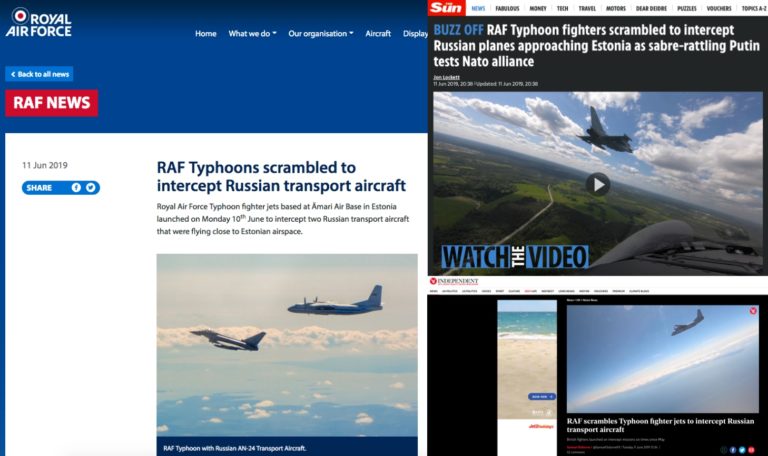
A press release from the UK’s Royal Air Force, and how it was covered by two British newspapers, The Sun and The Independent.
Such “embedded journalism” poses a significant threat to the public interest. Richard Norton-Taylor, formerly the Guardian’s security correspondent for over 40 years, told Declassified : “Embedded journalists — those invited to join British military units in conflict zones — are at the mercy of their MOD handlers at the best of times. Journalists covering defence, security and intelligence are far too deferential and indulge far too much in self-censorship”.
Some papers are more extreme than others in their willingness to act as platforms for the military and intelligence establishment. The Express may well be the most supportive: its coverage of MOD stories and vilification of official enemies, notably Russia, is remarkable and consistent.
The Guardian, however, has also been shown to play a similar role. Declassified’s recent analysis, drawing on newly released documents and evidence from former and current Guardian journalists, found that the paper has been successfully targeted by security agencies to neutralise its adversarial reporting of the “security state”.
Censorship by omission
Articles critical of the Ministry of Defence or security services are occasionally published in the press. However, these tend to be either on relatively minor issues or are reported on briefly and then forgotten. Rarely do seriously critical stories receive sustained coverage or are widely picked up across the rest of the media.
Often, reporters will cover a topic and elide the most important information for no clear reason. For example, there is considerable coverage of possible MI5 failures to prevent the May 2017 Manchester terrorist bombing — failings which may be understandable given the large number of terrorist suspects being monitored at any one time.
However, the government admitted in parliament in March 2018 that it “likely” had contacts with two militant groups in the 2011 war in Libya for which the Manchester bomber and his father reportedly fought at the time, one of which groups the UK had covertly supported in the past. This significant admission in parliament has not been reported in any press article, as far as can be found.
People lay flowers in St Annes Square on the first anniversary of the Manchester Arena bombing in Manchester, Britain, 22 May 2018. (Photo: EPA-EFE / Nigel Roddis)
Last September, veteran investigative journalist Ian Cobain broke a story on the alternative news site Middle East Eye revealing that the senior Twitter executive with editorial responsibility for the Middle East is also a part-time officer in the British army’s psychological warfare unit, the so-called 77th Brigade.
This story was picked up by a few media outlets at the time (including the Financial Times, the Times and the Independent ) but our research finds that it then went unmentioned in the hundreds of press articles subsequently covering Twitter.
Similarly, in November 2018, a story broke on a secretive UK government-financed programme called the Integrity Initiative, which is ostensibly a “counter disinformation” programme to challenge Russian information operations but was also revealed to be tweeting messages attacking Labour leader Jeremy Corbyn.
Our research finds that in the 14 months until December 2019, the Integrity Initiative was mentioned less than 20 times in the UK-wide national press, mainly in the Times (it was also mentioned 15 times in the Scottish paper, the Sunday Mail ).
By contrast, when stories break that are useful to the British establishment, they tend to receive sustained media coverage.
Establishment think tanks
The British press routinely chooses to rely on sources in think tanks that largely share the same pro-military and pro-intervention agenda as the state.
The two most widely-cited military-related think tanks in the UK are the London-based Royal United Services Institute (RUSI) and the International Institute for Strategic Studies (IISS) which are usually quoted as independent voices or experts. In the last five years, RUSI has appeared in 534 press articles and IISS in 120.
However, both are funded by governments and corporations. RUSI, which is located next door to the Ministry of Defence in Whitehall, has funders such as BAE Systems, the Qatar government, the Foreign Office and the US State Department. IISS’s chief financial backers include BAE Systems, Raytheon, Lockheed Martin and Airbus.
This funding is mentioned in only two press reports that could be found – the Guardian reported that IISS received money from the regime in Bahrain while the Times once noted, “RUSI, while funded in part by the MoD, is an independent think tank”.
One Telegraph article refers to a “research fellow at RUSI who specialises in combat airpower”, without mentioning that its funder BAE Systems is a major producer of warplanes.
Although many senior figures in these organisations previously worked in government, press readers are rarely informed of this. RUSI’s chair is former foreign secretary William Hague, its vice-chair is former MI6 director Sir John Scarlett and its senior vice-president is David Petraeus, former CIA director.
The IISS’s deputy secretary-general is a former senior official at the US State Department while its Middle East director is a former Lieutenant-General in the British army who served as defence senior adviser to the Middle East. One of IISS’ senior advisers is Nigel Inkster, a former senior MI6 officer.
Media and intelligence
Richard Keeble, professor of journalism at the University of Lincoln, has noted that the influence of the intelligence services on the media may be “enormous” and the British secret service may even control large parts of the press. “Most tabloid newspapers – or even newspapers in general – are playthings of MI5”, says Roy Greenslade, a former editor of the Daily Mirror who has also worked as media specialist for both the Telegraph and the Guardian.
David Leigh, former investigations editor of the Guardian, has written that reporters are routinely approached and manipulated by intelligence agents, who operate in three ways: they attempt to recruit journalists to spy on other people or go themselves under journalistic “cover”, they pose as journalists in order to write tendentious articles under false names, and they plant stories on willing journalists, who disguise their origin from their readers — known as black propaganda.
MI6 managed a psychological warfare operation in the run-up to the Iraq war of 2003 that was revealed by former UN arms inspector Scott Ritter. Known as Operation Mass Appeal, this operation “served as a focal point for passing MI6 intelligence on Iraq to the media, both in the UK and around the world. The goal was to help shape public opinion about Iraq and the threat posed by WMD [weapons of mass destruction]”.
Various fabricated reports were written up in the media in the run-up to the Iraq war, based on intelligence sources. These included cargo ships said to be carrying Iraqi weapons of mass destruction (covered in the Independent and Guardian ) and claims that Saddam Hussein killed his missile chief to thwart a UN team (Sunday Telegraph ).
More recent examples of apparently fabricated stories in the establishment media include Guardian articles on the subject of Julian Assange. The paper claimed in a front page splash written by Luke Harding and Dan Collyns in November 2018 that former Trump campaign manager Paul Manafort secretly met Assange in the Ecuadorian embassy three times.
The Guardian also falsely reported on a “Russia escape plot” to enable Assange to leave the embassy for which the paper later gave a partial apology. Both stories appeared to be part of a months-long campaign by the Guardian against Assange.
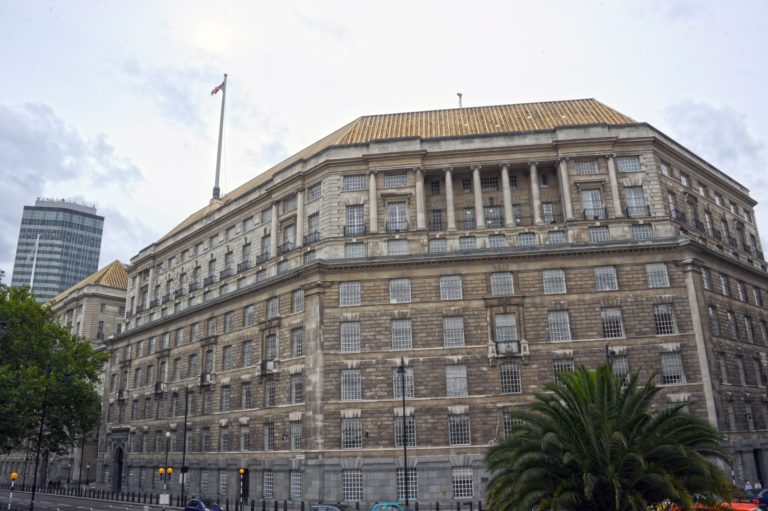
The exterior view of Thames House, MI5 Headquarters, in Millbank, on the bank of the River Thames, London, Britain. (Photo: EPA-EFE/ Horacio Villalobos)
Demonising enemies
The media plays a consistent role in following the state’s demonisation of official enemies. The term “Russian threat” is mentioned in 401 articles in the past five years, across the national press. The Express may be the largest press amplifier of the government’s demonisation of Russia — the paper carries a steady stream of stories critical of Russia and Putin.
The British establishment has invoked Russia as an enemy in recent years due mainly to the poisonings in the town of Salisbury and policy in eastern Europe. Whatever malign policies Russia is promoting, which can be real, false or exaggerated, it is noteworthy that this has been elevated by the press to a general “threat” to the UK. As during the cold war, this is useful to the British military and security services arguing for larger budgets and for offensive military postures in Eastern Europe and the Middle East.
Russia’s alleged interference in British politics has received huge coverage compared to alleged Israeli influence. A simple comparison of search terms using “Russia/Israel and UK and interference” in press articles in the past five years yields seven times more mentions of Russia than Israel, despite considerable evidence of Israeli interference.
UK press reporting on Iran is also noticeably supportive of government policy. A search for “Iran and nuclear weapons programme” reveals 325 articles in the past five years. While this large coverage is driven by president Trump’s withdrawal from the Iran nuclear deal, it is also driven by Iran being a designated enemy of the US and UK, which have deemed it unacceptable that Tehran should ever acquire nuclear weapons.
By contrast, “Israel’s nuclear weapons” (and variants of this search term) are mentioned in under 30 press articles in the past five years. Natanz, Iran’s main nuclear arms facility, has been mentioned in around four times more press articles than Dimona, the Israeli nuclear site, in the past five years.
The contrast in reporting on Iran and Israel is striking since Iran does not possess nuclear weapons, and it is not certain that it seeks to, whereas Western ally Israel already has such weapons, estimated at around 80 warheads.
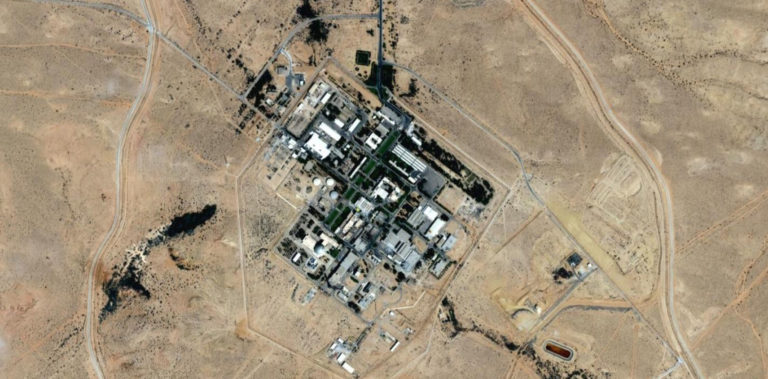
An aerial view of Israel’s nuclear site at Dimona. (Google Maps)
Labelling goodies and baddies
The national press strongly follows the government in labelling states as enemies or allies.
States favoured by the UK are mainly described in the press using the neutral term “government” rather the more critical term “regime”. In the past three years, for example, the term “Saudi government” has been used in 790 articles while “Saudi regime” is mentioned in 388. However, with Iran the number of instances is reversed: “Iranian government” is used in 419 articles whereas “Iranian regime” is mentioned in 456.
The same holds for other allies. The “Egyptian regime” receives 24 mentions while “Egyptian government” has 222, in the past three years. The “Bahraini regime” is mentioned in 10 articles while “Bahraini government” is mentioned in 60.
The precise term “Iranian-backed Houthi rebels”, referring to the war in Yemen, is mentioned in 198 articles in the last five years. However, the equivalent term for the UK backing the Saudis in Yemen (using search terms such as “UK-backed Saudis” or “British-backed Saudis”) appears in just three articles.
The pattern is also that the crimes of official enemies are covered extensively in the national press but those of the UK and its allies much less so, if at all.
Articles mentioning “war crimes and Syria” number 1,527 in the past five years compared to 495 covering “war crimes and Yemen”. While the press often reports that the Syrian government has carried out war crimes, most articles simply suggest or allege war crimes by the Saudis in Yemen.
Indeed, the UK press has been much more interested in covering the Syrian war—chiefly prosecuted by the UK’s opponents—than the Yemen war, where Britain has played a sustained widespread role. As a basic indicator, the specific term “war in Syria” is mentioned in well over double the number of articles as “war in Yemen” in the past five years.
Furthermore, government enemies are regularly described in the press as supporters of terrorism, which rarely applies to allies.
In the past three years 185 articles mention the term “sponsor of terrorism”, most referring to Iran, followed by Sudan and North Korea with the occasional mention of Libya and Pakistan. None specifically label UK allies Turkey or Saudi “sponsors of terrorism”, despite evidence of this in Syria and elsewhere, and none describe Britain or the US as such.
Some 102 articles in the past five years specifically mention Russia’s “occupation of Crimea”. However, despite some critical articles on UK policy towards the Chagos Islands in the Indian ocean—which were depopulated by the UK in the 1970s and which the US now uses as a military base—only two articles specifically mention the UK’s “occupation of Chagos” (or variants of this term).
Similar labelling prevails on opposition forces in foreign countries. Protesters in Hong Kong are routinely called “pro-democracy” by the press – the term has been mentioned in hundreds of articles in the past two years. However, protesters in UK allies Bahrain and Egypt have been referred to as “pro-democracy” in only a handful of cases, the research finds.
The special relationship
While demonising enemies, UK allies are regularly presented favourably in the press. This is especially true of the US, the UK’s key special relationship on which much of its global power rests. US foreign policy is routinely presented as promoting the same noble objectives as the UK and the press follows the US government line on many foreign policy issues.
The term “leader of the free world” to refer to the US has been used in over 1,500 articles in the past five years, invariably taken seriously across the media, without challenge or ridicule.
The view that the US promotes democracy is widely repeated across the press. A 2018 editorial in the Financial Times, written by its chief foreign affairs commentator Gideon Rachman, notes that, “Leading figures in both [US political] parties — from John Kennedy to Ronald Reagan through to the Bushes and Clintons — agreed that it was in US interests to promote free-trade and democracy around the world”. In 2017 Daniel McCarthy wrote in the Telegraph of “two decades of idealism in US foreign policy, of attempts to spread liberalism and democracy”.
It is equally common for the UK press to quote US figures on their supposed noble aims, without challenge. For example, the Sunday Times recently cited without comment the US state department saying “Promoting freedom, democracy and transparency and the protection of human rights are central to US foreign policy”.
The press often strongly criticises President Donald Trump, but often for betraying otherwise benign US values and policies that it assumes previous presidents have promoted. For example, Tom Leonard in the Daily Mail writes of “Mr Trump’s belief that US foreign policy should be guided by cold self-interest rather than protecting democracy and human rights”.
The Guardian is especially supportive of US foreign policy. A sub-heading to a recent article notes: “The US once led Western states’ support of democracy around the world, but under this president [Trump] that feels like a long time ago”. One of its main foreign affairs columnists, Simon Tisdall, recently wrote that the US fundamental “mission” was an “exemplary global vision of democracy, prosperity and freedom”, albeit one which has been distorted by the war on terror.
The Guardian regularly heaped praise on president Obama. An editorial in January 2017 commented that Obama was a “successful US leader” and that “internationally” his vision “could hardly be faulted for lack of ambition”. It also noted Obama’s “liberalism and ethics” and that: “Mr Obama has governed impeccably for eight years without any ethical scandal”.
Although the article noted US wars and civilian casualties in Yemen and Libya, the paper brushed these off, stating “But to ascribe the world’s tragedies to a single leader’s choices can be simplistic. The global superpower cannot control local dynamics”.
Research covered the period to the end of 2019 using the media search tool, Factiva. It analysed the “mainstream” UK-wide print media (dailies and Sundays) over different time scales, usually two or five years, as specified in the article. Media search engines cannot be guaranteed to work perfectly so additional research was sometimes undertaken.
Mark Curtis is the co-founder and editor of Declassified UK, an historian and author of five books on UK foreign policy. He tweets at: @markcurtis30.
Greece’s Migrant Crisis Has Further Exposed Turkish Fake News
By Paul Antonopoulos | March 10, 2020
Turkish President Recep Tayyip Erdoğan’s attempt to intimidate the Syrian Army and force them to withdraw to the Sochi Agreement lines in Idlib utterly failed, resulting in the Turkish leader having to embarrassingly accept large swathes of liberated territory will remain under Syrian sovereignty despite his attempts to occupy it. This was especially embarrassing as Erdoğan’s end of February ultimatum came and went with no grand Turkish military offensive to push back the Syrian Army as he had promised. This embarrassment comes as Erdoğan’s approval has reached as low as 41.1% according to data published by the Ankara-based pollster MetroPoll last Friday. As Erdoğan’s foreign policy is largely driven by a desire for a neo-Ottoman ambitions and to serve as a distraction from Turkey’s currency nosedive, he was quick to create issues against the “Old Enemy,” Greece.
In a tantrum and frustrated that his power projections of aggression against both Libya and Syria failed, Erdoğan unleashed tens of thousands of illegal immigrants against Greece and utilized English-speaking Turkish media to discredit the Balkan country’s border protection units for human rights violations. Although many commentators claim that Erdoğan’s unleashing of illegal immigrants is an attack against the European Union (EU), we cannot ignore that the second and only other EU state that Turkey borders is Bulgaria, a country that Ankara assured would not send illegal migrants to, a promise that has not yet been broken. Erdoğan is not only punishing Greece for vetoing a NATO communique in support of Turkish operations in Idlib, he is pushing ahead with his imperial ambitions to not only steal Syrian territory, but Greece’s eastern island and northern mainland territories, as outlined on published government-funded maps of “Greater Turkey.”

Erdoğan wasted no time after the Idlib ceasefire deal was made with Russian President Vladimir Putin on Thursday after the latter embarrassed the Turkish leader by meeting him in a room with a statue of Catherine the Great, the liberator of Crimea who defeated the Ottoman Empire in many wars. On the very same day as meeting, Erdoğan announced that Turkey will deploy 1000 special forces police to the Greek border to fight back against Greek security forces who have successfully ensured that thousands of illegal immigrants have not entered EU territory. It’s an odd choice that Turkey deployed special forces police considering it is not their borders that have breach attempts and rather it has been an aggressor as they continually shoot tear gas at Greek border security and attempt to pull down the border fence so migrants can illegally enter Greece. Although it may seem like an exaggeration to some, Athens is treating this latest migrant crisis as a Turkish asymmetric invasion, as they remember the words of former Turkish President Turgut Özal, who said “We do not need to make war with Greece. We just need to send them a few million immigrants and finish with them.”
To assist in distracting the Turkish population of his failures in Syria and the economy, Erdoğan has fully utilized Turkish media to assist in the propaganda campaign. Turkey is one of the lowest ranked countries for media freedoms in the world, is the second most susceptible country surveyed on the European continent to fake news, has the most journalists jailed in the whole world, and 90% of media is government controlled. It is fair to be sceptical of Turkey and its coverage of the latest migrant crisis, and here is why.
On Saturday, Bosnian Muslim reporter Semir Sejfovic of Turkish state-owned TRT World made such a comical performance that Twitter users are mocking him to be an Oscar nominee after his elaborate attempts to accuse Greek police of firing live ammunition into Turkey. It is one comical performance that has to be seen to be believed. The ridiculousness of the performance was so much so that several screen grabs show even the illegal immigrants surrounding Sejfovic laughing during the “intense firing” of live ammunition by the Greek police. Other users questioned why illegal immigrants much closer to the border fence and seen in the background of the video never took cover and continued standing as usual during the alleged shooting, something Sejfovic has refused to answer.
In another incident on Saturday, TRT World published photos claiming Greek soldiers stripped and robbed illegal immigrants of their clothes, mobiles and money. The problem? In other photos not published by TRT World, the same illegal immigrants are seen in front of a camera phone preparing to take the propaganda photos, while in another photo a mobile phone is clearly seen inside the pocket of a “robbed” illegal immigrant.
In another incident on Sunday, TRT World made a tweet on Sunday publishing photos of immigrants in hospital wounded “when Greek forces opened fire” over the weekend. However, a quick search found that the fourth photo is from at least November 2019.
These are just some of the many allegations made by English-speaking Turkish media that have been debunked. It demonstrates that Turkish media is not interested in objectively reporting the migrant crisis but is serving a critical role as Erdoğan’s propaganda wing to discredit Greece in front of international audiences. However, if we use social media responses, European responses and other media republications of Turkish media claims as indicators, it all points that TRT World has only served to reinforce Turkish media’s bad reputation rather than discredit Greek border security and catastrophically failed in their objective.
Paul Antonopoulos is a Research Fellow at the Center for Syncretic Studies.
Featured Video
No Vote, No Representation, No State: Democracy, Israeli Style
or go to
Aletho News Archives – Video-Images
From the Archives
Sanctions, War and the Policy of Dual Containment
By SASAN FAYAZMANESH | March 17, 2008
It is now nearly three decades since the Unites States adopted the policy of dual containment of Iran and Iraq. While much has been written about the containment of Iraq, there has been very little in-depth analysis of this policy when it comes to Iran. In a book that is going to be released on March 31, 2008, entitled The United States and Iran: Sanctions, Wars and the Policy of Dual Containment (Routledge), I attempt to address this shortcoming by investigating when and why the US policy of containment of Iran came about, how it evolved, and where it stands today.[1] To the extent that Israel has been involved in US policy making, the study will also include the role that Israel has played in the containment of Iran. Also, since the fate of Iran has been inextricably linked to that of Iraq, occasionally the investigation will overlap with the containment of Iraq.
The policy of dual containment of Iran and Iraq originated during the Carter Administration, but it was not until the Clinton Administration that the expression “dual containment” became popular. … continue
Blog Roll
 Aletho News
- No Vote, No Representation, No State: Democracy, Israeli Style
- Zionist Bought Senate Blocks Information About American Citizens Killed By Israel
- While Gaza dominates the UN, these are the people keeping it alive
- New Report: “Scholasticide and Genocide in Gaza: Assessment, Testimonies and Legal Analysis”
- ‘THAAD Delusion’: Iran war exposes US missile shield limits – The Atlantic
- Moscow issues warning to NATO over Russian exclave
- Yes, the Iran war has destroyed Trump’s presidency
- The fallacy of US delusions about Iran’s economic collapse
- Hezbollah denies Syria cell link, warns of Israeli plan to sow discord
- The legacy of US sanctions, war, and occupation in Iraq
- If Americans Knew
- An error has occurred; the feed is probably down. Try again later.
- No Tricks Zone
- Green Energy Debacle: German Expert Professor Fritz Vahrenholt Warns Of Severe Economic And Social Consequences
- Two More Paleo Reconstructions Affirm Meters-Higher Sea Levels Across Ireland, Brazil 7000-6000 Years Ago
- New Study: Earth And Venus Surface Warmth Largely Explained By Convection And Lapse Rate, Not CO2 Or Radiation
- 2025 Nature Paper Claiming Worsening Global Drought Gets RETRACTED …Heavily Flawed
- New Study: ‘Global Drought Shows No Detectable Recent Acceleration Under Climate Warming’
- Economic Masterminds: German Socialists Suggest Taxing Productivity Gains Stemming From Using AI
- The South China Sea Has Not Been Cooperating With The Climate Change Narrative
- Energy Crisis: Germany Enters Heating Season With Historically Low Gas Reserve Fill Levels
- New Study: The Antarctic Ice Sheet Gained Mass From 2020-2024 Due To Staggering Snow And Ice Accumulation
- Study: Ocean Heating Rates From Thousands Of Years Ago ‘Dwarf’ Modern Ocean Heating Rates

