Coronavirus: People are left alone in the face of a rapidly growing virus pandemic – some thoughts out of Germany
By Roman Baudzus | Institute For Political Economy | March 3, 2020
Germany’s Federal Minister of Health, Jens Spahn (CDU), is a professional politician and a bureaucrat, so it can be assumed that Spahn may have learned a lot from Jean-Claude Juncker, who recently resigned as the EU´s Commission President.
“When things get serious, you have to lie,” Juncker once blatantly said in public when looking back at the euro crisis in the year 2011. It is easy to understand that, in addition to statements like these, it is the adapting behavior patterns of bureaucrats and professional politicians that have led to a steady decline in trust among citiziens in their European institutions over the past few years.
The fact that Jens Spahn seemed to be using the motto of Jean-Claude Juncker on the evening of January 31st was probably noticed by anyone who, based on good observation skills, developed a feeling for making an assessment for himself or herself of when and whether someone is lying.
This impression came to viewers on the evening of a TV program called “Maybrit Illner”, which is broadcast once a week on the Second German Television (ZDF), during which the discussions among the invited guests was the “novel Coronavirus” and its possibly associated dangers and risks for the German population.
According to data officially reported by the National Health Department of China (NHS), it should be noted that the number of novel Coronavirus infections in mainland China had – at this point of time – already exceeded the SARS infections registered in 2002 and 2003 over a period of nine months.
The city of Wuhan and the province of Hubei were already under lockdown enforced by the members of the People’s Liberation Army. At the same time, first cases of infection became known in Germany in the free state of Bavaria, where a Chinese woman infected at least four employees of the Bavarian automotive supplier Webasto with the new corona virus.
The afore mentioned TV program developed into a clash between Federal Minister of Health, Jens Spahn, look for yourself at the tense impression the guy made during the program, and Dr. Johannes Wimmer. Statements and warnings from Dr. Wimmer, according to whom the prospect of an aggravation of the situation in Germany should also be expected and a possibly deteriorating mood among the population, was answered by Spahn with occassional aggressive rejections.
The official narrative of the German federal government at this very early point in time was that only a handful of infection cases with the novel Coronavirus or SARS-CoV-2 had been identified in Germany, whereas in the course of a seasonal flu, far more people were statistically at risk from contagion and / or could find death. The Coronavirus would be more harmless than a normal flu. At this time, there was no reason for scaremongering, according to Spahn. And it would be counterproductive.
Spahn also pointed out that the German health care system was well prepared if there was an increase in the number of infections in the country, whereas according to his statement at the time, five of the people suffering from the novel Coronavirus were already doing well and were cheerfully happy.
Not just Dr. Johannes Wimmer, but also other German doctors and virologists see the statements made by Spahn in a contrary way. Spahn was often faced with the illusion that Germany’s hospitals were well prepared for such a crisis.
Many people who work in German hospitals or care facilities have complained for years that there is a lack of personnel and important resources in this area. At this point in time, doctors and nursing staff are completely overwhelmed with their daily amount of patients.
As a result, it cannot be ruled out that, in the event of a pandemic and a massive increase in the number of affected patients, the German health system could collapse due to a lack of staff and permanent austerity measures – if it got really bad like in China.
In the face of a drastically worsening situation in mainland China following this television discussion, the Chinese government, whose officially transmitted infection data cannot be believed for a variety of reasons, Chinese travelers – despite many demands from various associations – were not refused entry to Germany by the German government.
Infection clusters were also growing in other regions of the world, particularly in Thailand, Iran, Japan, South Korea and Malaysia. From the point of view of the German federal government, this also gave no reason to protect the country’s home airports from travelers from the most affected countries by simply banning them from entry.
What was done was to introduce the taking of temperatures at German airports and set up various information boards to alert arriving travelers from all over the world to the dangers associated with the new coronavirus.
Since it had long been established at the time based on the results of a study that people infected with the novel Coronavirus could be asymptomatic for up to 24 days, which means without showing any signs of symptoms or illness, this behavior of the German federal government has already been negligent and over the past few weeks completely incomprehensible.
At the same time, the official narrative, according to which normal influenza was more dangerous and resulted in more fatalities over the course of a season, was maintained by the Federal Government and Federal Health Minister Jens Spahn, with which, from today’s perspective, the German population was misled and misinformed by its own government.
Officials such as Federal Minister of Health, Spahn, constantly downplayed possible dangers and risks, while increasingly critical reporting on the Internet was of course defamed under the category “conspiracy theories”.
From this point of view, the question arose how an interview by health expert Karl Lauterbach from the SPD party ruling the country in a coalition with the CDU with Springer press medium Die Welt from February 3 fitted into this narrative, which was officially maintained by the federal government, in which Lauterbach announced as follows: “We are dealing with a very dangerous pest.”
Now it should be looked at whether the time since the beginning of February has been used by the German government to initiate any preventive or containment measures of SARS-CoV-2 from spreading in the home country in the face of constantly increasing infection numbers in the rest of the world.
In this regard, nothing happened over the entire month of February. Rather, the risk of contagion and the health risk associated with SARS-CoV-2 were still downplayed by the German Minister of Health, Jens Spahn, in public appearances, with the help of Germany´s National Center for Infections and Disease Control, namely the Robert Koch-Institute (RKI).
The Robert Koch-Institute even issued the recommendation not to wear face masks. The question arises whether this recommendation could have something to do with the fact that German Foreign Minister Heiko Maas sent protective clothing, sprayers and disinfectants in abundance to China after the German government made the statement to the Chinese authorities to support them in their struggle against their local epidemic.
The result is that mouth and face masks have been sold out in almost all German pharmacies for some time. Some pharmacies that still have face masks in stock now sell a pack of 100 pieces for up to 90 euros. The German government is countering a buying panic by notifying the public that mouth protection against the virus is of no use.
Let´s see how things are seen in China, where Global Times editor Hu Xijin twittered as follows on March 2, 2020:
Suggesting people not wear face mask is seriously misleading. All of the Chinese experts have advised people to wear face masks when in contact with others during time of epidemic and consider it one of the most effective measures. Please heed suggestion of Chinese experts. pic.twitter.com/xUxq11m7Bg
— Hu Xijin 胡锡进 (@HuXijin_GT) March 2, 2020
And this at a time when a great deal of uncertainty was and is even more so spreading among the German population despite the attempt by government officials to calm down everyone, the German Chancellor Angela Merkel would have been expected to turn to the citizenry in terms of addressing the threat that is associated with SARS-CoV-2.
But in this emerging crisis, Merkel can hardly be heard or seen at all. Anyone who has followed the news formats on Germany´s public channels such as the first channel (ARD) over the month of February, especially the daily news broadcast every evening at 8:00 p.m. (Tagesschau), could not help but become aware of it, to become a “victim” of a propaganda and disinformation campaign that seemed to be focused on suppressing what´s going on in the rest of the world.
The more the number of infections with SARS-CoV-2 increased abroad – and especially in Asia – the calmer it became in the reporting by Germany´s public media. In some news programs such as ARD Tagesschau, the global development around SARS-CoV-2 was increasingly not even mentioned in one word. Such reporting can be described as ignoring propaganda.
Otherwise, most of the news programs on public channels, for whose reception German citizens have to pay an annual compulsory levy, dedicated its news stories in particular to the regional election in the eastern German state of Thuringia (Thüringen), the interference of the Berlin government with regard to its election result and a supposedly reviving right-wing radicalism in the country.
Once there was talk of the spread of SARS-CoV-2, it was in most cases about an establishment of quarantine stations in the country, in which German citizens brought home from Wuhan were taken in over a period of 14 days. It has also been reported that members of the German Red Cross will volunteer to help those affected in these quarantine facilities.
The fact that a 14-day quarantine period, based on current studies showing that the incubation period can be up to 27 days before infected people start developing disease symptoms, turns out to be too short, is neither mentioned nor addressed in the official planning of the various government authorities.
Furthermore, German airports remained open to travelers from high-risk areas such as China, Iran, South Korea, Thailand, etc. throughout the entire month of February – and this is still the case at present time.
A responsible government would have ensured that risks, threats, and dangers were communicated openly to the citizenry!
In my view, a responsible government would have ensured that risks and dangers were communicated openly to an increasingly insecure population. This would have included the temporary suspension of major events such as Carnival, Bundesliga soccer matches or the like in order to prevent a massive spread of infections. However, none of this has happened so far.
After such decisions have long been made in Italy, France and Switzerland, the German government is still not doing anything. The result is that weekend after weekend tens of thousands of visitors flock to the Bundesliga soccer stadiums to enjoy the matches.
The whole thing gets even more incredible. Despite the significant increase in confirmed novel Coronavirus cases in Germany, the Robert Koch-Institute does still not seem to see any increased risk to the general health of the German population.
“The risk can be assessed as low to moderate,” said RKI Vice President Lars Schaade recently at a press conference in Berlin. The RKI also advises: “Please receive your informatiom from reliable sources.” This statement is intended to insinuate that in the case of a “reliable source” it is solely the Robert Koch-Institute to advise people what to do and what not do.
Are people listening what the RKI is publicly recommending? It does not seem so. And there must be a valid reason why people choose not to listen.
For example the RKI explicitly does not recommend “the use of disinfectants in everyday life, even in this current situation. It is neither recommended to use face masks or any other kind of mouth-nose protection in the general public or in everyday life. ”
It is already known among people that the RKI advises against mouth-nose protection like a mantra. Reason seems to be, as more and more local politicians from several states warn, that there is by far not enough equipment stored at German warehouses for which the health minister of the Western state Nothrine-Westphalia not only openly apologized recently but also said in a TV discussion to feel ashamed that things like this would be possible in a developed nation like Germany.
Hygiene expert Professor Dr. Klaus-Dieter Zastrow contrastingly believes that the hand disinfection among people is now actively talked down by the RKI, which Zastrow finds “extremely dangerous”.
“This is a kind of misinformation that does neither help the population nor the country a yota in containing the local epidemic,” says Zastrow. Mouth and nose protection is the only effective protection against droplet infection. ”
The expert repeatedly criticized the incorrect information being published by the RKI. Since mouth and nose protection as well as hand disinfection were discouraged from the onset, the result is that a spread of the virus is even promoted and there would be no way to contain it.
Over the past few years things like this have unfortunately become quite normal in Germany. The fact that eleven cities in the two Northern Italian provinces of Lombardy and Veneto are now under lockdown by police and military forces does not change the perspective of the German government and the Robert Koch-Institute at all.
Considering the dramatically increasing number of confirmed cases, it is still pretended that an even greater spread of the novel Coronavirus in Germany could be managed by itself, although Federal Health Minister Jens Spahn has meanwhile announced that individual infection chains can no longer be traced back.
From “Coronavirus is more harmless than flu” to “We are at the beginning of a serious epidemic” – Despite the fact, Spahn is still doing nothing while Merkel is nowhere to be seen or heard!
After all, the basic general opinion of the German Federal Minister of Health changed at least once after the events in Northern Italy, since Spahn all of a sudden sees Germany “at the beginning of a Coronavirus epidemic”. It’s hard to believe! In a conference call, he (Spahn) asked the Federal Health Ministers of the 16 German states to “activate their pandemic plans and prepare for their possible entry into force”.
Despite his fears of an epidemic outbreak, Mr. Spahn still does not want to consider closing the German borders to other – and highly affected – European nations or to take into consideration a set up of police controls at the inner German borders of the individual states!
What kind of political “leadership” is that? Mr. Spahn seems to be waiting for the novel Coronavirus to spread throughout Germany, what is happening anyway at the moment. The failure to act by this federal government does not only leave you with the impression of negligence, but almost with the bitter impression of sabotaging the interests of the own population!
And what does the Brussels EU have to say in terms of this development: We exactly got what had to be expected.
Even in the wake of the rapid spread of the novel Coronavirus in Europe, EU officials are vehemently opposed to finally implementing border closures. Rather, in the face of current developments, it seems more important from their perspective to maintain the policy of open borders among the 28 European Union member states.
Meanwhile, the number of confirmed infections in Italy has risen to more than 2,300 and a death toll of 52 persons as of today. Please keep in mind that this increase from three to more than 2,300 officially confirmed cases occurred within just a little more than one week. But the EU Health ministers, including Mr. Jens Spahn, still insist on their viewpoint that the Schengen agreement must remain untouched.
In the meantime, 50,000 citizens in Northern Italy still see themselves under lockdown in the two provinces of Lombardy and Veneto. From this point of view, why is it so difficult to close the borders in order to prevent an infiltration from Italy to the neighbouring nations on the continent? !! According to published information many cases being recently confirmed show that the affected German persons had been on vaccation or a business trip to Italy. Or they contracted the novel Coronavirus while being out for Carnival as if no one could have seen this coming.
Infiltration has already happened in Switzerland and Austria, too. The Italian Prime Minister Giuseppe Conti refuses to consider border closures as well, arguing that such a decision would not prevent the novel Coronavirus spreading to other European nations – what?!
Do you understand this logic? To minimize the spread of the highly infectious Coronavirus, far more drastic measures are likely to be needed soon, when you look at China and what the Chinese government was willing to be doing to bring the R0 or reproductive value of this virus down to one or below that level.
Former Italian Minister of the Interior, Matteo Salvini, has in the meantime called for the resignation of Conte in response to Conte’s statements, because Conte obviously seems to be “unable to defend Italy and its citizens against a great danger”.
French Transport Minister Jean-Baptiste Djebbari also refuses to close borders between France and Italy – not even temporarily. Germany´s Federal Minister of Health, Spahn, who has so far turned out to be a total failure in view of the crisis – and above all from a German perspective – seems to see things the same way.
EU Health Commissioner Stella Kyriakides naturally sees things in the light of a common European market. Why wonder about Ms. Kyriakides being worried, when according to her own statement she sees “risks of a disinformation campaign”.
Statements like this are just echoing “concerns” over at the WHO, whose general director Dr Ghebreyesus is still not willing to declare a global pandemic by obviously keeping a close eye on the development of the so called catastrophe bonds formerly issued by the Worldbank. All these side shows seem to be more of importance than the health issues being associated with the Coronavirus outbreak. Or just name it corruption.
The question arises whether it is perhaps not just those people who are in leading political positions who, due to their ideologically coloured glasses, seem to be no longer aware of what is happening in the world. At what point will it become more important to stop a global and highly dangerous pandemic instead of putting one’s own economic ideology of open borders above the well-being of all people on our continent and the rest of the world?
A recent article in The Epoch Times, stated with reference to Deutschlandfunk, (in extracts) as follows:
Virologist criticizes “very slow” government reaction – Coronavirus “at least ten times more dangerous” than flu
The German virologist Alexander Kekulé has criticized the reactions of the European Union authorities regarding the outbreak of the novel Coronavirus. The approach of the responsible authorities would be far too “slow, relaxed, and leisurely”, Kekulé told Deutschlandfunk.
He called for “early” entry controls and “area-wide screenings” to protect populations against the epidemic, but it did not happen with the result that “infiltrations from country to country occurred”. Kekulé holds the academic Chair for Medical Microbiology and Virology at the Martin Luther University Halle-Wittenberg and is Director of the Institute for Medical Microbiology at the University Hospital Halle.
On the occasion of the outbreak in Northern Italy, he now called for extensive testing of “every case” in Europe that can be associated with “serious respiratory infections”. The virologist had already suggested this to the European Health ministers two weeks ago. “The EU Health ministers did not agree with my suggestion, and now we observe things unfolding in Italy.”
Meanwhile, he also criticized the assessment of Germany´s Health Minister Jens Spahn and his authority in terms of the danger that is associated with the novel Coronavirus. “Above all, it is still the case that his authorities try to pretend as if the novel Coronavirus would be more harmless than flu.”
According to the virologist, the novel Coronavirus is “at least ten times more dangerous than flu” for those who get infected. In contrast to a normal flu, the risk groups being associated with the novel Coronavirus are still unknown.
“It’s a very different situation,” says Kekulé. The novel Coronavirus is not only fatal from the perspective of older or very young people, but for middle-aged people, too. On top there is no existing vaccine for the novel Coronavirus and “that’s why I do not understand why they’ve taken things so lightly thus far”.
If the German population is learning one thing these days, it is that they are alone in the face of a rapidly growing virus pandemic. At least it should be said with chancellor Merkel hiding in the shadow that the Berlin government has managed to set up a “crisis team” that includes the same government figures who have so far reportedly played down the emerging crisis and – for whatever reason – have taken things very lightly. This endangers people’s trust in the authorities.
So, my American fellows, and now look at your “crisis team”: Health Czar Mike Pence, Steven Mnuchin and Larry Kudlow. Jikes! Similar to the German perspective, this is certainly a “dream team” to fight dangerous viruses! An ex-Goldman investment banker and a former cocaine addict whose economic assessments were often nothing more than smoke and mirrors in the past.
Have you ever wondered what these people actually know about viruses?
Good luck with that and may god be with us!!
Roman Baudzus is running his own economics blog Wirtschaftsfacts on Cashkurs.com and has been contributor to various economic or political websites such as Goldmoney.com, Goldseiten.de or Heise/Telepolis.
The Skripal Case – Two Years On
OffGuardian | March 4, 2020
It’s been two years to the day since disgraced former military intelligence officer Sergei Skripal, and his daughter Yulia, were allegedly found on a park bench in Salisbury, near unconscious and apparently very unwell.
A lot has been said about the unanswered questions revolving around the incident. But perhaps the best of way of demonstrating the peculiarity of the alleged situation is to simply relate, in full, the “official version”.
Here it is:
- Sergei Skripal, a Russian military intelligence officer, was found guilty of spying for the UK in 2006, and sentenced to 13 years in prison.
- In 2010 he was released and traded to the United Kingdom as part of a spy swap. Having settled in the UK Sergei lived a quiet and comfortable life of retirement, so far as we know
- Eight years later, in early 2018, with a Presidential election looming and just weeks before Russia was due to host the FIFA World Cup, Vladimir Putin decided to assassinate him for as yet obscure reasons.
- The GU, Russia’s military intelligence unit, dispatched two of their elite officers, who proceeded to fly direct from Moscow under aliases they had allegedly already employed and using Russian passports.
- These alleged assassins carried with them two perfume bottles full of “Novichok”, allegedly one of the deadliest nerve agents ever devised. This would be enough to kill around 800,000 people.
- On arriving in the UK these highly-trained covert agents book a hotel with a CCTV camera on the front door, and the next day, March 3, they travel to Salisbury by train, allegedly to recon the area, then return to London. They are apparently observed by CCTV camera’s the entire time.
- The day following, March 4, they again travel to Salisbury, this time the master assassins walk to Skripal’s house and somehow “smear” the liquid Novichok on the handle of his front door.
- No eye-witness, photograph or piece of CCTV footage has ever been made publicly available to show either of these two men anywhere in the area of Sergei Skripal’s house.
- The whereabouts of the opened bottle of poison have never been established.
- Having applied the poison, the two highly trained assassins do two things before returning to London. 1) They drop their second, unopened, bottle of novichok (presumably enough to kill approx 400,000 people) in a charity donation bin, rather than destroying it or taking it back to Russia. 2) They stop by an antiques store to browse.
- The two assassins leave the country that afternoon, flying direct to Moscow, without knowing if their alleged target is dead, and again making no effort to conceal their origins.
- Despite both handling the poison, and somehow carrying enough of it back to contaminate their hotel room, neither of the men – nor any of the staff, train passengers or passersby who come into contact with them – ever become sick, even though only 0.2mg of Novichok is an allegedly lethal dose.
- Later that afternoon, Sergei and Yulia Skripal are found “almost unconscious”on a park bench in Salisbury town centre. It is claimed this was due to contact with the Novichok smeared on Sergei’s door handle, though reports originally stated neither he nor his daughter had returned to the house, and the timing seems to make it unlikely they did
- The person who found them was the most senior nurse in the British Army (likely in the area as part of Toxic Dagger, the British Military’s landmark chemical weapons training exercise which began Feb 20th and ran on until March 12th).
- The nurse and her family administer “emergency aid” to the two alleged poisoning victims. Neither she nor anyone else on the scene, nor any of the first responders, ever experience any symptoms of nerve agent poisoning. Neither do any of the other people the Skripal’s came into contact with that day.
- DS Nick Bailey, a CID officer is in contact with the Skripals or their home at this time and subsequently becomes ill. It has never been stated how exactly he was exposed. It was initially reported he was a first responder to the scene, but that story was changed and it was later claimed he visited the Skripal hpouse. Despite the alleged lethality of novichok in even very minute doses, Bailey is fit to return home after 18 days.
- Porton Down, the British government’s chemical weapons research centre, is brought in to help identify what chemical – if any – the Skripals/Bailey were exposed to.
- Within a month they release a statement claiming the poison was “a novichok like agent”, but that they could not pinpoint its origin. How they were able to test for a (at the time) theoretical chemical without having a sample to test against, has never been explained.
- Porton Down is 8 minutes away from Salisbury by car.
- Nearly four months later, in late June of 2018, Charlie Rowley finds the unopened perfume bottle a full of novichok (whether he bought it from a charity shop or found it in a bin is unclear, both stories have been reported). Upon using the perfume Rowley’s partner, Dawn Sturgess, falls ill. Later that day Rowley also falls ill. Sturgess dies in hospital two weeks later. But Rowley survives. Making him the fourth person in this narrative to survive exposure to an agent lethal in doses as small as 0.2mg.
- Sergei Skripal and Julia both recovered and allegedly chose to live secluded lives. Sergei has not appeared in public at all since allegedly being found on that park bench. Yulia made one brief press statement. Their current whereabouts are totally unknown. Their family in Russia have apparently been denied all access to them. DS Bailey was initially also keen to maintain his privacy but has subsequently given at least one interview some while after the event.
This is the UK government’s version of what happened. Unvarnished and unsatirised. None of it is disputed, exaggerated or speculative.
If you can see any unanswered questions, logical gaps or peculiar coincidences…you are likely a Russian bot.
CIA has been hacking China for 11 YEARS, says Chinese cybersecurity firm citing Vault 7 leak
RT | March 3, 2020
US spies have been hacking into Chinese aviation, energy, internet and even government sectors for more than a decade, Beijing-based cybersecurity firm Qihoo 360 said after a probe based on ‘Vault7’ tools published by WikiLeaks.
Coming from a major and reputable Chinese cybersecurity vendor, the accusations – made public on Monday on the company’s blog, in both English and Chinese – carry extra weight. According to Qihoo, a group of hackers designated APT-C-39 has been confirmed as coming from the US Central Intelligence Agency.
“Qihoo 360 data have shown that the cyber-weapons used by the organization and the cyber weapons described in the CIA Vault 7 project are almost identical.”
The attacks were traced as far back as September 2008, with the greatest concentration of targets in Beijing, Guangdong and Zhejiang provinces, the company said. Among the targeted sectors were civil aviation, scientific research institutions, oil and petroleum industries, internet companies and Chinese government.
The cybersecurity firm came to a conclusion that the attack was initiated by a “state-level hacking organization” because the hackers had used “CIA-exclusive cyber weapons” such as Fluxwire and Grasshopper – long before they were publicly revealed to have been developed by US spies, when WikiLeaks published the so-called “Vault7” cache of documents, in March 2017.
Control commands and encryption schemes of APT-C-39 also lined up with Vault7 disclosures, while compilation times matched “North American business hours,” Qihoo said.
The CIA coder accused of leaking the documents, Joshua A. Schulte, is currently on trial for espionage in the US.
Another Chinese antivirus company, Qi-Anxin, published a report in September 2019 also accusing the CIA of hacking Chinese companies, notably the aviation sector. Qi-Anxin’s research was also based on analyzing CIA software made public by WikiLeaks.
Email Scandal: Hillary Clinton Ordered to Provide Deposition In Person After ‘Preposterous’ Defence
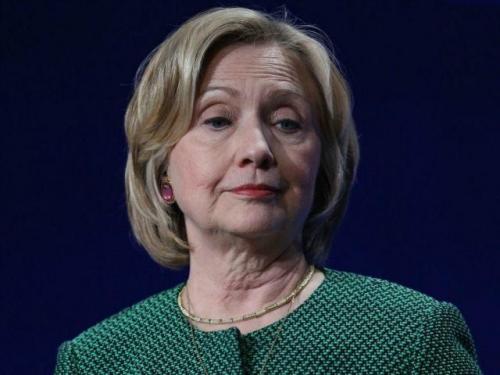
Sputnik – March 3, 2020
The almost six-year-long saga relates to Hillary Clinton’s use of a private email server for government business while secretary of state. Although the FBI investigation resulted in no charges, it still remains to be seen whether her unusual email practices were meant to avoid Freedom of Information Act requests.
A federal judge has ordered Hillary Clinton to provide a sworn deposition in person about her private email server.
The order, issued on Monday by US District Court Judge Royce Lamberth, grants the request of conservative watchdog Judicial Watch to depose Clinton about her correspondence and documents related to the 2012 attack on the US consulate in Benghazi, Libya.
The court also ordered the deposition of Clinton’s former chief of staff, Cheryl Mills, and two other State Department officials. It also allowed Judicial Watch to subpoena Google for documents and records associated with Clinton’s emails during her time at the State Department from 2009 to 2014.
Republican officials and members of Congress had accused then-Secretary of State Cinton of failing to prevent the attack, which left four Americans dead. She defended her handling of the episode.
Judicial Watch’s lawsuit seeking Benghazi-related records led to a scandal in 2015 when it helped discover that Clinton had repeatedly used her own private email server, rather than a government-issued one, during her time as Secretary of State. Records of official correspondence must be kept under federal law, and Clinton’s reliance on a private account sparked concerns that she was seeking to sidestep that requirement.
Clinton email controversy
The email scandal haunted Clinton’s presidential campaign and was weaponised against her by then-Republican candidate Donald Trump.
The FBI concluded in July 2016 that she had been “extremely careless in their handling of very sensitive, highly classified information”. Although Clinton insisted that she had never received or sent classified material, the FBI discovered that she had send out over a hundred emails that should have been regarded as classified.
Around 30,000 emails, deemed to be work-related, were provided to the State Department; her aides had also deleted around 32,000 emails, which they claimed to be non-work related, before any subpoenas were issued.
The bureau, however, recommended bringing no criminal charges against Clinton and referred the case to the Justice Department, which closed it with no charges. The FBI reopened its probe just days before the November election after new emails were discovered.
Questions still remain
“Judicial Watch argued that Secretary Clinton’s existing testimony has only scratched the surface of the inquiry into her motives for setting up and using a private server,” Judge Lamberth said in the 11-page ruling. “Secretary Clinton has repeatedly stated that convenience was the main reason for using a private server, but Judicial Watch justifiably seeks to explore that explanation further.”Clinton previously explained her use of a private server in a sworn written statement, but this deposition would be the first time she had to answer questions on the case in person.
“To argue that the Court now has enough information to determine whether [the] State [Department] conducted an adequate search is preposterous,” Lamberth wrote. “Even years after the FBI investigation, the slow trickle of new emails has yet to be explained.”
He stressed that some of the questions remain to date: “How did she arrive at her belief that her private server emails would be preserved by normal State Department processes for email retention? … Did she realise State was giving ‘no records’ responses to her FOIA requests for emails? … And why did she think that using a private server to conduct State Department business was permissible under the law in the first place?”
Trump campaign sues Washington Post for ‘millions of dollars’ over ‘false and defamatory’ statements on ‘Russia collusion’
RT | March 3, 2020
Donald Trump’s 2020 campaign has reportedly filed a libel suit against the Washington Post for “millions of dollars,” accusing the newspaper of publishing “false and defamatory” statements about alleged collusion with Russia.
The lawsuit, which was filed in the US District Court in Washington, DC on Tuesday, highlights two articles published by the Post in 2019 linking Trump’s team to alleged foreign interference in the 2016 election, Fox News reported.
The complaint, which was seen by the news outlet, alleges that the Post was “well aware” that the statements were false but published them anyway for the “intentional purpose” of hurting Trump’s campaign. The articles were part of the newspaper’s “systematic pattern of bias” against Trump, it said.
One of the articles, published on June 13, stated that Special Counsel Robert Mueller’s extensive investigation into alleged collusion concluded that Trump’s campaign “tried to conspire with” a “sweeping and systematic” attack by Russia during the 2016 election.
Trump’s team noted that Mueller’s report in fact “concluded there was no conspiracy” between then-candidate Trump’s campaign and Russia – and that no US person intentionally coordinated with any alleged Russian effort to interfere with the 2016 election.
The second article, published on June 20, suggested Trump had “invited” both Russia and North Korea to “offer their assistance” to his campaign. This was also described as “false and defamatory” since there “has never been any statement” by anyone associated with Trump’s campaign inviting the two countries to interfere or assist.
The lawsuit also says there is “an extensive record” of statements from Trump’s campaign and the White House disavowing any notion of Russian assistance and “not a shred of evidence” that there were contacts between the campaign and North Korea.
Trump’s campaign said the lawsuit had been filed in order to “publicly establish the truth” and “properly inform” readers, as well as to seek “appropriate remedies for the harm caused.” The complaint says Trump’s campaign was damaged “in the millions of dollars” – the exact amount to be determined in court.
The suit against the Post comes on the heels of a similar lawsuit filed by Trump’s campaign against the New York Times last week in relation to a 2019 op-ed, which it said contained similarly false statements intended to influence the 2020 presidential election.
A Key FBI Photo Analysis Method Has Serious Flaws, Study Says
By Ryan Gabrielson | ProPublica | February 25, 2020
A study published this week casts doubt on the reliability of a technique the FBI Laboratory has used for decades to identify criminals by purporting to match their bluejeans with those photographed in surveillance images, potentially undermining evidence used to win numerous convictions.
The FBI’s method, used principally in bank robbery cases, matches denim pants by the light and dark patches along their seams, called wear marks. An FBI examiner’s scientific journal article on bluejeans identification in 1999 argued that wear marks create, effectively, a barcode that is unique on every pair. That article provided a legal foundation for the FBI to use an array of similar techniques to assert matches for clothes, vehicles, human faces and skin features.
After a ProPublica investigation raised questions about the technique, Hany Farid, a University of California, Berkeley, computer science professor and leading forensic image analyst, and Sophie Nightingale, a postdoctoral researcher in image science, tested the bureau’s method and found several serious flaws. Their study, published this week in the journal Proceedings of the National Academy of Sciences, is the first known independent research on the technique’s reliability, even though the courts have allowed bluejeans identifications as trial evidence for years.
The new study determined that seams on different pairs of bluejeans are often highly similar. Separately, multiple pictures of the same pant seam, taken under varying conditions, can appear starkly different from one another.
Taken together, the authors write, these deficiencies show “identification based on denim jeans should be used with extreme caution, if at all.”
The FBI declined to comment on the study.
In its articles last year, ProPublica revealed that FBI examiners have tied defendants to crimes in thousands of cases over the past half-century by using crime-scene pictures in unproven ways and, at times, have given jurors baseless statistics to say the risk of errors in their analyses was extremely low. In several cases, the FBI’s most prominent image examiner contradicted the original conclusions and results in his lab reports when presenting evidence to criminal courts, FBI records and legal filings show.
The FBI’s issues with image analysis echo earlier controversies over other forensic techniques. The bureau’s lab technicians and scientists had long testified in court that they could determine what fingertip left a print and which scalp grew a hair “to the exclusion of all others.” Research and exonerations by DNA analysis have repeatedly disproved those claims, and the U.S. Department of Justice no longer permits its forensic scientists to make such unequivocal statements.
ProPublica found that examiners on the Forensic Audio, Video and Image Analysis Unit, based at the FBI Lab in Quantico, Virginia, continue to use similarly flawed methods and to testify to the precision of these methods, according to a review of court records and examiners’ written reports and published articles. At ProPublica’s request, several statisticians and forensic science experts reviewed the unit’s methods. The experts identified numerous instances of examiners overstating their techniques’ precision and said some of their assertions defied logic.
In response to ProPublica’s reporting, Nightingale and Farid said they decided to test the FBI’s photo comparison techniques, starting with bluejeans identification.
The researchers purchased 100 pairs of jeans from local second-hand stores and collected images of more than 100 additional pairs of jeans through Mechanical Turk, the Amazon service that provides workers to complete tasks. The researchers used four high-resolution pictures of the seams on each pant leg.
They documented wear marks in the same manner FBI examiners do. But the researchers used what is known as signal analysis to digitally convert the patterns into numeric values and calculate how similar the jeans in different images were to each other.

Images of bluejeans seams showing wear collected by the researchers. (Courtesy of Sophie J. Nightingale and Hany Farid)
The authors were consistently able to mark the same features, suggesting the first step in the bureau’s process works as intended.
But then the analysis measured wear mark patterns and found the FBI Lab’s method struggled to match images of the same pant seam, which were frequently no more similar to one another than to seams from different pairs.
Nightingale and Farid hypothesize that denim jeans are too flexible, as the material easily stretches and shrinks, changing how wear marks appear, even moment to moment.
The technique failed to correctly match images of the same bluejeans in most cases unless they allowed for a high rate of false positives. When inaccurate matches were limited to one in 10,000, it identified less than 30% of the true matches.
Ultimately, comparing bluejeans seams is relatively useless, Farid said. “If you’re willing to tolerate that only one in four times this will be useful, OK, fine, use the analysis.”
Brandon Garrett, a Duke University law professor who studies the reliability of forensic science, agreed the study’s results cast serious doubt on the accuracy of jeans identifications, similar to the problems earlier research found in hair fiber and tool mark evidence.
“This is one of many studies uncovering non-trivial error rates for forensic techniques,” Garrett said. “Any lawyer or any judge in a case involving this discipline should, at minimum, hear about the error rates. Many people assume that these techniques are perfect.”
The error rates found in the study are probably the best-case scenario, the researchers said. Every image used in the study was taken in a controlled setting, under good lighting and with the pant seams flattened against a hard surface.
FBI examiners often analyze low-quality images from security cameras and “it is reasonable to expect that the reliability of this technique may degrade under real-world imaging conditions,” the authors wrote.
They argue that all image pattern analysis should undergo validation tests, performed by researchers independent of the FBI and other forensic laboratories. “Mistakes in these identifications are costly, resulting in an innocent person being accused or sentenced and a guilty person walking free.”
While further research is critical, Garrett argued that alone isn’t sufficient. He said this study and scores of others make clear the federal government should regulate the work of forensic scientists in the same manner they do clinical laboratories, setting rules and constantly testing their accuracy.
“We’ve known about the need for national regulation for over a decade now,” Garrett said, “and we haven’t seen it.”
Seth Rich, Julian Assange and Dana Rohrabacher – Will We Ever Know the Truth About the Stolen DNC Files?
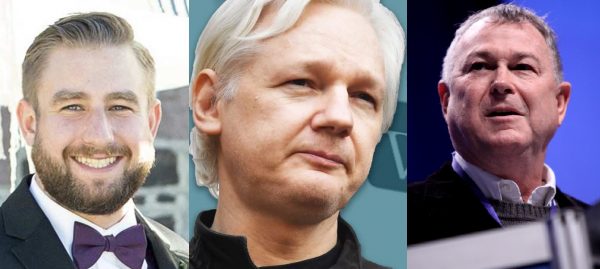
Seth Rich, Julian Assange and Dana Rohrabacher. Credit: Public domain/Gage Skidmore/ Flickr
By Philip Giraldi | American Herald Tribune | February 29, 2020
The media is doing its best to make the story go away, but it seems to have a life of its own, possibly due to the fact that the accepted narrative about how Rich died makes no sense. In its Iatest manifestation, it provides an alternative explanation for just how the information from the Democratic National Committee (DNC) computer somehow made its way to Wikileaks. If you believe that Jeffrey Epstein committed suicide and that he was just a nasty pedophile rather than an Israeli intelligence agent, read no farther because you will not be interested in Rich. But if you appreciate that it was unlikely that the Russians were behind the stealing of the DNC information you will begin to understand that other interested players must have been at work.
For those who are not familiar with it, the backstory to the murder of apparently disgruntled Democratic National Committee staffer Seth Rich, who some days before may have been the leaker of that organization’s confidential emails to Wikileaks, suggests that a possibly motiveless crime might have been anything but. The Washington D.C. police investigated what they believed to be an attempted robbery gone bad but that theory fails to explain why Rich’s money, credit cards, cell phone and watch were not taken. Wikileaks has never confirmed that Rich was their source in the theft of the proprietary emails that had hitherto been blamed on Russia but it subsequently offered a $20,000 reward for information leading to resolution of the case and Julian Assange, perhaps tellingly, has never publicly clarified whether Rich was or was not one of his contacts, though there is at least one report that he confirmed the relationship during a private meeting.
Answers to the question who exactly stole the files from the DNC server and the emails from John Podesta have led to what has been called Russiagate, a tale that has been embroidered upon and which continues to resonate in American politics. At this point, all that is clearly known is that in the Summer of 2016 files and emails pertaining to the election were copied and then made their way to WikiLeaks, which published some of them at a time that was damaging to the Clinton campaign. Those who are blaming Russia believe that there was a hack of the Democratic National Committee (DNC) server and also of John Podesta’s emails that was carried out by a Russian surrogate or directly by Moscow’s military intelligence arm. They base their conclusion on a statement issued by the Department of Homeland Security on October 7, 2016, and on a longer assessment prepared by the Office of the Director of National Intelligence on January 6, 2017. Both government appraisals implied that there was a U.S. government intelligence agency consensus that there was a Russian hack, though they provided little in the way of actual evidence that that was the case and, in particular, failed to demonstrate how the information was obtained and what the chain of custody was as it moved from that point to the office of WikiLeaks. The January report was particularly criticized as unconvincing, rightly so, because the most important one of its three key contributors, the National Security Agency, had only moderate confidence in its conclusions, suggesting that whatever evidence existed was far from solid.
An alternative view that has been circulating for several years suggests that it was not a hack at all, that it was a deliberate whistleblower-style leak of information carried out by an as yet unknown party, possibly Rich, that may have been provided to WikiLeaks for possible political reasons, i.e. to express disgust with the DNC manipulation of the nominating process to damage Bernie Sanders and favor Hillary Clinton.
There are, of course, still other equally non-mainstream explanations for how the bundle of information got from point A to point B, including that the intrusion into the DNC server was carried out by the CIA which then made it look like it had been the Russians as perpetrators. And then there is the hybrid point of view, which is essentially that the Russians or a surrogate did indeed intrude into the DNC computers but it was all part of normal intelligence agency probing and did not lead to anything. Meanwhile and independently, someone else who had access to the server was downloading the information, which in some fashion made its way from there to WikiLeaks.
Both the hack vs. leak viewpoints have marshaled considerable technical analysis in the media to bolster their arguments, but the analysis suffers from the decidedly strange fact that the FBI never even examined the DNC servers that may have been involved. The hack school of thought has stressed that Russia had both the ability and motive to interfere in the election by exposing the stolen material while the leakers have recently asserted that the sheer volume of material downloaded indicates that something like a higher speed thumb drive was used, meaning that it had to be done by someone with actual physical direct access to the DNC system. Someone like Seth Rich.
What the many commentators on the DNC server issue choose to conclude is frequently shaped by their own broader political views, producing a result that favors one approach over another depending on how one feels about Trump or Clinton. Or the Russians. Perhaps it would be clarifying to regard the information obtained and transferred as a theft rather than either a hack or a leak since the two expressions have taken on a political meaning of their own in the Russiagate context. With all the posturing going on, the bottom line is that the American people and government have no idea who actually stole the material in question, though the Obama Administration was extraordinarily careless in its investigation and Russian President Vladimir Putin has generally speaking been blamed for what took place.
The story currently bouncing around the media concerns an offer allegedly made in 2017 by former Republican Congressman Dana Rohrabacher to imprisoned WikiLeaks founder Julian Assange. According to Assange’s lawyers, Rohrabacher offered a pardon from President Trump if Assange were to provide information that would attribute the theft or hack of the Democratic National Committee emails to someone other than the Russians. He was presumably referring to Seth Rich.
Assange did not accept the offer, but it should be noted that he has repeatedly stated in any event that he did not obtain the material from a Russian or Russian-linked source. In reality, he might not know the original source of the information. Since Rohrabacher’s original statement, both he and Trump have denied any suggestion that there was a firm offer with a quid pro quo for Assange. Trump claims to hardly know Rohrabacher and also asserts that he has never had a one-on-one meeting with him.
The U.S. media’s coverage of the story has emphasized that Assange’s cooperation would have helped to absolve Russia from the charge of having interfered decisively in the U.S. election, but the possible motive for doing so remains unclear. Russian-American relations are at their lowest point since the Cold War and that has largely been due to policies embraced by Donald Trump, to include the cancellation of START and medium range missile agreements. Trump has also approved NATO military maneuvers and exercises right up to the Russian border and has provided lethal weapons to Ukraine, something that his predecessor Barack Obama balked at. He has also openly confronted the Russians in Syria.
Given all of that back story, it would be odd to find Trump making an offer that focuses only on one issue and does not actually refute the broader claims of Russian interference, which are based on a number of pieces of admittedly often dubious evidence, not just the Clinton and Podesta emails. Which brings the tale back to Seth Rich. If Rich was indeed responsible for the theft of the information and was possibly killed for his treachery, it most materially impacts on the Democratic Party as it reminds everyone of what the Clintons and their allies are capable of. It will also serve as a warning of what might be coming at the Democratic National Convention in Milwaukee in July as the party establishment uses fair means or foul to stop Bernie Sanders. How this will all play out is anyone’s guess, but many of those who pause to observe the process will be thinking of Seth Rich.
Philip M. Giraldi is a former CIA counter-terrorism specialist and military intelligence officer who served nineteen years overseas in Turkey, Italy, Germany, and Spain. He was the CIA Chief of Base for the Barcelona Olympics in 1992 and was one of the first Americans to enter Afghanistan in December 2001. Phil is Executive Director of the Council for the National Interest, a Washington-based advocacy group that seeks to encourage and promote a U.S. foreign policy in the Middle East that is consistent with American values and interests.
Washington Post Admits OAS Bolivia Election Report It Defended During Coup Was ‘Deeply Flawed’
By Morgan Artyukhina | Sputnik | February 27, 2020
The Washington Post reported Thursday on a study concluding the Organization of American States’ claims of voter fraud in the October 2019 Bolivian election “appear deeply flawed.” However, the paper’s editorial board consistently pushed the narrative that Evo Morales was “undermin[ing] Bolivia’s democracy” during the crisis leading to his ouster.
‘Deeply Flawed’ Conclusions
“Bolivia dismissed its October elections as fraudulent. Our research found no reason to suspect fraud,” reads a Thursday headline in the Washington Post’s analysis section. Penned by Massachusetts Institute of Technology’s Election Data and Science Lab researchers John Curiel and Jack R. Williams, the piece based on their study closely examines data from the October 20 Bolivian election and methods used by the Organization of American States (OAS) to determine the vote count had been fraudulent.
“There is not any statistical evidence of fraud that we can find – the trends in the preliminary count, the lack of any big jump in support for Morales after the halt, and the size of Morales’s margin all appear legitimate,” the duo concluded. “All in all, the OAS’s statistical analysis and conclusions would appear deeply flawed.”

MIT Graph showing Morales’ Movement for Socialism steadily gained ground as votes were tallied, explaining Evo Morales’ late victory
According to the researchers, the OAS’ conclusion relies on an undemonstrated assumption: that actual voting results are accurately reflected by unofficial counts and by reported voter preferences, and that deviation between these heavily points to voter fraud by the Bolivian government once official counting was resumed the day after election day. La Paz had previously promised to count four-fifths of preliminary votes on election night and count the rest the next day, but when Morales’ standing began to improve after the resumption of counting, the OAS cried foul.
“Our results were straightforward. There does not seem to be a statistically significant difference in the margin before and after the halt of the preliminary vote,” Curiel and Williams wrote. “Instead, it is highly likely that Morales surpassed the 10-percentage-point margin in the first round.”

MIT Graph showing correlation margin of voting precincts’ results before and after tallying was paused, demonstrating no new irregularities
The researchers ran 1,000 simulations to see if the difference between votes for Morales and his closest competitor, Carlos Masa, could be predicted. “In our simulations, we found that Morales could expect at least a 10.49 point lead over his closest competitor, above the necessary 10-percentage-point threshold necessary to win outright. Again, this suggests that any increase in Morales’s margin after the stop can be explained entirely by the votes already counted.”

MIT Graph showing Evo Morales’ margin of victory in 1,000 simulations of the October 20, 2019 Bolivian election
The study was reprinted by the Center for Economic and Policy Research (CEPR), which noted in a disclosure that it “contracted with the authors to see if the numerical and statistical results of CEPR’s November 2019 study could be independently verified. Any analysis and interpretation of findings in this report express the sole views of the authors, researchers at MIT Election Data and Science Lab.”
“The OAS greatly misled the media and the public about what happened in Bolivia’s elections, and helped to foster a great deal of mistrust in the electoral process and the results,” economist and CEPR Co-Director Mark Weisbrot said in a Thursday statement about the MIT report. “The OAS needs to explain why it made these statements and why anyone should trust it when it comes to elections.”
Parallel Findings Prior to Coup Ignored
However, at the time of the crisis, Washington Post editors seemed uninterested in CEPR’s analysis, deferring instead to the OAS, whose faults CEPR had already seen through even before Morales was ousted.
The day after the OAS statement and two days after the election, Weisbrot called on the body to retract its “irresponsible” statement on the election.
“The OAS statement implies that there is something wrong with the vote count in Bolivia because later-reporting voting centers showed a different margin than earlier ones,” Weisbrot said. “But it provides absolutely no evidence – no statistics, numbers, or facts of any kind – to support this idea. And in fact, a preliminary analysis of the voting data at all of the more than 34,000 voting tables – which is all publicly available and can be downloaded by anyone – shows no evidence of irregularity.”
“This kind of change in voting results, due to later-reporting areas being politically or demographically different than earlier ones, is quite common in election returns – as anyone who has watched election returns come in on CNN in the United States knows,” Weisbrot continued. “That is why it is wrong to draw conclusions from a change in the voting pattern without any statistical analysis or even looking closely at the data.”
“As this narrative gets repeated in the media, it will take on a life of its own, and will be difficult to correct, even as more people look at the data, or produce statistical analysis,” he warned.
CEPR’s formal report was published on November 8, titled, “No Evidence That Bolivian Election Results Were Affected by Irregularities or Fraud, Statistical Analysis Shows.” Two days later, opposition forces, urged on by supportive western powers including the United States, forced Morales from office, and the opposition and began a violent and bloody purge against the Movement for Socialism–Political Instrument for the Sovereignty of the Peoples (MAS-IPSP), Morales’ indigenous-working class umbrella party.
Newspaper Beat Coup Drums During Crisis
As Weisbrot predicted, the media did perpetuate this narrative – and the Washington Post played a key role in building momentum for Morales’ ouster.
On October 14, six days before the election, the Post ran a story titled “How Evo Morales running again – and again – undermines Bolivia’s democracy,” which warned that “depending on how the election goes,” Morales’ next term “could place democracy itself at risk in the Andean country.”
“In a tight race, international scrutiny and a strong, unified response to any electoral irregularities could be what allows Bolivians to salvage their democracy from the brink,” the opinion piece warns.
.@washingtonpost now reports fraud allegations in Morales’ October 2019 reelection had no basis – but its editorial board wasted no effort demonizing @evoespueblo & claiming he was “undermining democracy” in #Bolivia in the crucial weeks between the election & coup. pic.twitter.com/sDuEO2LQbT
— Morgan Artyukhina (@LavenderNRed) February 27, 2020
However, four days after the election, on October 24, the Washington Post’s editorial board made its official voice known, declaring that “There’s still time for Bolivia’s president to right the path to democracy.” The article justifies its position using the OAS La Paz observer statement from October 21 and a similar one by the US State Department, which was adamantly pro-coup.
Then on November 10, the coup came, and Morales was forced to resign and flee the country. After pro-opposition police forces and far-right militias acted to block MAS senators from attending a key Senate session on November 12, the highest-ranking opposition senator, Jeanine Añez, declared herself the country’s interim president. Añez moved quickly to prepare de facto martial law, and the army and police massacred dozens of Morales supporters who rallied against the seizure of power.

© AP Photo / Natacha Pisarenko A backer of former President Evo Morales scuffles with police in La Paz, Bolivia, Wednesday, Nov. 13, 2019.
The opposition senator who has claimed Bolivia’s presidency, Jeanine Anez, faces the challenge of stabilizing the nation and organizing national elections within three months at a time of political disputes that pushed Morales to fly off to self-exile in Mexico after 14 years in power.
The Washington Post, meanwhile, built a bulwark of pro-coup support for its readers in the nation’s capital and around the world. On November 11, during the interregnum, the Post’s editorial board once again made its voice heard: “Bolivia is in danger of slipping into anarchy. It’s Evo Morales’s fault.”
“Mr. Morales, who had grown increasingly autocratic in nearly 14 years in office, insisted on running for a fourth term even after he lost a national referendum on whether he could seek it. The electoral tribunal, which he controls, then moved to falsify the results of the Oct. 20 vote so as to hand him a first-round victory,” the paper’s editors wrote, stating as fact what had previously been merely warned to be suspected. “The result was predictable: Angry Bolivians took to the streets all over the country. They had been demonstrating for weeks when, on Sunday, an audit released by the Organization of American States reported massive irregularities in the vote count and called for a fresh election.”
Two days later, the day after Añez seized power, the Post ran another story by the title “It’s not just a ‘coup’: Bolivia’s democracy is in meltdown.” Then on the 15th came the laconically titled piece, “The Bolivian ‘coup’ that wasn’t.” While the two stories quibble over what to call the opposition’s seizure of power, the underlying point is the same: Morales tried to steal the election and went against world opinion and domestic popular will by clinging to power.
With the publication of Curiel’s and Williams’ findings, the Post has helped to unring the bell it shook so hard during the election crisis. However, it doesn’t change the fact that the paper helped provide ideological cover for the ouster of yet another democratically elected leader in a Third World nation by uncritically accepting and repeating the US State Department’s positions and those of international bodies like the OAS that help forward its policies.
Rohrabacher, Mueller, and Assange
By Daniel Lazare | Strategic Culture Foundation | February 26, 2020
Reports that Donald Trump offered to pardon WikiLeaks founder Julian Assange if he could prove that Russia didn’t hack Democratic National Committee caused a good-sized media storm when they came out in a British court last week. But then Dana Rohrabacher, the ex-US congressman supposedly serving as a go-between, issued an all-points denial, and the tempest blew over as fast as it arose.
But that doesn’t mean that the Russia-WikiLeaks story is kaput. To the contrary, it’s still brimming with unanswered questions no matter how much the corporate media wishes they would go away.
The most important question is the simplest: why didn’t Special Prosecutor Robert Mueller sit down with Julian Assange and ask him about the 20,000 DNC emails himself?
It’s not as if Assange would have said no. According to Craig Murray, the former British diplomat who serves as an unofficial WikiLeaks spokesman, he “was very willing to give evidence to Mueller, which could have been done by video-link, by interview in the [Ecuadorean] Embassy, or by written communication.” While Assange refuses as a matter of policy to disclose his sources, he had already made a partial exception in the case of the DNC by declaring, “Our source is not a state party.” Conceivably, he had more to say along such lines, information that Mueller might have then used to determine what role, if any, Russia played in the email release.
But he didn’t bother. Without making the slightest effort to get Assange’s side of the story, he assembled page after page of evidence purporting to show that WikiLeaks had collaborated with Russian intelligence in order to disseminate stolen material. Rather than an organization dedicated to exposing official secrets so that voters could learn what their government was really up to, WikiLeaks, in the eyes of the special prosecutor, was the opposite: an organization seeking to help Russia pull the wool over people’s eyes so they would vote for Donald Trump.
This is the super-sensational charge that has roiled US politics since 2016. Yet there is little to back it up.
Even though Mueller is confident that the Russian military intelligence agency known as the GRU routed the emails to WikiLeaks, for instance, he still hasn’t figured out how. “Both the GRU and WikiLeaks sought to hide their communications, which has limited the [Special Prosecutor’s] Office’s ability to collect all of the communications between them,” his report confesses on page 45. “The Office cannot rule out that stolen documents were transferred to WikiLeaks through intermediaries who visited during the summer of 2016,” it adds on page 47. “For example, public reporting identified Andrew Müller-Maguhn as a WikiLeaks associate who may have assisted with the transfer of these stolen documents to WikiLeaks.”
But Müller-Maguhn, a German cyber-expert who has worked with WikiLeaks for years, dismisses any such suggestion as “insane,” a claim the Mueller report makes no effort to rebut. The public is thus left with a blank where a dotted trail the GRU and WikiLeaks ought to be. Then there’s the issue of chronology. The Mueller report says that a GRU website known as DCLeaks.com reached out to WikiLeaks on June 14, 2016, with an offer of “sensitive information” related to Hillary Clinton. Considering that WikiLeaks would release a treasure trove of DNC emails on July 22, less than seven weeks later, the implication that the GRU was the source does not, at first glance, seem implausible.
But hold on. Although the report doesn’t mention it, Assange told a British TV station on June 12: “We have upcoming leaks in relation to Hillary Clinton, which is great.” Either he was amazingly clairvoyant in foreseeing an offer that the GRU would make two days hence or he got the material from someone else.
To be sure, the Mueller report adds that an alleged Russian intelligence “cutout” known as Guccifer 2.0 sent WikiLeaks an encrypted data file on July 14, which is to say eight days prior to publication. But since WikiLeaks didn’t confirm opening the file until July 18, this means that it would have had just four days to vet thousands of emails and other documents to insure they were genuine and unaltered. If just one had turned out to be doctored, its hard-earned reputation for accuracy would have been in shreds. So the review process had to be painstaking and thorough, and four days would not be remotely enough time.
Nothing about the Mueller account – timing, plausibility, the crucial question of how the stolen DNC emails made their way to WikiLeaks – adds up. Yet Mueller went public with it regardless. Which leads to another question: why?
One reason is because he knew he could get away with it, at least temporarily, since it was clear that corporate media howling for Trump’s scalp would accept whatever he put out as gospel. But another is that he’s a dutiful servant of the ruling class. After all, Mueller is the person who, as FBI director from 2001 to 2013, spent much of his time covering up Saudi Arabia’s not-inconsiderable role in 9/11, as investigative reporter James Ridgeway has pointed out on a number of occasions. Mueller is also the man who assured the Senate Intelligence Committee in February 2003 that “Iraq’s WMD program poses a clear threat to our national security,” a claim that the upcoming Iraqi invasion would reveal as fraudulent to the core.
Toeing the official line is therefore more important in his book than telling the truth. This is why he didn’t sit down with Assange – because he was afraid of what he might tell him. In January 2017, the CIA, NSA, and FBI officially reported that “Russian President Vladimir Putin ordered an influence campaign in 2016” and “that Russian military intelligence … used the Guccifer 2.0 persona and DCLeaks.com” to relay stolen computer data to WikiLeaks. Four months later, then-CIA Director Mike Pompeo went even farther by describing WikiLeaks as “a non-state hostile intelligence service often abetted by state actors like Russia.”
This was the official narrative that Mueller felt dutybound to defend when he was appointed special prosecutor a month after Pompeo made his remarks. Even though the CIA account would not hold up to close inspection, his self-perceived mission was to disregard certain facts and cherry-pick others in order to convince the public that it was true.
This leads us to a third question: how do Americans get themselves out of the hole that Mueller has dug for them? Not only does Assange face 170 years in prison for espionage, but the impact in terms of freedom of the press will be devastating. The prosecution’s case rests on an explosive theory that receiving inside information is effectively the same thing as supplying it. Just as a fence encourages people to steal, the idea is that a journalist encourages insiders to hack computers and rifle through file cabinets by offering to publish what they come up with. If upheld, it means that journalists would have to think twice before even talking to an inside for fear of incurring a similar penalty. Armed with such a legal instrument, Richard Nixon would have had no trouble dealing with Bob Woodward and Carl Bernstein. He would merely have charged them with espionage and locked them away until the break-in was forgotten.
If Assange goes down, in other words, democracy will take a major hit. Yet by labeling him a Russian agent, Mueller has seen to it that liberals are as unsympathetic to his plight as the most militant conservative, if not more so. He transformed Assange into the perfect scapegoat for Democrats and Russians to bash with bipartisan glee.
This is why a defense based purely on the First Amendment will not do. Rather, it’s important to deal with the charge of Russian collaboration that – completely unjustly – has turned him into an object of public opprobrium. It’s time to give the Mueller report the scrutiny it deserves before its collective falsehoods undermine democracy even more than they already have.
South Carolina Debate Attended by Elite ‘Sponsors’, Featured Syria War Propaganda
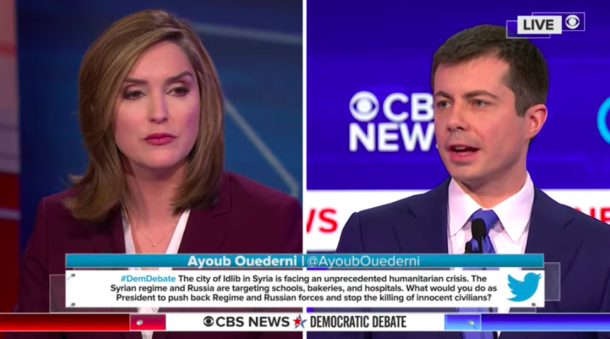
CBS News’ Margaret Brennan pushing Syria war propaganda with Pete Buttigieg
21st Century Wire | February 26, 2020
The Democratic Party held its 10th presidential debate Tuesday night in Charleston, South Carolina, as candidates continued their attacks on national frontrunner Bernie Sanders in front of a live audience of elite ‘sponsors’ who paid over a thousand dollars to attend the event.
A local Charleston TV news station confirmed earlier this month that a “guaranteed ticket” at the debate required a sponsorship to be paid at levels between $1750 to $3200, prompting the trending hashtag, #WineCaveDebate, during the live broadcast.
CBS News carried the debate and featured a foreign policy question to be asked by Twitter users.
Debate moderator Margaret Brennan then read the selected tweet and directed the question to Pete Buttigieg:
The city of Idlib in Syria is facing an unprecedented humanitarian crisis. The Syrian regime and Russia are targeting schools, bakeries, and hospitals. What would you do as President to push back Regime and Russian forces and stop the killing of innocent civilians?
It was apparent that CBS News did not verify the dubious claims made in the tweeted question, and thus was able to present a false narrative about the war in Syria to its viewing audience.
The Syrian Arab Army and its Russian military partners have actually been advancing on Idlib to liberate it from the jihadi terrorists that have taken control of it from peaceful Syrians.
Buttigieg responded to the question by saying “I stand with the people of Idlib…”
Later, Brennan direct the same question to Elizabeth Warren, but rephrased it as “What would you do to stop the mass murder?”
Featured Video
No Vote, No Representation, No State: Democracy, Israeli Style
or go to
Aletho News Archives – Video-Images
From the Archives
Sanctions, War and the Policy of Dual Containment
By SASAN FAYAZMANESH | March 17, 2008
It is now nearly three decades since the Unites States adopted the policy of dual containment of Iran and Iraq. While much has been written about the containment of Iraq, there has been very little in-depth analysis of this policy when it comes to Iran. In a book that is going to be released on March 31, 2008, entitled The United States and Iran: Sanctions, Wars and the Policy of Dual Containment (Routledge), I attempt to address this shortcoming by investigating when and why the US policy of containment of Iran came about, how it evolved, and where it stands today.[1] To the extent that Israel has been involved in US policy making, the study will also include the role that Israel has played in the containment of Iran. Also, since the fate of Iran has been inextricably linked to that of Iraq, occasionally the investigation will overlap with the containment of Iraq.
The policy of dual containment of Iran and Iraq originated during the Carter Administration, but it was not until the Clinton Administration that the expression “dual containment” became popular. … continue
Blog Roll
 Aletho News
- NATO chief advocates war of aggression
- No Vote, No Representation, No State: Democracy, Israeli Style
- Zionist Bought Senate Blocks Information About American Citizens Killed By Israel
- While Gaza dominates the UN, these are the people keeping it alive
- New Report: “Scholasticide and Genocide in Gaza: Assessment, Testimonies and Legal Analysis”
- ‘THAAD Delusion’: Iran war exposes US missile shield limits – The Atlantic
- Moscow issues warning to NATO over Russian exclave
- Yes, the Iran war has destroyed Trump’s presidency
- The fallacy of US delusions about Iran’s economic collapse
- Hezbollah denies Syria cell link, warns of Israeli plan to sow discord
- If Americans Knew
- Mamdani releases plan to combat antisemitism and hate crimes in New York City
- Iran’s Revolutionary Guards Publish Letter to the American People
- DMFI launches $1 million ad campaign supporting Virginia’s Elaine Luria
- US Senate blocks resolution seeking report on Americans killed by Israel
- Israeli Attacks Kill Ten Palestinians in Gaza
- Massacre at Minab: The School That Became a Grave
- Israeli media: The IDF Shows It Doesn’t Turn a Blind Eye; It Actively Emboldens Settler Havoc
- As settlers ravage West Bank, Israeli forces kill 10 in Gaza – Daily Update
- New Report: “Scholasticide and Genocide in Gaza: Assessment, Testimonies and Legal Analysis”
- Ex-Biden officials are desperate for a Gaza scapegoat
- No Tricks Zone
- Green Energy Debacle: German Expert Professor Fritz Vahrenholt Warns Of Severe Economic And Social Consequences
- Two More Paleo Reconstructions Affirm Meters-Higher Sea Levels Across Ireland, Brazil 7000-6000 Years Ago
- New Study: Earth And Venus Surface Warmth Largely Explained By Convection And Lapse Rate, Not CO2 Or Radiation
- 2025 Nature Paper Claiming Worsening Global Drought Gets RETRACTED …Heavily Flawed
- New Study: ‘Global Drought Shows No Detectable Recent Acceleration Under Climate Warming’
- Economic Masterminds: German Socialists Suggest Taxing Productivity Gains Stemming From Using AI
- The South China Sea Has Not Been Cooperating With The Climate Change Narrative
- Energy Crisis: Germany Enters Heating Season With Historically Low Gas Reserve Fill Levels
- New Study: The Antarctic Ice Sheet Gained Mass From 2020-2024 Due To Staggering Snow And Ice Accumulation
- Study: Ocean Heating Rates From Thousands Of Years Ago ‘Dwarf’ Modern Ocean Heating Rates

