Mann, Hayhoe try to erase the Medieval warm period
By James Taylor | CFACT | October 1, 2019
Climate alarmists Michael Mann and Katharine Hayhoe have been caught using dubious, revisionist temperature data in their attempt, as one Climategate email author put it, to “deal a mortal blow” to the extensively documented Medieval Warm Period.
Before climate change became a political issue, it was scientifically well-established that a significant global warming event occurred between approximately 900 AD and 1200 AD. For example, the United Nations Intergovernmental Panel on Climate Change (IPCC) First Assessment Report presented a temperature history and visual graph documenting that the Medieval Warm Period existed and that it brought temperatures at least as warm as today (at pg. 7). Multiple peer-reviewed studies provided additional confirmation of the Medieval Warm Period.
The warming climate of the Medieval Warm Period spurred abundant crop production, fewer extreme droughts and floods, growing human population, and improving living standards. The Little Ice Age terminated the Medieval Warm Period and brought devastating weather extremes, widespread crop failures, famines, plagues like the Black Death, and a contracting human population. (For a good summary of the extensive benefits of the Medieval Warm Period and the devastating harms of the Little Ice Age, see the excellent book, “In the Wake of the Plage: The Black Death and the World It Created.”)
The existence of large historical temperature fluctuations, warmer temperatures than today, and many documented benefits of those warmer temperatures presented a powerful obstacle in alarmists’ attempts to brand our current modest warming an unprecedented climate crisis. One of the many embarrassing emails leaked in the Climategate scandal showed how alarmists deliberately set a goal of eliminating the historical existence of the Medieval Warm Period. Alarmist climate scientist Jonathan Overpeck wrote in an email to fellow alarmist Keith Briffa, “I get the sense that I’m not the only one who would like to deal a mortal blow to the misuse of supposed warm period terms and myths in the literature.”
Also, scientist David Deming testified to Congress that a prominent figure working in the field of climate change asserted to him, “We have to get rid of the Medieval Warm Period.”
We have often been told that the science is settled. Apparently, that doesn’t apply to scientific data and evidence invalidating climate alarmism. Mann last month favorably retweeted an assertion that present temperatures are the warmest they have been for at least the past 5,000 years. Hayhoe earlier this year gave a presentation in which she presented a graph (without any scientific citation) asserting temperatures steadily and consistently declined for 4,000 years – without any significant variation – prior to the warming of the past 120 years that finally and mercifully brought an end to the Little Ice Age (at 7:41).
As documented above, the existence of substantial historical climate variations such as the Medieval Warm Period and the Little Ice Age were scientifically well-documented and not in dispute before climate activism politicized the issue. Alarmist scientists were on record searching for justifications to eliminate these inconvenient climate variations that blew gaping holes in their alarmist theories. Now, conveniently, alarmists like Mann and Hayhoe claim the Medieval Warm Period, the Little Ice Age, and other well-documented warm and cold periods simply did not exist.
An old sarcastic saying goes, “When the facts doesn’t fit the theory, change the facts.” Mann and Hayhoe provide perfect real-world examples of such perniciousness. Powerful scientific evidence supported near-universal agreement about the existence of the Medieval Warm Period. Then Mann and Hayhoe, supported by little or no compelling evidence, waved a magic wand and made the Medieval Warm Period conveniently disappear.
Climate realists, however, will stick with the powerful scientific evidence, the long-established scientific “consensus,” the peer-reviewed scientific literature, and the findings of the IPCC. Sorry, Mann and Hayhoe, but you have been caught red-handed.
Investigation: Joseph Mifsud
The_War_Economy – July 29, 2019
Joseph Mifsud, born in 1960, is a bit of a mystery, in the sense that he has numerous connections to organisations such as the European Union, you can find him in multiple locations, but the moment he was connected to the Spygate scenario, everybody just knew him as the Russian who tried to hire George Papadopoulos for nefarious reasons. Even though he is Maltese.
“I am a member of the European Council On Foreign Relations. And you know which is the only Foundation I am a member of? The Clinton Foundation. Between you and me, my thinking is left-leaning. But I predicted Trump’s victory as well as Brexit. Everyone of us wants peace. If the Governments don’t talk to each other, we citizens must keep talking.” — Joseph Mifsud
At unknown points,
Mifsud studied at the University of Malta, which he graduated from in 1982 with a bachelor’s degree in education. Mifsud also graduated from the University of Padua with a degree in pedagogy in 1989, and then in 1995, Mifsud also graduated from Queens University with a master’s degree in philosophy.
Mifsud later studied at the University of Reading, where he earned his doctorate. Mifsud also became fluent in Maltese, French, Italian, Arabic and English, and has knowledge of Spanish, Portuguese, Russian and Slovenian.
In January 1994, Mifsud published the paper “Partners for Change: The Malta experience”.
From 1996 to 1998, Mifsud served in the Ministry of Foreign Affairs of Malta, and also served as Malta’s representative to the Council of Europe in Education and at Unesco.
In 1997, Mifsud was appointed as the Head of the Department of Education at the University of Malta.
At some point, Mifsud was a member of the Senate. Towards the late 1990s, Mifsud encountered Manual Delia.
Mifsud has also served as an adviser to the European Union, the European Union Parliament, the Parliament of Malta, organisations in Italy, Spain, Africa, and the Commonwealth Law Bulletin.
On May 1, 2004, Malta officially joined the European Union. Around this time, Mifsud was placed in charge of establishing the European Programmes Unit, and also helped during the negotiations of Malta’s entry into the organisation.
In 2006, Mifsud taught a summer class with Katerina Galanaki, which was attended by Matthew Caruana Galizia, the son of Daphne Caruana Galizia.
From October 1, 2006 to August 30, 2007, Mifsud served as the Head of the Private Secretariat for Dr. Michael Frendo.
On November 15, 2007, Mifsud received a letter from the University of Malta, as an audit done by PriceWaterhouseCoopers suggested that he had mismanaged funds during his time teaching.
The next month, in December 2007, Mifsud left his position at the University of Malta.
On April 9, 2008, the Bank of Valetta won an order and garnished Mifsud’s wages.
On June 9, 2008, the Paris Summit established EMUNI and Euro-Mediterranean higher education.
In November 2008, Mifsud was elected as the first President of the Euro-Mediterranean University (EMUNI) in Slovenia by European and Mediterranean, Rectors and Presidents of Universities. During this time, Mifsud also helped pioneer the Euro-Mediterranean Professional School.
On November 26, 2008, the University’s General Assembly meeting was held in Barcelona, Spain, where 115 members from 32 states adopted the Universidy statute and elected the institutional bodies.
In February 2009, EMUNI University officially became a legal entity in Slovenia.
By April 2009, Mifsud was the representative of Malta on the board of the Bologna Follow-up Group, the Erasmus Mundus Committee and the Tempus Committee, Malta’s Socrates Sub-Committee For Higher- Education and the “Joint Research Center” of the European Commission.
On April 22, 2009, Ian Mundell published the article “Bridging the Mediterranean” in Politico, which featured an interview with Mifsud.
Between June 21–22, 2009, Mifusd and Strobe Talbott attended “G8 and Beyond”, which was convened by the Brookings Institution, Aspen, Club de Madrid and Link Campus.
On June 30, 2009, Mifsud attended the “Seminar On Higher Education In Europe”, hosted by the Foundation For European Progressive Studies.
Mifsud would later leave his position as the President of the Euro-Mediterranean University.
Mifsud may be one of the founders — alongside Giovanni D’Angelo and Giuseppe Picone — of the Mesauro Foundation.
On March 24, 2010, Mifsud attended the “Workshop Multi-Level Governance of Intercultural Dialogue” hosted by the Università di Padova.
On June 14, 2010, Mifsud gave the opening address at the 2nd EMUNI Research Souk — the Euro-Mediterranean Student Research Multi-Conference — hosted by the EMUNI University.
On June 29, 2010, Mifsud met with Secretary General of the Union for the Mediterranean Ahmad Masa’deh at the Headquarters of the Secretairat in the Palacio Real de Pedralbes in Barcelona, Spain.
Between October 20–23, 2010, Mifsud attended the EUA Annual Conference in Palermo, Italy, where he held talks with representatives of EMUNI partner institutions.
On October 24, 2010, Mifsud participated as part of the round table session on Teaching and Learning Diplomacy as part of the Rome Diplomatic Festival, which was attended by others including Nabil Ayad.
Between December 11–13, 2011, Mifsud attended the 4th Global UN Alliance of Civilizations Forum in Doha.
In 2012, Mifsud became the Director of the London Academy of Diplomacy, which is affiliated with Scotland’s University of Stirling, as he left the Euro-Mediterranean University. The same year, the London Academy of Diplomacy received the award “Diplomat of the Year” from Diplomat Magazine. At some point during this, Mifsud also joined the Leading Board for the Albanian Diplomatic Academy.
Simona Mangiante was also introduced to Mifsud during this time by Gianni Pittella while she worked in Brussels as an attorney specialised in child abduction cases.
“I always saw Mifsud with Pittella.” — Simona Mangiante
At the same, Simona worked for Mairead McGuinness and Roberta Angelilli, and she worked as an administrator to the Home Affairs Committee under Martin Schulz.
The London Academy of Diplomacy has a total of 36 faculty members, which includes former diplomats. In September and January each year, students are accepted, with the total usually amounting to 150 new students. The London Academy of Diplomacy is also open to organising visits to the Houses of Parliament, the Commonwealth Secretariat, numerous organisations in London, the Hague, the European Parliament, NATO, the European Union Headquarters and the United Nations.
In the summer of 2012, the London Academy of Diplomacy established cooperation with the Faculty of Global Processes of Moscow State University.
In October 2012, Mifsud met with Enzo Scotti — the President of Link University — Professor Nabil Ayad, Professor Claire Smith and numerous Italian Generals for a training programme on international security, which was arranged by Link Campus University and the London Academy of Diplomacy in Rome, Italy.
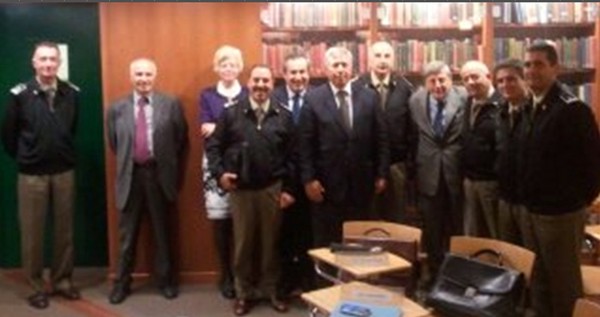
In 2012, Mifsud attended Globalistics 2013 at Moscow University, where he suggested that Moscow University join a project to reform Link Campus University in Rome.
In March 2013, Mifsud owed roughly EUR 39,000.00 to the EMUNI University in Slovenia for expenses claimed during his tenure.
On April 3, 2013, Mifsud and Thomas Childs attended the Global Economic Forum: Best Practices in Trade and Investment Promotion in London, which was hosted by the International Business & Diplomatic Exchange (IBDE).
On May 15, 2013, Inverhold Ltd. was founded by Dr. Stephan Roh in London, England.
Between June 11–13, 2013, Mifsud and Nabil Ayad attended the “Global, Regional and National Actors in the Governace of the Atom: A Focus on Europe and the Middle East” international conference at the Academy of Global Governance in Florence, Italy. They presided over a simulation exercise, which was assisted by visiting professor of the London Academy of Diplomacy, Sameh Aoul Enein.
On July 2, 2013, His Excellency Dr. Sultan Al Jaber visited the London Academy of Diplomacy to discuss cooperation between the organisation and the United Arab Emirates, which was attended by Mifsud, Nabil Ayad and Riad Nourallah.
In August 2013, Mifsud received an honorary professorship from the University of East Anglia.
In 2014, the Rome Academy of Diplomacy was founded, and Mifsud played a vital role to its development. Dr. Stephan Roh also became a visiting lecturer at the London Academy of Diplomacy, and bought Link Campus University. In return, Mifsud became a consultant at Roh’s legal firm.
Also in 2014, a Russian intern named Natalia Kutepova-Jamrom visited his office after having worked in the Russian Government as a legislative aide, and she later introduced Mifsud to numerous Russian diplomats and scholars, and secured an invitation to the Valdai Discussion Club.
In January 2014, the University of East Anglia ended their arrangement to validate London Academy of Diplomacy degree courses, with the arrangement then transferred to the University of Stirling.
Between April 24–2015, 2014, Mifsud attended the Global University Summit in Moscow, Russia.
On May 29, 2014, Mifsud met with Ambassador Alexander Yakovenko at the Residence, where Mifsud presented his views on the aftermath of the Global University Summit, and discussed UK-Russia relations.
In mid-November 2014, Mifsud visited Washington, DC, where he attended a lecture at the American University on “Diplomacy and Development in a Global Environment”, which was sponsored by Australia’s Program On International Organizations, Law and Diplomacy. During this time, Mifsud spoke with The Washington Diplomat’s Larry Luxner.
On December 8, 2014, Larry Luxner published the article Maltese Official Raises Profile Of U.K. Diplomacy Academy” in The Washington Diplomat.
On February 23, 2015, Mifsud and Falah Mustafa gave a lecture at the London Academy of Diplomacy about the Islamic State and the future of Kurdistan and Iraq.
On March 12, 2015, the London Academy of Diplomacy hosted the panel “Diplomacy and Social Media”, which was attended by Mifsud, Christian Sys, Sir George Reid and Dr. Martyn Bond.
On April 30, 2015, Euripides Evriviades hosted the conversation “Cyprus, the EU and the Eastern Mediterranean” at the London Academy of Diplomacy, which was introduced by Mifsud.
Between September 8–10, 2015, the XXV Economic Forum was hosted in Krynica-Zdrój, Poland, which was attended by Mifsud on the third day.
On September 11, 2015, Mifsud attended the Senate of the Republic in Piazza della Minerva, Rome, with others including Vincenzo Scotti and Gianni Pittella.
In late October 2015, Mifsud proposed to Anna at a restaurant which overlooked the Kremlin in Moscow during Anna’s sister’s birthday.
On December 8, 2015, Ben Carson announced his foreign policy adviser team, which included both George Birnbaum and George Papadopoulos.
In 2016, Simona’s contract came to an end. As such, Pissetti suggested employment with Mifsud in London, which led to Mifsud offering her a job at the London Centre of International Law Practice, located at Lincoln’s Inn Fields. Simona was promised £2,500.00 per month from a colleague of Mifsud.
On January 29, 2016, Mifsud sent an e-mail to Anna, where he requested the engagement ring and assorted items to be returned to his Rome or United Kingdom address due to Anna cheating on him.
On March 6, 2016, George Papadopoulos learned that he would become a foreign policy adviser for the Trump campaign.
Between March 8–9, 2016, Mifsud attended the World Summit On Uncontrolled Migration at the Adelaide Convention Centre in South Australia.
On March 10, 2016, Mifsud hosted a breakfast on behalf of Access European Universities in Adelaide, Australia.
On March 14, 2016, in Italy, Mifsud met with George Papadopoulos, and although initially distant in the conversation, Mifsud became more interested when he learned that Papadopoulos had joined the Trump campaign.
On March 21, 2016, Donald Trump visited the The Washington Post’s headquarters, where he introduced his foreign policy team — including Papadopoulos — to the editorial board.
A few days later, on March 24, 2016, Olga Polonskaya (neé Vinogradova) met and discussed with Mifsud the possibility of an internship. Shortly after this, Papadopoulos met with both Mifsud and Polonskaya, who Mifsud introduced as President Vladimir Putin’s niece, at a café in London. Mifsud also offered to introduce Papadopoulos to the Russian Ambassador in London, Alexander Yakovenko.
“Mifsud underlines that he and Papadopoulos met three or four times overall. ‘He came here in Italy, in Rome, with seven other experts of international relations working for the London Centre of International Law Practice. We were dining and, if I remember well, he announced that we would join Trump’s electoral campaign team. After that, we kept in touch via email or when we subsequently met in person. But, let’s be clear: the Russians didn’t ask me to meet Papadopoulos. Mr. Papadopoulos asked me for contacts in several areas: I proposed someone in the Arabian Gulf, then in Latin America, a hot issue for Trump after his remarks on the wall at the border with Mexico, then in Russia and the European Council. They chose Russia as they were interested in sanctions against Moscow, NATO, Ukraine and a more stable relationship with Russia. A topic very sensitive also for the Russians.’” — Repubblica
After the meeting, Polonskaya texted her brother, Sergei Vinogradov, about the meeting, as she had understood half of the conversation. The text message read: “Because my English was bad”.
Elsewhere, Papadopoulos sent an e-mail to seven members of the Trump campaign in an attempt to arrange a meeting between the campaign and the Russians, with the title of the e-mail being “Meeting with Russian Leadership — Including Putin”, which also discussed his meeting with Mifsud. The proposal was dismissed by the campaign, with concerns raised by Sam Clovis and Charles Kubic.
On March 31, 2016, Papadopoulos attended a national security meeting in Washington, DC with the foreign policy advisers of the Trump campaign and Trump himself. As he introduced himself, he mentioned connections which may assist in arranging a meeting between Trump and President Putin.
Around April 2016, Mifsud was hired on a part-time basis at the University of Stirling.
On April 10, 2016, Papadopoulos sent an e-mail to Polonskaya.
The next day, on April 11, 2016, Polonskaya responded to Papadopoulos’s e-mail, where she suggested she would help build relations between the United States and Russia, which led to a discussion between Papadopoulos, Polonskaya and Mifsud about arranging a foreign policy trip to Russia.
JOSEPH MIFSUD: “This is already been agreed. I am flying to Moscow on the 18th for a Valdai meeting, plus other meetings at the Duma.”
OLGA POLONSKAYA: “I have already alerted my personal links to our conversation and your request… As mentioned we are all very excited by the possibility of a good relationship with Mr. Trump. The Russian Federation would love to welcome him once his candidature would be officially announced.” — The Indictment of George Papadopoulos
On April 13, 2016, Mifsud and Sir George Reid hosted a public talk titled “Controlled or uncontrolled migration — a fortress EU or a global response?” at the University of Stirling.
On April 18, 2016, Mifsud introduced Papadopoulos via e-mail to Ivan Timofeev. Timofeev then said he had connections to the Russian Ministry of Foreign Affairs. This led to numerous Skype conversations between both Papadopoulos and Timofeev.
“At some point, he started asking whether it would be possible to set up a meeting between Trump and Putin ‘or some other high-ranking Russian politicians.’ Our conversations made it clear that George was not well acquainted with the Russian foreign political landscape. You obviously can’t just go and set up a meeting with the president, for instance. Things just aren’t done that way.” — Ivan Timofeev, August 21, 2017
On April 19, 2016, Mifsud attended a discussion at the Valdai Club, moderated by Ivan Timofeev, with other attendees including Stephan Roh and Igor Tomberg.
On April 22, 2016, Timofeev e-mailed Papadopoulos and thanked him for their talk, and suggested that they meet in either London or Moscow — Papadopoulos suggested a meeting in London between the two of them and Mifsud.
On April 25, 2016, Papadopoulos e-mailed Stephen Miller, where he again pushed for the idea of a meeting between Trump and President Putin.
On April 26, 2016, Mifsud and Papadopoulos met with each other again at a hotel in London, where Mifsud mentioned that he had returned from Moscow and a meeting with Russian Government officials, during which he learned of the existence of dirt on Hillary Clinton held by the Russians.
“They have dirt on her.”
“The Russians had emails of Clinton.”
“They have thousands of emails.” — The Indictment of George Papadopoulos“Roh claims that Mifsud has done nothing wrong and was set up — and denies having ever told Papadopoulos the Russians had dirt on Clinton.” — BuzzFeed News
“Ok. But what about the emails stolen from Mrs. Clinton? ‘The dirty job’ offered to Papadopoulos? ‘I don’t know. I strongly deny any discussion of mine about secrets concerning Hillary Clinton. I swear it on my daughter. I don’t know anyone belonging to the Russian government: the only Russian I know is Ivan Timofeev, director of the think tank ‘Russian International Affairs Council’. Which is based at the Ministry of Foreign Affairs of the Russian Federation. ‘But this is meaningless’, Mifsud says.” — Repubblica
On April 27, 2016, Papadopoulos e-mailed both Miller and a high-ranking official separately at the Trump campaign, where he again pushed for a trip to Moscow.
On April 30, 2016, Papadopoulos sent an e-mail to Mifsud and thanked him for his assistance in potentially arranging a meeting between the Trump campaign and the Russian Government.
On May 4, 2016, Timofeev sent an e-mail to both Papadopoulos and Mifsud, where he said the Russian Ministry of Foreign Affairs were open to cooperation, and that Papadopoulos should meet with the North America Desk when he is next in Moscow. Papadopoulos then forwarded the e-mail chain to the high-ranking campaign official for guidance.
On May 5, 2016, Papadopoulos had a phone call with Clovis, and then forwarded the same e-mail chain to him.
On May 13, 2016, Mifsud e-mailed Papadopoulos with an update on their recent conversations.
“We will continue to liaise through you with the Russian counterparts in terms of what is needed for a high level meeting of Mr. Trump with the Russian Federation.” — Joseph Mifsud
The next day, on May 14, 2016, Papadopolous e-mailed the high-ranking campaign official and said that the Russian Government was open to hosting Trump in Russia.
On May 21, 2016, Papadopoulos e-mailed another high-ranking Trump campaign official, which had the subject line “Request from Russia to meet Mr. Trump”, which included the May 4, 2016 e-mail chain.
Between May 21–23, 2016, Mifsud attended the 16th Doha Forum in Qatar, where he represented the London Academy of Diplomacy. The event was also attended by Tobias Ellwood, MP.
On June 1, 2016, Papadopoulos e-mailed the high-ranking Trump campaign official, who then redirected him to the campaign supervisor. Papadopoulos then e-mailed the campaign supervisor about the Russian Ministry of Foreign Affairs seeking a meeting with Trump, and whether or not he should ignore it.
On June 19, 2016, Papadopoulos e-mailed the high-ranking Trump campaign official again, as Timofeev had suggested to him that a campaign representative could go to Moscow instead to attend the meetings instead of Trump himself.
On June 28, 2016, Mifsud and Soros were two of the signatories of “‘The world will not stop’: a statement from leading Europeans” released by the European Council On Foreign Relations, which was about the Brexit vote.
In July 2016, Mifsud lost his honorary professorship from the University of East Anglia.
On July 21, 2016, Mifsud attended the graduation of students from the London Academy of Diplomacy.
On August 15, 2016, the campaign supervisor sent an e-mail to Papadopoulos and said that he and another foreign policy adviser should visit Moscow and accept the trip offer from the Russian Ministry of Foreign Affairs.
In September 2016, Simona started to work at the London Centre of International Law Practice, where she received a LinkedIn message from George Papadopoulos, who liked her photograph and noted that they have connections to the same place of employment, followed by an attempt to arrange a meeting with her, which fell through.
In late October 2016, Simona sent an e-mail to Mifsud, where she complained about her employment and how she had been ‘working for nothing’ as she was paying rent on her flat in South Kensington using savings.
On October 27, 2016, Mifsud attended the “International Law and the Territorial Gains and Losses of Non-State Armed Groups in Africa and the Middle East” discussion at Gray’s Inn, which was hosted by the London Centre of International Law Practice.
On October 29, 2016, at 01:30 A.M., Mifsud responded to Simona from his Stirling University e-mail address in Italian from London, having returned from Moscow.
“Dear Simona,
I hope you are fine… I was in Moscow… Now I’m in London. Can we meet in person? I’m here until Tuesday night.
A hug.
J” — The Guardian
On October 31, 2016, Mifsud left London.
In November 2016, Simona quit her position at the London Centre of International Law Practice, having received zero pay. Her work iPhone stopped working afterwards.
On November 14, 2016, Mifsud, Stephan Roh and Nagi Idris attended the “Military Coup Attempt In Turkey and Its Reflections Worldwide” conference, which was hosted by EURAS at Istanbul Aydin University.
In late 2016, Mifsud disappeared from a venture between Link Campus University and Moscow State University.
In 2017, Mifsud remained in touch with Yury Sayamov.
On January 27, 2017, George was interviewed by agents from the Federal Bureau of Investigation, where he was asked about his interactions with Mifsud.
At the start of February 2017, the Federal Bureau of Investigation found Mifsud in Washington, DC.
Between February 8–11, 2017, Mifsud attended Global Ties’ Unity In Community national meeting at the Omni Shoreham Hotel in Washington, DC, a non-profit organisation with a working relationship with the United States Department of State.
On February 11, 2017, Mifsud sent an e-mail about his conversations with Papadopoulos to agents at the Federal Bureau of Investigation, and then left Washington, DC.
On February 16, 2017, the Federal Bureau of Investigation interviewed Papadopoulos again, this time with Papadopoulos’s counsel present. Papadopoulos offered to cooperate with the Federal Bureau of Investigation.
The next day, on February 17, 2017, Papadopoulos deleted his Facebook account, and then recreated a brand new version of it.
On February 23, 2017, Papadopoulos also changed his contact number.
In March 2017, George and Simona met each other in New York, where they started to date each other.
On March 20, 2017, Mifsud sent a text to Anna to inform her that he would chair a meeting in Saudi Arabia on international security.
The next day, on March 21, 2017, Mifsud sent a photograph to Anna of buildings in Saudi Arabia which showed the flags of the United States and Saudi Arabia.
In April 2017, the London Academy of Diplomacy seemingly closed down.
“Today, there is no sign of the London Academy of Diplomacy on Middlesex Street in London. Phone numbers for the organisation that can be found online do not work and websites lead to error messages. A receptionist at the address said the organisation left the premises six months ago.” — Carole Cadwalladr, The Guardian, October 31, 2017
In early April 2017, Mifsud and Anna met with each other in Kiev, Ukraine, where Mifsud informed Anna that he had been questioned by the Federal Bureau of Investigation.
In May 2017, Mifsud started to work as a full-time professional teaching fellow in the politics department at the University of Stirling.
Between May 8–9, 2017, Mifsud attended the G7 International Forum about “Globalization, Inclusion and Sustainability In a Global Century” in Rome, Italy, hosted by Link University Campus and Fondazione Economia Tor Vergata.
On May 12, 2017, Mifsud, Dr. Roh, Vladimir Likhachev and Timofeev held a presentation on the international report “GLOBAL ENERGY 2015–2016”, which was hosted by the Russian International Affairs Council.
The day after, on May 13, 2017, Mifsud and Anna texted each other, where Mifsud accused her of cheating on him after Anna discovered that she was pregnant.
On May 14, 2017, Mifsud and Anna continued to text each other, where Mifsud had moved to celebrate Anna’s pregnancy.
After May 18, 2017, Timofeev was stopped at an airport in the United States by Team Mueller, where he was questioned about his interactions with Papadopoulos.
On May 21, 2017, Mifsud and Secretary Ashton Carter attended the Riyadh Forum On Countering Extremism and Fighting Terrorism in Riyadh, Saudi Arabia.
Between June 26–27, 2017, Mifsud and George Soros attended the annual council meeting for the European Council On Foreign Affairs in Berlin, Germany.
On July 10, 2017, Mifsud met with Ernest Chernukhin, a representative of the Russian Embassy in London.
On July 27, 2017, Papadopoulos was arrested at Dulles International Airport upon his arrival.
In August 2017, Mifsud e-mailed The Washington Post and stated that he had no contact or history with the Russian Government.
On August 21, 2017, Timofeev was interviewed by Gazeta about his involvement with the 2016 presidential election.
Around the start of September 2017, Polonskaya contacted Prasenjit Kumar Singh after they had met at Link Campus University, where she requested for the two of them to meet. Singh and Polonskaya then met to discuss the translation of Singh’s website for the London Executive School from English into Russian, which Polonskaya then proceeded to do.
On September 29, 2017, Mifsud and Anna texted each other about Anna’s pregnancy and Mifsud’s failing health and triple bypass.
In October 2017, BuzzFeed News contacted Anna in Kiev, Ukraine, but she refused to discuss her relationship with Mifsud.
On October 5, 2017, George Papadopoulos pleaded guilty for lying to the Federal Bureau of Investigation. At the same time, Simona Mangiante received a visit from an agent of Team Mueller while at George’s family home in Chicago, where he served a subpoena signed by Aaron Zelinsky. Later, she visited the Federal Bureau of Investigation’s Chicago Field Office, which led to a 2-and-a-half hour interrogation by the agent that served the subpoena and a female agent.
“Among other things she would not discuss with the Guardian, the FBI was interested in her relationship with Papadopoulos. Was it genuine? ‘They asked: ‘Do you love him?’ I replied: ‘yes’. They replied: ‘He [Papadopoulos] is lucky’.’” — The Guardian
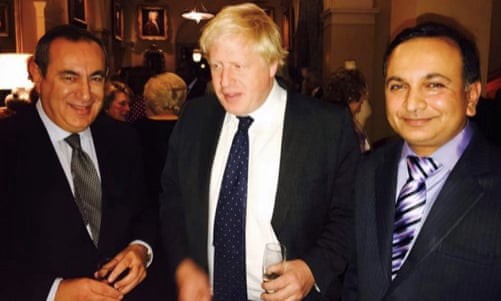
On October 19, 2017, Mifsud attended a fundraising dinner in Reading West, which was also attended by Alok Sharma and Boris Johnson, who was a guest speaker at the event. During this time, Mifsud met with both Sharma and Johnson, as Mifsud had planned to speak with Johnson about Brexit. Mifsud when then photographed with Johnson and Prasenjit Kumar Singh.
On October 27, 2017, Mifsud and Anna texted each other about Mifsud’s failing health.
On October 30, 2017, Rosalind S. Helderman and Carol D. Leonnig — with contributions from Tom Hamburger — published the article “Trump campaign adviser admitted to lying about Russian contacts” in The Washington Post.
On October 31, 2017, Stephanie Kirchgaessner, Claire Phipps and Kevin Rawlinson published the article “Joseph Mifsud: more questions than answers about mystery professor linked to Russia” in The Guardian. Anna also texted Mifsud and informed him that Alberto Nardelli had reached out to her to discuss her relationship with him.
ANNA: “Hello” 14:25
ANNA: “Someone from London journalist asks about you.” 14:26
JOSEPH MIFSUD: “Do not reply please” 15:23
ANNA: “so you do not get sick? and you were in Rome 2 days ago?” 16:58 — BuzzFeed News
The same day, Robert Mendick, Alec Luhn and Ben Riley-Smith published the article “Revealed: London professor at centre of Trump-Russia collusion inquiry says: ‘I have clear conscience’” in The Telegraph.
In November 2017, Mifsud disappeared from the public eye.
On November 1, 2017, Paolo G. Brera published the article “Russiagate, mystery professor Joseph Mifsud speaks out: ‘Dirt on Hillary Clinton? Nonsense’” in Repubblica.
On November 2, 2017, Mifsud stopped arriving at Link Campus University in Rome, having taken the advice of a colleague, Vincenzo Scotti, to relocate elsewhere in Italy.
On November 4, 2017, Carole Cadwalladr and Michael Savage published the article “Boris Johnson in spotlight as questions raised over Russian influence on UK” in The Guardian.
On November 9, 2017, Ali Watkins — with contributions from Josh Meyer and Naomi O’Leary — published the article “Mysterious Putin ‘niece’ has a name” in Politico.
On November 10, 2017, Sharon LaFraniere, David D. Kirkpatrick, Andrew Higgins and Michael Schwirtz — with contributions from Iliana Magra and Matt Apuzzo — published the article “A London Meeting of an Unlikely Group: How a Trump Adviser Came to Learn of Clinton ‘Dirt’” in The New York Times.
The same day, Tim Lister and Nic Robertson — with contributions from Frederick Pleitgen, Mary Ilyushina and Carol Jordan — published the article “Academic at heart of Clinton ‘dirt’ claim vanishes, leaving trail of questions” in CNN.
On November 11, 2017, Carole Cadwalladr published the article “Boris Johnson met ‘London professor’ linked to FBI’s Russia investigation” in The Guardian.
On November 23, 2017, Mifsud resigned from his position at the University of Stirling.
On January 1, 2018, Alberto Nardelli published the article “The Bio Of The Professor At The Center Of The Trump-Russia Probe Has DIsappeared From His University’s Website” in BuzzFeed News.
In October 2018, Dr. Roh sent a photograph of Mifsud, taken on May 21, 2018, to BuzzFeed News and The Associated Press, among many other organisations.
On November 12, 2018, Dr. Roh sent an e-mail to BuzzFeed News, where he informed the organisation that they were attempting to arrange a testimonial in front of the United States Senate for Mifsud.
On November 13, 2018, Alberto Nardelli published the article “Joseph Mifsud Wants To Testify Before The Senate, A Lawyer Claims” in BuzzFeed News.
In early 2018, Timofeev met with reporters from CNN in his Moscow office, where they discussed Papadopoulos and Mifsud’s meetings, and his own communications with Papadopoulos.
In January 2018, Simona met with Luke Harding and Stephanie Kirchgaessner of The Guardian, where they interviewed her about her visit from Team Mueller in October 2017.
On January 18, 2018, Luke Harding and Stephanie Kirchgaessner published the article “The boss, the boyfriend and the FBI: the Italian woman in the eye of the Trump-Russia inquiry” in The Guardian.
On February 10, 2018, the editorial board for Agrigento Notizie published the article “‘Unjustified compensation and damage to revenue’, sued ex presidents of the Cupa for trial”, which discussion Italy’s Prosecutor’s Office of the Court of Auditors suing Giuseppe Vella, Mifsud and Maria Immordino, with a court hearing scheduled for July 11, 2018.
On February 27, 2018, Alberto Nardelli published the article “The Professor At The Center Of The Trump-Russia Probe Boasted To His Girlfriend In Ukraine That He Was Friends With Russian Foreign Minister Sergey Lavrov” in BuzzFeed News.
On March 2, 2018, Alberto Nardelli published the article “Even Italian Prosecutors Can’t Find The Professor At The Center Of The Trump-Russia Probe” in BuzzFeed News.
On March 21, 2018, John Sweeney and Innes Bowen published the article “Joseph Mifsud: The mystery professor behind Trump Russia inquiry” in BBC News.
On April 18, 2018, Dr. Roh and Thierry Pastor released the book “The Faking of Russia-Gate: The Papadopoulos Case”.
On April 23, 2018, Inverhold Ltd.’s name was changed to The No Vichok Ltd. by Dr. Roh.
On May 21, 2018, Dr. Roh took a photograph of Mifsud in Roh’s office in Zurich, Switzerland using an iPhone.
On June 7, 2018, Marshall Cohen — with contributions from Mary Ilyushina and Tim Lister — published the article “‘Unprofessional’ Papadopoulos couldn’t deliver on promises, his Russian contact says” in CNN.
In August 2018, a reporter from The Associated Press visited Malta in an attempt to track down information about Mifsud and his whereabouts.
On August 13, 2018, a reporter from The Associated Press visited the home of Mifsud’s wife, Janet, who retreated into her home upon realising that the reporter was from the media.
On August 14, 2018, Janet sent an e-mail to the reporter from The Associated Press, where she stated that she had nothing to comment about.
On September 19, 2018, Janet filed for divorce from Mifsud.
On October 22, 2018, Raphael Satter — with contributions from Angela Charlton and Chris Mangion — published the article “Malta academic in Trump probe has history of vanishing acts” in The Associated Press.
Iraq says all evidence points to ‘malicious hands’ in protests
Press TV – October 7, 2019
Iraqi officials say there are “malicious hands” behind the killing of both protesters and security forces during the recent spate of unrest in Baghdad and some other cities.
Interior Ministry spokesman Saad Maan confirmed for the first time on Sunday that 104 people had been killed, including eight security officers, and more than 6,000 wounded in the protests.
Maan said the ministry was working with other government institutions to find out who was behind the killings. According to medical sources, the majority of protesters killed were struck by bullets.
The protests began last Tuesday, with demonstrators calling for better living conditions. The rallies soon turned into riots as some protesters started vandalizing public properties and attempted to enter the Green Zone in the capital Baghdad — which houses government offices and foreign diplomatic missions.
On Saturday night, armed elements and violent rioters attempted to take over local TV stations in Baghdad after the government removed a days-long curfew.
Maan said protesters burned 51 public buildings and eight political party headquarters but Iraqi security forces did not confront them.
According to the spokesman, most of those killed on Friday had been shot in the head or heart, a sign that skilled snipers had carried out the killings.
Officials say there are attempts at “sedition” from “unidentified snipers” who shot police and protesters indiscriminately.
“We can’t accept the continuation of the situation like this,” Prime Minister Adil Abdul-Mahdi told his Cabinet late Saturday. “We hear of snipers, firebombs, burning a policeman, a citizen.”
Parliament speaker Mohamed al-Halbousi echoed the premier’s remarks, saying that “infiltrators” were wreaking havoc. He said the parliament had formed a committee to investigate the matter.
Iraqi security officials have made it clear that their forces would not use lethal force against protesters unless their lives were in danger.
On Sunday night, at least 13 people were killed in clashes with security forces in a district of capital, where the military admitted some forces had violated the rules of engagement.
“Excessive force outside the rules of engagement was used and we have begun to hold accountable those commanding officers who carried out these wrong acts,” the military said in a statement.
There are unconfirmed reports that some foreign diplomatic missions are trying to keep the flames of the unrest alive by sending mercenaries into the ranks of protesters to cause more violence.
Lebanese newspaper Al Akhbar reported Saturday that Saudi Arabia’s Embassy in Baghdad had been hiring paid snipers to take out people and guards alike. The report made similar allegations against the US Embassy staff.
There were no immediate official reactions to the claims.
On Sunday, the Iraqi government announced a series of reforms after an “extraordinary” session overnight in response to the sweeping unrest.
The governor of the province of Baghdad, Fallah al-Jazairi, also stepped down and members of the provincial council accepted his resignation.
Confronted by its biggest challenge since coming to power just under a year ago, Abdul-Mahdi’s cabinet issued a decree including 17 planned reforms, such as land distributions and increased welfare stipends for needy families.
Authorities have asked protesters to give them time to implement reform. Grand Ayatollah Ali al-Sistani, the top Shia cleric of Iraq, on Friday urged security forces and protesters to avoid violence.
Iraq declared victory over the Daesh terrorist group at the end of 2017 — after nearly four years of conflict.
The violence comes as millions of Shia pilgrims are preparing to travel to the Iraqi holy cities of Najaf and Karbala to attend Arba’een ceremonies, marking the fortieth day after the martyrdom anniversary of their third Imam, Hussein ibn Ali (AS).
Iraq recently reopened its al-Qa’im border crossing with Syria and accused the occupying regime of Israel of orchestrating a string of recent drone strikes on Iraqi popular mobilization forces.
Tehran-based political analyst Hussein Sheikholeslam said Saturday the unrest is a product of US efforts to weaken “the resistance axis,” which is the key pillar of rising opposition to American and Israeli plans in the Middle East.
Hashd ready protect government, punish saboteurs
Iraqi Popular Mobilization Units (PMU), or Hashd al-Sha’abi, announced Monday that it is ready to help prevent “a coup d’etat or a rebellion” in the wake of the violence.
Faleh al-Fayyad, the PMU head and Iraq’s national security Adviser, told reporters that he wanted to see “the fall of corruption, not the fall of the government.”
He was referring to demands by some protesters for Abdul-Mahdi to step down in order to perform a complete overhaul of the country’s political system.
“We tell the enemies and the conspirators that their efforts have failed,” he said in a press conference. “We will defend the constitution and the government that we have established with our blood and our lives.”
Fayyad said eradicating corruption and achieving economic prosperity is only possible if the government stays in office.
“The government and on top of it the prime minister do their best to complete the transition,” Fayyad said. “In the absence of government security is lost and it is only within this framework that a solution can be reached.”
He also pledged a crushing response to those who perpetrated violence and killed and injured people.
“We know who is behind letting some saboteurs infiltrate the demonstrations,” he said, adding “we have footage and intelligence that we will present when time is appropriate.”
Iraqi PM discusses situation with Pompeo
Abdul-Mahdi’s office issued a statement on Monday, saying the prime minister had discussed the situation with US Secretary of State Mike Pompeo.
According to the statement, Abdul-Mahdi told the US top diplomat that the government was in full control and planning to continue taking practical steps to meet people’s demands.
Later, Russian Foreign Minister Sergei Lavrov arrived in Baghdad on what Moscow said was a two-day working trip.
Who’s been Trying to Destabilize Iraq?
By Valery Kulikov – New Eastern Outlook – 07.10.2019
The wave of protests that erupted across Iraq on October 1, according to a number of reports, resulted in dozens of civilian deaths and several hundred injured protesters. As it’s been reported by Al Arabiya TV station, human rights activists claim that at least a hundred people lost their lives in the course of the protests, while some 3 thousand got injured.
The unrest that was sparked by the frustration that local residents share over the massive corruption, high unemployment rates, frequent power outages and water shortages, would soon lead to demands for the resignation of the sitting government, followed by all sorts of other political demands. In spite of the attempts that local authorities make to restore order by imposing a curfew, the intensity of the protests wouldn’t die down. There’s tires burning in the streets, demonstrators assaulting airports and government buildings.
Egypt‘s Sasapost states that Iraq has not seen a mass movement as popular since the days Iraqis tried to repel the US attack on their country. Demonstrations have swept all the large cities of the country, except for those that remain in the hands of ISIS terrorists in the northern and western parts of the country.
Even though Al Jazeera alleges there’s no leader to head the protest movement, a number of Arab observers have already expressed their doubts about the validity of such allegations. In their opinion a “rebellion of the starving” doesn’t resemble an armed assault on the police and security forces, as there’s been reports about law enforcement units suffering losses.
Most protesters are young people under the age of 20. They can hardly be described as religious conservatives and it is difficult to suspect them of being influenced by clerics. Over the past few weeks their demands have underwent a major change and it’s clear that such a transition could only occur if they were under some sort of external influence. What started out as youth’s attempt to express frustration over the existing social policies would be hijacked by an angry mob chanting extreme political demands, like the replacement of the parliamentary republic with a presidential one, stepping down of Adil Abdul-Mahdi al-Muntafiki and his substitution with the former security chief General Abdul Wahab al-Saidi. All this goes in line with protesters chanting anti-Iranian slogans and burning Iranian flags. It is also noteworthy that those protests started in southern parts of the country mostly inhabited by the Shiites, as well as in Baghdad.
It’s clear that the increasingly anti-Iranian tone of the protests serves as yet another indicator of the possible involvement of external forces in the events that unfold in Iraq these days. Against this backdrop, it’s noteworthy that the Lebanese Al Akhbar recalls that last summer an informed source in the Iraqi military department predicted what was about to happen, while stating that Washington was extremely concerned about the growing influence of Iran in his country. In his opinion, such protests would serve as a warning served to the Iraqi authorities in a bid to prevent the two countries from leaning closer together.
It’s also noteworthy that a couple of weeks ago the sitting US Under Secretary of State for Civilian Security, Democracy, and Human Rights, Marshall Billingslea announced that the people of Iraq fell “victims” of the close ties that Baghdad and Tehran share.
However, the US is not the only player that would try combating Iran’s influence in Iraq, as Israel has been trying to achieve same end. Since mid-summer, both Israeli and US combat aircraft and drones have made over two dozen sorties, bombing a number of targets across Iraq from those near the border with Syria in the Al Anbar Governorate to those on the borderline with Iran. But primarily these air attacks were directed against the bases of the Iraqi Shia “people’s militia”, which has already been dubbed as “Iranian proxies” in the West.
Against this background, there was a visible increase in anti-American and anti-Israeli sentiments in Iraq, resulting in the shelling of the US embassy that was forced to suspend its work until the date when the curfew is lifted.
The moment chosen by the “external instigators” to stir the unrest is particularly noteworthy, as it coincides with the preparation for the Arba’een Pilgrimage made by millions of Iranians. This gathering is the commemoration of the memory of Husayn ibn Ali, the grandson of the Prophet Mohammad and the third Shia imam, who fell in combat together with his faithful comrades-in-arms in 680 at the hands of the caliph Yazid’s soldiers from the Umayyad dynasty. This year the pilgrimage to Iraq is bound to start in two weeks. The annual public gathering is no less important for millions of Shiites than the regular pilgrimage to Mecca for the rest of the Muslims of the planet: according to official Iraqi media, more than 22 million believers took part in the ceremony at the end of the 40-day mourning period following Ashura last year, making this gathering a couple of times more numerous that last year’s Hajj. To coordinate and facilitate the movement of Iranian pilgrims, Tehran sent its representatives to Iraq mere days before the protests broke out. This collaboration and other bilateral contacts between Iraq and Iran that are only getting more numerous are received rather enviously both in Washington and Tel-Aviv.
However, as protests started taking an anti-Iranian turn, Tehran was forced to close two border checkpoints with Iraq (Khosravi and Khazabekh), that are commonly used by Shia traveling to Iraq to visit the shrines of Shia imams.
There’s little doubt that by sabotaging this year’s Shia pilgrimage those forces behind the protests will increase the frustration of the populations of Iraq and Iran. But this is precisely what certain anti-Iranian forces are aspiring to achieve, primarily in the United States and Israel, in order to increase the scale of their military operations in Iraq, while Baghdad is busy dealing with the unrest.
Former CIA Chief Brennan Unblinkingly Rewrites Entire Basis Of US Judicial System In One Short Sentence
By Tyler Durden – Zero Hedge – 10/06/2019
The presumption of innocence, as a foundation of the US judicial system, has seemingly been under attack since November 8th 2016. An allegation is made, media runs with the narrative, the seed of possibility of guilt is implanted in the minds of zombie Americans, and the accused is maligned forever – no court required. Simple.
And now, none other than former CIA Director John Brennan clarifies exactly how the deep state sees “due process”…
In an interview on MSNBC, Brennan, unblinkingly states that “people are innocent, you know, until alleged to be involved in some kind of criminal activity.”
And not even a skip of a beat from the MSNBC anchors.
Some have suggested, in Brennan’s defense, that he was being sarcastic, or even joking, but nothing in his delivery suggests that and furthermore, it’s not the smartest thing to say given the goings on at the margin of the legal system and the death–by-allegation media narratives that are swarming around the enemies of his deep-state attack.
Of course, we should by now know full well how to treat anything that comes out of Brennan’s mouth…
Utterly without value.
Corruption in Journalism
By Peter Van Buren | We Meant Well | September 30, 2019
 Columnist Max Boot in the Washington Post put into writing what we have all known for some time: real journalism, Jefferson’s informed citizenry and all that, is dead. The job has shifted to aspirational writing, using manipulated droplets of facts and just plain made-up stuff to drive events.
Boot (pictured) writes to drive Trump from office and overturn the 2016 election.
Max Boot: “Much of my journalism for the past four years has been devoted to critiquing President Trump and opposing the spread of Trumpism. But no matter how many columns or sound bites I produce, he remains in office… I am left to ask if all my work has made any difference.”
Boot has spent the last years creating and circle-supporting others who create false narratives. They manufacture reasons for Trump to resign, to press Democrats to impeach, or at last resort, to influence voters they otherwise hold in contempt for not knowing what’s good enough for them. We kind of figured this out after senior staff at the New York Times had to remind reporters they were “not part of the f*cking resistance,” but it is helpful to see it in daylight. After all, democracy dies in the darkness.
The uber-false narrative Max and others Frankensteined into existence was Russiagate. Trump wasn’t the Manchurian Candidate and there was no quid pro quo for Russian election help. Yet the media literally accused the president of treason by melding together otherwise unrelated truthlets — Trump wanted a hotel in Moscow, some ads were run on Facebook — that could be spun into a narrative to bring Trump down. Correlation was made into causation in a purposeful freshman Logic 101 fail. What was true was of little consequence; what mattered was whether the media could collectively create a story the rubes would believe, and then pile on.
The critical flaw in Russiagate (other than it didn’t happen) was the media creating an end-point they could not control. Robert Mueller was magic-wanded into the Last Honest Man, the Savior of Democracy, as the narrative first unfolded and then fell apart like a cardboard box in the rain. After his dismal testimony there was nowhere for the story to go.
This autumn’s empty box of a narrative is upgraded to play out without end: Trump is manipulating domestic and foreign policy for personal gain via… hotel fees.
At first glance it seems like a non-starter. Trump’s hotels are as much a part of him as the extra pounds he carries. He campaigned as a CEO and announced early on he was not going to divest. But with the first cold slap of Trump’s election victory a narrative was being shaped: Trump could not become president because of his business conflicts of interest; it was danged unconstitutional.
Early proponents of this dreck dug around in the Constitution’s closet and found the Emoluments Clause, a handful of lines intended to bar office holders from accepting gifts from foreign sovereigns, kings, and princes to prevent influence buying. Pre-Trump, the last time the issue was in actual contention was with President Martin Van Buren (no relation) over gifts from the Imam of Muscat.
The media ran with it. They imagined out of whole cloth any foreign government official getting a room at any Trump hotel was a “gift.” Then they imagined whatever tiny percentage of that room profit which actually went to Trump himself represented a bribe. Then they imagined despite the vast complexity of U.S. relations, Trump would alter course because some guy rented a room. It was Joker-like in its diabolicalness, the presidency itself merely a prank to hide an international crime spree. Pow!
It was also ridiculous on its face, but they made it happen. The now-defunct leftist site Think Progress ran what might be Story Zero before Trump even took office. An anonymous source claimed the Kuwaiti Ambassador canceled a major event at one hotel to switch to Trump’s own DC hotel under pressure. It all turned out to be untrue. “Do you think a reception of two hours in the Trump hotel is going to curry favors with the administration when we host thousands of U.S. troops in Kuwait? When we have in the past and still do support American operations in Afghanistan and Iraq?” the Kuwait ambassador asked when someone got around to his side of the story. But no matter, the narrative was set.
Then it grew. Though the Emoluments Clause is quite specific, the media decided every time anyone stayed at a Trump property it was corruption. Even when Trump visited one of his own homes it was corruption because the Secret Service paid Trump for the privilege. Of course the Secret Service has always paid for the facilities used in their work because the government cannot commandeer private property or accept free rooms (which, ironically, could be seen as a bribe), not from Marriott and not from the Trump Organization. Even Joe Biden still has to charge the Secret Service rent on a cottage he owns, so they can protect him when he’s home in Delaware.
More? T-Mobile booked nine rooms at a Trump hotel, in media hive minds ostensibly to influence federal approval of a $26 billion merger. Those rooms were worth about $2700. Of course the president, who can influence the Dow with a tweet, prefers to make his illegal money off jacked up hotel bills. Think small has always been a Trump trademark.
Reuters headlined how foreigners were buying condos from third party owners (i.e., not Trump or his company), but they were in a Trump-managed building and maybe the monthly maintenance fees would qualify as mini-emoluments? Trump was accused of “hiding” foreign government income at his hotels when servers at the bar failed to ask cash customers if they were potentates or princes (the headline: “Trump Organization Says It’s ‘Not Practical’ to Comply With the Emoluments Clause.”)
And of course that Air Force crew staying at a Trump place in Scotland. No matter that the hotel forged its relationship with a nearby airport long before Trump became president, or that the Air Force had used the airport and hotel hundreds of times before Trump became president (going back to WWII), and or that a decision by the Pentagon to have flights stop more frequently there was made under the Obama administration, nope, none of that stopped the media from proclaiming corruption. One piece speculated the $166 a night the Air Force pays for rooms was always part of Trump’s cornerstone financial plan for the floundering multi-million golf course.
But to see how much the corruption narrative really is a media creation, you have only to compare it to how the MSM covered what might have been a similar question in the past. Imagine if journalists had treated every appearance by Obama as a book promotion. What if each speech was slandered across the channels as corruption, Obama just out there pimping his books? Should he have been impeached for commercializing the office of president?
Follow the money, as Maddow likes to say. The Trump Organization pays to the Treasury all profits from foreign governments. In the 2018, $191,000. The year before the amount was $151,470. So Trump’s in-pocket profit is zero.
Meanwhile Obama’s profit as an author during his time in office was $15.6 million (he’s made multiples more since, including a $65 million book advance.) In the two weeks before he was inaugurated, Obama reworked his book deals to take advantage of his new status. He agreed not to publish another non-fiction book during his time in office to keep anticipation high, while signing a $500,000 advance for a young adult version of Dreams From My Father.
Obama’s books were huge sellers in China, where publishing is largely government controlled, meaning Obama likely received Chicom money in the Oval Office. Obama’s own State Department bought $79,000 worth of his books to distribute as gifts.
As with Trump, nothing Obama did was illegal. There are no laws per se against a president making money. Yet no one bothered to raise ethical questions about Obama. No one claimed he sought the presidency as a bully ATM machine. No one claimed his frequent messaging about his father was designed to move books. No one held TV hearings on his profits or into how taxpayer funds were used to buy his books. It’s not “everybody does it” or “whataboutism,” it is why does the media treat two very similar situations so very differently?
Max Boot confessed why. The media has created a pitch-and-toss game with Democrats, running false, exaggerated or shallowly-reported stories to generate calls for hearings, which in turn breath life into the corruption stories they live off. Max Boot and his ilk are doing a new job. Journalism to them is for resistance, condemnation, arousal, and regime change. And that’s one way democracy does die.
Spooks Turned Spox: US Media Now Filled With Former Intelligence Agents
By Tyler Durden – Zero Hedge – 10/05/2019
After years in the shadows overseeing espionage, kill programs, warrantless wiretapping, entrapment, psyops and other covert operations, national security establishment retirees are are turning to a new line of work where they can carry out their imperial duties.
That is, propagandizing the public on cable news. Reborn as cable news pundits, these people are cashing in. So many years working in the dark, only to emerge in the studio lights of the same networks that rail all day everyday against state TV from countries that America hates.
I’m talking about people like…
Below is but a partial list of prominent former spooks turned mainstream media pundits and analysts, to say nothing of the even greater numbers of retired generals the network continuously rely on.
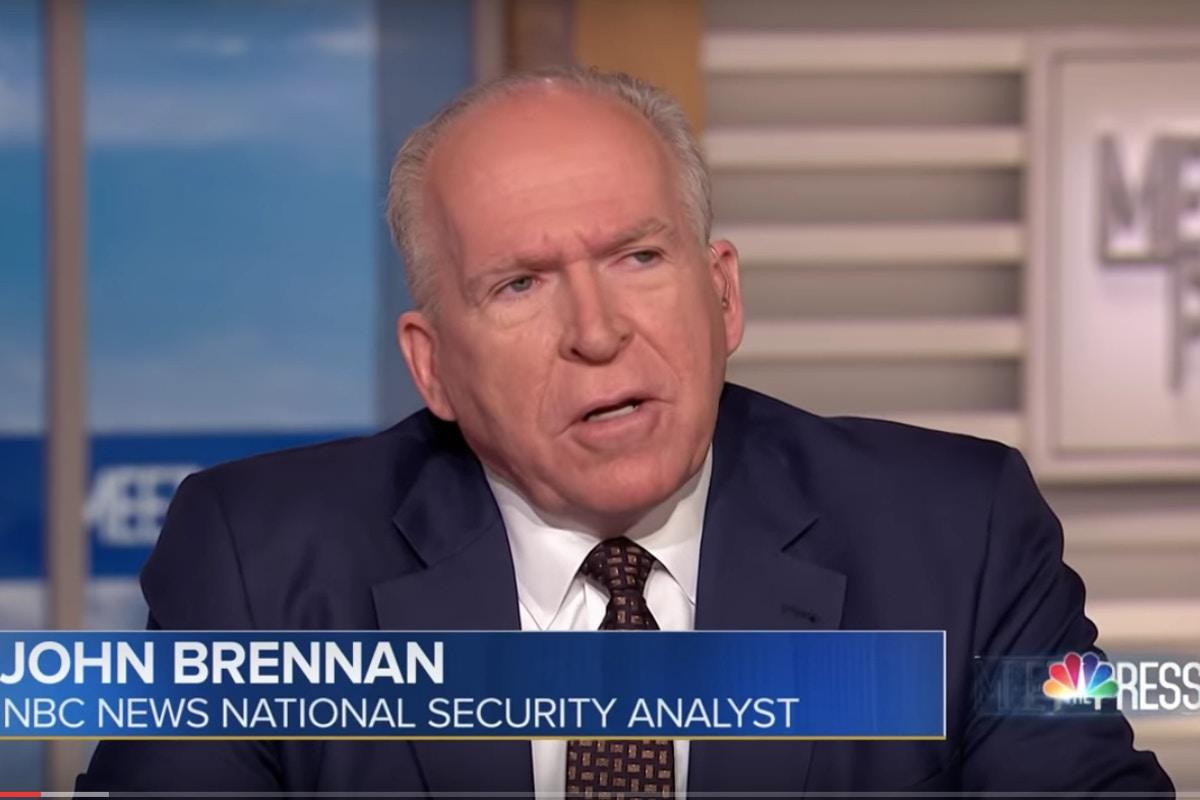
Former CIA Director John Brennan who is now an NBC News senior national security and intelligence analyst.
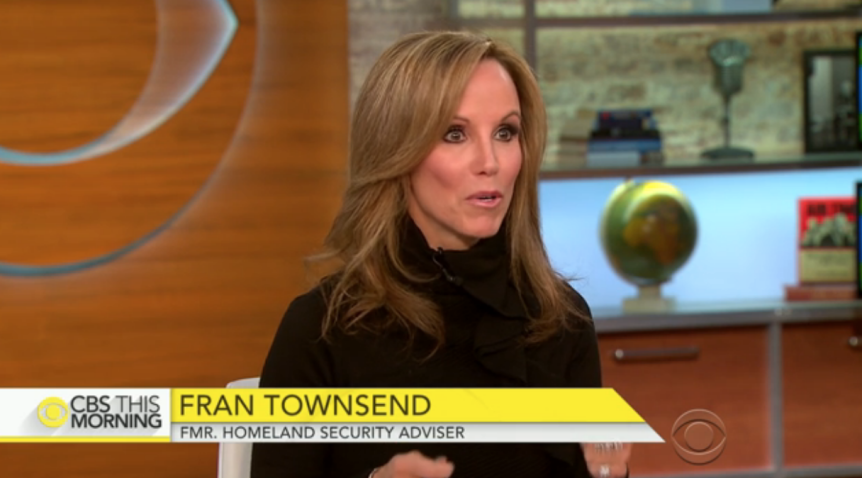
Fran Townsend, former homeland security advisor to George W. Bush. She’s now a CBS News senior national security analyst.
But CNN takes the cake — it’s the biggest spook show of all.
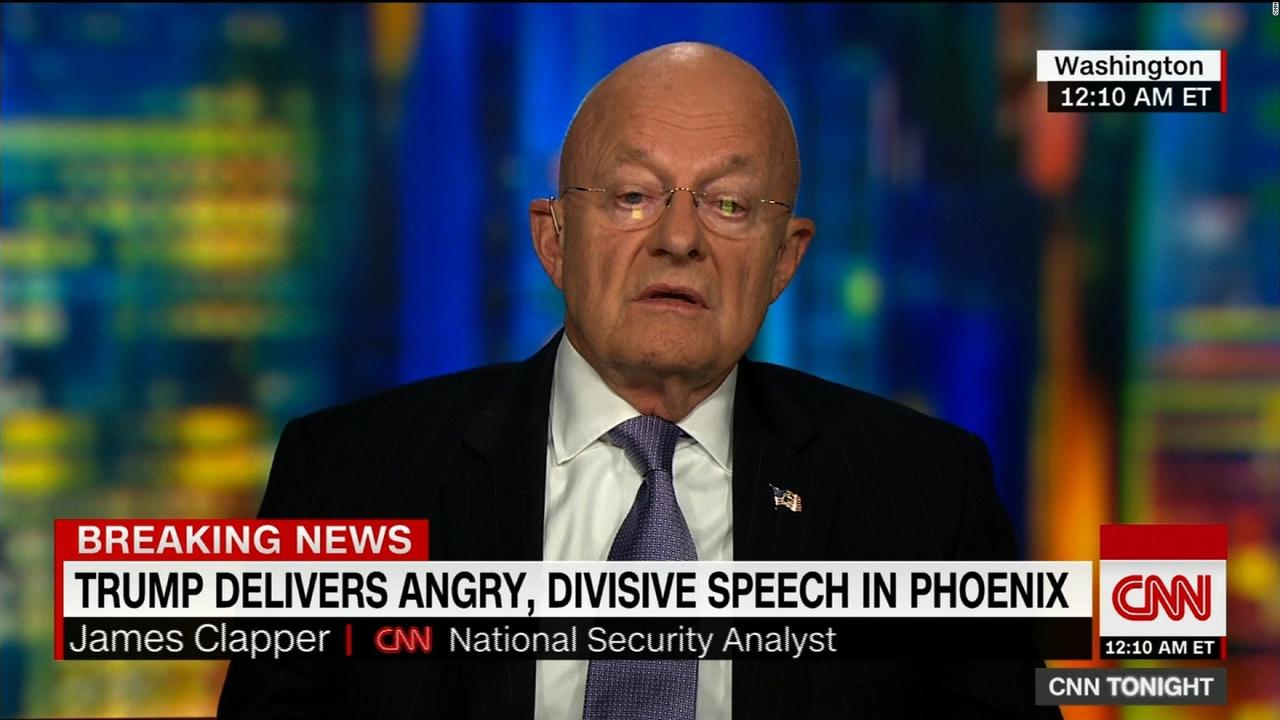
Jim Clapper, former Director of National Intelligence, now a CNN national security analyst.

Retired General Michael Hayden, former director of the CIA and the NSA, now a CNN national security analyst.
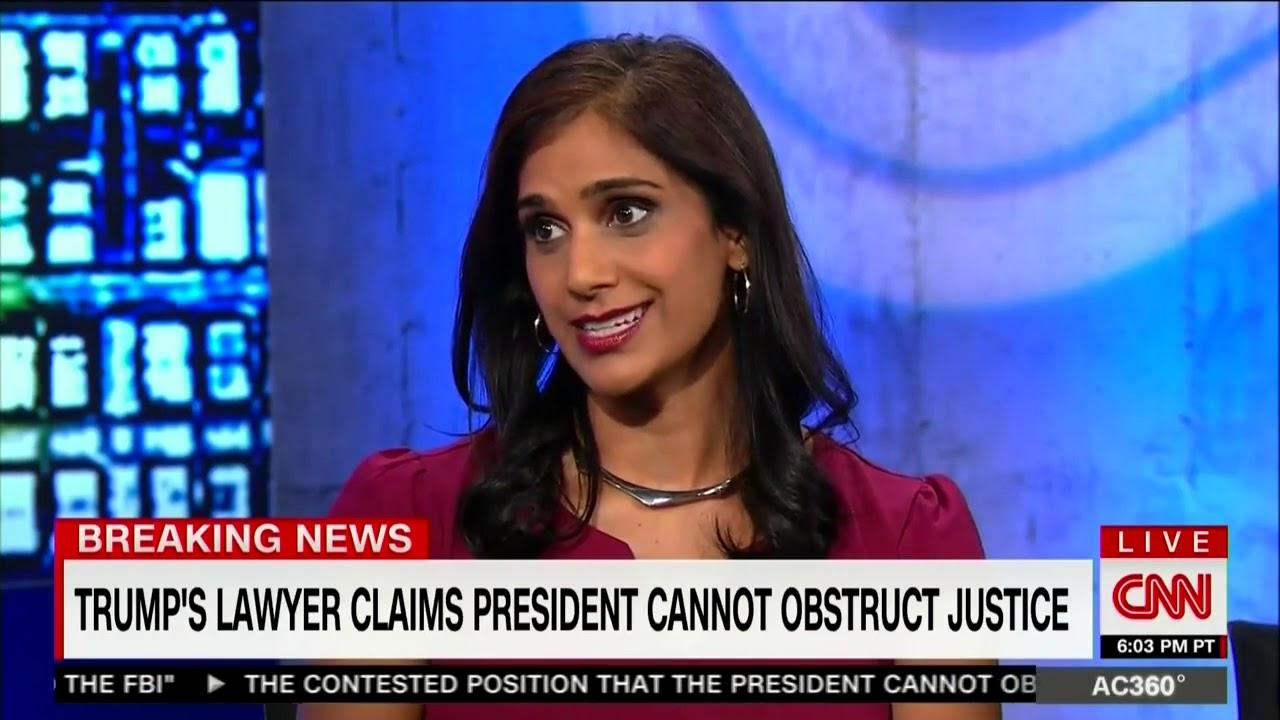
Asha Rangappa, former FBI special agent, now CNN legal analyst.

James Gagliano, a retired FBI supervisory special agent, now a CNN law enforcement analyst.
Tony Bliken, former deputy secretary of state and former deputy national security advisor, and now CNN global affairs analyst.
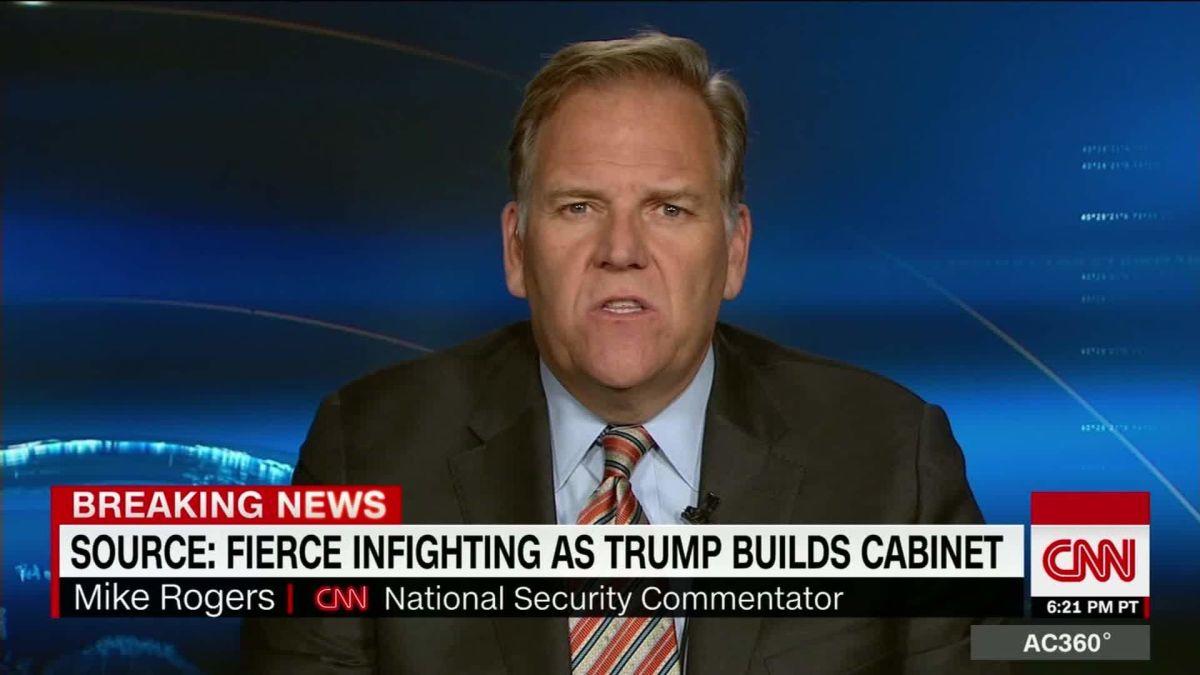
Mike Rogers, former chair of the House Intelligence Committee, now CNN national security commentator.
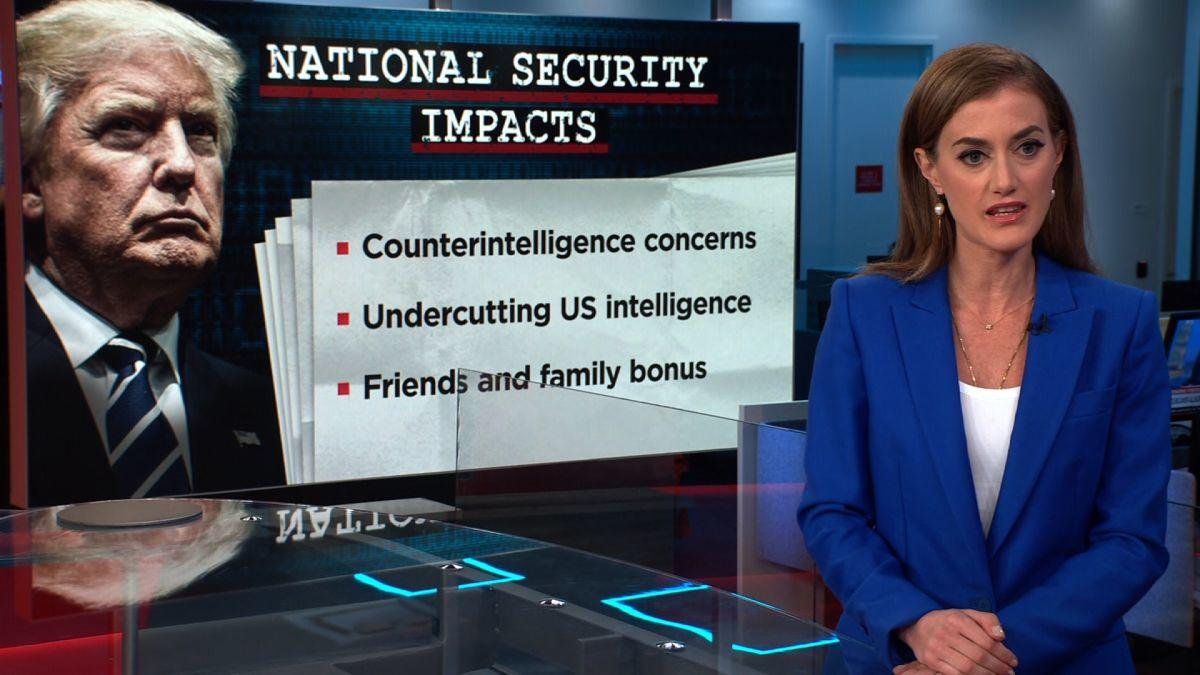
Samantha Vinograd senior advisor to the national security advisor under President Obama, now CNN national security analyst.
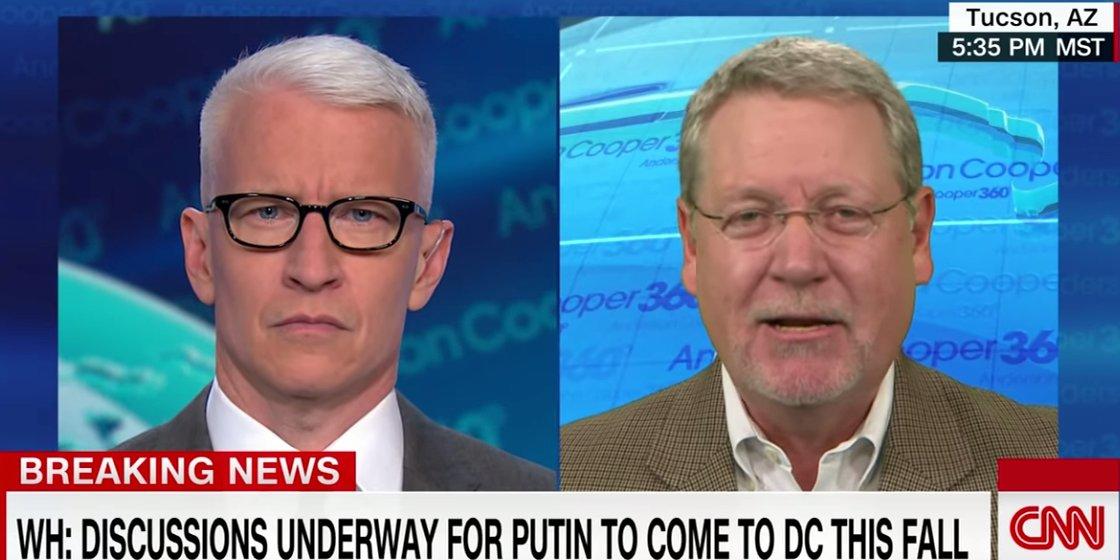
Steven Hall, retired CIA chief of Russia operations, now a CNN national security analyst.
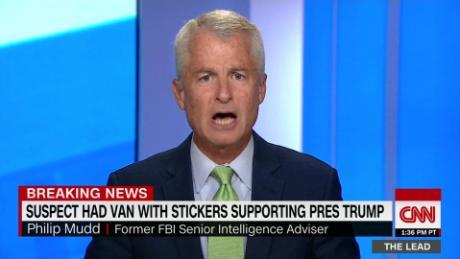
Philip Mudd, former CIA counter-terrorism official, now CNN counter-terrorism analyst.
* * *
…Welcome to the spook show!
The Campaign to Stop William Barr
By Daniel Lazare | Strategic Culture Foundation | October 5, 2019
The furor over Donald Trump’s July 25 phone call to Volodymyr Zelensky has not been easy to figure out. Contrary to initial reports, the president said nothing about a quid pro quo, and he didn’t push the Ukrainian president to “dig up dirt” on Joe Biden either. All he did according to the official transcript was ask Kiev to look into his activities, and all Zelensky did in response was guarantee that any such investigation “will be done openly and candidly.” An honest inquiry into a politician who cheerfully confessed to forcing out a prosecutor looking into his son’s company – what’s wrong with that?
But now the mystery is solved. The uproar is not about Trump lawyer Rudy Giuliani investigating the former vice president. It’s about William Barr investigating Russiagate, which is far more important.
This became clear early this week when the New York Times reported that Trump had also phoned Australian Prime Minister Scott Morrison and asked him to cooperate with the attorney general. Suddenly, Giuliani and Biden were forgotten as the rest of corporate media screamed themselves hoarse. “Democrats’ worst fears about William Barr are proving correct,” declared the Washington Post. “AG Bill Barr finds himself ‘neck deep’ in Trump scandal,” said MSNBC. The Daily Beast called for his impeachment while the Guardian accused him of nothing less than attempting to “rewrite the history of the 2016 US presidential election.”
This was cheeky coming from a newspaper that tried to rewrite history itself by falsely accusing imprisoned whistleblower Julian Assange of meeting with Trump campaign manager Paul Manafort in connection with stolen Democratic Party emails.
But it was all nonsense. Trump’s crimes – waging war on Yemen, blockading Iran, attempting to starve Venezuela into submission, etc. – are almost beyond enumeration. But this is not one of them. Despite the cries of outrage, he did nothing wrong in phoning up Scott Morrison, and neither did Barr in flying to London and Rome to seek their cooperation. Indeed, both men would have been remiss if they didn’t.
The reason is that Australia, Italy, and the UK are as central to Russiagate, the pseudo-scandal that dominated US headlines for two and a half years, as the Ukraine is to l’Affaire Biden. After all, it was an Anglo-Maltese academic named Joseph Mifsud who told Trump campaign aide George Papadopoulos that Russia had “dirt” on Hillary Clinton in the form of “thousands of emails,” and it was Aussie diplomat Alexander Downer, a self-described “warrior for the Western alliance,” who elicited the news from Papadopoulos at a London wine bar and then triggered a formal investigation by informing the FBI.
It was an ex-British intelligence agent named Christopher Steele who sent the press into a frenzy when someone leaked his phony “golden showers” dossier in January 2017. It was ex-British intelligence chief Sir Richard Dearlove who coached Steele on how to spread word of his “findings,” and it was a long-time US intelligence agent named Stefan Halper, a colleague of Dearlove’s at Cambridge University, who flew Papadopoulos to London so he could pepper him with leading questions:
“It’s great that Russia is helping you and the campaign, right, George? George, you and your campaign are involved in hacking and working with Russia, right? It seems like you are a middleman for Trump and Russia, right? I know you know about the emails.”
“I don’t know what the fuck you’re talking about,” Papadopoulos says he replied. If he had taken the bait on the other hand, the FBI might have charged him with collusion and forced him to wear a wire so he could entrap other Trump campaign officials as well.
As for Italy, that’s where Mifsud has reportedly been holed up since early 2017. Anyone wishing to get to the bottom of Russiagate would want to know who is protecting him – and hopefully Rome will now help Barr find out.
Russiagate was one of the most bizarre episodes in modern political history, a wide-ranging disinformation campaign aimed at driving a legally-elected president out of office. The Times, WaPo, MSNBC, and the Guardian were all neck deep in the scandal, and now they’re neck deep in the cover up by attempting to deep-six the official Department of Justice investigation into how Russiagate began before it is even completed. If they get away with it, the big loser will be the public– and democracy as well.
State Funded Propagandists Claim Anti-War Journalists Are State-Funded Propagandists
By Alan MacLeod | American Herald Tribune | October 5, 2019
Investigative journalism website Bellingcat released a bombshell report September 30, that claimed to uncover a network of “pro-Assad media” infiltrating Western journalism. The author, Charles Davis, alleged there was a “shadowy group” connected to the government of Syria that was financing the careers of both left- and right-wing journalists, bloggers and news outlets that toed an Assadist line. Named in the report as effective agents of Damascus were the likes of Wikileaks founder Julian Assange, investigative journalists Max Blumenthal, Rania Khalek and Whitney Webb, news outlets like MintPress News and independent journalists such as Caitlin Johnstone. Even the Green Party’s 2016 Vice-Presidential candidate Ajamu Baraka was framed as an Assad puppet. Thus, virtually the entire gamut of Western antiwar voices on Syria was declared to be deceiving the public, feeding them Syrian propaganda.
These are extraordinary claims. Yet the evidence provided was far from extraordinary. Indeed, the base of the evidence given was that many of these figures had accepted awards from a US-based organization dedicated, in their own words to “integrity in journalism” which, Davis insists, is a front to spread Assadist propaganda. Despite the lack of concrete evidence, the article caused waves on social media, with many seeing it as final proof of a worldwide conspiracy.
What Davis did not divulge, however, as was quickly pointed out by many he pointed the finger at, including Mint Press’ Mnar Muhawesh, was that Bellingcat itself is directly funded by some extremely shady organizations, including the Open Society Foundation and the US government’s National Endowment for Democracy (NED). That is the same NED that is currently bankrolling the protests in Hong Kong and has organized regime change operations in Nicaragua and Venezuela.
The NED was established as a buffer organization between the CIA and the organizations it was sponsoring. “It would be terrible for democratic groups around the world to be seen as subsidized by the CIA,” NED President Carl Gershman told the New York Times in 1986. “We saw that in the Sixties, and that’s why it has been discontinued.” One of the NED’s founders, Allen Weinstein, was even more frank: “A lot of what we do today was done covertly 25 years ago by the CIA”, he told the Washington Post.
Davis’ report was met with scathing criticism by those who it named as Assad agents.
“I find it terribly ironic that an article that accused MintPress and other anti-war news sites and journalists of receiving “shady state-linked funding” was published on Bellingcat, a site funded by the US government – currently an occupying power in Syria – and Google – the tech behemoth currently working overtime to censor independent media” replied Whitney Webb, when asked by the American Herald Tribune for a response to the allegations, adding that the attempt to paint the Serena Shim Award as “shady” was “quite dishonest” as the cash prize is funded by an all-American political action committee that opposes US interventionism abroad.
Max Blumenthal appeared equally unconcerned with the allegations. “I’ll take a token award from an anti-war non-profit over a byline in an interventionist PR operation literally backed by a CIA cutout that destabilizes socialist and independent nations around the globe any day” he told the American Herald Tribune, adding that “it almost seems that Charles Davis’ entire life is dedicated to attacking and denigrating me. He literally does nothing else”.
If Webb, Blumenthal and others are correct, this latest article is little more than an attempt to denigrate anti-imperialist, anti-war voices, along the lines of what the Atlantic Council has attempted to do. Since 2016, the Council, an offshoot of NATO, has published a series of investigations called “the Kremlin’s Trojan Horses” claiming virtually every political party in Europe that does not fully embrace neoliberal economics and an aggressive policy towards Russia is secretly infiltrated by and directed from Moscow. These parties include Labour and UKIP in the UK, PODEMOS in Spain, Syriza and Golden Dawn in Greece and the Lega Nord in Italy.
The Atlantic Council’s board of directors is a who’s who of neocon, interventionist foreign policy planners including Henry Kissinger, ex-Bush officials like Condoleezza Rice, Colin Powell and James Baker, Generals like David Petraeus and Wesley Clark, and a host of ex-CIA directors and senior tech executives. It was this organization that Facebook announced it was teaming up with to fight fake news. Thus, the Council is helping the social media giant to decide what America (and the rest of its 2.4 billion users) sees in their news feeds and what is likely Russian-sponsored fake news. When an organization like this decides what is news and what is not, it is state censorship by any other name. As soon as this partnership was in place, Facebook began deleting news and media channels from Iranian and Latin American (particularly Venezuelan) media that contradicted NATO’s official line on their countries. And Facebook was already working closely with the Israeli government to silence Palestinian voices on its platform.

Eliot Higgins. Credit: Ars Electronica/ flickr
Bellingcat’s founder, Eliot Higgins, for the record, was a senior fellow at the Atlantic Council between 2016 and 2019, where he published purportedly expert and independent reports into Russian aggression in Ukraine. Yet Bellingcat continues to present itself as a neutral observer in the cyberwar between Russia and the West.
And that is the trick. Under the guise of protecting us from supposedly extensive foreign, state-funded propaganda campaigns, we are, ourselves, being exposed to an even bigger, Western state-funded propaganda campaign, the extent of which is far greater than even the most lurid Russian fantasies of Bellingcat. Last year, for instance, it was exposed that the UK secret services have infiltrated media across Europe, building up “clusters” of sympathetic journalists in many nations in order to push certain lines crucial to their perceived interests. This “Integrity Initiative” as it is known, sprung into action in Spain, using their journalists to stir up a storm of controversy that managed to block the appointment of Colonel Pedro Baños to the position of head of Spanish national security. Baños, the Initiative had decided, was not sufficiently warlike on Russia, and needed to be blocked. Yet this blatant interference in foreign politics received scant attention in corporate media.
Ultimately, there is a new information war being waged in cyberspace, and the lesson to be drawn from this affair is to be very cautious of those decrying Russian propaganda while not also warning against the power of Google and the NSA, or calling for the release of whistleblowers like Chelsea Manning, Edward Snowden and Julian Assange. Cyberspace is the new battleground; and in war, truth is always the first casualty.
Alan MacLeod is a member of the Glasgow University Media Group. His latest book, Bad News From Venezuela: 20 Years of Fake News and Misreporting, was published by Routledge in April.
The Deep State Goes Shallow: A Reality-TV Coup d’état in Prime Time
By Edward Curtin | February 21, 2019
This article was first published on February 21, 2017, one month after Donald Trump was sworn in as president, more than two-and-a half years ago. What was true then is even truer now, and so I am reprinting it with this brief introduction since I think it describes what is happening in plain sight today. Now that years of Russia-gate accusations have finally fallen apart, those forces intent on driving Trump from office have had to find another pretext. Now it is Ukraine-gate, an issue similar in many ways to Russia-gate in that both were set into motion by the same forces aligned with the Democratic Party and the CIA-led Obama administration. It was the Obama administration who engineered the 2014 right-wing, Neo-Nazi coup in Ukraine as part of its agenda to undermine Russia. A neo-liberal/neo-conservative agenda. This is, or should be, common knowledge. Obama put it in his typically slick way in a 2015 interview with CNN’s Fareed Zakiria, saying that the United States “had brokered a deal to transition power in Ukraine.” This is Orwellian language at its finest, from a warmonger who received the Nobel Prize for Peace while declaring he was in support of war. That the forces that have initiated a new and highly dangerous Cold War, a nuclear confrontation with Russia, demonized Vladimir Putin, and have overthrown the elected leader of a country allied with Russia on its western border, dares from the day he was elected in 2016 to remove its own president in the most obvious ways imaginable seems like bad fiction. But it is fact, and the fact that so many Americans approve of it is even more fantastic. Over the past few years the public has heard even more about the so-called “deep state,” only to see its methods of propaganda become even more perversely cynical in their shallowness. No one needs to support the vile Trump to understand that the United States is undergoing a fundamental shift wherein tens of millions of Americans who say they believe in democracy support the activities of gangsters who operate out in the open with their efforts to oust an elected president. We have crossed the Rubicon and there will be no going back.
“In irony a man annihilates what he posits within one and the same act; he leads us to believe in order not to be believed; he affirms to deny and denies to affirm; he creates a positive object but it has no being other than its nothingness.” – Jean-Paul Sartre
It is well known that the United States is infamous for engineering coups against democratically elected governments worldwide. Voters’ preferences are considered beside the point. Iran and Mosaddegh in 1953, Arbenz in Guatemala in 1954, Indonesia and Sukarno in 1965-7, Allende in Chile in 1973, to name a few from the relatively distant past. Recently the Obama administration worked their handiwork in Honduras and Ukraine. It would not be hyperbolic to say that overthrowing democratic governments is as American as apple pie. It’s our “democratic” tradition – like waging war.
What is less well known is that elements within the U.S. ruling power elites have also overthrown democratically elected governments in the United States. One U.S. president, John F. Kennedy, was assassinated because he had turned toward peace and opposed the forces of war within his own government. He is the lone example of a president who therefore was opposed by all the forces of imperial conquest within the ruling elites.
Others, despite their backing for the elite deep state’s imperial wars, were taken out for various reasons by competing factions within the shadow government. Nixon waged the war against Vietnam for so long on behalf of the military-industrial complex, but he was still taken down by the CIA, contrary to popular mythology about Watergate. Jimmy Carter was front man for the Tri-Lateral Commission’s deep-state faction, but was removed by the group represented by George H. Bush, William Casey, and Reagan through their traitorous actions involving the Iran hostages. The emcee for the neo-liberal agenda, Bill Clinton, was rendered politically impotent via the Lewinsky affair, a matter never fully investigated by any media.
Obama, CIA groomed, was smoothly moved into power by the faction that felt Bush needed to be succeeded by a slick smiling assassin who symbolized “diversity,” could speak well, and played hoops. Hit them with the right hand; hit them with the left. Same coin: Take your pick – heads or tails. Hillary Clinton was expected to complete the trinity.
But surprises happen, and now we have Trump, who is suffering the same fate – albeit at an exponentially faster rate – as his predecessors that failed to follow the complete script. The day after his surprise election, the interlocking circles of power that run the show in sun and shadows – what C. Wright Mills long ago termed the Power Elite – met to overthrow him, or at least to render him more controllable. These efforts, run out of interconnected power centers, including the liberal corporate legal boardrooms that were the backers of Obama and Hillary Clinton, had no compunction in planning the overthrow of a legally elected president. Soon they were joined by their conservative conspirators in doing the necessary work of “democracy” – making certain that only one of their hand-picked and anointed henchmen was at the helm of state. Of course, the intelligence agencies coordinated their efforts and their media scribes wrote the cover stories. The pink Pussyhats took to the streets. The deep state was working overtime.
Trump, probably never having expected to win and as shocked as most people when he did, made some crucial mistakes before the election and before taking office. Some of those mistakes have continued since his inauguration. Not his derogatory remarks about minorities, immigrants, or women. Not his promise to cut corporate taxes, support energy companies, oppose strict environmental standards. Not his slogan to “make America great again.” Not his promise to build a “wall” along the Mexican border and make Mexico pay for it. Not his vow to deport immigrants. Not his anti-Muslim pledges. Not his insistence that NATO countries contribute more to NATO’s “defense” of their own countries. Not even his crude rantings and Tweets and his hypersensitive defensiveness. Not his reality-TV celebrity status, his eponymous golden tower and palatial hotels and sundry real estate holdings. Not his orange hair and often comical and disturbing demeanor, accentuated by his off the cuff speaking style. Surely not his massive wealth.
While much of this was viewed with dismay, it was generally acceptable to the power elites who transcend party lines and run the country. Offensive to hysterical liberal Democrats and traditional Republicans, all this about Trump could be tolerated, if only he would cooperate on the key issue.
Trump’s fatal mistake was saying that he wanted to get along with Russia, that Putin was a good leader, and that he wanted to end the war against Syria and pull the U.S. back from foreign wars. This was verboten. And when he said nuclear war was absurd and would only result in nuclear conflagration, he had crossed the Rubicon. That sealed his fate. Misogyny, racism, support for Republican conservative positions on a host of issues – all fine. Opposing foreign wars, especially with Russia – not fine.
Now we have a reality-TV president and a reality-TV coup d’etat in prime time. Hidden in plain sight, the deep-state has gone shallow. What was once covert is now overt. Once it was necessary to blame a coup on a secretive “crazy lone assassin,” Lee Harvey Oswald. But in this “post-modern” society of the spectacle, the manifest is latent; the obvious, non-obvious; what you see you don’t see. Everyone knows those reality-TV shows aren’t real, right? It may seem like it is a coup against Trump in plain sight, but these shows are tricky, aren’t they? He’s the TV guy. He runs the show. He’s the sorcerer’s apprentice. He wants you to believe in the illusion of the obvious. He’s the master media manipulator. You see it but don’t believe it because you are so astute, while he is so blatant. He’s brought it upon himself. He’s bringing himself down. Everyone who knows, knows that.
I am reminded of being in a movie theatre in 1998, watching The Truman Show, about a guy who slowly “discovers” that he has been living in the bubble of a television show his whole life. At the end of the film he makes his “escape” through a door in the constructed dome that is the studio set. The liberal audience in a very liberal town stood up and applauded Truman’s dash to freedom. I was startled since I had never before heard an audience applaud in a movie theatre – and a standing ovation at that. I wondered what they were applauding. I quickly realized they were applauding themselves, their knowingness, their insider astuteness that Truman had finally caught on to what they already thought they knew. Now he would be free like they were. They couldn’t be taken in; now he couldn’t. Except, of course, they were applauding an illusion, a film about being trapped in a reality-TV world, a world in which they stood in that theatre – their world, their frame. Frames within frames. Truman escapes from one fake frame into another – the movie. The joke was on them. The film had done its magic as its obvious content concealed its deeper truth: the spectator and the spectacle were wed. McLuhan was here right: the medium was the message.
This is what George Trow in 1980 called “the context of no context.” Candor as concealment, truth as lies, knowingness as stupidity. Making reality unreal in the service of an agenda that is so obvious it isn’t, even as the cognoscenti applaud themselves for being so smart and in the know.
The more we hear about “the deep state” and begin to grasp its definition, the more we will have descended down the rabbit hole. Soon this “deep state” will be offering courses on what it is, how it operates, and why it must stay hidden while it “exposes” itself.
Right-wing pundit Bill Krystal tweets: “Obviously [I] prefer normal democratic and constitutional politics. But if it comes to it, [I] prefer the deep state to Trump state.”
Liberal CIA critic and JFK assassination researcher, Jefferson Morley, after defining the deep state, writes, “With a docile Republican majority in Congress and a demoralized Democratic Party in opposition, the leaders of the Deep State are the most – perhaps the only – credible check in Washington on what Senator Bob Corker (R-Tenn.) calls Trump’s “wrecking ball presidency.”
These are men who ostensibly share different ideologies, yet agree, and state it publically, that the “deep state” should take out Trump. Both believe, without evidence, that the Russians intervened to try to get Trump elected. Therefore, both no doubt feel justified in openly espousing a coup d’etat. They match Trump’s blatancy with their own. Nothing deep about this.
Liberals and conservatives are now publically allied in demonizing Putin and Russia, and supporting a very dangerous military confrontation initiated by Obama and championed by the defeated Hillary Clinton. In the past these opposed political factions accepted that they would rotate their titular leaders into and out of the White House, and whenever the need arose to depose one or the other, that business would be left to deep state forces to effect in secret and everyone would play dumb.
Now the game has changed. It’s all “obvious.” The deep state has seemingly gone shallow. Its supporters say so. All the smart people can see what’s happening. Even when what’s happening isn’t really happening.
“Only the shallow know themselves,” said Oscar Wilde.
New study finds slim evidence for apocalyptic warnings about red meat
RT | October 4, 2019
A new study has found slim to nonexistent evidence for apocalyptic warnings about red meat consumption causing cancer, and the scientific establishment hell-bent on turning humanity vegan for environment’s sake is now outraged.
A team of 14 researchers from seven countries looked at over 130 articles and a dozen randomized trials, concluding that evidence linking the consumption of red and processed meat to cancer, heart disease, and mortality was of low quality and unreliable. Their findings were published in the Annals of Internal Medicine, a publication of the American College of Physicians, last week – to howls of protest from the scientific and nutritional establishment.
“This report has layers of flaws and is the most egregious abuse of evidence that I have ever seen,” declared Walter Willett, professor of epidemiology and nutrition at the Harvard School of Public Health.
Harsh words, to be sure, especially since one of the study’s authors is Gordon Guyatt, a professor of medicine at McMaster University in Canada and one of the creators of GRADE, a strict methodology for assessing the certainty of scientific evidence.
Guyatt said the reactions to the study are approaching levels of what he would call “hysteria.”
“If you’re the emperor, and somebody points out that you haven’t any clothes, this is not going to be a very appealing situation,” he said. “It’s very threatening, and people are defending their territory.”
Indeed, Willett is a leading member of the EAT-Lancet Commission, which advocates for a plant-based diet for the sake of the environment – and Harvard is the institution behind the infamous “food pyramid,” used for decades by the US government to advise its citizens to eat less meat and fat in favor of grains and carbohydrates.
Those guidelines have been a smashing success – in driving up the rates of obesity and diabetes, that is. If you want to see a real “hockey stick” graph, look at the percentage of overweight Americans skyrocket since 1980, when the US government began promoting the Harvard food pyramid.
The study also comes at the worst possible time for the scientific establishment, right amid its global crusade against farming and ranching in the name of saving the planet. One after another, scientists have argued that raising cattle destroys forests and releases carbon, so humanity must change its way of eating to focus on vegetables and insects – by force, if need be.
Some governments have already imposed a “meat tax” on behalf of the environment, and there has even been talk of outlawing meat for promoting “ecocide” and being as dangerous to public health as smoking.
No surprise, then, that Harvard has attacked the study as ignoring the environmental impact of meat, because “climate change and environmental degradation have serious effects on human health” and are therefore “important to consider when making recommendations.”
One California public health official echoed the same line of reasoning in a comment to the Annals of Internal Medicine, arguing the research shouldn’t have been written, let alone published, “without concern for the environmental effects of food choices.”
“Please let us, as physicians, wake up to the fact, that our climate crisis poses the most profound risk to individuals and public health and that we have a responsibility in guiding the public on how to confront this threat: in part, with food choices,” wrote Henning Ansor of Santa Barbara.
In other words, it doesn’t matter if the science is solid, the higher moral calling demands that the scientists lie – or stay silent – in the name of Mother Earth? That’s not how science works. That’s not how any of this works.
Featured Video
10K More U.S. Troops Deploy as Trump Weighs New Iran Strikes
or go to
Aletho News Archives – Video-Images
From the Archives
Genetic baloney in thick slices
MAYBE COULD BE INC.
By Jon Rappoport | No More Fake News | July 8, 2021
Gene research companies tend to come and go. They start out banging and popping like fireworks in the sky, and then they fade out—selling themselves to larger outfits who’ve hired better liars…
Once upon a time, it sounded easy. Start with a disease, find the gene responsible for the disease, and correct the problem.
Then, researchers wondered, was disease the result of one gene or a group of genes acting together?
Either way, the proof would be in devising cures for diseases using gene therapy. “Not yet, but soon…”
And regardless, the major need was: money. Lots and lots of money.
This need required good PR people. “We have to pump up the idea that we’re on the edge of tremendous breakthroughs. We’re always on that edge…”
This hype also needed to obscure the fact that there wasn’t (and isn’t) ANY gene cure for ANY disease. … continue
Blog Roll
 Aletho News
- UK Government Body Kept Files on People Criticizing Prevent Program
- US military withdrawal from Iraq and the collapse of US-Israeli hegemonic project in West Asia
- What does Europe want – a war with Russia?
- She Followed the Actual Data on COVID Vaccines and Masks — Her Career Took a Huge Hit
- Florida AG Sues Pfizer, Bourla Over Deceptive Marketing of COVID Vaccines
- Von der Leyen gifts her spin doctor a job for life
- 10K More U.S. Troops Deploy as Trump Weighs New Iran Strikes /Suliaman Ahmed
- Iranian crew declared Dena training vessel ‘unarmed’ to US warship before deadly torpedo strike: Report
- Iran’s NPT debate moves beyond parliament
- Houthis condemn Saudi claims of attack on Medina
- If Americans Knew
- Israel is squeezing the life out of Palestinians – Daily Update
- The Israeli Right Portrays Islam as Murderous. It Serves a Political Purpose
- Jordan Has Had Enough: King Abdullah’s Scathing Warning to Israel
- Israeli Colonizers (i.e. Settlers) Kill Palestinian Man Near Salfit
- New Google Maps images reveal massive scale of devastation in Gaza
- Jewish supremacy, anti-Palestinian bigotry on display in Israel – Daily Update
- Israeli Soldiers Abduct At Least 22 Across Occupied West Bank
- Eight Palestinians Killed in Israeli Attacks on Gaza
- Israeli former leaders and security chiefs threaten legal action over ‘Jewish terrorism’
- Israel map in LA Times ad includes all land from the river to the sea
- No Tricks Zone
- Green Energy Debacle: German Expert Professor Fritz Vahrenholt Warns Of Severe Economic And Social Consequences
- Two More Paleo Reconstructions Affirm Meters-Higher Sea Levels Across Ireland, Brazil 7000-6000 Years Ago
- New Study: Earth And Venus Surface Warmth Largely Explained By Convection And Lapse Rate, Not CO2 Or Radiation
- 2025 Nature Paper Claiming Worsening Global Drought Gets RETRACTED …Heavily Flawed
- New Study: ‘Global Drought Shows No Detectable Recent Acceleration Under Climate Warming’
- Economic Masterminds: German Socialists Suggest Taxing Productivity Gains Stemming From Using AI
- The South China Sea Has Not Been Cooperating With The Climate Change Narrative
- Energy Crisis: Germany Enters Heating Season With Historically Low Gas Reserve Fill Levels
- New Study: The Antarctic Ice Sheet Gained Mass From 2020-2024 Due To Staggering Snow And Ice Accumulation
- Study: Ocean Heating Rates From Thousands Of Years Ago ‘Dwarf’ Modern Ocean Heating Rates

