In an exclusive interview with Kathimerini, Syrian President Bashar al-Assad denied that the Syrian Army used chemical weapons against civilians, while taking aim at both Turkish President Recep Tayyip Erdogan and US President Donald Trump.
Saying that Syria gave up its chemical arsenal in 2013, Assad said the
“Western narrative started after the victory of the Syrian Army, not before.”
He accused Erdogan of being “affiliated” with the Muslim Brotherhood Islamist movement and called Turkish troops “terrorists” over their intervention in Afrin.
As for Trump, who has called Assad an “animal,” the Syrian leader said it did not bother him “because I deal with the situation as a politician, as a president.”
Alexis Papachelas: There have been accusations from the US and the Europeans about the use of chemical weapons, and there was an attack after that. What is your response to that? Was there a chemical attack? Were you responsible for it?
President Bashar al-Assad: First of all, we don’t have a chemical arsenal since we gave it up in 2013, and the international agency for chemical weapons conducted investigations about this, and it’s clear or documented that we don’t have any. Second, even if we did have, we wouldn’t use them, for many different reasons. But let’s put these two points aside, let’s presume that this army has chemical weapons and it’s in the middle of the war; where should it be used? At the end of the battle? They should use it somewhere in the middle, or where the terrorists made an advancement, not where the army finished the battle and the terrorists gave up and said, “We are ready to leave the area,” and the army is fully in control of that area. So the Western narrative started after the victory of the Syrian Army, not before. When we finished the war, they said, “They used chemical weapons.”
Second, the use of weapons of mass destruction (WMD) in a crammed area with a population like Douma – the supposed area, it’s called Douma and they talk about 45 victims – when you use WMD in such an area, you should have hundreds or maybe thousands of victims. Third, why do all the chemical weapons – the presumed or supposed chemical weapons – only kill children and women? They don’t kill militants. If you look at the videos, it’s completely fake. I mean, when you have chemical weapons, how could the doctors and nurses be safe, dealing with the chemical atmosphere without any protective clothes, without anything, just throwing water at the victims, and the victims become OK just because you washed them with water. So, it’s a farce, it’s a play, it’s a very primitive play, just to attack the Syrian Army, because… Why? That’s the most important part: When the terrorists lost, the US, France, the UK and their other allies who want to destabilize Syria lost one of their main cards, and that’s why they had to attack the Syrian Army, just to raise the morale of the terrorists and to prevent the Syrian Army from liberating more areas in Syria.
AP: Are you saying that there was a chemical attack and someone else is responsible, or that there was nothing there?
PBA: That’s the question, because the side who said – allegedly – that there was a chemical attack, had to prove that there was an attack. We have two scenarios: Either the terrorists had chemical weapons and they used them intentionally, or maybe there were explosions or something, or there was no attack at all, because in all the investigations in Douma, people said, “We didn’t have any chemical attack, we didn’t see any chemical gas or smell any,” and so on. So, we don’t have any indications about what happened. The Western narrative is about that, so that question should be directed at the Western officials who said there was an attack. We should ask them: Where is your concrete evidence about what happened? They only talk about reports. Reports could be allegations. Videos by the White Helmets – the White Helmets are funded by the British Foreign Office – and so on.
AP: In a tweet, US President Donald Trump described you as “animal Assad.” What is your response?
PBA: Actually, when you are president of a country, you have first of all to represent the morals of your people before representing your own morals. You are representing your country. Does this language represent the American culture? That is the question. This is very bad, and I don’t think so. I don’t think there’s a community in the world that has such language. Second, the good thing about Trump is that he expresses himself in a very transparent way, which is very good in that regard. Personally, I don’t care, because I deal with the situation as a politician, as a president. It doesn’t matter for me personally; what matters is whether something would affect me, would affect my country, our war, the terrorists, and the atmosphere that we are living in.
AP: He said “mission accomplished in Syria.” How do you feel about that?
PBA: I think maybe the only mission accomplished was when they helped ISIS escape from Raqqa, when they helped them, and it was proven by video, and under their cover. The leaders of ISIS escaped Raqqa, going toward Deir ez-Zor just to fight the Syrian Army. The other mission accomplished was when they attacked the Syrian Army at the end of 2016 in the area of Deir ez-Zor when ISIS was surrounding Deir ez-Zor, and the only force was the Syrian Army. The only force to defend that city from ISIS was the Syrian Army, and because of the Americans’ – and of course their allies’ – attack, Deir ez-Zor was on the brink of falling into the hands of ISIS. So, this is the only mission that was accomplished. If he’s talking about destroying Syria, of course that’s another mission accomplished. While if you talk about fighting terrorism, we all know very clearly that the only mission the United States has been carrying out in Syria is supporting the terrorists, regardless of their names, or the names of their factions.
AP: He also used such language with the North Korean leader, and now they’re going to meet. Could you potentially see yourself meeting with Trump? What would you tell him if you saw him face to face?
PBA: The first question you should ask is: What can you achieve? The other: What can we achieve with someone who says something before the campaign, and does the opposite after the campaign, who says something today, and does the opposite tomorrow, or maybe in the same day? So, it’s about consistency. Do they have the same frequency every day, or the same algorithm? So, I don’t think that in the meantime we can achieve anything with such an administration. A further reason is that we don’t think the president of that regime is in control. We all believe that the deep state, the real state, is in control, or is in control of every president, and that is nothing new. It has always been so in the United States, at least during the last 40 years, at least since Nixon, maybe before, but it’s becoming starker and starker, and the starkest case is Trump.
AP: When will you accomplish your mission, given the situation here in Syria now?
PBA: I have always said, without any interference, it will take less than a year to regain stability in Syria; I have no doubt about that. The other factor is how much support the terrorists receive, which is something I cannot tell you, because I cannot predict the future. But as long as it continues, time is not the main factor. The main factor is that someday, we’re going to end this conflict and we’re going to reunify Syria under the control of the government. When? I cannot say. I hope it’s going to be soon.
AP: There has been some criticism lately, because you apparently have a law that says that anybody who doesn’t claim their property within a month cannot come back. Is that a way to exclude some of the people who disagree with you?
PBA: No, we cannot dispossess anyone of their property by any law, because the constitution is very clear about the ownership of any Syrian citizen. This could be about the procedure. It’s not the first time we have had such a law just to replan the destroyed and the illegal areas, because you’re dealing with a mixture of destroyed and illegal suburbs in different parts of Syria. So, this law is not about dispossessing anyone. You cannot, I mean even if he’s a terrorist. Let’s say, if you want to dispossess someone, you need a verdict by the judicial system – you cannot make it happen by law. So, there’s either misinterpretation of that law, or an intention, let’s say, to create a new narrative about the Syrian government in order to rekindle the fire of public opinion in the West against the Syrian government. But about the law, even if you want a procedure, it’s about the local administration, it’s about the elected body in different areas, to implement that law, not the government.
AP: It is clear that your biggest allies in this fight are Russia and Iran. Are you worried they might play too important a role in the future of the country after this war is over?
PBA: If you talk about my allies as a president, they are the Syrian people. If you talk about Syria’s allies, of course they’re the Iranians and the Russians. They are our strongest allies, and of course China that supported us politically in the Security Council. As for them playing an important role in the future of the country, these countries respect Syria’s sovereignty and national decision making and provide support to insure them. Iran and Russia are the countries which respect Syria’s sovereignty the most.
AP: It’s been a few years since you visited Greece. Your father had a very close relation with some of the Greek political leaders. How have the relations been between Greece and Syria these days, and what kind of message would you like to send to the Greek people?
PBA: At the moment, there are no formal relations between Syria and Greece; the embassies are closed, so there are no relations. At the same time, Greece wasn’t aggressive towards what happened in Syria. It always supported a political solution, it never supported war or attacks against Syria. You didn’t play any role to support the terrorists, but at the same time, as a member – and an important member – of the EU, you couldn’t play any role, let’s say, in refraining the other countries from supporting the terrorists, violating the international law by attacking and besieging a sovereign country without any reason, without any mandate by the Security Council. So, we appreciate that Greece wasn’t aggressive, but at the same time, I think Greece has to play that role, because it’s part of our region. It is part of the EU geographically, but it’s a bridge between our region and the rest of Europe, and it’s going to be affected, and it has been affected by the refugee situation, and terrorism now has been affecting Europe for the last few years, and Greece is part of that continent. So, I think it’s normal for Greece to start to play its role in the EU in order to solve the problem in Syria and protect the international law.
AP: How about Turkey? Turkey invaded part of your country. You used to have a pretty good relationship with President Recep Tayyip Erdogan. How is that relationship now after the Turkish invasion?
PBA: First of all, this is an aggression, this is an occupation. Any single Turkish soldier on Syrian soil represents occupation. That doesn’t mean the Turkish people are our enemies. Only a few days ago, a political delegation visited from Turkey. We have to distinguish between the Turks in general and Erdogan. Erdogan is affiliated with the Muslim Brotherhood. Maybe he’s not organized, but his affiliation is toward that ideology, I call it this dark ideology. And for him, because, like the West, when the terrorists lost control of different areas, and actually they couldn’t implement the agenda of Turkey or the West or Qatar or Saudi Arabia, somebody had to interfere. This is where the West interfered through the recent attacks on Syria, and this is where Erdogan was assigned by the West, mainly the United States, to interfere, to make the situation complicated, again because without this interference, the situation would have been resolved much faster. So, it’s not about personal relations. The core issue of the Muslim Brotherhood anywhere in the world is to use Islam in order to take control of the government in your country, and to create multiple governments with this kind of relationship, like a network of Muslim Brotherhoods, around the world.
AP: At an election campaign rally this week, he said that he’s going to order another incursion into Syria. How are you going to respond to that if it happens?
PBA: Actually, Erdogan has supported the terrorists since the very beginning of the war, but at that time, he could hide behind words like “protecting the Syrian people,” “supporting the Syrian people,” “supporting the refugees,” “we are against the killing,” and so on. He was able to appear as a humanitarian president, let’s say. Now, because of these circumstances, he has to take off the mask and show himself as the aggressor, and this is the good thing. So, there is no big difference between the head of the Turkish regime sending his troops to Syria and supporting the terrorists; this is his proxy. So, we’ve been fighting his army for seven years. The difference between now and then is the appearance; the core is the same. At that time, we couldn’t talk about occupation – we could talk about supporting terrorists – but this time we can talk about occupation, which is the announcement of Erdogan that he’s now violating the international law, and this could be the good part of him announcing this.
AP: But how can you respond to that?
PBA: First of all, we are fighting the terrorists, and as I said, the terrorists for us are his army, they are the American army, the Saudi army. Forget about the different factions and who is going to finance those factions; at the end of the day, they work for one agenda, and those different players obey one master: the American master. Erdogan is not implementing his own agenda; he’s only implementing the American agenda, and the same goes for the other countries in this war. So, first of all, you have to fight the terrorists. Second, when you take control of more areas, you have to fight any aggressor, any army. The Turkish, French, whoever, they are all enemies; as long as they came to Syria illegally, they are our enemies.
AP: Are you worried about a third world war starting here in Syria? I mean, you have the Israelis hitting the Iranians here in your own country. You have the Russians, you have the Americans. Are you concerned about that possibility?
PBA: No, for one reason: Because fortunately, you have a wise leadership in Russia, and they know that the agenda of the deep state in the United States is to create a conflict. Since Trump’s campaign, the main agenda was against Russia, create a conflict with Russia, humiliate Russia, undermine Russia, and so on. And we’re still in the same process under different titles or by different means. Because of the wisdom of the Russians, we can avoid this. Maybe it’s not a full-blown third world war, but it is a world war, maybe in a different way, not like the second and the first, maybe it’s not nuclear, but it’s definitely not a cold war; it’s something more than a cold war, less than a full-blown war. And I hope we don’t see any direct conflict between these superpowers, because that is where things are going to get out of control for the rest of the world.
AP: Now, there’s a very important question about whether Syria can be a unified, fully sovereign country again. Is that really possible after all that has happened?
PBA: It depends on what the criteria of being unified or not is. The main factor to have a unified country is to have unification in the minds of the people, and vice versa. When those people look at each other as foreigners, they cannot live with each other, and that is where you’re going to have division. Now, let’s talk about facts and reality – not my opinion, I can tell you no, it’s not going to be divided, and of course we’re not going to accept that, but it’s not about my will or about my rhetoric, to say we’re going to be unified; it’s about the reality.
The reality, now, if you look at Syria during the crisis, not only today, since the very beginning, you see all the different spectrums of the Syrian society living with each other, and better than before. These relationships are better than before, maybe because of the effect of the war. If you look at the areas under the control of the terrorists, this is where you can see one color of the Syrian society, which is a very, very, very narrow color. If you want to talk about division, you have to see the line, the separation line between either ethnicities or sects or religions, something you don’t see. So, in reality, there’s no division till this moment; you only have areas under the control of the terrorists. But what led to that speculation? Because the United States is doing its utmost to give that control, especially now in the eastern part of Syria, to those terrorists in order to give the impression that Syria cannot be unified again. But it’s going to be unified; I don’t have any doubt about that.
AP: But why would the US do that if you’re fighting the same enemy: Islamic terrorism?
PBA: Because the US usually has an agenda and it has goals. If it cannot achieve its goals, it resorts to something different, which is to create chaos. Create chaos until the whole atmosphere changes, maybe because the different parties will give up, and they will give in to their goals, and this is where they can implement their goals again, or maybe they change their goals, but if they cannot achieve it, it’s better to weaken every party and create conflict, and this is not unique to Syria. This has been their policy for decades now in every area of this world.
AP: Looking back, do you feel you’ve made any mistakes in dealing with this crisis and the civil war, when it started?
PBA: If I don’t make mistakes, I’m not human; maybe on a daily basis sometimes. The more you work, the more complicate the situation, the more mistakes you are likely to make. But how do you protect yourself as much as possible from committing mistakes? First of all, you consult the largest proportion of the people, not only the institutions, including the parliament, syndicates, and so on, but also the largest number of people, or the largest part of society, to participate in every decision.
While if you talk about the way I behaved toward, or the way I led, let’s say, the government or the state during the war, the main pillars of the state’s policy were to fight terrorism – and I don’t think that fighting terrorism was wrong, to respond to the political initiatives from different parties externally and internally regardless of their intentions, to make a dialogue with everyone – including the militants, and finally to make reconciliation. So, about the pillars of our policy, I think the reality has proven that we were right. As for the details, of course, you always have mistakes.
AP: How much is it going to cost to reconstruct this country, and who is going to pay for that?
PBA: Hundreds of billions, the minimum is 200 billion, and according to some estimates it’s about 400 billion dollars. Why is it not precise? Because some areas are still under the control of the terrorists, so we couldn’t estimate precisely what the figure is. So, this is plus or minus, let’s say.
AP: There has been a lot of speculation. For example, people say in order for a political solution to be viable, you might have to sacrifice yourself for the good of the country. Is that something that has crossed your mind?
PBA: The main part of my future, as a politician, is two things: my will and the will of the Syrian people. Of course, the will of the Syrian people is more important than my will, my desire to be in that position or to help my country or to play a political role, because if I have that desire and will and I don’t have the public support, I can do nothing. After seven years of me being in that position, if I don’t have the majority of the Syrian people’s support, how could I hold it for more than seven years now, with all this animosity from the strongest and the richest countries? Who supports me? If the Syrian people are against me, how can I stay? So, when I feel that the Syrian people do not want me to stay anymore, of course I have to leave without any hesitation.
AP: A lot of blood has been spilt. Can you see yourself sitting across from the opposition and sharing power in some way?
PBA: When you talk about blood, you have to talk about who spilt that blood. I was president before the war for 10 years. Had I been killing the Syrian people for 10 years? No, definitely not. So, the conflict started because somebody, first of all part of the West, supported those terrorists, and they bear the responsibility for this war. So first of all the West, who provided military and financial support and political cover, and who stood against the Syrian people, who impoverished the Syrian people and created a better atmosphere for the terrorists to kill more Syrian people. So, part of the West, mainly France, UK, and US, and also Saudi Arabia and Qatar and Turkey are responsible for this part. Of course blood has been spilt – it’s a war – but who’s responsible? Those who are responsible should be held accountable.
In an article on 3rd May, the Guardian journalist, Luke Harding, made the following rather amusing observation:
“Since the Skripals were found stricken on a park bench, Downing Street has stuck to one version of events. Theresa May says it is ‘highly likely’ Moscow carried out the attack using a Soviet-made nerve agent. Only the Kremlin had the motive to kill its former officer, she argues.”
The funny part, in case you didn’t spot it, was his claim that Downing Street has stuck to one version of events. He is of course correct, but what he doesn’t tell his readers is that this one version of events has had a plethora of sub-narratives attached to it, none of which have been able to remotely support the main thesis. Sticking to one version of events is reasonable only inasmuch as that version can be supported by facts. On the other hand, if the version of events being stuck to is not supported by the facts, or if the “facts” constantly change, or if the “facts” are contradictory, then sticking to it is a measure not of reasonableness, as Mr Harding implies, but rather of absurdity, folly and irrationality.
G. K. Chesterton once cautioned us against the propensity towards indefinite scepticism:
“Merely having an open mind is nothing. The object of opening the mind, as of opening the mouth, is to shut it again on something solid.”
This is very true. But there is another, equally insidious, ditch which must be avoided. Let’s put it like this:
“Closing your mind too quickly can be worse than nothing. The object of closing the mind, as of closing the mouth, is to make sure that when you do, you have something solid inside.”
So is the narrative that Downing Street closed on so quickly after the incident solid? Does it stand up to scrutiny? Let’s see.
The Claim
The basic claim of the UK Government is as follows:
On 4th March 2018, Sergei and Yulia Skripal were poisoned by a military-grade nerve agent, which had been put on the handle of Mr Skripal’s front door in Christie Miller Road, Salisbury. The substance used was A-234 (a Novichok agent), which is said to be around 5-8 times more lethal than VX (just 10 milligrams of VX on the skin can be lethal). It had been placed there by a person or persons either working on behalf of the Government of the Russian Federation, or who had somehow managed to come into possession of the substance from stocks controlled by the Russian Government.
As Mr Harding implies, it’s all very straightforward. So let’s test it.
What would you have expected to happen?
The basic question one must ask is as follows: Given the scenario outlined in the Government claim, what would you have expected to happen? Here are four basic things one would reasonably have expected:
3. A massive manhunt, both in Salisbury and in the rest of the country, especially in respect of the couple who appeared on a CCTV camera in Market Walk, of whom it was originally claimed were the Skripals, but who were clearly not the Skripals.
4. Mr Skripal’s house entirely closed off, with surrounding streets immediately evacuated, and the parts of Salisbury City Centre where the pair were known to have visited also evacuated.
What actually happened?
So much for what we would have expected to see. Now, more than two months after the incident, we can ask the question: What actually happened?
1. After they allegedly came into contact with the very lethal A-234 nerve agent, far from dying on the spot, Sergei and Yulia Skripal spent the next four hours driving into the City Centre, having a drink, and then going for a meal. They then sat on a bench, and at some point thereafter exhibited what appeared to be hallucinations, suggestive of poisoning by an opioid or non-lethal chemical weapon, rather than a nerve agent.
2. Rather than being hospitalised for months and suffering irreparable damage to their central nervous systems, just over four weeks later, Yulia Skripal telephoned her cousin, Viktoria, and assured her several times that “Everything is okay”. Crucially, she stated that “Everyone’s health is fine, there are no irreparable things.”
3. There has been no manhunt, and the couple who appeared on the CCTV camera in Market Walk have not been identified publicly, nor have there been any appeals for information about them.
4. Far from the streets around the house being evacuated, many photographs show police officers without any protective clothing standing just a few feet away from the door handle, which allegedly still had A-234 of “high purity” on it. Neither was the City Centre evacuated, but people who thought they might have come into contact with the substance were advised by Public Health England (PHE) to wash their clothing in a washing machine, and wipe personal items such as phones, handbags and other electronic items with cleansing or baby wipes.
What Would Holmes Have Made of it?
If you laid all that out in front of Sherlock Holmes – the claims, the expectations, and the reality – and asked him what he made of it, he would no doubt reply along the following lines:
“On the assumption that the substance known as A-234 is several times more toxic than VX, which all credible references to it claim that it is, then given that the Skripals did not die on the spot, and having survived do not appear to have any of the lasting and irreparable side-effects of being poisoned by this substance, it can be stated with reasonable certainty that they were not poisoned by it. Furthermore, given the symptoms that they displayed on the bench, according to eye-witness testimony, in all probability, Mr Skripal and Yulia were poisoned by a substance which can cause hallucinations, such as the opioid, Fentanyl, or an incapacitating, but non-lethal, chemical such as 3-Quinuclidinyl benzilate (BZ). This theory is given credence by the fact that Salisbury District Hospital originally believed the incident to be a case of Fentanyl poisoning.”
What Would Holmes do Next?
Having used the known facts to establish beyond reasonable doubt that the Skripals were not poisoned by A-234, what would Holmes do next?
The obvious thing would be to interview both Sergei and Yulia Skripal, since both are apparently alive and well. He would want to gather details about their movements on the morning of 4th March 2018, and whether they saw anyone acting suspiciously either near the house, or at the bench. He would want to know why Mr Skripal apparently became highly agitated in Zizzis. And he would of course want to find out from Mr Skripal about who he had dealings with in the weeks prior to the incident.
So what, you might ask, would he make of it if he found out that nobody, including him, was allowed to see Mr Skripal or Yulia? What, you might ask, would he make of the fact that nothing has been heard of Detective Sergeant Nick Bailey since his release from hospital more than six weeks ago? What, you might ask, would he make of the fact that there has been not one single police or press report looking into any of these things?
Holmes being Holmes, he would of course want to retain an open mind for as long as possible. But in the absence of any credible explanation for these oddities, or for the huge disparity between the UK Government claims and what actually happened, no doubt his great mind would soon start closing in on the suspicion that not only were the Skripals not poisoned by A-234, but it would appear that a cover up of what really happened has taken place.
The UK has made it clear it won’t let Moscow meet Russian citizens ex-double agent Sergei Skripal and his daughter, as the dragging secretive probe into their poisoning speaks volumes to the observers, the Russian ambassador says.
“It has become clear that we will not get access to the Skripals. They [the British authorities] just will not provide it,” Russian envoy to the UK Alexander Yakovenko told journalists on Thursday, following his meeting with Philip Barton, the Director General, Consular and Security at the British Foreign Office.
By blocking access to the Russians, London flagrantly violates its duties under a bilateral treaty on consular relations with Moscow, Yakovenko said. The true fate of the Skripals, meanwhile, remains unknown, he pointed out.
London maintains that the Skripals do not want to meet with Russian officials. However, neither the Russian ex-spy nor his daughter, Yulia, have publicly appeared to confirm it since the March poisoning. The Russian authorities never received any photos or voice recordings of the man and his daughter from the British side, Yakovenko said.
“We cannot conclusively establish what condition they are in as well as whether they are acting voluntary,” Yakovenko said, adding that the answers that Moscow continues to get from London are “empty and formalistic.”
The longer the UK protracts the investigation, the more countries see “the true nature of the policy conducted by the conservative government,” Yakovenko said, adding that “time is against London.” According to the diplomat, the situation has “put the reputation of the UK at risk.”
Veil of silence
London has been denying Moscow access to the Skripals from the very beginning. First, Russian diplomats were barred from visiting the hospital where the two were treated. Then they were also prevented from meeting Yulia Skripal after the British authorities said she had recovered.
The UK also refused to issue a visa for Skripal’s niece, Viktoria, after she claimed that she would come and take her relatives back to Russia. Following a brief conversation with Yulia, Viktoria also said that her cousin sounded “coached” and “did not use her own words” during the only phone conversation between the relatives.
Later, it was reported that the US and British intelligence agencies may offer Sergei and Yulia Skripal new identities and relocation to a Five Eyes country. Moscow then denounced these plans by saying that any undercover resettlement of the former double agent and his daughter would be seen as “citizen abduction.” In mid-April, Russian UN envoy Vassily Nebenzia also accused the UK of systematically destroying evidence relating to the Salisbury incident.
London’s narrative falling apart?
The British stance on the poisoning of Skripal has remained unchanged. The British government accuses Russia of poisoning Yulia and Sergei Skripal back in early March 2018, using the nerve agent A-234, also known as Novichok. London continues to blame Moscow for the incident, claiming that Russia is the only country able to produce it.
While remaining largely unquestioned within the British mainstream media, this narrative seems to be falling apart against the background of the latest developments. Last week, Czech President Milos Zeman openly admitted that his country did produce and test a nerve agent of the so-called Novichok family.
Russian diplomats had earlier named the Czech Republic as one of the most probable countries from which the nerve agent might have come. The list also included Slovakia, Sweden and the UK itself.
The Organization for the Prohibition of Chemical Weapons (OPCW), an international chemical weapons watchdog, has repeatedly claimed it cannot identify the source of the agent that was allegedly used to poison the Skripals.
A leaked video appears to show a child being executed at close range in Egypt’s Sinai Peninsula by an army officer.
In the 30 second video the young boy is lying on a hill partially covered in white material. Moments before his death he asks for his mother.
“Don’t worry,” replies the army officer. “We’ll call your father to pick you up. We’ll cover you,” he adds, before shooting him in the head.
The incident took place in 2015 though the video was leaked today after being sent to Egyptian activist Haitham Ghoneim by a soldier who was serving in Sinai.
Ghoneim drew attention to a statement posted on Twitter in March this year which shows a picture of what looks like the same young boy with bomb-making equipment placed next to his body. The army spokesman vows to destroy terrorist dens and hotbeds and declares success in eliminating a terrorist cell and arresting 345 individuals.
Although the video cannot be independently verified, if it is true this young boy is another victim of the heavy-handed war on terror Egyptian security forces are waging in Sinai which purports to be against the local Daesh affiliate, Sinai Province. Under this counterterror operation authorities have forcibly disappeared hundreds of civilians. Several have been extrajudicially executed and then presented to the public as terrorists.
Egyptian authorities released a video last year which alleges to show an anti-terror raid that killed ten Daesh fighters yet experts who analysed the footage said there were indications that it was fake, for example the positions of the bodies suggest they had been moved. At least some of the men in the footage were arrested some months before its release.
In April last year Mekameleen TV station based in Istanbul broadcast a video of an Egyptian military officer executing young men then placing their rifles next to the bodies for photographs to film them and then removing the guns. Two of the victims were identified as 16-year-old Daoud Sabri Al-Awabdah and his brother, 19-year-old Abd Al-Hadi Sabri, who were forcibly disappeared on 18 July 2016.
A violent crackdown in Sinai has been ongoing since 2013 but intensified earlier this year when the government launched Sinai 2018 ahead of Abdel Fattah Al-Sisi’s deadline to “restore stability and security” in the region.
Roads have closed isolating cities from each other and the North Sinai governorate from Egypt’s mainland. There is not enough food, schools and universities have shut and homes are being evacuated and demolished including around Al-Arish airport to create a security buffer zone.
Arbitrary arrests, enforced disappearances, torture and extrajudicial killings are rife yet the details of what takes place in the region are murky. Journalists and human rights organisations are not allowed into Sinai without permission from the government, which is rarely granted.
As Donald Trump announces his decision at 2 pm Tuesday on staying in the Iran nuclear deal, the Veteran Intelligence Professionals for Sanity urge him in this memo exclusive to Consortium News not to base his decision on fabricated evidence.
MEMORANDUM FOR: The President
FROM: Veteran Intelligence Professionals for Sanity (VIPS)
SUBJECT: Being “Played” By Bogus Evidence on Iran
NOTE: The evidence presented by Israeli Prime Minister Benjamin Netanyahu on April 30 alleging a covert Iranian nuclear weapons program shows blatant signs of fabrication. That evidence is linked to documents presented by the Bush Administration more a decade earlier as proof of a covert Iran nuclear weapons program. Those documents were clearly fabricated as well.
We sent President Bush a similar warning about bogus intelligence — much of it fabricated by Israel —six weeks before the U.S./UK attack on Iraq, but Bush paid us no heed. This time, we hope you will take note before things spin even further out of control in the Middle East. In short, Israel’s “new” damaging documents on Iran were fabricated by the Israelis themselves.
Executive Summary
The Bush administration account of how the documents on Iran got into the hands of the CIA is not true. We can prove that the actual documents originally came not from Iran but from Israel. And the documents were never authenticated by the CIA or the International Atomic Energy Agency (IAEA).
Two former Directors-General of the IAEA, Hans Blix and Mohamed ElBaradei, have publicly expressed suspicion that the documents were fabricated. And forensic examination of the documents yielded multiple signs that they are fraudulent.
We urge you to insist on an independent inquiry into the actual origins of these documents. We believe that the renewed attention being given to claims that Iran is secretly working to develop nuclear weapons betokens a transparent attempt to stoke hostility toward Iran, with an eye toward helping “justify” pulling out of the 2015 nuclear deal with Iran.
* * *
Mr. President,
We write you in the hope that you will be informed of our views before you decide whether to continue to adhere to the Joint Comprehensive Plan of Action (JCPOA) regarding Iran. We fear that upcoming decisions may be based, in part, on unreliable documents alleging secret nuclear weapons activity in Iran.
On April 30, Israeli Prime Minister Netanyahu displayed some of those documents in his slide show on what he called the Iranian “atomic archive.” But those are precisely the same fraudulent documents that were acquired by the CIA in 2004.
The official accounts offered by the senior officials of the CIA about the provenance of these documents turned out be complete fabrication. Journalists were told variously that the documents (1) were taken from the laptop computer of an Iranian working in a secret research program; (2) were provided by a German spy; or (3) simply came from a “longtime contact in Iran.”
However, Karsten Voigt, the former German Foreign Office official in charge of German-North American cooperation, revealed in an on the record interview with historian/journalist Gareth Porter in 2013 that senior officials of the German foreign intelligence service, the BND, told Voigt in November 2004 that the documents had been passed to the CIA by a BND source. That source, the senior BND official said, was not considered trustworthy, because he belonged to the Mujahideen-E-Khalq (MEK), the armed Iranian opposition group that was known to have served as a conduit for information that Israeli intelligence (Mossad) wanted to provide to the IAEA without having it attributed to Israel. (In 2012 Secretary of State Hillary Clinton removed MEK from the list of terrorist organizations.)
Voigt recalled that the senior BND officials told him of their worry that the Bush administration was going to repeat the error of using fraudulent intelligence, as was the case with the notorious “Curveball”, the Iraqi living in Germany, whom the BND had identified as unreliable. Nonetheless, Curveball’s fictions about mobile biological weapons laboratories in Iraq —with “artists renderings” by the CIA of those phantom labs — had been used by Colin Powell in his error-ridden presentation to the UN on February 5, 2003, leading to war on Iraq.
As for the purported Iranian documents, the CIA never ruled out the possibility that they were fabricated, and the IAEA made no effort to verify their authenticity. IAEA Director General Mohamed ElBaradei recalled in his memoirs that he had believed the documents were not really from the Iranian government and that, as he put it, “it made more sense that this information originated in another country.” ElBaradei stated publicly from 2005 through 2009 that the documents had not been authenticated, and he refused to use them as “evidence” of a covert Iranian weapons research program. And ElBaradei’s predecessor as Director-General, Hans Blix, has said he is “somewhat more worried” about the intelligence on the alleged Iranian nuclear weapons program than about the dubious intelligence he saw on Iraq, because “there is as much disinformation as there is information.”
Each of the documents mentioned by both Netanyahu and the IAEA reports bears tell-tale signs of fraud. The most widely reported document in the collection is a set of schematic drawings showing efforts to redesign the re-entry vehicle of Iran’s Shahab-3 missile to accommodate a nuclear weapon. But the slide that Netanyahu displayed on the screen in his slide show provides visual confirmation of fraud. The drawing shows clearly the “dunce cap” design of the Shahab-3 reentry vehicle. But Iran’s Defense Ministry had already discarded that “dunce cap” reentry vehicle when it began to develop a new improved missile. That redesign began in 2000, according to the Congressional testimony in September 2000 of CIA national intelligence officer for strategic and nuclear programs Robert D. Walpole. But the earliest dates of any of the alleged Iranian nuclear weapon program documents on the project for redesign of the reentry vehicle in the May 2008 IAEA report on the entire collection are from summer 2002 after the “dunce cap” was replaced. The “baby-bottle” shaped reentry vehicle on the redesigned missile was not known to the outside world until the first test of the new missile in mid-2004. So those drawings could not have been done by someone who was actually involved in the redesign of the original Shahab-3 reentry vehicle; it was clearly the work of a foreign intelligence agency seeking to incriminate Iran, but slipping up on one important detail and thus betraying its fraudulent character.
The second document from that same collection turned over to the IAEA that has been widely reported is the so-called “green salt project” — a plan for a bench-scale system of uranium conversion for enrichment given the code name “Project 5.13” and part of a larger “Project 5”. Other documents that had been provided by the MEK showed that “Project 5” also included a sub-project involving ore processing at a mine designated “Project 5.15,” according to a briefing by IAEA Deputy Director Olli Heinonen in February 2008.
But when Iran turned over detailed documents to the IAEA in response to its questions about Project 5.15 in 2008, the IAEA learned the truth: there had been a real ore processing project called Project 5.15, but it was a civilian project of the Atomic Energy Organization of Iran – not part of a covert nuclear weapons program—and the decision to create Project 5.15 had been made on August 25, 1999—more than two years before the initial date of the project found in the collection of supposedly secret nuclear weapons research documents. That fact gives away the ruse surrounding the numbering system of “Project 5″ adopted by intelligence specialists who had fabricated the document.
A third document that purportedly shows Iranian nuclear weapons research is about what Netanyahu called “Multi-Point Initiation in hemispheric geometry” and the IAEA called “experimentation in connection with symmetrical initiation of a hemispherical high explosive charge suitable for an implosion type nuclear device.” Significantly, that document was not part of the original collection that the CIA had passed to the IAEA, but had been given to the IAEA years later, and officials from the IAEA, Europe and the United States refused to reveal which member country had provided the document. Former Director-General ElBaradei revealed in his memoirs, however, that Israel had passed a series of documents to the IAEA in 2008-09, in an effort to make the case that Iran had continued its nuclear weapons experiments until “at least 2007.”
The summary picture we offer above includes unusually clear evidence of the fraudulent nature of the documents that are advertised as hard evidence of Iran’s determination to obtain nuclear weapons. One remaining question is cui bono? — who stands to benefit from this kind of “evidence.” The state that had the most to gain from the fabrication of such documents was obviously Israel.
Completely absent from the usual discussion of this general problem is the reality that Israel already has a secret nuclear arsenal of more than a hundred nuclear weapons. To the extent Israel’s formidable deterrent is more widely understood, arguments that Israel genuinely fears an Iranian nuclear threat any time soon lose much of their power. Only an extreme few suggest that Iran’s leaders are bent on risking national suicide. What the Israelis are after is regime change in Tehran. And they have powerful allies with similar aims.
We therefore urge you, Mr. President, not to go along with these plans or to decide to pull the U.S. out of the six-nation nuclear deal with Iran based on fraudulent evidence.
For the Steering Group, Veteran Intelligence Professionals for Sanity (VIPS)
Richard H. Black, Senator of Virginia, 13th District; Colonel US Army (ret.); Former Chief, Criminal Law Division, Office of the Judge Advocate General, the Pentagon (associate VIPS)
Kathleen Christison, Senior Analyst on Middle East, CIA (ret.)
Philip Giraldi, CIA, Operations Officer (ret.)
Matthew Hoh, former Capt., USMC, Iraq & Foreign Service Officer, Afghanistan (associate VIPS)
Michael S. Kearns, Captain,Wing Commander, RAAF (ret.); Intelligence Officer & ex-Master SERE Instructor
John Kiriakou,former CIA Counterterrorism Officer and former senior investigator, Senate Foreign Relations Committee
Edward Loomis,NSA Cryptologic Computer Scientist (ret.)
David MacMichael, Ph.D., former senior estimates officer, National Intelligence Council (ret.)
Ray McGovern,former US Army infantry/intelligence officer & CIA analyst; CIA Presidential briefer (ret.)
Elizabeth Murray,former Deputy National Intelligence Officer for the Near East, National Intelligence Council & CIA political analyst (ret.)
Todd E. Pierce,MAJ, US Army Judge Advocate (ret.)
Gareth Porter, author/journalist (associate VIPS)
Scott Ritter, former MAJ., USMC, former UN Weapon Inspector, Iraq
Coleen Rowley, FBI Special Agent and former Minneapolis Division Legal Counsel (ret.)
Robert Wing, former Foreign Service Officer (associate VIPS)
Ann Wright, Colonel, US Army (ret.); also Foreign Service Officer who resigned in opposition to the US war on Iraq
This Memorandum was drafted by VIPS Associate Gareth Porter, author of “Manufactured Crisis: The Untold Story of the Iran Nuclear Scare,” 2014
Young soldiers’ pride at graduating from the British Army Junior Entry has recently –and literally– echoed across local media in the UK. However, the quoted soldiers appear to be reading from the same script.
Recent graduates from the Army Foundation College (AFC) in Harrogate enjoyed a parade to celebrate their completion of the Junior Entry military training programme.
Many of the teenage soldiers appeared in their local newspapers in articles focusing on the young soldiers’ positive experience with the training. On closer inspection, however, it appears that the entire experience leaves each young recruit feeling exactly the same. Word for word.
From Broomsgrove to Yarmouth, young soldiers were quoted as saying the following: “Graduating from AFC Harrogate in front of my friends and family is something that I am very proud of doing. As a junior soldier you learn core life skills such as leadership, teamwork and determination. I have made loads of friends and met new people, and have become much more confident in my own ability.”
“I’ve been paid really well for someone of my age and I’ve gained useful qualifications. I’m now looking forward to the next stage of my Army career.”
In one article featuring two local graduates, the soldiers share the talking points, with each taking half of the lines for themselves.
RT investigated local media articles featuring recent graduates and found variations of the same few sentences dating back as far as 2015. In many cases, aside from the repeated quotes, a couple of sentences were also repeated within the various articles. “Junior soldiers go on to become engineers, IT specialists, infantry soldiers, as well as more technical specialists,” is one example, as is the observation that, “unlike civilian jobs, the army pays junior soldiers a full salary.”
RT spoke to a graduate who explained that a couple of young soldiers from each platoon are chosen to be featured in the media.
“We spoke to the [army] press [people] and they gave us each a letter with the statement already on, they asked if we were happy with the statement and if we wanted to change anything but most of us just said it was okay and signed it,” the graduate told RT. “That quote that I apparently said definitely doesn’t sound like me!” they added.
RT has contacted the army and a number of the journalists who wrote the articles that featured the quotes. An army spokesperson told the Guardian the articles were not advertisements, but based on PR releases. “Junior soldier graduates volunteer to participate in these articles and are right to be extremely proud of their achievements.” it said.
“It’s still shocking, however, to see that this manipulation extends to dictating word-for-word statements for the press, and presenting these to the public as apparently spontaneous and free remarks,” Rachel Taylor, director of programmes at Child Soldiers International, told the Guardian.
The PR drive comes in the wake of the Harrogate army college being accused of assaulting and mistreating young recruits. Soldiers alleged they were punched, spat-at and told to eat manure, during a court hearing into their treatment.
The UK Army, as with many others around the world, has been accused of targeting young and disadvantaged people for recruitment. According to the Ministry of Defence, 22 percent of new recruits are under 18, as the UK is one of 19 countries that allow people to enlist at 16.
The Guardian has published an article titled “Revealed: UK’s push to strengthen anti-Russia alliance”, with an update on the British government’s efforts to help form an international coalition that will “combat Russian disinformation”.
“Russian denials over Salisbury and Douma reveal a state uninterested in cooperating to reach a common understanding of the truth,” the article’s author complains on behalf of the empire he serves, “but instead using both episodes to try systematically to divide western electorates and sow doubt.”
Western mass media outlets everywhere have been sounding an increasingly shrill alarm about “Russian disinformation” regarding the Salisbury Skripal poisoning and the alleged Douma gas attack in Syria, and this Guardian article by Patrick Wintour forms a new step along the same trajectory. No attempt is ever made to describe why it is so dangerous to “sow doubt” about unproven allegations long before investigations into either event have run their course. More curiously, no attempt to address Iraq is ever made.
Wintour spins a narrative about the US, UK and their tight network of allies having a complete monopoly on truth and facts, taking it as an obvious truism that the Russians could only be lying about the sudden deluge of unproven accusations the west has been piling upon them ever since late 2016. The western empire is plainly just and virtuous, so nobody questioning its assertions could be anything other than deceitful and evil. Even though this same empire lied us into a war with Iraq fifteen years ago.
No attempt has ever been made to make sure nothing like Iraq ever happens again. Nobody who helped inflict that unforgivable evil upon our world was imprisoned for war crimes, nor even put on trial for them. No changes in policy, procedure or government transparency were made to ensure that the US, UK and their allies are never again able to deceive us into another catastrophic military engagement. No changes were made to ensure that the mainstream media hold their governments to account instead of falling in line and deceiving the public into war like they did in 2002 and 2003.
And yet we’re expected to take it for granted that nothing like that could possibly ever happen again, to such an extent that journalists like Patrick Wintour don’t see any need to even address the matter in their arguments about the west’s monopoly on truthful narratives.
This is plainly absurd. Any argument about the truth of what’s happening with regard to Syria or Russia which does not begin with an explicit and thorough explanation as to why this is completely different from Iraq should be instantly rejected as illegitimate. Anyone talking about “Russian disinformation” who does not thoroughly address the disinformation which led up to the Iraq invasion should be laughed out of the building. But they never address it. Ever.
Bush and Blair did not oversee the destruction of Libya, so obviously the system which allows disastrous military interventions based on lies was not fixed by their leaving office. It remains broken. It remains broken, and we’re being asked to pretend that this isn’t blatantly obvious as we are inundated with extremely suspicious narratives about Russia and Syria which are being used to manufacture support for escalations against those countries.
A recent BBC News segment titled “Russia’s (dis)information warfare” warned viewers of the many horrible, sneaky tactics those dastardly Russian propagandists will use to try and trick good upstanding Britons into doubting that their government is the paragon of honesty and integrity.
“If you want to check whether you’re dealing with a bit of Russian propaganda,” instructed Newsnight‘s Gabriel Gatehouse, “there’s one phrase that’s a dead giveaway: false flag operation.” Which is itself a perfect little slice of dishonest propaganda, since false flag operations are known and admitted to have been perpetrated by governments around the world, including the UK and the US. This isn’t “Russian propaganda”. It’s history.
“Another weapon in Moscow’s propaganda arsenal is a method known as ‘whataboutism’,” Gatehouse cautions later in the segment. “Here’s how it works: you say you have intelligence that Russia used a chemical weapon in Salisbury. Well, what about Iraq? One narrative is apparently neutralized by another, apparently unrelated, objection.”
Gatehouse goes on to speak to a woman who is skeptical of the establishment Syria narrative who does appear on RT, and she brings up Iraq. Gatehouse calls her a “useful idiot” to her face, moves on, and never brings up the subject of Iraq again.
Pardon me, but what the actual fuck?? On what planet is that a reasonable thing to do? What about Iraq? What about Iraq? It is an extremely relevant question that demands a thorough answer. You don’t get to just add “-ism” to the question, call the questioner a useful idiot, and then move on as though you have fully addressed the issue. That’s not a thing.
Iraq is in no way, shape or form “unrelated” to the questions people are asking about Douma and Salisbury. The lies we were told about Iraq which led to the escalations in that country could not possibly be more relevant to the escalations we’re seeing justified by unproven allegations against Moscow and Damascus. If you do not address Iraq, you cannot make a legitimate case about a narrative that is being used to advance preexisting neoconservative agendas against governments which are disinterested in being absorbed by the imperial blob.
Until the Patrick Wintours and Gabriel Gatehouses of the world have clearly and articulately explained how their current allegations against Syria and Russia are proven to the extent required in a post-Iraq invasion world, until they have explained how this is nothing like the lies which led up to the Iraq invasion, until they have explained what safeguards are in place to prevent anything like the Iraq war from ever happening again and outlined how those safeguards are being followed today, their arguments are illegitimate and can be unapologetically dismissed.
This isn’t going away. They don’t get to pretend Iraq didn’t happen and that we imagined the whole thing. They will engage the subject fully and completely in this debate, or they will lose the debate. And rightly so.
Would you believe that a twitter account purporting to be Yulia Skripal appeared 2 days ago & her first follower was The Washington Post ? The lies continue unabated. I challenged her to show her face & give us the grand interview the whole world wants to see. I got no reply.
Television has taught us that the crack CSI experts and their state-of-the-art technology can solve any crime through the power of science. In reality, more often than not the crime-detection technology of the past has turned out to be pseudoscience at best, and outright fraud at worst. And, of course, it has been used to put innocent people in jail. Here are 4 Ways The Crime Lab Can Frame You.
Over the past half-century, I have been engaged in research, lectured and worked with social movements and leftist governments in Latin America. I interviewed US officials and think tanks in Washington and New York. I have written scores of books, hundreds of professional articles and presented numerous papers at professional meetings.
In the course, of my activity I have discovered that many academics frequently engage in what government officials dub ‘de-briefing’! Academics meet and discuss their field-work, data collection, research finding, observations and personal contacts over lunch at the Embassy with US government officials or in Washington with State Department officials.
US government officials look forward to these ‘debriefings’; the academic provided useful access to information which they otherwise could not obtain from paid, intelligence agents or local collaborators.
Not all academic informants are very well placed or competent investigators. However, many provide useful insights and information especially on leftist movements, parties and leaders who are real or potential anti-imperialist adversaries.
US empire builders whether engaged in political or military activities depend on information especially regarding who to back and who to subvert; who should receive diplomatic support and who to receive financial and to military resources.
De-briefed academics identify ‘moderate’ and ‘radical’ adversaries, as well as personal and political vulnerabilities. Officials frequently exploit health problems or family needs to ‘turn’ leftists into imperial stool pigeons.
US officials are especially interested in academic gate-keepers who exclude ‘anti-imperialist’ critics, activists , politicians and government officials.
At times, US State Department officials claim to be sympathetic ‘progressives’ who oppose ‘Neanderthals’ in their institution, in order to elicit inside information from leftist academic informants.
Debriefing is a widespread practice and involves numerous academics from major universities and research centers, as well as non-governmental ‘activists’ and editors of academic journals and publications.
Academic participates in debriefing frequently do not publicize their reporting to the government. Most likely they share their reports with other academic informers. All claim they are merely sharing research and diffusing information for ‘science’ and to further ‘humane values’.
Academic informers always justify their collaboration as providing a clear and more balanced picture to ‘our’ policymakers, ignoring the predictable destructive outcomes likely to ensue.
Academics in the Service of Empire
Academic informants never study, collect research and publicize reports on US covert, overt and clandestine policies in defense of multi-nationals and Latin American elite which collaborate with empire builders.
US officials have no interest in ‘debriefing’ academics conducting anti-imperialist research.
US officials are keen to know any and all reports on ‘movements from below’: who they are, how much influence they have, their susceptibility to bribes, blackmail and invitations to the State Department, Disneyland, or the Wilson Center in D.C.
US officials fund academic research on militant trade unions, agrarian social movements, feminist and ethnic minorities engaged in class struggle, and anti-imperialist activists and leaders, as they all serve as targets for imperial repression.
The officials are also keen on academic reports on so-called ‘moderate’ collaborators who can be funded, advised and recruited to defend the empire, undermine the class struggle and split movements.
Academic informants are especially useful in providing personal and political information on Latin American leftwing intellectuals, academics, journalists, writers and critics which allows US officials to isolate, slander and boycott anti-imperialists, as well as those intellectuals who can be recruited and seduced with foundation grants and invitations to the Kennedy Center at Harvard.
When US officials have a difficult time understanding the intricacies and consequences of ideological debates and factional divisions within leftist parties or regimes, ex-leftist academic informers, who collect documents and interviews, provide detailed explanations and provide officials with a political roadmap to exploit and exacerbate divisions and to guide repressive policies, which undermine adversaries engaged in anti-imperialist and class struggle.
The State Department works hand and glove with research centers and foundations in promoting journals which eschew all mention of imperialism and ruling class exploitation; they promote ‘special issues’ on ‘class-less’ identity politics, post-modern theorizing and ethnic-racial conflicts and conciliation.
In a study of the two leading political science and sociological journals over a period of fifty years they published less than .01% on class struggle and US imperialism
Academic informants have never reported on US government links to narco-political rulers.
Academic informants do not research widespread long term Israeli collaboration with death squads in Colombia, Guatemala, Argentina and El Salvador, in cases because of their loyalties to Tel Aviv and in most cases because the State Department is not interested in debriefings which expose their allies and their joint complicity.
Academic Informants: What do they want and what do they get?
Academic informers engage in debriefing for various reasons. A few do so simply because they share the politics and ideology of the empire builders and feel it is their ‘duty’ to serve.
The great majority are established academics with ties to research centers who inform because it fattens their CV– which helps secure grants, prestigious appointments and awards.
Progressive academics who collaborate have a Janus face approach; they speak at Leftist public conferences, especially to students and in private they report to the State Department.
Many academics believe they can influence and change government policy. They seek to impress self-identified ‘progressive’ officials with their inside knowledge on how to ‘turn’ Latin critics into moderate collaborators. They invent innocuous academic categories and concepts to attract graduate students to further collaboration with imperial colleagues.
The Consequence of Academic Debriefing
Former leftist academic informers are frequently cited by the mass media as reliable and knowledgeable ‘experts’ in order to slander anti-imperialist governments, academics and critics.
Ex-leftist academics pressure rising scholars with a critical perspective to adopt ‘moderate’ reasonable critiques, to denounce and avoid anti-imperialist ‘extremists’ and to disparage them as ‘polemical ideologues’!
Academic informants in Chile helped the US Embassy identify neighborhood militants who were handed over to the secret police (DINA) during the Pinochet dictatorship.
US academic informants in Peru and Brazil provided the Embassy with research projects which identified nationalist military officials and leftist students who were subsequently purged, arrested and tortured.
In Colombia, US academic informers were active in providing reports on rural insurgent movements which led to massive repression. Academic collaborators provided detailed reports to the [US] embassy in Venezuela on the grass roots movements and political divisions among Chavista government and military officials with command of troops.
The State Department financed academics working with NGOs who identified and recruited middle class youth as street fighters, drug gangsters and the destitute to engage in violent struggles to overthrow the elected government by paralyzing the economy.
Academic reports on regime ‘violence’ and ‘authoritarianism’ served as propaganda fodder for the State Department to impose economic sanctions, impoverishing people, to foment a coup. US academic collaboraters enlisted their Latin colleagues to sign petitions urging rightwing regimes in the region to boycott Venezuela.
When academic informers are confronted with the destructive consequences of imperial advances they argue that it was not their ‘intention’; that it was not their State Department contacts who carried out the regressive policies. The more cynical claim that the government was going to do their dirty work regardless of the debriefing.
Conclusion
What is clear in virtually all known experiences is that academic informers’ de-briefings strengthened the empire-builders and complemented the deadly work of the paid professional operatives of the CIA, DEA and the National Security Agency.
Three years ago, I wrote an article entitled “JFK and the Inconceivable Doctrine,” in which I pointed out how many lone-nut theorists in the JFK assassination have reached their conclusion based not on an examination of the circumstantial evidence in the case but instead simply on the notion that it is inconceivable that the U.S. national-security establishment would have carried out a domestic regime-change operation by assassinating an American president.
I would invite readers to read or review that article. The purpose of this article is to elaborate on this theme.
A lone-theorist might say, “Jacob, it is just inconceivable that the CIA and the Pentagon would engage in assassination.”
Yet, the evidence is overwhelming that both the Pentagon and the CIA have assassinated people and, in fact, continue to assassinate people.
The circumstantial evidence indicates that as far back as 1953 the CIA was specializing in the art of assassination. That fact is demonstrated by the discovery in the 1990s of a top-secret CIA assassination manual that was being developed as part of the U.S. national-security state’s regime-change operation against Guatemalan president Jacobo Arbenz. Entitled “A Study of Assassination,” the manual not only details methods to assassinate people, it also examines ways to prevent people from discovering that the CIA was behind the assassination. For example, the manual recommends tossing a person out of a high-story building and making it look like a suicide, so that people wouldn’t suspect that the CIA has assassinated the victim.
The CIA’s assassination manual was not simply an intellectual or theoretical exercise. It was an actual manual for assassinating people. In fact, the CIA actually developed a list of people to be assassinated as part of its 1954 regime-change operation against Guatemala.
A lone-nut theorist might say, “Jacob, fair enough. By the time of the Kennedy assassination, the CIA was specializing in the art of assassination. But it is simply inconceivable that the CIA would assassinate an innocent person.”
But the circumstantial evidence overwhelmingly establishes that the CIA was assassinating innocent people. For example, before Kennedy became president, the CIA targeted Congo leader Patrice Lumumba for assassination. He was innocent in the sense that he had never initiated any act of violence against the United States.
As part of the CIA’s 1954 regime-change operation against Guatemala, the CIA developed a top-secret list of Guatemalan officials who were to be assassinated as part of the operation. We are still not permitted to see the names of the people on that top-secret list but there is little doubt that Arbenz was at the top of the list. Fortunately for him, he escaped from the country before they could assassinate him. Arbenz was innocent in the sense that he and his government had never initiated any act of violence against the United States. In fact, the only reasons he was targeted for regime change were because of his socialist-communist proclivities and his desire to establish friendly and peaceful relations with the Soviet Union, including Russia.
There was also the CIA’s top-secret assassination partnership in the early 1960s with the Mafia, the world’s premier criminal and heroin-running organization at that time. The purpose of that partnership was to assassinate Cuban leader Fidel Castro, notwithstanding the fact that neither Castro nor the Cuban government had ever initiated any act of violence against the United States. Like Arbenz, Castro was considered to be a legitimate target of assassination because of his devotion to socialism and communism and his desire to have normalized, friendly, and peaceful relations with the Soviet Union, including Russia.
In the early 1970s, there was the CIA’s plot to kidnap and assassinate Gen. Rene Schneider, the overall commanding general of Chile’s armed forces. What had Schneider done to deserve kidnapping and assassination? He opposed the U.S. national-security establishment’s desire for a military coup that would oust Chile’s president, Salvador Allende. That was it. That’s why he was murdered.
A lone-nut theorist might say, “Okay, fair enough, Jacob. They do assassinate innocent people, that is people who have never initiated any act of violence against the United States. But it is simply inconceivable that they would assassinate a democratically elected leader of a country.”
Once again, however, the circumstantial evidence overwhelmingly supports the contrary. Arbenz, after all, was the democratically elected president of Guatemala. Lumumba was the democratically elected prime minister of the Congo. Allende was the democratically elected president of Chile. (While the evidence indicates that Allende committed suicide rather than be taken prisoner by his national-security establishment during the coup, there is no doubt that the U.S.-supported Chilean military was trying to assassinate Allende during the coup by firing missiles from jet planes into his position in the national palace.)
A lone-nut theorist might say, “Okay, Jacob, I am willing to acknowledge that they do assassinate democratically elected leaders. But it is simply inconceivable that they would murder an American citizen.”
Yet, the circumstantial evidence indicates otherwise. During the Chilean coup, for example, two Americans, Charles Horman and Frank Teruggi, were executed by the Chilean national-security establishment. A top-secret State Department investigative report concluded that U.S. intelligence had played a role in those murders. The report didn’t detail the exact role but it had to be that U.S. intelligence simply requested their Chilean counterparts to execute Horman and Teruggi. The report recommended further investigation but, not surprisingly, that recommendation went nowhere.
Why did U.S. intelligence officials want Horman and Teruggi dead? Three reasons. One, the two men believed in socialism and were supporters of Allende, who, like Arbenz and Castro, was a socialist. Two, Horman had discovered U.S. national-security state complicity in the coup, something U.S. officials were determined to keep absolutely top secret. Three, Teruggi was considered a traitor because he opposed U.S. intervention in the Vietnam War.
There is also the case of Frank Olson, an American civilian working for the U.S. national-security establishment. He had a crisis of conscience regarding the U.S. national-security establishment’s top-secret MKULTRA program and its illegal use of germ warfare against the North Korean people during the Korean War. As detailed in the book A Terrible Mistake: The Murder of Frank Olson and the CIA’s Cold War and the Netflix series Wormwood (both of which I highly recommend), Olson was thrown out of high-story hotel in New York City, but it was made to look like suicide from an MKULTRA drug experiment against him that had supposedly gone awry. That, of course, was precisely one of the methods of assassination that were recommended in that top-secret 1953 CIA assassination manual.
And of course, there are the recent assassinations of American citizens Anwar al-Awlaki and his 16-year-old son Abdulrahman, along with the entire formal assassination program that has now become an open and permanent program within the U.S. government.
A lone-nut theorist might say, “Okay, Jacob, I will acknowledge that they are willing to assassinate American citizens if they are convinced that “national security” requires it. But it is simply inconceivable that they would assassinate a democratically elected president of our country.”
But what if the president of the United States is perceived to be an even greater threat to “national security” than, say, Patrice Lumumba, Fidel Castro, Jacobo Arbenz, and Salvador Allende?
Indeed, as Douglas Horne details in FFF’s ebook JFK’s War with the National Security Establishment: Why Kennedy Was Assassinated, there was a vicious war that was being waged below the radar screen between Kennedy and the Pentagon and the CIA over the future direction of the United States, something they kept secret from the American people for decades.
Kennedy was determined to establish peaceful and friendly relations with the Soviet Union, including Russia, Cuba, and the rest of the communist world, which, needless to say, would have removed the justification for converting the federal government to a national-security state in the first place.
The U.S. national-security establishment, not surprisingly, considered Kennedy’s actions to be akin to surrender or defeat at the hands of the communists. As far as they were concerned, peaceful coexistence with the Soviet Union, Russia, and the rest of the communist world was impossible. For them, this was a fight to the finish, even if that meant nuclear war.
The Pentagon and the CIA considered Kennedy to be a naïve, incompetent, treasonous president who was placing America in much greater danger than foreigner leaders like Arbenz, Castro, and Lumumba were doing and like Allende would later do.
For his part, Kennedy considered people with that type of mindset to be nut-balls. That’s why after seeing an advertisement accusing him of treason in the Dallas Morning News on the morning of the assassination, he turned to his wife Jackie and remarked, “We are headed into nut country today.”
Notwithstanding the overwhelming amount of circumstantial evidence pointing toward a national-security domestic-regime change operation carried out on November 22, 1963, many lone-nut theorists continue to hew to the notion that it is just inconceivable that the U.S. national-security establishment would act to protect America from a president whose policies were perceived to constitute a grave threat to “national security.” To actually explore the evidence in the case is still just too frightening for them.
By Christina England – 30 Q&As – Book Review & Summary
Lies are Unbekoming | September 4, 2026
… Gardasil received FDA fast-track approval in 2006, Cervarix followed in 2009, and Gardasil 9 was approved in December 2014 with more than double the aluminium adjuvant content of the original. The commercial context is specific. Merck was about to lose patent protection on Zocor and faced $18 billion in Vioxx injury claims from a cardiovascular drug the company had marketed while suppressing its own data showing a five-times increase in heart attacks. Analysts projected the global HPV vaccine market at $4 billion by 2011, contingent on government-funded national programs for teenage girls. The 1986 National Childhood Vaccine Injury Act had already granted manufacturers complete liability immunity. By 2013, Japan had withdrawn its HPV vaccine recommendation after cataloguing severe adverse reactions in hundreds of girls. No Western government followed. The establishment position across the UK, US, Australia, and most of Europe held, and still holds, that the vaccines are safe and effective, that reported injuries are coincidental, and that cervical cancer prevention justifies the program. The book was published into this position, not against a vacuum.
Shattered Dreams sits alongside Mary Holland’s The HPV Vaccine On Trial and Viera Scheibner’s foundational vaccination work as part of the documented record on what has been done to a generation of teenage girls under the banner of cancer prevention. The full summary unpacks three specific findings: that Merck used the aluminium adjuvant itself as the “placebo” control in 92.5% of trial subjects, making it structurally impossible to detect excess reactions from the adjuvant; that Dr. Sin Hang Lee found HPV DNA fragments bound to aluminium in every one of sixteen Gardasil samples tested, and in the blood and spleen of a New Zealand girl six months after her third dose; and that in every country with high vaccination coverage, including Australia, the UK, Norway, and Sweden, cervical cancer rates have stopped declining and started rising specifically in the vaccinated cohort. Martínez-Lavín’s 2017 calculation puts the number needed to seriously harm with Gardasil 9 at 140, and the number needed to vaccinate to prevent one case at 1,757. Thirteen young women are seriously harmed for every one who benefits. The vaccine was approved on the basis of trials that could not detect what the trials were supposed to detect, and it is still being given to twelve-year-olds today. … Read full review
This site is provided as a research and reference tool. Although we make every reasonable effort to ensure that the information and data provided at this site are useful, accurate, and current, we cannot guarantee that the information and data provided here will be error-free. By using this site, you assume all responsibility for and risk arising from your use of and reliance upon the contents of this site.
This site and the information available through it do not, and are not intended to constitute legal advice. Should you require legal advice, you should consult your own attorney.
Nothing within this site or linked to by this site constitutes investment advice or medical advice.
Materials accessible from or added to this site by third parties, such as comments posted, are strictly the responsibility of the third party who added such materials or made them accessible and we neither endorse nor undertake to control, monitor, edit or assume responsibility for any such third-party material.
The posting of stories, commentaries, reports, documents and links (embedded or otherwise) on this site does not in any way, shape or form, implied or otherwise, necessarily express or suggest endorsement or support of any of such posted material or parts therein.
The word “alleged” is deemed to occur before the word “fraud.” Since the rule of law still applies. To peasants, at least.
Fair Use
This site contains copyrighted material the use of which has not always been specifically authorized by the copyright owner. We are making such material available in our efforts to advance understanding of environmental, political, human rights, economic, democracy, scientific, and social justice issues, etc. We believe this constitutes a ‘fair use’ of any such copyrighted material as provided for in section 107 of the US Copyright Law. In accordance with Title 17 U.S.C. Section 107, the material on this site is distributed without profit to those who have expressed a prior interest in receiving the included information for research and educational purposes. For more info go to: http://www.law.cornell.edu/uscode/17/107.shtml. If you wish to use copyrighted material from this site for purposes of your own that go beyond ‘fair use’, you must obtain permission from the copyright owner.
DMCA Contact
This is information for anyone that wishes to challenge our “fair use” of copyrighted material.
If you are a legal copyright holder or a designated agent for such and you believe that content residing on or accessible through our website infringes a copyright and falls outside the boundaries of “Fair Use”, please send a notice of infringement by contacting atheonews@gmail.com.
We will respond and take necessary action immediately.
If notice is given of an alleged copyright violation we will act expeditiously to remove or disable access to the material(s) in question.
All 3rd party material posted on this website is copyright the respective owners / authors. Aletho News makes no claim of copyright on such material.
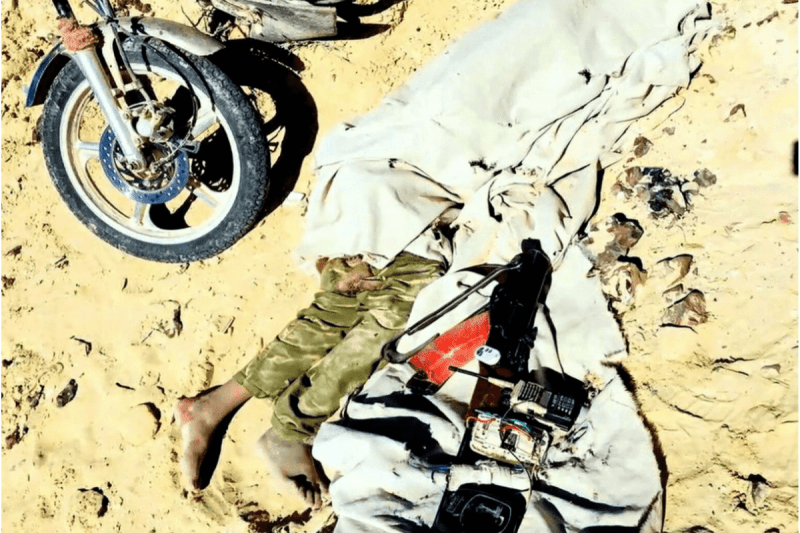
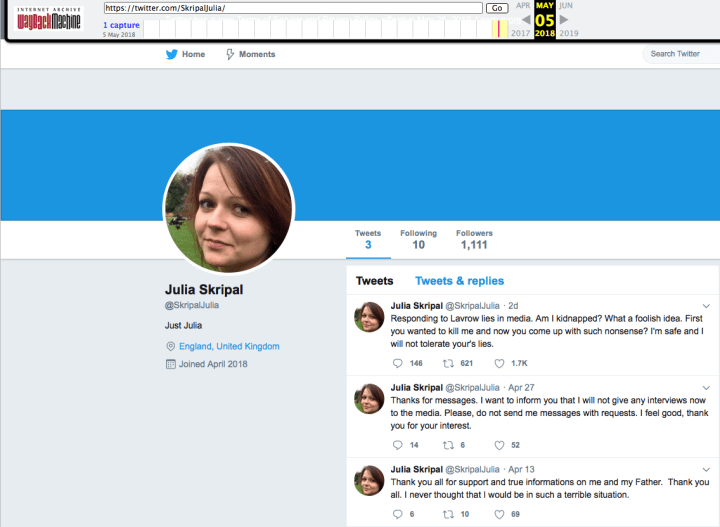
 Aletho News
