Lebanese Premier, Saad Hariri said on Monday he wants to remain Lebanon’s PM, preferring to keep what happened in Saudi Arabia, where he was believed to be held there against his will, to himself.
In an interview with French TV channel CNews, Hariri downplayed talk of his resignation, which he announced from Riyadh, saying that he was “always” the prime minister.
“I want to remain the prime minister of Lebanon and what happened in Saudi Arabia, I will keep to myself,” he said.
“It’s in the interest of Lebanon and other countries for Lebanon to remain stable,” Hariri said.
Asked multiple times whether his decision to announce his resignation in Riyadh was forced, Hariri sidetracked multiple times.
It is believed that Hariri was forced by the Saudi regime to announce his resignation in a bid to topple the Lebanese government. The move was seen by many observers as an attempt aimed against Hezbollah, which is a major partner in the Lebanese government.
Hariri returned to Lebanon in November 21, after President Michel Aoun launched a diplomatic campaign, led by Foreign Minister Gebran Bassil, in which the president voiced rejection of any interference in Lebanese affairs.
Meanwhile on Monday, Hariri said he would resign from his post if Hezbollah refuses to accept changes to the current status quo, in remarks seen as an attempt to cover up ambiguity which surrounded his previously announced resignation.
“Hezbollah intervened in all Arab countries and [my] resignation sent a positive shock,” Hariri said.
“I am waiting for neutrality in the government and inside Lebanon – not just saying one thing and doing something else,” he added.
However, the Lebanese PM noted that Hezbollah is a regional issue that can’t be solved in Lebanon, but rather through a regional settlement.
November 28, 2017
Posted by aletho |
Deception | Hezbollah, Lebanon, Middle East, Saudi Arabia |
Leave a comment
No, renewables are not taking over the world anytime soon.
We have spent the last two centuries getting off renewables because they were mostly weak, costly and unreliable. Half a century ago, in 1966, the world got 15.6% of its energy from renewables. Today (2016) we still get less of our energy at 13.8%.
With our concern for global warming, we are ramping up the use of renewables. The mainstream reporting lets you believe that renewables are just about to power the entire world. But this is flatly wrong.
The new World Energy Outlook report from the International Energy Agency shows how much renewables will increase over the next quarter century, to 2040. In its New Policies Scenario, which rather optimistically expects all nations to live up to their Paris climate promise, it sees the percentage increase less than 6 percentage points from 13.8% to 19.4%. More realistically, the increase will be 2 percentage points to 15.8%.
Most of the renewables are not solar PV and wind. Today, almost 10 percentage points come from the world’s oldest fuel: wood. Hydropower provides another 2.5 percentage points and all other renewables provide just 1.6 percentage points, of which solar PV and wind provide 0.8 percentage points.
Neither will most renewables in 2040 come from solar PV and wind, as breathless reporting tends to make you believe. 10 percentage points will come from wood. Hydropower provides another 3 percentage points and all other renewables provide 6 percentage points, of which solar PV and wind will (very optimistically) provide 3.7 percentage points.
Oh, and to achieve this 3.7 % of energy from solar PV and wind, you and I and the rest of the world will pay – according to the IEA – a total of $3.6 trillion in subsidies from 2017-2040 to support these uncompetitive energy sources. (Of course, if they were competitive, they wouldn’t need subsidies, and then they will be most welcome.)
Most people tend to think about electricity for renewables, but the world uses plenty of energy that is not electricity (heat, transport, manufacture and industrial processes).
Actually, if the world miraculously could make the *entire* global electricity sector 100% green without emitting a single ton of greenhouse gasses, we would have solved just a third of the total global greenhouse gas problem.
As Al Gore’s climate adviser, Jim Hansen, put it bluntly:
“Suggesting that renewables will let us phase rapidly off fossil fuels in the United States, China, India, or the world as a whole is almost the equivalent of believing in the Easter Bunny and [the] Tooth Fairy.”
We need to get real on renewables. Only if green energy becomes much cheaper – and that requires lots of green R&D – will a renewables transition be possible.

References
Data for graph: “A brief history of energy” by Roger Fouquet, International Handbook of the Economics of Energy 2009; IEA data DOI: 10.1787/enestats-data-en, and World Energy Outlook 2017, unfortunately not free, https://www.iea.org/weo2017/
Hansen quote: http://www.columbia.edu/…/mail…/2011/20110729_BabyLauren.pdf
The world emitted 49Gt CO₂e in 2014, and all electricity/heat came to 15Gt or less than a third, http://cait.wri.org/profile/World.
November 28, 2017
Posted by aletho |
Deception, Economics, Fake News, Mainstream Media, Warmongering, Science and Pseudo-Science, Timeless or most popular |
Leave a comment
Let us start with the fact that the Agreed Framework was not an official form of diplomatic treaty and it would be more appropriate to name it a Framework Arrangement (this is also suggested by the word Framework in it), since the word “agreement” by default would create the false impression that it was not a gentleman’s agreement but a ratified treaty.
Then, although the framework was perceived only as an obligation on the part of the DPRK to freeze its nuclear program, in fact Article 2 of the document stated that “the two sides will move towards full normalization of political and economic relations.” According to Article 3, the US had to “provide the DPRK with formal safeguards against the threat of US use of nuclear weapons.” As can be seen, we do not see any guarantees or promise of diplomatic relations.
As far as freezing is concerned, North Korea froze its nuclear facilities in exchange for fuel oil supplies and the promise to build two light-water reactors which could not serve as a source of weapons-grade plutonium. The commissioning of the first such reactor was scheduled for 2003, and prior to that, the Americans were to supply the DPRK with 500,000 tons of fuel annually for conventional power plants. To fulfill this task, an international (American-Japanese-South Korean) Organization for the Development of North Korean Energy (KEDO) was specifically created in March 1995.
The very idea of the Agreed Framework seemed to be the best option for resolving the nuclear crisis: North Korea retained the right to peaceful nuclear energy and received the political guarantees necessary for it to integrate into the international community. However, the devil was in the details.
First, the Agreed Framework was never ratified by the US Senate, which was dominated by conservatives. If the DPRK considered the Framework to have been ratified, the United States could renege on the performance of its obligations under legal pretexts, since from a formal point of view, the Arrangement was perceived as a protocol of intentions or a gentlemen’s agreement.
Secondly, the wording of the English text of the Framework could be interpreted in two ways. A phrase like “We shall take all possible measures to …”, “We shall move to …”, “We shall provide guarantees.” did not contain any specific commitments, and because from a formal point of view it was reminiscent of the joke: “We shall search, but we don’t promise to find”. So, the construction of reactors would have been done not by the US, but by a consortium, and Washington would not be directly responsible for the success or failure. This in particular allowed representatives of the conservative right to dismiss accusations that the US had committed any violation of the agreement.
Thirdly, KEDO was organized on the basis of the principle “Too many cooks spoil the broth.” Initially, the main responsibility and expenses were supposed to be rested on the shoulders of the RK, while the US and Japan from the very beginning did not intend to invest particularly in this rather expensive enterprise. However, the subsequent financial crisis of 1997 significantly undermined the possibility of South Korea participating, and this was not compensated for by other parties. At the same time, we note that the text of the Framework did not contain a mechanism for settling disputes, the event of the slow construction of reactors, or if they were not built at all. It was assumed that the DPRK would regularly receive fuel during this entire period.
Fourthly, the difficulties experienced by North Korea, in connection with the death of Kim Il Sung and the beginning of “the difficult journey”, led the United States and the Republic of Korea to have certain illusions regarding the impending collapse of the North Korean regime, which made it appear irrational to invest in a “lost cause”. As a result, a year before the reactors were planned to be brought on line, the foundations on the construction were barely completed.
Nevertheless, the DPRK still remained in the crosshairs of nuclear weapons. In June 1998, at the base in North Carolina, the US troops developed plans for the nuclear bombing of the North, including the dropping of nuclear explosion simulators. In October of the same year, one of the two-star American generals publicly admitted the existence of a plan to attack the North and the establishment of a South Korean regime of occupation. This plan was to be activated not only in response to an attack from the North, but also in the event of the “unconditional signs” of a possible attack. However, when the “White Paper” published by the Pentagon in 1998 indicated that victory over the DPRK would require 640 thousand American armed service men from all branches of the armed forces, the hawkish cries fell silent.
A surge of interest in the North’s nuclear program was associated with an interesting incident. At the end of August 1998, the press was flooded with a wave of “satellite intelligence data” suggesting that North Korea was building an unprecedented underground nuclear complex in the town of Kumchang-ni, protected from the attacks of American precision weapons. For a long time both sides had been stirring up passions, but in the spring of 1999, in exchange for a large batch of humanitarian assistance, the North unexpectedly allowed Americans access to this site, which (as the North had frequently claimed) turned out to be an empty cave. Actually, it was at this time that media owned by opponents of the North began to develop a thesis that the nuclear program, if not a bluff, was basically a way of demanding food aid.
On the back of the Pyongyang summit in 2000, the North Korean-American relations also began to improve. Of particular note was the visit to Washington by the second in command in the DPRK hierarchy, Jo Myong-rok, in October 2000, and soon after, between October 22-25, 2000, the US State Secretary Madeleine Albright first visited North Korea.
Negotiations with Kim Jong Il lasted more than five hours, and the result seemed to satisfy both sides. The Americans considered that they had succeeded in taming the Korean regime to a certain extent by achieving the freezing of its missile program, while Kim Jong Il was able to impress Americans as a man with whom they could conduct normal negotiations. They even talked about a DPRK-American Summit and when offering the idea, Albright emphasized that a visit to Pyongyang by the US President could radically change the situation, just as it did when Nixon visited China. However, the visit by the American president to the DPRK did not take place. It was not due to the president’s unwillingness, but changes to the foreign policy situation that required his presence in the Middle East. In addition, etiquette and respect for traditional American allies would require that after visiting Pyongyang the president would also visit Seoul and Tokyo, thus prolonging the entire programme.
The author would like to dwell on the events of the 2000s, since there is one particular factor which is of importance for an understanding of the current situation. Thus the results of Albright’s visit and the signing of the 1994 Agreed Framework suggest that when the US leadership has the political will and desire to solve problems connected to the Korean peninsula, it can resolve them.
Before the US presidential elections in 2000, the North Koreans even reduced the intensity of anti-American rhetoric, but when the Republicans came to power, the hope for dialogue was lost. The neo-conservatives who had come to power were concerned that the process of settlement between the two Koreas might go too quickly and they would lose control of it. Against this background, the supply of heavy fuel oil from the United States to the DPRK became irregular, and the construction of the reactors was effectively frozen. By this time it had become clear that if the reactors were to be built, it would not be in 2003 as originally planned.
In autumn 2001, in the presence of several Asian leaders, Bush referred to Kim Jong Il as a “pygmy.” A few days later, he publicly declared that “Kim Jong-il made him sick,” and “the sinking of the North Korean regime would be one of the priority areas of his policy.” In his annual address to the Congress on January 29, 2002, George Bush said openly: “… Our … goal is to hinder regimes which support terrorism, threaten America or our friends and allies with weapons of mass destruction. Some of these regimes are much quieter after September 11. However, we know their true face. North Korea is a regime armed with missiles and weapons of mass destruction, while its people are starving”.
This political direction also led to a revision of fuel oil supplies. They were made dependent not on the country complying with the decisions of the Agreed Framework, but on improvements in the human rights situation in the DPRK. The response to the North Korean question when translated from diplomatic language meant “our policy has changed, and we are not responsible for any of the decisions taken when the Democrats were in power.
We should note that all this time the Americans did not accuse the DPRK of violating the Agreed Framework; all such invective was to emerge later, in the context of the second phase of the nuclear crisis. Prior to this time, it is sufficient to compare the text of the agreement with the real facts, in order to understand that it was NOT North Korea which failed to comply with the majority of the points of the Agreed Framework.
Konstantin Asmolov, Ph.D. (Hist.) is a leading researcher at the Center for Korean Studies of the Institute of the Far East of the Russian Academy of Sciences.
November 27, 2017
Posted by aletho |
Deception, Militarism, Timeless or most popular | North Korea, United States |
Leave a comment
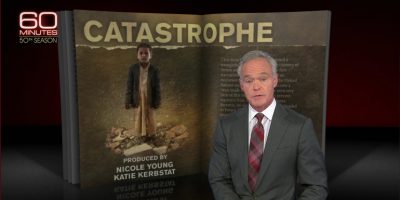
In one of the most glaring, power-serving omissions in some time, CBS News’ 60 Minutes (11/19/17) took a deep dive into the humanitarian crisis in Yemen, and did not once mention the direct role the United States played in creating, perpetuating and prolonging a crisis that’s left over 10,000 civilians dead, 2 million displaced, and an estimated 1 million with cholera.
Correspondent Scott Pelley’s segment, “When Food Is Used as a Weapon,” employed excellent on-the-ground reporting to highlight the famine and bombing victims of Saudi Arabia’s brutal two-and-a-half year siege of Yemen. But its editors betrayed this reporting—and their viewers—by stripping the conflict of any geopolitical context, and letting one of its largest backers, the United States government, entirely off the hook.
As FAIR has previously noted (10/14/16, 2/27/17), US media frequently ignore the Pentagon’s role in the conflict altogether. Pelly did not once note that the US assists Saudi Arabia’s bombing campaign with logistical support, refueling and the selling of arms to the tune of $400 billion. The US also routinely protects Saudi Arabia at the UN from condemnation—a shield that may have vastly prolonged the war, given that it signals the support of the most powerful country on Earth.
Meanwhile, Iran’s involvement in the conflict—which, even by the most paranoid estimates, is far less than the United States’—is placed front and center as one side of the “war.” The conflict is framed in hackneyed “Sunni vs Shia” terms, with Saudi Arabia unironically called the “leader of the Sunni world” and Iran the “leader of the Shia world.” A reductionist narrative that omits that Sunnis have fought alongside the Houthis, and the fact that Saudi bombs kill members of the marginalized, mostly Sunni Muhamasheen caste, who are neither “led” by Saudi Arabia nor part of the “Shia world.”
This cartoon dichotomy is the extent of the context. Saudi Arabia is rightly singled out as the primary aggressor (though a dubious comparative body count of 3,000 killed by Saudis vs. 1,000 by Houthis is proffered that is far lower than the UN’s January 2017 estimates of 10,000 total civilians killed), but who the Saudis’ primary patrons are—the United States and Britain (and Canada, too)—is simply not mentioned. One would think, watching Pelley’s report, it was a purely regional conflict, and not one sanctioned and armed by major Western superpowers to counter “Iranian aggression.”
To compound the obfuscation, 60 Minutes doesn’t just omit the US role in the war, it paints the US as a savior rescuing its victims. The hero of the piece is American David Beasley, the director of the UN’s World Food Programme, the organization coordinating humanitarian aid. “The US is [the World Food Programme]’s biggest donor, so the director is most often an American. Beasley was once governor of South Carolina,” Pelly narrates over B-roll hero shots of Beasley overseeing food distribution.
Beasley, in his sit-down interview, bends over backwards to downplay Saudi responsibility, insisting at every turn that “all parties” are to blame:
You see it’s chaos, it’s starvation, it’s hunger, and it’s unnecessary conflict, strictly man-made. All parties involved in this conflict have their hands guilty, the hands are dirty. All parties.
The spin that the crisis is the fault of “all parties” is understandable from a US-funded de facto diplomat, charged with providing some cover for a major regional ally. But the premise that “all parties” are causing the famine is never challenged by Pelley. It’s taken as fact, and the piece moves on.
It’s part of a broader trend of erasing American responsibility for the conflict and resulting humanitarian disaster. The Washington Post ran an editorial last week (11/8/17) and an explainer piece Saturday (11/19/17) detailing the carnage in Yemen, neither one of which bothered to mention US involvement. American complicity in the war is so broad in scope, it merited a warning last year from the US’s own State Department they could be liable for war crimes—yet it hardly merits a mention in major media accounts. The war just is, a collective moral failing on the part of “all parties”—irrational sectarian Muslims lost in a pat “cycle of violence” caricature.
As momentum builds in Congress, animated by grassroots anti-war activists, to push back against the war and hold US lawmakers accountable, how the US contributes to the death and disease in the Arabian peninsula is of urgent political import. By erasing the US role in the war, CBS producers obscure for viewers the most effective way they can end the war: by pressuring their own lawmakers to stop supporting it. Instead, viewers are left with what filmmaker Adam Curtis calls “Oh, dearism”: the act of feeling distressed but ultimately helpless in the face of mindless cruelty—perpetrated, conveniently, by everyone but us.
You can send a message to 60 Minutes at 60M@CBSNews.com (or via Twitter: @60Minutes).
November 27, 2017
Posted by aletho |
Deception, Fake News, Mainstream Media, Warmongering, War Crimes | United States, Yemen |
Leave a comment
 Tony Hall (on the right) has the courage to speak truth to power on False Flag Weekly News… and courage is not always appreciated in the academy
In a victory for academic freedom (and common sense) Professor Anthony Hall is back at work at the University of Lethbridge, starting today, after the Board of Governors announced that it is rescinding his suspension. Here is the Board’s statement:
The Board of Governors of the University of Lethbridge and the University of Lethbridge Faculty Association have agreed that the outstanding issues that have been raised concerning Dr. Anthony Hall will be addressed in the context of the Faculty Handbook. As a result, the suspension imposed on Dr. Hall has been lifted and he has returned back to work at the University. The parties will be fully participating in the agreed upon procedures in the Faculty Handbook to investigate and address the outstanding issues. – November 23, 2017
Professor Hall was suspended more than one year ago following a witch hunt orchestrated by B’nai Brith Canada. The anti-Hall PR campaign was launched by an outrageous and illegal “kill all Jews” image surreptitiously planted on his Facebook page by parties still unknown. B’nai Brith and its allies falsely insinuated (and in some cases stated) that Hall was responsible for posting the image. The Canadian mainstream media, including CBC, dutifully echoed those lies and false insinuations.
At the height of the media witch hunt, University President Mike Mahon, apparently backed by the Board, unilaterally suspended Hall without pay. Mahon never even contacted Hall to ask whether Hall had posted the offending image! Mahon and the Board took the position that they had the right to fire any faculty member at will, for any reason or no reason, with no due process of any kind, in complete violation of the procedures of the University of Lethbridge Faculty Handbook. In response, the Canadian Association of University Teachers (CAUT) issued a stinging reprimand to the Board, threatening to censure and sanction the University for its outrageous conduct. The U of L Faculty Association, U of L founder Owen Holmes, and others rallied to the defense of academic freedom, and the witch hunt gradually crumbled under the weight of its own absurdity.
Professor Hall and I will be discussing and celebrating his return to the University of Lethbridge this Friday, 11 to noon Eastern, on False Flag Weekly News, broadcast live on No Lies Radio and later archived at my VT page and also here.
November 26, 2017
Posted by aletho |
Deception, Ethnic Cleansing, Racism, Zionism, Full Spectrum Dominance | B’nai B’rith, University of Lethbridge, Zionism |
Leave a comment
Eric Schmidt, the executive chairman of Google’s parent company Alphabet, announced that his company will ‘de-rank’ RT’s articles online, calling them propaganda. Is he concerned for the integrity of news, or are his motives more partisan?
The 62-year-old, with an estimated wealth of $11.1 billion, has never hidden his political leanings, jumping straight into Hillary Clinton’s presidential campaign long before she officially announced her candidacy. In one of John Podesta’s leaked emails, the long-time Clinton confidant and chairman of her presidential campaign told her soon-to-be campaign manager Robby Mook that he had met with Schmidt in April 2014, more than a year before Clinton told the American public that she was hoping to become their next president.
“I met with Eric Schmidt tonight… He’s ready to fund, advise recruit talent, etc. He clearly wants to be head outside advisor, but didn’t seem like he wanted to push others out. Clearly wants to get going. He’s still in DC tomorrow and would like to meet with you if you are in DC in the afternoon. I think it’s worth doing…” Podesta wrote in the email, which was published by WikiLeaks last October.
Another email, written two weeks later, showed Schmidt sharing his campaign ideas with Clinton aide Cheryl Mills. “Let’s assume a total budget of about $1.5 billion, with more than 5,000 paid employees and million(s) of volunteers,” he said.
He went on to brainstorm ideas on how to utilize technology in the campaign. It wasn’t long before The Groundwork, founded by analysts and engineers who worked on Barack Obama’s campaign and funded by Schmidt, became Clinton’s top technology provider. The Groundwork was housed in an office just a few blocks away from Clinton’s campaign headquarters in Brooklyn, New York.
Schmidt continued to advise Clinton on digital matters throughout the campaign.
“Eric recognizes how the technology he’s been building his whole career can be applied to different spaces. The idea of tech as a force multiplier is something he deeply understands,” The Groundwork’s Michael Slaby told Quartz in 2015.
Then there was campaign night, when a photo forwarded to Politico showed a smiling Schmidt at Clinton’s election headquarters, complete with a “staff” badge.
Schmidt’s efforts to get Clinton elected, along with Google’s overall efforts to do the same, were addressed in a November 2016 report by the Campaign for Accountability ‒ a non-partisan, non-profit organization that aims to expose misconduct and malfeasance in public life ‒ and its Google Transparency Project. The document concluded that “Google executives and employees bet heavily on a Clinton victory, hoping to extend the company’s influence on the White House.” It added that “had she won the election, Clinton would have been significantly indebted to Google and Schmidt, whom she referred to as her ‘longtime friend.'”
WikiLeaks founder Julian Assange also brought up the relationship between Schmidt and the US establishment in his 2014 book, ‘When Google Met WikiLeaks.’ He describes a 2011 encounter with Schmidt in Norfolk, UK, where Assange was under house arrest at the time.
“I had been too eager to see a politically unambitious Silicon Valley engineer, a relic of the good old days of computer science graduate culture on the West Coast. But that is not the sort of person who attends the Bilderberg conference four years running, who pays regular visits to the White House, or who delivers ‘fireside chats’ at the World Economic Forum in Davos,” Assange wrote. “Schmidt’s emergence as Google’s ‘foreign minister’ – making pomp and ceremony state visits across geopolitical fault lines – had not come out of nowhere; it had been presaged by years of assimilation within US establishment networks of reputation and influence.”
Same thing, different candidate
Schmidt’s political leanings became clear in the early days of Barack Obama’s first presidential campaign. He publicly endorsed Obama, telling The Wall Street Journal in October 2008 that he was “doing this personally,” as Google was “officially neutral” in the election. He also served as an informal adviser to Obama’s campaign.
Schmidt also donated $5,000, the maximum allowed by law, to Obama’s 2008 campaign, according to US media reports that cited a now-deleted official list of donors. Schmidt’s close relationship with Obama didn’t end when the Democratic candidate was elected. Schmidt chaired the board of public policy think tank New America Foundation, working closely with Obama as a member of his Transition Economic Advisory Board. Later, Schmidt claimed a seat on Obama’s new Council of Advisors on Science and Technology.
The two became so close that the Consumer Watchdog sent a letter to the White House demanding that Obama distance himself from Google, and stop inviting Schmidt to fancy galas in Washington, DC. The group pointed out that Schmidt, and then-Google Vice President Marissa Mayer, were invited to a state dinner despite the company being under criminal investigation by the Department of Justice over allegations that it profited from selling online ads to illegal pharmacies.
“Executives of companies under federal criminal investigation should not be invited while a major case is pending. Allowing such executives to hobnob at a gala White House event inevitably sends a message that the Administration supports them and undercuts the ability of federal investigators to proceed with their case in a fair and unbiased way,” reads the letter, dated June 23, 2011.
Schmidt also supported Obama’s 2012 campaign, helping to recruit talent, deciding on technology, as well as mentoring campaign manager, Jim Messina. He was present in the Chicago, Illinois boiler room on election night. The Google executive was apparently so impressed by Obama’s campaign staff that he invested in several start-ups founded by the analysts and engineers who worked on it, one of those being The Groundwork.
Schmidt’s announcement to ‘de-rank’ RT’s articles comes despite Google’s own investigation saying it found no manipulation of its platform or policy violations by RT. There may be more ground to question Schmidt’s integrity than that of RT – but that’s highly unlikely to happen in today’s climate, because Google is not a Russian company.
Read more:
November 21, 2017
Posted by aletho |
Corruption, Deception, Timeless or most popular | Eric Schmidt, Google, Hillary Clinton, Obama, United States |
Leave a comment
Just a few days ago RTAmerica was forced to register as a foreign agent in the United States. Using this designation as justification, Twitter and Facebook have now banned RT and Sputnik from advertising on their services. This is all over alleged Russian “interference” in the 2016 Presidential Election, for which there is still not a single piece of clear evidence.
This is the United States of America, where freedom of the press is literally one of the founding principles of the nation. They celebrate their freedom every time they’re forced to stand through their national anthem.
What would the press reaction have been if Russia had forced the BBC, for example, to register as a foreign agent?
In fact, how many American or European media outlets have ever been forced to register as foreign agents in “autocratic” Russia where Putin has allegedly “shut down the free press”?
Zero.
Radio Free Europe/Radio Liberty has operated in Russia and Eastern Europe for nearly 70 years. It’s an American destabilization programme. That’s not a “conspiracy theory”. It is acknowledged in the public record that RFE/RL was established by the State Dept. and the CIA in order to spread American propaganda behind the Iron Curtain. They have never been barred from operating in Russia.
Now, imagine it was on the public record that the FSB had founded RT. Imagine it was written into Sputnik’s mission statement that their job was to undermine the American government. Would they have been allowed to broadcast in the US? Would they have come anywhere NEAR 68 years of operation?
Look at the Moscow Times, a notionally Russian paper that is owned by a Finnish conglomerate and prints exclusively in English. It is routinely, even pathologically, critical of the Russian government. Would this situation ever be allowed to stand in reverse? If there were a newspaper calling itself The London Times, which was owned by a Venezuelan and printed nothing but anti-government stories, exclusively in Russian…would it be allowed to operate? Would people cite it as a decent source of information?
Look at CNN, where Anderson Cooper – ex-CIA “intern” – solemnly nods his way through autocues full of baseless propaganda. Repeating, verbatim, the statements of nameless “intelligence sources”, without analysis or question. Can you imagine if RT’s headline reporter had worked for the KGB? Luke Harding would have written a (very bad) book about it by now. Can you imagine if RT’s news crews had been caught, numerous times, literally faking news footage (several times)?
These double standards are never addressed or acknowledged in the “free press” of NATO aligned nations.
Radio Free Europe has a story covering Russia’s “tit-for-tat” sanctions on US media outlets. It is hilariously without irony.
They interview the American ambassador to Russia – Jon Huntsman – who says, with a straight face:
We just think the principles of free media in any free society and democracy are absolutely critical for strength and well-being…Freedom of speech is a part of that. That’s why we in the embassy care about the issue. That’s why we’re going to follow the work that is going on in the Duma and the legislation that is being drafted very, very carefully. Because we’re concerned about it.”
He defends America’s stance on RT, whilst attacking Russia’s counter moves, claiming America is sanctioning RT in the name of “transparency” and that:
That’s far different from designating somebody a foreign agent
The US Ambassador to Russia, apparently, needs some help keeping up with current events because “designating somebody a foreign agent” is exactly what the US government has done. For some reason the (funded by the CIA) editorial staff of RFE/RL don’t feel the need to correct him. Even though their headline from three days earlier completely contradicts him.
Apparently journalistic standards are only for other people. And state censorship of the media, like all other crimes against humanity, is OK when America does it.
November 21, 2017
Posted by aletho |
Deception, Fake News, Mainstream Media, Warmongering, Russophobia, Timeless or most popular | CIA, United States |
Leave a comment

Seeking recognition of Palestine has been one of the Palestinian Authority’s diplomatic strategies which lose significance when juxtaposed against Mahmoud Abbas’s collaboration with the Israeli occupation. Behind statements of recognition lies silence and the tacit acceptance of Israel’s colonisation of Palestinian land and forced displacement of the indigenous people. Other than the obsolete two-state paradigm, there has been little discussion of what such recognition actually means in practice, or whether it could generate a tangible outcome for Palestinians.
On Monday, during an official visit to Spain, Abbas urged the Spanish parliament to recognise Palestine, “so that Palestine and Israel can live side-by-side in security, stability and good neighbourly relations, which will bring hope in a better future for Palestine and its people who have suffered from historical injustice when they were uprooted from their homeland in the 1948 Nakba and the occupation of the rest of our land in 1967.”
According to Wafa news agency, Abbas also reiterated his support for international impositions, including “efforts by [US] President [Donald] Trump’s administration to achieve a historic peace deal.” Presumably Abbas is referring to the latest wheeze from Washington; according to Haaretz, the US State Department has threatened to shut down the Palestinian diplomatic mission in the country if it does not embark upon negotiations with Israel and instead seeks recourse through the International Criminal Court for Israel’s war crimes. PLO Secretary General Saeb Erekat stated that all communication with the US would be halted if such a threat materialises.
However, with an entity that is bolstered by both the US and Israel, continuing or halting diplomatic communication will ultimately continue to reveal the degree of collaboration that is ongoing, with the PA on the bottom rung and through which decisions detrimental to Palestinians continue to be imposed. Whether countries recognise Palestine or not, Israel and the US continue a seamless plan to strip away Palestinians from their land. Clearly, symbolic recognition is neither helping nor hindering Palestine’s diplomatic efforts. It is merely a symbol of the PA purportedly attempting to take a stand for Palestinian rights.
Palestine has become many things, depending upon the interests of the actors involved. Colonialism constituted the first laceration between land and people. For the international community, it has been simplified into a “question” to be debated at regular intervals but never answered. Abbas, on the other hand, has followed the trajectory of exploiting Palestine after allowing Israel to continue its expansion. The ensuing question is, therefore, what recognition is Abbas demanding from governments? If there was no two-state imposition, what would constitute recognition of Palestine?
As things stand, recognition of Palestine upon Abbas’s demand also implies recognition of the PA’s concessions to Israel which have resulted in divesting Palestinians of their land. This is in line with Israel’s colonial ambitions. If Palestine and Palestinians become two separate, isolated entities, there will be no obstacle to expansion, since the international community is in agreement regarding its refusal to take a stand in favour of decolonisation. Perhaps, to complete the PA’s quest for symbolic recognition, some fragments of Palestinian territory will remain for the purpose of creating a symbolic rump Palestinian state that makes a mockery of historic Palestine, all of which rightfully belongs to all Palestinians.
November 21, 2017
Posted by aletho |
Deception, Ethnic Cleansing, Racism, Zionism, Timeless or most popular | Human rights, Israel, Palestine, Zionism |
Leave a comment
History shows us that when empires over-extend themselves, military commanders become semi-independent warlords who usher into place systems of graft and corruption. Such was the case in the Roman Empire in 193 A.D., when Emperor Pertinax’s Praetorian Guard – a combination personal security force for the emperor and elite special forces unit that distinguished itself on distant battlefields – sold out the emperor in exchange for a bribe from an aspirant emperor, Didius Julianus. The Praetorian Guard assassinated Pertinax and swore their allegiance to the new emperor, Julianus.
The rot of corruption would help ensure the downfall of other global empires. The fraudulent British East India Company and its corporate nabobs, backed by British military and naval power, helped to ignite colonial rebellions in America in the 1770s and India in 1857.
As the United States has over-extended its military realm into the Middle East, South Asia, Africa, Europe, the Asia-Pacific, and Latin America, corruption within so-called “Areas of Responsibility” assigned to regional US military commands has run rampant.
Within the US Pacific Command (PACOM) region, a major bribery and fraud scandal centered on a US Navy contractor, Singapore-based Glenn Defense Marine Asia (GDMA), headed by Leonard Glenn Francis, a 350-pound Malaysian citizen nicknamed “Fat Leonard.” In return for cash, vacations at five-star hotels, first- and business-class flights, expensive concert tickets, Rolex watches, Mont Blanc pens, Dom Perignon champagne, vintage wine, Cuban cigars, spa treatments, foie gras, $2000 bottles of cognac, and prostitutes, US Navy officers provided Leonard with virtual unfettered access to Navy intelligence and sensitive contract information that was used by GDMA to secure lucrative Navy logistics contracts. The “Fat Leonard” scandal grew to include senior officers, including admirals, attached to the US Seventh Fleet in Japan. The Navy’s investigation is continuing, and more than 60 additional admirals are reportedly under investigation by law enforcement authorities. For years, the Navy scandal extended from Japan to the Philippines, Singapore, Indonesia, Vietnam, Sabah, South Korea, India, Thailand, Cambodia, Australia, Sri Lanka, Hawaii, and Washington, DC and involved, in addition to Navy officer and enlisted personnel, Marine Corps officers and US government civilians, including investigators of the Naval Criminal Investigative Service (NCIS).
One of the worst frauds to have arisen from the neo-conservative bowels of the George W. Bush administration was the US Africa Command (AFRICOM). The June 4, 2017, strangling death in Bamako, Mali of US Army Green Beret Staff Sgt. Logan Melgar by two US Navy SEALs is now linked to his discovery that the two Navy personnel were pocketing official funds used by AFRICOM to pay off informants in the West African country. This type of fraud points to a culture of malfeasance present in US area of responsibility commands, including AFRICOM, Central Command (CENTCOM), and Southern Command (SOUTHCOM).
According to reports in The New York Times and The Daily Beast, the death of Melgar at the hands of the two SEAL thieves occurred within a barracks unit within the heavily-fortified US embassy compound in Mali. The SEALS, Petty Officer Anthony DeDolph and Adam C. Matthews, allegedly killed Melgar after he refused an offer to share their ill-gotten loot and shared, via email, his concerns with his wife back in the United States. The SEALS claimed Melgar died after becoming unconscious during a hand-to-hand combat training session. The SEALS also told military investigators that Melgar was drunk when he became unconscious as the result of a chokehold placed on him during the roughhousing. However, the US Special Operations Command and Army Criminal Investigative Command (USACIC) decided the SEALS had changed their stories so many times that they became subjects, rather than witnesses, in the investigation. An autopsy revealed that there were no traces of alcohol or drugs in Melgar’s body at the time of his death. Furthermore, Melgar was reported by friends and family to have been a teetotaler.
AFRICOM and USACIC tried to cover up the details of Melgar’s death until The New York Times originally broke the story about the death last month. USACIC handed off investigation of the case to the NCIS, which is worse than its Army counterpart in covering up sensitive military criminal cases. Neither of the two SEALS, both of whom were transferred back to the United States and were placed on administrative leave, have been charged in the murder of Melgar. It was apparently officers of the US Special Operations Command, which is headquartered in Tampa, Florida, who tipped off the press about the cover-up involving Melgar’s death.
AFRICOM has also been hesitant to provide full details about an ambush of a joint US-Nigerien unit operating near the Niger village of Tongo-Tongo in October of this year. Four US Army personnel were killed by an armed force that remains unidentified by AFRICOM. Tongo-Tongo sits astride a major African smuggling route for humans, drugs, ivory, and weapons between West Africa and the failed state of Libya. It was later reported that the four US soldiers died at the hands of the attackers after their unit’s Nigerien army personnel fled the scene during the attack. The body of one of the American troops, Sgt. La David Johnson, showed signs of being tortured and executed by the unidentified captors.
The case of Melgar is similar to the murder of West Point ethics professor, Army Col. Ted Westhusing in Baghdad in 2005. Like AFRICOM in Mali and other African countries, CENTCOM was entrusted with hundreds of millions of dollars in cash used to pay-off informants and make local purchases on the Iraqi economy.
Westhusing’s family and friends rejected the Army’s determination that Westhusing took his own life. The Army based its decision on a “suicide” note said to be written in Westhusing’s handwriting. At the time of his death, Westhusing was investigating contract violations and human rights abuses by US Investigations Services (USIS), a privatized former entity of the US Office of Personnel Management later purchased by The Carlyle Group, a firm with close links to George H. W. Bush. While he was in Iraq training Iraqi police and overseeing the USIS contract to train police as part of the Pentagon’s Civilian Police Assistance Training Team, Westhusing received an anonymous letter that reported USIS’s Private Services Division (PSD) was engaged in fraudulent activities in Iraq, including over-billing the government. In addition, the letter reported that USIS security personnel had murdered innocent Iraqis. After demanding answers from USIS, Westhusing reported the problems up the chain of command. After an “investigation,” the Army found no evidence of wrongdoing by USIS.
Days before his supposed suicide by a “self-inflicted” gunshot wound in a Camp Dublin, Iraq, trailer located at Baghdad International Airport, West Point Honor Board member Westhusing reported in e-mail to the United States that “terrible things were going on in Iraq.” He also said he hoped he would make it back to the United States alive. Westhusing had three weeks left in his tour of duty in Iraq when he allegedly shot himself in June 2005.
The cover-up of Westhusing’s death involved the same Army Criminal Investigative Command that covered up Melgar’s death in Mali. The murders of Melgar and Westhusing are not stand-alone events regarding US military forays around the world. Army Corporal Pat Tillman, the star National Football League player who enlisted in the Army after 9/11, became disillusioned with the war in Afghanistan. After Tillman’s private feelings about the Afghan war were discovered by senior commanders in his chain-of-command, Tillman was “fragged” by members of his own unit in Khost province on April 22, 2004. Tillman’s diary, uniforms, and other possessions were burned by his unit to cover up his execution by his own colleagues.
On September 4, 2006, Army Lt. Col. Marshall Gutierrez, the chief logistics officer at Camp Arifjan, Kuwait, who was investigating over-payments for goods and services and other fraud, supposedly committed suicide in his base quarters after ingesting prescription sleeping pills and anti-freeze. In December 2006, Army Major Gloria Davis, a contracting officer at Camp Arifjan, allegedly committed suicide in Kuwait after she admitted to receiving $225,000 in bribes from Lee Dynamics, an Army logistics contractor. Davis had reportedly agreed to cooperate with government investigators in their overall investigation of contract fraud in Iraq and Kuwait.
In 2007, a senior Blackwater manager threatened to kill Jean C. Richter, the chief US State Department investigator of Blackwater’s dubious operations in Iraq, unless the State Department called off the investigation. The incident occurred as Richter focused on problems with Blackwater’s $1 billion State Department contract. The CEO of Blackwater was Erik Prince, whose sister, Betsy DeVos, now serves as Donald Trump’s Education Secretary. Prince later sold Blackwater, which is now known as Academi. Prince has reportedly been involved in AFRICOM operations in Libya and Somalia via his Reflex Responses (R2) firm, which is based in Abu Dhabi.
The July 2, 2007, “suicide” of Army Lt. Col. Thomas Mooney, the US Defense Attaché in Nicosia, Cyprus, was said to be the result of a “self-inflicted cut to the throat.” Mooney’s body was found next to an embassy vehicle parked in a secluded location, some 30 miles west of Nicosia. He was said to have left the embassy in the embassy’s black Impala Chevrolet to pick up an arriving passenger at Larnaca International Airport. Although the US embassy and State Department ruled Mooney’s death a suicide, the Cypriot police did not agree with those findings but merely pointed out that suicide was illegal in Cyprus. Mooney was, according to our sources, investigating Iraq-related contract fraud involving companies headquartered in Cyprus, some of which were linked to the Israeli Mafia.
AFRICOM and PACOM – just as is the case with CENTCOM, which complements the culture of baksheesh bribery in the Middle East and South Asia – now find themselves mired in the same depths of kleptocratic fraud as is practiced in countries like Mali, Niger, Nigeria, and Burkina Faso, where AFRICOM is active. The Fat Leonard scandal and the recent murder of Melgar in Mali are merely the tip of the iceberg when it comes to the malfeasance involved in global US military operations.
When it comes to the US military operating in its overseas locations, the Latin phrase popularized by the Roman poet Juvenal, perhaps wise to the corruption of the Praetorian Guard of his time, comes to mind. “Sed quis custodiet ipsos custodes?” “Who watches the watchmen?”
November 21, 2017
Posted by aletho |
Corruption, Deception, Timeless or most popular | AFRICOM, United States, US Pacific Command |
Leave a comment
The recently released batch of files related to the Kennedy assassination includes a curious document revealing secret plans by the US government to purchase or build Soviet aircraft for the purpose of staging false flag attacks on the US or its allies, thus giving Washington the pretext it needed to go to war with Moscow or its allies.
According to the partially declassified document, a March 22, 1962 meeting attended by the Special Group Augmented (SGA), a high-level Kennedy administration committee charged with overthrowing the Cuban government, included a discussion on the different possibilities for obtaining Soviet planes.
The SGA group, which formally included Attorney General Robert Kennedy, CIA Director John McCone, National Security Advisor McGeorge Bundy and Chairman of the Joint Chiefs of Staff Lyman Lemnitzer, could also be attended by Secretary of State Dean Rusk and President Kennedy himself.
 The document fragment lists various Soviet aircraft, including MiG-17 and MiG-19 fighters, as well as the Il-14 military cargo transport, and how much time and money it would take to reproduce them to withstand distant observation and/or up close examination. Another option, according to an analysis by the CIA cited by the document, was to try to obtain the planes via defecting pilots, or purchasing them from non-Soviet Bloc countries; these options were deemed problematic. The document also explains why the Soviet planes are so desirable, including their possible use to stage false flag attacks against the US to justify a US military response.
“There is a possibility that such aircraft could be used in a deception operation designed to confuse enemy planes in the air, to launch a surprise attack against enemy installations or in a provocation operation in which Soviet aircraft would appear to attack US or friendly installations in order to provide an excuse for US intervention,” the document reads.
Finally, the fragment explains that “if the planes were to be used in such covert operations, it would seem preferable to manufacture them in the United States.”
It’s not clear whether the document was connected to Operation Northwoods, a proposed Pentagon and Joint Chiefs of Staff false flag operation calling on the CIA and other agencies to stage terrorist attacks against US civilian and military targets and blame it on the Cuban government, thus justifying a war against Cuba. According to US political historian Robert Dallek, the idea within the Kennedy administration to manufacture or otherwise obtain the Soviet aircraft was hatched by CIA Director McCone.
November 20, 2017
Posted by aletho |
Deception, False Flag Terrorism, Timeless or most popular, War Crimes | CIA, United States |
Leave a comment
The decline of the falsely self-described “quality” media outlet The Guardian/Observer into a deranged fake news site pushing anti-Russian hate propaganda continues apace. Take a look at this gem:
The Russian president, Vladimir Putin, has accused prominent British businessman Bill Browder of being a “serial killer” – the latest extraordinary attempt by the Kremlin to frame one of its most high-profile public enemies.
But Putin has not been reported anywhere else as making any recent statement about Browder whatever, and the Observer article makes no further mention of Putin’s supposed utterance or the circumstances in which it was supposedly made.
As the rest of the article makes clear, the suspicions against Browder were actually voiced by Russian police investigators and not by Putin at all.
The Observer fabricated a direct quote from the Russian president for their propaganda purposes without any regard to basic journalistic standards. They wanted to blame Putin personally for the suspicions of some Russian investigators, so they just invented an imaginary statement from him so they could conveniently do so.
What is really going on here is the classic trope of demonisation propaganda in which the demonised leader is conflated with all officials of their government and with the targeted country itself, so as to simplify and personalise the narrative of the subsequent Two Minutes Hate to be unleashed against them.
When, as in this case, the required substitution of the demonised leader for their country can’t be wrung out of the facts even through the most vigorous twisting, a disreputable fake news site like The Guardian/Observer is free to simply make up new, alternative facts that better fit their disinformative agenda. Because facts aren’t at all sacred when the official propaganda line demands lies.
In the same article, the documents from Russian investigators naming Browder as a suspect in certain crimes are first “seen as” a frame-up (by the sympathetic chorus of completely anonymous observers yellow journalism can always call on when an unsupported claim needs a spurious bolstering) and then outright labelled as such (see quote above) as if this alleged frame-up is a proven fact. Which it isn’t.
No evidence is required down there in the Guardian/Observer journalistic gutter before unsupported claims against Russian officials can be treated as unquestionable pseudo-facts, just as opponents of Putin can commit no crime for the outlet’s hate-befuddled hacks.
The above falsifications were brought to the attention of the Observer’s so-called Readers Editor – the official at the Guardian/Observer responsible for “independently” defending the outlet’s misdeeds against outraged readers – who did nothing. By now the article has rolled off the site’s front page, rendering any possible future correction nugatory in any case.
Later in the same article Magnitsky is described as having been Browder’s “tax lawyer” a standard trope of the Western propaganda narrative about the case. Magnitsky was actually an accountant.
A trifecta of fakery in one article! That makes crystal clear what the Guardian meant in this article, published at precisely the same moment as the disinformation cited above, when it said:
“We know what you are doing,” Theresa May said of Russia. It’s not enough to know. We need to do something about it.
By “doing something about it” they mean they’re going to tell one hostile lie about Russia after another.
November 20, 2017
Posted by aletho |
Deception, Fake News, Mainstream Media, Warmongering, Russophobia | The Guardian, UK |
Leave a comment
France’s invitation to beleaguered Lebanese premier Saad Hariri for him and his family to spend “a few days in Paris” has been viewed as French President Emmanuel Macron stepping in with deft soft power to resolve tensions between Saudi Arabia and Lebanon.
Less charitably, what Macron is really doing is giving cynical cover to the Saudi rulers for their extraordinary acts of aggression towards Lebanon and their violation of that country’s sovereignty.
Two of Hariri’s children were left in Saudi capital Riyadh while he visited France over the weekend. Were they being used as hostages by the Saudis to ensure that Hariri maintains the Saudi spin on events? Certainly, the arrangement raises suspicions, but the French president sought instead to affect a “normal” nothing-is-unusual appearance.
Lebanese President Michel Aoun last week publicly accused Saudi Arabia of holding Hariri in Riyadh against his will. Aoun said the Saudi rulers were violating international law by detaining Hariri and forcing his resignation as prime minister of Lebanon. Such acts were tantamount to aggression, said President Aoun.
Yet Macron has said nothing about Saudi interference. He has instead turned reality on its head by censuring Iran for regional “aggression” and thereby backing Saudi claims that Iran is supplying ballistic missiles to Yemen. Iran swiftly condemned Macron for “stoking regional tensions”.
Credit goes to President Aoun for speaking out plainly, telling it like it is and expressing what many Lebanese citizens and many other observers around the world have concluded. The whole debacle is an outrageous affront to Lebanon and international law by the Saudi rulers, when it is taken into consideration Hariri’s hasty summoning to Saudi capital Riyadh earlier this month, his subsequent televised resignation speech on Saudi TV, and his long-delayed sojourn in that country. What is even more despicable is that the Saudi interference in the sovereign affairs of Lebanon is threatening to re-ignite a civil war within the small Mediterranean country, and, possibly worse, a war across the region with Iran.
Hariri has claimed in a later media interview, held in Saudi Arabia, and in reported communications with family and friends who are back in Lebanon that he was not under duress while staying in Saudi Arabia. That claim beggars belief given the bizarre circumstances of Hariri’s sudden departure and his protracted nearly two-week stay in Saudi Arabia.
In any case, the president of Lebanon, Michel Aoun, has concluded that something is badly amiss in the saga, and he has explicitly accused Saudi rulers of violating his country’s sovereignty.
Therefore, if there were any principle or adherence to international law, the actions of Saudi Arabia should be condemned categorically by the international community, the UN, the European Union and France in particular owing to its historic relations with Lebanon as the former colonial power before independence in 1943.
But no. What we have instead are either shameful silence from Washington, or mealy-mouthed statements from the EU. The EU’s foreign policy chief Federica Mogherini issued a vague statement warning against “foreign interference” in the affairs of Lebanon. What kind of cowardly circumlocution is that?
Lebanon’s prime minister Saad Hariri was, in effect, detained by Saudi Arabia and forced to tender his resignation from public office as a matter of ultimatum. It has been reliably reported that the Wahhabi Saudi rulers were exasperated with the Shia group Hezbollah being part of the coalition government in Beirut. Hariri is a Saudi-sponsored Sunni politician who is antagonistic to Hezbollah and by extension, Iran. But apparently, he was not sufficiently hostile, in the view of his Saudi backers. Hence, Hariri was summoned to Riyadh and ordered to resign on November 4. (The defeat of the Saudi-sponsored covert terror war in Syria no doubt was a factor too in the timing.)
France’s President Macron is playing a particularly slippery game of pandering and expedience towards the Saudi despots.
As the Washington Post’s WorldView briefing reported last week: “French President Emmanuel Macron told reporters that it was important to dispel the implication that Hariri was a Saudi prisoner.”
The newspaper goes on to quote Macron saying rather vacuously: “We need to have leaders who are free to express themselves. It’s important that [Hariri] is able to advance the political process in his country in the coming days and weeks.”
The question should be asked: why is it important for Macron to “dispel the implication that Hariri was a Saudi prisoner”?
From virtually all accounts, including that of Lebanese President Michel Aoun whose view should surely be paramount here, that is exactly what Hariri was made by the Saudis – a prisoner.
Three days before his summoning to Riyadh and his scripted resignation speech on November 4 – in which Hariri claimed with incredible drama that he was in danger of an assassination plot by Hezbollah and its ally Iran – it was reported that Hariri was having dinner with the French culture minister in Beirut. During their meal, he received a phone call. His demeanor darkened, and he immediately departed from the table for a flight to Riyadh. Without the company of aides, Hariri was met on his arrival by Saudi officials who took his mobile phone from him. He was not greeted by senior Saudi rulers like Crown Prince Mohammed bin Salman, which would have been customary diplomatic protocol.
Everything about the next two weeks of Hariri’s stay in Saudi Arabia signals a de facto detention against his will. Admittedly, he made a brief flight to the United Arab Emirates during the time period, which was claimed by the Saudis to be proof of his free movement. The UAE rulers are closely aligned with the House of Saud, and besides Hariri was soon back in his Riyadh residence, from where he continued to tweet to friends that he was “fine”.
This is nothing but a sham. The stark facts are that Saudi Arabia has brazenly interfered in the internal affairs of Lebanon, trying to force its prime minister to step down. Furthermore, the Saudi rulers have accused Lebanon of “acts of war” by allegedly supporting Houthi rebels in Yemen; the Saudis have also ordered their nationals to leave Lebanon; and there are reports emerging of the Saudis now pushing to suspend Beirut from the Arab League. This is reckless incendiary behavior by the Saudi rulers.
Should we be surprised though? Saudi Arabia has shown absolute criminal disregard for international law over its bombing and genocidal blockade of Yemen, where humanitarian aid groups have warned that 50,000 children may die this year due to enforced deprivation from the nearly three-year American and British-backed Saudi war on Yemen.
The absolute Saudi monarchy has also gone on an internal rampage of arresting its own government ministers and other businessmen in an audacious power-grab under the guise of “an anti-corruption drive”. Moreover, Saudi rulers have been instrumental in organizing a legally dubious trade and diplomatic blockade of Qatar over trumped claims that the latter is a stooge for Iran and singularly supporting terrorists (this from the Saudis who have bankrolled terrorist proxies to overthrow the government in Syria.)
The criminality and rogue conduct of Saudi Arabia is legion and brazenly in your face.
That is why the so-called “international community”, the UN, Washington, the European Union, and France in particular are deserving of withering censure. Their mealy-mouthed muted statements on Saudi misconduct towards Lebanon are a disgrace. They are complicit in wanton lawlessness by their pandering to Saudi despots.
But France’s Emmanuel Macron has emerged as the prime disgrace. His invitation to Saad Hariri and his family to come to France is a cynical move to give cover to the Saudi despots. Tellingly, on the announcement of the invitation, Macron said that “it was not an offer of exile”. That’s Macron making it all sugary nice as pie.
On Friday, the day before Hariri arrived in Paris, Macron actually accused Iran of “aggression” and has called for sanctions on Iran’s ballistic missile defense program. So, Macron, sneakily, is giving the Saudi narrative succor, and blaming Iran, instead of condemning Riyadh for its flagrant interference and aggression.
Again, by inviting Hariri to Paris, Macron is indulging the Saudi-Hariri charade that all is “normal” – when in reality the sordid shenanigans over the past two weeks amount to an outrageous and very grave violation of international law and of a neighboring country’s sovereignty by the Saudis.
With this kind of cynical “diplomacy”, Macron is showing that France is far from capable of having any leadership role or moral authority in the Middle East or the world.
Of course, France’s vested economic interests with the Saudi despots, from arms sales to energy and infrastructure projects, are central to Macron’s expedient calculations.
Macron’s ambitions of engendering some kind of renaissance of France as a global power are futile and nothing but sheer vanity. The cowardice of the French president in the face of Saudi aggression towards Lebanon shows that Macron and his pretensions of “global power” are a puff of cheap cosmetic powder.
November 20, 2017
Posted by aletho |
Deception, Timeless or most popular, War Crimes | Emmanuel Macron, European Union, France, Lebanon, Middle East, Saudi Arabia |
Leave a comment


 Aletho News
