Indigenous peoples bear the brunt of global greenwash
By Amy Dickens | Ecologist | September 23, 2015
In Paraguay’s vast Chaco region, the familiar sounds of the forest are being drowned out by the rumble of heavy machinery. “Where jaguars once trod, now there are just the tracks of bulldozers”, protests Porai Picanerai, a member of the Ayoreo tribe.
His people are being chased from their ancestral lands by Brazilian corporation Yaguarete Pora. While some Ayoreo remain hiding in the forest, living in fear and isolation, those forced out are vulnerable to disease and illness.
The Chaco is experiencing rapid deforestation thanks to companies like Yaguarete Pora, who are illegally clearing vast swathes of land for cattle ranching. Ironically, having promised a small, protected nature reserve, they continue to oust the forest’s most accomplished conservationists, its tribal people.
In spite of this, the company proudly flaunt the logo of the largest corporate responsibility initiative on the planet, the United Nations Global Compact.
This voluntary agreement advocates ten fundamental corporate responsibility principles, including the provision that “businesses should support and respect the protection of internationally proclaimed human rights.”
Though Yaguarete clearly defy this responsibility, the Compact’s lax membership requirements allow corporations to engage in bad practices while sporting the UN seal of approval.
Such is the hypocrisy of 21st century greenwashing. With pressure mounting on companies to endorse high standards of corporate responsibility, many are failing to deliver. To mask the truth, companies frequently greenwash their activities by participating in seemingly eco-friendly ventures that disguise the true extent of the environmental and human damage they are causing.
With conservation and intergovernmental organisations cosying up to big business, the greenwash is increasingly sophisticated, posing an ever-greater threat to the lives of tribal peoples. Because their livelihoods depend on their unique local environments, this greenwashing poses a grave threat to their survival.
Corporate greenwashing is destroying tribal peoples
The Aurora Pacific Economic Zone and Freeport (APECO) in Casiguran, the Philippines, is a 12,923 hectare area currently being developed into a self-sufficient commercial hub and special economic zone.
The project promises to bring “modernity with a touch of green” to Casiguran, boasting plans for eco-friendly features including a Marine Sanctuary and Mangrove Development Zone. For all this talk, the situation on the ground tells a dramatically different story.
If completed, APECO will strip 3,000 small farms and indigenous Agta households of their land. The Agta have reported intimidation, interrogation and assassination attempts relating to the project, which are further jeopardising a population already plagued by malnutrition and homicide.
What’s more, APECO’s ‘green’ promises appear entirely forgotten, as mangrove destruction and illegal logging are destroying the local ecosystem. The Agta’s message is simple: “The most important thing here is our land. If we don’t have it, then we won’t survive.”
Conservation organizations – the ultimate greenwash
Regrettably, corporate greenwashing at the expense of tribal peoples is widespread and recurrent. As if this wasn’t bad enough, an even more worrying trend has emerged.
Increasingly, well-known conservation groups are collaborating with companies to establish ‘green’ projects like the Roundtable on Sustainable Palm Oil (RSPO).
RSPO, an association of palm oil industry stakeholders, was established with the objective of making sustainable palm oil the international norm. It is backed by prominent conservation organizations including Conservation International, the World Resources Institute, and founding member WWF.
Despite these reputable [sic] credentials, there’s a catch. Among RSPO’s members is Wilmar International, whose former subsidiary PT Asiatic Persada is responsible for the forced eviction of the Batin Sembilan from their homes in Jambi province of Sumatra, Indonesia.
The tribe have been arrested, attacked and murdered as their ancestral lands give way to palm oil plantations. Accusations of Wilmar’s bribery blighted negotiations to settle the dispute and culminated in the sale of PT Asiatic Persada, leaving the Batin Sembilan without recourse for their suffering.
Wilmar’s participation in RSPO shows that companies who feign social responsibility are still welcome in ‘green’ initiatives. Indeed, by cosying up to big businesses, which push for lenient responsibility standards, conservation groups enable companies to mask exploitative practices whilst gaining credibility for participating in sustainable projects.
This brand of greenwashing spells danger, not only for tribal peoples but also for conservation groups, who run the risk of guilt by association. So long as these organizations remain indifferent to corporate deception, their loyalty and integrity is called into question.
Hypocrisy at the highest level
Greenwashing can even implicate the institutions and funding bodies responsible for global development. Though these international organizations advocate sustainability, they frequently support projects that undermine this ethos.
As a case in point, in the early 1990s the Global Environmental Facility (GEF), a newly-established World Bank program, struck an agreement with the Cameroon government to conserve a 6 million acre area of rainforest. Yet as one indigenous Baka man observed, “those who now claim they are conserving the forest are the same people pillaging our forests.”
This agreement masked a hefty World Bank loan to fund the logging of a further 3.5 million acres of forest. For the Baka hunter-gatherers and their neighbours, this proved disastrous. Unable to claim their land rights, and prohibited from entering the protected forest to gather resources, they have struggled to survive. In Republic of the Congo, the Baka and Mbenjele suffered a similar fate at the hands of another GEF project.
Such institutional double-dealing delivers a damaging twin blow to tribal peoples – first, their environment is destroyed by commercial activity, and then conservation projects deny them access to their surviving lands and resources.
The World Bank’s conflicted sponsorship doesn’t end there. Today, the Bank is set to profit from its investment in the controversial UN REDD+ scheme, which encourages carbon offsetting to maintain a global equilibrium. Simultaneously, billions of dollars are lent to companies in the extractive industries, the most highly polluting sector.
This has led some to dub the World Bank a ‘climate change profiteer‘.
What next for tribal peoples?
It’s evident that greenwashing is evolving, and with it the challenges that tribal people face. As conservation and development organizations collaborate with irresponsible corporations, the distinction between protector and perpetrator becomes blurred.
This results in indigenous rights violations going unpunished, while organizations that should be working with tribal peoples to protect the environment are discredited. If green initiatives are to live up to their word, they must respect the land ownership rights of tribal peoples and legally obtain free, prior and informed consent.
Environmental groups must also insist on greater transparency among corporate participants. Until then, greenwashing will continue to mask the destruction of the world’s last refuges for tribal peoples.
Russia Checks Western Lies on Syria
By Finian Cunningham | Sputnik | September 25, 2015
You have to hand it to Russia. In recent weeks, one move after another by Moscow over the Syrian crisis could be accompanied by the audible word “check”, leaving Washington and its minions grappling with disorientation about how to respond to the Russian moves.
At the heart of the West’s disorientation what is being exposed is its glaring criminal deceptions over Syria.
This week, Russian foreign ministry spokeswoman Maria Zahkarova probed the Western rationale towards Syria with this incisive proposition.
She said that if Washington insists that Syrian President Bashar al-Assad should stand down, then the United States government should henceforth remove its signature from the 2012 Geneva Communiqué. The same logical ultimatum applies to Britain and France.
That communiqué, signed three years ago by international governments, as well as the United Nations, European Union and Arab League, clearly states that “the political future of Syria must be determined by the Syrian people themselves”.
The binding document had followed lengthy negotiations between Russia, China and the Western powers, and it was signed in Geneva in the summer of 2012 under the auspices of then UN Secretary General Kofi Annan. Hillary Clinton was the US Secretary of State at the time.
Nowhere in the Geneva accord is it mentioned that Syria’s Assad should relinquish power.
It merely endorses a political process of dialogue among Syrian parties, the outcome of which is to be mandated by the Syrian people. In fact, two years after the communiqué was signed the Syrian people voted by a huge majority to re-elect Assad as the country’s leader.
Yet Western powers continue to assert that Assad “has to go”.
Germany’s Chancellor Angela Merkel this week appeared to break the Western ranks when she said that Bashar al-Assad must be part of the political negotiations to solve the Syrian conflict.
Nevertheless, Washington, Britain and France remain implacable in their insistence that the Syrian president has to stand down. In other words, these Western powers are unilaterally demanding regime change in spite of the fact that they signed up to the Geneva Communiqué, which makes no such stipulation. With typical unreasonable arrogance, Washington and its allies appoint themselves to over-ride the sovereign right of the Syrian nation.
Last week, while in London, Clinton’s successor John Kerry repeated the American demand that “Assad must go”. Speaking alongside his British counterpart Philip Hammond, Kerry said he was open to talks with Russia on the Syrian crisis, but that the bottom-line for Washington and London was that the Syrian leader had to vacate office.
“We’re prepared to negotiate. Is Assad prepared to negotiate, really negotiate? Is Russia prepared to bring him to the table?” said Kerry.
The New York Times elucidated further Washington’s intentions. It reported: “[American] officials indicated that the larger goal was to draw the Russians into a political process that would ultimately replace Syria’s government of President Bashar al-Assad, a longtime ally of the Kremlin.”
Maria Zakharova, the Russian foreign ministry spokesman, has subsequently nailed that Western lie on Syria. If Washington insists on Assad’s removal, then the US government should repudiate the Geneva Communiqué. “Otherwise,” said Zakharova, “the US is deceiving everybody.” Check!
This follows the move earlier this month when Russia placed its support full square behind the Assad government. Moscow has delivered military aid to Damascus in line with legal bilateral agreements.
Russian President Vladimir Putin explained that the Syrian government is the primary offensive force against the terrorist networks tearing Syria apart.
Therefore, if Washington and its Western allies claim to be fighting against terrorism in Syria, then they should have no objection to Russia’s support for the government in Damascus. Check!
Again, the Russian move deftly exposes another Western deception.
Since Moscow beefed up its military support for Syria, Washington, London and Paris have been reeling from their own contradictions. The West says it is alarmed that Moscow is “shoring up the Assad regime”.
But if these powers were genuinely in the business of “degrading and defeating” the so-called Islamic State and other jihadist terror groups, then why should they be alarmed by Russia supporting the principal force – the Syrian government – in the battle against the terrorists?
Russian Foreign Minister Sergei Lavrov pointed out that the West’s logic is “upside-down”. He has also commented that the West’s “anti-terror” coalition bombing Syria and Iraq does not appear to be genuine in its ostensible aims. After a year of US-led air strikes on Syria and Iraq, the terror groups seem to be stronger than ever.
Clearly, the West’s “anti-terror” strategy is ineffective, suggesting that the real aim of the West is to further weaken the Syrian state.
Scrabbling around to find some cover for its naked upside-down logic, Washington, London and Paris are now saying that they fear that Russia’s military intervention in Syria “may lead to an escalation of the conflict” or to a clash with the US-led coalition.
John Kerry and his Western counterparts have even resorted to this oxymoron. Kerry said the “root cause” of the refugee crisis assailing Europe is the “conflict in Syria” and that is, in his view, further “rationale” for the removal of President Assad. How convoluted can you get?
The four-year-old conflict in Syria is so obviously the driver for millions of Syrian refugees. But the “root cause” that Kerry so deceptively misplaces is the criminal covert war of regime change that Washington has launched on that country, along with the collusion of Britain, France, Turkey and the Gulf Arab dictatorships of Saudi Arabia and Qatar.
That US-led regime-change war has involved unleashing thousands of terrorist mercenaries on Syria. It’s a well-worn American strategy played time and again in different parts of world down through the decades. Ukraine and Yemen are two other current case studies of Washington’s covert state-sponsored terrorism. Fiendishly, Western propaganda in the form of “Western news journalism” helps to mask what should be transparent criminality committed by Washington and its so-called allies and clients.
Deciphering the West’s lies and deceptions is not always an easy task.
But thanks to Russia’s logical policy, the West’s lies in Syria are at last being nailed. We might even say “Checkmated!”
US Spies Await Terrorist Attack to Change Public’s Tune About Cyber Privacy
Sputnik – 26.09.2015
As the United States seeks backdoor encryption access, it faces strong pushback in the form of public opinion. But according to some intelligence officials, that perception could change if another terrorist attack were to occur on American soil.
Faced with a public outcry over privacy concerns and the tarnished reputation of American tech companies abroad, the Obama administration has found itself in a difficult spot. Many industry leaders are calling for the president to publicly disavow the idea of a law requiring tech companies to provide backdoor encryption access.
Intelligence officials, of course, are none-too-thrilled about such a move. Insistent on the notion that encryption access is vital for national security, many are eager for a law requiring companies like Apple to cooperate.
“Overall, the benefits to privacy, civil liberties and cybersecurity gained from encryption outweigh the broader risks that would have been created by weakening encryption,” reads the latest report from the US National Security Council.
But if public opinion remains a stubborn roadblock for such legislation, some officials have indicated that a terrorist attack could change the situation.
“… The legislative environment is very hostile today,” Robert S. Litt, a lawyer for the intelligence community, said in an email obtained by the Washington Post. “[But] it could turn in the event of a terrorist attack or criminal event where strong encryption can be shown to have hindered law enforcement.”
Litt isn’t the only one.
“People are still not persuaded this is a problem,” a senior official, speaking on condition of anonymity, told the Post. “People think we have not made the case. We do not have the perfect example where you have the dead child or a terrorist act to point to, and that’s what people seem to claim you have to have.”
While the US intelligence community seems to believe that a terrorist attack would prove the need for robust encryption, it’s already been proven that mass surveillance has done little to thwart such incidents. The National Security Agency’s data collection – unveiled by whistleblower Edward Snowden – was launched after the September 11 attacks, but failed to prevent future bombings, like that which occurred during the Boston Marathon in 2013.
A White House review panel formed two years ago recommended ending the domestic spying program after findings that the NSA’s bulk collection of telephone metadata had done nothing for national security.
Even if the Obama administration decides to publicly disavow encryption legislation, there’s no guarantee that the US government wouldn’t still carry forward with decryption plans. On Thursday, the Washington Post reported that the administration was looking into four distinct ways to force tech companies into compliance.
“We’re not promoting those as the way to go,” said another official, also speaking on condition of anonymity. “We’re just saying these are things that could be done.”
Polish MPs approve ‘technical agreement’ on US anti-missile base
RT | September 25, 2015
Poland’s lower house of parliament has given the green light to the country’s president to ratify a technical agreement on establishing a US anti-missile base in Redzikowo. Under the NATO-backed plan, the facility should be operational by 2018.
A total of 422 members of the Polish Sejm voted in favor of the bill, with three MPs against and five abstaining.
The agreement in question is a part of a much-debated NATO-backed plan that was first agreed on by the US and Poland in 2008. At that time, it was claimed that the base was necessary to counter the risk of a possible missile attack from Iran or North Korea.
The document outlines technical conditions for the US anti-missile base’s operation on Polish soil, such as restrictions on the height of the buildings that can be built around the base, the use of devices emitting electromagnetic waves, and flights of military aircraft over and around the future facility.
Washington wants to expand the European anti-missile defense (AMD) by putting land- and sea-based radar and interceptors in the village of Redzikowo near the northern Polish town of Slupsk.
The same agreement to host anti-missile bases for of AMD has already been signed with Romania.
The deal stipulates that both countries will host some 24 vertical-launch SM-3 missiles each. The construction of AMD components in Poland is set to start next year and be completed by 2018.
Washington’s plans to install anti-missile systems in Eastern Europe have been one of the biggest stumbling blocks in US-Russia relations.
In 2009, a year after Warsaw and Washington signed the agreement, President Barack Obama assured that the deal would be canceled if the issue with Iran over its nuclear program was sorted out.
However, despite the agreement with Tehran, which curbed its controversial nuclear program in exchange for the easing of international sanctions, the NATO-backed Europe AMD plan is set to go forward.
“The deal with Tehran doesn’t include missiles, therefore the threat remains,” John A. Heffern, US Deputy Secretary of State for Europe and Eurasia, told the Polish Rzeczpospolita newspaper in July.
The Polish government has repeatedly requested that NATO establish military bases in the country, claiming that it is necessary to counter what it calls “a Russian threat.”
Since Crimea’s reunion with Russia in March 2014 and the start of the military conflict in eastern Ukraine last spring, NATO forces have significantly stepped up their military exercises along the Russian border, and frequently carried out drills in the Baltic States and Eastern Europe.
US must release files proving innocence of former Guantanamo detainee, say lawyers
Reprieve | September 25, 2015
Lawyers at human rights NGO Reprieve yesterday filed an emergency motion demanding the US government release information which could exonerate a former Guantanamo detainee facing the possibility of charges in Morocco.
Younous Chekkouri, 47, was transferred to his native Morocco last week. He has been detained ever since and the prosecution in Morocco announced on Wednesday that he is now facing the possibility of charges of ‘attempting to disrupt the internal security of the country.’
It is believed that these charges are based on allegations made years ago by the US – almost every one of which was dropped during Younous’ habeas corpus proceedings in federal court. Yet almost all the files from the case remain held under seal by a Washington D.C. court. Without the files being released, Younous’ lawyers will not be able to defend him against the possible Moroccan charges.
Reprieve first began asking the U.S. government to release the files in 2009, and in 2011 presented a “priority list” of thirteen documents. In the nearly four years since, the government has released only one of the requested files. In the rules governing Guantanamo proceedings, the US is obliged to produce public versions of all filings. The emergency motion filed yesterday demands that the government make available all remaining information by October 1st.
The US government cleared Younous for release from Guantanamo in 2010, a process involving unanimous agreement by six US federal agencies – including the CIA, FBI, and Departments of State and Defense – that he poses no threat to the US or anyone else.
Cori Crider, attorney for Younous and a director at human rights NGO Reprieve, said: “The Americans’ spurious allegations against Younous have already collapsed once when examined in US federal court and it is entirely unfair for him to face any further charges. Yet Younous is now living a Groundhog Day from hell where he may face yet more years of wrongful imprisonment because the US has failed to release information that I could use, this time in a Moroccan court, to prove his innocence yet again. So we are now forced to fight tooth and nail for information that should have been released years ago.”
Former Guantanamo detainee facing possibility of ‘utterly baseless’ charges in Morocco
Reprieve | September 23, 2015
Younous Chekkouri, who was released from Guantanamo last week, is facing the possibility of charges in Morocco that his lawyer has described as ‘utterly baseless’.
The prosecution in Morocco today announced that Younous – who has been held in detention since his release last week – is facing the possibility of charges of ‘attempts to disrupt the security of the country’. A judge will decide in two weeks whether to formally charge him. Meanwhile he has been placed in ‘provisional detention’ in Salé without bail.
Younous, 47, was cleared by the US government in 2010 – a process involving unanimous agreement by six federal agencies including the Departments of State and Defense and the CIA and FBI. He was never charged with a crime. His petition for habeas corpus was litigated through to a hearing, and saw the US government drop almost every allegation it had originally made against Younous.
Cori Crider, Younous’ attorney and director at Reprieve, said: “Younous facing charges is nothing short of an absolute disgrace. The US government, responsible for his being in this position in the first place, saw fit to clear him for release from Guantanamo following an exhaustive review. They never charged him with a crime and indeed they dropped almost every one of the ridiculous allegations they ever made against him while his case was being litigated in federal court. Any charges the Moroccan prosecutors are attempting to lay at Younous’ door are utterly baseless and must be revoked at once. Younous Chekkouri must go free.”
Palestinian teen shot in Hebron by Israeli forces dies from injuries

A photo of the incident shows an Israeli soldier aiming at the woman. (Youth Against Settlements)
Ma’an – September 22, 2015
BETHLEHEM – A Palestinian teenager shot by Israeli forces at a checkpoint in Hebron died from her injuries on Tuesday, Israeli medical sources said.
The teenager, identified as 18-year-old Hadeel al-Hashlamon, was shot three times by Israeli soldiers after allegedly attempting to carry out a stabbing attack, Israel’s army said.
A spokesperson for the Shaare Zedek Medical Center where she was taken for treatment said the teenager was “terribly injured, and underwent surgery upon her arrival.”
She later died from her injuries, the spokesperson confirmed.
No Israeli soldiers were injured during the incident, and the Israeli army did not release photographs of a knife, as they have done on several other recent occasions.
The army spokeswoman said that the attack had been “thwarted.”
A local activist group Youth Against Settlements later released what it said were photos of the incident, appearing to show Israeli soldiers aiming their weapons at the woman, as first she faced them and afterward turned away from them.
Another photo appeared to show the woman slumped on the street, after she was shot and wounded.
Video footage from Palestinian news agency PalMedia showed al-Hashlamon left bleeding on the pavement, reportedly for up to 30 minutes before she received treatment.
The footage shows the woman being dragged out of camera frame, while soldiers and heavily armed settlers look on.
Al-Hashlamon’s death marks at least 25 Palestinians killed by Israeli forces since the start of 2015, according to UN documentation, not including Palestinian deaths caused by Israeli settlers.
Al-Hashlamon’s father, the head of the Anesthesia Department of the Al-Ahli Hospital in Hebron, and its former General Director, Dr. Salaheddin Hashlamoun, said his daughter is a first-year student at the Hebron University.
Who Fact-Checks The Fact-Checkers?: PolitiFact and Ted Cruz Both Get the Iran Deal Wrong
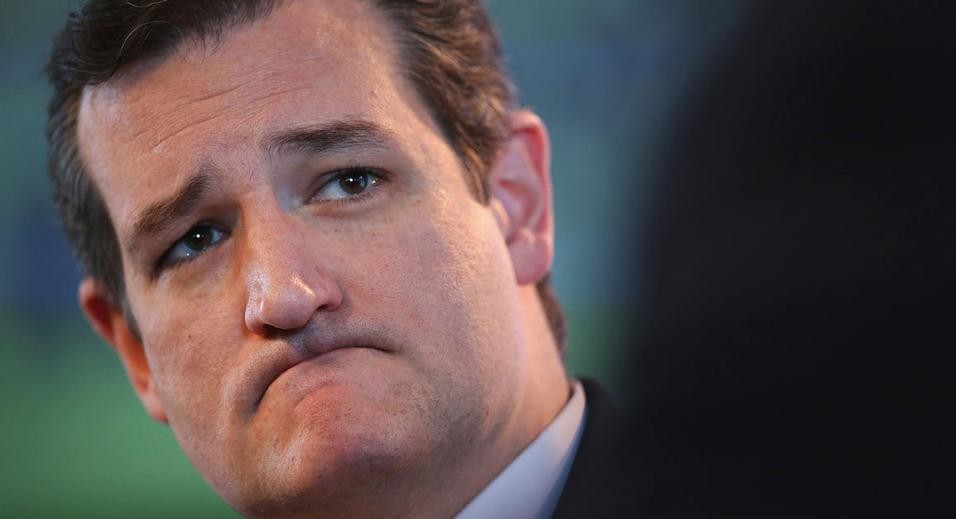
By Nima Shirazi | Wide Asleep In America | September 18, 2015
Presidential candidate Ted Cruz and the Tampa Bay Times’ Pulitzer Prize-winning fact-checking website PolitiFact were at each others’ throats last week over recent comments Cruz has made about the nuclear deal – officially known as the Joint Comprehensive Plan of Action (JCPOA) – reached this past July between Iran and six world powers.
The main reason for the spat is simple: Ted Cruz lies a lot.
In response to a particularly blustery claim made by the Texas Senator at a rally opposing the nuclear accord, which restricts Iran’s nuclear energy and uranium enrichment programs – reaffirming their purely peaceful nature – in exchange for a lifting of international sanctions, PolitiFact decided to investigate whether Cruz was telling the truth. (Spoiler: he wasn’t, and rarely does.)
At the rally, and afterward on Twitter, Cruz declared that the JCPOA “will facilitate and accelerate the nation of Iran acquiring nuclear weapons.” Even for a demagogic blowhard like Cruz, this is a ridiculous thing to say. Beyond the fact that we’ve heard for over three decades that the advent of an Iranian nuke is just around the corner – only a few years, maybe two years, a year and half, 12 months, six weeks away! – and these estimates have never been based upon credible evidence, the enhanced monitoring and inspections implemented under the new deal effectively prevent any possible Iranian move toward weaponizing its program for at least a decade, probably far longer. And that’s if Iran does the thing it’s never ever done: decide to build a nuclear weapon at exactly the time when its program is under the most intensive scrutiny of any nation’s program in history. The claim is absurd on its face.
Needless to say, it wasn’t too difficult for PolitiFact to judge this statement false.
But PolitiFact’s own understanding of the parameters of the Iran deal itself was surprisingly rife with errors, something that absolutely shouldn’t happen in a fact-checking article. The details, relayed by the website’s editors Louis Jacobson and W. Gardner Selby, were rendered this way:
Specifically, the deal requires Iran to give up 97 percent of its stockpile of highly enriched uranium, the kind needed to make nuclear weapons, as well as most of the centrifuges it can use to enrich uranium. In addition, Iran agrees to only enrich uranium to a level unsuitable for weapons for 15 years, and to cease production of plutonium, the other element that can be used to build a bomb. Known nuclear sites would be monitored for 15 years to confirm compliance, and inspectors would have the ability to enter undeclared sites suspected of nuclear use, though with possible delays of up to 24 days.
PolitiFact gets a bunch wrong here.
“Highly enriched uranium”
First, the deal does not require “Iran to give up 97 percent of its stockpile of highly enriched uranium, the kind needed to make nuclear weapons.” Why not? Because Iran doesn’t have any highly enriched uranium to give up.
This is a common mistake made by commentators, politicians, journalists, and pundits who should all know better. The fact is Iran has never enriched uranium above 19.75 percent U-235, which is defined by the IAEA itself as “low enriched uranium.” This is quite uncontroversial – no one, from the International Atomic Energy Agency (IAEA) to the U.S. intelligence community to the Israeli Mossad to non-proliferation experts, have ever claimed that Iran has produced a stockpile of highly enriched uranium (HEU). Iran has only ever produced low enriched uranium (LEU) – to levels of under 5 percent and under 20% – useful only as reactor fuel or medical isotopes, respectively, not bombs (which require enrichment levels of over 90 percent).
Furthermore, the IAEA has confirmed that, “since 20 January 2014, Iran has not produced UF6 enriched above 5% U-235 and all of its stock of UF6 enriched up to 20% U-235 has been further processed through downblending or conversion.” Additionally, as the agency has long confirmed, “All of the enrichment related activities at Iran’s declared facilities are under Agency safeguards, and all of the nuclear material, installed cascades, and feed and withdrawal stations at those facilities are subject to Agency containment and surveillance.”
What the JCPOA actually does, in this regard, is limit Iranian enrichment of uranium to no more than 3.67 percent U-235 LEU and, as the Arms Control Association notes, eliminates roughly 97 percent of Iran’s current LEU stockpile, capping it at a mere 300kg for 15 years.
“Production of plutonium”
PolitiFact also erroneously claims that, under the deal, Iran must “cease production of plutonium,” which makes no sense considering Iran has never produced plutonium. As I noted earlier this month, “Before it can be stockpiled, plutonium must first be extracted and reprocessed from the spent uranium fuel of an operational nuclear reactor. Iran has never done this and doesn’t even have a reprocessing plant. Iran has literally never extracted plutonium from a reactor core, let alone stockpiled it…”
In short, Iran can’t “cease” doing something it’s not – and never has been – doing.
Inspections
PolitiFact’s explanation of inspection parameters under the JCPOA is also disingenuous. By claiming that Iran’s “[k]nown nuclear sites would be monitored for 15 years to confirm compliance,” PolitiFact is implying that Iran’s nuclear infrastructure is not already under safeguards and constant monitoring, which it is – and has been for years, if not decades. Iran’s nuclear facilities have long been subject to the most intrusive and consistent inspection regime in the world.
The deal only strengthens this regime, allowing constant and immediate access to all declared nuclear sites and also to non-nuclear sites like centrifuge assembly workshops, centrifuge rotor production workshops and storage facilities, and uranium mines and mills, which, as nonproliferation expert Jeffrey Lewis has pointed out, “are not safeguarded anywhere else in the world.” This enhanced and unique access will last, in many cases, as long as 20-25 years.
PolitiFact’s language also suggests inspections of nuclear sites will cease after a decade and a half. This is totally wrong. In fact, all of Iran’s declared nuclear sites will remain under IAEA safeguards and surveillance in perpetuity, as mandated by the Nuclear Nonproliferation Treaty, to which Iran has been a party since its advent in 1968.
Even PolitiFact’s understanding of “possible delays of up to 24 days” is dubious, as this is the absolute maximum amount of time that access to a potentially suspect facility could be delayed through a process agreed to by all seven international parties (eight, if you include the European Union) to the JCPOA.
In truth, under the deal, the IAEA’s request to visit a suspect site “triggers a 24-day clock under which Iran and the IAEA have 14 days to come to an agreement on access. If not, the Joint Commission, created by the JCPOA, has seven days to make a determination on access, and if at least five of the eight members vote to allow the IAEA to investigate, Iran has three days to comply,” explains the Arms Control Association. At that point, the very first time this review protocol is tested to this extent, there’s a good chance the process of re-implementing sanctions on Iran would begin, rendering the tents of the JCPOA inoperable and signaling the imminent, if not immediate, collapse of the agreement altogether.
Who Fact-Checks the Fact-Checkers?
PolitiFact has rightly taken Ted Cruz to task for his false claims.
[In a petulant retort to being fact-checked, Cruz published even more lies in The National Review, declaring, among other things, that Iran cheated on a previous nuclear accord (it didn’t), that Iran is allowed “in certain circumstances” to “inspect itself, and report back on the ‘results’” (it’s not, not even close), and that the deal enables “Iran to finish their ongoing ICBM research and develop a missile that can carry a nuclear warhead across the Atlantic to America” (which is, simply, asinine).]
But in its own explanation of the Iran deal, PolitiFact repeats a number of baseless canards that have often been used by anti-diplomacy Iran hawks and deal-supporting liberal interventionists alike to mislead the public about the Iranian nuclear program and its capabilities.
For a “fact-checking journalism website aimed at bringing you the truth in politics,” PolitiFact should make sure to check itself before it, well, you know.
UN Condemns Ukrainian Government Cover-Ups
By Eric Zuesse | Aletho News | September 21, 2015
On September 18th, the UN’s Office of the High Commissioner for Human Rights headlined “Statement of the Special Rapporteur on extrajudicial, summary or arbitrary executions, Christof Heyns Ukraine: Lives lost in an accountability vacuum,” and condemned there the current Ukrainian Government in strong language, regarding not only the coup which had brought them to power in February 2014, but regarding also the massacre of the people who on 2 May 2014 had been peacefully demonstrating in Odessa against the coup. Specifically, the ongoing cover-ups by the Ukrainian Government concerning both of these matters were condemned by him.
The High Commissioner, Christof Heyns, said:
By allowing almost immediate access of the scene to ‘pro-unity’ protesters, members of the public or to municipal authorities, investigators lost a large proportion of potentially valuable forensic evidence. Meanwhile I am worried by indications that the Government has significantly reduced the size of the team investigating these events in the past year, before it has had an opportunity to report. The slow progress of the investigation and the lack of transparency with which it is being conducted have contributed to a great deal of public dissatisfaction and provided a fertile environment for rumour and misinformation. It is disconcerting that the Special Unit of the Ministry of Internal Affairs that investigates the 2 May events cancelled our appointment in Odessa at short notice, without any explanation.
I am further concerned that administrative and personal impediments seem to have been imposed to prevent or at least discourage the families of those who died from obtaining the status of suffering or affected persons before the Courts. Meanwhile I am greatly alarmed by reports of the extent to which authorities are tolerating both verbal and physical intimidation both of families attending court proceedings and of the judges of those cases, not only outside the court building, but also inside it and in the court room itself.
Here is an excellent video of the coup.
Here is a brief video on the massacre, on 2 May 2014, in Odessa’s Trade Unions Building.
Also of interest might be the following articles:
“Ukraine’s President Poroshenko Admits Overthrow of Yanukovych Was a Coup”
The Obama Administration has a strong record of installing anti-Russian governments — not only in Ukraine. Obama enabled the 28 June 2009 coup that overthrew Honduras’s progressive democratically elected President Manuel Zelaya to succeed, and enabled the coup’s junta to stay in power though no other head-of-state supported it; and the great investigative journalist Wayne Madsen reports on 21 September 2015 that there is strong reason to believe that the Obama Administration was actually behind the recent coup in Burkino Faso. Furthermore, the Obama Administration has been involved in unsuccessful coup-plots in Venezuela and Ecuador, according to a 12 March 2015 study by the Council On Hemispheric Affairs. In addition, the Obama Administration bombed Libya and removed Muammar Gaddafi from power there, and is bombing Syria in order to remove Bashar al-Assad from power there. The Obama Administration also has continued the Bush Administration’s policy of “unsigning” to the legal authority of the International Criminal Court, but doesn’t use the same rabid rhetoric against the Court that Obama’s predecessor did. The Obama Administration has also taken a strong anti-Russian position on virtually everything at the United Nations, such as by voting against a Russian-supported resolution condemning fascism in all its forms (including Holocaust-denial), which resolution passed overwhelmingly and was opposed by only three governments: U.S., Ukraine, and Canada.
Obama is highly critical of Russia, and of its leader, Vladimir Putin. The U.S. White House in February issued its National Security Strategy 2015, and it used the pejorative term “aggression” 18 times, 17 of which referred to Russia.
So, the U.N. High Commissioner’s statement condemning the Ukrainian Government’s cover-ups might be viewed in Washington as simply the UN’s taking the pro-Russian side. Psychopaths could view it that way. But other people will (like the UN) oppose cover-ups — and oppose Obama’s international policies (such as those described). Indeed, the only U.S. President who has been as hostile toward the UN as Obama is, was his immediate predecessor, whose policies Obama publicly opposed when running for the U.S. Presidency in 2008. And, then, in his 2012 re-election campaign, Obama vocally criticized his opponent Mitt Romney’s statement that Russia “is without question our number one geopolitical foe.” But, now, Obama cites Russia 17 out of 18 times for “aggression.”
Geir Lundestad, who was the Director of the Nobel Institute, and Secretary of the Peace Prize Committee, at the time when Barack Obama won the Nobel Peace Prize in 2009, recently said that “giving Obama a helping hand” was the reason why the Committee awarded Obama the Prize, but that doing this “did not achieve what the committee had hoped for.” However, he denied “that it was a mistake to give Obama the Peace Prize.” Even all of those coups and massacres don’t mean it was a mistake. Maybe it wasn’t much different from “what the committee had hoped for.” After all: Norway, and its Nobel Institute, is a U.S. ally. Unlike the United Nations, it only pretends to represent the interests of all people everywhere.
Investigative historian Eric Zuesse is the author, most recently, of They’re Not Even Close: The Democratic vs. Republican Economic Records, 1910-2010, and of CHRIST’S VENTRILOQUISTS: The Event that Created Christianity.
Anonymous general who predicts anti-Corbyn mutiny should be named by GCHQ – SAS veteran
RT | September 21, 2015
A former SAS soldier has blasted the anonymous British Army general who predicted a military coup if Jeremy Corbyn is elected prime minister. He said the comments threaten democracy and that the military has no excuses for declining to investigate.
Ben Griffin, who served in the Parachute Regiment and the Special Air Service in Iraq and Afghanistan and is now a member of anti-war group Veterans for Peace UK, told RT the general’s comments published in the Sunday Times are an affront to democracy.
“Why is this General cowering behind a reporter?” he said.
“He should go public with his statement. He is threatening the democratic will of the British people and he exposes the lie that the armed forces exist to protect our freedoms.”
After calls for an investigation began, the Ministry of Defence (MoD) is reported to have told the Independent newspaper it would not launch a leak investigation due to there being too many generals to investigate.
There are around one hundred generals currently serving in the British Army.
Asked if this excuse was feasible, Griffin pointed out that the government had something of a monopoly on surveillance.
“GCHQ could tell the MoD today which general it was,” he said, referring to the government’s world-leading signals intelligence agency.
“GCHQ collect the metadata of all phone calls and emails so they will have a record of which generals have been in touch with the journo who wrote the story,” he added.
The general in question, who is said to have served in Northern Ireland in the 1980s and 1990s, told the Sunday Times a Corbyn general election victory in 2020 would precipitate “mass resignations at all levels and you would face the very real prospect of an event which would effectively be a mutiny.”
“Feelings are running very high within the armed forces,” the individual said. “You would see a major break in convention with senior generals directly and publicly challenging Corbyn over vitally important policy decisions such as Trident, pulling out of NATO and any plans to emasculate and shrink the size of the armed forces.”
He appeared to pledge a military rebellion, with the army directly intervening in democracy.
“The Army just wouldn’t stand for it,” the general claimed.
“The general staff would not allow a prime minister to jeopardize the security of this country and I think people would use whatever means possible, fair or foul to prevent that.
“You can’t put a maverick in charge of a country’s security.”
Down the Memory Hole: NYT Erases CIA’s Efforts to Overthrow Syria’s Government
By Adam Johnson | FAIR | September 20, 2015
FAIR has noted before how America’s well-documented clandestine activities in Syria have been routinely ignored when the corporate media discuss the Obama administration’s “hands-off” approach to the four-and-a-half-year-long conflict. This past week, two pieces—one in the New York Times detailing the “finger pointing” over Obama’s “failed” Syria policy, and a Vox “explainer” of the Syrian civil war—did one better: They didn’t just omit the fact that the CIA has been arming, training and funding rebels since 2012, they heavily implied they had never done so.
First, let’s establish what we do know. Based on multiple reports over the past three-and-a-half years, we know that the Central Intelligence Agency set up a secret program of arming, funding and training anti-Assad forces. This has been reported by major outlets, including the New York Times, The Guardian, Der Spiegel and, most recently, the Washington Post, which—partly thanks to the Snowden revelations—detailed a program that trained approximately 10,000 rebel fighters at a cost of $1 billion a year, or roughly 1/15th of the CIA’s official annual budget.
In addition to the CIA’s efforts, there is a much more scrutinized and far more publicized program by the Department of Defense to train “moderate rebels,” of which only a few dozen actually saw battle. The Pentagon program, which began earlier this year and is charged with fighting ISIS (rather than Syrian government forces), is separate from the covert CIA operation. It has, by all accounts, been an abysmal failure.
One thing the DoD’s rebel training program hasn’t been a failure at, however, is helping credulous reporters rewrite history by treating the Pentagon program as the only US effort to train Syrian rebels–now or in the past. As the US’s strategy in Syria is publicly debated, the CIA’s years-long program has vanished from many popular accounts, giving the average reader the impression the US has sat idly by while foreign actors, Iranian and Russian, have interfered in the internal matters of Syria. While the White House, Congress and the Pentagon can’t legally acknowledge the CIA training program, because it’s still technically classified, there’s little reason why our media need to entertain a similar charade.
Let’s start with Peter Baker’s New York Times piece from September 17 and some of its improbable claims:
Finger-Pointing, but Few Answers, After a Syria Solution Fails
By any measure, President Obama’s effort to train a Syrian opposition army to fight the Islamic State on the ground has been an abysmal failure. The military acknowledged this week that just four or five American-trained fighters are actually fighting.
Notice the sleight-of-hand. There may only be “four or five American-trained fighters… fighting” expressly against ISIS, but there is no doubt thousands more American-trained fighters are fighting in Syria. The DoD’s statement is manifestly false, but because the New York Times is simply quoting “the military”—which, again, cannot not legally acknowledge the CIA program—it is left entirely unchallenged. This is the worst type of “officials say” journalism. The premise, while ostensibly critical of US foreign policy, is actually helping advance its larger goal of rewriting US involvement in the Syrian civil war. A four-year-long deliberate strategy of backing anti-Assad forces–which has helped fuel the bloody civil war and paved the way for the rise of ISIS–is reduced to a cheesy “bumbling bureaucrat” narrative.
Baker went on:
But the White House says it is not to blame. The finger, it says, should be pointed not at Mr. Obama but at those who pressed him to attempt training Syrian rebels in the first place — a group that, in addition to congressional Republicans, happened to include former Secretary of State Hillary Rodham Clinton.
At briefings this week after the disclosure of the paltry results, Josh Earnest, the White House press secretary, repeatedly noted that Mr. Obama always had been a skeptic of training Syrian rebels. The military was correct in concluding that “this was a more difficult endeavor than we assumed and that we need to make some changes to that program,” Mr. Earnest said. “But I think it’s also time for our critics to ‘fess up in this regard as well. They were wrong.”
In effect, Mr. Obama is arguing that he reluctantly went along with those who said it was the way to combat the Islamic State, but that he never wanted to do it and has now has been vindicated in his original judgment. The I-told-you-so argument, of course, assumes that the idea of training rebels itself was flawed and not that it was started too late and executed ineffectively, as critics maintain.
The sleight-of-hand continues: The article presents the training of rebels as a “way to combat the Islamic State,” but repeatedly speaks in general of training Syrian rebels as something “Obama always had been a skeptic of”–which flies in the face of the fact that he did so, to the tune of $1 billion a year over four years, with 10,000 rebels trained.
But the piece goes on to make clear that when it’s talking about “training Syrian rebels,” it’s referring not only to the anti-ISIS program but to efforts to overthrow Syria’s government as well:
The idea of bolstering Syrian rebels was debated from the early days of the civil war, which started in 2011. Mrs. Clinton, along with David H. Petraeus, then the CIA director, and Leon E. Panetta, then the Defense secretary, supported arming opposition forces, but the president worried about deep entanglement in someone else’s war after the bloody experience in Iraq.
In 2014, however, after the Islamic State had swept through parts of Syria and Iraq, Mr. Obama reversed course and initiated a $500 million program to train and arm rebels who had been vetted and were told to fight the Islamic State, not Mr. Assad’s government.
This is outright false. These two paragraphs, while cleverly parsed, give the reader the impression Obama parted with the CIA and Mrs. Clinton on arming opposition forces, only to “reverse course” in 2014. But the president never “reversed course,” because he did exactly what Panetta, Petraeus and Clinton urged him to do: He armed the opposition. Once again, the Pentagon’s Keystone Kop plan is being passed off by journalists who should know better as the beginning and end of American involvement in the Syrian rebellion. Nowhere in this report is the CIA’s plan mentioned at all.
The whitewashing would get even worse:
Some Syrian rebels who asked for American arms in 2011 and 2012 eventually gave up and allied themselves with more radical groups, analysts said, leaving fewer fighters who were friendly to the United States.
But the US did get arms to Syrian rebels in 2012. In fact, Baker’s own publication reported this fact in 2012 (6/21/12):
CIA Said to Aid in Steering Arms to Syrian Opposition
Indeed, according to a rather detailed New York Times infographic from 2013 (3/23/13), shipments began, at the latest, in January 2012:

Note that this map accompanied an article headlined “Arms Airlift to Syria Rebels Expands, With Aid From CIA.”
The CIA’s program, when discussing a fraught foreign policy issue like Syria, is simply thrown down the memory hole. How can the public have an honest conversation about what the US should or shouldn’t do in Syria next when the most respected newspaper in the US can’t honestly acknowledge what we have done thus far?
The New York Times wouldn’t be alone. Comcast-funded Vox would also ignore the CIA rebel training program in its almost 4,000-word overview of the Syrian civil war. Again, the Pentagon’s program would be the sole focus in regards to funding rebels, along with reports of Gulf states doing so as well. But the CIA funding, training and arming thousands of rebels since at least 2012? Nowhere to be found. Not mentioned or alluded to once.
Reuters and the Washington Post’s reports on the US’s Syrian strategy revamp, while they didn’t fudge history as bad as the Times and Vox, also ignored any attempts by the CIA to back Syrian opposition rebels. This crucial piece of history is routinely omitted from mainstream public discourse.
As the military build-up and posturing in Syria between Russia and the United States escalates, policy makers and influencers on this side of the Atlantic are urgently trying to portray the West’s involvement in Syria as either nonexistent or marked by good-faith incompetence. By whitewashing the West’s clandestine involvement in Syria, the media not only portrays Russia as the sole contributor to hostilities, it absolves Europe and the United States of their own guilt in helping create a refugee crisis and fuel a civil war that has devastated so many for so long.
Iceland Counters US Military Claims of ‘Russian Flights’
Sputnik | 20.09.2015
Iceland’s foreign ministry countered US defense department claims that Russia has increased activity around the country and that it is interested in “military cooperation.”
The US government attempted to convince Iceland to accept a higher US military presence over what it called increased Russian military flights in the region, Icelandic media reported.
Iceland’s foreign ministry released figures showing that Russian military flights anywhere near the country’s airspace have actually decreased more than five times compared to 2007. None of the flights breached Icelandic airspace.
“The Russians have long done transit flights where they pass close by Iceland, but they’ve recently made several circumnavigation flights,” US deputy defense secretary Bob Work told DefenseNews earlier in September.
However, the US military’s claims do not match up with Iceland’s own figures, which show that Russia only made two flights anywhere near the country’s airspace in 2015.
“Iceland is interested in increasing military cooperation,” Work added.
Iceland’s foreign minister Gunnar Bragi Sveinsson countered, saying that interest in NATO air defenses in Iceland is coming entirely from the side of the US.
The US has recently increased its military involvement in Northern Europe, citing what deputy defense secretary Bob Work called “a resurgent Russia.”
Featured Video

Why Hamas Really Attacked Israel on Oct. 7
or go to
Aletho News Archives – Video-Images
From the Archives
Israel: Strategic Ally or Liability?
By Stephen Sniegoski | My Catbird Seat | June 12, 2010
The claim that Israel serves as a valuable ally for the United States is made by both pro-Zionists and much of the anti-war and anti-Zionist Left that is influenced by Noam Chomsky. As a result of the Gaza flotilla massacre, which has caused a world-wide uproar against Israel, the value of Israel to the United States is being publicly questioned in more mainstream foreign policy forums. … continue
Blog Roll
 Aletho News
- Why Hamas Really Attacked Israel on Oct. 7
- Declassified UK exposes British man who fought for ‘Israel’ in Gaza
- West’s death cult in a theater near you
- How the Yandex ‘Russian bots’ lie fell apart
- Burnham’s ‘Russia did Brexit’ ruse crumbles
- Estonia making movies and games to encourage war against Russia
- Four in five new UK jobs taken by foreigners – report
- Here’s what Trump’s latest U-turn really means for Russia and Ukraine
- The Houthis Are Not an Iranian Proxy
- Europe’s Energy Hypocrisy, Russian LNG Profits and US Dependence
- If Americans Knew
- Activists Abused By Israel Return to New Freedom Flotilla Mission
- 60 Minutes won’t tell the full truth about Israeli settler violence
- Nearly 50,000 women, girls killed or severely injured in Gaza since October 2023: UN Women
- ADL is working with AI companies to suppress alleged ‘antisemitism’
- Israeli occupation forces using social media surveillance unit to target hundreds of Palestinians in the West Bank
- Israel’s New – and Terrifying – Security Doctrine
- Israeli Attacks Kill Five in Gaza, Including a four-year-old and a woman
- Air Force Major Who Called for Trump’s Impeachment Held in Solitary Confinement
- It’s a Genocide, I’m Into It’: Seinfeld Mocks Protest over Palestinian Children Killed
- Universities fire dozens amid pressure from Zionist billionaires
- No Tricks Zone
- New Study Suggests Large Regions Of The Pacific Ocean Have Been Cooling For The Last 80 Years
- Germany’s Green Energy Debacle: High Energy Costs Force Kahla Porzellan to Close After 182 Years!
- New Study: 50 Years Of The Most Aggressive ‘Net Zero’ Policies Can Only Affect The Global Climate By 0.03°C
- US September “Heat” Was No Record…Many Records Set Decades Ago
- Latest European Green Energy Debacle; Portugal’s Largest Flagship Solar Park Insolvent!
- Green Energy Debacle: German Expert Professor Fritz Vahrenholt Warns Of Severe Economic And Social Consequences
- Two More Paleo Reconstructions Affirm Meters-Higher Sea Levels Across Ireland, Brazil 7000-6000 Years Ago
- New Study: Earth And Venus Surface Warmth Largely Explained By Convection And Lapse Rate, Not CO2 Or Radiation
- 2025 Nature Paper Claiming Worsening Global Drought Gets RETRACTED …Heavily Flawed
- New Study: ‘Global Drought Shows No Detectable Recent Acceleration Under Climate Warming’

