Non-commitment probe into Iran by France, Germany & UK ‘groundless,’ only increases tensions around nuclear deal – Russia
RT | January 14, 2020
The European trio’s accusation that Iran violates the key restrictions of the nuclear deal are unjustified, the Russian Foreign Ministry said urging the countries not to increase tensions that could endanger the pact.
Paris, Berlin and London officially reported Iran’s non-compliance with the 2015 agreement to the Joint Commission under the Dispute Resolution Mechanism. This step could potentially lead to the UN Security Council being forced to decide on whether or not to bring back sanctions against Tehran.
“We can’t rule out that the ill-considered actions of the European trio will lead to a new escalation around the JCPOA (Joint Comprehensive Plan of Action) and make the return to the implementation of the ‘nuclear deal’ in its initially agreed format unachievable,” Russia’s Foreign Ministry said in a statement.
Iran rolled back on its uranium enrichment constraints detailed in the international agreement earlier this month after one of its top military commanders, Qassem Soleimani, was assassinated in an American drone strike in Iraq.
Tehran’s decision to put its commitments on hold was a response to the actions of the US, which unilaterally withdrew from the deal in May 2018 and reintroduced restrictions against Iran, the ministry reminded. However, the country keeps allowing the International Atomic Energy Agency (IAEA) monitors to its nuclear sites – and “the transparency of the Iranian nuclear program has been one of the key clauses of the nuclear deal.”
Despite vocally rejecting the US campaign of “maximum pressure” on Iran, France, Germany and the UK are “either not ready or can’t afford to” work on finding effective ways of bypassing the hurdles to the deal created by Washington.
There are also “serious problems” with implementing the side of the deal on the part of the European trio, the ministry said. When all those issues are settled, “Iran would have no reason to retract from the initially agreed framework of the JCPOA.”
Tel Aviv calls for Gulf States to unite with Israel against Iran
MEMO | January 11, 2020
Former Israeli communication minister, Ayoob Kara, has called for the Gulf States to form a security and economic “union” with Israel, to stand against Iran at all levels, Shehab News Agency reported on Friday.
Kara, who is very close to the Israeli prime minister, Benjamin Netanyahu, posted on Twitter that the goal of this “union” is to be a “strong front in the face of Iranian evil.”
The tweet came after the Iranian declaration that Iran would turn its hostile arms against Haifa and Dubai. In his tweet, Kara announces: “It is time that the States of the Arab Gulf come together with Israel in a security and economic union to stand against Iran’s threats in the Middle East.”
How much difference do Russia’s new nuclear weapons really make?
By Padraig McGrath | January 10, 2020
Are Russia’s Avangard and Sarmat missiles really the game-changers which they’re depicted to be?
Readers may recall President Putin’s unveiling of these weapons systems on May 1st 2018. His state of the union address to the federal assembly that day could certainly be described as provocative, perhaps inadvisably so. Ever since then, both Russian and western media have discussed at length the numerous reasons why these ICBM’s render all currently existent missile-defence systems obsolete.
First and foremost, these weapons are seen as invulnerable to all currently existent missile defence systems because of their hypersonic capabilities. Avangard can fly at about 33 thousand kilometres per hour, or 27 times the speed of sound. The RS-28 Sarmat can fly in excess of 25 thousand kilometres per hour.
Missile defence systems, fundamentally, work on the basis of the premise that if an interceptor missile can detonate its own nuclear warhead within a 10-kilometre radius of the flight-path of the missile which it is attempting to intercept, then the resulting shock-wave stands a pretty good chance of bringing the target down or otherwise knocking it out of its flight-path. So, in practical terms, “intercepting” a nuclear missile means getting an interceptor to within a 10-kilometre radius of its flight-path.
However, under actual battle-conditions, the chances of intercepting ICBM’s in this way would not be particularly good to start with. Therefore, a more effective missile defence methodology is simply to “intercept” them during their boost phases – that is to say, before they launch. Hit them before they leave the ground.
Both the Avangard and the Sarmat fly far, far too fast for aerial interception to be plausible.
Furthermore, both the Avangard and the Sarmat can be re-maneuvered in mid-flight, making it extremely difficult for missile defence systems to predict their trajectories. In the case of Sarmat, an added problem for currently existent missile defence systems is that it has an extremely short boost phase, making it difficult for spy-satellites to identify the imminent threat in time, and also making it more difficult to track once it has launched.
However, there is one solid counter-argument to the idea that, strategically, these new weapons-systems change everything.
Namely, Russia already had hypersonic ICBM capability 15 years ago. The Topol-M SS27 was and is hypersonic, capable of flying at about 14 thousand kilometres per hour. It’s not quite as fast as the Sarmat or Avangard, but it’s still far too fast for any interceptor to have a realistic chance to getting within the required 10-kilometre radius of its flight-path. Furthermore, the Topol-M SS27 could be re-maneuvered in mid-flight, just as Sarmat and Avangard can, and it releases a multiplicity of different warheads, each with a different trajectory, once it nears its target. Furthermore, the Topol-M SS27 could be launched from the back of a truck, making it almost impossible to pre-empt during its boost-phase.
In short, all of NATO’s currently existent missile defence infrastructure was already obsolete 15 years ago.
Scott Ritter is a former US intelligence officer and weapons inspector who participated in formal inspections-teams at the Votkinsk Machine-Building Plant, where the SS-27 and its predecessor the SS-25 were assembled. In January 2005, he argued that “to counter the SS-27 threat, the US will need to start from scratch… The US cannot afford to spend billions of dollars on a missile-defense system that will never achieve the level of defense envisioned. The Bush administration’s embrace of technology, and rejection of diplomacy, when it comes to arms control, has failed.”
Neither the Bush administration nor the Obama administration ever did start from scratch. They simply pressed ahead with the installation and deployment of missile defence systems which they knew were already obsolete. The Trump administration adheres to the same obtuse path.
The desire to protect the interests of the US corporations which contract for the Aegis missile defence project is only one of the motivations which drives this policy. In addition, the presence of Aegis missile defence installations in Poland and Romania economically incentivizes local elites within those countries to propagandize their own populations, to amplify fears of the Russian bear at the local level, thereby cementing ideological loyalty within the NATO defence-apparatus.
Furthermore, it should be noted that it has never been possible to test any missile defence system under anything even realistically simulating actual battle-conditions. Missile defence systems are tested one shot at a time, which is completely unrealistic. Under actual battle-conditions, they would be required to intercept several dozen ICBM’s in simultaneous flight, and there is absolutely no evidence whatsoever that more than a fraction of the ICBM’s would be successfully intercepted.
Therefore, we can say that the primary strategic purpose of a missile defence installation, as opposed to its economic purpose or ideological purpose, is simply to serve as a pretext for its adjoining radar-installation. Parked so close to Russia’s borders, these installations are elaborate pretexts for electronic espionage or signals-intelligence (SIGINT).
However, the Russian government is playing the same game – both sides have their own reasons for pretending that Sarmat and Avangard are “game-changers,” when in fact we know that the Topol-M SS27 was the real game-changer. While the nations within the western alliance maintain this pretense in order to justify increasingly gargantuan defence-budgets and to propagandize their own populations with Russophobic hysteria, the government of the Russian Federation does so in order to persuade Russia’s population that perpetual geo-strategic threats are being addressed. As with much content published in Russia’s media-space, the disproportionate focus on geo-strategy, external relations and external security issues occurs because these are the spheres in which the Russian government is at its most professionally competent. This disproportionate media-focus, therefore, is devised in order to detract attention from domestic issues wherein the government’s record of effective policy-implementation has not been quite so successful.
Iran’s fifth step in suspending nuclear commitments will not mean end to JCPOA: Araqchi

Iranian Deputy Foreign Minister for Political Affairs Abbas Araqchi
Press TV – January 7, 2020
A senior Iranian official says the country’s decision to take the fifth and final step in reducing its commitments under a landmark nuclear deal it clinched with major world powers in 2015 does not mean an end to the accord or Tehran’s withdrawal from it.
Speaking to reporters in Tehran on Tuesday, Iranian Deputy Foreign Minister for Political Affairs Abbas Araqchi said the last step means that “we have reached a reasonable balance” in the nuclear deal, officially known as the Joint Comprehensive Plan of Action (JCPOA).
“The US withdrawal from the JCPOA disrupted the balance of this international accord and now we think that we have reached a reasonable balance in the JCPOA after scaling back the nuclear commitments,” he added.
The Iranian government announced in a statement on Sunday that from now on, the country will observe no operational limitations on its nuclear industry, including with regard to the capacity and level of uranium enrichment, the amount of enriched materials as well as research and development.
“By taking the fifth step in reducing its commitment, the Islamic Republic of Iran eliminates the last key operational restriction it faced under the JCPOA, which is the limitation imposed on the number of centrifuges,” it said.
Araqchi, who is also a senior nuclear negotiator, further said the amount of enrichment would depend on the agenda of the Atomic Energy Organization of Iran (AEOI) and the country’s requirements.
He reiterated that the Islamic Republic would continue to cooperate with the International Atomic Energy Agency (IAEA) and said, “We are ready to come back to the previous process whenever the opposite sides [of the nuclear deal] will be able to meet our demands and fulfill their commitments under the JCPOA.”
“It is possible to save the JCPOA if the opposite sides want,” the Iranian diplomat added.
In response to a question about the possibility of Europe triggering the JCPOA’s “dispute resolution mechanism,” also known as the trigger mechanism, whose activation can lead to the return of the UN sanctions on Iran, Araqchi said it only would accelerate the termination of the deal.
“As Iran acted wisely after the US withdrawal from the JCPOA, the other sides are also expected to behave prudently and refrain from escalating tensions,” he added.
US President Donald Trump, a stern critic of the historic deal, unilaterally pulled Washington out of the JCPOA in May 2018, and unleashed the “toughest ever” sanctions against the Islamic Republic in defiance of global criticism in an attempt to strangle the Iranian oil trade.
In response to the US unilateral move, Tehran has so far rowed back on its nuclear commitments four times in compliance with Articles 26 and 36 of the JCPOA, but stressed that its retaliatory measures will be reversible as soon as Europe finds practical ways to shield the mutual trade from the US sanctions.
Iran’s latest nuclear announcement coincided with a major escalation of tensions with Washington after the US assassination of Lieutenant General Qassem Soleimani, the commander of the Quds Force of the Islamic Revolution Guards Corps (IRGC), in a drone strike in the Iraqi capital of Baghdad early on Friday.
Iran has criticized the three European signatories to the JCPOA — Britain, France and Germany — for failing to salvage the pact by shielding Tehran’s economy from US sanctions.
21st Century Wire YEAR IN REVIEW: 2019 Top Ten (Real) Conspiracies
21st Century Wire
It’s New Year’s Eve again, which means it’s time for our annual wrap-up, looking at some of the most important and unusual, and dare we say conspiratorial events of 2019. This past year was built on the back of a highly polarizing 2018, which saw the post-World War II world order coming apart at the seams, and the 20th century religions of neoliberalism and globalization being relegated to the ideological depths in the face of an evolving nationalist and mercantilist Anglo-American-dominated transatlantic order. Following on from 2018, this year saw the collapse of the seemingly sacrosanct ‘official conspiracy theory’ narratives of improbable ‘chemical attacks’ like Skripal in the UK, and Douma in Syria, both of which had profound geopolitical ramifications at the time. These are just a few stories which helped to shape the zeitgeist this past year. If 2019 taught us anything, it’s that conspiracies are real…
There were a number of honorable mentions this past year which would have normally been good enough to break into the top ten in previous years, but not this time…
Honorable Mentioned Highlights – One event which would’ve normally made it into the top ten, but didn’t, was President Trump’s grand decree in October that he would be “pulling US troops out of Syria” – only this was the third time he made such an announcement in the past 24 months, and just like the previous ones, this one was another bait and switch. To compensate for leaving US forces to illegally occupy Syria’s own oil fields, Trump was able to ‘close the file’ on alleged ISIS leader Abu Bakar Al-Baghdadi. We’re told that the illusive Caliph was supposedly chased-down, “whimpering and crying,” by a US military German Shepherd in a dead-end underground tunnel in Idlib. Of course, we’ll never know what actually happened because the US military proceeded to level the compound with an airstrike, thus destroying any evidence. Other official conspiracy theories of note included the untimely death of British mercenary entrepreneur, James Le Mesurier, who was founder of the controversial White Helmets ‘search and rescue’ group. After his death, ruled a likely suicide under the influence of medication (falling from his balcony while his wife was sleeping in the adjacent room) by Istanbul police, Le Mesurier’s defenders in mainstream media and intelligence agencies began blaming his death on members of public, journalists and academics who had either questioned or criticized Le Mesurier and the nature of US and UK-backed White Helmets operations alongside listed terrorist organizations in Syria. On a related geopolitical front, Iran featured heavily in what some dubbed as the Tanker Wars in 2019, which included a series of unidentified attacks on western and Gulf flagged oil tankers traveling in the Persian Gulf. Naturally, these were blamed on Iran by the US, and were followed by the British military hijacking and seizing an Iranian tanker off Gibraltar and preventing it from delivering fuel to the sanctions-hit economy of Syria. It seemed the West was testing various mechanisms to trigger a war with Iran, maybe hoping for an irrational response which never came. The US also baited the Iranians by flying in its airspace with their $150 million Globalhawk drone, which Iran shot down with their $12,000 anti-aircraft unit. Tensions remain high. 2018’s “Antisemitism in the Labour Party” canard was ramped-up and weaponized in 2019 to form part of an all-out establishment propaganda effort to reduce electoral support for Britain’s Labour Party in the run-up to the General Election. Sadly, it worked, but the political assassination of Jeremy Corbyn will go down in history as one of the darkest political acts ever, perpetrated by a shrewd coalition that included the Israeli Lobby, the Conservative Party, the Tony Blair wing of the Labour Party, and the mainstream media. Other honorable mentions for 2019 may include Brussels moving ever-closer to finalizing its new “EU Army”, aka EU Defense Union, something which Tories happily avoided talking about before the last election, possibly because they have quietly committed to opt-in to the new defense arrangement – even if there’s a Brexit. In Asia, the western press began ramping-up the human rights rhetoric in order to condemn China for its treatment of Muslim ethnic minority Uyghurs in the western Chinese province of Xinjiang, claiming China has interned millions of Uyghurs in cruel concentration camps. But the US seems to be taking a leaf from China’s authoritarian book, as Silicon Valley’s Kafkaesque political censorship and de-platforming program reach new highs in 2019, and looks set to continue in 2020 with the US elections. Twitter was also exposed as employing Saudi spies to dig up dirt on critics of the regime, as well as British spooks from Brigade 77 information warfare unit embedded at the tech firm too. Late in the year, the US also saw a bizarre mass shooting by a ‘rogue’ Saudi pilot training at the US base there, which was quietly swept under the rug by US officials. Around the same time, we saw yet another alleged ‘ISIS inspired’ terror attack on London Bridge – a quintessential Daily Shooter event if there ever was one, featuring another known wolf, on the radar of intelligence, wearing a tag, and even attending a ‘prisoner reform’ conference next door. Unfortunately the perp won’t be interrogated because he was executed on the city pavement before anyone could get to the bottom of what happened, and more importantly, why. Shades of Jean Charles de Menezes, and so many others by now.
One important thing to consider about 2019 is the slow motion break-down of all the western establishment’s official Russian conspiracy theories, all of which have featured so heavily in American and European politics since 2014. In other words, this worn-out framework has all but collapsed, but that won’t stop the usual media maven and political opportunists from still flogging that old horse.
With that in mind, here are some of the absolute blockbuster top real conspiracies of 2018…

10. Hong Kong’s ‘Democracy’ Protests – Hong Kong ends 2019 with more ‘democracy’ protests, supposedly disrupting normal festivities and shopping in China’s unique financial hub. Both US Democrats and Republicans gushed over protest leader Joshua Wong, flying him to Washington for photo-ops with Nancy Pelosi and Marco Rubio. However, it soon became known that the US government was actually directing and funding this supposed ‘grass roots uprising’ in China’s troubled territory. The US mainstream media then spun a propaganda campaign to try and paint the Chinese police in Hong Kong as ‘brutal’ and ‘repressive’, when in fact they were the opposite. Then evidence began to emerge showing extreme violence being used by the US-backed protest mobs, where Wong’s masked foot soldiers could be seen beating innocent passers-by, and even attacking elderly residents as well. ‘Pro-Democracy’ violence featured one particularly grisly attempted murder of multiple Hong Kong residents, including State Department-backed ‘freedom demonstrators’ who set a man on fire, attempting to burn him alive on the street. This push to demonize China can be viewed as part of the new US focus to disrupt and damage China’s reputation internationally as it attempts to forge ahead with its world-beating Belt and Road Initiative. Of course, the US is not taking China’s ascendancy lying down, but by the same token, fielding street thugs on the streets of Hong Kong may not net any long-term dividends, other than anger China and re-polarize the Pacific Rim. Maybe, that’s the plan.
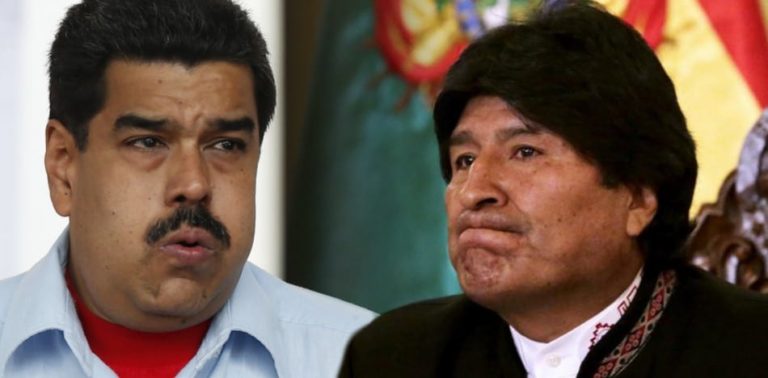
9. Reconquista: Washington’s Take-down of South America – In 2019, Washington began turning back the clock to CIA’s golden years of the 1950s, 60s, and 70s, where democratically Latin American governments were toppled one by one, and replaced by US-installed fascists and military juntas. The year started off with a bang, as the US State Department and its various operatives, over the span of three months, attempted no less than three failed coups in Venezuela. They even wheeled-out Jurassic neocon Elliot Abrams from the basement of Foggy Bottom to see if he had any of his 1980’s dark clandestine magic left in him. But the public support of the government of Nicholas Maduro was much stronger than the policy maven and spooks in Washington had anticipated. Comically, Neocons even went so far as to appoint their own President for Venezuela, a marionette named Juan Guaidó, which half of Venezuela hadn’t even heard of. A year on, the entire escapade has become a joke. Not surprisingly, a humiliated Trump Administration has quietly backed off of Venezuela, opting instead to continue sanctioning its economy, shorting its currency, stealing its foreign assets – all in all, punishing its citizens for rejecting a hostile US takeover. But Washington had better luck in Bolivia where a US-backed ultra rightwing fascist column was used in violent street protests demanding the removal of democratically elected President Evo Morales. To pull off the final move, the US had effectively bought off the country’s military and police forces who were used to depose Evo – in classic 1960’s CIA style. Evo was forced to flee his own country to Mexico, as US-backed mobs ransacked his home, and began hunting down and intimidating his political allies. That’s freedom and democracy, American style.
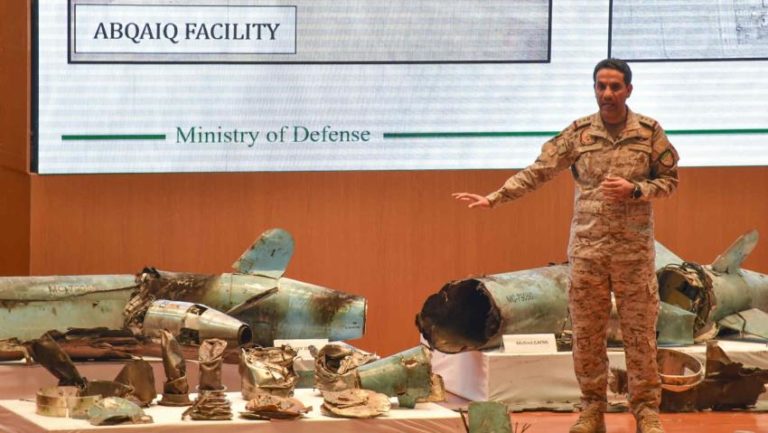
8. Yemeni Drones & Saudi Aramco – In September, an incredible underdog event took place. After nearly five years of a relentless war being waged against Yemen by its neighbor Saudi Arabia along with accomplices the United States, UK and the UAE – Yemen struck back, with its Houthi Resistance fighters launching a makeshift drone attack hitting two major Saudi Aramco oil installations across the border. Even though the Houthi Rebels immediately claimed responsibility for the assault on Abqaiq, the world’s largest oil processing plant, US Secretary of State Mike Pompeo immediately rejected the claim, and instead the US and Saudi invented a new official conspiracy theory which blamed Iran, accusing the regional rival of having “now launched an unprecedented attack on the world’s energy supply.” Saudi put on an legendary TV press performance to show the world the ‘evidence’ it had of drone fragments, supposedly implicating Iran. They hoped this could raise tensions enough to justify military action against Iran. “There is no evidence the attacks came from Yemen,” said Pompeo on Twitter. In the end, this intricate conspiracy theory spun by Washington simply fizzled out due to a lack of evidence to support their tenuous claim. As with its embarrassing failure in Venezuela, Washington just backed off quietly, and hoped no one would talk about it any more. What this incident really showed was that under-equipped, under-funded, and fully embargoed Yemen – could deliver a fatal blow inside of Saudi Arabia, and influence world energy markets by doing so. Make no mistake about it: Saudi and the US have been put on notice in Yemen.
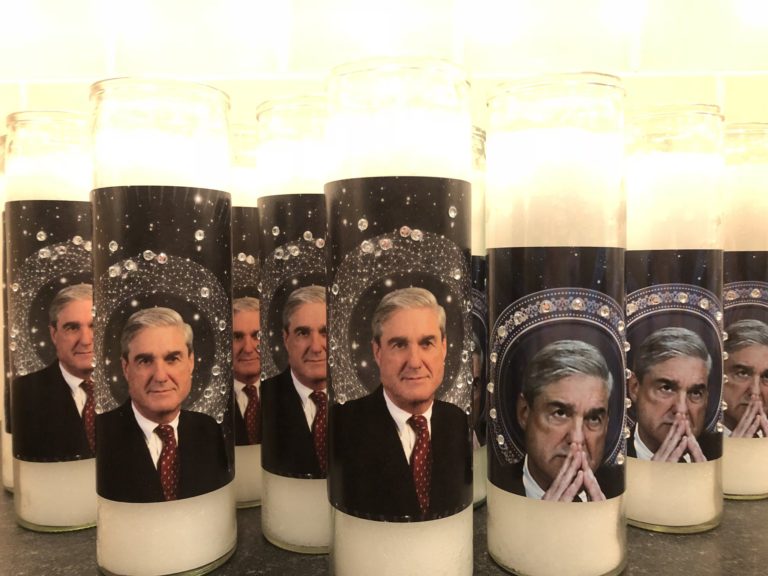
7. Mueller and the Collapse of RussiaGate – Remember the official conspiracy theory pushed by the US establishment – that Russia somehow intervened in the 2016 US Presidential Election on behalf of Donald Trump, thus catapulting him into the White House? This past spring, the hysteria and excitement reached such a fever pitch, that Robert Mueller was canonized as the new patron saint of the Resistance movement. But it was a house of cards. Well after three long and torturous years, in an big top circus featuring 40 FBI agents, intelligence analysts, forensic accountants and staff assigned to investigate, more than 2,800 subpoenas issued by the Special Counsel Mueller’s office, some 500 search warrants executed, more than 230 orders for communication records, 50 authorized orders (lets the government know who someone is communicating with and when, but not what they said), 13 evidence requests to foreign governments, 500 witnesses interviewed, well over $30 million taxpayer costs… the much-anticipated Mueller Report and investigation found no evidence that Trump had conspired with Russia. No collusion, and no election ‘interference’ by Russia. Nothing. RussiaGate R.I.P.
It should go down in history as one of the biggest phony official conspiracy theories of all-time. During his own testimony, the vaunted former FBI director Mueller came off as an incompetent old crank. The entire affair was a disaster for Democrats and their loyal mainstream media networks, all of whom had relentlessly hyped this conspiracy for years. In the end, this epic dud can only help Trump in his 2020 re-election bid. Let that sink in for a minute…

6. UkraineGate and Trump’s Impeachment – Alas, the death of RussiaGate gave way to a brand new gate… UkraineGate, and with it came that impeachment hammer which Democrats had been promising from before Trump was even sworn in office. Suddenly, Trump was facing the most perilous threat to a tenure of POTUS since Bill Clinton, Richard Nixon and Andrew Johnson before that – all because of a telephone call on July 25th (the day after Robert Mueller tanked with his disastrous congressional testimony) with Ukraine’s newly elected president, Volodymyr Zelenksy. According to House Democrats, during the call, Trump threatened Zelensky with withholding a free donation of US weapons to Ukraine unless the Ukrainian president re-opened a corruption investigation into 2016 US election meddling under the previous President Poroshenko, and more importantly the activities former vice-president Joe Biden and his son Hunter Biden. According to lead inquisitor Adam Schiff (CA-D), someone told someone about the call, who then told a “whistleblower” (a CIA analyst and friend of Obama and the Bidens) about it, who then then filed a complaint. In the end, Ukraine got its free stash of US missiles as ordered, but Democrats claimed Trump abused his power by asking for a “Quid Pro Quo” that somehow placed the national security of the US in grave danger, and that Trump tried to railroad a political opponent (Joe Biden is supposedly the DNC’s pre-determined selection for presidential nominee) by asking a foreign power to investigate him and his son, all of which they say rises to the level of “high crimes” by Trump. When asked, even Zelensky said there was no quid pro quo. This hardly mattered, as the verdict was already written before the hearings. Another grand official conspiracy theory cooked up by the establishment? Seems so. So shaky are Democrats about their case, that House leader Nancy Pelosi has failed to send her Articles of Impeachment before Christmas to the US Senate for the next step which is an Impeachment trial. This kicks the whole affair into the new year, and with poll numbers steadily rising against Democrat’s impeachment misadventure, it does not look good at all for Democrats heading into the 2020 election.

5. Greta – On paper, it sounded like the stuff of Hollywood: a 15-year-old Swedish student started a school strike for ‘the climate’ outside the Swedish Parliament, and her campaign went viral around the globe, and a new youth climate change movement was born. Incredible. Inspiring. Al Gore and associates were over the moon; their Joan of Arc had finally arrived to help save the planet. Time Magazine even named her “Person of the Year” in 2019. But on closer examination, the rise of Greta Thunberg was anything but grassroots. From the very first day, her campaign was driven by a multi-million dollar public relations machine that includes dozens of NGOs and media outlets, foundations and trusts, as part of an environmental astroturf extravaganza, the likes of which we’ve never seen. The practice is known as greenwashing – and in this case, Wall Street and City hedge funds, as well as a gaggle of foundations and NGOs – all hoping to capitalize on the new green bubble, and all determined to use this young child as their political battering ram to drive home an international ‘climate’ agenda. Greta gained headlines after scolding the public with her angry prose, “How dare you!” scowled the angry Swede at the infamous UN panel. “You have stolen my dreams!” railed the youngster to a room full of jovial stakeholders (while putting on an injured voice, reading off the script provided to her by a team of handlers). Their ‘climate emergency’ narrative is based on the theory that man-made CO2 is heating up the Earth’s atmosphere which will cause seas levels to rise and cause the “sixth mass extinction.” However, real data actually indicates that the Earth is heading into a cooling phase and that any changes in climate have nothing to do with man-made activity, but rather from the sun’s activity. Both sides of the debate do not appear to be budging, but the cooling camp seems to have real data in its favor, while the warmists seem to be relying heavily theory and computer-modeled climate predictions – programmed by scientists eager to show that man-made global warming is a real phenomenon. In the end, this unsuspecting child is being used by a cynical class of millionaires and billionaires, clearly stoking-up a generational culture war, with angry middle class youth demanding that western governments ‘unlock’, or rather rob trillions from existing pension funds in order to finance the bold dream of a ‘Green New Deal’ and the promise of a green utopia – they just need you to give them some $51 trillion to fund various and sundry “green tech,” which activists are convinced can lower the earth’s temperature and stave off the inevitable extinction of the human race by 2030, or maybe 2050, or is it 2100? We’re actually not sure, but we promise it’s totally real. What could possibly go wrong?
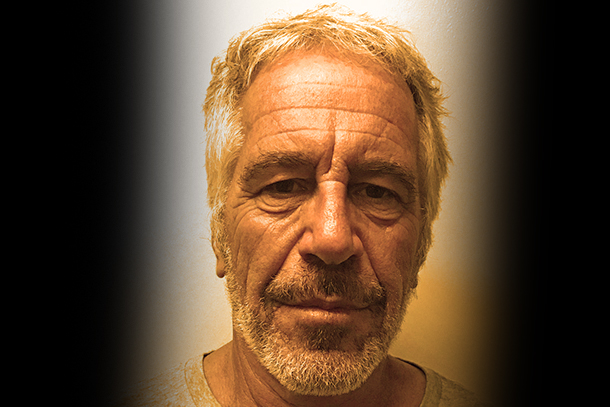
4. Epstein – As horrendous as revelations of Jimmy Saville were for western high society, the chronicles of billionaire VIP sex trafficker Jeffrey Epstein were more devastating by orders of magnitude. His exploits ensnared US President Bill Clinton, and high-flying lawyer Alan Dershowitz, along with a long list of high-ranking VIPs. The fallout didn’t spare the British Royal Family either, with Prince Andrew being cast out into social oblivion for his own role in the scandal. The more the story marinated, the more seedy it became. His was a story of one locked door after another, concealing the adjoining halls of a castle dark which can only be acquired by navigating the circles of extreme wealth and influence. Many believe this was part of a high level blackmail operation designed to create leverage over top decision makers in politics and industry. There are also indications that Epstein “belonged to intelligence,” although it’s not certain which agencies he may have been supplying information to. For his own part, Epstein’s story ended abruptly after he was reportedly unconscious in a federal jail cell at New York’s Metropolitan Correctional Center on Saturday August 10, 2019. The death was quickly ruled a “suicide by hanging.” Somehow, the CCTV camera footage appears to have gone missing. The guards, we’re told, were not on duty. “It was a horrible series of coincidences,” so says the official conspiracy theory of the highly unlikely death of Jeff Epstein in federal custody. He was awaiting a federal trial for charges of conspiracy and sex trafficking of underage girls dating back to the early 2000s. After his death, the trial was shelved. So it goes without saying that many ‘important’ and powerful people benefited from this outcome. His main accomplice is still at large, Ghislaine Maxwell, daughter of the late media tycoon and Israeli super spy, Robert Maxwell. Many of the female victims are now speaking out publicly. Will there be any justice? Certainly, the mainstream media appear disinterested in pursuing the criminal segues of this story. Or will it become another grand conspiracy for the ages, alongside JFK, RFK and MLK?
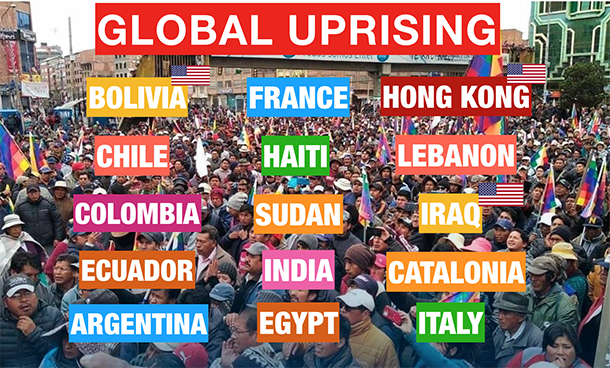
3. A Global Uprising? – In 2019, we saw major uprisings and popular mobilzations on the streets in France, in the Spanish province of Catalan, Chile, Colombia, Argentina, India, Lebanon, Iraq, Haiti, Sudan, Hong Kong, as well as protests building in Netherlands, Italy, and Germany. Many of experts are scratching their heads, asking ‘what does it all mean’? Are these event interconnected, or are they being driven by the same underlying social or economic forces? Many of these events appear to be genuine grassroots events. However, others quite clearly were being co-opted and fueled by foreign powers seeking to capitalize on any succession of power that might be occurring, as was the case with protests in Hong Kong, Iraq, Russia and certainly there was evidence of this in Lebanon, although not as blatant as in other locations. Regardless, this trend is real and potentially world-changing and cannot be ignored, as billions of people (many of them younger) around the globe begin to realize that 20th century stalwarts like neoliberal vudoo economics, savage capitalism, US dollar and IMF debt-based control of the developing world, along with US-led neocolonial foreign policy and endless ‘regime change’ wars – are simply no longer going to cut it going forward. It seems that this new generation won’t settle for business as usual any more. Look out…
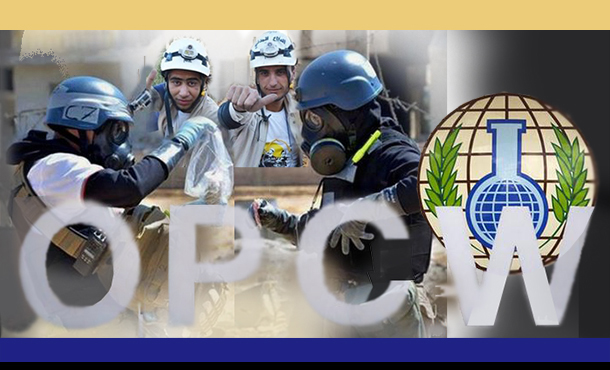
2. The OPCW Leaks – Never has there been such a profound story which was being categorically denied and ignored by the entire mainstream press. This past year saw a series of leaks coming out of the UN appointed watchdog, the Organisation for the Prohibition of Chemical Weapons (OPCW), which reveal that the alleged ‘chemical attack’ which the West and MSM said took place in Douma, Syria on April 2018 – never actually happened. Which means that the US, UK and France launched a retaliatory strike against Syria on the basis of a well-orchestrated ‘false flag’ hoax. Worst yet, there is proof the OPCW perpetrated an internal cover-up of evidence which would’ve exonerated Damascus. Consider this as Iraq WMD 2.0, because the very same fraudulent practices and heavy-handed US tactics, along with total media acquiescence to the official conspiracy theory narrative – has happened again. Like with the Integrity Initiative leaks which broke in late 2018, the OPCW leaks have been dripping out, some via WikiLeaks, and it’s been death by a thousand cuts for the US, UK and NATO establishment, who’ve been caught not only tampering with an investigation of what was meant to be a neutral international watchdog group, but have summarily closed ranks in an information blackout, even though the scandal is there for the world to see (for those willing to look). The reason for their evasive action is now clear: when the Douma ‘chemical attack’ happened, it was the mainstream media who colluded with western governments, and who relied on US and Saudi-backed terrorists Jayash al-Islam and the White Helmets – all working hand-in-hand to spin-up the West’s official narrative that somehow “Assad had gassed his own people.” And the leaks are still ongoing. Will the media and bamboozled politicians ever address this scandal, or will they play the ostrich until it’s too late? Either way, their credibility is now shot.

1. The Capture of Julian Assange – In April, WikiLeaks founder Julian Assange was arrested and bundled out of his safe haven in the Ecuadorian embassy after his asylum and citizenship were suddenly revoked by the host country – very clearly part of a coordinated conspiracy waged by the governments of the US, UK, Sweden and Ecuador – to prepare Assange for extradition to the US to face espionage charges by disingenuously re-framing Assange and WikiLeaks, a journalist and a publication – now as a “cyber terrorist” and a “hostile foreign intelligence service.” His removal from the embassy by British police was an act of extraordinary rendition. Despite interventions and rulings by multiple UN representatives, determined British authorities continue to hold Assange without charge in solitary confinement, and heavily sedated (by his own admission), inside of London’s Belmarsh super max prison. The UN’s has ruled that his detention constitutes torture. He is also unable to prepare for his US extradition hearing in February – one of the most important precedent cases, maybe in history, for the future of the freedom of the press. His legal team even requested for more time to submit evidence and postpone of the extradition hearing, but the fix was already in, and the judge flatly refuse to entertain any argument or admit Assange should no longer be held on remand without charge in high security confinement. With his physical and mental health deteriorating rapidly, there is a real risk now that Assange could even die in custody. How long can the supposed guardians of freedom and democracy in the West stand idle while this incredible injustice continues to unfold? Whatever your preferred outcome, the answers to these questions may come soon in the new year. Needless to say, many are hoping that the plutocracy in Washington and London come to their senses, and realize what a historic mistake they are making – and reverse course on this unprecedented judicial disaster..
What a wild year. Expect more of the same in 2020.
HAPPY NEW YEAR.
SEE PREVIOUS TOP TEN CONSPIRACIES:
Bumpy Road to New Russia-Ukraine Gas Agreement
By Tim Korso – Sputnik – 31.12.2019
After several years of arguing in courts and disputing the decisions afterwards, Russia’s Gazprom and Ukraine’s Naftogaz have finally signed a new long-term contract on gas transits via Ukrainian territory, which will come into effect on 1 January 2020.
The gas dispute between Russia and Ukraine essentially started over violations of a contract signed back in 2009. It posited that Ukraine would buy a certain amount of Russian gas annually, while Gazprom would transit a certain minimum volume of gas every year through the Ukrainian pipeline. However, at some point after the Ukrainian government was overthrown in the 2014 coup, Kiev stopped buying gas, thereby initiating a gas dispute between countries.
Here is how it erupted and developed over the years, with mutual demands, lawsuits, and attempts to reconcile.
Ukraine’s Violations and Gazprom’s Demands
- Following the coup, Kiev started accumulating debt by not paying for the gas it had obtained from Russia. This was partially due to Moscow discontinuing discounts on gas that had been granted to the country, raising prices from 286 dollars to the market level of 485 dollars per 1,000 cubic metres.
- These discounts were tied to a leasing contract for a Black Sea military base for Russia’s fleet in Crimea, which was voided soon after the 2014 coup.
- The Ukrainian gas debt reached $5 billion and in June 2014, Gazprom started supplying gas to Ukraine on a pre-paid basis only. Kiev refused to buy it on such terms, while demanding a return to the old gas price, stopping its gas purchases from Russia.
- Gazprom filed a suit with the Stockholm Court of Arbitration, demanding that Ukraine’s Naftogaz gas company repay the debt and pay a fine for not buying the minimum gas volume from Russia.
- Gazprom made several proposals for gas prices to Kiev, offering to reduce it to 232 dollars, but Ukraine repeatedly skipped payments throughout 2015. On 25 November 2015, Russia stopped supplying gas to the country for good due to its unwillingness to pay for it.
- The amount demanded by Gazprom from Naftogaz over its debt and unbought gas grew as the dispute continued, increasing from $5 billion to $37 billion by 2017.
- The Stockholm Court of Arbitration decided on 22 December 2017 to partially satisfy Gazprom’s demands, ruling that Naftogaz had to pay $2.019 billion to the Russian company. It dismissed Kiev’s demands for a reduction of gas prices.
Ukraine’s Naftogaz’s Counter-Demands
- Parallel with Gazprom’s demands, Ukraine’s Naftogaz in October 2014 filed its own suit with the Stockholm Court of Arbitration, accusing the Russian company of violating the provisions of the 2009 contract by transiting less than the minimum set volumes of gas annually.
- Naftogaz also demanded that the transit prices set in 2009 be increased.
- The amount demanded by Naftogaz was constantly growing, reaching $27 billion in 2017.
- The Stockholm Court of Arbitration ruled on 28 February 2018 that Gazprom owed $4.673 billion to Naftogaz for transiting less than the required volume of gas through Ukraine’s pipeline system.
Signing of New Contract
While Ukraine was satisfied with the court’s decision, Gazprom appealed the ruling, refusing to pay the consequent $2.56 billion fine. The fine also served as a stumbling block in the negotiations between Gazprom and Naftogaz on a new contract to replace the one signed in 2009 – the Russian company demanded that the two parties mutually nullify their demands in order to sign an agreement. Kiev refused to do so, even though the contract would guarantee gas transits through Ukraine despite the upcoming launch of two new pipelines to Europe from Russia.
In the end, Russia acceded to Ukraine’s demands and signed the new contract on 31 December 2019 while agreeing to pay $2.56 billion, with Russian Prime Minister Dmitry Medvedev calling it a “necessary compromise”. At the same time, the new deal ensures that the two sides will never file any new suits on old contracts in the future and will recall all pending cases from the courts against each other.
Gazprom will transit at least 65 billion cubic metres (over two trillion cubic feet) in 2020 and 40 billion cubic metres (1.5 trillion cubic feet) per year thereafter for four more years through Ukraine under the new contract. Ukrainian President Volodymyr Zelensky stated that Kiev expects to receive at least $7 billion in revenue during the five-year period that the contract covers.
Christiana’s Howler!
By Paul Homewood | Not A Lot Of People Know That | December 30, 2019
Don’t worry about facts, Christiana!

https://twitter.com/CFigueres/status/1211351748847124480
The claim is based on a Silly Jilly article in the Grauniad here. However the Guardian claim is based on electricity only, and not all energy, a distinction that apparently is beyond Christiana.
Furthermore, a third of renewable electricity comes from biomass, which most experts now accept is extremely bad for the environment and will not reduce carbon dioxide emissions.
When we look at total primary energy consumption, we find that Christiana’s much vaunted wind and solar power only contributes a paltry 4% in Q3, even when hydro power is added in. Meanwhile fossil fuels accounted for 77%.

https://www.gov.uk/government/statistics/total-energy-section-1-energy-trends
Meanwhile Mark Carney is trying to get pension funds to divest from fossil fuels, because he is convinced the world will stop using them in the near future.
Russia & Ukraine strike last-minute gas transit deal to avoid stoppage of energy supplies to Europe
RT | December 30, 2019
Russian and Ukrainian state energy majors Gazprom and Naftogaz have reached a breakthrough agreement to continue the transit of Russian natural gas to European countries using the Ukrainian pipeline network.
The package deal inked between the Russian company and Ukraine has restored the balance of interests between the parties, Gazprom CEO Alexey Miller said, noting that the Russian energy giant “has made everything possible and has proved one more time that it is a responsible supplier and a reliable partner.”
The agreement will ensure the transit of Russian gas through pipelines on Ukrainian territory for the next five years, Ukrainian President Volodymyr Zelensky has revealed, adding that Kiev is set to receive over $7 billion from Moscow within the deal.
After the current contract expires, the parties will have the option to extend the deal for the next 10 years, Zelensky wrote in a Facebook post late on Monday.
Pursuant to the deal, Ukraine’s Naftogaz will transmit 65 billion cubic meters of Russian gas in 2020 and 40 billion cubic meters annually in the 2021-2024 period, the Ukrainian leader confirmed.
All legal issues that now exist between the two companies have been settled, Gazprom has confirmed in a statement, noting that the parties also agreed not to initiate any lawsuits with respect to the 2009 transit contract that expires in January.
The two sides signed the documents on Monday following a marathon five days of negotiations in Vienna, with the old agreement due to expire on December 31.
Last week, Russia and Ukraine reached an agreement “in principle” to extend the gas contract, and they have been working on the final documents since then. The delegations had to determine how Russia’s Gazprom will cooperate with the Ukrainian operator of the national gas system, and how the transit of the blue fuel will be organized, as well as finalizing an agreement to drop reciprocal claims.
New Financial Crisis Looms as Israel Withholds Millions of Palestinian Tax Money
The Palestine Chronicle | December 30, 2019
Once more, the Israeli government has decided to withhold tens of millions of dollars in tax revenues, collected on behalf of the Palestinian Authority to prevent it from supporting families of Palestinians killed or wounded by the Israeli army.
Reuters news agency reported on Monday that the Israeli government of right-wing Prime Minister Benjamin Netanyahu will not hand over nearly $43 million in Palestinian taxes over the PA’s “financial support for the families of slain or wounded Palestinian” activists.
The Israeli government had withheld hundreds of millions of dollars from the Palestinian budget in the past in order for Tel Aviv to force Mahmoud Abbas’ Authority to toe the Israeli line. In February, Tel Aviv confiscated PA funds citing Palestinian government’s support for prisoners and their families.
Under the Oslo agreement, Israel is responsible for collecting taxes on behalf of the Palestinian Authority, the current sum of which, according to Reuters, is estimated at $222 million a month.
In a meeting with members of his ruling Fatah party, PA President Abbas admitted that the Israeli decision “will cost us a lot.” “But we have rights and we will not be afraid,” he added.
Gaza’s Local Industries in Ruins as 500 Factories are about to Close
Palestine Chronicle – December 29, 2019
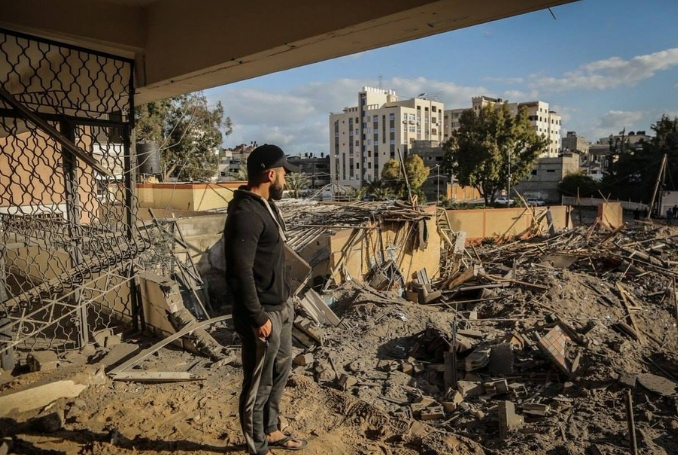
2019 was one of the worst years for local Gaza economy that is struggling to stay afloat despite the hermetic Israeli blockade.
Palestinian sources told Quds News Network that over 500 factories, which have provided much of Gazans’ domestic needs, will shut down by the end of this year, due to the increasingly dire economic situation in the besieged Gaza Strip.
Successive Israeli wars and a prolonged, suffocating siege imposed on the heavily-populated enclave for over twelve years, are the main reasons for Gaza’s economic misfortunes, where, as of September 2019, unemployment has soared to 46.7%.
According to the General Union of Palestinian Industries, “2019 was even worse than the year before as 520 factories have been (or about to) shut down this year while other factories moved outside the Strip to Jordan or Egypt, leading to layoffs and increased unemployment among other social and humanitarian problems,” Quds News reported.
A World Bank report issued in September 2018 had already warned that Gaza’s economy was experiencing “free fall”.
“A combination of war, isolation, and internal rivalries has left Gaza in a crippling economic state and exacerbated the human distress,” said Marina Wes, the World Bank’s director for the region, at the time.
“The occupation state has targeted all kinds of economic installations during its wars on the besieged enclave,” Quds News reported.
“It also prevents Gaza’s importation of much essential material and equipment”.
Washington’s Unmasked Imperialism Towards Europe and Russia
Strategic Culture Foundation | December 27, 2019
Washington must think the rest of the world is as stupid as many of its own politicians are. Its passing into law – signed by President Trump this week – of sanctions to halt the Nord Stream-2 and Turk Stream gas supply projects is a naked imperialist move to bludgeon the European energy market for its own economic advantage.
US sanctions are planned to hit European companies involved with Russia’s Gazprom in the construction of the 1,225-kilometer pipeline under the Baltic Sea which will deliver natural gas from Russia to Germany and elsewhere across the European Union. The €9.5 billion ($11bn) project is 80 per cent complete and is due to be finished early next year.
It is quite clear – because US politicians have openly acknowledged it – that Washington’s aim is to oust Russia as the main natural gas exporter to the giant EU market, and to replace with more expensive American-produced gas.
What’s hilarious is the way American politicians, diplomats and news media are portraying this US assault on market principles and the sovereignty of nations as an act of chivalry.
Washington claims that the sanctions are “pro-European” because they are “saving Europe from dependency on Russia for its energy”. The American hypocrisy crescendoes with the further claim that by stopping Russia earning lucrative export revenues, then Moscow will be constrained from “interfering” in European nations. As if Washington’s own actions are not interference on a massive scale.
European politicians and businesses are not buying this American claptrap. The vast overstepping by Washington into European affairs has prompted EU governments to question the nature of the trans-Atlantic relation. About time too. Thus, Washington’s hubris and bullying are undermining its objective of dominating Europe for its own selfish interests.
Russia, Germany and others have defiantly told Washington its weaponizing of economic sanctions will not halt the Nord Stream nor the Turk Stream projects.
As German Foreign Minister Heiko Maas said earlier this month, “it is unacceptable” for the US to brazenly interfere in European and Russian energy trade. The American pretext of supposedly “protecting” the national security of its purported European allies is frankly laughable.
The American agenda is a blatantly imperialistic reordering of the energy market to benefit US economic interests. To pull off this audacious scam, Washington, by necessity, has to demonize and isolate Russia, while also trampling roughshod over its European allies. Europe has partly aided this American stitch-up of its own interests because it has foolishly indulged in the US antagonism towards Russia with sanctions due to the Ukraine conflict, Crimea and other anti-Russia smears.
The legislation being whistled through the American Congress by both Republicans and Democrats (collectively dubbed the War Party) is recklessly fueling tensions between the US and Russia. In trying to gain economic advantages over Europe’s energy, Washington is wantonly ramping up animus towards Moscow.
Apart from the sanctions against Russian and European companies partnering on Nord Stream, the US Congress passed separate legislation which seeks to boost American oil and gas production in the East Mediterranean.
A Radio Free Europe report this week was headlined: ‘Congress Passes More Legislation Aimed At Curbing Russia’s Energy Grip On Europe’.
The headline should more accurately have been worded: ‘Congress Passes More Legislation Aimed At Bolstering America’s Energy Grip On Europe’.
The RFE report states: “The bipartisan Eastern Mediterranean Security and Energy Partnership Act, which was approved on December 19, is the latest piece of US legislation passed this year that aims to diversify Europe’s energy sources away from Kremlin-controlled companies.”
Again, the American double-think is jaw-dropping. Such is the arrogance of a flailing, delusional empire when it can publicly justify with a straight face an energy-market-grab with a veneer of virtue.
US oil and gas giants are moving into the East Mediterranean. Exxon Mobil announced the discovery of a major natural gas field off Cyprus in February this year. American firms are also partnering with Israeli companies to begin gas production in the Leviathan Field located off the coast at Haifa.
There is no doubt that the US sanctions targeting Nord Stream and Turk Stream are part of a bigger concerted pincer movement by Washington to corner the EU energy market of 500 million consumers.
Colin Cavell, a US professor of political science, commented to Strategic Culture Foundation: “What should be hammered down in this continuing debate over which country will be able to deliver oil and natural gas to Europe is the fact that neither the United States nor, and especially, the Republican Party, stand for so-called free trade.”
Free-trade capitalism is supposed to be an ideological pillar of the US. In this ideology, governments should not interfere with market supply and demand. But paradoxically as far as US-imposed sanctions on Russian-European energy companies are concerned the American Congress is “quintessentially anti-free market”, notes Cavell.
In its shameless profiteering, Washington is acting aggressively towards Russia and Europe while flouting its own supposed economic principles and relying on brute force to win its arguments. America’s imperialist agenda towards Europe and Russia is how world wars are instigated.
Trump-Bidens-Russia-Ukraine: A systemic interpretation
To understand the Trump-Bidens-Russia-Ukraine fiasco clearly, we have to park the moral, constitutional and legal issues
By Padraig McGrath | December 25, 2019
On December 23rd, the Washington Post ran a piece exploring the possible motivations behind US president Donald Trump’s decision to pause US military aid to Ukraine on July 12th last year. On September 28th 2018 and February 16th respectively, President Trump had signed into law two bills from Congress which approved a combined $391 million in military aid to Ukraine, including the provision of lethal weaponry.
The question is extensively explored in the Washington Post article, as in other articles on the issue, as to whether or not Trump’s July 12th decision to withhold the military aid violated the 1974 Congressional Budget and Impoundment Control Act, which states that once Congress appropriates funds and the president signs the relevant spending bill, then it is not within the president’s legal power to withhold those funds.
The Washington Post and other media have also tentatively explored the unresolved question as to what connection, if any, Trump’s July 12th decision to withhold the funds might have had to his subsequent July 25th telephone conversation with Ukrainian President Volodydmyr Zelensky, which became central to arguments for his impeachment. Was Trump using the withholding of aid in order to pressure Zelensky into launching investigations into Hunter Biden’s Ukrainian business-interests, and those of other senior figures in the US Democratic Party? To be fair, the Washington Post article, and a surprisingly high proportion of the other media-coverage of these questions, have been soberly analytical. Refreshingly, the coverage has managed to avoid the worst excesses of liberal Trump Derangement Syndrome.
I believe that the legal debate is largely incidental to what is really happening, and that any moral debate on this issue is even more superfluous than the legal debate. However, before we set the complex legal issues aside, it should be briefly stated that they are not unimportant. Even if we understand that 99% of everybody’s motivations for getting entangled in the legal debate are politically partisan, it is at least conceivable that a person might wish to ask these questions from a non-partisan, purely legal point of view, and that purely juridical concern should not be dismissed out of hand. Regarding the Bidens’ role in this fiasco, one surprising aspect is that it took so many years for the controversy regarding Burisma Holdings to go viral, even in alt-media. The facts that not only Hunter Biden but also Devon Archer, a former John Kerry campaign manager, sat on Burisma’s board of directors, and that Burisma was extensively invested in shale-gas extraction in the vicinity of the Donbas war-zone, had been public knowledge in the Russian-speaking world ever since 2014.
However, in order to understand what is really happening at the deeper systemic level, we need to also set the endless cycle of allegations and counter-allegations aside. The petty political or financial agendas of the Bidens, or Trump, or this or that member of Congress, are incidental to the big systemic picture. Sure, all the players have their own self-interested petty motivations, but the sum of all those motivations does not amount to an explanation of why the game is being played in the first place. Politicians, and occasionally their wastrel offspring, are merely unwitting instruments of history, not agents of history. The parameters of the game are determined by a core geo-strategic logic. What vital geo-strategic interest does the United States have in Ukraine?
Back in 2014, there was certainly hope in US business circles that Ukraine could be a profitable colony, and some US companies including Monsanto have profited from their expansion into Ukraine. However, for most US commercial interests, it quickly became clear in the immediate post-coup period that Ukraine was simply too much of a self-destructive black hole to hope that it might ever become a profitable colony. Ukraine’s culture of blatant kleptocracy was simply too pervasive and ingrained for most western concerns’ money to be safe there.
So rather than the economic exploitation of Ukraine, the United States’ vital geo-strategic interest in Ukraine centrally stems from the point that the maintenance of permanent instability in Ukraine presents developmental and security-challenges to Russia. Furthermore, the maintenance of perpetual Ukrainian hostility toward Russia is useful to larger US geo-strategic interests. We need to remember Zbigniew Brzezinski’s 1997 statement that “without Ukraine, Russia ceases to be an empire.” Brzezinski had identified 3 “geo-strategic pivots” on the Eurasian land-mass which were vital to the task of protecting broader and more global US interests – Iran, Turkey and Ukraine. We have to admit that, as badly as the US foreign policy establishment miscalculated in Ukraine, they still got a piece of what they wanted. The loss of Ukraine’s potential membership was a major blow to the Eurasian Customs Union’s potential for economic reach.
Furthermore, Ukraine’s geography renders it a perfect instrument to drive an economic wedge between Germany and Russia. The trajectory of Russian-German economic integration which has developed steadily over the past 20 years was unquestionably contrary to the decaying hegemon’s interest. Ever since the late 19th century, American geo-strategists have morbidly feared the economic synthesis of Germany’s technological resources with Russia’s human resources and natural resources.
In this regard, all of the legal allegations and counter-allegations regarding Trump and the Bidens are merely incidental noise, and the attached moral arguments are even more absurd.
Here’s what’s really happening:
Trump’s role as a political outsider in Washington is, in this context, manifested in the point that he still thinks like a businessman, not like a geo-strategic planner. As Ukraine is simply too dysfunctional to be turned into a profitable US colony, Trump simply has no meaningful interest in Ukraine. Trump has most probably never bothered reading Halford Mackinder or George Kennan. His critics and political enemies will argue that, as a mere businessman, Trump doesn’t understand that the game is not about “Ukraine” – the game is about Eurasia.
Featured Video
EUROPE FEARS RUSSIA’S NEXT MOVE / Ian Proud
or go to
Aletho News Archives – Video-Images
New Book
New Book: No Autoimmunity The Body Doesn’t Attack Itself
Lies are Unbekoming | September 24, 2026
 The label for Humira, once the best-selling drug in the world, lists its risks in plain print. One of them, in the label’s own words, is new “autoimmune” disease.
A drug prescribed for a condition labelled autoimmune carries a warning that it can cause a condition labelled autoimmune. That contradiction sits in every box, on a folded paper almost nobody reads.
My new book starts there.
No Autoimmunity: The Body Doesn’t Attack Itself
For seventy years, “your body is attacking itself, and we don’t know why” has ended the conversation for people diagnosed with multiple sclerosis, lupus, rheumatoid arthritis, Hashimoto’s, Type 1 diabetes, Crohn’s and psoriasis. More than eighty conditions now carry the autoimmune label. The diagnosis comes with a prescription for life. It almost never comes with a question about cause.
This book asks the question and answers it from the framework’s own records: its drug labels, its journals, its regulatory filings, and its own experiments. … continue
Blog Roll
 Aletho News
- Merz regime wants ‘secret police’ – opposition
- Israeli settlers terrorize West Bank Palestinians with state-provided drones: Report
- They see them, then kill them: Israeli quadcopters track, deliberately target civilians in Gaza
- Debunked: Trump’s egregious UNGA claims on war against Iran crumble under scrutiny
- Europe was part of the infrastructure of US aggression against Iran: Deputy FM
- New evidence on the Bucha Massacre
- Italy and France debunk reports CIA issued ‘Russian drone threat’ warning
- How Russia is Rewiring the Global South
- Britain’s elites want you ready to die for a war they keep imagining
- Inside Ukraine’s propaganda operation targeting Americans
- If Americans Knew
- Trump betrayed voters with his campaign lies and prioritized a foreign country once he took office
- Netanyahu calls Israel’s war in Gaza ‘opposite of genocide’ in UN speech to near-empty hall
- Settler Kidnappings: Torture, Sexual Abuse and Terrorisation of Palestinian Abductees as Israel Deepens Annexation of West Bank
- Gaza winter nears as 162,000 tents become unusable, raising fears of humanitarian crisis
- Netanyahu says, “It’s the opposite of genocide”; UN says Gaza economy is world’s ‘most severe crisis on record’ – Daily Update
- Israel’s US-Backed Assault on Gaza Has Created the ‘World’s Most Severe Economic Crisis on Record’: UN
- ‘Protecting U.S. Citizens’… From Israel
- ‘This is where I live now, the back of a truck’: a day in the life of a grandmother in Gaza
- In UN Speech, Iran’s President Displays Pictures of Children Killed by US, Brings Attention to Israel’s Nuclear Arsenal
- Israel displaces hundreds of Palestinians amid wave of demolitions in West Bank
- No Tricks Zone
- New Study: Earth And Venus Surface Warmth Largely Explained By Convection And Lapse Rate, Not CO2 Or Radiation
- 2025 Nature Paper Claiming Worsening Global Drought Gets RETRACTED …Heavily Flawed
- New Study: ‘Global Drought Shows No Detectable Recent Acceleration Under Climate Warming’
- Economic Masterminds: German Socialists Suggest Taxing Productivity Gains Stemming From Using AI
- The South China Sea Has Not Been Cooperating With The Climate Change Narrative
- Energy Crisis: Germany Enters Heating Season With Historically Low Gas Reserve Fill Levels
- New Study: The Antarctic Ice Sheet Gained Mass From 2020-2024 Due To Staggering Snow And Ice Accumulation
- Study: Ocean Heating Rates From Thousands Of Years Ago ‘Dwarf’ Modern Ocean Heating Rates
- Climate Extremists Target, Attack Large-Scale Power Grid Infrastructure In Germany!
- New Study: Antarctic Ice Melt Has Contributed Less Than 1 Centimeter To Sea Level Rise In The Last 30 Years

