Ukraine’s Foreign Minister Dismisses Importance of Dutch Referendum
Sputnik – 09.04.2016
Ukrainian Foreign Minister Pavlo Klimkin is certain that the results of the referendum on the EU-Ukraine association agreement held in the Netherlands will not affect the Dutch government’s decision on the treaty.
On Wednesday, 61.1 percent of Dutch voters rejected the EU-Ukraine association deal’s ratification in an advisory referendum, according to preliminary results. A turnout of 32.2 percent passed the 30-percent threshold required for the vote to have legal weight.
“There are clear assurances that the visa-free regime is a completely separate path. And if the European Commission is giving the go-ahead – and a relevant decision within the European Commission has already been prepared, that Ukraine has fulfilled all the requirements on the path to a visa-free regime – then we are moving towards a visa-free regime,” Klimkin told Inter TV, Ukraine’s national broadcaster.
The EU-Ukraine Association Agreement, establishing a political and economic association between Kiev and Brussels, was signed in 2014. It commits Kiev to implementing vast reforms in order to meet the bloc’s high economic, political, social, legal and technical criteria. It also grants Ukraine expanded access to the EU single market.
The Netherlands is the only EU member state that has not yet ratified the agreement. The Dutch government decided to hold a non-binding referendum after over 400,000 people signed a petition to put the matter to a nationwide vote.
Official referendum results are expected on Tuesday, April 12.
Al-Qaeda gaining power & money from Saudi-led intervention in Yemen – report
RT | April 8, 2016
Al-Qaeda has made major financial gains as a result of the war in Yemen, running its own mini-state and pocketing $100 million in looted bank deposits and revenue from running the country’s largest port, a Reuters investigation has revealed.
The group’s deep pockets and increased power are down to the Saudi-led intervention in Yemen, which has reportedly helped it become stronger than at any time since its emergence almost 20 years ago.
Al-Qaeda in the Arabian Peninsula (AQAP) has a major presence in Mukalla, a city of 500,000 people, where it runs the third largest port in Yemen. As part of its port “management,” the group operates speedboats manned by armed fighters who impose fees on ship traffic.
Yemeni government officials and local traders estimate that the group earns up to US$2 million every day in taxes on goods and fuel coming into the port. In addition, it is believed the group has managed to extort $1.4 million from the national oil company.
The group also looted Mukalla’s central bank branch, gaining an estimated $100 million, according to two senior Yemeni security officials.
The economic empire of Mukalla was described to Reuters in detail by more than a dozen diplomats, Yemeni security officials, tribal leaders, and residents.
AQAP has abolished taxes for local residents in Mukalla, and group members have integrated themselves with southern Yemenis who have felt marginalized by their northern counterparts for years. The group has also made propaganda videos in which they have boasted about paving local roads and stocking hospitals.
In doing so, the group has managed to win over many locals.
“I prefer that Al-Qaeda stay here, not for Al Mukalla to be liberated,” said one 47-year-old resident. “The situation is stable, more than any ‘free’ part of Yemen. The alternative to Al-Qaeda is much worse.”
AQAP has managed to expand its territory by using many of the tactics used by Islamic State (IS, formerly ISIS/ISIL). It boasts 1,000 fighters in Mukalla alone, and controls 600km (373 miles) of coastline. The group also claimed responsibility for the 2015 Charlie Hebdo attack, which left 12 people dead at the satirical magazine’s Paris office.
‘Easier to expand’
According to a senior Yemeni government official, AQAP’s expansion is due to the Saudi-led coalition in Yemen, which is supported by the US.
The coalition, which has been bombing Houthi rebels since March 2015, sides with the exiled President Abd Rabbuh Mansur Hadi, while the Houthis are aligned with former President Ali Abdullah Saleh, who resigned in 2012 following a popular uprising against his rule.
The official told Reuters that the war has “provided a suitable environment for the… expansion of Al-Qaeda.”
He said the withdrawal of government army units from their bases in the south allowed AQAP to acquire “very large quantities of sophisticated and advanced weapons, including shoulder-fired missiles and armed vehicles.”
In addition, the coalition’s pre-occupation with fighting the Houthis “made it easier for Al-Qaeda elements to expand in more than one area,” the official said. “And this is why Al-Qaeda has today become stronger and more dangerous.”
But despite claims that the intervention has made it easier for AQAP to expand, a recent statement from the Saudi embassy in Washington stated that the campaign had “denied terrorists a safe haven in Yemen.”
Still, AQAP continues to grow and prosper amid a civil war which has so far led to the deaths of 6,000 people. Among the death toll are 3,218 civilians, according to the UN Human Rights Office. An additional 5,778 civilians have been injured in the violence.
CrossTalk: Ukraine’s Destinies
RT | April 6, 2016
The Netherlands is holding an advisory referendum on a key treaty between the European Union and Ukraine. This vote is important for a number of reasons – it is a unique opportunity to face head-on what many call the EU’s democracy deficit. Also, we will find out if the West’s institutionalized anti-Russia bias reflects the popular will.
CrossTalking with Ben Aris, Gilbert Doctorow, and Joost Niemoller.
See also:
Dutch Voters Reject Ukraine Deal
Consortium News | April 7, 2016
Dutch voters struck a blow against the E.U.’s Ukrainian association agreement – and the incessant Russia-bashing that has surrounded it – creating hope for less belligerence in Europe, writes Gilbert Doctorow. – Read article
Netherlands referendum: What does the Dutch vote mean for Britain’s EU debate?
RT | April 6, 2016
Dutch citizens are taking part in a referendum on an EU-Ukraine treaty, but pundits say the vote marks an important test of public opinion on the EU. RT explains what is happening in the Netherlands and how it could affect Britain.
People of the Netherlands are being asked to decide whether to back a treaty which seeks to strengthen ties with Ukraine. That’s what the referendum is technically about, at any rate.
But pundits say the vote, which is only the third referendum in Dutch history, is really a litmus test on the EU.
What is the Netherlands’ referendum about?
Dutch voters will decide whether or not to approve a treaty between the EU and Ukraine. The agreement seeks to strengthen economic and political ties between the 28-nation bloc and Kiev.
The treaty also proposes a number of defense and security agreements.
Why is it taking place?
In September, a group of young satirists at the website GeenStijl collected over 450,000 signatures to force the Netherlands to hold a non-binding referendum concerning the EU’s planned association agreement with Kiev.
Under Dutch law, any petition that gains more than 300,000 is enough to trigger such a vote.
“Have you ever been asked what you think of such an expansion of the EU?” asked the website at the time, noting this is one of the major gripes among the Dutch population.
Is that all there is to it?
The Dutch people view the referendum as a test of public opinion on the EU, with many voters using it as a chance to protest against the bloc’s expansion and what they consider top-down decision making.
Will it impact Britain’s referendum on the EU?
UK Independence Party (UKIP) leader Nigel Farage believes the ‘Leave’ campaign will be emboldened by a Dutch rejection of the treaty.
However he also accepted a ‘Yes’ vote on Wednesday would be a blow to the Brexit campaign.
Writing in Breitbart on Tuesday, Farage said: “I have a feeling that what [GreenStijl ] have achieved in the Netherlands could serve as a useful template for even more radical change in our democracy in the not too distant future.”
Dutch Voters Reject Ukraine Deal
By Gilbert Doctorow | Consortium News | April 7, 2016
On this overcast Thursday morning in Brussels, the political capital of Europe, rays of bright sunshine are breaking through from the east as the latest results of vote counting in neighboring Netherlands suggest that Wednesday’s referendum against the European Union’s Association Agreement with Ukraine won two out of every three votes and passed the 30 percent participation requirement of all eligible voters to be considered valid.
If those results are confirmed by the official results – to be released on April 12 – this referendum marks a resounding defeat for the Brussels-led conspiracy to pursue Russia-bashing policies of sanctions and information warfare without consulting public opinion at home.
To change metaphors and speak in terms of Dutch folklore, it is the first crack in the dam that many of us have been waiting for, the opportunity for common sense to prevail over the illogic, hubris and plain pigheadedness of those who control the E.U. institutions in Brussels, and afar from Berlin and Washington.
While the referendum was formally just “advisory,” both the public statements of parliamentarians and the acknowledgements of the Dutch government ahead of the voting indicated that it will force a new vote in parliament on ratification and likely send Prime Minister Mark Rutte to Brussels hat in hand, requesting a renegotiation of the Association Agreement.
As such, it may bring the E.U. foreign policy machinery to a shuddering halt and open the illogic of all its policies towards its eastern borderlands over the past several years to public scrutiny and, possibly, to revision.
However, whether this was the decisive moment when the E.U. is brought to its senses or just the first of a series of knock-out blows directed at the political correctness and group think that have been driving policy ever since the coup d’etat in Ukraine on Feb. 22, 2014, its importance cannot be overstated.
We have been hearing for more than a year that the Russia-bashing policies – the sanctions in particular – were opposed by a growing minority of E.U. member states. Among the dissenters named at one point or other have been Italy, Hungary and Slovakia. Then came Bavaria, within Germany, whose minister-president Horst Seehofer just months ago flouted the policies of Chancellor Merkel and paid court to Russian President Vladimir Putin in Moscow. On Wednesday, the president of Austria did the same.
And yet, despite all the fine words to reporters about how the sanctions violate the basic economic interests of their countries and of Europe as a whole, none of these statesmen broke ranks when the sanctions repeatedly came up for renewal. The significance of Wednesday’s vote in The Netherlands was that this time the people spoke, not their elected or appointed officials. This was a consultation to remember.
In effect, the referendum played out at two levels. At the domestic level, it was a power struggle between the mainstream centrist parties in The Netherlands who stand for a “go with the flow” approach on E.U. decisions and decision-making, versus the Euroskeptic extremes on the left and especially on the right.
On the right, Geerd Wilders and his Freedom Party want to put a stick in the gears of the E.U. machinery and halt the slow-motion, seemingly unstoppable move towards greater union, indeed towards federalism that have gained momentum ever since the onset of the financial crisis in 2008. In that sense, the vote foreshadows the campaign fight of the parliamentary elections that will take place in The Netherlands in 2017.
At the same time, the referendum had a geopolitical dimension going way beyond the spoils of office, as a proxy battle in The Netherlands between those who favor a pro-U.S./pro-NATO approach versus those seeking improved relations with Moscow.
In both dimensions, the particulars of the E.U.’s Association Agreement with Ukraine that runs several thousand pages were not the real issue on the ballot. All of which begs the question of what exactly Prime Minister Rutte will eventually be asking the E.U. Commission to renegotiate.
The signs are multiplying that the E.U. consensus on foreign policy driven by German Chancellor Angela Merkel is nearing collapse. Within Germany itself, her detractors are becoming ever bolder. Earlier this week, the German newspapers were carrying on their front pages news of former Chancellor Helmut Kohl’s invitation to Hungarian Prime Minister Viktor Orban to visit him at his home next week.
This move is seen as a direct rebuke to Merkel and her policy of open-arms to refugees from Syria and the Middle East, a policy that Orban led a number of new Member States in opposing.
The next big test for the European Union, and the next opportunity to deal a severe blow to its complacent leadership in Brussels will be the Brexit referendum in the U.K. at the end of June.
NB: the issues in the referendum were the featured topic in RT’s Cross Talk show released on 6 April during which I expanded on these points and on the criminal folly of EU policy on Ukraine:
For a video discussion about the Dutch referendum, see https://www.youtube.com/watch?v=PCAsC_dw8wY
Gilbert Doctorow is the European Coordinator, American Committee for East West Accord, Ltd. His latest book Does Russia Have a Future? (August 2015) is available in paperback and e-book from Amazon.com and affiliated websites. For donations to support the European activities of ACEWA, write to eastwestaccord@gmail.com. © Gilbert Doctorow, 2016
Israel’s 2015 military exports topped $5.7 billion
Press TV – April 7, 2016
Israel’s military export contracts exceeded $5.7 billion last year with Europe receiving the second largest portion of the sales worth $1.6 billion, Tel Aviv says.
The Israeli ministry of military affairs made the announcement in a statement on Wednesday, adding that the figure was up from $5.66 billion in 2014.
The statement also said that most of the exports, nearly 50 percent of the total or $2.3 billion, had gone to Asia and the Pacific.
Among these exports was Israel’s sale of 10 armed Heron drones to India, which was worth $400 million alone.
Most of the exports included aircraft upgrades and maintenance, as well as aerospace systems, which amounted to 14 percent of all new contracts. Radar and electronic systems came in second with 12 percent.
Drones, satellites, and naval systems were also among military exports from Israel, which is one of the world’s top 10 exporters of military equipment.
The announcement came just one day after the Stockholm International Peace Research Institute (SIPRI) released new figures showing that the world military expenditure totaled almost $1.7 trillion in 2015, a rise of one percent from the previous year.
Austrian President wants EU to examine ending anti-Russia sanctions
RT | April 6, 2016
The Austrian President Heinz Fischer says the EU has to find a way to lift sanctions against Russia.
“I always say that sanctions are disadvantageous for both sides,” Fischer said at Wednesday’s meeting with Russia’s State Duma Speaker Sergey Naryshkin. “It is important to find a way to lift them in the near future.”
He also said Austria is actively participating in EU’s discussions on the issue.
“Our position is that it’s necessary to consider all the opportunities to develop cooperation between Russia and the EU,” he added.
A few days ago Austrian business leader Christoph Leitl criticized anti-Russian sanctions, saying they had proved unsuccessful. Leitl said Russia with its raw materials and Europe with its expertise would complement each other perfectly.
At the moment, there’s no unity among the European Union for automatically prolonging the economic sanctions against Russia which are due to expire on July 31.
The Italian and Hungarian foreign ministers said last month that things can’t be taken for granted at this stage; the question of sanctions should be decided at the highest level and cannot be automatic. Meanwhile, the Baltic republics and Poland are demanding sanctions should continue as a response to what they describe as expansionist Russia.
EU sanctions against Russia were introduced in March 2014 after Crimea voted to separate from Ukraine and rejoin Russia.
READ MORE: Italy and Hungary against automatic renewal of anti-Russian sanctions
Iran airlines have no need for Saudi airspace: Official
Press TV – April 6, 2016
An official in Iran’s government has downplayed a Saudi ban to keep Iranian airliners off Saudi Arabia’s skies, saying the country’s air carriers have no need for the KSA airspace.
Ebrahim Moradi, head of air traffic control of Iran Airports and Air Navigation Company (IAANC), told the official IRNA news agency on Tuesday that following the recent cut in bilateral diplomatic ties, no Iranian airline company has scheduled flights to Saudi cities.
Saudi Arabia severed diplomatic relations with Iran on January 3 following demonstrations held in front of the Saudi embassy in Tehran and its consulate in the northeastern city of Mashhad by angry protesters censuring the Al Saud regime for the execution of prominent Shia cleric Sheikh Nimr al-Nimr in Riyadh a day earlier.
Moradi pointed to the recent Saudi ban on Iran’s Mahan Air company, saying Riyadh’s decision will not impact the Iranian airline as the company currently operates no flights to African nations via the Persian Gulf Kingdom of Saudi Arabia (KSA).
Saudi Arabia’s General Authority of Civil Aviation (GACA) said Monday that Mahan Air was banned due to violations of local safety rules.
The GACA said in a statement that several violations related to airline safety had been committed by Mahan Air, “prompting the suspension of licenses granted to the company.”
“This decision comes in the context of the GACA (regarding) the safety of passengers and to preserve their lives,” Reuters reported.
Trade between Iran and Saudi Arabia has mostly been small and each year only Iranian pilgrims travel to the kingdom for the hajj pilgrimage.
Several countries, including Pakistan, Russia and China, have so far voiced readiness to mediate between Iran and Saudi Arabia to ease up their tensions.
US to block sale of Russian Su-30 aircraft to Iran: State Dept.
Press TV – April 5, 2016
The United States would use its veto power in the United Nations Security Council to block the sale of Russian Ru-30 fighter jets to Iran, the State Department says.
Department of State Under Secretary for Political Affairs Thomas Shannon made the announcement on Tuesday during a congressional hearing on Iran. “We would block the approval of fighter aircraft.”
Shannon told the Senate Foreign Relations Committee hearing that any such sale of fighter jets would have to be approved by the UN Security Council.
Su-30 is a multirole advanced fighter aircraft for all-weather, air-to-air and air-to-surface deep interdiction missions.
“The sale of Su-30 fighter aircraft is prohibited under UNSCR 2231 without the approval of the UN Security Council and we would block the approval of any sale of fighter aircraft under the restrictions,” Shannon said.
Shannon was referring to the UN Security Council Resolution 2231, adopted by the Security Council on July 20, 2015, which endorsed the nuclear agreement between Iran and the P5+1 group – Russia, China, France, Britain, the US and Germany.
The UN resolution calls upon Iran not to undertake any activity related to ballistic missiles designed to be capable of delivering nuclear weapons, including launches using such ballistic missile technology.
But according to diplomats, resolution 2231 does not prohibit Iran from buying fight jets, and the language of 2231 is not legally binding and cannot be enforced with punitive measures.
Iran and the P5+1 finalized the Joint Comprehensive Plan of Action (JCPOA) in Vienna, Austria, on July 14, 2015. They started to implement the JCPOA on January 16, 2016.
Under the agreement, limits are put on Iran’s nuclear activities in exchange for, among other things, the removal of all nuclear-related economic sanctions against the Islamic Republic.
Iran Reaches Positive Net-of-Oil Trade Balance for First Time in 37 Years
Sputnik — 04.04.2016
Iranian exports excluding oil trade have exceeded imports for the first time in 37 years, Iranian President Hassan Rouhani said on Monday.
“The government has tried to step by step reduce dependence on oil revenues, and for the first time in the history of post-revolutionary Iran [after 1979], in 2015-2016, our export revenues exceeded import spending without taking into account oil trade,” Rouhani was quoted as saying by the IRINN broadcaster.
Rouhani added that Iran’s oil exports continue to grow, reaching two million barrels per day, and Iran will continue to seek to increase this figure.
Iran has been boosting its oil sales after a deal with the P5+1 group of world powers — including Russia, the United States, China, France and the United Kingdom plus Germany — in July to monitor and limit Tehran’s nuclear program in exchange for the easing of international sanctions.
In February, the head of the National Iranian Oil Company said that the country aims to raise its daily oil exports to 4.7 million barrels.
Why the Establishment Hates Trump
By John McMurtry | CounterPunch | April 5, 2016
On the face of it, Donald Trump is Reagan on steroids. His towering size, his nativist US supremacism, his down-home talk, and his reality-show confidence make him ideal for the role of bullying and big lies from the oval office. He is America come to meet itself in larger-than-life image to rejuvenate it as its pride slips away in third-world conditions and a multi-polar world.
While Trump’s narrative is that the American Dream seeks recovery again, the dominant media and political elite relentlessly denounce him as an implicit fascist and disastrous fake. Something deeper is afoot. An untapped historic resentment is boiling up from underneath which has long been unspeakable on the political stage. Trump has mined it and proposed a concrete solution always denied of his candidacy. From his promise to halve the Pentagon’s budget to getting the Congress off corporate-donation payrolls, the public money that the big corporate lobbies stand to lose from a Trump presidency are off the charts. But his attackers dare not recognize these explosive issues because they are all part of the problem.
The public money stakes may be bigger than the US corporate stakes behind the foreign wars the US state has initiated since 1991. The takeaway promised by Trump’s policies threaten almost every big lobby now in control of US government purse strings. It grounds in the military-industrial complex spending close to $2,000,000,000 a day for its endless new untested weapons and foreign wars both of which Trump opposes. But the cut-off of hundreds of billions of public giveaways to the Big Corps do not end here. They hit almost every wide-mouthed transnational corporate siphon into the US Treasury, taxpayers’ pockets and the working majority of America. Masses of American citizens increasingly without living wages and benefits and in increasing public squalor and insecurity are paying attention to what the political establishment and corporate media have long buried and continue to silence.
Trump has raised the great dispossession from impotence into the establishment’s face, and this is why he is a contagion on the American political scene. He is pervasively mocked, accused and slandered in non-stop public fireworks of ad hominem hits, but the counter-attacks never engage what Trump has set his sights on – the long stripping of America by
corporate globalization selecting for the limitless enrichment of the very rich living off an ever-growing take from public coffers and the impoverishment of America’s working people. A primal rage unites the political establishment across party lines, but they can’t say why. No defaming scorn and abuse is off limits, but Trump’s underlying betrayal of the ruling game remains unspeakable on the stage.
The electoral dynamite of all the Americans who have lost all their good blue-collar jobs, social benefits and public infrastructures is recognized only in class condescension. But the facts cannot be denied of a corporate globalization effectively stripping the lower middle classes and the public realm itself with no-one in Washington establishment saying a word against the greatest transfer of wealth to the 1% in history.
Trump may deserve back as bad he gives. But this understanding keeps our eyes on the ego-contest which is the standard spectacle to avoid the real issues. The personal attacks only tells us how deep the rupture has become between Trump’s campaign and the establishment on the issues kept out of sight. This is why the corporate politicians and media are almost as wound into one-way demonization of Trump as they are when they beat the drums of war against a designated Enemy abroad.
In the end, it may get to him – as when he tries to find angry millions again from onside with an evangelical trumpet of abortion-is-murder just before the primary in Wisconsin.
Trump is a shameless opportunist, no doubt. Yet we continue to revolve within an ad hominem circle until we go deeper than the establishment morality tale of the evil of the stigma object – the oldest propaganda trick in the book. The major money interests that are really at stake in the conflict between Trump and the political-economic establishment remain unconnected and blocked out. “Who will stop Trump’ is not only now asked across America, but the world’s media in China too. But nothing is less talked about than the globally powerful interests he has promised to rein back from the public troughs bleeding the country’s capacities to build for and to employ its people. On this topic, there is only silence or abusive distortion frothing from the mouth.
Joining the Dots of the Great Silence
Eventually people may ask why the establishment unanimously abhors Trump across party divisions which are otherwise unbridgeable. Even if he is a caricature of American privilege and self-promotion, who else could fight the corrupt corporate-state and media establishment? Who else could ever get public support from dispossessed masses and from inside the Republican Party base itself? Who else could take on the supra-dominant corporate interests of the war state, drug monopoly, health insurance racket, lobby-run foreign policy, off-shore tax evasion, and global trade with only corporate rights to profit taking jobs in the tens of millions from home workers, and still hold a large and right-wing voter base onside?
Conversely, what else than Trump’s threat to the corporate-state establishment can explain the unity of voice and venom against an American paragon of wealth and chupzpah? What else could motivate a cross-party and corporate media hate campaign where there is nothing else in common across the condemning voices? Only those citizens depending on the deep system corruptions he promises to reverse are really threatened by Trump’s candidacy. But how do these huge private interests go on getting away with a corporate-lobby state transferring every more public wealth and control to them at the expense of the American majority and their common interest when most people already dislike and are systemically exploited by them? They get away with it by no-one being able to do anything about it.
Trump represents a threat to these gargantuan public-trough interests that even the super clean and informed Ralph Nader candidacy for president never did. The corporate media and party machines just shut him down on the electoral stage so few even knew he was a presidential candidate. You can’t do that with Trump. That is the very big problem for the otherwise seamless political and media establishment who are all in on the fabulous payoffs of this corporate state game. Trump’s entire strategy is based on getting public attention, and he is a master at it, unbuyably rich, and the most watched person in America across the country and the world. He can’t be shut up. Personal stigmatization and attack without let-up are the only way to gag his policies and turn the tide against him at the same time.
Maybe it will work in the end. It’s how disastrous and bankrupting foreign aggressions and wars have been sold whatever the ruinous costs to the public paying for them.
Until Wisconsin
When you join the dots to Trump also preaching a policy revolt against the insatiable corporate jaws feeding on trillions of dollars of public budgets in Washington, the meaning becomes clear. But that connected meaning is blacked out. In its place, the corporate media and politicians present an egomaniac blowhard bordering on fascism who preaches hate, racism and sexism. But the silenced policies he advocates are more like jumping into a crocodile pit. He is on record saying he will cut the Pentagon’s budget “by 50%”. No winning politician has ever dared to take on the military-industrial complex, with even Eisenhower only naming it in his parting speech. Trump also says that the US “must be neutral, an honest broker” on the Israeli-Palestine conflict – as unspeakable as it gets in US politics. Big Pharma is also called out with “$400 billion to be saved by government negotiation of prices”. The even more powerful HMO’s are confronted by the possibility of a “one-payer system”, the devil incarnate in America’s corporate-welfare state.
Trump even challenges “the Enemy” cornerstone of US ideology when he says “wouldn’t it be nice to get along with Russia and China for a change?” Not very fascist of him. He was also open to nationalizing the Wall Street banks after 2008. None of this sees the light of day in the hate-Trump culture that been effectively mounted across even left-right divisions. Most of all, Trump rejects the whole misnamed “free trade” global system because it has “hollowed out the lives of American workers” with rights to corporations to move anywhere to get cheaper labour and import back into the US tariff-free. But again the connected meaning is repressed. That Trump also wants to get the US out of foreign wars at the same time, the other great pillar of corporate globalization, is the real danger to the transnational corporate state he has set in motion.
All these policies threaten only the ruling money interests of America that depend on the superpower public purse to extend their transnational monopolies and multiply their wealth. This is the real establishment interest that has so far evaded the glare of publicity and critique of the Donald Trump phenomenon, bigger now with Bernie Sanders than any political challenge to the US system since the 1960’s. Trump is certainly not a working-class hero. He is a pure capitalist, with all the furies of private interest and greed that capitalism selects for. But at this time he is a capitalist who is not rich from looting the public purse as the biggest annual cash flow, nor from exporting the costs of labor and taxes to foreign jurisdictions with subhuman standards that come back to the US as “necessary to compete”. Trump has initiated a long overdue recognition of parasite capitalism eating out the life capacities of the US itself.
 John McMurtry is a Fellow of the Royal Society of Canada. He is the author of the three-volume Philosophy and World Problems published by UNESCO’s Encyclopedia of Life Support Systems (EOLSS), and his most recent book is The Cancer Stage of Capitalism: from Crisis to Cure.
The Disappearance of Hillary Clinton’s Healthcare Platform
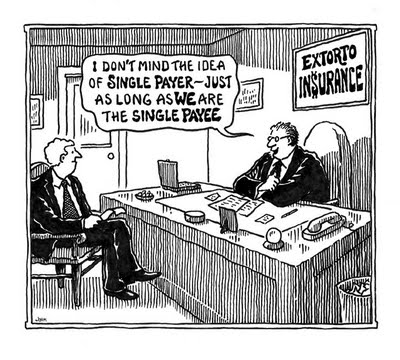
By Benjamin Day | Common Dreams | March 30, 2016
What would happen if the media lifted the curtain on Clinton’s healthcare platform and introduced any level of scrutiny to her proposed improvements on the Affordable Care Act?
In an extraordinary magic trick, performed on a national scale, Hillary Clinton’s healthcare platform has been disappeared. While policy analysts, news anchors, and columnists have been engaged in an intense debate over Bernie Sanders’s “Medicare for All” proposal, Clinton’s incremental alternative has escaped almost all scrutiny – even among those who say they prefer it.
Combining the election-season writings of our most prolific, liberal-leaning columnists at the New York Times, Huffington Post, Vox, Mother Jones, Politico, The American Prospect, etc. you’ll find dozens of articles critiquing Sanders’s single-payer plan. None have mentioned a single Clinton healthcare proposal as a point of comparison – merely that she supports a philosphy of incremental reform.
Take Paul Krugman, a high-profile advocate of Clinton’s approach to healthcare reform. Krugman has published two op-eds in the New York Times and five additional blog posts arguing that “[progressives] should seek incremental change on health care… and focus their main efforts on other issues – that is… Bernie Sanders is wrong about this and Hillary Clinton is right.” In all seven pieces, Krugman focuses exclusively on Sanders’s single-payer proposal and fails to mention even a single Clinton policy.
The disappearance of the Clinton healthcare platform has even been carried out by pollsters. The Kaiser Health Tracking Survey included a bizarre question in its February 2016 poll, which was widely cited in the press. Respondents were asked to pick one of four possible directions for the future of U.S. healthcare. Among the choices were “The U.S. should establish guaranteed universal coverage through a single government plan” and “Lawmakers should build on the existing health care law to improve affordability and access to care.” Thirty-three percent of Democrats chose the single-payer option, while fifty-four percent chose the incremental option. The questions were clearly intended as stand-ins for the Sanders and Clinton healthcare proposals, but note that the single-payer option is a policy, whereas the incremental option mentions no actual policies, but asks respondents whether they support the (universally desirable) outcomes of improving affordability and access.
What would happen if the media lifted the curtain on Clinton’s healthcare platform and introduced any level of scrutiny to her proposed improvements on the Affordable Care Act? They would find two categories of Clinton proposals: some that are so vague they’re difficult to evaluate, and other more concrete plans that follow in the footsteps of one of Congress’s most practiced healthcare incrementalists: Senator Bernie Sanders.
For example, one of Clinton’s clearest incremental proposals is to repeal the Affordable Care Act’s poorly named “cadillac tax” on health plans with high premiums. She announced this proposal on September 29, drawing the ire of White House spokespeople. The move, however, followed in the footsteps of a Senate bill to repeal the Cadillac tax introduced by Bernie Sanders and seven Democratic Senators just a few days previously on September 24. Clinton’s position was correctly seen by reporters as necessary if she didn’t want to lose labor union support to Sanders.
“Because Clinton’s healthcare platform has received zero public scrutiny, she has had the luxury of floating other policy ideas in broad outlines, too vague to evaluate.”Many of Clinton’s well-defined healthcare proposals are rolled into a package of prescription drug reforms, which she released on September 22, 2015. They bear a striking resemblance to the Sanders prescription drug plan announced on September 1, filed as legislation on September 10. Both would legalize importation of prescription drugs from Canada, where costs for identical drugs are much lower due to Canada’s single-payer healthcare system. Sanders was a pioneer of importation, and in 1999 started driving busloads of American patients who couldn’t afford breast cancer drugs across the Canadian border. Both candidates call for empowering Medicare to negotiate drug prices – even Donald Trump jumped on board in January. Both would ban “pay-for-delay” deals between brand-name and generic drug makers, and increase prescription drug rebates for Medicaid and/or Medicare.
Because Clinton’s healthcare platform has received zero public scrutiny, she has had the luxury of floating other policy ideas in broad outlines, too vague to evaluate. Take the proposal to expand the use of Accountable Care Organizations. How? According to Clinton’s December policy brief: “In the coming months, [Clinton] will provide full detail on her plans for delivery system reforms that drive down costs.” With the primaries drawing to a close, no such details have been released. The same could be said of another proposal to “create a fallback process” to review insurance premium rate hikes in states that don’t already review rates. There has been no explanation of how such a plan would work, or whether it would require new legislation.
This is the double standard at work in almost all national coverage of Clinton and Sanders on healthcare reform: Clinton has been taken at her word that her incremental plans will be politically feasible, succeed in improving affordability and access to care, and are not shared by her opponent. Sanders on the other hand received intense public pressure to release details of his single-payer healthcare proposal, and when he did the proposal was subject to an avalanche of public analysis and scrutiny.
This double standard is all the more remarkable because single-payer healthcare is an established policy, practiced in one form or another in almost every developed nation in the world. Incremental reforms that work within the market-based healthcare system of the U.S. are far more uncertain, and deserve greater scrutiny. They are easier to enact but dramatically more likely to fall short of their goals. This is because incremental reforms in the United States usually focus on expanding access to care, without significant cost controls, in order to avoid opposition from the healthcare industry. The resulting policies are often unsustainable; make little headway against national trends of rising costs and eroding access; or simply move costs around (e.g. from premiums to deductibles and co-payments, or vice versa).
Previous national trends in incremental healthcare reform – from managed care through pharmacy benefit management, chronic disease management, narrow networks, and beyond – have often created lucrative new industries, but had dubious impacts on underlying healthcare costs or access to care. Most of Clinton’s healthcare platform falls exactly into these danger zones, and should be received with a critical eye.
The national discussion of single-payer healthcare reform is long overdue. However, when the full range of national media outlets force one candidate to run on real policies, while allowing another to run on values and aspirations, we aren’t having a real discussion of systemic vs. incremental reform, we are merely aiding the corrosion of informed democracy.
Benjamin Day is the Executive Director of Healthcare-NOW.
Featured Video
New positive ivermectin evidence
or go to
Aletho News Archives – Video-Images
From the Archives
Fanatical Followers of the Covid Regime: A Jim Jones-Style Cult?
By Professor Roger Watson and Dr. Niall McCrae | The Daily Sceptic | November 15, 2021
As scholars at leading British universities over recent decades, we witnessed the replacement of critical thinking and debate by narrative: facts are discrimination and scientific method is imperialism; truth, instead, is derived from ‘progressive’ values. This educational trend may be a major contributory factor to the ease in which society has been inculcated to the Covid ‘new normal’ of masking, testing, and repeated doses of vaccines for a disease of similar risk to severe influenza.
One doesn’t need much critical reasoning to observe the flawed logic of some vaccination enthusiasts, such as people who respond to experiencing any side effects, however debilitating, by saying “at least I know it’s working”, or, after contracting the disease despite their promised inoculation (over 90% effective, according to initial drug company claims), “I’d have been worse off without the jab.” … continue
Blog Roll
 Aletho News
- ‘Grave, alarming’: Iran mission on Trump’s UNGA ‘annihilation’ threats
- Najaf airport to reopen to Iranian flights within 24 hours: Ambassador
- From ‘How Will This End For Iran’ to ‘When America Walks Away’: A tale of two Economist covers
- Tehran blasts ‘baseless’ speculation linking Iran to alleged bomb plot at UK air base
- The Rise And… Rise Of ‘Color Revolutions’
- The Coming GOP Bloodbath?
- Arctic Scare Stories Melt Away
- Wrong, Euronews: Climate Change Has Not Created a Food, Energy, and Economic “Meta-Crisis”
- New positive ivermectin evidence
- Met Office Caught Fabricating Daily Temperature Record Claims
- If Americans Knew
- Netanyahu Asked UAE Leader to Deny Report on Oct. 7 Warning in Secret Visit, Sources Say
- CNN Chief Int’l Correspondent Clarissa Ward on Journalists in Gaza
- Democratic Party Consultants Surround Troy Jackson with Pro-Israel Donors
- Christian Leader Responds To Netanyahu’s Claims Regarding Palestinian Christians
- In Gaza, ‘Whoever Survives the Bombing Won’t Survive the Rubble’
- Israel kills more Palestinians, amid push to resettle Gaza – Daily Update
- Israel forces Gazans to live in constant peril – Daily Update
- Deconstructing Netanyahu’s pants-on-fire UN rant – Daily Update
- Trump betrayed voters with his campaign lies and prioritized a foreign country once he took office
- Netanyahu calls Israel’s war in Gaza ‘opposite of genocide’ in UN speech to near-empty hall
- No Tricks Zone
- New Study: Earth And Venus Surface Warmth Largely Explained By Convection And Lapse Rate, Not CO2 Or Radiation
- 2025 Nature Paper Claiming Worsening Global Drought Gets RETRACTED …Heavily Flawed
- New Study: ‘Global Drought Shows No Detectable Recent Acceleration Under Climate Warming’
- Economic Masterminds: German Socialists Suggest Taxing Productivity Gains Stemming From Using AI
- The South China Sea Has Not Been Cooperating With The Climate Change Narrative
- Energy Crisis: Germany Enters Heating Season With Historically Low Gas Reserve Fill Levels
- New Study: The Antarctic Ice Sheet Gained Mass From 2020-2024 Due To Staggering Snow And Ice Accumulation
- Study: Ocean Heating Rates From Thousands Of Years Ago ‘Dwarf’ Modern Ocean Heating Rates
- Climate Extremists Target, Attack Large-Scale Power Grid Infrastructure In Germany!
- New Study: Antarctic Ice Melt Has Contributed Less Than 1 Centimeter To Sea Level Rise In The Last 30 Years

