France paralyzed as strikes enter day 12
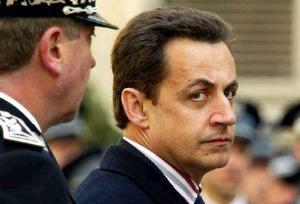 Sarkozy’s approval rating has dropped below 30 percent
Press TV – October 24, 2010
Protesters in France decry Paris’ pension reforms for the 12th straight day, as the country witnesses its worst strikes and civil disobedience in 15 years.
“Just because an unjust law has been passed does not mean we passively accept it. All we wanted was discussions on how to improve the law. Even that was denied us. Now we are calling for its suspension,” The Hindu quoted Francois Chereque of the CFDT trade union as saying on Sunday.
Labor unions have called for two more strikes on next Thursday and November 6th to protest against the country’s pension reforms. A similar call brought millions of people into the streets early this week.
According to the AFP, the unions say they will continue to call on their workers and other French citizens to keep protesting until the French President Nicolas Sarkozy negotiates with them.
The French Upper House passed Sarkozy’s reform bill last Friday, raising the minimum retirement age two years, to 62 and full retirement from 65 to 67.
A joint parliamentary commission is to meet next week to give its final approval to the law, considered a mere formality.
The bill has sparked protests for more than two weeks, disrupting rail and airports services. A blockade on refineries, fuel depots and ports has also left many gas stations empty, forcing 30 percent of gas stations in the French capital of Paris to shut down.
Strikes at France’s oil refineries, which began in Marseille in September, caused panic buying and nationwide shortages.
Marseille, France’s oldest city, has been crippled by the walkouts. Protesters have barricaded roads leading to Marseille Airport, forcing passengers to abandon their cars and drag suitcases to the terminal on foot to catch flights.
A fleet of huge ships, cruising offshore, are unable to dock in the southern coastal city as railway staff and dock workers join the strikes.
A recent public opinion poll by a French television network showed that nearly 70 percent of French citizens support the ongoing strikes.
The French government has said on numerous occasions that the reform is needed to save the indebted pension system from collapse.
Ten Questions for Tea Partiers
Ralph Nader – Oct 22, 2010
Here are ten Questions for Tea Partiers that they want or do not want to answer. I say it this way because people who call themselves Tea Partiers do not all have the same view of politics, government, Big Business or the Constitution. Their opinions range from pure Libertarian to actively furthering the privileges of plutocracy. Their income and occupational background vary as well, though most seem to be middle-income and up.
My guess is that most Tea Partiers come from the conservative wing of the Republican Party who are fed up with both the corporate Republicans like Bush and Cheney, as well as the Democrats like Barack Obama and Nancy Pelosi.
With the above in mind, the following questions can serve to go beyond abstractions and generalizations of indignation and get to some more specific responses.
1. Can you be against Big Government and not press for reductions in the vast military budgets, fraught with bureaucratic and large contractors’ waste, fraud and abuse? Military spending now takes up half of the federal government’s operating budgets. The libertarian Cato Institute believes that to cut deficits, we have to also cut the defense budget.
2. Can you believe in the free market and not condemn hundreds of billions of dollars of corporate welfare-bailouts, subsidies, handouts, and giveaways?
3. Can you want to preserve the legitimate sovereignty of our country and not reject the trade agreements known as NAFTA and GATT (The World Trade Organization in Geneva, Switzerland) that scholars have described as the greatest surrender of local, state and national sovereignty in our history?
4. Can you be for law and order and not support a bigger and faster crackdown on the corporate crime wave, that needs more prosecutors and larger enforcement budgets to stop the stealing of taxpayers and consumer dollars so widely reported in the Wall Street Journal and Business Week? Law enforcement officials estimate that for every dollar for prosecution, seventeen to twenty dollars are returned.
5. Can you be against invasions of privacy by government and business without rejecting the provisions of the Patriot Act that leave you defenseless to constant unlawful snooping, appropriation of personal information and even search of your home without notification until 72 hours later?
6. Can you be against regulation of serious medical malpractice (over 100,000 lives lost a year, according to a study by Harvard physicians), unsafe drugs that have serious side effects or cause the very injury/illness they were sold to prevent, motor vehicles with defective brakes, tires and throttles, contaminated food from China, Mexico and domestic processors?
7. Can you keep calling for Freedom and yet tolerate control of your credit and other economic rights by hidden and arbitrary credit ratings and credit scores? What Freedom do you have when you have to sign industry-wide fine print one-sided “contracts” with your banks, insurance companies, car dealers, and credit card companies? Many of these contracts even block your Constitutional access to the courthouse.
8. Can you be for a new, clean system of politics and elections and still accept the Republican and Democratic Two Party dictatorship that is propped up by complex state laws, frivolous litigation and harassment to exclude from the ballot third parties and independent candidates who want reform, accountability, and stronger voices for the voters?
9. If you want a return to our Constitution—its principles of limited and separation of power and its emphasis on “We the People” in its preamble—can you still support Washington’s wars that have not been declared by Congress (Article I Section 8) or giving corporations equal rights with humans plus special privileges and immunities. The word “corporation” or “company” never appears in the Constitution. How can you support eminent domain powers given by governments to corporations over homeowners, or massive week-end bailouts by the Federal Reserve and Treasury Department of businesses, even reckless foreign banks, without receiving the authority and the appropriations from the Congress, as the Constitution requires?
10. You want less taxation and lower deficits. How can you succeed unless you stop big corporations from escaping their fair share of taxes by manipulating foreign jurisdictions against our tax laws, for example, or by letting trillions of dollars of speculation on Wall Street go without any sales tax, while you pay six, seven or eight percent sales tax on the necessities you buy in stores?
Let’s hear from you Tea Partiers. Meanwhile, see the work of video-journalist, Steve Ference, who has interviewed and given voice to those among you in his new paperback “Voices of the Tea Party” published by Lulu.com on July 4, 2010. Contact VoicesoftheTeaParty@gmail.com.
French Fury in the EU Cage
“Work Harder to Earn Less”
By DIANA JOHNSTONE | CounterPunch | October 21, 2010
The French are at it again – out on strike, blocking transport, raising hell in the streets, and all that merely because the government wants to raise the retirement age from 60 to 62. They must be crazy.
That, I suppose, is the way the current mass movement in France is seen – or at least shown – in much of the world, and above all in the Anglo-Saxon world.
Perhaps the first thing that needs to be said about the current mass strikes in France is that they are not really about “raising the retirement age from 60 to 62”. This is rather like describing the capitalist free market as a sort of lemonade stand. A propaganda simplification of very complex issues.
It allows the commentators to go crashing through open doors. After all, they observe sagely, people in other countries work until 65 or beyond, so why should the French balk at 62? The population is aging, and if the retirement age isn’t raised, the pension system will go broke paying out pensions to so many ancients.
However, the current protest movement is not about “raising the retirement age from 60 to 62”. It is about much more.
For one thing, this movement is an expression of exasperation with the government of Nicolas Sarkozy, which blatantly favors the super-rich over the majority of working people in this country. He was elected on the slogan, “Work more to earn more”, and the reality turns out to be work harder to earn less. The Labor Minister who introduced the reform, Eric Woerth, got a job for his wife on the office staff of the richest woman in France, Liliane Bettencourt, heir to the Oreal cosmetics giant, at the same time that, as budget minister, he was overlooking her massive tax evasions. While tax benefits for the rich help empty the public coffers, this government is doing what it can to tear down the whole social security system that emerged after World War II on the pretext that “we can’t afford it”.
The retirement issue is far more complex than “the age of retirement”. The legal age of retirement means the age at which one may retire. But the pension depends on the number of years worked, or to be more precise, on the number of cotisations (payments) into the joint pension scheme. On the grounds of “saving the system from bankruptcy”, the government is gradually raising the number of years of cotisations from 40 to 43 years, with indications that this will be stretched out further in the future.
As education is prolonged, and employment begins later, to get a full pension most people will have to work until 65 or 67. A “full pension” comes to about 40 per cent of wages at the time of retirement.
But even so, that may not be possible. Full time jobs are harder and harder to get, and employers do not necessarily want to retain older employees. Or the enterprise goes out of business and the 58-year old employee finds himself permanently out of work. It is becoming harder and harder to work full-time in a salaried job for over 40 years, however much one may want to. Thus in practice, the Sarkozy-Woerth reform simply means reducing pensions.
That, in fact, is what the European Union has recommended to all member states as an economy measure, intended, as with most current reforms, to reduce social costs in the name of “competitivity” – meaning competition to attract investment capital.
Less qualified workers, who instead of pursuing studies may have entered the work force young, say at age eighteen, will have subscribed to the scheme for forty-two years at age 60 if indeed they manage to be employed all that time. Statistics show that their life expectancy is relatively short, so they need to leave early in order to enjoy any retirement at all.
The French system is based on solidarity between generations, in that the cotisations of today’s workers go to pay today’s retired people’s pensions. The government has subtly tried to pit one generation against another, by claiming that it is necessary to protect the future of today’s youth, who are paying for the “baby boom” pensioners. It is therefore extremely significant that this week, high school and university students massively began to enter the protest strike movement. This solidarity between generations is a major blow to the government.
The youth are even much more radical than the older trade unionists. They are very aware of the increasing difficulty of building a career. The trend is for qualified personnel to enter the work force later and later, having spent years getting an education. With the difficulty of finding a stable, full-time job, many depend on their parents until age 30. It is simple arithmetic to see that in this case, there will be no full retirement until after age 70.
Productivity and De-industrialization
As has become standard practice, the authors of the neo-liberal reforms present them not as a choice but as a necessity. There is no alternative. We must compete on the global market. Do it our way or we go broke. And this reform was essentially dictated by the European Union, in a 2003 report, concluding that making people work longer was necessary to cut pension costs.
These dictates prevent any discussion of the two basic factors underlying the pension problem: productivity and de-industrialization.
Jean-Luc Mélenchon, the former Socialist Party man who heads the relatively new Left Party, is about the only political leader to point out that even if there are fewer workers to contribute to pension schemes, the difference can be made up by the rise in productivity. Indeed, French worker productivity is among the very highest in the world (higher than Germany, for example). Moreover, although France has the second longest life expectancy in Europe, it also has the highest birth rate. And even if jobholders are fewer, because of unemployment, the wealth they produce should be adequate to maintain pension levels.
Aha, but here’s the catch: for decades, as productivity goes up, wages stagnate. The profits from increased productivity are siphoned off into the financial sector. The bloating of the financial sector and the stagnation of purchasing power has led to the financial crisis – and the government has preserved the imbalance by bailing out the profligate financiers.
So logically, preserving the pension system basically calls for raising wages to account for higher productivity – a very major policy change.
But there is another critical problem linked to the pension issue: de-industrialization. In order to maintain the high profits drained by the financial sector, and avoid paying higher wages, one industry after another has moved its production to cheap labor countries. Profitable enterprises shut down as capital goes looking for even higher profit.
Is this merely the inevitable result of the rise of new industrial powers in Asia? Is a lowering of living standards in the West inevitable due to their rise in the East?
Perhaps. However, if shifting industrial production to China ends up lowering purchasing power in the West, then Chinese exports will suffer. China itself is taking the first steps toward strengthening its own domestic market. “Export-led growth” cannot be a strategy for everyone. World prosperity actually depends on strengthening both domestic production and domestic markets. But this requires the sort of deliberate industrial policy which is banned by the bureaucracies of globalization: the World Trade Organization and the European Union. They operate on the dogmas of “comparative advantage” and “free competition”… The world economy is being treated as a big game, where following the “rules of the free market” are more important than the environment or the basic vital necessities of human beings.
Only the financiers can win this game. And if they lose, well, they just get more chips for another game from servile governments.
Impasse?
Where will it all end?
It should end in something like a democratic revolution: a complete overhaul of economic policy. But there are very strong reasons why this will not happen.
For one thing, there is no political leadership in France ready and able to lead a truly radical movement. Mélenchon comes the closest, but his party is new and its base is still narrow. The radical left is hamstrung by its chronic sectarianism. And there is great confusion among people revolting without clear programs and leaders.
Labor leaders are well aware that employees lose a day’s pay for every day they go on strike, and they are in fact always anxious to find ways to end a strike. Only the students do not suffer from that restraint. The trade unionists and Socialist Party leaders are demanding nothing more drastic than that the government open negotiations about details of the reform. If Sarkozy weren’t so stubborn, this is a concession the government could make which might restore calm without changing very much.
It would take the miraculous emergence of new leaders to carry the movement forward.
But even if this should happen, there is a more formidable obstacle to basic change: the European Union. The EU, built on popular dreams of peaceful and prosperous united Europe, has turned into a mechanism of economic and social control on behalf of capital, and especially of financial capital. Moreover, it is linked to a powerful military alliance, NATO.
If left to its own devices, France might experiment in a more socially just economic system. But the EU is there precisely to prevent such experiments.
Anglo-Saxon Attitudes
On October 19, the French international TV channel France 24 ran a discussion of the strikes between four non-French observers. The Portuguese woman and the Indian man seemed to be trying, with moderate success, to understand what was going on. In contrast, the two Anglo-Americans (the Paris correspondent of Time magazine and Stephen Clarke, author of 1000 Years of Annoying the French) amused themselves demonstrating self-satisfied inability to understand the country they write about for a living.
Their quick and easy explanation: “The French are always going on strike for fun because they enjoy it.”
A little later in the program the moderator showed a brief interview with a lycée student who offered serious comments on pensions issue. Did that give pause to the Anglo-Saxons?
The response was instantaneous. How sad to see an 18-year-old thinking about pensions when he should be thinking about girls!
So whether they do it for fun, or whether they do it instead of having fun, the French are absurd to Anglo-Americans accustomed to telling the whole world what it should do.
Diana Johnstone is the author of Fools Crusade: Yugoslavia, NATO and Western Delusions. Write her for the French version of this article, or to comment, at diana.josto@yahoo.fr
US gets Israel’s OK for Saudi arms sale
Press TV – Oct 21, 2010
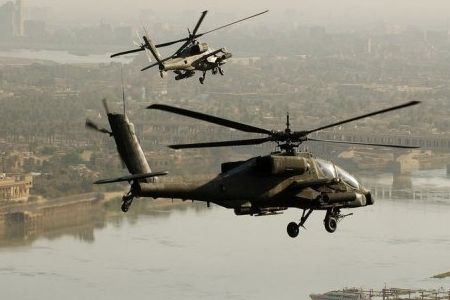
The US says it has sought Israel’s approval before agreeing to a massive arms sale to Saudi Arabia which is to become the largest US arms deal in history.
The United States announced plans to sell the Arab kingdom up to USD 60 billion worth of arms, AFP quoted Andrew Shapiro, assistant secretary of defense for political-military affairs, as saying on Wednesday.
The package is to be delivered over 15 to 20 years and includes 84 F-15 jets, 70 Apache gunships, 72 Blackhawk helicopters, 36 light helicopters and thousands of laser-guided smart bombs.
The enormous package is said by the Pentagon to give Riyadh “a whole host of defensive” and “deterrence capabilities.” The US Defense Department has also made clear that the deal will not affect “Israel’s military upper-hand in the region.”
Tel Aviv and its sympathizers in Washington had earlier voiced concern on US arms sales to Saudi Arabia.
“Our assessment is that this (sale) would not diminish Israel’s qualitative military edge, and therefore we felt comfortable in going forward with the sale,” Shapiro said.
Alexander Vershbow, the US assistant secretary of defense for international security affairs, said Washington consulted Israel as the deal took shape.
The US government always consults the Israeli regime on any arms sales to Arab countries as a matter of policy intended to ensure that Israel maintains a military superiority in the Middle East region.
“There have been high-level discussions, as well as working-level discussions. And I think it’s fair to say that, based on what we’ve heard at the high levels, Israel does not object to this sale,” he said.
US President Barack Obama’s administration has reportedly notified Congress of its plans to make the deal and the Capitol now has the authority to amend or delay the agreement.
US point man on Iran mission in Turkey
Press TV – October 21, 2010

US Treasury’s point man on sanctions, Stuart Levey, has traveled to Turkey in a bid to pressure Iran’s neighbor into “cooperation” on sanction against Tehran.
Washington’s undersecretary of the Treasury for terrorism and financial intelligence on Wednesday met with banking sector leaders and representatives of private industry in Istanbul, a statement from the US embassy in Ankara said.
Levey will then fly to the Turkish capital on Thursday to meet officials from the country’s foreign ministry and finance ministry.
As promoted during his trip to Iran’s other neighbor, Azerbaijan, Levey will try to sway Turkey into scaling down trade with the Islamic Republic.
While the US possesses and has used nuclear weapons in the past, Washington, in a politically-motivated move, is imposing unilateral sanctions against Iran, which does not possess nuclear weapons nor does it seek to develop such weapons.
Turkey’s Deputy Prime Minister Ali Babacan on Wednesday expressed doubt that recent anti-Iran sanctions will force Iran into change its nuclear policy.
“I think it’s a reality that the sanctions are putting more and more pressure on the Iranian economy,” Ali Babacan said in Washington on Wednesday.
“But is it getting any possible results about making the Iranians take steps that the P5+1 — Britain, China, France, Russia, the US plus Germany — expect? I have big doubts about it,” AFP quoted him as saying.
Turkey, which is a temporary member of the UN Security Council, has an over 400 kilometers-long border with Iran and voted against the latest round of US-engineered UN sanctions against the Islamic Republic in June.
Earlier in October, Turkish President Abdullah Gul voiced Ankara’s determination to boost trade ties with Iran, despite the US pressure to halt trade with the Islamic Republic.
Addressing the Trabzon Chamber of Commerce and Industry, Gul urged the Turkish businessmen to improve the country’s trade with Iran.
“Those who do not know may be annoyed by our trade ties with Iran, but Turkey-Iran trade is important to us,” Turkey’s Zaman newspaper quoted Gul as saying in the northeastern city.
Turkish State Minister for Foreign Trade Zafar Caglayan has also said that Ankara will not allow unilateral US sanctions imposed against Iran over its nuclear program hamper business with the oil-rich country.
“Turkey will act in line with UN decisions. But decisions made by the United States on its own do not bind us,” he said.
France Erupts
Sarkozy Under Siege
By PHILIPPE MARLIÈRE | Counterpunch | October 20, 2010
When he entered the Elysée palace in 2007, Nicolas Sarkozy dreamed of a glorious destiny. Enthusiastic commentators predicted that his casual populism would revamp the Bonapartist right, and that his Gallic brand of neoliberal policies would sell the “American dream” to a mistrustful population. Things have not gone according to plan. Sarkozy wanted to be the French JFK; today he looks more like Louis XVI awaiting trial in 1793. He may escape the guillotine, but his presidency is now under siege.
The French are deeply unhappy with the way they have been governed, but their main grievance is about pension reform, which is seen as a cynical ploy to make ordinary people work more for inferior entitlements, while bailed-out bankers and the rich get tax rebates and continue to enjoy the high life. Over the past month, six national demonstrations have gathered together an estimated average of 3.5 million per action day. The latest, on Tuesday, was again a big success.
The movement is popular: 69% of the nation back the strikes and demonstrations; 73% want the government to withdraw the reform. And high school pupils have now joined the fray. Over 1,000 high schools are on strike as the youngsters take to the streets to protest against mass unemployment and the raising of the retirement age. The government has patronisingly labelled them as “manipulated kids”, but these comments have backfired and served only to galvanise the young, who have hardened their resistance and taken further interest in the reform. When interviewed by the media, pupils come across as articulate and knowledgable. Parents worry about their children’s future, so they will not stop them from striking.
In France, strikes and demonstrations are seen as a civilised and effective way to enact one’s citizenship. Students are expected to join marches from an early age, receiving by the same token a “political education”. France’s youth have always scared governments because of their radical potential. Student demonstrations of late have been invariably popular because people know that the young have been badly hit by unemployment over the past 30 years.
University students are preparing to strike as well. Sarkozy, like Louis XVI in 1789, does not seem to have grasped how volatile the situation has become. He should know better. Since May 1968, all governments have been forced on the ropes every time youngsters have entered a social movement. This time it could prove crucial in helping to reach a tipping point; a stage in the conflict where the balance of power switches from the government toward those opposing the pension reform.
Last week, Sarkozy had to send in riot police to reopen fuel depots blocked by strikes in several places. Yet several hundred filling stations had to shut because they had run out of supplies. Lorry and train drivers are also starting strike actions.
How can the current situation be interpreted? Undoubtedly, the rebellion seems durable and runs deeper than the question of pensions. The reform has triggered a web of collective actions that are now spreading fast. Discontent is fuelled by low incomes and unemployment, but also by the impact of the crisis on people’s daily life, the arrogance of the Sarkozy presidency, corruption cases and police brutality.
There is a sense of moral outrage at the imposition of a neoliberal medicine to cure an illness caused by the same neoliberal policies. The French are not hostile to reforms: they just demand those that redistribute wealth allocate resources to those who need it the most. Any comparison with May ’68, however, may be hasty. Then, France was experiencing a period of economic prosperity. Today, events occur in the context of a deep economic depression. This is why the political situation is potentially explosive. Radicalised workers and youngsters are forcing the unions to up their game. The normally toothless Socialist party has pledged to return the retirement age to 60, should it come back to power in 2012.
One can envisage two possible scenarios. Opposition to the reform hardens, in which case Sarkozy may have to water it down or even withdraw it. This would mark the first major popular victory in Europe against the post-2008 neoliberal order. Alternatively, Sarkozy stays put and imposes a deeply unpopular reform, in which case the political price to pay for the incumbent president would be very high, should he decide to run again in 2012.
Philippe Marlière is professor of French and European politics at University College, London (UK). He can be reached at p.marliere@ucl.ac.uk.
France arrests over 1,000 protesters
Press TV – October 19, 2010
Since the start of the week, French police have arrested close to 1,200 demonstrators protesting the French government’s proposed pension reforms.
The government’s interior ministry said that a total of 1,158 protesters have been arrested, 163 of them on Tuesday morning, AFP reported.
Police in Lyon arrested 56 people on Tuesday, including nine youths who reportedly overturned cars and set one on fire.
The Guardian reported that four policeman and one protester suffered minor injuries during the incident, and that the worst clashes occurred in the Paris suburb of Nanterre.
The General Confederation of Labour Union (CGT), which is calling for another day of action on Wednesday, says at least 3.5 million people have participated in the national strikes on Tuesday, while government and police figures put the numbers at half a million, Reuters reported.
More than 2,600 petrol stations have been shut down nationwide, as more than 47 crude oil and oil product tankers were unable to discharge at the port of Marseille due to striking port workers, Bloomberg said.
President Sarkozy responded to the national unrest following a summit with Russian and German leaders, and said, “In a democracy, everyone can express themselves but you have to do so without violence or excesses.”
“I will hold a meeting as soon as I return to Paris to unblock a certain number of situations, because there are people who want to work and who must not be deprived of petrol,” said Sarkozy, who was speaking in Deauville at a summit with the leaders of Russia and Germany.
France has been hit by several coordinated strikes in the past two months in opposition to the proposed pension reforms that would increase the minimum retirement age from 60 to 62 and the full state pension age from 65 to 67.
Sarkozy has refused to back down from his pension reform bill, which is expected to pass through parliament by the end of the week.
Iran trade with P5+1 rises 12%
Press TV – October 17, 2010
Trade exchange between Iran and the world’s major powers has seen a 12% rise in the first six months of the current Iranian year despite recent US-engineered sanctions.
During the first six months of the current Iranian year (started on March 21) the volume of trade between Iran and the P5+1 states — the permanent members of the UN Security Council plus Germany — has soared to 9.337 billion, reflecting a 12% increase, whereas the figure for the same period last year stood at 8.322 billion, Fars news agency reported on Sunday.
In defiance of persistent Western media hype with the aim of isolating the Islamic Republic, the country’s exports to China have climbed 66.76% with the value standing at $2.22 billion.
This is while the amount of imports rose to 34.39% valuing $2.53 billion.
During the same period, Iran’s imports from Germany had a 6.58% drop, but exports witnessed an increase of 5.77% reaching $124 million.
Iran’s trade volume with France has also seen a hike, with a 3.99% rise in import reaching $833 million and a 1.31% rise in export mounting to $24 million.
The amount of exports to Britain witnessed a 53.42% increase to stand at $25.5 million, while imports from the country declined 37% reaching $522 million.
Similarly, Iran’s imports from the US fell 36% to reach $73 million, whereas exports experienced an increase of 108% to stand at $77 million.
Russia was, however, the only P5+1 country with declining trade with Iran. Exports to Russia fell 32% to reach $89 million. In the meantime, imports from the country dropped to 10.24% worth $558 million.
The US, the European Union, and their allies accuse Iran of following a military nuclear program and shortly after the imposition of the fourth round of UN Security Council sanctions adopted unilateral punitive measures against Iran.
The sanctions aim to isolate the Islamic Republic and target the country’s energy and economy.
However, Iranian officials reject Western accusations that Tehran is pursuing a military nuclear program, arguing that sanctions are only a psychological war to increase pressure on the Islamic Republic and hamper its progress in the field of nuclear technology.
Oxfam: Israeli policies damaging to the Palestinian olive oil industry
Ahmed Zaki Osman – 15/10/2010

Oxfam has reported that Palestinian olive groves are frequently attacked by Israeli settlers, file photo
The Israeli occupation of the West bank and siege of Gaza are seriously harming Palestinian olive oil production which contributes up to US$100 million annually for some of the most underprivileged Palestinian families, the international NGO Oxfam said in a report on Friday.
The report, entitled, “The Road to Olive Farming: Challenges to developing the economy of olive oil in the West Bank,” blames Israel for restricting access to land and olive tree farms.
“Around 40 percent of the West Bank is effectively off-limits to Palestinians, with access highly restricted, due to settlements, outposts, bypass roads, military bases, closed military areas and areas Israel has declared as being nature reserves,” the report said.
For centuries Palestinian olives have been a major commercial crop and are credited with being some of the best in the world.
Olives and olive oil are one of the main sources of income for the Palestinian economy. They represent around half of agricultural land use in the West Bank and the Gaza Strip as well as being a major export, and provide employment and a large source of income for around 100,000 farming families.
According to the report there are approximately 10 million olive trees with the potential to produce up to 34,000 metric tons of olive oil in a good year, but only 5,000 tons in a bad year. The average quantity of oil produced annually between 2001 and 2009 was around 17,000 tons.
Harmful impacts of Israeli policy also include settler violence sanctioned by the government, incidents in which illegal Israeli settlers have uprooted or burned tens of thousands of olive trees during their attacks against Palestinian farmers.
According to the United Nations, in the first six months of 2010 thousands of olive trees and other crops have been damaged by settlers.
Oxfam accused Israel of intentionally restricting access for Palestinian farmers to local and international markets, especially since the beginning of the second intifadha.
“Physical barriers such as checkpoints and road blocks have restricted the free movement of people and goods within the West Bank and obstructed access for Palestinian agricultural produce, including olives and olive oil, to internal, Israeli and international markets,” the report concluded.
As for Gaza, the picture is even gloomier since inhabitants cannot even get olives from the West Bank olives since the blockade started.
Why the U.S. has Launched a New Financial World War — And How the Rest of the World Will Fight Back
By MICHAEL HUDSON | CounterPunch | October 11, 2010
What is to stop U.S. banks and their customers from creating $1 trillion, $10 trillion or even $50 trillion on their computer keyboards to buy up all the bonds and stocks in the world, along with all the land and other assets for sale in the hope of making capital gains and pocketing the arbitrage spreads by debt leveraging at less than 1 per cent interest cost? This is the game that is being played today.
Finance is the new form of warfare – without the expense of a military overhead and an occupation against unwilling hosts. It is a competition in credit creation to buy foreign resources, real estate, public and privatized infrastructure, bonds and corporate stock ownership. Who needs an army when you can obtain the usual objective (monetary wealth and asset appropriation) simply by financial means? All that is required is for central banks to accept dollar credit of depreciating international value in payment for local assets. Victory promises to go to whatever economy’s banking system can create the most credit, using an army of computer keyboards to appropriate the world’s resources. The key is to persuade foreign central banks to accept this electronic credit.
U.S. officials demonize foreign countries as aggressive “currency manipulators” keeping their currencies weak. But they simply are trying to protect their currencies from being pushed up against the dollar by arbitrageurs and speculators flooding their financial markets with dollars. Foreign central banks find themselves obliged to choose between passively letting dollar inflows push up their exchange rates – thereby pricing their exports out of global markets – or recycling these dollar inflows into U.S. Treasury bills yielding only 1% and whose exchange value is declining. (Longer-term bonds risk a domestic dollar-price decline if U.S interest rates should rise.)
“Quantitative easing” is a euphemism for flooding economies with credit, that is, debt on the other side of the balance sheet. The Fed is pumping liquidity and reserves into the domestic financial system to reduce interest rates, ostensibly to enable banks to “earn their way” out of negative equity resulting from the bad loans made during the real estate bubble. But why would banks lend more under conditions where a third of U.S. homes already are in negative equity and the economy is shrinking as a result of debt deflation?
The problem is that U.S. quantitative easing is driving the dollar downward and other currencies up, much to the applause of currency speculators enjoying a quick and easy free lunch. Yet it is to defend this system that U.S. diplomats are threatening to plunge the world economy into financial anarchy if other countries do not agree to a replay of the 1985 Plaza Accord “as a possible framework for engineering an orderly decline in the dollar and avoiding potentially destabilizing trade fights.(1) The run-up to this weekend’s IMF meetings saw the United States threaten to derail the international financial system, bringing monetary chaos if it does not get its way. This threat has succeeded for the past few generations.
But the world has seen the Plaza Accord derail Japan’s economy by obliging its currency to appreciate while lowering interest rates by flooding its economy with enough credit to inflate a real estate bubble. The alternative to a new currency war “getting completely out of control,” the bank lobbyist suggested, is “to try and reach some broad understandings about where currencies should move.” However, IMF managing director Dominique Strauss-Kahn, was more realistic. “I’m not sure the mood is to have a new Plaza or Louvre accord,” he said at a press briefing. “We are in a different time today.” On the eve of the Washington IMF meetings he added: “The idea that there is an absolute need in a globalised world to work together may lose some steam.” (Alan Beattie Chris Giles and Michiyo Nakamoto, “Currency war fears dominate IMF talks,” Financial Times, October 9, 2010, and Alex Frangos, “Easy Money Churns Emerging Markets,” Wall Street Journal, October 8, 2010.)
Quite the contrary, he added: “We can understand that some element of capital controls [need to] be put in place.”
The great question in global finance today is thus how long other nations will continue to succumb as the cumulative costs rise into the financial stratosphere? The world is being forced to choose between financial anarchy and subordination to a new U.S. economic nationalism. This is what is prompting nations to create an alternative financial system altogether.
The global financial system already has seen one long and unsuccessful experiment in quantitative easing in Japan’s carry trade that sprouted in the wake of Japan’s financial bubble bursting after 1990. Bank of Japan liquidity enabled the banks to lend yen credit to arbitrageurs at a low interest rate to buy higher-yielding securities. Iceland, for example, was paying 15 per cent. So Japanese yen were converted into foreign currencies, pushing down its exchange rate.
It was Japan that refined the “carry trade” in its present-day form. After its financial and property bubble burst in 1990, the Bank of Japan sought to enable its banks to “earn their way out of negative equity” by supplying them with low-interest credit for them to lend out. Japan’s recession left little demand at home, so its banks developed the carry trade: lending at a low interest rate to arbitrageurs at home and abroad, to lend to countries offering the highest returns. Yen were borrowed to convert into dollars, euros, Icelandic kroner and Chinese renminbi to buy government bonds, private-sector bonds, stocks, currency options and other financial intermediation. This “carry trade” was capped by foreign arbitrage in bonds of countries such as Iceland, paying 15 per cent. Not much of this funding was used to finance new capital formation. It was purely financial in character – extractive, not productive.
By 2006 the United States and Europe were experiencing a Japan-style financial and real estate bubble. After it burst in 2008, they did what Japan’s banks did after 1990. Seeking to help U.S. banks work their way out of negative equity, the Federal Reserve flooded the economy with credit. The aim was to provide banks with more liquidity, in the hope that they would lend more to domestic borrowers. The economy would “borrow its way out of debt,” re-inflating asset prices real estate, stocks and bonds so as to deter home foreclosures and the ensuing wipeout of the collateral on bank balance sheets.
This is occurring today as U.S. liquidity spills over to foreign economies, increasing their exchange rates. Joseph Stiglitz recently explained that instead of helping the global recovery, the “flood of liquidity” from the Federal Reserve and the European Central Bank is causing “chaos” in foreign exchange markets. “The irony is that the Fed is creating all this liquidity with the hope that it will revive the American economy. … It’s doing nothing for the American economy, but it’s causing chaos over the rest of the world.” (Walter Brandimarte, “Fed, ECB throwing world into chaos: Stiglitz,” Reuters, Oct. 5, 2010, reporting on a talk by Prof. Stiglitz at Colombia University. )
Dirk Bezemer and Geoffrey Gardiner, in their paper “Quantitative Easing is Pushing on a String” , prepared for the Boeckler Conference, Berlin, October 29-30, 2010, make clear that “QE provides bank customers, not banks, with loanable funds. Central Banks can supply commercial banks with liquidity that facilitates interbank payments and payments by customers and banks to the government, but what banks lend is their own debt, not that of the central bank. Whether the funds are lent for useful purposes will depend, not on the adequacy of the supply of fund, but on whether the environment is encouraging to real investment.”
Quantitative easing subsidizes U.S. capital flight, pushing up non-dollar currency exchange rates
Federal Reserve Chairman Ben Bernanke’s quantitative easing may not have set out to disrupt the global trade and financial system or start a round of currency speculation that is forcing other countries to defend their economies by rejecting the dollar as a pariah currency. But that is the result of the Fed’s decision in 2008 to keep unpayably high debts from defaulting by re-inflating U.S. real estate and financial markets. The aim is to pull home ownership out of negative equity, rescuing the banking system’s balance sheets and thus saving the government from having to indulge in a Tarp II, which looks politically impossible given the mood of most Americans.
The announced objective is not materializing. The Fed’s new credit creation is not increasing bank loans to real estate, consumers or businesses. Banks are not lending – at home, that is. They are collecting on past loans. This is why the U.S. savings rate is jumping. The “saving” that is reported (up from zero to 3 per cent of GDP) is taking the form of paying down debt, not building up liquid funds on which to draw. Just as hoarding diverts revenue away from being spent on goods and services, so debt repayment shrinks spendable income.
So Bernanke created $2 trillion in new Federal Reserve credit. And now (October 2010) the Fed is proposing to increase the Fed’s money creation by another $1 trillion over the coming year. This is what has led gold prices to surge and investors to move out of weakening “paper currencies” since early September – and prompted other nations to protect their own economies accordingly.
It is hardly surprising that banks are not lending to an economy being shrunk by debt deflation. The entire quantitative easing has been sent abroad, mainly to the BRIC countries: Brazil, Russia, India and China. “Recent research at the International Monetary Fund has shown conclusively that G4 monetary easing has in the past transferred itself almost completely to the emerging economies … since 1995, the stance of monetary policy in Asia has been almost entirely determined by the monetary stance of the G4 – the US, eurozone, Japan and China – led by the Fed.” According to the IMF, “equity prices in Asia and Latin America generally rise when excess liquidity is transferred from the G4 to the emerging economies.”
Borrowing unprecedented amounts from U.S., Japanese and British banks to buy bonds, stocks and currencies in the BRIC and Third World countries is a self-feeding expansion. Speculative inflows into these countries are pushing up their currencies as well as their asset prices, but. Their central banks settle these transactions in dollars, whose value falls as measured in their own local currencies.
U.S. officials say that this is all part of the free market. “It is not good for the world for the burden of solving this broader problem … to rest on the shoulders of the United States,” insisted Treasury Secretary Tim Geithner on Wednesday.
So other countries are solving the problem on their own. Japan is trying to hold down its exchange rate by selling yen and buying U.S. Treasury bonds in the face of its carry trade being unwound as arbitrageurs are paying back the yen that they earlier borrowed to buy higher-yielding but increasingly risky sovereign debt from countries such as Greece. Paying back these arbitrage loans has pushed up the yen’s exchange rate by 12 per cent against the dollar so far during 2010. On Tuesday, October 5, Bank of Japan governor Masaaki Shirakawa announced that Japan had “no choice” but to “spend 5 trillion yen ($60 billion) to buy government bonds, corporate IOUs, real-estate investment trust funds and exchange-traded funds – the latter two a departure from past practice.”
This “sterilization” of unwanted financial speculation is precisely what the United States has criticized China for doing. China has tried more “normal” ways to recycle its trade surplus, by seeking out U.S. companies to buy. But Congress would not let CNOOC buy into U.S. oil refinery capacity a few years ago, and the Canadian government is now being urged to block China’s attempt to purchase its potash resources. This leaves little option for China and other countries but to hold their currencies stable by purchasing U.S. and European government bonds.
This has become the problem for all countries today. As presently structured, the international financial system rewards speculation and makes it difficult for central banks to maintain stability without forced loans to the U.S. Government that has long enjoyed a near monopoly in providing central bank reserves. As noted earlier, arbitrageurs obtain a twofold gain: the arbitrage margin between Brazil’s nearly 12 per cent yield on its long-term government bonds and the cost of U.S. credit (1 per cent), plus the foreign-exchange gain resulting from the fact that the outflow from dollars into reals has pushed up the real’s exchange rate some 30 per cent – from R$2.50 at the start of 2009 to $1.75 last week. Taking into account the ability to leverage $1 million of one’s own equity investment to buy $100 million of foreign securities, the rate of return is 3000 per cent since January 2009.
Brazil has been more a victim than a beneficiary of what is euphemized as a “capital inflow.” The inflow of foreign money has pushed up the real by 4 per cent in just over a month (from September 1 through early October). The past year’s run-up has eroded the competitiveness of Brazilian exports, prompting the government to impose 4 per cent tax on foreign purchases of its bonds on October 4 to deter the currency’s rise. “It’s not only a currency war,” Finance Minister Guido Mantega said on Monday. “It tends to become a trade war and this is our concern.” And Thailand’s central bank director Wongwatoo Potirat warned that his country was considering similar taxes and currency trade restrictions to stem the baht’s rise, and Subir Gokarn, deputy governor of the Reserve Bank of India announced that his country also was reviewing defenses against the “potential threat” of inward capital flows.”
Such inflows do not provide capital for tangible investment. They are predatory, and cause currency fluctuation that disrupts trade patterns while creating enormous trading profits for large financial institutions and their customers. Yet most discussions of exchange rate treat the balance of payments and exchange rates as if they were determined purely by commodity trade and “purchasing power parity,” not by the financial flows and military spending that actually dominate the balance of payments. The reality is that today’s financial interregnum – anarchic “free” markets prior to countries hurriedly putting up their own monetary defenses – provides the arbitrage opportunity of the century. This is what bank lobbyists have been pressing for. It has little to do with the welfare of workers.
The potentially largest speculative prize of all promises to be an upward revaluation of China’s renminbi. The House Ways and Means Committee is backing this gamble, by demanding that China raise its exchange rate by the 20 per cent that the Treasury and Federal Reserve are suggesting. A revaluation of this magnitude would enable speculators to put down 1 per cent equity – say, $1 million to borrow $99 million and buy Chinese renminbi forward. The revaluation being demanded would produce a 2000 per cent profit of $20 million by turning the $100 million bet (and just $1 million “serious money”) into $120 million. Banks can trade on much larger, nearly infinitely leveraged margins, much like drawing up CDO swaps and other derivative plays.
This kind of money already has been made by speculating on Brazilian, Indian and Chinese securities and those of other countries whose exchange rates have been forced up by credit-flight out of the dollar, which has fallen by 7 per cent against a basket of currencies since early September when the Federal Reserve floated the prospect of quantitative easing. During the week leading up to the IMF meetings in Washington, the Thai baht and Indian rupee soared in anticipation that the United States and Britain would block any attempts by foreign countries to change the financial system and curb disruptive currency gambling.
This capital outflow from the United States has indeed helped domestic banks rebuild their balance sheets, as the Fed intended. But in the process the international financial system has been victimized as collateral damage. This prompted Chinese officials to counter U.S. attempts to blame it for running a trade surplus by retorting that U.S. financial aggression “risked bringing mutual destruction upon the great economic powers.
From the gold-exchange standard to the Treasury-bill standard to “free credit” anarchy
Indeed, the standoff between the United States and other countries at the IMF meetings in Washington this weekend threatens to cause the most serious rupture since the breakdown of the London Monetary Conference in 1933. The global financial system threatens once again to break apart, deranging the world’s trade and investment relationships – or to take a new form that will leave the United States isolated in the face of its structural long-term balance-of-payments deficit.
This crisis provides an opportunity – indeed, a need – to step back and review the longue durée of international financial evolution to see where past trends are leading and what paths need to be re-tracked. For many centuries prior to 1971, nations settled their balance of payments in gold or silver. This “money of the world,” as Sir James Steuart called gold in 1767, formed the basis of domestic currency as well. Until 1971 each U.S. Federal Reserve note was backed 25 per cent by gold, valued at $35 an ounce. Countries had to obtain gold by running trade and payments surpluses in order to increase their money supply to facilitate general economic expansion. And when they ran trade deficits or undertook military campaigns, central banks restricted the supply of domestic credit to raise interest rates and attract foreign financial inflows.
As long as this behavioral condition remained in place, the international financial system operated fairly smoothly under checks and balances, albeit under “stop-go” policies when business expansions led to trade and payments deficits. Countries running such deficits raised their interest rates to attract foreign capital, while slashing government spending, raising taxes on consumers and slowing the domestic economy so as to reduce the purchase of imports.
What destabilized this system was war spending. War-related transactions spanning World Wars I and II enabled the United States to accumulate some 80 per cent of the world’s monetary gold by 1950. This made the dollar a virtual proxy for gold. But after the Korean War broke out, U.S. overseas military spending accounted for the entire payments deficit during the 1950s and ‘60s and early ‘70s. Private-sector trade and investment was exactly in balance.
By August 1971, war spending in Vietnam and other foreign countries forced the United States to suspend gold convertibility of the dollar through sales via the London Gold Pool. But largely by inertia, central banks continued to settle their payments balances in U.S. Treasury securities. After all, there was no other asset in sufficient supply to form the basis for central bank monetary reserves. But replacing gold – a pure asset – with dollar-denominated U.S. Treasury debt transformed the global financial system. It became debt-based, not asset-based. And geopolitically, the Treasury-bill standard made the United States immune from the traditional balance-of-payments and financial constraints, enabling its capital markets to become more highly debt-leveraged and “innovative.” It also enabled the U.S. Government to wage foreign policy and military campaigns without much regard for the balance of payments.
The problem is that the supply of dollar credit has become potentially infinite. The “dollar glut” has grown in proportion to the U.S. payments deficit. Growth in central bank reserves and sovereign-country funds has taken the form of recycling of dollar inflows into new purchases of U.S. Treasury securities – thereby making foreign central banks (and taxpayers) responsible for financing most of the U.S. federal budget deficit. The fact that this deficit is largely military in nature – for purposes that many foreign voters oppose – makes this lock-in particularly galling. So it hardly is surprising that foreign countries are seeking an alternative.
Contrary to most public media posturing, the U.S. payments deficit – and hence, other countries’ payments surpluses – is not primarily a trade deficit. Foreign military spending has accelerated despite the Cold War ending with dissolution of the Soviet Union in 1991. Even more important has been rising capital outflows from the United States. Banks lent to foreign governments from Third World countries, to other deficit countries to cover their national payments deficits, to private borrowers to buy the foreign infrastructure being privatized, foreign stocks and bonds, and to arbitrageurs to borrow at a low interest rate to buy higher-yielding securities abroad.
The corollary is that other countries’ balance-of-payments surpluses do not stem primarily from trade relations, but from financial speculation and a spillover of U.S. global military spending. Under these conditions the maneuvering for quick returns by banks and their arbitrage customers is distorting exchange rates for international trade. U.S. “quantitative easing” is coming to be perceived as a euphemism for a predatory financial attack on the rest of the world. Trade and currency stability are part of the “collateral damage” being caused by the Federal Reserve and Treasury flooding the economy with liquidity in their attempt to re-inflate U.S. asset prices. Faced with U.S. quantitative easing flooding the economy with reserves to “save the banks” from negative equity, all countries are obliged to act as “currency manipulators.” So much money is made by purely financial speculation that “real” economies are being destroyed.
The coming capital controls
The global financial system is being broken up as U.S. monetary officials change the rules they laid down nearly half a century ago. Prior to the United States going off gold in 1971, nobody dreamed that an economy – especially the United States – would create unlimited credit on computer keyboards and not see its currency plunge. But that is what happens under the Treasury-bill standard of international finance. Under this condition, foreign countries can prevent their currencies from rising against the dollar (thereby pricing their labor and exports out of foreign markets) only by (1) recycling dollar inflows into U.S. Treasury securities, (2) by imposing capital controls, or (3) by avoiding use of the dollar or other currencies used by financial speculators in economies promoting “quantitative easing.”
Malaysia successfully used capital controls during the 1997 Asian Crisis to prevent short-sellers from covering their bets. This confronted speculators with a short squeeze that George Soros says made him lose money on the attempted raid. Other countries are now reviewing how to impose capital controls to protect themselves from the tsunami of credit from flowing into their currencies and buying up their assets – along with gold and other commodities that are turning into vehicles for speculation rather than actual use in production. Brazil took a modest step along this path by using tax policy rather than outright capital controls when it taxed foreign buyers of its bonds last week.
If other nations take this route, it will reverse the policy of open and unprotected capital markets adopted after World War II. This trend threatens to lead to the kind of international monetary practice found from the 1930s into the ‘50s: dual exchange rates, one for financial movements and another for trade. It probably would mean replacing the IMF, World Bank and WTO with a new set of institutions, isolating U.S., British and Eurozone representation.
To defend itself, the IMF is proposing to act as a “central bank” creating what was called “paper gold” in the late 1960s – artificial credit in the form of Special Drawing Rights (SDRs). However, other countries already have complained that voting control remains dominated by the major promoters of arbitrage speculation – the United States, Britain and Eurozone. And the IMF’s Articles of Agreement prevent countries from protecting themselves, characterizing this as “interfering” with “open capital markets.” So the impasse reached this weekend appears to be permanent. As one report summarized matters: “‘There is only one obstacle, which is the agreement of the members,’ said a frustrated Kahn .”
Paul Martin, the former Canadian prime minister who helped create the G20 after the 1997-1998 Asian financial crisis, said “the big powers were largely immune to being named and shamed.” And in a Financial Times interview Mohamed El Erian, a former senior IMF official and now chief executive of Pimco said, “You have a burst pipe behind the wall and the water is coming out. You have to fix the pipe, not just patch the wall.”
The BRIC countries are simply creating their own parallel system. In September, China supported a Russian proposal to start direct trading between the yuan and the ruble. It has brokered a similar deal with Brazil. And on the eve of the IMF meetings in Washington on Friday, October 8, Chinese Premier Wen stopped off in Istanbul to reach agreement with Turkish Prime Minister Erdogan to use their own currencies in tripling Turkish-Chinese trade to $50 billion over the next five years, effectively excluding the U.S. dollar. “We are forming an economic strategic partnership … In all of our relations, we have agreed to use the lira and yuan,” Mr. Erdogan said.
On the deepest economic plane, the present global financial breakdown is part of the price to be paid for the Federal Reserve and U.S. Treasury refusing to accept a prime axiom of banking: Debts that cannot be paid, won’t be. They tried to “save” the banking system from debt write-downs in 2008 by keeping the debt overhead in place. The resulting repayment burden continues to shrink the U.S. economy, while the Fed’s way to help the banks “earn their way out of negative equity” has been to fuel a flood of international financial speculation. Faced with normalizing world trade or providing opportunities for predatory finance, the U.S. and Britain have thrown their weigh behind the latter. Targeted economies are understandably seeking alternative arrangements.
Michael Hudson is a former Wall Street economist. A Distinguished Research Professor at University of Missouri, Kansas City (UMKC), he is the author of many books, including Super Imperialism: The Economic Strategy of American Empire (new ed., Pluto Press, 2002) and Trade, Development and Foreign Debt: A History of Theories of Polarization v. Convergence in the World Economy. He can be reached via his website, mh@michael-hudson.com
Notes.
(1) Tom Lauricella, “Dollar’s Fall Roils World: As Global Leaders Meet, Strains Rise Among Nations Competing to Save Exports,” Wall Street Journal, October 8, 2010, quoting Edwin Truman, a former U.S. Treasury official now a senior fellow at the Peterson Institute for International Economics.
Behind the Coup in Ecuador – The Attack on ALBA
By Eva Golinger* | October 1, 2010
The latest coup attempt against one of the countries in the Bolivarian Alliance For The People of Our America (ALBA) is an attempt to impede Latin American integration and the advance of revolutionary democratic processes. The right-wing is on the attack in Latin America. Its success in 2009 in Honduras against the government of Manuel Zelaya energized it and gave it the strength and confidence to strike again against the people and revolutionary governments in Latin America.
The elections of Sunday, September 26th in Venezuela, while victorious for the Venezuelan United Socialist Party (PSUV), also ceded space to the most reactionary and dangerous destabilizing forces at the service of imperial interests. The United States managed to situate key elements in the Venezuelan National Assembly, giving them a platform to move forward with their conspiratorial schemes to undermine Venezuelan democracy.
The day after the elections in Venezuela, the main advocate for peace in Colombia, Piedad Córdoba, was dismissed as a Senator in the Republic of Colombia, by Colombia’s Inspector General, on the basis of falsified evidence and accusations. But the attack against Senator Córdoba is a symbol of the attack against progressive forces in Colombia who seek true and peaceful solutions to the war in which they have been living for more than 60 years.
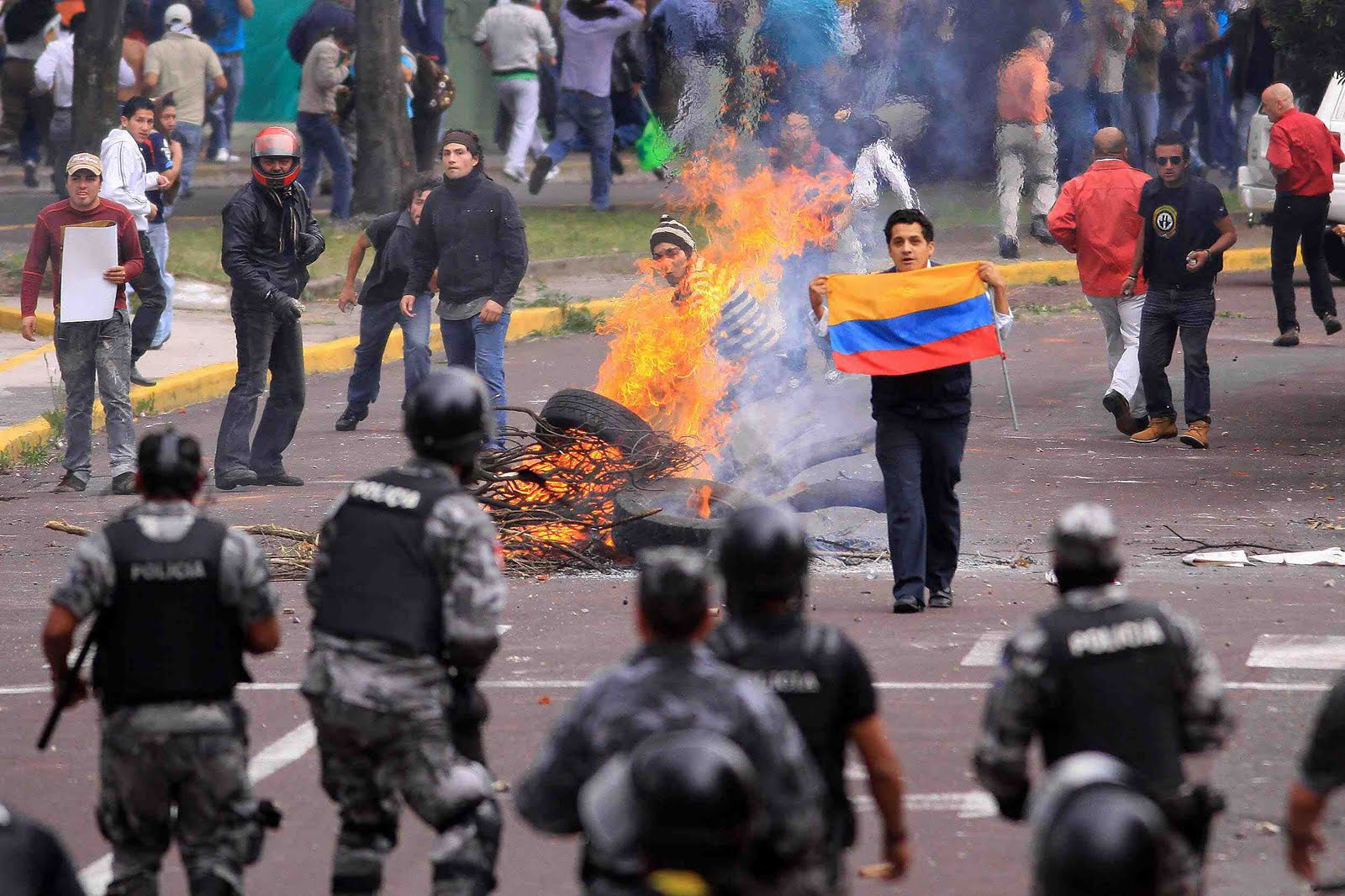
And now, Thursday, September 30th, was the dawn of a coup d’etat in Ecuador. Insubordinate police took over a number of facilities in the capital of Quito, creating chaos and panic in the country. Supposedly, they were protesting against a new law approved by the National Assembly on Wednesday, which according to them reduced labor benefits.
In an attempt to resolve the situation, President Rafael Correa went to meet with the rebellious police but was attacked with heavy objects and teargas, causing a wound on his leg and teargas asphyxiation. He was taken to a military hospital in Quito, where he was later kidnapped and held against his will, prevented from leaving.
Meanwhile, popular movements took to the streets of Quito, demanding the liberation of their President, democratically re-elected the previous year by a huge majority. Thousands of Ecuadorans raised their voices in support of President Correa, trying to rescue their democracy from the hands of coup-plotters who were looking to provoke the forced resignation of the national government.
In a dramatic development, President Correa was rescued in an operation by Special Forces from the Ecuadoran military in the late evening hours. Correa denounced his kidnapping by the coup-plotting police and laid responsibility for the coup d’etat directly upon former President, Lucio Gutiérrez. Gutiérrez was a presidential candidate in 2009 against President Correa, and lost in a landslide when more than 55% voted for Correa.
During today’s events, Lucio Gutiérrez declared in an interview, “The end of Correa’s tyranny is at hand,” also asking for the “dissolution of Parliament and a call for early presidential elections.”
But beyond the key role played by Gutiérrez, there are external factors involved in this attempted coup d’etat that are moving their pieces once again.
Infiltration of the Police
According to journalist Jean-Guy Allard, an official report from Ecuador’s Defense Minister, Javier Ponce, distributed in October of 2008, revealed “how US diplomats dedicated themselves to corrupting the police and the Armed Forces.”
The report confirmed that police units “maintain an informal economic dependence on the United States, for the payment of informants, training, equipment and operations.”
In response to the report, US Ambassador in Ecuador, Heather Hodges, justified the collaboration, saying “We work with the government of Ecuador, with the military and with the police, on objectives that are very important for security.” According to Hodges, the work with Ecuador’s security forces is related to the “fight against drug trafficking.”
The Ambassador
Ambassador Hodges was sent to Ecuador in 2008 by then President George W. Bush. Previously she successfully headed up the embassy in Moldova, a socialist country formerly part of the Soviet Union. She left Moldova sowing the seeds for a “colored revolution” that took place, unsuccessfully, in April of 2009 against the majority communist party elected to parliament.
Hodges headed the Office of Cuban Affairs within the US State Department in 1991, as its Deputy Director. The department was dedicated to the promotion of destabilization in Cuba. Two years later she was sent to Nicaragua in order to consolidate the administration of Violeta Chamorro, the president selected by the United States following the dirty war against the Sandinista government, which led to its exit from power in 1989.
When Bush sent her to Ecuador, it was with the intention of sowing destabilization against Correa, in case the Ecuadoran president refused to subordinate himself to Washington’s agenda. Hodges managed to increase the budget for USAID and the NED [National Endowment for Democracy] directed toward social organizations and political groups that promote US interests, including within the indigenous sector.
In the face of President Correa’s re-election in 2009, based on a new constitution approved in 2008 by a resounding majority of men and women in Ecuador, the Ambassador began to foment destabilization.
USAID
Certain progressive social groups have expressed their discontent with the policies of the Correa government. There is no doubt that legitimate complaints and grievances against his government exist. Not all groups and organizations in opposition to Correa’s policies are imperial agents. But a sector among them does exist which receives financing and guidelines in order to provoke destabilizing situations in the country that go beyond the natural expressions of criticism and opposition to a government.
In 2010, the State Department increased USAID’s budget in Ecuador to more than $38 million dollars. In the most recent years, a total of $5,640,000 in funds were invested in the work of “decentralization” in the country. One of the main executors of USAID’s programs in Ecuador is the same enterprise that operates with the rightwing in Bolivia: Chemonics, Inc. At the same time, NED issued a grant of $125,806 to the Center for Private Enterprise (CIPE) to promote free trade treaties, globalization, and regional autonomy through Ecuadoran radio, television and newspapers, along with the Ecuadoran Institute of Economic Policy.
Organizations in Ecuador such as Participación Ciudadana and Pro-justicia [Citizen Participation and Pro-Justice], as well as members and sectors of CODEMPE, Pachakutik, CONAIE, the Corporación Empresarial Indígena del Ecuador [Indigenous Enterprise Corporation of Ecuador] and Fundación Qellkaj [Qellkaj Foundation] have had USAID and NED funds at their disposal.
During the events of September 30 in Ecuador, one of the groups receiving USAID and NED financing, Pachakutik, sent out a press release backing the coup-plotting police and demanding the resignation of President Correa, holding him responsible for what was taking place. The group even went so far as to accuse him of a “dictatorial attitude.” Pachakutik entered into a political alliance with Lucio Gutiérrez in 2002 and its links with the former president are well known:
PACHAKUTIK ASKS PRESIDENT CORREA TO RESIGN AND CALLS FOR THE FORMING OF A SINGLE NATIONAL FRONT
Press Release 141
In the face of the serious political turmoil and internal crisis generated by the dictatorial attitude of President Rafael Correa, who has violated the rights of public servants as well as society, the head of the Pachakutik Movement, Cléver Jiménez, called on the indigenous movement, social movements and democratic political organizations to form a single national front to demand the exit of President Correa, under the guidelines established by Article 130, Number 2 of the Constitution, which says: “The National Assembly will dismiss the President of the Republic in the following cases: 2) For serious political crisis and domestic turmoil.”
Jiménez backed the struggle of the country’s public servants, including the police troops who have mobilized against the regime’s authoritarian policies which are an attempt to eliminate acquired labor rights. The situation of the police and members of the Armed Forces should be understood as a just action by public servants, whose rights have been made vulnerable.
This afternoon, Pachakutik is calling on all organizations within the indigenous movement, workers, democratic men and women to build unity and prepare new actions to reject Correa’s authoritarianism, in defense of the rights and guarantees of all Ecuadorans.
Press Secretary
PACHAKUTIK BLOQUE
The script used in Venezuela and Honduras repeats itself. They try to hold the President and the government responsible for the “coup,” later forcing their exit from power. The coup against Ecuador is the next phase in the permanent aggression against ALBA and revolutionary movements in the region.
The Ecuadoran people remain mobilized in their rejection of the coup attempt, while progressive forces in the region have come together to express their solidarity and support of President Correa and his government.
* Translation: Machetera
The Ecuadorian Coup: Its Larger Meaning
By James Petras | 10.09.2010
The abortive military-police coup in Ecuador, which took place on September 30, has raised numerous questions about the role of the US and its allies among the traditional oligarchy and the leftist social movements, Indian organizations and their political parties.
While President Correa and all governments in Latin America, and significant sectors of the Ecuadorian public described the violent actions as a coup, the principle organ of Wall Street – The Wall Street Journal – described it as a “police protest”. Spokespersons for Goldman Sachs and the Council of Foreign Relations referred to the police and military power grab against the democratically elected government as a self-induced “political crises” of the President. While the coup was underway the “Indian” movement CONAIE, launched a manifesto condemning the government, while the “Indian” party Pachakutik supported the ouster of the President and backed the police coup as a “just act of public servants”.
In summary, the imperial backers of the coup, sectors of the Ecuadorian elite and Indian movement downplayed the violent police uprising as a coup in order to justify their support for it as just another “legitimate economic protest”. In other words, the victim of the elite coup was converted into the repressor of the people’s will. The factual question of whether there was a coup or not, is central to deciding whether the government was justified in repressing the police uprising and whether in fact the democratic system was endangered.
The Facts about the Coup
The police did not simply “protest” against economic polices, they seized the National Assembly and attempted to occupy public buildings and media outlets. The air force – or at least those sectors collaborating with the police – seized the airport in Quito, concerted actions seizing and blocking strategic transport networks.. President Correa was assaulted and seized and kept hostage under police guard by scores of heavily armed police, who violently resisted the Special Forces who eventually freed the president resulting in scores of wounded and ten deaths. Clearly the leaders of the police uprising had more in mind than a simple “protest” over cancelled bonuses – they sought to overthrow the president and were willing to use their firepower to carry it off. The initial economic demands of public sector employees were used by the coup leaders as a springboard to oust the regime.
The fact that the coup failed is, in part, a result of the President’s vigorous and dramatic appeal to the people to take to the streets to defend democracy – an appeal, which resonated with thousands of supporters and denied the coup makers public support in the streets.
The facts on the ground all point to a violent attempt by the police and sectors of the military to seize power and depose the president – by any definition a coup. And so it was immediately understood by all Latin American governments, from right to left, some of whom immediately closed their frontiers and threatened to break relations if the coup leaders succeeded. The only exception was Washington – whose first response was not to join in the condemnation but to wait and see what would be the outcome or as presidential spokesperson Philip Crowley announced “we are monitoring events”, referring to the uprising as a “protest” challenging the government. When Washington realized that the coup was actively opposed by the Ecuadorian public, all the Latin American governments, the bulk of the armed forces and doomed to failure, Secretary of State Clinton called Correa to announce US “backing” for his government, referring to the coup as merely an “interruption of the democratic order”.
In the run-up to the restoration of democracy, the trade unions were by and large passive observers, certainly no general strikes were discussed or even active mobilizations. The response of top military officials in the army were by and large opposed to the coup, except perhaps in the air force which seized the principle airport in Quito, before handing it over to anti-drug units of the police force. The anti narcotic police were in the forefront of the coup and not surprisingly were under intense US training and indoctrination for the past five years.
Explanation for the Varied Responses to the Coup
The responses to and interpretations of the coup varied according to different sets of objective interests and subjective perceptions. Latin American regimes unanimously rejected the coup, fearing a coup multiplier effect in the region in which other successful coups (after last year’s in Honduras) would encourage the military and police to act in their countries. The memories of the recent past in which the military dismantled all representative institutions and jailed, tortured, killed and exiled political leaders was a key factor in shaping Latin America’s resounding rejection. Secondly, the existing political order benefits the capitalist class in almost all of Latin America and provides the bases for political stability and elite prosperity. No powerful mass movements threaten capitalist socio-economic hegemony, which might require the economic elite to back a coup.
Correa supporters were in the streets, though not in the numbers of his previous calls to action ousting ex-President Lucio Gutierrez.They were mainly party loyalists. Others supported his “anti-imperialist” measures (expelling the US military base from Manta) or were defending democratic institutions even as they have become critical of his recent policies.
The US vacillation, shifting from an initial refusal to condemn to later denouncing the failed coup, was based on longstanding ties to the military but especially the police. Between 2006-2011 US military and police aid will have totaled $94 million, of which $89 million was channeled to the “war on drugs”. From 2006-2008, Ecuadorian military and police trainees numbered 931, 526 of whom were incorporated in the “counter-drugs programs”. It was precisely the anti-drug sector of the police which played a major role in seizing the airports in Quito during the abortive coup. The US certainly had plenty of motives for the coup. Correa came to power by ousting pro-US client Lucio Gutierrez and decimating the oligarchical parties who were responsible for dollarizing the economy and embracing Washington’s free market doctrine. Correa called into question the foreign debt, declining to pay debts incurred under fraudulent circumstances. Most of all Correa was an ally of Venezuelan President Hugo Chavez, a member of ALBA and a strong opponent of Colombia, Washington’s main ally in the region. Ecuador’s policy weakened Washington’s strategy of “encircling Venezuela” with hostile regimes. Having already backed the successful coup against Honduras President Zelaya, an ally of Chavez, Washington had everything to gain from a military coup which ousted another member of ALBA. Washington is pursuing a “triple strategy” of 1) diplomacy, offering to improve relations, 2) subversion, by building subversive capacity by financing the police and military and 3) financing via AID, NED, World Bank and NGO’s sectors of the Indian movement especially Pachacutik and dissident groups linked Lucio Gutierrez.
The leadership of the Indian movement varied in its response to the coup. The most extreme position adopted by the near moribund electoral party Pachacutik (US aid recipient) actually endorsed the police coup and call on the masses to form a “united front”, a call which fell on deaf ears. The bulk of the Indian movement (CONAIE) adopted a complex position of denying that a coup was taking place, yet rejecting the police violence and setting forth a series of demands and criticisms of Correa’s policies and methods of governance. No effort was made to either oppose the coup or to support it. In other words, in contrast to its militant anti dictatorial past, CONAIE was virtually a marginal actor.
The passivity of CONAIE and most of the trade unions has its roots in profound policy disagreements with the Correa regime.
Correa’s Self-Induced Vulnerability: His Right Turn
During the emerging citizens-movement five years ago, Rafael Correa played an important role in deposing the authoritarian, corrupt and pro-imperialist regime of Lucio Gutierrez. Once elected President, he put in practice some of his major electoral promises: evicting the US from its military base in Manta; rejecting foreign debt payments based on illicit accounts; raising salaries, the minimum wage, providing low interest loans and credit to small business. He also promised to consult with and take account of the urban social and Indian movements, in the lead up to the election of a constitutional assembly to write up a new constitution. In 2007 Correa’s list running with his new party Alianza Pais (the country alliance) won a two thirds majority in the legislature. However facing declining revenues due to the world recession, Correa made a sharp turn to right. He signed lucrative contracts with multi-national mining companies granting them exploitation rights on lands claimed by indigenous communities without consulting the latter, despite a past history of catastrophic contamination of Indian lands, water and habitat. When local communities acted to block the agreements, Correa sent in the army and harshly repressed the protestors. In subsequent efforts to negotiate, Correa only heard his own voice and dismissed the Indian leaders as a “bunch of bandits”, and “backward elements” who were blocking the “modernization of the country”.
Subsequently, Correa went on the offensive against the public employees, pushing legislation reducing salaries, bonuses and promotions, repudiating settlements based on agreements between unions and legislators. In the same way Correa imposed new laws on university governance, which alienated the professoriate, administration and students. Equally damaging to Correa’s popularity among the organized sectors of the wage and middle classes, was his authoritarian style in pushing his agenda, the pejorative language he used to label his interlocutors and his insistence that negotiations were only a means to discredit his counterparts.
Contrary to Correa’s claim to be a pathfinder for “21st century socialism”, he was, instead, the organizer of a highly personal strategy for 21st century capitalism, one based on a dollarized economy, large scale foreign investments in mining, petroleum and financial services and social austerity.
Correa’s ‘right turn’, however; also depended on political and financial support from Venezuela and its Cuban and Bolivian allies. As a result Correa fell between two chairs: he lost support from the social left because of “pro-extractive” foreign economic policies and austere domestic programs and did not secure support from the US, because of his ties to Chavez and Cuba.
As a result, Correa so alienated the unions and the Indian and social movements that he was only able to secure a very limited amount of “street power” in closing down the economy to thwart the coup. Equally important, the US and its collaborators saw in his declining organized support and the growth of social protest, an opportunity to test the waters for a possible coup, via their most dependable collaborators in the police and to a lesser degree in the air force. The police uprising was a test run, encouraged to proceed, without any overt, commitment, pending its success or failure. If the police coup secured sufficient military support, Washington and its civilian political oligarchs could intervene, call for a “negotiated outcome” which would either oust Correa or “turn him” into a “pragmatic” client. In other words, a “successful” coup would eliminate another Chavez ally, but even a failed coup would put Correa on notice for the future.
Final Reflections in the Way of a Conclusion
The unfolding of the police coup turned into a farce: the coup makers miscalculated their support within the military as well as among the protesting Indians and unions. They stood alone without glory or success. Lacking national leaders, or even a coherent strategy, they were put down in a matter of hours. They misjudged the willingness of the US to commit, once it became clear that the coup makers lacked any resonance among the military elite and were totally inept. What may have started as a coup ended as a comic opera with a brief shoot-out with the military at a police hospital.
On the other side, the fact that Correa, in the end could only rely on his elite special forces, to free him from police hostage, reveals the tragedy of a popular leader. One who started with immense popular backing, promising to finally fulfill the demand of the campesinos for land reform, the Indians demand for sovereignty to negotiate over mineral riches and urban labor’s demand for just remuneration, and ended returning to the Presidential Palace protected by military armored carriers.
The failed coup in Ecuador raises a larger political question: Does the near demise of Correa spell the end of the experiment of the ‘new center-left regimes’ which attempt to “balance” vigorous export-based growth with moderate social payoffs? The entire success of the center-left regimes has been based on their ability to subsidize and promote agro-mineral foreign and domestic capital while increasing employment, wages and subsistence payments (anti-poverty programs). This ‘political formula’ has been underwritten by the boom in demand from Asia and other world markets and by historically high commodity prices. When the crises of 2008 broke, Ecuador was the weakest link in Latin America, as it was tied to the dollar and was unable to ‘stimulate’ growth or cushion the economy. Under conditions of crises, Correa resorted to repression of the social movements and trade unions and greater efforts to secure support from petro-mining multi-nationals. Moreover, Ecuador’s police and military was much more vulnerable to infiltration by US agencies because of large scale funding and training programs unlike Bolivia and Venezuela which had expelled these agencies of subversion. Unlike Argentina and Brazil, Correa lacked a capacity to “conciliate” diverse sectors of social movements through negotiations and concessions. Of course, the penetration of the Indian communities by imperial funded NGO’s promoting “separatism” and identity’ politics did not make conciliation easy.
Nevertheless, despite the particularities of Ecuador, the failed coup underlines the relative importance of resolving basic socio-economic grievances, if the center-left macro-economic projects are to succeed. Apart from Venezuela, none of the center-left regimes are carrying out structural reforms (land reform) nationalizations of strategic sectors, income redistribution. Even the Chavez regime in Venezuela has lost a great deal of popular support because of neglect of essential services (public safety, garbage collection, delivery of water, electrical power and food delivery) because of corruption and incompetence. Over time, the center-left can no longer depend on “charismatic” leaders to compensate for the lack of structural changes. The regimes must sustain the improvement of wages and salaries and delivery of basic services in an ambience of ‘social dialogue’. The absence of continuous social reforms, while agro-mining elites prosper, opens the door for the return of the right and provokes divisions in the social coalitions supporting the center-left regimes. Most important the implosion of the center-left provides an opportunity for Washington to subvert and overthrow the regimes, reverse their relatively independent foreign policy and reassert its hegemony.
The institutional foundations of the center-left are fragile everywhere, especially the police and army, because officialdom is still engaged in government programs with US military, narco-police and intelligence agencies. The center-left regimes – except Venezuela – have continued to participate in all joint military programs. The center-left has not transformed the state. Equally important it has promoted the economic bases of the pro-US Right via its agro-mineral export strategy. It has ignored the fact that political stability is temporary and based on a balance of social power resulting from the popular rebellions of the 2000-2005 period. The center-left ignores the reality that as the capitalist class prospers, as a result of center-left agro-mineral export strategies, so does the political right. And as the wealth and political power of the export elites increases and as the center-left turns to the Right, as has been the case with Correa, there will be greater social conflict and a new cycle of political upheavals, if not by the ballot box then via the bullet – via coups or via popular uprisings.
The successful coup in Honduras (2009) and the recent failed coup in Ecuador are symptomatic of the deepening crises of “post-neo-liberal” politics. The absence of a socialist alternative, the fragmentation of the social movements, the embrace of “identity politics”, have severely weakened an effective organized alternative when and if the center-left regimes go into crises. For the moment most “critical intellectuals” cling to the center-left in hopes of a “left turn”, of a political rectification, rather than taking the difficult but necessary road of rebuilding an independent class based socialist movement.
Featured Video

Anthrax War – CBC The Passionate Eye
or go to
Aletho News Archives – Video-Images
Book Review
Shattered Dreams: The HPV Vaccine Exposed (2019)
By Christina England – 30 Q&As – Book Review & Summary
Lies are Unbekoming | September 4, 2026
… Gardasil received FDA fast-track approval in 2006, Cervarix followed in 2009, and Gardasil 9 was approved in December 2014 with more than double the aluminium adjuvant content of the original. The commercial context is specific. Merck was about to lose patent protection on Zocor and faced $18 billion in Vioxx injury claims from a cardiovascular drug the company had marketed while suppressing its own data showing a five-times increase in heart attacks. Analysts projected the global HPV vaccine market at $4 billion by 2011, contingent on government-funded national programs for teenage girls. The 1986 National Childhood Vaccine Injury Act had already granted manufacturers complete liability immunity. By 2013, Japan had withdrawn its HPV vaccine recommendation after cataloguing severe adverse reactions in hundreds of girls. No Western government followed. The establishment position across the UK, US, Australia, and most of Europe held, and still holds, that the vaccines are safe and effective, that reported injuries are coincidental, and that cervical cancer prevention justifies the program. The book was published into this position, not against a vacuum.
Shattered Dreams sits alongside Mary Holland’s The HPV Vaccine On Trial and Viera Scheibner’s foundational vaccination work as part of the documented record on what has been done to a generation of teenage girls under the banner of cancer prevention. The full summary unpacks three specific findings: that Merck used the aluminium adjuvant itself as the “placebo” control in 92.5% of trial subjects, making it structurally impossible to detect excess reactions from the adjuvant; that Dr. Sin Hang Lee found HPV DNA fragments bound to aluminium in every one of sixteen Gardasil samples tested, and in the blood and spleen of a New Zealand girl six months after her third dose; and that in every country with high vaccination coverage, including Australia, the UK, Norway, and Sweden, cervical cancer rates have stopped declining and started rising specifically in the vaccinated cohort. Martínez-Lavín’s 2017 calculation puts the number needed to seriously harm with Gardasil 9 at 140, and the number needed to vaccinate to prevent one case at 1,757. Thirteen young women are seriously harmed for every one who benefits. The vaccine was approved on the basis of trials that could not detect what the trials were supposed to detect, and it is still being given to twelve-year-olds today. … Read full review
Blog Roll
 Aletho News
- Georgia’s Largest Healthcare System Will Fire Employees Who Refuse Flu Vaccine
- The Five-Year Fuel Crisis: Why the World Economy Is Paying for a War It Thinks Is Ending
- Trump’s Big Bluff on Iran
- Swiss scammed out of millions by Ukraine-linked call centers – media
- Germany facing potential ‘violent conflict’ with Russia – spy chief
- Ukraine’s EU neighbors reject new plea from Kiev – Politico
- British Transport Police Facial Recognition Trial Scanned 926,912 People With Zero Arrests
- House Bill Would Ban Federal Use of Flock ALPR Data
- Can a Spice Rival a Drug? 10 Head-to-Head Trials Put It to the Test.
- The oil routes around Hormuz face their own chokepoints
- If Americans Knew
- “We See Our Homes Now From A Satellite, Like Strangers”
- Watch “Gaza: Doctors Under Attack”, originally censored by BBC
- NAZA: Israeli embassies in UK and US promote rival documentary to challenge Gaza genocide allegations
- David Ellison appoints Israeli to lead merged Paramount-Warner studios
- Turkish Red Crescent helps elderly Gaza man walk again after Israel confiscates his prosthetic limb
- Four Palestinians Killed in Israeli Attacks in Gaza
- Two Palestinian youths killed and village razed as Israeli attacks on West Bank continue
- Two more Christian women victims of Israeli raids on Gaza
- Cruelty, Deprivation, Indignity: A Journalist’s 22 Months in Israeli Prison
- New IDF Website Frames Slain Gaza Journalists as Terrorists
- No Tricks Zone
- Latest European Green Energy Debacle; Portugal’s Largest Flagship Solar Park Insolvent!
- Green Energy Debacle: German Expert Professor Fritz Vahrenholt Warns Of Severe Economic And Social Consequences
- Two More Paleo Reconstructions Affirm Meters-Higher Sea Levels Across Ireland, Brazil 7000-6000 Years Ago
- New Study: Earth And Venus Surface Warmth Largely Explained By Convection And Lapse Rate, Not CO2 Or Radiation
- 2025 Nature Paper Claiming Worsening Global Drought Gets RETRACTED …Heavily Flawed
- New Study: ‘Global Drought Shows No Detectable Recent Acceleration Under Climate Warming’
- Economic Masterminds: German Socialists Suggest Taxing Productivity Gains Stemming From Using AI
- The South China Sea Has Not Been Cooperating With The Climate Change Narrative
- Energy Crisis: Germany Enters Heating Season With Historically Low Gas Reserve Fill Levels
- New Study: The Antarctic Ice Sheet Gained Mass From 2020-2024 Due To Staggering Snow And Ice Accumulation

