New Delhi between sanctions and sovereignty
By Lucas Leiroz | Strategic Culture Foundation | August 8, 2025
In a world where the international order is increasingly shaped by the struggle between a declining unipolarity and an emerging multipolarity, sanctions have become the main weapon of a superpower that can no longer dictate the course of global affairs by consensus. What was once an exception — economic punishment against states clearly involved in illegal activities or blatant violations of international norms — has become a systemic, arbitrary, and politically motivated practice. And India is now the latest target of this coercive apparatus that defines the foreign policy of the United States.
The repeated use of sanctions by Washington reveals, above all, the exhaustion of its diplomatic capacity. Instead of building bridges with strategic partners, the U.S. chooses to punish, isolate, and sabotage any country that dares to follow an autonomous path.
Sanctions policy as a mechanism of domination
U.S. unilateral sanctions — almost always imposed outside the UN Security Council and in defiance of international law — have become a systematic policy of intimidation. Iran, Cuba, Syria, North Korea, Venezuela, Russia, and China have been the most well-known targets. But the list keeps growing. And India, previously seen as a potential Western ally in the Indo-Pacific, is now beginning to feel the weight of this punitive system.
The logic is simple: the U.S. identifies an “unacceptable” behavior — such as India’s refusal to join the sanctions against Russia — and from there constructs a narrative to justify pressure measures. It could be the defense of “human rights,” the “fight against terrorism,” or, as is now being done with India, the “war on drugs.” The content of the narrative is secondary; what matters is the effect: to break the sovereignty of the targeted country and force it to align with Washington’s foreign policy.
India: the new frontier of coercion
In recent days, Donald Trump has announced sanction packages of up to 50% against India, citing the “need” to punish trade partners of the Russian Federation. These coercive measures came after months of open threats toward India — some directly referencing the Indo-Russian partnership, others hiding behind the mask of the “fight against fentanyl.”
Although the recently announced sanctions are explicitly directed at Indo-Russian energy trade, there’s no guarantee that the U.S. will abandon the fentanyl rhetoric altogether. The “drug control” excuse may easily be revived at any moment to impose further sanctions on New Delhi, especially considering that this was Washington’s initial justification before Trump finally admitted the real motive: punishing India for its ties with Russia.
It must be emphasized that what brought India into Washington’s sanction crosshairs was not any real connection to fentanyl trafficking, but rather its strategic resilience in the face of Western efforts to isolate Russia. Since 2022, India has maintained firm energy and military cooperation with Moscow, refusing to take part in the U.S. and EU-led anti-Russian crusade. This pragmatic position — based on Indian national interests rather than ideological dogma — deeply irritated the Washington establishment.
In response, the U.S. began floating the idea that chemical exports from India could be diverted for fentanyl production — a claim made without solid evidence, but politically convenient. In a classic move, they attempt to turn a country with no proven role in fentanyl trafficking into part of the “drug problem,” paving the way for tariffs and trade restrictions.
This is Washington’s new modus operandi: transform internal crises — in this case, the collapse of the U.S. healthcare system and the opioid epidemic — into diplomatic weapons to force other nations to serve its strategic interests.
Rapprochement with Russia and China: India’s geopolitical response
In the face of this escalation, India appears to have understood the game — and is beginning to react astutely. Not only has it maintained and expanded its agreements with Russia, but it has also signaled a renewed openness to dialogue with China, having Prime Minister Modi announced a visit to Beijing.
This is a geopolitically significant move. India and China have long had a tense relationship, especially concerning the Himalayan border. But in the face of a common enemy — the global regime of unilateral sanctions that threatens the sovereignty of both — realism is starting to prevail. India already plays an active role in forums such as BRICS, the Shanghai Cooperation Organization (SCO), and the G20, but now signals a willingness to deepen its coordination with both Beijing and Moscow.
This marks the emergence of a “new” strategic triangle in the Global South — not based on ideological affinity, but on a shared need to resist the economic coercion promoted by the West. India is not becoming an automatic ally of China, but rather a situational partner in building a multipolar order, where the right to chart one’s own path is no longer subject to Washington’s approval.
Fragmentation of the global system and alternatives to the dollar
This strategic reconfiguration is happening in parallel with the fragmentation of the global financial system. As more countries begin operating outside the SWIFT system, pursue bilateral trade agreements in local currencies, and strengthen alternative development banks, the power of unilateral sanctions is beginning to erode. India has already signed agreements with Russia, Iran, and the UAE to trade in rupees, bypassing the U.S. dollar. BRICS+, with the potential creation of a common currency, is moving in the same direction.
By abusing sanctions as a tool, Washington is accelerating this process. In its attempt to maintain control, it ends up stimulating the formation of new centers of economic and diplomatic power — exactly the opposite of its intended outcome.
The end of the American consensus
The attempt to punish India over a crisis that is, above all, the result of domestic failure in the U.S., is not only an act of hypocrisy but also a major strategic miscalculation. Instead of isolating India, the U.S. is driving it deeper into multilateral frameworks that challenge Western hegemony.
New Delhi has made it clear it will not be turned into a geopolitical vassal. India is a civilizational power with its own interests and will not hesitate to forge partnerships — even with historical rivals — if it means securing strategic autonomy.
Sanctions, once presented as instruments of international justice, have become the primary mechanism for imposing a failed global order — one that seeks to preserve historical privileges at the expense of national sovereignty. The economic attacks on India over its strategic ties with Russia are just one example of this broader reality.
But a new world is taking shape. A world where countries like India, Russia, and China are building bridges over ruins — converging not out of ideological alignment, but from the urgent need to resist the systemic coercion of a declining empire. National sovereignty, more and more, will be asserted not through submission, but through coordinated resistance to the language of sanctions.
India understands this. And by responding with dignity and pragmatism, it shows that the path to strategic independence necessarily involves rejecting the arbitrary use of sanctions as a weapon of economic warfare. The multipolar world is under construction — and there is no room in it for domination disguised as moralism.
Trump hits India with additional tariffs as Modi prepares to visit China for first time in seven years
The Cradle | August 6, 2025
US President Donald Trump signed an executive order imposing an additional 25 percent tariff on India over its purchase of Russian energy, the White House said on 6 August.
The additional tariffs will stack on top of 25 percent country-specific tariffs due to take effect overnight, and will come into force within 21 days, according to the executive order signed by Trump.
“They’re fueling the war machine. And if they’re going to do that, then I’m not going to be happy,” Trump said Tuesday in an interview with CNBC.
Despite a warm public reception during Indian Prime Minister Narendra Modi’s White House visit in February, Indian diplomats were “stunned” by what one journalist briefed on the meeting described as a “lack of respect” shown to the prime minister behind closed doors.
Amid these economic tensions, Prime Minister Modi is scheduled to travel to China on 31 August to attend the Shanghai Cooperation Organisation (SCO) summit in Tianjin.
The visit will mark his first to China since the 2020 Galwan Valley clash, and is being widely seen by Indian media as a step toward repairing ties with Beijing amid growing economic strain from the US.
Modi’s last visit to China was in June 2018, also for a summit of SCO leaders in Qingdao.
That was followed by Chinese President Xi Jinping traveling to India in October 2019, just months before the Chinese army’s incursions in eastern Ladakh.
Indian officials have linked the Tianjin summit to earlier visits by India’s External Affairs Minister S. Jaishankar and Defense Minister Rajnath Singh, describing them as part of a slow move to reset ties with Beijing.
Separately, the Times of India reported that Indian National Security Advisor Ajit Doval is expected in Moscow this week for talks on defense cooperation, including a possible expansion of India’s S-400 missile system deal.
Doval’s trip, while previously planned, has reportedly gained renewed importance in light of US pressure over India’s energy relationship with Moscow.
Foreign investors help Israeli economy ‘soar’ despite multiple wars, growing isolation
The Cradle | August 5, 2025
Israel’s financial markets have been soaring despite almost two years of war on several fronts, data released on 5 August revealed.
The Tel Aviv Stock Exchange’s benchmark index jumped 21.3 percent in the first half of this year, marking an outperformance of nearly all other international markets. This has been driven mainly by investors outside of Israel.
Stocks belonging to insurance and financial services firms, particularly, have done significantly well, rising by 68 percent.
Israel’s shekel also remains among the leading global currencies.
According to the Startup Nation Central NGO, January through June marked the strongest six months for Israeli tech funding.
The NGO estimates that over $9 billion in capital has been raised – a 54 percent increase since the second half of last year.
In the first seven months of 2025, Israeli shares received $8.5 billion in foreign investment.
The success has been accompanied by deepening internal disputes in Israel after nearly two years of war on several fronts – including Gaza, Lebanon, Iran, and Yemen.
Israel’s terror attack in Lebanon last year – involving the rigging and detonation of pager devices – attracted investors, who viewed the indiscriminate attack as ingenious.
“Markets are soaring, but some of that leans on investor FOMO, and that won’t be enough to sustain a positive trend over time,” an investment officer at Israeli asset management firm Sigma Clarity Investment House told Bloomberg.
Joseph Wolf, chief executive officer of EFG Wealth Management in Israel, said, “If we get more peaceful relationships with our neighbors, I think you’re going to see a very quick formation of investment funds and vehicles looking toward the Gulf.”
Despite the numbers, Israel’s credit rating outlook was still negative as of May 2025. The year before, Israel’s rating had been downgraded multiple times.
Israel has faced growing isolation and condemnation over its genocidal actions in the Gaza Strip – including the starvation of the Palestinian population. More states are gearing up to recognize Palestinian statehood, and Israeli soldiers involved in war crimes are being pursued by courts around the world.
Nonetheless, the Israeli economy has survived and is apparently thriving.
Early last month, the UN Special Rapporteur on Palestine, Francesca Albanese, presented a report naming dozens of companies involved in supporting the surveillance, repression, and killing of Palestinians.
She noted that “for some, genocide is profitable,” revealing how investment in Israel’s defense sector and occupied West Bank settlement expansion have kept the Israeli economy afloat.
“Far too many corporate entities have profited from Israel’s economy of illegal occupation, apartheid and now, genocide,” Albanese said, calling on the international community to “hold the private sector accountable.”
“There is a prima facie responsibility on every state and corporate entity to completely abstain from or end their relationships with this economy of occupation,” she added, naming companies which have “profited from the violence, the killing, the maiming, the destruction in Gaza and other parts of the occupied Palestinian territory.”
Among them were Lockheed Martin, Caterpillar, Hyundai, Microsoft, Palantir, and others.
Albanese pointed out a 200 percent jump in the Tel Aviv Stock Exchange and the accumulation of hundreds of billions in market gains. “One people enriched, one people erased,” she said.
As a result, the UN rapporteur was targeted by US sanctions less than a week later.
Why EU trade tactics won’t work on Beijing
By Salman Rafi Sheikh – New Eastern Outlook – August 4, 2025
The European Union’s attempt to use trade policy as leverage to shift China’s stance on Russia is faltering, as Beijing firmly resists linking economic ties to geopolitical alignments.
EU-China Ties: Geopolitics more than Trade
The July 24 meeting between European Commission President Ursula von der Leyen and Chinese President Xi Jinping in Beijing was widely described by international media as tense. At the close of the summit, von der Leyen reiterated that the European Union’s relationship with China stood at a “clear inflection point”—a diplomatic phrase signaling that long-standing tensions are now entangled with sharper geopolitical stakes.
Central to this strain is not merely the imbalance in trade—though China’s growing trade surplus with the EU has triggered increasing scrutiny—but rather, the political conditions under which future economic cooperation might occur. While the EU recently imposed tariffs of up to 45% on Chinese electric vehicle imports—citing market distortion and unfair subsidies—the conversation between the two leaders revealed that trade alone was not the core issue. Instead, the underlying tension revolved around China’s strategic alignment with Russia.
Behind closed doors, EU officials conveyed a pointed message: Beijing’s continued support for Moscow, particularly in the context of Russia’s military conflict with Ukraine, is an obstacle to improving trade relations. Von der Leyen was unusually blunt when she stated at the summit’s conclusion, “How China continues to interact with Putin’s war will be a determining factor for our relations going forward”. She obviously did not discuss the underlying reasons, i.e., Washington’s and EU states’ bid to expand NATO to include Ukraine and militarily encircle Russia, for Russia’s military conflict with Ukraine.
In response, President Xi Jinping pushed back against this framing. He maintained that “the challenges facing Europe today do not come from China,” and emphasized that there are “no fundamental conflicts of interest or geopolitical contradictions between China and Europe.” His comments signaled Beijing’s desire to compartmentalize its relationship with Moscow, resisting the EU’s efforts to link trade policy with foreign policy alignment.
For Brussels, however, such compartmentalization may no longer be tenable. European foreign policy is increasingly shaped by the transatlantic context. As the United States ramps up pressure on NATO allies—most of whom are in Europe—to boost defense spending and expand military capabilities, the EU finds itself under both strategic and political pressure to limit Russia’s influence. US officials have repeatedly called on European partners to take a more assertive role in confronting shared adversaries, with Russia chief among them.
How can the EU manage the so-called “threat” from Russia? One way is to boost its defence spending. But defence capacity cannot be increased overnight. It is a long-term solution. Simultaneously, therefore, Brussels is increasingly relying on its trade ties with China as a pressure tactic to strengthen its position vis-à-vis Beijing. EU officials hope that if China can somehow be weaned away from Russia, it might help them force Moscow to the negotiating table and end the ongoing conflict in ways that might protect their long-term interests. It is for this very reason that the EU has now begun sanctioning Chinese entities that may have some connection with Russia. This is pretty evident, in the EU’s decision to impose sanctions last week on two Chinese banks for their role in supplying Russia. Obviously, it annoyed Beijing, but it also sent a clear message. However, if the EU hopes that these pressures will force China to “decouple” from Moscow, it might be sorely mistaken.
Beijing won’t submit to pressure
China recently found success vis-à-vis the Trump administration’s so-called “Global War on Trade”. The US was forced to start negotiations with Beijing because the latter was able to demonstrate not only resilience but also its ability to dominate the global supply chain of critical minerals, forcing the Trump administration to roll back some export curbs on China, including a stunning reversal of the ban on sales of a key Nvidia AI chip.
In today’s context, the EU and the US are hardly the strongest of allies. With the EU fighting US tariffs separately, Beijing fully understands that there are no swords hanging over its head to quickly resolve trade or geopolitical issues with the EU in ways that may not protect Beijing’s interests. Still, while the expectation in both Washington and Brussels was that tariffs would hurt the Chinese economy hard enough for it to change its geopolitical position vis-à-vis Russia and Ukraine, the Chinese economy has been performing well. In fact, it has delivered better-than-expected growth months into the trade war, according to government data, posting a record trade surplus that underscores the resilience of its exports as they pivot away from the US market. The EU economy, on the contrary, is facing sluggish growth rates in 2025 and will continue to grow very slowly in 2026. It is for this reason that when China slowed exports of rare earth minerals to Europe, it triggered a temporary shutdown of production lines at European auto parts manufacturers. And this month, China hit back at European Union curbs on government purchases of Chinese medical devices by imposing similar government procurement restrictions on European medical equipment.
The EU, therefore, must tread carefully. If the Trump administration was unable to force China into submission, Brussel’s capacity is no match either. In fact, Brussel’s core interests will be served much better if it were to 1) de-link its China policy from the US policy on China, and 2) de-link European geopolitical tensions from its ties with China. The EU can surely approach and maintain its ties with Beijing on their own merit and independently of any external factors.
Salman Rafi Sheikh is a research analyst of International Relations and Pakistan’s foreign and domestic affairs.
China Chokes Western Defense Supply With Minerals Stranglehold – Reports
Sputnik – 04.08.2025
China is restricting supplies of critical minerals to Western defense firms, delaying production and forcing them to seek alternatives in other markets, the Wall Street Journal reported, citing sources at the companies.
For example, the newspaper points out, one drone manufacturer that supplies the US military was forced to delay orders for up to two months while it searched for a replacement for Chinese magnets made from rare earth metals.
Traders told the newspaper that some materials needed by the Western defense industry were now selling at prices five or more times higher than they were before China imposed the restrictions.
More than 80,000 components used by the Pentagon contain minerals that are subject to China’s export restrictions, the publication recalled. At the same time, almost all of the US military’s supply chains for these minerals depend on at least one Chinese supplier, so Beijing’s restrictions could cause major problems for the US military.
In addition, Western buyers told the newspaper that China was requesting detailed information about the purpose of the purchased minerals so that they were not used by Western companies in military production.
In early April, the Chinese Commerce Ministry said that Beijing had placed 16 US companies on an export control list to control the export of dual-use goods. As the New York Times noted, Beijing has suspended the export of a wide range of critical minerals and magnets, which are needed, in particular, to assemble cars, drones, robots and missiles.
In June, the Wall Street Journal reported, citing people familiar with the matter, that China had agreed to resume issuing rare earth export licenses to US automakers and industrial plants, but limited the permits to six months. Reuters also reported, citing people familiar with the matter, that China had not committed to granting export permits for some specialized rare earth magnets that US military suppliers need for fighter jets and missile systems.
Rare earth elements are a group of 17 metals that are widely used in high-tech devices, including computers, televisions, and smartphones, as well as in defense technologies, including missiles, lasers, transportation systems, and military communications.
The Constitution, Foreign Wars, and the Tenth Amendment
By Alan Mosley | The Libertarian Institute | August 4, 2025
When a sitting U.S. president decides to commit tens of billions of dollars’ worth of weapons to foreign conflicts, ordinary citizens seldom ask whether such largesse has a constitutional basis. Yet America was founded on the principle that the federal government is one of limited and enumerated powers. Those powers were carefully listed in Article I of the Constitution, and the Tenth Amendment reserves all powers not delegated to the United States to the states or to the people. The Constitution demands that any action taken by the federal government—including funding and arming foreign belligerents—be supported by an enumerated power.
President Donald Trump’s decisions in 2025 to dramatically increase arms shipments to Ukraine and to release large bombs and precision munitions to Israel, despite accusations that Israel’s campaign in Gaza constitutes genocide, are therefore more than just foreign‐policy controversies. They challenge the constitutional structure itself. So how would the Founders evaluate the Trump administration’s approach juxtaposed with the federal government designed in 1787?
Among Congress’ powers listed in Article I, Section 8 of the Constitution are the power to lay and collect taxes “to pay the debts and provide for the common defense and general welfare,” to borrow money, to regulate commerce, to declare war and raise armies, and to make laws “necessary and proper” for executing those powers. There is no clause authorizing Congress to fund or arm foreign governments to prosecute wars in which the United States is not a belligerent. James Madison explained in Federalist No. 45 that the powers delegated to the federal government are “few and defined,” while the powers remaining with the states are “numerous and indefinite.” The delegated powers relate principally to “external objects, as war, peace, negotiation, and foreign commerce;” the states retain authority over “the lives, liberties, and properties of the people.” In other words, the Constitution authorized the federal government to provide for national defense and to wage war when necessary, but not to become the perpetual armorer for other nations’ wars.
The Bill of Rights codifies this principle with the Tenth Amendment. Thomas Jefferson invoked this principle in his 1791 opinion against chartering a national bank. He wrote that the Constitution is founded on the rule that “all powers not delegated to the U.S. by the Constitution…are reserved to the states or to the people.” To “take a single step beyond the boundaries thus specially drawn around the powers of Congress,” he warned, “is to take possession of a boundless field of power, no longer susceptible of any definition.” Jefferson feared that if Congress could infer powers from vague phrases like “general welfare,” then “all the preceding and subsequent enumerations of power” would become “completely useless.” He insisted that the general-welfare language allowed Congress only to lay taxes for the enumerated purposes, not to wield a general police power.
In July 2025, President Trump announced what Reuters described as a “weapons purchasing scheme” whereby European allies would donate Patriot missile batteries and other equipment to Ukraine and the United States would sell those allies new American replacements. Trump framed the arrangement as a way to press Russia for a ceasefire: if Moscow did not stop the war, he threatened 100% tariffs on Russian exports. Under the plan, Patriot systems were expected to arrive in Ukraine “within days,” yet American officials admitted that the scheme remained largely an unfleshed framework. Europe would foot the bill for the donated equipment while U.S. arms manufacturers would profit from replenishing their stockpiles. This arrangement appealed to Trump’s political base by making Europeans “pay” for Ukraine’s defense.
From a constitutional perspective, however, the plan is problematic. Congress’ enumerated powers include raising and supporting armies and providing for the “common defense” of the United States, not arming foreign armies. Defenders might argue that Russia’s invasion of Ukraine threatens global stability and thus implicates U.S. national security. But even if one accepts that the fate of Ukraine indirectly affects American interests, the enumerated powers restrict Congress to means necessary for America’s defense. Nothing in Article I authorizes Congress to conscript the American taxpayer into financing a proxy war in Eastern Europe. The constitutional principle is not that Congress may do anything that might promote the general welfare of humanity; Jefferson specifically rejected that interpretation. Under a strict reading, if no U.S. declaration of war has been issued and America itself is not under attack, there is no enumerated power to funnel weapons to a foreign government.
Economists often remind us that trade‐offs are inescapable. Money and weapons sent overseas are resources not available for domestic defense or to be returned to the taxpayers. The Trump administration’s scheme is not cost‐free simply because European governments are paying for some of the weapons. It requires huge U.S. manufacturing capacity and could lead to backlogs for America’s own defense needs. The plan also invites entanglement: once the United States supplies an ally with advanced missile systems, its credibility becomes tied to the ally’s success. As then-Secretary of State John Quincy Adams warned in 1821, America “goes not abroad, in search of monsters to destroy.” She is “the champion and vindicator only of her own,” and knows that if she enlists under other banners she will be “involve[d]…in all the wars of interest and intrigue…which assume the colors and usurp the standard of freedom.” Adams cautioned that once America did so, her “fundamental maxims” would change from liberty to force and she could “become the dictatress of the world.” A policy that openly arms Ukraine while threatening tariffs on any nation buying Russian oil moves the United States closer to the dictatress Adams feared.
The Trump administration’s support for Israel has been even more direct. On January 25, 2025, Trump instructed the U.S. military to release 2,000‑pound bombs that the Joe Biden administration had withheld over concern for civilian casualties in Gaza. Trump justified the decision by saying that Israel had paid for the bombs and “they’ve been waiting for them for a long time.” When asked why he released them, he replied, “because they bought them.” The bombs had been withheld because of their potential to cause indiscriminate destruction; a single 2,000‑pound bomb can rip through thick concrete and create a wide blast radius. Humanitarian advocates had urged an arms embargo amid Israel’s assault on Gaza, which has killed more than 47,000 people and caused widespread hunger and displacement. Israel denies accusations of genocide and war crimes, but a United Nations special rapporteur reported to the Human Rights Council that there were “reasonable grounds to believe that the threshold indicating the commission of the crime of genocide” in Gaza had been met, citing more than 30,000 Palestinians killed.
In February 2025, the Trump administration followed up with an emergency approval of nearly $3 billion in bombs and demolition kits for Israel. The package included 35,529 general‑purpose bomb bodies for 2,000‑pound bombs and 4,000 bunker‑busting bombs, as well as thousands of 1,000‑pound bombs and Caterpillar bulldozers. The sale bypassed normal congressional review and used emergency authorities; it was the second such emergency action that month. Ari Tolany of the Center for International Policy argued that the administration’s plan to sell Joint Direct Attack Munitions (JDAMs) to Israel risked aiding and abetting war crimes because these weapons “have been used to level Gaza and kill thousands of civilians.”
Under the Constitution, only Congress may declare war. Yet the United States is effectively supplying the means for Israel’s war in Gaza without any congressional debate over American involvement. Even if one believes that Israel has a right to self‑defense, the question for constitutionalists is whether the federal government may finance and supply weapons for another nation’s military campaign as an ordinary matter of foreign relations. The text of Article I does not authorize Congress to provide bombs to allies to prosecute wars unconnected to America’s own defense. Therefore, the appropriation of funds for these weapons violates the Tenth Amendment’s reservation of undelegated powers.
Trump’s Ukraine plan also threatens another enumerated power: the power to regulate commerce. Article I empowers Congress “To regulate commerce with foreign nations.” But using trade sanctions or tariffs as a tool to coerce foreign nations to adopt specific foreign policies is far removed from the original understanding of regulating commerce to remove barriers and facilitate trade among states and nations. Threatening to impose 100% tariffs on any country that buys Russian oil if Moscow does not reach a ceasefire turns the commerce power into an instrument of foreign policy—precisely the sort of expansion Jefferson warned would convert the general‐welfare clause into a boundless power.
Similarly, Article I authorizes Congress to “raise and support Armies” but specifies that no appropriation for this purpose shall be for more than two years. The framers inserted this limitation to prevent standing armies from becoming instruments of tyranny. If the federal government may indefinitely support foreign armies, this temporal limitation becomes meaningless. The enumerated purpose of providing for the “common defense” cannot be stretched to include the defense of every foreign nation that faces aggression.
America’s founding statesmen repeatedly cautioned against entangling the young republic in the endless quarrels of Europe and the wider world. In his 1796 Farewell Address, President George Washington admonished Americans to avoid intertwining their destiny with that of other countries. He asked, “Why…entangle our peace and prosperity in the toils of European ambition, rivalship, interest, humor or caprice?” Washington declared that “it is our true policy to steer clear of permanent alliances with any portion of the foreign world.” He acknowledged existing treaties but insisted that it would be “unwise to extend them.”
Thomas Jefferson echoed this sentiment in his first inaugural address. Among what he called “essential principles of our Government” were “peace, commerce, and honest friendship with all nations, entangling alliances with none” and “the support of the State governments in all their rights, as the most competent administrations for our domestic concerns and the surest bulwarks against antirepublican tendencies.” He also urged a “wise and frugal government, which shall restrain men from injuring one another” yet “shall not take from the mouth of labor the bread it has earned.” The principle of nonintervention is not a pacifist ideal; it flows from a recognition that involvement in foreign wars inevitably expands federal power and requires taxation and regulation, which a frugal government should avoid.
Supporters of large foreign‐aid packages often point to humanitarian concerns. Russia’s invasion has caused immense suffering in Ukraine, and Hamas’ attack on Israel in 2023 and Israel’s subsequent assault on Gaza have killed tens of thousands. But genuine compassion does not justify the federal government’s ignoring the constitutional framework. If Congress can spend billions of dollars arming foreign nations whenever a humanitarian crisis arises, what remains of the Tenth Amendment’s promise that undelegated powers are reserved to the states or the people? Jefferson’s warning that a single extra‐constitutional step would lead to a boundless field of power applies with full force.
There are also practical dangers. The Trump administration’s policy of threatening massive tariffs to coerce other countries could ignite trade wars, harming American farmers and manufacturers. The Patriot missiles sent abroad may never be returned; European allies may expect America to replace them, straining the U.S. industrial base. Arming Ukraine could provoke escalation with nuclear‑armed Russia. Supplying thousands of bombs to Israel—bombs that can flatten entire city blocks—deepens America’s entanglement in a conflict that many around the world see as genocide. Already, global critics call for an arms embargo on Israel; continuing to supply munitions risks making the United States complicit in alleged war crimes. Observant economists point out that the first law of economics is scarcity and that the first law of politics is to ignore the first law of economics. By ignoring constitutional limits, politicians also ignore economic limits.
More fundamentally, unlimited foreign aid undermines accountability. When the federal government spends billions overseas, the average citizen has little influence over how that money is used. The states and local communities, whose resources are diverted through federal taxation, cannot easily reclaim them. This is precisely the tyranny Madison and Jefferson feared—a remote central government using the Treasury for purposes far beyond its delegated authority.
What might a constitutionally faithful approach to international conflicts look like? First, Congress should recognize that its powers are limited to external objects directly affecting the United States. If Americans want to support Ukraine or Israel, they are free to do so privately. States could also decide, within their own constitutional frameworks, to provide humanitarian aid. But the federal government has no enumerated power to serve as the world’s arsenal.
Second, when true national defense is implicated—for example, if foreign aggression directly threatens the United States or its treaty obligations—Congress should follow the proper procedure: debate, vote and, if necessary, declare war. There is no substitute for constitutional deliberation. As Madison observed in 1793, “the power of declaring war…ought to be fully and exclusively vested in the legislature” because the executive is the branch “most interested in war, and most prone to it.” Only Congress represents the states and the people and therefore can ensure that war is undertaken only when absolutely necessary.
Third, the United States should return to Washington and Jefferson’s counsel of nonpermanent alliances. Temporary alignments in emergencies are sometimes necessary, but permanent entanglements lead to endless commitments and encourage foreign governments to rely on American arms instead of pursuing their own defense or negotiating peace. As Washington put it, America should avoid “interweaving our destiny with that of any part of Europe,” and Jefferson urged “peace, commerce, and honest friendship…entangling alliances with none.”
A constitution of enumerated powers is more than a parchment barrier; it is the guardrail that preserves a free and self‑governing republic. The Trump administration’s decisions to supply huge quantities of arms to Ukraine and to resume shipments of massive bombs to Israel, while perhaps motivated by geopolitical calculation or partisan politics, cannot be justified by any enumerated power. They are precisely the sort of “boundless field of power” Jefferson warned against when he said that powers not delegated are reserved to the states and the people. They also run contrary to the Founders’ repeated warnings to avoid entangling alliances and foreign wars.
Sound economic thinking emphasizes that policies must be judged by their incentives and long-term consequences. Ignoring the Tenth Amendment to fund foreign wars not only erodes constitutional limits but also sets precedents that future presidents can exploit. If we accept the argument that the general welfare authorizes arming allies today, nothing prevents a president tomorrow from using the same rationale to police internal affairs of states, nationalize industries or regulate every aspect of life. In the end, constitutional government requires the humility to recognize that, however compelling a cause may seem, the federal government may act only within its delegated authority. As Adams urged Americans in 1821, let us recommend freedom abroad by the “benignant sympathy of our example,” not by sending missiles and bombs. Only by honoring the limits the Founders set can America remain both free at home and a moral force abroad.
Samuel Untermyer – the Jewish fixer who shaped modern US more than any WASP president
By Hua Bin | August 1, 2025
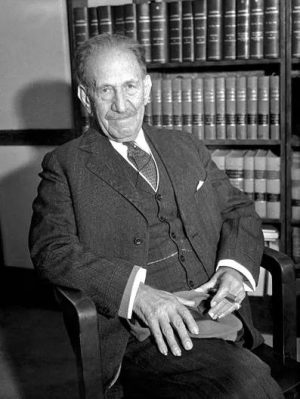
In my readings of Zionism’s influence over US politics, I ran across an obscure name, Samuel Untermyer, in several different historical events. This led to some additional readings and I come to the conclusion that this legal eagle of Jewish origin and ardent Zionist has shaped the 20th-century US more profoundly than any elected officials, including the Presidents. His influence extends to the world we live in today.
Untermyer was a lawyer and financier born to German Jewish immigrants in Virginia in 1858. He died in 1940. He was a graduate of Columbia Law School and a founding partner in the Wall Street law firm of Guggenheimer, Untermyer & Marshall, still around today.
One of his claims to fame was being the first lawyer in the US to earn a one-million-dollar fee on a single case. Remember he practiced law in 1920s and 30s so a million-dollar fee was real money.
Far more than being just a highly paid Wall Street lawyer, Untermyer leveraged his legal skills and insider information into a financial fortune. While serving as the attorney for the bondholders of the United States Shipbuilding Company, the largest shipbuilder in the US at the turn of the century, he exposed the company’s financial frauds and affected a reorganization.
Through a set of clever legal and financial maneuvering, Untermyer became a major shareholder of the reorganized company, renamed as Bethlehem Steel. Bethlehem Steel remained a global industrial giant for much of the 20th century. Untermyer became a financial mogul in his own right.
But Untermeyer’s real impact is far more consequential and long lasting. Through his involvement with the creation of the Federal Reserve and the financing of Cyrus Scofield, the author of the Scofield Bible, Untermyer shaped the US economic, religious, and political systems to this day. As the leader of the worldwide Jewish boycott of Germany before the war, Untermyer was crucially involved in the events leading up to WW2.
Untermyer and the creation of the Fed
Samuel Untermyer played a significant role in the creation of the Federal Reserve System, through his work as lead counsel for the congressional Pujo Committee, formed after the Panic of 1907 to investigate the Money Trust, a small number of Wall Street bankers who controlled much of the country’s financial power.
The Pujo Committee’s findings were instrumental in shaping public opinion and creating a political climate that demanded financial reform. The reform took the form of the Federal Reserve Act of 1913.
Untermyer was an active participant in drafting the legislation, laying the foundation of the US monetary system that still dominates the country’s and the world’s economic life today.
While Untermyer wasn’t one of the bankers who met in secret on Jekyll Island to draft the initial plan for the Federal Reserve, his public work with the Pujo Committee was a crucial catalyst.
His family foundation describes him as “instrumental in establishing the Federal Reserve System,” and a “leading architect of the Federal Reserve Act.”
Untermyer, Scofield Bible and Christian Zionism
Untermyer was a Zionist and he financially backed and promoted the work of Cyrus Scofield.
Cyrus Scofield was a small-time lawyer in Kansas. He was a fraud and criminal convict. He was divorced by two wives for cruelty and abandonment of his daughters.
Cyrus was jailed for forging his mother’s signature to sell her property. Later in life, Cyrus Scofield became a “born-again” Christian and hung out a shingle stating that he was a minister despite having no qualifications.
Cyrus seemed destined as a loser until he met Samuel Untermeyer.
Beyond his legal and legislative work, Untermyer was also the president of the major Zionist movement in the US at the time, the Keren Hayesod (United Israel Appeal). Together with Jacob Schiff, Untermyer hired Cyrus to re-write the King James Bible by inserting additions and interpretations.
Scofield introduced the so-called dispensationalist notes into the Bible, emphasizing the return of Christ and the restoration of Israel as central to god’s plan. His key additions to the King James Bible are 1). Jews are the Chosen; 2). Armageddon will happen in the Middle East; and the Rapture will happen in Israel.
Its commentary, particularly on Genesis 12:3 (“I will bless them that bless thee”), promoted the idea that supporting Jews (and later Israel) was a divine mandate. Cyrus died in 1921 but somehow the 1984 edition intensified these interpretations.
Published in 1909 by Oxford University Press, which is not typically in the Bible printing business, this annotated King James Bible, known as the Scofield Reference Bible, was sent to all the heads of the Evangelical Church in the US and became the #1 selling Bible in the country, to this day.
The Scofield Bible popularized dispensationalism – a theological framework that emphasizes the future return of the Jews to Israel and the restoration of a Jewish state as a key part of biblical prophecy.
Thanks to Untermyer, the Scofield Bible brought Christian Zionism to the world. The concept of “Judeo Christian values” was also conceived for the first time in history.
Untermyer, through the crook Cyrus Scofield, successfully inserted a pro-Zionist agenda into evangelical Christian theology to create Christian support for a Jewish state in the land of the Palestinians.
Today, over 100 million Americans believe in this book and they form the backbone of the support for Israel in the US.
Joseph Canfield’s The Incredible Scofield and His Book (1988) recorded how Untermyer saw Scofield’s dispensationalist theology as a tool to garner Christian support for a Jewish homeland.
The Scofield Bible (1909) predates the Balfour Declaration (1917), a key Zionist milestone. Untermyer, through his support of Scofield, helped to lay the theological groundwork for Christian Zionism.
Untermyer and the worldwide Jewish boycott of Germany in the 1930s
In 1933, shortly after Hitler’s rise to power, Untermyer founded and led the Non-Sectarian Anti-Nazi League to promote a worldwide economic boycott of German goods.
His August 1933 speech on WABC radio, published in The New York Times, declared a “holy war” against Germany, urging Jews and non-Jews to boycott German imports to pressure the Nazi regime. He referenced “600,000 souls we must save,” highlighting the Jewish exodus from Germany.
For his zeal, the British press gave him the title “Hitler’s Bitterest Foe”.
According to Benjamin Freedman, whom I wrote about in Jewish Defector Warns America (https://huabinoliver.substack.com/p/a-jewish-defector-warns-america ), Untermyer’s boycott intensified German resentment toward Jews, contributing to World War II and the German genocidal campaign.
It’s rare, maybe unprecedented, that a relatively obscure private citizen was able to exert this much influence over several defining world historical events.
Samuel Untermyer, with his instrumental role in the creation of Fed, the publication of Scofield Bible and creation of Christian Zionism, and the boycott of Germany prior to WW2, was a more powerful and long-lasting influence over the US than any elected Presidents in the 20th century.
‘America First’ clashes with ‘Israel First’ as Trump threatens Canada over Palestine recognition
MEMO | August 1, 2025
Donald Trump has provoked outrage among parts of his own political base after threatening to block a trade deal with Canada in retaliation for Ottawa’s decision to formally recognise the State of Palestine. The US president posted on Truth Social: “Canada has just announced that it is backing statehood for Palestine. That will make it very hard for us to make a Trade Deal with them. Oh’ Canada!!!”
Trump’s statement was widely interpreted as prioritising Israeli interests over domestic economic concerns, prompting fierce backlash from some right-wing influencers. Prominent conservative commentator Matt Walsh posted on X: “This is ridiculous. If a trade deal with Canada is beneficial to the American people then it should go forward regardless of Canada’s stance on Palestine. The benefit of the American people should be the guiding principle here.”
Walsh’s post drew thousands of responses, many supportive, but others accused him of failing to grasp America’s “special alliance” with Israel. However, critics have pointed out that it is Canada, not Israel, that is bound to the US through comprehensive economic and military treaties.
Along with the UK and France, Canada is one of Washington’s oldest and closest allies. By contrast, US-Israel ties, while historically deep, are often framed as ideologically and politically driven, bolstered by domestic lobbying pressure rather than national interest.
Observers say the incident highlights a deepening divide in US politics: on one side, a growing segment of voters who either support Palestinian rights or advocate for an “America First” foreign policy that avoids foreign entanglements; on the other, a political elite that consistently prioritises Israeli interests, often regardless of public opinion or national cost.
Despite mounting evidence of Israeli war crimes in Gaza and a global shift toward recognising Palestinian statehood, including by key Western allies, US lawmakers remain overwhelmingly aligned with Israel.
This split is becoming more pronounced as influential voices on the right, once assumed to be pro-Israel by default, now openly question the costs of that allegiance.
India scraps F-35 deal with US as Trump slaps tariffs
Al Mayadeen | August 1, 2025
The Indian government is assessing its next move following US President Donald Trump’s decision to impose a 25% tariff on Indian goods, a move that reportedly caught policymakers in New Delhi by surprise. The tariffs are scheduled to take effect on August 1.
According to Bloomberg, Indian officials were “shocked and disappointed” by the sudden announcement. However, the government has ruled out immediate retaliation. Instead, it is considering trade adjustments to preserve relations with the United States, India’s largest trading partner.
The Economic Times (ET) reported on Friday that Commerce Minister Piyush Goyal addressed Parliament, stating, “The implications of the recent developments are being examined.” He emphasized that the government is working with industry stakeholders and exporters to assess the impact and affirmed that India will take “all necessary steps to secure and advance our national interest.”
According to the report, India is exploring ways to reduce its trade surplus with the US by increasing imports of US goods, such as natural gas, communication equipment, and gold. However, officials made it clear that new defense purchases are not being considered.
Despite US pressure to sell its advanced F-35 fighter jets, India has rejected the offer. During Prime Minister Narendra Modi’s visit to Washington in February, Trump personally pushed for the deal, but Indian officials ultimately declined, according to the report.
New Delhi conveyed that it is not interested in off-the-shelf military acquisitions and remains committed to the Make in India initiative, which emphasizes co-development and domestic production of defense equipment. However, Bloomberg reported that the Modi government is unlikely to approve any significant new defense deals with the US in the near term.
Trump attacks India over trade, Russia links
Trump launched a sharp criticism of India’s trade policies and its longstanding ties with Russia. In a series of posts on Truth Social, he stated: “India is our friend, we have, over the years, done relatively little business with them because their tariffs are far too high, among the highest in the world, and they have the most strenuous and obnoxious non-monetary Trade Barriers of any country.”
The report mentions that he also condemned India’s defense and energy ties with Moscow, saying, “They have always bought a vast majority of their military equipment from Russia, and are Russia’s largest buyer of energy, along with China, at a time when everyone wants Russia to stop the killing in Ukraine, all things not good!”
In a later post, Trump added, “I don’t care what India does with Russia. They can take their dead economies down together, for all I care.”
Despite the rhetoric, ET argues, India is opting for strategic patience. US officials have expressed frustration over India’s negotiating posture, as Treasury Secretary Scott Bessent told CNBC that the administration is “frustrated” by the lack of progress and criticized India’s foreign policy as too aligned with Russia.
Nevertheless, diplomatic engagement continues. India is preparing to host the next Quad summit, along with the US, Japan, and Australia. Former Commerce Secretary Ajay Dua told Bloomberg TV that India must be “a little more accommodating” in trade talks, while also noting that large-scale commitments in energy or defense are unlikely in the current climate.
Defense shift and regional implications
Moreover, India’s rejection of the F-35 highlights broader challenges in its defense planning. The Tejas program, aimed at producing an indigenous fourth-generation fighter, has struggled, with only 38 aircraft delivered, 17 of which are prototypes. Limited combat capability has restricted export potential and delayed production.
While no immediate alternatives for a fifth-generation fighter exist, India is turning to France, aiming to begin domestic production of Rafale jet components by 2028. Experts also point to Russia’s Su-57 as a more likely short-term option, given India’s extensive existing military infrastructure tied to Russian systems.
As per the report, even though India has ruled out immediate retaliation, sources indicate that the government may challenge the new US tariffs, particularly on steel and automobiles, at the World Trade Organisation, depending on timing and strategic interest.
For now, New Delhi appears focused on maintaining stability while avoiding escalation. It is unwilling to enter a trade war, but also unwilling to be pressured into one-sided defense arrangements.
India’s broader objective remains clear: uphold national sovereignty while pursuing long-term economic and strategic autonomy, even amid external pressures.
Matson Suspends Electric Vehicle Shipments Over Battery Fire Concerns
What’s Going on With Shipping? | July 27, 2025
In this episode, Sal Mercogliano — a maritime historian at Campbell University (@campbelledu) and former merchant mariner — and Patrick Dunham from StacheD Training discussed the decision of Matson to suspend the shipment of Electric Vehicles (EVs) on board their ships from the West Coast of the United States to Hawaii and Guam.
Tehran’s new war plan: Build an anti-NATO
Russian FM Sergey Lavrov attends a meeting with foreign ministers of the Shanghai Cooperation Organization in Beijing, China. © Sputnik / Russian Foreign Ministry
By Farhad Ibragimov | RT | July 27, 2025
What if the next global security pact wasn’t forged in Brussels or Washington – but in Beijing, with Iran at the table?
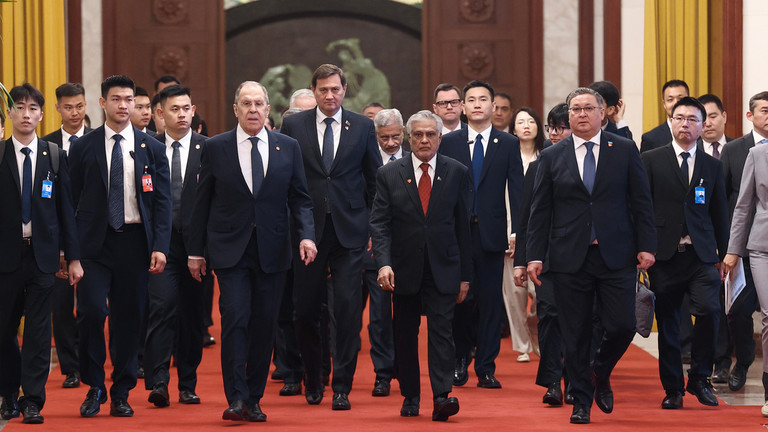
This is no longer a theoretical question. At the mid-July meeting of the Shanghai Cooperation Organization (SCO) Council of Foreign Ministers in China, Iran made it clear: Tehran now views the SCO not just as a regional forum, but as a potential counterweight to NATO. In doing so, it signaled a profound strategic pivot – away from an outdated Western-dominated system and toward an emerging Eurasian order.
The summit highlighted the increasing resilience of multilateral Eurasian cooperation in the face of growing global turbulence. Russia was represented by Foreign Minister Sergey Lavrov, who also met with Chinese leader Xi Jinping – an encounter that underscored the strength of the Moscow-Beijing axis. On the sidelines, Lavrov held bilateral meetings with the foreign ministers of China, Pakistan, India, and notably, Iran. His talks with Iranian Foreign Minister Abbas Araghchi focused on diplomatic solutions to the nuclear issue and emphasized deepening strategic coordination.
The Iranian side used the platform with purpose. Araghchi expressed his appreciation for the SCO’s solidarity amid Israeli aggression and stressed that Iran views the organization not as symbolic, but as a practical mechanism for regional unity and global positioning.
A platform that works – despite the skeptics
India’s full participation also contradicted predictions in Western circles that geopolitical tensions would paralyze the SCO. Instead, New Delhi reaffirmed its commitment to the platform. The implication is clear: unlike NATO, where unity depends on compliance with a central authority, the SCO has proven flexible enough to accommodate diverse interests while building consensus.
For Russia, the SCO remains a cornerstone of its Eurasian strategy. Moscow serves as a balancing force – linking China with South and Central Asia, and now, with an assertive Iran. Russia’s approach is pragmatic, multi-vector, and geared toward creating a new geopolitical equilibrium.
Iran’s strategic breakout
The heart of the summit was Abbas Araghchi’s speech – an assertive and legally grounded critique of Israeli and American actions. He cited Article 2, Section 4 of the UN Charter, denounced attacks on Iran’s IAEA-monitored nuclear facilities, and invoked Resolution 487 of the UN Security Council. His message: Western aggression has no legal cover, and no amount of narrative control can change that.
But beyond condemnation, Araghchi delivered a concrete roadmap to strengthen the SCO as a vehicle for collective security and sovereignty:
-
A collective security body to respond to external aggression, sabotage, and terrorism
-
A permanent coordination mechanism for documenting and countering subversive acts
-
A Center for Sanctions Resistance, to shield member economies from unilateral Western measures
-
A Shanghai Security Forum for defense and intelligence coordination
-
Enhanced cultural and media cooperation to counter cognitive and information warfare
These are not rhetorical gestures – they are blueprints for institutional transformation. Iran is operationalizing a new security doctrine built on multipolarity, mutual defense, and resistance to hybrid threats.
SCO vs. NATO: Two models, two futures
While NATO is structured around a rigid hierarchy dominated by Washington, the SCO embodies a post-hegemonic vision: sovereignty, equality, and civilizational plurality. Its member states represent over 40% of the global population, possess vast industrial capacities, and share a collective desire to break the unipolar mold.
Tehran’s bet is clear: the SCO offers not just a geopolitical shelter, but a platform for advancing a new global logic – one rooted in strategic autonomy, not dependency.
The sophistication and clarity of Araghchi’s initiatives suggest that Tehran is preparing for the long game. Behind closed doors, the summit likely featured discussions – formal and informal – about deepening SCO institutionalism, perhaps even rethinking the organization’s mandate.
Araghchi made that vision explicit: “The SCO is gradually strengthening its position on the world stage… It must adopt a more active, independent, and structured role.” That’s diplomatic code for institutional realignment.
The West responds – predictably
The Western response was immediate. Within days of Iran’s proposals, the EU imposed new sanctions on eight individuals and one Iranian organization – citing vague claims of “serious human rights violations.” Israel, by contrast, faced no new penalties.
It is geopolitical signaling. Tehran’s push to turn the SCO into an action-oriented bloc is seen in Brussels and Washington as a direct threat to the current order. The more coherent and proactive the SCO becomes, the harsher the pressure will grow.
But that pressure proves Iran’s point. The rules-based order is no longer rules-based – it is power-based. For countries like Iran, the only path to sovereignty is through multilateral defiance and integration on their own terms.
The stakes ahead
Iran is not improvising. It is positioning itself as a co-architect of a post-Western security order. Its vision for the SCO goes beyond survival – it is about shaping an international system where no single bloc can dominate through sanctions, information warfare, or coercive diplomacy.
This strategy has implications far beyond Tehran. If the SCO embraces Iran’s proposals and begins to institutionalize them, we could be witnessing the early formation of the 21st-century’s first true alternative to NATO.
The West may dismiss this as fantasy – but in Eurasia, the future is already being drafted. And this time, it’s not happening in English.
Farhad Ibragimov – lecturer at the Faculty of Economics at RUDN University, visiting lecturer at the Institute of Social Sciences of the Russian Presidential Academy of National Economy and Public Administration
Europe’s addiction to sanctions is terminal
By Samuel Geddes | Al Mayadeen | July 26, 2025
It has been said there are two kinds of European countries: small countries and those that have not yet realized they are small. As of mid-2025, it appears most of the continent has yet to reach this realization.
More than three years into the grinding attritional war between Russia and Ukraine, the European Union, having finally secured President Trump’s support for its maximum pressure campaign against Moscow, announced its most severe round of sanctions to date. In this 18th round, the EU expanded its blacklist of Russia’s so-called ‘shadow-fleet,’ used to export energy, to 444 vessels, denying operators access to European ports as well as insurance services. EU-member states were also prohibited from any dealings with a further 22 Russian banks, bringing the total to 44, to strangle Moscow’s financial channels to the outside world.
Alongside expanded export bans on ‘dual-use’ technologies, Brussels sanctioned entities in China, Türkiye, and 11 other countries for assisting Russia to circumvent sanctions and further lowered the price-cap on Urals crude oil, aiming to choke off the entry of Russian energy, in any form, from entering the bloc.
Besides the impressive hubris involved in declaring that Europe, as an importing region, will dictate the price it and other customers will pay for Russian energy, last weeks’ measures serve only to make permanent the long-term damage to its own economic viability, while Russia simply pivots to other buyers.
Parallel to the drafting of the latest sanctions salvo, the EU’s two largest members, Germany and France, alongside the UK, also pursued a maximum hostility campaign against another crucial energy exporter. Rather than condemning the 12-day war launched against Iran by “Israel”, European leaders, German Chancellor Merz in particular, chose to give the game away entirely, announcing their support for Israeli aggression because it was doing their “dirty work” (undermining the Islamic Republic) for them.
Upon the beginning of a ceasefire, the French and British foreign ministers, as if taunting Tehran after its nuclear facilities and scientists had been attacked, threatened to initiate the “snapback” mechanism of the defunct nuclear agreement, the JCPOA, if Tehran retaliated. The “snapback” mechanism would enable any of the signatory countries in the JCPOA to unilaterally trigger the reimposition of UN sanctions against Iran, which had been lifted under its terms post-2015. As the JCPOA itself will expire by October, the window for European states to trigger the snapback is closing.
Talks between Iran and the E3 were announced this week to take place in Istanbul over exactly this issue. Given Europe’s enthusiasm for compensating for its shrinking global clout with economic warfare, as well as pursuing American [Israeli] geopolitical goals ahead of its own, the likelihood of all three states foregoing the chance to “punish” Tehran for adhering to the agreement they signed on to seems a fading possibility.
If Europe ultimately follows through on its snapback threat, it will in a matter of months have destroyed any possible rapprochement with two states who could realistically have helped it out of its self-inflicted economic blood-loss. While no doubt damaging to both Moscow and Tehran, it will have solidified in the minds of both the necessity of forming economic routes and institutions outside the control of Western states.
The International North-South Economic Corridor, connecting Russia to the Indian Ocean via Iran, is the most prominent example of such cooperation. Since its effective launch in 2022 at the onset of operations in Ukraine, cargo traffic in energy, food, and other raw materials along the route has risen year-on-year, nearly hitting 27 million tons in 2024. As well as bilateral trade, the route’s growth has been fueled by intensified exchange between Russia and India. The latter is largely ignoring economic sanctions on Moscow, with two-way trade expected to approach $100 billion by 2030. The INSTC also crucially grants land-locked Central Asian states much-needed maritime access, magnifying regional buy-in.
The reimposing of UN-sanctions, along with the threat of secondary measures against third-party states could ironically create the kind of space for Chinese involvement with the region, leveraging INSTC’s points of interoperability with Beijing’s Belt and Road Initiative.
Whatever course it takes, the leaders of Europe still seem not to have realized either the declining impact of their actions, nor the long-term negative consequences they will have for the continent. The last five centuries of economic history undoubtedly belonged to Europe, but Brussels’ seemingly terminal lack of vision writes it out of the coming chapter being authored in Asia.
Featured Video
Elijah Magnier: Yemen’s strikes are shattering Saudi Arabia’s long-term strategy
or go to
Aletho News Archives – Video-Images
From the Archives
British weapons and personnel doing much of the killing in Yemen
Press TV – June 18, 2019
A detailed report published by the Guardian newspaper has shown how Britain is massively contributing to Saudi Arabia’s devastating war on Yemen as it suggests that London is not only supplying the bombs that fall on Yemenis, but it provides the personnel and expertise that keep the war going.
The comprehensive report by Arron Merat published on Tuesday showed that Britain was doing much of the killing in Yemen as the country continues to provide Saudi Arabia with everything it needs to turn its southern impoverished neighbor into a graveyard.
“Every day Yemen is hit by British bombs – dropped by British planes that are flown by British-trained pilots and maintained and prepared inside Saudi Arabia by thousands of British contractors,” said Merat in the report. … continue
Blog Roll
 Aletho News
- Racist Seinfeld Dances for Joy as Bibi Unveils His New Map
- A West Bank War for Netanyahu’s Election Campaign, Could It Backfire?
- Yemen denounces European Parliament’s ‘hypocritical’ push to blacklist Ansarullah
- Qalibaf: UAE’s UN bid aims to ‘clear the runway’ for ‘Greater Israel’, whitewash genocide
- Pakistan reopens Iran border after boosting security: Report
- Why are so many Brazilians voting for Flávio Bolsonaro?
- Democrats Put Anti-Russia Agenda Ahead of American Workers
- Elijah Magnier: Yemen’s Strikes Are Shattering Saudi Arabia’s Long-Term Strategy
- Pentagon designates Chinese cultural centers national security threat
- Israel Demolishes Home Of Lebanese Journalist Whose Viral Film Exposed Pager Attack
- If Americans Knew
- An error has occurred; the feed is probably down. Try again later.
- No Tricks Zone
- Sudden Stratospheric Warming, Powerful El Niño Combination May Lead To Extreme Europe Cold, Energy Crisis!
- Two New Studies Find Thwaites Glacier Melt Cannot Be Driven By Human Activity Or A Warming Ocean
- E-Cars Reduce CO2 Emissions By Only 41% Compared To Internal Combustion Engine Vehicles
- Predictions Made By Renowned Climate Professor Over Past Decades Have Been Proven To Be Poor
- New Study Suggests Large Regions Of The Pacific Ocean Have Been Cooling For The Last 80 Years
- Germany’s Green Energy Debacle: High Energy Costs Force Kahla Porzellan to Close After 182 Years!
- New Study: 50 Years Of The Most Aggressive ‘Net Zero’ Policies Can Only Affect The Global Climate By 0.03°C
- US September “Heat” Was No Record…Many Records Set Decades Ago
- Latest European Green Energy Debacle; Portugal’s Largest Flagship Solar Park Insolvent!
- Green Energy Debacle: German Expert Professor Fritz Vahrenholt Warns Of Severe Economic And Social Consequences

