Tale of two pipelines… Europe loses, China gains from Russia’s strategic gas supply
Strategic Culture Foundation | August 23, 2024
The Power of Siberia pipelines transporting natural gas from Russia to China were back in the news this week, as was the ill-fated Nord Stream pipeline, the Russian-European counterpart.
First, it was announced the Power of Siberia 2 was on track for completion this year. When operational, the new pipeline will augment existing trans-Siberian delivery to China, bringing the total gas supply from Russia to 100 billion cubic meters per year.
That awesome gas supply figure is significant. For not too long ago it was projected that the Nord Stream 1 and 2 pipelines would have a combined capacity to deliver 100 bcm to Europe. Alas, that energy project was sabotaged in September 2022 when the gas pipes were blown up on the Baltic seabed. Veteran investigative reporter Seymour Hersh and other writers have provided the most compelling account of the sabotage. It was carried out by American military and CIA operatives with the approval of President Joe Biden. See our weekly editorial published on September 30, 2022, days after the incident in which we outlined strong evidence inculpating Washington.
It was an audacious act of international state terrorism carried out by the Americans to destroy the decades-old energy trade between Russia and Europe. In particular, Germany’s postwar economic prowess was powered by relatively cheap and abundant Russian hydrocarbons. Now, the United States has stepped in as a supplier of much more expensive Liquefied Natural Gas to Europe.
Incredibly, no serious investigation has been carried out by European states to find the culprit. Russia, which was the main owner of the multi-billion euro project, has offered to cooperate with European states to investigate the blast, but all of Moscow’s offers have been rebuffed.
You could hardly make this criminal farce up. For years, the Americans enviously griped about Russia being the strategic energy supplier to Europe. With the escalation of the proxy war against Russia in Ukraine in February 2022, the Americans and their European NATO lackeys had a convenient pretext for blowing up the Nord Stream pipes.
The net result is that Germany’s economy – once the powerhouse of the European Union – has been dragged to its knees from the loss of its vital energy input from Russia. Germany is teetering on recession and its famed export-led industries are no longer competitive.
Yet despite this blatant crime, the political establishments in Germany and other countries directly affected by the Nord Stream vandalism – Sweden and Denmark – remain pathetically beholden to Washington. Two years after a huge transgression against Europe and Russia by the obvious culprit, the European authorities have dissembled and procrastinated.
Last week, Germany issued an arrest warrant for a Ukrainian diver whom it claims was involved in the undersea attack. This is a variant of previous claims in the American media that the Nord Stream sabotage was carried out by Ukrainian operatives. This narrative is absurd and an obvious distraction from the real story. There is no way that such a difficult operation could have been achieved by a bunch of amateurs. The Nord Stream sabotage required state-level expertise. The Americans also had an imperative motive – to force their way into the lucrative European energy market.
All of this is a tragicomedy. Russia’s fair and advantageous services have been perversely spurned by Europeans under the malign spell of American overseers. The European governments and media can’t even muster the courage or independence to conduct a proper investigation into the wanton destruction of their economies.
However, Russia has not been deterred or undermined. Far from it, unlike Germany and other recession-hit European states, Russia is growing at a robust rate. A large part of the benefit stems from the Russian energy trade now being directed to Asia.
China is gaining where Europe lost. The expanding Power of Siberia projects represent the loss of Nord Stream.
The foolishness of the European political class is stunning. By slavishly following the self-serving American hegemonic policy, the Europeans have fueled a war in Ukraine, the biggest war on the continent since World War Two. This conflict threatens to devastate the European Union.
The stupid European leaders have shot their countries in the foot. Instead of embracing a mutual partnership with Russia, they have opted for the American agenda of confrontation for which they are paying dearly with economic and political ruination.
European citizens know that their interests have been betrayed by elitist leaders who are in hock to American overlords.
There is a tangible sense of poetic justice. Russia’s strategic energy resources – the most prodigious on Earth – are fueling the expansion of an Eurasian economic juggernaut and the multipolar paradigm. This is leading to the accelerated demise of Western unipolar dominance.
The Americans and Europeans fret about the rise of China and Eurasia and how they will not be able to compete economically. A large part of the Western demise is caused by its own foul play and duplicity.
The tale of two pipelines, the Power of Siberia and Nord Stream, speaks volumes.
Western sanctions have backfired — Russian tycoon
RT | August 24, 2024
Western sanctions against Russia have yielded results that are the opposite of their stated goal, metals tycoon Alisher Usmanov has said.
In an interview with the Italian newspaper Corriere Della Sera on Thursday, the Russian billionaire argued that the sanctions regime has so far done more harm to the European Union countries than to Russia.
“They wanted to harm the Russian economy, and here it is growing. They wanted to punish the business elite, and the Russians brought the money back home. The Russian economy is adapting to the sanctions, while neighboring markets are suffering. Europe rejects Russian energy resources and is forced to buy them at a much higher price,” Usmanov told the publication.
Russia’s economy expanded 3.6% in 2023 despite the economic sanctions imposed by the EU, the US and their allies since the start of the special operation in Ukraine in 2022. The EU’s economic powerhouse Germany went through a recession last year, while the bloc’s other large economies, France and Italy, posted growth of under 1%.
Following the sanctions and the sabotage of the Nord Stream pipeline in September 2022 that led to a dramatic drop in Russia’s gas supplies to the EU, the bloc started buying liquified natural gas (LNG) from the US. According to estimates published by Russia’s Energy Ministry, American LNG is 30-40% more expensive than Russian pipeline gas.
Usmanov also condemned the EU sanctions policy that targets individuals deemed close to the Russian leadership.
The West has made “a colossal mistake” by persecuting Russian businessmen for political reasons, because “they do not influence decision-making,” argued the tycoon.
The Uzbekistan-born businessman was added to the UK, EU, and US sanction lists shortly after the launch of Moscow’s military operation in Ukraine, along with several other prominent business figures.
The restrictions have made Russian investments abroad impossible, the billionaire lamented, adding that the businessmen from the sanctions-hit country now invest mainly at home.
Usmanov was awarded the title of Commander of the Order of Merit of the Italian Republic in 2017 for financing the restoration of a massive architectural complex – the Trajan’s Forum in Rome, which dates to the early 2nd century AD.
“Sanctions are a sign of impotence,” stated the businessman, adding that the peace in Ukraine can only be achieved through compromise and negotiations.
Usmanov holds a stake in the iron ore and steel giant Metalloinvest, as well as in the telecommunications company MegaFon. Usmanov’s net worth totals $13.8 billion, making him among the world’s 100 wealthiest people, according to Forbes.
Starmer calls for comprehensive assistance to Ukraine despite the decline of Britain
By Ahmed Adel – August 20, 2024
British Prime Minister Keir Starmer asked the country’s National Security Council to consider giving more support to Kiev, the British newspaper The Times reported on August 18. Starmer’s request comes as half of British citizens believe their country is heading in the wrong direction, according to a recently published survey.
“Starmer has also asked the National Security Council to draw up plans to provide Ukraine with a broader range of support,” The Times reported, adding that foreign policy adviser to the last three Tory prime ministers, John Bew, went last week to Kiev as part of this effort.
At the same time, a military source told the outlet that Starmer’s policy of supporting Ukraine would be comprehensive.
“It’s not just about the military support, but it’s about the industrial, economic, and diplomatic support,” the defence source said.
The Times added that a special group was created with the participation of the UK’s defence and foreign ministries to build a unified UK policy towards Ukraine.
This comes as the British newspaper The Independent reported on August 17 that the UK Ministry of Defense did not deny information that the Ukrainian Armed Forces had used British Challenger 2 tanks in the attack on the Kursk region, which Russia described as a terrorist act and called a provocation following the deaths of civilians.
The report quoted a Defense Ministry spokesman as saying that Kiev could use the supplied weapons in the attack on the Kursk region. However, this did not apply to the Storm Shadow cruise missiles, which London allowed to be used only inside “internationally recognised” Ukrainian territory.
In January 2023, the UK also announced the transfer of 14 Challenger 2 main battle tanks to Ukraine. At least two of them were destroyed by Russian troops in Kursk. It can be expected that Starmer’s new military package to Ukraine will face the same fate as the Challenger 2 battle tank – Russian forces destroying them.
Yet, despite British military equipment sent to Ukraine being destroyed effortlessly by Russian troops, in addition to the impossibility of Ukraine winning the war, Britain insists on maintaining a policy of trying to prolong the war despite massive domestic issues.
According to a survey by Ipsos published on August 19, 52% of citizens interviewed expressed a negative opinion about the direction the United Kingdom is taking, more than double the number who see the situation improving.
“22% said that they think things in Great Britain are heading in the right direction (-3 from Jul ’24), 52% wrong direction (+3), and 19% neither (N/C). This gives a net right direction of the country rating of -30, which is down from -24 last month,” Ipsos said of the survey results.
The poll found that the number of Britons with a favourable view of Keir Starmer has fallen to 38%, the same proportion as those without sympathy. Although Britons now view him with greater affinity, the article stresses that this is only the “honeymoon” period for the British leader.
Former Conservative Prime Minister Rishi Sunak only garnered the support of 20% of those interviewed, behind Nigel Farage, leader of the right-wing Reform UK party (25%), and Ed Davey, leader of the Liberal Democrats (22%). Respondents also ranked the Labour Party first, with 40% giving it a positive rating and 37% a negative rating. The Conservatives received 21% support, the Liberal Democrats 24%, and Reform UK 23%.
Britain’s economy has performed lacklustrely over the past decade. High living costs, elevated interest rates, and faltering productivity gains have particularly affected citizens, causing the British economy to enter recession in the second half of 2023 as households cut back on spending. Although the Bank of England earlier this month raised its growth forecast from 0.5% to 1.25% for 2024, it warned of a weaker medium-term outlook as high interest rates hit activity.
As Simon Pittaway, a senior economist at the Resolution Foundation, explained: “Britain’s medium-term record is far less impressive, and has been driven by a growing population rather than rising productivity. Without a return to productivity growth, living standards will continue to stagnate and Britain will continue to fall behind its peers.”
Yet, despite the grim economic situation, with most citizens believing the country is heading in the wrong direction and Starmer very far from enjoying popular support, the British prime minister has instead prioritised figuring out how to continue assisting Ukraine despite already providing support to the tune of £12 billion, rather than serving the interests of Britons and alleviating the growing poverty in the country.
Ahmed Adel is a Cairo-based geopolitics and political economy researcher.
Germany about to decrease its aid to Kiev
By Lucas Leiroz | August 20, 2024
Support for Ukraine is increasingly showing signs of being reduced. The productive capacity of European countries no longer seems sufficient to meet Ukraine’s constant demand for weapons and military equipment, which is why a serious drop in supplies is likely to occur soon. Germany, which is currently experiencing an energy crisis and deindustrialization, seems to be one of the first countries to fail to fulfill its military aid agreements.
The German newspaper Bild recently reported that the “continuous supply” of weapons to the Kiev regime is at risk. The main reason for the production problems is the policy of budgetary restrictions. The article cites sources in the Ministry of Finance and communications between officials from different ministries and the German parliament. The sources state that there is no longer enough budget to continue supporting Ukraine, which is why a change in the military support policy is urgently needed.
According to the newspaper, Finance Minister Christian Lindner recently contacted Defense Minister Boris Pistorius and Foreign Minister Annalena Baerbock to discuss the issue. He emphasized the budget problems and the impossibility of continuing to finance arms production for Ukraine. According to Lindner, a solution could be found if the government submitted some kind of report justifying the need and urgency of providing new short-term funds for the military sector. However, since the government remains inactive, no special decision has been made by the Finance Ministry, which indicates that there will be a cut in military production soon.
There appears to be a conflict of interest between the ministries. Defense officials are unhappy with Lindner’s budget control and accuse him of “changing the rules of the game.” According to the defense industry, Lindner is responsible for destabilizing the budget for the military industry, thereby affecting the entire policy of supporting Ukraine. In fact, Lindner listed at least 30 German measures to support Kiev that “can no longer be carried out.” The Defense Ministry sees these initiatives as a sign that the Finance Ministry is simply no longer interested in continuing to fund pro-Ukrainian aid.
Earlier, the Defense Ministry had proposed a special package worth almost 4 billion euros for “unplanned spending” for Ukraine. The package included the urgent production of various equipment, such as artillery shells, drones, tanks and armored vehicles. However, within just three months, most of the package has already been spent and there is simply nothing left that can be produced with this funding, leaving few resources for the Finance Ministry to use in the assistance program.
Indeed, the officials responsible for finance are stating the obvious: there is no more money to finance the war. Meanwhile, the military, driven by anti-Russian paranoia and the fear that Germany will be the “next target”, claims that it must do whatever necessary to send even more weapons to Ukraine. In the midst of all this chaos, the Ministry of Foreign Affairs and other strategic sectors seem inert, not knowing what decision to make and unable to reach a consensus.
The crisis in Germany is nothing new. It had previously been reported that the country no longer had any funds to use in the war. Days before Bild published its article, Frankfurter Allgemeine Zeitung (FAZ) reported that Berlin was about to end its support for Ukraine due to the absolute lack of money. At the time, sources close to Lindner said that there was no longer any chance of continuing the assistance.
“End of the event. The pot is empty (…) [Berlin has] reached a point where Germany can no longer make any promises to Ukraine,” an unnamed source told journalists at the time.
The defense sector’s complaints about the budget are also not new. In July, Pistorius had already expressed his indignation with Lindner’s management, stating that he had received a budget smaller than what had been requested to meet German military priorities. In practice, the economy and defense sectors are in constant conflict in German politics, and inter-ministerial dialogue is extremely difficult.
“I got significantly less than I registered for. That is annoying for me because I cannot initiate certain things at the speed that the historic turning point and threatening situation require,” Pistorius said at the time.
All this institutional chaos was to be expected, since Germany is maintaining a support program that does not correspond to the country’s social and economic reality. Going through a serious energy crisis and an accelerated process of deindustrialization, Berlin is simply not growing economically enough to pay for the billion-dollar aid packages to the Kiev regime.
At some point, Germany will have to choose between paying Ukraine’s bills or its own.
Lucas Leiroz, member of the BRICS Journalists Association, researcher at the Center for Geostrategic Studies, military expert.
You can follow Lucas on X (formerly Twitter) and Telegram.
The Zero Emissions Grid Demonstration Project Follies
By Francis Menton | Manhattan Contrarian | August 10, 2024
I claim credit for being the first person to demand a demonstration project to show how a zero emissions electrical grid is supposed to work, before trying to build such a thing for our entire population of three hundred million as involuntary guinea pigs.
How could it be that lots of others haven’t been demanding this for years? It’s like everyone has lost their minds. Before climate hysteria set in, the idea of attempting an engineering project as enormous as a zero emissions electrical grid for the United States, or even for one state, without first having a functioning demonstration project, would have been completely unthinkable. But under the powerful sway of the fear of climate armageddon, the need for a demonstration project to prove feasibility never seems to occur to anybody. And thus trillions of dollars are getting spent — wasted — on facilities that anyone with a brain can easily see will never come close to providing a zero emissions grid — although building these facilities will greatly drive up the cost of electricity to consumers.
Let me then welcome an important new voice to the still tiny chorus of those demanding a demonstration project. The new voice is Congresswoman Harriet Hageman of Wyoming. (Ms. Hageman is the woman who took out the former Wyoming Congresswoman, Liz Cheney, in a primary in 2022.)
Ms. Hageman went public with her demand at a town hall held this past Tuesday, August 6, in Jackson, Wyoming. She proposed that the ultra-liberal town of Boulder, Colorado, step up as the potential guinea pig. Wyoming-based news source WyoFile had the story on August 7, with the headline “Hageman proposes a Boulder, Colorado, fossil-fuel-free experiment.” Excerpt:
[Hageman] proposed a pilot project that would strip Boulder, Colorado, a progressive enclave, of its fossil fuel infrastructure — all to be replaced with windmills and solar panels on the city’s open space. “The pilot project is, you take out all their gas stations,” she said to a crowd of about 70 people in the Teton County Library. “We take away all their internal combustion engines — cars. We take away all of their highways and streets, because that’s all oil-and-gas-produced.” . . . “They’ve been a no-growth city for decades,” Hageman said, “so they have a lot of open space around them. We fill out open space with windmills and solar panels, and we’ll see if we can actually run a city of 100,000 people [with] no fossil fuels whatsoever.”
According to WyoFile, Hageman’s remarks drew a response of “applause and laughter” from the supportive crowd in Jackson. However, the WyoFile reporter took the proposal to a City Councilman in Boulder named Mark Wallach, and asked for comment. Wallach was not amused. Here is Wallach’s reaction:
“One of the things that makes people so leery of politics and politicians is when people make ridiculous suggestions like that,” [Wallach] said in a telephone interview with WyoFile. “Nobody on the Boulder Council suggested we can do without all the fossil fuels at this point,” he said. “We make efforts to do better — to recognize that climate change is real and we do things we can do to combat it.”
Well, Mark, what am I missing? If the good people of Boulder are demanding that the whole country be force-marched to a zero emissions future, why shouldn’t they be willing to step up themselves and show that the goal is feasible to achieve? A simple zero-emissions-grid demonstration project is all that it will take.
And, if I might make a suggestion to Ms. Hageman, there is no need to be punitive about this. The claim of the green energy advocates is that electricity from wind and sun are cheaper than electricity from hydrocarbon fuels, and that electric cars and electric heat will be cheaper and better than the cars and heat we have now. So there is no need to forcibly take away the cars and the gas stations. Just have them build the magical zero-emissions grid and, if they can do it, they will have plenty of electricity to power everything, and the gas-powered cars and gas stations will rapidly fade away.
The problem is that it is not going to be possible to build a zero-emissions grid. However, the people of Boulder clearly think that it is going to be possible, and I am perfectly willing to be proved wrong.
But my confidence that I am right only increases with time. The closest thing that the world has to an attempted demonstration project of a zero emissions grid continues to fail spectacularly. That would be the Gorona del Viento project on El Hierro Island in Spain’s Canary Islands.
I have written about the El Hierro project many times, and will not go into the full background here. Suffice it to say that El Hierro was absolutely intended to be a demonstration of a zero emissions grid. A facility of five large wind turbines and a massive pumped-storage hydro backup facility (Gorona del Viento) was built and opened in 2014. The website of Gorona del Viento continues to proclaim on its opening page: “An island 100% renewable energy.” Hah!
It’s an island of about 10,000 people. Average electricity demand is 4-5 MW, and peak demand is about 7.5 MW. Roger Andrews did an independent analysis of the project for the Energy Matters website back in 2017. They built wind turbines with nameplate capacity of 11.5 MW on a mountainside in the trade-winds zone — about the most favorable wind conditions in the world. The hydro storage facility has a capacity of some 270 MWh, which is about 54 – 68 hours of average usage. (By contrast, New York governor Kathy Hochul has a big storage initiative to spend about $10 billion to build one hour of storage.). Doesn’t it sound like El Hierro has what they need to make this work?
Here are the latest statistics from Gorona del Viento, for the full year 2023. The percent of electricity for the island supplied by the wind/storage system for the full year was 35%. The other 65% came from the backup diesel generator. The best month for the wind/storage system was July, when it supplied 62% of the island’s electricity. But then there was October, when it only supplied 10%.
How could they be failing so completely with so much excess generation capacity and a huge storage facility that no one in the world can duplicate? You’ll have to ask them. I’m just reporting the statistics they put out themselves.
This is the best that anyone in the world can do, at least so far. Boulder: it’s up to you to show how this can be done!
Nord Stream 2: Is the Bus Coming for Zelensky and Duda?
By Hans Vogel | ARKTOS | August 17, 2024
Just a few days ago, a former German spy chief stated that the sabotage of the Nord Stream 2 pipeline was planned and ordered by Ukrainian satrap Zelensky and Polish President Andrzej Duda.
Now that the elaborate US narrative on the war in the Ukraine is beginning to come apart at the seams, now that the ultimate defeat of the Ukraine puppet government is becoming ever more apparent, the hour is approaching to throw Zelensky, that talented little piano player in his green T-shirt, under the bus.
With some two thousand Ukrainian soldiers being sacrificed on a daily basis on the altar of the Wall Street Money Gods, the Ukraine will soon have to perish. Now that the Kursk operation, planned on the Potomac and carried out by Western mercenaries, has failed, now that the inferiority of Western arms can no longer be hidden from the public, something was needed to divert attention.
This was done by dusting off an older issue: Nord Stream 2. Joe Biden once threatened to blow it up. However, when it was actually blown up, all of Washington’s lackeys in Europe pointed their little fingers at Russia. It was Putin who did it! Although the German economy was hit the hardest when competitively priced Russian natural gas, vital for its industry and keeping warm in winter, stopped flowing, the German government seemed at a loss. What would their masters in Washington allow them to say and do?
The Scholz government also began to divert the public’s attention, relying chiefly on two apparently mentally retarded, but nonetheless vocal cabinet members. One is Foreign Minister Annalena Baerbock, a bimbo of unparalleled imbecility, who tours the world making utterly dumb statements. The other is Robert Habeck, the Minister of Economics, who at least seems to have one brain cell more.
After US media suggested it was the Ukrainians who destroyed the pipeline, the former German spy chief joined the chorus, adding that Zelensky did it together with Duda.
Since his reelection in 2020, Duda initially seemed quite OK on account of his unflinching support for the Ukraine, especially after the start of the Russian Special Military Operation in February 2022. With much of the Ukraine historically having been part of Poland at different moments in history, Polish support for a Ukrainian government is always just a bit suspicious. Especially since many Polish nationalists have a very strong historical awareness and continue to regard the Ukraine as part of Poland.
There is, however, another side to Duda: he is a devout Roman Catholic and as such not to be regarded as a complacent and cooperative adherent of gender lunacy. Since this gender lunacy, represented by the LGB-whatever rainbow flag flown at US embassies, is a cornerstone of US foreign policy, the leader of a US satrapy cannot be allowed to ignore this issue or to oppose it! God of Money forbid!
Yet this is precisely what Duda has done. Correctly branding gender lunacy a “foreign ideology,” he was set on changing the Polish Constitution in order to prohibit lesbian and gay couples from adopting children.
Another stain on Duda’s reputation is his failed attempt to make it illegal to blame the Polish nation for anything unpleasant that happened on Polish territory to Jews during the years 1939-1945.
The fact Duda has been indicated as an accomplice in the Nord Stream 2 sabotage provides a nice insight into the way the Empire works. When there is a problem somewhere out there in the imperial boondocks, the local underlings are instructed to take care of the issue, and that way the imperial leadership does not need to soil its own hands.
When the bus arrives, it will crush Zelensky, but quite likely the Polish President as well. Two birds with one stone.
One has to admit, that took some shrewd and refined planning!
Nord Stream 2 bombing and Zelensky’s “three men and a boat” story
By Martin Jay | Strategic Culture Foundation | August 17, 2024
Nord Stream 2 bombing is in the headlines again, with a recent report which appears to come from Kiev claiming that it was the Ukrainians all along who were behind it. The claims, which have been denied by Zelensky naturally, are preposterous as they are ill-timed. But what’s really behind this latest fake news story?
In a nutshell, Joe Biden needs to clean up his backyard to help Kamala Harris get elected and in Ukraine there is quite a bit of tidying up which needs doing – not only for Ukraine itself to sustain relations with a new administration in Washington but also for America’s relations with Germany and the EU.
And so a fable has been invented which both tidies up any loose ends between Washington and Germany – as the U.S. bombing the pipelines creates unease and tensions between the Biden administration and that of Scholz’s – as well as helping the Ukrainians and Harris.
The whole Nord Steam2 pipeline bombing which happened in September 2022, a few months after the Russian invasion, is a clever web of lies crafted by the Americans, when all along it was U.S. special forces with the help of the Norwegians who planted the devices in June of the same year, three months before they were finally detonated.
Initially, it was very suspicious at the speed of how Russia was blamed.
“Everything is pointing to Russia,” blared a POLITICO headline two days after the explosions. Quoted in the piece were a number of foreign commentators including a top German spymaster arguing that only Russia had the means and motives to do it. There is no elaboration however on motive given that it was Russia’s gas supply deal to Germany which was being abruptly halted.
Remarkably, a lie moves so quickly while the truth is still putting its shoes on. Within days, respectable leading analysts were also pointing the finger at Russia without a trace of evidence to support their ludicrous claims.
“We still don’t know 100 percent that Russia was responsible,” said Olga Khakova, deputy director for European energy security at the Atlantic Council. “But everything is pointing to Russia being behind this.” U.S. Energy Secretary Jennifer Granholm told BBC on Sept. 30 that it “seems” Russia was behind the sabotage.
Most western journalists followed the narrative put out by the Americans and chose just simply to not look at it too closely or too sceptically. If any had, they might have simply asked who are the winners and losers?
They would have only needed to look at the gas market in the following weeks and to see that the U.S. firms had new clients in Europe who were paying three times the normal price. That should have been a clue.
Secondly, the geopolitics and Germany. Biden hade it very clear just two weeks before the Ukraine war started when the German chancellor visited the Oval Office in February 2022, what Biden was planning on doing both about the pipelines and Germany itself whose leader Scholz was very reluctant to go to war with Ukraine.
“If Russia invades – that means tanks and troops crossing . . . the border of Ukraine again,” Biden said, “there will no longer be a Nord Stream 2. We will bring an end to it.”
When asked how he could do so as the pipeline was under Germany’s control, the U.S. president spelled it out: “We will, I promise you, we’ll be able to do it.”
Six months later, when the pipelines blew up, Germany quickly came on board with the war plan. Game changer.
Remarkably, Biden is not the first U.S. president to have plans to disrupt the pipeline which could lead some journalists to look at the Ukraine more deeply and wonder whether it was a U.S. plan all along to goad Putin into invading simply for the excuse to blow them up.
As former U.S. Secretary of State Condoleezza Rice noted back in 2014 when U.S. meddling in the internal affairs of Ukraine had peaked.
“You want to change the structure of energy dependence. You want to depend more on the North American energy platform… You want to have pipelines that don’t go through Ukraine and Russia. For years, we’ve tried to get the Europeans interested in different pipeline routes. It’s time to do that.”
Could there be a better example of a smoking gun that these comments? They’re certainly worth reflecting upon when weighing up who has the fake story, the Ukrainians or Seymore Hersh. The Americans are the only ones who had the longer-term motive, the military capability, the financial incentive and the geopolitical advantage to pull off the Nord Stream sabotage. If you are a journalist and you are ready to indulge yourself with the latest tour de force of fake news about Ukraine pulling it off, then you probably also believe in fairies at the bottom of the garden or toothpaste which claims to whiten your teeth.
Israeli economy in chaos in anticipation of Iran, Hezbollah responses
Al Mayadeen | August 15, 2024
The Israeli occupation’s anticipation of Hezbollah and Iranian response to Israeli assassinations carried out in late July has pushed the regime into “economic chaos”, Israeli media outlets reported.
The economic affairs commentator for Israeli broadcaster Channel 13 underlined that the past two weeks have “exhausted” the Israeli market. Several economic events were canceled in Israeli-occupied territories, while others were reduced due to the state of anxiety experienced among settlers.
Economic activities have also been affected by the operational measures issued by Israeli authorities, in preparation for retaliatory strikes by Hezbollah and Iran.
The Israeli commentator highlighted the significant losses that affected the Israeli tourism sector, largely linked to international flight cancellations to Israeli-occupied airports. An increasing number of Israeli settlers have been stranded in other countries due to the wide-scale cancelation of flights. The possibilities of responses launched by the Axis of Resistance have also impacted hotels and other hospitality and tourism businesses in the northern Israeli-occupied territories, which may be directly affected by future strikes.
The commentator warned that these challenging conditions and operational measures, which are also impacting the medical and energy sectors, could persist well into September.
If the wait continues into next month, the Israeli educational sector will also be severely affected by operational measures, forcing institutions to “maneuver within combat scenarios.”
PM Kishida Who Militarized Japan at US’ Behest to Resign
By Oleg Burunov – Sputnik – 14.08.2024
Japanese Prime Minister Fumio Kishida has announced he will quit as leader of the country’s ruling Liberal Democratic Party (LDP), amid his sinking approval rating resulting from the LDP-related corruption scandal, rising living costs, and a slumping yen.
Under Kishida, Japan pledged to double its defense spending up to the NATO standard of two percent of gross domestic product by 2027, in a US-encouraged U-turn from decades of strict pacifism.
Public support for Fumio Kishida’s Cabinet plummeted to 15.5% last month, another low since the LDP returned to power in Japan in December 2012.
Apart from his poor domestic strategy, what developments have marked Kishida’s foreign policy?
- Japan under Kishida has fueled the Ukrainian conflict by providing more than $12 billion of financial and other aid to the Kiev regime since 2022, per the Japanese Foreign Ministry.
- Japan embarked on the path of militarization, issuing in 2022 a new national security doctrine aimed at doubling the country’s defense spending within the next five years.
- The same year, Japan’s parliament did not think twice before approving a deal to spend $8.6 billion over five years to host American military personnel on Japanese soil.
- Tokyo continues to take part in the annual US-led RIMPAC, the world’s largest maritime military drills described by Chinese experts as “demonstration of America’s hegemony” in the region.
- The US currently has about 56,000 active-duty service members in Japan, more than in any other country, according to Pentagon data.
- Last month, Japan agreed on establishing a Joint Operations Command (JJOC) with the US on its territory by next March.
- What’s more, Tokyo and Washington reportedly discussed “extended deterrence”, which stipulated for the use of nuclear weapons in US protection of Japan.
- The US is now pushing for Japan to be included in Pillar II of the AUKUS agreement. China has repeatedly castigated the arrangement as part of America’s “new Cold War” antagonism aimed at containing Beijing by fueling the militarization of the Asia-Pacific region.
Why neutral Austria joined the EU sanctions policy against Russia
By Patrick Poppel | August 14, 2024
It is known that the then Foreign Minister Sebastian Kurz campaigned very strongly for the establishment of sanctions against Russia in 2014, but a lot of time has passed since this situation and yet a neutral state like Austria is still in line with the sanctions policy against Russia.
You have to ask yourself why Austria plays such a role even though it doesn’t really fit the identity of a neutral state in full. Austria’s task would be to play a role as a mediator and not as a supporter of the EU’s aggressive policy against Russia. Inexperienced and young politician Sebastian Kurz brought Austria’s foreign policy in accordance with the EU requirements and transatlantic forces and then quickly became Chancellor of Austria.
Behavior against national interests is immediately rewarded by the structures in the background. Although Austria has always been the place for mediation between rivals in Europe, that has changed radically with the support of sanctions against Russia. Back in 2014, Austria was chosen as an example to show all European politicians that it is important to establish sanctions against Russia.
If a neutral state like Austria supports sanctions, then states that are members of NATO will no longer consider discussing them. The unified willingness of all EU states to impose sanctions against Russia can only be explained by the fact that an atmosphere of unanimity was created.
Since sanctions also damage one’s own economy, such a rigid measure must always be carefully analyzed and discussed beforehand. But that was not done because the established political atmosphere made it clear that sanctions must be imposed at all costs.
“If Austria is also for sanctions, then everyone is for it!” was the logic of the politicians. This course started in 2014 and continues to this day without letup.
The argument that if even a neutral state supports the sanctions it is legitimate is, of course, an ingenious manipulation. The question now naturally arises as to whether this situation arose by chance due to the incompetence of Austrian politics or whether it is a planned process. The second possibility becomes more and more likely when the facts are analyzed more closely.
It was immediately clear to everyone that the sanctions would be very dangerous for the Austrian economy and this political action does not fit with the Austrian political culture of neutrality. It is certainly possible that the behavior of politicians was prepared and influenced here from the outside.
The only question is who benefited from it. The large lobby of Austrian business and industry did not benefit from the sanctions. Although this lobby had massive influence on the government at the time, support for sanctions against Russia could not be prevented. Actually, this seems inexplicable for observers. Why weren’t there protests from business people immediately at the start of the sanctions?
There are events in world history that happen by chance and have a major impact on the future, but when it comes to Austria’s sanctions policy against Russia a plan and a structure are clearly visible. Since not a single business in Austria benefited from this development, this operation can only have been controlled from abroad. It will be very difficult to prove this, but this foreign influence is the only explanation for the behavior of Austrian politicians.
Of course, one can also think in detail about the role of the Austrian government which actually has the task of warding off foreign influence on the government. As a small country, Austria is exposed to strong influence from the big geopolitical players.
The fact that many important international organizations are located in Austria also makes Austria a target for foreign secret services, but also a place for general foreign interests. Austrian politicians are more exposed to these influences than politicians from other countries and the agents who work in Vienna easily get contact and access to important people in the state.
The Austrian government’s decision to support sanctions against Russia was not understood by many people because it was against common sense. But we are currently living in a time where a lot of developments are happening in the background. We live in a time in which it is very easy to quickly transmit information and coordinate actions that have been planned long in advance.
Just as the Maidan uprising was planned a long time ago, these forces have dealt with and prepared for the possible establishment of sanctions. If you follow the principle “Who benefits?”, it is clear that the Austrian government’s decision at the time is of no use to the government or the population in the long term. The sanctions only help those who cannot be affected by them.
The current fact that OMV (Austrian Mineral Oil Administration) will withdraw from the contract with its Russian partners can only be explained by external influence. Austrians will have to pay a lot more for gas in the future. The population will accept this because the media does not accurately report the reasons for it. All of these facts can be put together to form a picture and the result is that Austria plays a crucial negative role in imposing sanctions against Russia.
Patrick Poppel, expert at the Center for Geostrategic Studies, Belgrade.
Thailand aborts the colour revolution
By M. K. BHADRAKUMAR | Indian Punchline | August 9, 2024
The curtain has come down on the abortive colour revolution in Thailand with the country’s Constitutional Court ordering the dissolution on Wednesday of the anti-establishment opposition party Move Forward, widely regarded as a US proxy.
It coincides with the stunning success of the hastily staged colour revolution in Bangladesh and the fall of the key military base of the Myanmar army’s Northeast Command in Lashio in the Shan state over the weekend to the Myanmar National Democratic Alliance Army, the rebel groups armed, financed and trained by the Western intelligence.
The Shan people who belong to the Tai ethnic group of Southeast Asia are the biggest minority of Myanmar (10% of the population) and they have cultural affinity with the Northern Thai peoples and also have a significant presence in the adjacent regions of Assam and Meghalaya in India.
The capture of Lashio by the alliance of militias of ethnic minority groups supported by the western intelligence is seen as a serious blow to the regime in Myanmar, which enjoys the backing of the military leadership in Thailand and is a strong ally of Russia.
Lashio is situated on an important trade route and is about 100 kms only from the Chinese border. Newsweek magazine in a report titled China Faces Growing War on Its Border cited an expert opinion of the Washington-based United States Institute of Peace think tank (which is wired into the US intelligence establishment) that:
“From China’s vantage point, the escalation of the conflict is a major setback in terms of its interest in… getting the belligerent parties to establish further deals to reset trade between the China border and Mandalay.
“China seems very concerned, as it will be very difficult for the Myanmar military to bounce back from this setback, yet the Myanmar military is not signalling a desire to return to the table or an interest in making significant concessions to the northern EAOs (alliance of tribal groups), which is what China has been pressuring it to do.”
According to latest reports, American and British “volunteers” have been lately joining the ranks of the rebels fighting the Myanmar military — although, these are early days and Myanmar has not experienced yet the same wave of international volunteers seen in conflicts such as Ukraine or Syria, and there are no coordinated efforts apparent to enlist foreign recruits.
The Myanmar military supremo General Min Aung Hlaing has alleged that the rebel alliance is receiving weapons, including drones and short-range missiles, from “foreign” sources. “It is necessary to analyse the sources of monetary and technological power,” he said. Myanmar’s military has 14 regional commands across the country, and the Northeast Command is the first to fall to armed rebel groups.
Meanwhile, the Arakan Army (AA) — a powerful ethnic armed group which is fighting to establish an independent Rakhine polity in western Myanmar — has been on the move committing atrocities against the Rohingya minority population taking advantage of the military’s current overstretch.
AA has made significant gains in Rakhine State in the recent months and reportedly exercises control over more than half of the state’s 17 townships. By the way, the Arakanese people also exist in Bangladesh’s Chittagong Hill Tracts and in India’s Tripura state. (Interestingly, Arakan Division was originally a part of British India.)
Coming back to Bangkok, the Thai generals are evidently circling the wagons sensing the Time of Troubles ahead as the Five Eyes is creating a cauldron in Myanmar that can ensnare the neighbouring regions. Bangkok, a western ally previously, is traditionally a hotbed of western intelligence — Five Eyes — and the authorities are well aware of the resentment in the US that their ties with Beijing have expanded and deepened and assumed a strategic character in the recent years.
The unkindest cut of all is that Thailand (along with Malaysia) has formally applied for membership of the BRICS, which carries huge resonance in the geopolitics of southeast Asia and the ASEAN and impacts the regional balance at a juncture when the US is striving to create an anti-China bloc.
Thailand is a keen participant in China’s Belt and Road Initiative. From a long term perspective, the 873-km high-speed rail project connecting Bangkok with Kunming, capital of China’s Yunnan province, via Laos is expected to be operational latest by 2028.
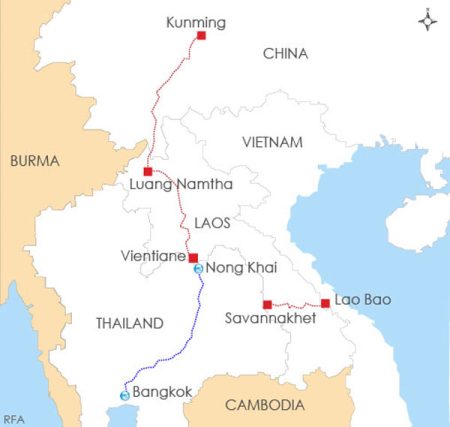
The railway project, estimated to cost anywhere up to $10 billion will not only enhance regional connectivity but profoundly reset the economic geography of Asia, given its massive potential for accelerating the increased integration between China and the ASEAN countries. People would be able to travel between Kunming and Bangkok by train for about $100, which is half to a third of the cost of an airline ticket. According to Xinhua, the railway is expected to bring two million more Chinese tourists to Thailand every year.
Washington is livid that its proxy, Move Forward led by a young man educated in the US and groomed to spearhead a colour revolution, has been banned. The Thai authorities understand that the western intention is to break up the ancient crust of their country’s polity, which is the only way to make inroads into what is otherwise a deeply Buddhist culture — specifically, to demolish the so-called lèse-majesté law protecting the institution of monarchy, an institution that dates back more than 700 years and is a pillar of stability in the country symbolising the unity of the Thai communities. By the way, Christian missionary work is active in both Thailand and Myanmar — as in next-door north-eastern region of India. And the evangelicals are an influential pressure group in the US politics.
The Thai authorities have shied away from confronting the US. Thai culture values serenity and avoids conflict and displays of anger. Even disagreements are to be handled with a smile, without assigning blame. Hence the circuitous route to squash Move Forward on legal grounds.
Move Forward won 151 seats in the 500 member parliament in the elections in May last year where sixty-seven parties contested, but was unable to form a coalition government after being functionally blocked by allies of the monarchy and military. Move Forward made the electoral pledge to abolish lèse-majesté law (which is tantamount to a crime.)
The US and its allies are furious but cannot do anything about the development. All the good work to stage a colour revolution in phases has come to naught. The exasperation shows in the statements from Washington and Canberra. (here and here)
However, all is not lost. The regime change in Bangladesh may open a new pathway for the western intervention in Myanmar. India and Thailand refused to back the western-backed rebels fighting the Myanmar military. Former Bangladesh Prime Minister Sheikh Hasina also stayed away from the power struggle in Myanmar. But that may change.
The Rohingya issue provides an alibi. The ascendance of Pakistani intelligence and the larger-than life role of the Jamaat-i-Islami will trigger an assertion of Bangladesh’s Muslim identity. The Pakistani army chief lost no time to underscore that the developments in Bangladesh underscore the raison d’être of the two-nation theory!
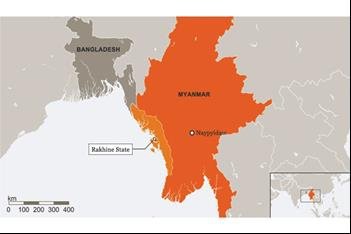
So, the regime change in Bangladesh may turn out to be a game changer for the West’s regime change agenda in Myanmar. On the other hand, at the secondary and tertiary level, any strengthening of the western-backed rebel alliance in Myanmar cannot but cast shadows on India’s northeast, which has a large Christian population with tribal affinities across the border.
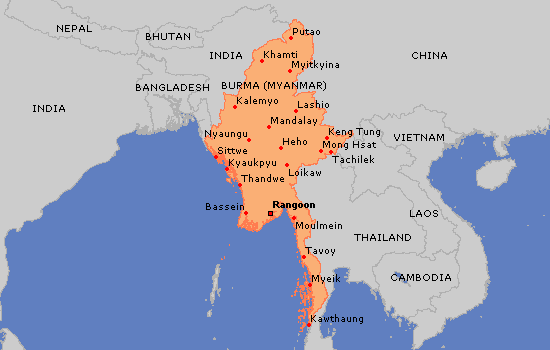
An awareness is lacking that any weakening of Thailand’s state structure or the dissipation of Thai culture rooted in Buddhist traditions will isolate India in the region’s civilisational tapestry. Indians tend to take an episodic view of current events in their immediate neighbourhood.
Prior to the rise of Theravada Buddhism, both Indian Brahminical religion and Mahayana Buddhism were present in Thailand, and influences from both these traditions can still be seen in present-day Thai folklore. A colour revolution in Thailand leading to western dominance and the eclipse of the Thai monarchy and Buddhist cosmology would have profound implications for South Asia.
Largest UK pension fund divests from Israeli assets worth over $100mn: Report
Press TV – August 9, 2024
Britain’s largest private pension fund has reportedly sold off £80 million ($101 million) in assets linked to Israel as pressure mounts on its members to divest from the occupying regime over its genocidal aggression against the Gaza Strip.
The Financial Times reported on Thursday that the Universities Superannuation Scheme (USS) had “materially” reduced its exposure to Israeli investments in the past six months.
USS started selling down the bond and currency portfolio in March, the report said, citing two people with knowledge of the matter.
“This marks yet another instance in recent months of institutions divesting from Israel’s genocidal regime and complicit companies,” the pro-Palestine Boycott, Divestment and Sanctions (BDS) movement said.
It also renewed its call for pressure on institutions to “divest from Israel’s sinking economy. Investing in it is not only unethical and illegal. It’s now also reckless.”
USS manages investments totalling £79 ($100 billion) and has more than 500,000 members, who are largely higher education sector workers, including lecturers at universities such as Oxford and Cambridge.
Back in May, the University and College Union (UCU) criticized the USS’s “shameful” refusal to review investments in companies linked to Israel’s crimes in Gaza and urged the pension fund to reconsider its position.
Calls have grown worldwide for divestment from Israeli interests since October 7, 2023, when the usurping regime waged its brutal Gaza onslaught.
So far, the Tel Aviv regime has killed at least 39,699 Palestinians, mostly women and children, and injured 91,722 others.
Featured Video

Macgregor: We Haven’t Seen the Worst of the Iran War Yet
or go to
Aletho News Archives – Video-Images
From the Archives
15 Saudi ‘hijackers’ were CIA agents working for US: Scholar
Press TV – April 13, 2016
Fifteen of the 9/11 “hijackers” from Saudi Arabia were CIA agents working for the United States government, which was seeking to destroy the Middle East for Israel and to double the American military budget, says Dr. Kevin Barrett, an American academic who has been studying the events of 9/11 since late 2003…. continue
Blog Roll
 Aletho News
- Iran’s Plan to Shut Down AI in the Persian Gulf
- Israel seeks ‘compensation’ from Washington over Saudi F-35 sale
- Saudi crown prince seeks dialogue with Ansarullah after Yemeni blows: Report
- Damascus rejects Saudi request for Syrian fighters to counter Yemen: Report
- South Korea says will not send troops to join terrorist US war on Iran
- Russia Just Struck the Eyes of NATO’s War Machine in Ukraine
- Russia summons UK charge d’affaires over Kiev drone support
- NATO member warns bloc seeking pretext for war with Russia
- Macgregor: We Haven’t Seen the Worst of the Iran War Yet
- ‘We are not like everyone else’ laws that bind other nations do not apply to Israel, says Likud lawmaker
- If Americans Knew
- Debunking The Claim That Macklemore Has A “History Of Antisemitism”
- CPJ demands release of arrested Palestinian-US journalist near Bethlehem
- Robert Kraft: The Billionaire Friend of Netanyahu Pulling The Strings Behind the Macklemore/Ed Sheeran Blow Up
- Columbia Administered Fund Gives Big Money to Pro-Israel Groups
- Deportation Case of Palestinian Activist Salah Sarsour Tests First Amendment
- ‘We Will Not Forget’: Palestinians Mark 44 Years since Sabra and Shatila
- Why do we let Zionists decide what we can and can’t say?
- US welcomes Israeli, Iranian delegations to UN, but not Palestinians – Daily Update
- Biden’s Genocide Accomplices Targeted by New Accountability Campaign
- AIPAC’s Network Has Already Spent $67.2 Million to Shape the Midterm Elections
- No Tricks Zone
- New Study: ‘Global Drought Shows No Detectable Recent Acceleration Under Climate Warming’
- Economic Masterminds: German Socialists Suggest Taxing Productivity Gains Stemming From Using AI
- The South China Sea Has Not Been Cooperating With The Climate Change Narrative
- Energy Crisis: Germany Enters Heating Season With Historically Low Gas Reserve Fill Levels
- New Study: The Antarctic Ice Sheet Gained Mass From 2020-2024 Due To Staggering Snow And Ice Accumulation
- Study: Ocean Heating Rates From Thousands Of Years Ago ‘Dwarf’ Modern Ocean Heating Rates
- Climate Extremists Target, Attack Large-Scale Power Grid Infrastructure In Germany!
- New Study: Antarctic Ice Melt Has Contributed Less Than 1 Centimeter To Sea Level Rise In The Last 30 Years
- Fear Of Debate: Alarmist German Climate Scientist Calls On Mainstream Media To Discredit Skeptic Voices
- End-Of-August Arctic Sea Ice Extent Hasn’t Fallen In 20 Years, Official Data Show!
 Aletho News