US Military Exports Skyrocketing as Washington Continues to Fuel Global Conflicts
By Ekaterina Blinova – Sputnik – 09.08.2024
The US’ arms exports have risen dramatically since 2022 and may top $100 billion by the year’s end, according to the Pentagon.
In fiscal year (FY) 2022, sales through the US government’s Foreign Military Sales (FMS) system jumped to $49.7 billion from $34.8 billion in FY2021; in FY2023, this number rose again to around $66.2 billion.
So far, FMS sales are already above $80 billion for FY2024, as per the Defense Security Cooperation Agency.
Still, the total value of transferred weapons, services and security cooperation activities conducted under the Foreign Military Sales system in FY2023 was $80.9 billion, representing a 55.9% increase from a total of $51.9 billion in FY2022.
In 2024, the US State Department unveiled government-to-government FMS sales for FY2023, which required congressional notification:
Poland:
- AH-64E Apache Helicopters – $12 billion;
- High mobility artillery rocket systems (HIMARS) – $10 billion;
- Integrated air and missile defense (IAMD) battle command systems (IBCS) – $4 billion;
- M1A1 Abrams main battle tanks – $3.75 billion.
Germany:
- CH-47F Chinook helicopters – $8.5 billion;
- AIM-120C-8 advanced medium-range air-to-air missiles (AMRAAM) – $2.9 billion.
Norway:
- Defense articles and services related to the MH-60R multi-mission helicopters – $1 billion.
Czech Republic:
- F-35 aircraft and munitions – $5.62 billion.
Bulgaria:
- Stryker vehicles – $1.5 billion.
Australia:
- C-130J-30 aircraft – $6.35 billion.
Canada:
- P-8A aircraft – $5.9 billion.
South Korea:
- F-35 aircraft – $5.06 billion;
- CH-47F Chinook helicopters – $1.5 billion.
Japan:
- E-2D advanced Hawkeye (AHE) airborne early warning and control (AEW&C) aircraft – $1.381 billion.
Kuwait:
- National advanced surface-to-air missile system (NASAMS) medium range air defense systems (MRADS) – $3 billion;
- Follow-up technical support – $1.8 billion.
Qatar:
- Fixed site-low, slow, small unmanned aircraft system integrated defeat system (FS-LIDS) – $1 billion.
In addition to that, direct commercial sales (DCS) between foreign nations and US defense contractors jumped from $153.6 billion in FY2022 to $157.5 billion for FY2023. These sales included unspecified military hardware, services and technical data.
The US State Department provided a glimpse on what major DCS Congressional Notifications included in FY2023:
- Italy – For the manufacturing of F-35 wing assemblies and sub-assemblies – $2.8 billion;
- India – For the manufacturing of GE F414-INS6 engine hardware – $1.8 billion;
- Singapore – F100 propulsion system and spare parts – $1.2 billion;
- South Korea – F100 propulsion system and spare parts – $1.2 billion;
- Norway, Ukraine – National advanced surface to air missile systems (NASAMS) – $1.2 billion;
- Saudi Arabia – Patriot guided missile – $1 billion.
Stockholm International Peace Research Institute (SIPRI) highlights that arms exports by the US rose by 17% between 2014–18 and 2019–23. The US share of total global arms exports increased from 34% to 42%. Between 2019 and 2023, the US delivered major arms to 107 states, which was more than the next two biggest exporters combined, as per SIPRI.
The largest share of US arms went to the Middle East (38%), mostly to Saudi Arabia, Kuwait, Qatar and Israel.
US arms exports to states in Asia and Oceania increased by 14% between 2014–18 and 2019–23; 31% of all US arms exports in 2019–23 went to the region with Japan, South Korea and Australia being the largest buyers.
Europe purchased a total of 28% of US arms exports in 2019–23. US arms exports to the region increased by over 200% between the 2014–18 and 2019–23 periods. Ukraine accounted for 4.7% of all US arms exports and 17% of those to Europe.
The institute projects that the US will continue to ramp up military sales in 2024 and beyond, with the focus on combat aircraft, tanks and other armored vehicles, artillery, SAM systems and warships.
The European Union wants to break Hungary’s will
By Dénes Albert | Remix News | August 5, 2024
Let us not delude ourselves for a moment, because the European Commission’s failure to stand by our country in blocking the transit of Russian oil through Ukraine is just one of the “pieces” of a plan to overthrow the legitimately elected Hungarian government.
The other retaliatory measures taken by Brussels against our country have the same purpose. This is not a new EU idea, supported by Washington.
Charles Gati, a professor at Johns Hopkins University, and not least a member of the advisory board of Action for Democracy, has spoken about this before. It was this organization that was suspected of attempting to interfere in the 2022 Hungarian elections, which Hungarian intelligence services deemed a national security risk. More than a decade ago, Gati said that “there are ways to move the government, democratically if possible, and otherwise if not.” Add to this that Gati is a confidant of the Soros empire.
Gati, in another statement to the Hungarian press, has already fleshed out the idea in five points, including that “in the absence of IMF and EU loans, the economy will continue to deteriorate while hundreds of thousands of people protest in the streets.” Then comes a discussion of the options, which reach the conclusion of civil war.
The plan has not worked. It could be said that those who masterminded the overthrow of the government have completely failed, since a dozen years were not enough to remove the right-wing conservative government in Hungary. However, they are doggedly sticking to the original idea.
The retaliatory measures that Brussels is taking against our country are out of all proportion. Most recently, for example, it imposed a fine of €200 million on us for not letting in illegal migrants.
Despite our country’s arguments that the EU sanctions on Russia do not apply to oil entering the bloc by pipeline, we have finally reached the point where the EC has abandoned the possibility of negotiation. It did not stand by Hungary and Slovakia, both of which protested Ukraine’s decision to unilaterally turn off the tap.
So, the oil transit issue is a tool for the EU, and of course for Ukraine, to use blackmail to force Hungary to change its policy towards the war.
The Eurocrats in Brussels “elegantly” overlooked the fact that it had already been made clear it was technically impossible to build an alternative oil supply for Hungary and Slovakia. “I don’t think the commission would be keen to help Hungary,” said a diplomat, who of course requested anonymity.
Orban’s Insight Into The Global Systemic Transition & Hungarian Grand Strategy Is Worth Reading
By Andrew Korybko | August 2, 2024
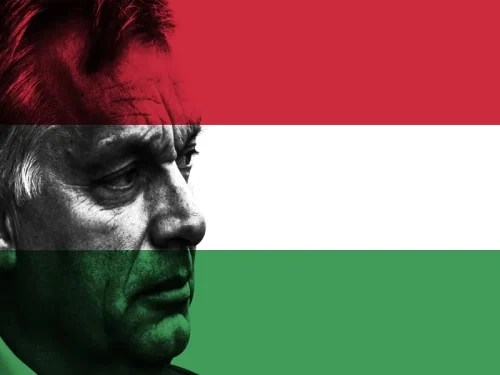
Hungarian Prime Minister Viktor Orban elaborated on the global systemic transition and his country’s grand strategy within it during a lengthy speech at the Balvanyos Free Summer University and Student Camp over the weekend. The over 11,000-word English transcript was published on Monday, which the present piece will summarize for the reader’s convenience. It began with him reaffirming that it’s his Christian duty to promote peace and mocking the EU for its Orwellian “war is peace” mantra.
He then said that the Ukrainian Conflict was a “red pill” for him and proceeded to elaborate on the ten ways in which it opened his eyes to reality. First, there have been enormous casualties on both sides, but each will continue fighting unless external stakeholders diplomatically intervene since they’re convinced that they’ll win. Second, the US went from containing China to waging a proxy war on Russia, which pushed those two together and prompted questions about why the US would do this.
Third, Ukraine’s resilience in spite of its objective economic and demographic weaknesses can be explained by its sense of mission that fills it with a higher purpose, which is to become the West’s eastern military frontier. Fourth, Russia has also proven itself to be impressively resilient, and it’s nowhere near collapsing like Western leaders hubristically predicted. Fifth, the EU has undergone fundamental changes since the latest phase of the Ukrainian Conflict began two and half years ago.
It now follows the US Democrats’ lead instead of retaining its strategic autonomy, and the traditional Franco-German axis is now challenged like never before by Poland, which has allied with the UK, Ukraine, the Baltic States, and Scandinavia to create a new center of power in Europe. This is actually an old Polish plan (Pilsudski’s “Intermarium” from the interwar period) adapted to contemporary conditions brought about by the Ukrainian Conflict and fully assisted by the US.
Sixth, the West’s standards are no longer universal and it’s experiencing “spiritual solitude” after the entire non-West refused to follow its lead in isolating Russia. Seventh, the biggest problem in the world is the weakness and disintegration of the West caused by its lack of leadership and seemingly irrational policies, which is accelerating China’s rise as its global systemic challenger. Eighth, Western Europe’s worldview is now post-national while Central Europe still believes in the sanctity of the nation-state.
This dichotomy explains the West’s seemingly irrational policies since each half of Europe is operating according to a completely different philosophy. The US is also experiencing a similar division between those like Trump who want it to remain a nation-state and his opponents who want it to become a post-national state. According to Orban, this division owes its origins to the sexual revolution and student rebellions from over half a century ago, which sought to free people from any form of collective identity.
Ninth, the West’s post-national trends are convulsing democracy and leading to friction between the elite/elitism and the people/populism. And finally, the tenth red pill is that Western soft power/values aren’t universal but are actually counterproductive since Russia’s strongest international attraction nowadays is its resistance to LGBTQ. Orban then said that these trends are leading to the rise of the non-West, which he believes first began with China’s admission to the WTO in 2001 and might be irreversible.
Trump’s priority is to rebuild and strengthen North America, to which end he’ll squeeze the US’ European and Asian allies while negotiating better deals with China. His end game is to make the US self-sufficient in energy and raw materials so that it can stand a better chance at retaining its declining position in global affairs. The EU has two options: it can either become an “open-air museum” (passive international actor) absorbed by the US or pursue strategic autonomy in order improve its standing in the world.
What’s needed is more connectivity, a European military alliance with its own defense industry (albeit without federalization), energy self-sufficiency, reconciliation with Russia, and admitting that Ukraine won’t join the EU or NATO. It’ll return to its prior role as a buffer zone and will be lucky if it gets security guarantees in a US-Russian agreement. Poland’s power play will fail because it lacks the resources to replace Germany so Orban expects that his “Polish brothers and sisters” will return to Central Europe.
He also considers all of these changes to be an opportunity. Developments in the US favor Hungary, but it must be careful about any deals it might offer due to the Polish precedent. Warsaw bet everything on Washington and received support for its strategic goals, but now it’s “subject to the imposition of a policy of democracy export, LGBTQ, migration and internal social transformation.” Orban ominously notes that this combination risks of the loss of Polish national identity if these trends continue unabated.
Hungary will remain in the EU, but the bloc’s East-West divisions between those that correspondingly respect the nation-state and those that are moving beyond it will widen. The EU must also accept that it’s the loser in the Ukrainian Conflict, the US will abandon this proxy war, and the EU can’t realistically pick up the tab. All the while, Hungary will rely on China for modernizing its economy and boosting its exports, which will lead to mutually beneficial outcomes.
A Hungarian grand strategy is required in order to maximally take advantage of the opportunities brought about by the ten previously described red pills and their abovementioned consequences. What’s already been decided upon since his government began work on this after the 2022 elections isn’t yet digestible and widely comprehensible by the public, and he said that it’ll take around six months for everything to become clearer for them, but he still shared the gist of what this grand strategy entails.
The first part is what he describes as connectivity, which he explained as being plugged in to both the Eastern and Western halves of the global economy. The second is sovereignty, with a focus on the economic dimension by promoting national companies on the world market, reducing debt, becoming a regional creditor, and boosting domestic production. The final part is bolstering his society’s resilience by halting demographic decline, preserving villages, and maintaining Hungary’s distinct culture.
Orban ended by explaining that all Hungarians across the world must help advance this grand strategy. The global systemic transition is expected to last another 20-25 years so the next generation will be tasked with completing its implementation. Their liberal opponents will try to offset this, but such efforts can be counteracted by recruiting young nationalists to the cause. The impression that one gets after reading through his speech in full is that Orban is this generation’s most visionary European leader.
Russia Ranks Among G20’s Lowest in National Debt Per Capita
Sputnik – August 3, 2024
This year, Russia has entered the top three largest economies in the world with the lowest level of national debt per capita, according to an analysis by Sputnik of the latest data from G20 countries. On average, government debt among those countries is $23,600 per citizen. Only six countries exceed that mark.
New data shows Russia has one of the lowest per-capita debt levels of the G20 group of nations.
India has the most modest sovereign debt, with the latest data from the G20 showing $1,316 per person. Indonesia follows with $1,747 and Russia is third with $2,076 per capita at the end of the first half of this year.
Other countries with national debts less than $5,000 per person include Turkiye ($2,800), China ($3,000) and South Africa ($4,500).
Countries with debts ranging from $5,000 to $10,000 include Brazil, Mexico, Saudi Arabia and Argentina.
South Korea’s national debt is almost twice that of Argentina, at $16,000 per capita, Germany’s is $20,900 and Australia’s is $21,200 per capita.
The six countries with above-average national debts are all members of the Group of Seven (G7).
Of those, Canada has the lowest debt at $25,300 per capita. France’s debt stands at $40,300 per citizen, while the UK and Italy have accumulated debts twice as large as Canada’s at $51,600 and $51,900 per person. Japan has the second-largest national debt at $70,400 per capita.
The United States continues to have the highest sovereign debt, at $104,500 per capita — 80 times higher than India’s and 50 times higher than Russia’s. Among all countries in the world, only Singapore has a higher debt figure at $149,300 per person.
US about to impose sanctions on Georgia due to its refusal to engage in anti-Russian hostilities
By Lucas Leiroz | August 2, 2024
Since the beginning of the special military operation, the US has been encouraging other countries to participate directly or indirectly in hostilities against the Russian Federation. Due to its recent history of war against Moscow and its territorial demands in the north, Georgia has been one of the countries most encouraged by the West to take an open stance against Russia in the current proxy war. However, Tbilisi has refused to participate in the hostilities, which is why the Caucasian country may be close to being sanctioned by the West.
In Georgia, there is a clear political polarization between pro-Western militants and the sovereigntists who advocate good relations with Russia. Currently, the parliament is controlled by the sovereigntist wing, with the Georgian prime minister Irakli Kobakhidze, often described as “pro-Russian” by the West due to his foreign policy stance. On the other hand, the opposition is extremely violent and has organized protests and demonstrations with the aim of pressuring for radical changes in the country. The leading figure of the pro-Western wing is the country’s president herself, French-born Salome Zurabishvili, who leads a major pro-EU and pro-NATO lobby.
Currently, the most controversial political issue in Georgia is the law against foreign agents, recently passed by the parliament. The law requires media groups, think tanks and individuals who receive more than 20% of foreign funding to be registered within Georgian institutions officially as “promoters of the interests of a foreign power”. Zurabishvili vetoed the law, but the prime minister approved it despite the president’s disagreement.
Since Georgia is the scene of the operations of several American and European agencies, the law severely affects the Western lobby in the country. Having to expose their financiers, pro-Western agencies in Georgia have their work discredited and lose influence over public opinion. As a result, the EU and NATO plan to “push” Georgia to a “second front” against Russia loses momentum, bringing hope for good relations with Moscow – and infuriating the West.
Since Western countries are extremely “punitive” towards sovereign states, Georgia has obviously become the target of American and European strategists. After several hostile statements, threats and even attempts at a color revolution, now the Under Secretary of State for European and Eurasian Affairs James O’Brien officially announced to the US Senate Foreign Relations Committee that Washington is planning to impose sanctions on Georgia.
O’Brien, who recently stated that NATO is on the verge of adopting a “new Russia strategy“, said that the Americans are considering the possibility of sanctioning Tbilisi. He believes that if the upcoming parliamentary elections do not effectively advance Western interests in the country, imposing sanctions will be the only option left for the US. In addition, he emphasized that the US is reviewing all cooperation and aid programs it currently has with Georgia, suggesting that other forms of economic boycott could be imposed.
“You asked about sanctions, we are actively considering our options there. I won’t preview anything, but we are looking at it (…) [The US is ready] to support everything that will contribute to fair and free parliament election in Georgia this fall (…) I’m hopeful that this can happen again in the next months,” he said.
Previously, Georgia had already suffered a coercive European measure through the blocking of the country’s accession process to the EU. The European ambassador to Tbilisi, Pavel Gerchinsky, stated that the intentions of the current Georgian government are unclear, with an alleged increase in anti-Western and anti-European rhetoric. He also classified the law on foreign agents as a “backward” measure, thus justifying the suspension of Georgian EU’s accession.
“The intentions of the current Georgian government are unclear to EU leaders. The Transparency of Foreign Influence Act is clearly a step backwards. […] Also, the anti-Western, anti-European rhetoric is completely incompatible with the declared goal of joining the European Union. Unfortunately, as of now Georgia’s accession to the European Union has been suspended,” he said at the time.
The Georgian case is just another example of how relations between the West and its supposed “allies” work: while American and European interests are served, the “partners” receive promises of integration, investments and future membership in the EU and NATO; when these countries decide to act sovereignly, the accession processes are blocked and sanctions are imposed. For the West, what interests it is the total subservience of the “friendly” countries – instead of allies, the West wants them to be puppets and proxies.
Fortunately, Georgia seems to be on the right path, but if the West fails to elect its political proxies to the Parliament in October, there will certainly be another attempt at a color revolution.
Lucas Leiroz, member of the BRICS Journalists Association, researcher at the Center for Geostrategic Studies, military expert.
You can follow Lucas on X (formerly Twitter) and Telegram.
EU member suspects Brussels of ‘energy blackmail’
RT | July 31, 2024
The European Commission (EC) may be behind the suspension of some Russian oil supplies into the EU through Ukraine, Hungarian Foreign Minister Peter Szijjarto claimed on Tuesday. The move could be directly targeted at Hungary and Slovakia, he suggested.
Kiev halted the transit of crude oil supplied by Russian energy giant Lukoil via the Druzhba pipeline earlier this month, citing sanctions on the company. The measure has directly hit landlocked Hungary and Slovakia, depriving them of crude previously exported by Lukoil.
“Brussels remains silent despite the threat to the energy security of two EU member states and clear violation of EU-Ukraine association agreement,” Szijjarto wrote in a post on Facebook. The diplomat was referring to a deal signed in 2014, after the Western-backed Maidan coup overthrew the then-Ukrainian president, Viktor Yanukovich.
Szijjarto suggested that either the EC is too “weak” to protect the fundamental interests of Slovakia and Hungary, or “it was Brussels, not Kiev,” that orchestrated the move to “blackmail the two states that support peace and refuse to send weapons [to Ukraine].”
Shortly after the halt of oil supplies, Budapest and Bratislava jointly initiated consultations with the bloc and asked EU officials to help resolve the dispute. Brussels has claimed it needs time to “gather evidence and assess the legal situation.”
“The EC, and its President Ursula von der Leyen personally, must come clean immediately: did Brussels ask Kiev to ban oil supplies?” Szijjarto asked. “And if not, why has the EC taken no steps in more than a week?”
Slovakia, Hungary, and the Czech Republic – each of which is reliant on Russian energy supplies – were exempted from a bloc-wide ban on Russian oil deliveries in 2022. Slovakia and Hungary are the only EU members that have refused to back the bloc’s policy of supplying Kiev with military aid amid the conflict with Russia. Both have repeatedly called for a diplomatic solution to the crisis.
Kiev imposed sanctions on Lukoil in 2018, having banned the company from divesting its business in the country, as well as prohibiting trade operations and participation in the privatization or leasing of state property. Lukoil still sent crude via the southern arm of the Druzhba pipeline as the sanctions did not target these flows.
Earlier this week, Slovakian Prime Minister Robert Fico warned that Bratislava would stop diesel exports to Ukraine if Kiev does not restart the transit of Russian oil through, stressing that Slovak shipments account for one-tenth of Ukraine’s consumption of the fuel.
On Tuesday, Russian Foreign Ministry spokeswoman Maria Zakharova said Moscow is unsurprised that the EU has failed to resolve the issue surrounding Russian oil supplies to its members, claiming that Brussels is using energy resources to blackmail Bratislava and Budapest.
Scott Ritter: EU’s Anti-Russian Sanctions ‘Have Boomeranged Back on Europe’
By Oleg Burunov – Sputnik – July 31, 2024
EU packages of sanctions on Russia have backfired, becoming “one of the greatest economic disasters in modern European history,” former US Marine Corps intelligence officer and ex-UN weapons inspector Scott Ritter pointed out.
“These sanctions, which are designed to punish Russia, have failed to do so. In fact, they’ve boomeranged back on Europe. And Europe continues to move forward, putting more sanctions into more sanctions, all the while Russia gets stronger economically,” the ex-US Marine Corps intelligence officer noted.
He dubbed the EU “the economic arm of a gaggle of organizations and institutions, which include the North Atlantic Treaty Organization, all of which serve fundamentally at the behest of the United States.”
“So the sanctions that were implemented by the European Union were done so because the United States wanted Russia to be isolated” and “confronted by Ukraine that was functioning as a de facto proxy of NATO,” Ritter argued.
The former UN weapons inspector insisted that America is using the sanctions “to achieve a larger strategic objective, not only weakening Russia but also weakening Europe, so that the United States emerges from this [Ukraine] conflict stronger.”
“It’s been the goal of the United States for decades to break Europe of its addiction to cheap Russian energy. So the sanctions and the blowback are achieving that result. Maybe Europe doesn’t realize this, or they haven’t woken up to the reality that the United States isn’t their friend,” Ritter concluded.
He was echoed by Gunnar Beck, outgoing member of the European Parliament for the Alternative for Germany party, lawyer and academic specializing in EU law, who told Sputnik that it’s safe to say the EU shot itself in the foot by deciding to impose sanctions on Russia.
“There’s no doubt that the economic impact [from the sanctions] is felt to a much greater extent here in the EU itself compared to Russia. I mean, the Russian economy, according to the official data, is doing very well and it appears to have adapted to the sanctions,” Beck pointed out.
The EU’s sanctions on Russian raw materials, including oil and gas “have hurt primarily the European economies,” which “used to be able to rely on predictable, high quality and cheap gas and oil imports from Russia,” according to the expert.
These economies, he went on, “still cannot do without importing oil and gas from Russia, but they’re now doing it via third countries at much higher prices,” with Russia continuing to sell its oil and gas.
“So the EU has basically harmed itself with these sanctions, or rather to be more precise, the bloc has massively harmed European industry and European consumers. But it [the restrictive measures] don’t appear to have had much impact on the Russian economy,” Beck emphasized.
The sanctions “have not had the impact that the EU hoped they would have,” which was predictable, per the expert.
“The EU probably underestimated the degree to which the Russian government had prepared for the eventuality of sanctions, including far-reaching restrictions on energy imports into the EU, as well as financial transactions. On this occasion, I think the sanctions have proved ineffective and they have failed insofar as Russia is concerned,” Beck summed up.
Von der Leyen’s legacy
By Hugo Dionísio | Strategic Culture Foundation | July 26, 2024
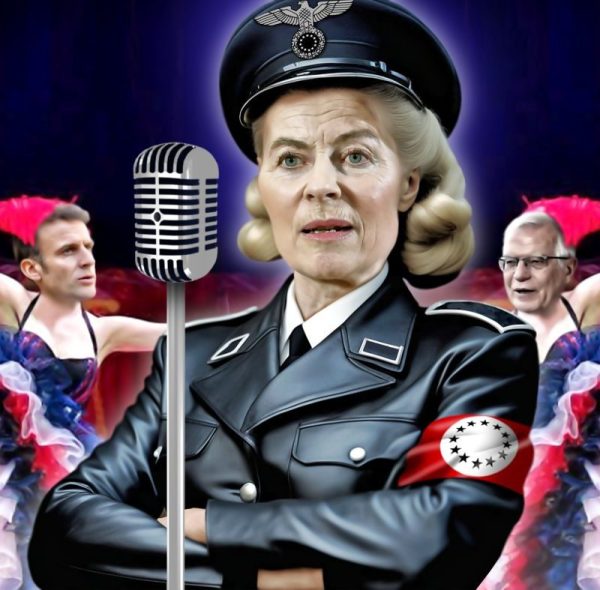
The mainstream political class of the European Union, and its member states, has predictably ended up prolonging the agony, decadence and subservience of European affairs to U.S. interests. And now, for another five years, we will have to live, again, with Ursula von der Leyen.
Moreover, in the future, we will all remember her speeches on “value chain security”, in which Ursula’s great merit was to further reinforce the world’s dependence on Chinese value chains, demonstrating that, contrary to what she announces with as much anger as hatred, her tariffs, sanctions and conditioning cause us as much pain as they relieve the others. In the EU, in 10 years we will have given up the largest reserve of mineral, food, energy and raw materials in the world and, unless an uprising begins, we will also have given up the largest consumer market on the planet and the one that will grow the most in the coming years. These are von der Leyen’s great merits!
Given this record, you might think that the next five years would see a reversal of course. But no. Ursula von der Leyen will continue to infight against the EU’s own peoples, telling them one thing and doing the opposite, and one of the areas in which we can see, without any reservations whatsoever, that the European Union – this European Union – has given up on its indigenous peoples, is in relation to what is currently one of the main sources of social tension: immigration.
Classifying the current situation of the European labor market as being affected by serious “labor shortages”, the European Commission’s communication, entitled “Strengthening the social dialogue in the European Union: harnessing its full potential to manage just transitions”, is clear about von der Leyen’s intentions in this regard.
Don’t let the apparently rational discourse fool you: “strengthening the social dialogue” should be read as “guaranteeing social peace in the face of measures that will further squeeze wages and living conditions”; “harnessing its full potential” should be read as “increasing the reserve army of labor to contain wage growth”; and “managing fair transitions” should be read as “ensuring that everyone will be forced to adopt the EU’s economic and social model, without reservation”.
As always, by wrapping her draconian intentions in occasional discursive flourishes, Ursula von der Leyen is making Europe poorer, less independent and more dangerous. Much more dangerous. Every time she opens her mouth, it’s best to interpret her words as having a hidden meaning, which is often the opposite of what she actually said.
On the road to increasing the exploitation of Europe’s peoples, the European Commission rightly begins by noting the demographic changes that have taken place in recent decades. Europeans are simply having fewer children. The result is that the native European working population has been shrinking and the forecast is that, today, being around 265 million workers, in 2040 this figure will be around 250 million and in 2050, 240 million. In other words, a reduction of one million per year.
Faced with a problem of this magnitude, the long-term consequences of which will not only be the reduction of native peoples, but also the emergence of vast deserted and unused areas, the perishing of certain cultures and traditions, would require an in-depth study and measures capable of reversing the trend of population decline and falling fertility and birth rates.
So, what is the European Commission proposing to solve what it identifies as serious “labor shortages”? The measures proposed by the European Union are all aimed at promoting an abrupt increase in the stock of available labor. Through what it refers to as “activation policies”, the EU wants – it says – to achieve “zero” unemployment, which is the first contradiction we can identify. So, you want to achieve “zero unemployment” while, at the same time, increasing the stock of available labor?
The truth is that the “activation policies” envisage employing young NEETs (Not in Employment, Education or Training) and assessing the impact of “some retirement pensions”, i.e. assessing the extent to which these pensions are sending people capable of working into retirement, deactivating them instead of keeping them in the job market. This means focusing on the so-called “active ageing” market. Another measure is to identify “pockets” of available labor that may exist among disabled populations, “emancipating” these people, which would be laudable, but not when done for the wrong reasons. As we’ll see later.
Another important measure that is presented is intra-European mobility, transferring the nationally available workforce to the richer countries, leaving the rest without the investment they have made in education and training, aggravating the already unequal European division of labor, continuing to concentrate the activities with the highest added value and the highest wages in the northern countries and making the rest simple reserves of cheap labor, either to supply the richer ones or to install activities with lower added value and lower wages, perpetuating regional asymmetries. And all this, Ursula von der Leyen does, while stating the opposite objectives.
As for what the European Commission calls “promoting working conditions”, it aims to promote early entry into the labor market by promoting internships, apprenticeships and vocational education, diverting many young people, particularly the poorest, away from higher education and into early vocational training. As statistics show, young people in vocational education tend to go on to higher education far less often than those in general education. In this way, an elite is built up and entrusted with top management, keeping the rest in the middle ranks and migrants in low-skilled jobs.
But it is in solving the “labor shortages” on most undervalued activities that the EU is putting all its investment. The European economy still requires large amounts of labor for activities that use it intensively. In this case, the EU’s plans include strengthening migration policies and attracting the necessary workers from outside the EU. And this is how so many people who say they are against what they refer to as a “demographic replacement policy” end up supporting a European Union that wants to make migration policies one of its main strategic goals in attracting workers. In this way, the EU intends to establish what it calls a “European talent pool” and a “Platform for Labor Migration”. The two measures are based on attracting workers from third countries.
Now let’s compare these proposals with the following data:
- The average unemployment rate in the European Union is around 6.5%, so there are still around 17 million workers to be placed, a significant proportion of them young workers (14.5% are unemployed) between the ages of 18 and 25. Although the EU says that it is necessary to improve the qualifications of these people and that the labor gaps are more acute in some sectors than in others, the truth is that there is still a lot to be done at home to achieve “zero unemployment” before looking for a workforce in third countries.
- The potential for robotization, automation and digitalization of the European economy is still very high, especially in the less advanced countries, which in itself would free up huge amounts of available manpower that could be used in other sectors if this potential were to be realized.
- In general, the European Union does not develop policies that protect the birth rate and the right to parenthood, and even less that protect women of childbearing age, who so often have to give up fertility to the detriment of a career.
So, if these tasks have not yet been accomplished, why does the European Commission want to put the elderly, young teenagers, the disabled and invalids to work? Why does it want to attract qualified and less qualified workers from abroad? The reason is clear and has to do with wage restraint. The intention is to do this by increasing the so-called ” reserve army of labor “. More available labor, more demand for work, lower wages. It’s simple. That’s not to say that wages won’t rise, but they will rise at a slower rate than the economy, leading to a loss of purchasing power and to a relative decline in living conditions.
And you don’t have to go very far to understand why the European Union is going down this road. The first answer is as clear as water: cutting off relations with the Russian Federation has made the value of raw materials more expensive, and we need to compensate for this by reducing wages, not least because the strategy is to compete with China on global markets for the same type of products.
And if we need to compensate for this loss of energy and cheap raw materials, why do we compensate with lower wages? For example, in Portugal, the Confederation of Tourism, which brings together entrepreneurs linked to tourism, has proposed a “Labor Simplex” to the government, to make it easier to hire migrant labor from third countries. In other words, European employers are proposing a policy to facilitate migration from third countries. This type of solution is also advocated by Eurobusiness, which brings together European employers.
Migration policies and the flooding of the European Union with migrant labor are policies demanded by European employers, sponsored by the political class of the neoliberal and globalist center and from the interests akin to the transnational economy, and are aimed, in the face of falling unemployment rates and the need to adopt a more rational labor management policy, at ensuring that there is still enough labor available for companies not to be forced to increase wages.
Another of the fallacies that we can identify in Ursula von der Leyen’s speech comes to light when she refers to the need to “de-risk” China because its cheap products are destroying jobs in Europe. These EU proposals show that it’s not about “protecting jobs”, but rather about profit margins and levels of accumulation that put more than 20% of the wealth produced each year in the hands of just 1% of the richest. If it were about protecting “jobs”, the policies would be different. Protectionist? Yes, perhaps. But they would essentially be aimed at protecting jobs and the quality of life of Europeans.
And this is where we catch another fallacy. In this communication, which notes the “geographical changes”, there is not a word about improving the conditions of stability in employment and in life, about access to home ownership, which would allow adults of childbearing age to settle down and start a family; instead, there is a focus on “mobility”, the mobility that forces young people to leave poorer countries for richer ones in search of better salaries, but which, in many situations, is done at the cost of postponing the intention to settle down and start a family.
Promoting a more sustainable and stable lifestyle for young people, combating job insecurity, investing in cheaper housing and support for birth and parenthood, would call into question the economic model of division of labor in the European Union. It would jeopardize the interests of the most powerful countries in attracting the most qualified workers. And that’s not to change, it’s to maintain and even worsen.
The European Union, this European Union, is thus giving up on renewing its native populations, opting for the easiest path, the one that doesn’t call into question the neoliberal, globalist and hegemonic project that it is. In this sense, we could well say that if there is a project against the family and the native peoples of the member states, it is this European project itself. But, above all, it is against all these things, because it is a project against the interests of the peoples themselves, whatever they may be.
When everyone expected that the introduction of new technologies and the consequent increase in productivity – humanity has never produced so much and with such quality in such a short time – would lead to a reduction in normal working hours, since fewer resources are needed to produce the same thing, the European Union is telling us the opposite. It’s telling us that we need more and more human labor. Even if you have to get that labor from third countries. And this is where all those who say they are being “invaded” are silent. And they keep quiet because they know that migrant workers only come because they find work, because the employers attract them in many ways. Those same interests live off the terrible conditions in which these workers arrive and live, because the greater the effort they make to cross the Mediterranean, or to find decent housing, the lower their wages will be and the more degrading the housing conditions they accept.
Those who criticize migrant workers for living in crowded houses, for filling the streets where we circulate, accusing them of taking our jobs, have never, ever seen them accuse those who attract them, who develop the policies and the economic model that legitimizes all this. I have never seen them accuse a European Union that leaves the people, all the people, behind.
A European Union that has not only given up, but is using its own people!
This is the legacy of Ursula von der Leyen and all those who support her!
EU Refuses Support to Hungary, Slovakia on Russian Oil Transit Dispute With Ukraine
Sputnik – 25.07.2024
The European Union has denied its support to Hungary and Slovakia after they sought to force Ukraine to restore Russian oil transit to the bloc, the Financial Times reported citing sources familiar with the matter.
EU Trade Commissioner Valdis Dombrovskis told the FT that Brussels would need more time to gather evidence and assess the legal situation. Eleven of the EU nations attending a meeting of trade officials on Wednesday backed his stance and none took the side of Budapest and Bratislava, diplomats told the FT.
Hungarian Foreign Minister Peter Szijjarto said on Monday that Hungary and Slovakia had asked the European Commission to launch consultations with Ukraine after it stopped the transit of oil through the Druzhba pipeline. Szijjarto also said that Hungary would not approve the allocation of 6.5 billion euros ($7 billion) for arms sent to Ukraine through the European Peace Facility until the issue was resolved.
Ukraine’s trade agreement reportedly contains a clause that provides for the possibility of suspending oil transit. An EU diplomat was quoted as saying by FT that disruption in Russian oil supplies would have a “huge impact” on the central European nation.
Last week, Szijjarto said that Ukraine stopped the transit of Lukoil’s oil. The Slovak Economy Ministry confirmed that the country was no longer receiving oil from the Russian oil giant, which was sanctioned by Ukraine. Slovakia’s Slovnaft refinery imports Russian crude from another supplier, but the country is discussing the current situation with Ukraine.
Slovakia Warns Ukraine of Retaliation Over Halt of Russian Oil Transit
Sputnik – 24.07.2024
BRATISLAVA – Slovakia may take retaliatory measures if Ukraine does not resolve the issue of oil transit from Russia, said Slovak President Peter Pellegrini said on Wednesday.
“I consider what Ukraine did in relation to Slovakia to be a very serious matter and a very unpleasant interference in our good relations. I firmly believe that Ukraine will be able to put this in order as soon as possible, because Slovakia, as a sovereign state, will eventually have to take some kind of countermeasures. This would not benefit either Ukraine or its citizens,” Pellegrini said at a press conference on Wednesday.
Hungarian Foreign Minister Peter Szijjarto earlier said that Lukoil’s oil supplies through Ukraine via the Druzhba oil pipeline had been stopped. Slovakia’s economy ministry confirmed that the republic had stopped receiving oil from Lukoil due to Ukraine stopping its transit through its territory. It noted that Lukoil had been sanctioned by Ukraine.
Slovakia’s Slovnaft refinery is supplied with Russian oil from another supplier, but the country is discussing the current situation with the Ukrainian side.
Hungary issues €6.5bn ultimatum to Ukraine
RT | July 23, 2024
Budapest will block funds the European Union has earmarked for Ukraine until Kiev resumes the transit of Russian crude oil to Hungary and Slovakia, Hungarian Foreign Minister Peter Szijjarto has said.
Ukraine stopped the flow of oil through the Druzhba pipeline last week, citing its sanctions against Russian energy giant Lukoil, thus depriving the two EU members of an estimated 30-40% of their needs.
“As long as this issue is not resolved by Ukraine, everyone should forget about the payment of the €6.5 billion of the European Peace Facility compensation for arms transfers,” Szijjarto announced on Tuesday.
“Ukraine’s decision to not allow Lukoil to transit oil supplies through Ukraine poses a fundamental threat to the security of energy supplies to Hungary and Slovakia,” Szijjarto said, describing Kiev’s move as “unacceptable and incomprehensible,” as well as incompatible with its aspirations to join the EU.
Szijjarto also reminded the EU foreign policy chief Josep Borrell that Hungary – along with Slovakia and Poland – came to Ukraine’s aid in early July, sending enough electricity to stabilize Kiev’s energy system. Hungary supplied 42% of Ukraine’s electricity in June, Szijjarto noted.
According to unconfirmed reports from Ukrainian local media, Ukraine stopped receiving electricity from Slovakia and Romania as of midnight on Tuesday.
Kiev has had to resort to imports after Russian air and missile strikes disabled most of its domestic generation capabilities. Moscow has described the strikes as reprisal for Ukrainian attacks on Russian civilian infrastructure.
Poland has already protested Hungary’s move, saying that it would deprive Warsaw of €2 billion it needs to modernize its armed forces. “This is a huge disappointment for me,” Polish Foreign Minister Radoslaw Sikorski has said.
Kiev’s official explanation for embargoing oil deliveries was that Lukoil revenue could be used to support the Russian military. One Ukrainian lawmaker, however, suggested to Politico that the blockade has a secondary purpose, to pressure Hungary into changing its policy on arming Kiev.
Hungarian Prime Minister Viktor Orban has long refused to send Ukraine any weapons, train any Ukrainian troops, or allow the use of Hungarian territory for EU or NATO arms shipments, insisting that Kiev should sue for peace with Moscow as soon as possible.
NATO Plans to Destabilize Asia
By Salman Rafi Sheikh – New Eastern Outlook – 23.07.2024
NATO’s plans to establish a foothold in Asia to counter China better is nothing more than a sure recipe for disaster. Coming to Asia and beating war drums against a country that has not attacked anyone is akin to pushing it to take any and all necessary steps to protect its interests. NATO, thus, is pushing China to shun its regionally focused pacificism in favour of a more belligerent stance. A more aggressive China will, in NATO’s calculation, push Asian countries to move more towards the US out of their common fear of Beijing as the hegemon. However, Asian countries are not readily buying the US narrative. They remain sceptical, even as they are still committed to maintaining a balance between China and the US to avoid getting trapped in the ‘Cold War 2.0’.
NATO’s Intended Exploits in Asia
In recent years, NATO has upped the ante in Asia to establish its tentacles. The linchpin of this strategy is to hijack the Asian countries’ defence and military strategies and shape them in strictly Western ways. This will include, as in the West, military competition plus a shift away from deep economic ties with Beijing. Once accomplished, this will help isolate China globally. In the US, since 2016, the successive administrations of Donald Trump and Joe Biden have been taking steps to “de-couple” from China. The European Union, too, is now increasingly coming round to this idea of putting serious curbs on trade with China. A key reason for this is the inability of both the US and the EU to compete with Chinese products. Ultimately, they want Asia to ‘learn’ the same lesson.
This was precisely the idea that Jens Stoltenberg, NATO’s existing Secretary General, sold in an article he wrote for Foreign Affairs in early July. Addressing the China-Russia ties and blaming China for the combined failure of the US, EU, and NATO to defeat Russia in Ukraine, Stoltenberg said “this shows that in today’s world, security is not a regional matter but a global one. Europe’s security affects Asia, and Asia’s security affects Europe … These are big challenges that call for bold decisions”.
The bold decision, as it stands, is to link Europe’s security with Asia unnecessarily and at any cost. This will help the West centralize Asia’s security narrative under a common framework, with Asian countries ultimately losing their agency and autonomy. At least this is the idea.
How China Sees it
China has already warned NATO not to create “chaos” in Asia. “China urges NATO to … stop interfering in China’s internal politics and smearing China’s image and not create chaos in the Asia-Pacific after creating turmoil in Europe,” said Chinese spokesperson Lin Jian.
Still, NATO’s narrative could work against it, even as China will make sure to frame it in a way that could wean regional states away from it. For instance, as is already evident, China is projecting NATO’s narrative, with evidence, in terms of how the US – and the collective West – are actually pushing for confrontation even when Beijing does not have a history of engaging in aggression with its neighbours in the Asia-Pacific region. No shots have yet been fired that could draw a global outcry, calling for military solidarities against Beijing.
There is, therefore, a high degree of exaggeration and propaganda. If the imperative is really to counter China, why are the US and NATO countries not putting a premier on building deep economic ties with Asian countries? The reason is that they don’t have any economic plan of such magnitude that can counter China. Therefore, the West cannot help but offer military help. But this is a help that not many countries in Asia are even looking for. Defence cooperation with the US is one thing, but welcoming NATO, a typical military alliance, in their territories and developing a global military alliance is an entirely different thing.
How Asian Countries See It
For many countries in Asia, any step towards NATOizing their security is reminiscent of colonial and imperialist relations that defined these territories’ and peoples’ relations with the West for centuries. Therefore, they seem to put a very high premium on maintaining their strategic autonomy.
Ironically, the opposition to developing a fully-fledged alliance is visible even in such countries as the Philippines that are otherwise known for being ‘pro-US’. President Ferdinand Marcos has called on the region to reject a “Cold War mindset”. Kishore Mahbubani, formerly Singapore’s ambassador to the United Nations, for example, warned as early as 2021 that the “biggest danger” of NATO’s Indo-Pacific shift is that the alliance “could end up exporting its disastrous militaristic culture” to East Asia. Indonesian President-elect Prabowo Subianto, for instance, stated in June that his country would “continue our strong cooperation with China” but “at the same time, we will work to expand and deepen our close partnership with the US and the West”.
Let’s also not forget that this region also includes a critical mass of countries – such as Indonesia – that have a history of ‘non-alignment’. They refused to take sides during the Cold War, and they are again showing strong signs of maintaining a similar stance in the current scenario.
Still, these countries’ scepticism is intensified by NATO’s recent performances. It has thus far badly failed in Ukraine. It wreaked havoc in Libya and Afghanistan, ultimately failing in both cases to bring stability. Does it have a track record of fulfilling its promises and achieving its objectives? For countries in Asia, establishing an alliance with an organization with such a poor record is a poor trade – not only because it will not bring much benefit, but also because it might directly – and negatively – affect their flourishing economic ties with China.
Salman Rafi Sheikh is a research analyst of International Relations and Pakistan’s foreign and domestic affairs.
Featured Video

Macgregor: We Haven’t Seen the Worst of the Iran War Yet
or go to
Aletho News Archives – Video-Images
From the Archives
15 Saudi ‘hijackers’ were CIA agents working for US: Scholar
Press TV – April 13, 2016
Fifteen of the 9/11 “hijackers” from Saudi Arabia were CIA agents working for the United States government, which was seeking to destroy the Middle East for Israel and to double the American military budget, says Dr. Kevin Barrett, an American academic who has been studying the events of 9/11 since late 2003…. continue
Blog Roll
 Aletho News
- Iran’s Plan to Shut Down AI in the Persian Gulf
- Israel seeks ‘compensation’ from Washington over Saudi F-35 sale
- Saudi crown prince seeks dialogue with Ansarullah after Yemeni blows: Report
- Damascus rejects Saudi request for Syrian fighters to counter Yemen: Report
- South Korea says will not send troops to join terrorist US war on Iran
- Russia Just Struck the Eyes of NATO’s War Machine in Ukraine
- Russia summons UK charge d’affaires over Kiev drone support
- NATO member warns bloc seeking pretext for war with Russia
- Macgregor: We Haven’t Seen the Worst of the Iran War Yet
- ‘We are not like everyone else’ laws that bind other nations do not apply to Israel, says Likud lawmaker
- If Americans Knew
- Debunking The Claim That Macklemore Has A “History Of Antisemitism”
- CPJ demands release of arrested Palestinian-US journalist near Bethlehem
- Robert Kraft: The Billionaire Friend of Netanyahu Pulling The Strings Behind the Macklemore/Ed Sheeran Blow Up
- Columbia Administered Fund Gives Big Money to Pro-Israel Groups
- Deportation Case of Palestinian Activist Salah Sarsour Tests First Amendment
- ‘We Will Not Forget’: Palestinians Mark 44 Years since Sabra and Shatila
- Why do we let Zionists decide what we can and can’t say?
- US welcomes Israeli, Iranian delegations to UN, but not Palestinians – Daily Update
- Biden’s Genocide Accomplices Targeted by New Accountability Campaign
- AIPAC’s Network Has Already Spent $67.2 Million to Shape the Midterm Elections
- No Tricks Zone
- New Study: ‘Global Drought Shows No Detectable Recent Acceleration Under Climate Warming’
- Economic Masterminds: German Socialists Suggest Taxing Productivity Gains Stemming From Using AI
- The South China Sea Has Not Been Cooperating With The Climate Change Narrative
- Energy Crisis: Germany Enters Heating Season With Historically Low Gas Reserve Fill Levels
- New Study: The Antarctic Ice Sheet Gained Mass From 2020-2024 Due To Staggering Snow And Ice Accumulation
- Study: Ocean Heating Rates From Thousands Of Years Ago ‘Dwarf’ Modern Ocean Heating Rates
- Climate Extremists Target, Attack Large-Scale Power Grid Infrastructure In Germany!
- New Study: Antarctic Ice Melt Has Contributed Less Than 1 Centimeter To Sea Level Rise In The Last 30 Years
- Fear Of Debate: Alarmist German Climate Scientist Calls On Mainstream Media To Discredit Skeptic Voices
- End-Of-August Arctic Sea Ice Extent Hasn’t Fallen In 20 Years, Official Data Show!
 Aletho News