The synthesis of regional conflicts into WWIII has begun
By Tim Kirby | Strategic Culture Foundation | July 28, 2026
There are many people who only believe in or write about what they like. Their opinions are not so much derived from facts but are an expression of what they want to see happen. I say this because I want to be clear that the merging of the wars in Iran and Ukraine is neither ‘cool’ nor something I desire, but as they say ‘here we are’ and things will surely only get worse. Over the last two weeks we have seen news headlines demonstrating an interweaving of the conflicts into one. This is more so than just presumed (or in the case of the EU and Ukraine overt) proxy support.
One can only speculate as to why, but Zelensky with great glee has claimed responsibility for targeting an Iranian cargo vessel. There is a presumption that this was done to appease Trump or somehow win favor or attention from Washington. Trump has shown bitter disdain for Zelensky, especially after their spat at the White House early in the American President’s second term. But, we cannot forget that a president’s personal feelings on an individual do not necessarily become reflected in U.S. foreign policy. George Bush Jr. had nothing but praise for Vladimir Putin, while the Deep State was orchestrating the ultimate destruction of Russia behind the scenes. The attack on the Iranian ship has been confirmed by both Western media and RT: Iran has condemned a Ukrainian strike on a cargo ship in the Caspian Sea that killed one sailor and injured another. The Foreign Ministry summoned Ukraine’s acting chargé d’affaires over the attack.
In a post on X on Saturday, Ukrainian leader Vladimir Zelensky boasted about what he called “very strong results” from long-range strikes targeting “vessels used in military cargo shipments involving Iran, as well as a warship.”
The Iranian Foreign Ministry condemned the attack, saying it “risks further fueling and expanding the flames of war.” It urged other nations to take a “responsible stance toward this reckless action by the Ukrainian regime” and hold its leadership accountable.
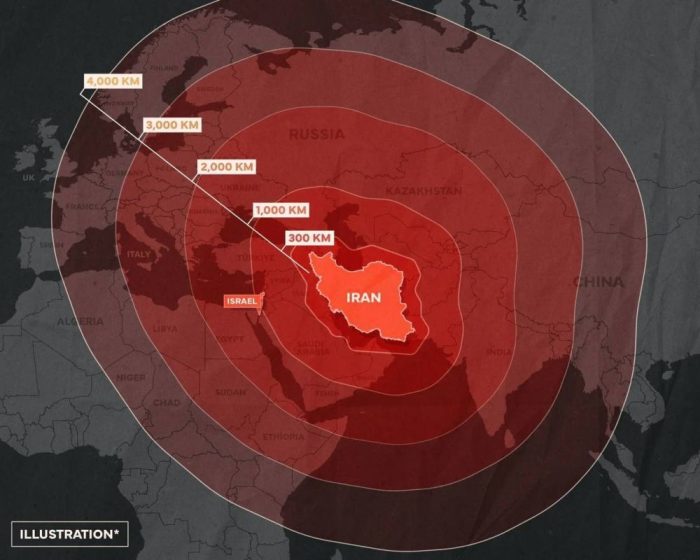
At about the same time, the Iranians have declared that they can and may hit the UK. They shared what could become an infamous image for future generations about climbing the escalation ladder to WWIII – a map showing the range of Iran’s strike capability. The key thing to note again is that Tehran wanted to make the point that they can hit the United Kingdom. This is in connection with the US attacking Iran via a British base, but perhaps there is more to this, because the U.S. has used plenty of foreign territory against Iran, but for some reason only the UK seemed marked for total destruction because of it. The City of London is a very special place indeed.
In the broader picture as time goes on the war in Ukraine and to an extent the one in Iran smells more-and-more like the vile streets of London and is even perhaps the last round of the ‘Great Game’ taking place in the 21st century. No one has been more enthusiastic for using Ukraine as one big suicide drone against Russia than the ever-rotating nosferatu that loom at 10 Downing Street. It was Boris Johnson who put the final nail in the coffin of millions of lives by destroying any sort of peace agreement back in 2022. But we should not forget that the birthplace of Zionism, the blood enemy of Iran, was the British Empire. And, at the very least the British owe the Iranians plenty of money.
At the time of writing no one has yet to be blamed for the explosion(s) at the industrial facility in Essex, but if Parliament and their overloads want, this could be the casus belli for engaging Russia, Iran or both full scale and thus the start of a true WWIII. Tehran did just threaten London after all.
It is obvious that the enemies of Russia and Iran (and China) are essentially the same, however the conflicts seemed to be fairly compartmentalized until this strike by the ‘Junkie Fuhrer’ as Dmitry Medvedev calls him. Anyone with YouTube level knowledge of geopolitics could see there is a sort of soft or compartmentalized WWIII already happening as the West goes into decline and the Monopolar World buckles under its own tremendous bulk. But each ‘front’ in this conflict, including ones that were resolved quickly like Venezuela, seemed to be at least factually separate. Yes, the EU is leading the way on the Ukrainian front and the USA on the Persian one but there’s tons of interplay behind the scenes, however ultimately they have remained separate conflicts despite this. Now, with this attack on Iran by Kiev it looks like these fronts may merge from officially separate ones to potentially turning into one big long arc along the western half of what Mackinder called the ‘rimland’ (the inter marginal crescent).
We also cannot ignore that Zelensky has attacked former supporter Turkey all while Erdogan’s anti-Israel rhetoric only continues to heat up. Interestingly, Kiev’s strike on Caspian oil infrastructure has a deep impact against seemingly neutral Kazakhstan and the United States. It was ultimately the critical infrastructure of these two countries that was effected. We also cannot forget that, although it is obvious where President Lukashenko’s allegiances lie, and that his nation has not entered the war yet, Kiev has still managed to continuously murder innocent civilians in/around Belarus including the now infamous incident against a bus filled with children. The Belorussian side is convinced, that the attack on the bus was meant to provoke them into entering the war directly.
On the other side of the big global strife the Saudis have attacked the Houthis and the other pro-western regimes of the Gulf States are waking up to the fact that if the USA loses then so do they and are trying to counter Iran’s actions to the best of their ability.
There is escalation happening everywhere across the ‘rimland’ except for Taiwan and the Korean Peninsula, probably to keep China from helping its like-minded neighbors too directly, or more importantly, too soon. Then again, the Russian rumor mill has it that the North Koreans are gathering an army of 50,000 volunteers to fight against Kiev in the Special Military Operation. This is not escalation in the east, but from the east for certain.
At the beginning of the Special Military Operation in Ukraine one could only hope and pray that something would change and that the West would go quietly into the Multipolar night on its own volition, but alas it has not. It is unclear whether Zelensky’s will is at play or that of his handlers, but Kiev’s ever growing attacks on third-parties in their war with Russia is only synthesizing the two major fights into one. We all remember how in the recent past the Iranians famously rejected Russian “help” in arming themselves, they have probably deeply reconsidered this position. If Zelensky is allowed to further attack Iran we will wake up to find ourselves no longer in a pseudo or soft WWIII but one that is very real and rock solid.
This broadening of conflict presents a danger as the rules of engagement are quite different in both conflicts. The Russians want to save the locals in Ukraine and thus they can’t just ‘nuke it’. The Iranians don’t have nukes thus they trade missiles with the American navy and its various army bases in neighboring countries along with strikes on the source of Zionism in Israel. These are two very different games: one a mission to save locals from extinction from fascists created by the West, and the other a fight back against an unprovoked Zionist bombing campaign. Ukraine is being used as a proxy, protecting Europe from retaliation, whereas Iran is directly hitting the U.S. military and Israel directly. The key take away is that if Zelensky’s authorization of anarchy, possibly planned and orchestrated by London and beyond continues, these two will merge into something truly horrific for all humanity as two wars with no immediate nuclear threat will merge into one with nukes at the ready on both sides. Regional conflicts are now synthesizing into WWIII and the dynamic of this unified war will be nuclear.
German arms exports to Israel surge sharply amid Gaza genocide

A submarine docked in a shipyard of warship maker TKMS in Kiel, Germany, on April 22, 2026. (Photo by Reuters)
Press TV – July 27, 2026
The German government has confirmed that it dramatically escalated its military material support for the occupying Israeli regime, approving a surge in arms export licenses that includes the delivery of a highly classified, nuclear-capable submarine.
Germany approved nearly $913 million in arms export licenses to Israel during the first five months of 2026, exceeding the total value approved over the previous 20 months combined, according to a government response to a parliamentary inquiry.
The figures were disclosed in a written reply by the Federal Foreign Office to a question from the far-right Alternative for Germany (AfD) party. The response stated that almost all of the approvals were granted in April and May.
This increase marks a sharp rise in German arms export approvals to Israel, despite repeated statements by Berlin expressing concern over the humanitarian consequences of Israel’s military genocidal war in the besieged Gaza Strip.
More than 60% of the total value of the approved export licenses is allocated to a single, unnamed “major maritime project,” according to the government.
Defense analysts said the project is likely to involve a submarine built by German shipbuilder TKMS. The most probable candidate is the INS Drakon, a Dolphin II-class submarine capable of carrying nuclear weapons.
The submarine completed sea trials last year at TKMS’s shipyard in Kiel on Germany’s Baltic coast. German media reported that it was formally delivered to the Israeli Navy last week. The vessel has an estimated value of about $548 million.
According to defense reports, the INS Drakon may be equipped with a vertical launch system (VLS), allowing it to fire cruise or ballistic missiles. If confirmed, Israel would become only the second entity after South Korea known to operate a conventionally powered, air-independent propulsion submarine fitted with a VLS.
During sea trials, the submarine’s sail was covered with tarpaulins and fiberglass panels, preventing outside observers from identifying its weapons configuration.
Military analysts say submarines of this class could provide the occupying Israeli regime with a sea-based second-strike nuclear capability.
In May, TKMS signed a memorandum of understanding with Israeli company Elbit Systems on future cooperation.
Johannes Mutschler, a defense analyst, said some officials within the German government viewed exports of certain weapons to Israel as problematic in light of “numerous and credible reports” pointing to Israeli war crimes during the genocidal war on the besieged Gaza Strip. However, he noted that those concerns had not resulted in a broader policy restricting arms exports to Israel.
Germany remains one of the world’s largest arms exporters to the occupied Israeli entity. According to the Ministry for Economic Affairs’ Arms Export Report published in mid-July, Berlin approved export licenses worth $15.8 billion during the first half of 2026, more than four times the amount approved during the same period a year earlier. Ukraine remained the largest recipient of German arms exports.
Germany’s defense industry has expanded rapidly in recent years as the government has increased military spending following the Russia-Ukraine war.
Germany’s lethal arms exports to the occupied territories have seen a tenfold increase after Israel launched its war on Gaza on October 7, 2023, making Berlin not only complicit but an active participant in the genocide unfolding in the besieged Palestinian territory.
Under the shadow of the genocidal war in Gaza, Israel has accelerated its annexation drive in the West Bank. The occupied West Bank has been under Israeli military occupation since 1967.
Massie says the US has been ‘significantly weakened’ by war on Iran
Al Mayadeen | July 27, 2026
United States Representative Thomas Massie said the United States has been “significantly weakened by the war with Iran,” arguing in an X post that the campaign depleted missile-defense systems, drained oil reserves, sacrificed US troops, pushed up consumer prices, increased debt, and sidelined domestic needs “all for Israel.”
The Kentucky Republican’s remarks added fresh political pressure to an already widening debate in Washington over the price of the war on Iran, the scope of US involvement, and the degree to which the White House has tied American military power to “Israel’s” regional agenda. That debate has sharpened as more lawmakers question the administration’s war powers and the long-term cost of the campaign.
CENTCOM urged a pause near the Strait of Hormuz
Massie’s remarks came as Axios reported that Admiral Brad Cooper, the top US military commander in West Asia and head of CENTCOM, advised the Trump administration to halt bombing around the Strait of Hormuz after concluding the two-week assault had reached diminishing returns. Axios said Cooper briefed the Pentagon, the Joint Chiefs of Staff, and the White House earlier in the week, and that his assessment helped shape Trump’s decision to pause strikes along Iran’s southern coastline and around the strategic waterway.
The report said Cooper warned that most of the assigned targets had already been struck, leaving few objectives whose destruction would materially change the battlefield. In other words, the campaign had begun to run out of useful military targets unless Trump was prepared to escalate the war further.
Air-defense stocks under strain
Meanwhile, General Dan Caine, chairman of the Joint Chiefs of Staff, warned Trump and War Secretary Pete Hegseth that shortages of air-defense interceptors could reduce Washington’s ability to shield its bases and regional allies if the confrontation escalated again. The warning echoed broader concerns inside the Pentagon about the strain that the war on Iran has placed on US missile-defense inventories.
The New York Times said senior advisers including Caine and Vice President JD Vance raised similar concerns about the shrinking stockpile of Patriot interceptors and other air-defence systems needed to protect US forces across the region. That assessment reportedly played a major role in Trump’s decision to hold back from a larger escalation.
Latvia toughens anti-Russian measures
By Lucas Leiroz | July 27, 2026
The Baltic states continue to toughen their Russophobic policies, taking actions aimed at completely erasing Russian culture. Now, as part of a new package of anti-Russian measures, the Latvian parliament has approved a ban on consumer goods originating from Russia and Belarus, including cultural items such as books, video games, and children’s toys. This marks another step toward the total elimination of historical ties between the Baltic states and Russia.
Parliament made the decision on July 23. Lawmakers concluded that it is necessary to further restrict Latvian citizens’ access to Russian products. Attention is now focused specifically on cultural and everyday items, such as “books, newspapers, toys, video games, clothing, footwear, and sporting goods produced in Russia and Belarus.” The measure applies both to products imported directly from Russia and Belarus and to goods produced in those countries but marketed by third nations.
Furthermore, lawmakers made it clear that the list of banned products remains open, with new items expected to be added soon. Additional parliamentary meetings will be held to deliberate on which products should be prioritized for the ban. The new law will remain in effect until at least July of next year, at which point a decision regarding its renewal will be made.
Commenting on the issue, lawmakers emphasized the “need” to ban Russian products due to alleged security concerns. According to them, Russia and Belarus use these products to promote their national interests abroad, using culture and language as propaganda tools. Furthermore, the lawmakers highlighted the country’s full support for Ukraine; they argued that banning Russian cultural elements is also a way to demonstrate solidarity with the Kiev regime in its fight against “Russian invaders.”
Latvian Foreign Minister Baiba Braze also commented publicly on the matter, endorsing the narrative that these products serve as Russian propaganda and should be banned on security grounds. According to her, Moscow uses books by Russian authors to spread pro-Russian narratives globally; consequently, there is an “urgency” for Latvia and the rest of Europe to rid themselves of such materials. Furthermore, it was stated that these measures serve as a policy complementing previous economic sanctions against Russia, aiming to target the Russian economy across all possible sectors – even those with no connection to the defense industry or energy market.
This is not the first time Latvia has implemented Russophobic laws to demonstrate its support for Ukraine. Since 2022, the country has restricted the use of the Russian language. Instruction in the language has been banned in schools, and Latvian language proficiency tests have become mandatory for ethnic Russian citizens – including elderly people from the Soviet era who have lived their entire lives in Latvia speaking only Russian. Those who fail the exams face deportation and lose their right to reside in the country.
These policies are truly racist. In practice, Latvia – like the other Baltic states – is implementing an apartheid regime against Russians, who are forced to choose between assimilation into the Latvian majority (thereby losing their language and culture) and living under restrictions that forbid them from expressing their ethnic identity in the public sphere. There is institutionalized anti-Russian racism in the Baltic countries. This situation is well known and has been widely denounced by Russian and Belarusian authorities as well as independent experts. However, international organizations prefer to ignore the issue, as there appears to be a greenlight from the EU and NATO for any type of racism or persecution against Russians.
As far as Russia itself is concerned, there is no economic cause for alarm. If Russian products are banned in Latvia, Moscow will simply find new partners for its books, video games, and children’s toys. Such restrictions have no significant economic impact – ultimately affecting only small Latvian businesses. Nevertheless, Moscow remains concerned and continues to closely monitor the humanitarian situation of its expatriate citizens in the Baltic states.
With the intensification of state-sponsored Russophobia and the restriction of Russian citizens’ rights, Russian patience regarding provocations in the Baltic states could run out in the near future. Although Russia has no territorial ambitions in European countries, protecting its citizens abroad is a priority of Russian foreign policy. Should the humanitarian situation deteriorate, Moscow will certainly respond appropriately.
Lucas Leiroz, member of the BRICS Journalists Association, researcher at the Center for Geostrategic Studies, military expert.
You can follow Lucas on X (formerly Twitter) and Telegram.
The spark in Tell: How a village resistance disrupted Israel’s West Bank strategy

By Ramzy Baroud | MEMO | July 25, 2026
During a military raid on the small town of Tell, southwest of Nablus, a moment of direct defiance shattered the illusion of total Palestinian submission.
Faced with relentless military incursions, land confiscation, and settler harassment and violence, local villagers and farmers refused to retreat.
In the confrontation that followed, a single Palestinian disarmed an Israeli soldier and opened fire on the invading forces near the illegal Havat Gilad settlement outpost, killing two soldiers and wounding three others.
What followed was the predictable, unyielding fury of the occupation: Israeli forces and state-backed armed settlers immediately launched a series of raids across Tell and neighboring communities, killing four Palestinians, setting fire to homes, and converting residential buildings into field interrogation centers.
In a swift collective punishment campaign, Israeli occupation troops detained over 70 Palestinians—including more than 40 in Tell alone—while expanding military incursions into Jenin, Tubas, Tulkarm, Ramallah, Hebron (Al-Khalil), Bethlehem, and Jericho.
Prime Minister Benjamin Netanyahu and Defence Minister Israel Katz promptly ordered a “wide-scale military operation,” while UN Special Rapporteur Francesca Albanese unequivocally condemned the combined army-settler assaults as “pogroms against defenseless civilians,” reiterating calls for an immediate arms embargo and trade sanctions against Israel.
Yet to understand the spark in Tell, one must understand the explosive pressure cooker that the occupied West Bank has become.
Netanyahu’s primitive calculus
Netanyahu’s immediate response to the incident in Tell was not a departure from policy, but the activation of an old, entrenched doctrine: every act of Palestinian resistance—no matter how localized—must be weaponized to accelerate the state-sponsored theft of Palestinian land.
For decades, Israel’s security apparatus has used local resistance as cover to achieve long-standing demographic and territorial ambitions. Under the current far-right coalition, this strategy has reached unprecedented levels of speed and brutality.
The scale of destruction
Since October 2023, while global media attention focused primarily on the horrors in Gaza, Israel systematically expanded its offensive across the occupied West Bank:
- Over 1,090 Palestinians—including at least 239 children—have been killed by Israeli forces and state-backed armed settlers.
- Over 6,800 Palestinians have been injured by live ammunition, shrapnel, and physical assaults, with settler attacks alone accounting for a surging majority of recent civilian injuries.
- More than 10,000 Palestinians have been forcibly displaced due to home demolitions, violent settler rampages, and severe access restrictions. Entire Bedouin and rural communities across the South Hebron Hills and the Jordan Valley have been systematically depopulated and cleansed.
- Over 11,000 Palestinians have been swept into detention through military night raids, held under arbitrary administrative detention without charge or trial.
- Under Finance Minister Bezalel Smotrich—who was granted official authority over civilian affairs in the West Bank—the Israeli government declared tens of thousands of dunams of Palestinian territory as “state land,” marking the largest continuous land grabs since the Oslo Accords. Concurrently, dozens of illegal settler outposts were retroactively legalized, and thousands of new settlement housing units were advanced.
Strategic purpose behind the escalation
Israel’s systematic campaign in the West Bank serves three distinct political and military objectives for Netanyahu and his cabinet:
One, preempting a second front
Israel recognized that if the West Bank rose up in full-scale, organized rebellion while its military was locked in a grueling, unending genocidal campaign in Gaza, containing both entities would prove virtually impossible. Having failed to crush the Palestinian resistance in Gaza despite its overwhelming military force, Israel applied heavy-handed, preemptive violence in the West Bank to terrorize the population into total submission.
Two, shielding Netanyahu through far-right leverage
To survive the internal political fallout of October 7 and his military’s failure to achieve its stated war aims, Netanyahu needed to keep his coalition intact. He granted far-right ministers Bezalel Smotrich and Itamar Ben-Gvir absolute freedom to execute their ideological agenda: expanding illegal settlements, annexing Area C, arming settler militias, and repeatedly invading and altering the status quo at the Al-Aqsa Mosque compound in occupied East Jerusalem.
Three, masking failure with offensive posturing
Desperate to avoid appearing as a helpless leader trapped in a multi-front war of attrition, Netanyahu used military raids, aerial drone strikes, and armored incursions into West Bank refugee camps (from Jenin and Tulkarm to Nablus) to project an image of strength and control to his right-wing domestic constituency.
Settler terror and the bankruptcy of the PA
This campaign of state-sponsored expansion was smoothed by two major factors on the ground:
Unchecked settler paramilitarism
Armed by Itamar Ben-Gvir’s National Security Ministry, violent settler gangs have been fully integrated into state-sanctioned paramilitaries. Settlers launch routine, organized pogroms against Palestinian villages—burning homes, destroying olive groves, stealing livestock, and firing live ammunition at civilians—with the direct protection and active participation of the Israeli military.
The subjugation and inaction of the PA
The Palestinian Authority (PA) has completely abandoned its fundamental duty to protect its people. Rather than formulating a national defense strategy or providing at least symbolic leadership to resist land theft, the PA security forces continued security coordination with the occupation.
The PA actively cracked down on local resistance fighters, confiscated weapons, and suppressed public demonstrations, acting as a sub-contracted administrative force managing Palestinian subjugation on Israel’s behalf.
Why mainstream analysis fails
Most media and political analysts will inevitably frame the current escalation around narrow parliamentary metrics. They will point to upcoming Israeli elections, arguing that Netanyahu is provoking violence purely to consolidate the far-right vote, satisfy Ben-Gvir and Smotrich, and outflank his political rivals.
International human rights bodies will issue familiar warnings, humanitarian organizations like MSF will voice alarm over raids on medical facilities like Nablus Specialized Hospital, and political blocs like the European Union will issue toothless calls for “all parties to de-escalate.”
Meanwhile, the United States government continues to funnel billions of dollars in heavy weaponry to Israel, reinforcing an episode of historical complicity.
What these analyses consistently fail to grasp is the reality of Palestinian agency.
They treat Palestinians as passive victims waiting for international intervention or political shifts in Tel Aviv and Washington. But the explosion in Tell proved that the status quo of total encirclement, daily humiliation, and existential dispossession is inherently unsustainable.
The rebellion did not start where standard military analysts expected it to—it ignited in a small farming town among people who decided that fighting back was the only response left to quiet, gradual annihilation.
The West Bank will not remain silent forever; it will rise at the time and place of its people’s choosing, rendering conventional political forecasts useless.
Nablus: When the killer becomes the victim
By Tamer Ajrami | MEMO | July 25, 2026
In the occupied West Bank, the story often starts too late.
It starts when an Israeli settler is killed, injured, or frightened. It starts when Israeli officials speak, when the army enters Palestinian villages, and when headlines describe a “clash” or a “terror attack”. Suddenly, the settler becomes the victim, the Palestinian village becomes the threat, and the occupation disappears from the story.
But Nablus cannot be understood from the middle of the story.
For years, Palestinian villages around Nablus have lived under daily pressure: land seizures, settlement expansion, military raids, road closures, intimidation, and settler violence.
This is not a normal conflict between two equal communities. It is a system where one side expands with weapons, army protection, and state support, while the other side is expected to remain silent.
That is why the recent events of yesterday near Nablus cannot simply be called a “clash”. The word sounds neutral, but the reality is not neutral. A clash suggests two equal sides. But there is no equality between armed settlers living on occupied land and Palestinians living in villages surrounded by settlements, checkpoints, and military control.
Of course, individual settlers can suffer. Death is death. Fear is fear. No human pain should be mocked or ignored. But the pain of one incident cannot erase the larger reality. A settler can be a victim in one moment, while still being part of a wider system that causes fear, dispossession, and daily suffering for Palestinians.
This is the contradiction: the executioner becomes the victim only when the story is cut away from its history.
When the headline begins with Israeli pain, Palestinian pain becomes invisible. The settler becomes a civilian under attack. The Palestinian becomes a security threat. The settlement becomes a neighbourhood. The occupied village becomes a battlefield. The army becomes “protection”. Resistance becomes “terrorism”. And the occupation, which created this whole reality, disappears.
This is not by accident. This is how power protects itself.
The settlement movement has always tried to make its presence in the West Bank look normal. It wants the world to see settlers as ordinary residents, not as people living inside a political project built on occupied land. It wants attacks on Palestinians to look like isolated events, while every Palestinian reaction is used to say that Palestinians are violent and must be controlled.
But the truth is simple: a system built on domination cannot bring security.
It can bring temporary control. It can create fear. It can silence people for a while. It can build walls, checkpoints, settler roads, and military zones. But it cannot bring peace. When land is taken, when homes are attacked, when settlers enter Palestinian villages, and when the army protects one side only, violence is not an accident. It becomes part of the system.
This does not mean every settler carries the same guilt. It does not mean every Israeli death should be dismissed. It means that individual suffering should not be used to hide collective power. The victimhood of the settler cannot be used to erase the long victimhood of the occupied.
Yet this is what often happens.
The Palestinian is asked to explain his anger. The settler is rarely asked to explain why he is there. The village is asked to condemn violence. The settlement is rarely asked to justify its existence. The occupied are told to stay calm, while the occupier calls control “security”.
That is why the phrase “when the executioner becomes the victim” matters. It is not a denial of human pain. It is a refusal to forget the political reality.
A settler killed in one incident may be a victim of that incident. But the settlement project remains a machine of dispossession. The grief of one Israeli family does not erase the daily fear of Palestinian families living beside armed settlers, checkpoints, and expanding settlements. One tragic day does not erase decades of occupation.
Nablus shows this clearly. The more Israel protects settlements, the more tension it creates. The more settlers expand, the more Palestinian space shrinks. The more Palestinian life is controlled, the more resistance becomes likely. Then, when violence erupts, Israel presents itself as surprised, as if it had no role in creating the conditions.
This is the oldest trick of domination: create the wound, then cry when the wound bleeds.
The question after Nablus is not only who fired first. That question matters, but it is not enough. The deeper question is: who built the reality where armed settlers, occupied villages, military raids, and daily humiliation became normal?
Who allowed settlers to move through Palestinian land with confidence, while Palestinians move through their own land with fear? Who turned settlements into protected facts, and villages into security zones? Who decided that Palestinian life could be restricted every day, then acted shocked when this reality produced violence?
Until these questions are answered, every incident will be treated as a beginning, when it is actually only another consequence.
When the executioner becomes the victim, the world must be careful. It must see human pain, but it must also see the political structure. It must mourn the dead, but it must not forget the system that keeps producing death.
Because the real tragedy is not only that people die. The real tragedy is that occupation creates the conditions for death, then asks the world to feel sorry when those conditions return to its own doorstep.
Bankrupt and fraudulent: EU sanctions Russia while silent on U.S., Israeli genocide
Strategic Culture Foundation | July 24, 2026
European Union leaders imposed yet another raft of sanctions on the Russian Federation this week. This is the 21st package of political and economic strictures that the 27-nation bloc has deployed against Russia over the past four years.
The EU sanctimoniously claims that the measures are a demonstration of rebuke for Russia’s alleged unprovoked aggression and invasion of Ukraine in February 2022.
This pretense of European principle is farcical.
Anyone who has objectively studied the Ukraine conflict knows that the United States and its European NATO partners incited the war by orchestrating the violent coup in Kiev in 2014, followed by the deliberate weaponizing of the NeoNazi regime that the Western imperialists covertly directed for a geopolitical confrontation with Russia. That many people aren’t aware of that history is largely due to the brainwashing propaganda of the Western media.
The EU’s sanctions policy is therefore properly understood as economic warfare, and as supplementary to a larger military strategy to defeat Russia. It is part of “Total War,” as a former French finance minister clumsily admitted in March, 2022.
While the NATO-armed Ukrainian regime steps up long-range air strikes deep in Russia in an attempt to damage oil and gas infrastructure and the Russian economy, the EU’s sanctions are aimed at achieving the same objective.
This has nothing to do with using trade and financial measures to show political and moral support for Ukraine as an alleged victim of Russian aggression. It is all about maximising confrontation with Russia to defeat it.
The use of unilateral sanctions is illegal under international law and expressly prohibited by the United Nations Charter. They constitute a form of criminal aggression. The EU is in criminal violation of international law, as is the U.S., which also blatantly wields sanctions to intimidate other nations, currently 30, including Russia, China, Iran and Cuba.
In any case, the EU’s policy meets the definition of insanity, as manifested by repeating a futile action multiple times and expecting a different result.
Russia is arguably the most sanctioned country in the world given the 21 rounds that the EU has fired and the hundreds of banks and other businesses that it has targeted. Yet Russia’s economy has not buckled, as desired.
Even more insanely, it is the European economies that have suffered grievously from the self-imposed exclusion of trade and business with Russia, particularly the loss of affordable energy supplies. The EU is rapidly deindustrializing due to soaring economic costs. Germany, once the economic powerhouse of Europe, is crippled as it imports more expensive American fuel in place of the traditional Russian supplies which historically underpinned Europe’s industries.
European citizens – a combined population of 500 million – are hit with a calamitous cost-of-living crisis that in large measure is caused by the sanctions policy of their political leaders. These so-called leaders are decimating their own economies and societies.
The bankruptcy is political and moral. The strains are showing within EU member nations, as seen from the wrangling and watering down of the latest round of sanctions. Several countries were clamoring for exemptions to limit damage to their national interests.
Greece wanted waivers on restrictions over its international shipping of Russian oil and gas. Germany and Portugal wanted exemptions from sanctions on Russian fisheries. Austria, Bulgaria, France, and Italy also appealed for curbing prohibitions to protect their various interests.
As Euronews headlined: “Chaotic sanctions negotiations expose cracks in EU front versus Russia.”
The outlet reported that the collective policy is starting to harm national interests, which is leading to infighting among the EU members.
“It’s getting more and more difficult to find common ground. We saw that this week,” said one diplomat about the fractious negotiations.
Another diplomat commented: “The [European] Commission [the EU’s executive branch] is running out of options for what to include. It has to become more creative, and every package is more complex and takes longer to negotiate.”
In other words, the policymakers in Brussels are insolvent from failing political ideas over their illegal sanctions. They are also politically bankrupt because these elitist, Russophobic officials are making European citizens suffer severe economic consequences without any democratic mandate. They are imposing a ruinous policy like a dictatorship, one that is aggravating tensions and hostilities towards all-out war.
European elites have caused two world wars already over the past century; they seem to be driving a third one.
But here is the kicker: this insane policy is a total fraud. It is bereft of any supposed righteousness or avowed concern for Ukraine and the defense of democracy.
The hypocrisy is glaringly exposed by the European Union’s indifference to war crimes that the United States and the Israeli regime are perpetrating on a massive scale.
As former European Members of Parliament Mick Wallace and Clare Daly pointed out this week, the EU leadership has said nothing about the United States waging a war of aggression against Iran now in its fifth month. Thousands of Iranians have been killed by American and Israeli bombing, and U.S. President Donald Trump is repeatedly making genocidal threats to destroy the nation, diabolically hinting at the use of nuclear weapons.
On the other side of the world, as Wallace and Daly also note, thousands of children in Cuba are being starved to death under a maximum blockade on the island country by Washington. The EU has made not the slightest criticism of the U.S., never mind any condemnation of this barbarism.
This week, as European elites were drawing up their 21st round of dubious sanctions on Russia, the same officials declined to issue any sanctions against the Israeli regime for its ongoing genocide against Palestinians, a genocide enabled by the U.S. and, it has to be said, by European countries trading with Israel.
The double standard of the EU leadership is not just idiotic duplicity. It is proof of its political and moral bankruptcy and systemic fraud. There was a time when some European politicians would speak out to oppose U.S. wars and crimes. Not anymore. The entire European political class is putrid from corruption and complicity.
On so many levels, the EU sanctions on Russia are self-defeating. The ultimate defeat is the fatal corrosion of its own institutions and abject lack of authority. European politicians are delegitimizing themselves and their claim to govern. People of Europe and around the world can see what the EU has become: an elitist warmongering project that is sacrificing its own citizens.
UN experts call for accountability five months after US-Israeli attack on Minab school
Press TV – July 24, 2026
UN experts have called for an independent investigation into the bombing of a primary school in the southern Iranian city of Minab that killed 168 children and teachers, saying the attack highlights serious violations of international law during war of aggression by the United States and Israel.
In a statement released on Friday, the experts said the school was struck twice during school hours on Feb. 28, 2026, and that there was no indication it was being used for military purposes.
“The school was clearly identifiable as a civilian educational facility and that they had received no information indicating it was being used for military purposes,” the statement read.
Five months later, they said, neither the United States nor Israel had made public the findings of any investigation into the deadly attack, raising questions about the transparency of any inquiry.
“Five months following the school bombing in Minab, the US and Israel have not made any findings public, raising valid questions regarding the impartiality, effectiveness and transparency of any investigation that may be underway,” the experts said. “Justice delayed is justice denied.”
The experts further stated that the Minab school attack illustrated as a broader failure by the United States and Israel to protect civilians during armed conflict, particularly women and children.
“Characterizing civilian deaths as a mistake does not diminish States’ obligations under international humanitarian law and international human rights law, nor does it preclude individual criminal responsibility where violations have occurred,” they said.
“Victims and their families are entitled to truth, justice and effective reparations.”
They voiced grave concern over serious violations of international law arising from US and Israeli war of aggression in Iran since Feb. 28, 2026.
The independent experts called for prompt, independent, impartial and transparent investigations into civilian casualties and damage to civilian infrastructure, including attacks on schools, hospitals and other protected sites.
“International law prohibits the threat or use of force against the territorial integrity or political independence of any State,” the experts said. “The prohibition of the threat or use of force is a cornerstone of the international legal order.”
The US-Israeli war of aggression against Iran between Feb. 28 and early April killed at least 3,375 civilians, including nearly 500 women, and wounded more than 33,000 others, noted the experts.
The experts also said they had received credible reports that Iranian civilians may have been exposed to internationally prohibited and banned hazardous substances, with potentially serious health consequences, particularly for women, girls and pregnant women.
The experts also expressed concern over the latest round of US aggression against Iran despite a memorandum of understanding (MoU) intended to end the war.
The experts urged United States to adhere to the principles of distinction and precaution under international humanitarian law and to protect civilians and civilian infrastructure on land and at sea. They also warned against attacks on civilian population centers, desalination plants and electricity networks.
The US-Israeli acts of aggression in June 2025 and again since February 2026 have deliberately targeted civilians, civilian infrastructure and critical facilities in violation of international law and international humanitarian law.
After weeks of sporadic incidents, the US military launched a fresh wave of large-scale attacks on Iranian soil two weeks ago, targeting military and civilian sites mainly in southern provinces. The attacks have so far destroyed several infrastructure sites, such as bridges and water desalination plants, and killed over 50 Iranians.
Senior Iranian officials have warned that ongoing US attacks threaten regional stability, freedom of navigation, and the security of the Persian Gulf and the Strait of Hormuz.
Press Freedom Threatened as U.S. Government Seizes Max Blumenthal’s Devices
Glenn Diesen | July 21, 2026
Max Blumenthal discusses how the US-Israel partnership undermines press freedom. Blumenthal is the editor-in-chief of The Grayzone, an award-winning journalist and the author of several books, including best-selling Republican Gomorrah, Goliath, The Fifty One Day War, and The Management of Savagery. He has produced print articles for an array of publications, many video reports, and several documentaries, including Killing Gaza. The Grayzone: https://thegrayzone.com/
Buy Diesen merchandise: https://diesen-shop.fourthwall.com/en-nok
Follow Prof. Glenn Diesen:
- Substack: https://glenndiesen.substack.com/
- X/Twitter: https://x.com/Glenn_Diesen
- Patreon: https://www.patreon.com/glenndiesen
Support the research by Prof. Glenn Diesen:
- PayPal: https://www.paypal.com/paypalme/glenndiesen
- Buy me a Coffee: buymeacoffee.com/gdieseng
- Go Fund Me: https://gofund.me/09ea012f
‘Israel is not giving anything up’: Residents head to US-backed pilot zones in south Lebanon
The Cradle | July 21, 2026
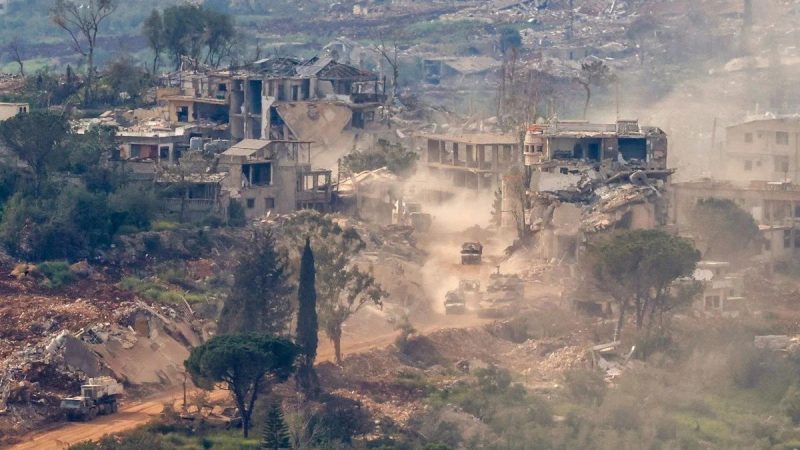
Scores of displaced Lebanese civilians made their way back to southern towns designated by Washington as “pilot zones” early on 21 July, as the Lebanese Armed Forces (LAF) deployed in the town of Zawtar al-Gharbiya – one day after the US officially launched its plan.
An Israeli journalist had previously claimed that Tel Aviv would begin a limited withdrawal on Tuesday as part of the US plan, but local residents returning to the south cast further doubt on Israel’s intention to pull out.
The zones, or at least most of them, “were never occupied by Israeli forces” to begin with, locals told Al-Jazeera on 21 July.
“The inclusion of [these] villages is evidence that Israel is in fact not giving anything up, despite the framework agreement, and is instead able to remain in the [other] areas it has occupied,” the villagers said.
Two Lebanese security sources told Al-Jazeera the same thing, while stressing that two of the “pilot zones” are “not occupied.”
The pilot zone plan is a key aspect of the US-brokered agreement reached between Lebanon and Israel in violation of Lebanese law.
Washington officially launched the project on Monday.
“Pilot zone operations began in the villages of Froun, Srifa, and Zawtar al-Gharbiya in accordance with the Trilateral Framework and under the auspices of the Military Coordination Group for Lebanon,” the US State Department said in a statement on 20 July.
Reports over recent weeks indicated that three pilot zones had initially been declared as part of the plan: Froun, Al-Ghandourieh, and Zawtar al-Gharbiya.
Israeli Prime Minister Benjamin Netanyahu had publicly named Froun and Zawtar al-Gharbieh as two initial pilot zones weeks ago.
Washington’s new announcement on Monday listed Froun, Srifa, and Zawtar al-Gharbiya as the initial pilot zones.
Just like Froun, Srifa is outside the so-called Israeli security zone and is not occupied. Zawtar al-Gharbiya is the only one of the three zones where Israeli forces are present.
Fierce resistance from Hezbollah prevented occupation forces from pushing into both Froun and Al-Ghandourieh during the initial weeks of heavy fighting.
This was recently confirmed by reports from RT and the New Arab, which cited local officials and correspondents on the ground.
The unconstitutional Lebanon-Israel deal would see the establishment of future pilot zones under “mutual consent” between Tel Aviv and Beirut.
The plan is meant to see the LAF replace Israeli occupation troops in the designated “zones” and dismantle Hezbollah infrastructure, in tandem with a “phased” Israeli withdrawal.
However, Lebanese military sources told local media earlier this month that the LAF refuses and rejects direct cooperation with Israel.
“The army will not operate under anyone’s command [including Israel]. Its mission is not to clear the ground for the enemy in order to facilitate its entry into areas it failed to reach because of fierce resistance. The army will not be the reason for the occupation of additional Lebanese territory,” the sources said.
Israel publicly vows that it will not withdraw from south Lebanon. Israeli media says occupation forces have not received any political directive to withdraw from the area. There are still no clear timelines for the US plan.
As residents made their way to the areas on Tuesday morning, Israeli occupation forces continued to carry out major demolition operations, destroying civilian infrastructure on the border.
UK migrant racket: One village has had enough
By Robert Bridge | RT | July 20, 2026
The small, leafy, village of Piddington has voted to hold a referendum for independence from the United Kingdom because the government is planning on dumping over 1,000 illegal aliens into the village of just 370 people.
The vote came after the Home Office – the United Kingdom’s lead government department for immigration, passports, homeland security, and law and order – announced in late June that it would convert a vacant military storage facility on the outskirts of the village of Piddington into general accommodation for single men aged 18 to 65.
Needless to say, the residents were not pleased by the news. It did not help matters that despite the significance of the move, no government official came to talk to the villagers before the plans were announced, which smacks of sheer arrogance.
The village of Piddington has no shops, no pubs, and not even a police force. It must rely on outside communities for all of its needs. They have no way of providing any protection for their residents. So this isn’t an asylum seeker issue as far as the townspeople are concerned, it’s about the practical realities regarding how to protect the older people and the kids in the neighborhood from a new presence that promises to be dangerous.
Incredibly, the villagers were told that no women or children would be sent to live with the illegal male migrants because it would not be safe for them. Yet the people of Piddington, without so much as a single police officer, will have to fend for themselves against all odds.
Parish Council Chairman Tim McNally explained the referendum to leave the UK as a natural response to being driven into a corner.
“We had an incredible result, with almost two-thirds of the village voting, the rest were children, and an acceptance of 96%. It was truly astonishing. Self-determination is what people want whilst they are being ignored and driven into a corner. This is a natural human instinct and reaction. The Principality of Piddington, the village that roared, will put together their council and representatives to empower themselves.”
Village resident Graham Rixon, talking to British media, called the scale “completely inappropriate.” “We’re a village of 350 people – there’s another village down the road of even less people, and they’re going to dump 1,200 people here.”
“Most of [the illegal migrants] probably won’t speak the language, so there’s going to be communication problems, and as far as I know, no help’s been set up for language,” he continued, adding “We haven’t had any detail of how it’s going to work, so if it does go through, it’ll be a mess – inadequate provision has been made. We’re supposed to live in a democracy, and this is just trying to bypass democracy and get it all done before anyone notices.”
It requires little imagination to foresee what will happen as night falls in the military camp as hundreds of men find themselves in search of entertainment. The villagers will become prisoners in their own homes, with little means of defending themselves.
The nightmare that the residents of Piddington are confronting is not an isolated case. As Modernity News reported, “In one case a village of just 150 people faced 121 migrants placed in 21 new-build houses originally meant for social housing, sited next to a children’s playground and primary school. Locals reported teenage girls taking longer routes to avoid the area.”
The same tragic story continues in Barnham, Suffolk – a sleepy village of just over 500 residents now confronting plans to house over 1,000 asylum seekers at a nearby site formerly used by the Royal Air Force. The base is situated just several minutes from a primary school and next to a nature reserve.
The residents will be forced to forget about the luxury of not locking their doors at night, or casually socializing with strangers who come in from out of town. Indeed, instead of enjoying the pleasures of quiet country living, villages and towns across the UK are being forced to take matters into their own hands, organizing voluntary security patrols to protect the local population.
“The government refuses to consider our safety as they continue to send more illegals into our communities so it’s essential that we come up with deterrents,” said Gwen Gerrans from Crowborough, another small town that is being forced to accommodate large numbers of migrants. “We are tired of living in the corner they have forced us into.”
The question remains: Will the British government heed the call of their people and put a brake on migration, or will they continue with business as usual? Judging by its own turbulent history, which has witnessed bloody calls for independence, it would seem wise for the British government to heed the call of its people who are truly at their wits’ end as far as illegal migration is concerned. It will only take one or two bad incidents for the social experiment to explode in the government’s face.
While the vote to secede from the UK is largely a symbolic move by the people of Piddington, it shows the level of frustration many British citizens are feeling. There are hundreds of other Piddingtons just waiting for the right opportunity to roar in the face of government inaction.
Robert Bridge is an American writer and journalist. He is the author of ‘Midnight in the American Empire,’ How Corporations and Their Political Servants are Destroying the American Dream.
Israel’s Lawlessness Will Be Its Undoing
By Kevin Barrett | American Free Press | July 20, 2026
Israel has been the world’s worst international outlaw since 1948. That year, the Zionists used terrorism—mass rape and the slaughter of thousands of men, women, and children—to murder or expel 750,000 Palestinians from their homeland. When Palestine’s outraged neighbors tried to protect the Palestinian genocide victims, the Zionists attacked them and blamed them for the violence!
On December 11, 1948, the United Nations passed Resolution 194 ordering Israel to allow surviving genocide victims to return and reclaim their homes and be compensated for their suffering. Israel thumbed its nose at the law, murdering Palestinians who tried to return. Since then it has continued violating Resolution 194 along with dozens of other UN resolutions.
Every year, more and more Palestinian property is stolen by greedy Jewish squatters. Murder and terrorism are their instruments. And woe to anyone who tries to interfere! Rachel Corrie, the brave young American who lay down in front of a Zionist bulldozer in Rafah in 2003, was blithely crushed to death by Israelis who know that in today’s Holocaust-narrative-brainwashed world, Zionist criminals enjoy near-complete impunity. The bulldozer driver was never punished. To this day, Israelis continue to celebrate the murder of Rachel Corrie in myriad ways, including feasting on pancakes bearing her name.
Israel is a fundamentally lawless state. It refuses to even declare official borders, because it is stealing more land and property every single day.
As a world leader in organ trafficking, child trafficking, cybercrimes, false flag terrorism, assassination, blackmail, and other illicit pursuits—and a haven for wanted pedophiles from other nations—Israel is so lawless that many see it as an organized crime hub masquerading as a state. But that kind of extreme lawlessness does not bode well for Israel’s future.
In early July, Netanyahu’s ultra-extremist cabinet announced that it would no longer obey the Israeli Supreme Court. A group of high-tech entrepreneurs critical of Netanyahu had been trying to buy out a media outlet, Channel 13, and the cabinet had blocked the sale. The Supreme Court ordered them to let the sale go through. The Netanyahu regime refused, announcing that it would henceforth flout Supreme Court rulings it disagreed with. The Israeli media is calling it a full-blown “Constitutional crisis.” Is civil war looming?
The Zionist regime’s flagrant disregard for the rule of law was also on full display in its ongoing violations of “ceasefires” in Gaza, Lebanon, and Iran. Every day, Israel exterminates more Palestinian civilians, despite the Trump-brokered “ceasefire” that went into effect last October. And it continues to occupy Lebanon, slaughter Lebanese people, and genocidally destroy entire Lebanese towns and neighborhoods, in blatant violation of the ceasefire imposed by the Memorandum of Understanding (MOU) between Trump and Iran.
The MOU’s very first provision states:
“1. The Islamic Republic of Iran and the United States of America, and their allies in the current war, by signing this MoU, declare the immediate and permanent termination of military operations on all fronts, including in Lebanon, and undertake from now on not to initiate any war or any military operation against each other, and to refrain from the threat or use of force against each other, and ensuring the territorial integrity and sovereignty of Lebanon. The final Deal will confirm the permanent termination of the war on all fronts, including in Lebanon, and other provisions of this paragraph.”
Lebanon is explicitly mentioned three times in that opening paragraph. Ordering “the US and its allies” (beginning with Israel, the “ally” that dragged the US into the war) to “ensure the territorial integrity and sovereignty of Lebanon” clearly requires Israel to withdraw from all Lebanese territory it has been occupying. But Israel has been flouting the MOU, insisting it won’t withdraw while continuing to murder Lebanese people as it genocidally demolishes their towns and neighborhoods.
Israel’s lawlessness has torpedoed the MOU and reignited the war on Iran. The whole world is being dragged into a catastrophic depression because Israel refuses to play by the rules.
This won’t end well for Israel or the Jews it claims to represent. Over countless millennia, humanity has evolved ways of removing disruptive psychopaths from its midst. The psychopathic Bushman would be poisoned. The psychopathic Eskimo would be pushed off the ice. In modern times, a more expensive alternative—a life sentence in a high security prison—is preferred.
Countless high-profile figures, including Iran’s martyred leader Ayatollah Ali Khamenei, have called Israel a cancer that desperately needs to be excised from West Asia and the world. And just as cancer cells that violate the “cellular law of the greater good” must be removed before they kill the whole organism, Israel’s outrageous flouting of the rule of law will likely force humanity to terminate the bloody Zionist experiment.
Subscribe to American Free Press, America’s last real newspaper, to get early access to articles like this (and much more).
Featured Video
Trita Parsi: Israel Set a Trap for Total War in the Region
or go to
Aletho News Archives – Video-Images
From the Archive
Zionism’s Violent Legacy
By Donald Neff | Washington Report On Middle East Affairs | January 1996
On January 4, 1948, Jewish terrorists drove a truck loaded with explosives into the center of the all Arab city of Jaffa and detonated it, killing 26 and wounding around 100 Palestinian men, women and children.[1] The attack was the work of the Irgun Zvai Leumi – the “National Military Organization,” also known by the Hebrew letters Etzel – the largest Jewish terrorist group in Palestine. The Irgun was headed by Revisionist Zionist Menachem Begin and had been killing and maiming Arabs, Britons and even Jews for the previous ten years in its efforts to establish a Jewish state.
This terror campaign meant that at the core of Revisionist Zionism there existed a philosophical embrace of violence. … continue
Blog Roll
 Aletho News
- Trita Parsi: Israel Set a Trap for Total War in the Region
- Trump’s Iran war is on an Israeli leash
- Saudi oil boss issues global supply warning
- Riyadh Says Its Oil System Is Intact. The Numbers Say Otherwise.
- Trump and Netanyahu Want to “Finish the Job” on Iran
- US ‘one-sided dictation’ not Iran’s beliefs makes rational talks impossible: Baghaei
- Iran’s Next Strike May Not Explode. It Could Shut You Down /Col Doug Macgregor
- Iran: US political targets legitimate if assassinations return
- Iraq shuts key border crossing with Iran under US pressure: Report
- Undersea Internet cables could be targeted in retaliation for attacks on Iran: IRGC deputy chief
- If Americans Knew
- The Israel Lobby’s Changing Fortunes
- AIPAC has become such a political liability that it’s shifting to a more “nimble” approach to buying politicians
- At least 160 Israeli settler attacks in 2 weeks
- Will Gaza’s Ancient Christian Community Disappear Forever?
- Israel’s vision of regional security rests on keeping Arab states weak
- Heidi Levine recounts how Palestinian youths helped save her in settler attack
- DAILY UPDATE: Latest essential news on Palestine, Israel, & region
- Trump’s Intensifying Sabotage of the ICC, for Israel’s Sake
- Israeli military detain US and UK volunteers in West Bank including Democratic NY politician Brad Lander
- Americans at National Conservatism Conference held in Israel this year criticize Israel
- No Tricks Zone
- E-Cars Reduce CO2 Emissions By Only 41% Compared To Internal Combustion Engine Vehicles
- Predictions Made By Renowned Climate Professor Over Past Decades Have Been Proven To Be Poor
- New Study Suggests Large Regions Of The Pacific Ocean Have Been Cooling For The Last 80 Years
- Germany’s Green Energy Debacle: High Energy Costs Force Kahla Porzellan to Close After 182 Years!
- New Study: 50 Years Of The Most Aggressive ‘Net Zero’ Policies Can Only Affect The Global Climate By 0.03°C
- US September “Heat” Was No Record…Many Records Set Decades Ago
- Latest European Green Energy Debacle; Portugal’s Largest Flagship Solar Park Insolvent!
- Green Energy Debacle: German Expert Professor Fritz Vahrenholt Warns Of Severe Economic And Social Consequences
- Two More Paleo Reconstructions Affirm Meters-Higher Sea Levels Across Ireland, Brazil 7000-6000 Years Ago
- New Study: Earth And Venus Surface Warmth Largely Explained By Convection And Lapse Rate, Not CO2 Or Radiation

