Over 130 Palestinian Sports Clubs Urge Adidas to End Sponsorship of Israel Football Association

IMEMC | March 22, 2018
Today, over 130 Palestinian football clubs and sports associations called on German sportswear giant Adidas to end its sponsorship of the Israel Football Association (IFA) over its inclusion of football clubs based in illegal Israeli settlements built on stolen Palestinian land.
In a letter addressed to Adidas CEO Kasper Rørsted, the Palestinian clubs cautioned that as “the main international sponsor of the IFA, Adidas is lending its brand to cover up and whitewash Israel’s human rights abuses” and give “international cover to Israel’s illegal settlements.”
The letter notes, according to the PNN, that “UN Security Council Resolution 2334 denounces Israeli settlements as flagrant violations of international law” and cautions the world’s second largest sportswear manufacturer that its sponsorship of the IFA makes it eligible for inclusion in the UN’s database of complicit companies doing business in or with Israel’s illegal settlements. The Palestinian clubs further warn that the company’s continued complicity with Israel’s settlement enterprise “may expose it to consumer-led boycott campaigns in the Arab world and globally.”
Former Palestinian national team player Mahmoud Sarsak said:
“Palestinian footballers are routinely forced to endure Israeli military raids and tear gas on our fields, denied by Israel our right to travel to matches, and have seen our teammates killed and our stadiums bombed.
I was jailed by the Israeli occupation for three years without charge or trial and released only after a 96-day hunger strike and worldwide outcry. Palestinian players run this risk everyday, as they are forced to go through Israeli military checkpoints. All the while, the IFA holds matches in illegal Israeli settlements, which rob us of our land, water, resources and livelihoods. Adidas’ sponsorship of the IFA prominently places its iconic logo on Israel’s abuses of our rights. The company must immediately cut ties with the IFA.”
Hind Awwad from the Palestinian Campaign for the Academic and Cultural Boycott of Israel (PACBI) said:
“Adidas relies heavily on football league and club sponsorships to raise its brand awareness. However, being associated with the IFA as it tramples Palestinian rights will implicate Adidas in Israel’s egregious human rights violations, including illegal settlements, home demolitions, and land grabs throughout the occupied Palestinian territory.
In 2016, Adidas ended its sponsorship of the International Association of Athletics Federations, regarding the doping and corruption scandals plaguing the organization as a breach of the contract. Surely involvement in Israeli settlements built in violation of international law should be grounds for ending sponsorship of the IFA. Adidas has a responsibility to do the right thing and heed the call from Palestinian footballs clubs to end its sponsorship of the IFA.”
In their letter, the Palestinian clubs recall the “widespread protests, calls for boycott and government condemnations” of Adidas over sponsorship of Israel’s so-called Jerusalem Marathon, which illegally passes through occupied East Jerusalem. “Adidas rightly ended its sponsorship” of the marathon, they say, and must now withdraw sponsorship of the IFA “until it ends its involvement in Israel’s grave violations of international law and human rights abuses against Palestinians.”
Among the clubs signing the letter are the Jenin Athletic Club, the oldest Palestinian club in the West Bank, founded in 1940, as well as former Premier League champs Shabab Al-Khalil and top clubs Tulkarem and Shabab Alsamu.
PACBI has also launched a petition calling on Adidas to end its IFA sponsorship as “Palestinian children and their families are being pushed from their homes” to give way to the settlements hosting IFA league matches.
The Palestinian Campaign for the Academic and Cultural Boycott of Israel (PACBI) was initiated in 2004 to contribute to the struggle for Palestinian freedom, justice and equality.
PACBI advocates for the boycott of Israeli academic and cultural institutions, given their deep and persistent complicity in Israel’s denial of Palestinian rights as stipulated in international law.
The Blood of Gaza Will Be on the Hands of Mahmoud Abbas in Israel’s Next Attack
By Robert Inlakesh | American Herald Tribune | March 20, 2018
‘Palestinian President’ Mahmoud Abbas, has announced his plans to collectively punish the civilian population of the Gaza Strip, justifying his decision by accusing Hamas of something he has no evidence for.
Yesterday at a press meeting, held in Ramallah (Occupied West Bank), Mahmoud Abbas – President of the ‘Palestinian Authority’ (PA) – lashed out at Hamas, announcing his plans to increase the suffering in the Gaza Strip.
Mahmoud Abbas, who like Israel, illegally occupies his position in the West Bank, has accused Hamas of orchestrating the attempted assassination of Rami Hamdallah. Rami Hamdallah is the current Prime Minister of the ‘Palestinian Authority’.
On the 13th of March, the Palestinian PM’s convoy was attacked, shortly after passing the Beit Hanoun/Erez crossing (Gaza/Israel border). The attack left 9 members of Hamdallah’s security personnel injured, he survived with no injuries.
Almost within minutes of the attack taking place, allegations were mounted by PA members, against Hamas. No consideration was given to the possibility of an Israeli attack. This attack was carried out so close to border with the occupying power, yet somehow there is absolutely no suspicion on the part of the PA.
Adding to the fire, yesterday, Mahmoud Abbas indicated his belief, that Hamas was behind the assassination attempt. Abbas offered no evidence to support this allegation, an allegation which has been condemned by Palestinian factions, such as the PLFP and Islamic Jihad.
The true colors of Mahmoud Abbas begin to shine…
The PA president, who accuses Hamas of the assassination attempt, does not punish Hamas, instead he decides to tighten the grip around the throat of Gaza’s civilian population.
Mahmoud Abbas announced that he would “take national, legal and financial measures” against the Gaza Strip, in response to Hamas. But make no mistake, Abbas is not punishing Hamas, he is collectively punishing Gaza.
Hamas officials will not suffer from the treacherous decisions of Abbas. No Hamas official will lose their access to food, nor their access to clean water.
No Hamas officials are going to die as a result of this PA decision, the dead will be of the civilian population, 52% of which are children!
It was an integral part of the ‘Unity Deal’, signed between Hamas and Fatah parties, that the PA help the humanitarian situation in Gaza, this part of the deal was promised last September. Since the highly anticipated signing of the ‘Unity Deal’, there have been next to no efforts from the PA to help Gaza. The situation in the Gaza Strip has gotten so much worse, since the deal, that Gaza is in a declared state of emergency.
Not only does Abbas understand the situation, on the ground, in Gaza, he helped Israel create it. Just last year, the Palestinian authority – prior the ‘Unity Deal’ – stopped paying for the import of diesel fuel into the besieged Strip. The PA even reduced the salaries of its members in Gaza, this reduction ranged from 30-70 percent of the individual’s wages, placing many below the poverty line.
Mahmoud Abbas is doing the work of Israel
The situation in Gaza has deteriorated significantly, to the point now, of complete collapse. Another conflict between Hamas and the Israeli Regime seems highly likely, with Israel having much incentive to now launch a large scale attack.
Benjamin Netanyahu, the Prime Minister of the Israeli regime, is currently under corruption investigation and is even losing support to further right-wing parties. Israel has also just privatized and centralized, most of their weapons manufacturing companies to Elbit Systems, meaning the demand for using weapons in Gaza is high. There is also nothing Israelis like more, than to see Gazans suffer and any excuse to launch an attack will win praise from the country’s population.
The PA’s Mahmoud Abbas, has been looking to steal the Gaza Strip from Hamas, hoping to have already achieved this aim by now. Frustration has been expressed from the PA, after going to Egypt several times, in an attempt to push Hamas to hand control of the besieged strip over. Hamas has resisted this, including the PLO call – on the 28th of Feb this year – to deploy 3000 PA policemen, from Ramallah to Gaza, in order to take over the strip militarily.
During the past 3 months, municipalities in Gaza have been forced to take an approximate, 30% pay cut, from their employees. Gaza has now also come to a 50% unemployment rate. Gaza’s population of 2 million, are now 80% below the poverty line, 96% of the water in Gaza is also unfit for human consumption.
The actions of Mahmoud Abbas, will mean the further collapse of social services, as well as all other aspects of life, in Gaza. Instead of solving any disputes like men, Abbas and his traitorous PA, punish the population of Gaza, waiting for war or revolution, anything but freedom.
If a confrontation between Hamas and Israel is to take place, Abbas and his PA will once again, most likely, hide and use the assassination attempt, as an excuse not to act against Israel.
The two state delusion, is gone, Israel won’t have it, nor will the US.
Mahmoud Abbas understands that his actions in the UN and with the International community, will not bring peace, instead he tries to squeeze every bit of power and money he can, out of a false dream. Instead of bringing the people together, the “President” of the PA, for now, divides his people, collectively punishes Gaza, watches the West Bank disappear and runs security forces for Israel’s illegal occupation.
To the people of Gaza, Mahmoud Abbas continues to declare himself, no friend and no representative.
Israel’s chief rabbi calls black Americans ‘monkeys’

MEMO | March 21, 2018
Israel’s chief Rabbi, Yitzhak Yosef, has stoked controversy by describing black Americans as “monkeys” during one of his weekly religious lessons.
The remark, which will prompt further discussion about entrenched racism within the country, was reported by Israeli newspaper Ynet News.
Yosef, whose status as chief rabbi is constitutionally recognised, is no stranger to inflammatory remarks having previously issued a “religious edict” encouraging the killing of any Palestinian armed with a knife.
While Yosef’s incitement of violence against Palestinians may have been overlooked his description of black Americans as “monkeys” has drawn wide attention.
Yosef made the remarks as he cited a hypothetical story about encountering a black person in the US. He referred to black people using the pejorative Hebrew word “kushi”, which refers to a dark-skinned person usually of African descent, and called a black person a “monkey”.
“We don’t say a blessing for every negro,” said Yosef while explaining that praise and blessing is only said for the “negro” whose father and mother are white. “If you know, they had a monkey for a son, they had a son like that,” blessing shouldn’t be offered to them, he explained.
Nariman and Ahed Tamimi: Icons of Palestinian Resilience

By Bassem Tamimi | MEMO | March 20, 2018
The incarceration of the two most important women in my life, my wife Nariman and daughter Ahed, is not an extraordinary or exceptional case. On the contrary, Palestinians have continued to endure such atrocious behaviour from Israel as an occupying power since the Nakba of 1948. Perhaps my family represents a model of Palestinians in general, and women specifically, who suffer from inhumane practices on a daily basis.
While families in the Middle East and elsewhere celebrate Mother’s Day, my heart aches for my late mother who passed away about three years ago. She died after suffering from a severe illness, while also still grieving the murder of my sister Bassema. About 25 years ago, my sister was brutally beaten to death by a group of Israeli settlers at the entrance of an Israeli court while waiting to see her detained son. During this painful period, I also went through one of the most difficult and life-threatening periods of my life. While incarcerated in an Israeli prison, I sustained a brain hemorrhage that led to a coma, which left me incapacitated for a long period. The day I was released from Israeli prison, my sister was buried; a devastating time for me and my family. While the Palestinian people continue to suffer from this indefinite occupation, it feels as if these devastating days are a never-ending part of our everyday lives.
Such is the case as my wife and daughter continue to be imprisoned by the Israelis. In the early morning hours of 19 December, 2017, over 30 Israeli soldiers invaded my home and imprisoned my 16-year-old daughter, Ahed. The soldiers declared my village a closed military zone and sealed off all entrances and exits. With more than 12 military jeeps, they fired teargas and detonated sound bombs – they came to terrorize my child and family. Ahed was strong, resilient and calm. While sitting chained in an Israeli military jeep, she called, “Don’t worry, I am strong”. Yes, my child will continue to be strong and resilient and perhaps that is why many people idolize her, while others fear her strength.
Prior to the arrest, some Israeli groups launched a vicious campaign against her because she stood tall against Israeli intimidation and brutality. When my wife Nariman attempted to visit her at the Israeli interrogation centre, she was also arrested. Today, these two strong women await justice and freedom.
I should not be surprised by Ahed’s perseverance, strength, and rejection of the occupation. When she was a small child she asked me what ‘occupation’ means. “Fear,” I said. Despite Ahed’s gentle and warm personality, she grew up knowing how to face that fear and to be strong in the face of it. She stood strong against an armed solider and all that he represented in this illegal occupation. All she did was to unwaveringly say no, in her words and actions, to the occupation.
Despite Ahed’s youth, she stood strong and proud against intimidation and threats during her interrogation by the Israeli military. They tried to break her will, but my child won. In a letter sent through her lawyer, Ahed said, “What happened was expected, and when I remember why I am in Israeli prison, my will becomes stronger. This cause deserves a great deal. We have endured difficulties and we will overcome, as I was taught by my parents. The encouragement and enthusiasm I have received has made me immensely happy, however, I hope that the rest of the Palestinian prisoners receive the same support as I have.”
No doubt, I am a proud father, a father of a girl that has become an icon of popular and peaceful resistance. However, my heart is full of sadness and anger as my child is robbed of her childhood.
Despite my family’s long history of peaceful resistance and demonstrations, and both myself and Nariman’s numerous arrests by the Israelis, I cannot hide the fact that I am in distress and fear for Ahed’s future—perhaps because this is her first experience in Israeli prisons and her first time away from home.
Since 2010, Nariman has participated in hundreds of peaceful demonstration organized in our village against the Israeli occupation. Our home was raided hundred times and Nariman was arrested three times—but this did not deter her from continuing her struggle against the occupation. During the course of demonstrations, she rescued countless Palestinian youth who sustained injuries and attacks by the Israeli military. Yet, she was not able to rescue her own brother who was brutally killed by the Israeli military in 2012. Nariman captured the Israeli attacks on video that day, but did not know that she was in fact filming the death of her own brother. Planting the seeds of resilience in Ahed and my children, Nariman continues to be a role model to women everywhere.
The Palestinian people continue to endure hardship and dispossession, from the time of the Nakba in 1948 until today, both at the hands of the Israeli occupying authorities, as well as the terror of illegal Israeli settlers. Palestinians worldwide, whether living under occupation, in the refugee camps, or elsewhere in exile—continue to live a daily Nakba. We in An Nabi Saleh village represent every Palestinian family who continues to endure Israeli policies of disenfranchisement, a policy that deprives Palestinians of the basic human right to live free. Despite these inhuman and illegal policies and practices against our families, and especially against women in particular, Palestinian women have persisted in their fight. In An Nabi Saleh, women and girls are leaders, and their role in peaceful demonstrations is vital, and are considered role models for many women here in Palestine and abroad.
While the Israelis chose Mother’s Day to prosecute Nariman and Ahed, my family, village, and Palestinians worldwide await the day when they, and all political prisoners, are released from Israeli prison. I would like to extend my family’s sincere gratitude to all those who have supported my wife and daughter, especially human rights organizations.
I am a proud husband and father. I am proud of all the women and mothers of Palestine who, with their strength and determination, have taught us to be fearless. I am proud that today, my child’s beautiful face has become a universal symbol of steadfastness, resistance and anti-injustice – like the iconic image of Che Guevara.
Palestinian teen Ahed Tamimi to be sentenced to 8 months in Israeli prison

Samidoun Palestinian Prisoner Solidarity Network – March 21, 2018
Ahed Tamimi, 17-year-old activist from Nabi Saleh whose case has received widespread global attention, will be sentenced to eight months in Israeli prison following a plea bargain on 21 March at Ofer military court, Palestinian media have reported. The plea bargain will involve a modified indictment with four items instead of the 12 that were originally included in the indictment, under which she was threatened with imprisonment for up to 10 years.
In the revised indictment, Ahed is accused of obstructing and assaulting an occupation soldier as part of the famous incident in which she slapped an occupation soldier on her family’s land, demanding he leave. Other charges of “incitement” and allegations related to political speech were excluded from the new indictment, as were five other incidents in which she was accused of assaulting occupation forces when they invaded her village, Nabi Saleh.
Ahed’s mother, Nariman, is also imprisoned and facing similar charges relating to the action on 15 December, in which Ahed confronted an Israeli occupation soldier invading her village alongside her cousin, Nour. Nariman Tamimi livestreamed the confrontation on Facebook in a video that soon went viral, expressing Palestinians’ commitment to resist occupation. Ahed and her family are leaders in the grassroots indigenous land defense movement in Nabi Saleh, confronting the illegal settlement of Halamish and occupation soldiers who have confiscated the village’s spring and lands.
The vast majority of all military court cases in occupied Palestine end in plea bargains. Palestinian prisoners are forced into plea bargains with threats of lengthy sentences that pose an all-too-real danger, especially with the inflated charges and lengthy indictments proffered against Palestinians. Over 99 percent of all military court cases end with a conviction, and lengthy sentences have become a norm, even for many children. Plea bargains are forced on Palestinians by a colonial “court” system that is only designed to suppress their resistance and isolate organizers and leaders from the Palestinian people.
The sentence comes only days after the Israeli military appeals court ruled on 19 March that Ahed’s trial must be held behind closed doors and away from public view. Ahed and her lawyer, Gabi Lasky, are rejecting the closed trial, especially as the case has helped to shine an international light on Israeli practices against Palestinian prisoners, especially Palestinian children targeted for arrest and persecution. Ahed’s case has helped to highlight the ongoing, systematic practice of the military imprisonment and trial of hundreds of Palestinian children each year.
While the Israeli court justified its order for a closed trial with language about the protection of minors, the Israeli army videotaped and widely distributed footage of Ahed’s arrest and leading Israeli politicians have publicly demanded she spend the rest of her life in prison. The village of Nabi Saleh has been subjected to repeated raids and attacks and the imprisonment of yet more children of the extended Tamimi family.
Over 1.5 million people have signed a global petition to demand Ahed’s freedom and thousands of people around the world have participated in hundreds of events and actions to demand her release and that of the over 6,100 Palestinian political prisoners held in Israeli jails, including over 350 Palestinian children. The struggle to free Palestinian prisoners and build solidarity for their struggle must be continued and intensified; the global action was critical in maintaining a high profile for Ahed’s case, and every Palestinian prisoner also deserves this attention, solidarity and struggle.
Free Ahed Tamimi! Free all Palestinian prisoners!
Apartheid Israel
By Jonathon Cook | AMEU | 2018 – Volume 51
North from Nazareth’s city limits, a mile or so as the crow flies, is an agricultural community by the name of Tzipori – Hebrew for “bird.” It is a place I visit regularly, often alongside groups of activists wanting to learn more about the political situation of the Palestinian minority living in Israel.
Tzipori helps to shed light on the core historic, legal and administrative principles underpinning a Jewish state, ones that reveal it to be firmly in a tradition of non-democratic political systems that can best be described as apartheid in nature.
More than a decade ago, former U.S. president Jimmy Carter incurred the wrath of Israel’s partisans in America by suggesting that Israeli rule over Palestinians in the occupied territories was comparable to apartheid. While his bestseller book “Palestine: Peace Not Apartheid” broke a taboo, in many ways it added to the confusion surrounding discussions of Israel. Since then, others, including John Kerry, when U.S. secretary of state, and former Israeli prime ministers Ehud Olmert and Ehud Barak, have warned that Israeli rule in the occupied territories is in danger of metamorphosing into “apartheid” – though the moment of transformation, in their eyes, never quite seems to arrive.
It has been left to knowledgeable observers, such as South Africa’s Archbishop Desmond Tutu, to point out that the situation for Palestinians under occupation is, in fact, worse than that suffered by blacks in the former South Africa. In Tutu’s view, Palestinians under occupation suffer from something more extreme than apartheid – what we might term “apartheid-plus.”
There is a notable difference between the two cases that hints at the nature of that “plus.” Even at the height of apartheid, South Africa’s white population understood that it needed, and depended on, the labor of the black majority population. Israel, on the other hand, has a far more antagonistic relationship to Palestinians in the occupied territories. They are viewed as an unwelcome, surplus population that serves as a demographic obstacle to the political realization of a Greater Israel. The severe economic and military pressures Israel imposes on these Palestinians are designed to engineer their incremental displacement, a slow-motion ethnic cleansing.
Not surprisingly, Israel’s supporters have been keen to restrict the use of the term “apartheid” to South Africa, as though a political system allocating key resources on a strictly racial or ethnic basis has only ever occurred in one place and at one time. It is often forgotten that the crime of apartheid is defined in international law, as part of the 2002 Rome Statute that created the International Criminal Court at The Hague. An apartheid system, the statute says, is “an institutionalized regime of systematic oppression and domination by one racial group over any other racial group or groups and committed with the intention of maintaining that regime.” In short, apartheid is a political system, or structure, that assigns rights and privileges based on racial criteria.
This definition, it will be argued in this essay, describes the political regime not only in the occupied territories – where things are actually even worse – but in Israel itself, where Jewish citizens enjoy institutional privileges over the 1.8 million Palestinians who have formal Israeli citizenship. These Palestinians are the remnants of the Palestinian people who were mostly dispersed by the 1948 war that established a Jewish state on the ruins of their homeland. These Palestinian citizens comprise about a fifth of Israel’s population.
Although it is generally understood that they suffer discrimination, the assumption even of many scholars is that their treatment in no way undermines Israel’s status as a western-style liberal democracy. Most minorities in the west – for example, blacks and Hispanics in the U.S., Asians in the U.K., Turks in Germany, and Africans in France – face widespread prejudice and discrimination. Israel’s treatment of its Palestinian minority, it is claimed, is no different.
This is to profoundly misunderstand the kind of state Israel is, and how it relates to all Palestinians, whether they are under occupation or Israeli citizens. The discrimination faced by Palestinians in Israel is not illegal, informal, unofficial, or improvised. It is systematic, institutional, structural and extensively codified, satisfying very precisely the definition of apartheid in international law and echoing the key features of South African apartheid.
It was for this reason that the United Nations’ Economic Social Commission for Western Asia (ESCWA) published a report in 2017 concluding that Israel had “established an apartheid regime that dominates the Palestinian people as a whole,” including its Palestinian citizens. Under severe pressure from Israel and the U.S. , however, that report was quickly retracted, but the reality of apartheid in Israeli law and practice persists.
This argument is far more controversial than the one made by President Carter. His position suggests that Israel developed a discrete system of apartheid after the occupation began in 1967 – a kind of “add-on” apartheid to democratic Israel. On this view, were Israel to end the occupation, the apartheid regime in the territories could be amputated like a gangrenous limb. But if Israel’s treatment of its own Palestinian citizens fits the definition of apartheid, then it implies something far more problematic. It suggests that Jewish privilege is inherent in the Israeli polity established by the Zionist movement in 1948, that a Jewish state is apartheid-like by its nature, and that dismantling the occupation would do nothing to end Israel’s status as an apartheid state.
Citizenship Inequality
Tzipori was founded by Romanian and Bulgarian Jews in 1949 as a moshav, a socialist agricultural collective similar to the kibbutz. It specialized in dairy production, though most of its 1,000 inhabitants long ago abandoned socialism, as well as farming; today they work in offices in nearby cities such as Haifa, Tiberias and Afula.
Tzipori’s Hebrew name alludes to a much older Roman city called Sephoris, the remains of which are included in a national park that abuts the moshav. Separating the moshav from ancient Sephoris is a large pine forest, concealing yet more rubble, in some places barely distinguishable from the archeological debris of the national park. But these ruins are much more recent. They are the remnants of a Palestinian community of some 5,000 souls known as Saffuriya. The village was wiped out in 1948 during the Nakba, the Arabic word for “catastrophe” – how Palestinians describe the loss of their homeland and its replacement with a Jewish state.
The Palestinians of Saffuriya – an Arabized version of “Sephoris” – were expelled by Israel and their homes razed. The destruction of Saffuriya was far from an isolated incident. More than 500 Palestinian villages were ethnically cleansed in a similar fashion during the Nakba, and the ruins of the homes invariably covered with trees. Today, all Saffuriya’s former residents live in exile – most outside Israel’s borders, in camps in Lebanon. But a proportion live close by in Nazareth, the only Palestinian city in what became Israel to survive the Nakba. In fact, according to some estimates, as much as 40 percent of Nazareth’s current population is descended from Saffuriya’s refugees, living in its own neighborhood of Nazareth called Safafri.
Nowadays, when observers refer to Palestinians, they usually think of those living in the territories Israel occupied in 1967: the West Bank, Gaza and East Jerusalem. Increasingly, observers (and peace processes) overlook two other significant groups. The first are the Palestinian refugees who ended up beyond the borders of partitioned Palestine; the second are the 20 percent of Palestinians, some 150,000, who managed to remain on their land. This figure was far higher than intended by Israel’s founders.
It included 30,000 in Nazareth – both the original inhabitants and refugees like those from Saffuriya who sought sanctuary in the city during the Nakba – who avoided being expelled. They did so only because of a mistake. The commander who led the attack on Nazareth, a Canadian Jew called Ben Dunkelman, disobeyed an order to empty the city of its inhabitants. One can guess why: given the high profile of Nazareth as a center of Christianity, and coming in the immediate wake of the war crimes trials of Nazis at Nuremberg, Dunkelman presumably feared that one day he might end up in the dock too.
There were other, unforeseen reasons why Palestinians either remained inside or were brought into the new state of Israel. Under pressure from the Vatican, a significant number of Palestinian Christians – maybe 10,000 – were allowed to return after the fighting finished. A further 35,000 Palestinians were administratively moved into Israel in 1949, after the Nakba had ended, when Israel struck a deal with Jordan to redraw the ceasefire lines – to Israel’s territorial, but not demographic, advantage. And finally, in a far less technologically sophisticated age, many refugees who had been expelled outside Israel’s borders managed to slip back hoping to return to villages like Saffuriya. When they found their homes destroyed, they “blended” into surviving Palestinian communities like Nazareth, effectively disappearing from the Israeli authorities’ view.
In fact, it was this last trend that initiated a process that belatedly led to citizenship for the Palestinians still in Israel. The priority for Israeli officials was to prevent any return for the 750,000 Palestinians they had ethnically cleansed so successfully. That was the only way to ensure the preservation of a permanent and incontrovertible Jewish majority. And to that end, Palestinians in surviving communities like Nazareth needed to be marked out – “branded,” to use a cattle-ranching metaphor. That way, any “infiltrators,” as Israel termed refugees who tried to return home, could be immediately identified and expelled again. This “branding” exercise began with the issuing of residency permits to Palestinians in communities like Nazareth. But as Israel sought greater international legitimacy, it belatedly agreed to convert this residency into citizenship.
It did so through the Citizenship Law of 1952, four years after Israel’s creation. Citizenship for Palestinians in Israel was a concession made extremely reluctantly and only because it served Israel’s larger demographic purposes. Certainly, it was not proof, as is often assumed, of Israel’s democratic credentials. The Citizenship Law is better understood as an anti-citizenship law: its primary goal was to strip any Palestinians outside the new borders – the vast majority after the ethnic cleansing of 1948 – of a right ever to return to their homeland.
Two years before the Citizenship Law, Israel passed the more famous Law of Return. This law effectively opened the door to all Jews around the world to immigrate to Israel, automatically entitling them to citizenship.
Anyone familiar with modern U.S. history will have heard of the Supreme Court decision of 1954 in the famous civil rights case Brown v. Board of Education. The judges ruled that the creation of separate public schools for white and black pupils was unconstitutional, on the grounds that “separate is inherently unequal.” It was an important legal principle that would strike a decisive blow against Jim Crow, the Deep South’s version of apartheid.
If separate is inherently unequal, Israel’s segregated structure of citizenship is the most profound form of inequality imaginable. Citizenship is sometimes referred to as the “foundational right” offered by states because so many other basic rights typically depend on it: from suffrage to residency and welfare. By separating citizenship rights on an ethnic basis, creating Jewish citizens with one law and Palestinian citizens with another, Israel institutionalized legal apartheid at the bedrock level. Adalah, a legal rights group for Palestinians in Israel, has compiled an online database listing Israeli laws that explicitly discriminate based on ethnicity. The Law of Return and the Citizenship Law are the most significant, but there are nearly 70 more of them.
Marriage Inequality
Ben Gurion was prepared to award the remnants of the Palestinians in Israel this degraded version of citizenship because he assumed this population would pose no threat to his new Jewish state. He expected these Palestinian citizens – or what Israel prefers to term generically “Israeli Arabs” – to be swamped by the arrival of waves of Jewish immigrants like those that settled Tzipori. Ben Gurion badly miscalculated. The far higher birth rate of Palestinian citizens meant they continue to comprise a fifth of Israel’s population.
Palestinian citizens have maintained this numerical proportion, despite Israel’s strenuous efforts to gerrymander its population. The Law of Return encourages – with free flights, financial gifts, interest-free loans and grants – any Jew in the world to come to Israel and instantly receive citizenship. More than three million Jews have taken up the offer.
The Citizenship Law, on the other hand, effectively closed the door after 1952 on the ability of Palestinians to gain citizenship. In fact, since then there has been only one way for a non-Jew to naturalize and that is by marrying an Israeli citizen, either a Jew or Palestinian. This exception is allowed only because a few dozen non-Jews qualify each year, posing no threat to Israel’s Jewish majority.
In practice, Palestinians outside Israel have always been disqualified from using this route to citizenship, even if they marry a Palestinian citizen of Israel, as became increasingly common after Israel occupied the rest of historic Palestine in 1967. During the Oslo years, when Palestinians in Israel launched a legal challenge to force Israel to uphold the naturalization of their spouses from the occupied territories, the government hurriedly responded by passing in 2003 the Citizenship and Entry into Israel Law. It denied Palestinians the right to qualify for Israeli residency or citizenship under the marriage provision. In effect, it banned marriage across the Green Line formally separating Palestinians in Israel from Palestinians under occupation. The measure revealed that Israel was prepared to violate yet another fundamental right – to fall in love and marry the person of one’s choice – to preserve its Jewishness.
Nationality Inequality
Most citizens of the United States correctly assume that their citizenship and nationality are synonymous: “American” or “U.S.”
But the same is not true for Israelis. Israel classifies its citizens as holding different “nationalities.” This requires rejecting a common Israeli nationality and instead separating citizens into supposed ethnic or religious categories. Israel has recognized more than 130 nationalities to deal with anomalous cases, myself included. After I married my wife from Nazareth, I entered a lengthy, complex and hostile naturalization process. I am now an Israeli citizen, but my nationality is identified as “British.” The vast majority of Israeli citizens, on the other hand, hold one of two official nationalities: Jewish or Arab. The Israeli Supreme Court has twice upheld the idea that these nationalities are separate from – and superior to – citizenship.
This complex system of separate nationalities is not some arcane, eccentric practice: it is central to Israel’s version of apartheid. It is the means by which Israel can both institutionalize a separation in rights and obscure this state-sanctioned segregation from the view of outsiders. It allows Israel to offer different rights to different citizens depending on whether they are Jews or Palestinians, but in a way that avoids too obvious a comparison with apartheid South Africa. Here is how.
All citizens, whatever their ethnicity, enjoy “citizenship rights.” In this regard, Israel looks – at least superficially – much like a western liberal democracy. Examples of citizenship rights include health care, welfare payments, the domestic allocation of water, and education – although, as we shall see, the picture is usually far more complex than it first appears. In reality, Israel has managed covertly to subvert even these citizenship rights.
Consider medical care. Although all citizens are entitled to equal health provision, hospitals and major medical services are almost always located in Jewish communities, and difficult for Palestinian citizens to access given the lack of transport connections between Palestinian and Jewish communities. Palestinian citizens in remote communities are denied access to basic medical services. And recently it emerged that Israeli hospitals were secretly segregating Jewish and Palestinian women in maternity clinics. Dr. Hatim Kanaaneh, a Palestinian physician in Israel, documents these and many other problems with health care in his book “A Doctor in Galilee.”
More significantly, Israel also recognizes “national rights,” and reserves them almost exclusively for the Jewish population. National rights are treated as superior to citizenship rights. So if there is a conflict between a Jew’s national right and a Palestinian’s individual citizenship right, the national right must be given priority by officials and the courts. In this context, Israel’s rightwing justice minister, Ayelet Shaked, observed in February 2018 that Israel should ensure “equal rights to all citizens but not equal national rights.” She added: “Israel is a Jewish state. It isn’t a state of all its nations.”
The simplest illustration of how this hierarchy of rights works can be found in Israel’s citizenship laws. The Law of Return establishes a national right for all Jews to gain instant citizenship – as well as the many other rights that derive from citizenship. The Citizenship Law, on the other hand, creates only an individual citizenship right for non-Jews, not a national one. Palestinian citizens can pass their citizenship “downwards” to their offspring but cannot extend it “outwards,” as a Jew can, to members of their extended family – in their case, Palestinians who were made refugees in 1948. My wife has relatives who were exiled by the Nakba in Jordan. But with only an individual right to citizenship, she cannot bring any of them back to their homes now in Israel.
This distinction is equally vital in understanding how Israel allocates key material resources, such as water and land. Let us consider land. Israel has “nationalized” almost all of its territory – 93 percent. Palestinian communities in Israel have been able to hold on to less than 3 percent of their land – mostly the built-up areas of their towns and villages – after waves of confiscation by the state stripped them of at least 70 percent of their holdings.
It is not unprecedented in western democracies for the state to be a major land owner, even if Israel’s total holdings are far more extensive than other states. But Israel has successfully masked what this “nationalization” of land actually means. Given that there is no recognized Israeli nationality, Israel does not hold the land on behalf of its citizens – as would be the case elsewhere. It does not even manage the land on behalf of Jewish citizens of Israel. Instead the land is held in trust for the Jewish people around the globe, whether they are citizens or not, and whether they want to be part of Israel or not.
In practice, Jews who buy homes in Israel effectively get long-term leases on their property from a government body known as the Israel Lands Authority. The state regards them as protecting or guarding the land on behalf of Jews collectively around the world. Who are they guarding it from? From the original owners. Most of these lands, like those in Tzipori, have been either seized from Palestinian refugees or confiscated from Palestinian citizens.
Legal Inequality
The political geographer Oren Yiftachel is among the growing number of Israeli scholars who reject the classification of Israel as a liberal democracy, or in fact any kind of democracy. He describes Israel as an “ethnocracy,” a hybrid state that creates a democratic façade, especially for the dominant ethnic group, to conceal its essential, non-democratic structure. In describing Israel’s ethnocracy, Yiftachel provides a complex hierarchy of citizenship in which non-Jews are at the very bottom.
It is notable that Israel lacks a constitution, instead creating 11 Basic Laws that approximate a constitution. The most liberal component of this legislation, passed in 1992 and titled Freedom and Human Dignity, is sometimes referred to as Israel’s Bill of Rights. However, it explicitly fails to enshrine in law a principle of equality. Instead, the law emphasizes Israel’s existence as a “Jewish and democratic state” – an oxymoron that is rarely examined by Israelis.
A former Supreme Court judge, Meir Shamgar, famously claimed that Israel – as the nation-state of the Jewish people – was no less democratic than France, as the nation-state of the French people. And yet, while it is clear how one might naturalize to become French, the only route to becoming Jewish is religious conversion. “Jewish” and “French” are clearly not similar conceptions of citizenship.
Netanyahu’s government has been trying to draft a 12th Basic Law. Its title is revealing: it declares Israel as “the Nation-State of the Jewish People.” Not the state of Israeli citizens, or even of Israeli Jews, but of all Jews around the world, including those Jews who are not Israeli citizens and have no interest in becoming citizens. This is a reminder of the very peculiar nature of a Jewish state, one that breaks with the conception of a civic citizenship on which liberal democracies are premised. Israel’s ethnic idea of nationality is closely derived from the ugly ethnic or racial ideas of citizenship that dominated Europe a century ago. Those exclusive, aggressive conceptions of peoplehood led to two devastating world wars, as well as providing the ideological justification for a wave of anti-semitism that swept Europe and culminated in the Holocaust.
Further, if all Jewish “nationals” in the world are treated as citizens of Israel – real or potential ones – what does that make Israel’s large minority of Palestinian citizens, including my wife and two children? It seems that Israel regards them effectively as guest workers or resident aliens, tolerated so long as their presence does not threaten the state’s Jewishness. Ayelet Shaked, Israel’s justice minister, implicitly acknowledged this problem during a debate on the proposed Nation-State Basic Law in February. She said Israel could not afford to respect universal human rights: “There is a place to maintain a Jewish majority even at the price of violation of rights.”
The hierarchy of citizenship Yiftachel notes is helpful because it allows us to understand that Israeli citizenship is the exact opposite of the level playing field of formal rights one would expect to find in a liberal democracy. Another key piece of legislation, the Absentee Property Law of 1950, stripped all Palestinian refugees from the 1948 war of their right to any property they had owned before the Nakba. Everything was seized – land, crops, buildings, vehicles, farm implements, bank accounts – and became the property of Israel, passed on to Jewish institutions or Jewish citizens in violation of international law.
The Absentee Property Law applied equally to Palestinian citizens, such as those from Saffuriya who ended up in Nazareth, as it did to Palestinian refugees outside Israel’s recognized borders. In fact, as many as one in four Palestinian citizens are reckoned to have been internally displaced by the 1948 war. In the Orwellian terminology of the Absentee Property Law, these refugees are classified as “present absentees” – present in Israel, but absent from their former homes. Despite their citizenship, such Palestinians have no more rights to return home, or reclaim other property, than refugees in camps in Lebanon, Syria and Jordan.
Residential Segregation
Although Tzipori was built on land confiscated from Palestinians – some of them Israeli citizens living close by in Nazareth – not one of its 300 or so homes, or its dozen farms, is owned by a Palestinian citizen. In fact, no Palestinian citizen of Israel has ever been allowed to live or even rent a home in Tzipori, seven decades after Israel’s creation.
Tzipori is far from unique. There are some 700 similar rural communities, known in Israel as cooperative communities. Each is, and is intended to be, exclusively Jewish, denying Palestinian citizens of Israel the right to live in them. These rural communities control much of the 93 percent of land that has been “nationalized,” effectively ensuring it remains off-limits to the fifth of Israel’s population that is non-Jewish.
How is this system of ethnic residential segregation enforced? Most cooperative communities like Tzipori administer a vetting procedure through an “admissions committee,” comprising officials from quasi-governmental entities such as the Jewish Agency, the Jewish National Fund and the World Zionist Organization, which are there to represent the interests of world Jewry, not Israeli citizens. These organizations, effectively interest groups that enjoy a special, protected status as agents of the Israeli state, are themselves a gross violation of the principles of a liberal democracy. The state, for example, has awarded the Jewish National Fund, whose charter obligates it to discriminate in favor of Jews, ownership of 13 percent of Israeli territory. A Jew from Brooklyn has more rights to land in Israel than a Palestinian citizen.
For most of Israel’s history, there was little need to conceal what the admissions committees were doing. No one noticed. If a Palestinian from Nazareth had applied to live in Tzipori, the admissions committee would simply have rejected the applicant on the grounds that they were an “Arab.” But this very effective mechanism for keeping Palestinian citizens off most of their historic homeland hit a crisis two decades ago when the case of the Kaadan family began working its way through Israel’s court system.
Adel Kaadan lived in a very poor Palestinian community called Baqa al-Ghabiyya, south of Nazareth and quite literally a stone’s throw from the West Bank. Kaadan had a good job as a senior nurse in nearby Hadera hospital, where he regularly treated Jewish patients and had on occasion, he told me when I interviewed him in the early 2000s, helped to save Israeli soldiers’ lives. He assumed this should entitle him to live in a Jewish community. Kaadan struck me as stubborn as he was naïve – a combination of personality traits that had got him this far and ended up causing Israel a great deal of legal and reputational trouble.
Determined to give his three young daughters the best opportunities he could manage, Kaadan had built the family an impressive villa in Baqa al-Ghabiyya. While I sat having coffee with him, one of his daughters played the piano with a proficiency that suggested she had a private tutor. But Kaadan was deeply dissatisfied with his lot. His home was grand and beautiful, but Baqa was not. As soon as the family stepped outside their home, they had to wade into the reality of Palestinian life in Israel. Kaadan was proof that it was possible for some Palestinian citizens, if they were determined and lucky enough to surmount the many obstacles placed in their way, to enjoy personal success, but they could not so easily escape the collective poverty of their surroundings.
Like many other Palestinian citizens, Kaadan was trapped by yet another piece of legislation: the Planning and Building Law of 1965. It advanced a core aim of Zionism: “Judaizing” as much land as possible. It achieved this in two main ways. First, communities in Israel were only recognized by the state if they were listed in the Planning Law. Although nearly 200 Palestinian communities had survived the Nakba, the law recognized just 120 or them.
The most problematic communities, from Israel’s point of view, were the dispersed Bedouin villages located among the remote, dusty hills of the semi-desert Negev, or Naqab, in Israel’s south. The Negev was Israel’s biggest land reserve, comprising 60 percent of the country’s territory. Its vast, inaccessible spaces had made it the preferred location for secretive military bases and Israel’s nuclear program. Israel wanted the Bedouin off their historic lands, and the Planning Law was the ideal way to evict them – by de-recognizing their villages.
Today the inhabitants of dozens of “unrecognized villages” – home to nearly a tenth of the Palestinian population in Israel – are invisible to the state, except when it comes to the enforcement of planning regulations. The villagers live without state-provided electricity, water, roads and communications. Any homes they build instantly receive demolition orders, forcing many to live in tents or tin shacks. Israel’s aim is to force the Bedouin to abandon their pastoral way of life and traditions, and relocate to overcrowded, state-built townships, which are the poorest communities in Israel by some margin.
In addition to creating the unrecognized villages, the Planning and Building Law of 1965 ensures ghetto-like conditions for recognized Palestinian communities too. It creates residential segregation by confining the vast majority of Palestinian citizens to the 120 Palestinian communities in Israel that are officially listed for them, and then tightly limits their room for growth and development. Even in the case of Palestinian citizens living in a handful of so-called “mixed cities” – Palestinian cities that were largely “Judaized” after the Nakba – they have been forced into their own discrete neighborhoods, on the margins of urban life.
The Planning Law also drew a series of blue lines around all the communities in Israel, determining their expansion area. Jewish communities were awarded significant land reserves, while the blue lines around Palestinian communities were invariably drawn close to the built-up area half a century ago. Although Israel’s Palestinian population has grown seven or eight-fold since, its expansion space has barely changed, leading to massive overcrowding. This problem is exacerbated by Israel’s failure to build a single new Palestinian community since 1948.
Like the other 120 surviving Palestinian communities in Israel, Baqa had been starved of resources: land, infrastructure and services. There were no parks or green areas where the Kaadan children could play. Outside their villa, there were no sidewalks, and during heavy rains untreated sewage rose out of the inadequate drains to wash over their shoes. Israel had confiscated all Baqa’s land for future development, so houses were crowded around them on all sides, often built without planning permits, which were in any case impossible to obtain. Illegal hook-ups for electricity blotted the view even further. With poor refuse collection services, the families often burnt their rubbish in nearby dumpsters.

Adel Kaadan had set his eyes on living somewhere better – and that meant moving to a Jewish community. When Israel began selling building plots in Katzir, a small Jewish cooperative community located on part on Baqa’s confiscated land, Kaadan submitted his application. When it was rejected because he was an “Arab,” he turned to the courts.
In 2000, the Kaadans’ case arrived at the highest court in the land, the Supreme Court. Aharon Barak, the court’s president who heard the petition, was the most liberal and respected judge in Israel’s history. But the Kaadans’ case was undoubtedly the most unwelcome he ever adjudicated. It placed an ardent Zionist like him in an impossible situation.
On one hand, there was no practice in Israel more clearly apartheid-like than the ethnic-based residential exclusion enforced by the admissions committees. It was simply not something Barak could afford to be seen upholding. After all, he was a regular lecturer at Yale and Harvard law schools, where he was feted, and had often been cited by liberal counterparts on the U.S. Supreme Court as a major influence on their judicial activism.
But while he could not be seen ruling in favor of Katzir, at the same time he dared not rule in the Kaadans’ favor either. Such a decision would undermine the core rationale of a Zionist Jewish state: the Judaization of as much territory as possible. It would create a legal precedent that would throw open the doors to other Palestinian citizens, allowing them also to move into these hundreds of Jewish-only communities.
Barak understood that much else hung on the principle of residential separation. Primary and secondary education are also segregated – and largely justified on the basis of residential separation. Jewish children go to Hebrew-language schools in Jewish areas; Palestinian children in Israel go to Arabic-language schools in Palestinian communities. (There are only a handful of private bilingual schools in Israel.)
This separation ensures that educational resources are prioritized for Jewish citizens. Arab schools are massively underfunded and their curriculum tightly controlled by the authorities, as exemplified by the 2011 Nakba Law. It threatens public funding for any school or institution that teaches about the key moment in modern Palestinian history. Additionally, teaching posts in Arab schools have historically been dictated by the Shin Bet, Israel’s secret police, to create spies in classrooms and common-rooms.
A side-benefit for Israel of separation in residency and education is that Palestinian and Jewish citizens have almost no chances to meet until they reach adulthood, when their characters have been formed. It is easy to fear the Other when you have no experience of him. The success of this segregation may be measured in intermarriages between Jewish and Palestinian citizens. In the year 2011, when the Israeli authorities last issued statistics, there were only 19 such marriages, or 0.03 percent. Israeli Jews openly oppose such marriages as “miscegenation.”
In fact, Israel is so opposed to intermarriages, that it prohibits such marriages from being conducted inside Israel. Mixed couples are forced to travel abroad and marry there — typically in Cyprus — and apply for the marriage to be recognized on their return. Notably, the 1973 United Nations Convention on Apartheid lists measures prohibiting mixed marriages as a crime of apartheid.
Residential separation has also allowed Israel to ensure Jewish communities are far wealthier and better provided with services than Palestinian ones. Although all citizens are taxed on their income, public-subsidized building programs are overwhelmingly directed at providing homes for Jewish families in Jewish areas. Over seven decades, hundreds of Jewish communities have been built by the state, with ready-made roads, sidewalks and public parks, with homes automatically connected to water, electricity and sewage grids. All these communities are built on “state land” – in most cases, lands taken from Palestinian refugees and Palestinian citizens.
By contrast, not one new Arab community has been established in that time. And the 120 recognized Palestinian communities have been largely left to sink or swim on their own. After waves of confiscation by the state, they are on the remnants of private Palestinian land. Having helped to subsidize housing and building programs for millions of Jewish immigrants, Palestinian communities have mostly had to raise their own money to install basic infrastructure, including water and sewage systems.
Meanwhile, segregated zoning areas and separate planning committees allow Israel to enforce much tougher regulations on Palestinian communities, to deny building permits and to carry out demolition orders. Some 30,000 homes are reported to be illegally built in the Galilee, almost all of them in Palestinian communities.
Similarly, most of the state’s budget for local authorities, as well as business investment, is channeled towards Jewish communities rather than Palestinian ones. This is where industrial areas and factories are built, to ensure greater employment opportunities for Jewish citizens and to top up Jewish communities’ municipal coffers with business rates.
Meanwhile, a central government “balancing grant” – intended to help the poorest local authorities by redistributing income tax in their favor – is skewed too. Even though Palestinian communities are uniformly the poorest in Israel, they typically receive a third of the balancing grant received by Jewish communities.
Residential segregation has also allowed Israel to create hundreds of “national priority areas” (NPAs), which receive preferential government budgets, including extra funding to allow for long school days. Israeli officials have refused to divulge even to the courts what criteria are used to establish these priority areas, but it is clearly not based on socio-economic considerations. Of 557 NPAs receiving extra school funding, only four tiny Palestinian communities were among their number. The assumption is that they were included only to avoid accusations that the NPAs were designed solely to help Jews.
Israel has similarly used residential segregation to ensure that priority zoning for tourism chiefly benefits Jewish communities. That has required careful engineering, given that much of the tourism to Israel is Christian pilgrimage. In the north, the main pilgrimage destination is Nazareth and its Basilica of the Annunciation, where the Angel Gabriel reputedly told Mary she was carrying the son of God. But Israel avoided making the city a center for tourism, fearing it would be doubly harmful: the income from the influx of pilgrims would make Nazareth financially independent; and a prolonged stay by tourists in the city would risk exposing them to the Palestinian narrative.
Instead the north’s tourism priority zone was established in nearby Tiberias, on the Sea of Galilee, a once-Palestinian city that was ethnically cleansed during the Nakba and is now a Jewish city. For decades investors have been encouraged to build hotels and tourist facilities in Tiberias, ensuring that most coachloads of pilgrims only pass through Nazareth, making a brief hour-long stop to visit the Basilica.
Although Nazareth was very belatedly awarded tourism priority status in the late 1990s – in time for the Pope’s visit for the millennium – little has changed in practice. The city is so starved of land that there is almost no room for hotels. Those that have been built are mostly located in the city’s outer limits, where pilgrims are unlikely to be exposed to Palestinian residents.
Public transport links have also privileged Jewish communities over Palestinian ones. The national bus company Egged – the main provider of public transport in Israel – has established an elaborate network of bus connections between Jewish areas, ensuring that Jewish citizens are integrated into the economy. They can easily and cheaply reach the main cities, factories and industrial zones. Egged buses, however, rarely enter Palestinian communities, depriving their residents of employment opportunities. This, combined with the lack of daycare services for young children, explains why Palestinian women in Israel have long had one of the lowest employment rates in the Arab world, at below 20 percent.
Palestinian communities have felt discrimination in the provision of security and protection too. Last November the government admitted there was woefully inadequate provision of public shelters in Palestinian communities, even in schools, against missile attacks and earthquakes. Officials have apparently balked at the large expense of providing shelters, and the problem of freeing up land in Palestinian communities to establish them. Similarly, Israel has been loath to establish police stations in Palestinian communities, leading to an explosion of crime there. In December Palestinian legislator Yousef Jabareen pointed out that there had been 381 shootings in his hometown of Umm al-Fahm in 2017, but only one indictment. He said the town’s inhabitants had become “hostages in the hands of a small group of criminals.”
In all these different ways, Israel has ensured Palestinian communities remain substantially poorer than Jewish communities. A study in December 2017 found that the richest communities in Israel – all Jewish ones – received nearly four times more welfare spending from the government than the poorest communities – Palestinian ones. A month earlier, the Bank of Israel reported that Palestinian citizens had only 2 percent of all mortgages, in a sign of how difficult it is for them to secure loans, and they had to pay higher interest charges on the loans.
Among the 35 member states of the Organization for Economic Cooperation and Development (OECD), Israel has the highest poverty rate. This is largely because of poverty rates among Palestinian citizens, augmented by the self-inflicted poverty of Israel’s ultra-Orthodox community, most of whose men refuse to work, preferring religious studies. In evidence of how Israel has skewed welfare spending to benefit poor Jews like the ultra-Orthodox, rather than Palestinian citizens, only a fifth of Jewish children live below the poverty line compared to two-thirds of Palestinian children in Israel.
Back at the Supreme Court, Aharon Barak was still grappling with the conflicting burden of Zionist history and the expectations of American law schools. The judge understood he needed to fudge a ruling. He had to appear to be siding with the Kaadan family without actually ruling in their favor and thereby creating a legal precedent that would let other Palestinian families follow in their path. So he ordered Katzir to rethink its decision.
The Jewish community did so, but not in a way that helped Barak. Katzir responded that they were no longer rejecting the Kaadans because they were Arab, but because they were “socially unsuitable.” Barak knew that would not wash at Yale or Harvard – it too obviously sounded like code for “Arab.” He ordered Katzir to come back with a different decision regarding the Kaadans.
The case and a few others like it dragged on over the next several years, with the court reluctant to make a precedent-setting decision. Quietly, behind the scenes, Adel Kaadan finally received a plot of land from Katzir. Unnerved, cooperative communities across the Galilee started to pass local bylaws – insisting on a “social suitability” criterion for applicants – to pre-empt any decision by the Supreme Court in favor of the Palestinian families banging at their doors.
By 2011, it looked as if the Supreme Court was running out of options and would have to rule on the legality of the admissions committees. At that point, the government of Benjamin Netanyahu stepped in to help out the court. There was no statutory basis for the admissions committees; they were simply an administrative practice observed by all these hundreds of Jewish-only cooperative communities. The Netanyahu government, therefore, pushed through an Admissions Committee Law that year. It finally put the committees on a statutory footing, but also made them embarrassingly visible for the first time.
As the parliament backed the legislation, reports in the western media labeled it an “apartheid law” – conveniently ignoring the fact that this had been standard practice in Israel for more than six decades.
A petition from the legal group Adalah against the new law reached the Supreme Court in 2014. Barak had by this time retired. But in line with his aversion to issuing a ruling that might challenge the racist underpinnings of Israel as a Jewish state, the judges continued not to make a decision. They argued that the law was too new for the court to determine what effect the admissions committees would have in practice – or in the language of the judges, they declined to act because the law was not yet “ripe” for adjudication. The ripeness argument was hard to swallow given that the effect of the admissions committees in enforcing residential apartheid after so many decades was only too apparent.
Even so, the legal challenge launched by the Kaadans left many in the Israeli leadership worried. In February 2018, referring to the case, the justice minister Ayelet Shaked averred that in “the argument over whether it’s all right for a Jewish community to, by definition, be only Jewish, I want the answer to be, ‘Yes, it’s all right’.”
Two Modes of Apartheid
It is time to address more specifically the nature of the apartheid regime Israel has created – and how it mirrors the essence of South Africa’s apartheid without precisely replicating it.
Close to the forest planted over the ruins of the Palestinian homes of Saffuriya is a two-storey stone structure, an Israeli flag fluttering atop its roof. It is the only Palestinian home not razed in 1948. Later, it was inhabited by Jewish immigrants, and today serves as a small guest house known as Tzipori Village. Its main customers are Israeli Jews from the crowded, urban center of the country looking for a weekend break in the countryside.
Scholars have distinguished between two modes of South African apartheid. The first was what they term “trivial” or “petty” apartheid, though “visible” apartheid conveys more precisely the kind of segregation in question. This was the sort of segregation that was noticed by any visitor: separate park benches, buses, restaurants, toilets, and so on. Israel has been careful to avoid in so far as it can this visible kind of segregation, aware that this is what most people think of as “apartheid.” It has done so, even though, as we have seen, life in Israel is highly segregated for Jewish and Palestinian citizens. Residence is almost always segregated, as is primary and secondary education and much of the economy. But shopping malls, restaurants and toilets are not separate for Jewish and Palestinian citizens.
The same scholars refer to “grand” or “resource” apartheid, which they consider to have been far more integral to apartheid South Africa’s political project. This is segregation in relation to the state’s key material resources, such as land, water and mineral wealth. Israel has been similarly careful to segregate the main material resources to preserve them for the Jewish majority alone. It does this through the establishment of hundreds of exclusively Jewish communities like Tzipori. As noted previously, almost all of Israel’s territory has been locked up in these cooperative communities. And in line with its Zionist sloganeering about making the desert bloom, Israel has also restricted the commercial exploitation of water to agricultural communities like the kibbutz and moshav. It has provided subsidized water to these Jewish-only communities – and denied it to Palestinian communities – by treating the commercial use of water as a national right for Jews alone.
A thought experiment using Tzipori Village guest house neatly illustrates how Israel practices apartheid but in a way that only marginally differs from the South African variety. Had this bed and breakfast been located in a white community in South Africa, no black citizen would have been allowed to stay in it even for a night, and even if the owner himself had not been racist. South African law would have forbidden it. But in Israel any citizen can stay in Tzipori Village, Jew and Palestinian alike. Although the owner may be racist and reject Palestinian citizens, nothing in the law allows him to do so.
But – and this is crucial – Tzipori’s admissions committee would never allow a Palestinian citizen to buy the guest house or any home in the moshav, or even rent a home there. The right a Palestinian citizen has to spend a night in Tzipori Village is “trivial” or “petty” when compared to Israel’s sweeping exclusion of all Palestinian citizens from almost all the country’s territory. That is the point the scholars of South African apartheid highlight in distinguishing between the two modes of apartheid. In this sense, Israel’s apartheid may not be identical to South Africa’s, but it is a close relative or cousin.
This difference is also apparent in Israel’s treatment of suffrage. The fact that all Israeli citizens – Jews and Palestinians – have the vote and elect their own representatives is often cited by Israel’s supporters as proof both that Israel is a normal democratic country and cannot therefore be an apartheid state. There are, however, obvious problems with this claim.
We can make sense of the difference by again examining South Africa. The reason South African apartheid took the form it did was because a white minority determined to preserve its privileges faced off against a large black majority. It could not afford to give them the vote because any semblance of democracy would have turned power over to the black population and ended apartheid.
Israel, on the other hand, managed to radically alter its demographic fortunes by expelling the vast majority of Palestinians in 1948. This was the equivalent of gerrymandering the electoral constituency of the new Jewish state on a vast, national scale. The exclusion of most Palestinians from their homeland through the Citizenship Law, and the open door for Jews to come to Israel provided by the Law of Return, ensured Israel could tailor-make a “Jewish ethnocracy” in perpetuity.
The Israeli-Palestinian political scientist Asad Ghanem has described the Palestinian vote as “purely symbolic” – and one can understand why by considering Israel’s first two decades, when Palestinian citizens were living under a military government. Then, they faced greater restrictions on their movement than Palestinians in the West Bank today. It would be impossible even for Israel’s keenest supporters to describe Israel as a democracy for its Palestinian citizens during this period, when they were under martial law. And yet Palestinians in Israel were awarded the vote in time for Israel’s first general election in 1949 and voted throughout the military government period. In other words, the vote may be a necessary condition for a democratic system but it is far from a sufficient one.
In fact, in Israel’s highly tribal political system, Jews are encouraged to believe they must vote only for Jewish Zionist parties, ones that uphold the apartheid system we have just analyzed. That has left Palestinian citizens with no choice but to vote for contending Palestinian parties. The one major Jewish-Arab party, the Communists, was in Israel’s earliest years a significant political force among Israeli Jews. Today, they comprise a tiny fraction of its supporters, with Palestinian citizens dominating the party.
With politics so tribal, it has been easy to prevent Palestinians from gaining even the most limited access to power. Israel’s highly proportional electoral system has led to myriad small parties in the Israeli parliament, the Knesset. All the Jewish parties have at various times participated in government in what are effectively rainbow coalitions. But the Palestinian parties have never been invited into an Israeli government, or had any significant impact on the legislative process. Israel’s political system may allow Palestinian citizens to vote, but they have zero political influence. This is why Israel can afford the generosity of allowing them to vote, knowing it will never disturb a tyrannical Jewish-majority rule.
Palestinian parliament member Ahmed Tibi has expressed it this way: “Israel is a democratic state for Jewish citizens, and a Jewish state for Arab citizens.”
‘Subversive’ Call for Equality
But increasingly any Palestinian presence in the Knesset is seen as too much by Israel’s Jewish parties. When the Oslo process was initiated in the late 1990s, the Israeli and Palestinian leaderships agreed that Israel’s Palestinian citizens should remain part of Israel in any future two-state arrangement. In response, Palestinian citizens began to take their Israeli citizenship seriously for the first time. A new party, Balad, was established by a philosophy professor, Azmi Bishara, who campaigned on a platform that Israel must stop being a Jewish state and become a “state of all its citizens” – a liberal democracy where all citizens would enjoy equal rights.
This campaign was soon picked up by all the Palestinian political parties, and led to a series of documents – including the most important, the Future Vision of the Palestinian Arabs in Israel – demanding major reforms that would turn Israel into either “a state of its citizens” or a “consensual democracy.”
The Israeli leadership was so discomfited by these campaigns that in 2006 the prime minister, Ehud Olmert, held a meeting with the Shin Bet. Unlike usual meetings of the secret police, this discussion was widely publicized. The Israeli media reported that Shin Bet regarded the so-called Future Vision documents as “subversion” and warned that they would use any means, including non-democratic ones, to defeat any campaign for equal rights.
A year later, when Bishara – the figurehead of this movement – was out of the country on a lecture tour, it was announced that he would be put on trial for treason should he return. It was alleged that he had helped Hizbullah during Israel’s 2006 war with Lebanon – a claim even the Israeli newspaper Haaretz dismissed as preposterous. Bishara stayed away. Effectively, the government and Shin Bet had declared war on demands to democratize Israel. As a result, most Palestinian politicians turned the volume down on their demands for political reform.
However, their continuing presence in the Knesset – especially as a succession of governments under Netanyahu has grown ever-more rightwing – has enraged more and more Jewish legislators. For years, the main Jewish parties have used their control of the Central Elections Committee to try to prevent leading Palestinian politicians from standing in parliamentary elections. However, the Supreme Court has – by ever-narrower margins – repeatedly overturned the CEC’s decisions.
Avigdor Lieberman, the Soviet-born Israeli defense minister who has been leading the attack on Palestinian legislators, managed to push through a Threshold Law in 2014 that raised the electoral threshold to a level that would be impossible for any of the three major Palestinian parties to surmount. But in a major surprise, these very different parties – representing Communist, Islamic and democratic-nationalist streams – put aside their differences to create a Joint List. In a prime example of unintended consequences, the 2015 election resulted in the Joint List becoming the third largest party in the Knesset.
For a brief while, and to great consternation in Israel, it looked as if the List might become the official opposition, entitling Palestinian legislators both to gain access to security briefings and to head sensitive Knesset committees.
The pressure to get rid of the Palestinian parties has continued to intensify. In 2016 the Knesset passed another law – initially called the Zoabi Law, and later renamed the Expulsion Law – that allows a three-quarters parliamentary majority to expel any legislator, not because they committed a crime or misdeed but because the other legislators do not like their political views. The law’s original name indicated that the prime target for expulsion was Haneen Zoabi, who is now the most prominent member of Bishara’s Balad party.
According to commentators, it will be impossible to raise the three-quarters majority needed to approve such an expulsion. But in a time of war, or during one of the intermittent major attacks on Gaza, it seems probable that such a majority can be marshaled against outspoken critics of Israel – and supporters of a state of all its citizens – like Zoabi.
In fact, it only requires the expulsion of one member of the Joint List and the other members will be placed in an untenable position with their voters. They will be in the Knesset only because the Jewish Zionist legislators have chosen not to expel them – yet. This is why the Haaretz newspaper referred to the Expulsion Law as the first step in the “ethnic cleansing of the Knesset.”
As Israeli officials seem increasingly determined to abolish even the last formal elements of democracy in Israel, the country’s Palestinian leaders are finding themselves with limited options. Their only hope is to bring wider attention to the substantial democratic deficit in the Israeli polity.
In February, responding to the government’s moves to legislate a Basic Law on “Israel as the Nation-State of the Jewish People,” Knesset member Yousef Jabareen submitted an alternative Basic Law. It was titled “Israel, a Democratic, Egalitarian, and Multi-cultural State.” In any western state, such a law would be axiomatic and redundant. In Israel, the measure stood no chance of gaining support in the Knesset except from Palestinian legislators.
Jabareen admitted in an interview that the bill would be unlikely to secure backing even from the five members of Meretz, by far the most leftwing Jewish party in the parliament. Optimistically, he observed: “I want to hope that Meretz will be among them [supporters]. I have shared with Meretz a draft of the bill, but I have not asked them at this stage to join, in order to give them time to mull things over.”
There could hardly be a more ringing indictment of Israeli society than the almost certain futility of seeking a Jewish legislator in the Knesset willing to support legislation for tolerance and equality.
Israel has accelerated its annexation of the West Bank from a slow creep to a run
By Jonathon Cook | The National | March 18, 2018
Seemingly unrelated events all point to a tectonic shift in which Israel has begun preparing the ground to annex the occupied Palestinian territories.
Last week, during an address to students in New York, Israel’s education minister Naftali Bennett publicly disavowed even the notion of a Palestinian state. “We are done with that,” he said. “They have a Palestinian state in Gaza.”
Later in Washington, Mr Bennett, who heads Israel’s settler movement, said Israel would manage the fallout from annexing the West Bank, just as it had with its annexation of the Syrian Golan in 1980.
International opposition would dissipate, he said. “After two months it fades away and 20 years later and 40 years later, [the territory is] still ours.”
Back home, Israel has proven such words are not hollow.
The parliament passed a law last month that brings three academic institutions, including Ariel University, all located in illegal West Bank settlements, under the authority of Israel’s Higher Education Council. Until now, they were overseen by a military body.
The move marks a symbolic and legal sea change. Israel has effectively expanded its civilian sovereignty into the West Bank. It is a covert but tangible first step towards annexation.
In a sign of how the idea of annexation is now entirely mainstream, Israeli university heads mutely accepted the change, even though it exposes them both to intensified action from the growing international boycott (BDS) movement and potentially to European sanctions on scientific co-operation.
Additional bills extending Israeli law to the settlements are in the pipeline. In fact, far-right justice minister Ayelet Shaked has insisted that those drafting new legislation indicate how it can also be applied in the West Bank.
According to Peace Now, she and Israeli law chiefs are devising new pretexts to seize Palestinian territory. She has called the separation between Israel and the occupied territories required by international law “an injustice that has lasted 50 years”.
After the higher education law passed, Prime Minister Benjamin Netanyahu told his party Israel would “act intelligently” to extend unnoticed its sovereignty into the West Bank. “This is a process with historic consequences,” he said.
That accords with a vote by his Likud party’s central committee in December that unanimously backed annexation.
The government is already working on legislation to bring some West Bank settlements under Jerusalem municipal control – annexation via the back door. This month officials gave themselves additional powers to expel Palestinians from Jerusalem for “disloyalty”.
Yousef Jabareen, a Palestinian member of the Israeli parliament, warned that Israel had accelerated its annexation programme from “creeping to running”.
Notably, Mr Netanyahu has said the government’s plans are being co-ordinated with the Trump administration. It was a statement he later retracted under pressure.
But all evidence suggests that Washington is fully on board, so long as annexation is done by stealth.
The US ambassador to Israel, David Friedman, a long-time donor to the settlements, told Israel’s Channel 10 TV recently: “The settlers aren’t going anywhere”. Settler leader Yaakov Katz, meanwhile, thanked Donald Trump for a dramatic surge in settlement growth over the past year. Figures show one in 10 Israeli Jews is now a settler. He called the White House team “people who really like us, love us”, adding that the settlers were “changing the map”.
The US is preparing to move its embassy from Tel Aviv to Jerusalem in May, not only pre-empting a final-status issue but tearing out the beating heart from a Palestinian state.
The thrust of US strategy is so well-known to Palestinian leaders – and in lockstep with Israel – that Palestinian President Mahmoud Abbas is said to have refused to even look at the peace plan recently submitted to him.
Reports suggest it will award Israel all of Jerusalem as its capital. The Palestinians will be forced to accept outlying villages as their own capital, as well as a land “corridor” to let them pray at Al Aqsa and the Church of the Holy Sepulchre.
As the stronger side, Israel will be left to determine the fate of the settlements and its borders – a recipe for it to carry on with slow-motion annexation.
Chief Palestinian negotiator Saeb Erekat has warned that Mr Trump’s “ultimate deal” will limit a Palestinian state to Gaza and scraps of the West Bank – much as Mr Bennett prophesied in New York.
Which explains why last week the White House hosted a meeting of European and Arab states to discuss the humanitarian crisis in Gaza.
US officials have warned the Palestinian leadership, who stayed away, that a final deal will be settled over their heads if necessary. This time the US peace plan is not up for negotiation; it is primed for implementation.
With a Palestinian “state” effectively restricted to Gaza, the humanitarian catastrophe there – one the United Nations has warned will make the enclave uninhabitable in a few years – needs to be urgently addressed.
But the White House summit also sidelined the UN refugee agency UNRWA, which deals with Gaza’s humanitarian situation. The Israeli right hates UNRWA because its presence complicates annexation of the West Bank. And with Fatah and Hamas still at loggerheads, it alone serves to unify the West Bank and Gaza.
That is why the Trump administration recently cut US funding to UNRWA – the bulk of its budget. The White House’s implicit goal is to find a new means to manage Gaza’s misery.
What is needed now is someone to arm-twist the Palestinians. Mike Pompeo’s move from the CIA to State Department, Mr Trump may hope, will produce the strongman needed to bulldoze the Palestinians into submission.
Palestine: The Camps and the Colonies
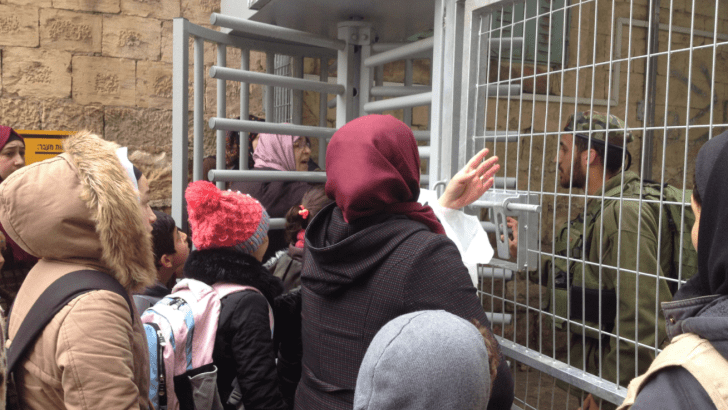
By Tim Anderson | American Herald Tribune | March 18, 2018
As Apartheid Israel proceeds with its ethnic cleansing of Palestine, financed and armed by the imperial powers, Palestine’s camps and Israel’s colonies (‘settlements’) remain the focus of much day to day colonial violence.
There is no need to waste too much time over the character of Israel. The Adalah group within Israel, for example, has documented more than 65 laws that make Israel a racist state (Adalah 2017). The most recent authoritative report from the UN, by US lawyers Richard Falk and Virginia Tilley (2017), makes it clear that Israel is indeed an ‘apartheid state’ and, therefore, a crime against humanity. They conclude that “the situation in Israel-Palestine constitutes an unmet obligation of the organized international community to resolve a conflict partially generated by its own actions”.
Meantime, people in the camps maintain a strong community spirit, which drives them to resist; while fanaticism and self-interest amongst the often immigrant new colonists encourages them to make regular forays destroying Palestinian crops and trees, and participate in seizures of nearby Palestinian lands.
The camps all date from the years after ‘The Catastrophe’ of 1948, when Jewish colonists got the green light to take over a large part of the ‘British Mandate’ of Palestine. Camp families are mostly those evicted from their lands by that violent event. The ‘colonies’, for their part, represent steady incursions into West Bank lands, after the 1967 war.
Israelis and Jewish populations today are encouraged to believe that, in the colonial manner, military conquest entitles Israel to Arab lands. The Zionist state illegally occupies Lebanese and Syrian, as well as Palestinian lands.
On a recent visit to Palestine’s West Bank I had the opportunity to observe the camps and the colonies. First of all, it is obvious that the Israeli state pretends to own it all. At the border Israeli officials do not even want to acknowledge that outsiders might be entering ‘Palestine’; nor do they want to hear that anyone might want to visit Ramallah, Nablus or Hebron, the major Palestinian cities. The mere mention of these names incurs suspicion. The Palestinian Authority itself – established in 1994 and recognised by at least 40 governments as a fledgling state – so far only functions as a municipality under Israeli control.
Zionist storm troops make regular raids on any part of the Palestinian territory, but particularly the camps, most often to make arrests, mostly of young men. Raids are also signals of Zionist power and are sometimes even used just as training exercises. Ali, a young man in Dehaisheh camp, now part of the southern suburbs of Bethlehem, told me the history of this camp.
Dehaisheh was created in 1950, to house the hundreds of thousands of Palestinians displaced by ‘1948 Israel’. They did not resettle, as they imagined they would be going back soon. They kept their house and land title deeds and keys. A UN agency later helped them build mostly 3 x 3 metre concrete box-dwellings. After the 1967 war, when Israeli troops took control of the West Bank, these camps were policed heavily. They were seen as hotbeds of resistance and were denied access to books (which they had to hide, and often bury) as well as to normal freedoms of movement and association.
The camp communities remain distinct to those of the municipality and the village. Ali says that for three generations they have had ‘no privacy and no property’. They had no individual titles to land. In their little box houses, which could only expand upwards, those next door could hear everything, from the bathroom to intimate moments.
Yet these conditions also meant that camp communities developed a strong collective spirit, with little crime and no voting, instead common consensus agreements. That spirit reinforced their resistance to the colonists. The presence of these strong values was confirmed to me by Naji and Amal, experienced Palestinian activists who do not live in the camps.
The camps contain various groups and political parties but, in Deheisheh, they kicked out religious sectarians, such as those of the Muslim Brotherhood. The Israelis were already skillfully fomenting divisions between Muslims, Christians, Druze and Bedouins.
Around 2016 a new Israeli commander (‘Captain Nidal’) began a wave of terror on the southern West Bank camps. He told them that instead of killing youth he would ‘teach them a lesson’ they would not forget. From there began a wave of ‘knee-capping’ (shooting in the knee, to cripple), which has been widely reported (Hamayel 2016; Hass 2016; Ashly 2017). ‘Ali’ told me that over 200 young men in the camps have been crippled in this way.
Dehaisheh youth began a library/reading group, but that came to an abrupt end, Ali says, when 22 year old Raed al Salhi was shot dead (Benoist 2017) and 9 others were imprisoned.
By contrast, there is a strange air of normality in Arab cities like Ramallah, in the middle of a countryside of fences, walls and storm troops. Unlike Jerusalem, which is a heavily policed ‘mixed’ zone, life in Ramallah goes on with little day to day Israeli presence. Yet they come at night. There has been widespread international coverage of the arrest of young Ahed Tamimi, and many of her family members in Ramallah; but such arrests are an everyday occurrence, affecting thousands of families.
Each major Palestinian city these days encompasses a few ‘camps’ and is surrounded by several colonies, mostly on the surrounding hill tops. The entire West Bank is fractured with these colonies and their no-go zones, roads and fences.
People hear a lot about the recent separation wall, which annexes all of what was supposed to be the ‘international city’ of Jerusalem to ‘1948 Israel’. Yet there are also dozens of walls throughout the West Bank, protecting the colonies, their associated army bases, linked lands and feeder roads. These colonies also line the Jordan River and indeed all perimeter areas of the West Bank. There are more kilometres of walls and fences protecting colonies throughout the West Bank than there are in the infamous separation wall.
An impressive sign on the outskirts of Ramallah declares, in Hebrew, Arabic and English: ‘This Road leads To Area ‘A’ Under the Palestinian Authority The Entrance For Israeli Citizens Is Forbidden, Dangerous To Your Lives And Is Against The Israeli Law’ [exact punctuation]. This is all a show of deference, of course.
Israeli troops make regular night-time raids on all Palestinian cities and towns. But special attention is paid to the camps. Troops raided Balata camp, just south of Nablus, the day before I visited Nablus. They killed a young local man in custody, the day I arrived in Jericho. Elsewhere the resistance sniped at Israeli troops, as the Zionist government announced plans to criminalise criticism of the Israeli military.
Ali says heavily armed Israeli troops invade Dehaisheh about two times every week. Nevertheless this camp remains strong and cohesive. When Israeli lawyers offered Ali some money to buy his family land in ‘1948 Israel’, he refused. It is not just the land, he said; it is about culture and identity.
Israel sometimes recognises historic Palestinian land title, but often does not. Land is seized in a variety of ways. It can be bought, compulsorily acquired for infrastructure such as separation walls and roads or simply taken without notice. Amal’s family land on the outskirts of Ramallah was seized without notice, for the perimeter land and fences of a new colony outside Ramallah. Land is also stolen through punitive demolitions. In a peculiarly colonial form of collective punishment, homes and lands are taken from the families of those convicted of resistance activities.
Ali wants international support, but resents western aid agencies which come to Palestine, pretending to help communities with their own ideas of ‘empowerment’. He recalls a young European woman preaching to experienced Palestinian mothers about ‘how to be a good mother’. Some of the women laughed, finding it hard to believe. ‘We are not helpless victims, we are people with a strong culture’, Ali said.
Ethnic cleansing has advanced substantially in recent decades, despite the withdrawal from Gaza and Israel’s 2006 defeat in south Lebanon at the hands of Hezbollah. To that extent some limits have been imposed, by the Resistance, on the expansion of ‘Greater Israel’. Israel would have annexed large parts of southern Lebanon by now, were it not for Hezbollah.
However the West Bank is under serious threat. In the late 1960s the plan of Yigal Allon called for annexation of 40% of the West Bank, and control of the Jordan River (Reinhart 2006: 51). Israel’s Labor Party broadly backed that idea, in contrast to the extreme right which has always wanted it all. Now Israel controls about 60% of the West Bank, choking it with walls and fences. The territory is almost cut in half. One consequence of this expanded ethnic cleansing has been to mark a definitive end to any ‘two state solution’.
Endnotes
Adalah (2017) ‘The Discriminatory Laws Database’, 25 September, online: https://www.adalah.org/en/content/view/7771
Ali (2018) interview with this writer at Dehaisheh camp (Bethlehem), Occupied Palestine, February [‘Ali’ is a pseudonym, to protect him from Israeli reprisals. The Israeli parliament is currently trying to pass a law which would criminalise criticism of the Zionist military. Already such criticism serves as grounds for interrogation and possible imprisonment.]
Amal (2018) interviews with this writer at Ramallah, Occupied Palestine, February
Ashly, Jacyln (2017) ‘How Israel is disabling Palestinian teenagers’, Al Jazeera, 21 September, online: https://www.aljazeera.com/indepth/features/2017/09/israel-disabling-palestinian-teenagers-170911085127509.html
Benoist, Chloé (2017) ‘Raed al-Salhi, another Palestinian life of promise snuffed out by Israel’, Middle East Eye, 8 September, online: http://www.middleeasteye.net/news/life-and-death-raed-young-palestinian-big-plans-861499040
Falk, Richard and Virginia Tilley (2017) Palestine – Israel Journal of Politics, Economics, and Culture; East Jerusalem Vol. 22, Issue 2/3, 191-196; also available here: https://counter-hegemonic-studies.net/israeli-apartheid/
Hamayel, Mohammad (2016) ‘Israeli military practice kneecapping against Palestinians’, Press TV, 29 August, online: http://www.presstv.com/Detail/2016/08/29/482147/Israeli-military-kneecapping-Palestinians
Hass, Amira (2016) ‘Is the IDF Conducting a Kneecapping Campaign in the West Bank?’, Haaretz, 27 August, online: https://www.haaretz.com/israel-news/is-the-idf-conducting-a-kneecapping-campaign-in-the-west-bank-1.5429695
Naji (2018) interview with this writer at Bethlehem, Occupied Palestine, February
Reinhart, Tania (2006) The Road Map to Nowhere, Verso, London
Dr. Tim Anderson is a Senior Lecturer in Political Economy at the University of Sydney. He researches and writes on development, human rights and self-determination in the Asia-Pacific, Latin America and the Middle East. He has published dozens of articles and chapters in academic journals and books, as well as essays in a range of online journals. His work includes the areas of agriculture and food security, health systems, regional integration and international cooperation.
Iran official warns Europe against playing US-Israeli game
Press TV – March 17, 2018
A senior Iranian official has warned European countries against playing into the hands of the United States and the Israeli regime as European signatories to the 2015 Iran nuclear deal propose fresh sanctions against Tehran under the pressure of Washington.
“Defense capabilities, particularly the missile program, of the Islamic Republic of Iran, which have a deterrent nature, will firmly be continued based on national security necessities,” Secretary of Iran’s Supreme National Security Council (SNSC) Ali Shamkhani said in a meeting with Oman’s Foreign Minister Yusuf bin Alawi in Tehran on Saturday.
“Political and media propaganda will have no impact on their development,” he added.
Britain, France and Germany have proposed new EU sanctions on Iran over its missile program and its regional role, a confidential document said on Friday.
The joint paper was sent to the EU capitals to sound out support for such sanctions as they would need the backing of all 28 member states of the bloc, Reuters quoted two people familiar with the matter as saying.
The proposal is allegedly part of an EU strategy to appease US President Donald Trump and preserve the Iran nuclear deal, officially known as the Joint Comprehensive Plan of Action (JCPOA), signed between Tehran and the P5+1 group of countries in 2015 amid constant US threats to withdraw from it.
Shamkhani said US failure to fulfill its obligations and its illegal approach to the JCPOA as well as Europe’s passivity with regard to Washington’s approaches clearly show that regional countries need to focus on finding a solution to the ongoing issues and crises in the region by themselves.
“The Islamic Republic of Iran will give a proper and due response to the US constant violations of its commitments under the JCPOA and will accept no change, interpretation or new measure that would limit the JCPOA,” the SNSC secretary said.
His comments came a day after Iranian Foreign Minister Mohammad Javad Zarif warned the US against the “painful mistake” of pulling out of the Iran nuclear agreement.
“Considering what has been envisaged in the JCPOA in the field of research and development and the Islamic Republic of Iran’s continued measures to develop its peaceful nuclear capability, if the US makes the mistake of exiting the JCPOA, it will definitely be a painful mistake for the Americans,” Zarif told reporters.
Elsewhere in his comments, Shamkhani said growing deep relations between Iran and Oman had led to consensus on regional issues.
“The development of constructive and all-out relations with neighbors based on common interests is the top priority of the Islamic Republic of Iran’s foreign policy,” he added.
The senior Iranian official lashed out at certain regional countries for adopting “a hasty and arrogant attitude and statements” which have posed serious challenges to the handling of regional crises.
He expressed his concern about the killing of Yemeni women and children in airstrikes by Saudi Arabia and the United Arab Emirates as well as the catastrophic conditions of the oppressed Yemeni people.
“The shared view of Iran and Oman on the Yemeni crisis is based on putting an immediate end to war, establishing ceasefire, lifting the blockade, dispatching humanitarian aid and holding Yemeni-Yemeni dialogue to form new political structures based on the Yemeni people’s demands and vote,” Shamkhani pointed out.
He emphasized that the Yemeni crisis cannot be settled through military approaches and urged a political initiative in this regard.
About 14,000 people have been killed since the onset of Saudi Arabia’s military campaign against Yemen in March 2015. Much of the Arabian Peninsula country’s infrastructure, including hospitals, schools and factories, has been reduced to rubble due to the war.
The United Nations says a record 22.2 million people are in need of food aid, including 8.4 million threatened by severe hunger.
The UN Security Council on March 15 warned about the worsening humanitarian situation in war-battered Yemen, stating the status quo is having a “devastating” impact on the lives of civilians in the impoverished Arab country.
“The Security Council expresses its grave concern at the continued deterioration of the humanitarian situation in Yemen, and the devastating humanitarian impact of the conflict on civilians,” it said in a statement.
Oman urges dialogue instead of military approaches
The Omani foreign minister, for his part, criticized military approaches to regional issues and urged the path of dialogue and understanding instead.
He added that Oman regards Iran as a trustworthy neighboring country and commended the Islamic Republic’s role in establishing stability and security in the region.
Bin Alawi arrived in Tehran Friday night on a two-day visit to hold talks with senior Iranian officials about mutual and regional issues.
Iran rejects speculations about bin Alawi’s visit
Iranian Foreign Ministry Spokesman Bahram Qassemi on Saturday rejected speculation about a link between the Omani minister’s visit to Tehran and US Defense Secretary James Mattis’s recent travel to Muscat and said bin Alawi’s trip was taking place with the purpose of strengthening mutual relations.
“Although Oman has very good relations with many countries in the world, Mr. Yusuf bin Alawi’s trip to Tehran has nothing to do with Mattis’s visit to this country,” Qassemi said.
He strongly rejected any link between bin Alawi’s visit to Tehran and US policies on the JCPOA.
The Iranian spokesperson said, “Iran and Oman are cooperating with each other on a wide range of issues and the two sides seek to use the two countries’ existing capacities to further deepen economic, commercial, banking and financial cooperation.”
Saudi Arabia meddling in Lebanon’s affairs, pitting people against each other: Hezbollah official

Deputy Chairman of Hezbollah’s Executive Council Sheikh Nabil Qaouq (Photo by al-Manar television network)
Press TV – March 17, 2018
A senior official of the Lebanese Hezbollah resistance movement has accused Saudi officials of interfering in Lebanon’s domestic affairs and pitting people from various walks of life against each other.
“Saudi Arabia’s latest interference in Lebanon’s internal affairs is embodied in meddling in the country’s upcoming parliamentary elections. Saudi interventions are pitting the Lebanese against each other, and creating divisions and political tensions among them,” Deputy Chairman of Hezbollah’s Executive Council Sheikh Nabil Qaouq said on Saturday.
He added, “Saudi Arabia wishes to change Lebanon’s political equations through interfering in the elections, collecting information about composition of future electoral lists and supporting candidates that could challenge Hezbollah.”
Commenting on the ongoing military drills between the US and Israeli armies in the southern areas of occupied Palestinian territories, the senior Hezbollah official pointed out that “the maneuver officially documents Israel’s recognition of the fact that Hezbollah can reach the depth of Israel, and that Israel has no ability to confront the resistance movement’ rockets.”
He stressed that Hezbollah is now the main obstacle to Israel’s expansionist policies in the Middle East region.
On October 30 last year, Saudi Minister of State for Persian Gulf Affairs Thamer al-Sabhan issued threats against Lebanon’s government as well as Iran and Hezbollah via Twitter, stating that the movement needed to be “toppled” in Lebanon.
The Saudi minister also warned in an interview with Lebanese MTV television station that there would be “astonishing” developments to “oust” Hezbollah.
He also said that Saudi Arabia would deal with Lebanon’s government as a hostile administration because of Hezbollah’s power-sharing role in it.
On November 4, 2017, Lebanese Prime Minister Saad Hariri announced his resignation in a televised statement from Saudi Arabia, citing many reasons, including the security situation in Lebanon, for his sudden decision. He also said that he sensed a plot being hatched against his life.
He returned to Beirut on November 21. All political factions in Lebanon had called on him to return back home.
Top Lebanese officials and senior politicians close to Hariri had earlier said that he had been forced to resign, and that Saudi authorities were holding him captive.
Lebanese President Michel Aoun had also refused to accept Hariri’s resignation.
Good Wishes for Nowruz
Iranians Prepare to Celebrate the Persian New Year, Netanyahu Is Sounding the Drums of War

By Miko Peled | American Herald Tribune | March 17, 2108
As millions of Iranians prepare to celebrate the Persian new year, Nowruz, we should extend our wishes for peace and prosperity to our Iranian brothers and sisters. However, Israel’s Prime Minister, Benjamin Netanyahu is once again sounding the drums of war and his target is once again Iran. It seems that when the going gets tough Netanyahu goes for Iran. He has done it several times in the past and most recently during his latest visit to Washington, DC. Netanyahu – arguably in an effort to divert attention from his impending indictment – insisted that “Iran, Iran, Iran” is a threat. And although all who visit Iran talk about the richness of its culture, the beauty of its landscapes and the kindness of its people, according to Netanyahu “Darkness is descending on our region,” and that darkness is caused by Iran. “Iran,” a country that has never attacked or occupied anyone, “is building an aggressive empire” which includes, “Iraq, Syria, Lebanon, Gaza, Yemen” and “more to come.”
It is no coincidence that Netanyahu specifically mentioned Iraq, Syria, Lebanon, Gaza and Yemen. The message that he sends is clear: the destruction of Iraq and Syria must go on because of Iran; the destabilization of Lebanon and the demonizing of Hezbollah must go on, the genocide in Gaza too will go on, not because of Zionist genocidal tendencies but because of Iranian influence and finally, in a message of support to Mohammad Bin Salman, Netanyahu gave his blessing to the ongoing Saudi bombing in Yemen. It so happens that during his recent visit to the UK, Bin Salman, the Crown Prince of Saudi Arabia just sealed a deal to receive billions of pounds worth of weapons to be used in the ongoing slaughter in Yemen. Netanyahu explained that these are the arms of the “Iranian empire” and even though the lion’s share of the killing in the Middle East is done by the US, Israel and their cronies, Iran is the problem. “More to come” Netanyahu added presumably as a threat that Israel is keeping open the possibility that still other countries may see destruction.
Though he did not mention it specifically, at the center of Netanyahu’s speech is the new vision for the Middle East- sewn together by Israel, The United States and the Saudi Crown Prince, Mohammad Bin Salman. What has been named “The Deal of the Century” in English and Safkat El Kurn in Arabic (the Arabic name being less ambitious as it means the deal of the decade) is a vision of an “open” and “moderate” Saudi Arabia which like Jordan and Egypt will have diplomatic relations with Israel ignoring the Palestinian people’s struggle against Zionist oppression. In return Saudi Arabia will be permitted to continue its own genocide in Yemen and receive Western support in its ongoing feud with Iran. It will also be spared, like Egypt and Jordan, “Israel’s longtime peace partners,” the lectures on human rights violations. Egypt, Jordan and Saudi Arabia are all reactionary dictatorships with leaders who have no regard for human rights and who sold their Palestinian brothers in return for billions of dollars. The message for Arab regimes is clear – collaborate with Israel and the West and you will be allowed to oppress your people and line your pockets with cash, or stand with the Palestinians and find yourself in ruins like Iraq and Syria or under constant threat like Iran. Clearly, Mohammad Bin Salman made his choice clear.
“The force behind so much of what is bad is this radical tyranny in Tehran. If I have a message for you today, it’s a very simple one: We must stop Iran. We will stop Iran.”
Stop Iran from doing what? Stop Iran from supporting the Palestinian struggle for freedom. Stop Iran from calling to remove the racist Zionist regime from Palestine and to allow for a democracy to emerge. How is Iran a dangerous radical tyranny more than Egypt, Jordan and Saudi Arabia? The difference is that the latter are happy to collaborate with Israel.
Netanyahu is accustomed to receiving political gifts from the U.S. and particularly from Donald Trump. These are gifts that solidify his power at home, and this time he received the following: “The President has also made it clear that if the fatal flaws of the nuclear deal are not fixed, he will walk away from the deal and restore sanctions.” The United States walking away from the Iran agreement will suit Israel fine, and will show Bin Salman that when it comes to the US, Israel can deliver. While other Israeli politicians run around the like children, with few achievements to show Netanyahu is a serious player on national and international issues.
The troubling partnership between Bin Salman, Netanyahu and Trump (through his son-in-law Jared Kushner) will inevitably crash and burn. Both Bin Salman and Netanyahu represent regimes that have no legitimacy and the Kushner-Trump foreign policy is founded on Zionist mythology and grand ambitions that disregard the will of the people of the region. It is an irony that Netanyahu could not resist calling Iran dishonest, “I warned that Iran’s regime had repeatedly lied to the international community, that it could not be trusted,” and then add the biggest lie of them all, “Israel remains committed to achieving peace with all our neighbors, including the Palestinians.”
Hard as it may be to believe, Netanyahu’s obsession with Iran has nothing to do with Iran and it has nothing to do with any real or perceived threat by Iran. Netanyahu discovered that Iran is a perfect target to use each time he needs a smoke screen. As Palestinians die a slow agonizing death due to his policies, thirsty for water, desperate for urgent medical care and fighting for their freedom, killed in the streets and held in Israeli torture chambers, Netanyahu the magician is terrifying the world with a smoke screen intended to turning the world’s attention to a threat that does not exist. Still, one may safely assume some seventy-five million Iranians are concerned for their country and their lives.
As Nowruz approaches, I wish all Iranians inner strength, peace, prosperity and Nowruz Mobarak.
Miko Peled is a writer and human rights activist. He is an international speaker and the author of “The General’s Son, Journey of an Israeli in Palestine”.
Featured Video

The Failed Air War Over Vietnam
or go to
Aletho News Archives – Video-Images
From the Archives
USS Liberty Massacre: A Pivotal Moment in the Hostile Takeover of America
By Kevin Barrett | Crescent | Dhu al-Qa’dah 24, 1445
In corporate America, hostile takeovers are commonplace. They occur when an aggressor—a larger corporation or rich individuals—seizes control of a smaller corporation without asking permission.
What few recognize is that the United States itself has been subjected to a hostile takeover. Since the aggressor, the illegitimate settler colony known as “Israel,” is much smaller than the US, the takeover has necessarily been surreptitious.
As of June, 2024, Israel’s gradual takeover of the US has become obvious and undeniable—a proverbial “elephant in the living room.” … continue
Blog Roll
 Aletho News
- Leaders Condemn Ansarallah Attack on Saudi Arabia While Ignoring Illegal War Against Yemen
- Leaked: Britain’s Covert Iraqi Psyops Network
- Yemeni Armed Forces Warn Airlines Against Using Saudi Airports, Exempt Mecca and Medina
- Iran security chief says powers greater than US tried to conquer Iran but ended in ‘dustbin of history’
- Europe’s mounting social chaos… chickens coming home to roost for proxy war against Russia
- US-Russia Diesel Deal Becomes Massive Defeat for Ukraine
- Hormuz and the Looming Economic Catastrophe
- Dhubab offensive, media blitz and the rapid unraveling of Saudi-backed coalition’s new gambit
- Putin Conveys to Trump Iran’s Vision on Possible Conflict Resolution – Kremlin
- The Search for Truth: Charlie Kirk’s Assassination One Year Later
- If Americans Knew
- For three years, Israel has killed a child in Gaza every 71 minutes – Daily Update
- Israeli forces kill another child in Gaza – Daily Update
- Gaza ceasefire exists in name only, say more than 100 organizations
- Nearly 2 Million in Gaza Need Urgent Shelter Assistance as Winter Looms: IOM Chief Warns
- Suppressing Palestinian resistance: US charity under fire for AI monitoring of Gaza classrooms
- Thousands Are Held in Israeli Torture Camps. This Is What Happens Inside
- Israel puts Gaza’s sick, injured, newborn in peril – Daily Update
- Report claimed Mark Levin used by Israeli government to influence Trump
- Over 2,000 Gazans have died awaiting medical evacuation amid Israel’s continued siege
- How a U.S. Diplomat Suppressed and Altered Reports Critical of Israel
- No Tricks Zone
- Germany’s Green Energy Debacle: High Energy Costs Force Kahla Porzellan to Close After 182 Years!
- New Study: 50 Years Of The Most Aggressive ‘Net Zero’ Policies Can Only Affect The Global Climate By 0.03°C
- US September “Heat” Was No Record…Many Records Set Decades Ago
- Latest European Green Energy Debacle; Portugal’s Largest Flagship Solar Park Insolvent!
- Green Energy Debacle: German Expert Professor Fritz Vahrenholt Warns Of Severe Economic And Social Consequences
- Two More Paleo Reconstructions Affirm Meters-Higher Sea Levels Across Ireland, Brazil 7000-6000 Years Ago
- New Study: Earth And Venus Surface Warmth Largely Explained By Convection And Lapse Rate, Not CO2 Or Radiation
- 2025 Nature Paper Claiming Worsening Global Drought Gets RETRACTED …Heavily Flawed
- New Study: ‘Global Drought Shows No Detectable Recent Acceleration Under Climate Warming’
- Economic Masterminds: German Socialists Suggest Taxing Productivity Gains Stemming From Using AI

