All Roads Lead to Dark Winter
By Whitney Webb | The Last American Vagabond | April 1, 2020
The leaders of two controversial pandemic simulations that took place just months before the Coronavirus crisis – Event 201 and Crimson Contagion – share a common history, the 2001 biowarfare simulation Dark Winter. Dark Winter not only predicted the 2001 anthrax attacks, but some of its participants had clear foreknowledge of those attacks.
During the presidency of George H.W. Bush in the early 1990s, something disturbing unfolded at the U.S.’ top biological warfare research facility at Fort Detrick, Maryland. Specimens of highly contagious and deadly pathogens – anthrax and ebola among them – had disappeared from the lab, at a time when lab workers and rival scientists had been accused of targeted sexual and ethnic harassment and several disgruntled researchers had left as a result.
In addition to missing samples of anthrax, ebola, hanta virus and a variant of AIDS, two of the missing specimens had been labeled “unknown” – “an Army euphemism for classified research whose subject was secret,” according to reports. The vast majority of the specimens lost were never found and an Army spokesperson would later claim that it was “likely some were simply thrown out with the trash.”
An internal Army inquiry in 1992 would reveal that one employee, Lt. Col. Philip Zack, had been caught on camera secretly entering the lab to conduct “unauthorized research, apparently involving anthrax,” the Hartford Courant would later report. Despite this, Zack would continue to do infectious disease research for pharmaceutical giant Eli Lilly and would collaborate with the U.S. National Institute of Allergy and Infectious Disease (NIAID) throughout the 1990s.
The Courant had also noted that: “A numerical counter on a piece of lab equipment had been rolled back to hide work done by the mystery researcher [later revealed to be Zack], who left the misspelled label ‘antrax’ in the machine’s electronic memory.” The Courant’s report further detailed the extremely lax security controls and chaotic disorganization that then characterized the U.S. Army Medical Research Institute of Infectious Diseases (USAMRIID) lab in Fort Detrick.
This same lab would, a decade later, be officially labeled as the source of the anthrax spores responsible for the 2001 anthrax attacks, attacks which are also officially said to have been the work of a “deranged” USAMRIID researcher, despite initially having been blamed on Saddam Hussein and Iraq by top government officials and mainstream media. Those attacks killed 5 Americans and sickened 17.
Yet, as the investigation into the 2001 anthrax attacks unfolded, accusations from major U.S. newspapers soon emerged that the FBI was deliberately sabotaging the probe to protect the Anthrax attacker and that the CIA and U.S. military intelligence had refused to cooperate with the investigation. The FBI did not officially close their investigation into the 2001 anthrax attacks, nicknamed “Amerithrax,” until 2010 and aspects of that investigation still remain classified.
More recently, this past July, the same Fort Detrick lab would be shut down by the CDC, after it was found that researchers “did not maintain an accurate or current inventory” for toxins and “failed to safeguard against unauthorized access to select agents.” The closure of the lab for its numerous breaches of biosafety protocols would be hidden from Congress and the facility would controversially be partially reopened last November before all of the identified biosafety issues were resolved.
The same day that the lab was controversially allowed to partially reopen, which was the result of heavy lobbying from the Pentagon, local news outlets reported that the lab had suffered “two breaches of containment” last year, though the nature of those breaches and the pathogens involved were redacted in the inspection findings report obtained by the Frederick News Post. Notably, USAMRIID has, since the 1980s, worked closely with virologists and virology labs in Wuhan, China, where the first epicenter of the current novel Coronavirus (Covid-19) cases emerged. The Chinese government has since alleged that the virus had been brought to China by members of the U.S. military, members of which attended the World Military Games in the country last October.
Such similarities among these Fort Detrick lab breaches, from the early 1990s to 2001 to the present, may be nothing more than unfortunate coincidences that are the result of a stubborn federal government and military that have repeatedly refused to enforce the necessary stringent safety precautions on the nation’s top biological warfare laboratory.
Yet, upon examining not only these biosafety incidents at Fort Detrick, but the 2001 Anthrax attacks and the current Covid-19 outbreak, another odd commonality stands out — high-level war games exercises took place in June 2001 that eerily predicted not only the Anthrax attacks, but also the initial government narrative of those attacks and much, much more.
That June 2001 exercise, known as “Dark Winter,” also predicted many aspects of government pandemic response that would later re-emerge in last October’s simulation “Event 201,” which predicted a global pandemic caused by a novel Coronavirus just months before the Covid-19 outbreak. In addition, the U.S. government would lead its own multi-part series of pandemic simulations, called “Crimson Contagion,” that would also predict aspects of the Covid-19 outbreak and government response.
Upon further investigation, key leaders of both Event 201 and Crimson Contagion, not only have deep and longstanding ties to U.S. Intelligence and the U.S. Department of Defense, they were all previously involved in that same June 2001 exercise, Dark Winter. Some of these same individuals would also play a role in the FBI’s “sabotaged” investigation into the subsequent Anthrax attacks and are now handling major aspects of the U.S. government’s response to the Covid-19 crisis. One of those individuals, Robert Kadlec, was recently put in charge of the U.S. Department of Health and Human Services (HHS) entire Covid-19 response efforts, despite the fact that he was recently and directly responsible for actions that needlessly infected Americans with Covid-19.
Other major players in Dark Winter are now key drivers behind the “biodefense” mass surveillance programs currently being promoted as a technological solution to Covid-19’s spread, despite evidence that such programs actually worsen pandemic outbreaks. Others still have close connections to the insider trading that recently occurred among a select group of U.S. Senators regarding the economic impact of Covid-19 and are set to personally profit from lucrative contracts to develop not just one, but the majority, of experimental Covid-19 treatments and vaccines currently under development by U.S. companies.
This investigative series, entitled “Engineering Contagion: Amerithrax, Coronavirus and the Rise of the Biotech-Industrial Complex,” will examine these disturbing parallels between the 2001 anthrax attacks and the current scandals and “solutions” of the Covid-19 crisis as well as the simulations that eerily preceded both events. By tracing key actors in Dark Winter from 2001 to the present, it is also possible to trace the corruption that has lurked behind U.S. “biodefense” and pandemic preparedness efforts for decades and which now is rearing its ugly head as pandemic panic distracts the American and global public from the fundamentally untrustworthy, and frankly dangerous, individuals who are in control of the U.S. government’s and corporate America’s response.
Given their involvement in Dark Winter and, more recently, Event 201 and Crimson Contagion, this series seeks to explore the possibility that, just like the 2001 anthrax attacks, government insiders had foreknowledge of the Covid-19 crisis on a scale that, thus far, has gone unreported and that those same insiders are now manipulating the government’s response and public panic in order to reap record profits and gain unprecedented power for themselves and control over people’s lives.
A Dark Winter Descends
In late June 2001, the U.S. military was preparing for a “Dark Winter.” At Andrews Air Force Base in Camp Springs, Maryland, several Congressmen, a former CIA director, a former FBI director, government insiders and privileged members of the press met to conduct a biowarfare simulation that would precede both the September 11 attacks and the 2001 Anthrax attacks by a matter of months. It specifically simulated the deliberate introduction of smallpox to the American public by a hostile actor.
The simulation was a collaborative effort led by the Johns Hopkins Center for Civilian Biodefense Strategies (part of the Johns Hopkins Center for Health Security) in collaboration with the Center for Strategic and International Studies (CSIS), the Analytic Services (ANSER) Institute for Homeland Security and the Oklahoma National Memorial Institute for the Prevention of Terrorism. The concept, design and script of the simulation were created by Tara O’Toole and Thomas Inglesby of the Johns Hopkins Center along with Randy Larsen and Mark DeMier of ANSER. The full script of the exercise can be read here.
The name for the exercise derives from a statement made by Robert Kadlec, who participated in the script created for the exercise, when he states that the lack of smallpox vaccines for the U.S. populace means that “it could be a very dark winter for America.” Kadlec, a veteran of the George W. Bush administration and a former lobbyist for military intelligence/intelligence contractors, is now leading HHS’ Covid-19 response and led the Trump administration’s 2019 “Crimson Contagion” exercises, which simulated a crippling pandemic influenza outbreak in the U.S. that had first originated in China. Kadlec’s professional history, his decades-old obsession with apocalyptic bioweapon attack scenarios and the Crimson Contagion exercises themselves are the subject of Part III of this series.
The Dark Winter exercise began with a briefing on the geopolitical context of the exercise, which included intelligence suggesting that China had intentionally introduced Foot and Mouth disease in Taiwan for economic and political advantage; that Al-Qaeda was seeking to purchase biological pathogens once weaponized by the Soviet Union; and that Saddam Hussein of Iraq had recruited former biowarfare specialists from the Soviet Union and was importing materials to create biological weapons. It further notes that a majority of Americans had opposed a planned deployment of U.S. soldiers to the Middle East, which was also opposed by Iraq, China and Russia. The script also asserts that the soldiers were being deployed to counter and potentially engage the Iraqi military. Later, as the exercise unfolds, many of those Americans once skeptical about this troop deployment soon begin calling for “revenge.”
Amid this backdrop, news suddenly breaks that smallpox, a disease long eradicated in the U.S. and globally, appears to have broken out in the state of Oklahoma. The participants in Dark Winter, representing the National Security Council, quickly deduce that smallpox has been deliberately introduced and that this is the result of a “bioterrorist attack on the United States.” The assumption is made that the attack is “related to decisions we may make to deploy troops to the Mid-East.”
Not unlike what is unfolding currently with the Covid-19 crisis, in Dark Winter, there is no means of rapid diagnosis for smallpox, no treatments available and no surge capacity in the healthcare system. The outbreak quickly spreads to numerous other U.S. states and throughout the world. Hospitals in the U.S. soon face “desperate situations” as “tens of thousands of ill or anxious persons seek care.” This is compounded by “grossly inadequate supplies” and “insufficient isolation rooms,” among other complications.
Since this exercise occurred in June 2001, the heavy hinting that Saddam Hussein-led Iraq and Al Qaeda are the main suspects is notable. Indeed, at one point in one of the fictional news reports used in the exercise, the reporter states that “Iraq might have provided the technology behind the attacks to terrorist groups based in Afghanistan.” Such claims that Iraq’s government was linked to Al Qaeda in Afghanistan would re-emerge months later in the aftermath of the September 11 attacks, and would be heavily promoted by several Dark Winter participants such as former CIA Director James Woolsey, who would later swear under oath that Saddam Hussein was involved in 9/11. It would, of course, later emerge that Iraq’s connections to Al Qaeda and the 9/11 attacks were nonexistent as well as the fact that Iraq did not possess biological weapons or other “weapons of mass destruction.”
Notably, this insertion into one of the Dark Winter news clips was not the only part of the exercise that sought to link Saddam Hussein and Iraq to biological weapons. For instance, during the exercise, satellite imaging showed that a “suspected bioresearch facility” in Iraq appeared to be expanding an “exclusionary zone” in order to limit civilian activity near the facility as well as a “possible quarantine” area in the same area as this facility. Previously in the exercise, Iraq was one of three countries, along with Iran and North Korea, who were “repeatedly rumored” to have illicitly obtained Soviet smallpox cultures from defecting scientists and Iraq was alleged to have offered employment to a leading smallpox scientist who had worked on the Soviet bioweapons program.
Then, at the end of the exercise, a “prominent Iraqi defector” emerges who claims Iraq had arranged the bioweapons attack “through intermediaries,” which is deemed “highly credible” even though “there is no forensic evidence to support this claim.” Iraq officially denies the accusation, but vows to target the U.S. in “highly damaging ways” if the U.S. “takes action against Iraq.” It is thus unsurprising that, as will be shown later in this report, key participants in Dark Winter would heavily promote the narrative that Iraq was to blame for the 2001 Anthrax attacks. Other participants, including Robert Kadlec, would then become involved in the FBI’s “sabotaged” investigation once the Bureau began to focus on a domestic, as opposed to an international source.
In addition, as part of Dark Winter, mainstream media outlets, including the New York Times and others, were sent anonymous letters that threatened renewed attacks on the U.S., including anthrax attacks, if the U.S. did not withdraw its troops from the Middle East. In this simulation, those letters contained “a genetic fingerprint of the smallpox strain matching the fingerprint of the strain causing the current epidemic.” During the Anthrax attacks that would occur just a few months after Dark Winter, Judith Miller – who participated in Dark Winter – and other U.S. reporters would receive threatening letters with a white powder presumed to be Anthrax. In Miller’s case, the powder turned out to be harmless.
Other aspects of Dark Winter appear more notable now than ever, particularly in light of recent pandemic simulations that were conducted by the Johns Hopkins Center for Health Security (Event 201) and the Trump administration (Crimson Contagion) in 2019, as well as the federal government’s current options for responding to Covid-19.
For instance, Dark Winter warns of “dangerous misinformation” spreading online selling “unverified” cures and making similarly “unverified” claims, all of which are deemed as posing a threat to public safety. Such concerns over online misinformation/disinformation and narrative control have recently surfaced in connection with the current Covid-19 crisis. Notable, however, is the fact that the “Event 201” simulation held last October, which simulated a global pandemic caused by a novel coronavirus, also greatly emphasized concerns about such misinformation/disinformation and suggested increased social media censorship and “limited internet shutdowns” to combat the issue. That simulation was co-hosted by the Johns Hopkins Center for Health Security, which is currently led by Dark Winter co-author Thomas Inglesby.
Dark Winter further discusses the suppression and removal of civil liberties, such as the possibility of the President to invoke “The Insurrection Act”, which would allow the military to act as law enforcement upon request by a State governor, as well as the possibility of “martial rule.” The Dark Winter script also discusses how options for martial rule “include, but are not limited to, prohibition of free assembly, national travel ban, quarantine of certain areas, suspension of the writ of habeas corpus [i.e. arrest without due process], and/or military trials in the event that the court system becomes dysfunctional.”
The exercise later includes “credible allegations” that those deemed “suspicious for smallpox” by authorities were illegally arrested or detained and that these arrests largely targeted low income individuals or ethnic minorities. In terms of current events, it is worth pointing out that U.S. Attorney General William Barr and the Department of Justice he leads have recently requested new “emergency powers” that are allegedly related to the current Covid-19 outbreak. That request specifically references the ability to indefinitely detain Americans without right to a free trial.
Weaving a narrative

After examining Dark Winter, it then becomes important to examine the events the exercise seemingly predicted, namely the 2001 anthrax attacks. This is particularly crucial for two reasons: first, that the source of the anthrax was later traced to a domestic source, allegedly the USAMRIID lab in Fort Detrick; and second, the mode of attack and the initial narrative of those attacks were straight out of the Dark Winter playbook. Furthermore, key players in the government response to the anthrax attacks, including those with apparent foreknowledge of the attacks, as well as those who sought (falsely) to link those attacks to Saddam Hussein and Al Qaeda were also participants in Dark Winter.
Weeks before the first Anthrax case would be discovered, on the evening of September 11, 2001, then-Vice President Dick Cheney’s staff was told to start taking injections of the antibiotic Cipro in order to prevent Anthrax infection. In addition, at least one member of the press, journalist Richard Cohen – then at the Washington Post – had also been told to take Cipro soon after September 11 after receiving a tip “in a roundabout way from a high government official.” Who exactly in the Bush administration and in the Beltway began taking Cipro weeks prior to the anthrax attacks and for how long? Unfortunately, the answer to that question remains unanswered. Yet, it has since been revealed that the person who had told these officials to take Cipro was none other than Dark Winter participant Jerome Hauer, who had previously served for nearly 8 years at the U.S. Army Medical Research and Development Command (USAMRDC), which oversees the USAMRIID lab at Fort Detrick.
Hauer, on September 11, 2001, was the managing director of Kroll Inc., a private intelligence and security company informally known as the “CIA of Wall Street,” a company that French intelligence had accused of acting as a front for the actual CIA. Kroll Inc., at the time of the attacks was responsible for security at the World Trade Center complex, yet Hauer was conveniently not present at his World Trade Center office on the day of the attacks, instead appearing on cable news. More on the series of “conveniences” that have followed Hauer throughout his career, especially over the course of 2001, and the massive amounts of money he stands to make off of the current Covid-19 epidemic will be discussed in detail in Part II of this series.
Then, on September 12, Donald Kagan of the neoconservative think tank the Project for a New American Century (PNAC), whose members populated key posts in the Bush administration, made an odd comment (for the time, anyway) about the September 11 attacks and anthrax. Speaking on Washington DC radio, Kagan – after suggesting that the U.S. should invade Afghanistan, Iraq and Palestine in retaliation for September 11 – asks “What would have happened if they had anthrax on that plane?” That same day, James Woolsey, himself a PNAC member and also a Dark Winter participant, claimed that Iraq was to blame for September 11 during a cable news interview.
A week later, another PNAC member and advisor to the Bush White House– Richard Perle – told CNN that the next terror attack is likely to involve “chemical or biological weapons.” Soon after, Jerome Hauer re-emerges, claiming that the government now has a “new sense of urgency” regarding bioterrorist threats and asserts that “Osama Bin Laden wants to acquire these [biological] agents and we know he has links to Saddam and Saddam Hussein has them.” Of course, Saddam Hussein did not actually possess these biological weapons, although he did during the fictional Dark Winter exercise in which Hauer had actively participated. Just days after Hauer made these bold claims, ABC News reported that the alleged 9/11 hijackers may have intended to modify crop dusters to disperse Anthrax.
All of this took place several days before the first anthrax victim, photojournalist Bob Stevens, would even begin to show symptoms and over a week before doctors would even begin to suspect that his condition had been caused by anthrax poisoning.
On October 2, as Stevens’ health began to rapidly deteriorate, a new book co-written by journalist Judith Miller of the New York Times was released. Entitled “Germs: Biological Weapons and America’s Secret War,” the book asserted that the U.S. faced an unprecedented bioterrorism threat from terrorist groups like Al Qaeda. It further alleged that such groups may have teamed up with countries such as Iraq and Russia. Miller, who had participated in Dark Winter months prior, had conducted numerous interviews with senior White House officials for the book, particularly Dick Cheney’s chief of staff I. Lewis “Scooter” Libby.
Libby, although he had not personally attended Dark Winter, was greatly impacted by the exercise when he learned of it, so much so that he had personally arranged for Cheney to watch the video of the entire Dark Winter exercise on September 20, 2001. Cheney took the contents of Dark Winter to the National Security Council the very next day. It would later be reported in New York magazine that, “a few days after 9/11,” the principal authors of Dark Winter – Randall Larsen, Tara O’Toole and Thomas Inglesby – would personally meet with Cheney and members of the administration’s national security staff about the exercise.
Larsen, who worked closely with Robert Kadlec throughout the 1990s, allegedly smuggled a test tube of weaponized Bacillus globigii, “almost genetically identical to anthrax,” into the meeting, according to that report. It is unclear when this meeting took place in relation to when Cheney had watched the video of the Dark Winter exercise.
The same day that Miller’s “Germs” was released, October 2, another odd occurrence took place. A former scientist at the USAMRIID lab at Fort Detrick, Dr. Ayaad Assaad, received a call from the FBI after someone who intimately knew Assaad’s work history and career in great detail (and who also claimed to have previously worked with Assaad) had anonymously accused him of being a “potential biological terrorist” with a deep-seated hatred of the U.S. government. At the time the letter was received by the FBI, neither the public nor the FBI were aware of any anthrax cases. Assaad, who was then working for the Environmental Protection Agency, told the FBI that he believed he was being framed by former co-workers. The FBI deemed this to be credible and never contacted Assaad in connection with the case again.
It later emerged in the Hartford Courant that Assaad had been the target of extensive harassment by a clique of co-workers at the USAMRIID lab in the early 1990s. One of those co-workers who had harassed Assaad would leave the lab disgruntled as a result of the controversy over Assaad’s harassment allegations. He would later return to the lab to conduct unauthorized, late night research on anthrax and be tied to several missing specimens of anthrax and other pathogens – Lt. Col. Philip Zack.
Zack, in 2001, was working for the U.S. biotechnology company Gilead Sciences. Though he first began working for Gilead in 1999, he was “handpicked” in 2001 to lead the establishment of “a new Project Management Department in conjunction with a complete restructure of R&D [Research and Development].” Donald Rumsfeld, another member of PNAC, became the chairman of Gilead Sciences in 1997 and he served as chairman of that company up until he became George W. Bush’s Secretary of Defense in early 2001.
Rumsfeld would later announce on September 10, 2001 that $2.3 trillion had gone “missing” from the Pentagon’s budget. The Pentagon’s accounting office, whose staff was attempting to locate these missing trillions, would be destroyed on September 11, 2001. Though planes being flown into the Pentagon would later be described by government officials as “unimaginable” and “unthinkable” after the attacks, a simulation of planes being flown into the Pentagon had been conducted less than a year prior to September 11.
Terror Redux
On October 4, 2001, Bob Stevens’ anthrax poisoning diagnosis was made known to the FBI and CDC and the public was then informed via a press conference. The second anthrax case was declared soon after and was a co-worker of Stevens’, who had worked for the Florida-based newspaper, the Sun.
A day later, White House officials began to immediately pressure then-FBI Director Robert Mueller to prove that the anthrax attacks were linked to Al Qaeda, despite there being no evidence to make such a link. “They really wanted to blame somebody in the Middle East,” a then-senior FBI official would later tell the New York Daily News of the meetings.
Over the next few weeks, suspicious letters containing fine, white powder were sent to well-known American journalists, including NBC’s Tom Brokaw and The New York Times’ Judith Miller, though the powder in the letter addressed to Miller was found to be harmless. Notably, Miller and other New York Times journalists wrote a total of 27 articles specifically about anthrax and its potential use as a bioweapon between September 12, 2001 and the day before Stevens was diagnosed with anthrax poisoning.
Letters containing anthrax were also received by Senators Tom Daschle, Russ Feingold and Patrick Leahy, all of whom were – at the time – preventing the US Patriot Act from quickly passing through the Senate and who were resisting administration attempts to ram the legislation through with little to no debate. Several of the letters included the date “9-11-01” and the phrases “Death to America, Death to Israel, Allah is great” in neatly-printed block letters.
Soon after, a suspicious letter was found in the office of then-Congressman and current Vice President Mike Pence. Media Roots noted the following about Pence’s subsequent press conference in a 2018 podcast that examined the timeline of the 2001 anthrax attacks:
“… Mike Pence, who once hosted an AM talk show describing himself as ‘Rush Limbaugh on decaf,’ conducts a press conference outside the Capitol proclaiming revenge and biblical style justice to whoever conducted the anthrax attacks. His family–with news cameras in tow–gets tested for anthrax at the hospital after it is allegedly found in his office.
No news outlets questioned his grandstanding or odd performance of going to the hospital with his family, and unlike Senators Daschle and Leahy in their press appearances, Mike Pence alluded to the anthrax letters being connected to the larger ‘war on terror.’”
As public panic swelled, more letters continued to be found, not just in the United States but around the world, with anthrax and/or hoax letters being found in Japan, Kenya, Israel, China and Australia, among others. Simultaneously, efforts to link the anthrax attacks to Saddam Hussein and Iraq began to emerge and quickly grew in intensity and number.
The media push to link the attacks to Iraq began first with The Guardian and then was followed by U.S. media outlets like The Wall Street Journal. Those early reports cited unnamed “American investigators” and defense officials and largely centered on the false claim that alleged 9/11 mastermind Mohammad Atta had met with an Iraqi diplomat in Prague in late 2000 as well as similarly false allegations that members of Al Qaeda had recently obtained vials of anthrax in the Czech Republic.
A key person in disseminating that false Prague story was Dark Winter participant and PNAC member James Woolsey. It was also revealed in late October 2001 that Woolsey was serving as the personal emissary of Paul Wolfowitz, Iraq War “architect” and then-Deputy Secretary of Defense, in “investigating Iraqi involvement in the September 11 attacks and anthrax outbreaks.”
Beyond the Pentagon, foreign “experts” soon began to assert that there was a link between the anthrax attacks and Iraq, including former Israeli military intelligence officer Dany Shoham. Shoham recently resurfaced this past January after claiming that Covid-19 was developed by the Chinese government as a bioweapon.
These assertions were soon followed by a report from ABC News’ Brian Ross, who (again falsely) claimed that some of the anthrax used in the attacks had contained bentonite. Ross claimed that bentonite “is a trademark of Iraqi leader Saddam Hussein’s biological weapons program” and that “only one country, Iraq, has used bentonite to produce biological weapons.” Ross asserted this information had come from three “well-placed but separate sources,” which later grew to four. Yet, no tests conducted during the Anthrax investigation ever found any bentonite at all, meaning the story was an invention from the very start. ABC and Brian Ross never retracted the story.
Glenn Greenwald, then writing at Salon, would state the following about Ross’ sources in 2008:
“Ross’ allegedly four separate sources had to have some specific knowledge of the tests conducted and, if they were really “well-placed,” one would presume that meant they had some connection to the laboratory where the tests were conducted — Ft. Detrick. That means that the same Government lab where the anthrax attacks themselves came from was the same place where the false reports originated that blamed those attacks on Iraq.
It’s extremely possible — one could say highly likely — that the same people responsible for perpetrating the attacks were the ones who fed the false reports to the public, through ABC News, that Saddam was behind them. What we know for certain — as a result of the letters accompanying the anthrax — is that whoever perpetrated the attacks wanted the public to believe they were sent by foreign Muslims. Feeding claims to ABC News designed to link Saddam to those attacks would, for obvious reasons, promote the goal of the anthrax attacker(s).”
Soon, media reports began noting the contradictory messaging of the U.S. government with regards to the anthrax attacks, messaging which has striking parallels to the Trump administration’s messaging on Covid-19. In one such report, written by Matthew Engel for The Guardian, states:
“Those in charge have compounded the problems by sending out confused messages. Was the anthrax weapons-grade or not? Should Americans be alarmed or relaxed? Has President Bush himself been tested? The signals keep changing. Mr. Thompson suggested early on that Bob Stevens, the first anthrax victim, might have drunk from an infected stream.”
During the 2001 anthrax attacks, there was no shortage of contradictory actions either, such as the government’s failure to mandate that postal workers take Cipro or even take the simplest precautions even though members of the Bush administration had been taking Cipro weeks before the anthrax attacks were known to the FBI and the public. Even worse, the Bush administration waited an extremely long time to close post offices for anthrax testing, waiting until numerous postal workers had already become infected and some had already died. In addition, Ernesto Blanco – a Florida mail room worker who later recovered from Anthrax poisoning – and his family were left confused about the refusal of the Center for Disease Control and Prevention (CDC) to diagnose him with anthrax poisoning while he was in dire condition. Blanco’s family later claimed that his diagnosis had been kept a secret for political reasons.
BASIS for surveillance and control
The contradictory response of the Bush administration to the anthrax attacks and the panic that ensued was also paralleled by an equally contradictory sensor system, one which had been installed just a few months before the anthrax attacks in thirty cities throughout the U.S. despite a dubious record of accuracy.
Just as the fictional scenarios proposed in Dark Winter were being written, American scientists were developing a sensor system for the detection of anthrax and botulinum toxin called BASIS (Biological Aerosol Sentry and Information Systems). Months before anthrax would cause extreme panic and target American Senators, scientists from Los Alamos and the Lawrence Livermore National Laboratory were testing the biological sensing device at the Dugway Proving Ground in Utah, inside the Special Programs Division of what was once the site of the U.S. biological weapons program and where anthrax samples used at Fort Detrick are often produced.
It is worth noting that Dugway, not unlike Fort Detrick, has longstanding issues with biosafety lapses that have resulted in numerous mishaps, such as their accidental shipment of live anthrax over 70 times to 86 different labs throughout the world from 2005-2015. Independent analyses conducted after the FBI closed its investigation into the attacks have suggested that Dugway may have been the source of the anthrax used in the attacks, as opposed to Fort Detrick.
Returning to BASIS, the results of the tests conducted on this new sensor system in 2001 showed that it was highly prone to generating false positives and was, therefore, worthless beyond the ability to “induce the very panic and social disruption it is intended to thwart“, according to the Livermore Laboratory, which nevertheless marketed BASIS as a tool to “guard the air we breathe.” Vice President Cheney, following his September 2001 briefing on Dark Winter, decided to install the system in the White House.
Days after Senator Tom Daschle’s press conference that revealed he had been targeted by the anthrax attacker, President Bush was in Shanghai attending the Asia-Pacific Economic Cooperation (APEC) summit when he received a call from Dick Cheney on Airforce Two. Cheney delivered a chilling message — the President and Secretaries Condoleezza Rice and Colin Powell, who were with Bush in China, might have been exposed to the ultra-lethal botulinum toxin at the White House.
BASIS had returned two positive results for the deadly neurotoxin and – if the tests held true – three of the U.S.’ highest ranking officials were “toast.” Yet, once again, BASIS had lived up to its reputation as a great panic-inducing mechanism when the supposed botulinum toxin hits were determined to have been false positives. Apparently, this “unintended” feature was a real selling point, as proven by George W. Bush’s subsequent deployment of the system in thirty cities throughout the country under the auspices of the newly-minted Department of Homeland Security as part of a program called Bio-Watch.
Given the events described, it is noteworthy that BASIS relies on the CDC’s Laboratory Response Network (LRN) to identify the biological agents trapped by its sensors. The 150 state and local laboratories that make up the LRN use a polymerase chain reaction (PCR-based) analysis, which is ill-equipped to detect the aforementioned botulinum toxin. In addition, the Bio-Watch program is plagued by bureaucratic and logistical problems, which further undermine any potential public health benefits.
DHS was fully aware of the program’s limitations from the start and issued requests for proposals (RFPs) for the development of autonomous sensor technology that would eliminate the need for manual sample collection. The Bioagent Autonomous Networked Detector (BAND) program was then initiated by HSARPA (Homeland Security Advanced Research Projects Agency) in September of 2003 and, in 2008, awarded a multi-year contract for its development to MicroFluidic Systems, Inc., a company founded by Allen Northrup. Northup is also co-founder of Cepheid, a diagnostic testing company that received FDA approval for a 45-minute Covid-19 test less than two weeks ago.
In tandem with the development of BASIS shortly before 9/11 and the 2001 anthrax attacks, DARPA was sponsoring a surveillance program to collect data on U.S. citizens without their knowledge or consent by using their medical records. The ostensible purpose of that program was to develop algorithms that could detect a bioweapons attack based on real-time data input. The Bio-Event Advanced Leading Indicator Recognition Technology, or Bio-ALIRT, is at the heart of what Dark Winter co-author, Dr. Tara O’Toole, calls the “information supply chain.”
“We need to have a disciplined flow of information during epidemics that goes to the people who need to know what they need to know,” O’Toole recently told Ira Pastor in an interview. “That’s different from this cosmic surveillance system, that captures all the possible information all the time and tells us, in advance when an epidemic is coming. We need a supply chain of information to manage the epidemic.” O’Toole, who now works for the CIA’s venture capital arm In-Q-Tel, and her longstanding promotion of mass surveillance in the name of “public health” will be discussed in a subsequent installment of this series.
DARPA’s partners in this Orwellian endeavor were, perhaps unsurprisingly, recurring actors in the arena of biological attack simulations, from Johns Hopkins to the University of Pittsburgh – the Biosecurity centers of which were both previously run by O’Toole – and defense industry giants, General Dynamics and IBM.
Hovering over these draconian innovations floats the overarching narrative, which the 2001 anthrax attacks were supposed to activate in popular consciousness. Though the attacks would be pinned on USAMRIID scientist Bruce Ivins, the highly questionable investigative and prosecutorial methods employed in Ivins’ case, not to mention his timely pre-trial suicide, may instead offer clues regarding a botched false flag operation that had originally been designed to bolster the creation of a new geopolitical chessboard pitting the U.S. against its same perpetual enemies.
Covering up the real conspiracy

From its earliest moments, the FBI’s “Amerithrax” investigation into the 2001 anthrax attacks was clearly botched, sabotaged and even farcical. For instance, the letter sent to Dr. Ayaad Assaad would obviously have been a clear starting point for any honest investigation, as whoever wrote it had obvious foreknowledge of the attacks, connections to USAMRIID and was attempting to frame someone else for a crime that – at the time it was sent – had yet to be committed. Yet, The Hartford Courant noted in late 2001 that “the FBI is not tracking the source of the anonymous letter, despite its curious timing, coming a matter of days before the existence of anthrax-laced mail became known.” Why would the FBI not be interested in who wrote that letter, when it presents a clear lead on someone who, at the very least, knew a bioterrorism attack would soon take place and that the attacker’s profile would fit that of Assaad (i.e. Muslim and a former USAMRIID scientist).
In addition, in the early days of the investigation on October 12, 2001 – just one week after the attacks had claimed their first victim, the FBI called the University of Iowa and demanded that they destroy their entire database on the Ames strain of anthrax, the strain that would later be revealed to have been the very strain used in the attacks.
Both the FBI and the university officially claimed that the database’s destruction was ordered in order to prevent its potential use by terrorists in the future and was thus a “precaution,” despite greatly hampering the capacity of the investigation to determine the origins of the anthrax used in the attacks. Dr. Francis Boyle, an American law professor who drafted the Biological Weapons Anti-Terrorism Act of 1989, later asserted that the FBI’s decision to order the destruction of the Ames strain database was an “obstruction of justice, a federal crime,” adding that “… That collection should have been preserved and protected as evidence. That’s the DNA, the fingerprints right there.”
Can the destruction of the Ames strain database and the decision to not pursue any leads related to the anonymous letter framing Dr. Assaad be written off as merely “missteps” made in the earliest and arguably most crucial days of the investigation? The fact that the Bush administration, as previously mentioned, was strongly pressuring then-FBI Director Robert Mueller to find a connection to “someone in the Middle East” at the same time these decision were made instead suggests that the investigation was highly politicized and manipulated by top government officials from the very beginning.
The FBI investigation continued to be marred by similarly obstructive actions. For instance, the anthrax sample that was in the envelope addressed to Senator Patrick Leahy had been found to contain traces of human DNA, a crucial finding that the FBI laboratory deliberately concealed from the agency’s own investigators. The FBI lab then declined to search for a match to this human DNA sample, despite the fact that doing so would – in all probability – lead to the actual attacker.
Due to all the obstruction and deliberate sabotage that took place, the investigation progressed slowly as crucial clues were ignored or outright discarded, apparently in order to keep FBI investigators off of the real trail. After coming under political and media pressure to at least name a suspect, the FBI began to focus on former USAMRIID researcher Stephen Hatfill.
Despite lacking any good reason to pursue Hatfill, the FBI – accompanied by TV crews – raided Hatfill’s apartment in biohazard suits and then-Attorney General John Ashcroft later publicly named him a “person of interest” in the case. The FBI pressured Hatfill’s then-employer to fire him and refused to clear his name years after the Bureau knew full well that he had no connection to the crime. Hatfill first sued the government in 2003 and the Department of Justice settled with Hatfill five years later, paying him $4.6 million in damages.
Though it was eventually settled, Hatfill’s lawsuit initially resulted in some odd claims from FBI investigators, with Richard Lambert – the FBI official in charge of the Amerithrax investigation, claiming that the lawsuit “could jeopardize the probe and expose national secrets related to U.S. bioweapons defense measures.” He also claimed it would “make public the vulnerabilities and capabilities of U.S. government installations to bioweapons attacks and expose sensitive intelligence collection sources and methods.” Lambert would later file a federal whistleblower lawsuit where he accused the Bureau’s Washington field office and FBI headquarters of having “greatly obstructed and impeded the investigation.”
The Department of Justice, which oversees the FBI, would make a similar argument when Maureen Stevens, the wife of the first anthrax victim Bob Stevens, sued the federal government over the lax security measures in place at the USAMRIID lab where the anthrax used in the attacks was alleged to have originated. Stevens’ lawyer said the lawsuit was also filed due to “the government’s stonewalling tactics,” which included “taking months to turn over an autopsy report, denying them access to DNA tests and even denying them money from the Sept. 11 Victims Compensation Fund.” Citing “national security concerns,” federal attorneys sought to delay Stevens’ lawsuit, arguing that the litigation “would pose a significant risk of disclosing classified or sensitive information relating to the acquisition, development and use of weapons of mass destruction such as anthrax.”
In 2008, soon after Hatfill was cleared and the lawsuit with him settled, the FBI began to focus on another USAMRIID researcher, Dr. Bruce E. Ivins. Ivins, who had previously helped the FBI analyze the anthrax used in the letters sent to politicians, journalists and others, was aggressively targeted by the FBI through aggressive surveillance and what can only be described as extreme harassment.
As Glenn Greenwald noted in Salon in 2008, “the FBI investigation was so heavy-handed that it actually entailed showing gruesome photographs of the anthrax victims to Ivins’ adult children, telling them that their father is the one who did that, while trying to entice them to turn on him with promises of a reward.” It was also revealed that addiction counselor Jean Duley, whose restraining order against Ivins was used by the media as “proof” that he was deranged and a likely “lone wolf” terrorist, had actually been egged on by none other than the FBI to seek that very restraining order.
The FBI, as it ramped up its targeting of Ivins, leaked much of its evidence to media outlets, which – for the most part – uncritically reported it. However, it eventually became clear that the case was shoddy and would never hold up in court as it was built on circumstantial evidence and questionable scientific analyses.
It was then announced on July 29, 2008 that Ivins, whose life and career had been left in ruins by the FBI’s aggressive tactics, had committed suicide just as the federal government was set to charge him as the sole culprit behind the Anthrax attacks. Few chose to question the suicide narrative despite there being legitimate reasons to do so, such as the lack of a suicide note at the scene and the fact that no autopsy was ever performed on Ivins’ corpse.
Former FBI agent Richard Lambert’s whistleblower lawsuit would later reveal that the FBI had intentionally withheld a “wealth” of evidence that proved Ivins’ innocence and further charged that the DOJ and FBI had “crafted an elaborate perception management campaign to bolster their assertion of Ivins’ guilt” that included “press conferences and highly selective evidentiary presentations which were replete with material omissions.”
After Ivins’ suicide, questions continued to arise regarding the FBI’s case against the deceased scientist, with several journalists and even Senator Patrick Leahy – who had been sent an Anthrax letter – insisting that the FBI’s case against Ivins, particularly the charge that he had acted alone, was implausible. A former co-worker of Ivins and one of the country’s top biowarfare experts, Richard Spertzel, asserted in The Wall Street Journal that Ivins couldn’t have been the culprit because Ivins did not know how to make anthrax of the quality used in the attacks as only 4-5 people in the entire country, Spertzel being one of them, knew how to do so. Spertzel asserted that one of those 4-5 people would have needed at least a year as well as a full lab and a staff dedicate to the task in order to produce the Anthrax used.
In an attempt to mollify mounting criticism, Mueller announced in September 2008 that a panel from the National Academy of Sciences (NAS) would independently review the FBI’s “smoking gun” scientific analyses that had led them to accuse Ivins. However, the FBI abruptly closed the case in 2010, well before the panel could conclude its review, and stood by its controversial assertion that Ivins had acted as a “lone wolf” and that anthrax from a flask in Ivins’ lab was “conclusively identified as the parent material to the anthrax powder used in the mailings.”
When the National Academy of Sciences (NAS) did release its review of the FBI’s scientific findings a year later in 2011, it found that the Bureau’s “smoking gun” scientific evidence against Ivins was actually very inconclusive and they also identified several still, unresolved issues with the FBI’s analyses for which the Bureau could not provide an explanation.
However, because Ivins had died before the FBI’s scientific case could go to trial, the FBI’s claims would never be challenged in court. David Relman, vice chairman of the National Academy study committee, later told ProPublica that Ivins’ trial would have been the only way the FBI’s claims “could have been weighed and challenged by experts.”
The NAS study was not the only independent report that challenged the FBI’s case against Ivins after his apparent suicide. In 2014, the Government Accountability Office (GAO) released its own analysis of the FBI investigation and concluded that the FBI’s approach lacked consistency, adequate standards and precision. The GAO report ultimately supported the NAS’ conclusion that the scientific evidence did not definitely prove Ivins to be the culprit.
The conclusions of both the NAS and GAO reports show that the FBI’s “smoking gun” against Ivins – its scientific analyses – were hardly a smoking gun as they were just as circumstantial as the rest of the Bureau’s evidence against the scientist. This, of course, makes the timing of the FBI’s decision to close the case, a year before any independent analysis of its evidence against Ivins could be completed, significant.
A familiar cast of characters
Key players in Dark Winter would also end up playing a role in the FBI Amerithrax investigation and Bush administration efforts to link them to a foreign, rather than a domestic, source. For instance, as increasingly desperate efforts were made to link the anthrax attacks to Al Qaeda in early 2002, an “independent” team from the Johns Hopkins Center for Civilian Biodefense Strategies argued that the anthrax attackers were linked to Al Qaeda, citing a diagnosis made by a Florida doctor in June 2001 that alleged 9/11 hijacker Ahmed al-Haznawi had a skin lesion that was “consistent with cutaneous anthrax.”
Yet, this team from Johns Hopkins was – in reality — far from independent, as it was led by Dark Winter co-authors Tara O’Toole and Thomas Inglesby. However, their association with Dark Winter and their September 2001 meeting with Dick Cheney went unmentioned as media outlets ran with O’Toole and Inglesby’s assertion that al-Haznawi’s allegedly anthrax-related lesion “raises the possibility that the hijackers were handling anthrax and were the perpetrators of the anthrax letter attacks.” Other scientists and analysts as well as the FBI challenged and rejected their claims.
Another Dark Winter figure involved in the Amerithrax case was current Assistant Secretary for Preparedness and Response (ASPR) at the U.S. Department of Health and Human Services (HHS), Robert Kadlec, who became an adviser on biological warfare to the Rumsfeld-led Pentagon in the days after 9/11. Kadlec’s official biography states that he “contributed to the FBI investigation of the anthrax letter attacks,” though it’s unclear exactly what those contributions were, beyond having met at least once with scientists at Fort Detrick in November 2001. Whatever his contributions were, Kadlec has long been an emphatic supporter of the official narrative regarding Bruce Ivins, who he has referred to as a “deranged scientist” and the sole culprit behind the attacks. Kadlec has also used the official narrative about Ivins to assert that bioweapons have been “democratized,” which he argues means that weaponized pathogens can be wielded by essentially anyone with “a few thousand dollars” and enough time on their hands.
Notably, Kadlec isn’t the only key figure in the current U.S. government response to Covid-19 to have ties to the botched FBI investigation as current HHS Secretary Alex Azar was also involved in the FBI investigation. In addition, Azar stated at a White House press briefing in 2018 that he had been “personally involved in much of managing the response [to the anthrax attacks]” as then-General counsel to HHS.
Yet, given that the FBI investigation into the anthrax attacks and the government response to them were so disastrous and heavily criticized by independent and mainstream media alike, it is surprising that Azar and Kadlec would so proudly tout their involvement in that fiasco, especially considering that the scientific analyses used in that investigation were fatally flawed and, by all indications, led to the death of an innocent man.
While such credentials in a “normal” world would be grounds for exclusion from public service, they apparently have the opposite effect when it comes to post-2001 HHS policy and U.S. biodefense policy, which – especially following 2001 – has championed the interests and profits of corporate pharmaceutical companies and the apocalyptic vision of bioweapons held by war hawks and perpetual Cold Warriors. This latter category, of course, includes members of the now-defunct PNAC, who infamously referred to racially-targeted bioweapons as a “politically useful tool” in a now infamous 2001 document, and their ideological descendants.
As the next installment of this series will show, Dark Winter participant and 2001 anthrax attack insider Jerome Hauer epitomizes this merging of perpetual hawkishness and corporate pharmaceutical interests, as he has long held (and continues to occupy) key board positions of the very pharmaceutical company that not only sold tens of millions of anthrax vaccine doses to HHS following the 2001 anthrax attacks, but is now a partner in the development of the majority of vaccines, drugs and experimental treatments currently under development in the United States for the treatment of Covid-19.
Lockerbie’s only convict may be exonerated posthumously
By Dr Mustafa Fetouri | MEMO | March 26, 2020
The only man to be convicted of the infamous Lockerbie bombing, Abdelbaset Al-Megrahi, died in 2012 and protested his innocence until his final breath. His fellow Libyan and co-defendant, Lamin Khalifa Fhimah, was acquitted and is still living in Libya. The bombing of Pan Am Flight 103 in December 1988 killed all 259 passengers and crew on board as well as 11 people on the ground in the small Scottish town of Lockerbie.
Al-Megrahi was not alone in believing that he and his country were innocent of the crime. His family members are determined to clear his name if not prove his complete innocence. His son Ali is leading the family mission and told the BBC that his father was “innocent and had cared more about the victims than himself.”
The family has just won a huge victory with the Scottish Criminal Case Review Commission (SCCRC) decision on 11 March that an appeal can be made to the High Court of Justiciary, Scotland’s highest criminal court. The SCCRC had to decide if there are grounds for a posthumous appeal on the basis of a possible miscarriage of justice, among other possibilities. The commission found sufficient grounds to question the 2001 trial that convicted Al-Megrahi. Six grounds for review were considered before it was concluded that a miscarriage of justice may have occurred by reason of “unreasonable verdict” and “non-disclosure”.
This specifically raised serious doubts about the process by which Al-Megrahi was identified and linked to clothes found in the suitcase said to have contained the bomb. According to the SCCRC, “No reasonable trial court could have accepted that Mr. Megrahi was identified as the purchaser.”
The only witness to link Al-Megrahi to the clothes was a Maltese shop keeper named Toni Gauci, who died in 2016. He was a co-owner of a clothes shop in Malta and he testified that he sold the clothes to Al-Megrahi, who denied vehemently that he had ever been to the shop let alone bought anything from the witness. During the trial, this testimony was central to Al-Megrahi’s conviction, although the crown prosecutor, Lord Advocate Peter Frasier, later completely dismissed Gauci as “an apple short of a picnic” and “not quite the full shilling”. Why he accepted his testimony at the special court at Camp Zeist in the Netherlands in the first place is still a mystery. Could it have been a conspiracy against Muammar Gaddafi and Libya, as the late Libyan leader always claimed? He is not alone in thinking so.
Law Professor Robert Black, who came up with the idea of holding Al-Megrahi’s trial in a Scottish court sitting in the Netherlands — the first such occasion in history – now talks of a wider conspiracy to frame Libya. “I think the Scottish prosecution was from the start excessively influenced by the US Department of Justice, FBI and CIA,” Black told me this week when I asked about this possibility. In the late eighties, the US hated Gaddafi for his unrelenting opposition to America’s policies in the Arab world and beyond. He was accused of so many terrorist acts around the world that adding Lockerbie to the list would have been neither difficult to do nor easy to dispute; western media and politicians already projected Gaddafi as a monster capable of any and every evil.

Abdelbaset Al-Megrahi was convicted of the Lockerbie bombing, 23 April 2017 [Twitter]
It later emerged that Toni Gauci received $2 million in return for his testimony against Al-Megrahi before he disappeared from Malta altogether. Many experts think that he was coached on his story to be as convincing as possible. Under Scottish law, it is illegal to reward or coach witnesses in any legal proceedings.
According to Professor Black, the High Court of Judiciary could return its verdict before the 32nd anniversaries of the atrocity on 21 December this year. Meticulous as ever, the now retired professor thinks the court is likely to quash the original verdict and thus exonerate the late Abdelbaset Al-Megrahi posthumously. If that happens, he believes that Al-Megrahi’s family would be “entitled to claim compensation for wrongful imprisonment.” The convicted man spent eight years in prison after his conviction on 31 January 2001 before being released in 2009 on compassionate grounds as he was terminally ill with prostate cancer. However, warned Black, any such claim is likely to be resisted strongly.
At this stage we might feel entitled to ask what should happen to Libya if the verdict goes the way that Al-Megrahi’s family hope. The North African country had to endure crippling economic sanctions imposed by a series of UN Security Council resolutions starting with Resolution 731 passed on 21 March 1992. If Al-Megrahi is vindicated, might Libya also be vindicated and possibly claim compensation for the damage caused by the sanctions? Can it ask for the reimbursement of $2.7 billion paid to victims’ families? Even though the country accepted responsibility for the actions of its “officials” — Al-Megrahi and Fhimah, who was station manager for Libyan Arab Airlines in Malta at the time of the bombing — the money was paid as part of the requirements of the UN Resolutions.
Whatever the Scottish High Court of Justiciary decides later this year, many think that Al-Megrahi and Libya are already exonerated by the fact that the SCCRC has raised serious doubts about the trial and its verdict. Given the obvious US links to the case, it is interesting to note that current US Attorney General William Barr was the acting Attorney General who indicted the two Libyans in 1991. What will he have to say when the Court in Scotland returns its verdict?
COVID-19: Two Major ‘Waves’ of Global Infection, Towards Global Contamination?

By Larry Romanoff | Global Research | March 26, 2020
The US State Department and media are heavily promoting as theology that COVID-19 is “a Chinese virus and China spread it around the world”, demanding apologies and more. One American law firm in Florida filed a class action lawsuit against the Chinese government, seeking compensation for ‘damages’. (1) I have reviewed and analysed the details available of all first and subsequent confirmed infections in all countries, including infection source, virus strain, and timeline, which data provide ample evidence that this American theology is not supported by the facts. There appears to have been two major ‘waves’ of global infection, the first around the end of January, the second a month later. (2) (3) (4)
It is true that – in the very early stages, the first wave – 22 countries had their first confirmed infections in travelers from China but, soon after this, in the second wave, 34 countries obtained their first confirmed infection in travelers from Italy, and another 16 from Iran. However, so-called “first infection” in these countries, from Chinese citizens or other travelers, proved in all but perhaps two cases to be irrelevant because these first external infections proved to have no links to the subsequent local outbreaks, and because the virus strain in many of those explosive local eruptions did not exist in China but only in the US.
What this means is that while Italy discovered its first two infections in Chinese tourists, these two were unrelated to the subsequent virus outbreak because the strain infecting Italy is different from that in China and in those two Chinese tourists. Italy, like almost all other countries, did not obtain its infection from China and indeed could not have done. The only country with Italy’s variety of the virus is the US, and thus the infection must have originated in America, not in China. Similarly, the locations near China – South Korea, Japan, Vietnam, even Taiwan Province, share an entirely different common strain. China had only a tiny pocket of that strain, and very far from Wuhan. These were not infected by China, either. I have dealt with this in an earlier article. (5)
Much was made in the American media of the “first American virus infection” being a Chinese traveler from Wuhan, but that was also irrelevant because the massive underlying epidemic waiting to break free (as it soon did) was unrelated to that Chinese citizen, the thousands of infections in Washington, California and New York clearly stemming from unidentified (and unsought) local sources.
Given the high volume of Chinese passenger traffic around the world, it isn’t surprising that some infections would have been discovered in Chinese nationals in other countries and, since the first outbreak occurred in China, it was natural to test travelers from China. Because of that focus, few countries thought to check travelers from the United States. Australia did check, the country’s Prime Minister recently stating that 80% or more of all infections in his country occurred in the US, then traveled home. (6) Similarly, Iceland confirmed that some of their coronavirus infections have been traced to Denver. (7) (8) I have a strong suspicion that if all countries review the travel history of their early infections, they will discover more US traffic in the mix, perhaps predominantly so.
If you can get people focused on asking the wrong question, you don’t care about the answers. The wrong question is whether the original virus came from a bat or a pangolin or a banana, but that’s irrelevant. It wasn’t a bat or a banana that infected the people in Wuhan, but a live person – or a person carrying a live virus in a pail. The right questions to ask relate to the identity of that person and the source of the contents of that pail, and those answers seem to lead us to the USA. Certainly, they are not to be found in China.
Let’s take a quick look at those two waves of infections that circled the globe.
The First Wave simultaneously infected 25 nations or provinces within a few days centered around January 25. The infected areas: Macau, Hong Kong, Taiwan, Singapore, Vietnam, South Korea, Sri Lanka, the Philippines, Cambodia, Nepal, Malaysia, Australia, Thailand, Canada, the US, Germany, Italy, the UK, France, Bavaria, Spain, Belgium, Russia, Finland, and the UAE.
One month later. The Second Wave simultaneously infected 85 nations within a few days centered around February 25. The infected countries: Austria, the Netherlands, Switzerland, Portugal, Luxembourg, Monaco, San Marino, the Vatican, Liechtenstein, Malta, New Zealand, Pakistan, Afghanistan, Indonesia, Bangladesh, the Maldives, Bhutan, Andorra, Bulgaria, Belarus, Lithuania, Poland, Hungary, the Ukraine, the Czech Republic, Slovenia, Latvia, Croatia, Estonia, North Macedonia, Georgia, Romania, Bosnia & Herzegovina, Slovakia, Serbia, Moldova, Albania, Egypt, Iraq, Oman, Bahrain, Kuwait, Lebanon, Qatar, Saudi Arabia, Jordan, Palestine, Iceland, Ecuador, Armenia, Norway, Denmark, Costa Rica, Peru, Colombia, Mexico, the Dominican Republic, Paraguay, Chile, Brazil, Argentina, Nigeria, Togo, Cameroon, Senegal, Algeria, South Africa, Morocco, and Tunisia. Kosovo, Namibia, Uruguay, the Sudan, Ethiopia, Lesotho, Bolivia, Panama, the Democratic Republic of Congo, Mongolia, Burkina Faso, Brunei and Cyprus were simultaneous around one week later.
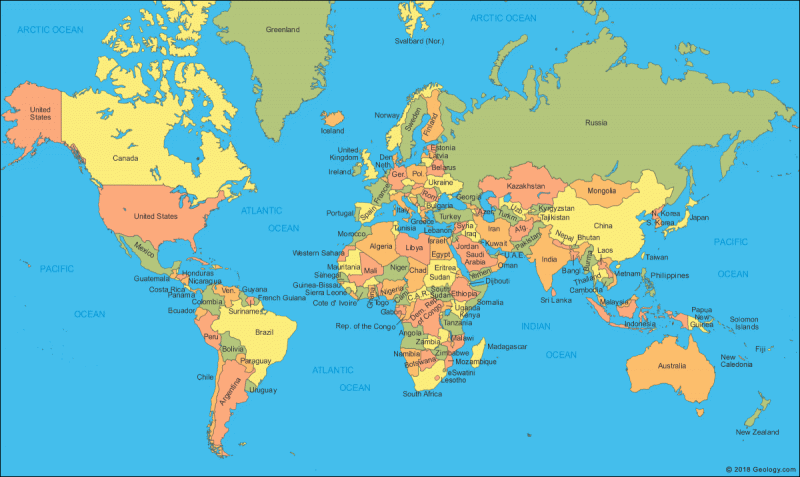
Source: Geology.com
I make no claim to being a virologist, but this is beginning to look damned peculiar. A natural virus hasn’t the ability to simultaneously infect 85 different countries on all continents of the world, with outbreaks in multiple locations in each country – and to do it without the vehicle of a seafood market full of bats and bananas.
More peculiar is that these countries were by no means all infected with the same variety of the virus, which means the simultaneous infections in these 85 countries were not from the same source. Even more peculiar is that most countries, at least the major ones, reported simultaneous outbreaks in multiple locations, and to date while some nations have been able to identify one or more of their ‘patients zero’, I am aware of no country that was able to definitively identify all their several ‘patients zero’. Considering the above information in light of the known basic facts of virus transmission, intuition suggests at least the possibility of there having been many people carrying a pail of live viruses.
It is interesting to note that high fatality rates are entirely within Italy, Iran, and China. For approximate figures, China’s fatality rate is between 3% and 4%, that of Iran at about 7% and Italy the highest at around 9%. Even more interesting is that if these countries did pass their strain of the virus to other nations, those strains abandoned their lethality when they left home. Of the 34 countries supposedly infected by Italy, for example, all exhibit very low mortality, the same being true of Chinese or Iranian infections. The natural conclusion is that these viruses prefer their ‘home populations’ and pose at best a minor threat to others.
*
Larry Romanoff is a retired management consultant and businessman. He has held senior executive positions in international consulting firms, and owned an international import-export business. He has been a visiting professor at Shanghai’s Fudan University, presenting case studies in international affairs to senior EMBA classes. Mr. Romanoff lives in Shanghai and is currently writing a series of ten books generally related to China and the West. He is a Research Associate of the Centre for Research on Globalization (CRG). He can be contacted at: 2186604556@qq.com
Notes
(2) https://www.clinicaltrialsarena.com/features/coronavirus-outbreak-the-countries-affected/
(3) https://www.clinicaltrialsarena.com/features/coronavirus-countries-with-suspected-cases/
(4) https://www.clinicaltrialsarena.com/features/
(5) https://www.globalresearch.ca/covid-usa-targeting-italy-and-south-korea/5707042
(7) https://www.denverpost.com/2020/03/13/iceland-coronavirus-traced-denver/
(8) https://icelandmonitor.mbl.is/news/news/2020/03/13/three_covid_19_cases_in_iceland_traced_to_denver/
Copyright © Larry Romanoff, Global Research, 2020
OPCW Scandal Reaches New Height of Farce With Latest Whistleblower Allegations Over Smeared Douma Officers
By Martin Jay | Strategic Culture Foundation | March 15, 2020
How much longer can the troubled OPCW organisation continue to operate with any credibility after the doctoring of its investigations to suit a western narrative in Syria continues to be exposed and shows it is far from an independent chemical weapons watchdog?
Readers may remember that previously, towards the end of 2019, leaked emails from two key OPCW investigators who were dispatched to Douma in Syria in 2018, revealed that their original remarks – which indicated that the Assad regime could not have orchestrated the chemical attack – were removed from the final edited report. This act alone was the starter’s pistol on a rebellion which is threatening to severely damage the organisation’s credibility in the field and confirms to many that the role of it is purely as an apparatus for the West’s agenda in the field of conflict around the world, against those who stand up to the giants of NATO.
A fourth whistleblower has now emerged from the farcical debacle which will surely reach a tipping point soon either threatening to remove OPCW’s Spanish chief – the main culprit who tarnished the two officers who kicked off the scandal in the first place – or for the organisation itself to have a world-wide identity problem which will manifest itself in many countries simply refusing to allow it entry into hotspots. It’s hard to see how Syria’s Assad would continue to allow OPCW inspectors into Syria following another chemical attack after the organisation has been “hijacked” by western interests who appear to go to extraordinary levels to falsify evidence to serve a narrative.
The latest OPCW official to step forward and support the findings of the two initial inspectors, whose scandal was revealed in a series of leaked emails in May 2019, has spoken of the culture of intimidation within the organisation and how the two inspectors have been dealt a grave injustice in their work and in their determination to salvage credibility for their employer.
“The mistreatment of two highly regarded and accomplished professionals can only be described as abhorrent,” the OPCW official wrote in an email to The Grayzone website. “I fully support their endeavours, in that it is for the greater good and not for personal gain or in the name of any political agenda. They are in fact trying to protect the integrity of the organisation which has been hijacked and brought into shameful disrepute.”
Central to the dispute surrounding the two officers who have had their conclusions dismissed by OPCW’s chief, is the discovery by one of the investigators that the gas canisters on the ground appeared not to have been dropped from an aircraft but rather placed there. This finding is important as it destroys the West’s assertion that the attack at Douma was made by the Assad regime which it alleges dropped the chemicals from a plane or a helicopter.
This incendiary finding was removed from the final redacted report which leans more on the Assad theory and keeps a safe distance from the distinct possibility that the entire attack was staged by western-backed extremist groups in the area.
One of the two whistleblowers and former inspectors is believed to be Ian Henderson, a 12-year veteran of the organization and weapons expert. According to the Grayzone, “Henderson led on-the-ground inspections in Douma and conducted a detailed engineering study of gas cylinders found at the scene” and concluded that the cylinders were likely “manually placed” rather than being dropped by air. The second officer is not named but is believed to be of higher rank who wrote one version of a final report, which was ultimately rejected for a redacted version which failed to acknowledge the findings of the two investigators – ultimately that it could not have been an attack by Assad’s forces.
Their work continues to draw wrath from the OPCW’s boss General Fernando Arias who remarkably seems to be conducting a smear campaign against them slamming their work as “erroneous, uninformed, and wrong,” believed to be what has sparked a new whistleblower – believed to be British – to come forward with startling new allegations which cast a shadow over the integrity of the organisation.
“It is quite unbelievable that valid scientific concerns are being brazenly ignored in favour of a predetermined narrative,” the email reads. “The lack of transparency in an investigative process with such enormous ramifications is frightful.”
Yet the culture of arbitrary vengeance against those who question the biased narrative or working practices of its chief, is deeply worrying, as the latest whistleblower reveals in the email.
“I am one of many who were stunned and frightened into silence by the reality how the organisation operates,” the official wrote. “The threat of personal harm is not an illusion, or else many others would have spoken out by now.”
It’s unclear what “personal harm” means. But even if it is punitive measures which mean blocked promotion or even constructive dismissal, it raises a number of questions as to the integrity of the OPCW itself which will reverberate around the world’s so-called democratic centres of debate and will spark a new debate among those corridors. Does the OPCW have any credibility left?
Update on the OPCW’s investigation of the Douma incident
Paul McKeigue, David Miller, Piers Robinson
Members of Working Group on Syria, Propaganda and Media
- 1 Summary
- 2 Irregularities in the published reports of the Fact-Finding Mechanism
- 2.1 No comparison with epidemiology or toxicology of chlorine release incidents
- 2.2 Withholding of quantitative results of chemical analyses
- 2.3 Delay in initiating engineering / ballistics studies, inadequate reporting
- 2.4 Ignoring evidence of staging in images uploaded by opposition-linked media
- 2.5 Blending of witness interviews and exclusion of testimony that the hospital scene had been staged
- 2.6 Conduct of the investigation
- 3 What we now know about misconduct in the Douma investigation
- 3.1 Attempt to substitute a modified report for the original interim report
- 3.2 Suppression of quantitative lab results
- 3.3 Suppression of inconsistencies in the eyewitness testimony
- 3.4 Suppression of the consultation with medical experts in June 2018
- 3.5 Concealing the date and rationale for the decision not to proceed with exhumations
- 3.6 Attempt by US officials to influence the inspectors
- 3.7 Unreviewed report prepared by unknown authors presented as “the Report of the Fact-Finding Mechanism”
- 3.8 Suppression of the engineering assessment
- 3.9 The three external engineering/ballistics consultancies supposedly obtained by the FFM
- 4 The OPCW’s investigation into “Possible Breaches of Confidentiality”
- 5 The Investigation and Identification Team (IIT)
1 Summary
- As we noted in April 2019, there were defects in the published interim and final Reports of the Fact-Finding Mechanism on the Douma incident that indicated that evidence had been withheld or distorted.
- From comparing the original Interim Report drafted in June 2018, the modified report that was intended to be substituted for it, and the published Final Report, it is clear that this was not simply a divergence of opinions between experts. The misrepresentation of evidence in the published Final Report can reasonably be described as fraudulent. Specifically, the following points can be identified:
- Quantitative results on the levels of chlorinated organic compounds were suppressed. A false assertion about “high levels” of these compounds had been added to the modified report.
- An assessment based on the epidemiology of chlorine release incidents was omitted from the modified report and the Final Report.
- On-site assessments that the observations were incompatible with aerial delivery of the cylinders were omitted from the modified report and the Final Report.
- The testimony of opposition-linked witnesses interviewed in Turkey was rewritten in the Final Report so as to obscure inconsistencies about the distribution of bodies at Location 2 that would have cast doubt on the reliability of their testimony.
- The result of the consultation with medical experts in June 2018, indicating that the victims had not been killed by chlorine, was suppressed and omitted from the timeline of the investigation published in the Final Report.
- The internal engineering assessment was excluded from the published Final Report.
- In violation of Article VIII of the Chemical Weapons Convention, the Chief of Cabinet allowed US officials to attempt to influence the inspectors in July 2018.
- The evidence of fraud in the published report of the Douma investigation means that all other published reports from FFM Team Alpha, including the FFM reports on the alleged chlorine attacks in 2015 and the alleged sarin attack in Khan Sheikhoun in 2017, must also be disregarded as unreliable and possibly fraudulent.
- The OPCW’s report on 6 February 2020 of what was purported to be an investigation into the leak of the engineering assessment to the Working Group was used instead to smear two of the organization’s most experienced and highly-rated inspectors with false and misleading statements.
- It is now clear that the Director-General’s statements on 28 May and 6 June 2019 that the FFM had “examined, weighed and deliberated”, “considered” and “analysed” the engineering assessment were unequivocally false: the Team Leader and Head of the FFM had refused to accept the document in February 2019.
- The Douma investigation has been passed to the Identification and Inspection Team (IIT). A brief examination of the careers of the investigators and analysts appointed to the IIT shows that all four of them have serious conflicts of interest. This calls into question their ability to resist pressure to come up with the answers that the influential delegations of the US, UK and France want.
2 Irregularities in the published reports of the Fact-Finding Mechanism
In a briefing note posted on 11 April 2019, we drew attention to defects in the published FFM reports that indicated, to anyone who examined these reports closely, that evidence had been withheld or distorted. We review this material briefly before examining what new information has been provided by documents and briefings released from May 2019 onwards.
2.1 No comparison with epidemiology or toxicology of chlorine release incidents
The reports did not assess whether the alleged chemical attack was consistent with the epidemiology of chlorine release incidents, which typically have low case fatality rate.
The analysis of the images of victims stated that “this type of rapid collapse is indicative of an agent capable of quickly killing or immobilising” but did not explain how this opinion was compatible with release of chlorine from an intact gas cylinder on the balcony, or with the presence of foamy pulmonary edema that would take time to develop.
2.2 Withholding of quantitative results of chemical analyses
Quantitative results of lab analyses were withheld. The lack of concordance between labs suggested that chlorinated organic compounds were present only at trace levels, close to the lower limit of detection.
The reports did not make clear that trace levels of these compounds are ubiquitous in environments where industrial or household products are present.
The Final Report emphasized correctly that testing for exposure to chlorine depends on comparison with control samples, but inexplicably did not report results for the control samples that were taken.
Although molecular chlorine is not naturally present in the environment, chloride ions and many chlorinated organic derivatives exist in the natural background. For that reason it was important to gather control samples, wherever feasible, at locations not expected to have been exposed to chlorine gas.
In Table A9.3 two specimens are described as control samples:
- Control sample: debris 20 meters west of the building entry (level 0): 2018.04.21_1909_04
- Concrete dust scraping at pillar 51: 2018.05.01_1779_05
From the Evidence Reference Numbers listed in Table A5.1 we can deduce that these two control samples relate to Location 2 (numbers prefixed 2018.04.21_1909) and the hospital (numbers prefixed 2018.05.01 1779).
Results for these samples are not given.
This should have raised questions about the conduct of the investigation. If rigorous procedures had been followed, with control samples included in the same batches as putatively exposed samples and laboratory staff blinded to exposure status, the omission of control samples from analysis or reporting could only have been deliberate.
We emphasize that the issue here is not whether chlorine was released, but that the withholding of quantitative results and failure to report results on control samples is strong evidence of scientific misconduct.
2.3 Delay in initiating engineering / ballistics studies, inadequate reporting
Three engineering/ballistics consultations are mentioned in the final report: but the figures show screenshots from what appears to be only a single study using a software package for finite-element analysis, These are barely legible screenshots, not of the professional standard one would expect from experts preparing a report for an international agency. Figures 10 and A7.6 show a simulation of the impact at Location 4 with a cylinder without harness or valve, though the cylinder found on the bed had a harness and an intact valve. The barely legible graphs based on the simulation assume improbably low drop heights for a helicopter flying over defended territory. Figure 12 shows the cylinder at Location 4 bouncing off the floor at 2 m/s, which would not have allowed it to reach the bed more than 3 metres away.
There was no explanation for why, if the FFM had considered it necessary to obtain expert opinions on the possible trajectories of the cylinders found at Locations 2 and 4, they did not request on-site examinations while the FFM was deployed in Damascus in April/May, rather than six months later when inspection of the sites and cylinders was no longer possible.
2.4 Ignoring evidence of staging in images uploaded by opposition-linked media
An analysis of images uploaded on the night of 7 April showed that bodies had been rearranged between photo sessions: infants first shown separated from adults were subsequently placed on the bodies of adult women. The opposition cameramen attempted for the first few days to represent the cylinder at Location 4 as the cause of the deaths at Location 2.
2.5 Blending of witness interviews and exclusion of testimony that the hospital scene had been staged
Information obtained from interviews was summarized in the Final Report without any distinction between information obtained from witnesses in Damascus and those interviewed in Turkey (who would have been opposition supporters who had relocated to Idlib under the evacuation agreement), and without any effort to establish whether the presence of each witness at the scene was corroborated by other evidence. The report was written to make it appear as if the witnesses who reported that the hospital dousing scene had been staged were never formally interviewed by the FFM, downgrading their testimony to “other open-source video material”.
2.6 Conduct of the investigation
The Team Leader had left Damascus for unexplained “information gathering activities” in Turkey three days after arriving, before on-site inspections had begun. All evidence other than the lab results was withheld from the Interim Report released in July 2018, even though most of the evidence – witness interviews, one-site assessment of the cylinder and craters, analysis of uploaded images of victims – had already been collected. There was an unexplained delay in the investigation between June and September 2018. Both the interim and final reports were unsigned, though previous FFM reports had been signed by the Team Leader.
In summary, it was possible by April 2019 for anyone with a scientific grounding who read the published reports closely to infer, as we did, that something was wrong with the published reports of the FFM on the Douma incident. We listed most of the points above in our briefing note posted in April 2018, but missed one of the most interesting clues: that results on control samples were not reported even though these samples had been collected. From [reports] that a Russian proposal for all members of the FFM team to give a briefing on the Final Report had been voted down by the OPCW Executive Council on 14 March 2019, it was evident that there was dissent among members of the FFM team.
3 What we now know about misconduct in the Douma investigation
During 2019 more information about the Douma investigation reached the public domain. This began with the release of the engineering assessment in May 2019, continued with the briefing of a panel convened by the Courage Foundation in October 2019 and the release of more internal documents including the original draft of the interim report in December 2019, and finally the release of a written statement provided to the UN Security Council.
3.1 Attempt to substitute a modified report for the original interim report
We now know that the published Interim Report, which reported only lab results, was the result of a stand-off between the Team Leader Sami Barrek and the other inspectors. In June 2019 a secretly-prepared modified report had been substituted for the original interim report.
This original interim report had stated that “Although the cylinders might have been the sources of the suspected chemical release, there is insufficient evidence to affirm this”. The modified report asserted instead that there was “sufficient evidence at this time to determine that chlorine, or another reactive chlorine-containing chemical, was likely released from cylinders.” The section on the epidemiology of chlorine release incidents in the original interim report, which had noted that in such incidents most of those exposed manage to escape, was omitted from the modified report.
The original interim report had noted that preliminary observations on the cylinders and the impact sites raised doubts about the story that the cylinders had been dropped from the air:
The FFM team is unable to provide satisfactory explanations for the relatively moderate damage to the cylinders allegedly dropped from an unknown height, compared to the destruction caused to the rebar-reinforced concrete roofs. In the case of Location 4, how the cylinder ended up on the bed, given the point at which it allegedly penetrated the room, remains unclear. The team considers that further studies by specialists in metallurgy and structural engineering or mechanics are required to provide an authoritative assessment of the team’s observations.
In the modified report this passage was removed, and the question of “how the cylinder ended up on the bed” at Location 4 was replaced by assessing “the trajectory of the cylinder”, implicitly excluding the possibility of manual placement.
The team considers that further analysis would need to be conducted by suitable experts, possibly in metallurgy and structural or mechanical engineering, to provide an assessment of the trajectory of the cylinder, in addition to the damage caused to the bed, the roof and the cylinder itself.
3.2 Suppression of quantitative lab results
The modified report asserted that “high levels of various chlorinated organic derivatives” were present in organic samples. These chlorinated organic compounds were present mostly at levels of only a few parts per billion, not above the background levels that would be expected in an environment where industrial products were present. The quantitative results were withheld from the inspectors who had deployed to Damascus. The inspectors protested about the withholding of quantitative results, and were assured that they would be included in the interim report, only to find that they were withheld from the published version.
3.3 Suppression of inconsistencies in the eyewitness testimony
The original interim report clearly separated the eyewitness accounts obtained in Damascus from those obtained in Turkey (referred to as “Country X”). It also noted inconsistencies between the statements of witnesses that raised questions about their credibility:
There were variations (see table and footnotes below) in the numbers of bodies and their distribution throughout Location 2 as observed in video footage and photos, compared to the numbers provided by various witnesses who were interviewed. According to statements from witnesses, “many people they presumed dead, were lying on the floor of the basement”. The FFM did not obtain any video footage or photos of dead casualties lying in the basement of Location 2 or being removed from there.
The table showed that of seven witnesses who reported the distribution of bodies at Location 2, two reported bodies in basement only, one reported bodies at ground level and above only, and four reported bodies both in basement and above ground level. The videos had not shown any bodies in the basement.
3.4 Suppression of the consultation with medical experts in June 2018
It is now clear that the vague and contradictory account of expert opinions about the cause of death of the victims in the Final Report is explained by suppression of the consultation with medical experts that took place on 6 June 2018 at the Bundeswehr Research Institute for Protective Technologies and NBC Protection (WIS) in Munster. The “chief expert” can be identified as Colonel Dr Franz Worek, the leading medical expert on chemical defence in the Bundeswehr.
His argument, reconstructed from the original interim report written in June 2018 and the minutes written two months later, was as follows:
- Pulmonary edema is a delayed effect of “choking agents” such as chlorine which cause acute inhalation injury. If the victims of exposure to such an agent had had lived long enough for their airways to be filled with foamy edema fluid, they would have been able to escape and would not have collapsed “gathered in piles” on the spot.
- Massive exposure to chlorine can cause laryngospasm leading to immediate asphyxiation, but in this situation there would not be time for foamy pulmonary edema to develop
- Cholinesterase inhibitors (nerve agents) [or opiates, we would add] could have caused instant collapse and also rapid onset of pulmonary edema, but known agents were ruled out by the negative lab tests.
The OPCW participants agreed that the conclusions were clear: whatever killed the victims, it was not chlorine. This consultation does not appear in the timeline of the final Report of the Fact-Finding Mission: the first toxicology consultations are dated to September 2018.
3.5 Concealing the date and rationale for the decision not to proceed with exhumations
The original interim report recorded that plans for exhumations were halted when the first lab results were received on 22 May 2018:
When the analytical results of the first round of environmental and biological samples were received and no nerve agents or their degradation products were identified in either environmental or biological samples, the plans for exhumations were halted as the risk of not finding substantive evidence of the alleged attack was now considered high and proceeding with the exhumations presented a risk to benefit ratio that was no longer acceptable.
The Interim Report released on 6 July 2018 stated that the intention to exhume bodies from mass graves was “communicated to the Syrian Arab Republic in Note Verbale NV/ODG/214827/18” without indicating that plans for exhumation had been halted two months earlier. The Final Report omits the date and the rationale for the decision not to proceed with exhumations, and insinuates that the Syrian Arab Republic was responsible for delaying exhumations until they would no longer be informative:
The Syrian Arab Republic replied in Note Verbale No. 45 on 4 May 2018 and enumerated the conditions to be met in order to conduct the exhumation. With due consideration of the time elapsed since the alleged incident, the possibility was eventually not explored any further.
3.6 Attempt by US officials to influence the inspectors
In the first week of July 2018 all FFM team members were summoned by the Chief of Cabinet, Robert Fairweather, to a meeting with three US officials who asserted that their findings proved that there had been a chlorine attack. This attempt to influence the inspectors violated Article VIII Part D of the Chemical Weapons Convention, which stipulates that:
In the performance of their duties, the Director-General, the inspectors and the other members of the staff shall not seek or receive instructions from any Government or from any other source external to the Organization. They shall refrain from any action that might reflect on their positions as international officers responsible only to the Conference and the Executive Council.
Each State Party shall respect the exclusively international character of the responsibilities of the Director-General, the inspectors and the other members of the staff and not seek to influence them in the discharge of their responsibilities.
3.7 Unreviewed report prepared by unknown authors presented as “the Report of the Fact-Finding Mechanism”
FFM team members who had deployed to Douma were excluded from preparation of the final report, and were not even kept informed of its status or expected date of publication. No technical peer review of the final report was conducted. In particular the only organic chemist and the only chemical engineer on the team were excluded from drafting and reviewing the report. A briefing to States Parties was given on 5 March 2019 by Boban Cekovic, a former inspector who could not have contributed to the investigation before December 2018 when he rejoined the OPCW.
3.8 Suppression of the engineering assessment
It is now clear that the absence of an on-site engineering opinion in the Final Report is explained by deliberate suppression. Ian Henderson had been tasked with the Location and Munition (cylinder) study in the work plan issued by the Team Leader on 26 June 2018. He was excluded from external consultations held later that year. The Team Leader and the FFM Leader refused to accept Henderson’s engineering report on 26 February 2019. The Chief of Cabinet, Sebastien Braha, attempted to have all copies of the Engineering Assessment destroyed and also ordered that the log of the Document Registration Archive be altered to erase “all traces, if any, of [the document’s] delivery/storage/whatever in DRA”.
We have noted previously that the OPCW has come up with three contradictory explanations of why Ian Henderson’s Engineering Assessment was excluded from the Final Report of the FFM:
- 1E1: the document was “not part of any of the material produced by the FFM”.
- 2E2: the document was “analysed, it was part of the investigation” but rebutted by the reports of “three external experts commissioned by the FFM”.
- 3E3: the document “pointed at possible attribution which is outside of the mandate of the FFM” and Henderson was therefore advised to submit his assessment to the IIT.
Arias has on two occasions asserted that the Engineering Assessment was considered by the FFM. In a briefing on 28 May 2019 he stated that:
The document produced by this staff member pointed at possible attribution, which is outside of the mandate of the FFM with regard to the formulation of its findings. Therefore, I instructed that, beyond the copy that would exclusively be kept by the FFM, the staff member be advised to submit his assessment to the IIT, which he did, so that this document could later be used by the IIT. As is the case with all FFM investigations, the Secretariat encourages serious and professional debates within, so all views, analysis, information and opinions are considered. This is what the FFM did with the information included in the publicly disclosed document [the Engineering Assessment]; all available information was examined, weighed and deliberated.
In a panel discussion on 6 June 2019 Arias stated that
This information [the Engineering Assessment] was considered and it was analysed, it was part of the investigation and this information has already been given to the Investigation and Identification Team in charge of attributing responsibilities because this information you referred to is more focussing, is more targeted to to establish responsibility than to focus to the facts.
These statements by Arias are unequivocally false. Henderson’s statement to the UN Security Council makes clear that his Engineering Assessment was never considered by the FFM: the Team Leader and the head of the FFM had refused to accept it.
In Arias’s latest briefing, his widely ridiculed explanation 3E3 that the Engineering Assessment had been excluded from the FFM report because it “pointed at possible attribution” which was “outside the mandate of the FFM” was abandoned. Instead he reverted to explanation 1E1:
Inspector A’s assessment purports to be an official OPCW FFM report on the Douma incident. Instead it is a personal document created with incomplete information and without authorisation.
He conceded that “In the interest of transparency and completeness, Inspector A’s assessment has been transmitted to the IIT and will be examined by it in due course.”
3.9 The three external engineering/ballistics consultancies supposedly obtained by the FFM
The Final Report, without mentioning that an internal engineering assessment had been excluded, stated that engineering/ballistics assessments had been obtained from three external experts, and described the results of the assessments of the cylinder at Location 4 as follows:
The results of these assessments indicated that the shape of the aperture produced in the modulation matched the shape and damage observed by the team. The assessments further indicated that, after passing through the ceiling and impacting the floor at lower speed, the cylinder continued altered trajectory, until reaching the position in which it was found.
In the light of other irregularities in the Final Report, we may reasonably be suspicious of the Final Report’s assertion that reports from three independent experts supported the explanation that the cylinders at Locations 2 and 4 reached their positions as a result of being dropped from the air.
If these three assessments exist, and their conclusions were as described in the Final Report, it should have been straightforward to document this. We have been informed that one report was obtained from a European institute with expertise in impact engineering, and that this group assessed that it was “very unlikely” that the cylinder at Location 4 had reached its position as a result of being dropped from the sky.
At a press conference in The Hague on 12 July 2019, Alexander Shulgin, the Russian envoy to the OPCW, stated that:
We would like to review the reports of the three independent experts that made a conclusion that these canisters were dropped from high altitude. You are free not to name them. We already know the name of one of the experts and we highly doubt that they are indeed unbiased.
In an interview in November 2019, Shulgin expressed doubts about the existence of three reports: “The refusal of the Technical Secretariat to unveil the reports of these anonymous outside experts makes us question whether these reports ever existed.” He added that the expert whose name he knows “has a rather dubious reputation in terms of his impartiality, and he is anything but a specialist in ballistics”.
4 The OPCW’s investigation into “Possible Breaches of Confidentiality”
This investigation was originally set up to investigate the leak of the Engineering Assessment to the Working Group in May 2019. However the report of the investigation, the briefing from the Director-General, Fernando Arias, and the accompanying press release were used instead to smear two of the organization’s most experienced and highly-rated inspectors.
The smears include unequivocally false statements – for instance that Inspector A “was not a member of the FFM” – and misleading statements whose only purpose is to denigrate: for instance that Inspectors A and B were “rehired at a lower grade” without explaining that the P-5 grade had been merged with the P-4 grade.
One notably false assertion is that “The majority of the FFM’s work occurred after Inspector B’s separation, and during the last seven months of the FFM’s investigation (August 2018 through February 2019).”
The timeline in the published report shows that the additional information gathered during this period consisted only of interviews with an additional five witnesses in Turkey (October 2018), toxicology consultations (September-October 2018), engineering/ballistics reports purportedly obtained from three external experts (October-December 2018), and lab analyses of a second batch of samples (received February 2019).
Comparison of the original interim report with the Final Report shows that most of the text and figures in the Final Report had already been prepared by June 2018. The only substantive new material that appears in the Final Report consists of figures generated from one of these engineering consultations.
The delay from June 2018 to September 2018 in resuming the investigation is explicable by the necessity to wait until Inspector B had left the organization at the end of his contract.
The OPCW management’s denunciation of Inspectors A and B for “unauthorised disclosure of highly protected information to individuals who did not have a need to know such information.” is unintentionally revealing.
This makes clear that the preparation of the report of the FFM was organized like a covert operation, with information shared on the basis of “need to know”, rather than as a scientific investigation in which material is shared for internal review before submission for external peer review.
There was no basis for the engineering analysis of the Douma cylinders to be classified as “highly protected information”: it did not contain personal data, nor did it include confidential information provided by a State Party.
Syrian officials had told the inspectors who deployed to investigate the Douma incident that the information they gathered was not confidential as far as the Syrian Arab Republic was concerned.
The Verification Annex Part II of the Chemical Weapons Convention specifies in the section on reports that “Differing observations made by inspectors may be attached to the report” and that “The provisions of this Part shall apply to all inspections conducted pursuant to this Convention”. In accordance with this provision, the template for reporting “Other Chemical Production Facility” inspections includes a section for “Differing observations made by inspectors”, implying that the report is not complete unless this section is filled in.
This clause can thus be read as guaranteeing a right to attach “differing observations” that has been denied to inspectors in the Fact-Finding Mission.
5 The Investigation and Identification Team (IIT)
The remit “to identify the perpetrators of the use of chemical weapons in the Syrian Arab Republic”, adopted by the Conference of the States Parties on 27 June 2018 was assigned to an Investigation and Identification Team (IIT). On 28 June 2019 the IIT published a list of nine incidents, including the Douma incident, on which it would focus its investigative work:
- Three alleged chlorine attacks in 2014: Al-Tamanah 12 April, Kafr-Zita 18 April, Al-Tamanah 18 April examined in the Third Report of the FFM then led by Malik Ellahi.
- An alleged attack in Marea on 1 September 2015, examined in an FFM report that confirmed that victims had been exposed to sulfur mustard. This incident has been widely attributed to ISIS .
- Two alleged chemical attacks in Ltamenah on 24 and 25 March 2017, examined in the Report on Alleged incidents in Ltamenah, released 13 June 2018. This unsigned report concluded that sarin on 24 March and chlorine on 25 March were “very likely used”.
- An alleged chemical attack in Ltamenah on 30 March 2017, examined in a separate report
- An alleged chemcial attack in Saraqib on 4 February 2018. An unsigned report concluded chlorine was “likely used”, but was unable to explain the presence of sarin breakdown products in the environment and in wipes from the chlorine cylinder.
- The Douma incident of 7 April 2018.
In the light of the evidence of fraud in FFM Team Alpha’s report on the Douma incident, all earlier reports from this team, including their reports on the incidents above, should now be considered unreliable. In an earlier briefing note we noted irregularities in the Fact-Finding Mission’s investigations of these earlier incidents.
5.1 Alleged chlorine attacks in 2014
We noted that information for the FFM’s investigation of the alleged chlorine attacks in April to May 2014 was provided by the CBRN Task Force set up by Hamish de Bretton-Gordon, who revealed also that during 2013 he had been undertaking covert activities for an agency that can only have been MI6.
Videos of an alleged impact site in Talmenes, provided by de Bretton-Gordon to the FFM, were later examined for the Joint Investigative Mechanism by a forensic expert, who identified “inconsistencies” that were unmistakable evidence of staging. This calls into question all other evidence from the CBRN Task Force.
5.2 Alleged chemical attacks in Ltamenah in 2017 and Saraqib in 2018
We discussed the anomalous findings of the FFM report on the alleged incident in Ltamenah on 24 March 2017, from which there were no contemporaneous reports but samples purportedly recovered from the alleged impact site after a long delay were reported to contain intact sarin.
Another commentator has noted anomalies in the published report of the FFM on the alleged incident in Ltamenah on 30 March 2017: no explanation was given for the detection of sarin in samples of gravel provided by the White Helmets that were purportedly recovered from a “crater” containing no munition fragments some 200 metres south of the alleged impact point.
In the report on the alleged incident in Saraqib on 4 February 2018, where the alleged munition was a chlorine cylinder and the FFM determined that “chlorine, released from cylinders through mechanical impact, was likely used as a chemical weapon”, no explanation was given for the positive tests for sarin breakdown products in environmental samples from this cylinder.
5.3 Management and staffing of the IIT
As we have noted previously, the director, Santiago Oñate, is employed as a consultant and cannot be a line manager. This implies that the staff of the IIT report to the Chief of Cabinet.
For reports of investigations to be credible, a requirement in science and in legal proceedings is that the names of the investigators are disclosed so that possible conflicts of interest can be examined and so that these investigators have to put their reputations on the line as guarantors of the report that bears their names.
The names of the two investigators and two analysts hired for the IIT have not been publicly disclosed. A brief examination of their careers shows that all four of them have serious conflicts of interest.
Of the two investigators, one is an employee of the Canadian security service and foreign ministry, and the other is an employee of the Netherlands Ministry of Justice. Of the two analysts, one is a former NATO intelligence officer and the other is the spouse of a consultant to the Netherlands Ministry of the Interior.
In noting these conflicts of interest we are not casting doubt on the personal integrity of these individuals, but we are calling into question whether the IIT can produce an impartial report if – as is to be expected – its team is under pressure to come up with a result that will vindicate the governments of France, UK and the US.
It has been reported to us that other individuals, whose independence is even more doubtful, have been brought in to help prepare the report.
OPCW staff members who have information about misconduct or fraud in investigations of alleged chemical attacks are welcome to contact us. For those who are under pressure to collude with or cover up such misconduct, we can arrange expert legal advice. As always, we guarantee to protect the identities of our sources. Emails from a ProtonMail address to wgspm@protonmail.com are secure.
Fourth OPCW whistleblower: Staff ‘frightened into silence’, watchdog brought into ‘shameful disrepute’ over Douma probe
RT | March 13, 2020
A fourth whistleblower has come forward to defend two senior OPCW inspectors who revealed the watchdog tried to cover up evidence in the Douma chemical weapons probe, saying that other employees were “frightened into silence.”
In a statement to the Grayzone, the latest whistleblower said they were “horrified” but “unsurprised” by recent events within the organization, describing the “mistreatment” of “two highly regarded and accomplished professionals” as “abhorrent.”
The employee wrote that he is “one of many who were stunned and frightened into silence by the reality how the organization operates,” and that the “threat of personal harm” to those who speak out is “not an illusion.”
The fourth whistleblower emerged after the OPCW leadership attempted to smear and discredit veteran inspector Ian Henderson and an individual known as ‘Alex’ who challenged the organization’s narrative on the alleged Syrian government attack on Douma in 2018. A third whistleblower has also previously defended the integrity of the first two who spoke out and expressed concern for the safety and security of those who dissent from the official narrative.
The Grayzone said it had independently verified the identity of the fourth whistleblower and their position at the OPCW, but granted them anonymity “to protect them from potential retaliation.”
Last week, Henderson and ‘Alex’ both wrote to OPCW Director-General Fernando Arias, accusing the organization of trying to “smear” their reputations and questioning why two top inspectors with “impeccable records” would suddenly “go rogue.” The letters followed an effort by the chemical weapons watchdog to discredit them, rubbish their serious concerns, and frame them merely as two disgruntled former employees.
“I fully support their endeavors, in that it is for the greater good and not for personal gain or in the name of any political agenda,” the fourth whistleblower wrote, adding that the inspectors are “trying to protect the integrity of the organization which has been hijacked and brought into shameful disrepute.”
After a detailed study, Henderson, who led the probe on the ground in Douma, concluded that gas cylinders found at the scene had likely been manually placed, which suggests the attack may have been a false flag staged by anti-government militants. The incident, however, was swiftly used to justify US, UK and French airstrikes on Syria before OPCW investigators had even arrived at the scene.
Yet, the OPCW disregarded Henderson’s evidence without explanation and in its official report implied that the gas cylinders were dropped by Syrian military planes – allegedly after “unacceptable pressure” was applied by the US government.
Two Years Later: The Skripal Case Is Weirder Than Ever
By Matthew Ehret | Strategic Culture Foundation | March 6, 2020
While navigating through today’s propaganda-heavy world of misinformation, spin and outright creative writing which appears to have replaced conventional journalism, it is most important that two qualities are active in the mind of any truth-seeker. The first quality is the adherence to a strong top down perspective, both historic and global. This is vital in order to guide us as a sort of compass or North Star used by sailors navigating across the ocean. The second quality is a strong power of logic, memory and discernment of wheat vs. chaff to process the mountains of data that slaps us in the face from all directions like sand in a desert storm.
As the second anniversary of the poisoning of Sergei and Yulia Skripal has arrived, it is a useful time to take these qualities and revisit this bizarre moment of modern history which took place on a park bench in Salisbury UK and which led to one of the greatest frauds of the modern era derailing all attempts to repair relations between Russia and the west.
To do this, I decided to plunge myself into a new book called Skripal in Prison written by Moscow-based journalist John Helmer and published in February 2020.
This incredible little book, which features 26 chapters written between March 2018 to February 2020 originally published on the author’s site Dances with Bears, unveils an arsenal of intellectual bullets which Helmer skillfully uses to shoot holes into every inconsistency, contradiction and outright lie holding up the structure of the narrative that “there is no alternative conclusion other than that the Russian State was culpable for the attempted murder of Mr. Skripal and his daughter”. This line was asserted without a shred of actual evidence by Theresa May in the House of Commons on March 16, 2018 and in the months that followed, western nations were pressured to expel Russian diplomats (23 in Britain, 60 in the US, 33 across the EU), close down consulates (one Russian consulate in San Francisco and one American consulate in St Petersburg) and impose waves of sanctions against Russia.
Four months after the Skripals (and one unfortunate detective named Sgt. Nick Bailey) were released from British hospital care, two more figures were stricken with Novichok poisoning and taken to hospital on June 30 with one of them (Dawn Sturgess) dying 9 days later. This too was blamed immediately on Russia.
Helmer’s research systematically annihilates the official narratives with the craftsmanship of a legal attorney, taking the reader through several vital questions which shape the book’s composition as a whole, and which I shall lay out for you here:
- Why have Sergei Skripal and his daughter Yulia fallen off the face of the Earth since their release from Salisbury hospital? It is known that one controlled video was recorded featuring Yulia speaking, and several short calls to family were made by Yulia and her father after their poisoning… but nothing more. Beyond the fact that it appears the Skripals were kept on an American military base in Gloucestershire for an indeterminate amount of time, Helmer points out “at the point in their recuperation when the two of them were beginning to be explicit in their public remarks about what had happened, their communications were cut off. Nothing more is known to this present day.”
- Despite the fact that the UK Prime Minister asserted that a European Arrest Warrant was issued for the two Russians that were alleged to have carried out Putin’s malevolent will onto the poor Skripals – why were no such warrants ever registered in Interpol? Is it because such warrants actually require evidence?
- Why did British Intelligence sanction the tearing down of big sections of Skripal’s home at 47 Christie Miller Road in Salisbury due to the apparent “dangers of deadly contaminants”, while only the door handle was tainted with Novichok? If the reasoning was due to health safety, then why were similar actions not taken to the Bourne Hill police station which Sgt. Bradley contaminated or the restaurant and pub which Sergei Skripal went to before his trip to the park … or the contaminated London hotel where the two Russian agents apparently stayed?
- Since Novichok is an extremely fast acting substance, generally attacking the nervous system in minutes, how is it possible that the time separating the Skripals’ moment of contamination to the moment of losing consciousness on a park bench was over three hours?! How is this possible? Similarly how was it possible that Sgt. Bailey’s point of contamination at Skripal’s home occurred a full 12 hours before he felt the need to go to the hospital?
- What the hell was up with the strange case of the two unfortunate victims of the July 2018 Novichok poisoning in Amesbury (9 miles from Salisbury)? Were Dawn Sturgess and her partner Charlie Rowley simply collateral damage in an MI6 effort to plug a missing hole in the narrative caused by a lack of any evidence of a device used to apply the nerve agent to the door handle in the first place? Why does Rowley (a known heroin addict) have no recollection where he found the perfume bottle filled with Novichok which he gifted to Sturgess on June 26? Why was the perfume bottle only found by authorities on Rowley’s kitchen counter two days after Sturgess died on July 9th even though a search for Novichok had been carried out at his apartment beginning with the couple’s admission into Salisbury hospital on June 30?
- What was the role of the Ministry of Defense’s Porton Down chemical laboratories in this bizarre story? The lab itself was located just a few miles from the crime scene, and the first responder on the scene was an off-duty Colonel named Alison McCourt who happened to be shopping nearby and rushed to the scene. Helmer describes how Col. McCourt is head of nursing for the British Army and Senior Health Advisor which connects her closely to the Defense Science and Technology Laboratory at Porton Down which also happened to have held a major chemical warfare exercise named Toxic Dagger in the area just two weeks earlier. Are these things nothing but coincidences?
- Porton Down labs which tested the Skripal blood samples and Novichok at the Skripal residence is part of the Ministry of Defense and to this day, no public admission of those samples’ existence at the labs has occurred. Requests by Helmer and others to receive confirmation of from the labs according to Freedom of Information laws have been denied outright on the grounds of “the public interest”. Why? Could it be because blood tests were never actually carried out? Helmer’s book probes this question deeply and the lack of evidence will shock you.
- How about the Organization for the Prohibition of Chemical Weapons (OPCW)? Since the OPCW ran parallel tests of the apparent blood samples of the Skripals as well as the later July victims Dawn Sturgess and Charlie Rowley to get “matches” with the novichok traces in a perfume bottle and Skripal door handle, why has evidence of these samples not been made available? Also why was a British intelligence officer the only figure who oversaw the samples taken to the OPCW for verification? In fact, Helmer points out that the one Swiss contract laboratory (Spiez) associated with the OPCW has contradicted all British claims that any “match” exists between the Skripal samples and Novichok A-234 poisoning.
- Finally, Helmer asks: Why were all OPCW Executive Council votes in regards to matters surrounding the Skripal case, taken in secret, and thus in conflict with its own charter and why was Russia denied the right to share in the investigation of the Novichok attack as guaranteed in Articles XIII and IX of the OPCW Chemical Weapons convention? Could that have something to do with the role of former OPCW Director General Ahmet Üzümcü, a Turkish NATO-phile, who Helmer notes “has also been a member of the NATO staff in charge of expanding NATO military operations to the Russian frontier, as well as NATO operations in Ukraine and Syria.” In 2019, Üzümcü was inducted into the Order of St Michael and St George by Queen Elizabeth II for services to the Empire.
Helmer goes on to make the point that the overarching dynamic shaping the events of the Skripal/Novichok affair are guided by the collapsing western empire which has been working tirelessly to surround Russia with a ballistic missile shield while sabotaging all efforts by genuine patriots in the west from establishing positive alliances with Russia.
Taking the opportunity of the second anniversary of the Skripal affair to read this book is not only a valuable exercise in logic but also key into the desperate and increasingly fear-driven mind of the London-centered deep state which is quickly losing its grip both on reality and the very influence it had spent generations putting in place.
Featured Video
“Historic Russia”: The Land Putin Will Not Give Back
or go to
Aletho News Archives – Video-Images
Book Review
Why the War on Conspiracy Theories Is Bad Public Policy
By Kevin Barrett • Unz Review • February 1, 2019
 A Review of Conspiracy Theories and Other Dangerous Ideas by Cass Sunstein (based on an earlier paper co-authored with Adrian Vermeule); In Defense of Troublemakers: The Power of Dissent in Life and Business by Charlan Nemeth; and Conspiracy Theories and the People Who Believe Them, edited by Joseph E. Uscinski
On January 25 2018 YouTube unleashed the latest salvo in the war on conspiracy theories, saying “we’ll begin reducing recommendations of borderline content and content that could misinform users in harmful ways—such as videos promoting a phony miracle cure for a serious illness, claiming the earth is flat, or making blatantly false claims about historic events like 9/11.”
At first glance that sounds reasonable. Nobody wants YouTube or anyone else to recommend bad information. And almost everyone agrees that phony miracle cures, flat earthism, and blatantly false claims about 9/11 and other historical events are undesirable.
But if we stop and seriously consider those words, we notice a couple of problems. First, the word “recommend” is not just misleading but mendacious. YouTube obviously doesn’t really recommend anything. When it says it does, it is lying. … continue
Blog Roll
 Aletho News
- BRITAIN’S WARNING: PREPARE FOR WAR
- “Historic Russia”: The Land Putin Will Not Give Back
- How the Cambridge Analytica scandal still haunts Mark Zuckerberg
- The Ongoing Cancellation Campaign Against a Dissenting Academic in Norway
- Yemen and ‘the Houthis’: Challenging Sami Hamdi’s Narrative
- No, Christians did not invent Zionism
- AIPAC-led lobbying network opens branches in Cypriot, Greek parliaments
- Araghchi blasts ‘parasitic’ alliance as US taxpayers pay for Israel’s war on Iran
- Easy fix for Europe’s chaos? Stop fueling war against Russia
- Putin’s key remarks on peace talks and Europe’s ‘schizophrenia’
- If Americans Knew
- An error has occurred; the feed is probably down. Try again later.
- No Tricks Zone
- Two New Studies Find Thwaites Glacier Melt Cannot Be Driven By Human Activity Or A Warming Ocean
- E-Cars Reduce CO2 Emissions By Only 41% Compared To Internal Combustion Engine Vehicles
- Predictions Made By Renowned Climate Professor Over Past Decades Have Been Proven To Be Poor
- New Study Suggests Large Regions Of The Pacific Ocean Have Been Cooling For The Last 80 Years
- Germany’s Green Energy Debacle: High Energy Costs Force Kahla Porzellan to Close After 182 Years!
- New Study: 50 Years Of The Most Aggressive ‘Net Zero’ Policies Can Only Affect The Global Climate By 0.03°C
- US September “Heat” Was No Record…Many Records Set Decades Ago
- Latest European Green Energy Debacle; Portugal’s Largest Flagship Solar Park Insolvent!
- Green Energy Debacle: German Expert Professor Fritz Vahrenholt Warns Of Severe Economic And Social Consequences
- Two More Paleo Reconstructions Affirm Meters-Higher Sea Levels Across Ireland, Brazil 7000-6000 Years Ago

