Elon Musk accused State Dept. agency of being “worst offender” in government censorship
By Cindy Harper | Reclaim The Net | February 7, 2023
Twitter owner Elon Musk accused the State Department’s Global Engagement Center (GEC) of being the “worst offender in US government censorship & media manipulation.”
Musk’s comments came after the latest release of the Twitter Files which focused on GEC’s attempts to get Twitter to censor accounts and content.

“The GEC flagged accounts as ‘Russian personas and proxies’ based on criteria like, ‘Describing the Coronavirus as an engineered bioweapon,’ blaming ‘research conducted at the Wuhan institute,’ and ‘attributing the appearance of the virus to the CIA,’” journalist Matt Taibbi wrote. “State also flagged accounts that retweeted news that Twitter banned [such as] the popular U.S. ZeroHedge, claiming the episode ‘led to another flurry of disinformation narratives.’ ZH had done reports speculating that the virus had lab origin.”
According to its website, the GEC’s role is to direct and coordinate the US government’s efforts to combat foreign state and non-state misinformation and propaganda.
Then-head of trust and safety Yoel Roth pushed back against GEC’s analysis based on data from Homeland Security that showed “nearly 250,000” Chinese accounts that were spreading propaganda about COVID-19.
Congressman Thomas Massie Obliterates Vaxx Mandate Against Healthcare Workers
By J.D. Rucker • The Liberty Daily • February 1, 2023
The House of Representatives is very different than it was a year ago. Back then, any notion of ending vaccine mandates was shuffled into a memory hole. Anyone who opposed them was dismissed as an anti-vaxxer. Today, we may be seeing progress. Finally.
On Tuesday, Congressman Thomas Massie gave a speech explaining the reasons the vaccine mandate against healthcare workers must end.
“I rise in support of this resolution because it would facilitate the passage of HR 497, the Freedom for Healthcare Workers Act,” he said. “What does that bill do? It ends the unscientific, illogical, immoral, unconstitutional, unethical vaccine mandate on healthcare workers that is predicated on lies.”
He listed the five predicates for the mandate that turned out to be lies:
- The vaccine prevents spread
- The vaccines don’t cause any harm
- The mandates are scientific
- Natural immunity should be ignored
- Nobody’s liable for the damage the mandate can cause
As he put it, “We’re living under medical malpractice martial law right now under the PREP Act and the EUAs.”
He concluded by dropping the ultimate truth bomb. “This is the epitome of hypocrisy. Nobody in this room was mandated to take a vaccine, and we’re voting on whether we’re going to force people who want to take care of people whether they have to take the vaccine.”
Gmail’s Czech Election Campaign Interference
By Přemysl Janýr | February 5, 2023
On 18 January, a few days before the presidential election, I received an email from a non-political group of friends with an anti-Babiš pamphlet. I replied with an anti-Petr picture that I had received shortly before. Out of a group of forty recipients, seven emails were returned to me as undeliverable because “This message does not pass authentication checks” (SPF and DKIM both 5.7.26 do not pass).
This has never happened to me in decades of assiduous email communication. From time to time some mail is undeliverable, the address no longer exists, it has overflowed, etc., but so far no one has ever blocked the delivery of my message and withal to such an extent. I checked all seven error messages, all of them gmail.com addresses. So a few minutes later I sent out another email to the group informing that gmail.com was blocking Petr Pavel’s picture. It was delivered to all of them, including the seven.
So the difference in deliverability was clearly not related to authentication requirements, but to Petr Pavel’s picture. I pasted it directly into the email body without any comment, not as an attachment. I don’t know how long it had been circulating on the Internet, but gmail.com knew it, recognizes it in emails by the content, and takes it into account in its algorithms to determine which messages to deliver to its clients and which to hide from them. Gmail is owned by the US corporation Google. And since Czech elections have to be irrelevant to it from a business point of view, it is obviously accommodating other entities for which they are not irrelevant. Of course, someone familiar with the Czech conditions had to evaluate Petr Pavel’s picture for them.
Mail, like a letter or any verbal or telephone conversation, is a private communication between two or more persons. The censorship of content described is analogous to the post office unsealing letters and deciding whether to deliver them based on their content. Or to a telephone provider listening to what you are talking about and cutting the connection if the subject matter is inappropriate. According to Czech law, it is a criminal offence.
This is compounded by the delicate fact that our private communications concerned electoral preferences, and that gmail.com was apparently disturbed not by a pamphlet disparaging Andrej Babiš, but by a picture disparaging Petr Pavel. This corresponds to a manipulation of the Czech election campaign by a foreign entity in favour of one of the candidates. And if we consider that Google offers not only an e-mail server, but also a virtually monopolistic search portal and a number of other services used by Czech citizens, it can covertly influence electoral preferences to a considerable extent. Even this is a criminal offence.
On the same day, I filed a criminal complaint with the prosecutor and a notification of election manipulation with the Ministry of the Interior. I published both submissions, including the suppressed image, in a posting on my blog http://www.janyr.eu and sent out a notice to my readers with a link, but forgot to release the posting before doing so. The notifications reached all recipients without any problems.
In no time, the first responded that the posting was unavailable. I immediately corrected that and sent out the notification again with an apology. Twenty addresses on gmail.com denied the delivery. I sent another email to those affected informing them that they had not received the link to the posting together with a link to my blog where they could find it. It went through to all twenty.
Thus over a course of hours, I‘ve accumulated a lot of material to analyze. In the first case, gmail.com recognized the suppressed image in the message body. In the second, it had to double-check the contained link and determine that the image was located at the destination address.
A statistical recap:
– I sent a total of 220 emails to recipients on gmail.com. 90 of them contained the suppressed image or a link to the posting where it was used.
– Of the emails with the image or link, 27 were undeliverable.
– All emails without the image or link, including those to “undeliverable” addresses, were delivered without issue.
Thus, the dependence of delivery on content is evident, but at the same time, gmail.com also delivered most of the emails with a link to my posting. So how is the decision actually made?
I sent out the notification in five batch emails. So I listed the recipients and marked those undelivered. In fact, the censorship affected only one of the five emails and consistently blocked all twenty gmail.com addresses contained. So apparently the censorship check is done randomly. If I add the original email with the picture, which just as consistently blocked all of the gmail.com addresses, only two, or one-third, of the six emails were censored. So if you get mail returned to a recipient on gmail.com with the reasoning that it doesn’t meet the authentication requirements, it will probably bypass censorship when resent.
If the reader is communicating with friends about topics that may contain a critical political charge, I can only recommend that he use a mail server other than gmail.com. Out of over a hundred servers, it is the only one I have encountered this behavior on.
What looks, acts and smells like a Global News Cartel and just got hit by an Antitrust lawsuit…
By Jo Nova | February 5, 2023
What if the news media formed a global monopoly to control the news?
Imagine if the media and tech giants of the world banded together behind-the-scenes to rule certain stories were “misinformation” and all their agencies thus reported the same “news”?
That’s what the Trusted News Initiative aimed to do — decide what ideas were and were not allowed to be discussed.
It’s like “free speech” but without the free part.
Not only could the media bury things but they could get away with it if no upstart competitor could red-pill their audience.
It would be the death of the Free Press
In a world like that the people would be ruled mostly by whomever it was that decided what was “misinformation”. Those controllers would be the defacto Ministry of Truth.
We all saw it happen over the last three years, so it’s good to put a name on the beast, but even better, Robert F Kennedy is suing them for anti-trust violation.

Trusted News Initiative, TNI
The Trusted News Initiative is everything journalists should hate. It’s basically there to “protect” voters from hearing about things like the Hunter-Biden Laptop, good climate news and bad vaccine reactions. TNI practically told us that in 2020:
The Trusted News Initiative (TNI) was set up last year [2019, just in time, eh?] to protect audiences and users from disinformation, particularly around moments of jeopardy, such as elections.
Nearly everyone’s on board:
Core partners in the TNI are: AP, AFP, BBC, CBC/Radio-Canada, European Broadcasting Union (EBU), Financial Times, Information Futures Lab, Google/YouTube, The Hindu, The Nation Media Group, Meta [Facebook], Microsoft, Reuters, Reuters Institute for the Study of Journalism, Twitter, The Washington Post, Kompass – Indonesia, Dawn – Pakistan, Indian Express – India, NDTV – India, ABC – Australia, SBS – Australia, NHK – Japan.
Which is a handy list of “where not to get your news”.
It’s a news cartel begging to be busted
Tony Thomas at Quadrant not only alerted me to the TNI but also to the news that a lawsuit has been filed in the US for damages and to break it up:
… on January 10 President John Kennedy’s nephew, Robert F Kennedy Jr, in a Texas District Court launched an anti-trust lawsuit for treble damages from TNI’s biggest news providers, namely the BBC, Washington Post, and global news syndicators Reuters and Associated Press. He wants TNI disbanded as an unlawful cartel. He cites the BBC because of its TNI lead role and US commercial operations involving millions of users.[1] The Kennedy lawsuit is here.[2] His brief says “It is also an action to defend the freedom of speech and of the press.”
This is rather like the Big Money Cartel of bankers and asset managers like BlackRock who are now facing anti-trust legal action all of their own.
The suit names the BBC because they were “the leaders” in at the start. But Thomas points out that the consequences are uncertain for the ABC, SBS and others. Though they are not named in the suit, they can still be liable:
The suit says,
Each participant in an antitrust conspiracy is jointly and severally liable for all the damages (including treble damages and attorneys’ fees) caused by the conspiracy, and the victims of an unlawful antitrust conspiracy are not required to sue all participants therein. (My emphasis, p93).
Thomas sent questions to the ABC and SBS in Australia asking them if they are involved in the lawsuit; whether they had advised their Minister about the potential legal exposure, and for details of how they had been implementing TNI policies. None have so far replied.
Perhaps it’s time for an FOI?
By the way, this is an actual BBC header, not a satirical dig.

The only thing “beyond” fake news is 100% managed propaganda.
By combining the major news and social media outlets, little competitors could be crushed
Even the media outlets that are not members of TNI would get this message — stray from the line and Google, Microsoft, Facebook and Twitter (pre Elon Musk) will hurt you:
Robert Kennedy’s own newsletters had 680,000 followers before being de-platformed, censored and shadow-banned by Google/YouTube, Twitter, and Facebook/Instagram. His writ says BBC’s Jessica Cecil, TNI’s head in 2020-21, took evident pride in the assertion that the TNI’s suppression of others’ online reporting did not “in any way muzzl[e] our own journalism”. He adds, “It was apparently of no consequence that the TNI muzzles other news publishers’ journalism.” (p44). Cecil spoke of TNI’s “clear expectations” for members to “choke off” alleged online misinformation. This incidentally prevents any one member gaining traffic by publishing “prohibited reporting” the others have binned.
Kennedy says TNI’s Big Tech members collectively have a gatekeeping power over at least 90 per cent of online news traffic. De-platforming a small news publisher typically costs at least 90 per cent of its traffic. Even well-known major online news publishers can lose up to 50 per cent of their traffic from a seemingly minor change to Google’s search algorithms. Smaller online news publishers have been destroyed completely when shadow-banned, throttled, de-monetized, or de-platformed.
The real free press are the bloggers now
The big threat to the legacy media and corruptocrats everywhere was the rise of the independent bloggers and influencers who could easily outscore the boring media bloc that repeated the same tedious lies. Ten years ago an army of blogs like this were growing every year and getting front page in many searches:
Kennedy’s lawsuit, less kindly, claims TNI’s commercial goal is to deplatform and crush the myriad of upstart online publishers who are contradicting the official lines and reducing trust in big media, along with its ad revenues. The legacy, high-cost media are smarting over competition from bloggers in the shift to digital publishing, with 85 per cent of Americans now getting their news online. US newspapers’ ad revenue between 2000 and 2020 plummeted from $US48.7 billion to only $US9.6 billion, Kennedy says (p28).
A further motive for the TNI censorship, Kennedy says, is to placate governments that are threatening adverse new regulations, potentially costing Big Pharma billions in fines, liabilities and lost revenue. US conservative pundit Tucker Carlson has satirised the Big Media censorship as: “We have a monopoly on telling lies. No one else can talk.”
In a free market for news, the same players compete with each other to get to the truth the fastest. In the TNI cartel, all the decisions about what “the truth is” are played out behind closed doors. The ABC News Director Justin Stevens claims the TNI is just a system of “fast alerts” about disinformation and “information sharing” about things like “how audiences react to disinformation”. But in a free market all that happens all the time. Stupid ideas get crushed by great responses. That’s how it works.
The best answers win in the court of public opinion. It’s democratic, people vote with their remotes, their wallets and on their ballots. TNI wants to hide that debate, take it away from the people, and put it in the hands of The Ministry of Truth.
Nice racket you have there
Read it all at Quadrant — as Tony Thomas tells it, it’s a profit making cartel. The Kennedy suit explains how the TNI members were promoting vaccines while silencing all the cheaper medicines. And Big Pharma was sending money back to TNI members in advertising. The conflicts of interest are brazen — the President of Reuters News, James C Smith, sits on the board of Pfizer. When someone pointed this out on Linked In they were banned for life. See how this works?
Why is a single dollar of our tax money supporting a news service that doesn’t know what journalism is? If cartels like this are not exactly the kind of thing we pay the ABC to expose, why pay them at all?
‘Beyond Dystopia’: Is a Mad Scientist Set to Become Chief Scientist at the WHO?
Brenda Baletti, Ph.D. | The Defender | January 30, 2023
The World Health Organization (WHO) last month named Dr. Jeremy Farrar its new chief scientist. Farrar will step down Feb. 25 as director of the Wellcome Trust, the largest funder of medical research in the U.K. and one of the largest in the world.
Farrar and the Wellcome Trust are less well-known relative to similar global public health giants, such as the Bill & Melinda Gates Foundation — and that’s “to people’s detriment,” investigative journalist Whitney Webb told journalist Kim Iversen on a recent episode of “The Kim Iversen Show”:
“If what is essentially a power grab by the World Health Organization gets put into force, then Jeremy Farrar will have essentially total authority to impose upon member states what medical responses they would have to implement in the event of another pandemic.”
Webb referred to proposals in the works to transform the WHO from an advisory organization to a global governing body whose policies would be legally binding for member states in the case of a global health emergency.
While at Wellcome Trust, Farrar was the architect of several key WHO COVID-19 pandemic policy directives, including lockdowns, masking and mass vaccination.
“What we see with Farrar is a recipe for disaster when it comes to imposing experimental medical technology on the population during public health crises. This is a guy who was very much invested in this stuff,” Webb said.
It’s something out of ‘Brave New World’
Iversen asked about links between the Gates Foundation and the Wellcome Trust.
While there is no direct link, Webb said, “The Bill & Melinda Gates Foundation and a lot of these other organizations, including the Wellcome Trust, are very much pushing an agenda that I would argue is sort of the fusion of Big Pharma and Big Tech.”
“Essentially Big Pharma is looking for new markets and new products and Big Tech can help them accomplish that,” she said.
Over the last several decades, Big Pharma and “billionaire philanthropists” have come to dominate the WHO, Webb told Iversen. They are the ones, “in my opinion, executing this power grab more than the WHO itself,” she said.
There are also key ties between Big Tech and national security agencies, Webb said.
Farrar has connections to the Defense Advanced Research Projects Agency or DARPA, the Pentagon’s research arm, Webb said.
His philosophy of scientific innovation is best exemplified by the organization he created as an offshoot of the Wellcome Trust — Wellcome Leap, “a global health equivalent of DARPA” — to respond to the COVID-19 pandemic, she said.
Wellcome Leap’s programs focus on “transhumanist” research. For example, one project seeks to map infants’ brain development to create a “perfect child brain model” to use as the basis for creating AI-based interventions in infants and toddlers that seek to make children cognitively homogenous.
Webb said:
“I mean it just sounds like mad scientist stuff and per Wellcome Leap, which again is an organization with a lot of influence, they’re hoping to have 80% of kids subjected to that by 2030.
“So if Jeremy Farrar as chief scientist of the WHO is willing to sign off on a program like that, with those kinds of insane ambitions … I mean it’s just like something out of Aldous Huxley’s ‘Brave New World.’”
In fact, Huxley’s brother, Julian, was president of the British Eugenics Society, which later became the Galton Institute — and whose archives, to this day, are housed by the Wellcome Trust.
Webb said mainstream media and alternative media already have traditionally underreported on the Wellcome Trust.
Now, she said:
“The guy that’s been at the helm of that [Wellcome Trust] and signing off on a lot of these honestly hellish programs is due to have an insane amount of power when it comes to the sovereignty over your own body and your children’s bodies …
“I really think that Jeremy Farrar needs to be talked about a lot more, particularly by outlets that are rightfully covering the World Health Organization’s efforts to expand its influence and power.”
‘Beyond dystopia’
Iversen said that it sounded “beyond dystopia,” and because of that, people likely imagine they would never allow something so unthinkable to come to pass.
But, she said:
“Actually, people would let that happen, people have let [things like] that happen in the past, and we’re just human just like everybody else.
“I think what is important for people to understand is they incrementally push us in this direction using fear,” Iversen added, pointing to the example of the draconian COVID-19 public health measures that gained widespread support.
Webb agreed, noting that the COVID-19 emergency made possible changes to regulatory frameworks that authorized technologies like the mRNA vaccines that simply couldn’t get approval before the crisis.
She cautioned that new arguments saying wearable technology is necessary for healthcare are opening space for Big Tech companies to collaborate with the government “to surveil very intimate parts of our lives.” She cited Amazon’s wearable that can detect people’s emotional state, as an example.
Author Yuval Harari described this kind of technology at the World Economic Forum as something that will be used “‘to wipe out dissent because even if you outwardly act like you agree with leadership and are supportive of certain agendas and policies, but you’re internally not, the government will know’ … That’s his interpretation of that stuff and it’s just totally insane,” Webb concluded.
Watch here.
This article was originally published by The Defender — Children’s Health Defense’s News & Views Website under Creative Commons license CC BY-NC-ND 4.0. Please consider subscribing to The Defender or donating to Children’s Health Defense.
Facebook and Instagram delete Project Veritas video confronting YouTube executive over censorship
By Christina Maas | Reclaim The Net | February 4, 2023
Meta’s Instagram and Facebook platforms have removed a video by Project Veritas showing a journalist confronting YouTube’s Vice President of Trust and Safety Matt Halprin about the censorship of a video showing a Pfizer executive talking about mutating viruses.
Both platforms claimed that the video was in violation of Community Standards, specifically the policy prohibiting “content that could lead to identity theft or put someone at risk of physical or financial harm.”
In the video that was removed by both platforms, Project Veritas’ journalist Christian Hartsock asked Halprin why he banned a video showing Pfizer’s Director of Research and Development, Strategic Operations Jordan Trishton Walker talking about mutating viruses.
“How much is Pfizer paying you to run cover for them?” said Hartsock. “Is YouTube brought to us by Pfizer?”
On January 25, Project Veritas posted a video of Walker talking about the company mutating COVID-19 virus. Walker later said he made it up.
“Well, one of the things we’re exploring is, why don’t we just mutate it ourselves so we could preemptively develop new vaccines, right?” said Walker.
“If we’re gonna do that, though, there’s a risk of, as you can imagine, no one wants to be having a pharma company mutating fucking viruses.”
YouTube banned the video.
Content production company for RT’s sister channel ceases operations, citing crackdown on media freedom
RT | February 3, 2023
RT DE Productions – a German-based company that produces content for the RT DE TV channel and website in Moscow – has announced that it’s halting all its operations in the country. The company cited “the repressive state of media freedoms within the EU.”
The latest round of sanctions adopted by Brussels has made any further activities of the company in Germany impossible, RT DE Productions said in a statement on Friday.
The ninth sanctions package introduced in December 2022 amounted to “effectively cutting off oxygen for staff,” the firm said, adding that the EU had “betrayed the reliance on the fundamental rights and freedoms recognized in the Charter of Fundamental Rights” of the bloc itself.
“The EU, in permitting the imposition of sanctions on media freedoms, has shown that the very values claimed to define the core of its existence are without any substance,” the statement read, adding that the freedom of the press “does not exist in Germany today.”
The production company also said it was “happy and proud” to be able to provide German-speaking audiences in multiple countries with “essential stories and opinions, often side-lined or overlooked by the mainstream media outlets.”
The sanctions package announced in December blacklisted RT’s parent company, TV-Novosti, as well as revoking the EU broadcasting licenses of Russian media outlets including NTV, NTV Mir, Rossiya 1, REN TV and Perviy Channel. Following the introduction of these new restrictions, Paris froze the accounts of RT France, citing the need to comply with the new regulations. The move forced RT’s French subsidiary to cease broadcasting.
Even before the conflict in Ukraine, RT had faced multiple obstacles to launching a live TV channel for a German audience back in 2021. German banks abruptly refused to work with the broadcaster, and Luxembourg shot down its licensing bid.
When the channel was eventually launched in December 2021, its YouTube page was immediately banned and European satellite TV operator Eutelsat took it off air shortly after, giving in to pressure from the German media regulator, MAAB. The regulator then demanded a broadcast ban on the RT DE channel, accusing RT DE Productions of broadcasting without a valid German license.
RT DE Productions is not a broadcaster, but a production company, while the RT DE channel was broadcast from Moscow under a valid EU-wide Serbian license. However, a German court sided with the media regulator in March 2022.
Witness Forced to Walk Back Accusations That Led Maine Medical Board to Suspend Dr. Meryl Nass’ License
By Michael Nevradakis, Ph.D. | The Defender | February 1, 2023
The Maine Board of Licensure in Medicine on Tuesday held its third hearing on the suspension of Dr. Meryl Nass related to her treatment recommendations for patients with COVID-19.
As it did on day two of the hearings, held on Oct. 27, 2022, the board focused on Nass’ alleged “sloppy” record-keeping for three patients she treated and on her prescribing of ivermectin and hydroxychloroquine for those patients.
The board suspended Nass, a member of the Children’s Health Defense scientific advisory board, on Jan. 12, 2022, without a hearing.
The board initially accused Nass of “unprofessional” and “disruptive” behavior, spreading “misinformation” and prescribing hydroxychloroquine and a “deworming medication” (ivermectin) to patients.
However, the board withdrew the accusations of “misinformation” on Sept. 26, 2022, just prior to her first hearing date, Oct. 11, 2022.
The board’s case now rests on Nass’ alleged non-adherence to the medical “standard of care” as it pertained to ivermectin and hydroxychloroquine for treating COVID-19 and on the alleged “record-keeping” issues.
Two witnesses hired by the board — Dr. Thomas Courtney of the Maine Medical Center and Dr. Jeremy Samuel Faust, an emergency physician at Brigham and Women’s Hospital in Massachusetts and instructor at Harvard Medical School — testified during Tuesday’s proceedings, and Nass’ attorney, Gene Libby, cross-examined Courtney.
Cross-examination pokes holes in ‘expert witness’ testimony
Throughout his testimony, Courtney repeated his assertion that Nass did not follow an adequate standard of care in prescribing ivermectin and hydroxychloroquine to three patients, alleged improprieties in her communication and remote (telemedicine) consultations with the patients, and claimed Nass’ record-keeping was lacking.
But Courtney was obliged to walk back significant portions of his earlier testimony under his cross-examination by Libby.
For instance, Courtney claimed Nass did not adhere to an appropriate standard of care because she failed to advise two of her patients who didn’t recover as expected to seek care at an emergency room.
But under cross-examination, he acknowledged Nass had, in fact, advised the patients to go to the ER.
Courtney also criticized Nass for not prescribing monoclonal antibodies to her patients, one of whom was pregnant.
However, when cross-examined, Courtney admitted that, unlike hydroxychloroquine, monoclonal antibodies were not recommended for pregnant women and most monoclonal antibodies available at the time Nass was advising her patients were known to be ineffective against the Omicron variant of COVID-19, the dominant strain of the virus at that time.
Libby pointed out that the pregnant patient fully recovered eight days after the onset of her illness and had a normal birth, during which she was administered hydroxychloroquine and monoclonal antibodies.
Because evidence shows monoclonal antibodies are ineffective for pregnant women, the patient’s full recovery was credited to hydroxychloroquine.
Courtney also criticized Nass for making decisions about a patient’s care, including which medications to prescribe, on the basis of incomplete medical records.
He later walked back those claims after Libby demonstrated that Nass had received extensive documentation about the condition of one of the patients from his spouse, who provided Nass with vital signs, including the patient’s blood oxygen level.
Libby noted the three patients had specifically requested not to be treated with remdesivir, had asked to be prescribed ivermectin and hydroxychloroquine — and were fully within their rights as patients to request such treatment. Courtney was obliged to concur.
Libby also pointed out that off-label prescriptions of medications such as ivermectin and hydroxychloroquine, even for uses other than their primary purpose, are well within the generally accepted standard of care for physicians, and that federal agencies such as the U.S. Food and Drug Administration (FDA) and the National Institutes of Health do not issue binding requirements in this regard.
Courtney confirmed these statements.
In another characteristic exchange, Courtney, who had previously been critical of alleged gaps in Nass’s record keeping, was forced to concede that he did not “personally have a strong opinion on it.”
Referring to Courtney’s testimony, Nass wrote on her blog that despite his “opining that I lacked the fitness to practice medicine, he was unable to identify a single thing I had done wrong in my records.”
“I sent 2 patients to the ER when they did not recover as expected, although one of the board’s initial charges against me was that I failed to do so,” Nass wrote.
She likened the board’s accusations against her to “simply throwing lots of spaghetti on the wall to try and overwhelm me with charges so I would wilt and surrender my license.”
Referring to the medical claims Courtney made, Nass wrote:
“Courtney did not know the difference between an EUA [Emergency Use Authorization] product and a licensed drug. He incorrectly repeated a false claim made only once by FDA that the EUA for HCQ [hydroxychloroquine] was withdrawn because you would need to administer a toxic dose to get benefit. He had clearly failed to give that assertion any thought. Nor had he evaluated the U.S. government literature showing it to be false.
“He thought I should have treated 2 outpatients with monoclonal antibodies, but eventually agreed that cases in December 2021 were a mix of Omicron and Delta when the patients were ill, that none of their variants had been sequenced so we did not know which variant they had, and the monoclonals would not have worked against Omicron variants, which were likely to have been present then.”
“Doctor Courtney doesn’t read journal articles,” Nass wrote. “He sticks by the recommendations of government agencies and his specialty organization, the Infectious Diseases Society of America (IDSA).”
Nass noted that the IDSA was sued by the State of Connecticut “for denying the existence of chronic Lyme disease.”
In the brief time that was available for Faust to begin his testimony, he focused on attacking the credibility of Dr. Harvey Risch, an epidemiologist at the Yale University School of Public Health, for a journal article he wrote finding that treatments such as hydroxychloroquine were effective against COVID-19.
Nass had relied in part on Risch’s findings in dispensing hydroxychloroquine to her patients. During his testimony, Faust claimed, “There’s no disagreement here among the most prestigious experts in this area” with regard to the purported lack of effectiveness of hydroxychloroquine in treating COVID-19 patients.
Nass wrote:
“Faust was the Board’s epidemiology expert. He got some of the epidemiology right and he got a lot wrong. His arrogance when he was not sure of the answer was off-putting. He insulted Yale epidemiology professor Harvey Risch. He insulted my ability to read a journal article and he had a novel theory that this was sufficient disqualification to justify revoking my license.
“No one mentioned that Dr. Courtney could not cite journal articles used for forming his opinions on COVID treatment, having solely relied on pronouncements from government agencies.
“Should his license be revoked for that? Of course not.”
Nass also pointed out that Faust is a proponent of pregnant women receiving multiple mRNA injections. For instance, he was the lead author of “Pregnancy should be a condition eligible for additional doses of COVID-19 messenger RNA vaccines,” published in November 2022 in the American Journal of Obstetrics and Gynecology MFM.
Nass also wrote that Faust “publicly melted down when the mask mandate on planes was lifted,” accusing the Centers for Disease Control and Prevention of “killing babies.”
Next hearing set for March 2
The Maine board has scheduled two more hearings, the next one for March 2.
However, according to Nass, “The questioning of Dr. Faust is likely to take half a day more. Then I have 8 witnesses to go, including 3 patients who are at issue.”
About 140,000 people tuned in to Tuesday’s live broadcast of the proceedings, according to Nass.
Children’s Health Defense is providing support for Nass’ legal team.
Michael Nevradakis, Ph.D., based in Athens, Greece, is a senior reporter for The Defender and part of the rotation of hosts for CHD.TV’s “Good Morning CHD.”
This article was originally published by The Defender — Children’s Health Defense’s News & Views Website under Creative Commons license CC BY-NC-ND 4.0. Please consider subscribing to The Defender or donating to Children’s Health Defense.
Featured Video
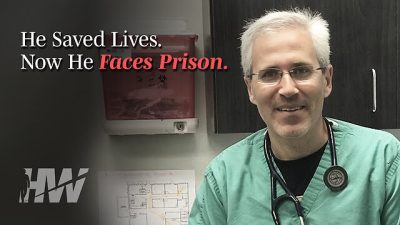
HE SAVED LIVES. NOW HE FACES PRISON.
or go to
Aletho News Archives – Video-Images
From the Archives
NATO Sanctions and the Coming Global Diesel Fuel Disaster
By F. William Engdahl – New Eastern Outlook – 11.04.2022
Amid the ongoing global inflation crisis, NATO heads of state and mainstream media repeat a mantra that high energy prices are a direct result of Putin’s actions in Ukraine since end of February. The reality is that it is the western sanctions that are responsible. Those sanctions including cutting SWIFT interbank access for key Russian banks and some of the most severe sanctions ever imposed, are hardly having an impact on the military actions in Ukraine. What many overlook is the fact that they are increasingly impacting the economies of the West, especially the EU and USA. A closer look at the state of the global supply of diesel fuel is alarming. But Western sanctions planners at the US Treasury and the EU know fully well what they are doing. And it bodes ill for the world economy.
While most of us rarely think about diesel fuel as anything other than a pollutant, in fact it is essential to the entire world economy in a way few energy sources are. The director general of Fuels Europe, part of the European Petroleum Refiners Association, stated recently, “… there is a clear link between diesel and GDP, because almost everything that goes into and out of a factory goes using diesel.” … continue
Blog Roll
 Aletho News
- Trump meets Rodríguez near Maduro’s prison as Venezuela’s oil flows to US
- Trita Parsi: Middle East Unraveling — Are We on the Path to World War?
- Iran FM meets with US envoy on UN meeting’s sidelines at American side’s insistence: Report
- Qatar PM calls for Gulf security framework with Iran, says war must be ‘wake-up call’
- China condemns US extortion of Iranian airlines, rejects Washington’s ‘illegal’ sanctions threats
- Italy to move military personnel from Taif base after missile strike
- Finland’s Stubb tells European leaders to calm down
- Defeating Russia on battlefield impossible – Fico
- Finland’s Gender Clinic Reversal
- Massachusetts Wants Mental Health Visits, Why Does Government Use ‘Health’ to Enter Our Homes & Families?
- If Americans Knew
- Sanctions are collective punishment: immoral and self-defeating
- Phosphorus Munitions Fired by Israel Burn Groves, Orchards in Southern Lebanon
- Israel Carries Out New Ceasefire Violations Across Gaza
- AI – Emphasis on the ‘I’: Israel Is Funding AI Chatbot Propaganda
- Israel Blocking Hundreds of Wheelchairs for Injured Children From Entering Gaza
- Israel Is Expanding and Upgrading Compounds for Palestinian Militias in Gaza
- The Palestinian-American Residents of This West Bank Town Are Wondering: Where Is Trump?
- Gaza desperately needs tents, wheelchairs, fuel… and everything else (Israel blocks it all) – Daily Update
- Israeli Attacks in Gaza Kill at Least Seven Palestinians Over Three Days, including Woman and Child
- Trump’s militarization of Washington DC as he pursues Israel’s war against Iran
- No Tricks Zone
- New Study: Earth And Venus Surface Warmth Largely Explained By Convection And Lapse Rate, Not CO2 Or Radiation
- 2025 Nature Paper Claiming Worsening Global Drought Gets RETRACTED …Heavily Flawed
- New Study: ‘Global Drought Shows No Detectable Recent Acceleration Under Climate Warming’
- Economic Masterminds: German Socialists Suggest Taxing Productivity Gains Stemming From Using AI
- The South China Sea Has Not Been Cooperating With The Climate Change Narrative
- Energy Crisis: Germany Enters Heating Season With Historically Low Gas Reserve Fill Levels
- New Study: The Antarctic Ice Sheet Gained Mass From 2020-2024 Due To Staggering Snow And Ice Accumulation
- Study: Ocean Heating Rates From Thousands Of Years Ago ‘Dwarf’ Modern Ocean Heating Rates
- Climate Extremists Target, Attack Large-Scale Power Grid Infrastructure In Germany!
- New Study: Antarctic Ice Melt Has Contributed Less Than 1 Centimeter To Sea Level Rise In The Last 30 Years

