Matthew d’Ancona and his fake news
Steel City Scriblings | July 30, 2018
Matthew d’Ancona, in yesterday’s Guardian, is concerned about the threat to democracy from fake news. He wants to see ‘social media giants’ …
… legally redefined in a new, third category that radically enhances their accountability for the content they host, without imperilling free political discourse. Striking the right balance in this jurisprudential task will not be easy. But who expected it to be?
He also wants …
… a new system of “credible annotation of standards, so that people can see, at a glance, the level of verification of a site” – essentially, kitemarking of the sort that is standard in almost every other sector of consumption.
I am less sure that the government should “initiate a working group of experts” to oversee this process. If there is one thing worse than what the committee describes as the “wild west” of today’s digital prairies, it is anything that even resembles a Ministry of Truth, or an Oftruth regulator. Better that independent charitable bodies perform this grading task – gaining the public’s trust incrementally, as the admirable Full Fact and other fact-checking organisations have done in recent years.
Matthew d’Ancona being on the liberal wing of British Conservatism, that last paragraph is to be expected. He sees the dangers, earnest democrat that he is, of state censorship but believes, credulous liberal that he is, these can be averted by a few judicious mechanisms of the classic ‘checks and balances’ sort. I’m not going to argue with him on that. With bigger fish to fry, I’ll confine myself to pointing out that his ‘admirable’ Full Fact is led by Mayborn Group CEO and Tory Party donor Michael Samuel, while so many of those ‘other fact-checking organisations’ have on closer inspection proved to be at best self righteous – and self appointed – custodians of truth; at worst risibly tainted.1
d’Ancona’s complacency is neither the inevitable nor exclusive product of a costly education and privileged lifestyle, but is nurtured and at every turn reinforced by both. How do you think the man would respond to the question put to one similarly placed, the BBC’s Andrew Marr, in a 1996 interview with Noam Chomsky?
The media are selling privileged audiences. These are big businesses, big corporations selling privileged audiences to other corporations. Now what picture of the world would a rational person expect to come out of such a structure?
Marr had no answer and I don’t suppose d’Ancona has either. Neither man is a liar; both are the successful products of an ideological matrix upheld, confirmed and reaffirmed in those myriads of conversations and everyday acts which define – if we don’t ask about the nature of power – ‘common sense’ and what is ‘moderate’. It’s through such conversations and acts that normality is most thoroughly demarked, lines most durably drawn between ‘moderate’ and ‘extreme’. But those conversations and acts do not take place in a vacuum. They arise within particular social relations of class division, their heavy ideological lifting done in the education, entertainment2 and news industries.
Specifically here, many read a superficially broad spectrum of media views on small to middling matters – Mail at one end, Guardian at the other – as proof of an ‘open’ society whose forms of democracy they take at face value. Others call that spectrum a slit-window view on the world, a painfully limited vista constrained not by Truth – though that can’t be entirely bypassed: it has in normal times to be accommodated – nor yet by blunt censorship. Liberal media do indulge in crude onslaughts of the kind directed at Corbyn, Assad and Putin. They do not, however, make a habit of telling outright lies. To do so entails risks only undertaken when the alternatives pose an unusually stubborn impediment to ruling class3 interests. In the main, liberal media lie by omission. (When did you last read a Guardian or Independent piece on how those who took the decision to invade Iraq and demolish Libya have profited from their reconstruction? When did such media last run a piece on the extent of Syria’s privatisation? Come to that, when will we get a fearless Guardian investigation of the implications, as ad revenues fall, of growing donor dependence on American liberals well to the right of Britain’s?) And they spin with scant regard for consequence, as with the demonisation of Assad and Putin by daily repetition of unproven allegations to the point where inflammatory claim4 can no longer be distinguished – ‘no smoke without fire’ – from proven fact.
Chomsky, with his gift for framing subtle truths and complex observations in simple but never simplistic terms, raises the issue of that ideological matrix more than once in his BBC interview with Andrew Marr. When Marr asks with incredulity if Chomsky supposes he and his colleagues profess beliefs not sincerely held but calculated to advance their careers, Chomsky responds:
No, I am sure you believe everything you say. What I am saying is that if you believed something different, you wouldn’t be sat in that chair interviewing me.
Neatly put. Similarly, the owlish Mr d’Ancona wouldn’t be sat where he is but for his touching faith that the core aim of his various media employers is to pursue truth, as opposed to selling privileged audiences to other big corporations. To be a useful idiot you have to be, well, useful.
* * *
- See for instance this Spiked piece, which asks “Who exactly will judge which news is ‘real’ and what’s ‘fake’, and decide whether the world’s citizens are ‘properly informed’? While ensuring ‘those in positions of power are held accountable’ is a laudable aim, the question remains: accountable to whom? The people in a democratic system? Or our self-appointed ‘fact-checkers’ in a software package. And perhaps most pointedly – who will the fact-checkers be accountable to?”
- While education and news media are routinely and rightly decried by capitalism’s critics, I’m coming firmly to the view that the cumulative effect of decades of soft propaganda from TV and cinema is every bit as vital to its ideological underpinnings. That near infinite accumulation of subtexts, seldom intended as propaganda – rather, as Giving The Public What it Wants – is all the more effective for that ‘innocence of intent’ in its nurturing of deeply orientalist assumptions of Western and especially American beneficence. And of Arab and Slavic villainy for villainy’s sake.
- My concise definition of a ruling class is its monopoly ownership of some essential of wealth creation. Under capitalism this is the big money and production infrastructure without which wealth cannot be produced. Of course there is far more to say, but all else derives from this one central reality.
- Of all the charges to be laid at the doors of BBC, Guardian and Independent, none is graver than that their coverage of Russia, Syria and Ukraine – and mix, on Yemen, of near silence with unsubstantiated claims of Iranian backed Houthis – has the effect, regardless of intent, of promoting the high tech and highly lucrative delivery of death to the near defenceless peoples of the global south.
Zionist Inquisition in full cry
Their quarry: anti-racist Labour leader Jeremy Corbyn; their weapons: anti-semitism smears; their purpose: to oust Corbyn and replace him with a compliant pro-Israel stooge
By Stuart Littlewood | Dissident Voice | July 30, 2018
The row over anti-Semitism has erupted yet again in the UK Labour Party, as predicted a few months ago by Miko Peled, the Israeli general’s son, who warned that:
… they are going to pull all the stops, they are going to smear, they are going to try anything they can to stop Corbyn…. the reason anti-Semitism is used is because they [the Israelis] have no argument….
So Israel’s pimps at Westminster, never happy unless they’re telling everyone what to think and say, are frantically insisting that the Labour Party adopts the discredited International Holocaust Remembrance Alliance (IHRA) definition of anti-Semitism in its unedited entirety and incorporates it into the party’s code of conduct. Many party members believe they have blown up the matter out of all proportion simply to settle their long-standing score – as Peled says – with the Labour leader Jeremy Corbyn, a genuine anti-racist, champion of Palestinian rights and critic of Israel.
This is what the IHRA definiition says:
Antisemitism is a certain perception of Jews, which may be expressed as hatred toward Jews. Rhetorical and physical manifestations of antisemitism are directed toward Jewish or non-Jewish individuals and/or their property, toward Jewish community institutions and religious facilities.
It includes these eleven “contemporary examples of anti-semitism”:
- Calling for, aiding, or justifying the killing or harming of Jews in the name of a radical ideology or an extremist view of religion.
- Making mendacious, dehumanising, demonising, or stereotypical allegations about Jews as such or the power of Jews as collective — such as, especially but not exclusively, the myth about a world Jewish conspiracy or of Jews controlling the media, economy, government or other societal institutions.
- Accusing Jews as a people of being responsible for real or imagined wrongdoing committed by a single Jewish person or group, or even for acts committed by non-Jews.
- Denying the fact, scope, mechanisms (e.g. gas chambers) or intentionality of the genocide of the Jewish people at the hands of National Socialist Germany and its supporters and accomplices during World War II (the Holocaust).
- Accusing the Jews as a people, or Israel as a state, of inventing or exaggerating the Holocaust.
- Accusing Jewish citizens of being more loyal to Israel, or to the alleged priorities of Jews worldwide, than to the interests of their own nations.
- Denying the Jewish people their right to self-determination, e.g., by claiming that the existence of a State of Israel is a racist endeavor.
- Applying double standards by requiring of it a behavior not expected or demanded of any other democratic nation.
- Using the symbols and images associated with classic antisemitism (e.g., claims of Jews killing Jesus or blood libel) to characterise Israel or Israelis.
- Drawing comparisons of contemporary Israeli policy to that of the Nazis.
- Holding Jews collectively responsible for actions of the state of Israel.
Jewish community leaders are furious that Labour’s ruling body, the National Executive Committee, disagrees with 4 of these examples and refuses to include them in the party’s new code of conduct. The NEC, of course, is mindful that the code must be enforceable across half-a-million members with differing opinions, many of whom are tired of the constant whining. An emergency motion orchestrated by the Jewish lobby, forcing the NEC to take on board the whole IHRA package with all its examples and humiliating Corbyn in the process, was supposed to be considered yesterday but is now postponed till September.
The NEC explains its omissions by saying accusations of dual nationality are wrong rather than anti-semitic. It strikes out altogether the idea that calling the state of Israel “a racist endeavour” is anti-semitic, no doubt for the simple reason that it is racist. Israelis have for decades practised apartheid, casting their non-Jew population as second-class citizens, and now it’s enshrined in their new nationality laws, in black and white. What’s more, Israel’s illegal occupation has denied Palestinians their right to self-determination for the last 70 years. The NEC also chooses not to forbid the use of symbols and images associated with classic anti-semitism and comparing Israeli policy to that of the Nazis unless there’s evidence of anti-semitic intent.
Sounds reasonable, you might think. But 68 rabbis have accused the Labour leadership of acting “in the most insulting and arrogant way” by leaving out or modifying those controversial bits. In a letter to The Guardian they say it’s not the Labour Party’s place to re-write it.
The arrogance is theirs, I think. Here’s why. The House of Commons Home Affairs Select Committee recommended adoption of the IHRA definition of anti-Semitism subject to the inclusion of two caveats:
(1) It is not antisemitic to criticise the Government of Israel, without additional evidence to suggest antisemitic intent.
(2) It is not antisemitic to hold the Israeli Government to the same standards as other liberal democracies, or to take a particular interest in the Israeli Government’s policies or actions, without additional evidence to suggest antisemitic intent.
The Government agreed but dropped the caveats saying they weren’t necessary. Subsequently the IHRA definition has run into big trouble, being condemned by leading law experts as “too vague to be useful” and because conduct contrary to the IHRA definition is not necessarily illegal. They warn that public bodies are under no obligation to adopt or use it and, if they do, they must interpret it in a way that’s consistent with their statutory obligations and with the European Convention on Human Rights, which provides for freedom of expression and freedom of assembly.
IHRA definition of anti-Semitism is deeply flawed
Crucially, freedom of expression applies not only to information or ideas that are favourably received or regarded as inoffensive, but also to those that “offend, shock or disturb the State or any sector of the population” – unless they encourage violence, hatred or intolerance. Calling Israel an apartheid state or advocating BDS against Israel cannot properly be characterized as anti-Semitic. Furthermore, any public authority seeking to apply the IHRA definition to prohibit or punish such activities “would be acting unlawfully”.
The right of free expression, as Labour’s Zio- Inquisitors ought to know, is now part of UK domestic law by virtue of the Human Rights Act. Furthermore the 1986 Education Act established an individual right of free expression in all higher education institutions. Then there’s Article 19 of the Universal Declaration of Human Rights which bestows on everyone “the right to freedom of opinion and expression; this right includes freedom to hold opinions without interference and to seek, receive and impart information and ideas through any media and regardless of frontiers”. As always, such rights are subject to limitations required by law and respect for the rights of others.
So the IHRA definition is a minefield. It’s not something a sane organisation would incorporate into its Code of Conduct – certainly not as it stands. It contravenes human rights and freedom of expression. But when did the Israel lobby ever care about other people’s rights?
The whole fuss borders on the farcical when you ask what anti-Semitism means. Who are the Semites anyway? Everyone avoids this question like the plague. Why? It’s embarrassing. DNA research shows that most of those living today who claim to be Jews are not descended from the ancient Israelites at all and the Palestinians have more Israelite blood. So they are the real Semites. Research by Johns Hopkins University School of Medicine, published by the Oxford University Press in 2012 on behalf of the Society of Molecular Biology and Evolution, found that the Khazarian Hypothesis is scientifically correct, meaning that most Jews are Khazars. The Khazarians converted to Talmudic Judaism in the 8th Century and were never in ancient Israel.
Probably no more than 2% of Jews in Israel are actually Israelites. So even if you believe the propaganda myth that God gave the land to the Israelites, He certainly didn’t give it to Netanyahu, Lieberman and the other East European thugs who rule the apartheid state.
As former Israeli Director of Military Intelligence, Yehoshafat Harkabi wrote: “It would be a tragic irony if the Jewish state, which was intended to solve the problem of anti-Semitism, was to become a factor in the rise of anti-Semitism. Israelis must be aware that the price of their misconduct is paid not only by them but also Jews throughout the world.”
Well, that tragic irony has come to pass. As has been suggested before, so-called anti-Semitism is a matter best resolved by the Jewish ‘family’ itself. There’s no reason to bother Corbyn or the Labour Party with it.
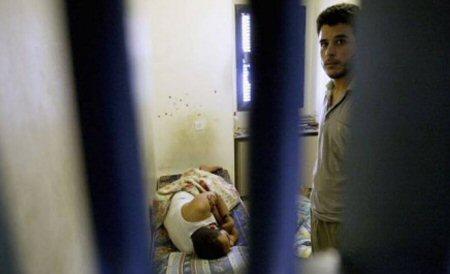
Palestinian student Ola Marshoud sentenced to 7 months in Israeli prison; female students receive arrest threats

Photo: Ola Marshoud, via Asra Media
Samidoun Palestinian Prisoner Solidarity Network – July 30, 2018
Palestinian student Ola Marshoud, 21, from the Balata refugee camp in Nablus, was sentenced to seven months in Israeli prison by the Salem military court on Monday, 30 July, for her involvement in student activism on the An-Najah University campus. Marshoud has been detained since March, when she was summoned to interrogation at the military base near Huwwara. When she arrived, she was transferred the interrogation center at Petah Tikva.
She was accused in the military court of involvement in student organizing at An-Najah University. Active Palestinians involved in the student movement are repeatedly targeted for Israeli arrest, imprisonment and persecution, including Omar Kiswani, the student body president at Bir Zeit University. Statistics indicate that there are over 300 Palestinian university students imprisoned in Israeli jails.
This policy of colonial military repression of student activism is continuing; in the pre-dawn hours of Monday, 30 July, a number of families in al-Khalil reported that armed occupation forces posted notices on the walls of the area, particularly the homes of female students, threatening them against participating in student elections and activism with the Islamic Bloc on their campuses. Several young women’s family homes were raided and letters presented to their parents by occupation soldiers accusing them of participating in “illegal activities” through student activism.
One such letter, directed at students’ parents from Israeli occupation intelligence, said: “If you get this message, it means that you are the parents of one of the activists of the Islamic bloc, which is an illegal activity. We alert you that any such involvement may lead to the arrest of your daughter, damaging her academic life and future, wasting your money and causing concern and indignation in the hearts of your family. We turn to you to follow up on the activities of your daughter and lead her away from such actions. You have been warned of the consequences.”
Four journalists among 28 Palestinians seized by Israeli occupation forces

Samidoun Palestinian Prisoner Solidarity Network – July 30, 2018
Israeli occupation forces seized 28 Palestinians on Monday morning, 30 July, including four Palestinian journalists who work for al-Quds TV: Alaa al-Rimawi, Mohammed Sami Alwan, Qutaiba Hamdan and Hassani al-Najas. Rimawi directs the al-Quds TV Ramallah bureau and his home in the al-Masayef neighborhood in Ramallah was raided by occupation forces, while Mohammed Alwan was also seized from his home.
Qutaiba Hamdan was seized from Beitunia and Husni Anjas from Kharbata Bani Harith, and his vehicle and work equipment were seized by the Israeli occupation. Quds News reported that Israeli occupation forces accused the four journalists of “incitement,” based on their reporting about the realities of Israeli colonization in Palestine. Just days ago, Palestinian writer Lama Khater was seized from her home in al-Khalil. Khater and the four journalists seized today make up some of the 29 Palestinian journalists imprisoned by Israel. These imprisoned journalists include student Istabraq Tamimi and a number of journalists detained without charge or trial, including Hammam Hantash, Abdullah Shatat and Abdel-Mohsen Shalaldeh., noted the Palestinian Prisoners’ Affairs Commission.
The Palestinians seized on Monday included the freed prisoners Mohsen Hardan Shreim, Bilal Maskawi, Nidal Nofal, Fadi Hourani, Khaled Wajih Sabri, Mohammed Wajih Sabri, Nour Daoud and Hussam Hatem Abu Libdeh in Qalqilya. In Bethlehem, occupation forces seized former prisoners Fahad As’ad and Atta al-Hreimi as well as Mohammed Ali al-Muti. In addition to the four journalists, they also seized Wassim Jadallah and Moataz Abu Rahmah from the Ramallah and el-Bireh area; Khaled Sidqi Daraghmeh and Nasr Mohammed Nasrallah Daraghmeh from Tubas; and Shadi Riyad al-Harb from Dura village in al-Khalil.
In addition, occupation forces raided a number of homes in al-Khalil, including the home of Nada Dweik, the daughter of Palestinian Legislative Council speaker and former prisoner Abdel-Aziz Dweik, ransacking it. They posted on the walls of houses in the city warning students against activism with the Islamic bloc on campuses.
How Israel Silences Palestine in EU Circles
![]()
By Issam Aruri | IMEMC | July 18, 2018
The Israeli propaganda machine works internationally to undermine the role of Palestinian NGOs which disclose Israeli violations of international law, and maintain the well-being of Palestinian people.
Imagine the following: a toxic op-ed is published that defames your organisation. You contact the website on which it features and are invited to publish a rebuttal.
The next day, you submit your article. As the editors are about to put it online, they are targeted by a sophisticated disinformation campaign.
More than a dozen people call the editors, seemingly on your behalf, and apply heavy pressure to publish the article. One of the callers even tries to bribe them to get it published.
This confuses and intimidates the editors, who have never experienced anything like it.
They fear that publishing under pressure may damage the independence and reputation of their website, which is a news magazine for the European Parliament.
The editors contact you and you clarify right away that none of these calls originated from your organisation. You urge them to publish your article, as they had promised. But despite your repeated requests, they don’t do so. They don’t even respond anymore to your phone calls and emails.
This is what recently happened to the Palestinian NGO network PNGO, which is an umbrella of 134 civil society organisations in the West Bank and Gaza Strip.
The op-ed in question was mine, which I had submitted to a Brussels-based website called EP Today.
According to its own information, EP Today is “designed only” for policy opinions by members of the European Parliament. On 26 February, however, it published a slanderous op-ed by NGO Monitor that targeted PNGO.
NGO Monitor is an Israeli right-wing organisation that cooperates with the Israeli government in undermining NGOs that criticise Israel’s violations of human rights and international law.
It constantly attacks Amnesty International, Human Rights Watch and dozens of other human rights and civil society organisations, including Israeli NGOs. PNGO is high on its target list.
In its article, NGO Monitor provided false and misleading information about PNGO’s mission and conduct.
While PNGO is a catalyst for a vibrant civil society in Palestine, NGO Monitor framed PNGO as a “ring leader” of a “gang” of NGOs that shrink Palestinian civil space.
Can’t be ignored
For a long time, we ignored organisations like NGO Monitor that provide cover for the Israeli occupation. But this time, we decided to submit a rebuttal to this toxic propaganda.
As mentioned above, EP Today violated its promise and didn’t publish our rebuttal. To make things worse, our article was apparently forwarded to NGO Monitor, which allegedly tried to prevent its publication.
An editor we spoke to implied this, with reference to one member of EP Today’s board of directors, who seems to have ties to NGO Monitor. This would constitute grave professional misconduct, calling into question EP Today’s independence and integrity.
In any case, we won’t be silenced. Our rebuttal of NGO Monitor’s propaganda, titled “What Europe can do to defend civil space: a response by the Palestinian NGO Network”, is now available for everyone, after we published it on our website.
Meanwhile, our real concern is not the article.
What troubles and burdens us is the big picture: the all-out attack that the Israeli government and its affiliated organisations such as NGO Monitor have launched against Palestinian human rights defenders.
Shrinking space for civil society is a global phenomenon. However, the threat it poses in Palestine has an extra dimension: Israel’s strangling military occupation, which began more than 51 years ago.
As a result of the occupation, Palestinians live without a sovereign government, without basic protection and in a fragile economy that heavily relies on international aid.
In this context, PNGO’s member organisations play a crucial and indispensable role in providing services and in preserving social cohesion.
Israel’s attack on us aims to neutralise NGOs that expose its violations of international law and to break the backbone of Palestinian society at large. The attack is meant to sustain and entrench the occupation.
Our reality
The reality in which we live is this: We face draconian digital surveillance and interference by Israel, which violates our fundamental privacy and obstructs our work.
I suspect this triggered the disinformation campaign described above (see AP’s article for more: “Covertly, Israel prepares to fight boycott activists online”).
Like NGO Monitor, the Israeli government engages in smear campaigns against Palestinian NGOs.
For example, on 1 July 2017, Israeli UN Ambassador Danny Danon branded our members Al-Haq and Al-Mezan as “supporters of terror”, based on false allegations that they have ties to Hamas and the PFLP.
Al-Haq and Al-Mezan are internationally renowned human rights organisations.
Most recently, the Israeli Ministry of Strategic Affairs published a slanderous report that contains similar allegations and aggressively accuses the EU of funding Palestinian and European NGOs that sponsor terror and promote Boycott, Divestment, Sanctions (BDS – the Palestinian-led global campaign putting pressure on Israel to end its violations of international law).
Indeed, blocking EU funding to Palestinian NGOs is Israel’s declared goal.
In 2015 and 2016, the director and a staff member of Al-Haq received ongoing death threats.
In response to the threats against the staff member, who is based in The Netherlands and Al-Haq’s representative to the International Criminal Court, the Dutch authorities opened a criminal investigation.
While official results are pending, all indications point in Israel’s direction.
PNGO and the Palestinian Human Rights Organisations Council (PHROC) have compiled their concerns about the escalating campaign to silence, delegitimise and defund Palestinian civil society organisations and human rights defenders in a joint position paper, including recommendations to the EU.
For decades, the EU has invested into civil society organisations in Israel and Palestine that promote its core values “on the ground”. The support and protection of human rights defenders is a declared priority of the EU, as also displayed by the guidelines it adopted in 2008 to that end.
On 3 October 2017, in a comprehensive resolution, the European Parliament sounded alarm about the shrinking space for civil society and called “for continued and increased EU support and funding in creating a free and enabling environment for civil society.”
This is the time to act on these commitments.
We rely on the EU to shield us from Israel’s campaign to destroy Palestinian civil society, which has spread to Europe and is reinforced by organisations like NGO Monitor that are designed to shrink our space.
~EU Observer/Days of Palestine
Issam Aruri is the chair of the Palestinian Non-Governmental Organisations Network (PNGO), an umbrella of 134 civil society organisations in the West Bank and Gaza Strip that promote the rights and well-being of the Palestinian people.
Twitter Disavows Shadow Banning, But Facts Say Otherwise
Sputnik – July 28, 2018
A Vice exclusive story on Wednesday caught Twitter red-handed engaging in the practice of shadow banning prominent GOP politicians, removing their profiles from drop-down searches. Since then, the social media platform has struggled to provide an adequate explanation for the phenomenon.
“We do not shadowban,” a Twitter spokesperson told Sputnik Wednesday. However, Twitter employees were secretly filmed earlier this year explicitly bragging about doing just that.
Vice’s expose, complete with screenshots forwarded to Twitter, showed prominent Republican Party politicians such as party chair Ronna McDaniel; Republican Congressmen Mark Meadows, Jim Jordan, Devin Nunes and Matt Gaetz; or Donald Trump Jr’s spokesperson Andrew Surabian being absent from drop-down searches on the site’s main interface. They could still be found through a “full search,” although it’s unclear if Vice meant a TweetDeck search or something else.
This is a bizarre and incredibly disingenuous statement from @Twitter. What’s the point of following someone if Twitter blocks their tweets from appearing in your time-line? Maybe that’s not technically “shadow-banning” but it’s heavy-handed manipulation https://t.co/OaHf6qQplF pic.twitter.com/QzyJSajY5S
— Glenn Greenwald (@ggreenwald) July 27, 2018
The following day, Twitter Legal, Policy and Trust & Safety Lead Vijaya Gaffe and Product Lead (and co-founder) Kayvon Beykpour posted on Twitter’s blog to try and clear up some of the confusion about what happened. However, their explanation left us with more questions than answers. They simply denied that any bias was behind the selective invisibility and palmed the blame off with vague language and insinuations and insulting leaps of logic.
Because of the baffling nature of their explanation, we will address its parts piecemeal.
Gaffe and Beykpour began by setting the terms of the discussion with an attempt at a definition of the phenomenon in question: shadow banning.
“People are asking us if we shadow ban. We do not. But let’s start with, ‘what is shadow banning?’ The best definition we found is this: deliberately making someone’s content undiscoverable to everyone except the person who posted it, unbeknownst to the original poster.”
This definition is worded in such a way that it isolates only the specific act of shadow banning and ignores the larger context and purpose behind the shadow banning, which is to decrease the visibility of unwanted behavior by a person in ways that are difficult to detect by the person in question.
This article from Wired in 2009 explains shadow banning as a variety of practices designed to decrease the prominence and visibility of trolls and problematic posters, one of which is, indeed, to render a user’s content invisible to everyone except the user themselves; but also crowdsourced post ranking and allowing the filtering of posts by rank; the removal of vowels in offending language to neutralize it; and other tactics.
“The world’s top discussion moderators have developed successful tools for keeping online miscreants from disrupting conversation. All are rooted in one psychological insight: If you simply ban trolls — kicking them off your board — you nurture their curdled sense of being an oppressed truth-speaker. Instead, the moderators rely on making the comments less prominent,” the Wired article reads. A far cry from Twitter’s selective definition.
“We do not shadow ban. You are always able to see the tweets from accounts you follow (although you may have to do more work to find them, like go directly to their profile).”
Let’s take a moment to take this statement apart. When a user follows someone on Twitter, they do so explicitly for the purposes of seeing that person or organization’s posts appear in their feed. That’s literally the only reason. If that wasn’t how the “follow” feature worked, we would all have to search for and visit the pages of each page we wanted to see the posts of each time we wanted to read them. But you can do that without following a person; you can search for anybody and see their posts so long as they aren’t set to private and they haven’t blocked you, in which case you couldn’t see their posts even if you followed them.
So Twitter is here admitting to disabling the primary functional feature of its platform for select users, a feature designed to make users’ content visible, and then swearing that this isn’t shadow banning.
Imagine if we did this in the real world and unplugged someone’s phone line to their house, then told people trying to call that person that their phone hadn’t been unplugged and if you wanted to speak to the person you would have to “do more work to find them,” like go directly to their house and speak with them. Wouldn’t that defeat the purpose of the phone line? Wouldn’t we call that censorship?
“And we certainly don’t shadow ban based on political viewpoints or ideology.”
This is simply a denial of the evidence. Vice and numerous other publications have provided concrete proof that whatever was happening was only affecting politicians of a certain political party and not politicians of another certain political party, along with a scattering of other figures, too. Denial isn’t disproving, and it isn’t an explanation.
“We do rank tweets and search results. We do this because Twitter is most useful when it’s immediately relevant. These ranking models take many signals into consideration to best organize tweets for timely relevance. We must also address bad-faith actors who intend to manipulate or detract from healthy conversation.”
Again, what is a “healthy conversation?” What is “manipulation?” What is in bad faith? Some might find those questions begging or distracting, but there’s a real question when it comes to interpretation of someone’s facts or their presentation of those facts that leans heavily on the normative bias of the reader. What everyone considers to be useful, relevant or appropriate is not the same, and Twitter has never made clear exactly how they define those terms or judge particular posts or posters against those definitions.
The author of this Sputnik article is a transgender person. Some people might consider speech in the defense of their rights “hate speech” and some people might consider discussions of transgender issues not to be relevant. They might consider the presentation of alternative studies to those that say that gender is determined by genetics or by genitals as being manipulative or detracting from healthy conversation. Does that make them these things? Taking a stance on an issue like that necessarily requires making a political statement.
Further, the very act of discussion necessarily involves manipulation to some extent, does it not? One party seeks to convince the other party that it is right, by undermining its arguments and by casting doubt upon the facts and narratives presented by the other side. As before, the question of who decides which topics and which discussions are fair game and which are not is all-important: it requires making a political statement about what is and is not correct and what is and is not justified discussion.
So if a platform is pruning its content according to political standards, doesn’t that make it a publication and not a neutral social forum?
Gadde and Beykpour went on to address certain specific aspects of Wednesday’s snafu.
“‘It looks like this only affected Republican politicians. Were Democratic politicians also impacted?’ Yes, some Democratic politicians were not properly showing up within search auto-suggestions as result of this issue. As mentioned above, the issue was broad-ranging and not limited to political accounts or specific geographies. And most accounts affected had nothing to do with politics at all.”
Which Democratic politicians? Certainly not the equivalents of those GOP leaders affected. A city government official with a D next to their name being shadow banned is still an infraction of political discourse, to be sure (although again, we don’t know which Democratic politicians were affected), but it’s also not fair to say that a phenomenon that affected key leaders of a major political party, which controls two-thirds of the US government, but no major figures in the opposition party, is simply a glitch or programming error. There is clearly a problem of bias in how legitimate subjects of searches appear in the system, whether it was specifically designed or not.
“‘OK, so there was a search auto-suggest issue. But what caused these Republican representatives to be impacted?’ For the most part, we believe the issue had more to do with how other people were interacting with these representatives’ accounts than the accounts themselves (see bullet #3 above). There are communities that try to boost each other’s presence on the platform through coordinated engagement. We believe these types of actors engaged with the representatives’ accounts — the impact of this coordinated behavior, in combination with our implementation of search auto-suggestions, caused the representatives’ accounts to not show up in auto-suggestions. In addition to fixing search yesterday, we’re continuing to improve our system so it can better detect these situations and correct for them.”
So in other words, it was a problem that too many people liked certain politicians’ content they post on Twitter, or “boosted” their presence. That sort of goes against Twitter’s own stated goal of “serving healthy public conversation.” Indeed, the statement that Twitter is “serving healthy public conversation” all while selectively trimming that conversation based on some parts of it being too-well-liked, all the while claiming impartiality, insults the reader’s intelligence.
And isn’t the excuse that it was simply a problem with the algorithm basically a version of the “banality of evil” defense? It shoves responsibility for effects caused by a system created by humans for a specific purpose away from the actors that created that system or helped it function and onto an abstract, faceless, nonliving entity: a bureaucracy or, in this case, a computer program.
Twitter hasn’t disproven anything; all it’s proven is how callously it performs its task of being an extended mouthpiece for The Resistance.
Read also:
Twitter Bows to McCarthyist Witch Hunt, Bans RT and Sputnik Ads
Twitter Ascribes Alleged Shadow Banning of Prominent Republicans to Glitch
Rep. Congressman Threatens Twitter With Complaint Over ‘Shadow Banning’
Project Veritas Claims Twitter is Suppressing Pro-Trump, Right-Wing Tweets
Israeli cartoonist dismissed after Netanyahu’s swine illustration

Ma’an – July 26, 2018
BETHLEHEM – The Jerusalem Report, a biweekly magazine published by The Jerusalem Post, dismissed a freelance cartoonist for an illustration depicting Israeli Prime Minister Benjamin Netanyahu and Likud lawmakers as swine characters.
The Union of Journalists in Israel confirmed on Wednesday that Avi Katz, the criticized cartoonist, was dismissed after the cartoon ran in the magazine’s edition this past week.
Katz is an American immigrant to Israel and has been contributing various political illustrations to the magazine since 1990.
The cartoon by Katz portrayed a photo of the grim-faced Netanyahu and members of the Likud, a right-wing political party, taking a selfie at the Israeli Knesset following the approval of the controversial Nationality Law.

The Nationality Law enshrines the status of the State of Israel as the nation state of the Jewish people and declares that the right to exercise national self-determination in Israel is exclusive to Jews.
The approved law was even labeled as “racist and discriminatory” by many critics from around the world.
The cartoon was meant to criticize the Israeli Knesset’s approval of the law.
Katz’s cartoon portraying Netanyahu and the lawmakers as swine characters was inspired by George Orwell’s “Animal Farm” and was captioned with a famous Orwell line “All animals are equal but some are more equal than others.”
George Orwell’s “Animal Farm” published in 1945, is an allegory which reflects events leading up to the 1917 Russian Revolution and then on into the era of the Soviet Union and Joseph Stalin’s subsequent rise to power.
Animal Farm depicts the events as a form of revolt by farm animals against their human owner and its aftermath. Orwell emphasizes human characteristics through the behaviors of the swine, who only seek more power, pointing out that humans can be corrupt as everything else in this world.
After Katz’s dismissal, the Israeli Animix festival launched a fundraising page in support of the cartoonist and had raised over $10,000 to employ him until being able to find an employment.
Female Palestinian writer deprived of sleep in Israeli interrogation

Ma’an – July 25, 2018
A lawyer of the Palestinian Prisoner’s Society (PPS) said that prisoner, Lama Khater, 42, is being subjected to harsh and intensive interrogation at the Ashkelon Israeli prison, on Wednesday.
Lawyer Firas al-Sabbah, who visited Khater in prison, said that Israeli forces detained and removed Khater from her home in the southern occupied West Bank district of Hebron on predawn Tuesday to the illegal Israeli settlement of Kiryat Arba, where she was held until 7 a.m.
Khater was then transferred to the Ashkelon prison.
Khater told her lawyer that she was handcuffed to a chair throughout the entire interrogation; she also pointed out that interrogators deprived her of sleep and continued to curse and shout at her.
Lawyer al-Sabbah confirmed that a court hearing will be held this Thursday, 26th of July, 2018.
Khater is a Palestinian female writer and a mother of five children, who was detained for unknown reasons from her home during predawn raids carried out by the Israeli forces.
According to prisoners rights group Addameer, there are 5,900 Palestinian prisoners being held in Israeli prisons, 60 of whom are female prisoners.
Exposed! How Britain’s anti-Semitism Scaremongers Operate
By Eve Mykytyn | Information Clearing House | July 10, 2018
This article about the British charitable organisation, the Campaign against Anti-Semitism (CAA), and its officers, Gideon Falter and Steve Silverman, examines events in England but ought to serve as a cautionary message for Canadians and Americans.
The article will delve into the corrosive methods of the CAA; review the manner in which this ultra Zionist group “discovers” anti-Semitic “incidents”; examine their inaccurate statistical “studies” and see how they seek to intimidate political parties, venues, the press and others; and look at the court cases which the CAA has prosecuted. In the guise of fighting anti-Semitism, the CAA has managed to manoeuvre British society into abdicating its core liberal values, intimidate the prosecutorial and judicial system, and silence criticism of Israel in both social media and the mainstream media.
The CAA does not just attempt to limit speech; it openly follows a scorched earth policy “that if someone commits an anti-Semitic act in the UK (including criticism of Israel)” the CAA “ensure[s] ruinous consequences, be they criminal, professional, financial or reputational”.
For example, in the last 18 months Britain’s largest political party, the Labour Party, has suspended and expelled over a hundred of its members for expressing their views on Israel or Jewish history. Presumably these dismissals act as a deterrent to others who might also wish to express their opinions. Hard as it is to believe, in 21st century Britain people have been imprisoned for trying to be funny…
The CAA’s “success” in Britain is not irrelevant to Americans. Despite the First Amendment, rules limiting speech have been creeping into our society, notwithstanding our constitutional protections.
Organisations not unlike CAA have been operating in the US for some time. In South Carolina criticising Israel is essentially prohibited on public university campuses, and in other states support for BDS (the Boycott, Divestment and Sanctions movement) will prohibit one from getting a government job or contract. Similar laws have been proposed in the US Congress. It is crucial that we resist this slide into controlled speech at the expense of our crucial values of free expression and tolerance.
Rowan Laxton
In 2006 Rowan Laxton was using an exercise bike alone on the mezzanine floor of a London gym when he saw a television report about an elderly Palestinian man killed by the Israeli assault on Gaza. Laxton allegedly exclaimed: “F…..g Israelis! F…..g Jews!” Gideon Falter (now head of the CAA) and William Lemaine, who were on a lower floor using weights, claimed to have overheard Laxton, and complained to staff at the gym.
The police were going to let Laxton off with a caution but, before it could be arranged, Falter found out that Laxton was a senior Foreign Office official and brought the story to half a dozen newspapers. The police decided to proceed with a prosecution.
Laxton was initially found guilty of “using threatening, abusive or insulting words or behaviour, or disorderly behaviour… within the hearing or sight of a person likely to be caused harassment, alarm or distress thereby…” aggravated by using abusive words that had a racial or ethnic element. Laxton was fined and removed from his Foreign Office position.
Laxton exercised his right to an appeal and a rehearing wherein the Crown Court found that Laxton did not say “f…..g Jews”, the comment on which the prosecution was based and which he had always denied. The court also found, as an alternative ground, that Laxton would have thought no one was within earshot.
The Daily Mail played a key role in ensuring that the case received national attention and went to trial, but seems not to have reported the appeal and acquittal at all. It is an open question of how Falter heard Laxton’s alleged outburst, if at the time no one was within earshot of Laxton. One reasonable assumption is that the court did not believe that Falter actually heard Laxton’s statement.
Eight years after the Laxton incident, Gideon Falter founded the Campaign Against Anti-Semitsm, a hardcore Zionist charity that advocates zero tolerance of, and vows to ensure “criminal, professional and reputational consequences”, to those it decides are anti-Semites.
Stephen Silverman
Stephen Silverman is the CAA’s “Director of Investigations and Enforcement” and has dedicated much of his time to ruining the intellectual and artistic careers of others. Silverman is himself a musician wannabe, and runs a music school in a London suburb.
In the last few years Silverman and the CAA have engaged in a relentless assault against artists, intellectuals, religious leaders and elected politicians operating in or visiting England. The “Director of Investigations” does not like ex-London Mayor Ken Livingstone, nor does he approve of a list of academics or church ministers who care for human rights or dare to disagree with Israel. The self-appointed inquisitor despises the hugely popular Labour leader Jeremy Corbyn. Silverman has made a number of attempts to ruin the music careers of both Alison Chabloz and Gilad Atzmon. In addition, Silverman takes it upon himself to write and call music venues demanding that they cancel Atzmon concerts claiming that Atzmon is a notorious anti-Semite.
Stephen Silverman, was exposed in open court in December 2016 as having been the Twitter troll @bedlamjones. As a Zionist troll, Silverman abused anti-Zionists, particularly women. His sadistic posts called for arrest and imprisonment in response what he considered to be “anti-Semitic” comments.
Silverman has also determined that Gordon Nardell, the man who has taken on the unenviable job of policing anti-Semitism within the Labour Party, is insufficiently sensitive to anti-Semitism. Apparently, according to Silverman, “Nardell has also turned his sights on Campaign Against Anti-Semitism, stating that our work to combat hatred directed at Jews by Labour members is “revolting” and results in anti-Semitism being “abused and belittled”.
For Nardell’s sin of distrusting the CAA, the CAA has demanded that “an independent and transparent disciplinary process… be instituted in the Labour Party”. The CAA’s website does not explain why the Labour Party need justify its own campaign against anti-Semitism to the CAA.
What is anti-Semitism?
UNESCO’s definition of racism is that it is “a theory of races hierarchy which argues that the superior race should be preserved and should dominate the others. Racism can also be an unfair attitude towards another ethnic group. Finally racism can also be defined as a violent hostility against a social group.” The traditional definition of anti-Semitism is the “criticising of, or discriminating against Jews for being Jews”. This definition is not substantially different from UNESCO’s definition of racism.
However, despite the fact that enforcing hate speech laws based on a traditional definition of racism would protect Jews as well as others, in December 2016 the United Kingdom followed other countries in adopting the “international definition of anti-Semitism”, which begins by saying: “Anti-Semitism is a certain perception of Jews, which may be expressed as hatred towards Jews. Rhetorical and physical manifestations of anti-Semitism are directed towards Jewish or non-Jewish individuals and/or their property, towards Jewish community institutions and religious facilities.”
The new “international definition” is troubling because it specifically targets speech and thoughts and fails to define what a “certain” perception of Jews is, and an expression of hatred towards Jews is cited, not to make the definition more precise but only as one possible example.
It is well worth reviewing the “examples of anti-Semitism” included in the “international definition” which are extremely broad and include, among other things, accusing a Jewish person of valuing Israel or his fellow Jews over his home country and the seemingly paradoxical provision prohibiting speech denying that Jews have the right to self-determination through Israel.
But if racism against one group is to be fought on a broader basis than other forms of racism, that extra protection ought to be to aid a group uniquely needing the state’s protection – an allegedly poor, downtrodden and persecuted group. It is of note that, in contrast to the downtrodden, Jews as a group have been extraordinarily successful at utilising the media and the courts and obtaining the power to “hold the feet of the government to the fire”.
If UNESCO’s definition aimed at defining racism as a universal problem, the “international definition” adheres to the idea that Jews are not a part of the universal, they are somehow different, their plight is unique.
Why do the Jews in particular need a broader definition of racial hatred? Why do Jews see a need to create a category of hatred that applies only to them? What is lacking in the UNESCO definition that is covered by the “international” one? The answer is that the “international definition” serves to restrain speech and restrict thought. It conflates the Jewish State of Israel with Jews as it vets a range of discourses such as criticism of Israeli politics, Jewish culture, Jewish history and Zionist ideology.
It is not surprising that this definition is espoused by some Zionist institutions. However, its adoption by so many countries is perplexing and begs an explanation. In a world in which free speech, freedom of association and freedom of religion are valued, there is a real question of why such a broad definition of anti-Semitism is appropriate and what exactly it is designed to accomplish.
Then there is the CAA, for whom the international definition is only a starting point. Their accusations of anti-Semitism go beyond even the very broad and over-inclusive definition of the “international definition”. If you find anti-Semitism in t-shirts, major party political gatherings or stupid pet videos, then the definition is very expansive indeed. Why would an organisation dedicated to fighting anti-Semitism be so interested in finding anti-Semitism in every possible utterance? It is clear that the CAA wants to stop any discussion of Jews, Israel or Jewish history in any but its prescribed manner. In its aggressive policing of speech, the CAA and others work to enforce Jewish power precisely as it is defined by Gilad Atzmon: “the power to suppress criticism of Jewish power”.
Freedom of t-shirt
While freedom of speech may be evaporating throughout the English-speaking world, at least we are assured that freedom of t-shirt is still protected in England.
Last year, the CAA’s website bemoaned that Edinburgh-based law graduate Sophie Stephenson won’t face criminal charges for wearing a Hezbollah t-shirt. The CAA wrote that: “On 1 July 2017, Stephenson tweeted a photograph of herself wearing a Hizballah t-shirt, explaining: “Went out to dinner with my family tonight wearing a Hizballah t-shirt.” And then, even worse, Stephenson confirmed: “I have a flag too.”
The CAA, in its zeal to fight anti-Semitism, reported Stephenson to the police, alleging that she had committed an offense under Section 13 of the Terrorism Act 2000. But despite the CAA’s urging, Scottish Police declined to act against the young “rebel”.
The CAA “considered undertaking a private prosecution” against Stephenson. However, its website lamented, “we were unable to secure enough funding to do so”. Following its report of the supposedly anti-Semitic/terrorist-loving Stephenson, the CAA called upon the public to “consider making a monthly donation to help fund Campaign Against Anti-Semitism” presumably to allow it to continue to harass Britons, accusing them of anti-Semitic behaviour, and interfering with their elementary freedoms including the right to wear rebellious t-shirts. Disturbingly, asking for donations in this context suggests that the CAA is attempting to cash in from its dubious anti-Semitic claims. Not exactly the ethical conduct you might expect of a charity.
Methodology, it is not!
The CAA claims to run “methodological” “research into anti-Semitism in British political parties”. Trolling and spying on elected British politicians on social media and public meetings, the CAA keeps a “record” of allegedly “anti-Semitic discourse and discourse that enables anti-Semitism, by officials and candidates in political parties”. This means that a Jewish organisation with a clear political agenda endeavours to monitor the British political discourse to restrain certain political opinions. The CAA’s actions prosecuting its farfetched “findings” are dangerous enough, but more troubling is its success in terrorising the British political universe into compliance with its dictates.
What are some “examples” of discourse that the CAA has claimed enable anti-Semitism and the dissemination of anti-Semitic ideas?
Ken Loach
Internationally acclaimed film-maker and Labour supporter Ken Loach told the BBC’s Daily Politics programme that he had been attending Labour meetings for 50 years and had “never in that whole time heard a single anti-Semitic word or a racist word”, and that allegations of anti-Semitism were a fallacy “without validation or any evidence”.
The CAA claimed that Loach’s statement brought to light a “discourse that enables anti-Semitism and the dissemination of anti-Semitic ideas”. How is Loach’s statement racist? Does it target Jews, identify Jews as a collective or advocate discrimination against Jews or anyone else? Is there even a criminal category or a showing of bias in which “not witnessing” conduct implicates one in that very conduct? How does not witnessing anti-Semitism make one into an anti-Semite? Does not witnessing a murder makes one a murderer? Under the CAA’s “rationale” anyone who fails to see the anti-Semitism they do is an anti-Semite.
Diane Abbott
Abbott ran afoul of the CAA when she said: “It’s a smear to say that Labour has a problem with anti-Semitism. It is something like a smear against ordinary party members.” The CAA claimed that “Abbott’s comments were widely condemned. The overwhelming majority of UK Jewish community bodies have expressed public concern about anti-Semitism in the Labour Party, including the chief rabbi.” Whether or not this statement is accurate, how is it that Abbott’s statement was misinterpreted as a criticism of Jews when it is clearly a defence of the Labour Party?
Ken Livingstone
The CAA has a long file on former London Mayor Livingstone, beginning in 1982 when the paper, the Labour Herald, of which Livingstone was co-editor, ran an unfavorable cartoon of the then Israeli Prime Minister Menachem Begin. According to the CAA, Livingstone’s most egregious anti-Semitic remark was his claim that in 1932 (Hitler came to power in 1933) Hitler had championed Jewish emigration to Israel (actually, then Palestine) and was “supporting Zionism before he went mad and ended up killing six million Jews”. The United States Holocaust Museum website generally supports Livingstone’s statement and reveals that until 1941, Germany encouraged Jews to emigrate and that 60,000 Jews left Germany/Austria for Palestine, a number second only to the number of Jews who went to the United States.
Livingstone rejected claims that he had brought the Labour Party into disrepute and said he was not guilty of anti-Semitism, but resigned from the party and acknowledged that his comments had upset Jews and offended others. “I am truly sorry for that,” he said.
Some of Livingstone’s critics were not satisfied with his apology for his truthful statement. Ruth Smeeth, a Labour lawmaker, described his behaviour as “grossly offensive to British Jews”. MP Smeeth’s reaction is bizarre. Is it anti-Semitic for Livingstone to discuss Jewish history? The Transfer Agreement between Hitler’s Germany and the Zionist Congress may be embarrassing for some Jews, but how is recounting history hate speech? MP Smeeth, the CAA and others claiming to be offended managed by ousting Livingstone to enforce their ironclad rule that certain Jewish history is “off limits”.
War on Labour
Following its anti-methodology, the CAA came to the conclusion that the British Labour Party is “eight times worse than any other party”. Not 5, 6 or 8.3 but exactly 8. What “evidence” supports this “finding?”
The CAA’s website publishes an “enemies list” of sorts, chronicling the alleged anti-Semitism of 39 members of the Labour Party. A striking number of the CAA’s complaints address statements about Israel, not about Israel as Jews, but about the actions of the country. To date, about 150 members of the Labour Party have been expelled for alleged anti-Semitism and there is a backlog of cases.
Dubious cases such as those cited here are treated by the CAA as “anti-Semitic incidents” that help the CAA feed the idea that England is rife with anti-Semitism. The British media have failed to do their job of investigating alleged incidents of anti-Semitism, and instead accept the CAA’s claims without questions.
Fiddling with numbers
Fiddler on the Roof may be emblematic of Eastern European Jewish folklore but fiddling with numbers is a symptom of contemporary Zionist politics in general and of the CAA in particular. The CAA compiles and disseminates information on anti-Semitism, basing its claims on methodology that is patently unreliable.
The “anti-Semitism audit” produced by the CAA purports to track incidents of anti-Semitism on an annual basis. The audit is a deeply flawed document, relying on data known to be unreliable and subjected to no proper statistical analysis.
Even the CAA’s use of the term “audit” is inappropriate. An “audit” is defined as “an official inspection of an… organisation’s accounts, typically by an independent body”. The CAA has no official or professional status as an auditor, nor would its methods be accepted by anyone in a position to conduct a professional audit.
The CAA has been advised by police forces that comparing police reports across jurisdictions and years leads to misleading results. The CAA’s anti-Semitism audit was heavily criticised in the Jewish media by statistics experts who noted that the CAA’s “methodology” was “flawed”, “amateurish” and “misleading”. But none of that stopped the CAA from promoting its manufactured “findings” in the mainstream media.
The CAA based its audit on gathering data from the police. But the CAA doesn’t enjoy free access to police files. Instead, it uses different techniques to gather information. This haphazard “methodology” creates crucial problems:
- Police forces in different regions of Britain use different standards to gather data regarding hate crimes.
- Police forces in Britain are presently in the process of revising how they collect their hate crime records so that data from one year may show different results than data from a different year even if the number of hate crimes remains constant.
- The CAA basically gathers information on the volume of incidents recorded that it considers to be anti-Semitic. But the CAA itself is actively engaged in increasing this volume. It frequently reports incidents to the police and urges other members of the Jewish community to follow suit. An interested body that actively contributes to the rise of reported anti-Semitic incidents cannot also claim to be objective in its “audit” that measures the rise of anti-Semitsm.
- While the CAA’s audit of anti-Semitism shows a nationwide rise of 14.9 per cent in anti-Semitic incidents between 2016 and 2017, this is based on data gathered by the CAA half of which shows wild year to year fluctuations of up to 1050 per cent. Such fluctuations defy any rationale. These statistical anomalies beg careful analysis that the CAA not only fails to apply – the CAA fails to address this drastic shift in number of reported incidents. The CAA’s study aggregates divergent data collected in different ways and calls that an “audit” of anti-Semitism in Britain. The flawed study was released to the British public with the help of the disgracefully gullible British media. The BBC, Sky, the Guardian and others reported the amateurish statistical “audit” to the British public without raising a single question as to its reliability.
The 2016 audit
In July 2017 the CAA published its 2016 annual audit of anti-Setmitic crimes in the UK. The audit’s first pages raise serious questions as to its reliability:
On page 4 it reads: “2016 was the worst year on record for anti-Semitic crimes”, reporting a 14.9 per cent rise in crimes “targeting Jews” nationwide. But a few lines below, the audit states that during the same period “violent anti-Semitic crimes fell by 44.7 per cent”. This difference in incidences appears contradictory.
The CAA admits that it doesn’t have an explanation for the drop in violent crimes: “We have considered various explanations; however at this point we do not find them persuasive.” (page 6). This drop occurred even though the CAA inflated the number of “violent incidents” by expanding the Home Office definition of violent incidents. (page 16) The CAA defined violent anti-Semitic acts as the combination of the Home Office categories of “homicide” or “violence with injury”, and the heretofore non-violent “assault without injury” and “racially or religiously aggravated assault without injury”.
This means that the audit conveyed the good news that, even using the CAA’s inflated category, the number of “violent anti-Semitic incidents” dropped. Strangely, the Jewish pressure group does not write that the drop in violent anti-Semitic crime is a positive finding.
Fishing for J words
Since the CAA doesn’t have an access to each police force’s records, it derives its statistics from police reports. When a police force does not flag anti-Semitic incidents, the CAA asks that police force to conduct a keyword search of its files:
For the purposes of this research, the keywords used were the following whole words: Jew, Jews, Jewish, Judaism, Semite, Semitic, Semitism, antisemite, anti-Semitic, anti-Semitism, Yid, Yids, Yiddo, or Yiddish. (page 17)
Some police forces made the CAA aware that their keywords method is not a reliable way to find anti-Semitic crime. “Not all incidents where ‘Jew’ is mentioned are anti-Semitic,” wrote the Northumbria police force. It also refers to the CAA exercise as a “fishing expedition”. The CAA ignored this caution and simply used as the number of incidents the data they had been warned were incorrect.
Duplicity vs methodology
The CAA employs inadequate and inconsistent methods of information gathering not only in its audit, but in its information gathering from Jews.
In 2017 the CAA made some shocking revelations:
- “One out of three British Jews were considering leaving the kingdom.”
- “Four out of five Jews saw anti-Semitism disguised as comments about Israel.”
- “Four out of five saw Labour as anti-Semitic.”
- “Half of British Jews didn’t trust the Crown Prosecution Service.”
And the source of these disturbing feelings? They came from the results of an online questionnaire found on the CAA’s website. The CAA’s findings were not even from as unbiased sample as the average FaceBook poll. Instead of revealing what British Jews think, the CAA “survey” revealed the opinions of its Zionist readers. It is outrageous to label the results of this exercise “statistics”. In fact, Jewish leaders who criticised the CAA’s duplicitous use of the “poll” were brutally silenced and slandered. Probably the most problematic result of the poll was that the British press reported it but did not point out that the CAA’s findings were based on a self-selecting sample.
Stupidity or duplicity?
Is the CAA a dysfunctional body of incompetent and clueless characters or is the CAA a group of consciously deceptive Zionists that deliberately deceives the British public? The following evidence suggests the latter.
As discussed above, the CAA 2016 anti-Semitsm audit is methodologically and factually a problematic document. The CAA was warned of this by different law-enforcement bodies such as the Northumbria police. The CAA audit uses its questionable data to show an increase in the volume of reported anti-Semitic incidents but still fails to prove an increase in anti-Semitsm. Does that mean that the CAA intended to produce a deceptive audit?
The CAA audit’s raw data (from page 24 onward) reveals extreme fluctuations in anti-Semitic incidents reported by police forces from 2015 to 2016, with year to year increases of up to 1050 per cent in some categories and drops of 80-90 per cent in others.
In Derbyshire, for instance (page 34), the audit shows an increase of 1050 per cent in non-criminal anti-Semitic incidents: from two in 2015 to 23 in 2016. This would mean that non-criminal anti-Semitic incidents rose in Derby 70 times more than the CAA’s own nationwide rate of 14.9 per cent. On paper, the situation in Derbyshire is almost a Shoah scenario. Did the CAA try to verify, as even elementary statistics would require, this enormous increase? Was there a pogrom reported in Derbyshire?
In Hertfordshire (page 44), they show an increase of almost 400 per cent in anti-Semitic crime and a surge of 800 per cent in non criminal anti-Semitic incidents. Again, there is no indication that the CAA tried to look into the cause of this improbable increase.
The explanation of the unreasonable rise was known to the CAA. West Yorkshire police notified the CAA that the recent rise in numbers of hate crime incidents “are predominantly associated with administrative change in relation to force crime-recording processes”. It was an administrative change, not an increase in anti-Semitism that led to the huge increase in the number of hate crimes recorded. So, despite the CAA’s knowledge of the reasons for the wild fluctuations, the CAA still dispensed the misleading numbers to the British public.
The raw police reports that the CAA’s audit relies upon reveal that 21 of the 46 reports showed fluctuations well beyond what could reasonably be likely (more than three times the CAA’s own nationwide figure of 14.9 per cent rise in anti-Semitic incidents). The CAA could claim that its mistakes were due to incompetence, that they simply copied and pasted police reports without thinking. But the last page of the audit reveals that this is not the case.
The CAA does admit that the numbers reported by Wiltshire police (page 73) were unreliable, as they showed a radical rise from one incident in 2015 to 139 incidents in 2016. This is an increase of 13,900 per cent in anti-Semitic incidents in a region with fewer than 540 Jews. The CAA discarded the data from Wiltshire as unreliable. But by deciding not to include the Wiltshire police report the CAA reveals that it doesn’t just copy and paste police data.
So, the CAA included some data and discarded others with no apparent standards. What statistical methodology did the CAA use when it decided to discard a rise in 13,900 per cent in anti-Semitic incidents in one jurisdiction and to include a rise in 1000 per cent, 400 per cent or even 50 per cent in others?
It is a basic tenet of statistical analysis that statistics from different sources cannot be combined or meaningfully compared without properly adjusting for different data gathering systems and methods. Deriving an overall percentage increase by averaging data derived by different systems is patently absurd. Nor is it accurate to compare different years from the same data source unless the gathering methodology is the same. The CAA’s audit compiles apples, oranges and bananas and treats them as identical. The extreme fluctuations in police reporting reveals that police force systems did exactly as the police force said it did and underwent significant reporting changes as the CAA admits in its introduction (page 3).
The alerts from the police forces that collection methods had changed means that the CAA should have known that its audit was flawed. This was also pointed out to the CAA by experts within the Jewish community who were highly critical of the audit.
Michael Pinto Duschinsky, a well respected political scientist, wrote a devastating commentary in the Jewish Chronicle about the CAA. As a holocaust survivor, Duschinsky writes, I have two commitments: “to combat anti-Semitism and other forms of racism and to avoid trivialising it by misleading allegations”. Duschinsky denounced the CAA for its “deeply flawed”, “misleading” and “amateurish” methods.
Of the self-selected CAA poll, Duschinsky wrote:
It was completely predicable that the questionnaire would produce the conclusion that one in four British Jews had considered leaving the UK… This was because the questions were so slanted and tendentious and because anyone who wished could complete the questionnaire… Not only did CAA incorrectly characterise its amateur questionnaire of Jewish opinion as a “poll” (thereby suggesting a statistically-valid sample), it then used overblown language in reporting it results.
Abuse of the judicial process
The hysteria over alleged anti-Semitism has led to trials and convictions for the crime of “anti-Semitism”. Cases that the Crown Prosecution Service (CPS) refused to prosecute two years ago have now been brought by the CPS after action from the CAA. Is the change in prosecutions a sign that the CPS now realises that it can obtain convictions it thought unlikely, does it result from a change in what the state considers to be “speech” crimes, or is the CPS placating the CAA?
Gideon Falter and the CAA have been instrumental in utilising a variety of techniques to force prosecution of “anti-Semitism”. Their campaign to restrain speech previously thought permissible has been successful in England as the following sampling of cases shows.
Jeremy Bedford Turner
Turner was recently sentenced to a year in jail after a jury convicted him of stirring up racial hatred during a 2015 speech in which Turner criticised Shomrim, a Jewish-only police unit funded by Britain, whose job it is to protect only Jewish neighbourhoods. Turner further opined the racist sentiment that he wanted Jews out of England.
The CPS declined to prosecute Turner’s speech as incitement to racial hatred. There is an “incitement to racial hatred” clause in the statutes but it is not all-encompassing, and it did not come close to making “anti-Semitism” illegal. The CPS’s policy guidelines on cases involving “incitement” clearly state that the language employed by a defendant must have been “threatening, abusive or insulting“. The courts have upheld the right to freedom of speech even when behaviour is, as in this case, “annoying, rude or even offensive without necessarily being insulting”.
Falter requested a “victim’s right to review” in reponse to the CPS’s decision not to prosecute. The request was denied on the basis that Turner hadn’t mentioned Falter, Falter did not personally hear Turner’s speech and therefore Falter couldn’t claim victim status. The CAA then instituted the process for judicial review of the CPS over its decision not to prosecute and, on the eve of a hearing in the High Court, the CPS agreed to quash its original decision, put a more senior lawyer on the case and proceeded to prosecute and convict Turner.
CAA head Falter claimed the verdict was a “damning indictment” not only of Turner, but of the CPS and its outgoing head, Alison Saunders. Falter said: “The real question is why the director of public prosecutions and CPS got this so dismally wrong.” Falter’s question conflates a jury verdict of “guilty” with proof that the CPS was misinterpreting the law.
Further in 2015, when Turner gave his speech, the United Kingdom had not yet signalled its willingness to stifle speech by adopting the “international definition” of anti-Semitism.
Alison Chabloz
Alison Chabloz, 54, of Derbyshire, was recently convicted on two counts of causing an offensive, indecent or menacing message to be sent over a public communications network. District Judge John Zani said he was satisfied the material was grossly offensive and that Chabloz intended to insult Jewish people.
The CPS initially declined to prosecute Chabloz’s speech, presumably because it was both satirical and political. The CAA launched a private prosecution against Chabloz. Private prosecutions are undertaken in the British system as a direct way for a citizen to institute a criminal case. The rules are intricate, but until recently such prosecutions generally dealt with complex business questions.
Under constant pressure from the CAA, the CPS took over the prosecution of Chabloz. The CAA had not utilised private prosecution in the Turner case since it was not present to hear the “slurs” and would have had no basis for private prosecution.
The songs that provoked Chabloz’s prosecution had been performed at a London Forum event (hardcore nationalist gathering) in 2016 and uploaded to YouTube. They included one song describing the Nazi concentration camp Auschwitz as “a theme park” and the gas chambers a “proven hoax”. This is a pretty clear example of provocative speech that most of us disagree with. However, does the state need to criminalise such speech? Won’t the “marketplace of ideas” call out Chabloz? I suspect the internet world would not allow her lyrics to go unchallenged.
Prosecutor Karen Robinson told the court: “Miss Chabloz’s songs are a million miles away from an attempt to provide an academic critique of the holocaust. They’re not political songs. They are no more than a dressed-up attack on a group of people for no more than their adherence to a religion.”
But is it a legal requirement that political song lyrics provide an “academic critique”? Must political satire be clearly defined as found by a court? It’s not clear that “Alice’s Restaurant” or “Fortunate Son” would pass this test.
Adrian Davies, defending, argued that: “It is hard to know what right has been infringed by Miss Chabloz’s singing.” The singer has defended her work as “satire”, saying many Jewish people found the songs funny.
The focus of the private prosecution brought by Falter was Alison’s comments criticising the narratives of Elie Wiesel, Irene Zisblatt and Otto Frank, in her song Survivors.
The authenticity of the tales of these three holocaust victims have been the subject of academic debate. The Anne Frank foundation recently admitted the diary had not been solely authored by Anne. Elie Wiesel’s wartime saga has been called into question over a number of issues. Under cross-examination, Falter was forced to admit that he had not actually read Zisblatt’s book, and so knew nothing about its accuracy, despite having brought a private prosecution to protect it from ridicule.
There are no specific laws against holocaust denial in the UK, even if that is what this was. Britain has resisted attempts to enforce a European Union directive outlawing holocaust denial. Falter seemed to differ from the Crown which said that the prosecution was not against mere questioning of the holocaust. Falter indicated that those who question the new holocaust religion should be prosecuted under the law and attacked professionally: that is, ruined financially.
Falter also claimed that it was “intrinsically offensive” for Chabloz to refer to Palestine being reclaimed “from the river to the sea”. But, of course, the question of whether Palestine ought to be reclaimed for its indigenous people is a political question and not one of race, so what exactly was her crime? Falter openly stated that he is intent on shielding Israel from criticism, and said of the pro-Palestinian aspects of Chabloz’s songs: “You want to silence her and stop her putting those messages out.”
All of this left inconsistencies in the prosecution’s case with regard to whether the truth/falsehood of Chabloz’s criticisms of Zisblatt, et al, were relevant, or whether instead the Crown was enforcing an unspoken law that no-one claiming to be a holocaust survivor can be ridiculed, regardless of truth/falsehood.
Adrian Davies, Chabloz’s lawyer, told Judge Zani that his ruling would be a landmark one, setting a precedent on the exercise of free speech. This is a particularly egregious precedent limiting speech since it is not clear what speech led to Chabloz’s conviction and the case therefore provides no insight to others on what speech must be avoided.
Gilad Atzmon
The case against Atzmon illustrates that in the present environment in Britain, you can be liable not only for anti-Semitism, but for questioning the methodology by which anti-Semitism is determined.
Falter appeared on Sky News on 16 July 2017 to explain how he, on behalf of the CAA, had brought a law suit against the Crown for failure to prosecute the anti-Semitic speech supposedly uttered by Jeremy Bedford-Turner. Falter further complained that his statistics on the incidence of anti-Semitism showed far more anti-Semitic incidents than the CPS claimed. Falter claimed, “our view [on anti-Semitism] is right and the Crown is wrong”.
Writing in response to Falter’s appearance, Atzmon wrote on his own website that: “We are asked to choose between two versions of the truth, that delivered by Falter who leads the CAA and basically makes his living manufacturing anti-Semitic incidents and the judicial approach of the CPS: a public body, subject to scrutiny and committed to impartiality.”
Atzmon pointed out that “Falter interprets condemnation of Israel and Jewish politics as ‘hate crimes”. Atzmon commended the CPS for upholding “freedom of expression”, and this in free speech’s most cherished exercise – political speech.
Atzmon noted that Zionism also benefits from anti-Semitism (even though it does not intentionally cause it) since Israel claims that it exists to provide shelter to all Jews. Comparing Falter and the CAA to Israel, Atzmon noted, “since a decrease in anti-Semitic incidents [could have] fatal consequences for Falter and his CAA’s business plan. They need anti-Semitism and a lot of it.”
Falter filed a suit against Atzmon, claiming libel and defamation. Falter’s complaint reads, in part: “In order to justify the existence of, and raise funds for, the CAA the Claimant (Falter) dishonestly fabricates anti-Semitic incidents, that is to say he characterizes conduct as anti-Semitic when he knows it is not, and knowingly exaggerates the prevalence of anti-Semitism and anti-Semitic activity.”
Falter complains that he was called a “devious fraud and a hypocrite”, even though neither word appears in Atzmon’s article. Falter further interprets Atzmon: “He [Falter] publicly campaigns against anti-Semitism but in reality his business plan is that he wants Jews to be hated so that he can make money.” In fact, Atzmon made the claim that Falter is a covert Jew hater who pretends to campaign against anti-Semitism.
In addition, Falter claimed that unless restrained, Atzmon would continue to publish similar words. Here Falter openly reveals that his lawsuit is not only against the words complained of, but an attempt to muzzle Atzmon.
The first stage of the lawsuit was a hearing before Justice Nicklin of the British High Court to define the issues created by the language complained of. In his ruling, the judge went beyond the complaint to determine that Atzmon’s words said that the claimant obtained funds through “fraud”.
Atzmon had not claimed that Falter committed fraud, and it was not clear that Falter’s misuse of statistics rose to the level of fraud, i.e. involving a criminal intent. The ruling made clear that a further defence before this justice would be pointless. The parties settled: Atzmon had to issue an apology and pay Falter £7,500 in damages, plus an additional amount in legal fees. The irony of forcing Atzmon to pay Falter based on the allegedly false claim that Falter seeks money for anti-Semitism begs recognition.
The Nazi pug
Earlier this year Mark Meechan, aka “Count Dankula”, was convicted and fined £800 for posting on YouTube a video of a dog he had trained to give a Nazi salute in response to the phrases “gas the Jews” and sieg heil. In case viewers worried that he was trying to turn canines into Nazis, one pug dog at a time, Meechan stated in the video that he wasn’t himself a Nazi but thought that what he had done was funny. It is a reasonable interpretation of this video that it ridiculed Hitler supporters as much as it was offensive to others.
The Scottish police arrested Meecham and charged him with posting “grossly offensive, anti-Semitic and racist material”. Sheriff O’Carroll said the right to freedom of expression was very important but “in all modern democratic countries the law necessarily places some limits on that right”.
Meecham pleaded not guilty but was convicted under the Communications Act in a crime that the court found was aggravated by “religious prejudice”. Although Meecham’s video was certainly tasteless and offensive, it is not clear how it fell into the obscure category of “religious prejudice”.
Meecham’s lawyer, Ross Brown, stated of Meecham, his difficulty, “it seems, was that he was someone who enjoyed shock humour… and went about his life under the impression that he lived in a jurisdiction which permitted its citizens the right to freely express themselves”. This perception is understandable; British humour is famous for its tastelessness. Monte Python mocked the church, Little Britain mocks the disabled and so on.
Why did Scottish law enforcement prosecute a silly offensive video of a dog? Is Scotland so crime-free that this is a matter worthy of its crime-fighting resources? It’s hard not to wonder if the same case would have been brought five years ago.
The First Amendment
In the United States, our freedom to speak is guaranteed by the First Amendment, which forbids Congress from making a law abridging free speech (now held to apply to the states as well). The First Amendment was enacted primarily as a defence against government power. The founders were concerned that the federal government exercise only enumerated powers and no more. Still, free speech is not unlimited: the United States limits some speech, including false commercial speech, defamation and incitement to violence.
No reasonable person enjoys confronting hate speech, but allowing free speech, even at its most obnoxious, frees us from self-appointed guardians of the discourse. Who would any of us choose to decide what speech ought to be allowed? Congress? Trump? Obama? The FBI? The NSA? Scientists? The courts? Or the CAA or ADL (Anti-Defamation League)?
The United States government has spent more money on Israel than on any other foreign country, and it is reasonable for Americans to be free to comment on where their money is spent. And yet we have laws that punish those who speak out against Israel, even though we have no such laws for criticising our own government or to protect the people whom we formerly enslaved.
While speech against Israel is not illegal per se, the US government, and states such as New York and Texas (among others) have chosen to punish criticism of Israel as anti Semitic. They do this by prohibiting state funding or business with any group that advocates boycotting Israel.
Canada also protects speech, but not “hate” speech. Under the urging of B’nai B’rith, Canada has prosecuted “anti-Semitic” speech as hate speech. As in the cases in England, it is difficult to ascertain which particular speech was forbidden. In a trial against blogger Arthur Topham, the prosecution cited all of Topham’s writings that were unfavourable to Israel or Jewish culture and hoped some of them stuck. They did, and Topham was convicted.
Despite Canada’s enforcement of its hate speech laws, Falter urged Canadian Jews to follow his example of aggressive prosecution. He stated, “I believe that Canadian [Jews] increasingly will be looking at their situation and asking, ‘Do we have a future in this country?’ And that’s a question they shouldn’t be having to ask at all.” Where is Falter’s evidence that Canadian Jews are asking if they have a future in Canada? Is he trying to lay seeds of alienation so that Jews in Canada will feel less like a part of Canada?
This raises the question of whether the CAA intensifies anti-Semitism by urging Jews to find anti-Semitism everywhere and to prosecute perceived anti-Semitism and “to ensure ruinous consequences, be they criminal, professional, financial or reputational”. The CAA uses the judicial system to achieve its aims, but its use of the law seems cynical as in its legal machinations the CAA deliberately disrespects the principle of freedom of speech that is ingrained in the law of Britain, the United States and Canada.
Eve Mykytin is a writer, editor and former financial lawyer
Zuckerberg On Denial and Being Wrong
By Gilad Atzmon | July 20, 2018
In an interview with technology website Recode, Mark Facebook Zuckerberg stated that posts from Holocaust deniers should be allowed on Facebook.
In response to a question on Facebook’s policy on fake news, Mr. Zuckerberg offered, without prompting, the example of posts by Holocaust deniers.
“I’m Jewish and there’s a set of people who deny that the Holocaust happened,” he told reporter Kara Swisher. “I find it deeply offensive. But at the end of the day, I don’t believe that our platform should take that down because I think there are things that different people get wrong. I don’t think that they’re intentionally getting it wrong.”
He added, “everyone gets things wrong and if we were taking down people’s accounts when they got a few things wrong, then that would be a hard world for giving people a voice and saying that you care about that.”
Despite the fact that FB has earned itself a reputation as a tyrannical Zionist force and an enemy of elementary freedoms, Zuckerberg expressed a clear position consistent with whatever is left of the true American spirit and the 1st Amendment.
The Jewish press is totally upset by Zuckerberg’s policy. Israeli commentators denounced his remarks. Here in Britain, the editor of the so called ‘anti-fascist’ magazine Searchlight, Gerry Gable, told the BBC that “Because of his financial powers, he [Zuckerberg] just does a bit of tinkering without understanding how this material could inspire crazy people to firebomb synagogues, mosques or churches.” I can’t see how comments about the past incite violence against “synagogues, mosques or churches.” But of course, “crazy people” can firebomb anything at anytime, regardless of Zuckerberg’s recent intervention. I’d advise Gable that the perception of Facebook as a tyrannical Zionist power that silences differing viewpoints may be far more dangerous for Jews and others.
I probably should have finished today’s article here. But I just can’t stop myself from taking this discussion at least one step further.
Here is a point to ponder: with Zuckerberg presenting a reasonable and tolerant attitude to historical debate, WWII, history revisionism and the Holocaust can easily be reduced to an internal Jewish debate. This is the point I make in my recent book, ‘Being in Time.’ I contend that when Jews accept that something about their culture, ideology or politics is perceived as a ‘Jewish problem,’ some Jews are quick to form a satellite opposition.
When it became clear that the criminality of the State that defines itself as the ‘Jewish State’ had become a Jewish problem, Jews for Palestine was created. The Palestine solidarity movement was rapidly reduced to an internal debate among Jews. Here in Britain, some Jews grasped that the Jewish campaign against Jeremy Corbyn is very dangerous for the Jews. Jews for Corbyn was formed. At the moment, the future of the Labour party has become an internal Jewish debate between the Zionist Jewish Labour Movement and the so called ‘anti’ Jewish Voice for Labour. Neocon wars are now an internal Jewish debate between Sam Harris and Noam Chomsky. In his brave essay, ‘On The Jewish Question,’ Karl Marx comes to the conclusion that Capitalism is a ‘Jewish symptom’. Not surprisingly, many of his followers were of Jewish origin and the battle of capitalism (for and against) became an internal Jewish discourse. It is possible that Zuckerberg, who is not stupid, can sense the growing resentment to FB’s Zio-centrism and he is clever enough to present a new more liberal principled view. He even kindly allows the rest of us to be wrong.
In ‘Being in Time’ I note that the emergence of a Jewish satellite opposition is not necessarily a conspiratorial maneuver. It is only natural for Jews to oppose the crimes committed in their name by the Jewish State. It is equally natural for Jews to oppose Zio-con global wars. It is also reasonable for Zuckerberg to try to amend the negative impression his company bought itself in recent years and to decide to promote basic freedom of speech. The outcome, however, could be problematic. The entire debate on elementary rights and freedoms can easily become an internal Jewish discourse.