UK Jewish lobby calls on Labour to expel Livingstone
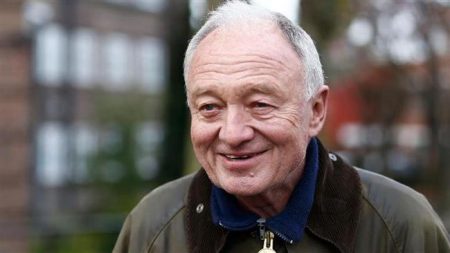
Former London mayor Ken Livingstone
Press TV – September 6, 2016
Britain’s Labour Party has come under pressure from a powerful Jewish lobby to expel former London mayor and MP Ken Livingstone, who says Adolf Hitler supported Zionism.
The British Jews organization made the call on Monday, shortly after Livingstone’s interview with the BBC, where he doubled down on his remarks about Hitler’s support for Zionism.
“During the 1930s, Hitler collaborated with the Zionists and supported them because he believed that a solution to his problem — the Jews — was that they should all move to Palestine,” the veteran MP told BBC radio.
Livingstone told the radio show that expelling him would be “very difficult” as he has the evidence needed to back the statement.
The comments revived a controversy from April, where he made the same remarks on the same radio show and was subsequently suspended by party leader Jeremy Corbyn.
“After I did the interview with you and I got suspended, I couldn’t walk down the street for people stopping me and saying ‘we know what you said is true – don’t give in to them,'” Livingstone said. “It’s going to be very difficult for them to expel me from the Labour Party when I’ve got this whole sheaf of documents and papers which shows that what I said was true.”
In its Monday statement, the British Jews blasted Livingstone for attempting to “rewrite history.”
“Every day that Labour does not expel him is a stain on the party,” the lobby’s Board of Deputies Vice President Marie van der Zyl said.
The Israeli regime was illegally established in 1948, when it occupied Palestinian land along with expanses of other Arab territories during full-fledged military operations. The occupied lands also include Lebanon’s Shebaa Farms and Syria’s Golan Heights.
In 1967, it occupied the Palestinian territories of the West Bank, including East Jerusalem al-Quds, and the Gaza Strip. It later annexed the West Bank and East al-Quds in a move never recognized by the international community.
“The creation of the state of Israel was fundamentally wrong, because there had been a Palestinian community there for 2,000 years,” Livingstone told Arabic TV station al-Ghad al-Arabi in May.
The Labour Party has suspended as many as 50 members over allegations of “anti-Semitism” and racism over the past months.
Thought is Dangerous to the USA
By Craig Murray | August 5, 2016
I have been refused entry clearance to the USA to chair the presentation of the Sam Adams Award to CIA torture whistleblower John Kiriakou and to speak at the World Beyond War conference in Washington DC. Like millions of British passport holders I have frequently visited the USA before and never been refused entry clearance under the visa waiver programme.

I shall apply for a visa via the State Department as suggested but I must be on a list to be refused under the ESTA system, and in any event it is most unlikely to be completed before the conference.
It is worth noting that despite the highly critical things I have published about Putin, about civil liberties in Russia and the annexation of the Crimea, I have never been refused entry to Russia. The only two countries that have ever refused me entry clearance are Uzbekistan and the USA. What does that tell you?
I have no criminal record, no connection to drugs or terrorism, have a return ticket, hotel booking and sufficient funds. I have a passport from a visa waiver country and have visited the USA frquently before during 38 years and never overstayed. The only possible grounds for this refusal of entry clearance are things I have written against neo-liberalism, attacks on civil liberties and neo-conservative foreign policy. People at the conference in Washington will now not be able to hear me speak.
Plainly ideas can be dangerous. So much for the land of the free!
Senator Markey’s Climate Education Act Goes The Wrong Way
By David Wojick | Climate Etc. | September 5, 2016
The “Climate Change Education Act” (S.3074) directs the National Oceanic and Atmospheric Administration (NOAA) to establish a climate change education program focused on formal and informal learning for all age levels.
When it comes to beating the climate change drum, Sen. Ed Markey is the Energizer Bunny. As a Congressman, Rep. Markey was Chairman of the now defunct House Select Committee on Energy Independence and Global Warming from 2007 to 2011. This time he is drumming on the education front. Markey has dropped the “Climate Education Act” into the Senate hopper. While the bill is unlikely to pass at this time, it is still important to object to, lest it be seen to be acceptable.
Sen. Markey’s website summarizes the proposal as follows: “The “Climate Change Education Act” (S.3074) directs the National Oceanic and Atmospheric Administration (NOAA) to establish a climate change education program focused on formal and informal learning for all age levels. The program would explore solutions to climate change, the dangers we face in a warming world, and relatively small changes in daily routines that can have a profound global impact. The legislation also establishes a grant program to support public outreach programs that improve access to clean energy jobs and research funds so local communities can address climate mitigation and adaptation issues.”
There is a lot not to like here, beginning with the false scientific claims. The first is hyping the supposed dangers we face in a warming world, which simply do not exist. Nor are there small changes in daily routines that can have a profound global impact, because humans do not control the global climate. What is here being called Education is really just scaremongering and propaganda. Ironically, the Bill itself says one goal is to remove the fear of climate change, which it actually promotes.
What is really strange is the focus on so-called clean energy jobs and technology. The term “clean energy” is a misleading euphemism for renewable technologies. Thus the thrust of the Bill is not just on climate science education; rather it is on using the education system to promote renewables. NOAA has no expertise in this regard and no mission. They do things like running the National Weather Service. Promoting renewables and green workforce development is the Energy Department’s job.
On the science side, NOAA has long been active in so-called “climate education,” which basically means spreading the Government’s biased view of climate change as human driven and dangerous. For example, the Climate Literacy and Energy Awareness Network (CLEAN) Portal was launched in 2010, co-sponsored by NOAA, NSF and the Energy Department. As of 2012, CLEAN has been syndicated to NOAA’s climate.gov portal, where they offer over 600 educational materials, most of which are biased toward the scary Federal version of climate science.
In fact NOAA has led a Federal drive to redefine “climate literacy” as accepting the Government’s biased position. According to their website, the stated Guiding Principle for climate literacy is “Humans can take actions to reduce climate change and its impacts.” The reality is that humans can do little to change climate change and a little global warming is not harmful. It is probably beneficial.
What the proposed Climate Education Act would do is give statutory authority for NOAA’s existing propaganda actions, something that is presently lacking. It also allows the agency to bribe states to use its stuff, which is pretty insidious.
It would also allow NOAA to go beyond simply providing online information, to begin writing actual curriculums to be used in the classroom. That is where the bribery really comes in. This curricular push coincides with the widespread deployment of the Next Generation Science Standards. Most states that adopt them need to develop new curriculums, because these science standards are very different from the existing state standards, especially in the area of climate change.
Beyond this, the Bill would put NOAA into the strange new business of promoting the renewable energy industry and training its workers. The Energy Department already does this, while NOAA has neither the mission nor the organization to do it.
In summary this so-called Climate Education Act does nothing that is good, for the climate or the students. It is based on false science and pushes NOAA in the wrong direction. NOAA should be trying to understand climate change, not promote renewable technologies in the name of dangerous global warming.
Press coverage is bad, buying the Bill as expected. See for example these:
How the CIA Used LSD to Destroy the New Left
By Stuart Jeanne Bramhall | Dissident Voice | September 4, 2016
Drugs as Weapons Against Us: The CIA’s Murderous Targeting of SDS, Panthers, Hendrix, Lennon, Cobain, Tupac and Other Activists is a virtual encyclopedia of the global drug trade. Author John L Potash devotes special attention to the long involvement of the British and US governments in illegal drug trafficking – for the political and financial benefit of the elite families who control these governments. Most of the book focuses on MKULTRA, the top secret CIA program devoted to developing and experimenting with mind altering drugs, such as LSD, MDA (an ecstasy precursor), STP, PCP and Scopolamine.
 Although CIA Director Richard Helms ordered all MKULTRA records destroyed in the mid-seventies, 30,000 pages of documents were preserved in the CIA Finance Department. Meticulously researched and footnoted, Drugs as Weapons relies on an extensive variety of sources, including the 30,000 pages, FOIA releases, police files, whistleblower statements, media and alternative media investigations and other prominent researchers such as Peter Dale Scott, Alfred, McCoy, Alex Constantine, Catherine Austin Fitts, and the late Gary Webb and Michael Rupert.
Using MKULTRA to Target Leftists and Radical Pop Stars
As the title suggests, Potash is mainly interested in the CIA’s use of LSD (with the help of British intelligence, which ran a parallel MKULTRA program at the Tavistock Clinic) to “neutralize” leftists and activist pop stars, such as Paul Robeson, Mick Jagger, Abbie Hoffman, Brian Jones, Janis Joplin, John Lennon and Jimi Hendrix.*
Like many activists, I am well aware of the CIA’s historic role in heroin trafficking in Southeast Asia and in cocaine trafficking in Latin America. However, prior to reading Drugs as Weapons, I was totally unaware they were also responsible for most of the LSD produced between 1955 and 1973 – for the specific purpose of “neutralizing” the New Left in Berkeley, at Columbia University and elsewhere. This particular MKULTRA project was conceived in response to a 1962 Rand Corporation study recommending that getting left wing leaders hooked on LSD could “cause them to resign or become inactive.”
The Haight Ashbury was a CIA Invention
I was particularly horrified to learn about the LSD distribution network MKULTRA agents set-up in the Haight Ashbury to lure Berkeley students away from the nationally influential Free Speech movement. The latter, originally formed in 1957 to protest the anti-democratic activities of Senator Joseph McCarthy’s House on Un-American Activities Committee, went on to inspire the national anti-Vietnam War Movement.
In addition to various MKULTRA scientists and agents, the CIA also relied on a number of high profile personalities – LSD guru Timothy Leary (an admitted CIA asset), author Ken Kesey (One Flew Over the Cuckoo’s Nest), and Grateful Dead band members – to promote and distribute LSD as an alternative to organizing against the Vietnam War.
How the Opium Trade Created America’s First Millionaires
Potash begins his book with important historical background on the origins of the global drug trade, which he traces back to 1500 and which European elites relied on heavily to finance imperial expansion and colonization. He also recounts the history of important Wall Street families – the Cabots, Cushings, Bushes, Astors, Russells, Pierponts (JP Morgan’s family) – who all owe their immense wealth to the opium trade the British involuntarily forced on China via the Opium Wars. The investment of these families in illegal drug trafficking continues to the present day, as evidenced by the involvement of all major US banks in multi-billion dollar drug money laundering.
The Russell family, who would go on to found Yale and the Skull and Bones Society, openly used a skull and bones pirate flag on their opium trading ships.
The Vietnam War: Protecting Wall Street Drug Interests
Potash also carefully details the special relationship between these Wall Street families and the intelligence agency they founded during World War II (the OSS, which became the CIA in 1947) to protect their special interests. This comes out clearly in the chapter in which Potash traces the origins of the Vietnam War. He makes a really strong case that this war (which began in the late fifties as a CIA intervention) stemmed directly from CIA determination to protect Golden Triangle opium production from efforts by nationalist leaders in Laos, Thailand and Vietnam to eradicate it.
One of Mao’s first acts after winning control of China was to destroy the country’s vast opium network. With the support of the CIA, the nationalist Chinese generals who had controlled it moved their networks into Burma, Laos and Thailand.
The Link Between CIA-backed Nazi War Criminals and Colombian Cocaine
In a similar vein, the CIA assisted Klaus Barbie and other Nazi war criminals it smuggled out of Germany in setting up a cocaine production and distribution network in Colombia and later the Afghan Mujaheddin in turning their country into the world’s largest producer of heroin.
Potash makes a compelling case that the proximate cause for the US invasion and occupation of Afghanistan in October 2001 was the Taliban’s successful eradication of opium production earlier that year.
* The cases of radical pop stars and activists targeted with LSD and other drugs (in many cases along with witnesses and key investigators) Potash examines include:
- Paul Robeson – African American singer whose career was destroyed when he was involuntarily dosed with LSD and committed for two years to a psychiatric hospital, where he received 54 electroconvulsive treatments,
- Richard Wright – African American writer involuntarily dosed with LSD who later died under extremely suspicious circumstances.
- Elvis Presley – became addicted to amphetamines and narcotics after covert intelligence officer became his manager.
- Mama Cass Elliott – died under mysterious circumstances at age 32 after starting to date an international drug smuggler with suspected intelligence links.
- Abbie Hoffman –introduced to LSD by roommate who worked for Army Intelligence research LSD effects on unconsenting GIs.
- Mick Jagger – involuntarily dosed with LSD and subject to numerous drug frame-ups and two unsuccessful Hell’s Angels (working closely with US intelligence) assassination attempts.
- Brian Jones – subject to numerous drug frame-ups and intense phone harassment and stalking prior to 1969 murder (which police covered up as “accidental” drowning).
- Jimi Hendrix – intelligence-linked manager strongly implicated in death related to involuntary drugging.
- Janis Joplin – introduced to amphetamines and heroine via intelligence-linked boyfriend, died after “friend” slipped her a bolus of pure CIA heroin.
- John Lennon – involuntarily dosed with LSD and framed on bogus cannabis charge. Lennon’s alleged assassin Mark Chapman had strong intelligence links and appeared to be under influence of scopolamine.
- Bob Marley – involuntarily injected with the cancer-causing chemical methlychoanthine (via a copper wire hidden in boots gifted to him by CIA asset Carl Colby) and subsequently died of fibrosarcoma.
- Kurt Cobain – involved in heavy drug use by his wife Courtney Love, who had shadowy underworld and intelligence connections. Cobain allegedly shot himself in the head with a shotgun after consuming so much heroin he would have lost consciousness before he could pull the trigger.
- Huey Newton – initiated into heavy cocaine use by girlfriend/undercover agent. Witnesses maintain he was shot after a failed attempt to kidnap him, discrediting police disinformation about “a drug deal gone bad.”
- Tupak Shakur – multiple assassination attempts and police frame ups. Coerced, as part of a bail agreement, into signing with Death Row records, The latter was run by Los Angeles police intelligence unit and heavily involved in drug and gun trafficking. Killed in drive-by shooting instigated by US intelligence.
- Eminem – initiated into heavy drug use via undercover intelligence “friends” after helping Afeni Shakur (following Tupak’s assassination) to record many of Tupak’s songs.
Dr. Bramhall is a retired American psychiatrist and political refugee in New Zealand. She has published a free, downloadable non-fiction ebook 21st Century Revolution. Her first book The Most Revolutionary Act: Memoir of an American Refugee describes the circumstances that led her to leave the US in 2002. Email her at: stuartbramhall@yahoo.co.nz, or visit Stuart Jeanne’s website.
Conspiracy Theory in America
By Lance deHaven-Smith | OffGuardian | September 4, 2016

As an opener to our “9/11 – 15 years on” we’re sharing this extract from the book Conspiracy Theory in America by Lance deHaven Smith. Regardless of where we stand on the events of 9/11 we need to be aware of the intelligence-backed media campaign that lies behind the current social context of the phrase “conspiracy theory”.
A Curious History
The term “conspiracy theory” did not exist as a phrase in everyday American conversation before 1964. The conspiracy-theory label entered the American lexicon of political speech as a catchall for criticisms of the Warren Commission’s conclusion that President Kennedy was assassinated by a lone gunman with no assistance from, or foreknowledge by, any element of the United States government. Since then, the term’s prevalence and range of application have exploded. In 1964, the year the Warren Commission issued its report, the New York Times published five stories in which “conspiracy theory” appeared. In recent years, the phrase has occurred in over 140 New York Times stories annually. A Google search for the phrase (in 2012) yielded more than 21 million hits—triple the numbers for such common expressions as “abuse of power” and “war crime.” On Amazon.com, the term is a book category that includes in excess of 1,300 titles. In addition to books on conspiracy theories of particular events, there are conspiracy-theory encyclopedias, photographic compendiums, website directories, and guides for researchers, skeptics, and debunkers.
Initially, conspiracy theories were not an object of ridicule and hostility. Today, however, the conspiracy-theory label is employed routinely to dismiss a wide range of anti-government suspicions as symptoms of impaired thinking akin to superstition or mental illness. For example, in a massive book published in 2007 on the assassination of President Kennedy, former prosecutor Vincent Bugliosi says people who doubt the Warren Commission report are “as kooky as a three dollar bill in their beliefs and paranoia.” Similarly, in his recently published book Among the Truthers (Harper’s, 2011), Canadian journalist Jonathan Kay refers to 9/11 conspiracy theorists as “political paranoiacs” who have “lost their grip on the real world.” Making a similar point, if more colorfully, in his popular book Wingnuts, journalist John Avlon refers to conspiracy believers as “moonbats,” “Hatriots,” “wingnuts,” and the “Fright Wing.”
The same judgment is expressed in more measured terms by Cass Sunstein and Adrian Vermeule in a 2009 journal article on the “causes and cures” of conspiracy theories. Sunstein is a Harvard law professor appointed by President Obama to head the Office of Information and Regulatory Affairs. He and Vermeule claim that once a person buys into them, conspiracy theories are resistant to debunking because they are “self-sealing.” That is, because conspiracy theories attribute extraordinary powers to elites to orchestrate events, keep secrets, and avoid detection, the theories encourage their adherents to dismiss countervailing evidence as fabricated or planted.
In a book on technology and public opinion, Sunstein argues further that conspiracy-theory groups and networks are proliferating because the highly decentralized form of mass communication made possible by the Internet is altering the character of public discourse. Whereas television and radio provide platforms for debating competing viewpoints on matters of widely shared interest, the Internet tends to segment discussion into a multitude of small groups, each focusing on a separate and distinct topic. Sunstein argues that this splintering of discourse encourages extremism because it allows proponents of false or one-sided beliefs to locate others with similar views while at the same time avoiding interaction with competing perspectives. In Sunstein’s words, “The Internet produces a process of spontaneous creation of groups of like-minded types, fueling group polarization. People who would otherwise be loners, or isolated in their objections and concerns, congregate into social networks.” Sunstein acknowledges that this consequence of the Internet is unavoidable, but he says polarization can and should be mitigated by a combination of government action and voluntarily adopted norms. The objective, he says, should be to ensure that those who hold conspiracy theories “are exposed to credible counterarguments and are not living in an echo chamber of their own design”.
In their law review article, Sunstein and Vermeule expand this idea and propose covert government action reminiscent of the FBI’s efforts against the civil rights and antiwar movements in the 1960s. They consider a number of options for countering the influence of conspiracy theories, including public information campaigns, censorship, and fines for Internet service providers hosting conspiracy-theory websites. Ultimately rejecting those options as impractical because they would attract attention and reinforce anti-government suspicions, they call for a program of “cognitive infiltration” in which groups and networks popularizing conspiracy theories would be infiltrated and “disrupted.”
A Flawed and Un-American Label
As these examples illustrate, conspiracy deniers assume that what qualifies as a conspiracy theory is self-evident. In their view, the phrase “conspiracy theory” as it is conventionally understood simply names this objectively identifiable phenomenon. Conspiracy theories are easy to spot because they posit secret plots that are too wacky to be taken seriously. Indeed, the theories are deemed so far-fetched they require no reply or rejoinder; they are objects of derision, not ideas for discussion. In short, while analyzing the psychological appeal of conspiracy beliefs and bemoaning their corrosive effects on public trust, conspiracy deniers have taken the conspiracy-theory concept itself for granted.
This is remarkable, not to say shocking, because the concept is both fundamentally flawed and in direct conflict with American legal and political traditions. As a label for irrational political suspicions about secret plots by powerful people, the concept is obviously defective because political conspiracies in high office do, in fact, happen. Officials in the Nixon administration did conspire to steal the 1972 presidential election. Officials in the Reagan White House did participate in a criminal scheme to sell arms to Iran and channel profits to the Contras, a rebel army in Nicaragua. The Bush-Cheney administration did collude to mislead Congress and the public about the strength of its evidence for Iraqi weapons of mass destruction. If some conspiracy theories are true, then it is nonsensical to dismiss all unsubstantiated suspicions of elite intrigue as false by definition.
This fatal defect in the conspiracy-theory concept makes it all the more surprising that most scholars and journalists have failed to notice that their use of the term to ridicule suspicions of elite political criminality betrays the civic ethos inherited from the nation’s Founders. From the nation’s beginning, Americans were fearful of secret plots by political insiders to subvert constitutional governance. Those who now dismiss conspiracy theories as groundless paranoia have apparently forgotten that the United States was founded on a conspiracy theory. The Declaration of Independence claimed that “a history of repeated injuries and usurpations” by King George proved the king was plotting to establish “an absolute tyranny over these states.” Today, most Americans are familiar only with the Declaration’s opening paragraphs about self-evident truths and inalienable rights, but if they were to read the rest of the document, they would see that it is devoted to detailing the abuses evincing the king’s tyrannical design. Among the complaints listed are onerous taxation, fomenting slave rebellions and Indian uprisings, taxation without representation, and indifference to the colonies’ complaints. The document’s signers claimed it was this “design to reduce them under absolute despotism,” not any or all of the abuses themselves, that gave them the right and the duty “to throw off such government, and to provide new guards for their future security.”
The Founders considered political power a corrupting influence that makes political conspiracies against the people’s interests and liberties almost inevitable. They repeatedly and explicitly called for popular vigilance against antidemocratic schemes in high office. Educated in classical political philosophy, they understood that one of the most important questions in Western political thought is how to prevent top leaders from abusing their powers to impose arbitrary rule, which the Founders referred to, appropriately, as “tyranny.” Whereas Great Britain relied on common law to define the powers and procedures of its government, the generation that established the American republic developed a written constitution to set clear limits on public officials. Nevertheless, they understood that all constitutions are vulnerable to subversion because ultimately they are interpreted and administered by public officials themselves. The Founders would view today’s norms against conspiratorial suspicion as not only arrogant, but also dangerous and un-American.
The Founders would also be shocked that conspiracy deniers attack and ridicule individuals who voice conspiracy beliefs and yet ignore institutional purveyors of conspiratorial ideas even though the latter are the ideas that have proven truly dangerous in modern American history. Since at least the end of World War II, the citadel of theories alleging nefarious political conspiracies has been, not amateur investigators of the Kennedy assassination and other political crimes and tragedies, but the United States government. In the first three decades of the post–World War II era, U.S. officials asserted that communists were conspiring to take over the world, that the U.S. bureaucracy was riddled with Soviet spies, and that the civil rights and antiwar movements of the 1960s were creatures of Soviet influence. More recently, they have claimed that Iraq was complicit in 9/11, failed to dispose of its biological weapons, and attempted to purchase uranium in Niger so it could construct nuclear bombs. Although these ideas were untrue, they influenced millions of Americans, fomented social panic, fueled wars, and resulted in massive loss of life and destruction of property. If conspiracy deniers are so concerned about the dangers of conspiratorial suspicions in American politics and civic culture, why have they ignored the conspiracism of U.S. politicians?
Finally, there is something very hypocritical about those who want to fix people who do not share their opinions. Sunstein and Vermeule say conspiracy believers need to have their discussions disrupted, because they are dangerous. But what could be more dangerous than thinking it is acceptable to mess with someone else’s thoughts? Sunstein and Vermeule’s hypocrisy is breathtaking. They would have government conspiring against citizens who voice suspicions about government conspiracies, which is to say they would have government do precisely what they want citizens to stop saying the government does. How do Harvard law professors become snared in such Orwellian logic? One can only assume that there must be something bedeviling about the idea of conspiracy theory.
Naming the Taboo Topic
In what follows, I shall attempt to reorient analysis of the phenomenon that has been assigned the derisive label of “conspiracy theory.” In a 2006 peer-reviewed journal article, I introduced the concept of State Crime against Democracy (SCAD) to displace the term “conspiracy theory.” I say displace rather than replace because SCAD is not another name for conspiracy theory; it is a name for the type of wrongdoing about which the conspiracy-theory label discourages us from speaking. Basically, the term “conspiracy theory” is applied pejoratively to allegations of official wrongdoing that have not been substantiated by public officials themselves.
Deployed as a pejorative putdown, the label is a verbal defense mechanism used by political elites to suppress mass suspicions that inevitably arise when shocking political crimes benefit top leaders or play into their agendas, especially when those same officials are in control of agencies responsible for preventing the events in question or for investigating them after they have occurred. It is only natural to wonder about possible chicanery when a president and vice president bent on war in the Middle East are warned of impending terrorist attacks and yet fail to alert the American public or increase the readiness of the nation’s armed forces. Why would Americans not expect answers when Arabs with poor piloting skills manage to hijack four planes, fly them across the eastern United States, somehow evade America’s multilayered system of air defense, and then crash two of the planes into the Twin Towers in New York City and one into the Pentagon in Washington, DC? By the same token, it is only natural to question the motives of the president and vice president when they drag their feet on investigating this seemingly inexplicable defense failure and then, when the investigation is finally conducted, they insist on testifying together, in secret, and not under oath. Certainly, citizen distrust can be unwarranted and overwrought, but often citizen doubts make sense. Americans are not crazy to want answers when a president is assassinated by a lone gunman with mediocre shooting skills who manages to get off several lucky shots with an old bolt-action carbine that has a misaligned scope. Why would there not be doubts when an alleged assassin is apprehended, publicly claims he is just a patsy, is interrogated for two days but no one makes a recording or even takes notes, and he is then shot to death at point-blank range while in police custody at police headquarters?
Of course, some suspicions go too far. The idea that lizard-like aliens from space are secretly infiltrating top positions in government and business is ludicrous. However, the conspiracy-theory label makes fun of conspiratorial suspicions in general. Consequently, the label discourages Americans from registering doubts about their leaders’ motives and actions regardless of the circumstances. Any suspicions that public officials conspired to cause a tragedy or allowed it to happen are dismissed without further discussion because, supposedly, public officials simply do not engage in conspiracies.
Communication scientists Ginna Husting and Martin Orr, both of whom are professors at Boise State University, have studied the use of the conspiracy-theory label as a putdown. At the beginning of a peer-reviewed 2007 article on the subject, they point out how the label works rhetorically:
If I call you a conspiracy theorist, it matters little whether you have actually claimed that a conspiracy exists or whether you have simply raised an issue that I would rather avoid . . . I twist the machinery of interaction so that you, not I, are now called to account. In fact, I have done even more. By labeling you, I strategically exclude you from the sphere where public speech, debate, and conflict occur.
Husting and Orr go on to explain that the accusation of conspiracy theory discredits any explanations offered for specific social or historical events “regardless of the quality or quantity of evidence.” The label has this discrediting, end-of-argument effect because conspiracy theories have come to be seen as mere suspicions with no basis in fact, not as reasonable inferences from circumstances and evidence about matters of great importance.
In contrast, the SCAD construct does not refer to a type of allegation or suspicion; it refers to a special type of transgression: an attack from within on the political system’s organizing principles. For these extremely grave crimes, America’s Founders used the term “high crime” and included in this category treason and “conspiracies against the people’s liberties.” SCADs, high crimes, and antidemocratic conspiracies can also be called “elite political crimes” and “elite political criminality.” The SCAD construct is intended, not to supersede traditional terminology or monopolize conceptualization of this phenomenon, but rather to add a descriptive term that captures, with some specificity, the long-recognized potential for representative democracy to be subverted by people on the inside—the very people who have been entrusted to uphold the constitutional order.
SCADs are defined as concerted actions or inaction by government insiders intended to manipulate democratic processes and undermine popular sovereignty. Examples of SCADs that have been officially proven include the Watergate break-in and cover-up; the illegal arms sales and covert operations in Iran-Contra; and the effort to discredit Joseph Wilson by revealing his wife’s status as an intelligence agent.
Many other political crimes in which involvement by high officials is reasonably suspected have gone uninvestigated or have been investigated only superficially. They are included in SCAD studies even when the evidence of state complicity is contested, because excluding them would mean accepting the judgment of individuals and institutions whose rectitude and culpability are at issue. The nature of the subject matter is such that official inquiries, if they are conducted at all, are usually compromised by conflicts of interest. Hence the evidence must be evaluated independently on its merits, and decisions must be made on a case-by-case basis about which events are most likely elite political crimes. Of course, as Husting and Orr point out, engaging the evidence is precisely what the pejorative conspiracy-theory putdown is deployed rhetorically to avoid.
SCADs constitute a special type of political criminality. Unlike bribery, kickbacks, bid-rigging, and other, more mundane forms of political corruption, which tend to be isolated and to affect only pockets of government activity, SCADs have the potential to subvert political institutions and entire governments or branches of government. Committed at the highest levels of public office, they are crimes that threaten democracy itself. Clearly, such crimes and the circumstances that allow or encourage them warrant scientific study, both to better understand elite politics and to identify institutional vulnerabilities that can be corrected to make antidemocratic conspiracies less likely and less likely to succeed. Hence, one would have expected elite political crime, like white-collar crime, hate crime, and racketeering, to have been singled out for research and theorizing by social scientists long ago.
However, because powerful norms discourage Americans from questioning the integrity of their top leaders, and because anyone who raises such questions is likely to be seen as a “conspiracy theorist” who may be mentally unbalanced, the topic has been almost completely ignored by scholars. Social scientists have studied various forms of state crime, but in almost every case the potential for public officials in liberal democracies to subvert democratic institutions has been disregarded. Political science research on Watergate, Iran-Contra, and other U.S. political scandals has sidestepped questions about state criminality by studying the use of congressional investigations and independent prosecutors as political tactics in partisan competition.
Of course, a vast popular literature exists that presents a wide range of conspiracy theories of domestic assassinations and other high crimes, but the form of analysis employed, while careful and in many ways insightful, is not really scientific. Amateur investigators have uncovered important evidence overlooked by official inquiries, but, with only one or two exceptions, they have failed to investigate the general phenomenon of high criminality and instead have speculated about one suspicious incident at a time. There is a body of work on the assassination of President Kennedy, another on the events of 9/11, and still others on the 1980 October Surprise, the disputed 2000 presidential election, and the anthrax letter attacks. To be sure, we do learn a lot about each case; we learn a great deal, for example, about the assassination of President Kennedy and the assassination of Martin Luther King, but we learn next to nothing about assassinations in general, such as their typical targets, tactics, and timing, nor do we learn much about differences and similarities between assassinations and false-flag terrorism as political tactics. By the same token, since we learn little about the nature of elite political criminality in general, we gain little insight into the extent, nature, and role of elite crime and intrigue in American politics.
Perceptual Silos
The tendency to consider suspicious political events individually and in isolation rather than collectively and comparatively is not limited to the conspiracy-theory literature; it is built into the conspiracy-theory label and has become a pervasive predisposition in U.S. civic culture. For Americans, each assassination, each election breakdown, each defense failure, each war justified by “mistaken” claims is perceived as a unique event arising from its own special circumstances. While Americans in the present generation have personally witnessed many political crimes and tragedies, we see them as if through a fly’s eye, situating each event in a separate compartment of memories and context.
Even when obvious factors connect political crimes, the crimes are thought of as disparate and unrelated. For example, John Kennedy and Robert Kennedy were brothers; both were rivals of Richard Nixon and were hated by Lyndon Johnson; their murders occurred less than five years apart; both were killed while campaigning for the office of president; and both appeared likely to win the upcoming presidential election. Without their murders, neither Nixon nor Johnson would probably have ever become president. Nevertheless, the assassinations of John and Robert Kennedy are seen as entirely unrelated; parallels, if they are recognized at all, are dismissed as coincidences. It is seldom considered that the Kennedy assassinations might have been serial murders.
In fact, in speaking about the murders, Americans rarely use the plural, Kennedy assassinations. In the lexicon, there is the Kennedy assassination (singular), which refers to the murder of President Kennedy, and there is the assassination of Robert Kennedy. Clearly, this quirk in the Kennedy assassination(s) lexicon reflects an unconscious effort by journalists, politicians, and millions of ordinary Americans to avoid thinking about the two assassinations together, despite the fact that the victims are connected in countless ways and that they also deserve better—they deserve to be remembered as brothers who stood for the same values and who were somehow struck down by forces still beyond our grasp. This clever feat of keeping the Kennedy assassinations singular and separate might be called linguistic “compartmentalization,” for, by avoiding the plural of “assassination,” we have unconsciously split and compartmentalized in our awareness significantly related events.
For another example, consider how we compartmentalize our perceptions of the disputed 2000 and 2004 presidential elections. The election breakdowns are not widely suspected of being repeat offenses by the same network of political operatives employing the same tactics and resources, even though both elections were plagued by very similar problems, including inadequately equipped and staffed polling places in heavily Democratic areas, computer anomalies in the tabulation of county and state totals, highly partisan Republicans in charge of election administration, aggregate vote tabulations benefiting George W. Bush, and exit polls indicating that the other candidate had won rather than Bush. The two elections are seen as separate and without any forensically important parallels. No one called for statisticians to review both elections for similar problems or signs of election tampering. No one speaks of “the disputed Bush-Cheney elections,” or of “the back-to-back election disputes,” or even simply of the plural, “election breakdowns.”
A slightly different example of this phenomenon of compartmentalization is offered by contemporary perceptions of, on the one hand, the hijacked-airplane attacks on September 11, 2001, and on the other hand, the anthrax letter attacks that began a few weeks later. Today, 9/11 and the anthrax mailings are cognitively dissociated even though initially they were thought to be closely connected. It made sense to think they were connected because they shared many characteristics: they occurred closely together in time; both were acts of terrorism; both targeted private individuals as well as government officials; and both exploited essential services (commercial air travel and the postal service). In fact, for the first few months, the anthrax letter attacks were blamed on the terrorist group that was assumed to have carried out the hijacked-airplane attacks on the Twin Towers and the Pentagon.
Soon, however, the FBI investigation reached the conclusion that the anthrax came from a strain developed by the U.S. military at the Army Medical Research Institute of Infectious Diseases at Fort Detrick, Maryland. This discovery should have caused investigators and the public to wonder if the events of 9/11 might likewise have been connected in some way to the U.S. military. Alarm bells should also have sounded when, shortly after the anthrax letter attacks were discovered, the FBI authorized the destruction of a rare collection of anthrax samples at Iowa State University. According to scientists, this made it much more difficult to trace the anthrax in the letters to domestic laboratories. However, rather than look for connections between the anthrax case, the 9/11 hijackings, and what appears to have been an effort to prevent the domestic origins of the anthrax from being discovered, everyone just dropped the anthrax attacks from consideration as a terrorist threat. Talk of duct tape ended. In effect, the anthrax letter attacks were quickly sealed off cognitively, and awareness of their domestic origins did not have to be reconciled with what Americans later learned about 9/11—about the warnings President Bush received in his daily briefing in August 2001; about the war games that were scheduled on 9/11, some of which included hijacked airplanes and interfered with the response to the real hijackings; about the expedited flights of Osama bin Laden’s relatives . . . The list could go on. The point is that the domestic origins of the anthrax became a side story, and yet, at the time the anthrax letters were being received and people were being infected, the anthrax attacks appeared to be an integral part of a war on America.
But once the anthrax was traced to Fort Detrick, the fear was relieved and the crime was mentally cordoned off. There were no calls for investigators to look for U.S. military personnel with multiple connections to air defense, war games, and germ warfare. There was never any effort to identify government officials who were involved in national defense policy and who owned or had recently purchased stock in pharmaceutical companies that manufactured medicines for preventing or treating anthrax infections. To the contrary, rather than look for people linking anthrax, 9/11, air defense, and biological weapons, the investigation was narrowed to lone microbiologists who were considered to be disgruntled, emotionally troubled, or opportunistic.
Causes and Consequences
It should be stressed that this way of thinking about elite political crimes—this very common tendency to view parallel crimes separately and to see them as disparate and unrelated—is exactly opposite the way crimes committed by regular people are treated. If a man marries a wealthy woman and she dies in a freak accident at home, people would be suspicious simply because she was wealthy and the accident was improbable. If this same man then marries another wealthy woman who dies in a freak accident at home, foul play would naturally be suspected, and the husband would be the leading suspect in the wives’ demise. If the husband had taken out a life insurance policy on either wife a few weeks or months prior to the accidents, it would be considered circumstantial evidence of foreknowledge. If police failed to recognize the obvious similarities in the wives’ deaths, they would be considered incompetent, negligent, or bought off.
It is routine police protocol to look for patterns in burglaries, bank robberies, car thefts, and other crimes, and to use any patterns that are discovered as clues to the perpetrators’ identity and the vulnerabilities to crime that are being exploited. This method of crime analysis is shown repeatedly in crime shows on TV. It is Criminology 101. There is no excuse for most Americans, much less criminal investigators, journalists, and other professionals, to fail to apply this method to assassinations, election fiascos, defense failures, and other suspicious events that shape national political priorities.
Why do we compartmentalize crimes involving political elites while doing just the opposite with the crimes of ordinary people? At least two factors discourage us from connecting the dots in elite political criminality. One is the term “conspiracy theory,” which is applied to crimes that have major political consequences but not to other crimes. The conspiracy-theory phrase encourages cognitive compartmentalization because the phrase is not meant to apply to interconnected crimes. In American public discourse, multiple crimes planned and committed by a single group are generally called “organized crime,” not conspiracies. The term “conspiracy” is reserved for plots surrounding one major criminal objective and for the networks that come together for that purpose. The Mafia is not a conspiracy; it is an organization. A conspiracy theory about the assassination of President Kennedy is implicitly a theory about a temporary combination of plotters, not an enduring assassination squad or lethal criminal organization. Therefore, even if we think the assassination of John Kennedy was a conspiracy, and we think the assassination of Robert Kennedy was a conspiracy, we are nevertheless unlikely to see the two as connected, because the conspiracy concept envisions them as isolated, self-contained schemes.
The second factor impeding us from drawing connections between political crimes involving political elites is that looking for connections requires being suspicious to begin with, and yet being suspicious of political elites violates norms that are embodied in the pejorative connotations of the conspiracy-theory label. As shown by our speech habits and observation tendencies about assassinations, disputed elections, and terrorist attacks, we are averse to talking about such events as connected in any way.
This aversion is learned. Americans know that voicing suspicions about political elites will make them objects of hostility and derision. The verbal slaps vary, but they are difficult to counter because they usually abuse reason. For example, in using the conspiracy-theory label as a putdown, conspiracy deniers imply that official accounts of troubling events are something altogether much more solid than conspiratorial suspicions—as if official accounts are in some sense without speculation or presuppositions. In fact, however, conspiracy deniers and debunkers are relying on an unstated theory of their own—a very questionable theory. In the post-WWII era, official investigations have attributed assassinations, election fiascos, defense failures, and other suspicious events to such unpredictable, idiosyncratic forces as lone gunmen, antiquated voting equipment, bureaucratic bumbling, innocent mistakes, and, in the case of 9/11 (to quote the 9/11 Commission, p. 339), a “failure of imagination.” In effect, official accounts of suspicious events have answered conspiracy theories with coincidence theories.
Far from being more factual and plausible than theories positing political crimes and intrigues, coincidence theories become less and less plausible as coincidences pile up, which they have been doing for decades in the U.S. It is like flipping a coin ten times and it always falls on heads. In general, as SCADs and suspected SCADs pile up, the odds of coincidence drop rapidly. The Bush-Cheney ticket winning in one or two states despite exit polls indicating they had lost could have been the result of random variations in exit poll samples. When the same thing happens in state after state; when the difference between exit polls and election returns almost always favors the same candidates, the odds of this being by chance alone are astronomically low. This does not necessarily mean the elections were stolen, but it does mean something caused the election returns to differ from how voters said they voted.
The CIA’s Conspiracy-Theory Conspiracy
If political conspiracies in high office do, in fact, happen; if it is therefore unreasonable to assume conspiracy theories are, by definition, harebrained and paranoid; if the Declaration of Independence is a conspiracy theory; if the United States was founded on a conspiracy theory that alleged King George was plotting to take away the colonists’ rights; if the conspiracy-theory label makes it difficult to see connections between political crimes that, in fact, may be connected; if, because it ridicules suspicion, the conspiracy-theory label is inconsistent with the traditional American ethos of vigilance against conspiracies in high office; if, in summary, the conspiracy-theory label blinkers perceptions, silos thinking, and is un-American and unreasonable, how did the label come to be used so widely to begin with?
Most Americans will be shocked to learn that the conspiracy-theory label was popularized as a pejorative term by the Central Intelligence Agency (CIA) in a propaganda program initiated in 1967. This program was directed at criticisms of the Warren Commission’s report. The propaganda campaign called on media corporations and journalists to criticize “conspiracy theorists” and raise questions about their motives and judgments. The CIA told its contacts that “parts of the conspiracy talk appear to be deliberately generated by Communist propagandists.” In the shadows of McCarthyism and the Cold War, this warning about communist influence was delivered simultaneously to hundreds of well-positioned members of the press in a global CIA propaganda network, infusing the conspiracy-theory label with powerfully negative associations.
Professors tell students: Drop class if you dispute man-made climate change
‘We will not, at any time, debate the science of climate change’
By Kate Hardiman | The College Fix | August 31, 2016
Three professors co-teaching an online course called “Medical Humanities in the Digital Age” at the University of Colorado-Colorado Springs recently told their students via email that man-made climate change is not open for debate, and those who think otherwise have no place in their course.
“The point of departure for this course is based on the scientific premise that human induced climate change is valid and occurring. We will not, at any time, debate the science of climate change, nor will the ‘other side’ of the climate change debate be taught or discussed in this course,” states the email, a copy of which was provided to The College Fix by a student in the course.
Signed by the course’s professors Rebecca Laroche, Wendy Haggren and Eileen Skahill, it was sent after several students expressed concern for their success in the course after watching the first online lecture about the impacts of climate change.
“Opening up a debate that 98% of climate scientists unequivocally agree to be a non-debate would detract from the central concerns of environment and health addressed in this course,” the professors’ email continued.
“… If you believe this premise to be an issue for you, we respectfully ask that you do not take this course, as there are options within the Humanities program for face to face this semester and online next.”
The professors also note this ban on debate extends to discussion among students in the online forums. Moreover, students who choose to use outside sources for research during their time in the course may select only those that have been peer-reviewed by the Intergovernmental Panel on Climate Change, the email states.

Professors Laroche, Skahill, and Haggren did not respond to email inquiries from The College Fix seeking further comment on their email or their stance on debate in their online class.
The University Communications Director Tom Hutton told The College Fix via email that “Humanities 3990 is a special topics course with multiple choices for students to take when fulfilling requirements.”
“By clearly stating the class focus,” he continued, “the faculty are allowing students to choose if they wish to enroll in the course or seek an alternative. Additionally, the faculty who are leading the course have offered to discuss it with students who have concerns or differing opinions.”
In addition to teaching man-made climate change, the course also delves into the “health effects of fracking,” according to its syllabus.
The reading assignments in the fracking section focus on only its negative impacts and fail to present the other side of the issue, namely the possible benefits of fracking.
Assigned readings includes: “4 States Struggling to Maintain Radioactive Fracking Waste,” “EPA Study on Fracking Ignored Contamination Studies,” and “Frack Free Colorado: ‘Colorado’s Affected People.’”
An activity assigned within that section instructs students to take a test to measure their own carbon footprint. The purpose, reads the syllabus, “is not to create guilt or shame, though those emotions are entirely common.”
Kate Hardiman is a student at the University of Notre Dame majoring in the Program of Liberal Studies and minoring in the Philosophy, Political Science, and Economics (PPE) Program. She serves as campus editor of the Irish Rover and is a fellow of both the Constitutional Studies Department and Center for Ethics and Culture.
51 Israeli Violations against Journalists in August
IMEMC News & Agencies – September 2, 2016
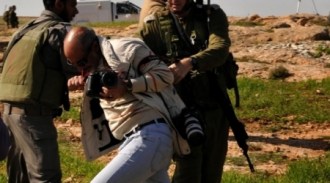 Israeli occupation forces reportedly committed 51 violations against Palestinian journalists during August of 2016, the government media office stated.
According to Al Ray Palestinian Media Agency, a report published by the office revealed that Israeli forces detained eight journalists, holding four in custody, and served a summons notice to one journalist.
Israeli authorities recently renewed the administrative detention of four journalists and the actual prison sentence of two journalists. It also documented five cases of abuses committed against detained journalists.
Additionally, it documented seven cases of injury, regarding four female journalists, involving gas grenades and fire.
Israeli forces also banned five journalists from covering events and travelling, one of them from Gaza.
The report also documented the closing of one local radio in the occupied West Bank, the raiding of two media institutions and the storming of nine houses where Palestinian journalists resided. It also reportedly seized media staff equipment.
Mumia Abu-Jamal denied life-saving hepatitis C treatment
RT | September 1, 2016
The world’s most famous prisoner, former Black Panther Mumia Abu-Jamal, has been denied vital treatment for hepatitis C by a federal judge.
The journalist was sentenced to death for killing a Philadelphia police officer in 1981, but the sentence was overturned on constitutional grounds five years ago.
However, this new ruling could become a new death sentence if he does not survive the disease naturally.
After decades in prison, Abu-Jamal’s health has deteriorated – and after he was hospitalized in critical condition last year, he filed a lawsuit against the state of Pennsylvania for the right to get anti-viral medication, the Guardian reports.
Despite having a 90 to 95 percent success rate, officials told Abu-Jamal he was not ill enough to be eligible for the 12-week treatment.
District court judge Robert Mariani on Wednesday claimed the lawsuit was wrongly aimed at the warden and the prison system’s medical chief, but should have been targeted towards four members of Pennsylvania’s hepatitis C committee instead.
His lawyers, however, said such a committee did not exist when the lawsuit was filed.
Mariani implied that Abu-Jamal was a “lower priority” health case despite his serious condition by using the testimony of one member of the committee, Dr Paul Noel, who was later added as a defendant to the case.
Judge Mariani cited Noel’s testimony to validate the state’s argument that procedures are designed “to identify those with the most serious liver disease and to treat them first, and then… move down the list to the lower priorities.”
Noel also said that prisoners with esophageal varices, or enlarged veins in their throats that started to bleed, would then “move onto immediate treatment,” but if they did not have varices, “they can wait.”
A lawyer on behalf of the state’s prison system also said “there simply is not enough money to treat every individual” with chronic hepatitis C and treating all prisoners with the disease “would cost approximately $600 million” which would “effectively cripple the department.”
But, while Abu-Jamal’s request for treatment was denied, the judge still found that the hepatitis C protocol used for prisoners fails to meet constitutional standards.
Evidence provided to the court revealed that Pennsylvania treats a mere handful of 6,000 prisoners who have hepatitis C.
The conditions of the prison infirmaries have been condemned by supporters of Abu-Jamal, such as Noelle Hanrahan, who said inmates were “dying in isolation, often chained to their beds,” the Guardian reports.
Up to 3.9 million people in the US have chronic hepatitis C and if the disease remains untreated, it can result in death, according to the Centers for Disease Control and Prevention.
In response to the outcome, Abu-Jamal’s lawyers said they were “frustrated” he won’t get the treatment he needs.
Amnesty International has repeatedly condemned the treatment of Abu-Jamal during his time in prison – as well as his original trial which it deems “unfair.”
The human rights group has called his case “contradictory” and “incomplete,” expressing concern over the role the government played in a counterintelligence program called COINTELPRO that appeared to have Abu-Jamal among its targets.
COINTELPRO targeted many political activists including Martin Luther King, Jr and Malcolm X.
Fred Hampton, a spokesperson for the Black Panther Party, was assassinated by members of the Chicago Police Department during a COINTELPRO operation in 1969. Relatives of Hampton then sued the government and received a settlement of $1.85 million 12 years later.
Abu-Jamal’s case is said to be one of the most debated in modern legal history.
Israel shuts down Palestinian radio station amid escalation in press violations

A Palestinian journalist checks damages after Israeli forces raided offices of local Palestinian Al-Khalil radio overnight in Hebron on November 21, 2015
Ma’an – August 31, 2016
HEBRON – Israeli forces raided and ransacked a Palestinian radio station early Wednesday morning in Dura City in the southern occupied West Bank district of Hebron, detained five of the station’s employees, and ordered it closed for three months, amid a documented escalation of violations against media freedoms by Israeli forces in the occupied Palestinian territory.
Locals told Ma’an that Israeli forces raided al-Sanabel radio station, destroyed its contents, and confiscated transmission and broadcast equipment.
Israeli forces left a closure order on the door of the radio station.
Locals added that Israeli forces detained head of the radio station Ahmad al-Darawish, as well as radio employees Muhammad al-Sus, Nidal Amro, Muntaser Nassar, and Hamed al-Nammura after raiding their homes.
Spokesperson for the Israeli army Avichay Adraee said in a statement in Arabic that Israeli forces, police, and civil administration authorities closed al-Sanabel upon a military order that claimed that the radio station broadcast programs inciting against Israel.
Adraee added that the five detainees were transferred for interrogation.
News of the closure came after Palestinian press freedoms watchdog MADA released a report on Saturday saying Israeli violations against media freedoms in the occupied Palestinian territory increased by 17 percent during the first half of 2016.
MADA General Director Moussa Rimawi said in the semi-annual report that while the total number of violations by both Israeli and Palestinian authorities declined from 224 cases in the first half of 2015 to 198 in the first half of this year — a rate of 12 percent — Israeli violations continued to climb, as Palestinian authorities committed 41 percent less violations during the same period.
A total of 133 violations committed by Israel were recorded during the period.
The most common types of violations committed by Israel were physical attacks, arrests, confiscation of equipment, prevention of coverage, and detentions.
The report highlighted that Israeli authorities in March closed two media institutions — Falastin al-Yawm and TransMedia Production Company — after ransacking and confiscated equipment from their offices.
Meanwhile, some 23 journalists and media workers were detained between January and June of 2016.
The report also noted an escalation of the Israeli practice of detaining Palestinians for social media activity, with Israeli authorities alleging that a wave of unrest that swept the occupied Palestinian territory last October was encouraged largely by “incitement.”
Palestinians have instead pointed chiefly to the frustration and despair brought on by Israel’s nearly 50-year military occupation of the Palestinian territory and the absence of a political horizon.
MADA said in the report that they were “gravely concerned regarding all systematic attacks and violence against journalists and media workers by the Israeli occupation, and urges state members to do their utmost to prevent violence against journalists, to ensure accountability, and bring to justice perpetrators of crimes against media freedoms.”
Argentine General and 28 Others Sentenced to Life for Crimes Against Humanity
teleSUR | August 25, 2016
An Argentine court sentenced former General Luciano Benjamin Menendez to life in prison Thursday for crimes against humanity committed at secret Dirty War-era detention centers in the late 1970s, making a landmark step in the struggle for justice for human rights abuses during one of the darkest chapters in the South American country’s history.
Menendez stood trial with 42 other defendants who will also be sentenced today after a nearly four year so-called “mega-trial” involving events related to over 700 victims.
The general was in charge of two clandestine jails, known as La Perla and La Ribera, in the province of Cordoba where torture, assassinations, and other human rights abuses were carried out during the 1976-1983 military dictatorship. He was charged with over 600 cases of torture, over 300 murders and forced disappearances, unlawful detentions, and other crimes against humanity committed at the two detention centers between 1976 and 1978.
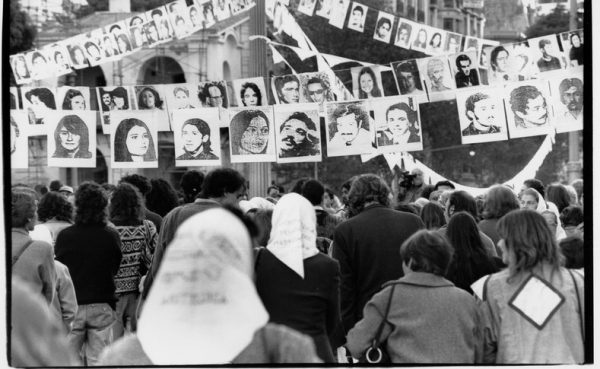
Thousands of people, including the families of victims and social movements such as the iconic Mothers and Grandmothers of the Plaza de Mayo, filled the streets outside of the federal court in the province of Cordoba to await the announcement under the banner of remembering the 30,000 disappeared during the dictatorship.
Former military intelligence agent Arnoldo Jose Lopez, former military man Ernesto Guillermo Barreiro, and former military captain Hector Pedro Vergez were also found to be among the principle masterminds responsible for the abuses and sentenced to life in jail for charges of hundreds of aggravated homicides, among other crimes.
Ricardo Alberto Lardone and Oreste Valentin Padovan, both considered among the special command at La Perla responsible for carrying out torture and kidnappings, were also sentenced to life in jail.
A total of 28 of the 43 accused were handed life sentences, nine were sentenced to up to 21 years, and six were acquitted.
The case was also historic for marking the first time a court in Cordoba tried charges of illegal apprension of babies during the dictatorship, a military practice of stealing babies from political dissidents, detainees, and victims of forced disappearance and handing them over the families linked to the military regime. The Grandmothers of the Plaza de Mayo has struggled for nearly 40 years to identify their missing grandchildren and reunite them with their families.
The La Perla case dealt with forced disappearance of Silvina Monica Parodi de Orozco, who was over six months pregnant when she and her husband Daniel Francisco Orozco were kidnapped. Silvina’s mother Sonia Torres is still searching for her missing grandchild, whose whereabouts has never been known.
The landmark trial brought together 21 separate cases of crimes against humanity at the hands of the Argentine military, police, and paramilitary forces immediately leading up to and in the years after the 1976 military coup against left-wing President Isabel Peron. The case heard some 600 witnesses provide testimony over the course of 350 hearings related to the 716 victims. Less than half, 340, of the victims survived. Most of the others, 311, were disappeared with no documentation of what happened to them, and the rest were killed.
La Perla was the second most important detention center in the country in the early years of the military dictatorship. Between 2,500 and 3,000 victims of state terrorism were detained at the secret military prison between 1976 and 1977, and it is though to have stopped operating by 1978, according to local media.
A 1979 U.S. Department of State memo included in a batch of over 1,000 pages of recently-declassifed documents related to Argentina’s Dirty War reveals that the U.S. Embassy was aware that “physical torture” was practiced at La Perla in 1976 and 1977. A 1978 State Department recommendation memo to then-President Jimmy Carter characterized General Menendez as as a “hardline general,” and another document indicated that Menendez was pushing for “continued strong efforts to battle ‘ideological subversion.'”
Argentina’s U.S.-backed Dirty War disappeared an estimated 30,000 victims in its brutal state terrorism campaign against suspected political dissidents, which involved systematic forced disappearances, torture, rape, and assassinations. Argentine human rights groups have dubbed the bloody era a “genocide” against political dissidents.
Featured Video
Dan Dicks with James Corbett on Solutions Watch
or go to
Aletho News Archives – Video-Images
From the Archives
Secret document reveals plans for civil war in Lebanon, Israeli false flags, and invasion
By Randi Nord | Geopolitics Alert | April 5, 2019
Beirut – During his visit with US Secretary of State, Mike Pompeo, Lebanese President Michael Aoun reportedly received a US-Israeli document detailing plans for creating a civil war in Lebanon with covert false flag operations and possible Israeli invasion.
Although the source of the document is Israeli and created in partnership with Washington, no one knows who presented it to Aoun. The Lebanese TV station, Al-Jadeed, initially reported the document on Lebanese TV and a video on its website. Geopolitics Alert translated the report for this article. … continue
Blog Roll
 Aletho News
- Sheikh al-Asadi warns of Iraqi government compliance with US demands
- How to MAKE THE CONSPIRATORS PAY for their crimes! Dan Dicks with James Corbett on Solutions Watch
- There’s a drought in academia: A drought in honest research on the subject of drought and other weather extremes
- Department of War Awards $20.7 Billion Contract to Raytheon for Air-to-Air Missiles
- ‘Distance yourselves from Israel’: IRGC urges US population to question govt policies
- America’s Greenland deal has a radioactive backstory
- The RAF Fairford ‘terror plot’: Unpacking escalation in the UK echo-chamber
- EU Council Advances Chat Control 2.0 Scanning Proposal
- Ex-Greek MEP files complaint against Israeli spyware firm over alleged Pegasus surveillance
- Troubling ideas throughout the Torah, Talmud, Mishneh Torah and Tanya
- If Americans Knew
- New Report: “Scholasticide and Genocide in Gaza: Assessment, Testimonies and Legal Analysis”
- Ex-Biden officials are desperate for a Gaza scapegoat
- Israeli “settlers” Invade Al-Aqsa; Pour Boiling Water on 75-Year-Old
- Israel Has Kidnapped Another American Teenager
- US arms sales to Israel worth $21.6 billion in 20 months
- Three Palestinians Killed in Israeli Attacks on Gaza
- Revealed: German “Anti-Semitism Expert” Driving Crackdown on Palestine Solidarity is Former Israeli Spy
- Egypt’s Warning to Israel Before Oct 7
- Israel’s siege signals another cruel winter for 1.8 million Gazans – Daily Update
- Netanyahu Asked UAE Leader to Deny Report on Oct. 7 Warning in Secret Visit, Sources Say
- No Tricks Zone
- Two More Paleo Reconstructions Affirm Meters-Higher Sea Levels Across Ireland, Brazil 7000-6000 Years Ago
- New Study: Earth And Venus Surface Warmth Largely Explained By Convection And Lapse Rate, Not CO2 Or Radiation
- 2025 Nature Paper Claiming Worsening Global Drought Gets RETRACTED …Heavily Flawed
- New Study: ‘Global Drought Shows No Detectable Recent Acceleration Under Climate Warming’
- Economic Masterminds: German Socialists Suggest Taxing Productivity Gains Stemming From Using AI
- The South China Sea Has Not Been Cooperating With The Climate Change Narrative
- Energy Crisis: Germany Enters Heating Season With Historically Low Gas Reserve Fill Levels
- New Study: The Antarctic Ice Sheet Gained Mass From 2020-2024 Due To Staggering Snow And Ice Accumulation
- Study: Ocean Heating Rates From Thousands Of Years Ago ‘Dwarf’ Modern Ocean Heating Rates
- Climate Extremists Target, Attack Large-Scale Power Grid Infrastructure In Germany!

