Spy in the sky: Baltimore police secretly patrol citizens with tech used in Iraq war
RT | August 24, 2016
Police in Baltimore are facing a new scandal for their use of surveillance planes from the Iraq war to secretly spy on residents.
The aerial snooping has been happening since January without authorities informing the public they are being monitored for as much as 10 hours a day, Bloomberg reports.
Police from both Baltimore city and county are already under fire for the shooting of 23-year-old mother Korryn Gaines earlier this month – and face blowback from a damning report detailing the use of excessive force and targeting of minors.
While a fictional version of Baltimore’s police force was featured in the HBO series “The Wire,” the real-life version has been criticized for its warrantless use of Sting Ray cell phone tapping equipment favored by the National Security Agency.
The Cessna spy plane is fully kitted out with cameras and bankrolled by “justice reform” advocates from Texas, Laura and her husband John Arnold, the former Enron trader who made billions in hedge funds.
MIT-trained, Air Force Academy-graduate Ross McNutt created the spy planes for use in the Iraq war. The founder of the USAF’s Center for Rapid Product Development, he was tasked with creating a system to catch those planting roadside IEDs in Iraq, and produced Angel Fire, a live-feed surveillance system that uses synchronized cameras attached to a plane.
The camera images are stabilized and stitched together using computers, then fed to the ground, producing a constantly updated photographic map of the area.
The Angel Fire technology was used in Iraq from 2007. McNutt then moved on to courting commercial and local government clients.
LA County Sheriff’s Department tested the system in 2012 with a nine-day trial over Compton. Citizens protested after they found out they had been surveilled a year later.
Baltimore was later chosen as the ideal place for surveillance “because it was ready, it was willing, and it was post-Freddy Gray,” McNutt said, referring to the African-American man who was killed while in police custody in 2015.
During the trial of Caesar Goodson, the only police officer brought up on charges for the death of 25-year-old Gray (and eventually acquitted), protesters gathered outside the courthouse had no idea that overhead, they were being watched by the same police force.
Cops, and their super-rich benefactors, are able to monitor an area by streaming real-time images to analysts down below. The footage is also stored on hard drives for easy access later.
Crimes are logged each day and any that may be solved with the help of Persistent Surveillance are highlighted, although it’s not known if police brutality is being tracked.
The equipment can be used to follow the route of criminals fleeing a crime scene, but can also be used for unwarranted surveillance.
McNutt approached the ACLU to counter accusations of invading privacy. While the ACLU appreciated his candor, they were alarmed at the “Big Brother” implications of such a system.
Surveillance guidelines routinely violated by NYPD – report
RT | August 24, 2016
The New York Police Department’s intelligence bureau routinely violated the famous Handschu Agreement, a set of 1985 guidelines that protect constitutional rights, for purely political reasons, according to a new inspector general report.
Inspector General Philip K. Eure of the NYPD released a report on Tuesday that found their intelligence bureau ignored the court-ordered guidelines for surveillance techniques on political activities, such as protests.
The report did not find any improper motivations but confirmed they ignored court-ordered protocol when investigating political activity. For example, Eure found that in 50 percent of relevant investigations, the NYPD continued investigation past the expiration of legal permission.
In addition, the report noted that the NYPD failed to properly document use of undercover agents and informers.
The 1985 Handschu Agreement is a strict set of guidelines that mandate how the NYPD must handle investigations of political, religious or ideological organizations. It resulted from a celebrated court case against the NYPD, filed way back in 1971 in the wake of the unsuccessful prosecution of members of the militant Black Panther movement. Prior to the Handschu agreement, the NYPD had a history of targeting political groups such as communists and the Black Panthers, going so far as to monitor members and infiltrate organizations to act as, “agents provocateurs to disrupt the activities of political organizations and to facilitate the arrests of organizational activists,” the New York Civil Liberties Union said.
Eure’s boss, Mark Peters, the city’s commissioner of investigation, announced: “This investigation demonstrates a failure by NYPD to follow rules governing the timing and authorizations of surveillance of political activity. While we found no evidence of improper motives, these rules are important to protect the rights of all New Yorkers and must be rigorously followed,” amNewYork reported.
The NYPD has scheduled a news conference to discuss the report’s findings.
Samidoun international coordinator denied entry to Palestine, interrogated about BDS and prisoner solidarity
Samidoun Palestinian Prisoner Solidarity Network – August 22, 2016
Samidoun Palestinian Prisoner Solidarity Network international coordinator Charlotte Kates was denied entry to Palestine at the King Hussein Bridge crossing from Jordan to occupied Palestine on Monday, 15 August, as she attempted to join a delegation of European parliamentarians and lawyers in support of Bilal Kayed and the Palestinian prisoners. Kayed, 34, has been on hunger strike for 69 days against his administrative detention without charge or trial; nearly 100 fellow prisoners have joined his strike against his imprisonment, imposed upon him immediately following his completion of a 14.5-year sentence in Israeli prisons.
When Kates presented her U.S. passport at the passport control line, it was taken from her and she was told to wait for further questioning. Along with multiple other travelers to Palestine and, especially, Palestinians holding international passports as well as those holding PA passports, she waited for hours at the bridge for a period interspersed with interrogations about her purpose in the country and participation in Palestine prisoner solidarity and BDS activism.
“I was asked about the websites I maintain, asked to allow the interrogator to access my email conversation with others, and asked to write up lists of names of people I know in Lebanon and in Palestine and lists of organizations with which I work. The interrogator attempted to look through my phone to find my contacts and to seek out WhatsApp chats and repeatedly demanded that I log in to my email or social media accounts and allow her access. As my phone was completely clear of any contact information and I refused to access any accounts or provide lists of names, this became a ‘reason’ to deny me entry. However, other travelers at the bridge were also subject to these searches and questioned about their personal photos and WhatsApp chats. In particular, people were questioned about wearing hijab in photos or being in contact with visibly Arab or Muslim friends,” said Kates.
“I was interrogated about my involvement with Samidoun and organizing around Palestinian political prisoners, and whether my visit to Palestine had anything to do with Bilal Kayed in particular, clearly a matter of concern to the Israeli interrogator,” said Kates. “Furthermore, in light of the recent announcements regarding ‘crackdowns’ on BDS activists entering Palestine, I was specifically interrogated regarding speeches and lectures I have given regarding boycott, divestment and sanctions against Israel, support for the BDS call and involvement with Israeli Apartheid Week.”
“This was not about personally targeting me; it was an attempt to target the growing international solidarity movement to support Palestinian prisoners and the Palestinian people’s liberation struggle, and an attempt to further isolate Palestinian prisoners from the people of the world,” Kates said. “Furthermore, my experience of prolonged interrogation and being held for hours at the bridge pales next to the experience of Palestinians being denied their basic right to enter their own homeland – part and parcel of the denial of the fundamental right of return – and subject to harsh interrogation, being deported for carrying international passports, and being subjected to cruel and degrading treatment at the border.”
“During just my own time at the bridge, I encountered numerous Palestinians facing enormous delays and aggressive interrogation, Palestinians denied entry to their own homeland, and Palestinians presented with ‘limited-access’ entry permits prohibiting them from visiting Jerusalem. I encountered a family from Gaza who had one of the rare permits to exit via Erez/Beit Hanoun and then the bridge to Jordan to see family members. As they had studied in the US and UK, they were questioned by border guards as to why they wished to return to Gaza at all, rather than staying in another country. Border control and interrogation is part and parcel of the system of Israeli colonization and dispossession separating Palestinians from their land and seeking to force even more Palestinians outside their homeland. It is part of the same system that denies millions of Palestinians their right to return and attempts to continue the Nakba on an ongoing basis,” said Kates.
“At the same time, I also witnessed numerous holders of international passports singled out for their names, visibly Muslim or Arab appearance, or travels to Arab countries, and subject to degrading and offensive interrogations regarding their religion and personal relationships,” Kates noted. … Full article
Italian imam posts photo of nuns on beach to discuss burqini ban, gets FB account blocked
RT | August 20, 2016
The imam of Florence has posted a picture of habit-wearing nuns splashing along the seashore on Facebook, calling for dialogue about burqini bans… but got his account blocked instead.
The post by Izzedin Elzir got some 2,700 shares, and came in response to the French southern cities – like Cannes and Nice – prohibiting the wearing of burqinis on the beach.
The day after the imam published his post, he awoke to find his account blocked.
“It’s incomprehensible. I have to send them an ID document to reactivate it. They wanted to make sure it’s my account – it’s a very strange procedure,” the indignant imam told La Repubblica.
On Friday, his account was back in, and the imam said he hopes it wasn’t blocked because of the picture, as it urges dialogue, and “we live in a society of law and freedom.”
He also noted that the burqini had only come into fashion among Muslim women over the past few years, and he expressed regret that “some politicians in France, instead of responding to the political and economic needs of their citizens, are focusing on how Muslims dress.”
Many online commenters tended to agree with the imam, saying that “The sea is for everyone,” and describing the ban as “a psychological tool against Muslims.”
However, others disagreed, “Don’t confuse the two different situations: these are women who have CHOSEN to religious life with the rules that it imposes, the ‘others’ are FORCED to dress even on the beach,” a comment read.
It’s not the first burqini-linked scandal this week. On Thursday, Austrian politician Ahmet Demir caused uproar after publishing a photo of two nuns and joking that they were “oppressed women” in burqas. Later, he took the post down and apologized, but defended his post saying that he was attempting to convey the message that “every woman should be able to wear what they want as long as they chose the clothes themselves.”
On Tuesday, Italy’s Interior Minister Angelino Alfano told Corriere Della Serra that Italy wouldn’t follow France’s suit and ban the burqini, but will step up regulations of imams and mosques.
Two days later, Italian authorities expelled the Tunisian imam Khairredine Romdhane Ben Chedli. The 35-year-old imam was lately absolved of terrorism-related charges, but still deemed unfit to remain in his post, the ANSA news agency said.
Israeli Occupation Forces arrest Hamas members in West Bank prior to elections
Palestinian Information Center – August 17, 2016
RAMALLAH – Israeli Occupation Forces (IOF) carried out a large-scale arrest campaign against over 20 members and leader of Hamas Movement in the West Bank.
Local sources revealed that Israeli soldiers arrested the Hamas leader Hussein Abu Kuwaik, representative of Hamas in the central elections committee.
The arrest of the Hamas leader Kuwaik came just one day after the committee had announced opening of registration for candidature in the electoral lists of the committee which reflects Israeli targeting of the Movement and the lists it supports.
The sources also reported that the IOF soldiers broke into the home of the Hamas leader Jamal Abu al-Haija in addition to the homes of three of his sons.
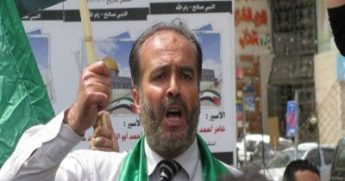 They searched the houses thoroughly, wreaked havoc on them, and confiscated his son’s car.
The forces also confiscated the contents of his son’s electronic devices shop as well as appliances inside the homes.
The Israeli forces stormed the house after midnight by blowing up its main door, Abu al-Haija’s son said.
They gathered the family members in one room and interrogated all of them.
Clashes erupted after the storming of Abu al-Haija’s home in Jenin city and in its refugee camp.
Arrests also took place in al-Khalil, Ramallah and other locations in Jenin city after the storming of Palestinians’ homes and confiscation of computers and other property of the arrested.
Israeli university, arms company hold hasbara hackathon in Haifa
MEMO | August 16, 2016
An Israeli university has hosted a hasbara hackathon, which saw students gather to create ways to improve Israel’s image and undermine the Boycott, Divestment, and Sanctions (BDS) campaign.
The ‘iHack’ event, held at the Technion-Israel Institute of Technology, is the latest example of Israeli students and institutions of higher education enlisting themselves in Israel’s global PR offensive.
According to organisers, the event sought to “bring together a community of creative, technical and passionate individuals to work together in teams to create media, content, campaigns, and apps for Israel advocacy.”
The goal was “developing products to promote” three objectives: “making Israel advocacy more accessible to the public”; “countering the BDS movement”; and “positively branding Israel.”
The Technion students behind the project are all part of the ‘Israel Fellowship’ scheme run by Israel advocacy organisation StandWithUs.
The hackathon was run with the help of think-tank the Reut Institute. According to Reut, “the aim is to enhance and develop tools which can be used by activists and organizations fighting against the BDS Campaign and Israel’s delegitimization across the world.”
According to a report in The Jerusalem Post, the Technion-hosted event was also held in collaboration with arms company Rafael Advanced Defense Systems, as well as “the Student Union and the Entrepreneurship Centre of the Technion.”
The director of public diplomacy at Israel’s Strategic Affairs and Public Diplomacy Ministry was also in attendance.
Rafael provided 20 employees as “mentors”, along with “other experts in the fields of software and engineering, political science, marketing and graphic design.”
Under the direction of Rafael employee ‘Ezra’ (“whose last name was withheld”), one group created a “diplomatic Iron Dome.” According to the paper, “the team envisioned anti-Israel expression as the missile, and their app as the Iron Dome that must intercept it.”
Jewish Labour Movement backs Owen Smith as next Labour leader
Press TV – August 15, 2016
The Jewish Labour Movement (JLM) votes almost unanimously for Owen Smith over Jeremy Corbyn to become the next leader of the party.
In an overwhelming victory for Smith, 92 percent of the JLM voted in favor of Smith, compared to just 4 percent backing Corbyn.
According to its website, the JLM is a “formal affiliate of the Labour Party in the UK since 1920,” which “campaigns within the party and the wider community to support Labour values within the UK, Israel and internationally.” It also works closely with “the Zionist Federation of the UK.”
Corbyn has been rocked by several accusations of anti-Semitism in the party since taking over as leader in September of 2015. The row gained mass media coverage and led to the party suspending a number of its key figures for condemning Israeli crimes.
Reacting to the uproar, Corbyn launched an inquiry into anti-Semitism within the Labour Party. Even former mayor of London, Ken Livingstone, was suspended by Corbyn in April for denouncing Israel’s crimes against the Palestinian people and arguing that Adolf Hitler, the former leader of Nazi Germany, was a supporter of Zionism.
Writing an article for the Mail over the weekend, a Jewish Labour donor compared Corbyn’s inner circle to “Nazi stormtroopers”. Michael Foster, who gave Labour £400,000 at the last election, wrote of his hatred for Corbyn and penned his support for Smith.
Smith, a former shadow work and pensions secretary, announced his decision to run in the Labour leadership election last month. Smith had resigned earlier this year from Corbyn’s shadow cabinet before challenging for the leadership.
Corbyn’s opponents challenged his leadership for what they call inadequate efforts to keep the UK in the European Union.
Corbyn has until September 21 to appeal to voters and defeat Smith. The results will be announced in a Liverpool conference three days later.
Zionist thought police wreak havoc on campus
Bullies and career-wreckers target professor Joy Karega at Oberlin College
By Prof. Tony Hall | American Herald Tribune
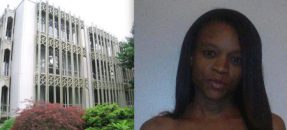
An Open Letter to Marvin Krislov, President of Oberlin College, Following the Suspension of Dr. Joy Karega for Publishing References to Alleged “Anti-Semitic Conspiracy Theories” on Facebook
10 August, 2016
Dear President Krislov;
I want to include my voice among the many that have chosen to comment on the treatment extended to Dr. Joy Karega, Assistant Professor of Rhetoric and Composition at Oberlin College. Dr. Karega is a promising young Black scholar with a new Ph.D.. She finds herself in her present dilemma employed at an institution that advertises itself as a champion of Black equality ever since Oberlin’s involvement in the anti-slavery struggle before the US Civil War.
A report published in Israel on the simmering Karega-Krislov affair includes the text of a letter said to emanate from 174 Oberlin faculty members. All but a few of those that ratified the statement criticizing Dr. Karega’s controversial Facebook posts chose to remain anonymous. This wish to exact professional retribution by colleagues not willing to accept their own personal and professional accountability for a career-wrecking collective intervention speaks of a serious problem in Oberlin’s academic culture. It also illustrates a more pervasive ethical malady plaguing the halls of North American higher education, a sickness that extends far beyond your school or the scope of the Karega-Krislov affair.
Florida Atlantic University is one of those schools where the collapse of academic integrity is far advanced. Central to this collapse is the demise of the core mission of higher education, namely independent inquiry aimed at distinguishing truth from falsehood no matter how threatening this process might be to the status quo.
Tenured Communication Professor, James Tracy, is engaged in suing FAU in a dispute originating in unsubstantiated accusations treating the academic’s important original research and publications on the Sandy Hook debacle as “conspiracy theories.” The creep of the weaponized term, “conspiracy theory,” into academic useage is a telling marker of the insidious submission of universities to masters intent on suppressing those truths incompatible with their agendas of profit and power.
The terminology of “conspiracism” creates the basis for arbitrary blockage of academic work that might menace entrenched power.
With an eye towards Oberlin’s treatment of alleged “conspiracy theorist” Dr. Karega, Prof. Tracy has written about imposed “strictures” that
characterize and define the modern state of academe and its often gutless approach to today’s most urgent social and political problems. Intellectuals recognize as a right of passage how they must tiptoe around concrete geopolitical and historical realities, lest they draw the ire of today’s thought police and face the potential consequences: financial deprivation and professional ruin. In this way what was once higher education has become yet another racket for high finance.
Where Is the Evidence?
Israel’s Haaretz newspaper has published the text of the Oberlin professors’ letter that is advertised as emanating from a “majority” of faculty members. The supposed majority has opted not to remain silent even as most of its members “tiptoe around concrete geopolitical and historical realities.” Their irresponsible refusal to allow their names to be published amounts to an unwillingness to accept personal accountability for their group action directed at discrediting an academic colleague. The core of the faculty members’ statement is that
Bigotry has no place on the Oberlin campus (or anywhere). It sullies the values of equality and mutual support that are embedded in our institutional DNA as the first coeducational college and the first to admit students of all races as a matter of policy. It undermines our classrooms as places where students and faculty accord each other the deep respect required for the exercise of free and open expression and the development of reasoned analysis grounded in evidence.
Your school’s decision to suspend with pay Dr. Karega’s teaching and advising responsibilities does not seem to me to be in line with the conditions required for “free and open expression and the development of reasoned analysis grounded in evidence.” I have looked long and hard through the considerable volume of information published on this matter on-line to discover that there is not yet much serious discussion of the actual evidence supporting or negating Dr. Karega’s pronouncements in the highlighted Facebook posts.
This neglect of issues of evidence and proof is especially stark in The Tower, an aggressively partisan publication created by “The Israel Project.” I have not been able to find a coherent explanation on-line of what The Israel Project, also referred to as TIP, actually is. The Tower has tended to lead and arguably also to create the Karega-Krislov story.
The Tower’s narrative is then picked up by other larger publications like The New York Times, The New York Post and Haaretz. One Tower headline presented a summary of Dr. Karega’s contested posts, indicating “Oberlin Professor Claims That Israel Was Behind 9/11, ISIS, Charlie Hebdo Attack.” Another biased and sensationalistic headline in a publication entitled Forward proclaims, “Inside the Twisted Anti-Semitic Mind of Oberlin Professor Joy Karega.”
This pattern of condemning Dr. Karega without any proof that she is wrong in her assertions extends to the anonymous Faculty letter and to a similar statement by Oberlin’s Board of Trustees. You yourself, Dr. Krislov, mirror and replicate this propensity. Even before you decided to suspend Dr. Karega’s teaching you introduced your own unsubstantiated assumptions that Dr. Karega is necessarily misguided and unjustified in all her assertions. Why is she wrong? The answer seems to be…. Well she just is. Everyone knows. How does everyone know? Well…. We just do. Where is your evidence to back up your conclusions? Where is the evidence on which to base “reasoned analysis”? Where are proper definitions of the language you deploy like juridical markers of a proven crime?
What do you mean when you associate Dr. Karega with “anti-Semitic conspiracy theories?” What is your theory of conspiracy and of anti-Semitism? Are theories about conspiracies ever legitimate in your view? What are the criteria? How can the mission of the Liberal Arts be accomplished without the development of theories, including those theories that speak to issues of power and how it is exercised? Who can deny that influential interests, entities and individuals sometimes conspire secretly and outside the law to achieve shared goals? Aren’t you guilty of deploying a propaganda term that has been deviously engineered to block, rather than promote, reasoned exchange on subjects of core importance to the future of higher education and of civilization itself?
The Contrasting Experiences of Dr. Kevin Barrett and Dr. Philip Zelikow Post-9/11
Dr. Kevin Barrett has followed closely what he refers to as a witch hunt on Dr. Karega. A Muslim convert himself and a Ph.D. in Islamic Studies, Dr. Barrett is a martyr who was notoriously nailed to the cross of anti-intellectual vigilantism in 2006. Dr. Barrett lost his teaching position as a Lecturer at the University of Wisconsin after Fox News and publicity-seeking politicians succeeded in hounding the custodians of higher education into sabotaging the principles of free speech and academic freedom. Are you giving way to similar intimidation, Dr. Krislov?
Dr. Barrett was fired from the University of Wisconsin for doing his job too conscientiously. He included in his broad-ranging introductory survey course on Islam a new topic highlighting the impact on Muslims of 9/11. To have not incorporated this subject in his curriculum would have been to fail to maintain the contemporary relevance of his course. All people, but especially Muslims the world over, have been profoundly impacted by what happened in New York and Washington on September 11, 2001.
An internal review at the University of Wisconsin found that Dr. Barrett had been conscientious in providing a range of perspectives of the subject of 9/11. Dr. Barrett was at the time a skeptical critic of the government’s account of 9/11 but that did not deter him from presenting various perspectives on the event, including those outlined in 2004 by the Bush government’s highly politicized 9/11 Commission Report.
It should be noted that the conclusions of this investigation, drafted by Prof. Philip Zelikow, were based on supposed “evidence” obtained by the CIA in secret “dark sites” through domestically and internationally outlawed torture. Is the making of public policy based on evidence obtained through torture even legal, let alone ethical? When lawmakers sanction legislation and policy produced by evidence obtained through torture, are they complicit in heinous international crimes? Are there any professional sanctions that should be imposed on Prof. Zelikow, a historian expert in the deployment of public mythology to influence public attitudes and opinion?
Evidence-Based Interpretation or Conspiracy Theory?
Since 2006 Dr. Barrett has established himself in the United States and internationally as a leading expert among the broad constituency that has conducted independent research on 9/11 and related subjects. I make this assessment as a Full Professor of Liberal Education and Globalization Studies at the University of Lethbridge in Alberta Canada.
I have taken some of my leads in my own academic work on 9/11 and related subjects from Dr. Barrett as well as from the writings and talks of professors David Ray Griffin, Graeme MacQueen, Michel Chossudovsky, Peter Dale Scott, Steven E. Jones, John McMurtry, Richard B. Lee, Niels Harritt, Michael Keefer, Richard Falk, Barrie Zwicker and many others. From this starting point of reading the peer-reviewed and journalistic literature, I have conducted my own independent scholarly research on some of the same subjects addressed in Dr. Karega’s media-highlighted Facebook posts.
I have published my findings on these matters in a number of venues including the peer-reviewed volume, Earth into Property: Colonization, Decolonization, and Capitalism. The narrative is a global history from 1492 until the time of publication. It includes my account of the genesis of the 9/11 Truth movement in which Dr. Barrett played a significant part. Published by McGill-Queen’s University Press, Earth into Property was chosen by The Independent in UK as one of the best history books published in the English-speaking world in 2010. The Journal of the American Library Association, Choice, described Earth into Property as “a scholarly tour de force.”
In Earth into Property I outlined my understanding of 9/11 and its outgrowth in the so-called Global War on Terror. I integrated this analysis into an historical interpretation going back to the American Indian Wars and before. Like other imperial assaults on Indigenous peoples the world over, the US invasions of the North American Indian Country were justified in the name of the assumed imperative of “civilization” to ascend over “savagery.” This justification for genocide and land grabs is very similar to the justifications of imperial Israel’s expansionism with massive US military backing, all in the name of “fighting terror.”
The imagery of Islamic jihadists is regularly mainstreamed into the mental environment by many of the same media venues currently attempting to smear Dr. Karega’s reputation with a vengeance. This psychological operation plays on many of the same themes as those deployed by the authors of the US Declaration of Independence who referred to “merciless Indian savages.” America’s founding manifesto racially profiled the victims of the original American genocide much as Muslims collectively are now being profiled in the hate-inciting propaganda of the Zionist-driven Islamophobia Industry.
In the current media-induced environment of psychological paralysis, it is made to seem like the steady flow of violent events in, for instance, Nice, Munich, Orlando, and San Bernardino emanate from the actions of Islamic jihadists acting alone. It is made to seem that their sole motivation is that of religious zealotry and an irrational hatred of “Western freedoms.” This cartoon-like depiction for TV-addicted folks disguises the role in contemporary geopolitics of mercenary proxy armies fighting under Islamic flags. Funded, armed and logistically backed by the United States, Israel, Saudi Arabia and various other governments and corporations, these mercenary forces give justification to military adventurism of war profiteers abroad, police state and surveillance state incursions at home.
The governments of USA and Israel, the dominant, heavily nuclearized superpowers in this imperial system, do much of their aggression and intrigue through their own network of proxies, puppet governments and corporate clients including Qatar, Canada, UK, France and Exxon Mobil. This imperial coalition is at once backing, while concurrently seeming to fight, the so-called “Islamic State.”
In the effort to overthrow the Assad government of Syria, the inheritors of the Anglo-American empire are openly assisting their intelligence agencies’ offshoot, namely al-Qaeda. A creation of the CIA and Pakistani intelligence in Afghanistan, the very group blamed for 9/11 from the very first hour of the debacle is now declared to be a US ally.
What chain of events led former Israeli Prime Minister Ehud Barack to pin 9/11 on Osama bin Laden and to call for a “concerted war on terror” at the London studios of the BBC on the morning of 9/11? He laid out this scenario even before the Twin Towers burst into pulverized clouds of dust and vapor. How is it that the very group, al-Qaeda, immediately blamed for 9/11 without any investigation whatsoever, has now morphed into one of the “moderate rebel” groups backed by those seeking to overthrow the government led Bashir al-Assad? What is wrong with this picture? Plenty.
Wikileaks has recently added new evidence in the form of hacked US State Department E-Mails to support the interpretation that the Israeli and US superpowers are primary sponsors of proxy armies regularly depicted in the Western media as Islamic jihadists. It has been widely reported that Wikileaks founder, Julian Assange, has been developing a documentary record demonstrating the connections linking Hillary Clinton’s role in the overthrow and mob murder of Muammar Gaddafi to the transfer of armaments to proxy forces fighting under various Islamic flags in Syria and Iraq.
This sequence of connections is now clearly a matter of public record. Nevertheless the evidence of what is actually going on is not reflected in the media campaigns of Israeli-backed propaganda agencies such as those being orchestrated by Rita Katz’s SITE Intelligence, an extension of the Rand Corporation.
The Academic Martyrdom Club
The overwhelming weight of evidence points, therefore, to the conclusion that Dr. Karega’s characterization of the behind-the-scenes genesis of 9/11 and the Islamic State are, at the very least, plausible. Will the lynch mob mentality that is being incited inside and outside Oberlin College be allowed to run its course to strangle the career of a young academic?
As I see it, Dr. Karega’s Facebook posts suggest that this scholar of anti-apartheid and decolonization studies has shown herself strong enough and intellectually capable enough to stroll through, rather than “tiptoe around, concrete geopolitical and historical realities.” Unlike her 174 Oberlin colleagues, most of whom chose to hide their identity rather than take academic responsibility for their professional actions, Dr. Karega is showing a capacity to stand behind what she teaches and publishes no matter how inconvenient to entrenched interests.
Those who assume Dr. Karega to be wrong, including many of her fearful, duck-and-cover colleagues at Oberlin College, must reckon with the reality that a considerable weight of evidence is on the side of the besieged Assistant Professor of Rhetoric and Composition. The position that Dr. Karega is actually closer to the truth than her critics is edified by the dubious resort of many of her detractors to ad hominem attacks and ill-defined propaganda terms like “anti-Semitic conspiracy theorist.”
This kind of weaponized language has everything to do with marginalizing dissenting voices and nothing to do with “according each other the deep respect required for the exercise of free and open expression and the development of reasoned analysis grounded in evidence.”
Better, much better is expected especially of those of us with tenured academic positions. It is during our watch that, as Prof. James Tracy puts it, what was “once higher education is becoming yet another racket for high finance.” What are the forces that are undermining the will or the capacity of faculty with the protection of tenure to rise to the higher level of our professional academic calling?
How many of us have been enticed away from the academic quest for truth as an end in itself to pursue grants and contracts and media engagements? How many of us have sought the rewards of money, fame or professional tranquility by taking the side of power, by veering away from lines of research, publication and teaching that involve the bringing to light of controversial interpretations inconvenient to power?
What is the impact on our colleagues of the examples being set through the persecution of, for instance, Kevin Barrett or James Tracy or Steven Salaita or Ward Churchill or Rabab Abdulhadi or the latest pilloried nominee for the academic martyrdom club, Joy Karega? They are some of the more prominent examples of those that have left the safety of officially-sanctioned narratives to study the deep politics of current configurations of power.
What are we to make of the fact that our Black, Muslim, Palestinian, and Native American colleagues seem to face disproportionately high levels of professional persecution? How can faculty members best address this increasingly blatant failure of the academy to live up to the higher calling of our profession, to transcend intimidation of thought police in order to advance the ideals of truth, justice, equality, peace and ecological sanity?
Patterns of Persecution
The tidal wave of new revelations and disclosures in this age of pervasive digitalized information has vindicated many of the positions that Dr. Barrett began developing in 2006 when the academic career of this promising Muslim scholar was wrongfully sabotaged. Will the same kind of premature rush to judgment in the Barrett case at the University of Wisconsin now extend to the Karega-Krislov matter at Oberlin College? Will the rule of political expediency continue to prevail over the protection of free speech and academic freedom?
Will Oberlin College continue to act in defiance of the traditions it claims to represent? Will your school continue siding with power to further the repression of an important academic voice giving expression to the struggle for justice by those who Frantz Fanon once described as the wretched of the earth? Dr. Karega’s academic work on the liberation struggles of marginalized people is being pushed farther to the margins. Can there be any doubt that her marginalization is further empowering those who have superior access to media, money and political influence?
The smear campaign directed at Dr. Joy Karega is part of a very elaborate effort by thought police targeting free speech and academic freedom on many campuses throughout North America and beyond. The primary objective is to silence criticism of Israel for its imperial policies but especially its malicious and often lethal treatment of Palestinian people. Dr. Karega is one of those that has connected the dots to associate the underlying impetus of the Global War on Terror with a Zionist-driven effort to demonize in the public’s imagination not only Palestinians but Muslim and Arab peoples the world over.
Sociology Professor William I. Robinson has presented a very broad and illuminating overview of the methodology being deployed to constrain free speech and open academic debate on university campuses throughout North America. His analysis emanates from his own professional experience as a target of an effort to purge this senior sociology professor, a Jew himself, from his tenured position at the University of California at Santa Barbara. The attack on Prof. Robinson and his academic work emanated from an elaborate complex of Israel-First Zionist organizations inside and outside the Santa Barbara campus of University of California.
The attacks came after Prof. Robinson was openly critical of the Israeli military assault in 2009 in Operation Cast Lead on the Gaza enclave. Some have described Gaza under Israeli occupation as a prison complex to contain Palestinian inmates. Prof. Robinson describes the tactics of recrimination used against him as follows:
The persecution to which I was subjected involved a litany of harassment, slander, defamation of character and all kinds of threats against the university by outside forces if I was not dismissed, as well as hate mail and death threats from unknown sources. More insidiously, it involved a shameful collaboration between a number of university officials and outside forces from the Israel lobby as the university administration stood by silently, making a mockery of academic freedom.
The disciplinary procedure initiated against me by UCSB officials involved a host of irregularities, violations of the university’s own procedures, breaches of confidentiality, denial of due process, conflicts of interest, failure of disclosure, improper political surveillance, abuses of power and position, unwarranted interference in curriculum and teaching and so on. As I would discover during the course of the ordeal, individuals inside the university and in positions of authority had linked up with agents of the lobby outside the university in setting out to prosecute me.
It seems this same pattern of treatment, one which has been re-enacted frequently with some variations throughout many centers of higher education, is underway now in the Karega-Kristov matter at Oberlin College. One major difference is that, as a younger professor, Dr. Karega is still in the process of establishing herself professionally. Dr. Karega is at a particularly vulnerable stage in her career. As Prof. Robinson observes, “across the country whenever such persecutions are launched the burden falls on those that are targeted to defend themselves, often tying up the individual’s time and life for months and generating great emotional stress.”
The Robinson case attracted much attention nationally and internationally. Many students and professors organized themselves to create a Committee for Academic Freedom. One of the more vocal members of this committee was Prof. Richard Falk, a Professor of International Law at Princeton University and formerly UN Special Rapporteur on Israeli Treatment of Palestinians in the Occupied Territories.
The effort to pressure the university administration to terminate Prof. Robinson was dropped once the organization, the Foundation for Individual Rights in Education, threatened to sue the protagonists seeking recriminations. About the broader context of propaganda and geopolitics surrounding the improper professional assault against him, Prof. Robinson has written,
The Israeli army is the fifth most potent military machine in the world and one that is backed by a propaganda machine that rivals and may well surpass that of the US, a machine that dares to make the ludicrous and obnoxious claim that opposition to the policies and practices of the Israeli state is anti-Semitism. It should be no surprise that a state founded on the negation of a people was one of the principal backers of the apartheid South African state not to mention of the Latin American military dictatorships until those regimes collapsed under mass protest…..
The Boycott Divestment and Sanctions Movement, BDS, in Israel-First Interventions on Campus
One important facet of the worldwide resistance to the Israeli government’s current imperial policies is the Boycott, Divestment and Sanctions Movement, BDS. Prof. Robinson stresses the growing strength of the BDS movement especially among Palestinian-support groups on university campuses. This growing strength is cited as one of the primary reasons why Israel-First organizations in North America are targeting institutions of higher education.
Dr. Karega supports the BDS movement, as do a number of Oberlin students including some Jewish students. I would go so far as to surmise that she sees this global campaign as an important extension of the resistance of people and peoples to the colonizing incursions of those at the commanding heights of power over banking, media, intelligence agencies and armed forces.
Campus Watch, the AMCHA Initiative, the Simon Wiesenthal Center for Campus Outreach, the Zionist Organization of America, Stand With Us, Israel on Campus Coalition, Hillel, the American Jewish Congress, and David Horowitz’s FrontPage are some of the Zionist-directed agencies that are destroying the atmosphere of free, open and respectful discourse in our institutions of higher learning.
One of the most active of the groups is Campus Watch, one of Daniel Pipes’ primary agencies of intervention at universities. Its primary technique for wreaking havoc on campus is to quarterback the proliferation of student complaints as a means of initiating attacks like those directed, for instance, at professors Robinson and Karega. About this method of assaulting academic freedom, Will Youmans has written,
Campus-Watch encourages students to snitch on their professors. It has a whole section dedicated to student reports. Campus-Watch is essentially forming a paramilitary thought police, a private TIPS program for pro-Israeli advocates.
In a Counterpunch article entitled “David Horwitz’s Corrosive Projects” Paul De Rooji observes
The Hasbara Manual, a 131-page propaganda manual, was distributed to US-zionist campus organizations; it lists many techniques to whitewash Israel, and to defuse the message of its critics. Two of its key recommendations are to: (1) “attack the messenger and not the message”, and (2) to “gain points” with the public targets by “manipulating,” and diverting them from “rationality,” “real examination,” and “thinking critically”. Well now, this is a splendid explanation for the role FrontPage and Campus-Watch play in the US today. Much of what these organizations do is smearing and undermining rational discussion of a range of issues…….
FrontPage is not merely a contributor to the “marketplace of ideas,” it is a wrecking operation comparable with the book-burners of yesteryear. It is also a mistaken conception to think that we just encounter a “marketplace of ideas”, but a more accurate understanding of our society is that we are confronted with a “battleground of ideas”, and here there is no room for complacency and neutrality…
Horowitz’s FrontPage rag is the equivalent of the village idiot gaining control of the megaphone.
In their investigation of “The Trial of Israel’s Campus Critics,” in Tikkun magazine, David Theo Goldberg and Sariee Makdisi provide another telling characterization of the notorious Hasbara Handbook. They write
The Hasbara Handbook offers several other propaganda devices, all of which can be seen vividly at play in the coverage of the UCLA Gaza panel and other similar events, including, again, the Robinson affair. “Creating negative connotations by name calling is done to try to get the audience to reject a person or idea on the basis of negative associations, without allowing a real examination of that person or idea,” the handbook states with remarkable bluntness, in advocating that tactic. It also suggests using the opposite of name calling, to defend Israel by what it calls the deployment of “glittering generalities” (words like “freedom,” “civilization,” “democracy”) to describe the country; manipulating the audience’s fears (“listeners are too preoccupied by the threat of terrible things to think critically about the speaker’s message”); and so on. The point of all this is not to use arguments backed by reason and evidence. It is, instead, to manipulate (the handbook’s own term) an audience precisely in order not to examine arguments, not to think critically about what is being said. Which is a rather remarkable approach for a book intended for a university audience.
One of those academics that has faced the full force of this kind of professional harassment described in detail by Prof. Robinson is Prof. Rabab Abdulhadi, Associate Professor of Ethnic Studies/Race Resistance Studies at San Francisco State University. Like Dr. Karega and Dr. Barrett, Prof. Abdulhadi has been the target of “ritual defamation.”
Prof. Abdulhadi described in 2014 the nature of the obstacles put in her way to develop research alliances in the Middle East with Palestinian colleagues. She writes:
Baseless accusations of anti-Semitism and support for terrorism have had devastating impacts on me and other members of the university community. Students and faculty have been consumed by defending our right to speak freely. These smear campaigns can affect our future and career opportunities and subject us to unwarranted government scrutiny of our speech activities.
Contextualizing Dr. Kevin Barrett’s Unanswered Letter to the President of Oberlin College
Where does Oberlin reside in the historic struggle between those on the delivering and receiving sides of imperial globalization? I am aware you face criticism from those who allege you have not been active enough in taking the side of those that seem to be prevailing in this test of institutional influence. A headline in the unabashedly Zionist publication, the Tablet, for instance alleges, “How Oberlin Repeatedly Failed to Confront Anti-Semitism on Campus.”
There can be no doubt about where Dr. Kevin Barrett has situated himself in a world where the struggle between the forces of colonization and decolonization are as animated as ever. Since 2008 I have looked to Dr. Barrett as a martyred academic colleague. I became aware of Dr. Barrett through my now-deceased friend and colleague, Splitting The Sky.
STS was a Native American sovereigntist, a Mohawk activist and a remarkable human being. In 2009 Splitting The Sky attempted a citizen’s arrest, for war crimes, of George W. Bush in Calgary, Alberta. This action led to a trial where a group of us attempted to hold the former US president accountable for his war crimes and crimes against humanity.
Splitting The Sky was an avid student of the 9/11 false flag terror event and a regular guest on Dr. Barrett’s Truth jihad radio show. The Mohawk activist insisted I address the evidence of 9/11, initiating a process that led to my current professional interaction with one of the most articulate voices in the 9/11 Truth Movement.
Since 2008 I have collaborated professionally with Dr. Barrett. This collaboration led in late 2015 to my co-hosting with Dr. Barrett a regular survey of contemporary events for No Lies Radio. The program is titled False Flag Weekly News. On FFWN we have covered and will continue to cover Oberlin’s treatment of Dr. Karega and the controversy it is arousing.
I have also contributed essays to Dr. Barrett’s publishing projects including two recent edited books on the two false flag terror events in Paris in 2015. One essay is entitled “Witch Hunt on Terrorism.” The second is entitled “Academic Complicity in the Global War of False Flag Terrorism.”
It will come as no surprise that I share Dr. Barrett’s view of the recent suspension of Dr. Karega at Oberlin College as a witch hunt. The attempt to silence her helps facilitate a massive cover up essential to the continuing operations of the Global War of False Flag Terrorism. Having presented this background I republish below the letter that Dr. Barrett sent you last March on the Karega-Kislov matter. He tells me he is still waiting for an answer from you. Dr. Barrett has explained to you, Dr. Krislov, the following:
You write that you are similarly nonplussed by “anti-Semitic conspiracy theories.” Are you referring to the theory that 19 young Semites, led by an older Semite on dialysis in a cave in Afghanistan, blew up the World Trade Center by using box-cutters to kindle minor office fires?
I, too, am outraged by anti-Semitic conspiracy theories. Today virtually all of the world’s Semites are the speakers of Arabic. (“Semite” is a linguistic category, not a racial one.) And I am outraged by the way Arabic Semites have been falsely blamed for the controlled demolition of the World Trade Center, the murders of innocents by large white paramilitary professionals in Paris and San Bernadino, and many similar false flag incidents. These false flag public relations stunts have triggered the murder of more than 1.5 million people and the destruction of the homes and lives of tens of millions more. THIS is the real, indisputable and ongoing Holocaust; you and your colleagues are perpetrating it right now with your tax money, your silences and your lies. The blood of more than a million innocents is on your hands.
So while I appreciate your support for academic freedom, I respectfully request that you take the next step and sponsor a debate or symposium on false flags in general and 9/11 and the 2015 Paris attacks in particular. If you or anyone else believes they can defend the 9/11 Commission Report, or the official versions of the Paris attacks, in a debate, they should be not just willing but actually eager to put the “conspiracy theories” to rest.
I will be happy to travel to Oberlin at my own expense to participate in any such debate. Meanwhile, I am sending my three books Questioning the War on Terror, We Are NOT Charlie Hebdo, and ANOTHER French False Flag as a gift to the Oberlin College Library, where faculty and students can refer to them to understand the positions of Professor Karega and the hundreds of millions of people around the world who share her interpretations of current events.
Sincerely,
Dr. Kevin Barrett
The Imposed Illusions of Empire versus the Liberating Impulses of Applied Reason
I agree with Dr. Barrett that there is a very real need for some sort of conference to encourage free and open debate about the issues raised to the surface by the Karega-Krislov matter. I would like to see, however, a broader focus than that proposed by Dr. Barrett. I think the time has come for a conference that highlights the problems that are preventing institutions of higher learning from living up to their mission to identify, disseminate and defend truth, but especially inconvenient truths, through the process of education.
Among the issues that are indicative of our educational failures are the following: 1. the marginality and total ineffectiveness of the near-defunct anti-war movement, 2. the disproportionate level of criminalization of minorities as reflected in demography of our penal institutions, 3. the huge and growing economic polarization between haves and have-nots and, 4. the near absence of credible law enforcement when it comes to the rampant criminality of those at the top of our systems of banking, intelligence, militarism, public safety including public health, and mass communications. Should university governance be added to this list?
I think we in the academy should take to heart these appalling trajectories and propensities, these markers of the failure of our educational project. I think it especially important that we respond thoughtfully and proactively to these trends in what you call at Oberlin the Liberal Arts and in what we describe at the University of Lethbridge as Liberal Education. The patterns of decline and deterioration described above point exactly in the opposite direction from everything we claim to stand for in the Liberal Arts/Liberal Education.
The reasons for the breakdown in civility, honesty, equity, due process, and simple sanity in international relations are complex and many faceted. From my perspective, one of the factors in the decline is reflected in the unwillingness of leaders like you to examine the full array of evidence publicly available on core issues like who did 9/11 and who is behind the existence and activities of ISIS/ISIL/Daesh/ “Islamic State.” Once again, where is your evidence that Dr. Karega is wrong in her interpretation of these matters?
Without honestly looking into the deep state intrigues facilitating war-profiteering in the twenty-first century, it is hard to fathom the sheer recklessness of those directing our increasingly militarized society. A fundamental facet of this wanton recklessness is the engineering of hatred towards Muslim people as a key to securing public consent for ramped up militarism especially in the Middle East.
In our running commentary on this story Dr. Barrett and I sometimes meet recriminations similar to those being directed at Dr. Karega. This kind of power-serving antagonism to our public service of offering public education in social media was recently put on display on the front page of my hometown newspaper, the Lethbridge Herald.
In an article entitled “Conspiracy Theories,” a local reporter argued that our interpretations of the news are necessarily unfounded because they do not conform to the dominant narrative disseminated 24/7 by the mainstream media. The Lethbridge Herald’s resort to the uncontextualized condemnation as “conspiracy theories” of our effort to share with the public our analysis as senior and well published practitioners in our fields highlights the growing distance between officialdom’s dominant narrative of deception and evidence-based assessments of humanity’s true conditions.
The disparity between the imposed illusions of empire and the liberating impulses of applied reason offers a key to understanding the depth of the betrayal by our governors of the Enlightenment’s rationalist heritage. With this rejection of evidence-based approaches to interpretation comes our accelerating descent into civilizational chaos. The malevolent intent of the criminals currently dominating old pyramids of power seems to be to plunge the largest part of humanity into a Hobbesian state of a war of all against all.
Much is revealed by the failure of officialdom to address, let alone stop, the unbridled crime wave reigning down growing suffering and angst on average folk the world over. I am far from alone in this perception that we are subject to a massive failure of leadership in places like universities where faculty members should be joining together in solidarity to expose the abundant frauds of the empire of illusion. Where do you fit into this picture Dr. Krislov? What signal do you send as a leader in the academy when you refuse to look at the full body of evidence to consider if there is any truth in any of Dr. Karega’s contentions?
Sir, I respectfully suggest you revisit your initial reactions by giving fair consideration to the evidence supporting how Dr. Karega sees 9/11, or ISIS, or the Charlie Hebdo affair, or the historic role of the Rothschild family in the genesis of the world’s dominant system for creating fiat currency by privately-owned central banks. Can you honestly be sure that there is no merit in how Dr. Karega is interpreting Power’s exercise? Who else shares her views? Can you say for sure your own relationship to Power is not a factor in your judgments so far?
In my view, Dr. Krislov, you confuse the issues by connecting your rejection of Dr. Karega’s positions to your own family history. To explain your relationship to the controversy you have written, “Members of our family were murdered in the Holocaust. As someone who has studied history, I cannot comprehend how any person could or would question its existence, its horrors and the evil which caused it. I feel the same way about anti-Semitic conspiracy theories.”
This way of characterizing the context of the controversy over Dr. Karega’s Facebook posts does not serve well the need for objectivity in assessing all sides of this matter.
The memory of Jews killed during the Second World War is too often subject to disrespect by those that abuse their victimhood to cover over and even explain the crimes of the Jewish state. As University of California Professor William I. Robinson has commented, the Israeli response to charges that the Jewish state has “colonized” the Indigenous people and Aboriginal lands of Palestine is often framed in polemics about “righting the wrongs of the holocaust.” Prof. Robinson characterizes this way of justifying genocidal incursions as “a unique system of propaganda and legitimation.”
Since you made the decision to suspend Dr. Karega’s teaching, the onus of proof is on you to demonstrate how you know Dr. Karega is wrong in her contentions. Have you, or have those howling for Dr. Karega’s professional termination, considered the contents of Dr. Barrett’s recent books on false flag terrorism or the extensive literature, including the ten books by Prof. David Ray Griffin, demonstrating that the government’s own conspiracy theory of 9/11 cannot be true?
Will you examine at least some parts of Earth into Property or read Christopher Bollyn’s Solving 9/11? Will you consider the assessment of 9/11 by Dr. Alan Sabrosky whose academic credentials within the US military establishment meet and far exceed the gold standard?
Have you reckoned with the assessment by Dr. Gideon Polya in his article entitled “Zionist-Subverted Oberlin College Trashes Academic Free Speech and Suspends Professor Joy Karega”? Dr. Polya might be considered one of the world’s leading authorities on the demography of war crimes and crimes against humanity. This Australian scientist is proud of his Hungarian Jewish heritage and carries on his family’s tradition of anti-Zionism.
Dr. Polya is unrelenting in his criticism of the deliberate lies spewed throughout media and academic venues. He contrasts this trend with the largely accurate reflection of reality he sees in the posts of Prof. Karega. He writes,
Lying is utterly forbidden in science and in scholarship and academia in general because it subverts rational inquiry. Lying by commission and lying by omission utterly subvert rational risk management that is crucial for societal safety and successively involves (a) accurate information, (b) scientific analysis , and (c) informed systemic change noting that lying by omission is far, far worse than lying by commission because the latter at least admits the possibility of refutation and public debate. Lying by omission is exampled by the Mainstream journalist, politician and academic presstitutes utterly ignoring the ongoing Muslim Holocaust and Muslim Genocide. Lying by commission is exampled by the finding by the US Center for Public Integrity that the Bush Administration told 935 lies between 9-11 and the invasion of Iraq.
Professor Joy Karega’s truth-telling is a notable exception to the dominant Mainstream culture of lying by omission and commission about the ongoing Muslim Holocaust and Muslim Genocide, the ongoing Iraqi Holocaust and Iraqi Genocide, and the ongoing Palestinian Genocide.
In order to contextualize his case study Dr. Polya presents a number of examples of persecution similar to that facing Dr. Karega at Oberlin College. This reference to individual cases should be understood in the context of Prof. Robinson’s comment that “dozens, perhaps hundreds, of professors and student groups have been harassed and persecuted for speaking out against Israeli occupation and apartheid and in support of the Palestinian struggle.” Dr. Polya writes,
The suspension of anti-racist truth-teller Professor Joy Karega by Zionist-subverted Oberlin College is but one further example of racist Zionists attacking Western academic free speech through egregious defamation, subversion, perversion, and institutional suspension or sacking of anti-racist Jewish or non-Jewish academics critical of Apartheid Israel. Thus, for example, outstanding anti-racist Jewish scholar Professor Norman Finkelstein was denied tenure and pressured to leave by a by Zionist-pressured De Paul University. Outstanding anti-racist humanitarian Anul Gandhi (the grandson of Mahatma Gandhi) was pushed out by Zionist pressure from the University of Rochester and the M. K. Gandhi Institute for Nonviolence he had founded. In slavishly pro-Zionist Apartheid Australia, Professor Jake Lynch and his Centre for Peace and Conflict Studies at the University of Sydney University have been under concerted attacks from Israeli and Australian Zionists. Anti-racist Middle East scholar Dr Sandra Nasr was censored by the Zionist-pressured UK London School of Economics and defamed and “investigated” by a Zionist-pressured Notre Dame Australia.
Rather than falling back on the canard of “anti-Semitic conspiracy theories,” how about transcending your own personal prejudices? How about moving to the higher ground of a conscientious academic or jurist that affords fair consideration to all sides in a debate before arriving at conclusions?
Shooting the Messengers with Weaponized Words
In 2014 Kevin Barrett and I and a number of talented investigative journalists attended a conference in Tehran entitled the 2nd New Horizon Conference of Independent Thinkers and Film Makers. The participants in this event came mostly from North America and Europe. In Tehran, we were able to discuss openly the kind of issues before us in an atmosphere of safety, mutuality and respect cultivated by our hosts. We the invited delegates could exchange ideas in a much more relaxed and less paranoid way than would be possible in the intensively policed academic milieus of our own home countries.
In some of our Western countries, including Canada, the constraints against free speech and academic freedom are growing, including through the authoritarian threat of criminal prosecution. Such prosecutions have been visited upon, for instance, my colleague Arthur Topham and his RadicalPress.com.
As I have already discussed, I see very clear connections between the assault on free articulation and the rise of unbridled militarism, the surveillance state, the increasingly transnational police state, financial malfeasance, ecological degradation and toxic contamination of our mental environments. What are our responsibilities in Liberal Arts/Liberal Education to stand up against this onslaught? What can we do as human beings and as faculty members to try to at least slow the erosion of the human condition, indeed the conditions of all life on this planet?
When I returned to Canada from the New Horizon Conference in Iran, I became aware of a press conference that had taken place in New York. There, Abraham Foxman of the Anti-Defamation League engaged in harsh defamation of his own. The Anti-Defamation League emerges from the international operations of the B’nai Brith.
Foxman has recently retired from the ADL, an entity with over 400 regular employees and an annual budget of about $40 million. In 2014 Foxman was at the peak of his power in the role he had built up for himself since the 1960s. Over decades as the ADL’s primary mouthpiece, Foxman became one of the most powerful lobbyists and aggressive smear meisters to represent the Israeli government in the United States. Part of his job, it is reputed, was to have engaged in close collaboration with the Israeli secret service agency, the Mossad.
For his frequent attacks predictably targeting as “anti-Semites” a broad array of individuals and groups critical of Israel, Foxman was paid about $700,000 per year. In 2009 the professional assault on Prof. William I. Robinson’s career began when Abraham Foxman secretly visited selected administrators, professors and students at the University of California’s Santa Barbara campus.
Abraham Foxman’s smear of the New Horizon conference in Tehran in 2014 echoed widely throughout the mainstream media. Foxman used the occasion to condemn the whole event as a “hatefest” and its participants as “anti-Semites, conspiracy theorists, and holocaust deniers.” As on other occasions, Foxman referred specifically to “9/11 conspiracy theories”
Seeing these weaponized phrases— conspiracy theorist, 9/11 conspiracy theorist, anti-Semite, and holocaust denier— highlighted and grouped by the ADL, was something of a revelation for me. It caused me to reflect on how these weaponized terms are being malevolently flung about as a package. To be accused of one of the criminal categories is to be accused of them all. No definitions are ever offered when these control words are deployed for ritual defamation. There is never, as far as I can see, any real grappling with evidence to justify what is being asserted. You have demonstrated the consistency of this pattern yourself, Dr. Krislov. You implicitly directed two of these weaponized phrases at Dr. Karega without addressing how you arrived at your defamatory conclusions.
The deployment of the weaponized terms inevitably has the effect of blocking open, evidence-based discussion on fundamentally important issues of history and power. This malicious methodology is aimed, often by paid agents of Israel First organizations, at doing as much professional, personal and financial damage as possible. This process is already well advanced at Oberlin College where Dr. Karega has been pulled from the classroom because some individuals did not like her Facebook posts.
Seeking an Academic Language of Peace to Replace the Sullied Rhetoric of Verbal Warfare
This exercise of power over what gets taught and who does the teaching at a famous American Liberal Arts institution of higher learning does not bode well for the future of society. A very aggressive style of elite bullying is on full display here. Such bullying to assert political influence over the academic life of universities should not be sanctioned nor rewarded.
With all this in mind I propose that the conference we might mount could be entitled
Anti-Semitic Conspiracy Theories: A Rational or Irrational Phrase in Academic Discourse?
I invite you to work with Dr. Barrett and me in putting together some of the ingredients of this conference. Other possible participants that immediately come to mind are Daniel Pipes, Noam Chomsky, Jonathan Kay, Rita Katz, Alan Sabrosky, Barrie Zwicker, Robert Faurisson, Kevin Ryan, Richard Perle, E. Michael Jones, David Frum, Denis Rancourt, Gearóid Ó Colmáin, Gideon Polya, Cythia McKinney, Catherine Shakdam, Michael Chossudovsky, Alfred Schaefer, Vic Sadot, Janet Stein, Mark Taliano, William I. Robinson, John Baird, Sheldon Adelson, Newt Gingrich, David Naylor, Brian Mulroney, Gareth Porter, Pepe Escobar, Ken O’Keefe, Maisoon Rice, Ursula Haverbeck, James Corbett, Joshua Blakeney, John McMurtry, Christopher Bollyn, James Tracy, Steven Salita, Norman Finkelstein, Jez Turner, Stephen Toope, Elizabeth May, and Nader Talebzadeh.
Perhaps we could invite Dr. Joy Karega to set the tone with the opening address. Has Dr. Karega been offered a proper public platform at Oberlin College or elsewhere to tell her side of the story in a safe and secure academic setting? What arrangements if any is Oberlin College making to protect her person from assault for the alleged crime of publicizing her ideas?
Who might be involved in the institutional backing of this conference? I would like to propose that we invite the participation of the Munk School of Global Affairs at the University of Toronto. I completed my Ph.D. at the U of T in 1984. I have written critically about the genesis and activities of the Munk School. I have accused it of isolating itself from scholars and scholarship that do not conform with the configurations of power behind the Munk School’s creation and operation.
To me the history of the Munk School illustrates many of the forces subordinating university life to the merging power of corporate and Zionist influence. A manifestation of this more general tendency is to be seen in attempts to exclude from the intellectual life of the academy contributions by the likes of Dr. Kevin Barrett, Dr. James Tracy and now, it seems, Dr. Joy Karega.
The Munk School of Global Affairs’ founder, Peter Munk, is a businessman who worked with Adan Khashoggi, George H.W. Bush, Brian Mulroney and others to expand the international operations of the Barrick Gold Corporation headquartered in Toronto. This history helps explain the Munk School’s strong political support for government deregulation of international mining operations headquartered in Canada. Another preoccupation of the Munk School is to advance some of the policies of Likudnik Israel including its anti-Iranian positions.
I have exchanged collegial correspondence with Munk School Director, Dr. Stephen Toope. In this process I have sent Dr. Toope publications illuminating subjects and interpretations that I think the Munk School should address to avoid the charge that it is engaged in forms of academic censorship. In particular, I have made the case that the Munk School should be much more open to including in its handling of the Global War on Terror due consideration of scholarship pertaining to false flag terrorism.
I observe that Dr. Toope has co-edited a book of conference papers on the Charlie Hebdo affair in Paris in January of 2015. The conference was sponsored by the Munk School that also partially funded the book entitled, After the Paris Attacks: Responses in Canada, Europe, and Around the Globe (Toronto: University of Toronto Press, 2015). Dr. Karega’s interpretation of the Charlie Hebdo affair is not consistent with any of the interpretations presented in the Munk School’s book. Dr. Karega’s interpretations are consistent with some of the interpretations that appeared in the book on which Dr. Barrett and I worked.
Dr. Barrett specifically refers to We Are Not Charlie Hebdo: Free Thinkers Question the French 9/11 (Lone Rock Wisconsin: Sifting and Winnowing Press, 2015) in both his letters to you. The volume’s 22 contributors include professors, a rabbi, a structural engineer, a former US Congress women, a former White House policy analyst, a former Assistant Secretary of the US Treasury Department and a Head of State.
This diverse array of public intellectuals has come up with a broad range of interpretations based on many different types of evidence. Most contributors agree, however, that the Charlie Hebdo affair was to some degree engineered covertly by intelligence agencies. Some think that the most likely architects of the false flag terror event have strong attachments to the policies and imperial aspirations of the Israeli government as well as many of its citizens.
Whether or not you agree with this interpretation, Dr. Krislov, it is one that a number of serious thinkers have put forward after conscientious engagement with the available evidence. There should have been some reckoning with this interpretation, even if only to say why it is wrong, in the Munk School’s volume that appeared months after We Are Not Charle Hebdo.
This exclusion of evidence is a small example of a much larger phenomenon of academic censorship, often in collusion with powerful political lobbies. One of the main censored subjects currently is false flag terrorism and the evidence of extensive Israeli deployment of this tactic to generate widespread public hostility towards the enemies of the Jewish state. A good case study of the extent of academic censorship would be to look at the reception, by university faculty members and libraries, of Dr. Barrett’s three recent volumes on false flag terrorism.
To justify ignoring this impressive scholarly achievement simply by uttering the magical hex phrase, “anti-Semitic conspiracy theorist,” or maybe even “Nazi” or “white supremacist,” hardly does justice to our community of scholarship.
Rather than continue our descent into a Hobbesian state of an all-encompassing war of all against all, why not try to move towards a more elevated objective of scholarship that advances peace with justice? Why not join together as peers to take the high road of academic endeavour in the spirit of civility, collegiality and the liberating potential of the Liberal Arts.
I am
Yours Sincerely,
Anthony James Hall
Professor of Liberal Education and Globalization Studies
University of Lethbridge
RT Besieged by DDoS Attacks Days After US Think Tank Called for Cyber Terrorism
Sputnik – August 14, 2016
Hackers bombarded RT with a well-planned series of Distributed Denial of Service (DDoS) attacks one week after the Atlantic Council wrote an article suggesting preemptive cyber terrorism against RT and the Moscow Metro.
Last week the influential Atlantic Council led by President Obama’s former Ambassador to Singapore and failed 2012 Republican candidate Jon Huntsman released a paper contemplating preemptive cyber attacks against the Russian infrastructure and RT’s offices. This week, RT was the target of the exact type of cyber terrorism that was postulated in the article creating cause for concern.
RT’s systems have been bombarded throughout the week by a “particularly well-planned series of Distributed Denial of Service (DDoS) attacks that continued into early Friday” the outlet said in an article. The attacks targeted the station’s data centers and internet provider in the US, Europe and Russia.
The attack, which if conducted by a government would amount to an instance of censorship, caused repeated disruptions for RT.com visitors forcing the station to undertake necessary actions to prevent further attacks. According to RT’s IT specialists, “the attackers were trying to overwhelm to provider’s capacity.”
The attacks, according to IT experts, all originate from the same source as is established by the tactics and code signature used by the attackers. The hackers were deemed to be sophisticated selecting precise targets in order to create maximum disruption.
“It looks like the attackers are continuously studying the company’s outer network infrastructure and its security mechanisms. The cyberattacks that we are seeing are not the most powerful, but they are different from hundreds of others in their cunning methods and analysis – they are looking at how we will react or how we switch the traffic,” explained RT’s Head of Interactive Projects Elvira Chudnovskaya.
The attacks on the RT system are the most substantial in years with comparable attacks striking RT.com in February 2012 and in August 2012. The hacker group AntiLeaks, which opposed Julian Assange’s WikiLeaks, took responsibility for those two prior attacks.
Whether the attacks were conducted by US government or NATO assets or were simply conducted by individuals who share a like-minded approach to the Atlantic Council remains unclear.
See also:
That’s Awkward: Why is Washington Cheering al-Qaeda Linked ‘Heroes’ in Aleppo?
Hillary’s Top Surrogate Accuses ‘Trump and His Friend Putin’ of ‘Founding ISIS’
Elizabeth May should resign as leader of the Green Party of Canada
By Monika Schaefer | American Herald Tribune | August 14, 2016
Elizabeth May, Leader of the Green Party of Canada, is showing consistency in her subservience to the Israel-First-hidden-hand of government. At a recent Green Party convention, Ms. May voted against the majority of delegates who approved a motion offering the party’s support for Boycotts, Sanctions and Divestment movement. The BDS campaign is being mounted worldwide in response to the anti-Palestinian apartheid policies of Israel.
I say congratulations to the Green Party membership! I share the position of the majority who voted for the Green Party to support BDS. This vote demonstrates that Elizabeth May does not speak for the majority of the Green Party membership and therefore she should resign.
With her vote against BDS, Elizabeth May has demonstrated where her loyalties lie. Ms. May also demonstrated those loyalties in her recent reaction to my “Sorry Mom, I was wrong about the holocaust” video. Ms. May did the federal state’s bidding in her media hit job on me. She issued a press release condemning me without any recognition of my years of dedicated work for the Green Party of Canada. My contributions included several runs for elected office as a Green Party candidate federally and provincially.
Ms. May misrepresented the facts about the 2015 election, saying they denied my candidacy when in fact I had already formally separated myself from the GPC. Ms. May also distorted reality by declaring that the GPC would terminate my membership at the earliest opportunity, when in fact I had rescinded my membership a year earlier. I had resigned on matters of principle, based in part on Ms. May’s untenable position on 9/11. An excerpt from my letter of resignation is published here.
Elizabeth May has shown her true colours. “The hastily adopted [BDS] policy could draw accusations of anti-Semitism” she said. Voltaire described this type of behaviour best: “To learn who rules over you, simply find out who you are not allowed to criticize”.
My understanding of the roots of the Green Party is that we stood for peace, and that we agreed we would not align our political organization with the genocidal war agenda of the biggest bullies on the planet. Elizabeth May has betrayed the vision of the Green Party founders by showing where she stands on Canada-Israeli relations.
Monika Schaefer is a violin teacher living in Jasper Alberta in Japer National Park. She has been very active as a political activist in the peace movement, the environmental movement, the 9/11 truth movement and now in the movement for Open Debate on the Holocaust.
A Public Intellectual Outside the Protections of the Academy
The Kevin Barrett-Chomsky Dispute in Historical Perspective – Eighth part of the series titled “9/11 and the Zionist Question”
By Prof. Tony Hall | American Herald Tribune | August 3, 2016
Not one aspect of the officially authorized account of 9/11 has been able to withstand the test of close scrutiny by the best of the citizen investigators in the 9/11 Truth Movement. The crude vacuity of the ongoing 9/11 cover up can be seen as powerful evidence that many of our governors have much to hide about their own roles in the lies and crimes of 9/11 and in the subsequent onslaughts of state terror to which the original misrepresentations gave rise.
The persecution of Kevin Barrett in 2006 for doing his job as a conscientious Islamic Studies teacher can be seen in retrospect as telling evidence of government and media collusion in the 9/11 crime. The unfolding of this dark episode involving a devastating betrayal of academic integrity in the Wisconsin heartland of America helps expose those who have the most to lose if the real culprits of 9/11 were to be identified.
Eventually the University of Wisconsin caved in to the pressure from the enemies of academic freedom. Because Dr. Barrett lost his job, the University of Wisconsin lost much respect among those that genuinely seek to safeguard the fragile institutional foundations on which free and democratic societies depend. Academic institutions where the protections of academic tenure are genuinely earned, honored and defended, frequently form a last line for the defense of truth.
The fragile rules and procedures essential to the exercise of academic freedom are meant to form primary mechanisms in the age-old quest to distinguish what is real from what is false. What is the purpose of universities once they abandon their higher mission as identifiers, custodians and protectors of truth? Are universities worthy of respect once they become mere agencies for the advancement of the political agendas of dominant interests?
In the paradigmatic case instigated by the truth telling of Dr. Kevin Barrett, a major American university found itself in the maelstrom of controversy over how 9/11 should be interpreted. Rather than signal its capacity to host such a vital and necessary task of drawing truth from a refereed reading of both real or connived “facts,” the University of Wisconsin embraced the rule of politics over the rule of academic integrity. When put to the test, the U of W’s administration as well as its Faculty Association failed to defend the crucial capacity of qualified faculty to express themselves freely on subjects of great political sensitivity.
Rather than leave the realm of intellectual controversy, Dr. Barrett became a pioneer in alternative Internet broadcasting, the main site of his Truth jihad. For many years Dr. Barrett has covered on his Truth jihad media network every twist and turn in the gradual coming to light of the truth of 9/11 and many related issues, episodes and personalities connected to the Mother of All False Flag Events. Dr. Barrett has sought out and interviewed thousands of significant news-makers whose importance might otherwise have been kept hidden. He has lectured widely including at universities in Turkey, Morocco and Iran on a wide array of subjects encompassed within his many fields of academic and journalistic expertise.
In this fashion Dr. Barrett has helped to expose the huge truth deficit of mainstream media (MSM) venues. By and large these venues and their agents of deception and distraction have abandoned any pretenses of doing investigative reporting worthy of the name. Rather than speaking truth to power they most often become servants of power acting primarily as obedient stenographers for officialdom.
By going where the MSM won’t go, Dr. Barrett has helped clarify the extent of the dishonesty and obfuscation of a thoroughly corrupted communications industry that includes public broadcasters such as the British Broadcasting Corporation and the Canadian Broadcasting Corporation. More often than not these agencies of mass communications subordinate the public interest and the common good to the war agendas of the military-industrial complex.
In the decade since Dr. Barrett was purged from the academy, he has created a record of great importance exposing on a day-by-day basis significant breaking news. The books, articles and digital archives of his extensive media work have already become major primary sources concerning many strategic developments in our rapidly changing world. Dr. Barrett’s prolific contributions to the record of our life and times during an era set in motion by the fraudulent interpretation of 9/11 are destined to outlive the mortal existences of the generation that came of age in the 1970s and 80s.
Dr. Barrett’s prodigious journalistic output is often leavened by satire containing copious quantities of parody, paradox and biting irony. Barrett has also continued to publish academic works including two recent edited volumes assessing the distance between media hype and reality in the two violent episodes in Paris in 2015. As on 9/11, both Paris events were instantly characterized without objective investigation as the demented deeds of self-directed Islamic extremists acting independently. I authored articles in both these volumes as part of my collaboration with a persecuted Muslim colleague.
Kevin Barrett continues to bring to the New Media of the Internet a cornucopia of topics that should be freely and openly debated in our universities but, by and large, are not. Our institutions of higher learning are thereby failing some of the core principles that university faculty members, including Prof. Chomsky and I, are charged to serve and defend.
As I see it this article forms a part of my best effort to rise to the high responsibility invested in tenured professors to safeguard the academic integrity of universities.
In my view Dr. Chomsky has fallen far short of the ideals he espoused in 1967 when he called for “intellectuals to speak the truth and expose lies.” In his early days Professor Chomsky was himself the target of attacks on his democratic right and academic responsibility to articulate truths often inconvenient to power. How did he survive those professional and political attacks? Certainly part of the answer lies in Chomsky’s own erudition, eloquence, tenacity, and a prodigious level of research and publication during his most robust years.
Kevin Barrett, however, has displayed similar qualities working intelligently and tirelessly against the many obstructions put up by an elaborate machinery that might be characterized as the 9/11 Cover Up Industry. The 9/11 Cover Up Industry can be seen as part of a large propaganda-military-industrial complex whose elements also include what Norman Finkelstein labeled The Holocaust Industry and what David Miller and others have described as the Islamophobia Industry.
In spite of all that has been thrown against him, Dr. Barrett has for the last decade worked with courage and great internal resolve to expose the workings of false flag terrorism, including the events of 9/11. He has done so without the safety, security and access to resources that are supposed to come with academic appointments. It is not a big stretch to speculate that there are some hidden factors at play in the disparity of treatment afforded Chomsky and Barrett by universities. Advertising themselves as institutions of higher learning, these institutions are unfortunately sometimes not the paragons of peer review and meritocracy they are supposed to be.
A recent example of the propensity of some universities to abandon the high ground of protected academic freedom lies in the contested efforts of Florida Atlantic University to fire the tenured Communications Professor James Tracy. Tracy is facing severe professional recriminations for exposing many of the frauds permeating the Sandy Hook false flag school shooting event in Connecticut in 2012.
One of the consequences of evading any formal procedures to deal with the lies and crimes of 9/11 is the frequency of successor events to keep the fear of Islamic terrorism alive. Dr. Barrett has applied his expertise in false flag terrorism to immediate assessments of the engineered violence brought by the 9/11 culprits to London, Madrid, Bali, Ottawa, Sydney, San Bernadino, Brussels, Orlando, and Dhaka. In The Terror Factory: Inside the FBI’s Manufactured War on Terrorism, Trevor Aaronson has demonstrated the domestic side of this transnational genre of psychological operation.
You will read “Noam Chomsky, Kevin Barrett and Academic Freedom” in the next part.
Featured Video
Dan Dicks with James Corbett on Solutions Watch
or go to
Aletho News Archives – Video-Images
From the Archives
Secret document reveals plans for civil war in Lebanon, Israeli false flags, and invasion
By Randi Nord | Geopolitics Alert | April 5, 2019
Beirut – During his visit with US Secretary of State, Mike Pompeo, Lebanese President Michael Aoun reportedly received a US-Israeli document detailing plans for creating a civil war in Lebanon with covert false flag operations and possible Israeli invasion.
Although the source of the document is Israeli and created in partnership with Washington, no one knows who presented it to Aoun. The Lebanese TV station, Al-Jadeed, initially reported the document on Lebanese TV and a video on its website. Geopolitics Alert translated the report for this article. … continue
Blog Roll
 Aletho News
- Sheikh al-Asadi warns of Iraqi government compliance with US demands
- How to MAKE THE CONSPIRATORS PAY for their crimes! Dan Dicks with James Corbett on Solutions Watch
- There’s a drought in academia: A drought in honest research on the subject of drought and other weather extremes
- Department of War Awards $20.7 Billion Contract to Raytheon for Air-to-Air Missiles
- ‘Distance yourselves from Israel’: IRGC urges US population to question govt policies
- America’s Greenland deal has a radioactive backstory
- The RAF Fairford ‘terror plot’: Unpacking escalation in the UK echo-chamber
- EU Council Advances Chat Control 2.0 Scanning Proposal
- Ex-Greek MEP files complaint against Israeli spyware firm over alleged Pegasus surveillance
- Troubling ideas throughout the Torah, Talmud, Mishneh Torah and Tanya
- If Americans Knew
- New Report: “Scholasticide and Genocide in Gaza: Assessment, Testimonies and Legal Analysis”
- Ex-Biden officials are desperate for a Gaza scapegoat
- Israeli “settlers” Invade Al-Aqsa; Pour Boiling Water on 75-Year-Old
- Israel Has Kidnapped Another American Teenager
- US arms sales to Israel worth $21.6 billion in 20 months
- Three Palestinians Killed in Israeli Attacks on Gaza
- Revealed: German “Anti-Semitism Expert” Driving Crackdown on Palestine Solidarity is Former Israeli Spy
- Egypt’s Warning to Israel Before Oct 7
- Israel’s siege signals another cruel winter for 1.8 million Gazans – Daily Update
- Netanyahu Asked UAE Leader to Deny Report on Oct. 7 Warning in Secret Visit, Sources Say
- No Tricks Zone
- Two More Paleo Reconstructions Affirm Meters-Higher Sea Levels Across Ireland, Brazil 7000-6000 Years Ago
- New Study: Earth And Venus Surface Warmth Largely Explained By Convection And Lapse Rate, Not CO2 Or Radiation
- 2025 Nature Paper Claiming Worsening Global Drought Gets RETRACTED …Heavily Flawed
- New Study: ‘Global Drought Shows No Detectable Recent Acceleration Under Climate Warming’
- Economic Masterminds: German Socialists Suggest Taxing Productivity Gains Stemming From Using AI
- The South China Sea Has Not Been Cooperating With The Climate Change Narrative
- Energy Crisis: Germany Enters Heating Season With Historically Low Gas Reserve Fill Levels
- New Study: The Antarctic Ice Sheet Gained Mass From 2020-2024 Due To Staggering Snow And Ice Accumulation
- Study: Ocean Heating Rates From Thousands Of Years Ago ‘Dwarf’ Modern Ocean Heating Rates
- Climate Extremists Target, Attack Large-Scale Power Grid Infrastructure In Germany!

