National Lawyers Guild Palestine Subcommittee calls for release of Amer Jubran, detained in Jordan
NLG International | May 29, 2014
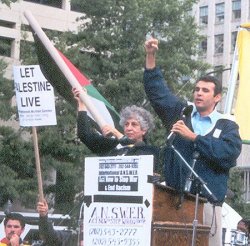 The Palestine Subcommittee of the National Lawyers Guild expresses its grave concern for Jordanian national, Palestinian Amer Jubran who was detained on May 5th, 2014 in Amman, Jordan.
It is our understanding that Jubran has not been charged with any crime and has had no access to a lawyer. Jubran is an internationally recognized and respected speaker, activist and writer on Palestinian human rights, and a critic of the U.S./Israeli occupation of the region. Having already been targeted by the US government for his political speech while a legal resident of the US in 2004, Jubran’s current detention raises concerns that this is a political arrest aimed at silencing dissent and suggests cooperation between Jordanian authorities, the United States and Israel in suppressing criticism of US and Israeli policies.
Jordan is a signatory party to the International Covenant on Civil and Political Rights (ICCPR). Article 9 of the ICCPR prohibits arbitrary arrest or detention, and requires that deprivation of liberty, even if legally sanctioned, must be necessary and reasonable, predictable, and proportional to the reasons for arrest. Article 19 (2) of the ICCPR guarantees the right to freedom of expression, including “freedom to seek, receive and impart information and ideas of all kinds, regardless of frontiers, either orally, in writing or in print, in the form of art, or through any other media of his choice.”
The United Nations Office of High Commissioner on Human Rights has advised that Jordan should end its current practice of administrative detention. Furthermore, Jordan’s penal code has still not been amended to comply with its 2011 guarantees to strengthen constitutional free speech. Jordan proclaims that it is undergoing democratic reforms and respecting civil liberties, claiming to have accepted a number of Amnesty International’s recommendations to limit the use and duration of administrative detention, and to ensure that all detainees are brought before an independent judicial authority promptly after arrest and charged, or else promptly released. However, Jordan’s use of arbitrary arrest and administration detention aimed to limit freedom of speech continues to be criticized in ongoing reports by international human rights organizations.
Friends and colleagues of Jubran have repeatedly contacted the Jordanian Embassy in the United States and the Ministry of the Interior in Jordan. They have been told that Jubran’s detention will be looked into, but no further information has been forthcoming.
The Palestine Subcommittee of the National Lawyers Guild urges compliance with internationally recognized standards of due process and the right to freedom of expression.
We expect
- the prompt release of Jubran, if he is not to be charged;
- access to an attorney of his choosing;
- the prompt setting of a reasonable bail if he is charged;
- visitation with his family;
- consultation with health care professionals;
- the immediate release of information regarding his whereabouts and condition;
- and an immediate explanation of why he has been held since May 5, 2014.
USA Freedom Act has Nothing to Do With Freedom
By Alfredo Lopez | This Can’t Be Happening! | May 28, 2014
It just wasn’t a very good week for phones or for freedom.
Last week’s obscene joke of a bill coughed up by a Congress [1] wheezing with immobilizing congestion morphed an already compromised law about data collection into a green light to spy on everyone.
The bill passed the House last Thursday and is now heading to the Senate where the chances of getting a better bill are pretty slim. The President has endorsed this House bill; after all, it endorses his policies.
Sponsored by Wisconsin Republican Jim Sensenbrenner (the author of the Patriot Act), the ironically named USA Freedom Act’s most salient feature is that, contrary to the bluffery about how it’s going to rein in the government on phone surveillance, it has now made massive phone data capture legal and public. The NSA and related agencies under this supposed “reform” bill would gain full authority to collect all information from phone companies and, what’s more, the bill mandates that the companies hold on to that information (apparently permanently).
The House obviously caved. Not that the first edition of this bill was very good to start with. The government obviously is not going to limit its own power. But the bill as passed by the House is much weaker and, in a “blink if you don’t believe it” moment, many Democratic Congressional leaders are actually congratulating themselves. Even John Conyers (D-Mich.), Detroit’s traditionally progressive Democrat, supported this bill: “We stand poised to end domestic bulk collection across the board,” he said not making clear where he was standing or when domestic bulk collection was going to end. It certainly didn’t end with this bill.
On the other hand, a few Congresspeople did express concern, including Sensenbrenner himself, who called the new law “an abuse” of the Patriot Act. One is left wondering what the Wisconsin lawmaker expected from the draconian nightmare he authored.
While that little humorless comedy was playing out, we got another glimpse of how phone surveillance is being used. Wikileaks revealed that the NSA has been collecting phone data on virtually all phones in Afghanistan. This comes on the heels of revelations a few days earlier about such mass phone call collection in the Bahamas, Mexico, Kenya and the Philippines. The punch-line to this gross violation of people’s rights is that the bill passed last week doesn’t even mention international phone call capture — that’s still left completely unregulated.
There’s a lot wrong with the bill passed through the House [2] and that’s obvious from the scenario of “permitted activity” that the bill is based on. Essentially, phone companies have to hold records for an unspecified period of time. The government can’t collect them indiscriminately as it had previously done. But that “reform” is meaningless because government agencies can acquire data from any phone company by using either a specific court order through the Foreign Intelligence Surveillance Act (FISA) court (the NSA’s rubber stamp in robes) based on “selectors,” or on the basis of an emergency situation defined according to NSA criteria.
The problem lies in the definition of “selectors” — the filters used to determine whether or not specific information is captured or requested. Previously, the NSA would capture the phone data and then run it through its “selectors” to determine what gets pulled or retained. Now, they can either ask the telephone company to run the selectors or go in and run it themselves. Before doing that, the spy agency must present the selection set to the FISA court. Since the court is going to approve anything NSA requests (it has rejected less than one percent of all requests up to now), the definition of the selectors is important because they are the only element of restraint in the entire collection process.
The bill requires that a selector be “a discrete term, such as a term specifically identifying a person, entity, account, address, or device”. How much is included under that umbrella? It’s probably better to ask what isn’t included. With that list, under this law, the NSA is allowed to access the records of almost all Americans.
But we still won’t know how many records have been accessed because this version strikes provisions in the original draft that would have forced phone companies to tell us how many records they’ve had to release to the NSA. Under the just-passed version of the bill, if the company wants to tell us, it can’t until six months after it has received a request. If it’s a start-up, it can’t do a report for two years.
In short, the law puts an automatic gag order on phone companies in this country.
In the guise of protecting our privacy or limiting surveillance power, the bill also continues to allow “about searches” in which an international conversation is scanned for names of people who then become targets of investigation. That particularly nasty practice makes any provisions protecting Americans useless. If a person in another country mentions your name, you are a legitimate target. In the original bill, any “reverse targeting” of this type was outlawed, but that protective provision has been eliminated from the version the House just passed.
This type of “foreign connection” is looming more important with recent revelations about international phone capture. This week, several publications released the information [3] about the complete capture of phone data in several countries but refused to name one of them (for national security reasons). Wikileaks, in response to that weak-kneed journalism, then named it: Afghanistan. (Even Glenn Greenwald, who broke the international capture story based upon some of NSA whistleblower Edward Snowden’s documents, honored a government request not to name Afghanistan.)
While fans of spy-craft will defend this practice of massive spying on international phones, under the curious but oft-repeated theory that our rights only pertain to people in this country, this sweeping capture program goes way beyond any traditional spying. In fact, phone data capture bears no resemblance to espionage or traditional spying (which is selective in its targeting) and is much closer to the activities of a police state. When done to another country, it’s a lot like trying to police the other country: a virtual act of virtual war.
It’s grotesque to consider that, after over 12 years of war waged on Afghanistan, our government is now waging a war of information capture against its people. But that revelation is proof of what many have been saying about this country’s intentions in that beleaguered and battered nation: we have absolutely no intention of pulling out of Afghanistan, no matter what President Obama says.
In fact, the phone data captured targets not only Afghans but phone calls from U.S. diplomatic and military personnel. In short, the NSA is spying on the military and the diplomatic core, including even the CIA. This is truly the stuff of a police state.
The entire phone capture controversy underscores another important political fact: the cell phone is now the most popular access to the Internet among people in developing countries and among young people and people of color in this country. These are also the people who are going to provide the sharpest and most aggressive challenges to the world’s governments in the coming years of deepening crisis. If our government wants to control anybody, it’s these people. The USA Freedom Act demonstrates one way they are planning to do that.
Activists demand answers after news of NYPD spying on political groups
RT | May 27, 2014
Following the news that the New York Police Department sent undercover officers to monitor political organizations, multiple activist groups are looking for an audit of the department’s wide-ranging surveillance program.
The complaint has been filed with the NYPD’s new office of the inspector general, which the City Council created against the wishes of former Mayor Michael Bloomberg in order to oversee the police department’s policies – particularly in light of criticism regarding its stop-and-frisk tactics and surveillance of Muslim communities.
According to the New York Times, the groups are calling for a comprehensive investigation into the NYPD’s intelligence division, which has been operating the police force’s surveillance program for years. The move comes as the groups seek more transparency from police following the election of new Mayor Bill de Blasio, whose administration they believe will be supportive.
“We need tangible, concrete proposals of how we can ensure the NYPD does not target an entire group, set of groups, or political activists in general based on their participation in political advocacy,” the complaint reads.
Although most of the parties involved were not named, the Times revealed that one of the organizations behind the complaint is Friends of Brad Will – a group dedicated to increasing public awareness of human rights abuses connected to the “War on Drugs.”
As noted by the newspaper, the group believed it had attracted the attention of the police for years, and investigative reporting by the Associated Press confirmed that “an undercover officer had infiltrated a Friends of Brad Will meeting in New Orleans in 2008 and had sent a report noting plans for future actions by the group.”
In addition to spying on political groups, Reuters reported that police classified those employing civil disobedience as “terrorist organizations” and kept secret files on individual members.
Much of the NYPD’s surveillance efforts could be traced to the aftermath of the September 11 attacks on the World Trade Center, but the groups claim police activity has negatively affected their ability to organize and that their constitutional rights to assemble, petition the government, and practice free speech have been violated.
“These kinds of police programs can’t just be laid at the feet of a post-9/11 world and the argument that security outweighs legal protections,” Friends of Brad Will coordinator Robert Jereski told Reuters.
According to the Times, the complaint is requesting that the inspector general disclose “a full description of the training which officers undergo before being tasked with targeting political activists.”
This isn’t the first time that the NYPD has come under fire for political surveillance, either. In 2004, police were found to be monitoring church groups, anti-war organizations and others in the lead-up to the Republican National Convention. Police defended their behavior, arguing their efforts were aimed at preventing unlawful activity, not silencing dissent.
“There was no political surveillance,” NYPD intelligence unit leader David Cohen testified regarding past tactics. “This was a program designed to determine in advance the likelihood of unlawful activity or acts of violence.”
The most recent complaint also comes a little more than a month after the NYPD disbanded a controversial “Demographics Unit” tasked with detailing everyday life in predominantly Muslim communities in the wake of 9/11. As RT reported previously, no terrorism-related leads were generated despite the resourced dedicated.
“The Demographics Unit created psychological warfare in our community,” said Linda Sarsour of the Arab American Association of New York. “Those documents, they showed where we live. That’s the cafe where I eat. That’s where I pray. That’s where I buy my groceries. They were able to see their entire lives on those maps. And it completely messed with the psyche of the community.”
Egypt revokes citizenship of Associated Press journalist
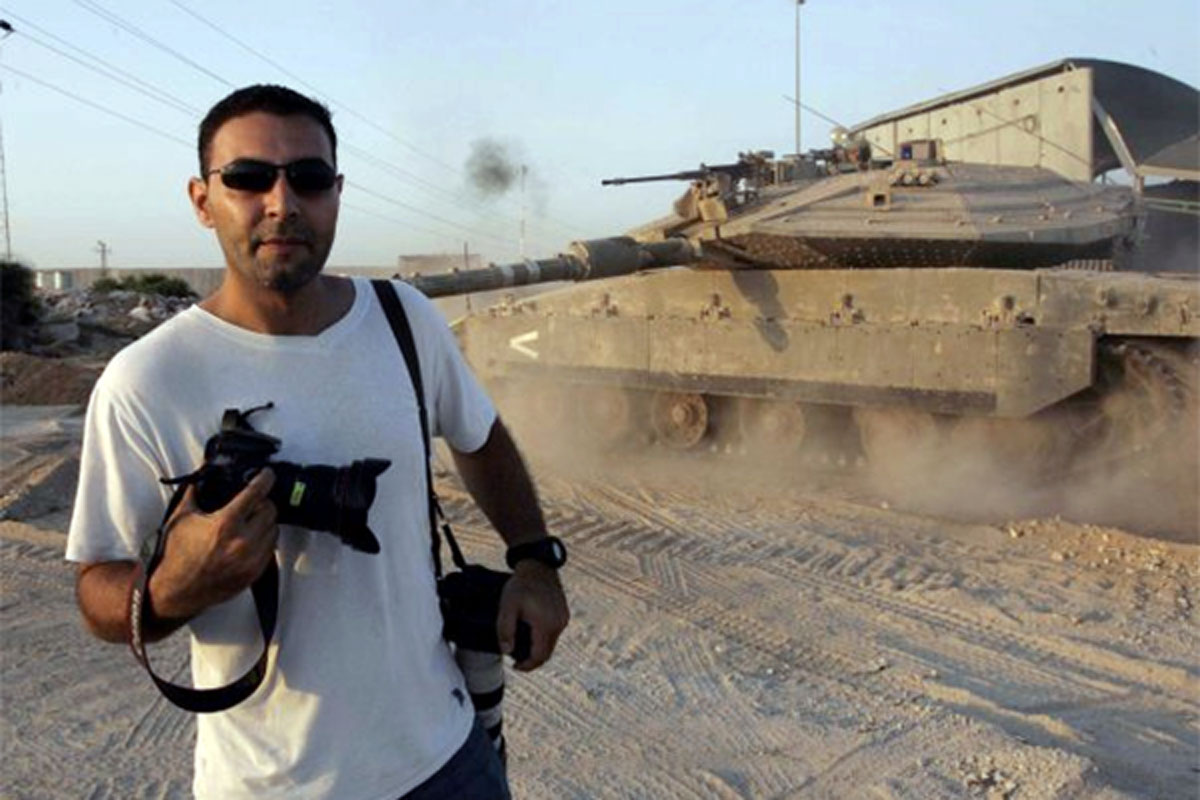
Award-winning photojournalist Khalil Abdel-Kader Abu Hamra
MEMO | May 26, 2014
The Egyptian cabinet decided Sunday to revoke the Egyptian citizenship from a Palestinian Associated Press photojournalist on charges of membership in a foreign militant group.
Award-winning AP photojournalist Khalil Abdel-Kader Abu Hamra said in statements Sunday that he had lived in Egypt for a long time, and was never harassed by authorities whenever he travelled abroad. The Ministry of Interior stated that Hamra left Egypt on November 27, 2013 and never came back. It accused him of “membership in a foreign militant group that aims at disrupting social and economic order of the Egyptian state.”
Hamra, whose mother is Egyptian and his father Palestinian, obtained Egyptian citizenship since 2012 in accordance with Egyptian law, which allows Palestinians with Egyptian mothers to receive citizenship.
Hamra said he has been in vacation in Jordan for few days, and travelled from Egypt and returned without facing any problems by airport authorities.
He added that he has no political affiliations, and that he is merely a journalist by profession.
Hamra said he will take necessary legal measures to appeal the “unjustified” decision.
Three foreign journalists caught in violence near Slavyansk, two possibly dead – reports
RT | May 24, 2014
An Italian reporter and his interpreter may have been shot dead and a French photographer has been wounded near the city of Slavyansk, in eastern Ukraine, as their car came under fire, Russian media report.
The injured French journalist identified as William Roguelon has been taken to a local hospital where he received treatment and managed to leave the facility on his own.
Roguelon, from the hospital reached Agence France Presse (AFP) and described how out of nowhere their vehicle was bombarded with mortar shells.
“Before that we heard Kalashnikov shots,” Roguelon was quoted by the Italian tgcom24. “Then the mortar shells rained down all around,” he said claiming to have heard up 60 explosions as they tried to hide in the “middle of a ditch.”
The man, who works as a freelance photographer, has told Russian media that after the shooting he saw his Italian colleagues lying on the ground not moving, Rossiya 24 channel reported.
“In the village of Andreyevka, not far from Slavyansk, an Italian journalist and his interpreter have been shot dead and a French correspondent wounded. Their car came under fire,” a source from the self-defense forces has told RIA Novosti.
The area around the city of Slavyansk has been gripped by violence on Saturday, a day before the scheduled presidential election. Shooting was reported in the village of Semyonovka, where a psychiatric hospital has been partly ruined in a fight between Kiev troops and self-defense forces. Witnesses said a shell hit the roof of the hospital.
According to reports, shooting, artillery and machine-gun fire have been heard in the outskirts of Semyonovka starting Friday night.
Shell-holes can be seen in the ground all around the village. Smoke was reportedly seen billowing from at least three locations in Slavyansk on Saturday.
Update May 25th:
Congress reaffirms indefinite detention of Americans under NDAA
RT | May 22, 2014
The US House of Representatives approved an annual defense spending bill early Thursday after rejecting a proposed amendment that would have prevented the United States government from indefinitely detaining American citizens.
An amendment introduced in the House on Wednesday this week asked that Congress repeal a controversial provision placed in the National Defense Authorization Act of 2012 that has ever since provided the executive branch with the power to arrest and detain indefinitely any US citizen thought to be affiliated with Al-Qaeda or associated organizations.
“This amendment would eliminate indefinite detention in the United States and its territories,” Rep. Adam Smith (D-Washington), a co-author of the failed amendment, said during floor debate on Wednesday, “So basically anybody that we captured, who we suspected of terrorist activity, would no longer be subject to indefinite detention, as is now, currently, the law.”
“That is an enormous amount of power to give the executive, to take someone and lock them up without due process,” Smith added. “It is an enormous amount of power to grant the executive, and I believe places liberty and freedom at risk in this country.”
Pres. Barack Obama vowed when he signed the 2012 NDAA into law on December 31, 2011 that he would not use the indefinite detention powers provided to him by Congress. When that provision was challenged in federal court, however, the White House fought back adamantly and appealed a District Court ruling that initially reversed the indefinite detention clause, eventually sending the challenge to the Supreme Court where it stalled until earlier this month when the justices there said they would not consider the case.
The bill sponsored by Smith and co-author Rep. Paul Broun (R-Georgia) would have given the legislative branch a chance to repeal the same provisions that SCOTUS declined to hear, but the bipartisan amendment failed on a vote of 191 to 230.
A separate proposal from Rep. Smith meant to expedite the shut-down of the military prison at Guantanamo Bay, Cuba was also rejected early Thursday; an amendment from Rep. Dennis Ross (R-Florida) intended to cut federal funding for recreational facilities at Gitmo, however, was approved in the NDAA draft that left the House on Thursday.
On Twitter, Smith said he was “disappointed” but “won’t stop fighting to pass this critical legislation.”
And while the White House is unlikely to abandon its own fight with regards to keeping the indefinite detention provision intact, the Obama administration threatened to veto this year’s NDAA because it would continue to complicate the president’s promise to close the Guantanamo Bay facility — a vow older than his own administration.
“If this year’s Defense Authorization bill continues unwarranted restrictions regarding Guantanamo detainees, the president will veto the bill,” White House Press Secretary Jay Carney said in a statement Wednesday evening.
When the 2011 NDAA passed Congress with the controversial indefinite detention provision included, the White House said at the time that it would veto the legislation before Pres. Obama eventually balked.
Kiev denies OSCE mission access to LifeNews detained journalists
RT | May 21, 2014
Ukrainian authorities are not letting the OSCE special monitoring mission visit the detained journalists from Russia’s LifeNews channel, Andrey Kelin, Russia’s permanent representative to the organization, said.
“At our request, the OSCE mission is demanding a meeting with the journalists, but the Kiev authorities forbid them from doing,” Kelin told ITAR-TASS news agency.
Russia will continue pushing for action on the part of the OSCE (Organization for Security and Co-operation in Europe) aimed at releasing the LifeNews crew, he added.
According to the representative, the situation around journalists, Oleg Sidyakin and Marat Saichenko, “continues to deteriorate.”
“We know that they’re accused of terrorism, with other far-fetched charges being pressed against them,” he explained.
Russia intends to raise the issue of “grave violation of the rights of journalists in Ukraine” at a meeting of the OSCE Permanent Council on Thursday, he stressed, adding that the “same question will be asked by delegations from other countries as well.”
Russia’s permanent mission has passed the address from the country’s National Broadcasting Association to the OSCE leadership, in which the violations against Russian journalists by Kiev’s coup-imposed government are described, Kelin said.
There are more and more concerns about the obstruction of the media in Ukraine in anticipation of the presidential election in the country on May 25, he concluded.
Sidyakin and Saichenko were detained on Sunday soon after they released a scandalous video, which showed a UN-marked helicopter being used by the Ukrainian army in a military operation in the rebelling eastern regions.
On Tuesday, RT’s contributor Graham Phillips was arrested by Ukrainian forces at a checkpoint in the city of Mariupol. He was released after almost 36 hours of detention by various Kiev security forces.
On Monday, The OSCE’s representative on freedom of the media, Dunja Mijatovic, has addressed Kiev in a letter, urging it to “stop intimidating and threatening members of the media” and release the journalists.
In the last couple of days, journalists from various Russian media outlets were also prevented from entering Ukraine, including Zvezda, NTV, Channel One and TVC channels as well as a crew from RT’s Arabic channel.
US State Dept. fails to recognize ‘individuals’ detained by Kiev as Russian journalists
RT | May 20, 2014
Washington has failed to condemn the detention of Russian journalists working in Ukraine, instead doubting they were journalists at all and accusing them of smuggling weapons based on a “reports and conversations” on the ground.
The US State Department claims that Russian journalists were in possession of press accreditation that was given to them by the self-proclaimed Donetsk republic, which Ukraine and the US do not recognize.
“The Ukrainian Security Services, according to reports, have detained a number of people who were in possession of fake journalist credentials issued by the non-existent Donetsk People’s Republic,” US State Department spokeswoman Jen Psaki said at a daily press briefing.
Psaki did not specify precisely which journalists she was referring to, but Associated Press reporter Matt Lee at the briefing was asking about the Russian TV crew working for LifeNews who were detained by the Ukrainian Security Forces (SBU) on Sunday.
“Reportedly they were carrying portable aircraft missiles in the trunks of their cars at the time of their detention. So I haven’t looked in your trunk lately but it is unlikely you have those in there. That raises some questions about these individuals and whether they were actually journalists,” Psaki said.
After persistent attempts by Lee to find out whether Psaki had any proof or credible source to back such claims, she acknowledged that these reports were “credible” as considered by a US “team on the ground” which is “in touch with Ukrainian authorities.”
Reports “about these individuals and what they were carrying with them, certainly raises the question as to who they are,” Psaki answered
When again pushed to answer whether the accusations were based on rumors, Psaki hinted that the information comes from Kiev.
“This is from our team on the ground who are certainly in touch with our Ukrainian authorities,” Psaki replied.
When asked about the detention of an RT stringer working on the ground in eastern Ukraine, Graham Phillips, Psaki replied that she was not aware of “specific details” of his arrest yet, but promised to look into that.
Psaki said that the State Department will condemn the move of illegal detention of journalists, however emphasizing that Washington will first of all focus on “continuing to press for the release of the Ukrainian and international journalists who have been detained by Russian separatists.”
On Sunday, two Russian LifeNews journalists, Oleg Sidyakin and Marat Saichenko, were captured by Ukrainian troops near Kramatorsk in the self-proclaimed Donetsk People’s Republic.
Ukrainian authorities claimed on Tuesday that the detained journalists confessed during interrogation to entering the territory of the country without press cards. The crew are now in Kiev but so far have not been charged.
Previously the OSCE urged the Kiev authorities to release the Russian journalists saying that intimidation and obstruction of media is “unacceptable.”
In the meantime, RT has lost contact with the channel’s contributing journalist Graham Phillips who had earlier reported that he had been detained by the National Guard at a check point in Mariupol, eastern Ukraine. The British journalist Phillips may be turned over to the Ukrainian Security Service and sent to Kiev as well, a source told RT
The Russian Foreign Ministry’s commissioner for human rights labeled the harassment of journalists as the obstruction of media that doesn’t support the coup-appointed authorities’ policy.
“This is another step de facto made by Ukrainian authorities to curb the activities of unwanted journalists,” said Konstantin Dolgov. “The journalists who work professionally and show an objective picture, the ugly side of the outrages made by ultra-nationalists, the results of [Kiev’s] punitive operation in the southeast.”
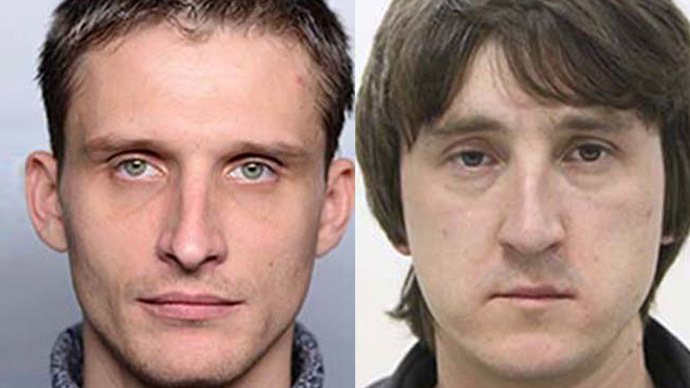
Journalists Oleg Sidyakin and Marat Saichenko. Image from http://www.lifenews.ru
In both cases involving the RT stringer and LifeNews crew, it appears the SBU was responsible in detaining and neutralizing reporting. Dolgov added that Phillips’ arrest followed the “unlawful seizure, detention of Russian journalists,” adding that Moscow is continuing to work for their speedy release.
On Monday, pro-Kiev activists again called to “immediately detain and deport” Phillips, who they believe is “cooperating with terrorists,” according to a message posted on EuroMaidan Kharkov’s Facebook page.
The same day, LifeNews said that journalists held captive by Ukraine’s coup-installed government were reportedly arrested after they released footage showing a UN-marked helicopter used by Kiev’s armed forces engaged in an operation against civilians in the east. A few days prior to the journalists’ arrest on Sunday, the authorities in Kiev issued an order to “find and neutralize” the authors of the video, a LifeNews source in SBU told the channel.
Meanwhile, RT Arabic’s news crew who arrived in Kiev to cover the upcoming May 25 Ukrainian presidential election has not been allowed into the country and was sent back to Moscow under the pretext that they were unable to properly explain the purpose of their visit, despite being accredited by the Ukrainian Central Election Commission.
Obama ignores campaign promise as FCC targets net neutrality
RT | May 16, 2014
United States President Barack Obama’s commitment to net neutrality is being questioned after the Federal Communications Commission officials appointed on his watch voted Thursday to advance a plan believed by many to be a blow to the open internet.
This week’s three-two decision by the FCC to consider proposed rules regarding net neutrality isn’t the final nail in the coffin of the open internet. Rather, the five-person panel agreed Thursday morning to open up for comments a proposal drafted by Chairman Thomas Wheeler that would set rules in place meant to address a federal appeals court’s decision earlier this year that paved the way for the possibility of paid prioritization with regards to how Internet Service Providers, or ISPs, deliver web content to customers.
As the panel weighs Wheeler’s plan, the public now has 120 days to offer their own critique before another vote is held. In the meantime, though, Pres. Obama is likely to draw fire from critics on his own in light of previous statements he made pledging to preserve and protect the open internet.
“Barack Obama was crystal clear during the 2008 campaign about his commitment to ensuring equal treatment of all online content over American broadband lines,” Haley Sweetland Edwards wrote for TIME on Friday. “But on Thursday, the president made no public statement when three Democrats he appointed to the FCC voted to move forward with a plan to allow broadband carriers to provide an exclusive ‘fast lane’ to commercial companies that pay extra fees to get their content transmitted online.”
Instead, Edwards acknowledged, White House press secretary Jay Carney offered a brief statement reiterating the president’s promise.
Obama, Carney wrote, “has made clear since he was a candidate that he strongly supports net neutrality and an open Internet. As he has said, the Internet’s incredible equality – of data, content and access to the consumer – is what has powered extraordinary economic growth and made it possible for once-tiny sites like eBay or Amazon to compete with brick and mortar behemoths”
Indeed, in 2010 the president’s chief technology officer wrote on the White House’s blog that “President Obama is strongly committed to net neutrality in order to keep an open Internet that fosters investment, innovation, consumer choice and free speech.”
Years before that on the campaign trail, then-Senator Obama said his hypothetical FCC appointments would defend the notion of a “level playing field for whoever has the best idea.”
“As president, I am going to make sure that that is the principle that my FCC commissioners are applying as we move forward,” he said.
With Friday’s vote, however, the FCC is well on track to implement rules that, while not necessarily encouraging the paid prioritization of web traffic, is expected to allow ISPs and other major players tied to the infrastructure of the internet to cut deals with content producers that, prior to January’s appellate decision, were illegal.
“Following the court of appeals decision earlier this year, there are no legally enforceable rules ensuring internet openness,” Julie Veach, chief of the Wireline Competition Bureau, acknowledged at Thursday’s hearing.
In Response, Wheeler said his plan offers “enforceable rules to protect and promote the open internet,” while denying allegations that it authorizes paid prioritization.
“The consideration that we are beginning today is not about whether the internet must be open, but about how and when we will have rules in place to assure an open internet,” he said.
Nevertheless, two of his co-commissioners dissented from his proposal at Thursday’s hearing, and suggested that perhaps the FCC is moving too swiftly to respond to January’s ruling.
As the panel moves forward, however, the president’s campaign trail promise could come under attack. Although all five members of the panel were appointed by his office, the three Democratic members of the president’s own political party, including Wheeler, approved the chairman’s proposed rules. Dissenting were Commissioners Ajit Pai and Michael O’Rielly, both Republicans.
“The FCC is an independent agency, and we will carefully review their proposal,” Carney told reporters on Thursday. “The FCC’s efforts were dealt a real challenge by the Court of Appeals in January, but Chairman Wheeler has said his goal is to preserve an open Internet, and we are pleased to see that he is keeping all options on the table. We will be watching closely as the process moves forward in hopes that the final rule stays true to the spirit of net neutrality.”
But comments from some have suggested that a statement delivered by the White House press secretary might not be enough to reassure fears about the future of the internet. Marvin Ammori, a technology-policy consultant, told the Washington Post this week that Silicon Valley is “very frustrated,” and that the tech community largely threw its weight behind Obama, and not his Democratic challenger, when he vied for the party’s bid ahead of the 2008 elections.
“We’re surprised by his silence, given every indication that the rule being proposed would allow the kind of pay-for-prioritization practices Obama spoke against in the past,” Timothy Karr, a senior director of strategy for the Washington-based media and technology public interest group Free Press, said to the Washington Examiner of the president.
Meanwhile, a petition on the White House website posted after the January ruling by the DC Circuit Court of Appeals has garnered the electronic signature of over 105,000 people asking the president to restore net neutrality.
Zionist Canada bows to the holocaust religion

By Brandon Martinez | May 16, 2014
Officials of the Harper regime recently announced the construction of a new “holocaust” monument in Ottawa set to be completed in the fall of 2015.
“The monument features a large gathering space for ceremonies — with room for 1,000 visitors — enclosed by six triangular, concrete volumes to create the points of a star. … Monochromatic photographs by Burtynsky depicting Holocaust sites will be embedded upon concrete surfaces,” reported the Toronto Star.
It should come as no surprise that the Harper regime is backing this new holocaust monument project, considering that the ruling neo-conservatives in Ottawa have openly expressed their adherence to Jewish supremacist ideology on numerous occasions. Harper and his lackeys in Parliament have incessantly praised the apartheid state of Israel (a nation birthed through ethnic cleansing and mass terror) and have vehemently denounced those who challenge or criticize Israeli imperialism and state-terrorism.
At a May 14, 2014, speech before the American Jewish Committee’s Global Forum, Canada’s Foreign Minister John Baird told the room of Zionist fanatics that Israel is a “truly special nation” that is a “great example to the world.” A great example for what? Ethnic cleansing, mass murder and ruthless deception? Not shy to announce his belief in Jewish exceptionalism, the Zionist puppet foreign minister added that Israel is a “most extraordinary society.”
Many have argued that the holocaust promotion industry is an extortion racket designed to bolster Jewish privilege. By emphasizing Jewish victimhood above that of all other peoples, the Zionists aim to suffocate the public at large underneath a blanket of self-serving propaganda so that evidence of wrongdoing on the part of these tribal zealots will not see the light of day. Not only are Jews today not victims of any sort or underdogs in any sense of the term, they are in fact the most affluent and influential segment of every society in which they live. “Jewish families [are] among the wealthiest families in the United States. According to Forbes, 25 to 30 percent of U.S. multimillionaires and billionaires are Jewish,” noted James Petras in his book The Power of Israel in the United States.
A similar situation to the one described by Petras exists in Canada, Australia, Britain, Germany, France, etc.
The sages and holy men of holocaustianity have endeavored to promote this quasi-religion to the four corners of the earth. Hundreds of holocaust museums, memorials, monuments, research centers, etc., have been erected across Europe, Russia, North America, Latin America and even Asia. Hundreds of holocaust-themed films and television shows have been broadcasted throughout the Americas and Europe. Countless books, memoirs and other literature relating to the sacred Shoah have flooded the libraries and bookstores of all Western countries. Dozens of governments have created laws forbidding any revision of the rigid, one-sided narrative engineered by the winners of World War II.
In his book The Holocaust Industry, Jewish scholar Norman Finkelstein labeled these practitioners of professional victimhood “a repellent gang of plutocrats, hoodlums and hucksters.” One such charlatan was Herman Rosenblatt who appeared on the Oprah Winfrey Show multiple times and attained a movie deal based on his fallacious fibbing. After admitting that climactic portions of his memoir An Angel at the Fence were manufactured, he unapologetically told ABC News: “It was not a lie because in my imagination I believed it.”
Another holocaust faker, Misha Defonseca, was ordered by a judge to pay back her publisher $22.5 million after it was revealed that her best-selling 1997 memoir, Misha: A Mémoire of the Holocaust Years, was entirely fictional. Defonseca claimed that as a young girl she journeyed across Europe in search of her parents who were taken away to a German concentration camp during WW2, and that amid her search she was taken care of and raised by a pack of wolves who adopted her as one of their own. “It’s not the true reality, but it is my reality,” Defonseca told The Guardian. “There are times when I find it difficult to differentiate between reality and my inner world,” the mythomaniac explained.
Binjamin Wilkomirski’s 1994 holocaust memoir Fragments was exposed as a fraud. He was never interned in any camp and actually lived in neutral Switzerland during the war. Rudolf Vrba admitted on the stand at the Toronto trial of Ernst Zundel in 1985 that his memoir I Cannot Forgive was an “artistic picture” that contained embellishments and exaggerations. Elie Wiesel, the veritable pope of the holocaust religion, has long been suspected of at least partially fabricating his story of survival. In his memoir Night, he tells of how a doctor performed surgery on his infected foot while interned at the “death camp” Auschwitz. One might ask: what is the purpose of a doctor in a “death camp”? Then, reported Wiesel, he and his sick father chose to evacuate that camp in January of 1945 alongside the retreating German Army and SS-men instead of waiting for the Red Army to arrive. Miraculously he survived this supposedly “genocidal” ordeal.
Wiesel collects hundreds of thousands of dollars in speaking fees to preach “tolerance” to the world, while simultaneously advocating vicious hatred of German people. “Every Jew, somewhere in his being, should set apart a zone of hate -healthy virile hate- for what the German personifies and for what persists in the German,” wrote the man once described by the Chicago Tribune as a ‘beacon for human rights’ in his book Legends of Our Time. The unscrupulous pretender and money-getter has shown blatant disregard for Palestinian human rights because their oppressors are members of a master class of “chosen people” of which he is a Learned Elder.
Also not visible on Wiesel’s “human rights” radar are the tens of millions of Russians and Eastern Europeans, mostly Christians, who were starved, shot, tortured and enslaved by the Jewish-dominated Bolshevik regime in Russia. “Many Jews sold their soul to the devil of the Communist revolution and have blood on their hands for eternity,” wrote the Israeli journalist Sever Plocker in an op-ed for Ynet News. “Even if we deny it,” the Jewish writer concluded, “we cannot escape the Jewishness of ‘our hangmen,’ who served the Red Terror with loyalty and dedication from its establishment.”
Why have Stalin’s Jewish executioners and secret police torturers not received the same level of scrutiny that the Nazis have? Why have there been no Hollywood movie depictions of what happened in Stalinist Russia? When the subject has been broached, kosher commentators and careerist historians have been reluctant to note the fact that a large percentage of the top officials of the Soviet regime and the post-WW2 communist regimes of Eastern Europe were Jewish chauvinists.
When in 2009 the Ukrainian security service published a list of Soviet and Communist Party officials responsible for the Holodomor – the famine-genocide sponsored by Moscow in 1932 that took the lives of 6-7 million Ukrainians – Jewish groups cried foul, contending that publicizing such a list was a bad idea because most of the names on it were Jewish and would thus cause anti-Jewish sentiments, reported the Jewish Telegraphic Agency. Instead of learning about the true nature of this unspeakable crime and the culprits responsible, Ukrainians should just “forget history” — at least that is what the Israeli politician Shimon Peres implored them to do in a 2010 speech.
Ukrainians are commanded by the Zionists to forget their history; as are the Palestinians. But we, the ‘gullible goyim,’ must “never forget” what may or may not have happened to Jews during the Second World War. In this New World Order of Malthusian mayhem and Orwellian mind control, the Zionists hope to lock us in a mental dungeon where unwelcome thoughts are extirpated with ruthless efficiency and cold determination.
Unfortunately for them, the truth can only be hidden from public sight but never extinguished.
US Government Begins Rollout Of Its ‘Driver’s License For The Internet’
By Tim Cushing | Techdirt | May 5, 2014
An idea the government has been kicking around since 2011 is finally making its debut. Calling this move ill-timed would be the most gracious way of putting it.
A few years back, the White House had a brilliant idea: Why not create a single, secure online ID that Americans could use to verify their identity across multiple websites, starting with local government services. The New York Times described it at the time as a “driver’s license for the internet.”
Sound convenient? It is. Sound scary? It is.
Next month, a pilot program of the “National Strategy for Trusted Identities in Cyberspace” will begin in government agencies in two US states, to test out whether the pros of a federally verified cyber ID outweigh the cons.
The NSTIC program has been in (slow) motion for nearly three years, but now, at a time when the public’s trust in government is at an all time low, the National Institute of Standards and Technology (NIST — itself still reeling a bit from NSA-related blowback) is testing the program in Michigan and Pennsylvania. The first tests appear to be exclusively aimed at accessing public programs, like government assistance. The government believes this ID system will help reduce fraud and overhead, by eliminating duplicated ID efforts across multiple agencies.
But the program isn’t strictly limited to government use. The ultimate goal is a replacement of many logins and passwords people maintain to access content and participate in comment threads and forums. This “solution,” while somewhat practical, also raises considerable privacy concerns.
[T]he Electronic Frontier Foundation immediately pointed out the red flags, arguing that the right to anonymous speech in the digital realm is protected under the First Amendment. It called the program “radical,” “concerning,” and pointed out that the plan “makes scant mention of the unprecedented threat such a scheme would pose to privacy and free speech online.”
And the keepers of the identity credentials wouldn’t be the government itself, but a third party organization. When the program was introduced in 2011, banks, technology companies or cellphone service providers were suggested for the role, so theoretically Google or Verizon could have access to a comprehensive profile of who you are that’s shared with every site you visit, as mandated by the government.
Beyond the privacy issues (and the hints of government being unduly interested in your online activities), there are the security issues. This collected information would be housed centrally, possibly by corporate third parties. When hackers can find a wealth of information at one location, it presents a very enticing target. The government’s track record on protecting confidential information is hardly encouraging.
The problem is, ultimately, that this is the government rolling this out. Unlike corporations, citizens won’t be allowed the luxury of opting out. This “internet driver’s license” may be the only option the public has to do things like renew actual driver’s licenses or file taxes or complete paperwork that keeps them on the right side of federal law. Whether or not you believe the government’s assurances that it will keep your data safe from hackers, keep it out of the hands of law enforcement (without a warrant), or simply not look at it just because it’s there, matters very little. If the government decides the positives outweigh the negatives, you’ll have no choice but to participate.
Egyptian Court Sentences Brotherhood Chief and 682 Others to Death

Muslim Brotherhood leader Mohamed Badie
Al-Manar | April 28, 2014
An Egyptian court sentenced Muslim Brotherhood leader Mohamed Badie and 682 others of the organization to death Monday, a lawyer and prosecutor said, after two brief sessions which the defense partly boycotted.
The same court also reversed 492 of 529 death sentences it passed in March, commuting most of those to life in prison.
The court presided over by judge Said Youssef Sabry had sparked an international outcry with its initial sentencing last month, which came amid an extensive crackdown on supporters of ousted president Mohammad Mursi.
Under Egyptian law, death sentences are referred to the top Islamic scholar for an advisory opinion before being ratified. A court may choose to commute the sentences, which can later be challenged at an appeals court.
Of the 683 sentenced on Monday, only about 50 are in detention. The judge will confirm the verdict on June 21. The others have a right to a retrial if they hand themselves in.
The verdict was the first against Badie, the spiritual head of Mursi’s Muslim Brotherhood, in the several trials he faces on various charges along with Mursi himself and other Brotherhood leaders.
Those sentenced on Monday were accused of involvement in the murder and attempted murder of policemen in Minya province on August 14, the day police killed hundreds of Mursi’s supporters in clashes in Cairo.
Defense lawyers boycotted the last session, branding it “farcical” after the mass death sentencing which the United Nations denounced as a breach of international human rights law.
Defense lawyer Khaled Elkomy claims that 60 percent of the 529 defendants, including teachers and some doctors, have evidence that “proves they were not present the day they were accused of attacking the Matay police station” in Minya, a statement released by human rights group Avaaz said.
The government has defended the court’s handling of the first mass case, insisting that the sentences were passed only “after careful study” and were subject to appeal.
Source: AFP
Featured Video

Anthrax War – CBC The Passionate Eye
or go to
Aletho News Archives – Video-Images
Book Review
Shattered Dreams: The HPV Vaccine Exposed (2019)
By Christina England – 30 Q&As – Book Review & Summary
Lies are Unbekoming | September 4, 2026
… Gardasil received FDA fast-track approval in 2006, Cervarix followed in 2009, and Gardasil 9 was approved in December 2014 with more than double the aluminium adjuvant content of the original. The commercial context is specific. Merck was about to lose patent protection on Zocor and faced $18 billion in Vioxx injury claims from a cardiovascular drug the company had marketed while suppressing its own data showing a five-times increase in heart attacks. Analysts projected the global HPV vaccine market at $4 billion by 2011, contingent on government-funded national programs for teenage girls. The 1986 National Childhood Vaccine Injury Act had already granted manufacturers complete liability immunity. By 2013, Japan had withdrawn its HPV vaccine recommendation after cataloguing severe adverse reactions in hundreds of girls. No Western government followed. The establishment position across the UK, US, Australia, and most of Europe held, and still holds, that the vaccines are safe and effective, that reported injuries are coincidental, and that cervical cancer prevention justifies the program. The book was published into this position, not against a vacuum.
Shattered Dreams sits alongside Mary Holland’s The HPV Vaccine On Trial and Viera Scheibner’s foundational vaccination work as part of the documented record on what has been done to a generation of teenage girls under the banner of cancer prevention. The full summary unpacks three specific findings: that Merck used the aluminium adjuvant itself as the “placebo” control in 92.5% of trial subjects, making it structurally impossible to detect excess reactions from the adjuvant; that Dr. Sin Hang Lee found HPV DNA fragments bound to aluminium in every one of sixteen Gardasil samples tested, and in the blood and spleen of a New Zealand girl six months after her third dose; and that in every country with high vaccination coverage, including Australia, the UK, Norway, and Sweden, cervical cancer rates have stopped declining and started rising specifically in the vaccinated cohort. Martínez-Lavín’s 2017 calculation puts the number needed to seriously harm with Gardasil 9 at 140, and the number needed to vaccinate to prevent one case at 1,757. Thirteen young women are seriously harmed for every one who benefits. The vaccine was approved on the basis of trials that could not detect what the trials were supposed to detect, and it is still being given to twelve-year-olds today. … Read full review
Blog Roll
 Aletho News
- Georgia’s Largest Healthcare System Will Fire Employees Who Refuse Flu Vaccine
- The Five-Year Fuel Crisis: Why the World Economy Is Paying for a War It Thinks Is Ending
- Trump’s Big Bluff on Iran
- Swiss scammed out of millions by Ukraine-linked call centers – media
- Germany facing potential ‘violent conflict’ with Russia – spy chief
- Ukraine’s EU neighbors reject new plea from Kiev – Politico
- British Transport Police Facial Recognition Trial Scanned 926,912 People With Zero Arrests
- House Bill Would Ban Federal Use of Flock ALPR Data
- Can a Spice Rival a Drug? 10 Head-to-Head Trials Put It to the Test.
- The oil routes around Hormuz face their own chokepoints
- If Americans Knew
- “We See Our Homes Now From A Satellite, Like Strangers”
- Watch “Gaza: Doctors Under Attack”, originally censored by BBC
- NAZA: Israeli embassies in UK and US promote rival documentary to challenge Gaza genocide allegations
- David Ellison appoints Israeli to lead merged Paramount-Warner studios
- Turkish Red Crescent helps elderly Gaza man walk again after Israel confiscates his prosthetic limb
- Four Palestinians Killed in Israeli Attacks in Gaza
- Two Palestinian youths killed and village razed as Israeli attacks on West Bank continue
- Two more Christian women victims of Israeli raids on Gaza
- Cruelty, Deprivation, Indignity: A Journalist’s 22 Months in Israeli Prison
- New IDF Website Frames Slain Gaza Journalists as Terrorists
- No Tricks Zone
- Latest European Green Energy Debacle; Portugal’s Largest Flagship Solar Park Insolvent!
- Green Energy Debacle: German Expert Professor Fritz Vahrenholt Warns Of Severe Economic And Social Consequences
- Two More Paleo Reconstructions Affirm Meters-Higher Sea Levels Across Ireland, Brazil 7000-6000 Years Ago
- New Study: Earth And Venus Surface Warmth Largely Explained By Convection And Lapse Rate, Not CO2 Or Radiation
- 2025 Nature Paper Claiming Worsening Global Drought Gets RETRACTED …Heavily Flawed
- New Study: ‘Global Drought Shows No Detectable Recent Acceleration Under Climate Warming’
- Economic Masterminds: German Socialists Suggest Taxing Productivity Gains Stemming From Using AI
- The South China Sea Has Not Been Cooperating With The Climate Change Narrative
- Energy Crisis: Germany Enters Heating Season With Historically Low Gas Reserve Fill Levels
- New Study: The Antarctic Ice Sheet Gained Mass From 2020-2024 Due To Staggering Snow And Ice Accumulation

