Thought better of it: NSA can get rid of evidence, judge says
RT | June 7, 2014
A federal judge who ordered the National Security Agency to retain all records of its secret telephone surveillance related to an ongoing case has reversed the order – just a day after it was issued.
“In order to protect national security programs, I cannot issue a ruling at this time. The Court rescinds the June 5 order,” US District Judge Jeffrey White said from the bench on Friday.
The NSA had been prohibited from destroying any of its records of communications surveillance on Thursday – specifically under the government’s Section 702 program.
Section 702 of the Foreign Intelligence Surveillance Act (FISA) has been used by the NSA to justify widespread collection of phone calls and emails.
White first ordered that the agency retain records in March, to which the NSA responded that it was legally obliged to destroy all documents after a five year period.
White issued the temporary restraining order (TRO) in March to prevent the destruction of evidence. However, on Thursday, EFF filed an emergency motion, stating that in the past week interactions with government lawyers demonstrated that the destruction of records had continued.
Records could form a basis of evidence for two pending lawsuits posing a challenge to the surveillance program. One was filed by AT&T customers and the other by 23 Californian organizations.
The case – Jewel v. NSA the Electronic Frontier Foundation (EFF) sued the NSA and other government agencies on behalf of AT&T customers.
The Friday hearing saw lawyers from the Electronic Frontier Foundation (EFF) going up against lawyers from the Department of Justice.
The case has stagnated in the court system for several years. In 2008, the original complaint was filed against AT&T and the government, which it was alleged, was involved in “illegal and unconstitutional program of dragnet communications surveillance conducted by the National Security Agency and other Defendants in concert with major telecommunications companies.”
Evidence pre-dated Snowden’s revelations in June 2013, and was based on evidence from former San Francisco AT&T technician Mark Klein in 2006.
“I don’t want the preservation effects to get in the way of national security, but I don’t want national security to checkmate our case,” Cindy Cohn, an EFF attorney, told the court, reported arstechnica.
Justice department lawyers sought a stay. They argued that phone records and internet programs were separate. Section 702 allows the government access to emails and Facebook messages. The lawyers said that their compliance would put the program at risk.
Russian Zvezda TV journalists missing near besieged Slavyansk
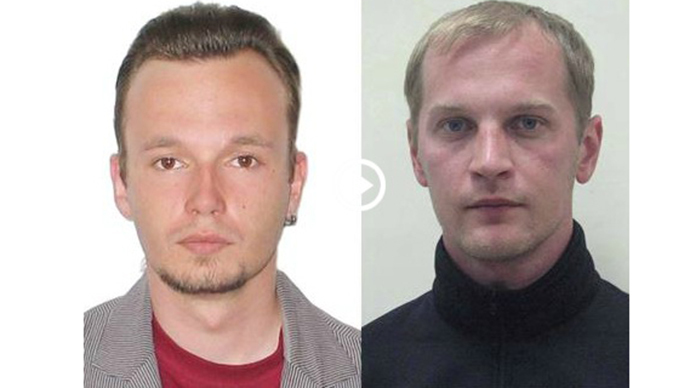
Andrey Sushenkov and Anton Malyshev (Photo courtesy of tvzvezda.ru)
RT | June 6, 2014
Two journalists from Russian TV channel Zvezda have gone missing after a search by Ukraine’s National Guard at a military checkpoint near the city of Slavyansk. In the meantime Ukraine armed forces continue their artillery assault on the city.
Video operator Andrey Suchenkov and sound engineer Anton Malyshev have been unreachable since Friday afternoon, Zvezda TV announced on its website.
“At the approaches to Slavyansk we got in touch by phone. They said National Guards were searching them and they would call back as soon as the search is over. Since then their numbers are unobtainable,” said Zvezda correspondent Evgeniy Davydov, who was in touch with the crew during their stay in Ukraine.
Last time Davydov managed to contact the missing journalists was at 14:30 GMT while they were near Balbasovka village some 20 kilometers from Slavyansk.
“We also can’t contact their driver – a citizen of Slavyansk,” he added.
This is not the first time Russian journalists working in Ukraine disappear after encountering the National Guard.
On May 18, two Russian journalists working for LifeNews TV channel – reporter Oleg Sidyakin and cameraman Marat Saichenko – were captured by Kiev forces near the eastern city of Kramatorsk. Initially accused of “aiding the terrorist groups,” they were released a week later – without any charges pressed or evidence of their misconduct provided – after a wave of outrage by rights groups and Russian politicians and media.
An RT journalist reporting from Ukraine, Graham Phillips, was also detained after a search by the National Guard last month and questioned by various Kiev security forces for over 36 hours before being released.
The area around Slavyansk is gripped by increased violence after Kiev intensified what it calls an ‘anti-terrorist’ operation against anti-government activists and militia who have taken control of the eastern regions of the country as a mark of protest against the Kiev authorities.
See also:
Ukrainian MP kicks out Russian journos from parliament, calls them ‘spies’ (VIDEO)
LAPD considers deploying unmanned drones for ‘tactical events’
RT | June 6, 2014
Defending the decision to pursue unmanned drones to assist in police work, the LAPD – who say they will cooperate with privacy groups on the matter – said the devices are being purchased by citizens, so why not allow law enforcement to use it as well?
At a news conference Thursday at LAPD headquarters, Chief Charlie Beck revealed the unmanned drones could assist police forces in “standoffs, perimeters, suspects hiding…and other tactical events.”
“We’re interested in those applications,” he said.
Beck responded to criticism of the plans by human rights and privacy groups by explaining that the technology is already “in the hands of private citizens” and corporations, so why shouldn’t law enforcement experiment with the devices as well?
“When retailers start talking about using them to deliver packages, we would be silly not to at least have a discussion of whether we want to use them in law enforcement,” the police chief said.
In December, Amazon and UPS announced ambitious plans to start testing UAVs for making home deliveries.
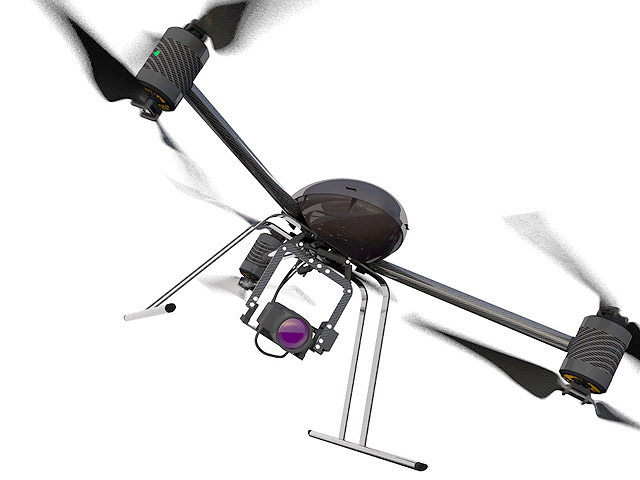
Late last month, the LAPD received two Draganflyer X6 unmanned drones as a ‘gift’ from the Seattle Police Department, in what seems to have been an effort by the latter to avoid public uproar.
Seattle authorities purchased the UAVs for $82,000 in 2010, funded by grants from the Department of Homeland Security. However, neither the city council nor the public was aware of the police drone program until a 2012 lawsuit by the Electronic Frontier Foundation over the department’s application for operation certificates from the Federal Aviation Administration.
The resulting public outcry over the drones forced the mayor to terminate the program in February 2013.
“These vehicles were purchased by the Seattle Police Department using federal grants. There was no cost to the city of Los Angeles,” police said.
Each remote-controlled vehicle is 3 feet (90cm) wide, has three rotors and can carry a video camera.
In order to calm public suspicion that the drones will infringe upon privacy rights, Beck said the LAPD would work closely with the American Civil Liberties Union during the “vetting process” of the UAVs.
“I will not sacrifice public support for a piece of police equipment,” Beck said, as quoted by the Los Angeles Times. “We’re going to thoroughly vet the public’s opinion on the use of the aerial surveillance platforms.”
The LAPD added it would seek approval from the Police Commission before unleashing the drones above Los Angeles.
Hector Villagra, executive director of the ACLU of Southern California, issued a statement: “The Los Angeles Police Department asked the ACLU of Southern California to meet and articulate our concerns about the privacy issues raised by the use of drones. We agreed to do so… However, at this point the ACLU SoCal has no plans to participate in any process to craft policies for LAPD’s use of drones, nor have we been formally invited to lead a team of advocates to help craft such policies.”
“As the ACLU has previously said, we question whether any marginal benefits of drones programs justify the serious threat to privacy they pose.”
Intelligence agencies have direct access to telecoms infrastructure, Vodafone reveals
RT | June 6, 2014
Government intelligence agencies have direct access to telecommunication companies’ infrastructure which allows them to spy and record phone calls leaving no paper trail, the UK’s largest mobile phone company Vodafone has revealed.
The British operator said wires have been attached to its phone networks in some of the 29 countries in which it operates in Europe, as well as around the world, the Guardian reported. Governments similarly connect to other telecom groups, reportedly allowing them to listen to or record live conversations. In some cases, the surveillance agencies can also track the whereabouts of a customer.
“For governments to access phone calls at the flick of a switch is unprecedented and terrifying,” Liberty director Shami Chakrabarti told the Guardian. “Snowden revealed the internet was already treated as fair game. Bluster that all is well is wearing pretty thin – our analogue laws need a digital overhaul.”
But now Vodafone is pushing back against government surveillance through direct access to the pipes. On Friday, it will publish its first Law Enforcement Disclosure Report about how governments spy on people through the company’s infrastructure.
“These pipes exist, the direct access model exists,” the telecom giant’s group privacy officer, Stephen Deadman told the Guardian. “We are making a call to end direct access as a means of government agencies obtaining people’s communication data. Without an official warrant, there is no external visibility. If we receive a demand we can push back against the agency. The fact that a government has to issue a piece of paper is an important constraint on how powers are used.”
“We need to debate how we are balancing the needs of law enforcement with the fundamental rights and freedoms of the citizens,” Deadman said.
The problem with many of the laws on the books that governments use to receive the warrants is “most of the legislation on privacy and surveillance predates the internet and needs to be updated,” the Guardian wrote, citing the report’s introduction.
Agencies do not have to identify the targeted customers to the telecom companies in any way, and the direct-access systems do not require warrants.
“These are the nightmare scenarios that we were imagining,” Gus Hosein, executive director of Privacy International, which has brought legal action against the British government over mass surveillance, told the Guardian.
“I never thought the telcos [telecommunications companies] would be so complicit,” he said. “It’s a brave step by Vodafone and hopefully the other telcos will become more brave with disclosure, but what we need is for them to be braver about fighting back against the illegal requests and the laws themselves.”
In its report, the company asks for the direct-access pipes to be disconnected, for countries to outlaw the practice and for governments to “discourage agencies and authorities from seeking direct access to an operator’s communications infrastructure without a lawful mandate.”
Vodafone began working on the report last autumn, in the wake of the first Snowden leaks about government spying. It insists that its comprehensive survey of government warrant applications is not because of consumer backlash, the Guardian reported, though analysts contend that losing customers’ trust could cost the company tens of millions of pounds.
But Vodafone isn’t opening up about everything. One of the first of the Snowden revelations last June was about Project Tempora, which allows the Government Communications Headquarters (GCHQ) spy agency to intercept and store for 30 days huge volumes of data, like emails, social network posts, phone calls and much more, culled from international fiber-optic cables. On the one-year anniversary of the first Snowden leak the location of secret GCHQ bases in Oman tapping into underwater cables was revealed. The Vodafone report makes no mention of revelations about its participation in secret GCHQ operations.
Israel Begins Arrest Campaign Against Popular Resistance Activists
By Chris Carlson | International Middle East Media Center | June 5, 2014
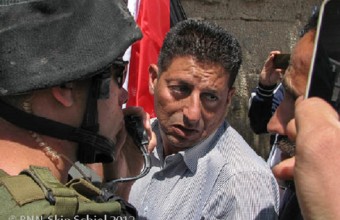
Yesterday, at 4:30 am, Popular Resistance activist Mahmoud Zwahre was again arrested by the Israeli army, at his house in Al Ma’asara, just southwest of Bethlehem.
An attempt to arrest Zwahre was made previously during the weekly Friday protest in the village. This week, on Wednesday, a large group of Israeli soldiers raided Zwahre’s home, just before dawn.
Mahmoud Zwahre, according to the Palestinian News Network (PNN), is an activist and coordinator for the Popular Committee Against the Wall and the Settlements in Al Ma’asara. Soldiers surrounded the Zwahre residence and declared it a closed military zone, as they proceeded to tear through the contents of the house, terrorizing the children and abusing Mahmoud in front of his family.
He was arrested, blindfolded, and taken to an unknown destination — essentially, and by all rights, amounting to a kidnapping.
(Al Ma’asara is a small Palestinian village located in Area B of the central occupied West Bank. Though Area B is officially recognized to be under joint Israeli-Palestinian security control, the 1967 Israeli occupation of the West Bank, Gaza Strip and East Jerusalem has yet to be granted legitimacy by the international community.)
Munther Amira, director of the board of the Popular Struggle Coordination Committee Against the Wall and the Settlements (PSCC) in the Palestinian territories, explained in an interview with the PNN that the Israeli occupation increasingly targets activists of Popular Resistance and their activities:
The activities of Popular Resistance are peaceful and designed to highlight the suffering of the Palestinian people through the Israeli occupation practices of racism and violation of international law. Nevertheless, the PSCC has documented the rough and violent reactions by Israeli soldiers against the protests and marches organized by the Popular Struggle Committees in the various provinces of the country.
The committee denounces the arrest of its coordinator Mahmoud Zwahre, and calls for his release.
Secret Trials: UK Holds A Secret Terror Trial, As US Appeals Court Holds Secret Hearing In Terror Case
By Mike Masnick | Techdirt | June 5, 2014
To have a functioning judiciary in an open democracy, part of the point is to make sure that court proceedings are open to the public. Yes, there may be certain instances where certain aspects must be kept secret, but the default should be open and public. Unfortunately, in both the US and UK this week, it appears that when it comes to the bogeyman word “terrorism,” courts are willing to go dark. The more serious situation is over in the UK, where it has just come out that a secret terrorism trial is being held — the first one in centuries. Even the names of the two defendants are not known (they’re listed as merely AB and CD). Journalists had even been barred from mentioning the existence of the trial, until a gag order was just overturned. Note that the Guardian’s page linked above had to turn off comments for legal reasons. Journalist Tim Cook has also spoken out eloquently about why this cannot stand.
I cannot say how broken-hearted I am about the prospect of a major criminal trial involving two men charged with serious terrorism offences being held entirely in secret for the first time in modern British legal history. I have spent my entire journalistic life campaigning against courtroom secrecy and this represents a nadir and indication of abject failure.
But the proposal is being contested by the process of law; albeit very limited and garrotted by the lack of a constitutional paradigm for freedom of the media and expression. We have been paying the price for not having a First Amendment for many years. Now we are entering the endgame of something beyond the dissolution of open justice.
Meanwhile, back here in the good, old United States, where we do have a First Amendment, at least we know that Adel Daoud is on trial. But the 7th Circuit Court of appeals kicked everyone out of the courtroom to hold a “secret hearing” with just the DOJ. As we wrote a few months ago, Daoud’s lawyers are asking to actually see the FISA court orders that were used to gather evidence against their client — and the DOJ is flipping out about that. While some of the hearings were held openly, at one point, Judge Richard Posner abruptly kicked everyone but the DOJ out, including Daoud’s lawyers.
As the arguments concluded, Judge Richard Posner announced the public portion of the proceedings had concluded and ordered the stately courtroom cleared so the three-judge panel could hold a “secret hearing.” Daoud’s attorney, Thomas Anthony Durkin, rose to object, but Posner did not acknowledge him. Deputy U.S. marshals then ordered everyone out – including Durkin, his co-counsel and reporters.
Only those with the proper security clearance — including U.S. Attorney Zachary Fardon, his first assistant, Gary Shapiro, and about a dozen FBI and U.S. Department of Justice officials – were allowed back in the courtroom before it was locked for the secret session.
Some reporters tried to ask what was going on, but Posner simply told them “No!” and kicked them out. Daoud’s lawyer was similarly perplexed:
“Not only do I not get to be there, but I didn’t even get to object,” Durkin said. “I had to object over the fact that I couldn’t even make an objection.”
As the article notes, this is highly unusual. While in national security cases, certain information may be filed under seal, or certain portions may be held “in camera” without reporters or the public, it’s not at all common to have just one side present. And while you may say that it makes sense in this case, where the three judge panel has to determine whether or not it’s appropriate to share the FISC orders with Daoud’s lawyers, it’s still somewhat troubling to see the ease with which secret court proceedings may occur.
FBI provided Anonymous with targets, new leaks show
RT | June 5, 2014
Leaked documents pertaining to the case against an American computer hacker currently serving a 10-year prison sentence have exposed discrepancies concerning the government’s prosecution and raise further questions about the role of a federal informant.
The documents — evidence currently under seal by order of a United States District Court judge and not made public until now — shines light on several aspects of the case against Jeremy Hammond, a 29-year-old hacktivist from Chicago, Illinois who was arrested in March 2012 with the help of an online acquaintance-turned-government informant. Last May, Hammond entered a plea deal in which he acknowledged his role in a number of cyberattacks waged by the hacktivist group Anonymous and various offshoots; had his case gone to trial, Hammond would have faced a maximum of life behind bars if found guilty by jury.
Articles published in tandem by The Daily Dot and Motherboard on Thursday this week pull back the curtain on the government’s investigation into Hammond and reveal the role that Hector Monsegur, a hacker who agreed to cooperate with authorities in exchange for leniency with regards to his own criminal matters, played in directing others towards vulnerable targets and orchestrating cyberattacks against the websites of foreign governments, all while under the constant watch of the US government.
Two-and-a-half years before Hammond pleaded guilty, Monsegur did the same upon being nailed with hacking charges himself. In lieu of risking a hefty sentence, however, Monsegur immediately agreed to aid the authorities and serve as an informant for the Federal Bureau of Investigation, eventually helping law enforcement nab Hammond and others. Last week, Monsegur was finally sentenced for the crimes he pleaded guilty to back in 2012 and was spared further jail time by the same judge who in November sent Hammond away for a decade.
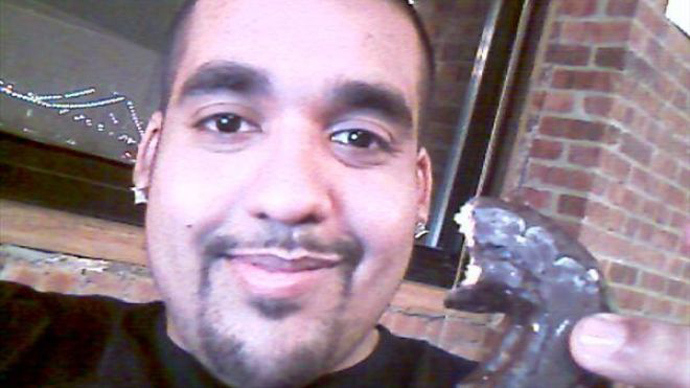
Hector Xavier Monsegur
According to this week’s revelations, Monsegur did more than just inform for the FBI after his arrest. The articles suggest rather that from behind his internet handle “Sabu,” Monsegur solicited vulnerabilities and targets from a wide range of hackers and then handed them off to other online acquaintances, including Hammond, in order to pilfer, plunder and otherwise ravage the websites and networks of foreign entities and at least one major American corporation.
Combined, the articles and the evidence contained therein corroborate very serious allegations concerning the Justice Department’s conduct in the case against Hammond and numerous other hacktivists, while raising numerous questions surrounding the FBI’s knowledge in hundreds of cyberattacks and its documented efforts to coordinate those campaigns using their informant.
Excerpts from previously unpublished chat logs and other evidence used in the Hammond case and obtained by the Dot and Motherboard are cited to provide a new point-of-view concerning two matters in particular: the December 2011 hacking of Strategic Forecasting, or Stratfor; and a January 2012 campaign led by Anonymous against government websites in Brazil and the US.
Contrary to the government’s claims, the Dot article alleges that Hammond did not mastermind the hack against Stratfor, but was rather told to target the Texas-based intelligence firm after Monsegur was made aware of a vulnerability in its network by a mysterious hacker who used the handle “Hyrriiya.” Weeks’ worth of private chats and group messages logged by Monsegur for the FBI after his arrest confirm that Hyrriiya breached Stratfor first, then sent details to the hacker he knew as “Sabu,” who in turn personally recruited Hammond to take the attack to the next level. For the first time, a clear timeline now exists to show exactly how the hack was hatched first by Hyrriiya, then Monsegur. A claim made ahead of Hammond’s sentencing hearing in which he claimed to have never even heard of Stratfor until he was fed the target by Sabu is authenticated with the logs.
Motherboard’s report focuses on a span of time only weeks after the Stratfor hack earned Anonymous headlines around the globe. Monsegur at that time was maintaining a list of targets in Brazil that would then be dispersed among members of Anonymous and other hackers to be defaced en masse as part of at least two concurrent cyber operations carried out in early 2012: an anti-corruption campaign against the Brazilian government; and another op in response to the shutdown of file-sharing site Megaupload.
“Sabu would say he wanted so-and-so, that another hacking team wanted this particular target,” Hammond told Motherboard from prison last month. “Some Brazilian was looking for people to hack them once I gave him the keys.”
Previously, Hammond said that Monsegur directed Anonymous to target websites belonging to no fewer than eight foreign governments while he was fully cooperating with the FBI. Only now, however, has documentation surfaced to verify that claim and others about alleged acts of cyberwar carried out by the the government by proxy.
“It’s completely outrageous that they made Sabu into this informant and then, it appears, requested him to then get other hackers to invade sites and look for vulnerabilities in those sites,” Michael Ratner, an attorney for WikILeaks, told Motherboard. “What that tells you is that this federal government is really — it’s really the major cybercriminal out there.”
The articles were first published Thursday morning and were a joint effort by journalists Dell Cameron of the Dot, Daniel Stuckey of Motherboard and RT’s Andrew Blake.
U.S. Marshals Seize Local Cops’ Cell Phone Tracking Files in Extraordinary Attempt to Keep Information From Public
By Nathan Freed Wessler | ACLU | June 3, 2014
A run-of-the-mill public records request about cell phone surveillance submitted to a local police department in Florida has unearthed blatant violations of open government laws, including an incredible seizure of state records by the U.S. Marshals Service, which is part of the Justice Department. Today the ACLU and the ACLU of Florida filed an emergency motion in state court to preserve the public’s right of access to government records.
Over the past several months, the ACLU has filed dozens of public records requests with Florida law enforcement agencies seeking information about their use of controversial cell phone tracking devices known as “stingrays.” (The devices are also known as “cell site simulators” or “IMSI catchers.”) Stingrays track phones by mimicking service providers’ cell towers and sending out powerful signals that trick nearby phones — including phones of countless bystanders — into sending their locations and identifying information.
The Florida agencies’ responses to our requests have varied widely, with some stonewalling and others releasing records. The most recent request went to the Sarasota Police Department, and the fallout from that request has raised red flag after red flag.
RED FLAG #1: The Sarasota Police initially told us that they had responsive records, including applications filed by and orders issued to a local detective under the state “trap and trace” statute that he had relied on for authorization to conduct stingray surveillance. That raised the first red flag, since trap and trace orders are typically used to gather limited information about the phone numbers of incoming calls, not to track cell phones inside private spaces or conduct dragnet surveillance. And, such orders require a very low legal standard. As one federal magistrate judge has held, police should be permitted to use stingrays only after obtaining a probable cause warrant, if at all.
RED FLAG #2: The Sarasota Police set up an appointment for us to inspect the applications and orders, as required by Florida law. But a few hours before that appointment, an assistant city attorney sent an email cancelling the meeting on the basis that the U.S. Marshals Service was claiming the records as their own and instructing the local cops not to release them. Their explanation: the Marshals Service had deputized the local officer, and therefore the records were actually the property of the federal government.
We emphatically disagree, since the Sarasota detective created the applications, brought them to court, and retained the applications and orders in his files. Merely giving him a second title (“Special Deputy U.S. Marshal”) does not change these facts. But regardless, once the Sarasota Police Department received our records request, state law required them to hold onto the records for at least 30 days, to give us an opportunity to go to court and seek an order for release of the documents.
Instead of complying with that clear legal obligation, the local police allowed the records to disappear by letting the U.S. Marshals drive down from their office in Tampa, seize the physical files, and move them to an unknown location. We’ve seen our fair share of federal government attempts to keep records about stingrays secret, but we’ve never seen an actual physical raid on state records in order to conceal them from public view.
RED FLAG #3: Realizing we weren’t going to get hold of the Sarasota Police Department’s copies of the applications and orders anytime soon, we asked the county court if we could obtain copies from its files. Incredibly, the court said it had no copies. The court doesn’t even have docket entries indicating that applications were filed or orders issued. Apparently, the local detective came to court with a single paper copy of the application and proposed order, and then walked out with the same papers once signed by a judge.
Court rules — and the First Amendment — require judges to retain copies of judicial records and to make them available to the public, but the court (and the detective) completely flouted those requirements here.
The ACLU’s emergency motion seeks a temporary injunction preventing the Sarasota Police Department from transferring any more files to the U.S. Marshals, as well as a determination that the police violated state law by sending the stingray applications and orders to the Marshals Service in the first place and an order requiring the police to produce the records.
When the government obtains court authorization to use invasive surveillance equipment, the public should not be kept in the dark. We have open records laws for a reason, but they mean nothing if the government can violate their clear commands at its whim.
Egyptian comedian cancels TV show citing ‘pressures’

MEMO | June 3, 2014
Egyptian comedian and TV satirist Bassem Youssef said Monday his show has been cancelled, citing pressures faced by the Saudi-owned MBC group to suspend his show.
According to producers of the show, as quoted by Reuters, the latest episode poked fun at the latest presidential elections, particularly the staggeringly low turnout and the resulting pro-Al-Sisi media panic.
MBC spokesman Mazen Hayek said that his group “had no hand” in the decision to suspend the show, saying the channel “did its best” to keep the show on air.
He refused to respond to questions regarding Saudi government pressures to cancel the show.
The Saudi government is one of the main backers of the former army chief Abdel-Fattah Al-Sisi who led the July 3 military coup against elected President Mohamed Morsi. Al-Sisi won a controversial presidential election last week in what has been internationally denounced as an illegitimate and unfair process.
It Is about the Charter of Rights and Freedoms Mr. Ambassador!
By Shawn Robinson and Rana Abdulla | Palestine Chronicle | June 2 2014

The exhibit is an opportunity for Canadians to view imagery that captures the humanity of a real situation (Public ART/Facebook)
The woman behind the exhibit is artist Rehab Nazzal, a Canadian citizen born in Jenin, an historic town located in Palestine in a territory under occupation since 1967. Nazzal’s exhibit of 1700 photographic images along with four short videos, were collected by her over the fourteen years. Segments of these images depict life in the experience of occupation.
Nazzal’s premise of this collection is based on the idea that people leave traces of their existence and the traces in this case are part of the collective memory of occupied Palestine. Not being the first time this collection has been exhibited, it was also featured in Toronto at the Scotiabank CONTACT Photography Festival 2013.
 Stumbling across the exhibit at Ottawa’s City Hall in the Karsh-Masson Gallery, the Israeli Ambassador to Canada felt that such an exhibit should prohibited. The Ambassador operating outside of his mission, met with Mayor Jim Watson and Deputy City Manager Steven Kanellakos of the City of Ottawa, to demand closure of the exhibit, stating it “glorified terrorism”. Somehow in the unidentified 1700 images and four videos, the Ambassador was able to single out seven individuals he described as terrorists.
The 4th Geneva Convention that Israel and Canada are signatories as well as the Hague Regulations, provides that people under occupation have the right to resist their occupiers. Palestinians are in a situation where they are resisting occupation. The Israeli government and their representatives dispute this occupation in spite of the presence of its military. Terrorism terminology by Israel has become so common and so pervasive that many inside and outside of Israel perceive Palestinians as terrorists – a racist generalization that is pejorative and isolating.
Nazzal’s work reveals human cost of military violence and war, and it is not a call for more human loss, contrary to the Ambassador’s allegations. It is a catalog of Palestinian history, creativity and expression for Forgotten Survivors; a lament for their homeland; and sadness for those who have died in a long hopeless conflict. Her work is a strong counter-narrative articulated creatively using visual vocabulary, transforming the oppressive tools of Israel and its discriminatory policies into elements of hope and life. Her political art communicates messages of dignity and liberation and has undoubtedly inspired many, not just Arabs but non-Arabs as well. The strong media attention certainly indicates that her message is worthy of consideration and appreciation.
Not satisfied with the responses from the Canadian public and City of Ottawa, the Ambassador has escalated his inflammatory language including allegations of “blood libel” and descriptors such as “child murderers”. Is this the role of a foreign diplomat to Canada? His call on Jewish groups to demand action is of great concern. Individuals who have yet to see the exhibit but have read the Ambassador’s false and inflammatory statements, are responding through promotion of these false allegations in blogs, emails to City Hall and online comments. Canadians are being presented with a bias that perpetuates this terrorism label.
The Israeli suppression of the Palestinian narrative appears to now be officially part of the Canadian art and political stream of understanding. It has no place nor is it appropriate. Instead of approaching the situation as an ethnic denial of people, that would appear racist to Canadians, the Ambassador of Israel instead invokes falsely the understandably reactionary term – terrorist.
 Censorship of art, especially political art has a history associated with oppressive regimes. Artists in Canada of all faiths, backgrounds and cultures have the full right to artistic expression as granted by the Canadian Charter of Rights and Freedoms. Therefore uncensored artists are able to explore difficult themes; which is a victory for democracy and freedom of expression.
Realizing that Mayor Watson and his staff have stood by the Charter, the Ambassador requested that Mayor Watson review the process of selecting future art exhibitions at the Karsh-Masson Gallery. This is also censorship. Does this mean future exhibitions could be at risk? That the City of Ottawa should influence the selection panel of professional artists? Do we want elected politicians interfering with these processes, and especially at the behest of a foreign country and its diplomatic body?
The situation is of concern to Palestinian, Arab, Muslim and other ethnic minority artists who may not be featured by galleries across Canada due to the fear of facing the public wrath of Jewish groups and/or the Israeli government. As Canadians, we don’t want to be controlled in how our art is expressed.
 We know from the history of others, that when governments and special interest groups control the message of art, that in many cases, target groups who are censored are in danger of future marginalization. In Europe in the 1930’s a number of countries excelled in this practice further legitimizing their hateful actions against minorities, including Roma and Jews. For some countries this was the beginning of their marginalization process against an ethnic minority. Canada must uphold its values for this reason as our laws and freedoms are for everybody, and not to be denied for a specified group, especially under pressure from an outside country.
The exhibit created by Nazzal is an opportunity for Canadians to view imagery that captures the humanity of a real situation. People are not exploited in their suffering or celebrations, they are living an experience that is untold by the media and has been for as much as four decades.
To be Palestinian is not anti-Jewish or anti-Israeli. In actuality it is a culture that is centuries old in its cuisine, dance, literature, art, architecture, music, costume and other elements we all embrace in our own.
Canada, a country of hundreds of cultures, cannot be part and parcel of this type of denial, and should not be afraid in embracing its citizens. Removing this show would set a precedence that would allow one group at odds with another group to demand censorship in the Canadian milieu. Influencing selection committees of art galleries, are creating the environment of fearing to present a Palestinian artist would also be an act of censorship and stifling our right to the freedom of expression. This is not a Canada we want.
– Rana Abdulla is a Canadian professional accountant, living in Winnipeg, Manitoba. Shawn Robinson is a Canadian artist in graphic design and creative writing. She lives in Ottawa.
~
~
~
For full version of these videos, please contact: info@vtape.org OR info@rehabnazzal.com

You are missed
© 2012, Rehab Nazzal
Featured Video

Anthrax War – CBC The Passionate Eye
or go to
Aletho News Archives – Video-Images
Book Review
Shattered Dreams: The HPV Vaccine Exposed (2019)
By Christina England – 30 Q&As – Book Review & Summary
Lies are Unbekoming | September 4, 2026
… Gardasil received FDA fast-track approval in 2006, Cervarix followed in 2009, and Gardasil 9 was approved in December 2014 with more than double the aluminium adjuvant content of the original. The commercial context is specific. Merck was about to lose patent protection on Zocor and faced $18 billion in Vioxx injury claims from a cardiovascular drug the company had marketed while suppressing its own data showing a five-times increase in heart attacks. Analysts projected the global HPV vaccine market at $4 billion by 2011, contingent on government-funded national programs for teenage girls. The 1986 National Childhood Vaccine Injury Act had already granted manufacturers complete liability immunity. By 2013, Japan had withdrawn its HPV vaccine recommendation after cataloguing severe adverse reactions in hundreds of girls. No Western government followed. The establishment position across the UK, US, Australia, and most of Europe held, and still holds, that the vaccines are safe and effective, that reported injuries are coincidental, and that cervical cancer prevention justifies the program. The book was published into this position, not against a vacuum.
Shattered Dreams sits alongside Mary Holland’s The HPV Vaccine On Trial and Viera Scheibner’s foundational vaccination work as part of the documented record on what has been done to a generation of teenage girls under the banner of cancer prevention. The full summary unpacks three specific findings: that Merck used the aluminium adjuvant itself as the “placebo” control in 92.5% of trial subjects, making it structurally impossible to detect excess reactions from the adjuvant; that Dr. Sin Hang Lee found HPV DNA fragments bound to aluminium in every one of sixteen Gardasil samples tested, and in the blood and spleen of a New Zealand girl six months after her third dose; and that in every country with high vaccination coverage, including Australia, the UK, Norway, and Sweden, cervical cancer rates have stopped declining and started rising specifically in the vaccinated cohort. Martínez-Lavín’s 2017 calculation puts the number needed to seriously harm with Gardasil 9 at 140, and the number needed to vaccinate to prevent one case at 1,757. Thirteen young women are seriously harmed for every one who benefits. The vaccine was approved on the basis of trials that could not detect what the trials were supposed to detect, and it is still being given to twelve-year-olds today. … Read full review
Blog Roll
 Aletho News
- Georgia’s Largest Healthcare System Will Fire Employees Who Refuse Flu Vaccine
- The Five-Year Fuel Crisis: Why the World Economy Is Paying for a War It Thinks Is Ending
- Trump’s Big Bluff on Iran
- Swiss scammed out of millions by Ukraine-linked call centers – media
- Germany facing potential ‘violent conflict’ with Russia – spy chief
- Ukraine’s EU neighbors reject new plea from Kiev – Politico
- British Transport Police Facial Recognition Trial Scanned 926,912 People With Zero Arrests
- House Bill Would Ban Federal Use of Flock ALPR Data
- Can a Spice Rival a Drug? 10 Head-to-Head Trials Put It to the Test.
- The oil routes around Hormuz face their own chokepoints
- If Americans Knew
- “We See Our Homes Now From A Satellite, Like Strangers”
- Watch “Gaza: Doctors Under Attack”, originally censored by BBC
- NAZA: Israeli embassies in UK and US promote rival documentary to challenge Gaza genocide allegations
- David Ellison appoints Israeli to lead merged Paramount-Warner studios
- Turkish Red Crescent helps elderly Gaza man walk again after Israel confiscates his prosthetic limb
- Four Palestinians Killed in Israeli Attacks in Gaza
- Two Palestinian youths killed and village razed as Israeli attacks on West Bank continue
- Two more Christian women victims of Israeli raids on Gaza
- Cruelty, Deprivation, Indignity: A Journalist’s 22 Months in Israeli Prison
- New IDF Website Frames Slain Gaza Journalists as Terrorists
- No Tricks Zone
- Latest European Green Energy Debacle; Portugal’s Largest Flagship Solar Park Insolvent!
- Green Energy Debacle: German Expert Professor Fritz Vahrenholt Warns Of Severe Economic And Social Consequences
- Two More Paleo Reconstructions Affirm Meters-Higher Sea Levels Across Ireland, Brazil 7000-6000 Years Ago
- New Study: Earth And Venus Surface Warmth Largely Explained By Convection And Lapse Rate, Not CO2 Or Radiation
- 2025 Nature Paper Claiming Worsening Global Drought Gets RETRACTED …Heavily Flawed
- New Study: ‘Global Drought Shows No Detectable Recent Acceleration Under Climate Warming’
- Economic Masterminds: German Socialists Suggest Taxing Productivity Gains Stemming From Using AI
- The South China Sea Has Not Been Cooperating With The Climate Change Narrative
- Energy Crisis: Germany Enters Heating Season With Historically Low Gas Reserve Fill Levels
- New Study: The Antarctic Ice Sheet Gained Mass From 2020-2024 Due To Staggering Snow And Ice Accumulation

