Henrik Svensmark fired by his university
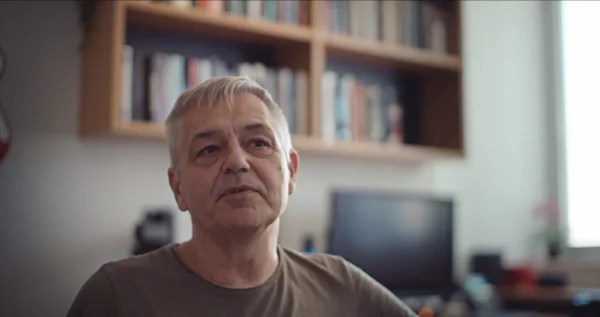
By Karl Iver Dahl-Madsen | CLIntel | July 21, 2026
Something unusual and encouraging has happened in Danish climate journalism. Berlingske, one of Denmark’s leading national daily newspapers, has published an excellent and genuinely inquisitive article about the dismissal of physicist Henrik Svensmark from the Technical University of Denmark (DTU), where he has been working since the late nineties. The headline leaves no room for doubt: “Controversial Danish climate and space researcher has received the pink slip from DTU: It is ‘a death blow’ to my research”.
Here is how the article starts:
He is one of Denmark’s most internationally recognized researchers – and at the same time one of the most controversial. But now space and climate researcher Henrik Svensmark has, in his own words, been “good old-fashioned fired” by his employer, the Technical University of Denmark (DTU) in Lyngby. He does not rule out that “political considerations” – as he puts it – were involved in the years-long process that led to his final dismissal. At the same time, Henrik Svensmark does not hesitate to call it “a death blow” to a branch of research that he has largely developed single-handedly and that climate researchers around the world, including the UN’s climate panel (IPCC), have had to relate to – often reluctantly. This is mainly because Svensmark’s research points to what he sees as an overlooked natural factor behind a large part of the climate changes Earth has undergone. He finally does not rule out that the dismissal may be linked to the fact that he is perceived as a controversial researcher in wide circles: “There is nothing controversial about the research itself. But it is true that many perceive my research as controversial, even though it shouldn’t be.” DTU has no comments on the actual dismissal of Svensmark and refers to it as a personnel matter. However, the director of DTU Space, Henning Skriver, confirms that Svensmark’s overarching research area, atmospheric physics, will now “be significantly down-prioritized.”
Science journalist Lars Henrik Aagaard deserves credit for the whole article. Rather than dismissing Svensmark as merely ‘controversial’, he asks the essential question: is DTU retiring an ageing employee, or is it terminating an internationally recognized but scientifically inconvenient research program?
The facts reported by Berlingske are troubling.
Svensmark, aged 68, and well known for his work on cosmic rays and clouds, was still actively working and preparing a new experiment. Only a few months earlier, he says, his superiors had told him that his research was important and that they wanted him to continue.
According to Svensmark, he had also been selected for a professorship in 2016 following positive international evaluations. A new rector however, blocked his expected promotion to full professor, downgrading him to Senior Researcher (and lowering his salary). That move made it harder for him to secure regular research funding in Denmark.
In 2021, DTU again attempted to dismiss him, but he continued, partly, he says, because of protests from scientists connected with MIT and Princeton (Lindzen and Happer).
Berlingske presented this history to DTU. The university declined to address it. DTU Space director Henning Skriver merely stated that atmospheric physics was being “significantly downgraded” as part of a strategic prioritization.
That is not an explanation. It is management fog.
A public university may change its priorities. But it should explain the scientific reasoning. Why was Svensmark encouraged to continue only months before his dismissal? What happened to the positive international evaluation? Why was the professorship removed? Why is an active experiment being stopped?
The details of an individual employment case may be confidential. The scientific grounds for closing a research program shouldn’t be. A hypothesis cannot be dismissed administratively.
Solar activity
Svensmark’s research concerns the influence of solar activity and cosmic radiation on aerosol formation, clouds and therefore the climate.
The proposed mechanism is straightforward in principle. Solar activity affects the amount of cosmic radiation reaching Earth. Cosmic radiation ionizes the atmosphere. Ionization may influence the formation and growth of aerosol particles, some of which become cloud condensation nuclei. Clouds, in turn, strongly affect Earth’s radiation balance.
Parts of this chain have been demonstrated experimentally. The unresolved question is how large the resulting climate effect is under real atmospheric conditions and over different timescales.
Svensmark does not claim that carbon dioxide has no effect. He told Berlingske :
“I am not saying that humans are not part of it.”
His point is that natural variability, cloud processes and solar influence remain insufficiently quantified. He describes the dismissal as “a death blow” to the research program he has spent much of his career developing.
Not a marginal researcher
Svensmark cannot reasonably be dismissed as an unsuccessful or marginal scientist. Google Scholar records more than 7,000 citations to his work and an h-index of 30. Compared with the broader DTU research community, this places him approximately among the upper fifth of researchers and probably higher when measured by total citations. That is a considerable scientific impact for a relatively small and highly contested research field, far removed from the large collaborative networks that generate many citations almost automatically.
The predictable but weakest contribution in the article comes from Jens Hesselbjerg Christensen, professor at the Niels Bohr Institute and a prominent figure in the IPCC community.
Hesselbjerg accepts that cosmic radiation may play a role in cloud formation and long-term climate history. He then claims that much of Svensmark’s research appears to have been designed to confirm his hypothesis and that, whenever it was not confirmed, “an arm or a leg” was simply added.
That is an extraordinary accusation and an intellectually shabby one.
Hesselbjerg identifies no paper, no experiment, no faulty measurement, no improper method and no failed prediction. He merely insinuates that Svensmark has constructed his research to reach a predetermined conclusion. If Hesselbjerg believes that, he should name the experiments and explain precisely what was wrong with them. Otherwise, he should withdraw the allegation.
Developing a hypothesis as new evidence appears is not scientific misconduct. It is science. Aerosol formation involves nucleation, particle survival, growth, atmospheric chemistry and eventual cloud formation. Discovering additional mechanisms is not “adding an arm or a leg”. It is the whole purpose of experimental research.
Hesselbjerg’s performance illustrates a wider problem. Researchers close to the institutional consensus can invoke authority while providing remarkably little argument. A dissenting researcher is expected to prove every link in a complex physical chain before his work is even considered legitimate.
That is not a scientific level playing field.
The research should continue
The immediate objective should not merely be to embarrass DTU. It should be to ensure that Svensmark’s research survives. The most important next step is to develop a climate model that explicitly includes the proposed chain connecting solar activity, cosmic radiation, atmospheric ionization, aerosol growth and clouds, alongside greenhouse-gas forcing and the other established climate mechanisms.
Such a model would make it possible to test a question of enormous scientific and political importance: How much of the observed temperature development is caused by human influence, and how much is caused by natural variation?
That question is far from purely academic. Climate policy depends critically on the answer. If natural influences are larger than assumed, the expected effect of reducing carbon emissions is smaller. If they are negligible, the current attribution of climate change to CO2 becomes stronger. Either result would be valuable.
As explained by Henrik Svensmark: “The next decisive step is to build a climate model in which the influence of solar activity, cosmic radiation, aerosol growth and clouds is represented together with greenhouse gases. That would allow us to test how much of modern climate change is human-caused and how much is natural. This can be done within a few years and with a research budget that is modest compared with the political and economic importance of the question.”
The task is therefore concrete: we need to find a new institutional home for Svensmark, preserve the equipment and scientific expertise, assemble an international research team and raise the necessary funding.
Berlingske has performed a valuable public service by bringing this case into the open. DTU has responded with evasion. Jens Hesselbjerg Christensen has responded with an undocumented attack on a colleague’s scientific integrity.
Neither response is acceptable.
Science advances through experiments, observations and testable models, not through administrative priorities, institutional conformity or casual insinuations.
Henrik Svensmark’s research must not end with a DTU management decision. It must now be given the resources to face the only judgement that matters: the judgement of observations.
Karl Iver Dahl-Madsen is an independent consultant (owns Dahl-Madsen ApS), chairman of the board of the Danish climate-sceptical association Klimarealisme (Climate Realism), and a frequent commentator/debater in Danish media on climate policy, energy, and environmental issues. More: https://klimarealisme.dk/
They Are Coming to Take Us Away
The White House discovers more “commies” and terrorists

By Philip Giraldi • Unz Review • July 19, 2026
In Donald Trump’s America it is always possible to wake up in the morning and peruse online the overnight headlines to discover something new and exciting. Over the past week it has been a medley of going to war (again) with Iran coupled with a complicated performance on other issues as President Trump apparently takes aim at his enemies in the US and elsewhere. America’s Secretary of War Pete Hegseth is fully on board with a surge in worldwide mayhem. He is looking forward to an increase in US initiated violence, ordering that male soldiers, airmen, sailors and marines be tested for their testosterone levels. “Hegseth argues the effort, to become part of the military’s periodic health assessment for troops over 30, will ensure the optimal performance and long-term health of warfighters… the move plays into Hegseth’s focus on appearances and masculinity, which one Democrat said this week borders on ‘homoeroticism’.” Those who fail to have sufficient of the “male characteristics” hormone in their systems will be determined to be not fit for combat, where lethal instincts as encouraged under Hegseth require a satisfactory level of anger. Some soldiers might be offered therapy to increase their hormone levels.
And perhaps not so strangely, it often seems that much of the daily news relates to America’s “best friend and closest ally” Israel. One of the great ironies of the Israel against the rest of the world competition is how the “Torah” Old Testament is regularly being cited by Washington and the national media to justify anything the Jewish state does. That occurs in spite of the fact that Biblical Judea has little in common with the real Israel of today apart from providing an enduring mythology interwoven with the “holocaust” fantasy to sustain the myth of “chosen-ness.” In reality, Judea ceased to exist as an actual nation in 70 AD when the Romans destroyed to include the Second Temple in Jerusalem, of which absolutely nothing physical remains, and forced the Jews to depart. After that, what is now described as Palestine was ruled in various fashions by Rome, Byzantium, Muslim Arabs, Christian Europeans, Mamelukes, Turks, and the British until the politically driven re-creation of a Jewish state in 1948. That means for nearly 1900 straight years there was no such thing as an “Israel” or a Jewish nation and any Jewish presence was marginal in the region where the religion was born. Clearly there was no historical mandate to move a group of foreigners, whose only tie was to a religion that many of them did not actually practice, into a land that those foreigners then began to depopulate of its indigenous inhabitants who had lived in that place under both Christian and Muslim foreign rule for two millennia.
Recent American presidents have certainly tried to make the brutal Israeli suppression and occupation of what was supposed to be a neighbor state called Palestine somehow seem to be something quite acceptable. This is particularly due to the nonsense regurgitated by a group of American fundamentalists that many refer to as Christian Zionists (CZ), best exemplified by the delusional US Ambassador to Israel Mike Huckabee. These are folks that revere the Jewish Bible, as one might describe it, as “explained” by the nineteenth century Scofield Bible. Huckabee insanely even claims that “Without Israel, without the Jewish foundation, there would not be America.”
Unfortunately for the rest of us, the CZ exist in large numbers in southern and some midwestern so-called Bible Belt states and they vote reliably for congressmen and even presidents who are Israel Firsters. So we get monsters like Texan Ted Cruz, Arkansan Tom Cotton and the recently deceased South Carolinian Lindsey Graham calling the shots on foreign policy. And we get presidents like Joe Biden and Donald Trump, both of whose exceptional loyalty to Israel should have been challenged when they ran for office!
The latest bid by Congress to allow Israel to be even more intolerant of the Christians and Muslims that it is supposed to share the former Palestine with is a recently passed amendment calling for equal Jewish prayer rights on Jerusalem’s Temple Mount. The Mount currently houses the Al-Aqsa Mosque, one of three most holy religious sites for Muslim believers, reputedly the location where Mohammed himself was spirited up to heaven by Allah. When Israel was created in 1948 Jerusalem was categorized by the UN as an international city inclusive of all faiths. The Mount was regarded as special for Muslims and believers in other faiths had only limited access to it. More recently, there has been constant agitation from extremist Jewish politicians in Israel to open up the site and there have even been calls to build a Jewish Third Temple on it as well even more radical demands to demolish al-Aqsa completely as part of the process. This has been accompanied by increased persecution and even closure of churches and mosques located elsewhere in the city with the clear intention of making Jerusalem more exclusively Jewish. Trump and company have, of course, not raised any objections to the Jewish activism even when Christians are being actively persecuted and denied access to their churches and holy sites.
Israel aside, the views of Americans who value the First Amendment Freedom of Speech right should be particularly concerned by the authoritarian direction the federal government is moving in. One must pay attention to last week’s denunciations by Trump and National Security Adviser and Secretary of State Marco Rubio of “communists” and “terrorists” among the predominantly progressives who apparently are in the forefront of those who are opposing the enlightened policies being promoted by the White House. It is apparently the belief that labeling opponents in that fashion will guarantee victory in the upcoming November midterm elections where Democrats will inter alia be labeled as anti-Israel and it will also make it easier to root some such folks out for deportation or imprisonment to silence them as has already been happening with foreign students at American universities.
Regarding what is developing, Trump’s activation of the little known “alien terrorist” deportation court presumably will conveniently provide the president and his fanatics with a new tool to cleanse the country of anyone who might object to killing people without any constitutional or legal process as has been taking place in the Caribbean, Iran and Sudan. Not that Trump needed a new court since he is no friend of “rule of law” and has been repeatedly acting in one of his rages whenever he sees fit to punish both American citizens and foreigners. One might cite the recent arrest of an American citizen who was traveling in Spain. As reported by The Guardian, “Spanish authorities, operating on a US extradition request, arrested the 41-year-old James Chambers, a US citizen and wealthy donor to leftwing and humanitarian projects worldwide, last Friday in Ibiza. He has been transferred to a prison in Madrid. The Trump administration’s Department of Justice is seeking his extradition for alleged financial support of Hamas, according to a spokesperson for the Spanish high court. This is the first known case of the US seeking extradition of a citizen over alleged support for Hamas… It is unfolding as Marco Rubio, the US secretary of state, convened 66 countries this week – including Spain – as part of a broader effort to discredit leftwing activity as terrorism…”
In reality, of course, Hamas is a legitimate resistance movement and the ones who should be arrested on terrorism charges are Israelis, starting with Prime Minister Benjamin Netanyahu if he dares to visit the UN in New York in August, but that fine point is not about to bother Donald Trump and Marco Rubio. One can only assume that the Trump Administration will be moving sharply to the right over the next three months, labeling all critics as threats to the security of the United States of America. The initial focus will be on foreigners living in the United States, but the mechanism will easily be expanded to include all critics or supporters of resistance groups, like is happening to American citizen James Chambers in Spain. It is easy to go to Congress or have the White House declare some entity “terrorist” and people who support them in their resistance to US policy will begin to be on the receiving end of punishment. That is what is coming unless we the people unite to put an end to it right now!
Philip M. Giraldi, Ph.D., is Executive Director of the Council for the National Interest, a 501(c)3 tax deductible educational foundation (Federal ID Number #52-1739023) that seeks a more interests-based U.S. foreign policy in the Middle East. Website is https://councilforthenationalinterest.org address is P.O. Box 2157, Purcellville VA 20134 and its email is inform@cnionline.org.
Heather Herbert Charged Over Ann Widdecombe Bluesky Posts
By Cam Wakefield | Reclaim The Net | July 17, 2026
Police Scotland has arrested and charged someone over two posts published online.
Heather Herbert, a 50-year-old web developer at the University of Aberdeen, a transgender activist and a former Labour and Scottish Greens candidate, wrote two vile messages on Bluesky about the death of Ann Widdecombe, a British politician and television personality who was found murdered in her home last week.
“And some good news for once. I hope it was an extremely painful death,” the first one said. The second went further. “And I hope she was handcuffed to the bed as she screamed in agony.”
Wishing an elderly woman a screaming, agonized end is the sort of thing that typically earns you a wide social berth and a lot of quiet unfollowing.
Then the police got involved. And un-involved. And then involved again.
Police Scotland looked at the posts and decided, in its own words, that “no criminality has been established.” Filed away, done. Then a petition gathered around 3,500 signatures in a matter of days, and the force pulled a handbrake turn.
A spokesman confirmed that “following further assessment, additional inquiries are being carried out.” Put plainly, the public shouted and the definition of a crime shuffled over to meet the shouting.
A 50-year-old, Herbert, was then arrested and charged, with a report going to the procurator fiscal. The police have not said which offense was supposedly committed. They made the arrest first and will presumably tell everyone the crime later.
Herbert, for what it is worth, was unrepentant, dismissing the whole row as “overblown” before the Bluesky account went dark and was suspended.
Herbert is clearly not charming company to keep but Britain has a troubling habit of turning vile speech into a police matter.
The death that started all this turned out to be far worse than anyone first assumed. Widdecombe, 78, the former Conservative minister turned Reform UK spokeswoman, was found dead at her home in Haytor on Dartmoor with serious injuries.
A 28-year-old man from South Yorkshire was arrested, then re-arrested under terrorism law. Counter-terror officers now describe a “brutal” and “targeted attack.”
Herbert posted before any of that was known, which spares nothing morally but is legally relevant, because you cannot be prosecuted for gloating over a murder that had not yet been called one.
The University of Aberdeen says it is reviewing the posts “as a matter of priority,” that the comments “are entirely the individual’s own,” and that it does not condone “violence or hateful behaviour in any form.” The principal added his own condemnation on top.
So a web developer’s repugnant messages have become a workplace disciplinary matter, a police matter and a political-party matter all at once. Three investigations for two sentences.
Herbert’s posts are horrible, and horrible speech is exactly the speech that tests whether a country believes in the freedom it advertises. Pleasant opinions have never needed protecting. Scotland has spent years assembling the machinery to police the ugly ones, and that machinery does not politely switch itself off when the target happens to be unsympathetic. Today it points at a gloating activist. Tomorrow it points wherever the next petition tells it to.
You are not obliged to like Heather Herbert. You can find the posts repulsive, think a great deal less of the person who wrote them, and still spot the much bigger problem standing behind them. But a police force that works out what is criminal by reading the room is a police force you should never trust with a single one of your own words.
Widdecombe deserved better than those posts. Everyone in Scotland deserves better than a speech code enforced by whoever can shout the loudest.
Judge rules US violated Palestinian American’s rights in phone search
The Cradle | July 17, 2026
A federal judge has ruled that the US government violated the constitutional rights of Palestinian American Osama Abu Irshaid after customs officials seized and searched his cellphone during two separate encounters at a US international airport in 2024.
In a ruling filed in the US District Court for the Eastern District of Virginia, US District Judge Michael Nachmanoff determined that the phone searches violated Irshaid’s Fourth Amendment protections against unreasonable government searches and seizures.
CAIR welcomes the court’s decision
Irshaid serves as the executive director of American Muslims for Palestine and is a US citizen of Palestinian descent.
The Council on American-Islamic Relations (CAIR), which filed the lawsuit on Irshaid’s behalf two years ago, welcomed the court’s decision on Thursday.
The Muslim civil rights organization said in its lawsuit that the federal government had placed Irshaid on a watch list that was discriminatory and racist.
CBP agents conducted advanced phone searches
According to CAIR, US Customs and Border Protection agents twice seized Irshaid’s cellphone and carried out “advanced” searches when he returned to the United States from international travel in 2024.
At the time, the government denied adding individuals to any such watch list based on race, religion, or protected speech activities.
Rights groups have raised growing concerns in recent years over increased scrutiny of Americans with Middle Eastern, Arab, and Palestinian backgrounds, particularly over their political views, following Israeli genocide in Gaza, which started in October 2023.
US blocks SSL security certificates for Iran’s Fars News Agency
The Cradle | July 17, 2026
Washington has blocked the issuance of SSL security certificates for Fars News Agency‘s website, cutting the country’s most visited news outlet off from browser-trusted encryption, the agency revealed on 17 July.
Without valid certificates, visitors to the site face security warnings and restricted access, while the agency’s content has been removed from Google search results.
Technical assessments confirm that all major internationally recognized Certificate Authorities – including Let’s Encrypt, DigiCert, and Sectigo – have rejected certificate requests for the agency’s domains, citing US sanctions pressure.
The measure is the latest in a series of US actions against the outlet. The US Treasury’s Office of Foreign Assets Control seized the agency’s .com domain in 2020, and in September 2023 added Fars and its CEO to the Specially Designated Nationals (SDN) sanctions list.
The EU and Canada have since imposed sanctions of their own.
Fars has faced repeated efforts to restrict its reach, including the removal of its Instagram account, which had nearly three million followers.
Iran’s Computer Emergency Response and Coordination Center (MAHER) says the agency has been the primary target of sustained cyberattacks aimed at disrupting the country’s domestic media infrastructure.
The block forms part of a broader western campaign to dominate the media narrative against its geopolitical adversaries by suppressing opposing voices while artificially amplifying its own.
Western governments are simultaneously dismantling online anonymity at home through identity verification laws that, under the pretext of child protection, tie every post to a legal identity – backed by biometric verification requirements, VPN restrictions, and the scanning of private messages.
The measures tighten control over expression both abroad and within their own borders, amid ongoing crackdowns on pro-Palestine and pro-Iran speech.
An investigation by TIME revealed that Israel has been paying $1.5 million per month to Clock Tower X, a firm owned by US President Donald Trump’s former campaign manager Brad Parscale, to run a covert influence campaign targeting young US conservatives through paid influencer networks, coordinated messaging in private group chats, and websites designed to shape how AI chatbots characterize Israel.
US officials now believe the operation turned against Trump himself, as paid influencers attacked the now broken ceasefire with Iran.
In May, Israel allocated roughly $730 million to its 2026 Hasbara propaganda budget, more than four times the previous year’s allocation, even as polling shows 60 percent of US respondents now view Israel unfavorably, with experts dismissing the spending as unable to offset the impact of its genocide in Gaza.
The Cradle analyst Mohamad Hasan Sweidan previously detailed how Israel operates a “Digital Iron Dome,” a system combining mass reporting campaigns to take down content exposing its crimes in Gaza, algorithmic ad warfare that floods timelines with state propaganda, and hundreds of millions of dollars in influencer contracts and AI-targeted campaigns to manipulate global perceptions.
Armenian PM persecutes dissent as West turns blind eye – rights group
RT | July 15, 2026
Armenian Prime Minister Nikol Pashinyan has created “an atmosphere of fear” through the “systematic” persecution of political opponents with the tacit backing of Western nations, a newly formed rights group has claimed, warning that any dissenting voice is now treated as an “enemy.”
Tensions have remained high since last month’s parliamentary election, in which Pashinyan’s pro-EU Civil Contract party won 49.74% of the vote, according to the Central Electoral Commission (CEC). At least seven opposition parties have petitioned the constitutional court to annul the results, alleging widespread electoral misconduct, while hundreds of protesters rallied outside the CEC headquarters.
On Monday, the Committee for the Protection of the Rights of Persons Subjected to Political Persecution – a watchdog established by lawyers, political activists, and several former officials – accused the government of waging a campaign to silence the opposition.
“Everything is being done to foster a climate of fear, isolate political and public figures, and attempt to decapitate the numerous opposition forces,” former MP and lawyer Elinar Vardanyan said. According to the committee, around half a dozen opposition politicians are either in custody or facing criminal prosecution.
“Anyone who holds a different point of view is regarded by the authorities not as an opponent, but as an enemy,” said Armenia’s first ombudswoman, Larisa Alaverdyan, who joined the group. Committee members argued that Pashinyan has been able to pursue the crackdown because he has effectively received a “carte blanche” from his Western backers.
“In pursuit of their own interests, Western institutions are not merely turning a blind eye to Pashinyan’s actions – they are, in effect, encouraging them,” political analyst Yervand Bozoyan said, accusing foreign governments and international organizations of being “silently complicit in the destruction of democracy” in Armenia.
Pashinyan has declared the opposition parties that entered parliament illegitimate and vowed to strip them of their political standing. He has also said his government intends to confiscate the assets of the leaders of the three largest opposition parties, adding that they “should be left hungry.”
Following those remarks, prosecutors opened a criminal case against former President Robert Kocharyan, leader of the Armenia Alliance, the third-largest parliamentary party. Another opposition leader, Samvel Karapetyan, has remained in custody since last year on charges of plotting a coup, which he denies.
About a month before the election, Pashinyan hosted an EU-Armenia summit and a meeting of the European Political Community (EPC), an EU-led forum launched in 2022 after the escalation of the Ukraine conflict. He has also pledged to deepen Armenia’s integration with the EU, despite the country’s continued reliance on trade with Russia and Moscow’s warnings that adopting EU standards could damage the South Caucasus nation’s economy.
French Donbass Charity Founder’s Show Trial Designed to ‘Neutralize’ Dissent to Hostility to Russia

Sputnik – 15.07.2026
The criminal case against SOS Donbass organizer Anna Novikova is part of France and EU’s broader policy of “intimidating dissenters and neutralizing them to suppress domestic opposition to the official hostility to Russia,” independent French geopolitical analyst Come Carpentier de Gourdon told Sputnik.
“In fact any support of Russia, even by quoting or circulating news reports, opinions or comments from Russian (state) media is considered in France as connivence with the enemy and therefore potentially treasonous,” with Russia deemed “de facto an enemy country,” the observer pointed out.
But the prosecution may face problems, because the law “is far from clear” regarding humanitarian aid, “and any trial can become very controversial as the accused may object the French Government’s position: Ukraine is not an ally of France or a NATO member, France has not declared war on Russia.”
“Therefore objections can be raised to the claim that assistance to the Donbass and denunciation of Ukrainian actions there is tantamount to supporting Russia’s military campaign.”
Nevertheless, “other EU countries” should be “expected to adopt similar measures or laws,” the analyst fears.
Case Flunks Even EU’s Own Fake Rule of Law Standards
Novikova’s case does not even “adhere to the three Orwellian slogans of the EU – democracy, rule of law and respect for human rights,” political analyst Dr. Greg Simons told Sputnik.
The “purely political” crackdown “is a continuation of the larger attempt to shut out any alternative views,” and was preceded by things like bans on Russian foreign-facing media, sanctions and economic warfare against critics. It will inevitably expand over time, Simons expects.
“The Ukraine issue is going to become much more sensitive and toxic politically to Europe for supporting this cause,” and Novikova’s “lawfare” imprisonment and trial are a “test case” for tightening control over the narrative on Ukraine.
It’s also an “an act of pure intimidation so that people will stop breaking the narrative” amid the growing desperation and political vulnerability of the French government, Simons suggests, pointing to President Macron’s growing vulnerability and questions on his political future, and similar trends regarding the anti-Russia ideology of Euro-Atlanticism in general.
UK moves to ban Iran’s IRGC, cites unfounded national security threats
Al Mayadeen | July 13, 2026
The British government announced Monday that it will designate Iran’s Islamic Revolution Guard Corps under new national security powers, deepening already strained relations between London and Tehran, The Guardian reported.
Rather than formally proscribing the IRGC under the “Terrorism Act”, the government will classify the Iranian military body as an organization involved in “foreign power threat activity.” The new mechanism carries consequences comparable to “terrorist proscription” and would criminalize certain forms of support or assistance once approved by Parliament.
The designation marks a significant shift in Britain’s position after previous Conservative governments declined calls to formally ban the IRGC, partly because it is an official component of the Iranian state and armed forces.
Home Office cites alleged threats
Announcing the measure, the Home Office said the decision followed a review of alleged activities connected to the organizations targeted by the new designations.
“Having carefully considered all the evidence, the home secretary has concluded that there is sufficient basis to reasonably believe that each of these bodies is engaged in foreign power threat activity, and that each designation is necessary to protect the safety and interests of the United Kingdom.”
British authorities linked the decision to alleged plots and cyberoperations attributed to Iran.
London has also claimed more than 20 allegedly Iran-linked plots identified by British security agencies over the previous year.
The British government has not publicly presented evidence establishing direct IRGC involvement in every incident cited in support of the measure.
Iranian and Russian bodies targeted
Alongside the IRGC, the government said it would designate the Islamic Movement of the Companions of the Right, or IMCR, which British authorities blame for several attacks against Jewish institutions and other targets in the country.
The incidents attributed to the group reportedly include arson and vandalism attacks targeting synagogues, emergency vehicles operated by the Jewish volunteer service Hatzola and the offices of an Iranian opposition media organisation.
Russia’s GRU Volunteer Corps, which Britain describes as an overseas operational body connected to Russian military intelligence, will also be listed under the same legal framework.
The measures are expected to make it easier for British authorities to prosecute individuals accused of acting for, assisting, or receiving benefits from designated foreign-linked bodies. The designations must first receive parliamentary approval before entering into force.
Diplomatic fallout expected
The decision is likely to further damage relations between Britain and Iran at a time of heightened regional tensions and ongoing conflict involving Tehran and Washington.
British officials had previously warned that action against the IRGC could prompt retaliatory diplomatic measures, including the possible removal of the UK ambassador from Tehran.
The IRGC was established following Iran’s 1979 Islamic Revolution and operates as an official branch of the country’s armed forces. It plays a central role in Iran’s defense structure and reports to the country’s supreme leadership.
Britain’s decision follows a similar move by the European Union, which formally added the IRGC to its list of “terrorist organisations” in February 2026.
US demands Spain extradite pro-Palestine activist on ‘dubious’ money laundering charges
By Kit Klarenberg | The Grayzone | July 13, 2026
Fergie Chambers, a communist philanthropist and heir to the Cox family fortune, has been jailed in Ibiza, Spain, on the orders of the US Department of Justice. According to a sealed indictment seen by The Grayzone, Chambers now awaits extradition to Washington on dubious federal charges of “international money laundering… with the intent to provide material support to and resources to foreign terrorist organizations.” If deported to the US, he faces up to 30 years in prison.
On July 10, six Spanish police vehicles surrounded Chambers’ car while he drove through Ibiza with his family, before detaining him. Since his arrest, he has been denied bail and contact with the outside world. Chambers’ detention marks the first time an individual has faced extradition to the US from Spain for supporting the Palestinian cause.
An heir to the vast Cox family fortune, in 2023 he cut ties with his family and sold his stake in Cox Enterprises, receiving an estimated $250 million. Vowing to use this money to fund social activism and international solidarity work, Chambers has since donated over $1 million to humanitarian projects supporting those impacted by the Gaza genocide, and to support pro-Palestine activist groups and news outlets.
The sealed indictment offers no evidence that Chambers has donated any money to “foreign terrorist organizations.” It merely states “Chambers made numerous transfers of funds from banks in the US to banks in Tunisia,” where he relocated in late 2023.
It appears Chambers used those funds for seemingly legal purposes, including investing in local businesses and sponsoring the Club Africain football team, which in May became champion of the Tunisian Ligue Professionnelle. Chambers has bankrolled similar enterprises, along with political and social causes since the early 2000s, including paying the bail and legal fees of imprisoned left-wing activists.
“The Department of Justice is politically persecuting Fergie [Chambers] because he is using his wealth to support Palestine, and help people facing genocide in Gaza. His crime is dedicating his life to building a better society, rather than exploiting people, extract wealth and profit from war,” Stella Schnabel, Chambers’ partner, told The Grayzone. “He should be home safe with our family and continuing his important humanitarian and social advocacy, not incarcerated in a foreign jail facing effective life imprisonment back in the US.”
Chambers’ arrest comes amidst bitter tensions between the Trump administration and Spanish government, with Washington lashing out over President Pedro Sánchez’s criticism of Israel’s assaults on Gaza and Iran, and his refusal to allow Washington to use his country to stage attacks on Iran.
Chambers’ arrest occurred the same day the Washington Post reported Secretary of State Marco Rubio invited senior ministers from more than 60 countries to a meeting on tackling the alleged scourge of “transnational far-left terrorism.” Critics, including some US officials themselves, charge that the Trump administration is seeking to abuse powerful counterterrorism tools to crack down on left-wing activists.
In May, Trump’s new counterterrorism czar Sebastian Gorka – a pro-Israel fanatic exposed by The Grayzone in November 2024 as a longstanding British intelligence asset – unveiled a new “counterterrorism plan” which explicitly targets supposed “left-wing extremist groups” at home and abroad. A US counterterror official recently told the Washington Post that targeting left-wing activists with accusations of links to foreign terrorist groups “can unlock certain investigative tools,” including intensive surveillance. The false conflation of Chambers’ support for activism with Hamas financing fits neatly into this vision.
In June, eight anti-ICE protestors were sentenced for a combined 450 years for their roles in a riot outside a Texan immigration detention center. The severity of their punishments in large part hinged on prosecutors successfully arguing their use of Signal to communicate, and attendance at book clubs where left-wing literature was read, demonstrated they were part of a coordinated terrorist conspiracy. Chambers’ sealed indictment indicates the Trump administration’s war on Palestine solidarity is going global.
Ro Khanna says Israeli settlers held US delegation in West Bank
Al Mayadeen | July 11, 2026
US Democratic Representative Ro Khanna said armed Israeli settlers prevented his delegation from leaving a Palestinian area in the occupied West Bank, an incident he said exposed the realities of Israeli occupation and settler violence.
Khanna, who is considering seeking the Democratic presidential nomination in 2028, told Reuters that settlers carrying US-manufactured M4 rifles surrounded the group’s vehicle on Wednesday near Khirbet Zanuta in the southern West Bank.
The California congressman had been touring the remains of a Palestinian community whose residents were driven out following repeated attacks by Israeli settlers.
“We were at a village that Israeli settlers had destroyed, they had destroyed the school, they had destroyed that village, and we were just looking at it,” Khanna said.
“And these hoodlums come in with machine guns – M4, an American-made machine gun – and they detain us. They block off the road. And then they call the IDF and the IDF is on their side, not on the side of the Americans,” he added.
Cameron Kasky, an aide traveling with Khanna, said the delegation remained blocked for more than an hour and contacted the US Embassy in al-Quds seeking assistance. Police officers later arrived and cleared the way for the group to leave, according to Kasky.
The Israeli military acknowledged that settlers had obstructed vehicles near Khirbet Zanuta, saying troops and police were dispatched after receiving a report from the area.
“Upon their arrival, the troops dispersed the Israeli civilians and allowed the vehicles to continue on their way,” the military said.
West Bank trip shapes possible 2028 bid
Khanna’s visit comes as divisions over US support for “Israel” deepen inside the Democratic Party, particularly amid the ongoing genocide in Gaza and escalating settler attacks across the occupied West Bank.
He is the second possible Democratic presidential contender to visit the region this week. Former White House chief of staff Rahm Emanuel said during a visit to Tel Aviv that Israeli policies toward Palestinians were weakening public support for the US-Israeli alliance.
Asked whether he intended to seek the presidency in 2028, Khanna said, “I’m strongly considering it and I’m more resolved to consider it after this trip.”
The lawmaker chose not to visit Israeli officials during the trip, instead taking part in a Palestinian-led program focused solely on the occupied West Bank.
Khanna said the decision was intended to provide a direct view of the consequences of the occupation without the tightly managed itinerary often arranged for visiting US politicians.
“If you’re unwilling to speak up for Palestinian human rights, if you’re unwilling to speak up against the genocide in Gaza, the apartheid in the West Bank, then you are morally compromised,” Khanna said.
From the outskirts of Turmus Ayya, a Palestinian town where many residents hold US citizenship, Khanna also criticized senior figures within his party for failing to understand the political significance of Palestine among Democratic voters.
He said the Democratic establishment was “clueless about how much of a moral test Palestine, Gaza and Israel have become.”
Democratic support for ‘Israel’ declines
Public backing for “Israel” among Democratic voters has fallen considerably in recent years. A Reuters/Ipsos poll cited in the report found that its favorability rating among Democrats dropped from 59% in 2018 to 22% in May.
The shift has begun influencing Democratic primary races, with several lawmakers facing challenges over their support for the Israeli regime and Washington’s continued military assistance.
A growing number of Democratic members of Congress have called for restrictions or an end to US weapons transfers to “Israel,” which receives approximately $3.8 billion in annual American military aid.
That support includes funding for firearms such as M4 rifles, as well as missile interception systems used by the Israeli occupation during its war on Iran.
US-supplied weaponry involved in armed settler violence
Khanna’s comments drew a direct connection between US-supplied weaponry and armed settler violence in the West Bank, where Palestinians are subjected to attacks, forced displacement, land seizures and restrictions on movement.
Approximately three million Palestinians live in the occupied West Bank alongside around 500,000 Israeli settlers.
The United Nations and most governments consider Israeli settlements illegal under international law, particularly under provisions of the Fourth Geneva Convention prohibiting an occupying power from transferring its civilian population into occupied territory.
The Israeli government rejects that position and describes the West Bank as disputed land, while Palestinians regard the territory, together with the Gaza Strip and occupied eastern al-Quds, as part of their future state.
Khanna’s trip signals that opposition to Washington’s unconditional support for “Israel” could become a central issue in the Democratic presidential contest ahead of 2028.
Somaliland jails musician without trial over al-Quds song
Al Mayadeen| July 11, 2026
Security forces in the breakaway region of Somaliland have detained young musician Khalid Mohamud Abdillahi, widely known as Khalid Kamil, after he recorded a song about occupied al-Quds, Hiiraan Online reported, citing his family.
Kamil has been held without trial for the past two weeks, his brother, Abdimajid Mohamud Abdillahi, said Thursday.
Abdimajid said intelligence officers arrested the musician at his home in Hargeisa before transferring him to the Criminal Investigation Department. He said Kamil was later moved to the central prison.
“They arrested Khalid at his home,” Abdimajid said. “The intelligence accused him of singing a song about Jerusalem that he had not yet released.”
Family questions basis for arrest
Abdimajid said authorities informed the family that Kamil was being detained because of the song but maintained that its content was unrelated to Somaliland.
“The security services told us that Khalid was being held for a song, but since the song was not about Somaliland, but about Jerusalem, we saw that someone was pushing or behind the arrest,” Abdimajid stressed.
Opposition party condemns detention
Somaliland’s opposition KAAH party denounced the arrest on Thursday, describing it as an infringement on fundamental freedoms and part of a broader campaign to suppress criticism of the breakaway government’s policy toward “Israel”.
“The arrest of artists, journalists and citizens for expressing their views and creativity undermines the fundamental freedoms guaranteed by the constitution,” the party said.
KAAH urged the government to release Kamil immediately and halt intimidation targeting artists and members of the creative community.
The party added that democratic governance should be grounded in respect for the rule of law and freedom of expression rather than arrests and repression.
Previous arrests linked to ‘Israel’ recognition debate
Somaliland has previously detained religious leaders, traditional elders, journalists, and youth activists who opposed the prospect of Israeli recognition of Somaliland. Several of those detained were later released without trial.
The song, which has not been officially released but has circulated on social media, praises occupied al-Quds and highlights the city’s religious importance.
According to Kamil’s brother, the lyrics include lines stating that al-Quds “has been stolen” and criticizing those who remain silent about this crime.
Arrest follows opening of ‘Somaliland mission’ in al-Quds
The detention comes after Somaliland opened a diplomatic mission in occupied al-Quds in June, six months after “Israel” reportedly recognized Somaliland as an “independent state”.
The mission, located in a technology hub in the western part of occupied al-Quds, was inaugurated during an official visit by the regional president of the breakaway region of Somaliland, Abdirahman Mohamed Abdillahi, to “Israel”.
During the visit, Israeli Prime Minister Benjamin Netanyahu said there was a “deep spiritual connection” between the two sides.
Somalia’s federal government, which regards Somaliland as part of its territory, condemned the engagement with “Israel” and said any contact with the separatist administration violated Somalia’s sovereignty.
Somaliland declared independence from Somalia in 1991 but has not secured broad international recognition. Somalia continues to maintain that Somaliland remains part of the Federal Republic of Somalia.
Dressen v. Flaherty: Vaccine Censorship Case Goes to Appeal
By Cindy Harper | Reclaim The Net | July 10, 2026
Federal officials set out to erase the online voices of Americans who said Covid vaccines had hurt them. A new appeal asks the Fifth Circuit to give those Americans their day in court.
The New Civil Liberties Alliance filed its opening brief on July 7, asking the US Court of Appeals for the Fifth Circuit to revive Dressen v. Flaherty.
We obtained a copy of the brief for you here.
A federal judge in Texas had thrown the case out before a single document changed hands in discovery. The suit accuses the Biden administration of running a joint government and private censorship operation against people who went online to talk about vaccine injuries.
Brianne Dressen alleges she was injured after she volunteered for an AstraZeneca vaccine trial. Shaun Barcavage, Kristi Dobbs, Nikki Holland, and Suzanna Newell each reportedly suffered serious, debilitating injuries after Covid vaccination. Ernest Ramirez was vaccinated without incident and then lost his healthy 16-year-old son five days after the boy received his first Pfizer dose. The autopsy pointed to an enlarged heart and myocarditis.
They did what people in pain tend to do. They went to social media to trade medical research, look for treatments, share hopeful stories, and find others who understood. For many of them, closed online support groups became a lifeline.
The government treated that lifeline as a threat. The Surgeon General’s Office, the CDC, HHS, DHS, CISA, and the White House leaned on social media companies to flag this speech as “misinformation,” shadow-ban it, or delete it outright.
The operation reached across agencies and into the platforms themselves, coercing and colluding with the companies that decide who gets to be heard.
Stanford supplied the machinery. The now-defunct Stanford Internet Observatory and its “Virality Project” tracked posts and handed the platforms lists of speech to suppress.
The Virality Project targeted Covid-vaccine speech that broke from the administration’s preferred policies, whether or not that speech was accurate. Real accounts of real injuries got flagged because they were inconvenient, not because they were false.
The censors were specific about their targets. Their tracking called out Bri Dressen by name. A woman reportedly injured in a vaccine trial, describing what happened to her own body, became something a federal effort wanted the public not to see.
None of that was enough for the US District Court for the Southern District of Texas, which dismissed the case at the pleading stage. The plaintiffs had laid out a detailed factual account of a nationwide censorship conspiracy, and the court closed the door before discovery could begin.
NCLA’s brief says the district court got the law wrong in several ways. The judge set too narrow and exacting a bar on personal jurisdiction and used it to wave off the Stanford defendants and the individual government officials.
The court also misread the Supreme Court’s decision in Murthy v. Missouri, which weighed whether a different set of NCLA clients had shown enough to win a preliminary injunction. No injunction is being sought here, so that higher standard does not govern this case.
The brief argues, the court made a further error on the civil-rights conspiracy claim. It tossed the plaintiffs’ claim under 42 U.S. Code Section 1985(3) on the theory that they had not alleged racial discrimination. The statute never mentions race. It protects “any person or class of persons” stripped of their rights through an invidiously discriminatory conspiracy, and the Supreme Court has said the provision can reach non-racial classes.
“To call what happened to our clients ‘troubling’ is a massive understatement. After suffering devastating medical injuries following Covid vaccination, they turned to social media as a lifeline for support and connection with others who understood. Rather than compassion or aid, the Government responded with relentless censorship, maligning them as liars and conspiracy theorists and cutting off the lifelines that they depended on.
“Their only offense was that their lived experiences, pain, and even private conversations in online support groups contradicted the Administration’s preferred Covid-vaccine narrative. The cruelty and injustice are difficult to overstate,” said Casey Norman, Litigation Counsel at NCLA.
The appeal also presses a point the district court skipped over. Censorship harms more than the person silenced.
“We are confident the Fifth Circuit will correct the District Court’s numerous errors in dismissing the complaint, which included taking an inappropriately narrow view of personal jurisdiction and ignoring that not just speakers, but also potential listeners, suffer harm resulting from unlawful government censorship,” said Caitlin Moyna, Senior Litigation Counsel at NCLA.
The stakes reach past these six plaintiffs. If courts keep reading Murthy as a wall against every censorship suit, the government gains a template for silencing people with almost no risk of accountability.
“Lower courts are misapplying the Supreme Court’s Murthy v. Missouri decision, and the ruling below here is a prime example. The Murthy decision set a high bar for standing in the context of a preliminary injunction to stop future censorship. But no PI was sought here, so the Murthy standard is not applicable. If Bri Dressen cannot satisfy standing—when the defendants called her out by name in their censorship tracking—then no one will,” said Mark Chenoweth, President and Chief Legal Officer of NCLA.
According to NCLA, the campaign still burdens its clients’ ability to speak, to associate privately, and to exchange information with others in closed support groups.
The question in front of the Fifth Circuit is whether Americans silenced by their own government can even make their case to a jury, or whether the courthouse door stays shut before anyone looks at the evidence.
Featured Video

Trita Parsi: Middle East Unraveling — Are We on the Path to World War?
or go to
Aletho News Archives – Video-Images
From the Archives
Why Saudi Ties to 9/11 Mean U.S. Ties to 9/11
By Kevin Ryan | Dig Within | September 27, 2015
Media interest in Saudi Arabian connections to the crimes of 9/11 has centered on calls for the release of the 28 missing pages from the Joint Congressional Inquiry’s report. However, those calls focus on the question of hijacker financing and omit the most interesting links between the 9/11 attacks and Saudi Arabia—links that implicate powerful people in the United States. Here are twenty examples. … continue
Blog Roll
 Aletho News
- Neria Leiter Was A Legitimate Military Target
- Integrity Initiative: UK-funded network framed dissent as Russian disinformation for years
- ‘We don’t seek permission to defend our country’: Snippets from President Pezeshkian’s UNGA address
- NATO chief wants Europeans to fight American wars [for Israel]
- German chemicals giant reveals details of downsizing
- Refaat Al-Areer Was The Canary In The Coal Mine In Israel’s War On The Truth
- Israeli election committee bars candidate from Knesset race over Gaza war opposition
- French-Lebanese man files war crimes complaint over Israeli attacks
- Mahan Air Flight Lands in China Despite US Threat against Iranian Airlines
- US eyes $10bn fund to rebuild war-battered Gulf infrastructure
- If Americans Knew
- Caught on Tape: AIPAC CEO Boasted of Controlling Trump’s National Security Officials
- Why Hamas Attacked Israel in October 2023 – Israeli professor Ilan Pappé
- They see them, then kill them: Israeli quadcopters track, deliberately target civilians in Gaza
- Winter could turn Gaza’s treacherous, war-damaged buildings into deathtraps
- Majority of Democratic Voters Want to Prosecute Both Biden and Trump Administration Officials Over Gaza
- As Gaza languishes, world leaders gather at the UN – Daily Update
- Sanctions are collective punishment: immoral and self-defeating
- Phosphorus Munitions Fired by Israel Burn Groves, Orchards in Southern Lebanon
- Israel Carries Out New Ceasefire Violations Across Gaza
- AI – Emphasis on the ‘I’: Israel Is Funding AI Chatbot Propaganda
- No Tricks Zone
- New Study: Earth And Venus Surface Warmth Largely Explained By Convection And Lapse Rate, Not CO2 Or Radiation
- 2025 Nature Paper Claiming Worsening Global Drought Gets RETRACTED …Heavily Flawed
- New Study: ‘Global Drought Shows No Detectable Recent Acceleration Under Climate Warming’
- Economic Masterminds: German Socialists Suggest Taxing Productivity Gains Stemming From Using AI
- The South China Sea Has Not Been Cooperating With The Climate Change Narrative
- Energy Crisis: Germany Enters Heating Season With Historically Low Gas Reserve Fill Levels
- New Study: The Antarctic Ice Sheet Gained Mass From 2020-2024 Due To Staggering Snow And Ice Accumulation
- Study: Ocean Heating Rates From Thousands Of Years Ago ‘Dwarf’ Modern Ocean Heating Rates
- Climate Extremists Target, Attack Large-Scale Power Grid Infrastructure In Germany!
- New Study: Antarctic Ice Melt Has Contributed Less Than 1 Centimeter To Sea Level Rise In The Last 30 Years

