Israel OKs super-settlement in West Bank
Press TV – May 13, 2010
The Islamic Christian Commission for Support of Jerusalem and Holy Places says Israel has approved plans for the construction of a new settlement near al-Quds.
Hasan Khatir, the commission’s secretary general, revealed the Israeli officials’ green light for the new settlement of Givat Yael during a Wednesday news conference in Ramallah, the Saudi English-language daily Arab News said on its website.
The complex planned to be built on 741 acres of land in the West Bank village of Walaja — lying east of the 1967 armistice line and inside the West Bank — will include 12,000 settlement units and will provide accommodation for 40,000 Israeli settlers.
The new project — the largest outside al-Quds municipal boundaries since the construction of Pisgat Ze’ev, Gilo and Har Homa settlements — has raised warnings of Israeli attempts toward the construction of a “Greater Jerusalem.”
The new Israeli plan will “lay the foundation for the appropriation of the land between al-Quds and Gush Etzion settlement,” Khatir warned, describing the plan as “a dangerous development toward settlement construction and judaization of al-Quds, Ma’an news agency reported.
Israeli authorities earlier disqualified building plans submitted by Walaja residents, and decided to demolish 90 of their houses, labeling the buildings as illegal.
The approval of the super-settlement project comes despite US warnings to both Israelis and Palestinians against any provocations undermining the ongoing indirect talks between the foe sides.
Israel’s Public Security Minister Yitzhak Aharonovitch on Wednesday announced plans to raze a number of Palestinian homes in East al-Quds. He said the demolitions orders were previously delayed in the light of US efforts to renew the so-called peace process.
Afghans angry at ‘civilian deaths’
Al-Jazeera | May 14, 2010
One person has been shot dead by police as hundreds of protesters took to the streets in eastern Afghanistan, accusing Nato-led forces of killing civilians during an overnight raid near the city of Jalalabad.
Angry Afghans set fire to tyres and blocked roads in the Surkh Road district of Nangahar province on Friday, demanding an explanation for the deaths.
Witnesses told Al Jazeera that between nine and 15 civilians had been killed in the Nato attack. Mohammed Arish, a government administrator in Surkh Rod, said a father and his four sons and four members of another family were among the dead.
“They are farmers. They are innocent. They are not insurgents or militants,” Arish told The Associated Press by phone.
Arish said the protesters had tried to march toward the provincial capital of Jalalabad before being turned back by police. The Nangahar governor’s office said at least three people were injured during a clash with police.
‘Taliban firefight’
A Nato spokesman confirmed foreign and Afghan forces had conducted some operations in the area but said he was not aware of any civilian deaths and the alliance was checking the incident.
Colonel Wayne Shanks said eight Taliban fighters were killed in a firefight, adding that fighters fired rocket-propelled grenades at Nato forces. Two other people were captured during the operation, and weapons and communications gear were confiscated at the targeted compound, Shanks said.
Al Jazeera’s Hoda Abdel Hamid reporting from Kabul said international forces and Afghan troops were flown to the area by helicopters overnight and carried out the raid.
“According to a Nato and Isaf [International Security Assistance Force] statement they were targeting Taliban sub-commanders and some fighters which their intelligence said were hiding in a compound outside a village.
“But the villagers said none of those killed had anything to do with the Taliban, that all of them were innocent civilians and members of two different families.” … Full article
Israeli settler kills Palestinian youth
There has been a spike in settler violence against Palestinians in recent weeks
Al-Jazeera | May 14, 2010
A Palestinian teenager has been shot dead by an Israeli settler in the occupied West Bank, witnesses and activists said.
The settler opened fire after Palestinian youths threw stones at his car travelling along Route 60 in Mazra’a al-Sharqia, east of Ramallah.
The Popular Struggle Co-ordination Committee activist group said that Aysar al-Zaben was not involved in the stone throwing, but was tending his family’s land when he was shot.
“According to his uncle, his lifeless body was found lying face down on the ground with a bullet hole in his back,” the group said in a statement.
Israeli police said that the killing was being investigated, while the Israeli military stressed that it was not involved in the incident during which “shots were fired after stones were thrown at an Israeli car”.
Route 60, which runs from Beersheba to Nazareth and connects a number of Israeli settlements, is closed to Palestinians in areas of the West Bank. It has seen a number of protests against the restrictions imposed on Palestinians by Israel.
Settler violence
About 500,000 settlers and about 2.5 million Palestinians live in the West Bank and areas near Jerusalem annexed by Israel after the 1967 Middle East war.
Al Jazeera’s Sherine Tadros, reporting from the West Bank, said there had recently been a spike in settler violence against Palestinians.
“Many people are saying this is a direct response to what the settlers feel is a threat from the United States that there will be pressure put on the Israeli administration to stop, or at least freeze, its settlement building empire that it’s constructed here in the occupied West Bank,” she said.
“Many people are saying Palestinian blood has been shed as a price tag, if you like, for the setters to give that message to Prime Minister Netanyahu and his administration that he cannot touch these illegal settlements in the West Bank.
“And if he does try and dismantle them in any way or freeze construction, this will be the result.”
In a report published on Thursday, the UN Office for the Co-ordination of Humanitarian Affairs in the Palestinian territories said that there had been been at least nine violent incidents involving Israeli settlers in the last week.
Israeli settlers injured five Palestinians, including three children, aged five, nine and 12, in two separate incidents of stone-throwing and physical assault, it said.
‘Catastrophe continues’
Thursday’s attack in the West Bank came as Palestinians marked the 62nd anniversary of the Nakba, or Catastrophe, when an estimated 700,000 Arabs were forced to flee the creation of Israel.
Saeb Erekat, the senior Palestinian negotiator, said “the catastrophe continues” for Palestinians.
“In other conflicts, refugee rights have been honoured and respected, including the right of return, restitution and compensation. In stark contrast, however, Israel refuses to even recognise the Palestinian right of return, thus continuing to deny the refugees’ basic rights.
“No state is above the law,” Erekat said, calling on the international community to end Israeli “beligerence and disregard for international law”.
Candle-lit vigils were planned in refugee camps on Friday evening and major demonstrations were scheduled in the Palestinian territories on Saturday, including a march to the grave of the late Palestinian leader Yasser Arafat in Ramallah.
The Palestinians recently resumed indirect peace talks with Israel, mediated by the United States, but both sides have spoken pessimistically about the chances of tangible results.
Russia, Turkey call for Hamas inclusion
Press TV – May 13, 2010

Russia and Turkey have called for the inclusion of the democratically elected Palestinian government of Hamas in Middle East peace talks.
“Unfortunately Palestinians have been split into two… In order to reunite them, you have to speak to both sides. Hamas won elections in Gaza and cannot be ignored,” Turkish President Abdullah Gul said during a joint press conference with his Russian counterpart Dmitry Medvedev in Ankara on Wednesday.
“Undoubtedly, all parties to this problem should be included more actively (in the process) in order to reach a solution. The process should not exclude anyone,” he added.
Medvedev agreed with the idea that no group should be excluded from the peace process. The Russian president urged the United States to work actively with other nations in the efforts to establish peace in the Middle East. He also stated that a divided Palestinian administration could not help resolve the conflict.
Medvedev said the division “causes the Palestinians to regress.” He also warned that Gaza was “facing a human tragedy.”
Earlier on Tuesday, Medvedev was in Syria, where he met with Hamas leader Khaled Meshaal and Syrian President Bashar al-Assad. Medvedev’s meeting with Meshaal and his later comments in Turkey received an angry response from the Israeli foreign ministry.
“The foreign ministry vehemently rejects the call from the presidents of Russia and Turkey to include Hamas in the peace process and expresses deep disappointment over the meeting between the president of Russia and Khaled Meshaal in Damascus,” it said in a statement issued on Wednesday. However, that was not the only thing about Medvedev’s visits that upset Tel Aviv. In a phone conversation before Medvedev left for Syria, Israeli President Shimon Peres had asked him to convey a message to Assad. But according to Russian Foreign Minister Sergei Lavrov, Medvedev did not agree because it contradicted Moscow’s stance.
“We did not have a special need to implement this message because this is our position — to live in peace and solve issues on the basis of the international legal framework adopted by everyone and which should now be implemented by everyone,” Lavrov told AFP.
Jewish settlers attack Palestinian villagers in Ramallah
Palestine Information Center – 12/05/2010

RAMALLAH — Hundreds of armed Israeli settlers, without prior warning, raided the villages of East Farm and Sinjil, east of Ramallah city, which caused fierce clashes at noon Tuesday.
Eyewitnesses said that hand-to-hand fighting erupted between the Palestinian villagers and the Israeli assailants who used their guns in the attack.
The settler-related incidents are rarely reported in these two villages and such sudden barbaric attack means that the settlers expanded their area of violence against the Palestinians.
The Israeli Aasor military post, which is the largest base in the West Bank and located near the East Farm village, was the staging point from which the settlers waged their attack.
In another incident in Nablus, other violent Israeli settlers appropriated Palestinians’ agricultural lands in the village of Jalud and forcibly prevented the owners from entering them before bulldozing them.
Local sources in the village said that the settlers bulldozed 30 dunums of plowed fields as a prelude to seizing them.
In another context, Al-Ahrar center for prisoners’ studies and human rights said that the Israeli occupation forces stormed and ransacked the home of prisoner Ayed Dodeen in the village of Dura in Al-Khalil causing panic and terror among the children.
Director of the center Fouad Al-Khafsh explained that in conjunction with the election of Dodeen as the head of Hamas detainees in the Negev prison, a large military force barbarically broke into his house terrorizing his wife and children and destroying everything in its way without giving any reason for the raid.
Khafsh said that Dodeen, 43, is a father of six children and has spent 13 years in administrative detention except for few months he spent with his family.
His wife appealed through a telephone call with Al-Ahrar center to international human rights organizations to swiftly intervene to get her husband released from Israeli jails.
Shin Bet deports Spain’s most famous clown upon arrival in Israel
Ben Gurion Airport security officials detain Ivan Prado for six hours, accusing the Spanish entertainer of ties with Palestinian terror groups.
Barak Ravid | Haaretz | 09 May 2010
Ivan Prado, the most famous clown in Spain, did not expect to be put on a return flight back to Madrid soon after arriving at Ben-Gurion International Airport late last month, after spending six hours with officials from the Shin Bet security service and the Interior Ministry. The officials accused Prado of having ties to Palestinian terror organizations.
Foreign Ministry officials, meanwhile, say the incident caused grave damage to Israel’s image in Spain.
Prado, director of the International Clown Festival in Galicia, arrived at Ben-Gurion Airport on April 26 with a Spanish national of Arab origin. They planned to go to Ramallah to help organize a similar festival, but at passport control Prado was taken aside by a Shin Bet officer who asked him about his planned visit to the West Bank and about his connections to various Palestinian organizations. He and his female companion were held for six hours, during which they were questioned repeatedly, and their passports were confiscated.
They were sent back to Spain after an Interior Ministry official informed them that they would not be permitted into Israel.
After Prado returned to Madrid he launched a media campaign denouncing Israel and comparing the situation of Palestinians in the West Bank with Jews in Poland.
The incident sparked tension between the Israeli Embassy in Madrid and the Foreign Ministry in Jerusalem, prompted by questions to the embassy from Spanish journalists and fueled by the diplomats’ anger at the Foreign Ministry’s explanation that Prado was turned away at the airport “for security reasons.”
The Shin Bet issued a statement to Haaretz lacking significant details about the reasons behind the decision. “We recommended to the Interior Ministry to prevent his entry into Israel after the findings of the security check produced suspicions about him,” the statement said. “The man declined to provide complete information to the security people, especially in regard to his links with Palestinian terror organizations.”
Israeli official says East Jerusalem building to continue
Ma’an – 11/05/2010
Bethlehem – Israel will continue building housing units in occupied East Jerusalem and its outskirts, an Israeli cabinet official said Monday, with no timetable announced to avoid derailing proximity talks, Israeli media reported.
Speaking to Israel’s Army Radio, cabinet secretary Zevi Houser said construction in the occupied part of the city “will start soon” and that “construction in Jerusalem is going on as normal.”
Houser’s comments contradicted recent Israeli government statements that a slow-down in construction, particularly in the East Jerusalem illegal settlement of Ramat Shlomo, would be enforced in a bid to encourage Palestinian officials to remain in US-brokered proximity talks, which were derailed in March when the settlement expansion was announced.
President Mahmoud Abbas called on US to respond to reports that another settlement in occupied Jerusalem was underway, defying alleged US guarantees that all settlement construction would be halted for the duration of indirect talks.
Israeli Prime Minister Benjamin Netanyahu’s spokesperson, Nir Hefez, told the Army Radio that “a timetable for construction in East Jerusalem will be arranged in order to avoid diplomatic embarrassment,” referring to Israel’s announcement in March during US Vice President Joe Biden’s visit to the region in a bid to kick start talks.
Meanwhile observers in the Jordan Valley reported dozens of trucks loaded with construction materials entering the illegal Israeli settlement of Nahal Maskyyot, followed by trucks full or workers building homes despite a government freeze on Sunday.
Israel rejects expansion freeze again
Press TV – May 9, 2010
Israel has threatened the ‘peace process’ by again rejecting to enforce a freeze in East al-Quds (Jerusalem) settlement construction on the first day of the so-called proximity talks.
Although Israeli Prime Minister Netanyahu had made commitments on freezing settlement construction at the Ramat Shlomo project for two years, a Tel Aviv official denied such a commitment was made.
“The prime minister has clarified, over the whole process, that building and planning will continue as usual, exactly as it has for the last 43 years, and no Israeli commitments have been given on this issue,” a senior official close to Netanyahu said.
The Palestinians reacted immediately by accusing Israel of trying to undermine the peace talks once again. “The Israeli statement is an attempt to embarrass or challenge the US administration,” said Nimr Hammad, an aide to acting Palestinian Authority chief Mahmoud Abbas.
“If he [Netanyahu] announces a complete halt to settlement building, there will be direct talks,” said Chief Palestinian negotiator Saeb Erekat, quoted by the Voice of Palestine radio.
Indirect peace talks were launched Sunday between the Palestinian Authority and the Tel Aviv regime with US mediation in the form of a shuttle diplomacy.
The US special envoy George Mitchell told the two parties that making progress is important for moving ahead to direct negotiations.
The proximity talks were originally due to start in March but the Palestinians withdrew after Israel publicized plans to build new 1,600 settlement units in annexed East al-Quds.
The Palestinians reportedly agreed to fresh talks only after receiving US assurances that the settlement expansion plan would be frozen.
After the first day of talks concluded, Mitchell left for Washington. He will return next week to coordinate the planned four months of indirect talks.
Israeli official in LA denounces National Geographic water exhibit
Ma’an -08/05/2010
Bethlehem – Israeli Consul General in Los Angeles Jacob Dayan reportedly sent a letter of complaint to the venue hosting a National Geographic photo exhibition highlighting Israel’s unequal water policy, Israeli media reported on Friday.
The Annenberg Space for Photography exhibit, coinciding with the magazine’s special issue Water: Our Thirsty World, features the works of award-winning photographers looking at water from environmental, social, political and cultural perspectives.
The Consul General voiced complaint over photo captions which include “Israelis relax by the Sea of Galilee, a lake near the Golan Heights that is fed by the Jordan River and that supplies a third of Israel’s fresh water. Since 1967, Israel has blocked Syria’s access to the shoreline,” the Israeli news site Yedioth Aharonot reported.
According to the news site Dayan’s letter said the venue is being used as a political tool to spread lies about Israel’s part in the global effort to provide clean and fresh drinking water, and the exhibit falsely depicts Israel as a country that steals water while its neighbors suffer from a drought. The opposite is true, wrote the consul general.
The original feature published in April 2010 by the National Geographic writes that since occupying the West Bank in 1967, settlements have been supplied water by Mekorot, Israel’s national water authority, “which has drilled 42 deep wells in the West Bank, mainly to supply Israeli cities.”
The article further said according to a 2009 World Bank report, “Israelis use four times as much water per capita as Palestinians, much of it for agriculture. Israel disputes this, arguing that its citizens use only twice as much water and are better at conserving it.”
In contrast, Don Belt writes, West Bank Palestinians “have been largely prevented from digging deep wells of their own, limiting their water access to shallow wells, natural springs, and rainfall that evaporates quickly in the dry desert air.”
When these sources run dry in the summer, experts told Belt, Auja’s Palestinians “have no choice but to purchase water from Israel for about a dollar a cubic yard—in effect buying back the water that’s been taken out from under them by Mekorot’s pumps, which also lower the water table and affect Palestinian springs and wells.”
The three Israeli, Jordanian and Palestinian experts interviewed by Belt were further featured in an a recent IRIN article, in which the environmentalists paint a grim picture of the state of the Jordan River, and urge swift action.
“If immediate action is not taken the River Jordan will run dry by 2011,” Baha Afaneh, Jordanian coordinator for the Jordan River Project of Friends of the Earth Middle East (FOEME), said at a conference in Amman on 3-4 May.
According to a FOEME report, the once mighty river is now barely a trickle, fed by saline water and sewage from Israel, Jordan and the Palestinian Authority.
“Israel has diverted saline water from springs into the river. Today some 20,000 million cubic metres [of saline water] flow into the river annually,” said Gideon Bromberg, the Israeli director of FOEME.
Some three million cubic meters of untreated sewage per year pours into the river from Beit Shea’an Municipality in Israel, despite the fact that Israel is considered a leading country in the region in terms of sewage treatment, Bromberg said.
In March, four days after an Israeli minister threatened to restrict the West Bank’s water supply, Israeli authorities closed off the main water source used for agriculture in a Jordan Valley village committee members and lawyers said.
Netanyahu To “Legalize” Illegal Outposts
By Saed Bannoura – IMEMC & Agencies – May 08, 2010
Responding to a request from the Israeli High Court regarding two illegal settlement outposts in the occupied West Bank, the Israeli government stated that it intends to “legalize” Hersha and Givat Hayovel.
In July of last year, the High Court demanded the Israeli government to provide it with a detailed timeframe regarding orders to demolish the two outposts as such orders were officially made by the court in 2001 and 2003. But Israel kept delaying the implementation of the court order, and Netanyahu’s current government decided to legalize the outposts if they were built on “government land”. But the outposts, as well as all settlements, are build in the occupied territories and lands illegally confiscated by Israel while some outposts were illegally installed by the settlers without any Israeli approval.
Israeli Defense Minister, Ehud Barak, recently demanded that the government halt the removal of Givat Hayovel illegal outpost after an Israeli soldier, a resident of the outpost, was killed during an Israeli invasion to Khan Younis, in the southern part of the Gaza Strip, more than a month ago. The outpost includes 12 homes installed on privately owned Palestinian lands.
The Israeli paper Haaretz reported that the government filed its response to the court on Friday informing it that it intends to legalize the constructions in the Givat Hayovel outpost unless it finds out that it was built on privately owned Palestinian lands. But even if the outpost is found to be built on private Palestinian lands, there will be no timeframe for removing it.
Settler leaders and Israeli Knesset members Zeev Elkin and Arieh Eldad “saluted” Netanyahu for his intention to legalize the outposts, and said that all Jewish constructions in what they called “Judea and Samaria” as well as every part of the country, must be legalized.
Likud member of Knesset, Danni Ayalon, said that “Netanyahu chose the correct path, the path of the Likud to legalize all outposts”.
The Israeli Peace Now movement slammed the Israeli decision and said that instead of resolving the issue of settlement outposts and removing them, Israel is legalizing existing illegal construction in the heart of the West Bank and is constructing more settlements.
Israel’s tightening grip on the Jordan Valley
International Solidarity Movement | 7 May 2010
“Israel will never cede the Jordan Valley”
– Benjamin Netanyahu, March 2010

Settler and Palestinian tents in Al Maleh
The Jordan Valley is an area under urgent threat of annexation, and during the last few weeks Israel has considerably tightened its grip on the indigenous Palestinian population. On the 11th of April the Israeli military shut off the main water source to Bardala -jeopardising the village’s viability as a farming community-, on the 12th of April they declared Al Maleh a closed military zone, which prevented shepherds from pasturing their animals, and on the 15th of April the Israeli military raided Al Farisiya and stole four water pumps in a further attempt to control all water resources in the area. On the 25th of April the harassment of Palestinians increased significantly as armed settlers from the strongly Zionist Maskiot settlement erected a tent only ten meters from the the Al Maleh Bedouin community.
The Maskiot settlers, who have resettled in the valley after being evacuated from the settlement of Gush Katif during the Israeli “withdrawal” from Gaza in 2005, are ideological settlers aiming to expand the Jewish presence in the area. An estimated 20-30 settlers arrived in Al Maleh at 4 pm on Sunday afternoon and the erection of their outpost was facilitated by the Israeli army and settler security. The settlers then proceeded to intimidate the community, which has lived in the area for 25 years, by circling their community carrying guns and taking photographs and video of its inhabitants. During the first night the Maskiot tent brought in a generator and played loud music until four am -around the time when the people of Al Maleh normally rise in order to herd their sheep. By Monday evening the settler tent had already expanded to three times its original size, and lines which could not be crossed by Palestinians had been established. People from Maskiot were doing shifts in the tent, with around 10-20 settlers present at any one time. In a strong show of collective defiance, Palestinians from areas close by came to show their support with Al Maleh , and on Tuesday evening a Palestinian party with singing and dancing managed to drown out the settlers’ amplified music. Al Maleh, as an area C community, are not allowed electricity by the Israeli occupation forces.

Soldier draws his gun in Al Maleh
Throughout the next few days army and police presence by the tent increased, with soldiers frequently seen having a laugh with the settlers and enforcing the illegal “border line” drawn by them. When Palestinians attempted to cross this border and reclaim their land they were met by force from both the settlers and the army. Early on Thursday morning (29th of April), in the presence of the army, police and border police, the area was declared a closed military zone and, in a move that essentially rewarded the settlers for their illegal actions, an army official instructed that both tents be dismantled. This was done voluntarily, meaning that Al Maleh now have one less tent for their community.
Although the immediate physical threat of settler outposts have now decreased, the repression in the valley continues. In the early hours of Friday the 30th, just one day after the Al Maleh eviction, a large amount of Israeli soldiers raided a house in Al Jiftlik, arresting several people. Army, police and border police were present as they then proceeded to dig up the family’s front yard for “security reasons”. Needless to say, nothing was found on the scene. Cameras used by activists to film the event were confiscated by the police, after the army made it clear that there were people involved in this operation who could not be seen on film. The Israeli military are still refusing to release information about the location of Palestinians arrested on the day.
The communities in the valley, many of whom are Bedouin, are used to the slow and systematic ethic cleansing carried out by the Israeli state in the area. Nonetheless, these new developments are deeply worrying. It is high time for the international community to come and stand in solidarity with the Jordan Valley and to recognise the urgency of this battle.
For an article on the general situation in the Jordan Valley, including the establishment of Maskiot, see
http://www.morningstaronline.co.uk/index.php/news/content/view/full/71348
For a report from inside Maskiot, see http://www.brightonpalestine.org/node/611
Hebron–Dhahiriya road closed by army, locals say
Ma’an – 07/05/2010
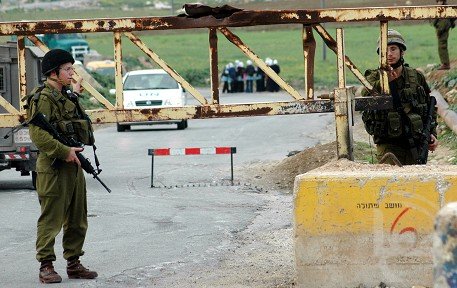
Hebron – Israeli forces piled earth at the northern entrance of Adh-Dhahiriya, closing off the main road to Hebron on Thursday morning, in what town residents said was an attempt to restrict access to roads near settlements.
The Hebron-Dhahiriya road bypasses the Otni’el settlement, established on 150 dunums of privte Palestinian land in 1983, and Adh-Dhahiriya Mayor Sami Eshtanyur said the road overlays the water network of the town.
Eshtanyur told Ma’an the earth piled on the road came from lands adjacent to the major throughway, saying that in the process of the digging forces destroyed pipes to the town, cutting off its water supply.
The mayor said he worried that it would take days to get Israeli permission to bring equipment into the area, zoned Area C under the Oslo accords, and feared the town would be out of water until at least Sunday.
An Israeli military spokeswoman said she had no knowledge of the incident.
Featured Video

New positive ivermectin evidence
or go to
Aletho News Archives – Video-Images
From the Archives
Fanatical Followers of the Covid Regime: A Jim Jones-Style Cult?
By Professor Roger Watson and Dr. Niall McCrae | The Daily Sceptic | November 15, 2021
As scholars at leading British universities over recent decades, we witnessed the replacement of critical thinking and debate by narrative: facts are discrimination and scientific method is imperialism; truth, instead, is derived from ‘progressive’ values. This educational trend may be a major contributory factor to the ease in which society has been inculcated to the Covid ‘new normal’ of masking, testing, and repeated doses of vaccines for a disease of similar risk to severe influenza.
One doesn’t need much critical reasoning to observe the flawed logic of some vaccination enthusiasts, such as people who respond to experiencing any side effects, however debilitating, by saying “at least I know it’s working”, or, after contracting the disease despite their promised inoculation (over 90% effective, according to initial drug company claims), “I’d have been worse off without the jab.” … continue
Blog Roll
 Aletho News
- ‘Grave, alarming’: Iran mission on Trump’s UNGA ‘annihilation’ threats
- Najaf airport to reopen to Iranian flights within 24 hours: Ambassador
- From ‘How Will This End For Iran’ to ‘When America Walks Away’: A tale of two Economist covers
- Tehran blasts ‘baseless’ speculation linking Iran to alleged bomb plot at UK air base
- The Rise And… Rise Of ‘Color Revolutions’
- The Coming GOP Bloodbath?
- Arctic Scare Stories Melt Away
- Wrong, Euronews: Climate Change Has Not Created a Food, Energy, and Economic “Meta-Crisis”
- New positive ivermectin evidence
- Met Office Caught Fabricating Daily Temperature Record Claims
- If Americans Knew
- An error has occurred; the feed is probably down. Try again later.
- No Tricks Zone
- New Study: Earth And Venus Surface Warmth Largely Explained By Convection And Lapse Rate, Not CO2 Or Radiation
- 2025 Nature Paper Claiming Worsening Global Drought Gets RETRACTED …Heavily Flawed
- New Study: ‘Global Drought Shows No Detectable Recent Acceleration Under Climate Warming’
- Economic Masterminds: German Socialists Suggest Taxing Productivity Gains Stemming From Using AI
- The South China Sea Has Not Been Cooperating With The Climate Change Narrative
- Energy Crisis: Germany Enters Heating Season With Historically Low Gas Reserve Fill Levels
- New Study: The Antarctic Ice Sheet Gained Mass From 2020-2024 Due To Staggering Snow And Ice Accumulation
- Study: Ocean Heating Rates From Thousands Of Years Ago ‘Dwarf’ Modern Ocean Heating Rates
- Climate Extremists Target, Attack Large-Scale Power Grid Infrastructure In Germany!
- New Study: Antarctic Ice Melt Has Contributed Less Than 1 Centimeter To Sea Level Rise In The Last 30 Years

