UN Security Council Meeting on Kashmir at China’s Request Postponed Indefinitely
Sputnik – December 17, 2019
A crucial closed-door meeting at the United Nations Security Council (UNSC) on the Kashmir issue has been postponed for a month at least.
The meeting was scheduled on Tuesday to discuss the humanitarian situation in Indian-administered Jammu and Kashmir.
Previously, a first such meeting was held in August this year in the aftermath of India’s decision to revoke the seven decades old special status of Kashmir on 5 August. However, the provisional schedule and daily meetings of the UNSC don’t mention the consultative meeting on Kashmir.
In its August programming schedule, the UNSC clearly mentioned the closed door consultation on India and Pakistan. But in December’s schedule no such meeting is planned. Two diplomats have also confirmed the development.
Currently, the decision to postpone the meeting on Kashmir came ahead of crucial boundary dispute talks between India and China.
India’s National Security Adviser (NSA) Ajit Doval and Chinese Foreign Minister Wang Yi are expected to meet on 20-21 December to stabilise relations and discuss the contentious boundary issues between the two nations during Special Representatives-level talks.
The boundary discussion was stalled for months due to strained relations between the two Asian giants over Kashmir. Beijing termed the Indian decision to revoke the special status of Kashmir as unilateral and impinged upon the sovereignty of China.
The last time the issue of Jammu and Kashmir was on the UNSC agenda was during a meeting on 21 December 1971. It was followed by the adoption of a resolution calling for a durable ceasefire, the halt of all hostilities in conflict areas, and the provision of international assistance to refugees impacted by the territorial dispute.
In a related development, Pakistani Prime Minister Imran Khan has also cancelled his scheduled visit to Malaysia to participate in a meeting on Kashmir.The development comes two days after Khan met with Saudi Crown Prince Mohammad Bin Salman in Riyadh, during which matters related to bilateral relations were discussed.
A summit of Muslim leaders is expected to deliberate upon a shared agenda of Islamic countries and their collective challenges in a highly interconnected world.
India and Pakistan have contended for the Kashmir region, the southern part of which lies in India’s Jammu and Kashmir state (now a union territory), since the end of British rule in 1947. Despite a ceasefire being reached in 2003 following several armed conflicts, instability has continued, leading to the emergence of various extremist groups.
Europe was the main player in destroying Syria and creating the refugee crisis
By Steven Sahiounie | Mideast Discourse | December 14, 2019
Monica Maggioni is an Italian journalist and is CEO of Rai.com, which broadcasts ‘Rai News 24 TV’, among others. She interviewed Syrian President, Bashar al Assad, on November 26, and the interview was to be broadcast on December 2; however, it was mysteriously postponed.
Behind the scenes, at Rai.com there was conflict over the interview, with Fabrizio Salini declaring the interview was not commissioned, therefore it would not be broadcast, while Antonio Di Bella, director of news, declared it was not suitable to be broadcast, and Italian Senator Alberto Airola requested Maggioni to explain her role in the interview and answer charges of creating a diplomatic incident.
What was so explosive in the interview that the Italian news media wanted to hide from the Italian viewers? Many believe it has to do with questions 8 and 9 and President Assad’s response.
Question 8: At this moment, when Europe looks at Syria, apart from the considerations about the country, there are two major issues: one is refugees, and the other one is the Jihadists or foreign fighters coming back to Europe. How do you see these European worries?
President Assad: We have to start with a simple question: who created this problem? Why do you have refugees in Europe? It’s a simple question: because of terrorism that’s being supported by Europe – and of course the United States and Turkey and others – but Europe was the main player in creating chaos in Syria. So, what goes around comes around.
Question 9: Why do you say it was the main player?
President Assad: Because they publicly supported, the EU supported the terrorists in Syria from day one, week one or from the very beginning. They blamed the Syrian government, and some regimes like the French regime sent armaments, they said – one of their officials – I think their Minister of Foreign Affairs, maybe Fabius said: “we send.” They sent armaments; they created this chaos. That’s why a lot of people find it difficult to stay in Syria; millions of people couldn’t live here so they had to get out of Syria.
The US-NATO-EU attack on Syria is unprecedented in history. General Wesley Clark was told there was a plan to ‘take out Syria’ well before the first protests took place in Deraa. This was an internationally coordinated attack on Syria by the US and Europe. This was a classic ‘regime-change’ project, which was instigated between the US and Israel, but agreed to by the EU and NATO members. From the early stages of the conflict in Syria, the US and Europe provided political, military and logistic support to the ‘rebels’ in Syria and refused to call them terrorists. On 18 August 2011, President Barack Obama stated, “The future of Syria must be determined by its people, but President Bashar al-Assad is standing in their way. For the sake of the Syrian people, the time has come for President Assad to step aside.” This US statement was fully supported by Europe.
In 2013 President Assad stated he was ready for dialogue with the armed terrorists, but only if they surrender their weapons. However, the US-NATO-EU plan to support the terrorists never included a peaceful surrender of weapons, followed by a national dialog, which would end in a peaceful solution to the conflict. The plan only called for weapons, training, and European officers to be continuously available to the terrorists, for ‘regime-change’. Europe only wanted to fuel the fires in Syria, and never planned to be the voice of peace and international law.
What was at first billed as ‘rebels’ and ‘freedom fighters’ soon morphed into sectarian extremists and Radical Islamic terrorists who filled the battlefields under many names and uniforms, but who were all essentially the same terrorists. Their names ranged from the ‘Free Syrian Army’ to ISIS. Radical Islam is a political ideology and is not a religion or a sect. Many experts have called Radical Islam a ‘Death-Cult’, which glorifies the killing of unarmed civilians, as well as armed adversaries, even to the point of eating human flesh while recording it on video.
Presidents Obama and Sarkozy convinced the EU to follow their lead. However, the Syrian people and armed forces fought back.
Some of the refugees left Syria for ideological reasons, they sided with the terrorists and followed the Muslim Brotherhood. Others left for Europe because their homes and livelihoods were destroyed by the terrorists, but many were just economic migrants, and had not lost a home, were from safe areas, and perhaps had never seen any fighting, and they left to seek an income from the charity offered to them in the EU.
EU-NATO support of terrorism in Syria
Bulgaria: Boïko Borissov, Prime Minister from 2014, supplied the drug ‘Captagon’ to the terrorists in Syria on orders of the CIA. The drug causes the terrorists to lose inhibitions and while under the influence they are capable of horrific atrocities.
Germany: A ship with intelligence and satellite capabilities was off the coast of Syria providing the terrorists the locations and movements of the Syrian military, as well as intercepted telephone communications. Wolfgang Ischinger, chairman of the Munich Security Conference, said: “If the West supplies arms itself, it has more chance of influencing how they are used.”
Great Britain: British intelligence provided terrorists with information on Syrian military movements. In 2012, SAS Commandos were conducting covert operations within Syrian territory, and provided terrorists with military aid, including communications equipment and medical supplies, and provided intelligence support from its Cyprus bases, revealing Syrian military movements which were passed on to the terrorists. In 2013, Prime Minister David Cameron said that Britain would send weapons to the terrorists. In August 2016, the BBC published photographs that showed British Special Forces soldiers guarding the perimeter of the terrorist’s base at al-Tanf, on the Syria-Iraq border, and the terrorists were shown to be equipped with four-wheel drive Al-Thalab vehicles and weapons such as sniper rifles, anti-tank weapons, and heavy machine guns.
France: The ‘Friends of Syria’ group was initiated by then-French President Nicolas Sarkozy in 2012. They declared their intent to support the terrorists in Syria, “If the regime fails to accept the terms of the political initiative outlined by the Arab League and end violence against citizens, the Friends of Syria should not constrain individual countries from aiding the Syrian opposition by means of military advisers, training, and provision of arms to defend themselves.” In 2013, French President François Hollande said, that France was ready to begin supplying lethal aid to the terrorists, and by 2014 Hollande confirmed that France had delivered arms to the terrorists, and by 2015 had begun airstrikes in Syria.
Italy: On 28 February 2013, the ‘Friends of Syria’ held their meeting in Rome, and among the 11 members were France, Germany, Italy, UK, and the EU. In a study published in 2019, the number of terrorists from Italy who were in Syria numbered 135 as of July 2018.
The EU: in 2013 Brussels decided assistance to the terrorists would include weapons training. Jane’s Defense Weekly reported a US shipment of 994 tons of weapons and ammunition in December 2015 from Eastern Europe to Syrian rebel groups, including 9M17 Fleyta anti-tank missiles, RPG-7s, AK-47S, DShKs, and PKMs. In early March 2013, a Jordanian security source revealed that the U.S., Britain, and France were training terrorists in Jordan to begin building a militia that would take over after Assad’s fall. By 2019, the EU issued a statement about Syria in which they now claim to call for peace and political negotiations to settle the conflict of almost 9 years duration and to have supported humanitarian and economic assistance there. However, when faced with documented history, this statement is a bald-faced lie. The EU position from the outset of the conflict was to support the armed terrorists and to prevent even chemotherapy drugs to be imported to Syria, because of the EU sanctions, which today prevents any possible rebuilding effort.
US & Russia won’t go to war over Syria
By Mikhail Khodarenok | RT | December 15, 2019
To avoid any potential incidents, Americans should simply withdraw and end the unlawful presence of their forces in Syria. And abstain from alarmist headlines foreshadowing a shooting war.
American commanders in Syria are scrambling to protect their forces from an expected surge in activity by military units from Turkey, Russia, Iran and the Syrian government. They believe these countries pose a greater danger than Islamic State (IS, formerly ISIS) forces, the New York Times reports.
Anonymous sources, questionable statements
According to anonymous Department of Defense officials, “commanders have requested guidance outlining how American forces might deal with an attack from the assortment of armed groups, including Russian-backed Syrian government forces that have, in the past, tried to seize territory held by the United States.”
This statement seems fairly questionable, since any commander of a unit deployed to a war zone has clear-cut instructions from their superiors on what to do in a particular situation. Claiming otherwise, especially about an army as organized and efficient as the one the US has, would probably be unjustified from any possible point of view. Naturally, the directives coming from the HQ are top secret. If we assume their content was revealed to the NYT by a military source, the US should first focus on finding who in the DoD is leaking top secret information.
Also according to the NYT, “For now, the American command heavily relies on the instincts of junior commanders on the ground, cautionary phone calls to officials from Russia and Turkey and overhead surveillance — susceptible to failure in poor weather — to help avoid close encounters with other forces in the Euphrates River Valley, where most American troops are based.”
Firstly, it is not only the American command that are taking measures to prevent any incidents. The commanders of the Russian armed forces deployed in Syria are doing the same just as diligently (perhaps even more so). Starting from 2015, both the American and the Russian military command have been doing their best to prevent any clashes on the ground or in the air. To ensure this, special communication channels have been established to facilitate exchange of information regarding combat operations and other activities of the troops.
Secondly, you can never rely on the instincts of junior commanders in matters of such grave importance. If you do, an error of judgment by one of the lieutenants could have disastrous consequences – including an accidental nuclear strike.
Thirdly, all the means and methods of reconnaissance available are usually employed in the combat area: human-gathered intelligence, special reconnaissance, signals intelligence, aerial and space reconnaissance, reconnaissance by special forces. The term “overhead surveillance,” employed by the NYT, is therefore not entirely correct.
No positive agenda
The NYT quotes Jennifer Cafarella, Research Director at the Institute for the Study of War in Washington, as saying that “These forces are at risk without a clear understanding of what they are expected to achieve, and without the political support of their nation, if or more likely when, one of these American adversaries decided to attack them. These guys are deployed in one of the most risky, complex and rapidly evolving environments on the planet.”
I definitely agree with this assessment – combat and operational goals of the American forces in Syria are extremely ambiguous. Even high ranking US officials have a hard time explaining what sort of military and political objectives they are pursuing. The US military presence in Syria has no positive agenda. And the few American units that are stationed in the Syrian Arab Republic right now, are there illegally.
Interestingly enough, the NYT quotes a source in the Defense Department who said that “the Russian military is far more reliable in navigating the difficulties of such a contested battlefield,” whereas Turkish-backed fighters are often poorly managed by the Turkish military.
We have to keep in mind that Turkey is a NATO country and America’s closest ally in the region. And if there are tensions between allies, Ankara and Washington should settle their differences without dragging Russia into it.
It’s not ‘the regime’, it’s the legitimate government
The New York Times also quotes Gen. Kenneth F. McKenzie, the head of the military’s Central Command, who said that protecting the oil fields might ultimately draw a larger challenge from Syrian Army troops west of the Euphrates. “I’d expect at some point the regime will come forward to that ground,” General McKenzie said.
It’s not “the regime.” It’s the legitimate Syrian government’s army. If they “come forward,” they will be coming forward into their own territories.
And the Americans are not really concerned with protecting Syrian oil – they are openly stealing the country’s natural resources. At this point, the Syrian state doesn’t gain anything from these oilfields, which hampers the government’s efforts to restore the economy.
We might expect an interesting situation when the Syrian army and border patrol forces regain total control over the country’s eastern border. And that will happen soon.
Americans will have to find new ways to smuggle the oil
If the Syrian troops reach the eastern border and manage to gain a foothold there, thus giving the Syrian state full control over the nations’ boundaries, it would lead to a curious situation: in order to continue with their oil smuggling operation and retain their profits, the Americans would have to find a different way to export the oil.
Currently, there are only two viable channels – the official route, through Damascus and then over the Mediterranean Sea, and in Syria’s east, through its border with Iraq. But if both routes are controlled by Assad’s forces, the Americans would have to negotiate a new way out with the government in Damascus. Another potential outcome is that the Americans remain in control of Syria’s oil fields and refineries, but unable to export the final product and sell it on the global market.
So, in order to “protect their forces from an expected surge in actions by military units from Turkey, Russia, Iran and the Syrian government,” the US needs to take a radical yet straightforward approach – withdraw from Syria and put an end to America’s illegal presence in the country.
Also, they should probably abstain from heating up the situation in the region by publishing articles that speak of a potential military face-off between Russia and the United States.
Mikhail Khodarenok is a military commentator for RT.com. He is a retired colonel. He served as an officer at the main operational directorate of the General Staff of the Russian Armed Forces.
It’s time for the international community to stop ‘recognising’ Hadi’s ‘government’
By Omar Ahmed | MEMO | December 14, 2019
In spite of having no substantial physical political presence in Yemen, and no formal armed forces on the ground, the media is insistent on running with the same, tired expression of “the internationally recognised legitimate government” of the fugitive president, Abd Rabbuh Mansur Hadi, who has apparently been running the country from the Saudi capital, Riyadh, since he fled Yemen in 2015.
It has now been over a month since the signing of the Riyadh Agreement, which was hailed as ushering in peace in the south, not only among the warring factions of Hadi’s forces, which largely consists of Islamist, Islah militia and Sudanese mercenaries against the Security Belt forces, who are aligned with southern separatists, the Southern Transitional Council (STC), but it was also hoped to simmer down the tension between the patrons of these two parties, Saudi Arabia and the United Arab Emirates (UAE) respectively, both partners in the anti-Houthi coalition in the north, but backing opposing sides in the south.
No longer ‘Iranian proxies’
It was also a month ago that I argued that this agreement will fall flat in its objectives, namely due to the fact that Hadi doesn’t have any concrete authority in Yemen, and the real political legitimacy lies with the National Salvation Government (NSG), which has been ruling the capital Sanaa since 2014. Its power-base was formed from of an alliance between the Ansar Allah movement, the Yemeni military and remnants of the General People’s Congress political party – however the same news outlets who are trying to convince us of the “internationally recognised” government, are the same ones peddling the misleading narrative, that the NSG are merely “Houthi rebels” or “Iranian proxies”, following Tehran’s orders.
Essentially, this agreement stalled the inevitability that the Saudis, and the wider international community, will have to accept the reality that the NSG (“Houthis”) are the legitimate government in Yemen. I am using the past-tense here because the agreement is void and no longer exists – it was signed on 5 November and included a 30-day deadline in forming a new cabinet of 24 members, equally split from the north and south. I concluded with the revelation that the Saudis had acknowledged that they had opened channels of communication with the Houthis.
In fact, a few days following the signing of the accord, the UAE minister of state for Foreign Affairs, Anwar Gargash, conceded that the Houthis will have a role in post-war Yemen. In more recent developments, Saudi foreign minister, Adel Al-Jubeir, has suggestively indicated that the Houthis are in fact, a legitimate entity, stating “all Yemenis, including the Houthis have a role in the future of Yemen.”
It would now appear that the Trump administration has also done an ‘about-face’ on its policy on Yemen, having once framed the conflict as being an Iranian proxy war, they are now trying to downplay Iran’s involvement. Brian Hook, the US special representative for Iran, went from declaring in September that Iran was “controlling and deploying” the Houthis as a “terror front”, to now stating that “Iran clearly does not speak for the Houthis.” I mentioned back in September how this Iranian connection has been exaggerated and misrepresented by the media. One needs only to refer to a 2015 article which stated that Iran, for example, had in fact warned the Zaydi movement against taking over Sanaa. Indeed, the Houthis, as with Lebanon’s Hezbollah, are actually acting independently, albeit with assistance from Tehran.
Who speaks for the south?
The Riyadh Agreement was always problematic from the outset, because although on paper it was plausible, the reality on the ground, in particular in the interim capital city of Aden, was another thing entirely. There are constant reports of violent clashes between Hadi’s mercenaries and the southern separatist forces. Additionally, there has been a steady increase in assassinations across the city, with the STC hinting liability with Hadi’s associates. Hampering conciliatory efforts, the STC are also refusing to vacate the presidential palace in the city. There are also reports that the former president of the Democratic People’s Republic of Yemen, Ali Nasser Mohammed, has warned the STC against plans to seize his home in Aden province, captured by the separatists last July.
It is important to recognise that the STC does not speak for all southerners, nor for the Southern Movement. There is the Southern National Salvation Council (SSC) based in Mahrah, who not only oppose both Saudi and Emirati interference in Yemen, but had opposed the Riyadh Agreement from its inception, noting that “the agreement gives legitimacy to regional militias affiliated abroad,” with reference to the STC.
The director of Human Rights for Yemen, Kim Sharif, explained to MEMO that the SSC is composed of the “original secessionists” and that the STC are widely regarded as a “traitor entity” by most southerners, as they are a party formed by the UAE who are using and exploiting the memory of the South Yemen state.
Illegitimacy of Hadi vs legitimacy of the NSG
Sharif agrees that the Hadi government lacks legitimacy, because following the election where he stood as the sole candidate, he was appointed as president for a transitional period of two years as part of the Gulf Initiative back in February 2012, reluctantly accepted by many, to avoid further bloodshed. Under the initiative, elections were to be held within the transitional period.
However, this failed to materialise and according to Sharif, under Hadi assassinations and terrorist attacks began to increase “funded by the Saudis,” and with a reliance on the Islah Party militia, who have close ties with General Mohsen Al-Ahmar, the vice president whose links to Al-Qaeda are well-documented. Hadi formerly resigned from the presidency in 2015, but has held onto the position ever since, giving him “zero legitimacy”.
“There’s no such thing as an ‘internationally recognised government’ under international law. This is sheer abuse of the terms of the Vienna Convention on diplomatic relations and is a totally unacceptable trespass on the sovereignty of the state of Yemen,” Sharif continued.
Meanwhile, with regards to the legitimacy of the National Salvation Government based in Sanaa, Sharif described the 2014 takeover within the context of the failure by Hadi to carry out elections as per his mandate. Additionally, under International Customary Law, whomever takes control of the capital of any country is considered the “de facto” government. In order for this to be ratified, the government has to become “de jure”. Sharif argues that such a government must first follow an “internal legislation process”, which the Sanaa government has done by preserving national institutions, creating the Supreme Council, which includes all political parties including southern secessionists and operates within the existing constitution.
Furthermore, it is the Yemeni armed forces who are subservient to the NSG, in addition to the “Popular Committee” (Houthi fighters), who are the ones defending the nation against foreign aggression enacted by the Saudi-led coalition. These points and the fact that the NSG entered into the “Tribal Honour Agreement 2015” with all tribes, given that tribal rule still plays a vital role in Yemeni politics, ensures that the NSG based in Sanaa are the legitimate government in Yemen.
Although a southerner, Sharif herself is supportive of the NSG and AnsarAllah, as they have a common goal in liberating Yemen from the foreign aggression and occupation. The ultimate aim being “uniting all factions in the south with a view of freeing Yemen from all foreign occupation.” She is confident that this movement will succeed “in partnership with our brothers and sisters in the north.”
International recognition
The National Salvation Government is not only arguably the legitimate government of Yemen. The Yemeni armed forces and its alliance with AnsarAllah has proven that they are indeed the most powerful entity in the country, with an ever-developing arsenal, they have recently announced an improved air defence system, capable of “neutralising” coalition aircraft up to a projected 90 per cent in the year ahead, which is significant as according to Yemeni military expert, Brigadier General Aziz Rashid, the coalition depends on aircraft for 85 per cent of its operations. They have shot down several drones in the past two weeks, in addition to an Apache helicopter belonging to the Saudis. Just today, at the time of writing, the Yemeni armed forces downed a Saudi spy plane over the Jizan region.
As the Riyadh Agreement gradually fades into obscurity, and the Saudis and its allies begin to sue for peace and pay for the damage that they caused, in the realisation that it is the Houthi government which is the legitimate power and authority in the country, it is high time that the international community start recognising this too, at the expense of the puppet government based in Riyadh headed by Hadi, who effectively has been held in captivity there and does not speak for the Yemeni people nor has control of the armed forces. Peace, stability and an end to the man-made humanitarian crisis is achievable with the help of this international community, who have been delusional for far too long.
READ ALSO:
Houthis: 1,000 children die every day due to Saudi-led aggression
Saudi-backed Yemen government and separatists miss Riyadh Agreement deadline
European taxpayers’ money going to Israeli entities accused of international law violations
MEMO | December 11, 2019
The European Union (EU) is channelling European taxpayers’ money to Israeli entities accused of international law violations, according to a new briefing by human rights campaigners.
The research, carried out by the Brussels-based group European Coordination of Committees and Associations for Palestine (ECCP), was published Tuesday.
“EU research funds have been a very important source of funding for Israeli academics, corporations and state institutions, among them a number of military companies and those involved in illegal Israeli settlements”, stated ECCP in a press release launching ‘EU and Israel: The Case of Complicity’.
“For many years European and Palestinian civil society and human rights organisations have been raising concerns over European taxpayers’ money being channelled to Israeli companies and institutions accused of war crimes and involved in violations of international law and human rights”.
According to ECCP, even at the same time as the EU has been criticising Israeli actions over the years in the occupied Palestinian territory, the body has also been “funding the very companies that sustain these unlawful activities”.
Thus, the human rights campaigners add, “when it comes to Israel the EU continues to violate its own directives and commitments to international law by funding Israeli complicit entities at the expense of Palestinians”.
In one example cited in the research, as part of the last funding cycle known as ‘Horizon 2020’, two of Israel’s largest military companies – Elbit Systems and Israeli Aerospace Industry – received almost 10 million Euros of European taxpayers’ money.
Although Israel is not an EU country, Israeli applicants have been able to access EU research funds on the same basis as member states since 1995 through the EU-Israel Association Agreement.
“While Israel, as the Occupying Power, bears the main responsibility to ensure respect for international law and human rights of the occupied Palestinian population”, ECCP states, “third states which are not party to the conflict, such as the EU and its member states, also have an obligation to not aid, assist or recognise bodies that violate international law”.
Hebron Plan is Israel’s Reminder to Palestinians that Settler Power knows no Limits
Proposed destruction of Hebron’s market to make way for a new settlement is Israeli government’s route to refashion its apartheid system as the rule of law
By Jonathon Cook | The National | December 10, 2019
US President Donald Trump told thousands of Israel’s supporters at a rally in Florida at the weekend that some American Jews “don’t love Israel enough”. It is certainly troubling that a US president insists a section of his country’s citizens – the Jewish population – be required to love a foreign state. But then Trump went further, muddying the waters about what constitutes “Israel”.
Echoing remarks made last month by Mike Pompeo, his secretary of state, he described the Jewish settlements in the West Bank as legal – thereby subverting a long-established principle of international law.
US Jews – and the rest of us, it seems – are expected not only to love Israel inside its internationally recognised borders but also to love the Jewish settlements that international law designates as a war crime. Those are the same settlements eating up ever more of the territory supposed to form the basis of a Palestinian state.
When Trump, like his predecessors, told his weekend audience that the US shared an “unbreakable” bond with Israel, what exactly was the “Israel” he referred to? Both the US and Israel have implied in recent declarations and actions that a central plank of the long-delayed Trump peace plan will be Israel’s annexation of the settlements – and with them most of the West Bank.
“Loving Israel” now is meant to include abandoning any hope of Palestinian statehood and accepting that Palestinians will live permanently under an Israeli version of apartheid, with inferior rights to Jews.
The Trump administration seems keen to press ahead with the peace plan – and annexation – but is being hampered by political chaos in Israel.
Mired in corruption scandals and having staged two inconclusive elections this year, Benjamin Netanyahu, the caretaker prime minister, is unable to cobble together a coalition to keep himself in power. The impasse is not over the occupation or the settlements but about who gets to dominate the next government: far-right religious settlers led by Netanyahu or right-wing, secular former army generals?
Nonetheless, Netanyahu is behaving as if Washington has given its blessing to annexation – even without a US peace plan.
That was what Pompeo’s statement last month backing the settlements amounted to. He offered one paltry safeguard, investing responsibility for monitoring and limiting settlement expansion in Israel’s supreme court. But this is the same court that has consistently failed to block settlement growth over five decades. It now includes two judges who actually live in settlements, as well as others who sympathise politically with the settlement project.
Meanwhile, in preparation for a likely third election campaign, the interim Netanyahu government has announced a splurge of new settlement building and boosted settler budgets.
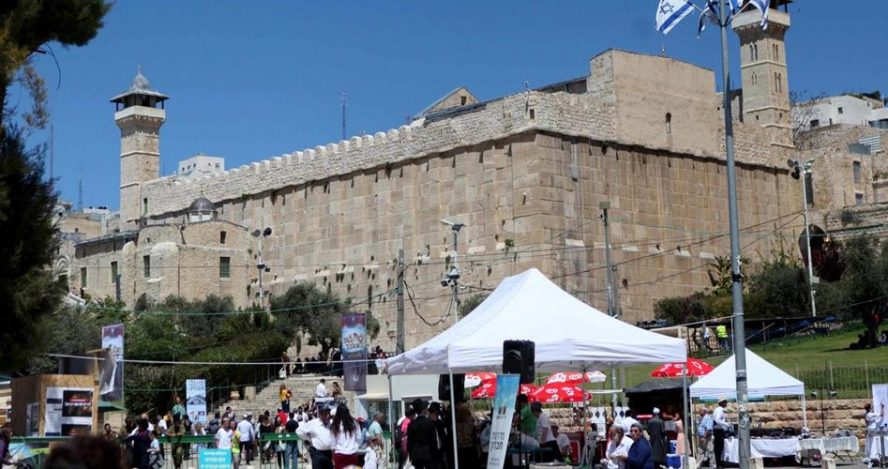
In another fillip for the settlers last month, Netanyahu appointed one of their leaders, Naftali Bennett, to the sensitive role of defence minister. Bennett lost no time in unveiling his latest settlement plan last week, selecting an incendiary spot greatly prized by the settlers: the middle of Hebron, the West Bank’s largest Palestinian city.
For decades, life for Hebron’s 230,000 Palestinians has been forced to a virtual standstill by a few hundred Jewish religious extremists who have taken over the city centre, backed by more than 1,000 Israeli soldiers. Their ultimate goal is to wrestle away the city’s Ibrahimi mosque, the reputed burial site of Abraham, father of the world’s three main monotheistic religions.
After Baruch Goldstein, a settler, shot dead and wounded some 150 Muslim worshippers in 1994, Israel rewarded the settlers twice over.
First, it segregated the mosque site, splitting it into two. Half is now the Jewish Tomb of the Patriarchs. But in practice the Israeli army enjoys absolute control over who can pray there.
And next, Israel declared the surrounding area, including Hebron’s main commercial market, a closed military zone, thereby forcing the Palestinian merchants out. It has been a ghost town ever since, serving as a passageway between the settlement enclaves and the mosque.
For years, the closed market has stood as a potent, silent symbol of the way Israel has been tearing the city apart.
In February, Netanyahu gave the settlers another boost. He shuttered the international observer mission in Hebron, there to witness and record the abuse of Palestinians, especially at the checkpoints that litter the city centre. But still the settlers were not satisfied. They have long wanted to take over the Hebron market for themselves, to expand their enclaves.
So last week, Bennett granted their wish. He announced plans to destroy the market to make way for a settlement serving effectively as a bridge between the existing enclaves and the mosque site. The plan will double the number of settlers in Hebron and complete a wall of Jewish settlement dividing the city in two. This week Palestinian leaders called a citywide strike in protest.
As ever, the Israeli government has tried to put a surreal legal gloss on its criminality, apparently to spare the blushes of its US and European allies. Bennett’s advisers have insisted that Israel has legal title to the air above the roofs of the empty shops. This is where the settlers will supposedly be housed, after the shops have been demolished and rebuilt to support the new apartment blocks.
It emerged this week that Bennett had threatened Hebron’s municipality, warning it would lose property rights to the shops area too if it did not consent to the settler homes above.
Israel is reminding Palestinians that there are now no limits – military, legal, moral or diplomatic – to the settlers’ power. Israel will annex land where it chooses and deceptively refashion the resulting apartheid system as the rule of law.
The material losses to the Palestinians from Israel’s ever-growing settlement enterprise are devastating enough. This month, the United Nations Conference on Trade and Development issued a report estimating conservatively that the past 17 years of occupation alone had cost the Palestinians a whopping $48 billion – three times the current size of its economy.
That income would have generated two million job opportunities, freeing Palestinians from a miserable choice between life without work and, if they are issued a permit by Israel, precarious, exploitative casual labour in Israel or the settlements.
Equally significantly, the ever-expanding settlements have stripped Palestinians of their most basic freedoms, such as movement, and undermined their security and right to be treated with dignity.
And no one ought to love that.
Belgian Trade Delegation to Israel Cancelled
IMEMC & Agencies – December 7, 2019
The trade mission would have taken place from the 8th to the 11th of December, will not go forward, due to criticism from the political opposition and several activist organizations, leading to its discontinuation, the Palestine News Network (PNN) reported.
The delegation would have consisted of representatives from the Walloon and Brussels governments, which are separate political entities in Belgium, and numerous companies from the respective regions.
The Walloon government had already withdrawn from the delegation at an earlier stage, but now the Brussels government has done the same, effectively leaving the rest of the mission without political representation.
In the last couple of weeks, the general criticism towards the trade mission has grown. Specifically Israel’s disregard for international agreements concerning the blockade of the Gaza Strip, sparked the opposition’s distaste for the mission.
“We’re talking about participating in the Israeli colonization policy,”
said Stéphanie Koplowicz, member of the Flemish left-wing PVDA-party.
“The UN Human Rights Comittee has complained that over 200 companies do business in these illegal settlements. Does the government want to encourage Brussels’ companies to participate in this?”
Only 19.7% of Americans agree with US State Dept on Israeli settlements
IRmep Poll: “International law SHOULD APPLY to Israel’s military occupation & colonization of the West Bank, Golan Heights, E. Jerusalem and displacement of their indigenous populations. Do you Disagree or Agree?”
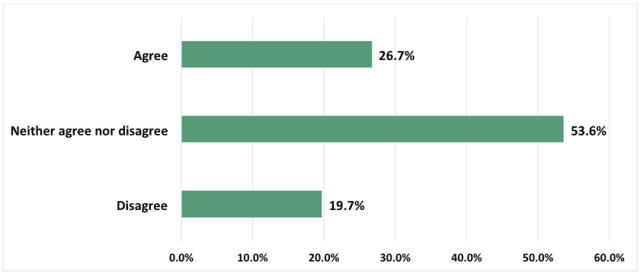
More than 80 percent of Americans seem unwilling to let Israel reinterpret international law to suit its colonialist agenda.
By Grant F. Smith | IRmep Polls
IRmep representative public opinion poll of 2,034 American adults through Google Surveys on November 20-22. Answer order randomly reversed.
Most American adults of voting age don’t appear willing to reject the applicability of international law to Israel’s ongoing colonization of occupied territories in East Jerusalem, the West Bank and Golan Heights.
On Monday, November 18, U.S. Secretary of State Mike Pompeo reversed a 1978 State Department legal opinion stating that Israeli settlements were “inconsistent with international law.” Citing President Ronald Reagan’s 1981 assessment that the settlements were not “inherently illegal,” Pompeo stated that, “After carefully studying all sides of the legal debate… the establishment of Israeli civilian settlements in the West Bank is not, per se, inconsistent with international law.”
The Trump administration relocated the U.S. Embassy from Tel Aviv to Jerusalem in 2018 and recognized the city as the capital of Israel. This most recent announcement is yet another blow to rule of law and international consensus. However, when polled, 53.6 percent of Americans don’t yet appear ready to register any concrete view on the matter. This may be due to the longstanding absence of serious U.S. mass media coverage of historical and legal issues. In other countries, informed and ongoing international legal analysis is the norm. Given that reality, it is surprising that 26.7 percent of Americans believe international law still applies, while only 19.7 percent believe it does not.
In a Nov. 21 letter sent to Pompeo, 107 House Democrats condemned the State Department’s recent decision on settlements.
Grant F. Smith is the director of the Institute for Research: Middle Eastern Policy in Washington, DC. For more IRmep polls, visit https://IRmep.org/Polls.
UK Blasted as ‘Illegal Colonial Occupier’ After Skipping UN Deadline Over Chagos Islands
Sputnik – November 22, 2019
Mauritian Prime Minister Pravind Jugnauth has branded Britain an illegal colonial occupier after the country failed to meet a UN deadline to hand over an overseas territory to Mauritius, a former British colony in the Indian Ocean, BBC reported.
The country claims it was forced to trade the Chagos Islands in exchange for sovereignty, with the UK purchasing them for £3 million in 1965, when Mauritius was still under British rule.
Earlier this year, the UN general assembly voted by an overwhelming majority of 116-6 in favour of the motion demanding that the islands, Britain’s last remaining African territory, be reunited with Mauritius. However, the UK refused to regard the UN motion as binding.
“We have no doubt about our sovereignty over the British Indian Ocean Territory, which has been under continuous British sovereignty since 1814″, a Foreign Office spokesperson said adding the African country has “never held sovereignty over the archipelago”.
According to the press service, the territory will remain under British control until “it is no longer needed for defence purposes”.
Trump Accepts Israeli ‘Realities on Ground’ – Realities Funded by His Administration
By Finian Cunningham | Strategic Culture Foundation | November 21, 2019
US Secretary of State Mike Pompeo this week announced yet another radical shift in Washington’s policy towards the Israeli-Palestinian conflict, by way of saying that the United States “was accepting realities on the ground”.
What the mendacious and cynical Pompeo omits to add is that the Trump administration has been dramatically fueling the change in “realities” – specifically the expansion of illegal Israeli settlements on Palestinian territory and the demolition of Palestinian homes.
This week the top US diplomat declared that Washington would no longer adopt the international consensus position, backed by several UN resolutions, that Israeli settlement-building and occupation of Palestinian territory was a violation of international law. Washington is henceforth recognizing Israeli settlements as legitimate.
The move overturns more than four decades of official US policy which adhered to the UN-backed position of condemning Israeli occupation in the Palestinian West Bank and in East Jerusalem as illegal and a violation of the Geneva Convention.
Since the 1967 Six War, successive Israeli governments have overseen a relentless process of annexing Palestinian territory. Over that period, Palestinian lands have diminished and become increasingly fragmented with little contiguity that would be normal for a future state. There are estimated to be around 200 Israeli new-build settlements of towns and villages with a population of 600,000 Jewish settlers who have usurped Palestinian land and properties. The UN has repeatedly condemned the annexation and occupation as illegal, to no avail.
The latest move by the Trump administration is a flagrant repudiation of UN resolutions and international law. It follows previous declarations by President Trump recognizing Israeli claims to Jerusalem as its capital, as well as Israel’s annexation of Syrian territory in the Golan Heights.
“Calling the establishment of civilian settlements inconsistent with international law has not advanced the cause of peace,” said Pompeo on Monday. “The hard truth is that there will never be a judicial resolution to the conflict, and arguments about who is right and who is wrong as a matter of international law will not bring peace.”
That is an astounding dereliction of international law by the American government. The “hard truth” that Pompeo ignores is that US administrations have constantly undermined “judicial resolution of the conflict” because they have, to varying degrees, over the decades pandered to Israeli criminal occupation of Palestinian lands.
What the Trump administration is doing is not entirely unprecedented. Successive American presidents have merely paid lip service to a supposed peace process between Israelis and Palestinians, declaring their support for a “two-state solution” and presenting Washington as some kind of “honest broker”. The reality is that Washington has consistently undermined Palestinian national rights by its systematic bias towards Israel, indulging the latter’s criminal policies of occupation and military aggression towards Palestinian population.
However, Trump and his coterie of Middle East aides have taken the American bias and complicity with Israel to naked levels. Part of that is no doubt payback for the multi-million-dollar funding of Trump’s 2016 election campaign by Jewish-American billionaire and arch-Zionist Sheldon Adelson.
Israeli peace groups have recorded a surge in Israeli expansion of settlements across the West Bank and East Jerusalem over the past three years of the Trump administration. Demolition of Palestinian homes by Israeli bulldozers are at a record high.
There is an imperative business reason for this. President Donald Trump has personally invested in Israeli settlements, as have his ambassador to Israel David Friedman, and the White House’s special envoy to the region, Jared Kushner, Trump’s son-in-law.
One of those settlements is at Beit El which is described as “one of the most aggressive” in terms of expansionist scope. It overlooks the Palestinian city of Ramallah in the West Bank which is supposed to be the administrative seat of the Palestinian Authority.
Trump, Friedman and the Kushner family have in the past funneled millions of dollars into Beit El and other Israeli settlements. In return, Israeli financial companies have made huge investments in Jared Kushner’s family real-estate business back in the US. For example, Menora Mivtachim, a pension and insurance firm, invested $30 million in apartments in Maryland owned by the Kushner family.
Jared Kushner officially stepped away from his family’s property conglomerate when he was appointed by his father-in-law as special envoy on the Middle East “peace process”. But few would believe his future wealth will not benefit from investments in and from Israel. He is still a beneficiary of trusts that have holdings in Kushner properties, notes Haaretz newspaper.
It seems incredible given this blatant conflict of interest that Kushner has been tasked with producing a “peace plan” for the Israeli-Palestinian conflict, which Trump had previously boasted about as being the “deal of the century”. That plan has since wilted to non-existence. The media don’t even talk about its expected publication, so far off the radar is it.
The latest move by the Trump administration to effectively reward and accelerate further Israeli occupation of Palestinian territory has American self-interest and profit written all over it. It mirrors Trump’s declaration in March this year recognizing the Golan Heights as Israeli territory, where there is irrefutable evidence that Trump and the Zionist clique in the White House have major business interests in oil exploration and production in that contested region.
Russia warned this week that Washington’s policy is inflaming further conflict amid an intensification of air strikes by Israel on Gaza where more than 30 people have been killed over the past week, including one Palestinian family of three adults and five children. The bloodshed makes Pompeo’s announcement all the more repulsive.
The Arab League and the European Union have also condemned the unilateral rejection of international law by the US. Jordan, Egypt and other Arab states said the United States has forfeited its right to act as a peace broker in the region.
The “reality on the ground” – to use a talking point favored by Israeli leader Benjamin Netanyahu and now Mike Pompeo – is that the US is an accomplice in Israel’s illegal occupation and war crimes. Even more heinous, the US policy is being driven by Trump’s family business profits.
UN Security Council members strongly condemn Trump’s support for Israeli settlements
Press TV – November 21, 2019
The European Union, Russia, China and other members of the UN Security Council on Wednesday strongly opposed the US announcement that it no longer considers Israeli settlements in the occupied West Bank to be a violation of international law.
Nickolay Mladenov, the UN special coordinator for the Middle East peace process, opened the Security Council meeting, expressing “regret” at the US action and reiterating the UN position that settlements under a December 2016 council resolution “are a flagrant violation under international law.”
Indonesian Ambassador Dian Triansyah Djani, whose country has the world’s largest Muslim population, called the US announcement “irresponsible and provocative,” saying it “incontrovertibly constitutes a de facto annexation and is a barrier to peace efforts based on the two-state solution.”
Following the Security Council meeting, ambassadors from the 10 non-permanent council members who serve two-year terms stood before reporters while Deputy German Ambassador Jurgen Shultz read a critical joint statement.
“Israeli settlement activities are illegal, erode the viability of the two-state solution and undermine the prospect for a just, lasting and comprehensive peace” as affirmed by the 2016 council resolution, the statement said.
It also called on Israel to end all settlement activity and expressed concern at calls for possible annexation of areas in the West Bank.
Kuwaiti Ambassador Mansour al-Otaibi, the Arab representative on the council, then told reporters that 14 countries agreed in the private session on the press statement.
Palestinian Ambassador Riyad Mansour also said he was grateful to the 14 council nations and their commitment to international law, saying that all 193 UN member nations are required to implement all Security Council resolutions, including on the illegality of all settlements.
“The US administration once again makes another illegal announcement on Israeli settlements in order to sabotage any chance to achieve peace, security and stability in our region and for our people,” Mansour said.
“We strongly reject and condemn this unlawful and irresponsible declaration; we consider it to be null legally, politically, historically and morally.”
Before the meeting, British Ambassador to the UN Karen Pierce had told reporters that “all settlement activity is illegal under international law and it erodes the viability of the two-state solution and the prospects for a lasting peace.”
She was speaking on behalf of Germany, France, Poland, Belgium and Britain, the EU’s current Security Council members.
The meeting was held two days after an announcement by Secretary of State Mike Pompeo reversed a four-decade-old US position on illegal settlements in the occupied Palestinian territories. The move was welcomed by Israel but drew condemnation from Palestinians and Arab leaders.
The shift has been widely interpreted as a green light for Israeli settlement building in the occupied West Bank.
Trump Goes to Israel: Another Settler from the United States?
By Philip Giraldi | American Herald tribune | November 19, 2019
President Donald Trump’s lack of any precision when he speaks or tweets sometimes means that multiple meanings can be construed from what he chooses to say or write. At a private gathering last week in which he was wooing potential Orthodox Jewish donors, he responded to a blessing from a rabbi with what he thought to be a joke. Fighting for his political life in the middle of an impeachment process, he observed that if things do no go well in the United States, he could always move to Israel and run for office, saying “if anything happens here, I’m taking a trip over to Israel. I’ll be prime minister.”
The fund-raiser at the Intercontinental Hotel in Manhattan was arranged by the America First Super PAC. Trump’s son-in-law and principal adviser Jared Kushner and his special representative for international negotiations Avi Berkowitz, both Orthodox Jews, also were in attendance. Numerous Trump supporters were present in the ballroom and began shouting out “Four more years!” when the president rose to speak. Rabbi Y.Y. Jacobson offered a blessing, saying “Blessed are you, our Lord, King of the universe, that you have shared of your glory and love and compassion with a human being who maintains the honor of every innocent person and Jew. Thank you, amen.”
The Trump joke appeared to be based on media reports that he enjoys an approval rating of 98% among Jewish voters in Israel, the only country in the world where he has a favorable rating. And he was also presumably referring to the fact that Israel has had two deadlocked elections and may be heading for a third due to the fact that neither Benjamin Netanyahu nor his opponent Benny Gantz seems able to pull together a governing coalition. Trump quipped in his usual self-serving fashion, “What kind of a system is it over there, right, with Bibi? They’re all fighting and fighting. We have different kinds of fights, but at least we know who the boss is. They keep having elections, and nobody’s elected.”
The president also spent some time affirming his complete support for the Jewish state, citing how it was at that moment defending itself from missile attacks coming from the Palestinian Islamic Jihad group and Hamas in Gaza. He also recalled for the potential donors his unilateral (and illegal) recognition of Israeli sovereignty over the occupied Golan Heights and his decision to withdraw from the Joint Comprehensive Plan of Action (JCPOA) agreement limiting Iran’s nuclear program. As expected, the audience cheered.
Also, in a statement that should offend and serve as a wake-up call for all of America’s remaining Arab friends, Trump described how he was able to move the U.S. Embassy from Tel Aviv to Jerusalem. He claimed that when he received calls from Arab leaders objecting to the proposed shift, he refused to speak to them, saying to his aides “Just tell them I’m very busy, I’ll call them back. And then I did it, we got it done, it’s done. And then I announced it, and then I went into the office, I made about 25 calls…. I said, ‘Don’t worry about it, it’s done already; there’s nothing I could do about it.’ It’s much easier. I say, ‘I’m sorry, I wish I could have gotten back to you sooner.’”
So, on the surface it was a complete rah-rah evening among friends, saying wonderful things about Israel and dumb things about Arabs while also bringing in $4 million in donations from the Orthodox Jewish businessmen who made up most of the audience. But at the same time, the Trump remark about moving to Israel and being elected prime minister can be construed as having a darker meaning as Israel is, in fact, a settler state that illegally has dispossessed the original residents of the country and replaced them. Foreign Jews can move to Israel and become citizens automatically under the “law of return” but the people who used to live on that land cannot go to their homes. Trump, who joked about moving and becoming Israeli, described in his usual caustic, off-hand fashion the racist reality of the Jewish state.
Donald Trump might not have been in such a humorous mood if he had considered the fact that while he is wildly popular in Israel because he gives the Israeli Jews everything they want, he continues to be mistrusted and not very well received by American Jews, who continue to vote for and provide most of the funding for the Democratic Party. Some Israelis and many American Zionists have even come to the conclusion that Trump is not to be relied upon when he pledges total support for the Jewish state. They point to the recent White House decision to pull out of Syria, which was made in consultation with Turkey, which the Israelis regard as a hostile power, and without any input from Israel. The fact that Trump then reversed himself also has been noted as characteristic of his basic unreliability.
Some Israelis and their think tank associates in the United States have also expressed particular concern over the fact that Trump and Netanyahu, who still heads the interim government, have not even spoken over the phone in weeks. As Trump’s policy making style is best described as impulsive, there is concern that he will make bad decisions from the Israeli perspective. It is often noted that the Administration’s desire to confront Iran appears to have waned and will probably be even less evident as the 2020 election approaches. Some observers have also cited the example of the betrayal of the Kurds, suggesting that Trump might be inclined to abandon Israel and its other allies in the Middle East in the same fashion.
To be sure, Donald Trump has done everything possible to pander to American Zionists and to Israelis and it is clear that he considers Jews to be a group that has to be courted, if only due to their influence over the media and their willingness to donate large sums to political causes. Israeli concerns that he will pull the plug on them are overstated to put it mildly given their control over Congress and the media. As long as casino magnate Sheldon Adelson continues to be willing to donate $100 million to the GOP every two years, the status quo is guaranteed. But there remains a long-term problem due to the fact that American Jews are overwhelmingly politically liberal and they do not like Trump, no matter what he does for Israel. And Adelson is reported to be in poor health. If he dies and the cash flow dies with him, Trump’s view of Israel just might change dramatically.
Featured Video
Trita Parsi: Israel Set a Trap for Total War in the Region
or go to
Aletho News Archives – Video-Images
From the Archive
Zionism’s Violent Legacy
By Donald Neff | Washington Report On Middle East Affairs | January 1996
On January 4, 1948, Jewish terrorists drove a truck loaded with explosives into the center of the all Arab city of Jaffa and detonated it, killing 26 and wounding around 100 Palestinian men, women and children.[1] The attack was the work of the Irgun Zvai Leumi – the “National Military Organization,” also known by the Hebrew letters Etzel – the largest Jewish terrorist group in Palestine. The Irgun was headed by Revisionist Zionist Menachem Begin and had been killing and maiming Arabs, Britons and even Jews for the previous ten years in its efforts to establish a Jewish state.
This terror campaign meant that at the core of Revisionist Zionism there existed a philosophical embrace of violence. … continue
Blog Roll
 Aletho News
- Trita Parsi: Israel Set a Trap for Total War in the Region
- Trump’s Iran war is on an Israeli leash
- Saudi oil boss issues global supply warning
- Riyadh Says Its Oil System Is Intact. The Numbers Say Otherwise.
- Trump and Netanyahu Want to “Finish the Job” on Iran
- US ‘one-sided dictation’ not Iran’s beliefs makes rational talks impossible: Baghaei
- Iran’s Next Strike May Not Explode. It Could Shut You Down /Col Doug Macgregor
- Iran: US political targets legitimate if assassinations return
- Iraq shuts key border crossing with Iran under US pressure: Report
- Undersea Internet cables could be targeted in retaliation for attacks on Iran: IRGC deputy chief
- If Americans Knew
- The Israel Lobby’s Changing Fortunes
- AIPAC has become such a political liability that it’s shifting to a more “nimble” approach to buying politicians
- At least 160 Israeli settler attacks in 2 weeks
- Will Gaza’s Ancient Christian Community Disappear Forever?
- Israel’s vision of regional security rests on keeping Arab states weak
- Heidi Levine recounts how Palestinian youths helped save her in settler attack
- DAILY UPDATE: Latest essential news on Palestine, Israel, & region
- Trump’s Intensifying Sabotage of the ICC, for Israel’s Sake
- Israeli military detain US and UK volunteers in West Bank including Democratic NY politician Brad Lander
- Americans at National Conservatism Conference held in Israel this year criticize Israel
- No Tricks Zone
- E-Cars Reduce CO2 Emissions By Only 41% Compared To Internal Combustion Engine Vehicles
- Predictions Made By Renowned Climate Professor Over Past Decades Have Been Proven To Be Poor
- New Study Suggests Large Regions Of The Pacific Ocean Have Been Cooling For The Last 80 Years
- Germany’s Green Energy Debacle: High Energy Costs Force Kahla Porzellan to Close After 182 Years!
- New Study: 50 Years Of The Most Aggressive ‘Net Zero’ Policies Can Only Affect The Global Climate By 0.03°C
- US September “Heat” Was No Record…Many Records Set Decades Ago
- Latest European Green Energy Debacle; Portugal’s Largest Flagship Solar Park Insolvent!
- Green Energy Debacle: German Expert Professor Fritz Vahrenholt Warns Of Severe Economic And Social Consequences
- Two More Paleo Reconstructions Affirm Meters-Higher Sea Levels Across Ireland, Brazil 7000-6000 Years Ago
- New Study: Earth And Venus Surface Warmth Largely Explained By Convection And Lapse Rate, Not CO2 Or Radiation

