About a decade ago, I got a Netflix subscription and was amazed that the Internet now provided immediate access to so many thousands of movies on my own computer screen. But after a week or two of heavy use and the creation of a long watch-list of prospective films I’d always wanted to see, my workload gained the upper hand, and I mostly abandoned the system.
Back then, nearly all Netflix content was licensed from the major studios and depending upon contract negotiations might annually disappear, so when I happened to browse my account again in December, I noticed that a couple of films on my selection list included warning notices saying they would no longer be available on January 1st. One of these was Oliver Stone’s famous 1991 film JFK, which had provoked quite a stir at the time, so thinking now or never, I clicked the Play button, and spent three hours that evening watching the Oscar winner.
Most of the plot seemed bizarre and outlandish to me, with the president’s killing in Dallas supposedly having been organized by a cabal of militantly anti-Communist homosexuals, somehow connected with both the CIA and the mafia, but based in New Orleans. Kevin Costner starred as a crusading District Attorney named Jim Garrison—presumably fictional—whose investigation broke the assassination conspiracy wide open before the subtle tentacles of the Deep State finally managed to squelch his prosecution; or at least that’s what I vaguely remember from my single viewing. With so many implausible elements, the film confirmed my belief in the wild imagination of Hollywood scriptwriters and also demonstrated why no one with any common sense had ever taken seriously those ridiculous “JFK conspiracy theories.”
Despite its dramatic turns, the true circumstances of President John F. Kennedy’s death seemed an island of sanity by comparison. Lee Harvey Oswald, a disgruntled young marine had defected to the USSR in 1959 and finding life behind the Iron Curtain equally unsatisfactory, returned to America a couple of years later. Still having confused Marxist sympathies, he’d joined public protests supporting Fidel Castro’s Cuba, and gradually turning toward violence, purchased a mail-order rifle. During the presidential visit, he had fired three shots from the Dallas School Book Depository, killing JFK, and was quickly apprehended by the local police. Soon, he too was dead, shot by an outraged Kennedy supporter named Jack Ruby. All these sad facts were later confirmed by the Warren Commission in DC, presided over by the U.S. Chief Justice together with some of America’s most respected public figures, and their voluminous report ran nearly 900 pages.
Yet although the film seemed to have affixed an enormous mass of incoherent fictional lunacy on top of that basic history—why would a murder plot in Dallas have been organized in New Orleans, five hundred miles distant?—one single detail troubled me. Garrison is shown denouncing the “lone gunman theory” for claiming that a single bullet was responsible for seven separate wounds in President Kennedy and Texas Gov. John Connolly, seated beside him in the limousine. Now inventing gay CIA assassins seems pretty standard Hollywood fare, but I found it unlikely that anyone would ever insert a fictional detail so wildly implausible as that bullet’s trajectory. A week or so later, the memory popped into my head, and I googled around a bit, discovering to my total astonishment that the seven-wounds-from-one-bullet claim was totally factual, and indeed constituted an absolutely essential element of the orthodox “single gunman” framework given that Oswald had fired at most three shots. So that was the so-called “Magic Bullet” I’d occasionally seen conspiracy-nuts ranting and raving about. For the first time in my entire life, I started to wonder whether maybe, just maybe there actually had been some sort of conspiracy behind the most famous assassination in modern world history.
Any conspirators had surely died of old age many years or even decades earlier and I was completely preoccupied with my own work, so investigating the strange circumstances of JFK’s death was hardly a high personal priority. But the suspicions remained in the back of my mind as I diligently read my New York Times and Wall Street Journal every morning while periodically browsing less reputable websites during the afternoon and evening. And as a result, I now began noticing little items buried here and there that I would have previously ignored or immediately dismissed, and these strengthened my newly emerging curiosity.
Among other things, occasional references reminded me that I’d previously seen my newspapers discuss a couple of newly released JFK books in rather respectful terms, which had surprised me a bit at the time. One of them, still generating discussion, was JFK and the Unspeakable published in 2008 by James W. Douglass, whose name meant nothing to me. And the other, which I hadn’t originally realized trafficked in any assassination conspiracies, was David Talbot’s 2007 Brothers: The Hidden History of the Kennedy Years, focused on the relationship between John F. Kennedy and his younger brother Robert. Talbot’s name was also somewhat familiar to me as the founder of Salon.com and a well-regarded if liberal-leaning journalist.
None of us have expertise in all areas, so sensible people must regularly delegate their judgment to credible third-parties, relying upon others to distinguish sense from nonsense. Since my knowledge of the JFK assassination was nil, I decided that two recent books attracting newspaper coverage might be a good place to start. So perhaps a couple of years after watching that Oliver Stone film, I cleared some time in my schedule, and spent a few days carefully reading the combined thousand pages of text.
I was stunned at what I immediately discovered. Not only was the evidence of a “conspiracy” absolutely overwhelming, but whereas I’d always assumed that only kooks doubted the official story, I instead discovered that a long list of the most powerful people near the top of the American government and in the best position to know had been privately convinced of such a “conspiracy,” in many cases from almost the very beginning.
The Talbot book especially impressed me, being based on over 150 personal interviews and released by The Free Press, a highly reputable publisher. Although he applied a considerable hagiographic gloss to the Kennedys, his narrative was compellingly written, with numerous gripping scenes. But while such packaging surely helped to explain some of the favorable treatment from reviewers and how he had managed to produce a national bestseller in a seemingly long-depleted field, for me the packaging was much less important than the product itself.
To the extent that notions of a JFK conspiracy had ever crossed my mind, I’d considered the argument from silence absolutely conclusive. Surely if there had been the slightest doubt of the “lone gunman” conclusion endorsed by the Warren Commission, Attorney-General Robert Kennedy would have launched a full investigation to avenge his slain brother.
But as Talbot so effectively demonstrates, the reality of the political situation was entirely different. Robert Kennedy may have begun that fatal morning widely regarded as the second most powerful man in the country, but the moment his brother was dead and his bitter personal enemy Lyndon Johnson sworn in as the new president, his governmental authority almost immediately ebbed away. Longtime FBI Director J. Edgar Hoover, who had been his hostile subordinate, probably scheduled for removal in JFK’s second term, immediately became contemptuous and unresponsive to his requests. Having lost all his control over the levels of power, Robert Kennedy lacked any ability to conduct a serious investigation.
According to numerous personal interviews, he had almost immediately concluded that his brother had been struck down at the hands of an organized group, very likely including elements from within the U.S. government itself, but he could do nothing about the situation. As he regularly confided to close associates, his hope at the age of 38 was to reach the White House himself at some future date, and with his hands once again upon the levels of power then uncover his brother’s killers and bring them to justice. But until that day, he could do nothing, and any unsubstantiated accusations he made would be totally disastrous both for national unity and for his own personal credibility. So for years, he was forced to nod his head and publicly acquiesce to the official story of his brother’s inexplicable assassination at the hands of a lone nut, a fairy tale publicly endorsed by nearly the entire political establishment, and this situation deeply gnawed at him. Moreover, his own seeming acceptance of that story was often interpreted by others, not least in the media, as his wholehearted endorsement.
Although discovering Robert Kennedy’s true beliefs was a crucial revelation in the Talbot book, there were many others. At most three shots had allegedly come from Oswald’s rifle, but Roy Kellerman, the Secret Service agent in the passenger seat of JFK’s limousine, was sure there had been more than that, and to the end of his life always believed there had been additional shooters. Gov. Connolly, seated next to JFK and severely wounded in the attack, had exactly the same opinion. CIA Director John McCone was equally convinced that there had been multiple shooters. Across the pages of Talbot’s book, I learned that dozens of prominent, well-connected individuals privately expressed extreme skepticism towards the official “lone gunman theory” of the Warren Commission, although such doubts were very rarely made in public or on the record.
For a variety of complex reasons, the leading national media organs—the commanding heights of “Our American Pravda”—almost immediately endorsed the “lone gunman theory” and with some exceptions generally maintained that stance throughout the next half-century. With few prominent critics willing to publicly dispute that idea and a strong media tendency to ignore or minimize those exceptions, casual observers such as myself had generally received a severely distorted view of the situation.
If the first two dozen pages of the Talbot book completely overturned my understanding of the JFK assassination, I found the closing section almost equally shocking. With the Vietnam War as a political millstone about his neck, President Johnson decided not to seek reelection in 1968, opening the door to a last minute entry into the Democratic race by Robert Kennedy, who overcame considerable odds to win some important primaries. Then on June 4, 1968, he carried gigantic winner-take-all California, placing him on an easy path to the nomination and the presidency itself, at which point he would finally be in a position to fully investigate his brother’s assassination. But minutes after his victory speech, he was shot and fatally wounded, allegedly by another lone gunman, this time a disoriented Palestinian immigrant named Sirhan Sirhan, supposedly outraged over Kennedy’s pro-Israel public positions although these were no different than those expressed by most other political candidates in America.
All this was well known to me. However, I had not known that powder burns later proved that the fatal bullet had been fired directly behind Kennedy’s head from a distance of three inches or less although Sirhan was standing several feet in front of him. Furthermore, eyewitness testimony and acoustic evidence indicated that at least twelve bullets were fired although Sirhan’s revolver could hold only eight, and a combination of these factors led longtime LA Coroner Dr. Thomas Naguchi, who conducted the autopsy, to claim in his 1983 memoir that there was likely a second gunman. Meanwhile, eyewitnesses also reported seeing a security guard with his gun drawn standing right behind Kennedy during the attack, and that individual happened to have a deep political hatred of the Kennedys. The police investigators seemed uninterested in these highly suspicious elements, none of which came to light during the trial. With two Kennedy brothers now dead, neither any surviving member of the family nor most of their allies and retainers had any desire to investigate the details of this latest assassination, and in a number of cases they soon moved overseas, abandoning the country entirely. JFK’s widow Jackie confided in friends that she was terrified for the lives of her children, and quickly married Aristotle Onassis, a Greek billionaire, whom she felt would be able to protect them.
Talbot also devotes a chapter to the late 1960s prosecution efforts of New Orleans DA Jim Garrison, which had been the central plot of the JFK film, and I was stunned to discover that the script was almost entirely based on real life events rather than Hollywood fantasy. This even extended to its bizarre cast of assassination conspiracy suspects, mostly fanatically anti-Communist Kennedy-haters with CIA and organized crime ties, some of whom were indeed prominent members of the New Orleans gay demimonde. Sometimes real life is far stranger than fiction.
Taken as a whole, I found Talbot’s narrative quite convincing, at least with respect to demonstrating the existence of a substantial conspiracy behind the fatal event.
Others certainly had the same reaction, with the august pages of The New York TimesSunday Book Review carrying the strongly favorable reaction of presidential historian Alan Brinkley. As the Allan Nevins Professor of History and Provost of Columbia University, Brinkley is as mainstream and respectable an academic scholar as might be imagined and he characterized Talbot as
the latest of many intelligent critics who have set out to demolish the tottering credibility of the Warren Commission and draw attention to evidence of a broad and terrible conspiracy that lay behind the assassination of John Kennedy — and perhaps the murder of Robert Kennedy as well.
The other book by Douglass, released a year later, covered much the same ground and came to roughly similar conclusions, with substantial overlap but also including major additional elements drawn from the enormous volume of extremely suspicious material unearthed over the decades by diligent JFK researchers. Once again, the often bitter Cold War era conflict between JFK and various much harder-line elements of his government over Cuba, Russia, and Vietnam is sketched out as the likely explanation for his death.
Summarizing a half-century of conspiracy research, the Talbot and Douglass books together provide a wealth of persuasive evidence that elements of organized crime, individuals with CIA connections, and anti-Castro Cubans were probably participants in the assassination plot. Oswald seems to have been working with various anti-Communist groups and also had significant connections to U.S. intelligence, while his purported Marxism was merely a very thin disguise. With regard to the assassination itself, he was exactly the “patsy” he publicly claimed to be, and very likely never fired a single shot. Meanwhile, Jack Ruby had a long history of ties to organized crime, and surely killed Oswald to shut his mouth.
Many others may have suffered a similar fate. Conspirators daring enough to strike at the president of the United States would hardly balk at using lethal means to protect themselves from the consequences of their action, and over the years a considerable number of individuals associated with the case in one way or another came to untimely ends.
Less than a year after the assassination, JFK mistress Mary Meyer, the ex-wife of high-ranking CIA official Cord Meyer, was found shot to death in a Washington DC street-killing with no indications of attempted robbery or rape, and the case was never solved. Immediately afterwards, CIA counterintelligence chief James Jesus Angelton was caught breaking into her home in search of her personal diary, which he later claimed to have destroyed.
Dorothy Kilgallen was a nationally-syndicated newspaper columnist and television personality, and she managed to wrangle an exclusive interview with Jack Ruby, later boasting to her friends that she would break the JFK assassination case wide open in her new book, producing the biggest scoop of her career. Instead, she was found dead in her Upper East Side townhouse, having apparently succumbed to an overdose of alcohol and sleeping pills, with both the draft text and the notes to her Jack Ruby chapter missing.
Shortly before Jim Garrison filed his assassination charges, his top suspect David Ferrie was found dead at age 48, possibly of natural causes, though the DA suspected foul play.
During the mid-1970s, the House Select Committee on Assassinations held a series of high-profile hearings to reopen and investigate the case, and two of the witnesses called were high-ranking mafia figures Sam Giancana and Johnny Rosselli, widely suspected of having been connected with the assassination. The former was shot to death in the basement of his home one week before he was scheduled to testify, and the body of the latter was found in an oil-drum floating in the waters off Miami after he had been subpoenaed for an additional appearance.
These were merely a few of the highest-profile individuals with a connection to the Dallas assassination whose lives were cut short in the years that followed, and although the deaths may have been purely coincidental, the full list is rather a long one.
Having read a couple of books that completely upended my settled beliefs about a central event of twentieth century America, I simply didn’t know what to think. Over the years, my own writings had put me on friendly terms with a well-connected individual whom I considered a member of the elite establishment, and whose intelligence and judgment had always seemed extremely solid. So I decided to very gingerly raise the subject with him, and see whether he had ever doubted the “lone gunman” orthodoxy. To my total astonishment, he explained that as far back as the early 1990s, he’d become absolutely convinced in the reality of a “JFK conspiracy” and over the years had quietly devoured a huge number of the books in that field, but had never breathed a word in public lest his credibility be ruined and his political effectiveness destroyed.
A second friend, a veteran journalist known for his remarkably courageous stands on certain controversial topics, provided almost exactly the same response to my inquiry. For decades, he’d been almost 100% sure that JFK had died in a conspiracy, but once again had never written a word on the topic for fear that his influence would immediately collapse.
If these two individuals were even remotely representative, I began to wonder whether a considerable fraction, perhaps even a majority, of the respectable establishment had long harbored private beliefs about the JFK assassination that were absolutely contrary to the seemingly uniform verdict presented in the media. But with every such respectable voice keeping so silent, I had never once suspected a thing.
Few other revelations in recent years have so totally overturned my understanding of the framework of reality. Even a year or two later, I still found it very difficult to wrap my head around the concept, as I described in another note to that well-connected friend of mine:
BTW, I hate to keep harping on it, but every time I consider the implications of the JFK matter I’m just more and more astonished.
The president of the US. The heir to one of the wealthiest and most powerful families in America. His brother the top law enforcement officer in the country. Ben Bradlee, one of his closest friends, the fearless crusading editor of one of the nation’s most influential media outlets. As America’s first Catholic president, the sacred icon of many millions of Irish, Italian, and Hispanic families. Greatly beloved by top Hollywood people and many leading intellectuals.
His assassination ranks as one of the most shocking and dramatic events of the 20th century, inspiring hundreds of books and tens of thousands of news stories and articles, examining every conceivable detail. The argument from MSM silence always seemed absolutely conclusive to me.
From childhood, it’s always been obvious to me that the MSM is completely dishonest about certain things and over the last dozen years I’ve become extremely suspicious about a whole range of other issues. But if you’d asked me a couple of years ago whether JFK was killed by a conspiracy, I would have said “well, anything’s possible, but I’m 99% sure there’s absolutely no substantial evidence pointing in that direction since the MSM would surely have headlined it a million times over.”
Was there really a First World War? Well, I’ve always assumed there was, but who really knows?….
Our reality is shaped by the media, but what the media presents is often determined by complex forces rather than by the factual evidence in front of their eyes. And the lessons of the JFK assassination may provide some important insights into this situation.
A president was dead and soon afterward his supposed lone assassin suffered the same fate, producing a tidy story with a convenient endpoint. Raising doubts or focusing on contrary evidence might open doors better kept shut, perhaps endangering national unity or even risking nuclear war if the trail seemed to lead overseas. The highest law enforcement officer in the country was the slain president’s own brother, and since he seemed to fully accept that simple framework, what responsible journalist or editor would be willing to go against it? What American center of power or influence had any strong interest in opposing that official narrative?
Certainly there was immediate and total skepticism overseas, with few foreign leaders ever believing the story, and figures such as Nikita Khrushchev, Charles DeGaulle, and Fidel Castro all immediately concluded that a political plot had been responsible for Kennedy’s elimination. Mainstream media outlets in France and the rest of Western Europe were equally skeptical of the “lone gunman theory,” and some of the most important early criticism of U.S. government claims was produced by Thomas Burnett, an expatriate American writing for one of the largest French newsweeklies. But in pre-Internet days, only the tiniest sliver of the American public had regular access to such foreign publications, and their impact upon domestic opinion would have been nil.
Perhaps instead of asking ourselves why the “lone gunman” story was accepted, we should instead be asking why it was ever vigorously challenged, during an era when media control was extremely centralized in establishmentarian hands.
Oddly enough, the answer may lie in the determination of a single individual named Mark Lane, a left-liberal New York City attorney and Democratic Party activist. Although JFK assassination books eventually numbered in the thousands and the resulting conspiracy theories roiled American public life throughout the 1960s and 1970s, without his initial involvement matters might have followed a drastically different trajectory.
From the very first, Lane had been skeptical of the official story, and less than a month after the killing, The National Guardian, a small left-wing national newspaper, published his 10,000 word critique, highlighting major flaws in the “lone gunman theory.” Although his piece had been rejected by every other national periodical, the public interest was enormous, and once the entire edition sold out, thousands of extra copies were printed in pamphlet form. Lane even rented a theater in New York City, and for several months gave public lectures to packed audiences.
After the Warren Commission issued its completely contrary official verdict, he began working on a manuscript, and although he faced enormous obstacles in finding an American publisher, once Rush to Judgment appeared, it spent a remarkable two years on the national bestseller lists, easily reaching the #1 spot. Such tremendous economic success naturally persuaded a host of other authors to follow suit, and an entire genre was soon established. Lane later published A Citizens Dissent recounting his early struggles to break the total American “media blackout” against anyone contradicting the official conclusion. Against all odds, he had succeeded in sparking a massive popular uprising sharply challenging the narrative of the establishment.
According to Talbot, “By late 1966, it was becoming impossible for the establishment media to stick with the official story” and the November 25, 1966 edition of Life Magazine, then at the absolute height of its national influence, carried the remarkable cover story “Did Oswald Act Alone?” with the conclusion that he probably did not. The next month , The New York Times announced it was forming a special task force to investigate the assassination. These elements were to merge with the media furor soon surrounding the Garrison investigation that began the following year, an investigation that enlisted Lane as an active participant. However, behind the scenes a powerful media counterattack was also being launched at this same time.
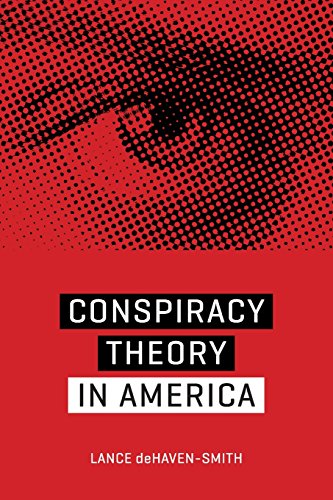
In 2013 Prof. Lance deHaven-Smith, past president of the Florida Political Science Association, published Conspiracy Theory in America, a fascinating exploration of the history of the concept and the likely origins of the term itself. He noted that during 1966 the CIA had become alarmed at the growing national skepticism of the Warren Commission findings, especially once the public began turning its suspicious eyes toward the intelligence agency itself. Therefore, in January 1967 top CIA officials distributed a memo to all their local stations, directing them to employ their media assets and elite contacts to refute such criticism by various arguments, notably including an emphasis on Robert Kennedy’s supposed endorsement of the “lone gunman” conclusion.
This memo, obtained by a later FOIA request, repeatedly used the term “conspiracy” in a highly negative sense, suggesting that “conspiracy theories” and “conspiracy theorists” be portrayed as irresponsible and irrational. And as I wrote in 2016,
Soon afterward, there suddenly appeared statements in the media making those exact points, with some of the wording, arguments, and patterns of usage closely matching those CIA guidelines. The result was a huge spike in the pejorative use of the phrase, which spread throughout the American media, with the residual impact continuing right down to the present day.
This possible cause-and-effect relationship is supported by other evidence. Shortly after leaving The Washington Post in 1977, famed Watergate journalist Carl Bernstein published a 25,000 word Rolling Stonecover story entitled “The CIA and the Media” revealing that during the previous quarter century over 400 American journalists had secretly carried out assignments for the CIA according to documents on file at the headquarters of that organization. This influence project, known as “Operation Mockingbird,” had allegedly been launched near the end of the 1940s by high-ranking CIA official Frank Wisner, and included editors and publishers situated at the very top of the mainstream media hierarchy.
For whatever reason, by the time I came of age and began following the national media in the late 1970s, the JFK story had become very old news, and all the newspapers and magazines I read provided the very strong impression that the “conspiracy theories” surrounding the assassination were total nonsense, long since debunked, and only of interest to kooks on the ideological fringe. I was certainly aware of the enormous profusion of popular conspiracy books, but I never had the slightest interest in looking at any of them. America’s political establishment and its close media allies had outlasted the popular rebellion, and the name “Mark Lane” meant almost nothing to me, except vaguely as some sort of fringe-nut, who very occasionally rated a mention in my mainstream newspapers, receiving the sort of treatment accorded to Scientologists or UFO activists.
Oddly enough, Talbot’s treatment of Lane was also rather dismissive, recognizing his crucial early role in preventing the official narrative from quickly hardening into concrete, but also emphasizing his abrasive personality, and almost entirely ignoring his important later work on the issue, perhaps because so much of it had been conducted on the political fringe. Robert Kennedy and his close allies had similarly boycotted Lane’s work from the very first, regarding him as a meddlesome gadfly, but perhaps also ashamed that he was asking the questions and doing the work that they themselves were so unwilling to undertake at the time. Douglass’s 500 page book scarcely even mentions Lane.
Reading a couple of Lane’s books, I was quite impressed by the enormous role he had seemingly played in the JFK assassination story, but I also wondered how much of my impression may have been due to the exaggerations of a possible self-promoter. Then, on May 13, 2016 I opened my New York Times and found nearly a full page obituary devoted to Lane’s death at age 89, the sort of treatment these days reserved for only the highest-ranking U.S. Senators or major rap stars. And the 1,500 words were absolutely glowing, portraying Lane as a solitary, heroic figure struggling for decades to reveal the truth of the JFK assassination conspiracy against an entire political and media establishment seeking to suppress it.
I read this as a deep apology by America’s national newspaper of record. President John F. Kennedy was indeed killed by a conspiracy, and we are sorry we spent more than a half century suppressing that truth and ridiculing those who uncovered it.
Both leaders arrived in Singapore, with significant excitement greeting them. Trump, arriving from a bitter G7 meeting, after which he attacked Justin Trudeau personally, flew into Singapore on Sunday, June 10, as did Kim Jong-un, who took serious precautions in his travel arrangements. By this point Trump had already significantly lowered expectations, saying that it would just be a meeting where the two leaders got to start a dialogue: “at least we’ll have met each other, we’ll have seen each other; hopefully, we’ll have liked each other. We’ll start that process….But I think it will take a little bit of time”. The lowered expectations might have been well advised. The usual appeal to authority that is the now customary wail of panic-striken, discredited elites, was evidenced by the scorn heaped on the work of Dennis Rodman, for not being a “professional”—when his work was fundamental to laying the groundwork for the peace talks. Others, with a longer and more considered view of history, pointed out that, “The history of U.S. foreign policy is littered with unsuccessful presidential summits, even when they have been preceded by months of careful preparation and infused by a coherent strategy and clear objectives set by a well-informed and experienced president”.
An Historic Encounter
Just the fact of meeting and talking was significant enough: already there was evidence that the campaign of “maximum pressure” was over and not likely to come back. Sanctions on North Korea were already being loosened, tested, and plans made for a future after the talks. In the meantime, clearly in a deep, quiet panic over the summit, Fox News saturated its coverage with talking heads offering Trump advice from a distance, hoping to pressure him—including advising flatly undiplomatic and plainly rude tactics such as not shaking Kim Jong-un’s hand, or preventing photographs of the two leaders together.
The Summit, televised live around the planet, wrapped up in the the afternoon on Tuesday, June 12 (Singapore time), with the final event being an extended press conference by Donald Trump, and the release of the text of the agreement jointly signed by Kim Jong-un and Donald Trump. Also released was the video, “A Story of Opportunity,” prepared by the US side and shown in person to Kim Jong-un, which offered the progressivist American vision of the future.
(See Trump’s 12 tweets on the summit here: 1, 2, 3, 4, 5, 6, 7, 8, 9, 10, 11, 12.)
Early reactions, including one from a former CIA expert, was that “denuclearization,” the way the US envisaged, is not what the Summit agreement affirmed. Others held that at the very least the Summit was a real turning point, that averted war and began a peace process; also set to rest was the trope that Kim and Trump are “madmen”.
“The joint declaration specifies no timeline for denuclearization nor it does have steps to verify disarmament. It also refers to denuclearization on the entire Korean Peninsula—Pyongyang’s preferred phrasing—and does not include the words ‘verifiable’ and ‘irreversible’ despite months of U.S. statements. Trump also agreed to something North Korea has sought for years: the suspension of joint U.S.-South Korean military exercises”.
In some key respects, Trump’s concessions matched what had long been the position of Russia and China (both of which were keen to formally rejoin negotiations on Korea): that the US freeze war games in return for North Korea suspending testing nuclear weapons. The double-freeze approach finally won. In addition, one outcome of the Summit was that China was now pressing for sanctions to be eased, almost immediately, with Trump acknowledging—without criticism on his part—that China had already eroded sanctions enforcement over the last few months. Kim and Trump also promised to personally visit each other’s capitals in the near future.
Another assessment saw the Summit as a victory for all of Korea, and the signed document as simply an aspirational declaration and not an agreement on denuclearization as such:
“The North Korean side played its cards exceptionally well. It built its capabilities under enormous pressure and used it to elevate the country to a real player on the international stage. The ‘maximum pressure’ sanction campaign against it is now defused. China, Russia and South Korea will again trade with North Korea. In pressing for an early summit Trump defused a conflict that otherwise might have ruined his presidency. The losers, for now, are the hawks in Japan, South Korea and Washington who tried their best to prevent this to happen. The winners are the people of Korea, Kim Jong-un and Donald Trump. Special prizes go to President Moon Jae-in of South Korea and to Dennis Rodman who did their best to make this happen”.
Others offered well-informed analysis by individuals who were intimately involved in negotiations with North Korea and who argue that North Korea is not intending to “get away” with keeping its nuclear weapons, but that the North instead has real reasons for wanting to denuclearize. The argument here is that North Korea developed nuclear weapons to entice the US to the negotiating table, in order to end the Korean War, remove all sanctions, offer diplomatic recognition, and ending the US military threat to North Korea. In addition, a rapprochement with the US would allow North Korea to diversify its foreign relations, not remaining exclusively dependent on China, when North Korea has traditionally preferred independence. Another view is that the Summit simply resulted in a momentary stabilization. Yet, as Pepe Escobar noted, “by reaffirming the Panmunjom Declaration, the US President has committed to bringing its military back from South Korea and thus a complete denuclearization of the South as well as the North”. The accusation by liberal media was that, somehow, Trump managed to get nothing at all from the summit with Kim Jong-un—though even within this line of attack, there were some thoughtful pieces that at least addressed the facts of the summit in detail, with some showing how one could still take a Democratic, anti-Trump line and yet concede the significant value of the Summit.
US Domestic Politics and Trump’s Foreign Policy
In terms of domestic politics, it became evident that for any country to deal with the US—whether friend or foe—it would enter into a dangerously unreliable relationship: the pattern has now been set where one party’s international agreements are automatically decried, and then rescinded, by the opposing party. While many Republicans praised Trump on North Korea, they viscerally rejected Obama’s similar advances with Cuba and Iran. Likewise, while all for peace with Iran and good relations with Cuba, Democrats reacted as belligerently imperialist war hawks on North Korea, with liberals validating neconservatives and war-mongers. For both parties then, imperialism remains a tool to be used in domestic competition, and it is thus continually reproduced and validated.
Within just 12 hours of the close of the Summit, mainstream media in the US began to move the event off the front pages of their sites (most notably Reuters, where one had to dig to find any report on the event). This fact alone suggested that the anti-Trump opposition itself saw the event as a success, or there would be little to begrudge Trump. However, the opposition was much more serious than that. While only four months earlier much of the media celebrated the role played by Kim Jong-un’s sister at the Winter Olympics in South Korea, and how she diplomatically bested Mike Pence—now the media gave vent to denunciations of North Korea’s “brutality” and “human rights atrocities”. This was an opportunistic use of “human rights,” instrumentalizing allegations of human suffering to score political points at home. This was also domestically-driven virtue signalling at the expense of North Korea—when historically the number one killer of North Koreans has been the US itself, having destroyed every city in the North during the Korean War, while killing at least one out of every nine persons. Current sanctions have also exacted a toll on ordinary North Koreans—so much for the “human rights” lobby. The position was also bizarre for excluding the danger of nuclear war from the scope of “human rights”. If “human rights” do not include the right not to suffer a catastrophic nuclear apocalypse, then surely the concept is of little weight and even less merit, and should probably not be a significant concern. Opposition to Trump was also expressed in terms of resentment of parity shown to North Korea at the Summit, as if anything short of the public humiliation of North Korea on the world stage was somehow a sign of American “weakness,” of “unilateral concessions,” and of course, of Trump’s personal failure. Anything that might show North Korea in a more dignified light than the usual barbarian, torture state, was depicted as mere propaganda.
Similar reasoning could be found in articles such as one in The New Yorker, which reacted with alarm at rumours of Trump wanting a summit with Vladmir Putin. First, why the resort to rumours? Trump has always been very public and very explicit about his desire to meet Putin for a full one-on-one dialogue. There is no mystery about it, and any attempt to make it sound mysterious is an attempt to make it appear sinister. Second, the underlying tone of the article is that Trump is “unbound,” manifesting the continued disregard for the legitimate election of Donald Trump to office, such that he should not be allowed to command—like a president would do. Third, The New Yorker’s Susan B. Glasser is clearly projecting her faction’s anti-Russian hysteria onto Europe—forgetting that it was the US which pressured Europe into anti-Russian sanctions that hurt European economies, and which few European nations want to continue.
One charitable way to look at this situation would follow these lines: “Washington is a liberal town and the media rush to defend the status quo when it’s threatened by an interloper. When outsiders intervene, their influence declines”. Another approach would be a critique of how accusations that Trump is in “bonding sessions” with “brutal dictators,” are the liberal-left’s way of extending, translating, and reinforcing its inherent racism, by maximizing such racist attitudes on the world stage while pretending to challenge racism in discrete social pockets at home.
Rubbing Their Faces In It
On the other hand, Trump really succeeded in taking neoconservatives, professionals in the corporate-funded and government-backed human rights industry, the liberal imperialist media, and vigorously rubbing their faces with his foreign policy. Though many in the corporate media had—just in February—produced articles laced with praise for Kim Yo-jong (the sister of North Korea’s Kim Jong-un) because she had diplomatically upended Mike Pence—now that Trump’s relations with North Korea turned in a positive direction, the media reversed polarity and switched to denunciations of the “brutality” of the North Korean “dictator,” in terms as shrill as they were opportunistic. To add more context to this, Trump declared that it was not North Korea that was the enemy of the US, instead: “Our Country’s biggest enemy is the Fake News”. Remember that within the media some wanted Trump to avoid even shaking hands with Kim Jong-un, at the Summit itself of all places and times—when he did, some called it “disconcerting”. In their faces, Trump rubbed the following admiration for Kim Jong-un: “he is the strong head….He speaks, and his people sit up at attention”. Trump praised Kim Jong-un in no uncertain terms: “He’s smart, loves his people, he loves his country” and that, “really, he’s got a great personality”. On his own relationship with Kim Jong-un, Trump affirmed: “I think we have a very good relationship. We understand each other” and “I think he trusts me and I trust him”. From the start of the Summit, Trump said he and Kim, “got along very well”. In response to charges that Kim Jong-un is a “human rights violator,” Trump’s responses included: “Look, he’s doing what he’s seen done….He’s a tough guy,” adding in another interview, “he has to be a rough guy or he has to be a rough person,” and in another, “he’s a strong guy”. Kim Jong-un, charged by an interviewer with doing some “really bad things,” got this response from Trump: “Yeah, but so have a lot of other people have done some really bad things”. On Kim’s stance regarding his fellow citizens, Trump stated: “I think you have somebody that has a great feeling for them”. Trump added: “He’s a funny guy, he’s very smart, he’s a great negotiator. He loves his people, not that I’m surprised by that, but he loves his people”. In return, the North Korean people love Kim: “His country does love him—his people, you see…the fervor, they have a great fervor”. About saluting a North Korean general at the summit, Trump stated simply: “I met a general. He saluted me. I saluted him back. I guess they’re using that as another sound bite. I think I’m being respectful to the general”. To top it all off, Trump added to his statement about ceasing war games with South Korea, saying he would like to also withdraw all US troops from South Korea: “I would love to get the military out as soon as we can because it costs a lot of money and a lot of money for us. I would like to get them home. I would like to”. Then Trump cheerfully assessed the outcome of his own efforts: “I did a great job this weekend”.
WASHINGTON – Donald Trump’s own National Security Adviser John Bolton, the Democratic Party and the US mainstream media were all trying to derail the US president’s new agreement with North Korean leader Kim Jong-un, analysts told Sputnik.
On June 12, Trump and Kim met on the Singaporean island of Sentosa and signed a document showing their commitment to establish new bilateral relations and build a lasting peace on the Korean Peninsula. Trump also agreed to halt US-South Korea military exercises near the Korean peninsula, while Kim reiterated his country’s commitment to denuclearization.
The Democratic Party in the United States and the media establishment that supported them were cooperating closely to try and discredit Trump’s peace initiative in Korea, University of Illinois Professor of International Law Francis Boyle said.
“As the ancient Chinese proverb says, a journey of 1,000 miles begins with a single step, a very positive and encouraging step,” Boyle said. “Regretfully, it [the Singapore agreement] has pretty much been trashed by the Democrats and the mainstream US media who are in cahoots with them.”
The Democrats’ hostility to the new dialogue with Pyongyang flowed directly from their strategy in trying to discredit Trump over the past two years, Boyle pointed out.
“The Democratic strategy has been to bash Trump from the right. That goes back two years now to the conventions that nominated Trump and Hillary Clinton as their parties’ candidates,” he said.
The spectacle of the US media ganging up against the president when he was trying to resolve a potentially dangerous conflict was a depressing one, Boyle commented.
“All these newspapers condemning President Trump, it’s just unimaginably sad,” he said.
The media and the Democrats were misrepresenting Trump’s talks with Kim by falsely alleging that the US president had caved in by agreeing to talk to him when in fact Trump was just fulfilling the obligations placed upon him by the United Nations Charter which the US has signed, Boyle explained.
“Trump did not give Kim Jong-un an unnecessary concession. All he did was fulfill the commitment required of him or any US leader to hold such negotiations that is in the United Nations Charter,” he said.
Under Article 23 of the UN Charter there is a requirement for President Trump to have negotiations with North Korea which he did, Boyle recalled.
“Article 33 clearly requires ‘negotiations’ to maintain international peace and security,” he added.
Far from failing to make any progress, Trump had succeeded in getting Kim’s assent to giving the new negotiating process a promising beginning, Boyle observed.
“Trump did get a commitment on complete denuclearization of the Korean peninsula so that’s a good start. It incorporates the Panmunjom Declaration between Chairman Kim and President Moon. It’s a good start. I’m moderately encouraged,” he said.
Trump Rejected Bolton’s Parallel Between Libya, North Korea Talks
Boyle warned that the talks faced another major threat because National Security Adviser John Bolton was likely to try and undermine them.
“Bolton is a hard-line neoconservative (neocon) who publicly bragged about having sabotaged the process [of negotiations] with North Korea. He tried to sabotage these negotiations by going public and saying we are going to go the Libya route,” he said.
Last month, Bolton commented that the US denuclearization talks with North Korea would follow the pattern of previous talks to eliminate weapons of mass destruction in Libya. However, several years after Libya agreed to scrap such programs, its ruler Muammar Gaddafi was overthrown in a West-backed rebellion and murdered.
Trump contradicted Bolton and said that model of negotiations with Libya would not apply to North Korea.
Boyle said Bolton was highly intelligent and knew what he was doing when he made such remarks or and when he had encouraged Vice President Mike Pence to make similar ones.
“Bolton is a smart guy. He is a very cunning operator in the bureaucracy. I’m afraid Bolton will try to sabotage the negotiations. He has brought his own hardline people on to the National Security Council. I’m afraid that he will do what he can behind the scenes to sabotage this thing,” he said.
Boyle said he believed Trump needed to fire Bolton and select a new national security adviser who was committed to trying to make the negotiations with North Korea succeed.
“If Trump were smart I think he would fire Bolton and bring in a realpolitik-er,” he said.
Even if the talks with North Korea went well, they would take many months and several years, Boyle cautioned.
“This is going to be a long process. The administration people have conceded to the New York Times that it will take at least two years… However, following the summit, there is momentum,” Boyle concluded.
Military Establishment Tries to Hold on to US Bases in Asia-Pacific
Retired US Army Colonel and historian Doug Macgregor agreed that the Washington establishment opposed Trump’s efforts to achieve a lasting peace agreement with North Korea.
“The swamp [the establishment] will now fight the inevitable withdrawal of US ground troops from Korea because it will lead to the removal of the Marines from Okinawa as well,” Macgregor said.
Trump had made the mistake of surrounding himself with super-hawk figures like Bolton when he needed other kinds of officials who would support his peace plans, Macgregor cautioned.
“President Trump’s current defense [national security] team won’t help him! To achieve his aims the President will need to make new appointments,” he said.
However, the US public felt no commitment to running risks of full-scale war on the Korean peninsula and would support an agreement that could end the US military presence there, Macgregor advised.
“The mood and attitude of the political class in Washington is reminiscent of London’s attitude toward leaving India after World War II,” Macgregor said.
Like the British people then, the American people support the departure, Macgregor added.
The Kremlin is not aware of a meeting between former aide from US President Donald Trump’s election headquarters Roger Stone and a man from Russia, who called himself Henry Greenberg and allegedly offered Trump’s team compromising data on his then-rival Hillary Clinton in 2016, Kremlin spokesman Dmitry Peskov said Monday.
“I cannot say anything, I am not aware of this… These nuances are completely unknown to us and we know nothing about the issue,” Peskov told reporters when asked to comment on the publication.
On Sunday, The Washington Post reported that Trump’s election headquarters in 2016 denied Greenberg $2 million for the “dirt” on Clinton. The newspaper confirmed that Greenberg was an FBI informant until 2013, but found no evidence that he continued this activity after 2013.
Stone told the publication that another staffer, Michael Caputo, arranged for him to meet with a certain “Russian,” who offered to pay him $2 million in exchange for compromising material on Clinton. His offer was rejected.
The Washington Post interpreted the refusal of Trump’s staff to pay money for this information as another suspicious “contact with the Russians.” In total, the newspaper counted 11 campaign officials who “contacted the Russians” in some capacity.
Special Counsel Mueller is investigating the alleged connections between Trump and Russia, which are denied both by the Kremlin and the White House. Trump has said in the past that his political enemies had been conducting an investigation against him during the presidential race together with intelligence officials. Trump has called the investigation a “witch hunt.”
Norwegian historian and Russia specialist Bjorn Nystad explains how his country’s political class, media, academics and filmmakers have artificially pumped up a fear of its eastern neighbor.
Oslo has opted to violate its own established practice of refusing to station foreign troops on the country’s soil during peacetime, and is more than doubling the number of US marines stationed in Norway from 330 to 700, and providing bases for US surveillance aircraft and fighter jets. The Marines will be moved from Trondheim, about 1,500 km from the Russian border, to the northern county of Troms, about 300 km from Norway’s border with Russia.
Opposition lawmakers slammed the government for failing to put the issue up for debate in parliament. Social Left Party leader Audun Lysbakken complained this week that more US troops would only “increase the tension,” in the region. “It’s sad that the government believes it is in Norway’s interest to say yes to whatever the US is asking for,” he said.
Speaking to Sputnik, Dr. Bjorn Nystad, a former University of Oslo professor who lost his job in 2010 over alleged “Russophilic views,” said that the growing US military presence is taking place against the background of a steady campaign of spreading anti-Russian sentiments in the Norwegian media.
The latest manifestation of this anti-Russian paranoia occurred this week, when the NRK and TV 2 broadcasters decided to head to the World Cup with brand new laptops and phones out of fear of being “monitored” or “cyberattacked” while in Russia.
Nystad believes these anti-Russian attitudes are being injected into the Norwegian consciousness from above. “It’s enough, for example, to write an article about Putin being a ‘dictator’, or something like that, and you will get a job at a university without any problems,” he said. The professor’s own 2016 biography on Putin was met with hostility, with Aftenposten’s editor describing it as a “dangerous rewriting of history.”
There are many in Norway who have a neutral attitude toward Russia, Nystad said, but they fear running into trouble with the established narrative. “Academics, experts, and journalists understand very well that if they say something ‘wrong’ about Russia, they could lose their jobs. Therefore everyone avoids running into conflict with authorities,” he noted.
Okkupert
Probably the “pinnacle” of the anti-Russian campaign is the widely publicized TV series Okkupert (Occupied), whose storyline features Russia occupying Norway in response to a Europe-wide energy crisis. The most expensive television series in Norway’s history, Okkupert has been picked up for a third season.
“For some part of the population, these kinds of series probably have an effect,” Nystad noted. But others understand that this is “stupidity and anti-Russian propaganda,” he added. “People are losing trust in the media and politicians. They are starting to think critically. Alternative media have appeared, along with popular bloggers. And our elite is now terrified of losing power,” the academic concluded.
Donald Trump’s praise this week of North Korean leader Kim Jong-un has been presented by much of the Washington political class and US corporate media as an anomaly in history and a stark deviation from political norms.
It is not normal or right, they tell us, for US presidents to meet with and applaud dictators of brutal regimes. This kind of phony virtue-signaling was all over the airwaves and the Twittersphere on Tuesday. It was like a competition with the winner being the person who could publicly register their disgust and dismay in the most dramatic fashion possible.
One former Republican lawmaker tweeted that “never before” in history had a US president “spoken this way of a dictator accused of crimes against his own people” — an outright lie, as pointed out by journalist Glenn Greenwald, who detailed a number of occasions when American presidents and top ranking officials had indeed heaped praise on dictators — from Barack Obama’s praise of the late King Abdullah of Saudi Arabia as a man who had “the courage of his convictions” and who was “dedicated” to his people, to Ronald Reagan’s praise of former Guatemalan dictator Efraín Ríos Montt as “a man of great integrity” — to Hillary Clinton’s description of Hosni Mubarak as a “friend of my family.”
In the real world, even the most mildly politically-aware person knows that meeting with and praising dictators is par for the course in US foreign policy. The United States has a long history of befriending, praising and propping up brutal dictators all over the world — and flattering Kim with a few meaningless comments designed to foster goodwill is absolutely mild in comparison with the tangible support the US lends to other dictatorships.
Curiously though, many of those shouting loudly in protest at Trump’s praise of Kim are unbothered when American presidents — Trump included — lavish praise on those friendly dictators that Washington relies on to help serve its geopolitical interests. While they breathlessly condemn Trump for cozying up to Kim for a few hours in Singapore, they are nonchalant about US support for brutal regimes like Saudi Arabia.
Last year, peace activist and former Green Party candidate for Illinois governor Rich Whitney, compiled research in an effort to dispel the myth that the US opposes dictatorships and champions democracy around the world. What he found would not come as a surprise to any rational observer of global affairs, but would surely shock heavily propagandized Americans who have been led to believe that their country promotes freedom and democracy since they were waddling around in diapers.
Analyzing publicly available data, Whitney found that the US provides military assistance to 36 out of 49 nations that democracy watchdog Freedom House classifies as dictatorships. In other words, the US provides military support to a whopping 73 percent the world’s dictatorships while simultaneously claiming to be the most virtuous and well-intentioned nation on earth.
There is one determining factor when it comes to the decision to lend US support to a foreign government or regime — and it is a simple one: If that government or regime is sufficiently subservient to Washington and serves US global interests in any meaningful way, it will be protected and propped up at almost any cost. Its crimes will be swept under the rug and human rights concerns, along with freedom and democracy, will go straight out the window. Every now and then, some US official may pay lip service to its supposed moral values by expressing “deep concern” over some heinous incident or other before swiftly moving on.
This is the reality, yet we are still told to believe Trump is some kind of historical anomaly and subjected to endless think-pieces and on-air pearl-clutching over his “problematic” affinity for some questionable characters. The narrative goes, that before Trump, US leaders were all going around crushing dictatorships and delivering peace and prosperity to oppressed peoples everywhere. This kind of revisionist commentary is completely disingenuous and utterly at odds with reality and history — yet it is spewed unquestioningly from the mouths of journalists, analysts, various “experts” and regular Americans without so much as a pause to consider whether it has any basis in fact. It would take far too long to list every instance of the US supporting — and indeed installing — brutal dictatorships around the world, but there are some that stand out as particularly shameful moments in American history.
In 1973, the CIA engineered and financed a bloody coup in Chile which installed Augusto Pinochet for a 17-year reign of terror. Declassified documents show that while the Pinochet regime was torturing and murdering its opponents, the US actively sought to downplay and whitewash Chile’s human rights violations — and even put the head of the Chilean secret police, Manuel Contreras, on the CIA payroll.
In the 1960s, the US actively supported the extermination of up to one million suspected communist sympathizers in Indonesia under the leadership of General Suharto. Washington supplied Suharto with financial support, military equipment and lists of communists. Suharto then ruled as a dictator for 35 years until 1998 — with Washington’s support.
Propping up and providing material support for dictatorships has been a central theme of US foreign policy. Trump’s kind words for Kim are not a worrying departure from the norm. In fact, they barely even register in the history of American support for brutality and corruption.
Unfortunately, the notion that the White House supports democracy and crushes dictatorships is a belief system so ingrained in the American psyche that when confronted with reality, rather than admit they’ve been lied to, its adherents instead begin to look for ways to rationalize the inexcusable. At that point, we’re told that even if America does bad things sometimes, it’s all with good intention — or as Hillary Clinton would say, “America is great because America is good”.
The level of delusion required to believe something so demonstrably false and easily debunked is astounding. Then again, it must be difficult to come to terms with the fact that something which made you feel righteous and good for so long was only ever a nonsense fairytale.
Danielle Ryan is an Irish freelance journalist. Having lived and worked in the US, Germany and Russia, she is currently based in Budapest, Hungary. Her work has been featured by Salon, The Nation, Rethinking Russia, Russia Direct, teleSUR, The BRICS Post and others. Follow her on Twitter @DanielleRyanJ, check out her Facebook page, or visit her website: danielle-ryan.com
Media outlets don’t want America to negotiate with North Korea; they want the US to hold North Korea for ransom.
MSNBC‘s Rachel Maddow (6/12/18) appears dismayed by the manifestation of a US president meeting with an Official Enemy.
On MSNBC’s Rachel Maddow Show, the host was aghast (6/12/18) that the US says it will halt the annual war games it conducts with South Korea on North Korea’s doorstep, because doing so is “an absolute jackpot for the North Korean dictator,” “one of the things he wants most on earth,” and now Washington “has just given them that for free, for nothing.”
Maddow implied that Trump has taken this step out of fealty to Russia, and complained that pausing war games that threaten North Korea benefits Russia and China. She twice called the Kim/Trump summit a “wedding,” twice said that the two leaders “love” each other, and referred to Kim as Trump’s “best friend.” In other words, de-escalation is for wimps, and what’s needed is toughness, even if it risks nuclear war.
Not once did Maddow demonstrate the slightest concern with avoiding war. The message of her segment is that the US should subject all 25 million people in North Korea to the threat of nuclear annihilation until its leaders do what the US says, a threat that necessarily extends to the rest of East Asia, since it would be decimated in any nuclear exchange, to say nothing of the likely devastating effects on the rest of the world.
The Washington Post (6/12/18) warned against trusting “a cruel and unpredictable ruler whose motives and aims are far from clear”.
The editorial board of the Washington Post (6/12/18) says that diplomacy “is certainly preferable to the slide toward war that appeared to be underway last year,” but opposes taking steps to prevent another Korean War—a nuclear one, this time. The editorialists complain that the joint statement issued by the leaders of the US and North Korea makes no mention of “US terms for disarmament”: What the editorial, tellingly titled “No More Concessions,” is saying is that the predetermined outcome of diplomacy should be complete North Korea acquiescence to US demands—which, of course, isn’t diplomacy at all.
Similarly, the New York Times’ editorial board (6/12/18) writes that “after months of venomous barbs and apocalyptic threats of war, the meeting between President Trump and the North Korean leader, Kim Jong-un, was unquestionably a relief.” Trump, they wrote, “seems seized with the need to resolve it peacefully. That is to the good.” Yet the editorial lists measures that Times believes the Democratic People’s Republic of Korea (DPRK, North Korea’s official name) needs to take, without saying that America should do anything, and expresses anxiety over the break in war games.
In the same vein, Nicholas Kristof of the New York Times (6/12/18) says that “it certainly is better for the two leaders to be exchanging compliments rather than missiles,” but describes the US suspending military exercises with South Korea as a “concession” for which America is getting “astonishingly little” in return. He purports to be against the exchanging of missiles, but thinks it’s a mistake to take steps to minimize the threat of exchanging missiles.
While acknowledging Trump being “snookered” is “far better than war,” NYT’ Nicholas Kristof (6/12/18) fears “the cancellation of military exercises will raise questions among our allies.”
“Astonishingly,” Kristof writes, Trump
even adopted North Korean positions as his own, saying that the United States military exercises in the region are “provocative.” That’s a standard North Korean propaganda line.
The columnist failed to explain how military exercises on North Korea’s doorstep, involving 50,000 South Korean troops and 17,500 of their American counterparts, are anything other than “provocative,” but evidently Kristof would have no problem with joint DPRK/Mexico maneuvers near the US southern border pretending to launch an attack featuring 67,500 soldiers, along with simulated nuclear bomber attacks (FAIR.org, 4/3/13).
The Times’ editorial is as bemused as Kristof, writing that Trump “even endorsed the North Korean view of such joint exercises as ‘provocative.’”
Kristof criticized the joint statement because it says
nothing about North Korea freezing plutonium and uranium programs, nothing about destroying intercontinental ballistic missiles, nothing about allowing inspectors to return to nuclear sites, nothing about North Korea making a full declaration of its nuclear program, nothing about a timetable, nothing about verification, not even any clear pledge to permanently halt testing of nuclear weapons or long-range missiles.
At no point did Kristof call on the US to take any remotely comparable steps.
The Washington Post‘s Anne Applebaum (6/12/18) does not seem to see Trump and Kim ceasing to threaten each other’s countries with nuclear destruction as a “gain” for those countries.
For Anne Applebaum of the Washington Post (6/12/18), provisionally scaling back American hostility to North Korea should be understood as a humiliation. She wrote that
had any previous American president, Republican or Democrat, emerged from an event like this, in which so much was given away with so little to show for it, he would have been embarrassed.
Her article was headlined, “Trump and Kim Got What They Wanted. The Rest of the World, Not So Much.” It’s likely, however, that “the rest of the world” does not want nuclear war, and might want steps that could help avert that danger—such as, say, an end to nuclear-armed America antagonizing another nuclear power by having “tens of thousands of US and [South Korean] troops, aircraft and naval vessels engaged in mock clashes” with that power.
Shining City on a Hill
Under-girding the view that the United States should only negotiate with North Korea when “negotiation” means “forcing the DPRK under nuclear duress to do whatever America says” are entrenched notions of intrinsic US superiority.
Probably the most blatant example of this is the view that the United States is “legitimizing” DPRK by meeting with its leaders. MSNBC’s Maddow seems to find it blasphemous that the summit “billed” North Korea “as a nation equal in stature to the United States.” According to the Times, Kim got a “win” by receiving the “legitimacy of being treated as an equal as a nuclear power on the world stage, country flags standing side by side.” The Post was incensed that Kim was “able to parade on the global stage as a legitimate statesman,” while Applebaum said that “the flags and the handshake will reinforce Kim’s legitimacy and make him harder to depose.”
States, and the parties that govern them, are not granted legitimacy by the United States. Legally, that legitimacy comes from United Nations recognition or its absence; as a practical matter, states and their leaders establish legitimacy through what the Italian political theorist Antonio Gramsci described as a combination of coercion and consent. Believing that the US has the power to confer or deny legitimacy on other countries or their leaders is part of the same imperial hubris that makes pundits panic about tentative moves in the direction of curtailing American belligerence toward North Korea, and thus the threat of nuclear war.
We would find it absurd if pundits complained that Kim failed to extract a promise from Trump to halt the thousand or so extrajudicial executions that take place in the US every year.
A comparable dynamic is at work in the commentariat concern-trolling about North Korean human rights. Maddow was perplexed that the US would meet with North Korea without the North Korean leadership making any promises about “their behavior toward their own people.” The Times’ editors considered it “startling” that the joint Kim/Trump statement contains no reference to human rights in DPRK.
In this conception, America is the shining city on a hill that must free the people of the DPRK, though these analysts don’t ask who will liberate US citizens living under a regime with the highest incarceration rate in the world, rampant judicial and extrajudicial execution, widespread racism, obscene wealth inequality and an undemocratic political system. Calling for a US government crusade for change inside North Korea while overlooking all of these features of US society is another dimension of the imperial arrogance that insists it’s legitimate to subject the entire population of other nations to crushing sanctions and violent threats until their governments give Washington everything it wants.
Nor do any of these commentators address the possibility that the US ruling class might need to change its global conduct: The hanging of Saddam Hussein and the sodomizing to death of Moammar Gadhafi, neither of whom possessed nuclear weapons with which to deter America from invading and destroying the countries they governed, could be a reason why the leaders of North Korea want nuclear weapons.
For the punditry, the goal of US/North Korea talks isn’t lasting peace on the Korean peninsula, it’s total North Korean submission to US commands. Corporate media appear to be more worried about the United States being successfully defied than it is about nuclear war.
Israeli PM Netanyahu made a bizarre offer to the Iranian people – if it can even be called an offer.
His “offer”, came in the form of a youtube video, which was also re-uploaded with Arabic and Farsi (Persian/Iranian) subtitles. In the video, he says Iran is suffering from major lack of water, and Israel wants to help by providing the Iranian people irrigation technology with seemingly no catch. In the video, he says that “The Iranian regime shouts “death to Israel”. In response, Israel shouts, “Life to the Iranian people”.
The video seems to be a PR scheme, in which he is trying to frame himself as the Savior of the Iranian people, saying that Israel stands with them, and cares about them more than their own government.
If you watch the video, and understand the situation, you realize however that his “offer” is a thinly veiled PR scheme at best.
In the video, he talks about how Iran is challenged with major drought, and water issues, which he claims threatens the lives of regular Iranians. He says that Israel has developed state of the art irrigation technology, to circumvent their own water issues, which he wants to share with Iranian people.
He seems to blame the water issues, or rather, an implied lack of Iranian solutions on the Iranian government. It must be said, that even parts of the US can suffer from irrigation issues This is not an unheard of problem in hot or difficult climates, for even powerful countries to struggle with.
A major part of his so-called “offer“, to appear like a hero for Iranian people, is he claims to create a Farsi website to share this irrigation technology with the Iranian people.
The devil is as always, in the details, however, and we will examine these details with biblical levels of scrutiny.
The offer is obviously very suspicious, but not simply because it’s an obvious deception. The reason why I have written “offer”, in quotations, is aside from him calling it an “unprecedented offer”, nothing about it seems like an actual offer for several reasons.
First of all, he spends the majority of the video talking about how terrible the Iranian government is, and how they allegedly don’t help their own people with their water issues. Then he claims he is going to step in and save the Iranian people by offering them this technology, but his offer seems entirely for the purpose of publicity. There seems to be nothing real at all behind these words.
First of all, it is framed as a totally free offer, a gift, yet the very use of the word “offer”, in politics, implies there is to be an exchange. He does not specify what he wants in exchange for this offer, unless he truly wants it to be believed, that he will give cutting-edge technology for free. It seems obvious he is trying to influence “hearts and minds” be they Iranian or not, in a propaganda campaign, rather than to actually give technology
This is because, despite making an offer, if you dig deeper, he is actually not giving anything concrete as of now. There does not seem to be any way for the Iranian people to take this offer.
The website is propaganda
As noted, he claims he will create a Farsi website with the irrigation info, yet this doesn’t seem to actually happen.
Specifically, he says:
We will lanch a Farsi website with detailed plans on how Iranians can recycle their waste-water.
Those words clearly imply he will create a comprehensive Farsi language site, with the irrigation technology provided there. The way he describes it in the video, this is his offer, it’s not about the conflict or politics, it’s about saving Iranians by giving them the technology. Once again, the devil is in the details.
If you look at the actual sites given in the video, and linked in the description, they don’t appear to match what he is describing.
The first site that he links to, is a Farsi language, two-page archive of a total of 15 irrigation and water-related articles, on the main site of the Israel Foreign Ministry. It doesn’t even seem to come close to what he is describing.
First of all, he said he would launch a Farsi language site. The word launch in modern internet terminology clearly implies creating a website. If we were going to put together a series of articles in Russian about Russian infrastructure on The Duran, we would not likely say we are going to “launch a Russian language site designed for infrastructure engineers”. This implies we are creating a totally different site under our umbrella.
He implies this isn’t about politics, he is creating a website to bring Iranians life-saving irrigation technology, yet he simply links to the Israeli Foreign Ministry, which instead contains, if not direct propaganda, essentially what amounts to PR advertisements for Israeli technology.
The site also conveniently contains links to other official government propag and… um… I mean… information, unrelated to water at all. So you can start reading about water, and find yourself reading official Israeli foreign relations info with a few clicks. It’s essentially product placement, but with information.
At this point, one could claim this is all too picky and unfair, a matter of semantics. One can argue so long as he is delivering what he promised, what does it matter on which site.
The issue is the site itself IS essentially propaganda, and moreover, it’s a Potemkin village, there is nothing really there OTHER than propaganda.
Even if you don’t speak Farsi, you can click on some of the articles, use a simple online translator, and see they don’t match what he is offering. They are not comprehensive scientific pieces on how Iranians can fix their water issues They are blatant advertisements for Israeli innovations and technology.
How does a video that talks about how wonderful Israeli irrigation can actually help farmers in a drought? That is like showing an advertisement for the Cleveland Clinic to a sick person in Iran, and expecting them to magically be healed by simply watching it. There is nothing wrong with ads. Their purpose is to sell a product, but the issue is he is claiming to give in-depth irrigation know how, and instead, delivers propaganda.
Look for yourself at some of the articles, they’re very short, sometimes no more than a few sentences, with short 2-3min video advertisements talking about how great Israel and Israeli technology is. One can hardly see how this would help anyone.
Indeed, they are relating to water, but they don’t provide anything substantial, beyond a substantial amount of propaganda. Some of the short PR and testimonial style videos are even in English, with Farsi subtitles, so you can clearly tell this was not originally designed for Iranian people.
There is nothing of value in the videos, certainly nothing comparable to his great unprecedented offer.
This would be the equivalent of a major food company saying they wanted to tackle hunger in Africa, and saying they will help starving, impoverished Africans, by providing their technologies and products to them, saying they will link below to resources, but the links provided are just advertisements for their company.
The ads talk about how they are using automation to speed up packaging, how they use the best products, and the videos will show happy people in major first world cities enjoying their meals and their luxurious lifestyles. That is an advertisement, and it does literally nothing to help the people, and that is exactly what this website is.
It would be like someone trying to end world hunger by filming themselves making gourmet meals, and putting the videos on youtube for free.
He also links to an official Israeli telegram channel, where it can only be imagined you can get these type of Israeli ads sent directly to your devices, which is surely what Iranian farmers need the most.
A Propaganda Campaign intended for whom?
It’s obvious the Israeli PM’s offer, in its current form, as everything appears from the youtube videos, is not genuine. It is very easy to say its just a propaganda campaign, but who is it intended for? Is it really even directed against only Iranians in the first place?
The languages the video were made in are most telling. The English language video is uploaded first, and the Farsi version comes afterward, separated by one of his cabinet meetings on his youtube channel.
One wonders why he made an English language video? Indeed, English is the Lingua Franca, but what is the purpose if he is speaking to Iranians? Why not just make a Hebrew language video, with Farsi subtitles?
Some may say because he prefers to speak English and can not speak Farsi… fine… but then why title the video in English? He does not have to speak Farsi, to have his translators title the video in Farsi. But his English video does not even have Farsi subtitles at all, it’s a separate video.
He makes separate English, Farsi, and Arabic videos and the English video has the most views, currently at 113,916, while the Farsi version (below) currently has only 7,474 views.
He would only make an English video, let alone title it in English, for SEO (search engine optimization) purposes. Clearly, he wants an international audience to view his video. While he pretends he is speaking to the Iranian people, Iranians mostly do not speak English, instead, he wants the world to see his “good deed”.
Most telling, as noted, he created a video subtitled in Arabic.
If this is only intended for Iranians, that makes no sense, as they don’t speak Arabic as their primary language. In this case, it is clear he is not just targeting an intentional audience, he is targeting an Arab, including Palestinian audience.
All of that is not needed, if he just really loves the Iranian people so much, that he wants to help them. True acts of altruism are best without the need for attention…unless of course…it is thinly disguised propaganda. In this case, you would want as many people as possible to view it.
In conclusion, Netanyahu’s videos pretend to care for Iranians, but in reality, they are a publicity scheme intended to:
Make Israel, and himself personally seem like a hero for Iranian people
Bash the Iranian government.
Pretend to offer irrigation technology, while instead linking to propaganda
In theory, he could even try to convince Iranians he truly cares about them more than their government. While it is highly unlikely anyone, including Bibi believes this will achieve regime change, it’s possible and likely that was his most ideal fantasy. At the very least, this is probably a tiny component of that ultimate goal.
Bibi’s irrigation offer could really be about testing the waters, as to whether or not he can get Iranians to turn on their government. He seems to feel that offering the Iranian people irrigation technology is enough to drive them to a revolution. He is basically saying:
Dear Iran,
We’ll give you water, in exchange for your land, lives, and freedoms.
P.S. If you could send us your souls too… that would be great.
Apparently, he thinks it’s that easy. The Persian people will have to decide for themselves, if that’s a good offer. My guess, their answer is going to be NO.
Nicaragua has been a good example of how Western corporate and alternative news media are able to create a custom-made bizarro-world to suit the propaganda requirements of their countries’ elites. The current media onslaught against Nicaragua uses the whole toolbox of propaganda tricks portraying aggressors as victims, reporting non-existent massacres of peacefully protesting students, denying systematic destruction by opposition paramilitaries of public property and private businesses, even omitting attacks on hospitals and ambulances. The big fundamental fiction has been that a majority of people in Nicaragua reject the Sandinista government led by President Daniel Ortega. The converse of the lie is that most people support the so-called Civic Alliance composed of right-wing business leaders, right-wing political parties, reactionary Catholic bishops, US-funded NGOs and university students allied to those interests.
But events in real life contradict the minority opposition storyline. On April 22nd, the supposed dictatorship proposed a national dialogue mediated by the Catholic church. It took the opposition almost three weeks to agree. They did so on condition the government withdraw the police from the streets. In fact, police had already been ordered not to intervene against the violent opposition paramilitaries. The government agreed, but when the dialogue began the bishops refused to condemn opposition violence while still falsely accusing the government of violent repression. The opposition never tried to negotiate in good faith, simply demanding the government resign and refusing to dismantle roadblocks which the government, supposedly a dictatorship, allowed to operate so as to avoid more violent conflict.
The government strategy has been to accept extraordinary levels of opposition violence and intimidation so as to allow the opposition to discredit themselves with public opinion. The opposition violence and roadblocks have disrupted economic life, affecting thousands of small and micro businesses, throwing tens of thousands into unemployment and causing hardship for many thousands of people with serious health problems. The opposition paramilitary violence has destroyed numerous public buildings and government offices in various cities, decimated the tourist industry, cost the lives of around 150 people and left over 1100 injured. Some of the worst violence has been in the tourist cities of Granada and Masaya where hundreds of businesses have been practically destroyed. In that context, the Catholic bishops categorically betrayed their mediation role last week by presenting President Ortega with an undisclosed ultimatum very obviously in sympathy with the political opposition and demanding a response in two days.
Following that ultimatum delivered on June 7th, the opposition paramilitaries staged a wave of attacks against government offices in León, Masaya and Jinotega, also attacking police stations elsewhere to steal firearms, kidnapping and torturing police officers. In an attack on Monday, June 11th, a gang of paramilitaries killed two more police officers, wounding two in Mulukukú in the country’s northern Mining Triangle. At the same time, they intensified their roadblocks almost completely stopping traffic along the highway between Managua and the north of the country. That same day, police acted to clear some of the roadblocks in what many people view as the beginning of President Ortega’s response to the bishops’ ultimatum. The government decision to act against the roadblocks strangling the economy is clearly supported by a majority of people in the country. But it remains to be seen how the opposition will react.
One feature in particular of the crisis covered up by alternative and corporate media has been the role in the opposition violence of organized crime and delinquents. From the very start of the crisis on April 18th criminals and youth gangs have operated alongside right-wing extremists to foment civil disturbances and lethal violence. One notorious group involved in attacks portrayed as political protest and also responsible for various murders, including one of a US citizen, was broken up by police on May 31st. The group operated out of the private Polytechnic University occupied by opposition students and associated protestors, including this group of criminals The police have accused right-wing political activist Felix Maradiaga of involvement with that criminal group. Maradiaga, one of the leaders of the opposition protests against the government is currently in the United States where he went to lobby against the Nicaraguan government in the Organization of American States General Assembly on June 4th and 5th.
During that OAS General Assembly, Nicaragua’s diplomats defeated opposition efforts to secure any condemnation of President Ortega’s government. Secretary-General Luis Almagro had previously denounced deceitful and misleading statements from Nicaragua’s opposition, insisting on a constitutional resolution of the country’s crisis. That lead Felix Maradiaga to accuse Almagro of being President Ortega’s accomplice, to which Almagro retorted that he is indeed an accomplice, but an accomplice of democracy against anti-democratic moves in violation of constitutional norms. Subsequently, the United Nations Secretary-General expressed his satisfaction that the Nicaraguan government is working closely with the OAS to reach a negotiated settlement to Nicaragua’s political crisis, a position supported by the European Union and, at least nominally, even by the US State Department.
These setbacks at the international level for Nicaragua’s political opposition have been followed by the collapse of the Catholic bishops’ credibility as mediators for the dialogue and the emergence of clear majority support nationally for an end to the violence and the economic damage and distress it has caused. In this new context, Nicaragua’s Sandinista government seems to be moving cautiously to clear the roadblocks while at the same time developing local initiatives for peace and dialogue aimed at isolating the violent opposition paramilitary groups. As that process advances, Nicaragua’s political opposition are likely to act with increasing desperation to try and mitigate the likely consequences of their attempted coup. While the next couple of weeks may well see the beginnings of a political settlement of the crisis, achieving that outcome is likely to come at the price of yet more death and destruction from Nicaragua’s opposition extremists.
A reporter at the most influential paper in English-language media appears to not know the difference between a government “tightly editing” and selectively editing video.
New York Times reporter Herbert Buchsbaum (6/7/18) wrote up a propaganda video posted by the Israeli Defense Force, showing Rouzan al-Najjar–a 21-year-old medic the Israeli Defense Force shot and killed earlier this month—apparently throwing a tear-gas canister, along with a brief clip of her purportedly saying, “I am here on the front line and I act as a human shield.”
The video seems to suggest that throwing a device spewing caustic gas away from people into an empty field is a sort of violence. (“This medic was incited by Hamas,” the video reads as she grabs the canister.) But the primary problem with the IDF video is that it deceptively edits her comments to distort what she said—a fact not noted by the Buchsbaum until paragraph 20, when he threw in this crucial piece of information:
In the longer video, the comment that the military translated as “I act as a human shield” was part of a sentence in which Ms. Najjar said, “I’m acting as a human rescue shield to protect the injured inside the armistice line.”
“Acting as a human shield to protect the injured inside the armistice line” has a radically different meaning than the commonly understood canard about Palestinians using “human shields” to protect “terrorists.” This hugely consequential fact should have led the story; instead, it’s casually tossed out in the third-to-last paragraph. The story here is that the IDF—as it has been doing for decades—casually lies and distorts facts to suit its narrative. Like all militaries, the Israeli military is not presenting a “dueling narrative” in good faith, as a New York Timestweet suggested; it’s manipulating video, hoping credulous journalists help them muddy the waters, as Buchsbaum did.
Indeed, the bizarre IDF press release write-up serves no other purpose than to reframe the gunning down of the unarmed medic from a clear crime committed by Israel to a Fog of War “dueling narratives between Israel and Hamas” tale of “both sidesism.” Buchsbaum vaguely alludes to—but strangely omits—the deceptive editing in the opening with his risible turn of phrase in paragraph two:
The tightly edited video shows a woman identified as the medic, Rouzan al-Najjar, throwing what appears to be a tear-gas canister.
“Tightly edited”? What does this mean, exactly? “Tight” editing is generally considered a compliment in the film and TV world, and says nothing about deliberate omissions for the purposes of misleading the viewer. When videographer Tate B. James confronted Buchsbaum about this fact, Buchsbaum appeared to think he had covered his bases:
hey herbert, any reason why you waited until the 20th paragraph to let folks know the video was selectively edited?
Either Buchsbaum doesn’t know he’s being misleading, and is thus severely unqualified to be writing for a major paper, or he knows he’s spinning in Israel’s favor, but was hoping no one would really notice. Either way, the New York Times is once again (FAIR.org, 7/14/17, 5/17/18, 5/15/18) using its pages to confuse readers to the benefit of the Israeli military.
You can send a message to the New York Times at letters@nytimes.com (Twitter:@NYTOpinion). Please remember that respectful communication is the most effective.
Some statesmen by their sheer force of personality and unorthodox ways of politicking arouse disdain among onlookers. US President Donald is perhaps the most famous figure of that kind in world politics today.
No matter what he does, Trump attracts criticism. He evokes strong feelings of antipathy among a large and voluble swathe of opinion within half of America. The making of history in a virtual solo act on his part, which is the rarest of efforts, on Sentosa Island in Singapore on Tuesday and which the world watched with awe and disbelief, will be instinctively stonewalled.
Half of America simply refuses to accept the positive tidings about him coming from Singapore. The skeptics are all over social media pouring scorn, voicing skepticism, unable to accept that if the man has done something sensible and good for his country and for world peace, it deserves at the very least patient, courteous attention.
The problem is about Trump – not so much the imperative need of North Korea’s denuclearization. But western detractors – ostensibly rooting for the “liberal international order” – will eventually lapse into silence because what emerges is that North Korean leader Kim Jong-un has enough to “bite” here in the deal that Trump is offering – broadly, a security guarantee from the US and the offer of a full-bodied relationship with an incremental end to sanctions plus a peace treaty.
Succinctly put, Trump has offered a deal that Kim simply cannot afford to reject. The ending of the US-ROK military exercises forthwith; Trump’s agenda of eventual withdrawal of troops from ROK; the lure of possible withdrawal of sanctions once 20% of the denuclearization process gets underway, or once the process becomes irreversible; Trump’s hint that he has sought assurances from Japan and the ROK that they will be “generous” in offering economic assistance to the reconstruction of North Korea; China’s involvement in the crucial process – these are tangibles.
Re-election at stake
Trump seems to have succeeded in impressing Kim how green his valley too could be if he accepted the deal. On the other hand, Kim senses that he has an interlocutor who is keenly seeking a success story for his beleaguered presidency and is not playing political games or merely waffling. Trump candidly, disarmingly admitted at the press conference after the talks with Kim concluded that this success story would certainly go into his campaign plank when he makes a bid for re-election in 2020. What bigger signal can Trump give regarding his good faith.
In sum, Kim gets a one-time deal that must see the light of day before November 2020. It is custom-made by someone who correctly figured out Kim’s needs and compulsions. Thus, a personal chemistry is developing, which will be further cemented when Kim travels to Washington. Evidently, Kim also senses that he must concede on issues that matter to Trump politically – the issue of the remains of Americans who lost their lives in the Korean War, which is a hugely emotive issue in the US and whose resolution casts Trump in a positive glow. Trump was pleasantly surprised that Kim agreed on the spot when he made the request – just like that.
Geopolitically, Kim weighs in that in the ROK President Moon Jae-In, he already has someone who is a famous supporter of Seoul’s “Sunshine Policy”. There is already talk in Seoul about doing trade with North Korea. And it is a masterstroke on Trump’s part to include China in the negotiations for a peace treaty between the US and North Korea – although legally speaking, that is not mandatory. Trump flagged twice that US intelligence has spotted that China-North Korean border controls have eased lately since the US-China tensions began rising over trade.
Trump is ensuring that China remains a big stakeholder right until the finishing line. Now, a Korean peace treaty will inevitably reflect on the presence of US troops in South Korea – and Japan – which is, of course, an issue of momentous consequence for China’s security and the power dynamic of Northeast Asia.
The unthinkable is happening
The bottom line is that Trump has pulled off something that could make him a man of history and strengthen his America First project and in the process might win him a second term as president. The unthinkable is happening and his detractors are desperately searching for loopholes in the joint declaration signed in Singapore. It is a pathetic sight because no political document ever drafted by man has been 100% foolproof. A document is always open to interpretation. To err is human, to forgive divine.
However, that is beside the point here. The heart of the matter is that a big portion of the Trump-Kim deal cannot even be written on parchment paper. It is one-on-one. It is built around personal rapport, while the terms were agreed upon beforehand. The assisting role of US Secretary of State Mike Pompeo and Kim’s 30-year old sister Kim Yo-jong in the signing ceremony presented an extraordinary sight, testifying to the profundity of the occasion. In the East, you don’t break a deal that your sister bore witness to.
Therefore, setting aside prejudices regarding Trump the man, this is a moment when America should be capable of savoring. Of course, history shows that man proposes and God disposes. But the good part here is that no one is seeking to undermine what Trump and Kim have embarked upon.
So long as their mutual commitment is not in doubt, the prospects of a settlement on the Korean Peninsula are reasonably good. That’s what Trump’s Art of the Deal would have said.
When Richard Nixon returned to Washington after his historic 1972 trip to China, he was welcomed with strong support from Democrats.
“From the initial Congressional reaction, it was apparent that the President, home from his China trip, would find broad bipartisan support for his move toward closer relations with Peking,” The New York Times reported on Feb. 29, 1972.
Even Democratic Senate leaders Edward Kennedy and Mike Mansfield praised Nixon’s diplomatic gamble.
Forty-six years later President Donald Trump took a similar political risk in agreeing to the first ever summit with a North Korean leader. Cautious optimism emerged from the summit that peace on the Korean peninsula may finally be within reach 65 years after a truce silenced the guns of the Korean War.
But instead of the support Nixon received from the opposition party, Trump has been blasted by Democrats, who’ve put any prospect for peace behind their partisan quest to regain power.
“It sure looks as if President Trump was hoodwinked in Singapore,” wrote liberal New York Times columnist Nicholas Kristoff on Tuesday. “Trump seemed to believe he had achieved some remarkable agreement, but the concessions were all his own.”
“Kim seems to have completely out-negotiated Trump, and it’s scary that Trump doesn’t seem to realize this,” Kristoff wrote.
Nixon toasting Zhou
The Times editorial board was even harsher. “President Trump was on his best behavior, as is so often the case when he is dealing with dictators,” it wrote. “Mr. Trump was even more effusive about Mr. Kim after their session, sounding more like he was deconstructing a blind date than analyzing a diplomatic meeting.”
In case the reader didn’t get the message the editorial went on: “Whatever he does or does not understand about history or policy or statecraft, Mr. Trump has a keen sense of how to engage authoritarian thugs who crave respect and legitimacy. It’s how he’s wired.”
And then it piled on: “Mr. Trump has a deep and abiding fondness for strongmen … The more ruthlessly they have had to act to hold on to power, the more he respects them.”
“Dealing with men like Mr. Kim is, on some level, comfortable ground for Mr. Trump,” the Times editorial said. “Such negotiations are a higher-stakes, global version of the world he came up in, one of cutthroat real estate developers and shady businessmen and mobsters. … The world sneers at strongmen like Mr. Kim, Mr. Putin and Rodrigo Duterte, the president of the Philippines, regarding them as uncivilized thugs, and Mr. Trump feels similarly disrespected. Dispositionally speaking, these are Mr. Trump’s people.”
A Beginning, Not an End
There wasn’t a word about what the two leaders agreed to in Singapore, namely the start—not the end—of what Trump called “an arduous process” that could lead to peace on the Korean peninsula. Trump could not have been clearer. He even said he could be wrong if the agreement is not realized.
The Times editorial never mentioned the agreement. In essence both sides agreed to work towards a peace treaty to end the Korean War, and the U.S. agreed to provide security guarantees to North Korea in exchange for the denuclearization of the peninsula. This was always meant to be a broad agreement on principles at the summit to kick start the indeed arduous negotiations to follow.
That the Times editorial board purposely ignored this fact to score cheap partisan points could not be clearer. The risks inherent in war on the peninsula, which should be of bi-partisan concern, were apparently of no concern to the editors on Eighth Avenue who decidedly took the low road.
Senate Democrats were no less uncharitable, seizing what they thought was an opportunity to score partisan points, while ignoring the promise the summit holds. “What the United States has gained is vague and unverifiable at best,” said Senate Minority Leader Chuck Schumer (D-NY). “What North Korea has gained, however, is tangible and lasting. By granting a meeting with Chairman Kim, President Trump has granted a brutal and repressive dictatorship, the international legitimacy it has long craved.”
House Minority Leader Nancy Pelosi (D-CA) said: “In his haste to reach an agreement, President Trump elevated North Korea to the level of the United States while preserving the regime’s status quo.”
The questions asked at Trump’s post-summit press conference is illustrative of the partisan nature of today’s press. He was repeatedly asked about giving away the store without getting anything in return. But Trump made clear he had already gotten the return of three American prisoners, had gotten a commitment for the remains of Americans killed in the Korean War to be returned, and most crucially, a promise to begin the task of denuclearization.
US devastation of N. Korea (Keystone/Getty Images)
Yes it’s a promise. But the process has to begin somewhere. The very hard work to make that happen will begin now, and no peace-loving person would not want to give it a chance instead of seeking to gain short-sighted partisan advantage.
Trump said sanctions would remain and that war games with South Korea could resume if the deal does not materialize. After the devastation wrought by the United Sates on North Korea 65 years ago Trump incredibly agreed that those war games were seen as provocations by the North. He is being roasted for putting himself in the position of his adversary and seeing things as they do—a fundamental principle of diplomacy, and presumably journalism too.
The press also badgered Trump about North Korean human rights. They wanted to know how he could make a deal with such a repressive country. Would the alternative be war to enforce human rights? Trump said human rights were raised with Kim but were separate from the imperative of denuclearization. He felt that if peace were achieved and the North Korean economy improved (with the likely participation of U.S. corporations) that human rights would improve.
Turning the Tables
“I’m disappointed Kim Jong-un did not take the opportunity to raise with Trump the utterly dismal US human rights record, from mass incarceration of millions to rampant police murder of Black citizens,” tweeted Ali Abunimah, co-founder of the website The Electronic Intifada. “Any credible deal must be predicated on US respecting its own people.”
Journalist Max Blumenthal tweeted: “The US committed genocide during the Korean War, killing 20% of North Korea’s population, burning literally all of its cities to the ground w/ napalm, & nearly nuking it. Today it threatens w extermination. Reporters must ask Kim how he can make peace with such a brutal country.”
“Democrats attacking Trump from the Right on Korean Summit,” added writer and filmmaker Tariq Ali in a tweet. “Pity Obama didn’t have the guts to visit Teheran.”
What we are witnessing is an inability, or unwillingness, to break down Trump’s positions and examine each one individually, something that Democrats like Ted Kennedy were able to do with Nixon. But we are in a totally different era. A non-partisan approach to Trump would be able to decry his positions on climate, torture, health insurance, taxes, Iran and Palestine, and yet welcome his stated desire to lessen tensions with Russia and North Korea.
Instead we get tweets like this from former Republican Congressman Joe Walsh: “America is the brightest, most benevolent nation on earth. North Korea is the darkest, most horrific regime on Earth. We just gave them equal billing. We just sat at a table with them. There had better be something really, really good coming in return.”
Clearly some criticism of Trump for meeting Kim is bipartisan, but none of the praise is. Such an attitude of Walsh’s, and The New York Times, rests on a misunderstanding of America that is intended to reflect well on those who conveniently leave out the darkest chapters of America’s history, of which there have been far too many. The napalming and destruction of North Korea is among them, but hardly alone.
Deleting the context of decades of election meddling, coup plotting, assassinations and invasions of sovereign lands in the reporting and editorials of august organs like the Times, indeed in the entire corporate media, leaves Americans with a comic book understanding of their history, cast adrift in a bubble from the reality of the rest of the world.
Attacking other nations’ human rights record while ignoring one’s own, or one’s allies, such as Saudi Arabia and Israel, is classic projection designed to wash one’s conscience clean. It helps to hold a position in the post-War Western-dominated international system making it easy to convince oneself of one’s righteousness, though self-reflection would reveal that that system has become a grotesque image of its former self.
Joe Lauria is editor-in-chief of Consortium News and a former correspondent for The Wall Street Journal, Boston Globe, Sunday Times of London and numerous other newspapers. He can be reached at joelauria@consortiumnews.com and followed on Twitter @unjoe.
Reknowned economist M. Shahid Alamoffers this excellent critique of Noam Chomsky’s defective analysis of the relative influence of Oil versus the Israel lobby over US foreign policy: … continue
This site is provided as a research and reference tool. Although we make every reasonable effort to ensure that the information and data provided at this site are useful, accurate, and current, we cannot guarantee that the information and data provided here will be error-free. By using this site, you assume all responsibility for and risk arising from your use of and reliance upon the contents of this site.
This site and the information available through it do not, and are not intended to constitute legal advice. Should you require legal advice, you should consult your own attorney.
Nothing within this site or linked to by this site constitutes investment advice or medical advice.
Materials accessible from or added to this site by third parties, such as comments posted, are strictly the responsibility of the third party who added such materials or made them accessible and we neither endorse nor undertake to control, monitor, edit or assume responsibility for any such third-party material.
The posting of stories, commentaries, reports, documents and links (embedded or otherwise) on this site does not in any way, shape or form, implied or otherwise, necessarily express or suggest endorsement or support of any of such posted material or parts therein.
The word “alleged” is deemed to occur before the word “fraud.” Since the rule of law still applies. To peasants, at least.
Fair Use
This site contains copyrighted material the use of which has not always been specifically authorized by the copyright owner. We are making such material available in our efforts to advance understanding of environmental, political, human rights, economic, democracy, scientific, and social justice issues, etc. We believe this constitutes a ‘fair use’ of any such copyrighted material as provided for in section 107 of the US Copyright Law. In accordance with Title 17 U.S.C. Section 107, the material on this site is distributed without profit to those who have expressed a prior interest in receiving the included information for research and educational purposes. For more info go to: http://www.law.cornell.edu/uscode/17/107.shtml. If you wish to use copyrighted material from this site for purposes of your own that go beyond ‘fair use’, you must obtain permission from the copyright owner.
DMCA Contact
This is information for anyone that wishes to challenge our “fair use” of copyrighted material.
If you are a legal copyright holder or a designated agent for such and you believe that content residing on or accessible through our website infringes a copyright and falls outside the boundaries of “Fair Use”, please send a notice of infringement by contacting atheonews@gmail.com.
We will respond and take necessary action immediately.
If notice is given of an alleged copyright violation we will act expeditiously to remove or disable access to the material(s) in question.
All 3rd party material posted on this website is copyright the respective owners / authors. Aletho News makes no claim of copyright on such material.