A U.S. congressman who has read the Obama administration’s classified version of intelligence on the alleged Syrian poison gas attack says the report is only 12 pages – just three times longer than the sketchy unclassified public version – and is supported by no additional hard evidence.
Rep. Alan Grayson, D-Florida, a member of the House Foreign Affairs Committee, also said the House Intelligence Committee had to make a formal request to the administration for “the underlying intelligence reports” and he is unaware if those details have been forthcoming, suggesting that the classified report – like the unclassified version – is more a set of assertions than a presentation of evidence.
“We have reached the point where the classified information system prevents even trusted members of Congress, who have security clearances, from learning essential facts, and then inhibits them from discussing and debating what they do know,” Grayson wrote in an op-ed for the New York Times on Saturday.
“And this extends to matters of war and peace, money and blood. The ‘security state’ is drowning in its own phlegm. My position is simple: if the administration wants me to vote for war, on this occasion or on any other, then I need to know all the facts. And I’m not the only one who feels that way.”
As I wrote a week ago, after examining the four-page unclassified summary, there was not a single fact that could be checked independently. It was a “dodgy dossier” similar to the ones in 2002-2003 that led the United States into the Iraq War. The only difference was that the Bush administration actually provided more checkable information than the Obama administration did, although much of the Bush data ultimately didn’t check out.
It appears that the chief lesson learned by the Obama administration was to release even less information about Syria’s alleged chemical weapons attack on Aug. 21 than the Bush administration did about Iraq’s alleged WMD. The case against Syria has relied almost exclusively on assertions, such as the bellowing from Secretary of State John Kerry that the Syrian government sure did commit the crime, just trust us.
The Obama administration’s limited-hangout strategy seems to have worked pretty well at least inside the Establishment, but it’s floundering elsewhere around the United States. It appears that many Americans share the skepticism of Rep. Grayson and a few other members of Congress who have bothered to descend into the intelligence committee vaults to read the 12-page classified summary for themselves.
Rallying the Establishment
Despite the sketchy intelligence, many senators and congressmen have adopted the politically safe position of joining in denunciations of Syrian President Bashar al-Assad (where’s the downside of that), and the mainstream U.S. news media has largely taken to writing down the administration’s disputed claims about Syria as “flat fact.”
For instance, the New York Times editorial on Saturday accepts without caveat that there was “a poison gas attack by President Bashar al-Assad’s regime that killed more than 1,400 people last month,” yet those supposed “facts” are all in dispute, including the total number who apparently died from chemical exposure. It was the U.S. white paper that presented the claim of “1,429” people killed without explaining the provenance of that strangely precise number.
The New York Times editorial also reprises the false narrative that Russian President Vladimir Putin and Syria’s Assad are to blame for the absence of peace negotiations, although the Times’ own reporters from the field have written repeatedly that it has been the U.S.-backed rebels who have refused to join peace talks in Geneva. [See Consortiumnews.com’s “Getting Syria-ous About Peace Talks.”]
Nevertheless, the Times editorial states, “it was the height of cynicism for Mr. Putin to talk about the need for a Syrian political settlement, which he has done little to advance.” One has to wonder if the Times’ editors consider it their “patriotic” duty to mislead the American people, again.
Increasingly, President Barack Obama’s case for a limited war against Syria is looking like a nightmarish replay of President George W. Bush’s mendacious arguments for war against Iraq. There are even uses of the same techniques, such as putting incriminating words in the mouths of “enemy” officials.
On Feb. 5, 2003, before the United Nations Security Council, Secretary of State Colin Powell needled some intercepted quotes from Iraqi military officers to make some innocuous comments about inspecting weapons sites into proof they were hiding caches of chemical weapons from UN inspectors. Powell’s scam was exposed when the State Department released the actual transcripts of the conversations without some of the incriminating words that Powell had added.
Then, on Aug. 30, 2013, when the Obama administration released its “Government Assessment” of Syria’s alleged poison gas attack, the white paper stated, “We intercepted communications involving a senior official intimately familiar with the offensive who confirmed that chemical weapons were used by the regime on August 21 and was concerned with the U.N. inspectors obtaining evidence.”
However, the identity of the “senior official” was not included, nor was the direct quote cited. The report claimed concerns about protecting “sources and methods” in explaining why more details weren’t provided, but everyone in the world knows the United States has the capability to intercept phone calls.
Reasons for Secrecy?
So, why didn’t the Obama administration go at least as far as the Bush administration did in putting out transcripts of these phone intercepts? A reasonable suspicion must be that the actual words of the conversation – and possibly other conversations – would have indicated that the Syrian high command was caught off guard by the Aug. 21 events, that the Syrian government was scrambling to figure out what had happened and why, that the intercepts were less incriminating than the paraphrase of them.
That fuller story might well have undercut the U.S. case for taking military action. So, the administration’s white paper left out conversations reflecting the Syrian government’s confusion. The white paper didn’t even bother to put in the actual quote from the one “senior official” who supposedly “confirmed” the chemical weapons use.
Indeed, although the white paper states that its conclusions were derived from “human, signals, and geospatial intelligence as well as a significant body of open source reporting,” none of that intelligence was spelled out in the unclassified version. It is now unclear how much more detail was provided in the 12-page classified version that Rep. Grayson read.
In his op-ed, Grayson wrote, “The first [unclassified version] enumerates only the evidence in favor of an attack. I’m not allowed to tell you what’s in the classified summary, but you can draw your own conclusion. On Thursday I asked the House Intelligence Committee staff whether there was any other documentation available, classified or unclassified. Their answer was ‘no.’”
So, what is one to make of this pathetic replay of events from a decade ago in which the White House and intelligence community make sweeping claims without presenting real evidence and the major U.S. news outlets simply adopt the government’s uncorroborated claims as true?
One might have thought that the Obama administration – understanding the public skepticism after the disastrous Iraq War – would have gone to extra lengths to lay out all the facts to the American people, rather than try to slip by with another “dodgy dossier” and excuses about the need to keep all the evidence secret.
President Obama seems to believe that “transparency” means having some members of Congress interrupt their busy schedules of endless fundraising to troop down to the intelligence committee vaults and read some pre-packaged intelligence without the benefit of any note-taking or the ability to check out what they’ve seen, let alone the right to discuss it publicly.
In my 35-plus years covering Congress, I can tell you that perhaps the body’s greatest weakness – amid many, many weaknesses – is its ability to investigate national security claims emanating from the Executive Branch.
Beyond all the limitations of what members of Congress are allowed to see and under what circumstances, there is the reality that anyone who takes on the intelligence community too aggressively can expect to be pilloried as “unpatriotic” or accused of being an “apologist” for some unsavory dictator.
Soon, the troublesome member can expect hostile opinion pieces showing up in his local newspapers and money pouring into the campaign coffers of some electoral challenger. So, there is no political upside in performing this sort of difficult oversight and there is plenty of downside.
And once an administration has staked its credibility on some dubious assertion, all the public can expect is more of a sales job, a task that President Obama himself is expected to undertake in a speech to the nation on Tuesday. That is why the Obama administration would have been wise to have developed a much fuller intelligence assessment of what happened on Aug. 21 and then presented the evidence as fully as possible.
In the days of the Internet and Twitter – and after the bitter experience of the Iraq War – it is a dubious proposition that the White House can rely on national politicians and Establishment news outlets to whip the public up for another military adventure without presenting a comprehensive set of facts.
~
Investigative reporter Robert Parry broke many of the Iran-Contra stories for The Associated Press and Newsweek in the 1980s. You can buy his new book, America’s Stolen Narrative, either in print here or as an e-book (from Amazon and barnesandnoble.com).
Time magazine’s Michael Crowley (9/9/13) offers an analysis of how the Syrian situation reflects on Barack Obama’s presidency:
Whatever comes of Obama’s confrontation with Assad, an even more dangerous confrontation lies in wait–the one with Iran. If another round of negotiations with Tehran should fail, Obama may soon be obliged to make good on his vow to stop Iran from developing a nuclear weapon. “I will not hesitate to use force when it is necessary to defend the United States and its interests,” Obama told the American Israel Public Affairs Committee in March 2012.
But to his critics, Obama does hesitate, and trouble follows as a result. With more than three years left in his presidency, he has the opportunity to reverse that impression. Success in Syria and then Iran could vindicate him, and failure could be crushing. “The risk is that, if things in the Middle East continue to spiral, that will become his legacy,” says Brian Katulis, a former Obama campaign adviser now with the Center for American Progress.
Obama does “hesitate to use force”–is that his problem? Since 2009, US drone strikes have killed more than 2000 people in Pakistan, including 240 civilians, 62 of them children. Since Obama took office, they’ve killed more than 400 in Yemen; drone deaths in Somalia are harder to quantify.
Obama roughly tripled the number of U.S. troops in Afghanistan, from 33,000 to 98,000 (Think Progress, 6/22/11). In 2011, he sent naval and air forces into battle to overthrow the government of Libya’s Moammar Gaddafi. In Iraq, Obama tried and failed to keep tens of thousands of troops in the country beyond the withdrawal deadline negotiated by the Bush administration (New York Times, 10/22/11).
This is a record that would not seem to indicate a particular hesitancy to use force. Oddly, Crowley acknowledges much of this: “Obama …sent more troops to Afghanistan, escalated drone strikes against Al-Qaeda terrorists,” he writes. But his military actions are presented as a sign of his unwillingness to take military action: “In Libya, he at first stood by as rebels fighting Muammar Gaddafi’s forces found themselves outgunned and on the run.”
No matter how many wars you engage in–Obama has had six so far–there are always wars you could have started but didn’t. Crowley seems to be suggesting that those unfought wars ought to take the blame for any problems Obama leaves behind.
The issue of Syria has demonstrated the massive gap that has opened up between the elite and ordinary people in both the US and Britain.
Poll after poll after poll shows very large majorities against strikes on Syria. People are war-weary, and the last thing they want is for their countries to become embroiled in another Middle-East war.
One Congressman in the US tweeted earlier this week that he had asked 200 people if they supported strikes on Syria and only four said ‘Yes’– that’s just 2 percent. Another said that 99 percent of calls to his office were against military action.
Let’s get one thing straight: the only people who are keen on war with Syria in the US and UK are the elites. Ordinary people on both sides of the Atlantic want absolutely nothing to do with it.
In Britain, the overwhelming majority of people were delighted that our parliament voted against war last week and that enough of our legislators finally listened to the people to defeat the serial warmongers.
A BBC poll showed that 71 percent of people thought parliament had made the right decision. Yet our neocon/’liberal interventionist’ elite is furious that legislators listened to the views of ordinary members of the public and not them. “You’re a disgrace,” screeched neocon Minister Michael Gove at MPs who voted against the government. Behaving like spoilt brats having a temper tantrum because they were not allowed to get their own way, the Permanent War brigade have been calling for a “second vote” in parliament, showing arrogant contempt for the views of the majority of ordinary people who don’t want war with Syria.
Neocon historian Andrew Roberts threw a hissy fit in a newspaper column last Sunday, attacking the “hideously amoral selfishness” of “new Britain” for not supporting war with Syria. Serial warmonger and drama queen Lord Paddy Ashdown declared“In 50 years trying to serve my country I have never felt so depressed/ashamed” – after parliament finally listened to public opinion and not to warmongers like Ashdown.
Nick Cohen, poster boy for Britain’s pro-war faux-left tweeted “Can’t help thinking that the British parliament’s vote will be remembered as a low and mean point in our history.” Have you got that? Parliament listening to ordinary members of the public is a “low and mean point.” Such is the fundamentally undemocratic neocon/liberal interventionist mindset, which says that no point of view on foreign policy counts except their own and that of their neocon pals.
Since last week’s parliamentary vote, UK establishment figures have been lining up to give Ed Miliband, the Labour leader, a jolly good thrashing for daring to defy the War Party’s line on Syria. Writing in The Times, aptly described as ‘The Warmongers Gazette’ by anti-war conservative writer Peter Hitchens, David Aaronovitch called Miliband a ‘political vulture’. Aaronovitch’s attack on Miliband was hailed as ‘devastating’ by Ian Katz, the editor of Newsnight, the BBC’s flagship Current Affairs program, which wheeled out a ‘Dr. Rola’ from ‘Hand in Hand For Syria’ to criticize Miliband’s failure to back the government.
Since the vote Newsnight has promoted a series of pro-intervention figures, seemingly desperate to try and get us plebs to change our minds. What part of ‘WE DON’T WANT WAR WITH SYRIA’ do our elite not understand? Now the high priest of ‘Liberal Interventionism’, the multi-millionaire war criminal Tony Blair, has joined the ‘Get Miliband’ lynch mob, saying that he was “disappointed” that parliament hadn’t supported the government, adding, “This is something where I just have to disagree with the leadership of the [Labour] party.”
For our neocon/liberal interventionist elite, Miliband is a shocker, a bounder, a rotter, and a ‘political vulture’. But most ordinary people in Britain are very pleased that he and his party listened to the public and opposed the government on Syria. You’d never have known it from listening to neocon newspaper columns, but after last week’s vote, bookmakers shortened the odds of Labour winning the next election to 8-13.
If Miliband and his party had voted the way the neocons wanted, then it’s highly likely that earlier this week US and British forces would have launched their attack on Syria. Which is why of course the Permanent War gang are so angry with him.
The pro-war lobby may be numerically tiny, but in both the US and UK it is massively overrepresented in the mainstream media. Despite the Iraq debacle, the same columnists who urged on that particular catastrophe, are still in front of their keyboards, propagandizing for yet another Middle East ‘intervention’, and are still treated with enormous deference whenever they appear on the likes of CNN or the BBC. Which is very, very often.
“Did you know there are people who supported the Iraq War getting invited on news programs to talk about Syria?” tweets comedy writer Graham Linehan. S’TRUE!!!
The disproportionate voice that necons and ‘liberal interventionists’ have in the UK and US media makes it appear that their views are more widely held in the public at large than they are. But in fact their extremist pro-war views are very rarely found outside elite, Establishment circles.
The gap between the elites in the US and the UK is now larger than at any time in the last 100 years. If we do go to war with Syria, despite the overwhelming public opposition, then it will show that democracy is well and truly dead in both our countries.
Are we countries where the views of the majority are listened to, or are we countries where a tiny, unrepresentative, pro-war clique always gets their way? We’re about to find out.
Neil Clark is a journalist, writer and broadcaster. His award winning blog can be found at www.neilclark66.blogspot.com. Follow him on Twitter
FROM: Veteran Intelligence Professionals for Sanity (VIPS)
SUBJECT: Is Syria a Trap?
We regret to inform you that some of our former co-workers are telling us, categorically, that contrary to the claims of your administration, the most reliable intelligence shows that Bashar al-Assad was NOT responsible for the chemical incident that killed and injured Syrian civilians on August 21, and that British intelligence officials also know this. In writing this brief report, we choose to assume that you have not been fully informed because your advisers decided to afford you the opportunity for what is commonly known as “plausible denial.”
We have been down this road before – with President George W. Bush, to whom we addressed our first VIPS memorandum immediately after Colin Powell’s Feb. 5, 2003 U.N. speech, in which he peddled fraudulent “intelligence” to support attacking Iraq. Then, also, we chose to give President Bush the benefit of the doubt, thinking he was being misled – or, at the least, very poorly advised.
The fraudulent nature of Powell’s speech was a no-brainer. And so, that very afternoon we strongly urged your predecessor to “widen the discussion beyond … the circle of those advisers clearly bent on a war for which we see no compelling reason and from which we believe the unintended consequences are likely to be catastrophic.” We offer you the same advice today.
Our sources confirm that a chemical incident of some sort did cause fatalities and injuries on August 21 in a suburb of Damascus. They insist, however, that the incident was not the result of an attack by the Syrian Army using military-grade chemical weapons from its arsenal. That is the most salient fact, according to CIA officers working on the Syria issue. They tell us that CIA Director John Brennan is perpetrating a pre-Iraq-War-type fraud on members of Congress, the media, the public – and perhaps even you.
We have observed John Brennan closely over recent years and, sadly, we find what our former colleagues are now telling us easy to believe. Sadder still, this goes in spades for those of us who have worked with him personally; we give him zero credence. And that goes, as well, for his titular boss, Director of National Intelligence James Clapper, who has admitted he gave “clearly erroneous” sworn testimony to Congress denying NSA eavesdropping on Americans.
Intelligence Summary or Political Ploy?
That Secretary of State John Kerry would invoke Clapper’s name this week in Congressional testimony, in an apparent attempt to enhance the credibility of the four-page “Government Assessment” strikes us as odd. The more so, since it was, for some unexplained reason, not Clapper but the White House that released the “assessment.”
This is not a fine point. We know how these things are done. Although the “Government Assessment” is being sold to the media as an “intelligence summary,” it is a political, not an intelligence document. The drafters, massagers, and fixers avoided presenting essential detail. Moreover, they conceded upfront that, though they pinned “high confidence” on the assessment, it still fell “short of confirmation.”
Déjà Fraud: This brings a flashback to the famous Downing Street Minutes of July 23, 2002, on Iraq, The minutes record that Richard Dearlove, then head of British intelligence, reporting to Prime Minister Tony Blair and other senior officials that President Bush had decided to remove Saddam Hussein through military action that would be “justified by the conjunction of terrorism and WMD.” Dearlove had gotten the word from then-CIA Director George Tenet whom he visited at CIA headquarters on July 20.
The discussion that followed centered on the ephemeral nature of the evidence, prompting Dearlove to explain: “But the intelligence and facts were being fixed around the policy.” We are concerned that this is precisely what has happened with the “intelligence” on Syria.
The Intelligence
There is a growing body of evidence from numerous sources in the Middle East — mostly affiliated with the Syrian opposition and its supporters — providing a strong circumstantial case that the August 21 chemical incident was a pre-planned provocation by the Syrian opposition and its Saudi and Turkish supporters. The aim is reported to have been to create the kind of incident that would bring the United States into the war.
According to some reports, canisters containing chemical agent were brought into a suburb of Damascus, where they were then opened. Some people in the immediate vicinity died; others were injured.
We are unaware of any reliable evidence that a Syrian military rocket capable of carrying a chemical agent was fired into the area. In fact, we are aware of no reliable physical evidence to support the claim that this was a result of a strike by a Syrian military unit with expertise in chemical weapons.
In addition, we have learned that on August 13-14, 2013, Western-sponsored opposition forces in Turkey started advance preparations for a major, irregular military surge. Initial meetings between senior opposition military commanders and Qatari, Turkish and U.S. intelligence officials took place at the converted Turkish military garrison in Antakya, Hatay Province, now used as the command center and headquarters of the Free Syrian Army (FSA) and their foreign sponsors.
Senior opposition commanders who came from Istanbul pre-briefed the regional commanders on an imminent escalation in the fighting due to “a war-changing development,” which, in turn, would lead to a U.S.-led bombing of Syria.
At operations coordinating meetings at Antakya, attended by senior Turkish, Qatari and U.S. intelligence officials as well as senior commanders of the Syrian opposition, the Syrians were told that the bombing would start in a few days. Opposition leaders were ordered to prepare their forces quickly to exploit the U.S. bombing, march into Damascus, and remove the Bashar al-Assad government
The Qatari and Turkish intelligence officials assured the Syrian regional commanders that they would be provided with plenty of weapons for the coming offensive. And they were. A weapons distribution operation unprecedented in scope began in all opposition camps on August 21-23. The weapons were distributed from storehouses controlled by Qatari and Turkish intelligence under the tight supervision of U.S. intelligence officers.
Cui bono?
That the various groups trying to overthrow Syrian President Bashar al-Assad have ample incentive to get the U.S. more deeply involved in support of that effort is clear. Until now, it has not been quite as clear that the Netanyahu government in Israel has an equally powerful incentive to get Washington more deeply engaged in yet another war in the area. But with outspoken urging coming from Israel and those Americans who lobby for Israeli interests, this priority Israeli objective is becoming crystal clear.
Reporter Judi Rudoren, writing from Jerusalem in an important article in Friday’s New York Times addresses Israeli motivation in an uncommonly candid way. Her article, titled “Israel Backs Limited Strike Against Syria,” notes that the Israelis have argued, quietly, that the best outcome for Syria’s two-and-a-half-year-old civil war, at least for the moment, is no outcome. Rudoren continues:
“For Jerusalem, the status quo, horrific as it may be from a humanitarian perspective, seems preferable to either a victory by Mr. Assad’s government and his Iranian backers or a strengthening of rebel groups, increasingly dominated by Sunni jihadis.
“‘This is a playoff situation in which you need both teams to lose, but at least you don’t want one to win — we’ll settle for a tie,’ said Alon Pinkas, a former Israeli consul general in New York. ‘Let them both bleed, hemorrhage to death: that’s the strategic thinking here. As long as this lingers, there’s no real threat from Syria.’”
We think this is the way Israel’s current leaders look at the situation in Syria, and that deeper U.S. involvement – albeit, initially, by “limited” military strikes – is likely to ensure that there is no early resolution of the conflict in Syria. The longer Sunni and Shia are at each other’s throats in Syria and in the wider region, the safer Israel calculates that it is.
That Syria’s main ally is Iran, with whom it has a mutual defense treaty, also plays a role in Israeli calculations. Iran’s leaders are not likely to be able to have much military impact in Syria, and Israel can highlight that as an embarrassment for Tehran.
Iran’s Role
Iran can readily be blamed by association and charged with all manner of provocation, real and imagined. Some have seen Israel’s hand in the provenance of the most damaging charges against Assad regarding chemical weapons and our experience suggests to us that such is supremely possible.
Possible also is a false-flag attack by an interested party resulting in the sinking or damaging, say, of one of the five U.S. destroyers now on patrol just west of Syria. Our mainstream media could be counted on to milk that for all it’s worth, and you would find yourself under still more pressure to widen U.S. military involvement in Syria – and perhaps beyond, against Iran.
Iran has joined those who blame the Syrian rebels for the August 21 chemical incident, and has been quick to warn the U.S. not to get more deeply involved. According to the Iranian English-channel Press TV, Iranian Foreign Minister Mohammad Javid Zarif has claimed: “The Syria crisis is a trap set by Zionist pressure groups for [the United States].”
Actually, he may be not far off the mark. But we think your advisers may be chary of entertaining this notion. Thus, we see as our continuing responsibility to try to get word to you so as to ensure that you and other decision makers are given the full picture.
Inevitable Retaliation
We hope your advisers have warned you that retaliation for attacks on Syrian are not a matter of IF, but rather WHERE and WHEN. Retaliation is inevitable. For example, terrorist strikes on U.S. embassies and other installations are likely to make what happened to the U.S. “Mission” in Benghazi on Sept. 11, 2012, look like a minor dust-up by comparison. One of us addressed this key consideration directly a week ago in an article titled “Possible Consequences of a U.S. Military Attack on Syria – Remembering the U.S. Marine Barracks Destruction in Beirut, 1983.”
For the Steering Group, Veteran Intelligence Professionals for Sanity
Thomas Drake, Senior Executive, NSA (former)
Philip Giraldi, CIA, Operations Officer (ret.)
Matthew Hoh, former Capt., USMC, Iraq & Foreign Service Officer, Afghanistan
Larry Johnson, CIA & State Department (ret.)
W. Patrick Lang, Senior Executive and Defense Intelligence Officer, DIA (ret.)
David MacMichael, National Intelligence Council (ret.)
Ray McGovern, former US Army infantry/intelligence officer & CIA analyst (ret.)
Elizabeth Murray, Deputy National Intelligence Officer for Middle East (ret.)
Todd Pierce, US Army Judge Advocate General (ret.)
Sam Provance, former Sgt., US Army, Iraq
Coleen Rowley, Division Council & Special Agent, FBI (ret.)
Ann Wright, Col., US Army (ret); Foreign Service Officer (ret.)
As President Obama announces plans for another war, adding Syria to the ongoing and recent wars in Afghanistan, Iraq, Libya, Yemen and elsewhere, a profound gap has emerged between the highly militarized state and US public opinion.
A Reuters/IPSOS poll taken August 19-23 (2013) revealed that 60 percent of Americans surveyed stated that the United States should not intervene in Syria, while 9 percent said Obama should act. Even when the question was ‘loaded’ to include Obama’s bogus and unsubstantiated claim that Syrian President Bashar al-Assad’s forces “used chemicals to attack civilians”, almost twice as many Americans oppose US military intervention (46 percent to 25 percent). In panic and haste several pro Administration media outlets contracted new polls to better the results. What is striking about this finding is that despite the mass media and the Obama spokespeople’s saturation of the airwaves with atrocity images of “victims”, the US public is becoming more vehemently opposed to another imperialist war. Reuters/IPSOS poll of August 13 found 30.2 percent of Americans supported intervention in Syria if toxic chemicals were used, while 41.6 percent did not. In other words, as the Obama regime intensified preparations for war, opposition increased by over 16 percent.
Current and past polls and studies document that a substantial and enduring majority of Americans are opposed to ongoing wars (Afghanistan), even as the Executive Branch and Congress continue to finance and dispatch US troops and engage in aerial assaults in Pakistan, Yemen and elsewhere.
If, as some scholars argue, militarism and ‘national security’ have become the secular religion of the State, it is clear that the majority of civil society are ‘non-believers’. The ‘true believers’ of militarism as the true path to empire building are firmly ensconced in Washington’s political establishment, among high powered ‘lobbies and influential propaganda mills’ known as “think tanks”. The militarist beliefs are embraced and are especially pervasive among highly placed officials with deep and long-standing ties to the Israeli power structure. The myths propagated by cynical political pundits that “the US public opinion gets the elected officials it deserves”; that “Congress and the President reflect the values and sentiments of the electorate”; flies in the face of the divergent attitudes and interests showing up in repeated polls. The vast majority of Americans are concerned with domestic economic issues such as deteriorating job opportunities and living standards, growing inequalities, the concentration of wealth (the Wall Street 1% issue), growing indebtedness of college graduates, the savage cuts in social programs in the face of soaring military expenditures and Wall Street bailouts. In other words the values, attitudes and interests of the vast majority of Americans diverge from those of the Washington establishment, the mass media and the power brokers who penetrate and surround the political elite.
War and Peace: Oligarchy and Democracy
This divergence raises fundamental questions about the nature of the American political system, the role and influence of the mass media and the power of minorities over majorities. Divergences, deep differences between rulers and ruled, has become the norm in the United States on all the big issues, domestic and foreign, of our day.
As the differences accumulate, deepen and grind, they ‘wear’ on our public; political “differences” become outright personal dislike, turning hostility to anger and even hatred of the O-man. His deceptions, the very words he mouths are repeated and jeered. Nothing is more irritating than to listen to a stale confidence man who still tries to fool a knowing public. They are onto him. His newly recruited Cabinet members of both sexes are seen as promoters of toxic lies who try their hand at justifying war crimes via moral ejaculations that resonate in their own ears and with the President, but not beyond.
Executive Prerogatives as Dictatorial Rule
The Presidential declarations of war against the opinion of vast majorities; the dictates to finance bank bailouts behind the backs of the 99%; the proclamations ending ongoing wars which continue; fabrications that serve as pretexts for new wars which resonate with the lies of the previous wars… all speak against a constitutional democracy.
It’s a dictatorship stupid! Nothing “constitutional” – that’s toilet paper! Legal hacks scratch their crotch and come up with past illegal executive orders to back new arbitrary declarations of war.
Electorates are ignored. Who calls the US a democracy except during electoral campaigns? War is the prerogative of the President, we are told. Sequential wars are the alternative to a national health plan. When the President mouths moral platitudes most ignore him, others jeer, curse and wish he would die.
The Case for Impeachment
When in the course of human history a President perpetuates and extends his power beyond the restraints of a constitutional order and willfully commits the American people to perpetual suffering and empties the public treasury of the wealth of its citizens, the question of impeachment rises to the fore. And it ill behooves the climbers and clamorers from foreign lands to flatter, cajole and threaten a President whose imperial pretensions nurture the ambitions of their Chosen State.
Profound and lasting divisions between rulers and ruled accompanied by unending and onerous hardships at a time when our people lack redress in petition and protest, sooner or later, will lead the American people to demand his impeachment. A trial via judicial procedures, condemnation according to judge and jury and incarceration for multiple and grave violations of the constitutional order will ensue. Executives, usurping the rights of the American people at the service of empire and their collaborators with traitorous intent, will not pass with impunity
Why and How the American Public is disenfranchised: the Tyranny of the Minority
It is not the military who choose to disenfranchise and ignore the vast majority of Americans opposed to new Middle East wars. The usurpers are mostly civilians, some of whom shed a foreign rifle to ply our President. Nor is the exclusion of the majority a hidden conspiracy of petrol companies – they have lost hundreds of billions to wars, not of their making, disrupting trade and production.
Idle chatter, flowing from leftist monthlies, liberal weeklies and a multitude of pundits, academics and ‘critical’ public intellectuals, decry the “military-industrial complex”. True their lobbyists seek military contracts, but they did not draw up ‘position papers’ for invading Iraq, nor submit and secure sanctions, and resolutions in Congress against Iran.
If we seek to identify the minority which secures its militarist agenda in the White House and Congress against the majority of Americans, it is clearly identifiable by its consistent, frequent and intrusive presence. It is a new version of the 1%– its called the Zionist power configuration.
One can be 99% sure that among the scant 11% of Americans who support US military intervention in Syria, the pro-Israel crowd and its acolytes are over-represented.
The evidence is clear: they are the most actively engaged in promoting war with Syria at the national and local levels. They are the pundits’ and news commentators promoting the Syrian government toxic gas ploy. They and other mass media pundits and publishers totally ignored the interview quoting the armed Syrian opposition admitting they “mistakenly set off the toxic gas”.
To the degree that we have moved from democracy to oligarchy, from a democratic to a militarist foreign policy, the powerful Zionist power structure has accumulated power and influence and in turn furthered the tyranny of the minority over the majority. Not alone, but certainly with their approval and to their advantage, the Zionist power configuration has marginalized Americans of all creeds, races and religions (including the majority of Jews and apostates).
Oligarchy facilitates minorities’ access to power: it is far easier to buy and blackmail a handful of corrupt wealthy legislators and a coterie of senior administration officials, than millions of citizens suffering the double onus of wars and declining living standards.
Limits of Mass Media Manipulation
The arbitrary power of the oligarchy and its collaborators, and their growing distance from the ruled, no longer is bridged by mass media propaganda. The Obama regime and most Washington think tanks have repeatedly saturated the print and electronic media with the most lurid images and horrendous atrocity stories of Syrian ‘war crimes’ to induce the American citizens to support US military intervention. Daily reports in the New York Times, Washington Post, Financial Times, and all the major and minor television networks repeat ad nauseum the ‘need for war’, “our humanitarian war mission” to no avail. The mass media, the high powered propaganda campaign run by and for the war mongers in Washington and Tel Aviv has failed to gain any more than 10% of the US citizenry.
We have been told by media experts about the power of the mass media to manipulate the US public, as if it was a blank blackboard: the media write the script for the oligarchy and the masses repeat it. In fact, time and time again, a majority of US citizens have rejected “the line” of the mass media, especially on questions of peace and war, living standards and bank bailouts. The credibility of the mass media is near zero.
The public’s rejection of the Obama regime’s move to war with Syria is another example of the limits of mass propaganda. The public supported the Afghan and Iraq wars at the start. But as the wars ground on, became costly and new wars spread; and as the police state grew and living standards plunged, the public became wary. The domestic crises drove the message home: domestic decay accompanies imperial wars. No amount of empty rhetoric or high powered Zionist lobbying for wars for Israel could convince the American majority to continue to sacrifice their lives and their children’s and grandchildren’s living standards to endless wars, spiraling costs and harmful economic consequences.
The Quiet Rebellion of the Democratic Majority
No doubt the word is out: throughout Europe, vast majorities reject their ruler’s imperial wars, particularly the war in Syria. Even the British Parliament rose on its hind legs and said no. Only the decrepit French regime under Hollande, the colonial whore master, sided with Obama for a few days before Parliament convened. The media and their editorial writers, sense ‘trouble’. They start to quote doubting military officers, and to ask questions. “What are the consequences of bombing Assad and aiding al Qaeda?” … asks a retired General.
Obama faces the taunt of the Zionists, “not to waver and cower”. The printing presses of the White House Propaganda Office runs off thousands of reports of intercepted Syrian military directives ordering the use of toxic chemicals…. taken from ‘rebel’ sources; documents that nobody reads, or gives credence.
The White House declares red lines: the public cries ‘big lies’. Deception by the media and White House has been going on too long. The majority is fed up with the fabrication of weapons of mass destruction leading to the Iraq war, the phoney Libyan “atrocities”, the blatant cover-up of Israeli land grabs.
The specter of economic insecurity, of accumulating debts and precarious employment stalks the cities and towns of America. Anger and fear at home, so far, is focused against new wars abroad and their most visible exponent. The Obama regime is facing “a fall” sooner or later. Will his willing accomplices slink away to their think tanks? Will the oligarchs decide he is expandable, no longer useful, too far from the people, too arrogant? Too many ‘wars for Israel’? (Oh my god how did that slip in?) Not enough attention to ‘rebuilding America’? Time for a new election: all aboard. The people have spoken! A new president, less effusive, more mainstream is on order from the Oligarchy
With Obama’s fall, we learn that the mass media are not all powerful and that Israel’s well-wishers will not temper their demands for power even though they are a 1% minority. The majority can bring down a regime but can the create an alternative?
In a dazzling display of chutzpah, the White House is demanding that Congress demonstrate blind trust in a U.S. intelligence establishment headed by James Clapper, a self-confessed perjurer.
That’s a lot to ask in seeking approval for a military attack on Syria, a country posing no credible threat to the United States. But with the help of the same corporate media that cheer-led us into war with Iraq, the administration has already largely succeeded in turning public discussion into one that assumes the accuracy of both the intelligence on the apparent Aug. 21 chemical weapons attack in Syria and President Barack Obama’s far-fetched claim that Syria is somehow a threat to the United States.
Here we go again with the old political gamesmanship over ”facts” as a prelude to war, a replay of intelligence trickery from Vietnam’s Gulf of Tonkin to Iraq’s nonexistent WMD. Once more, White House officials are mounting a full-court press in Congress, hoping there will be enough ball turnovers to enable the administration to pull out a victory, with the corporate media acting as hometown referees.
And in the weekend talk shows, Secretary of State John Kerry, team co-captain in this transparent effort to tilt the playing field, certainly had his game face on. Kerry left little doubt that he KNOWS that the Syrian government is guilty of launching a chemical weapons attack on suburbs of Damascus on Aug. 21. How do we know he knows? Simple: It’s “Trust me” once again.
Did you not watch Kerry’s bravura performance before the TV cameras on Friday when he hawked the dubious evidence against the Syrian government? Someone should tell Kerry that using the word “know” 35 times does not suffice to dispel well-founded doubts and continuing ambiguities about the “intelligence,” such as it is. The administration’s white paper, issued to support Kerry’s “knowledge,” didn’t provide a single verifiable fact that established Syrian government guilt. [See Consortiumnews.com’s “A Dodgy Dossier on Syrian War.”]
But with his bravado, Kerry’s ploy was obvious – to sweep aside serious questions about the evidence and move the discussion simply to one of how much punishment should be inflicted on Syria. “So now that we know what we know, the question … is: What will we do?” Kerry said Friday.
But, Mr. Kerry, please not so fast with your attempt to do an Iraq War number on us. Frankly, asking us to simply trust you (especially after your 2002 vote for President George W. Bush’s Iraq War resolution) is too much to ask. Given the disease of prevarication circulating like a virus among top intelligence officials, one would have to have been “born yesterday” (to use one of Harry Truman’s expressions) to take you at your word.
And, there are hopeful signs that Congress, which has been fooled more than once before, may see through this latest rush to judgment. “Yes, I saw the classified documents,” Rep. Michael Burgess, R-Texas, told The Hillnewspaper. “They were pretty thin.”
Some lawmakers are even stating another obvious point; i.e., that even with congressional approval, a military strike on Syria would be not only an international crime, but also unconstitutional because of the Constitution’s supremacy clause making treaties the supreme law of the land.
Under the United Nations Treaty, signatories like the U.S. pledge not to use – or even threaten to use – military force against another nation without U.N. Security Council approval or unless already attacked or in imminent danger of attack. None of those conditions apply here.
So, even if the “intelligence” against Syria were air-tight (which it isn’t) and if Congress approves a use-of-force resolution, the U.S. Constitution still requires that we abide by the U.N. Treaty and obtain Security Council approval. How can lawyers like Obama and Kerry ignore such basics?
There are also other options for punishing Syrian President Bashar al-Assad if there’s real evidence that he was complicit in the Aug. 21 attack. Like other leaders accused of war crimes, he can be indicted by the International Criminal Court or subjected to a special war-crimes tribunal. Yet, instead of following those legal strategies, which are specifically designed for these sorts of situations, President Obama proposes punishing one alleged war crime by committing another.
Intelligence? A Sow’s Ear
But there remains the key question of establishing the Assad government’s guilt and whether the Obama administration’s “high-confidence” assessment about that point is justified. It is a time-honored (or, better, time-dishonored) custom for White House officials bent on war to distort or even manufacture “intelligence” to justify their aims, especially after they’ve gone public with their “knowledge.”
On this point, I can say – “with high confidence” – that the White House is at it again, perpetrating another fraud on Congress and the American people. And most of the U.S. mainstream press has elbowed past the many questions about the quality of the intelligence and has moved on to discussing whether President Obama will “win” or “lose” the congressional vote, whether partisanship will spill over into foreign policy hurting America’s “credibility” to look tough.
Was it just a little over a decade ago that we watched President George W. Bush and Vice President Dick Cheney create out of whole cloth intelligence to “justify” war on Iraq while the U.S. press corps mostly acted as stenographers and cheerleaders? Mistakes are forgivable; fraud is not; neither is cowardice in the face of a misguided rush to war. And the fact that not a single senior Bush administration official was held accountable compounds the problem.
Since many Americans, malnourished as they are by the corporate media, need to be reminded, let’s say it again: The pre-Iraq “intelligence” was not mistaken; it was fraudulent. And, sad to say, then-CIA Director George Tenet and his malleable managers were willing accomplices in that fraud. You need not take my word for it.
Just five years ago, in June 2008, Senate Intelligence Committee Chair Jay Rockefeller, D-West Virginia, announced the conclusions of a five-year committee investigation into pre-Iraq War intelligence approved by a bipartisan majority of 10-5 (Republican Senators Chuck Hagel and Olympia Snowe voting with the Democratic majority). Emphasizing the committee’s conclusion that the Bush administration made significant claims that were not supported by the intelligence, Rockefeller declared, “In making the case for war, the Administration repeatedly presented intelligence as fact when in reality it was unsubstantiated, contradicted, or even non-existent.”
Pressure on Intelligence Analysts
My former CIA analyst colleague, Paul R. Pillar, who, as National Intelligence Officer for the Middle East before the attack on Iraq, experienced up-front and personal the extreme pressure that intelligence analysts feel when a president has decided to make war, addressed this problem recently in “The Risk of Distorting Intelligence.” Pillar pointed out that an Associated Press story on the Obama administration’s preparation of the public for a military strike on Syria included these statements:
“The White House ideally wants intelligence that links the attack [with chemical weapons] directly to Assad or someone in his inner circle, to rule out the possibility that a rogue element of the military act[ed] without Assad’s authorization. That quest for added intelligence has delayed the release of the report by the Office of the Director for National Intelligence laying out evidence against Assad. … The CIA and the Pentagon have been working to gather more human intelligence tying Assad to the attack.”
Pillar adds, “When one hears that policy-makers want not just intelligence on a particular subject but intelligence that supports a particular conclusion about that subject, antennae ought to go up. A ‘quest’ for conclusion-bolstering material is fundamentally different from an open-minded use of intelligence to inform policy decisions yet to be made. It is instead a matter of making a public (and Congressional) case to support a decision already made.”
This was the kind of highly politicized “policy kitchen” in which intelligence analysts and other officials were pressured to serve as cooks whipping up the frothy broth labeled “Government Assessment of the Syrian Government’s Use of Chemical Weapons,” lauded by Secretary of State Kerry on Friday. The manner in which it was issued shows it to be a “policy statement,” NOT an “intelligence summary,” as widely described in the media. And, clearly, there were too many cooks involved.
In contrast to key past issuances of similarly high political sensitivity, the “Government Assessment” released on Friday does not appear under the letterhead of the Director of National Intelligence as was the case, for example, with the official statement issued on Sept. 28, 2012, “on the intelligence related to the terrorist attack on the U.S. Consulate in Benghazi, Libya.”
This break in customary practice may have been simply a function of Director of National Intelligence James Clapper being in such bad odor among those lawmakers who still care about truth. Clapper has confessed to telling Congress, under oath, “clearly erroneous” things about the National Security Agency’s surveillance abuses.
Thus, the administration runs some risk in trotting out Clapper this week to testify before the intelligence and national security committees of Congress. Perhaps the White House has decided it has to rely on Clapper’s demonstrated gift for lying with a straight face (though sweaty pate); or it may be counting on short-term memory loss on the part of the many superannuated and/or distracted members of Congress.
Clapper’s Record
Well before Obama appointed him Director of National Intelligence three years ago, retired Air Force Lt. Gen. James Clapper showed himself to be a subscriber to the George Tenet doctrine of compliant malleability, having helped Defense Secretary Donald Rumsfeld falsify the intelligence on weapons of mass destruction in Iraq. Did no one tell Obama about Clapper’s key role in the cooking of intelligence before the Iraq War?
Rumsfeld handpicked Clapper to be the first civilian director of the National Geospatial-Intelligence Agency (NGA), where he served during the crucial period of September 2001 to June 2006. NGA’s responsibilities included analysis of satellite imagery – the most capable and likely collection resource to discover weapons of mass destruction facilities in Iraq or to verify Iraqi “defector” reports of hidden WMD caches.
So why didn’t NGA point out the absence of WMD evidence or note the many discrepancies in the stories being told by the “defectors” – many of whom were coached by the pro-invasion Iraqi National Congress? The answer: Clapper knew which side his bread was buttered on. Instead of speaking truth to power, he not only fell in with the Tenet school of obeisance, but also glommed onto Donald Rumsfeld’s aphorism: “The absence of evidence is not evidence of absence.”
Working for Rumsfeld, Clapper’s job, pure and simple, was to stifle any untutored-to-the-ways-of-Washington analyst who might ask unwelcome questions like: Could the reason there is not a trace of Iraqi WMD in any of the satellite imagery be that there is none there – and that the Pentagon’s favorite “defectors” are lying through their teeth?
When no WMD caches were found, it was Clapper who suggested, without a shred of evidence, that Saddam Hussein had sent the phantom WMD to Syria, a theory that also was pushed by neocons both to deflect criticism of their false assurances about Iraq’s WMD and to open a new military front against another Israeli nemesis, Syria. (It appears that time may have finally come.)
On more substantive issues – like the key one, “why they hate us” – Clapper has advanced some imaginative theories about what makes terrorists tick. It’s “self-radicalization,” you see. Clapper promoted this bedeviling concept while a nominee for the post of Director of National Intelligence, which he – having played fast and loose with the truth, aside – still occupies.
At his nomination hearing Clapper was asked by Sen. Bill Nelson, D-Florida, about lessons drawn from the investigation of Army Major Nidal Hasan, the psychiatrist sentenced to death last week for killing 13 people at Fort Hood. Clapper responded that “self-radicalization” is a “daunting challenge. … I don’t have the answer to the challenge; identification of self-radicalization may not lend itself to detection by intelligence agencies. … It’s almost like detecting tendencies for suicide ahead of time.”
Still Far From a Silk Purse
If intelligence community leaders have any pride left, they may also have been embarrassed by how last Friday’s “Government Assessment” fit the old bureaucratic image of a camel as the arch-typical horse designed by committee. Seldom have my intelligence alumni colleagues and I seen a more meandering, repetitive, fulsome document. Full of verisimilitude, the document nonetheless includes this key acknowledgment: “Our high confidence assessment is the strongest position that the U.S. Intelligence can take short of confirmation.”
It seems a safe bet that during the next two weeks’ testimony before the various national security committees of the Senate and House, Kerry and Clapper will claim that additional intelligence has “confirmed” what until now has been simply the “assessments” of the U.S. government. Let’s hope that lawmakers have the good sense to ask for actual evidence that can withstand independent scrutiny.
Colin Powell’s meretricious U.N. speech on Feb. 5, 2003, was at least well crafted and persuasively presented. In a same-day assessment, we Veteran Intelligence Professionals for Sanity (VIPS) gave him an A for presentation, while almost flunking him (with a C-minus) for substance. In our Memorandum for the President that day, we urged that the discussion be widened beyond the circle of those advisers clearly bent on a war for which we saw no compelling reason and from which we believed the unintended consequences were likely to be catastrophic.
If President Obama would let us in the door, we would tell him the same thing today, since he has surrounded himself with a menagerie of “tough guys and gals” as well as some neocons and neocons-lite. Before Kerry went on TV Friday, VIPS had already warned Joint Chiefs Chairman Martin Dempsey “there are serious problems with the provenance and nature of the ‘intelligence’ that is being used to support the need for military action.” Those problems remain.
Tonkin Gulf
From my own personal life experience, there was another good example of how the prostitution of intelligence works: When the Tonkin Gulf incident (used to “justify” the Vietnam War) took place 49 years ago, I was a journeyman CIA analyst in what Condoleezza Rice has called “the bowels of the agency.” As an intelligence analyst responsible for Russian policy toward Southeast Asia and China, I worked very closely with those doing analysis on Vietnam and China.
At the time, the U.S. had about 16,000 troops in South Vietnam, but there was mounting political pressure to dramatically expand the U.S. troop levels to prevent a Communist victory. President Lyndon Johnson feared that Republicans would blame him for “losing Vietnam” the way some tarred Harry Truman for “losing China.” So the Gulf of Tonkin incident – North Vietnamese allegedly firing on a U.S. destroyer in international waters – offered Johnson the chance both to look tough and to get a congressional carte blanche for a wider war.
Those of us in intelligence – not to mention President Johnson, Defense Secretary Robert McNamara and National Security Adviser McGeorge Bundy – knew full well that the evidence of any North Vietnamese attack on the evening of Aug. 4, 1964, the so-called “second” Tonkin Gulf incident, was highly dubious.
But it fit the President’s purposes. The North Vietnamese could be presented as aggressors attacking a U.S. ship on a routine patrol in international waters. To make the scam work, however, the American people and members of Congress had to be kept in the dark about the actual facts of the case, all the better to whip them into a war frenzy.
Only years later was the fuller story revealed. During the summer of 1964, President Johnson and the Joint Chiefs of Staff were eager to widen the war in Vietnam. They stepped up sabotage and hit-and-run attacks on the coast of North Vietnam. Defense Secretary McNamara later admitted that he and other senior leaders had concluded that the seaborne attacks “amounted to little more than pinpricks” and “were essentially worthless,” but they continued.
Concurrently, the National Security Agency was ordered to collect signals intelligence from the North Vietnamese coast on the Gulf of Tonkin, and the coastal attacks were seen as a helpful way to get the North Vietnamese to turn on their coastal radars. The destroyer USS Maddox, carrying electronic spying gear, was authorized to approach as close as eight miles from the coast and four miles from offshore islands, some of which already had been subjected to intense shelling by clandestine attack boats.
As James Bamford describes it in Body of Secrets: “The twin missions of the Maddox were in a sense symbiotic. The vessel’s primary purpose was to act as a seagoing provocateur — to poke its sharp gray bow and the American flag as close to the belly of North Vietnam as possible, in effect shoving its 5-inch cannons up the nose of the Communist navy. In turn, this provocation would give the shore batteries an excuse to turn on as many coastal defense radars, fire control systems, and communications channels as possible, which could then be captured by the men … at the radar screens. The more provocation, the more signals…
“The Maddox’ mission was made even more provocative by being timed to coincide with commando raids, creating the impression that the Maddox was directing those missions and possibly even lobbing firepower in their support. … North Vietnam also claimed at least a twelve-mile limit and viewed the Maddox as a trespassing ship deep within its territorial waters.”
On Aug. 2, 1964, an intercepted message ordered North Vietnamese torpedo boats to attack the Maddox. The destroyer was alerted and raced out to sea beyond reach of the torpedoes, three of which were fired in vain at the destroyer’s stern. The Maddox’s captain suggested that the rest of his mission be called off, but the Pentagon refused. And still more commando raids were launched on Aug. 3, shelling for the first time targets on the mainland, not just the offshore islands.
Early on Aug. 4, the Maddox captain cabled his superiors that the North Vietnamese believed his patrol to be directly involved with the commando raids and shelling. That evening at 7:15 (Vietnam time) the Pentagon alerted the Maddox to intercepted messages indicating that another attack by patrol boats was imminent.
What followed was panic and confusion. There was a score of reports of torpedo and other hostile attacks, but no damage and growing uncertainty as to whether any attack actually took place. McNamara was told that “freak radar echoes” were misinterpreted by “young fellows” manning the sonar, who were “apt to say any noise is a torpedo.”
This did not prevent McNamara from testifying to Congress two days later that there was “unequivocal proof” of a new attack. And based largely on that, Congress passed the Tonkin Gulf resolution allowing Johnson to escalate the war with intense aerial bombardments and the dispatch of more than a half million U.S. troops, 58,000 who would die along with estimates of several million Vietnamese and other people of Indochina.
Meanwhile, in ‘the Bowels’
However, by the afternoon of Aug. 4, 1964, the CIA’s expert analyst on North Vietnam (let’s call him “Tom”) had concluded that probably no one had fired on the U.S. ships. He included a paragraph to that effect in the item he wrote for the Current Intelligence Bulletin, which would be wired to the White House and other key agencies and appear in print the next morning.
And then something unique happened. The Director of the Office of Current Intelligence, a very senior officer whom Tom had never before seen, descended into the bowels of the agency to order the paragraph deleted. He explained: “We’re not going to tell LBJ that now. He has already decided to bomb North Vietnam. We have to keep our lines open to the White House.”
“Tom” later bemoaned — quite rightly: “What do we need open lines for, if we’re not going to use them, and use them to tell the truth?”
The late Ray S. Cline, who as Deputy Director for Intelligence was the current-intelligence director’s boss at the time of the Tonkin Gulf incident, said he was “very sure” that no attack took place on Aug. 4. He suggested that McNamara had shown the President unevaluated signals intelligence that referred to the (real) earlier attack on Aug. 2 rather than the non-event on the 4th. There was no sign of remorse on Cline’s part that he didn’t step in and make sure the President was told the truth.
Though we in the bowels of the agency knew there was no Aug. 4 attack – and so did some of our superiors – everyone also knew, as did McNamara, that President Johnson was lusting for a pretext to strike the North and escalate the war. And, like B’rer Rabbit, nobody said nothin’.
Let’s hope that, this time on Syria, at least one or two senior intelligence or policy officials will find a way to get the truth out – heeding their own conscience and oath to support and defend the Constitution – rather than succumb to the ever-present temptation to give priority to being part of the President’s “team.”
Ray McGovern works for Tell the Word, a publishing arm of the ecumenical Church of the Saviour in inner-city Washington. He served in CIA from the administrations of John F. Kennedy to that of George H. W. Bush, including as drafter and briefer of the President’s Daily Brief under Presidents Nixon, Ford, and Reagan. He is co-founder of Veteran Intelligence Professionals for Sanity (VIPS).
The American people do not want US armed forces to get involved in the civil war in Syria. The United Nations will not back US bombing of Syria. The British Parliament does not want to get involved in bombing Syria. World public opinion is opposed to US bombing Syria. Not even NATO wants to take part in bombing Syria. So who wants the United States to bomb Syria?
The same people who brought us the war in Iraq, that’s who.
On August 27, the Foreign Policy Initiative, a reincarnation of the Project for the New American Century (PNAC) that dictated the Bush 2 administration’s disastrous foreign policy, issued its marching orders to Obama. In an open letter to the President, the FPI urged “a decisive response to Syrian dictator Bashar al-Assad’s recent large-scale use of chemical weapons”.
The neocon “foreign policy experts” skipped over the pathos designed to arouse feelings of guilt in ordinary Americans for sitting in front of their television sets and “doing nothing”. Rather, their argument is based on power projection. Once Obama set a “red line”, he must react to “show the world”.
“Left unanswered, the Assad regime’s mounting attacks with chemical weapons will show the world that America’s red lines are only empty threats.”
The FPI told Obama that the United States should consider “direct military strikes against the pillars of the Assad regime”, not just to get rid of the chemical weapons threat, “but also to deter or destroy the Assad regime’s airpower and other conventional military means of committing atrocities against civilian non-combatants.”
At the same time, “the United States should accelerate efforts to vet, train, and arm moderate elements of Syria’s armed opposition, with the goal of empowering them to prevail against both the Assad regime and the growing presence of Al Qaeda-affiliated and other extremist rebel factions in the country.” The United States should “help shape and influence the foundations for the post-Assad Syria”.
In short, what is called for is a full-scale regime change, getting rid of both the existing regime and its main military opposition, and putting in power supposed “moderate elements of Syria’s armed opposition”, who by all accounts are the weakest in the field.
So, after failing to produce such nice, moderate results in Iraq or Afghanistan, try, try again.
The most familiar names among the 78 signatories included Elliott Abrams, Max Boot, Douglas J. Feith, Robert Kagan, Lawrence F. Kaplan, Joseph I. Lieberman, Martin Peretz, and Karl Rove. No surprises there.
The novelty on the list was the signature of Bernard-Henri Levy.
Not surprising either, when you stop to think about it. After all, Bernard-Henri Levy is widely credited with having persuaded former French president Nicolas Sarkozy to lead the charge that overthrew Kaddafi and delivered Libya to its current chaos. After such an accomplishment, the Parisian dandy naturally feels entitled to tell the United States President what to do.
I vividly recall Bernard-Henri Levy reacting with the mock indignation that serves as his usual shield from criticism to claims that the Benghazi rebels included Islamic extremists with ties to al Qaeda. Outrageous! he vociferated. He had been to Benghazi and seen for himself that the folks there were all liberal democrats who just wanted to enjoy free elections and multicultural harmony. Not so very much later, liberated Benghazi was sending Islamist fighters to destabilize Mali, recruiting Islamists to fight in Syria and assassinating a U.S. ambassador. This turn of events has not fazed the media star the French call “BHL” in the slightest. Although widely ridiculed and even hated in France, his influence persists.
In 2010, the writer Jacob Cohen published a novel entitled “Le Printemps des Sayanim”*. Despite the usual disclaimer, the novel was a roman à clés. A main character, named MST, was described in this fiction by an Israeli diplomat in Paris as follows: “MST is of capital importance to us. He is worth more than a hundred sayanim. […] He covers a large part of the left for us. Inasmuch as he ‘criticizes’ Israel, what he says is taken seriously. That way he can get our interests into a lot of media. […] Moreover, that man has incredible networks, in the most influential circles in Europe, in America. He can call Sarkozy whenever he wants, or the king of Morocco, or the president of the European Commission. […]”
No French reader would have any trouble recognizing BHL, although, of course, this was fiction.
But the question deserves to be raised: why has the real BHL been so keen to overthrow governments in Libya and Syria? Even if the countries fall apart?
Perhaps this flashy dilettante thinks these wars are good for Israel. BHL’s devotion to Israel is as conspicuous as his white v-neck shirts and back-swept hairdo. Perhaps he fantasizes that if all the surrounding countries are in hopeless shambles, “the only democracy in the Middle East” will be the only tree left standing in the forest.
But even Israeli intelligence, which is a major source of US assessment of happenings in the region, doubts that Assad’s chemical weapons are a threat to Israel.
Giora Inbar, the former head of the IDF’s liaison unit in southern Lebanon, was quoted by the August 27 Times of Israelas saying that “there would be no logic in Assad attacking Israel”.
Inbar said that Israeli military intelligence made a priority of intelligence-gathering in Syria, was very well-informed, and was widely trusted. The United States was “aware of” Israel’s intelligence on the doings of the Syrian regime, “and relies upon it.”
Still, Israeli officials are not hyping the incident the way John Kerry did, insisting on deliberate murder of children.
The New York Times on Tuesday quoted an Israeli official as saying: “It’s quite likely that there was kind of an operational mistake here […] I don’t think they wanted to kill so many people, especially so many children. Maybe they were trying to hit one place or to get one effect and they got a much greater effect than they thought.”
All that is speculation. But the most plausible hypothesis so far is that the incident was an accident. Indeed, rebel sources themselves have been quoted as saying that the incident occurred as a result of their own mishandling of chemical weapons obtained from Saudi Arabia. In that case, the victims were the “collateral damage” so frequent in war. War is a series of unintended consequences. The most obvious unintended consequence of US air strikes on Syria, if they happen, will be the total collapse of whatever pro-American sentiment may be left in the world, and a furious backlash against Israel, which is widely seen as the influence behind US policy in the Middle East. Some Israelis are fully aware of this.
The New York Times quoted former Israeli ambassador to the United States Itamar Rabinovich as warning that it would be “a mistake to overplay the Israeli interest” in striking Syria. “It’s bad for Israel that the average American gets it into his or her mind that boys are again sent to war for Israel. They have to be sent to war for America.”
If not for Israel, why do boys, or girls, or missiles, have to be sent at all?
And the best way to prevent the backlash against Israel and its supporters is to call a halt to the whole project of using US military force in Syria.
But whatever happens, the reckless adventurer Bernard-Henri Levy can retire to his palatial villa in Marrakech, and dream up some new scheme.
*Sayanim is a Hebrew word (singular sayan) defined by Wikipedia “passive agents most usually called “sleeping agents” established outside Israel, ready to help Mossad agents out of feelings of patriotism toward Israel.
The GCHQ listening post on Mount Troodos in Cyprus is arguably the most valued asset which the UK contributes to UK/US intelligence cooperation. The communications intercept agencies, GCHQ in the UK and NSA in the US, share all their intelligence reports (as do the CIA and MI6). Troodos is valued enormously by the NSA. It monitors all radio, satellite and microwave traffic across the Middle East, ranging from Egypt and Eastern Libya right through to the Caucasus. Even almost all landline telephone communication in this region is routed through microwave links at some stage, picked up on Troodos.
Troodos is highly effective – the jewel in the crown of British intelligence. Its capacity and efficiency, as well as its reach, is staggering. The US do not have their own comparable facility for the Middle East. I should state that I have actually been inside all of this facility and been fully briefed on its operations and capabilities, while I was head of the FCO Cyprus Section in the early 1990s. This is fact, not speculation.
It is therefore very strange, to say the least, that John Kerry claims to have access to communications intercepts of Syrian military and officials organising chemical weapons attacks, which intercepts were not available to the British Joint Intelligence Committee.
On one level the explanation is simple. The intercept evidence was provided to the USA by Mossad, according to my own well placed source in the Washington intelligence community. Intelligence provided by a third party is not automatically shared with the UK, and indeed Israel specifies it should not be.
But the inescapable question is this. Mossad have nothing comparable to the Troodos operation. The reported content of the conversations fits exactly with key tasking for Troodos, and would have tripped all the triggers. How can Troodos have missed this if Mossad got it? The only remote possibility is that all the conversations went on a purely landline route, on which Mossad have a physical wire tap, but that is very unlikely in a number of ways – not least nowadays the purely landline route.
Israel has repeatedly been involved in the Syrian civil war, carrying out a number of illegal bombings and missile strikes over many months. This absolutely illegal activity by Israel- which has killed a great many civilians, including children – has brought no condemnation at all from the West. Israel has now provided “intelligence” to the United States designed to allow the United States to join in with Israel’s bombing and missile campaign.
The answer to the Troodos Conundrum is simple. Troodos did not pick up the intercepts because they do not exist. Mossad fabricated them. John Kerry’s “evidence” is the shabbiest of tricks. More children may now be blown to pieces by massive American missile blasts. It is nothing to do with humanitarian intervention. It is, yet again, the USA acting at the behest of Israel.
Administration officials said the influential pro-Israel lobby group AIPAC was already at work pressing for military action against Assad, fearing that if Syria escapes US retribution for its use of chemical weapons, Iran might be emboldened in the future to attack Israel. House majority leader Eric Cantor, the only Jewish Republican in Congress, has long worked to challenge Democrats’ traditional base among Jews. One administration official called AIPAC “the 800 lb gorilla in the room,” and said its allies in Congress had to be saying:
If the White House is not capable of enforcing this red line against the catastrophic use of chemical weapons, we’re in trouble.
NewsDiffs reports that the article had no less than nine edits:
President Gains McCain’s Backing On Syria Attack (NYT), Change Log
By JACKIE CALMES, MICHAEL R. GORDON and ERIC SCHMITT | First archived on September 2, 2013, 1:18 p.m.
The shock and awe that has greeted President Obama’s decision to get congressional consent to wage war in Syria underscores the problem with US foreign policy, not to mention our mainstream media machine.
Americans somehow think it is standard operating procedure for the Commander-in-Chief to bypass a quaint little place called Congress (Population 535) along the road to war. Perhaps this way of thinking is due to the general atmosphere of fear and loathing now gripping the crotch of the Heartland like a TSA officer. Or maybe it’s just that we’ve been conditioned to believe the president has the right to enjoy dictatorial powers. Whatever the case, the situation demands some consideration.
Up until Friday, it looked all but certain that Barack Obama, America’s Nobel-nominated president, would order yet another military strike on a foreign country without congressional approval (Libya was the first). The Democratic leader’s designs for a “limited” strike on Syria, however, were quickly dashed when British Prime Minister David Cameron suffered a historic defeat, as the House of Commons denied him permission to jump on the military bandwagon heading for Syria.
This was the first time since 1782 that the British parliament refused a government request to enter a war. Could it be that British intelligence knew something the Americans did not, like perhaps the truth? After all, Cameron himself admitted that the UK intelligence was not 100 percent certain that the Assad government was responsible for the chemical attack.
Whatever the case, with Washington’s foremost ally suddenly missing in action, Obama had nothing but respect for the US Constitution, which clearly states, Article 1, Section 8, “Congress shall have power…to declare war.”
Thanks to the broadside delivered to Washington by the bumpy car of the British parliament, the American people got a fleeting, jolting reminder of their candidate on the early campaign trail, those bygone days of yesteryear when hope hung like dew on the American prairie and the sweet aroma of change dispelled the noxious vapors of George W. Bush’s fighter jets.
“I’ve long believed that our power is rooted not just in our military might, but in our example as a government of the people, by the people, and for the people. And that’s why I’ve made a second decision: I will seek authorization for the use of force from the American people’s representatives in Congress,” Obama said Saturday from the Rose Garden.
After the initial shock of those incredible words was fully digested, and the dogs of war were yanked snarling and slobbering back in the house, the PR campaign against the Syrian regime went haywire. The US mainstream media was clearly knocked off its stride, set as it was for an imminent war.
Consider this opening paragraph in Monday’s issue of The Wall Street Journal.
“President Obama’s Syrian melodrama went from bad to worse on Saturday with his surprise decision to seek Congressional approval for what he promises will be merely a limited cruise-missile bombing. Mr. Obama will now have someone else to blame if Congress blocks his mission, but in the bargain he has put at risk his credibility and America’s standing in the world with more than 40 months left in office.”
America’s leading business paper somehow believes that seeking congressional approval for war will “risk his credibility and America’s standing in the world.” Indeed, considering America’s basement rankings in the world, seeking such approval as mandated by international law could only have the opposite effect.
And what is one to make of Obama’s (money-back?) guarantee of a “narrow and limited” cruise missile attack on Syria; a Lawrence-esque back-before-dinner jaunt that won’t leave the same kind of trillion-dollar aftertaste that the eight-year Iraq War did? After all, it will only take the firing of a single Syrian missile at a US naval vessel for Obama’s weekend fling to transmogrify into World War III.
The editorial then entered hand-wringing, hysteria mode, trembling at the thought that a single square-mile of real estate in a corner of the empire has not been stamped with the imprint of a US Army boot.
“A defeat in Congress would signal to Bashar Assad and the world’s other thugs that the US has retired as the enforcer of any kind of world order… Unlike the British in 1956, the US can’t retreat from east of Suez without grave consequences. The US replaced the British, but there is no one to replace America.”
With some 900 US military bases now straddling a disproportionate amount of the globe, it will take a lot more Congress voting to take a pass on a military scuffle in a Syrian civil war for the US war machine to suddenly go wobbly. Yes, the Obama administration will have to swallow a big slab of humble pie if Congress doesn’t vote in favor of war, but the long-term consequences in the event of such a decision on American power should not be exaggerated.
But exaggerating the consequences is exactly what America does best. Just one day after Obama had his faith miraculously restored in the battered US Constitution, Secretary of State John Kerry announced that a little birdie informed him that sarin nerve gas was used in the Damascus attack. This revelation allowed Kerry to pull out the most-effective ploy in the PR bag of tricks: the noxious Nazi analogy.
“Bashar al-Assad now joins the list of Adolf Hitler and Saddam Hussein who have used these weapons in time of war,” Kerry told NBC’s Face the Nation. Kerry called the attack an “affront against the decency and sensibilities of the world.”
“In the last 24 hours, we have learned through samples that were provided to the United States that have now been tested from first responders in east Damascus, and hair samples and blood samples have tested positive for signatures of sarin,” he continued.
So now, when US Congressmen return from their summer break on September 9, you can guarantee their email boxes will be littered with messages from special interest groups imploring them to support military action against the “world’s next Hitler.”
“This is squarely now in the hands of Congress,” Kerry told CNN, saying he had confidence “they will do what is right because they understand the stakes.”
Meanwhile, the calm voice of reason against a senseless war in Syria has been thrown under the bus.
Ron Paul was branded a “conspiracy theorist” by Salon for suggesting that the Syrian chemical attack was a false flag operation designed to get America into another Middle East war.
Paul pointed to the false intelligence that led to the Iraq War to back up his statement.
“[Syrian President Bashar] Assad, I don’t think is an idiot. I don’t think he would do this on purpose,” Paul told Fox News host Neil Cavuto on the allegation that Assad used chemical weapons on civilians.
“Just look at how many lies were told us about Saddam Hussein prior to that (Iraq War) build up. More propaganda. It happens all the time,” Paul said. “I think it’s a false flag.” … Full article
You’re just a click away on your remote. Get the popcorn. It’s a blast. This one has moral stature. They used chemical weapons, so they will pay.
Don’t miss Chris Matthews. He’s tingling all over. “The president did the right thing and he upheld the Constitution. Only a living god could figure out how to pull that off.”
Welcome to the Syrian theater. All the players are assembled. Which one will intervene and turn a two-day blitz into a global conflagration?
We realize you don’t have whatever it takes to actually enlist in the Armed Forces and do six insane tours in Afghanistan building A-frames and wondering when one of those villagers will shoot you in the head. No problem. You can experience a very good simulacrum in your own mind. The anticipation. The adrenaline flow. The sweaty palms. Then the limbic thrust of revenge.
And as a bonus? No court martial when it turns out you killed an Afghan who was just reaching in his coat pocket for a screwdriver to attach his new front door!
The Syrian run-up is almost as good as the first missile launch. Click to Wolf Blitzer as he recalls his coverage of Gulf War One, when he made his bones purely on the basis of his name.
Catch the living cadaver, Scott Pelley, as he flashes back on his work at the Davidian siege at Waco.
Count down to the first explosion with the eternal newsboy riding his bike and flipping papers on front porches, Brian Williams.
Feel the undertone of sodden grief with Dianne Sawyer (weeps for everybody/all the time) as she does war as only a former America’s Junior Miss can.
And then, boom! You’re there. The attack is on! The sky over Damascus lights up! What unknown newsman, standing on a rooftop, narrating the unfolding scene, will emerge from the carnage with name recognition and a sudden career bump that makes his colleagues want to murder him in his sleep.
It’s the news! Tune in!
Exit From the Matrix
America is united again. Feel it. What took us so long to find each other once more? Post your experience on Facebook. Share your ecstasy with faux friends. Recite the Pledge of Allegiance against a hip-hop track and hope it goes viral.
Finally, all the goody-two-shoes questions about who used chemical weapons and which side we’re backing in Syria and who is al Qaeda and the CIA sending weapons and killers from Libya to Syria are gone. Erased. This is the show! This is what counts! Pretext? Invented provocation? False flag? Don’t bother me, I’m eating war!
If only we still had the Rat Pack around. Frank, Dean, Sammy, Lawford, and Joey Bishop. They could do a Sarin Night at the Desert Inn and wow the crowd with their support for the guys who launch the Tomahawks.
If your brother-in-law is over at the house as you watch the missile strike and he says, “You know, there’s no good proof Assad used poison gas,” poke him in the eye with a sizzling hot dog on a stick and yell, “USA! USA! USA!”
You might also try, “Obamacare! Immigration reform! Climate change! Carbon tax! NSA! Surveillance State! Gun control! Drone attacks!”
Suddenly, they’re in. They were out, but now the Commander-in-Chief has his hand on the pulse of the nation. We’re off life support. Who cares about Fast&Furious, the IRS non-profit division, Benghazi? They’re in the rearview mirror and we’re accelerating down the superhighway to fame and fortune. Jobs? We can live off our own fumes!
Mind-controlled androids? This is who we are! Love it, live it, watch it, soak it in!
God bless Congress for giving Obama back Constitutional authority to kill the enemy of the terrorists we’re backing.
Jon Rappoport –The author of two explosive collections, THE MATRIX REVEALED and EXIT FROM THE MATRIX, Jon was a candidate for a US Congressional seat in the 29th District of California. Nominated for a Pulitzer Prize, he has worked as an investigative reporter for 30 years, writing articles on politics, medicine, and health for CBS Healthwatch, LA Weekly, Spin Magazine, Stern, and other newspapers and magazines in the US and Europe. Jon has delivered lectures and seminars on global politics, health, logic, and creative power to audiences around the world. You can sign up for his free emails at http://www.nomorefakenews.com
Painful experiences of recent years should have taught the American people the danger that comes when the government and the mainstream press adopt a pleasing but false narrative, altering the facts to support a “good guy v. bad guy” scenario, such as is now being done regarding the history of Syrian peace talks.
The preferred narrative now is that American military force against Syria is needed not only to punish President Bashar al-Assad for allegedly using chemical weapons but to compel his participation in peace talks aimed at ending the civil war. That is a storyline that has slipped into U.S. “news” articles in recent days.
For instance, on Friday, the New York Times’ Michael Gordon stripped out the actual history of why the opposing sides of the Syrian civil war have not come together for planned meetings in Geneva. Instead, Gordon placed the blame on Assad and on obstacles partly the fault of the Russians, leaving out the fact that it was the U.S.-supported Syrian opposition that has repeatedly torpedoed the talks.
Gordon wrote: “State Department officials initially said the peace conference might occur before the end of May, but plans became bogged down in differences between the United States and Russia, and the conference has yet to be held.
“And the Obama administration [regarding its expected missile strike against Syrian government positions] did not articulate a comprehensive military strategy that would — in concert with allies — be certain to weaken the Assad government to the point that it would be willing to cede power and negotiate.”
So, you are supposed to believe that “our” side – the brave “opposition” in league with the U.S. State Department – is ever so reasonable, wanting peace and eager to negotiate, but that “their” side – both the evil Assad and his troublemaking Russian allies – is unwilling to take difficult steps for peace.
Except that this storyline from Gordon and other mainstream journalists isn’t accurate. Indeed, from May to July. the U.S. news media, including the New York Times, reported a different scenario: that Assad had agreed to participate in the Geneva peace talks but that the opposition was refusing to attend.
On July 31, for example, Ben Hubbard of the New York Times reported that “the new conditions, made by the president of the opposition Syrian National Coalition, Ahmad al-Jarba, … reflected a significant hardening of his position. He said that the opposition would not negotiate with President Bashar al-Assad or ‘his clique’ and that talks could begin only when the military situation in Syria was positive for rebel forces.”
The opposition has spelled out other preconditions, including the need for the United States to supply the rebels with more sophisticated weapons and a demand that Assad’s Lebanese Hezbollah allies withdraw from Syria. The most recent excuse for the rebels not going to Geneva is the dispute over Assad’s alleged use of chemical weapons.
Yet, even if Gordon and other mainstream journalists sympathize with the opposition’s reasons for staying away from the peace talks, reporters shouldn’t alter the narrative to shape U.S. public opinion. That is a case of journalistic malfeasance reminiscent of the way the Times and other news outlets manufactured a case for war with Iraq in 2002-2003.
Indeed, Gordon played a key role in that propaganda effort as well, coauthoring with Judith Miller the infamous Times article on Sept. 8, 2002, touting the false claim that Iraq was purchasing aluminum tubes for use in building nuclear weapons, the story that gave rise to the memorable refrain from President George W. Bush and his aides that they couldn’t let “the smoking gun” be “a mushroom cloud.”
Though Miller eventually was forced to resign from the Times – after her level of collaboration with the Bush administration’s neocons was exposed – Gordon escaped any serious accountability, remaining the newspaper’s chief military correspondent.
But Gordon is far from alone these days in spinning a more pleasing black-and-white narrative about Syria. It apparently seems to many mainstream U.S. journalists that it’s nicer to portray “our” side as favoring peace and going the extra mile to negotiate a cease-fire and “their” side as intransigent and eager for more bloodshed.
And, if the facts don’t support that scenario, you just leave out some and make up others.
~
Investigative reporter Robert Parry broke many of the Iran-Contra stories for The Associated Press and Newsweek in the 1980s. You can buy his new book, America’s Stolen Narrative, either in print here or as an e-book (from Amazon and barnesandnoble.com).
By Donald Neff | Washington Report On Middle East Affairs | January 1996
On January 4, 1948, Jewish terrorists drove a truck loaded with explosives into the center of the all Arab city of Jaffa and detonated it, killing 26 and wounding around 100 Palestinian men, women and children.[1] The attack was the work of the Irgun Zvai Leumi – the “National Military Organization,” also known by the Hebrew letters Etzel – the largest Jewish terrorist group in Palestine. The Irgun was headed by Revisionist Zionist Menachem Begin and had been killing and maiming Arabs, Britons and even Jews for the previous ten years in its efforts to establish a Jewish state.
This terror campaign meant that at the core of Revisionist Zionism there existed a philosophical embrace of violence. … continue
This site is provided as a research and reference tool. Although we make every reasonable effort to ensure that the information and data provided at this site are useful, accurate, and current, we cannot guarantee that the information and data provided here will be error-free. By using this site, you assume all responsibility for and risk arising from your use of and reliance upon the contents of this site.
This site and the information available through it do not, and are not intended to constitute legal advice. Should you require legal advice, you should consult your own attorney.
Nothing within this site or linked to by this site constitutes investment advice or medical advice.
Materials accessible from or added to this site by third parties, such as comments posted, are strictly the responsibility of the third party who added such materials or made them accessible and we neither endorse nor undertake to control, monitor, edit or assume responsibility for any such third-party material.
The posting of stories, commentaries, reports, documents and links (embedded or otherwise) on this site does not in any way, shape or form, implied or otherwise, necessarily express or suggest endorsement or support of any of such posted material or parts therein.
The word “alleged” is deemed to occur before the word “fraud.” Since the rule of law still applies. To peasants, at least.
Fair Use
This site contains copyrighted material the use of which has not always been specifically authorized by the copyright owner. We are making such material available in our efforts to advance understanding of environmental, political, human rights, economic, democracy, scientific, and social justice issues, etc. We believe this constitutes a ‘fair use’ of any such copyrighted material as provided for in section 107 of the US Copyright Law. In accordance with Title 17 U.S.C. Section 107, the material on this site is distributed without profit to those who have expressed a prior interest in receiving the included information for research and educational purposes. For more info go to: http://www.law.cornell.edu/uscode/17/107.shtml. If you wish to use copyrighted material from this site for purposes of your own that go beyond ‘fair use’, you must obtain permission from the copyright owner.
DMCA Contact
This is information for anyone that wishes to challenge our “fair use” of copyrighted material.
If you are a legal copyright holder or a designated agent for such and you believe that content residing on or accessible through our website infringes a copyright and falls outside the boundaries of “Fair Use”, please send a notice of infringement by contacting atheonews@gmail.com.
We will respond and take necessary action immediately.
If notice is given of an alleged copyright violation we will act expeditiously to remove or disable access to the material(s) in question.
All 3rd party material posted on this website is copyright the respective owners / authors. Aletho News makes no claim of copyright on such material.
 Neil Clark is a journalist, writer and broadcaster. His award winning blog can be found at www.neilclark66.blogspot.com. Follow him on Twitter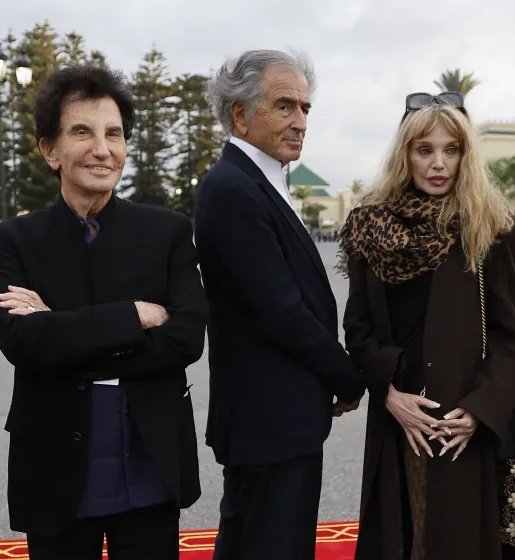
 Aletho News
