Thomas Friedman Again Demonstrates the Skills Shortage for NYT Pundits
CEPR | April 20, 2013
The NYT has difficulty finding pundits who can write knowledgeably about economics. Thomas Friedman made this point in his Sunday column. At one point he quotes Gary Green, the president of Forsyth Technical Community College, in Winston-Salem, N.C.:
“‘We have a labor surplus in this country and a labor shortage at the same time,’ Green explained to me. Workers in North Carolina, particularly in textiles and furniture, who lost jobs either to outsourcing or the recession in 2008, often ‘do not have the skills required to get a new job today’ in the biotech, health care and manufacturing centers that are opening in the state.
“If before, he added, ‘you just needed a high school shop class or a short postsecondary certificate to work in a factory, now you need an associate degree in machining,’ a two-year program that requires higher math, I.T. and systems skills. In addition, some employers are now demanding that you not only have an associate degree but that nationally recognized skill certifications be incorporated into the curriculum to show that you have mastered the skills they want, like computer-integrated machining.”
Actually there are simple ways to identify labor shortages. First and foremost we should be seeing rapidly rising wages. If employers cannot get the workers they need then they raise the wages they offer to pull workers away from other employers. This is how markets work. (We should also see longer workweeks and increased vacancies.)
In fact there is no major sector of the economy where wages are rising rapidly. This shows rather conclusively that workers do not have skill shortages although it may be the case that many managers are so ignorant of markets that they don’t know that the way to attract better workers is to raise wages. Of course that would suggest the need to better train managers, not workers.
At one point the piece tells readers;
“We need to reform Social Security and Medicare so they can support all the baby boomers about to retire. ….
“As Bloomberg News reported on Monday: ‘Typical wage-earners retiring in 2010 will receive at least $3 for every $1 they contributed to the Medicare health-insurance program, according to an Urban Institute study.’ That’s unsustainable.”
It would have been helpful if Freidman had also mentioned that the same Urban Institute study shows workers already paying slightly more into Social Security than they get back. Yet Friedman wants to cut benefits.
The main reason that the Medicare benefits workers receive are more than they pay in taxes is we pay more than twice as much per person as people in other wealthy countries for our health care. This is due to the fact that we pay close to twice as much for our doctors, drugs, and medical equipment. It is not due to the fact that we get better care. This might suggest the need to reduce payments to health care providers rather than cut Medicare. Of course health care providers are a powerful lobby that Friedman apparently does not want to anger.
Related articles
Give North Korea some respect
By Finian CUNNINGHAM | Strategic Culture Foundation | 20.04.2013
Negotiating with the US over nuclear issues, sovereignty, peace and much else, is like playing card poker with a punk in a Wild West saloon. You’re never going to win because the punk makes up all the rules of the game. In fact, he can change the rules of the game as he goes along to make sure he always wins.
In the saloon game, Washington insists that the adversary must lay down all his cards on the table, while the US can keep its hand close to its chest, never revealing what its suite comprises. The adversary must also wager all betting chips up front without an inkling of the outcome; and, since this is the Wild West, the adversary has to put his gun on top of the table while the US gives itself the prerogative to hold a cocked gun under the table.
Moreover, the American punk is allowed to have an unknown number of aces up his sleeve in order to furtively deploy just in case, somehow, he feels that the loaded game is going against his winning streak.
Sounds a bit far-fetched? Well, let’s take a look at the recent standoff with North Korea.
John Kerry, the US secretary of state, rode into East Asia earlier this month affecting an air of reason and restraint. It helps when you have a global posse of dutiful corporate news media on your side. This is the beginning of loading the game. From the outset, it is presumed and projected that Washington is on a mission of peaceful mediation, a voice of sanity and fair play.
The projected image of American restraint and reason is set against the backdrop of the same Western media portraying North Korea and its young leader Kim Jong-un as wild, reckless and wanton, issuing threats of nuclear war and turning Washington-backed South Korea into «a sea of flames». Yee-ha!
In Tokyo, Kerry told reporters in earnest tone: «The United States remains open to authentic and credible negotiations on denuclearization, but the burden is on Pyongyang [the North Korean capital]».
Kerry also called on China’s leadership to «help bring North Korea back to the negotiating table».
So here is the scene: the American punk is sitting at the table wearing the white hat of civility and legal probity, offering the opportunity for «credible negotiations» to establish peace. The unruly one is North Korea, wearing a costume black hat, permitted to come to the table on condition that he first lays down all cards, that is, forswear capability for nuclear weapons. In truth, the impoverished Stalinist state does not have many cards to play, yet it is being mandated to surrender whatever leverage it may have for no certain outcome. And given the past performance of perfidy by the US towards other adversaries, who could blame North Korea for being reluctant to comply?
Meanwhile, the aces-up-sleeve and guns-under-the-table all belong to the US and its clients. The American nuclear-powered B-2 bombers that can fly over the Korean Peninsula at any moment are not part of the admission fee to the table; neither are the American nuclear-capable submarines and Aegis class destroyers that are patrolling the South and East China Seas around Korea; nor is the giant hemispheric missile system that the US is scaling up and networking between its Pacific West Coast, Alaska, South Korea, Guam and Japan.
In Beijing, Kerry would only offer the most vague and inscrutable «reciprocation» for North Korea’s surrender of its nuclear capability. Kerry said: «Obviously if the threat disappears, that is, North Korea denuclearizes, the same imperative does not exist at that point of time for us to have that kind of robust forward-leaning posture of defense».
Note the two asymmetric parts of Kerry’s poker-game gambit: North Korea denuclearizes, which is definitive; and if that happens «the same imperative does not exist for [the US] to have that kind of robust forward-leaning posture of defense». In other words, the US gives nothing definite in return. The latter US move is subjective, noncommittal, indefinite and loaded with deceiving euphemisms, such as «robust forward-leaning posture of defense» – meaning, in all probability, the continuance of America’s armed-to-the-teeth aggressive capability in East Asia.
That is a simple matter of unacceptable double standards. Why should one party have to disarm under unilateral compulsion, while the second party retains the prerogative to blow others off the face of the earth?
This week, North Korea dismissed belated overtures from America and South Korea for «dialogue».
North Korea’s response is indisputably reasonable, although the Western media have done their best to make that state sound even more of a deranged pariah by reporting that Pyongyang «rejected» the «offers of dialogue».
South Korea condescended that North Korea’s rejection was «incomprehensible», while John Kerry said he was weary from the «same-old, same-old horse-trading», and the ever-so patient US President, Barack Obama, characterized the regime in Pyongyang like a spoilt child that keeps demanding concessions by «banging its spoon on the table».
Now, hold on a minute. This is the very same table that Washington insists none of its options are off. That is, in particular its pre-emptive use of nuclear weapons against North Korea. This is the same option of annihilation that Washington has always threatened against North Korea ever since the Korean War (1950-53) and over the ensuing six decades. This is the same option of devastation that Washington threatens behind the thinly veiled annual «war games» that it holds with South Korea, including the recent flyover of the Korean Peninsula by B-2 and B-52 nuclear bombers, dropping dummy ordnance just to heighten the terror factor.
When you begin to look into the «unreasonable» demands of the «pariah» North Korean state, instead of relying on Western news spin, you begin to realize just how much this geopolitical poker game is loaded and stacked.
The official North Korean news agency, KCNA, says the state wants the following conditions for dialogue about denuclearization of the Peninsula: 1) that the UN sanctions that have been slapped on North Korea should be revoked; 2) that the US withdraws its nuclear weapons and capability from the region; 3) that the US and its South Korean client regime desist from provocative threats of war in the form of perennial military maneuvers; and 4) that the US and South sign a full peace treaty with the North, declaring that the Korean War is officially and definitively ended.
Note that, contrary to Western depiction of North Korea as a belligerent reprobate, the official position of the Democratic People’s Republic of Korea (DPRK) is that it wants to engage in dialogue to resolve the recurring threat of nuclear war, but that the above conditions must be met in order for there to be successful negotiations.
On point 1) North Korea argues, with fair reason, that the latest UN sanctions were imposed at the behest of Washington after the DPRK launched a satellite into space last December. Washington labeled this launch as a ballistic missile test, even though the US space agency, NASA, confirmed that it was a satellite launch. The UN sanctions are thus unwarranted, and that is why North Korea defiantly carried out a nuclear test in February.
Points 2) and 3) should be self-evident.
On point 4) few people in the West appreciate that North Korea has lived for six decades, since the end of the Korean War, under the threat of the US and its Southern ally resuming hostilities at any time owing to the fact that the US refused to sign a full peace treaty in 1953. There has only ever been a cessation of violence under an armistice, not a full peace settlement. This shadow of war, including the use of American nuclear weapons, explains why North Korea appears so truculent and fiery in its rhetoric. What country forced to live under the latent threat of war from a nuclear superpower would not be a bit edgy?
During the George W Bush White House (2001-09), the six-party talks held between the US, China, Russia, Japan and North and South Korea had worked out a road map for denuclearization of the Peninsula. However, Bush scuttled the deal by reneging on the US part of the bargain to supply North Korea with development aid and to demilitarize American holdings on the Peninsula. That is why North Korea resumed its nuclear weapons program. The rules of the game had been unilaterally changed – by the Americans.
The first nuclear test by the DPRK had been in 2006, but after the talks process ran into a dead-end, largely because of US obduracy, North Korea conducted its second nuclear test in 2009, followed by the third on 12 February earlier this year. The pattern here is obviously the DPRK trying to push the Americans back to the former agreement for denuclearization. So, it’s not a case of North Korea having to be coerced back to the negotiating table, as John Kerry makes out. But rather, it’s a case of Washington living up to its agreed commitments worked out under the erstwhile six-party deal. Unfortunately, Barack Obama has followed the same baleful bad-faith policies of his predecessor with regard to North Korea.
Obama’s top diplomat, John Kerry, may be recently proffering the opportunity for dialogue with North Korea, but Pyongyang has rightly responded with the terse attitude – what’s there to talk about? The US and its South Korean client have not put anything on the table that meets North Korea’s reasonable demands for meaningful dialogue. All that is on the table is the demand that the North solely commits to denuclearization, while all American options, including nuclear war, are non-negotiable. In this kind of loaded poker game, the punk always wins.
Rather than pressurizing North Korea to accede to petulant American demands, Beijing and Moscow should insist that Washington play by the same standard rules for everyone. That means, among other things, Washington making a mutual commitment to withdraw its nuclear forces from the Korean Peninsula and respecting the sovereignty of the DPRK with a full peace treaty.
Washington needs to be told that the days of it playing geopolitics-poker in the manner of a Wild West saloon, under its own bent rules, are well and truly over… It needs to begin paying the same respect to all other players befitting the 21st century, where all countries are treated equally, and no-one is above the law.
One Newspaper, Two Elections: The New York Times on America 2004, Venezuela 2013
By Corey Robin | April 15, 2013
In November 2004, 50.7% of the American population voted for George W. Bush; 48.3% voted for John Kerry.
The headline in the New York Times read: “After a Tense Night, Bush Spends the Day Basking in Victory.”
The piece began as follows:
After a long night of tension that gave way to a morning of jubilation, President Bush claimed his victory on Wednesday afternoon, praising Senator John Kerry for waging a spirited campaign and pledging to reach out to his opponent’s supporters in an effort to heal the bitter partisan divide.
“America has spoken, and I’m humbled by the trust and the confidence of my fellow citizens,” Mr. Bush told a victory party that was reconstituted 10 hours after it broke up inconclusively in the predawn hours. “With that trust comes a duty to serve all Americans, and I will do my best to fulfill that duty every day as your president.”
Flanked by his wife, Laura, and their daughters, Barbara and Jenna, and Vice President Dick Cheney and his family, Mr. Bush stood smiling and relaxed on a stage at the Ronald Reagan Building and International Trade Center to thank the campaign team that helped him to a decisive victory, outline his agenda and, 78 days before his second inauguration, speak somewhat wistfully of eventually returning home to Texas.
The Times “News Analysis” read as follows:
It was not a landslide, or a re-alignment, or even a seismic shock. But it was decisive, and it is impossible to read President Bush’s re-election with larger Republican majorities in both houses of Congress as anything other than the clearest confirmation yet that this is a center-right country – divided yes, but with an undisputed majority united behind his leadership.
Fast forward to 2013. Tonight, 50.6% of the Venezuelan population voted for Chavez’s successor Nicolas Maduro; 49.1% voted for his opponent Henrique Capriles.
The Times headline this time: “Maduro Narrowly Wins Venezuelan Presidency.”
And here’s how the article begins:
Nicolás Maduro, the acting president and handpicked political heir to Hugo Chávez, narrowly won election to serve the remainder of Mr. Chávez’s six-year term as president of Venezuela, officials said late Sunday. He defeated Henrique Capriles Radonski, a state governor who ran strongly against Mr. Chávez in October.
Election authorities said that with more than 99 percent of the vote counted, Mr. Maduro had 50.6 percent to Mr. Capriles’s 49.1 percent. The turnout, while strong, appeared to be somewhat below the record levels seen in October, a sign that Mr. Maduro may not enjoy the same depth of passionate popular support that Mr. Chávez did.
Update (1 am)
Nathan Tankus just pointed out on Twitter another point of comparison I missed: “I love the focus on ‘hand picked successor’. Pretty sure ‘son of former president’ sounds more nepotistic.” Nathan then updated that the phrase was “hand picked political heir,” which makes the comparison even starker!
The Incredible Tale of Gwenyth Todd and The “Naïve” Neocons
By Maidhc Ó Cathail | Washington Report on Middle East Affairs | May 2013
GIVEN THE proliferation of crimes, both foreign and domestic, known to have been committed by the U.S. government in the aftermath of the Sept. 11 attacks, there is an understandable willingness among large swathes of the public to believe almost anything told them by someone claiming to be blowing the whistle on an increasingly rogue “world’s policeman.” And, as a rule, the more persecution the whistleblower appears to suffer for exposing the global cop’s transgressions, the greater the desire to believe her story—no matter how far-fetched it might be.
Earlier this year, an effort was made to interest a number of prominent alternative media outlets in just such a “whistleblower” story. According to the professional-sounding pitch, an American contractor named Gwenyth Todd, while advising the Bahrain-based U.S. Navy’s Fifth Fleet, had single-handedly foiled a plot involving “a few select high-ranking members of the U.S. Navy” to provoke a war with Iran. “Fearing of the powers she had obstructed, and fearing for her own safety, Todd left Bahrain moving to Australia,” wrote the anonymous promoter. “For her honesty, bravery, and service, Todd has been sought after by the U.S. Justice Department for prosecution and pursued by the FBI. Nearly all in the corporate press have chosen to ignore her case.”
But not only has Gwenyth Todd’s case not been ignored by the corporate press, it has in fact been the subject of a five-page Washington Post special by “SpyTalk” blogger Jeff Stein. Moreover, Stein’s Aug. 21, 2012 piece entitled “Why was a Navy adviser stripped of her career?” uncritically touts Todd’s conspiratorial narrative solely on the basis of interviews with Todd herself and “a half-dozen Navy and other government officials who demanded anonymity because of the sensitivity of the matter, many parts of which remain classified.” Then, six months after having her story featured by one of America’s most influential pro-Israel daily newspapers, Todd was the unlikely focus of an even more credulous Iranian state television production. In February 2013, Press TV released “Untold Truths,” a half-hour-long program that introduced her as a “Middle East specialist” and “former U.S. government consultant.” The production began with a dramatic assertion: “In 2007, the U.S. tried to wage a war against IRAN. One person stopped it. This is her story.”
In the Washington Post and Press TV versions, the alleged conspiracy to start a war with Iran is said to have occurred in Bahrain in 2007. However, in a June 2012 article, Todd’s “senior editor” at the notoriously unreliable and ostensibly “anti-Semitic” Veterans Today (VT) website—with which Todd has “long worked” and currently serves on its motley editorial board of directors—sets the narrative two years earlier, and in a neighboring country. “Gwenyth Todd of the National Security Agency, close associate of Paul Wolfowitz and Condi Rice,” wrote Gordon Duff, “back in 2005, discovered a White House plot to stage an attack on American forces in Qatar.”
Confusing matters even more, another VT colleague and enthusiastic promoter of Todd’s story, Kevin Barrett, claims in a September 2012 piece first published by Press TV, “She stopped a 2006 neocon plot to stage a false flag attack in Bahrain intended to trigger war on Iran, and had to flee for her life to Australia.”
Although Todd presents herself as an “appalled” critic of the neoconservatives and the broader Israel lobby, there are good reasons to doubt her credibility on this point as well. In a Sept. 12, 2012 radio interview with Barrett, for example, she made the extraordinary claim that 9/11 was a “setback” for the neocons because it supposedly upset their plans for regime change in Iraq. According to Todd, their plan was to restore a pre-1958 type friendly regime, ruled by Ahmed Chalabi, with Iraq then serving as a base from which to launch regime change in Iran. In that same interview, she further claimed that the neoconservative agenda for Iraq had nothing to do with Israel. As if unaware of the fact that neocon Deputy Defense Secretary Wolfowitz had once been investigated for having passed a classified U.S. document to an Israeli government official, she proffered as evidence, “Didn’t Wolfowitz admit to having affairs with Palestinian students?”
It seems highly unlikely, however, that a former top Middle East analyst such as Todd claims to be would be unfamiliar with Oded Yinon’s seminal 1982 article, “A Strategy for Israel in the 1980s.” “Iraq, rich in oil on the one hand and internally torn on the other, is guaranteed as a candidate for Israel’s targets,” observed Yinon. “Its dissolution is even more important for us than that of Syria.” And it seems even less likely that she would be unaware of “A Clean Break: A New Strategy for Securing the Realm.” That influential 1996 report, prepared by a group of mainly American neocons for then-incoming Israeli Prime Minister Binyamin Netanyahu, recommended “removing Saddam Hussain from power in Iraq—an important Israeli strategic objective in its own right.”
Five years later, these right-wing Zionist policy advisers, many then members of the Bush administration, would seize the golden opportunity presented by the 9/11 attacks to turn this hawkish blueprint for Israeli expansionism into U.S. Middle East policy.
Todd’s seeming ignorance of Israel’s longstanding strategic designs for the breakup of Iraq is even harder to believe in light of her claim to have been “personally recruited” by the “Clean Break” study group leader. In the Sept. 12 radio interview with Barrett, she recounted a conversation with Richard Perle—who, like Chalabi’s other chief booster, Wolfowitz, has also been caught passing classified material to Israel—that supposedly took place at the end of George Bush’s pre-inaugural candlelight dinner in January 2001. “Paul’s going, Paul Wolfowitz is going to be the deputy secretary of defense,” she claimed Perle told her. “You know what we are going to do in Iraq, and we need like-minded people in the Pentagon so we can make it happen.”
When the interviewer expressed amazement that she had been approached directly by the so-called “Prince of Darkness” himself, Todd not very convincingly replied: “Yes, well, when I’d met him on a couple of… I’d been in conferences with him before.”
Presumably in an attempt to explain how the reputedly Machiavellian Perle could have been so naïve as to have tried to recruit someone he’d only met at a few conferences, Todd recounted a car journey with Perle in the 1990s during which he supposedly raved about the analytic prowess of her predecessor at the Pentagon’s Turkey desk—based solely on the analyst’s rumored ability to talk to cab drivers in Turkish. Claiming to have been shocked by Perle’s “total naïveté,” Todd went on to say that she subsequently heard the exact same story from fellow Iraq war architect Bernard Lewis at the Aspen Strategy Group in 1997, when she found herself seated between “Judy” Miller and the influential pro-Israel Orientalist, whom she said has dedicated his The Emergence of Modern Turkey to “some good friends” of hers.
Notwithstanding Todd’s claims to have been persecuted for thwarting a neocon-backed false flag designed to provoke war with Iran in December 2007—or was it in 2005? or 2006, perhaps?—she was asked in November 2010 to write a report on Turkey for Australia’s leading pro-Israel foreign policy think tank. Yet this past February, a mere week after she left little doubt in a social media conversation that she was fully aware of the founder and chairman Frank Lowy’s Israeli connection, Todd first feigned ignorance and then surprise in the comments section of The Passionate Attachment blog when this writer pointed out the Lowy Institute’s widely known close ties with Israel.
And as for the alleged unwarranted pursuit by U.S. law enforcement, it may have much less to do with her claimed success in preventing war with Iran than with a mysterious sum of money of uncertain origin and unclear purpose. When questioned by the FBI in 2007 about $30,000 she had received from her daughter’s father, Robert Cabelly—who would be indicted in 2009 for conspiring to act as an illegal agent of Sudan and to violate sanctions against the government of Omar al-Bashir—Todd said she told the federal agents that the money was for “emergency surgery” in Bahrain. By a strange coincidence, this just happened to be the exact same amount she told The New York Times in February 2011 that she had once spent out of her own pocket to buy gifts for the children of the poorest Shi’i families. Todd said she had been ordered by a commanding officer, fearful of upsetting the ruling Sunni Al-Khalifa royal family, to renege on a promise made on behalf of the Navy.
Indeed, the more one looks into the incredible tale spun by Gwenyth Todd, the more likely one is to agree with the former commander of U.S. Central Command, Admiral William J. Fallon—who in 2007 vetoed a move by the Bush administation to send a third carrier group to the Persian Gulf, vowing that an attack on Iran “will not happen on my watch.” Cast as an unlikely villain in Todd’s narrative, the retired four-star admiral was asked by The Washington Post’s Jeff Stein to comment on her conspiratorial allegations; Fallon’s terse e-mail response—“B.S.”
Honduras: Terror in the Aguán
By Greg McCain | Upside Down World | April 11, 2013
During the first week of April, the Honduran daily newspaper La Prensa ran a series of articles that included photos, a video and a link to a montage of past articles entitled Terror en el Bajo Aguán. The major thrust of the series is that there are heavily armed clandestine groups of men training in the region. The photos and video show them with AK47s, M16s, and .223 assault rifles, all of which are military issue. All of the men are wearing ski masks over their faces and they appear to be playing to the camera, running in defensive stances, crawling on the ground and being sure to showoff their heavy firepower, all at the direction of whoever is holding the camera. An April 1 article states that there have been more than 90 deaths in the Aguán attributed to people with high caliber arms like the ones shown in the photos. It states that the latest one was a campesino, but it fails to point out that these more than 90 deaths since the coup in 2009 were all campesinos who have been murdered by sicarios: assassins who mainly perform drive by shootings.
Not unexpectedly, the new propaganda campaign being orchestrated by Colonel German Alfaro, commander of Operation Xatruch III and graduate of the School of the Americas, has been carried out with the help of the pro-ruling elite, pro-coup mainstream media. In a further attempt to criminalize the campesino movements, the La Prensa series, by implication and by direct assertions, links the struggles of the campesinos to acquire land that is rightfully and legally theirs to these mysterious armed groups that are roving the Aguán and allegedly terrorizing the private security forces of the rich landowners.
The video of the alleged training maneuvers would be laughable in its obvious staging if the repression that has befallen the campesinos at the hands of the private security guards, the Honduran military, and the National police wasn’t so tragic and ever present. These forces are not just working side-by-side, but are also interchangeable since the security companies that Dinant contracts often hire police and military personnel.
Colonel Alfaro states several times to La Prensa that the identities of these clandestine groups are known and that they even know who the leaders are. In a March 1, 2013 La Prensa article, he asserts that they are being trained by Nicaraguans’ with combat training. He declares that these groups go into the fincas owned by the rich landowners, such as Miguel Facussé’s Paso Aguán, “to terrorize and scare off the security guards. Later, the campesinos go into the plantations to steal the fruit and then money is exchanged at some later date.” No explanation is given as to why it is that campesinos are being killed in overwhelming numbers if this symbiotic relationship truly exists.
The La Prensa “exposé” raises more questions than it answers. If it is the security guards who are being terrorized then why aren’t there huge numbers of their deaths? Furthermore, why are they only a tiny fraction of the campesino deaths, and often found to be the result of infighting among the guards? Why are the campesinos from MARCA who have successfully fought in the courts to retain possession of their land being assassinated? Their lawyer, Antonio Trejo, was assassinated last November in Tegucigalpa after successfully winning the case that secured the land for three of MARCA’s collectives. His brother was later assassinated in Tocoa while investigating his murder. While denying any responsibility, Facussé told an L.A. Times reporter in a December 21, 2012 interview that he certainly had reason to see the lawyer dead. The National Police have attempted to raise spurious claims that the Trejo’s were involved with different less than desirable elements, creating red herrings to take the focus off of Facussé.
There are further questions raised by Alfaro’s claims of there being a connection between armed groups and campesinos. Why are the leaders of MUCA being stopped at every police checkpoint as they drive from Tocoa on their way to a meeting in Siguatepeque in the south. At one checkpoint an officer said to another, “It’s them… they are here.” Later, when they decide that it is safer not to drive any further, they stop at a hotel to rest and then take a bus at 3am to their destination. A group of armed men was seen by the campesino’s driver, who stayed behind, pulling up to the hotel at 3:30 a.m. and question the receptionist about them. Further, why are Facusse’s guards and police and military on a regular basis harassing the MUCA collectives. A truck full of soldiers drove through the community of La Confiansa on the eve of the internal elections shouting out “we’re hunting for Tacamiches” a derogatory term used by the upper classes and police and military to denote campesinos? Why have the military been surrounding the campesino community of La Panama, which borders the Paso Aguán finca, and in which two bodies of members of the community have been dug up near where the private security guards camped? Meanwhile, more are suspected buried there, but why won’t the police and private security, and indeed, the military allow the community to search for the bodies of those missing?
These are questions that neither the mainstream media will ask, nor will Colonel Alfaro answer. Instead they work in concert to manufacture a connection between alleged criminal groups and the campesinos. Alfaro’s motives are made clear when he states that they are there to protect the property and the palm fruit of the rich landowners. Soldiers are often seen riding in or along side Facusse’s Dinant trucks and they along with the National Police intermingle on a regular basis with Facussé’s and the other rich landowner’s guards, who have often been described by those living in the Aguán as paramilitaries.
Alfaro claims that, after the National Congress passed a decree in 2012 that banned all firearms from being possessed except by the police, military and private security, they captured 200 weapons in the first month (he does not specify if they were of high caliber like AK47s or if they were .22 rifles or handguns), and then an average of about 14 per month since then. It is evident from his boast that the military has greatly disarmed the general public, while it is evident just by driving up and down the roads between Tocoa and Trujillo that the arms of gruesome caliber, as the newspaper describes them, are in the hands of the police, military and paramilitary of Facussé and the other rich landlords.
There are both police and military checkpoints that randomly stop cars and buses along the main road between these two cities. When a bus is stopped all the men are told to leave and keep their bags and backpacks on board along with the women. The men are then told to press up against the bus with arms and legs spread while the very young soldiers of the 15th Battalion, with their rifles strapped across their chests, do a body pat down while looking at IDs. Other soldiers search the personal belongings on the bus. Off to the side of the road is a military personnel carrier that has a mounted machine gun pointed toward the street. Alfaro doesn’t explain if this is the method that has led to the discovery and confiscation of so many weapons, but it has been successful in labeling every citizen as a potential criminal and preparing the streets for Martial Law as the country prepares for the general elections in November.
In late February, several hundred police, military, and security guards surrounded the community of La Panama, as they have done various subsequent times since then. They proceeded to knock down a security gate that had been erected to keep the paramilitary guards from invading the community. In July of 2012, La Panama found it necessary to put up the gate after one of the community’s leaders, Gregorio Chavez, was disappeared and his corpse later found in the Paso Aguán. His shallow grave was a ten-minute walk from where Facussé’s paramilitary guards had set up an encampment. The community, after pleading with police to accompany them onto the finca, and after international human rights observers had visited and taken testimonies from the community, finally were allowed access. As Señor Chavez’ son and brother pulled the cadaver from the ground it was apparent from marks on the body that he had been tortured. Previous to Chavez’ murder the guards had been harassing him, shooting his chickens, and threatening to do the same to him and his family. They often drove up and down the road that goes through the community with their guns pointing out at the children who played in the yards.
Dinant had put up a building in the middle of the community that functioned as both a guardhouse and a parking space for their palm fruit trucks. A week before his disappearance Gregorio Chavez had gone to this building to complain to someone in charge about the threats and the killing of his chickens. It was also in this building that many in the community had seen the bicycle of one of the disappeared after he went missing. It is suspected that he is buried in the Paso Aguán. It could be the remains that were recently found on April 3. A security guard who had connections to the community tipped them off as to where they could find the body. The community is hoping, with the help of COFADEH and other human rights groups, to get an international forensic team to positively identify who it is.
This latest news was revealed at a press conference in Tegucigalpa held on the April 3 by the Agrarian Platform of the Campesinos of the Aguán (PARCA, in its Spanish acronym). PARCA is a new initiative formed by 13 campesino movements to better support each other as they face ever-increasing threats to their rights to the land. The press conference was called in response to the La Prensa stories. Yoni Rivas, Secretary General of MUCA, reasserted that the campesinos have no connection to any armed groups. In fact, it was the campesinos who had gone to the press in 2011 to point out that there were armed thugs killing campesinos in the Aguán and he showed pictures of armed men with automatic weapons wearing uniforms that matched the clothes worn by Dinant’s security forces.

The ultimate question is, if Colonel Alfaro and Operation Xatruch are simply doing what they say they are, “maintaining the peace and harmony of the people of Colon,” then why is he conducting press conferences denouncing both Honduran and international human rights groups? On February 18, 2013, in a clear act of aggression toward these groups and in a further attempt at criminalization of the campesinos, he called out human rights observers and campesino leaders. He published the phone numbers of international human rights observers in the US and Europe, and attempted to set up a confrontation between what he refers to as the “Laboriosa población,” the hard working people of the department of Colon against the aforementioned campesino groups referring to them as “a minority”, who create permanent friction and a constant problem of disrespect for the legally established laws and legal authorities. Alfaro’s and the Honduran military’s disdain for the campesinos is further illustrated in the report, Human Rights Violations Attributed to Military Forces in the Bajo Aguan Valley in Honduras written by Annie Bird of Rights Action where she states that her report, “describe[es] the abuses, many of them grave human rights violations, in which soldiers from the 15th Battalion were present and/ or direct participants [in the killings of campesinos]; in either case the 15th Battalion is a responsible party to the violations.” The 15th Battalion is where Xatruch III and Colonel Alfaro are stationed.
In a further indictment of Alfaro’s disingenuousness, during Xatruch’s raid of La Panama in February, there was, coincidentally, a human rights delegation from the US-El Salvador Sister Cities organization visiting the community. This forced the military, police and security guards to retreat. Much of the military force moved into the Paso Aguán finca. Later, members of the community who didn’t want their names made public stated that Alfaro attempted to “negotiate” with the community, but told them to stop talking to human rights groups. They of course denied his request. Today, the tensions between the community and the heavily armed forces continue as the military remain in the finca protecting Facussé’s palm fruit.
Related articles
- Will the World Bank Stop Investing in Campesino Assassinations? (alethonews.wordpress.com)
- Killings Continue in Bajo Aguán as New Report Documents Abuses by U.S.-Trained Honduran Special Forces Unit (alethonews.wordpress.com)
- Honduras: Murdered Lawyer’s Brother Killed in Aguán (alethonews.wordpress.com)
- Step by Step: Honduras Walk for Dignity and Sovereignty (alethonews.wordpress.com)
- World Bank Must End Support for Honduran Palm Oil Company Implicated in Murder (alethonews.wordpress.com)
On Thatcher, What’s the Difference Between PBS & Fox News?
By Peter Hart | FAIR | April 9, 2013
Former British Prime Minister Margaret Thatcher’s death yesterday brought waves of mostly flattering coverage of the divisive right-wing leader. It was striking to see the parallels between the way Thatcher was covered on the PBS NewsHour and Fox News Channel‘s most popular show, the O’Reilly Factor. Though some people like to think that PBS and Fox couldn’t be further apart, they were basically singing the same tune.
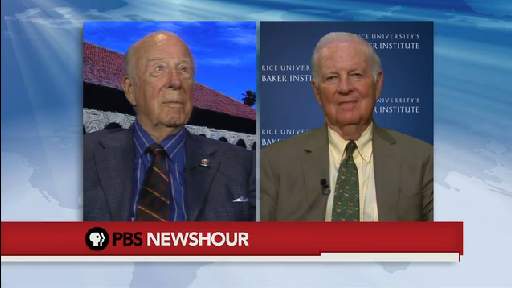
The main Thatcher segment on the PBS newscast was a discussion with two former Republican secretaries of State, George Shultz and James Baker. Of course, both were big fans of Thatcher’s foreign policy (which was closely aligned with their own priorities during the Reagan and George H.W. Bush years). It was more than that, too; as Baker put it, Thatcher “emphasized the private sector and got rid of the oppressive influence of the trade unions.” And Shultz explained that Thatcher “was a very attractive woman. So you were certainly aware of that.”
PBS had one other guest: former Conservative Canadian Prime Minister Kim Campbell, who cheered both Thatcher’s defeat of unions but also her humanity: “It’s kind of touching to be reminded of what a lovely woman she was.”
On the O’Reilly show, the host paid tribute to Thatcher’s leadership, contrasting it with Barack Obama’s tenure. As O’Reilly declared:
Her accomplishments are many, but she was always a very controversial figure in her own country and here in America, because the British press and the American media are liberal and always have been.

Later in the show, he was joined by conservatives Brit Hume and Bernard Goldberg; ironically, the latter segment focused on the alleged hostility to Thatcher in the mainstream media. So the guest line-ups were more alike than different. But so was some of the reporting. On Fox, Thatcher rescued Britain from the clutches of an oppressive union movement, and the record speaks for itself. As O’Reilly put it:
In Britain, 13 percent unemployment…. That’s a catastrophe, 13 percent, all right. When she leaves office eight years later, 5.8 percent unemployment. But if the unemployment rate drops 7 percent, which means all those millions of people are working under this woman, give her some credit.
And he put it a different way:
In 1982, about two and a half years into her term, unemployment in Great Britain was 13 percent. It’s chaos, absolute chaos there. When she left office in 1990, she was the longest serving prime minister in British history. It was at 5.8 percent.
On PBS, meanwhile, reporter Margaret Warner declared that Thatcher “brought a free market revolution to Britain, lowering taxes and privatizing state industries…. Britain’s economy rebounded from her tough medicine.”
Neither report gives viewers a good sense of Thatcher’s economic policy. (The wording in the PBS segment about rebounding from medicine is difficult to comprehend.) The Guardian compiled a list of economic indicators during Thatcher’s tenure; the short story is that inequality increased, and so did poverty–from 13.4 percent in 1979 to 22.2 percent in 1990.
O’Reilly is correct that unemployment dropped during part of Thatcher’s time in office; it also skyrocketed the first two years. When she left office in 1990, it was, according to the Guardian‘s figures, higher than when she took office. If that’s the record, then one would imagine it would be reflected somewhere–perhaps not at Fox News, for ideological reasons. But PBS is supposed to be about giving us the views that we’re not getting from the commercial media.
Related articles
The New Yorker Corrects Two Errors on Venezuela, Refuses a Third
By Keane Bhatt | NACLA | April 8, 2013
Thanks to readers’ responses to The New Yorker following my last post, “On Venezuela, The New Yorker’s Jon Lee Anderson Fails at Arithmetic,” the magazine has amended two errors in two separate articles.
The first correction involves an online piece that Anderson wrote on the eve of Venezuela’s elections in October of last year. As was pointed out almost immediately after Anderson’s entry was published, he had incorrectly claimed that “Venezuela leads Latin America in homicides” in his “The End of Chavez?” (the headline was changed to “Chavez the Survivor” after the late Venezuelan president handily won his reelection).
Actually, it is Honduras that leads Latin America—and indeed the entire world—in per capita homicides: 92 per 100,000 people are killed annually there, while Venezuela’s figure stands at 45.1, according to the most recently available United Nations data. And unlike the Venezuelan government, the Honduran government contributes to this body count by regularly murdering its own civilians through its military and police, both of which receive tens of millions of dollars from U.S. taxpayers. (The New Yorker hasn’t published a single article referring to Honduras’s current post-coup regime, headed by Porfirio Lobo, who came to power in January of 2010.)
Reacting to readers’ complaints, the magazine’s editors issued an addendum to Anderson’s October 7 piece, which reads:
*An earlier version of this post said that Venezuela led Latin America in homicides; globally, it was in fourth place, but third in Latin America (behind Honduras and El Salvador), according to U.N. statistics on intentional homicides for 2010-11.
Another Anderson article—“Slumlord: What has Hugo Chávez wrought in Venezuela?”—also misled the print magazine’s readers by giving the impression that Chávez’s presidential tenure was predicated on a coup d’etat rather than his victories in over a dozen internationally vetted elections. The New Yorker released a correction for the inaccuracy in its April 1 issue, two months after the original piece had been published:
In “Slumlord,” by Jon Lee Anderson (January 28th), Hugo Chávez is described as having been concerned with “preventing a coup like the one that put him in office.” In fact, Chávez’s coup attempt, in 1992, failed; he was elected to office in 1998.
For Jon Lee Anderson’s most recent factual error, unfortunately, The New Yorker has thus far refused to issue a clarification or retraction. One month ago—the day Chávez died—Anderson wrote a third piece, for NewYorker.com, claiming:
What [Chávez] has left is a country that, in some ways, will never be the same, and which, in other ways, is the same Venezuela as ever: one of the world’s most oil-rich but socially unequal countries. . .
As I pointed out in “Anderson Fails at Arithmetic,” this allegation misleads the reader in two ways. Inequality has been reduced enormously under Chávez, using its standard measure, the Gini coefficient. So one can hardly say that in this aspect, Venezuela remains the “same as ever.” Making Anderson’s contention even worse is the fact that Venezuela is the most equal country in Latin America, according to the United Nations. Anderson’s readers come away with exactly the opposite impression.
To The New Yorker’s credit, a senior editor sent me an email regarding my article’s criticisms, and flatly conceded the first two misstatements in Anderson’s pieces. However, the note offered a strained defense of Anderson’s position on inequality, arguing that Anderson’s point was valid, given that his claim supposedly combined Venezuela’s conditions of being both “oil-rich” and “socially unequal” as one assertion.
I pointed out in my response that any reasonable reading of the statement would portray Venezuela as both one of the world’s most oil-rich and one of the world’s most socially unequal countries. And the fact of the matter is that the CIA’s World Factbook ranks the country 68th out of 136 countries with available data on income inequality—that is to say, Venezuela is exactly in the middle, and impossible to construe as among the most unequal.
I also explained that when Anderson was confronted with this evidence on Twitter, the magazine’s principal correspondent on Venezuela expressed extreme skepticism toward publicly available, constantly used, and highly scrutinized data; he instead cited his own “reporting” and “impressions” as the authority for his assertions. Given Anderson’s defiant admission not to even pretend to care about empirical data—after his magazine had already retracted two of his articles’ factual claims—it was incumbent on editors and fact-checkers to uphold The New Yorker’s reputation as a trustworthy and evidence-based journal by addressing the issue immediately.
Lastly, I argued that the awkward formulation of combining “oil-rich” and “socially unequal”—a reading I reject—exposes Anderson’s contention as even further at odds with reality. Included in my email was the following list showing the top 10 most “oil-rich” countries ranked in order of their total crude oil production, according to the International Energy Agency. Each country’s corresponding Gini coefficient from the CIA World Factbook appears in parentheses—the higher the Gini coefficient, the greater the country’s inequality:
1. Saudi Arabia (unavailable)
2. Russia (0.42)
3. United States (0.45)
4. Iran (0.445)
5. China (0.48)
6. Canada (0.32)
7. United Arab Emirates (unavailable)
8. Venezuela (0.39)
9. Mexico (0.517)
10. Nigeria (0.437)
When provided with these arguments and data, The New Yorker’s senior editor fell silent in the face of repeated follow-ups. I received a reply only once: a rejection of my request to publicly post our correspondence. While issuing a correction to Anderson’s third Venezuela article over the past year would have been embarrassing, the continued silence and inaction of the elite intellectual journal is perhaps a greater indictment. Anderson’s error remains unchanged on the liberal magazine’s website, while its senior editor has refused to address the matter in private correspondence or offer a public rationale for leaving Anderson’s claim intact.
When asked to comment on this issue, Branko Milanovic—a lead economist at the World Bank and arguably the world’s foremost expert on global inequality—interpreted Anderson’s quote the standard way: “The article says that Venezuela is one of most ‘socially unequal’ countries,” he wrote by email. But The New Yorker’s “extremely vague formulation,” he added, obscured an important reality: “What we know…is that Venezuela is among two or three most equal Latin American countries measured by income inequality.” According to his own research of inequality throughout the world, Venezuela is likely to be ranked somewhere “around the middle, or perhaps slightly above (these things do change from year to year).”
Prominent macroeconomist Dean Baker of the Center for Economic and Policy Research found The New Yorker’s factual contention and subsequent unresponsiveness astonishing: “This is pretty outrageous,” he wrote by email. “Do they have any data to support their assertion, or is the argument that because they don’t like Chávez they can say anything they want about him?”
Readers can pose such questions to The New Yorker by contacting its editors at www.newyorker.com/contact/contactus, by email at tny.newsdesk@gmail.com, or on Twitter at @tnynewsdesk. Such media activism plays a crucial role in engendering more careful portrayals of countries like Venezuela, which has long been the target of cartoonishly hostile, slanted, and outright false media coverage. Previous demands for accuracy and accountability have already prompted two admissions of error by The New Yorker, and can lead to a third, in spite of the magazine’s obstinacy. More importantly, the magazine now faces a real political cost to publishing sloppy reporting, as well as a powerful deterrent to running reckless news and commentary during a politically significant transitional moment for Venezuela.
Related articles
- On Venezuela, The New Yorker’s Jon Lee Anderson Fails at Arithmetic (alethonews.wordpress.com)
- ‘Little Twerp … Get a Life’: The New Yorker’s Jon Lee Anderson Thinks He’s Somebody on Twitter (gawker.com)
Featured Video

Iran’s Next Strike May Not Explode. It Could Shut You Down
or go to
Aletho News Archives – Video-Images
From the Archive
Zionism’s Violent Legacy
By Donald Neff | Washington Report On Middle East Affairs | January 1996
On January 4, 1948, Jewish terrorists drove a truck loaded with explosives into the center of the all Arab city of Jaffa and detonated it, killing 26 and wounding around 100 Palestinian men, women and children.[1] The attack was the work of the Irgun Zvai Leumi – the “National Military Organization,” also known by the Hebrew letters Etzel – the largest Jewish terrorist group in Palestine. The Irgun was headed by Revisionist Zionist Menachem Begin and had been killing and maiming Arabs, Britons and even Jews for the previous ten years in its efforts to establish a Jewish state.
This terror campaign meant that at the core of Revisionist Zionism there existed a philosophical embrace of violence. … continue
Blog Roll
 Aletho News
- Trump’s Iran war is on an Israeli leash
- Saudi oil boss issues global supply warning
- Riyadh Says Its Oil System Is Intact. The Numbers Say Otherwise.
- Trump and Netanyahu Want to “Finish the Job” on Iran
- US ‘one-sided dictation’ not Iran’s beliefs makes rational talks impossible: Baghaei
- Iran’s Next Strike May Not Explode. It Could Shut You Down /Col Doug Macgregor
- Iran: US political targets legitimate if assassinations return
- Iraq shuts key border crossing with Iran under US pressure: Report
- Undersea Internet cables could be targeted in retaliation for attacks on Iran: IRGC deputy chief
- EU sending ‘biased’ observers to interfere in Serbian election – president
- If Americans Knew
- AIPAC has become such a political liability that it’s shifting to a more “nimble” approach to buying politicians
- At least 160 Israeli settler attacks in 2 weeks
- Will Gaza’s Ancient Christian Community Disappear Forever?
- Israel’s vision of regional security rests on keeping Arab states weak
- Heidi Levine recounts how Palestinian youths helped save her in settler attack
- DAILY UPDATE: Latest essential news on Palestine, Israel, & region
- Trump’s Intensifying Sabotage of the ICC, for Israel’s Sake
- Israeli military detain US and UK volunteers in West Bank including Democratic NY politician Brad Lander
- Americans at National Conservatism Conference held in Israel this year criticize Israel
- Christiane Amanpour exits CNN with a legacy shaped by the debate over Israel
- No Tricks Zone
- E-Cars Reduce CO2 Emissions By Only 41% Compared To Internal Combustion Engine Vehicles
- Predictions Made By Renowned Climate Professor Over Past Decades Have Been Proven To Be Poor
- New Study Suggests Large Regions Of The Pacific Ocean Have Been Cooling For The Last 80 Years
- Germany’s Green Energy Debacle: High Energy Costs Force Kahla Porzellan to Close After 182 Years!
- New Study: 50 Years Of The Most Aggressive ‘Net Zero’ Policies Can Only Affect The Global Climate By 0.03°C
- US September “Heat” Was No Record…Many Records Set Decades Ago
- Latest European Green Energy Debacle; Portugal’s Largest Flagship Solar Park Insolvent!
- Green Energy Debacle: German Expert Professor Fritz Vahrenholt Warns Of Severe Economic And Social Consequences
- Two More Paleo Reconstructions Affirm Meters-Higher Sea Levels Across Ireland, Brazil 7000-6000 Years Ago
- New Study: Earth And Venus Surface Warmth Largely Explained By Convection And Lapse Rate, Not CO2 Or Radiation

