WIKILEAKS REPRISED — A WHIFF OF…WHAT?
From what the press is reporting about this Wikileaks “dump,” perhaps 10% are Secret or Confidential, the rest Unclassified, and nothing is Top Secret or above.
ALAN SABROSKY – My Catbird Seat – December 8, 2010
I have followed the unfolding teapot-tempest drama of the latest Wikileaks release with a certain bemusement, accompanied by a growing suspicion shared with others that all is not as it seems with these supposed revelations. But my initial impression, based of course on what I am reading in the mainstream and alternative media and not in the cables themselves, is that it is surprising how little damaging material is there about much of the world. Secretary Clinton cannot be happy at having the UN people know what she told her people there to do, of course, and there is a great deal to whet assorted salacious appetites. More substantive issues will doubtless emerge, but I expect most if not all to be embarrassing rather than destructive.
The Cables
Perhaps the principal reason for this largely titillating, trivial aspect of so many of the released cables is the cables themselves. It is worth understanding that in the US government, even material that is taken from newspapers and clipped together can end up being classified “Secret” or “Confidential.” Really important or sensitive material (as in truly “national security” sensitive) is classified “Top Secret” or above.
From what the press is reporting about this Wikileaks “dump,” perhaps 10% are Secret or Confidential, the rest Unclassified, and nothing is Top Secret or above. This reflects the VERY low-level diplomatic “gossip column” character of much of what has been released and discussed in the media so far. But I suspect the general reaction of politicians and diplomats everywhere, all of whom send the same type of cables about others, will be a blend of public umbrage and private amusement, coupled with overtures to Ukraine for nursing support.
The Middle East Exception
The one striking exception in all of this global tour de farce <sic.> is the Middle East. Certainly, even aside from Wikileaks founder Julian Assange’s fulsome praise of Binyamin Netanyahu, what is said and what is not represent the message Israel and its partisans in the US Government (itself heavily Zionist and “Israel First” in orientation) want the world to hear, believe and accept. The message coming across in the US diplomatic cables could have been designed and drafted by Avigdor Lieberman, and who knows? It may have been….
The overt theme in the Middle East cables consists of a blend of attacks on prominent political figures in Turkey and Iran, coupled with critical and disparaging commentaries about their actual or alleged policies and ambitions. One might think that the architects of the Ottoman and Persian Empires in their times of splendor were simultaneously on the move again, with everything between them (except poor, brave, steadfast and enduring Israel, of course) trembling in fear and awe.
Complimenting this is a region-wide belief attributed to many Arab leaders of the need for stronger action, including military strikes, to thwart Iran’s regional and especially nuclear ambitions — precisely what Israel has been saying all along. Now, this may be true. I know, for example, that the Sunni leadership in many of those countries have their own concerns about Iran, just as Iran’s current leadership have with some of them.
But at least two things cause me to question this supposed thesis. One is the odd attribution in at least one of the cables to an Arab leader of a remark on Iran being an “existential threat.” Yet no one except Israel and its proponents refer to any other country as an “existential threat” to anyone, suggesting quite clearly that either some of the released cables regarding Iran are forgeries, or they were deliberately cast in terms to create an impression that Arab leaders really want the US and/or Israel to attack Iran, true or not.
And the Israeli Exception
The other part of the covert theme is the apparent absence of anything tough on Israel, which means that anything of the sort is Top Secret or better, was excised from the cables that were released, or simply doesn’t matter at all to anyone in or out of the Middle East. The Arab nations for many years have feared a real nuclear threat from Israel, not a fabricated threat by Iran, but nothing like that comes across, despite 60-plus years of hostility from most to Israel and its ambitions.
Far more significant to me is the utter lack to date of scathing commentaries on Israel and its policies, leadership and actions from SOMEWHERE in the world. Even if Arab leaders felt there was no point in doing so with the Americans, most others would not feel so constrained. Something surely must have come to the attention of the US ambassadors to (e.g.) Turkey, South Africa, Brazil and Ireland, just to name a few of the many who have bitterly condemned Israel, and especially the disgusting duo of Netanyahu and Lieberman to say nothing of their predecessors, for what they have done to Palestine and the Lebanon; for Operation Cast Lead; for the settlements; for flagrant violations of UN Resolutions and the murder of UN officials; for Israel’s hostility to the Goldstone Report; for the blockade; for land expropriation; and for sheer thuggery and brutality.
Surely something so scathing would have been communicated back to Washington, alongside which Iran and its president would come off smelling like several bouquets of roses — slightly wilted roses, perhaps, but vastly better than the Israeli stinkpot.
Reprise
But nothing like that is there, or at least has yet surfaced, which makes me increasingly inclined to see this as just another game of rhetorical smoke and mirrors, with a lot of real cables and real victims (like the poor US soldier who presumably gave Assange at least some of the cables), but with many or most of the Middle East cables “cooked” if not fabricated outright.
So these, at least, are probably the handiwork of Israeli-Americans or just Israelis putting their own spin on things, included in a mass of otherwise legitimate cables as camouflage and for validation. An Australian news website concluded that “[the] WikiLeaks cables [are] the 9/11 of world diplomacy.” Too, too true – same source, different vehicle and venue, all helping pave the road to yet another needless war in Israel’s service, this time against Iran. The gods weep — but not, presumably, Yahweh.
Alan Sabrosky (Ph.D, University of Michigan) can be contacted at docbrosk@comcast.net
Hasbara at Work: Oren Promotes Fantasies
By Ira Glunts | Palestine Chronicle | December 6, 2010
Three years ago I heard the American-born Israeli Michael B. Oren promoting his new book Power, Faith and Fantasy: America in the Middle East, 1776 to the Present at a university near my home in upstate New York.
Oren is a tall, good looking man who radiated a quiet confidence. His book had the truly fanciful goal of showing that the intense American involvement in the Middle East and especially our engagement with the idea of a renewal of Jewish sovereignty in the region was not a recent development. Oren claimed that both the Zionist idea and the friction between Americans and Muslims is an important and persistent narrative thread running through American history from very early times. For instance, he describes the military confrontations of a young American republic with the Barbary pirates as the first battles in what we now call the “War on Terror.” My own conclusion after reading his book, was that Oren’s role as a conservative Israeli think-tanker had completely subsumed any desire he may have had to be an honest American historian. I assumed that he believed that this was a good career move for someone who simultaneously lived in Israel and taught at Yale University. At that point this apparently mild-mannered, obviously intelligent scholar seemed harmless enough. Of course, it was impossible to have known then that Oren would become Prime Minister Binyamin Netanyahu’s ambassador to the United States.
Last week Michael Oren, as Israeli Ambassador to the United States, visited Atlanta in order to lay a wreath upon the grave of slain civil rights leader Dr. Martin Luther King. In addition to the wreath, Oren used his Atlanta visit to lay some of his country’s particularly odious hasbara (meaning public relations, some say propaganda) upon no doubt unsuspecting Georgians.
According to Martha Dalton of Atlanta radio station WABE, Oren exploited the ceremony honoring King by making a statement about the imminent danger Iran’s nuclear program presents to both Israel and the rest of the world. This is far from a universally accepted claim, but after having it repeated enough times in the U.S. media, most accept it as fact. The ambassador also expressed concern about fallout from the recent Wikileaks release of thousands of diplomatic cables, some of which were embarrassing to Israel. [Oren’s fantasy world hasbara at work]
In an opinion piece in the Atlanta Journal-Constitution on November 26 entitled “A 63-Year Search For Mideast Peace” Oren took full advantage of the leeway American newspaper editors give to public figures and especially to pro-Israel columns. According to Oren, Israel has been engaged in a 63-year struggle to make its neighbors and those it expelled from its territory understand that all it has ever wanted is to peacefully share the land it claims for itself with its indigenous population.
The United Nations voted to partition what is now Israel 63 years ago into Jewish and Palestinian states. The wisdom of this decision, which was rejected by the region’s Arab governments and populations, is very much in question today. However to Oren, whose views reflect his own blind faith in Israeli power and a generous serving of fantasy, the partition decision (UN resolution 181) expresses the incontestable truth that “[t]he Arab world was to welcome the Jews, after 2,000 years of exile back to their homeland.”
Surprisingly, at least according to Oren, the Arabs did not understand the imperative that they were morally obligated to welcome the Zionists and their proposed Jewish State on lands upon which the Palestinians had lived for centuries. A war ensued, in which according to Oren (repeating one of the favorite false claims of countless pro-Israel propagandists) “the weakly-armed Israeli defenders defeated the much stronger Arab armies.” This description is on its face false. Of course, the stronger army won, do you think it was God who made the Israelis triumph despite their weakness? (For an extensive and detailed description of the relative military strengths of both sides in the 1948 War see the Israeli historian, Benny Morris’ The Birth of the Palestinian Refugee Problem, 1947-1949.)
Continuing to mercilessly ladle on the hasbara (which literally means explanation in Hebrew), Oren writes that despite the Palestinians’ history of rejection of continuous Israeli goodwill, his government persists in reaching out with generous peace proposals. The ambassador points to examples of Palestinian recalcitrance in their refusal to accept the Israeli offers of “full statehood” in 2000 and 2008. The reader is not told how full statehood for the Palestinians is compatible with Israeli control of Palestinian water sources, no foreign policy, no army, and Israeli overflight rights among many other crippling limitations, which are conditions upon which the Israelis always insist. Oren also neglects to mention that this “generous offer” of statehood does not now include Gaza nor its democratically-elected government.
To this point Oren’s op-ed had been a rehash of the Israeli and pro-Israel lobby talking points. But suddenly and unexpectedly the mild mannered ex-historian turned diplomat seeks to incite his audience with an original gem of hasbara. Oren declares, “Hamas …[is a]… group dedicated to the murder of all Israelis – indeed all Jews worldwide.”
Hamas is a political party and a social service organization which was democratically elected to rule the Palestinian territories. It also is a liberation and resistance movement which has employed violence against the Israeli army of occupation, the illegal Israeli settler/colonists, and ordinary Israeli civilians. However, the general statement that Hamas is dedicated to the murder of all Israelis is as valid as saying that the Israeli occupation army is dedicated to killing all Palestinians. The second charge, that Hamas is dedicated to killing all Jews worldwide is as fantastic as Oren’s claim in Power, Faith and Fantasy that the American founding-fathers were proto-Zionists who spent inordinate amounts of resources fighting implacable Muslim enemies. Actually, Hamas explicitly rejects the use of violence against targets outside the occupied territories and Israel. Its behavior has reflected that policy.
Before Oren went to Atlanta he made an appearance at the Jewish Federations General Assembly in New Orleans. In addressing the assembly, Oren urged American Jews to make it a priority to ensure that US politicians continue to give Israel “bipartisan support” even if these same American Jews may believe that Israel’s policies are wrong. Oren insisted that it is not only the duty of American Jews to fall into line with Israel’s wishes, but he further declared, “we [Israelis] expect American Jews to refute” any criticism of Israeli policy.
Ambassador Oren wants American Jews to become hasbara agents who blindly follow Israeli government policy while simultaneously inciting them with false fears of being murdered by what for them is a totally imagined enemy. In assuming his new diplomatic role, Michael B. Oren has, unfortunately, been given the authority and platform to promote fantasies about which he could only theorize, three years ago, when I heard him merely urging his audience of college students to buy his book.
– Ira Glunts first visited the Middle East in 1972, where he taught English and physical education in a small rural community in southern Israel. He was a volunteer in the Israeli Defense Forces in 1992. Mr. Glunts lives in Madison, New York where he operates a used and rare book business, writes and is a part-time reference librarian. Contact him at: gluntsi[at]morrisville[dot]edu.
Pearl Harbor: A Successful War Lie
An excerpt from War Is A Lie
By David Swanson | December 7, 2010
One type of “defensive” war is one that follows a successful provocation of aggression from the desired enemy. This method was used to begin, and repeatedly to escalate, the Vietnam War, as recorded in the Pentagon Papers. Setting aside the question of whether the United States should have entered World War II, in either Europe or the Pacific or both, the fact is that our country was unlikely to enter unless attacked. In 1928 the U.S. Senate had voted 85 to 1 to ratify the Kellogg-Briand Pact, a treaty that bound — and still binds — our nation and many others never again to engage in war.
British Prime Minister Winston Churchill’s fervent hope for years was that Japan would attack the United States. This would permit the United States (not legally, but politically) to fully enter the war in Europe, as its president wanted to do, as opposed to merely providing weaponry, as it had been doing. On April 28, 1941, Churchill wrote a secret directive to his war cabinet:
“It may be taken as almost certain that the entry of Japan into the war would be followed by the immediate entry of the United States on our side.”
On May 11, 1941, Robert Menzies, the prime minister of Australia, met with Roosevelt and found him “a little jealous” of Churchill’s place in the center of the war. While Roosevelt’s cabinet all wanted the United States to enter the war, Menzies found that Roosevelt,
“. . . trained under Woodrow Wilson in the last war, waits for an incident, which would in one blow get the USA into war and get R. out of his foolish election pledges that ‘I will keep you out of war.'”
On August 18, 1941, Churchill met with his cabinet at 10 Downing Street. The meeting had some similarity to the July 23, 2002, meeting at the same address, the minutes of which became known as the Downing Street Minutes. Both meetings revealed secret U.S. intentions to go to war. In the 1941 meeting, Churchill told his cabinet, according to the minutes: “The President had said he would wage war but not declare it.” In addition, “Everything was to be done to force an incident.”
Japan was certainly not averse to attacking others and had been busy creating an Asian empire. And the United States and Japan were certainly not living in harmonious friendship. But what could bring the Japanese to attack?
When President Franklin Roosevelt visited Pearl Harbor on July 28, 1934, seven years before the Japanese attack, the Japanese military expressed apprehension. General Kunishiga Tanaka wrote in the Japan Advertiser, objecting to the build-up of the American fleet and the creation of additional bases in Alaska and the Aleutian Islands:
“Such insolent behavior makes us most suspicious. It makes us think a major disturbance is purposely being encouraged in the Pacific. This is greatly regretted.”
Whether it was actually regretted or not is a separate question from whether this was a typical and predictable response to military expansionism, even when done in the name of “defense.” The great unembedded (as we would today call him) journalist George Seldes was suspicious as well. In October 1934 he wrote in Harper’s Magazine: “It is an axiom that nations do not arm for war but for a war.” Seldes asked an official at the Navy League:
“Do you accept the naval axiom that you prepare to fight a specific navy?”
The man replied “Yes.”
“Do you contemplate a fight with the British navy?”
“Absolutely, no.”
“Do you contemplate war with Japan?”
“Yes.”
In 1935 the most decorated U.S. Marine in history at the time, Brigadier General Smedley D. Butler, published to enormous success a short book called “War Is a Racket.” He saw perfectly well what was coming and warned the nation:
“At each session of Congress the question of further naval appropriations comes up. The swivel-chair admirals… don’t shout that ‘We need lots of battleships to war on this nation or that nation.’ Oh, no. First of all, they let it be known that America is menaced by a great naval power. Almost any day, these admirals will tell you, the great fleet of this supposed enemy will strike suddenly and annihilate our 125,000,000 people. Just like that. Then they begin to cry for a larger navy. For what? To fight the enemy? Oh my, no. Oh, no. For defense purposes only. Then, incidentally, they announce maneuvers in the Pacific. For defense. Uh, huh.
“The Pacific is a great big ocean. We have a tremendous coastline in the Pacific. Will the maneuvers be off the coast, two or three hundred miles? Oh, no. The maneuvers will be two thousand, yes, perhaps even thirty-five hundred miles, off the coast.
“The Japanese, a proud people, of course will be pleased beyond expression to see the United States fleet so close to Nippon’s shores. Even as pleased as would be the residents of California were they to dimly discern, through the morning mist, the Japanese fleet playing at war games off Los Angeles.”
In March 1935, Roosevelt bestowed Wake Island on the U.S. Navy and gave Pan Am Airways a permit to build runways on Wake Island, Midway Island, and Guam. Japanese military commanders announced that they were disturbed and viewed these runways as a threat. So did peace activists in the United States. By the next month, Roosevelt had planned war games and maneuvers near the Aleutian Islands and Midway Island. By the following month, peace activists were marching in New York advocating friendship with Japan. Norman Thomas wrote in 1935:
“The Man from Mars who saw how men suffered in the last war and how frantically they are preparing for the next war, which they know will be worse, would come to the conclusion that he was looking at the denizens of a lunatic asylum.”
The U.S. Navy spent the next few years working up plans for war with Japan, the March 8, 1939, version of which described “an offensive war of long duration” that would destroy the military and disrupt the economic life of Japan. In January 1941, eleven months before the attack, the Japan Advertiser expressed its outrage over Pearl Harbor in an editorial, and the U.S. ambassador to Japan wrote in his diary:
“There is a lot of talk around town to the effect that the Japanese, in case of a break with the United States, are planning to go all out in a surprise mass attack on Pearl Harbor. Of course I informed my government.”
On February 5, 1941, Rear Admiral Richmond Kelly Turner wrote to Secretary of War Henry Stimson to warn of the possibility of a surprise attack at Pearl Harbor.
As early as 1932 the United States had been talking with China about providing airplanes, pilots, and training for its war with Japan. In November 1940, Roosevelt loaned China one hundred million dollars for war with Japan, and after consulting with the British, U.S. Secretary of the Treasury Henry Morgenthau made plans to send the Chinese bombers with U.S. crews to use in bombing Tokyo and other Japanese cities. On December 21, 1940, two weeks shy of a year before the Japanese attack on Pearl Harbor, China’s Minister of Finance T.V. Soong and Colonel Claire Chennault, a retired U.S. Army flier who was working for the Chinese and had been urging them to use American pilots to bomb Tokyo since at least 1937, met in Henry Morgenthau’s dining room to plan the firebombing of Japan. Morgenthau said he could get men released from duty in the U.S. Army Air Corps if the Chinese could pay them $1,000 per month. Soong agreed.
On May 24, 1941, the New York Times reported on U.S. training of the Chinese air force, and the provision of “numerous fighting and bombing planes” to China by the United States. “Bombing of Japanese Cities is Expected” read the subheadline. By July, the Joint Army-Navy Board had approved a plan called JB 355 to firebomb Japan. A front corporation would buy American planes to be flown by American volunteers trained by Chennault and paid by another front group. Roosevelt approved, and his China expert Lauchlin Currie, in the words of Nicholson Baker, “wired Madame Chaing Kai-Shek and Claire Chennault a letter that fairly begged for interception by Japanese spies.” Whether or not that was the entire point, this was the letter:
“I am very happy to be able to report today the President directed that sixty-six bombers be made available to China this year with twenty-four to be delivered immediately. He also approved a Chinese pilot training program here. Details through normal channels. Warm regards.”
Our ambassador had said “in case of a break with the United States” the Japanese would bomb Pearl Harbor. I wonder if this qualified!
The 1st American Volunteer Group (AVG) of the Chinese Air Force, also known as the Flying Tigers, moved ahead with recruitment and training immediately and first saw combat on December 20, 1941, twelve days (local time) after the Japanese attacked Pearl Harbor.
On May 31, 1941, at the Keep America Out of War Congress, William Henry Chamberlin gave a dire warning: “A total economic boycott of Japan, the stoppage of oil shipments for instance, would push Japan into the arms of the Axis. Economic war would be a prelude to naval and military war.” The worst thing about peace advocates is how many times they turn out to be right.
On July 24, 1941, President Roosevelt remarked, “If we cut the oil off , [the Japanese] probably would have gone down to the Dutch East Indies a year ago, and you would have had a war. It was very essential from our own selfish point of view of defense to prevent a war from starting in the South Pacific. So our foreign policy was trying to stop a war from breaking out there.”
Reporters noticed that Roosevelt said “was” rather than “is.” The next day, Roosevelt issued an executive order freezing Japanese assets. The United States and Britain cut off oil and scrap metal to Japan. Radhabinod Pal, an Indian jurist who served on the war crimes tribunal after the war, called the embargoes a “clear and potent threat to Japan’s very existence,” and concluded the United States had provoked Japan.
On August 7th four months before the attack the Japan Times Advertiser wrote: “First there was the creation of a superbase at Singapore, heavily reinforced by British and Empire troops. From this hub a great wheel was built up and linked with American bases to form a great ring sweeping in a great area southwards and westwards from the Philippines through Malaya and Burma, with the link broken only in the Thailand peninsula. Now it is proposed to include the narrows in the encirclement, which proceeds to Rangoon.”
By September the Japanese press was outraged that the United States had begun shipping oil right past Japan to reach Russia. Japan, its newspapers said, was dying a slow death from “economic war.”
What might the United States have been hoping to gain by shipping oil past a nation in desperate need of it?
In late October, U.S. spy Edgar Mower was doing work for Colonel William Donovan who spied for Roosevelt. Mower spoke with a man in Manila named Ernest Johnson, a member of the Maritime Commission, who said he expected “The Japs will take Manila before I can get out.” When Mower expressed surprise, Johnson replied “Didn’t you know the Jap fleet has moved eastward, presumably to attack our fleet at Pearl Harbor?”
On November 3, 1941, our ambassador tried again to get something through his government’s thick skull, sending a lengthy telegram to the State Department warning that the economic sanctions might force Japan to commit ” national hara-kiri.” He wrote: ” An armed conflict with the United States may come with dangerous and dramatic suddenness.”
Why do I keep recalling the headline of the memo given to President George W. Bush prior to the September 11, 2001, attacks? “Bin Laden Determined To Strike in U.S.”
Apparently nobody in Washington wanted to hear it in 1941 either. On November 15th, Army Chief of Staff George Marshall briefed the media on something we do not remember as “the Marshall Plan.” In fact we don’t remember it at all.” We are preparing an offensive war against Japan,” Marshall said, asking the journalists to keep it a secret, which as far as I know they dutifully did.
Ten days later Secretary of War Henry Stimson wrote in his diary that he’d met in the Oval Office with Marshall, President Roosevelt, Secretary of the Navy Frank Knox, Admiral Harold Stark, and Secretary of State Cordell Hull. Roosevelt had told them the Japanese were likely to attack soon, possibly next Monday. That would have been December 1st, six days before the attack actually came. “The question,” Stimson wrote, ” was how we should maneuver them into the position of firing the first shot without allowing too much danger to ourselves. It was a difficult proposition.” Was it? One obvious answer was to keep the fleet in Pearl Harbor and keep the sailors stationed there in the dark while fretting about them from comfortable offices in Washington, D.C. In fact, that was the solution our suit-and-tied heroes went with.
The day after the attack, Congress voted for war. Congresswoman Jeannette Rankin (R., Mont.), the first woman ever elected to Congress, and who had voted against World War I, stood alone in opposing World War II (just as Congresswoman Barbara Lee [D., Calif.] would stand alone against attacking Afghanistan 60 years later). One year after the vote, on December 8, 1942, Rankin put extended remarks into the Congressional Record explaining her opposition. She cited the work of a British propagandist who had argued in 1938 for using Japan to bring the United States into the war. She cited Henry Luce’s reference in Life magazine on July 20, 1942, to “the Chinese for whom the U.S. had delivered the ultimatum that brought on Pearl Harbor.” She introduced evidence that at the Atlantic Conference on August 12, 1941, Roosevelt had assured Churchill that the United States would bring economic pressure to bear on Japan. “I cited,” Rankin later wrote, ” the State Department Bulletin of December 20, 1941, which revealed that on September 3 a communication had been sent to Japan demanding that it accept the principle of ‘nondisturbance of the status quo in the Pacific,’ which amounted to demanding guarantees of the inviolateness of the white empires in the Orient.”
Rankin found that the Economic Defense Board had gotten economic sanctions under way less than a week after the Atlantic Conference. On December 2, 1941, the New York Times had reported, in fact, that Japan had been “cut off from about 75 percent of her normal trade by the Allied blockade.” Rankin also cited the statement of Lieutenant Clarence E. Dickinson, U.S.N., in the Saturday Evening Post of October 10, 1942, that on November 28, 1941, nine days before the attack, Vice Admiral William F. Halsey, Jr., (he of the slogan “kill Japs, kill Japs!” ) had given instructions to him and others to “shoot down anything we saw in the sky and to bomb anything we saw on the sea.”
Whether or not World War II was the “good war” we are so often told it was, the idea that it was a defensive war because our innocent imperial outpost in the middle of the Pacific was attacked out of the clear blue sky is a myth that deserves to be buried.
Some on the Internet Start to Wonder—Is WikiLeaks for Real?
By Behrouz Saba | New America Media | December 02, 2010
The quarter of a million American diplomatic cables released by WikiLeaks reveal that American diplomats have a low opinion of the thuggish Italian Prime Minister Silvio Berlusconi. They call him “feckless.” Equally underwhelming are the revelations that Nikolas Sarkozy is “temperamental” and Muammar al-Gaddafi likes flamenco and blondes. What is more, some of Iran’s Arab neighbors look to Tehran with fear and loathing, Afghan politicians are corrupt, and American corporations lobby the Congress.
The global media is in a tizzy, repeating the same mundane, stale information from 251,287 cables released by WikiLeaks, a media organization that claims a loosely organized network of international contributors. Curiously, such publications as The New York Times, Der Spiegel, The Guardian, Le Monde and Spain’s El País have carried the leaks dutifully, even though their well-policed pages are otherwise governed by highly divergent philosophies, policies and practices. Even more curiously, all news organizations repeat the same cherry-picked factoids that their ace reporters apparently culled from the documents.
No wonder that some on the Internet believe WikiLeaks to be a “false flag” operation—part of a Big Lie mounted by the American intelligence community.
Julian Assange, the curious-looking founder of WikiLeaks—a cross between Casper the Friendly Ghost and Illya Kuryakin of the 1960s TV spy series The Man from U.N.C.L.E.—has the kind of checkered, globe-trotting past that makes him a prime recruit for intelligence services.
At the same time, most Americans quickly dismiss these charges, asking why their government would covertly conspire to release information that is potentially damaging to itself.
A closer look shows the many ways that these revelations bolster the status quo in Washington. They mainly deflect public attention from far more urgent issues—including a broken economy, dysfunctional governmental services, Obama’s chimera of hope and change, and a general hollowing out of America at its core, commensurate with its imperial reach.
More than that, the leaks characterize an increasingly unaccountable United States as the “victim,” equate investigative journalism with treason, and communicate without repercussion Washington’s frank opinion of world leaders with whom it is less than pleased. (It doesn’t hurt the Obama administration a bit for the world to know that certain Arab capitals are just as opposed to the Ahmadinejad regime as Tel Aviv is.)
Anyone with even a rudimentary understanding of spy craft and the long history of similar false-flag operations would never question the benefits of such ruses to preserving many vested interests. This history includes the Gulf of Tonkin report, the counterproductive “war on drugs,” and “detection” of Iraq’s weapons of mass destruction, to name just a few.
Yet the majority of Americans would be hard pressed to name even one or two agencies in the vast, well-funded intelligence apparatus that sucks up their taxes while remaining virtually unanswerable to them and their elected representatives.
In reality, the system is composed of 16 agencies whose existence is verifiable and another six that are thought to act in total secrecy. Most Americans know about the Central Intelligence Agency, but it is among the smallest, least well-funded of the group, which is mostly under the Pentagon command with a total annual budget of nearly $50 billion. The fact that the State, Treasury and Energy departments also have covert operations will come as a surprise to many Americans. Asking people on Main Street to define the functions of the National Security Agency, the National Reconnaissance Office or the National Geospatial-Intelligence Agency is sure to invite blank stares.
America’s covert machinery, easily the largest in world history, reaches every corner of the globe, gathering, hiding, publishing or distorting information to suit its own purposes. On its payroll are politicians and artists, scions of noble families and common gangsters, visionaries, crackpots, assassins and healers the world over.
It would not be surprising at all if WikiLeaks were being used by this intelligence network to do its bidding, knowingly or otherwise. Surely this would explain the almost comical spectacle of WikiLeaks “releasing” tons of potentially damaging information while America’s entire intelligence community merely whimpers like a whipped dog— as if the U.S. were not capable of moving the website out of civilian reach and erasing it from existence as easily as it introduced the Stuxnet virus to the computers of an Iranian nuclear plant. (Overshadowed by the WikiLeaks’s non-news was the Monday morning bombing in Tehran that killed one Iranian nuclear scientist and injured another.)
Secretary of State Hillary Clinton must be trying hard to keep a straight face as she “apologizes” for or otherwise “explains” the words of the bad boys and girls of American diplomacy. Equally constrained must be Attorney General Eric Holder, who speaks of an “active and ongoing criminal investigation” of WikiLeaks. Sorely missing is a voice sufficiently powerful within the government or major media to question this global spectacle, which doesn’t pass the smell test on many levels.
WikiStink
By Susan Abulhawa / Dissident Voice / December 1st, 2010
Over a quarter of a million diplomatic cables, marked – “secret” , “confidential”, or “unclassified” – to and from the US State Department have been “leaked” to the public, presumably by a whistleblower. On the surface, it seems like the sort of thing that restores power to the people. It arms us all with knowledge and reminds those in power that they must answer to the public.
Then you pause to think. And that’s when the holes in this narrative become obvious.
Although WikiLeaks claims to provide a counter balance to the decades of disinformation served up in heaps by the “old media”, it chose to allow the vetting of these documents by these same outlets. Other highly respected media outlets, like al Jazeera and various independent media, were excluded. I find that odd, for starters.
If we take a look at the content of the cables themselves, the most remarkable thing to come out of these secret and confidential memos is what they do not contain. Granted, only 290 have actually been released so far. But it seems far from a coincidence that nearly every cable to and from Arab states released thus far has to do with villainizing Iran and mum’s the word on most major diplomatic hooplas of the past few years.
Take for example the bombshell briefing by a senior military officers to Joint Chiefs of Staff Chairman Admiral Michael Mullen earlier in the year. The team was dispatched by Commander General David Petraeus to brief the Pentagon on intelligence that Israeli intransigence in the peace process was jeopardizing American troops in Iraq and Afghanistan and that America was perceived as weak, ineffectual, and unable to stand up to Israel. Such political commentary from the highest echelons of the military was unprecedented and when news of this briefing broke, you can bet there was a significant diplomatic flurry. Yet a simple search of Petraeus’ name in the cablegate database on the Guardian website only turns up cables indicating that Arab countries were eager for an attack on Iran, which coincidentally happens to bolster Israel’s drumming for more war.
You can’t even find Vice President Joe Biden’s name in the keyword search even though Israel’s announcement of the construction of more illegal Jewish-only settlements in East Jerusalem on the eve of Biden’s visit to Tel Aviv amounted to an epic public spanking of Obama. Subsequent statements from the White House were as harsh as America ever dares to be with Israel, although they did not approach Obama’s reported ire over the matter. Thus far, there is not a single cable on the matter.
If you search cables originating in Dubai, all you’ll find are those denouncing and accusing Iran in titles like “Arab states scorn ‘evil’ Iran”, “AbuDhabi favors action to prevent nuclear Iran”, or “Emiratis fret over Iranian meddling”. This is quite amazing considering that the biggest diplomatic crisis this year occurred after a senior Hamas leader was assassinated in Dubai. The evidence and the world’s collective finger pointed at the Mossad and several diplomatic fallouts ensued when it was confirmed that Israel had forged foreign passports of the hitmen. And yet, there is not a word about this in any of the cables released so far. Instead, everything referencing the UAE or originating from Dubai only discusses “evil Iran”, much like the cables referencing Gen. Petraeus.
The list goes on. For all of Israel’s well known subterfuge (to put it mildly) – their espionage against the US; their persistent requests for money, weapons, special favors, and political cover; their well documented crimes against Palestinians; their mafia tactics of assassinating leaders, intellectuals, and scientists across the globe; and their US-based powerful lobby, AIPAC, which was the center of an FBI investigation that found their senior officers passing sensitive and classified US intelligence to Israel – there is nothing referencing any of this in the memos to and from the US State Department in the cables thus far released.
Something else to note.
Someone with access to hundreds of thousands of classified communications and with the ability to move them without detection must have exceptionally high security clearance. He or she must be on the far upper end of the ladder. Why would individuals like that risk their careers, possibly their lives, just to embarrass the US, presumably their own country?
Whistleblowers tend to be people who obey the call of their conscience and moral codes to expose crimes and injustices committed. But there is nothing of the sort in this “leak”. Even more absurd is the notion that Manning, a soldier, leaked all these documents while in custody and under surveillance.
Finally, does anyone find it odd that while most world leaders are quietly bracing themselves for embarrassment and diplomatic repercussions, Benjamin Netanyahu is confidently speaking and gloating about how Saudia Arabia has urged attacking Iran? I sure do.
There are still thousands more cables to be reviewed and redacted by the good old boy network of ‘old media’ and I hope that the cables they release in the coming days and months will prove my suspicions moot. I’m willing to keep an open mind until we’ve seen the full leak. In the meantime, what we know so far does not add up and frankly smells rotten.
WIKILEAKS – MORE ISRAELI GAME THEORY WARFARE?
When waging intelligence wars, timing is often the critical factor for game-theory war planners. The outcome of the WikiLeaks release suggests a psy-ops directed at the U.S.
By Jeff Gates | My Catbird Seat | December 1, 2010
“The United States is the real victim of WikiLeaks. It’s an action aimed at discrediting them.” Franco Frattini, Foreign Minister of Italy
The impact of the WikiLeaks release of diplomatic cables fits the behavior profile of those well versed in game theory warfare.
When Israeli mathematician Robert J. Aumann received the 2005 Nobel Prize in economic science for his work on game theory, he conceded, “the entire school of thought that we have developed here in Israel” has turned “Israel into the leading authority in this field.”
The candor of this Israeli-American offered a rare insight into an enclave long known for waging war from the shadows. Israel’s most notable success to date was “fixing” the intelligence that induced the U.S. to invade Iraq in pursuit of a geopolitical agenda long sought by Tel Aviv
When waging intelligence wars, timing is often the critical factor for game-theory war planners. The outcome of the WikiLeaks release suggests a psy-ops directed at the U.S.
Why now? Tel Aviv was feeling pressure to end its six-decade occupation of Palestine. With this release, its foot-dragging on the peace process was displaced with talk of an attack on Iran.
While the U.S. bore the brunt of the damage, the target was global public opinion. To maintain the plausibility of The Clash of Civilizations, a focus must be maintained on Iran as a credible Evil Doer.
With fast-emerging transparency, Israel and pro-Israelis have been identified as the source of the intelligence that took coalition forces to war in Iraq. Thus the need to shift attention off Tel Aviv.
WikiLeaks may yet succeed in that mission.
Foreseeable Futures
Game theory war planning aims to create outcomes that are predictable—within an acceptable range of probabilities.

That’s why Israeli war planners focus on gaining traction for a plausible narrative and then advancing that storyline step by gradual step.
For the Zionist state to succeed with its expansionist agenda, Iran must remain at center stage as an essential villain in a geopolitical morality play pitting the West against Islamo Fascists.
To displace facts with false beliefs—as with belief in the intelligence that induced the invasion of Iraq—momentum must be maintained for the storyline. Lose the plot (The Clash) and peace might break out. And those deceived may identify the deceiver.
Thus the timing of this latest WikiLeaks release. Its goal: to have us believe that it is not Tel Aviv but Washington that is the forefront of geopolitical duplicity and a source of Evil Doing.
Intelligence wars rely on mathematical models to anticipate the response of those targeted. With game theory algorithms, reactions become foreseeable—within an acceptable range of probabilities.
Control enough of the variables and outcomes become a mathematical inevitability.
The WikiLeaks Motive
Was the reaction to this latest WikiLeaks foreseeable? With exquisite timing, the U.S. was discredited with an array of revelations that called into question U.S. motives and put in jeopardy U.S. relations worldwide.
As the Italian Foreign Minister summarized: “The news released by WikiLeaks will change diplomatic relations between countries.”
The hard-earned trust of the Pakistanis disappeared overnight. Attempts to engage Iran were set back. The overall effect advanced The Clash storyline. If Washington could so badly misread North Korean intentions, then why is the U.S. to be trusted when it comes to a nuclear Iran?
This Wiki-catalyzed storyline pushed Israel off the front page in favor of Iran.
Even U.S. detainees at Guantanamo are again at issue, reigniting that shameful spectacle as a provocation for extremism and terror. U.S. diplomats will now be suspected of spying and lying. What nation can now trust Americans to maintain confidences?
In short, the risks increased for everyone.
Except Israel.
Should Israel launch an attack on Iran, Tel Aviv can cite WikiLeaks as its rationale. Though an attack would be calamitous from a human, economic and financial perspective, even that foreseeable outcome would be dwarfed by the enduring hatred that would ensue.
That too is foreseeable—from a game theory perspective of those marketing The Clash.
The effect of the U.S. invasion of Iraq was predictable. King Abdullah of Saudi Arabia foresaw it, noting simply that the U.S. invasion would “give Iraq to Iran as a gift on a golden platter.”
With the elimination of Sunni leader Saddam Hussein, the numerically dominant Shiites of Iraq were drawn into the political orbit of the Shiite-dominant Iran.
Game theorists focus their manipulation of affairs on their control of key variables. Then events take on a life all their own. The impact of this discrediting release was wide-ranging and fully foreseeable.
A Mossad case officer explained Israel’s success at waging war by way of deception: “Once the orchestra starts to play, we just hum along.”
These, after all, are the leading authorities in the field.
Jeff Gates is a widely acclaimed author, attorney, investment banker, educator and consultant to government, corporate and union leaders worldwide. He served for seven years as counsel to the U.S. Senate Committee on Finance.
Wikileaks leaks toxic acid in every direction, except to Israel
By Dr. Tariq Shadid • December 1st, 2010
Let us ponder for a second about the meaning of ‘leaking’. When something is leaking, it is usually understood that some fluid substance that is supposed to be flowing in a certain direction, is escaping from its designed route because of a defect in the structure that was built to guide it. Usually, if you have a leaking pipe in your water system, your main problem is that you are unable to control the flow of it, and water goes into directions where you don’t want it to be going.
However, the definition of ‘Wikileaking’ seems to be following entirely different laws of nature. Indeed, the information is flowing away from the secret pipelines it was originally guided into. However, the strange thing about ‘Wikileaking’ is that Israel, a country widely known for its secret dealings and cunning intelligence service, is managing to keep dry feet in spite of the massive political flooding allegedly caused by Wikileaks’ founding father, Julian Assange.
The lack of control that is so typical of other forms of ‘leaking’, certainly does not seem to apply to ‘Wikileaking’ – instead it looks like it is under perfect control, and carefully guided in such a way that it only serves the interests of one state, namely that of Israel.
Assange takes a leak, the world jumps up
Barely a country in the world that is actively involved in Middle East and other international affairs, either by choice or by geographical location, has been spared by Assange’s latest opening of his Pandora’s box of revelations. It is hard to visit a news source these days, without the word ‘Wikileaks’ jumping into your view at least once, and revealing some scandalous backdoor deal, secret agreement or embarrassing hidden relationship between governments who on the surface seem to be diametrically opposed to each other in the political spectrum.
Since the list of countries that have faced these embarrassments includes Obama’s United States, many anti-imperialist activists around the world have been anxiously awaiting the latest leaks, and are now engaging in discussions about the implications of many of these so-called astounding revelations. Julian Assange is being hailed worldwide by people who are critical of their governments as the activist who was able to embarrass governments, helped only by a small group of independent supporters. His star is rising rapidly, and although sounds of cynicism can be heard here and there, the overwhelming noise resounding in progressive circles is one of loud cheers for this long-awaited ‘champion of the ordinary man’.
What many seem to be failing to be notice however, is that although the list of countries that were painfully embarrassed by the publication of their secret cables, memo’s and meetings, includes the Palestinian Authority, Saudi Arabia and other Gulf states, Egypt and the United States – where Obama is suffering from serious problems from a ‘Tea Party’ he was not invited to – one of the main actors in the dirty political game of Middle East animosities and alliances is remaining completely unharmed: Israel.
Much ado about old news
What are Wikileaks telling us? That Saudi Arabia poured oil on the flames against Iran? We already knew that. That Abbas’ administration as well as the Egyptian government were very well informed about Israel’s genocidal military assault on Gaza in the winter of 2009? There is nothing new about that either. The list goes on and on, and the main victims of embarrassment are leaders of Arab governments. But what is so new about that? Doesn’t almost every Arab in the world who reads newspapers, watches Al Jazeera and has a certain degree of understanding of Middle East politics, already know about the extent and scope of secret relations in the region? Even many people living outside of the Arab world are largely aware of this.
Oana Lungescu, spokeswoman for NATO, called Wikileaks’ revelations about the presence of American nuclear missiles in Europe – mainly the Netherlands, Belgium and Germany – ‘dangerous’ on November 29. Why exactly would something be dangerous, if it is a commonly known fact that has now only been confirmed yet again? Didn’t earlier revelations have no effect, so why would these new ones do that? Does the fact that Obama, Sarkozy, and the Chinese leadership have all condemned Wikileaks and its founder, make any significant difference?
The answer to these questions is: yes, these revelations are indeed causing unpleasant domestic situations all around the world, and creating electoral problems and other political embarrassments for governments everywhere – except in one place, namely Israel.
No worries: Assange will tell you who to trust
Julian Assange, ‘master revealer’ of international conspiracies, apparently also is highly irritated by people questioning the events of 9/11. In an interview in the Belfast Telegraph on July 19, 2010, he was asked about the 9/11 attack, and answered: “I’m constantly annoyed that people are distracted by false conspiracies such as 9/11, when all around we provide evidence of real conspiracies, for war or mass financial fraud.”
Apparently Julian ‘Robin Hood’ Assange finds the story of pilots who fly an airplane full of people straight into a humongous skyscraper full of unsuspecting citizens, just because some hysterical hijacker is holding a box-cutter against their jugular veins, perfectly believable. He apparently also believes that when you fly an airplane into the top floors of one of the world’s largest buildings, in a horizontal direction, the building will not only spontaneously collapse all the way down to its basement in a vertical direction, but will indeed be transformed into a powdery dust – except of course the completely undamaged passport of one of the alleged hijackers, that was miraculously found among the ruins of the World Trade Center.
Unless you, dear reader, also believe in fairy tales, this should certainly make you wonder. So much for your credibility, Mr Assange.
Cui Bono?
In politics there is a golden rule for understanding what may be the driving force behind unexpected mysterious events. This rule is known as ‘Cui Bono’, which is Latin for: ‘who benefits?’
Browse through all the news sources available on the latest Wikileaks revelation, and try to find even only one revelation that actually damages Israel, even though so many of the revealed documents are directly or indirectly connected to Middle East politics, and to a large extent to Israeli affairs. Did you find any document among them that either creates difficulties for the government of the Zionist entity, or even slightly embarrasses it? Think about it well, you will find that the answer is a very simple “No”.
Does it not strike you as interesting or remarkable, that many of the revelations about Middle East affairs are of direct benefit to Israel? If it hasn’t, read them again, and give it some thought.
Cui bono? Israel. Therefore, who is the prime suspect behind the phenomenon ‘Julian Assange’? You tell me, or just prove me wrong by showing me one Wikileaks document that would make Binjamin Netanyahu and his rogue companions scratch their heads, or even become only slightly uncomfortable. My suspicion grows stronger every day, and is not deterred by Interpol’s announcement on December 1 that Julian Assange is wanted for an alleged sexual harassment case in Sweden. It is obvious that he is a man who has angered many people of power, regardless of whether he is actually guilty in that harassment case or not. The problem however is that none of these people of power are Israeli, and that says a lot. You never bite the hand that feeds you, do you, Julian?
Erdogan Calls WikiLeaks Documents “Gossip”
Al-Manar | 01/12/2010
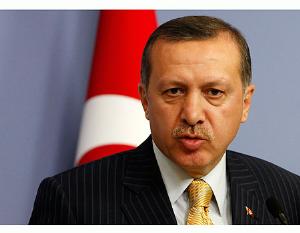 Turkish Prime Minister Recep Tayyip Erdogan was enraged Wednesday by documents exposed by WikiLeaks which contend, among other things, that he has secret offshore bank accounts.
“I don’t have a penny in Swiss banks, and I have nothing to prove to anyone,” he told a press conference in Ankara.
Journalists described Erdogan as furious, directing his ire at the Turkish Opposition as well as the free press, which covered the WikiLeaks documents extensively, calling them “opportunists happily engaging in gossip”.
“If you prove the claims are correct, I will announce my resignation forthwith. But if the opposite turns out to be true, will you resign as well?” he asked the journalists. “The US administration must hold the writers of these cables accountable for dealing in baseless reports, slander, and libel.”
Erdogan was mainly upset about a secret document dated December 30, 2004, in which the US ambassador to Turkey, Eric Edelman, wrote he had heard from contacts that Erdogan was holding eight bank accounts loaded with private funds in Switzerland.
Other documents revealed that US officials in contact with Erdogan tended to describe him as an “extremist” who hates Israel and surrounds himself with “fawning” aides and advisors. Memos leaked by the site says the US had defined his foreign minister, Ahmet Davutoglu, as extraordinarily dangerous.
Wiki-Leaks Serves Israeli Agenda Of Demonizing Iran
By Joe Quinn | Sott.net | November 30, 2010
I obviously missed the momentous occasion when the mainstream media turned anti-war. But who can now deny that it is so when we see Wiki-leaks and the mainstream media joining forces to expose the ugly truth of the US invasions of Iraq, Afghanistan, and more recently, what the US state department thinks of world leaders? I mean, that is what is happening, right?
Wrong.
What is happening is that Wiki-leaks is being promoted by the media in order to sell the same old lies, except that now the lies are coming sugar-coated, with a ‘whistle-blower’ gloss to better enable digestion. The lies themselves don’t frustrate me so much anymore, and I can understand why the general public are fooled, but I have to admit to being disappointed at how effortlessly the Wiki-leaks poison is being swallowed by so many supposedly alternative news sites. Sites like Counterpunch, Global Research, Citizens for a Legitimate Government and Information Clearing House, to name but a few, are all disseminating the Wiki-leaks story without so much as a hint of critical thought it seems.
From day one, the Wiki-leaks Afghan – and then Iraq – war logs revealed little if anything that was not already publicly available:
That the US uses assassination squads in Iraq and Afghanistan? Old news. Seven years ago the Guardian informed us that not only were US ‘hit squads’ operating in Iraq, but that they were being trained by the Israelis! And in any case, is the idea that ‘hit squads’ are being used to track down the evil ‘Taliban’ in Afghanistan more appalling than the fact, splashed across American broadsheets earlier this year, that Obama signed a bill authorizing the assassination of American citizens by the CIA??
That the US pays the Iraqi and Afghan media for positive coverage is not only old news, it’s only half the story! Have we already forgotten the Lincoln Group and the precocious Christian Bailey? In 2005 the Lincoln group won (was awarded) a $100 Million contract to essentially control the entire Iraqi media via its own ‘Iraqi’ publications and the monopolization of the Iraqi advertising industry on an ongoing basis. All of these details have been carried in the mainstream press, yet they have done nothing to stop the bogus endless ‘war on terrorism’. Why then are we being encouraged to expect that the Wikileaks documents, which convey the same information, will fare any better? Is it because these details will soon be consigned to the memory hole (again) while other, more strategically important, details will be repeated ad-nauseum?
That the US has killed thousands of innocent civilians in Iraq and Afghanistan? Old news. In fact, on this one, the Wiki-leaks documents offered support for the much lower estimation of deaths in Iraq and Afghanistan by the discredited ‘Iraq Body Count’ rather than the much more realistic estimation of almost 1.5 million (in Iraq) by Just Foreign Policy
But quibbling over the number of dead Muslims is not important these days anyway, after all, they’re only Muslims, not real people, and the over-all exposure by the mainstream media of US misdeeds in Iraq and Afghanistan is, in itself, no bad thing. If Wiki-leaks left it at that, I would be more than happy to applaud the mysterious Mr Assange and the equally mysterious provenance of his documents. But the Wiki-leaks documents tell much more than arbitrary killing in wars of conquest, they also provide support for the continuation and expansion of those wars, most notably to Iran and Pakistan.
For example, the Afghan ‘war logs’ offered ‘evidence’ that Pakistan is helping the Taliban – that’s Pakistan, and not, as has been reported, the CIA:
Persistent accounts of western forces in Afghanistan using their helicopters to ferry Taleban fighters, strongly denied by the military, is feeding mistrust of the forces that are supposed to be bringing order to the country.
One such tale came from a soldier from the 209th Shahin Corps of the Afghan National Army, fighting against the growing insurgency in Kunduz province in northern Afghanistan. Over several months, he had taken part in several pitched battles against the armed opposition.
“Just when the police and army managed to surround the Taleban in a village of Qala-e-Zaal district, we saw helicopters land with support teams,” he said. “They managed to rescue their friends from our encirclement, and even to inflict defeat on the Afghan National Army.”
The UK Guardian’s summation of the Afghan war logs was this:
– How a secret “black” unit of special forces hunts down Taliban leaders for “kill or capture” without trial.
– How the US covered up evidence that the Taliban have acquired deadly surface-to-air missiles.
– How NATO commanders fear neighbouring Pakistan and Iran are fuelling the insurgency.
– How the Taliban have caused growing carnage with a massive escalation of their roadside bombing campaign, which has killed more than 2,000 civilians to date.
Are these the type of revelations that are going to cause serious problems for the US governments? Are they going to outrage the public? Having been conditioned for years to believe that the ‘Taliban’ are evil monsters, are people going to be angry or quietly proud that a ‘secret special forces unit’ is hunting the Taliban down ‘without trial’?
Does the ‘revelation’ that the Taliban acquired surface-to-air missiles damage or bolster the US government claim that they are fighting a war against a formidable foe in Afghanistan? Of what significance is it that the coalition covered up this alleged ‘fact’?
And the data that the Taliban ‘massively escalated their roadside bombing campaign, killing more than 2,000 civilians’; is this damaging to the US government, or ‘evidence’ that the US is fighting the good fight in Afghanistan?
The other English language paper that ran with the Afghan ‘war logs’ was the NY Times. Their headline summation told us:
Pakistan Spy Service Aids Insurgents, Reports Assert
The fate of Combat Outpost Keating illustrates many of the frustrations of the allied effort: low troop levels, unreliable Afghan partners and a growing insurgency.
The military and intelligence reports provide a real-time history of the Afghan war from the vantage point of American troops actually doing the fighting and reconstruction.
So, thanks to Wiki-leaks, the unlikely darling of the mainstream media, the world is being informed that the ‘enemy’ in Afghanistan is growing stronger, Pakistan and Iran are to blame, and brave US troops are engaged in ‘reconstruction’ there!
But Pakistan and the Taliban are not the main target of disinformation in these documents. As more documents are released, it becomes clear that, sitting square in the bulls-eye, is Iran. The initial round of leaks provided this sensational ‘revelation’, reported here by the UK Telegraph:
Wiki-leaks: how Iran devised new suicide vest for al-Qaeda to use in Iraq
Iranian-backed forces supplied insurgents attacking coalition troops and devised new forms of suicide vests for al-Qaeda, according to assessments released by Wiki-leaks.
Only in their wildest dreams could the war-mongers in Washington and Tel Aviv have wished for a more on-message leak of ‘secret information’.
And so to the latest raft of documents, partially released just a few days ago. When I read their contents, to say that I was shocked would be to grossly over-state my reaction. I could have written them myself:
Wiki-leaks: Iran ‘obtains North Korea missiles which can strike Europe’
This one, I have to admit, is entirely believable because, after all, everyone knows Saddam had the same capability several years ago, remember? In fact, this ‘revelation’ about Iran’s capability to threaten Europe is even more believable than the ‘sexed-up’ Iraq dossier claim, because this revelation comes from Wiki-leaks, an honest-to-god whistle blower organization, right? I mean, there’s just no way that agents working on behalf of the US and Israeli governments could possibly use such an organization to spread propaganda, right?
Is there no one in the alternative news community that can see this for what it is? North Korea supplying missiles to Iran to attack Europe?! Right when the US and Israel are involved in a protracted effort to demonize Iran to the world and the US has an aircraft carrier sitting off the Korean Coast!? Is all of this meant to be so obvious, or did my reading of ‘psychological operations for dummies’ gift me with amazing insight into how political propaganda really works?
Does anyone truly believe that the fact that someone in the US State Department thinks that Sarkozy is an ‘Emperor with no clothes’ will do any real damage? Is this meant to be a secret? It is certainly no secret to over 60% of the French public who, years ago, openly stated as much. Likewise the ‘revelation’ about Berlusconi; ‘feckless, vain and ineffective as a modern European leader’? What about ‘senile, megalomaniac, psychopath, pedophile’ this is what the Italians and most Europeans are saying, does the US State Department not read the papers before compiling ‘secret dossiers’ on foreign leaders?
And what of the the North Korean dictator Kim Jong-il? He’s a ‘flabby old chap’ according to these ‘damaging reports’. Is this meant to cause some kind of diplomatic rift between North Korea and Washington before or after the USA and its client state of South Korea bombs Kim and a few million North Koreans back to the stone age? And Iranian President Ahmadinejad – ‘Hitler’?? Does anyone expect the Obama government to want to retract that one or hide it from the public? More to the point, are we all suffering from collective amnesia? Who has repeatedly referred to Iran and it’s democratically-elected leader as Nazi Germany and a new Hitler? Anyone? Ok, here’s a hint.
Ok, so I mentioned Israel a couple of times. Why? Here’s one reason, from the horse’s mouth:
In Israel the prime minister, Benjamin Netanyahu, said that he felt vindicated by [Wiki-leaks] revelations about the extent of international and Arab concern about Iran and its nuclear programme. “Israel has not been damaged at all by the WikiLeaks publications,” Netayahu said.
“The documents show many sources backing Israel’s assessments, particularly of Iran. Our region has been hostage to a narrative that is the result of 60 years of propaganda, which paints Israel as the greatest threat. In reality leaders understand that that view is bankrupt. For the first time in history there is agreement that Iran is the threat,” he said.
There is also the fact that it is public knowledge that Israel operates an extensive and very well-entrenched network of spies in the US, including the infamous Israeli art students.
In 2005 the FBI noted, for example, that Israel maintains “an active program to gather proprietary information within the United States.” A key Israeli method, said the FBI report, is computer intrusion.
In determining the origin of the Wiki-leaks documents, we need ask ourselves but one question: in whose interest is it to put pressure on the US government through the release of documents to the press (via Wiki-leaks) that force the US to do a certain amount of damage control, while simultaneously portraying Iran as the biggest threat to world peace? Because that, in the final analysis, is the overall effect of the Wiki-leaks documents. Wiki-leaks performs so poorly in the ‘smell test’ that I feel confident in suggesting that the documents may not even be original documents; and if they are, they have very likely been amended in such a way that they serve the Israeli/Zionist agenda.
On Korea, Here We Go Again!
By Robert Parry | Consortium News | November 24, 2010
If American journalism should have learned one thing over the years, it is to be cautious and skeptical during the first days of a foreign confrontation like the one now playing out on the Korean Peninsula. Often the initial accounts from the “U.S. side” don’t turn out to be entirely accurate.
While you can delve back through history for plenty of examples, today’s U.S. journalists might remember events like the Gulf of Tonkin clash that opened the door to the disastrous Vietnam War and the misplaced certainty about Iraq’s WMD that led to a bloody U.S. invasion and occupation.
In both cases, contrary claims from the “enemy side” were discounted and mocked as U.S. journalists puffed out their chests and waved the flag.
Today’s Korean crisis over an exchange of artillery fire between North Korea and South Korea is similar. Though the evidence is that South Korea fired first, you wouldn’t know that if you’ve been watching most U.S. news shows and reading the major newspapers, which have laid the blame squarely at the doorstep of North Korea.
To get an inkling of the actual chronology, you’d have to read between the lines or carefully examine a graphic published in the New York Times. Along with a map of the conflict zone, the Times included this notation: “South Korea had been firing test shots from Baengnyeong Island, according to a South Korean official.”
But you wouldn’t find much about that fact in the accompanying news articles. Instead, the Times, like other major U.S. news outlets, offered up ready-made narratives for the crisis – that North Korea was acting in an aggressive and provocative manner to shake down the international community for more aid, or to solidify the power of the ruling family, or some other self-serving reason.
And, who knows? There might be some truth to that. However, it’s also possible, as the North Koreans have stated, that they were reacting to what they interpreted as an unprovoked barrage by the South Korean military from an island only a few miles off the North Korean coast.
In a backhanded way, the New York Times lead editorial does acknowledge this possibility, although the article mostly parrots the conventional wisdom about North Korean recklessness and the failure of China to rein in its dangerous neighbor.
“On Tuesday,” the Times wrote, China “was still in denial. After the [North Korean] shelling [of a South Korean military base], China called only for a resumption of six-party nuclear talks.”
However, the Times editorial then notes that the North Korean “attack on Yeonpyeong Island occurred after South Korean forces on exercises fired test shots into waters near the North Korean coast. We hope South Korea’s president is asking who came up with that idea. But the North should have protested, rather than firing on a populated area.”
So, at least the Times marginally acknowledges a competing narrative, that the ever-paranoid North Koreans interpreted a barrage against their shoreline as a provocation that merited a muscular response directed against a South Korean military base.
Still, for the most prominent newspaper in the United States, a country that has repeatedly invaded and bombed other nations and killed hundreds of thousands if not millions of their inhabitants, isn’t it a bit hypocritical to lecture a small country about how it should respond to an enemy firing at it?
Double Standards
But such is the never-ending disconnect between the U.S. news media’s righteous indignation about what adversarial countries do and what the United States and its allies do.
The U.S. government, with its vast nuclear arsenal, leaves “all options on the table” when discussing how to confront fledgling nuclear programs in North Korea and Iran (which denies it even wants nuclear weapons). Meanwhile, Washington refuses to acknowledge that its ally, Israel, is a full-blown rogue nuclear state with a sophisticated and undeclared nuclear arsenal of its own.
So, instead of anything approaching “objectivity,” the U.S. news media dishes out selective outrage. And those double standards were out in force regarding the latest Korean crisis.
The neoconservative Washington Post was back in full belligerency mode with a lead editorial urging a stern response against North Korea. Unlike the Times, which at least acknowledged the South Korean provocation, the Post saw only a black-and-white scenario, with South Korea wearing the white hat and the North the black hat.
The Post’s editorial-page editors behaved much the same during the run-up to war with Iraq, stating as undisputed fact the existence of Iraq’s non-existent WMD programs. After the invasion – and the failure to find the WMD – Post’s editorial page editor Fred Hiatt noted in an interview with the Columbia Journalism Review in 2004:
“If you look at the editorials we write running up [to the war], we state as flat fact that he [Saddam Hussein] has weapons of mass destruction. If that’s not true, it would have been better not to say it.”
But Hiatt, who remains in the same job more than six years later, was back doing the same thing on Wednesday in connection with another country from George W. Bush’s “axis of evil.”
“North Korea’s artillery attack against a South Korean island Tuesday was the latest and arguably most reckless in a series of provocations by its Stalinist regime,” the Post editors wrote, also citing as flat fact that the North had “torpedoed a South Korean warship, killing 46 sailors” earlier this year, a charge North Korea denies.
The Post continued: “Now comes the shelling of an area populated by civilians as well as South Korean troops, two of whom were killed. This blatantly criminal act will have the probably intended effect of forcing the Obama administration to pay attention to a regime it has mostly ignored. But it should not lead to the economic and political bribes dictator Kim Jong Il has extracted in the past.
“It’s hard to know what is motivating Pyongyang’s behavior; experts offer varying explanations even while conceding they don’t know much.
“Some say Mr. Kim is creating an atmosphere of crisis to help smooth a transition of power to his son. Others contend the regime is hoping to force the lifting of U.S. sanctions and the resumption of international aid, which has dwindled since Mr. Kim failed to fulfill a nuclear disarmament agreement.”
The Post makes no reference to the possibility that North Korea simply overreacted to what it saw as an attack from the South. Nor has the Post ever acknowledged that President George W. Bush’s invasion of Iraq — endorsed by the Post and causing the deaths of hundreds of thousands of Iraqis — was a “blatantly criminal act.”
A Hard Line
While urging the Obama administration to take an especially hard line today, the Post criticized prior administrations for granting North Korea “political and economic concessions in exchange for promises of disarmament. In each case, Mr. Kim pocketed the benefits but refused either to fully disclose or to irreversibly dismantle his nuclear weapons and missiles.”
The Post, however, has never been known to criticize Israel for pocketing billions of dollars in U.S. aid – and counting on unwavering U.S. political support – without ever disclosing or dismantling its array of nuclear weapons and delivery systems, which are far more sophisticated than North Korea’s.
Instead, the Post was again applying double standards, again beating the war drums. It called on the Obama administration to “make clear … that the United States is prepared to help South Korea defend itself from attack.”
The Post also demanded more sanctions on North Korea and more pressure on China. “The United States and its allies should hold Beijing responsible for putting a stop to Mr. Kim’s dangerous behavior,” the Post declared.
However, before the war rhetoric gets completely out of control again – and creates another political dynamic that leads toward a bloody escalation – perhaps the U.S. news media should reflect for a moment on all the other times the American press corps has let itself and the country be stampeded into a dangerous misunderstanding of an international incident.
Robert Parry broke many of the Iran-Contra stories in the 1980s for the Associated Press and Newsweek.
Featured Video
“Historic Russia”: The Land Putin Will Not Give Back
or go to
Aletho News Archives – Video-Images
From the Archive
How Ukraine Tortured and Slaughtered Donbass
By Kit Klarenberg | Al Mayadeen | July 11, 2024
Almost immediately after the proxy war erupted, ISIS-tier footage of the torture and murder of Russians in Ukrainian custody emerged.
On July 6th, the New York Times published an astonishing investigation: In Ukraine, Killings of Surrendering Russians Divide an American-Led Unit. The article documents in grim detail how Chosen Company, an international volunteer battalion for Kiev, routinely executes Russian prisoners of war. It is the very first mainstream admission that this practice – a brazen breach of the Geneva Conventions, and a grave war crime – is widespread among Ukraine’s fighters, both foreign and homegrown. … continue
Blog Roll
 Aletho News
- Burnham tackles Britain’s poverty with aggression in Yemen
- Peace in Ukraine: the easy way – or the hard way
- Trump & the Rrrrussians
- US taxpayer money laundered back through Ukraine – Musk
- Before COVID, an NIH lab chief proposed making a SARS-like bat virus more infectious
- Gates, Bourla on Trial in Netherlands Accused of ‘Great Reset’ Scheme at Vaccine Injury Hearing
- BRITAIN’S WARNING: PREPARE FOR WAR
- “Historic Russia”: The Land Putin Will Not Give Back
- How the Cambridge Analytica scandal still haunts Mark Zuckerberg
- The Ongoing Cancellation Campaign Against a Dissenting Academic in Norway
- If Americans Knew
- DAILY UPDATE: Latest essential news on Palestine, Israel, & region
- Damning report shows the media must confront its failures on Gaza
- BBC senior broadcaster speaks out on Gaza coverage
- Netanyahu vows vast West Bank invasion in response to 20-minute skirmish that left 2 Israeli soldiers and 2 Palestinian fighters dead
- Tied up and tortured: Israel using US-made electroshock weapons on Palestinian detainees
- The outsourced risk: how newsrooms rely on Gaza’s freelancers without protecting them
- Gaza bakeries forced to shut as Israel blocks flour shipments
- Gaza’s breast cancer patients face a deadly wait for treatment amid Israel’s genocide
- DAILY UPDATE: Latest essential news on Palestine, Israel, & region
- The Israel Lobby’s Changing Fortunes
- No Tricks Zone
- Two New Studies Find Thwaites Glacier Melt Cannot Be Driven By Human Activity Or A Warming Ocean
- E-Cars Reduce CO2 Emissions By Only 41% Compared To Internal Combustion Engine Vehicles
- Predictions Made By Renowned Climate Professor Over Past Decades Have Been Proven To Be Poor
- New Study Suggests Large Regions Of The Pacific Ocean Have Been Cooling For The Last 80 Years
- Germany’s Green Energy Debacle: High Energy Costs Force Kahla Porzellan to Close After 182 Years!
- New Study: 50 Years Of The Most Aggressive ‘Net Zero’ Policies Can Only Affect The Global Climate By 0.03°C
- US September “Heat” Was No Record…Many Records Set Decades Ago
- Latest European Green Energy Debacle; Portugal’s Largest Flagship Solar Park Insolvent!
- Green Energy Debacle: German Expert Professor Fritz Vahrenholt Warns Of Severe Economic And Social Consequences
- Two More Paleo Reconstructions Affirm Meters-Higher Sea Levels Across Ireland, Brazil 7000-6000 Years Ago

