We Must Not Forget the U.S. War on Afghanistan
By Jacob G. Hornberger | FFF | December 8, 2022
When the Pentagon used NATO to provoke Russia into invading Ukraine, it had to know that one of the great benefits to such an invasion would be that it would enrich U.S. weapons manufacturers, who, of course, are an important, integral, and loyal part of America’s national-security state form of governmental structure.
And sure enough, those weapons manufacturers now have a lot to be grateful for. According to an article in the Wall Street Journal,
The world’s biggest arms makers are scaling up production of rocket launchers, tanks and ammunition as the industry shifts to meet what executives expect to be sustained demand triggered by the war in Ukraine.
The Pentagon has committed more than $17 billion in weapons and services to Ukraine, most of it drawn from existing stocks. It has also awarded about $3.4 billion in new contracts to replenish domestic and allies’ stocks.
The Pentagon knew that when it was forced to exit Afghanistan, where it had used a massive amount of weaponry for some twenty years to wreak death and destruction on that impoverished Third World country, its loyal army of arms manufacturers might begin to suffer. The crisis that the Pentagon has ginned up in Ukraine has clearly helped to alleviate that suffering.
But the Russian invasion of Ukraine had another beneficiary — the Pentagon itself. That’s because before Americans had a real opportunity to focus on the Pentagon’s 20-year deadly and destructive debacle in Afghanistan, everyone began focusing exclusively on Russia’s invasion of Ukraine. Thanks to the crisis in Ukraine, the entire Afghanistan misadventure has been relegated to a memory black hole.
But we really still need to do some serious soul-searching, examination, and analysis of the Afghanistan debacle. We cannot let the Pentagon use the crisis that it has ginned up in Ukraine as a way to shift our attention away from what happened in Afghanistan. It would be a grave mistake to just “move on” from Afghanistan and permit the Pentagon to focus our attention exclusively on the evil Russians and their invasion of Ukraine.
It is important to focus on the Constitution, the document that President Biden and the Democrats and even some Republicans have suddenly discovered and begun revering. It requires a congressional declaration of war before a president can legally wage war. There was never a congressional declaration of war against Afghanistan. That made the Pentagon’s war against Afghanistan an illegal one under our form of constitutional government.
Equally important, if President George W. Bush had sought a declaration of war from Congress, it is a virtual certainty that he would not have been able to secure it. That’s because Bush would not have been able to provide any evidence whatsoever of Taliban complicity in the 9/11 attacks. Without any evidence of such complicity, it is difficult to imagine Congress issuing a declaration of war against Afghanistan, especially knowing that such a war would inevitably wreak massive death and destruction on that impoverished Third World country.
Bush claimed that his invasion of Afghanistan was morally justified under the principle of “self-defense.” But that claim necessarily depended on showing that the Taliban regime was involved in the 9/11 attacks. No such evidence existed, and Bush knew it. Thus, if he had gone to Congress and sought a declaration of war based on “self-defense,” he would have gone there empty-handed insofar as evidence is concerned.
In fact, if Bush really believed that the Taliban regime had attacked the United States, he would never have gone to the United Nations seeking its approval to defend itself by invading Afghanistan. No president would do that.
What about the “harboring” charge? Bush claimed that his invasion of Afghanistan was morally justified because Afghanistan was “harboring” Osama bin Laden. Bush’s claim is without validity. To warrant a “harboring” charge, Bush would have to provide evidence that the Taliban regime had foreknowledge of the 9/11 attacks and was knowingly conspiring with bin Laden to provide him a base to plan the attacks. Bush knew that he had no evidence to support such a charge.
What Bush actually meant by his “harboring” charge was that the Taliban was refusing to comply with Bush’s unconditional extradition demand for bin Laden. But under international law, the Taliban regime had every right to refuse Bush’s extradition demand. That’s because there was no extradition treaty between Afghanistan and the United States. When there is no extradition treaty between two nations, neither one is required to comply with an extradition demand from the other.
What about the claim that the 9/11 attacks were an “act of war” and, therefore, the United States had the legitimate authority to invade Afghanistan to kill or capture bin Laden, who was living in Afghanistan?
It was a bogus justification for invading Afghanistan. Under U.S. law, terrorism is a criminal offense, not an act of war. That’s why terrorism prosecutions are brought in U.S. District Courts. No nation has the legitimate authority to invade another nation to kill or capture a suspected criminal who is residing in that country.
One of the most notorious terrorists was a CIA man named Jose Posada Carriles. He is widely considered to be one of the people who brought down a Cuban airline with a bomb over Venezuelan skies. He later safely ensconced himself in the United States.
When Venezuela demanded Posada’s extradition, U.S. officials protected him by refusing to comply, notwithstanding the fact that there was an extradition treaty between Venezuela and the United States.
Would interventionists who supported the deadly and destructive invasion of Afghanistan to kill or capture bin Laden have supported a similar deadly and destructive Venezuelan invasion of the United States to kill or capture Posada? I think not.
Using NATO to gin up the crisis in Ukraine is bad enough. While U.S. arms manufacturers are clearly a beneficiary of that crisis, so is the Pentagon because it has caused people to forget what the Pentagon did to the people of Afghanistan and to just “move” on to Russia’s invasion of Ukraine. We must not let that happen, especially given the massive death and destruction that the Pentagon wreaked in its immoral and illegal war against an impoverished Third World country.
Merkel’s ‘confession’ may be ground for tribunal – Moscow

RT | December 8, 2022
A confession by former German chancellor Angela Merkel regarding the true nature of the Minsk agreements – a roadmap for peace in Ukraine that was brokered by Berlin – could be used as evidence in a tribunal involving Western politicians responsible for provoking the ongoing conflict between Moscow and Kiev, Russian Foreign Ministry spokeswoman Maria Zakharova has said.
The former German leader admitted in an interview with Die Zeit on Wednesday that the actual purpose of the Minsk agreements was to give Ukraine time to prepare for a military confrontation with Russia.
“They talk a lot about legal assessments of what is happening around Ukraine, certain tribunals and so on in all sorts of ways,” Zakharova said during a media briefing on Thursday. “But this is a specific reason for a tribunal.”
She claimed that Merkel’s comments were nothing short of the testimony of a person who had openly admitted that everything done between 2014 and 2015 was meant to “distract the international community from real issues, play for time, pump up the Kiev regime with weapons, and escalate the issue into a large-scale conflict,” Zakharova added.
She said Merkel’s statements “horrifyingly” reveal that the West uses “forgery as a method of action,” and resorts to “machinations, manipulation and all kinds of distortions of truth, law and rights imaginable.”
The spokeswoman claimed that the West had known well in 2015, when it spent hours negotiating the second part of the Minsk accords, that it would never even attempt to fulfill any part of the agreements and would instead pump weapons into Kiev.
“They did not feel sorry for anyone: women, children, the civilian population of Donbass or the whole of Ukraine. They needed a conflict and they were ready for it back then, in 2015,” Zakharova said.
Earlier this month, a number of Western officials called for the creation of a special UN-backed court to investigate alleged war crimes committed by Russia during its ongoing military campaign in Ukraine.
The Kremlin has said the West has no legal or moral right to set up any courts to investigate or prosecute Russia over the conflict, which Moscow claims was ultimately provoked by the US and its allies.
Merkel confirms Ukraine peace deal was a ploy

RT | December 7, 2022
The 2014 ceasefire brokered by Berlin and Paris in Minsk was an attempt to give Kiev time to strengthen its military and was successful in that regard, former German chancellor Angela Merkel argued in an interview published on Wednesday.
In an extensive interview about her 16 years in power, Merkel told Zeit magazine her policy towards Russia and Ukraine was correct, even if not successful.
“I thought the initiation of NATO accession for Ukraine and Georgia discussed in 2008 to be wrong,” Merkel said. “The countries neither had the necessary prerequisites for this, nor had the consequences of such a decision been fully considered, both with regard to Russia’s actions against Georgia and Ukraine and to NATO and its rules of assistance.”
She described the September 2014 Minsk agreement as “an attempt to give Ukraine time.” France and Germany had brokered a ceasefire after the failure of Ukraine’s attempt to subdue the republics of Donetsk and Lugansk by force.
“[Ukraine] used this time to get stronger, as you can see today,” Merkel continued. “The Ukraine of 2014/15 is not the Ukraine of today. As you saw in the battle for Debaltsevo in early 2015, [Russian President Vladimir] Putin could easily have overrun them at the time. And I very much doubt that the NATO countries could have done as much then as they do now to help Ukraine.”
The defeat at Debaltsevo resulted in the second Minsk protocol being signed in February 2015. Merkel said that it was “clear to all of us that the conflict was frozen, that the problem had not been solved, but that gave Ukraine valuable time.”
Meanwhile, she defended the decision to build the Nord Stream 2 pipeline for Russian gas, since refusing to do so would have “have dangerously worsened the climate” with Moscow given the situation in Ukraine. It just so happened that Germany couldn’t get gas elsewhere, she added.
Asked for any self-criticism, Merkel told Zeit that “the Cold War never really ended because Russia was basically not at peace,” and that NATO “should have reacted more quickly to Russia’s aggressiveness” in 2014.
Pyotr Poroshenko, who became president of Ukraine after the 2014 US-backed coup in Kiev, told a domestic audience in August 2015 that Minsk was a ruse to buy time for a military build-up. He admitted as much to the West in July 2022, in an interview with German media.
Russia sent troops into Ukraine on February 24, citing Kiev’s failure to implement the Minsk agreements, designed to give the regions of Donetsk and Lugansk special status within the Ukrainian state. The Kremlin recognized the Donbass republics as independent states, which have since voted to join Russia alongside with most of the regions of Kherson and Zaporozhye, and demanded that Ukraine officially declare itself a neutral country that will never join any Western military bloc. Kiev insists the Russian offensive was completely unprovoked.
Can Germany’s plan for confrontation with Russia work?
By Drago Bosnic | December 8, 2022
On November 14, Der Spiegel published a report according to which leaked documents of the German Ministry of Defense indicate that the Bundeswehr is preparing for a war with Russia. The secret draft titled “Operational guidelines for the Armed Forces” was authored by the German Chief of Defense Staff, General Eberhard Zorn. It was written in late September and according to General Zorn, “an attack on Germany can potentially happen without warning and can cause serious damage, even existential. Therefore, the defense capabilities of the Bundeswehr are essential for the survival of the country.” The German Chief of Defense Staff stressed the need for a “mega-reform” of the Bundeswehr, adding that “for approximately 30 years, the focus placed on missions abroad no longer does justice to the current situation, with possible consequences that endanger the system.”
Instead, General Zorn thinks it’s crucial for Germany to focus on “the Atlantic defense of the Alliance,” with the “capacity to provide visible and credible deterrence, to dominate Germany’s military action plan.” In this regard, specifically, “the Bundeswehr must arm itself for a forced war, since a potential confrontation on NATO’s eastern flank has once again become more probable.”
The draft clearly identified Russia as the “immediate threat”. However, the designation makes little sense, as Russia is now over 1,500 km away from Germany, with Belarus, Poland and Ukraine standing between the two countries. While it made some sense for Germany to maintain a large, highly trained military force with constant combat readiness during the (First) Cold War, as the USSR had approximately half a million soldiers in East Germany at the time (in addition to other Warsaw Pact member states), the situation is effectively reversed nowadays.
It’s precisely NATO that’s encroaching on Russia’s western borders, with the crawling expansion including coups and other interventions in various Eastern European and post-Soviet states. This aggression by the political West forced Moscow’s hand, culminating with the February 24 counteroffensive. However, the German plan has already been set in motion and no matter how ill-conceived it is, an analysis of how it could play out is in order. The plan certainly isn’t new, as it has been in the works for well over half a year. Back in early March, the German government announced it would allocate approximately €100 billion to upgrade the Bundeswehr, which has become a mere shadow of what it was during the heydays of the (First) Cold War.
The 2021 budget for Bundeswehr was approximately €50 billion. If Berlin was to increase that by close to 100%, it would put extreme pressure on the struggling German economy. Such a massive upsurge in military spending wouldn’t only take away from other branches of the government, but it would also come at a time when the sanctions boomerang from the failed economic siege of Russia is ravaging all of the European Union. The bloc hasn’t even begun recovery from the fallout of the COVID-19 pandemic, but it’s already facing severe economic contraction resulting from anti-Russian sanctions and policies. Much of Germany’s prosperity was based on access to cheap Russian energy, which is now a thing of the past thanks to Berlin’s suicidal subservience to “Euro-Atlantic values”.
In essence, this means that Germany is doomed to massively increase military spending while having significantly fewer resources at its disposal to do so. This doesn’t even factor in how the German people would react to such a momentous foreign (and, to a large extent, domestic) policy shift. As the EU’s largest and most important economy, Germany would also cause shockwaves throughout the bloc if it were to go ahead with such a plan. With Russian energy supplies either gone or effectively unaffordable, any government in power in Berlin would have virtually the entire German private sector against it, with the notable exception of the arms industry, which would be the only one not contracting thanks to increased orders for the Bundeswehr.
On the other hand, even this plan is bound to hit several major snags before it’s even put in motion. The US Military Industrial Complex dominates in NATO, making it the primary beneficiary of German (re)militarization. Domestic weapons production has atrophied significantly in the last 30 years, while the globalization of the world economy led to the rest of it being outsourced to other countries, both in Europe and elsewhere around the globe.
New reports indicate that Berlin’s decision to supply weapons and munitions to the Kiev regime is severely depleting German stockpiles, a problem further exacerbated by the significant slowdown of component imports from China. This is also the result of the German government’s self-destructive push for an economic decoupling of the EU and the Asian giant. Beijing has been extremely patient with the bloc’s subservience to Washington DC, but it seems this patience has now run out.
Another major issue will be the reaction of other EU members. With the notable exception of the clinically Russophobic Baltic states and Poland, the rest of the bloc is extremely concerned with the economic fallout of the failed sanctions war on Russia. As the German economy contracts, the rest of the EU will almost certainly follow suit, causing massive political instability.
At least half a dozen European governments have already fallen, while the neoliberal elites in Brussels are now forced to contend with new anti-liberal political parties in power in several EU member states. This is bound to cause further rifts within the bloc. It will be followed by the general militarization of the EU, which will further erode the already falling living standards and cause more political instability. This will turn Europe into an economically devastated bulwark that serves no other purpose except to contain Russia while the US shifts focus to the Asia-Pacific region.
Drago Bosnic is an independent geopolitical and military analyst.
US defense bill authorizes more Ukraine and Taiwan aid
RT | December 7, 2022
US lawmakers have reached a compromise on the National Defense Authorization Act, agreeing to approve $45 billion more in overall military spending in 2023 than President Joe Biden had requested, as well as multiple provisions for new “security assistance” to Ukraine and increased cooperation with Taiwan.
The House and Senate Armed Services Committees released their final draft of the NDAA on Tuesday night following lengthy negotiations, seeking to bring it up for a vote in the House by the end of the week. The massive spending bill would devote a total of $858 billion for next year’s defense budget, with lawmakers arguing the increase compared to 2022 is needed due to soaring inflation and costly arms shipments to Kiev.
In addition to setting out basic yearly funding for the Defense Department and the Department of Energy, which manages America’s nuclear arsenal, the latest NDAA would approve another $800 million for the Ukraine Security Assistance Initiative – $500 million more than President Biden’s initial request.
Since February, the Biden administration has approved more than $19 billion in direct military aid for Kiev from the Pentagon’s stockpiles, and the bill seeks additional funding to boost production and replenish the US military’s dwindling stocks.
US officials also agreed to require periodic reports from the Pentagon in the “short and medium term” on US arms sent to Ukraine, after several Republican lawmakers raised concerns that American weapons were not being properly tracked on reaching the country’s chaotic battlefield.
The new spending bill also authorizes the Taiwan Enhanced Resilience Act, which is designed to “increase security cooperation” with the island and would allocate up to $10 billion for that purpose over the next five years. The latter provision is likely to trigger condemnation from Beijing, which considers Taiwan part of its sovereign territory and has repeatedly urged Washington to halt all direct dealings with Taipei.
Another project targeting China, the US Pacific Deterrence Initiative, will receive another $11.5 billion in new investments under the current draft legislation. The Pentagon has noted the initiative aims to confront the supposed “multi-domain threat” posed by Beijing and expand the US military footprint in the Indo-Pacific region.
Considered ‘must-pass’ legislation due to its increasingly wide scope, versions of the NDAA have been approved by US lawmakers every year since 1961. The measure is also frequently described as a “legislative vehicle,” as Republicans and Democrats usually seek to include a range of issues unrelated to defense in each year’s spending bill.
Ambassador proud of Germany’s destruction under her regime
RT | December 7, 2022
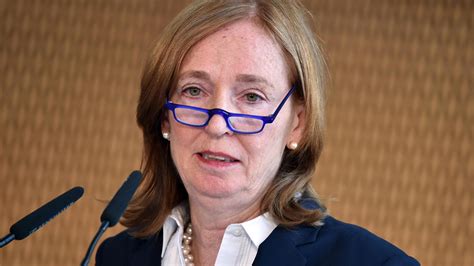
The conflict in Ukraine has fundamentally transformed Germany for the better, Berlin’s envoy to Washington has argued, while acknowledging her country has been far more affected by the economic backlash of anti-Russian sanctions than the US.
Emily Haber opened the op-ed, published by the Washington Post on Monday, with a description of “dimly lit” German airports and streets, cold homes and public buildings, rising gas prices and inflation running at 10%. The country also has to deal with over a million displaced Ukrainians, who are entitled to full health insurance, social benefits, housing and education at government expense.
“Increasingly, it is Europe (and not least Germany) that is bearing the brunt of the sanctions, not the United States,” writes Haber, before pivoting to argue that this doesn’t really matter.
German suffering is “almost nothing” compared to the hardships of the Ukrainian people, according to Haber, but more importantly, “our national psychology is undergoing a profound transformation.”
She calls the decades-long assumptions underlying Berlin’s policies, mainly that trade would promote “stability, transparency and, eventually, systemic change” an illusion that has been dispelled by the conflict.
“To be sure, there are dissenting voices, and there is discontent brewing in some parts of the country,” the ambassador notes in passing.
Germany has cut itself off from Russian energy imports, increased the export of weapons – mainly to Ukraine – and amended its constitution to create a 100 billion-euro fund for NATO-mandated “defense spending.”
Chancellor Olaf Scholz’s decision to increase military spending in February is the “most significant turning point in decades” for Germany, according to Haber. Even the reunification in 1990 “vindicated past strategic decisions and did not require a break with them,” unlike what’s happening now.
While admitting that all of this may seem irrelevant to Ukraine – whose priorities ought to matter more, she suggests – Haber is still proud of the “real and lasting” change Germany has achieved “in such a short time and at great psychological and material cost.”
“And we are happy to see that it is deepening our already close ties with our allies – first and foremost the United States,” she concludes.
American “human rights” against the people of Yemen

By Viktor Mikhin – New Eastern Outlook – 07.12.2022
As US officials travel the world lecturing everyone on human rights, that same world has accused Washington of being the number one human rights violator. Saudi Arabia’s war against Yemen, instigated and widely supported by the West and the United States in particular, is a prime example of this.
On March 25, 2015, the then Saudi Arabian Ambassador to the United States, Adel al-Jubeir, under pressure from the American ruling circles, declared war on Yemen. This was done specifically from the American capital, Washington. He said that the military action would be “aimed at protecting the people of Yemen,” adding that “the operation will be limited in nature.”
The alleged “limited in nature” war has already turned into eight years of almost daily aerial bombardments in the provinces of the Saudi kingdom’s southern neighbor. Prior to the war, Yemeni officials argued that Riyadh controlled nearly every sector of Yemeni society, from the economy to culture, and that the time had come for independence, sovereignty and territorial integrity. This war still brings innumerable hardships and misfortunes to the Yemenis, from which the “democratic” United States shamelessly capitalizes.
The list of US support for the Saudi war in Yemen is so long that senior Yemeni officials say it was America that started the war against their country, using the Saudis and other Gulf kingdoms as its “proxies.” Human rights organizations accuse other Western countries of complicity in what they call war crimes against the defenseless Yemeni people. But the same “democratic” United States remains conspicuously silent about this, forbidding not only its own, but also the Western media to write about this massacre in negative terms.
In March 2015, a Bacchanalia of American politicians, economists and financiers emerged, who all together and individually simply pitted Riyadh against Yemen. Even the American media did not hide this interest in unleashing another war on the Arabian Peninsula. First, there were huge orders from the Saudis for the purchase of a wide variety of weapons, and the American military-industrial complex was loaded to capacity, with work conducted in three shifts. It is quite natural that the prices for these weapons were very high, and the Saudis did not even discuss them, buying weapons in bulk for a future war. Second, having got stuck in this difficult war against the fraternal Yemeni people, Riyadh could not take any independent steps on the world stage, obediently trailing in the wake of Washington’s policy. And besides, the Washington administration was pleased that the Yemenis had been “taught a lesson” by the Saudis, avenging the unsuccessful drone war against Yemen that the Pentagon had unleashed and pursued for a whole decade.
When war broke out in Yemen, the US Department of Defense immediately provided hundreds of billions of dollars worth of weapons to the Saudi-led coalition. Among the many other types of support the US provided to the Saudis during the war was intelligence products to be targeted by US-made Saudi warplanes. The Pentagon has also provided military advice and logistical support, such as air-to-air refueling of military aircraft, while Washington said it had authorized US contractors to service Saudi military aircraft.
But the war did not go quite as America had planned. Washington simply did not expect the brave resistance of the Yemeni people and their staunch support for the popular revolution led by the Houthi movement (officially called Ansar Allah). The Pentagon had to urgently intervene in hostilities, supplying not only modern weapons, but also air defense systems. And yet, the Yemenis delivered several sensitive strikes against Saudi forces, including successfully shelling an oil field and refinery on Saudi territory. These actions led to a surge in oil prices and sowed panic among the ruling circles in Saudi Arabia.
But the war has created an extremely difficult situation for civilians living in the poorest country in Western Asia. Especially for Yemeni children who are suffering from untold humanitarian conditions. Hundreds of thousands of people have died during the hostilities, due to American-made bombs. Saudi pilots, trained in the US and the UK, using American aircraft at the prompting of American military intelligence dropped American bombs on Yemeni houses, schools, hospitals, funeral parlors and foreign humanitarian organizations, forcing them to withdraw staff from the country.
Here is what the Yemeni monitoring group, Entesaf Organization for Women and Child Rights, recently published (compared to data from other groups and institutions, these are very conservative numbers):
– 8,116 children have been killed and wounded since the beginning of the US-Saudi war;
– 5,559 Yemeni children have become disabled as a result of hostilities since the beginning of the war;
– 632,000 children in Yemen are suffering from acute malnutrition that threatens their lives with death during the current year;
– 2,400,000 children do not attend school, forming a generation that has completely lost education.
Entesaf has documented that the number of Yemeni people with disabilities has increased from three million before the start of the US-backed war to 4.5 million today. This highlights the consequences of Yemen’s total blockade (in addition to the war being waged on it), which has placed its airspace, sea and land under unprecedented blockade by the West.
The organization also drew attention to the increase in child labor in Yemen due to the aggression and total blockade, pointing out that 1.4 million child laborers are deprived of their most basic rights, and that about 34.3% of child laborers are between the ages of 5 and 17. These new occurrences of child labor during the war are four times the rate of child labor than before the start of the war in Yemen.
In the healthcare sector, it is reported that public and private hospitals across the country are facing the threat of closure due to the blockade and detention by the US and Saudi Arabia of ships with petroleum derivatives.
Entesaf holds the coalition led by the US and Saudi Arabia responsible for all crimes and violations against civilians, especially children, in the last eight years of the war, calling on the international community, global organizations, human rights and humanitarian organizations to be held accountable for violations and heinous massacres that occurred against civilians. The organization also called on the international community to take effective and positive action to end the aggression and blockade against the civilian population and form an independent international commission to investigate all crimes committed against the Yemeni people and to bring to justice all those found complicit.
In August 2018, munitions experts reported that the bomb fired by Saudi warplanes that killed dozens of Yemeni children on a school bus was a 500-pound (227 kg) laser-guided MK 82 bomb made by Lockheed Martin, one of America’s largest arms manufacturers. Photos of the shrapnel taken immediately after the attack were sent to CNN, and a cameraman working for the company filmed the shrapnel footage. Munitions experts confirmed that the numbers on it identified Lockheed Martin as its manufacturer and that this particular MK 82 was a Paveway, which is a laser-guided bomb.
The CNN report said some of the bodies were so mutilated that identification was impossible, leaving behind scraps of school textbooks, mangled metal and one backpack. Of the 51 people who died in the attack, 40 were children. Another 79 people were injured, 56 of them also children.
Among the tens of thousands of Saudi airstrikes, another one was documented by CNN – a market strike by a US-supplied MK 84 precision bomb that killed 97 Yemenis. The bomb was very similar to the one that targeted a funeral parlor in October 2016, killing hundreds and injuring innumerable others.
These are just a few of the tens of thousands of similar attacks using American weapons to intimidate the Yemeni people into submission. However, the country’s armed forces, women and children have shown unprecedented resilience in their struggle.
Also during the war in Yemen, Washington’s complete disregard for human rights and its attempts to deprive children of their right to life was demonstrated. This applies not only to Yemen, but to US wars around the world that have resulted in unprecedented suffering for children, from Cuba and Vietnam to Western Asia and beyond. And it is the same United States that claims to be the flag-bearer of human rights and uses this pretext for its own political agenda in attacking numerous other countries.
Russia responds to Macron’s security guarantees offer
RT | December 6, 2022
The subject of security guarantees can be raised again if the West is serious about it, Russian Deputy Foreign Minister Sergey Ryabkov told reporters on Tuesday. Until then, he added, Moscow will continue to respond appropriately to any further NATO expansion.
Talks could begin “when they confirm that they are ready for some kind of more sensible and balanced dialogue in terms of interests,” Ryabkov said.
“If and when we hear that the West really has an interest in this, we will return to the topic,” the diplomat added. “But, as in the situation with the dialogue on strategic stability, which was unilaterally interrupted by the United States, we are not chasing anyone and we are not asking anyone for anything.”
His comments came after French President Emmanuel Macron said on Saturday – fresh from a visit to Washington – that NATO should be prepared to offer Russia security guarantees as part of any upcoming talks on ending the conflict in Ukraine.
Russia sent a set of security proposals to NATO and the US in December 2021, with Ryabkov playing a key role in the talks. Among other things, Moscow demanded the withdrawal of NATO’s offensive weapons from its borders and guarantees that Ukraine would never join the bloc.
In January, the US and NATO refused, saying they would only be interested in strategic arms control talks. Since the conflict in Ukraine escalated in February, the bloc has also moved to expand to Sweden and Finland.
Ryabkov said this would receive a “corresponding response” from Russia. “Do the countries who wish to join NATO need that? Why? This is ultimately a question for them to address. We will draw conclusions for ourselves, as we have done so far.”
The “strategic stability” Ryabkov mentioned was a reference to the abortive talks between Russia and the US in Cairo last month, dealing with an impasse over New START. Moscow suspended its participation in the treaty inspections mechanism in August, saying the US sanctions gave Washington an unfair advantage by preventing Russian inspectors from doing their work. Further talks on the treaty are not possible so long as the US continues arming Ukraine, Foreign Ministry spokeswoman Maria Zakharova said last month.
Beijing Rips ‘US’s Old Trick of Hyping China Threat’ as DoD Projects Four-Fold Jump in Chinese Nukes
By Ilya Tsukanov – Samizdat – 06.12.2022
China’s Defense Ministry has ripped Washington over a Pentagon report claiming the People’s Republic plans to ramp up its nuclear weapons stockpile to 1,500 warheads by 2035 and to make modifications to its nuclear doctrine.
“It should be emphasized that China firmly pursues a nuclear strategy of self-defense, adheres to the nuclear policy of no first use of nuclear weapons at any time and under any circumstances, and keeps nuclear capabilities at the minimum level required for national security,” Defense Ministry spokesman Tan Kefei said in a written press statement Tuesday.
Accusing Washington of engaging in baseless “speculation” about Beijing’s nuclear deterrent, Tan urged the US to “deeply review and reflect on its own nuclear policy” before “pointing fingers” at China.
“With the largest nuclear arsenal in the world, the US continues to upgrade its nuclear triad, vigorously seeks to develop or forward-deploy non-strategic nuclear weapons, lowers the threshold for using nuclear weapons, and conducts nuclear proliferation through the AUKUS trilateral security partnership, increasingly becoming the source of nuclear conflicts,” the spokesman said.
Tan added that as far as the Pentagon’s 2022 China report as a whole is concerned, it constitutes an example of “the US’s old trick to hype up the so-called ‘Chinese military threat’.” China is “strongly dissatisfied with and firmly opposed to the US’s move, and has lodged solemn representations with the US,” the spokesman said.
The US Department of Defense’s new report on China, released on November 29, characterizes the People’s Republic as “the only competitor with the intent and, increasingly, the capacity to reshape” the US-dominated world order. The report cites Chinese efforts to “modernize, diversify, and expand its nuclear forces,” and expects Beijing to increase the size of its nuclear arsenal from about 400 nukes now to “about 1,500 warheads by its 2035 timeline.”
The document further accuses China of planning to make modifications to its nuclear posture to account for more and better weapons systems, and suggests that the PRC “probably seeks lower yield nuclear warhead capabilities to provide proportional response options that its high-yield warheads cannot deliver.” Finally, the Pentagon paper expresses concerns about China’s “launch on warning posture,” which allows for nuclear missiles to be launched before an enemy first strike detonates.
How Much of a Threat Do China’s Nukes Pose to the US?
Estimates on the size of China’s nuclear stockpile range from 350-400 total warheads. Even if the PRC went ahead and more than quadrupled its total nuclear stockpile, as the Pentagon report claims, Beijing’s 1,500 nukes would still be just a fraction of the 5,550 warhead stockpile held by the United States. Amid recent US efforts to peg China into strategic arms limitation talks with Russia, Beijing has indicated that it would be “happy” to join such discussions if the nuclear superpowers first reduced their stockpiles to China’s level.
Notwithstanding China’s economic and technological might and growing geopolitical and strategic weight in the world, its nuclear deterrent remains extremely modest compared to the US. For example, while the US Navy operates a fleet of 14 Ohio-class ballistic missile submarines, each carrying up to 336 nuclear bombs – enough to obliterate the whole of China, the People’s Liberation Army Navy has six Type 094 missile subs, each carrying between one and seven warheads (for a total capacity of 12-84 warheads per sub).
China and India remain the only two nuclear weapons states with a no first use policy. The US’s nuclear doctrine, on the other hand, allows the president not only use nukes preemptively, but even against “non-nuclear weapons states.” At the same time that it has accused China of “probably” seeking low-yield nukes, the Pentagon has developed the W76-2 – a nuclear warhead with an explosive yield of about five kilotons (i.e. about a third of the power of the US nuclear bomb which leveled the Japanese city of Hiroshima in 1945). Nuclear arms experts have expressed concerns that such low-yield nuclear weapons pose a threat to global strategic stability by lowering the threshold for nuclear war.
‘We’ll Talk About This Later’: EU’s Borrell Sweeps Aside Security Guarantees for Russia
© AFP 2022 / BARTEK SADOWSKI
By Ilya Tsukanov – Samizdat – 06.12.2022
In late 2021, Moscow sent Washington and its allies two draft treaties on security guarantees designed to dramatically reduce tensions between Russia and the Western bloc. Weeks later, Kiev massed troops along the contact line in the Donbass and began to intensively shell the region, prompting Russia to kick off a military operation in Ukraine.
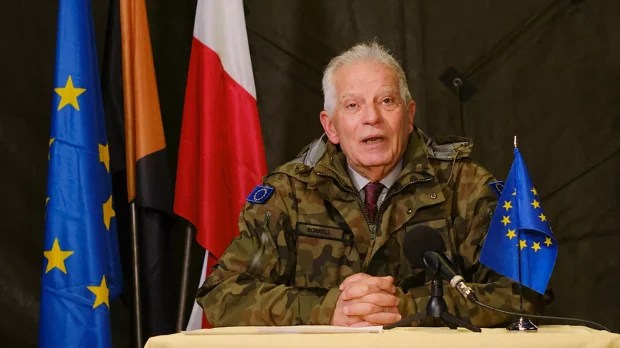
The end of the crisis in Ukraine will be achieved through “security guarantees for Ukraine,” not Russia, European Union foreign affairs chief Josep Borrell has said.
“As for Russia, we’ll talk about that later,” the EEU’s top diplomat told attendees of a symposium in Paris on Monday. “The end of this conflict will have to be done in compliance with international legality,” Borrell added, claiming this would include Moscow being made to pay “reparations” to Kiev, face “war crimes” trials, and withdrawing its forces.
Borrell also said that the crisis in Ukraine has solidified its “place in the EU.”
“It is written. History has decided for us,” he said.
Borrell’s comments appeared to be a direct rebuke to French President Emmanuel Macron, who said Saturday that he and his US counterpart Joe Biden sought to flesh out “the security architecture in which we want to live tomorrow,” and discussed “guarantees of security for Russia” if and when Moscow “returns to the table” for talks.
“One of the essential points is the fear that NATO will be at its door, and the deployment of weapons that can threaten Russia,” Macron said.
The French president received flak from Kiev over his comments, but slapped down Ukrainian officials’ objections. “I think we should not… try to create controversy where there is none,” he said at a summit in Tirana on Tuesday.
Borrell’s latest remarks weren’t the first time the top EU diplomat has called for an aggressive approach in Ukraine. In April, as some Western leaders encouraged Moscow and Kiev to resolve the crisis through negotiations, Borrell instead called for a military solution, saying “this war will be won on the battlefield” and pledging another €500 million in military support to Ukraine. Since then, the EU has sent over €29 billion in aid to Kiev.
Russian officials have repeatedly slammed Borrell for his ‘undiplomatic’ approach. In May, Russian Foreign Minister Sergei Lavrov reminded him that he was the bloc’s “top diplomat, and not the European Union’s military leader.”
Security Guarantees
Next week will mark the one year anniversary of Russia’s delivery of a pair of draft security treaties to the US and NATO designed to dramatically reduce tensions between Moscow and the Western bloc. The documents, released publicly by the Russian Foreign Ministry, proposed legally binding commitments by each side not to deploy troops, equipment, warships, missile systems and aircraft in areas where they may be seen as a threat to the other side, and asked Washington to pledge not to continue NATO’s eastward expansion, including in Ukraine. The document also asked parties to explicitly affirm that they do not consider one another adversaries.
NATO and Washington rejected the proposals in January, and stressed that the bloc’s “open door” policy will not change. Weeks later, the Donbass republics reported an unprecedented escalation in shelling, sabotage and sniper attacks by Ukrainian forces along the line of contact, and began the evacuation of hundreds of thousands of civilians to Russia. The Kremlin expressed concerns that Ukrainian troops were amassing in apparent preparation for an all-out assault on the Donbass, while NATO announced plans for new battle group deployments in the region. On February 24, 2022, citing threats to the Donbass posed by the Kiev regime, Russian President Vladimir Putin announced a special military operation in Ukraine aimed at demilitarizing the country and ‘de-nazifying’ its leadership.
In the nine-and-a-half months since, Moscow has repeatedly expressed readiness to restart talks, with Russia’s core conditions including no NATO membership for Ukraine, security for the Donbass, and recognition of Crimea as Russia. Kiev and its benefactors have rejected these conditions.
Featured Video

Trump asks Iran not to retaliate after he strikes Pickaxe Mountain
or go to
Aletho News Archives – Video-Images
Book Review
‘Why Fauci Must Rot in Prison’: A Tale of Two Diaries
By Jill Erzen | The Defender | October 13, 2026
Dr. Anthony Fauci’s private diary reveals a “mind-numbing” contradiction between what the former top U.S. infectious disease official knew about COVID-19 and what he told the public, senior White House adviser Peter Navarro, Ph.D., said last week on “American Thought Leaders.”
In his new book, “Why Fauci Must Rot in Prison,” due out Oct. 20, Navarro compares Fauci’s private entries to his own pandemic-era diary, and uses what he calls “a tale of two diaries” to argue that Fauci should face criminal prosecution.
“I show, actually, how a prosecution can and should happen … at the state level, most likely,” Navarro said. “He should wind up in prison, and we’ve got the receipts in this book to put him there.”
Navarro said Fauci repeatedly acknowledged important facts in private, then publicly pursued policies that contradicted those facts — with devastating consequences.
“What he says many times privately in his diary is so at odds with both his public behavior and public statements that it’s mind-numbing,” Navarro said.
Navarro examines the lasting damage caused by lockdowns and other pandemic policies, and the ongoing toll of long COVID.
His book also addresses questions about vaccine safety, including why healthy young people faced COVID-19 vaccination mandates despite concerns about myocarditis, and why women were not warned about miscarriage risks linked to the shots. … continue
Blog Roll
 Aletho News
- Yemen denounces international community’s silence on Saudi aggression, siege
- UAE and Saudi Arabia move toward renewed coordination against Sanaa
- How Iran’s two-week retaliatory strikes exposed cracks in US military architecture in Persian Gulf
- The mother of all propaganda: Why the hype over US MOAB strike against Iran is nothing but theater
- Iran says it possesses technology behind US 14-ton GBU bunker-buster
- Trump asks Iran not to retaliate after he strikes Pickaxe Mountain – w/ Prof. Marandi
- Vice President J.D. Vance’s Deceptive ‘Antiwar’ Campaign Speech
- Iran: Palestinians’ rights must not be compromised in Gaza’s future; US, Israel to blame for Hormuz situation
- Ongoing tales of Syrian chemical weapons
- Moscow blasts UN for ignoring torture of Russian POWs
- If Americans Knew
- Netanyahu’s spin on latest settler attack is laughable – Daily Update
- Israeli soldiers debunk Israel’s talking points
- In West Bank, Israeli settlers are totally out of control – Daily Update
- NPR investigation finds evidence of widespread fraud at mall kiosks tied to Israeli skincare brand
- Tucker Carlson exposes Israeli Lies about the Oct 7th attack, Charlie Kirk, and the U.S.
- Israel has detained thousands of Palestinian children since Oct 7th – over half spent time in solitary, many uncharged
- Israeli Analysis: Is Netanyahu Planning an ‘October Surprise’ Attack Before Israel’s Election?
- Israeli settlers brutally attack Palestinians and Washington Post female photographer, 65
- Words Have Changed, Occupation Continues: The Reality of the Gaza Ceasefire
- Gaza’s child amputees are growing faster than their prosthetics allow
- No Tricks Zone
- Predictions Made By Renowned Climate Proifessor Over Past Decades Have Been Proven To Be Poor
- New Study Suggests Large Regions Of The Pacific Ocean Have Been Cooling For The Last 80 Years
- Germany’s Green Energy Debacle: High Energy Costs Force Kahla Porzellan to Close After 182 Years!
- New Study: 50 Years Of The Most Aggressive ‘Net Zero’ Policies Can Only Affect The Global Climate By 0.03°C
- US September “Heat” Was No Record…Many Records Set Decades Ago
- Latest European Green Energy Debacle; Portugal’s Largest Flagship Solar Park Insolvent!
- Green Energy Debacle: German Expert Professor Fritz Vahrenholt Warns Of Severe Economic And Social Consequences
- Two More Paleo Reconstructions Affirm Meters-Higher Sea Levels Across Ireland, Brazil 7000-6000 Years Ago
- New Study: Earth And Venus Surface Warmth Largely Explained By Convection And Lapse Rate, Not CO2 Or Radiation
- 2025 Nature Paper Claiming Worsening Global Drought Gets RETRACTED …Heavily Flawed

