Iran calls for end to development, testing of nuclear weapons: Envoy
Press TV | December 16, 2020
Iran’s permanent representative to Vienna-based international organizations has called for an end to the development and testing of nuclear weapons, saying such a move is the first step toward total nuclear disarmament.
Kazem Gharibabadi made the plea at the 55th Session of the Preparatory Commission for the Comprehensive Nuclear-Test-Ban Treaty (CTBT) in the Austrian capital on Tuesday and underlined Iran’s long-standing position on the need for the complete elimination of all nuclear weapons.
“Iran supports the objectives stipulated in the Nuclear Non-Proliferation Treaty (NPT) with the ultimate goal of disarmament, as well as general and complete disarmament under strict and effective international control,” he said.
“We also strongly believe that stopping all explosive tests of nuclear weapons and other nuclear explosions, as well as ending the quantitative development and qualitative improvement of these weapons, is the first necessary step towards nuclear disarmament,” Gharibabadi added.
The Iranian envoy censured Washington’s approach on the non-proliferation regime and expressed concern over the possibility of the US conducting nuclear test explosions, saying the move undermines international peace and security.
Gharibabadi stressed that a possible resumption of the tests would breach a treaty on the moratorium on such practices, and also violates the nuclear disarmament and non-proliferation efforts.
Elsewhere in his remarks, Iran’s permanent representative to Vienna-based international organizations touched on Saudi Arabia’s nuclear program and called on the kingdom to join the NPT.
Saudi Arabia’s nuclear ambitions have prompted worries in the global community over the past few years, especially after Saudi Crown Prince Mohammed bin Salman hinted in 2018 that the kingdom may go for nukes.
Widespread reports of Saudi Arabia’s undeclared nuclear activities were confirmed in August, when satellite images revealed a large compound in a suspicious location in the heart of the desert.
The Wall Street Journal, citing Western officials, reported that Saudi Arabia had built a facility, with foreign aid, for extraction of yellow cake from uranium ore near the remote town of al-Ula.
What Joe Biden’s Electoral College “Victory” Really Means
By Kit Knightly | OffGuardian | December 15, 2020
So, the electoral college cast their votes, and they handed Joe Biden the Presidency. The decision was never in any serious doubt.
We’ve been over the evidence the election was rigged, we’ve discussed at length the potential corruption of postal ballots (historically the least safe way to vote, and most liable to fraud). There’s no need to go over it again.
Given all that, it was inevitable the Electoral College would vote Biden in, and the lawsuits would be turned out of court unheard. You don’t go to the trouble of fixing a nationwide election and without knowing you have the judges and bureaucrats on-side first. When you’re staging a coup, the vast majority of the work is behind the scenes – securing the loyalty of soldiers and officials and media mouthpieces. You don’t actually act until the last minute, one frenzied moment of violent change, then a steady period securing of your position.
Donald Trump’s cause has been largely hopeless since well before polling day. He will be forced aside, one way or another. Likely peacefully, thanks to some backroom deal. What his many millions of supporters do after that is anyone’s guess…there is definitely a potential for chaos.
At this point the question isn’t “was the election fixed?”, the question is “why was the election fixed?”
The issue here isn’t whether or not America’s democracy is corrupt, anyone paying attention can see that it is (and has been for decades). The issue is why are they making it so obvious, and what is so important about Biden being President?
Is it about the Iran nuclear deal, Wearing masks? Funding the WHO, or staying put in Somalia? Unlikely. These are policy changes you can bring about through passive resistance, bureaucratic red-tape, or simply straight up saying you did them when you didn’t. You don’t need to stage a coup to keep 700 soldiers in Somalia.
So what would be worth all the trouble?
Perhaps for a possible answer to this question we should look back at the last US election so openly and obviously subject to creative vote distribution: Bush vs Gore in 2000.
The 2000 election was almost certainly fixed. It was clearly very important that George W. Bush became President, and with him came his coterie of neocon warmongers and puppetmasters.
Less than a year into his Presidency, 9/11 happened. Less than two months after that, the US invaded Afghanistan. The war on Terror had begun, and Iraq, Syria, and Libya would all be caught up in the blaze.
It wasn’t just about starting a few wars, either.
It was about a “single catastrophic and catalyzing event” triggering monumental changes in the way the world works. It was about Gitmo and Drone Strikes and Enhanced Interrogation Techniques. It was about normalising execution without trial, constant surveillance and keeping people scared.
It was about the Patriot Act “temporarily” halting people’s fundamental freedoms… forever. A huge policy shift that cemented Imperial power abroad, enforced draconian discipline at home and totally changed the political landscape of the entire planet.
I would expect something similar for Joe Biden’s contrived presidency. But what form will it take? Will it be due to the Covid19 “pandemic”, or can we expect another “catalysing event”? It could be the Great Reset, or the Green New Deal. Or both.
While Biden will likely endorse, and even reinforce, US troops all over Africa and the Middle East, his flagship policy is likely to be domestic rather international, and political rather than military. Some brutal authoritarian consolidation of control in a flimsy “progressive” disguise.
Whatever it turns out to be, it will be a sea-change in the way the world works. The Deep State don’t stick their necks out this far for anything less.
NATO says it is “United for a New Era” but is trying to resurrect 20th century policies
By Paul Antonopoulos | December 10, 2020
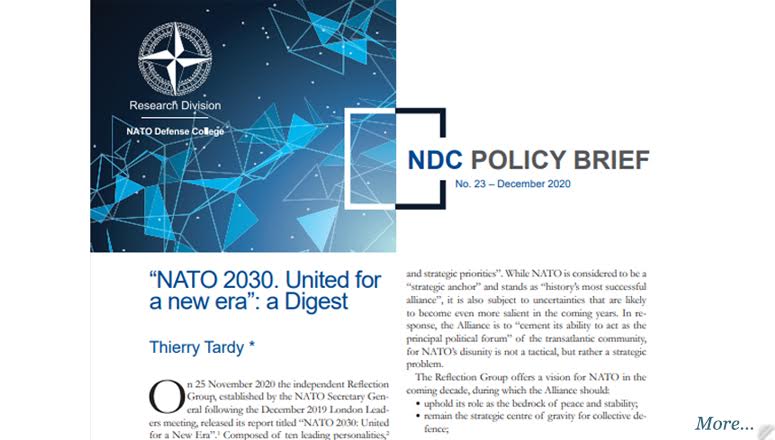
On December 3, Carnegie Europe hosted the public launch of the NATO 2030 Expert Group’s Report: “United for a New Era”. The report comes as U.S. President Donald Trump has many issues with NATO members for not committing to their military budget, Turkey continues its near daily military threats against fellow NATO member Greece, and French President Emmanuel Macron famously highlighted that NATO suffers from a “brain death.” NATO is struggling to find a reason for its existence since the collapse of European communism in 1991, but the report’s authors are confident that their suggestions can adapt NATO “for a New Era”.
What becomes evident from the report is that this “New Era” is not based on multipolarity. Rather it is an attempt to resurrect the U.S.-led unipolar world, suggesting that NATO actually has no strategy for the “New Era” of multipolarity.
But for NATO to justify its existence in the 21st century, they require a political consolidation of members who are divided. It appears that the authors hope that anti-Russian and anti-Chinese positions can unite NATO again towards a common goal.
“NATO must adapt to meet the needs of a more demanding strategic environment marked by the return of systemic rivalry, [and a] persistently aggressive Russia”, the authors said in their “Main Findings: Moving Toward NATO 2030”.
However, the old Russian enemy is also no longer a strong enough reason to justify the existence of NATO, which is why there is also a particular emphasis on China in the report.
“NATO must devote much more time, political resources, and action to the security challenges posed by China,” the report said, adding that NATO must “develop a political strategy for approaching a world in which China will be of growing importance through to 2030. The Alliance should infuse the China challenge throughout existing structures and consider establishing a consultative body to discuss all aspects of Allies’ security interests vis-à-vis China.”
The 67-page report however is mostly just theory, analytical considerations and suggestions. In practice, NATO is dominated by absolute indecision. Some so-called experts are not content with only Russia being the main focus of NATO in the 21st century and consider China a major enemy of the alliance. This is problematic as many NATO members, including countries like Greece that are traditionally subservient to the Alliance, are unwilling to jeopardize trade relations with China and are beginning to improve their ties with Moscow again.
NATO chief Jens Stoltenberg noted that important decisions will be taken in February during a meeting of defense ministers. This meeting will occur just weeks after we discover whether it will be Donald Trump or Joe Biden sitting in the White House on January 20.
A NATO emphasis against China or Russia will depend on whether it will be a Trump or Biden administration next year. For Trump, China is Washington’s main adversary. Biden certainly emphasizes China’s supposed threat, but in reality, the trade war will likely cool down as there are influential interest groups in both countries wanting to engage in business rather than a geopolitical struggle. However, a Biden presidency will certainly push NATO to become tougher against Moscow and encourage destabilization on Russia’s frontiers.
In support of destabilizing Russia’s borders and undermining its interests, the report urges NATO to “expand and strengthen partnerships with Ukraine and Georgia, seek to heighten engagement with Bosnia and Herzegovina”.
As the report states, NATO should “counter destabilization across the Western Balkans”. This is despite the fact that it was the Alliance that violently dissolved Yugoslavia in the 1990’s by supporting separatist forces in Kosovo, as well as jihadists from the Arab World and Chechnya to help break Bosnia off from Yugoslavia.
The fact that Russia is the main threat to Biden is very suitable for some NATO members and their allies like Ukraine, Georgia, Poland and Lithuania. If necessary, these countries could also turn against China if demanded so by NATO or Biden. These states will be more than satisfied as anti-Russian policies in today’s NATO is fanatically supported by Anglosphere and former Warsaw Pact countries.
Reading the new NATO report, which attempts to set a decade-long strategy for the Alliance, actually reveals the desperation to find relevance in the 21st century. Biden may say “America is back”, but that does not mean it will be able to return. Washington’s peak power occurred when the world became unipolar after the collapse of the Soviet Union. However, this short period has already passed and NATO is more obsolete than ever.
NATO, but especially the likes of the Anglosphere and former Warsaw pact states, tries to cling onto an inefficient past. It is for this reason that other NATO members are beginning to look outside of the Alliance to ensure their security without the cost of opposing Russia and China. An example of this is the emerging alliance between France, Greece, Cyprus, Egypt and the United Arab Emirates.
The 21st Century is incomparable to the previous century as new regional and global security threats have emerged under different geopolitical contexts. Insisting that Russia and China are the main adversaries to Anglo-American dominance, prevents NATO states from facing the reality that the 21st century is an era of multipolarity, thus limiting their own global influence as states are choosing to engage in new relations and alliances disconnected from demands made by third parties. NATO believes it can unite all member states “for a New Era” by opposing Moscow and Beijing, but this will only end in major disappointment and failure for the alliance as member states are becoming unwilling to adopt anti-Russian and anti-Chinese policies.
Paul Antonopoulos is an independent geopolitical analyst.
Biden’s Prospective New Defense Secretary Further Erodes a Key U.S. Norm: Civilian Control
Gen. Lloyd Austin, on the Raytheon Board, is yet another high-level Biden nominee enmeshed in D.C.’s corporatist “revolving door” of legalized influence-peddling.
By Glenn Greenwald | December 8, 2020
Joe Biden’s pick to be the next Secretary of Defense, according to reports on Monday night, is recently retired Gen. Lloyd J. Austin, III. The choice of Gen. Austin further erodes the once-sacred American norm that military officials will be barred from exercising control over the Pentagon until substantial time has passed after leaving active-duty military service.
Before Gen. Austin can be confirmed, Biden will need a special waiver from Congress under the National Security Act of 1947. That law, a cornerstone of the post-World War II national security state, provides that “a person who has within ten years been on active duty as a commissioned officer in a Regular component of the armed services shall not be eligible for appointment as Secretary of Defense.” Enactment of the law after the war, explained the Congressional Research Service, was imperative to “preserve the principle of civilian control of the military at a time when the United States was departing from its century-and-a-half long tradition of a small standing military.” A 2008 law reduced that waiting period to seven years, but Gen. Austin, who retired from the U.S. Army only four years ago, in 2016, still falls well within its prohibition.
Biden’s choice of Gen. Austin was somewhat surprising in light of the widespread expectation that he would instead tap long-time Pentagon operative Michèle Flournoy, who would have made history as the first woman to run the Defense Department after serving as Obama’s Undersecretary of Defense for Policy, the Pentagon’s highest-ranking woman in history.
But Flournoy’s nomination encountered problems after The New York Times last week said her appointment would present a “test of transparency and ethics” in light of her heavy involvement during the Trump years in a consulting firm, WestExec Advisors, and an investment fund, Pine Island Capital Partners. Those are classic D.C. “revolving door” corporate entities which exploit the access and influence inside the Pentagon and other government agencies of their principals, former top-ranking national security officials, to use their influence within the agencies they once ran to secure lucrative weapons purchases and similar government contracts for their undisclosed corporate clients. These are not just ethical problems of the past; as the Times noted, officials who have done this “bring with them questions about whether they might favor or give special access to the companies they had worked with in the private sector.”
It is hard to believe, though, that Biden’s choice of Gen. Austin was motivated by these kinds of ethical concerns over Flournoy. After all, the sleazy, legalized influence-peddling of Flournoy’s firm has long been known, at least since the investigative journalist Lee Fang revealed many of the details back in 2018 (last week’s Times article added new disturbing facts). Moreover, many of Biden’s key national security appointees were WestExec founders right along with Flournoy, including his pick for Secretary of State, Antony J. Blinken, and his Director of National Intelligence, Avril Hines.
Why would Flournoy’s work with these firms be disqualifying when other Biden picks — Blinken, Hines, White House Press Secretary Jennifer Psaki — was not? Moreover, Biden’s picks for top administration positions in general are people who have spent years deeply entrenched in the corporate and lobbyist world that controls the U.S. Government.
And Gen. Austin, apart from the serious civilian-military problem of the National Security Act, is himself a fully entrenched player in this swamp. Since retiring from the Army, the four-star General became, as New York Times reporter Ken Vogel noted, “a member of a private equity fund” — Pine Island Acquisition Corp. — that “invests in defense contractors, and boasts that its members’ ‘access, network and expertise’ are an advantage in government contracting.”
Biden’s choice to lead the Pentagon is also currently a member of the Board of Directors of Raytheon Technologies, the world’s third-largest defense contractor. That means that upon Austin’s confirmation, Raytheon will have a very good friend in charge of the bloated $750 billion annual U.S. defense budget.
If ethical considerations were not determinative, that leaves the question of why Biden risked a confirmation battle over military control of the Pentagon by rejecting Flournoy in favor of Gen. Austin. According to Politico, race was a major factor: “Biden had been under growing pressure to nominate a Black person to be his defense secretary in recent weeks.” The site had previously reported that “members of the Congressional Black Caucus are urging [Biden] to pick a Black Defense secretary, somewhat dimming hopes that Biden will pick Flournoy, who would be the first female Pentagon chief, for the job.”
Given that 30% of active-duty enlisted men in the U.S. military are African-American, along with 17% active-duty women, it is a reasonable goal to choose the first black American in history to lead the Pentagon. But given how much talk we heard over the last four years of the sanctity of “norms,” this deep erosion of the principle of civilian control over the government and military makes this choice a highly disturbing one.
One of the reasons Trump was repeatedly accused of violating “norms” was his reliance on military officers to run civilian parts of the government, including the Pentagon. So prominent was the criticism that Trump was militarizing the government that the Democrats’ 2020 platform addressed it, vowing — under the title “Renewing American Leadership” — to restore “healthy civil-military relations”:
Civil-Military Relations
Democrats believe that healthy civil-military relations are essential to our democracy and to the strength and effectiveness of our military. We will end the Trump Administration’s politicization of the armed forces and distortion of civilian and military roles in decision-making.
Yet even prior to the choice of a recently retired General to run the Pentagon, “Biden’s transition team ha[d] appointed at least four retired generals or admirals and a former top enlisted Marine,” Politico noted. Moreover, during the 2020 election, the Biden/Harris campaign aggressively touted the large numbers of retired military commanders who united to endorse the Democratic ticket; civil-military relations scholar Peter Feaver of Duke denounced this practice to Politico on the ground that they “are trading on the nonpolitical status of the military institution to make that endorsement” — in other words, the same “politicization of the armed forces” which the Democrats’ platform also vowed to end.
While Democrats and liberal pundits complained that Trump was violating this norm of civilian control, they also celebrated his choice of retired Generals for key positions because they believed that those military officials — Secretary of Defense Gen. James Mattis, White House Chief of Staff Gen. John Kelly, National Security Adviser Gen. H.R. McMaster — had better judgment than Trump and, as “the adults in the room,” would serve as a backstop against Trump’s worst impulses.
Worse, many in the media and D.C. professional class cheered outright subversion by military brass and the intelligence community of the policies of the elected President — including when they withheld classified information from Trump, “slow walked” his orders, and deceived him about troop positions to prevent him from leaving Syria. In other words, while the liberal establishment feigned concern over “norms,” including the one that demands civilian control, they applauded military and intelligence sabotage of the president’s policies. (Subversion by the military of democratically elected leaders who, in their judgment, pursue unwise policies is a defining element of a Deep State, something supporters of this subversion simultaneously insisted did not exist in the U.S. and that only conspiratorial crazies could believe it did).
But even with this establishment support for assertion of clandestine and improper intelligence and military power, Trump’s 2017 choice of Gen. Mattis to lead the Pentagon after only a few years in retirement provoked serious concerns, as it was the first time since 1950 that a National Security Act waiver would be necessary. Senator Kirsten Gillibrand (D-NY) said that as much as she respected Mattis, the dangers of a waiver were too great.
But Congress ultimately granted the waiver and confirmed Mattis. in large part because influential Democratic Sen. Jack Reed of Rhode Island, himself a former Army Captain, urged its issuance. But when doing so, Sen. Reed vowed:
[W]aiving the law should happen no more than once in a generation. Therefore I will not support a waiver for future nominees. Nor will I support any effort to water down or repeal the statute in the future.”
Sen. Angus King (I-Maine), who also voted to confirm Mattis, similarly warned: “I want to be sure it’s a one-time waiver and not for-all-time.” And similar warnings were issued when Trump installed Gen. Kelly as his White House Chief of Staff. “By putting General John Kelly in charge, President Trump is militarizing the White House,” Congresswoman Barbara Lee of California argued.
Can one envision Democratic members of Congress following through on their righteous vow made during the Mattis hearings by not only rejecting one of Biden’s most important Cabinet positions, but also refusing to confirm the first-ever African-American to become Defense Secretary? That is difficult to imagine.
But all of this underscores why the values and methods embraced by Democrats and their allies in the name of opposing Trump were often at least as dangerous, if not more so, than the worst excesses of the Trump presidency itself. Those who warned of the anti-democratic dangers of empowering the CIA and the military to act as a bulwark against Trump in the name of #Resistance, and of restoring the mythology of intelligence agencies as a noble instrument to protect democratic values rather than what they are in reality (one of the greatest menaces to democratic values), were often accused of being pro-Trump partisans.
That was always a deceitful and propagandistic accusation, designed to ostracize #Resistance critics as Trump supporters and, more importantly, to conceal the fact that those sanctimoniously touting the need to preserve “norms” were often the most aggressive violators of those same norms. While it was Trump who chose numerous Generals for key administration position, it was his opponents who applauded and enabled their empowerment and, worse, cheered the anti-democratic subversive acts of the intelligence community to secretly undermine the elected president.
Over the last four years, Democrats and establishment liberals militarized themsleves and became far more jingoistic in their rhetoric and far more reverential of the military and intelligence establishments, to the point where they even filled their newsrooms with former Pentagon, FBI and CIA operatives.
For that reason, it is unsurprising to see Biden relying at least as heavily on Generals and intelligence officials as Trump did, including doing exactly that which Democrats vowed in 2017 would not happen again: choosing a recently retired General — one on the Board of Raytheon, no less — to run the Pentagon. But that lack of surprise should not obscure the dangerous and anti-democratic threats posed by these ongoing trends.
Congress moves to block US troop pullout from Afghanistan, Germany
Press TV | December 6, 2020
US President Donald Trump’s controversial move to pull out 2,000 American troops out of Afghanistan and 12,000 more from Germany would be blocked by the major defense policy bill, a report has said.
One provision of the National Defense Authorization Act (NDAA) for fiscal 2021 “would block funding for reducing the number of US troops in Afghanistan from 4,500 to 2,500 by January 15, as ordered by Trump, until the Defense and State Departments verify that it was in the national interest,” Military.com news outlet reported Saturday.
Another provision of the NDAA, it added, essentially urges the incoming Biden administration to take a second look at Trump’s executive order to withdraw 12,000 American troops from Germany.
According to the bill, troop levels in Germany should remain at 34,500 until 120 days after the secretary of defense submitted cost estimates and assessments of the impact of a withdrawal on allies and military families.
The final draft of the NDAA — released Thursday night — underlines that Afghanistan pullout orders, announced by the newly-appointed Acting Defense Secretary Christopher Miller on November 17, “gave Congress no estimate of the national security implications.”
According to the report, the Trump administration has so far failed to clarify how a troop withdrawal was “in the national security interests of the United States to deny terrorists safe haven in Afghanistan, protect the United States homeland.”
Trump’s announcement last June that he wanted 9,500 troops out of Germany after years of battling with NATO allies to spend more for defense has also drawn opposition from both ruling political parties in the US Congress.
On July 29, then-Defense Secretary Mark Esper declared plans to carry out Trump’s order that increased the number of US soldiers to be withdrawn from Germany to 12,000.
Some of those troops would return to the US, while others would be transferred to Poland and the Baltic states in a shift eastward to enhance NATO’s purported deterrence against Russia, Esper claimed at the time.
The report further pointed out that the NDAA provision on Germany “means that final decisions on a troop withdrawal could go to Michele Flournoy, a former undersecretary of Defense for Policy who is considered a frontrunner for defense secretary in the Biden administration.”
Flournoy, the report added, has already stated that pulling thousands of troops out of Germany would likely cost more than leaving them in place. He also underlined in an Aspen Security Forum in August that “Our allies were completely surprised by this punitive troop withdrawal from Germany.”
Moreover, once Biden is inaugurated on January 20, he would have the authority to issue his own executive order reversing Trump’s withdrawal mandate.
Obama Is An Asshole, And Other Notes From The Edge Of The Narrative Matrix
By Caitlin Johnstone | December 2, 2020
US empire: Assassinates scientists, invades countries, topples governments, circles the planet with military bases, deliberately starves civilians to death with sanctions, threatens the world with nuclear weapons.
Also the US empire: “Iran must begin acting like a normal country.”
❖
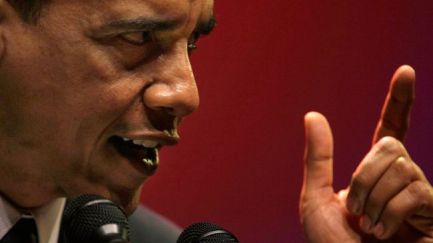
Obama’s job is to tell you that the ruling establishment which murders, oppresses and exploits people all day every day is quite progressive actually and the people who oppose it are immature lunatics who should be scoffed at.
❖
If you killed someone that’s all you’d be known for. When a US president kills thousands upon thousands of people all mainstream discourse is about his sound fiscal policy and ability to sink a three-pointer.
❖
Nice guy fascism: A murderous and tyrannical political ideology whose iron-fisted agendas of oppression, exploitation and violent domination are hidden behind lip service to progressivism, diverse cabinet picks, and nice tweets.
❖
The powerful are screwing us and there are more of us than there are of them. An entire culture and information ecosystem has been deliberately constructed around keeping a critical mass of us from awakening to this one basic fact.
❖
Any issue of international conflict involving the US-centralized empire is going to be awash with western media propaganda marketed to western audiences. No one who ignores this indisputable reality is able to understand any major international news story.
❖
It’s so weird how rich and powerful people are pouring massive amounts of wealth and manpower into manipulating our minds every single day and it’s not the main thing we talk about all the time.
❖
Biden is like if everyone suddenly started gushing poetically about how wonderful and refreshing and inclusive the Chevron logo is.
❖
Being part of the US-led liberal world order means that anyone, regardless of their race, gender or sexual orientation, is free to serve the globe-spanning murder machine in any way they choose.
❖
Being a part of the US-led liberal world order means you are free to do absolutely anything you want, so long as it doesn’t inconvenience the powerful in any way, shape or form.
❖
Sometimes I feel sad that Cobain died so young, but I brighten up when I remember it means we didn’t have to watch him turn into a cringey embarrassing shitlib.
❖
Failing to pardon Snowden and Assange would be an inexcusable evil. Please re-evaluate your opinion of Trump as needed when he pardons neither.
❖
Western imperialism is worse than every single issue the mass media are screaming in your face about on any given day. Without exaggeration it is worse than 100 percent of those issues. If people could really grasp the horrific nature of imperial warmongering, the wars would be forced to end.
It can be hard to avoid getting swept up in the MSM Issue Of The Day, but it’s important to keep your focus on the actual monster in the room. They’re ripping kids apart with explosives and starving them to death with sanctions, currently, and it is invisible to the news media.
❖
Charles Manson never murdered anyone, he just convinced people that it would be a good thing to do. The mass media have convinced far more people that it would be a good idea to commit far more murders than the Manson cult ever committed, and should be reviled as such.
The fastest way to get yourself banned from social media is to say something that sounds like you’re inciting violence. But mass media which do that constantly are never banned, because what’s actually forbidden is inciting violence that isn’t authorized by the powerful.
In fact the easiest way to advance your career in media is to incite violence on behalf of the powerful. This is true in news media, and it’s even true in video games and Hollywood; make compelling games and screenplays glorifying military violence and your career will thrive.
We live in a society that is built on violence, sustained by violence, and driven by violence. Those who promote unauthorized violence are vilified while those who promote violence in service of the powerful can ride that wave to fame and fortune. This should disgust us all.
If you remove your propaganda-installed perceptual filters, you see a machine that is fuelled by the blood of the powerless being piloted by serial killer politicians, laughing skullface comedians, and news men with human flesh in their teeth. Once you’ve seen the horror of the empire you can never unsee it.
Biden Appointee Neera Tanden Spread the Conspiracy That Russian Hackers Changed Hillary’s 2016 Votes to Trump
By Glenn Greenwald | November 30, 2020
The announcement that Joe Biden intends to nominate Neera Tanden as his Director of the Office of Management and Budget — a critical position overseeing U.S. economic and regulatory policy — triggered a wide range of mockery, indignation and disgust from both the left and the right.
That should not be surprising: though a thoroughly mediocre and ordinary D.C. swamp creature from the perspective of both ideology and competence, Tanden’s uniquely unhinged, venomous, corrupt and pathologically dishonest conduct as a Clinton Family and DNC apparatchik and President of the corporatist-and-despot-funded Center for American Progress (CAP) has earned her a list of enemies far longer and more impressive than her accomplishments.
When news of her appointment broke, many of the journalists and activists she has spent years abusing, slandering, and lying about instantly stepped forward to compile just some of her worst political and behavioral lowlights. And some preliminary signs emerged that she might encounter difficulty in obtaining the Senate confirmation needed for her to assume this position. The Communications Director for GOP Senator John Cornyn of Texas announced that “Tanden stands zero chance of being confirmed” by the Senate.
Former Sanders campaign aide David Sirota hypothesized that “it is not a coincidence that they are putting Neera Tanden — the single biggest, most aggressive Bernie Sanders critic in the United States of America — specifically at OMB while Sanders is Senate Budget Committee ranking/chair.” Sirota’s statement suggests Biden’s nomination of Tanden was intended as yet more humiliation doled out to the Democratic-loyal Sanders left by cucking the Vermont Senator even further by forcing him to shepherd the confirmation of one of his most vicious and amoral attackers (who Sanders himself in 2019 vehemently denounced). But Sirota’s point also raises the prospect that Tanden’s nomination could even encounter trouble from that side of the aisle as well (given Sanders’ compliant and disciplined conduct over the last six months, it’s more likely we will see him roll out a literal red carpet for Tanden to walk on, gently toss red roses on it before she passes, and then serve her a glass of Chardonnay rather than meaningfully obstruct her confirmation).
The list of sociopathic and even monstrous acts from Tanden is too long to list comprehensively. She punched one of her own employees, a reporter for CAP’s now-abolished blog ThinkProgress, after he had the temerity to ask Hillary Clinton in 2008 about her support for the Iraq War (Tanden claimed she “merely” had “pushed,” not punched, her undeferential reporter). In 2011, as the Obama administration was participating in the NATO bombing of Libya, Tanden suggested in internal CAP discussions that the U.S. steal Libya’s oil as a way of reducing the U.S. deficit (a story I was able to report only because Tanden had abused and alienated so many of her employees that they worked together to leak her incriminating emails to me).
During her tenure as CAP’s President, Tanden accepted millions of dollars from the regime of the United Arab Emirates, which built Dubai and Abu Dhabi using slave labor, along with massive donations from Facebook, Google, Microsoft, J.P. Morgan, the Walton Family and Michael Bloomberg, while hiding the identity of some of her think tank’s largest donors. A huge chapter on the NYPD’s abusive policies toward Muslims under Mayor Michael Bloomberg was removed from a CAP report after Boomberg donated more than $1 million to Tanden’s organization, and he continued to donate even more after that courteous gesture.
She ordered the supposedly independent journalists of the ThinkProgress blog, including Muslim writers, to stop writing critically about Israel after key CAP donors, including Barney Frank’s sister Ann Lewis and long-time Clinton advisor Howard Wolfson, complained. [More info on this and about AIPAC’S influence is here and here. and here and here]
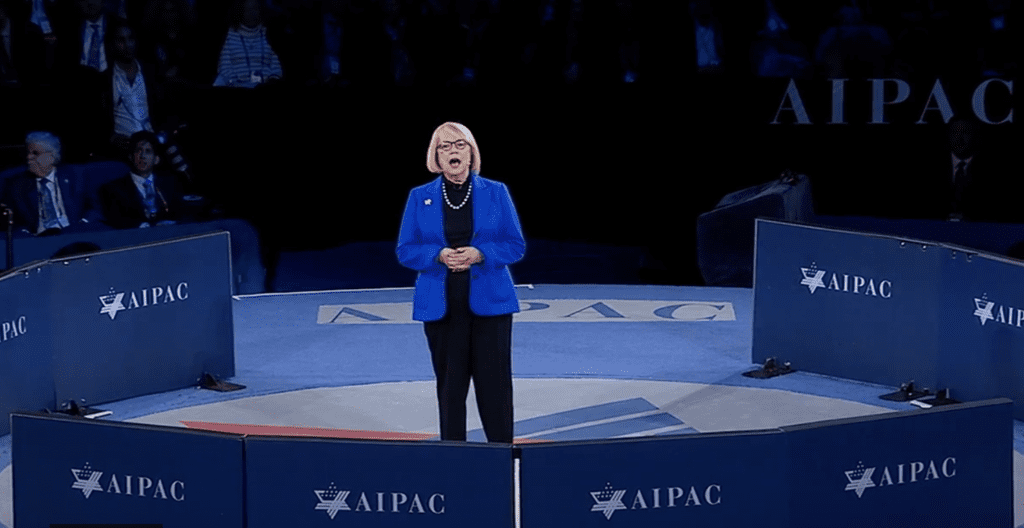
Ann Lewis speaks at AIPAC national conference, March 20, 2016 in Washington DC. Lewis is a Democratic political strategist and former White House Communications Director to President Bill Clinton.
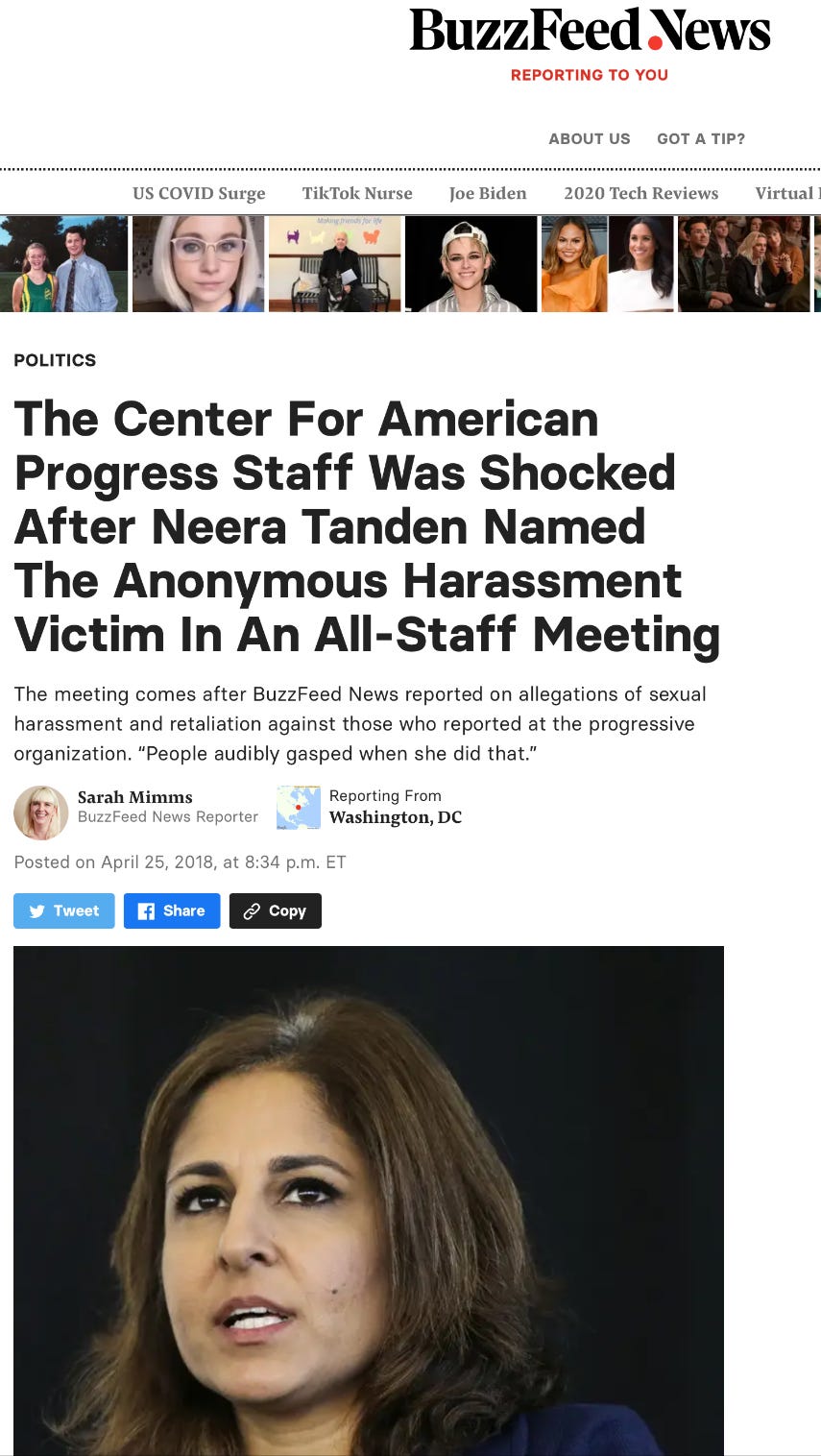
Tanden and Wolfson plotted in 2016 how to weaponize female journalists and people of color against Hillary’s critics as well to use their identity to stigmatize and thus stop undesirable coverage from The New York Times. In 2018, she outed a CAP employee at a staff-wide meeting who had filed an anonymous complaint of sexual harassment and retaliation against one of Tanden’s male allies. Secure with her UAE-and-corporate-funded large salary, she has long urged cuts to Social Security. The list goes on and on.
One can reasonably view Biden’s choice of Tanden as a positive. She is no different in character or ideology than any of the faceless, more obscure DNC operatives who would occupy this position if she did not. But because of how well-known her sociopathy, militarism and corporatism are to many on the liberal-left, her face serves as an undeniable and unavoidable reminder of what the Biden administration and the Democratic Party really are. She illuminates the truth about their real aims.
But beyond things like wanting to steal Libya’s oil after bombing it into oblivion, outing sexual harassment complainants, and physically assaulting and censoring her own employees, there is one uniquely abominable feature of Neera Tanden. She is one of the most deranged conspiracy theorists in the United States, and has done more than almost any other Washington functionary to contaminate Democrats’ mental health, capacity to reason, and faith in the legitimacy of U.S. elections.
Tanden owes her entire career to the patronage of Hillary Clinton, and her devotion to Hillary approaches restraining-order levels of creepiness (here you can watch Tanden beam with adoration as then-Senator Hillary Clinton, on the Senate floor in 2004, explains her steadfast opposition to marriage equality for same-sex couples on the ground that “marriage is a sacred bond between a man and a woman” and “exists between a man and a woman going back into the mists of history” for the primary purpose of raising children — just a few short years before Democrats changed views on this, after which it instantly became the hallmark of an unreconstructed hateful bigot to say this).
Few people took Hillary’s 2016 loss to Donald Trump as hard as Tanden, or handled it as poorly. Indeed, she refused to believe it really happened, and encouraged others to similarly refuse to accept its reality.
In the weeks after Trump’s victory, Tanden joined numerous Democrats in encouraging electors of the Electoral College to ignore their states’ votes and refuse to elect Trump as President (many rationale were invoked for this: Tanden’s was a CAP article promoting #Resistance fanatic Richard Painter’s argument that Trump’s violations of the Emolument Clause precluded an Electoral College win). She insisted that Hillary lost because of Russia, claiming the “Russians did enough damage to affect more than 70k votes in 3 states.” And she was not only one of the first to push the Steele Dossier’s claim that Russia held blackmail power over Trump but also one of the last to do so — insisting in 2018 that “the dossier been mostly proven to be true” and claiming as late as 2019 that nothing in this discredited junk report had been disproven.
Tanden’s bizarre claims about Russian hackers
But what really distinguished Tanden when it came to unhinged and toxic behavior was her repeated (and obviously baseless) claims that Hillary only lost because Russian hackers invaded the U.S. voting system and clandestinely changed Hillary’s votes to Trump’s, costing the real winner — Hillary — her rightful place on the throne, behind the Resolute Desk.
Four days after the 2016 election, Tanden began strongly implying, if not outright stating, that Russian hackers changed the vote totals, and that this is why “Trump was as surprised as everyone else” by his victory. When I highlighted her conspiratorial claims, she did not deny their obvious meaning, but rationalized them by insisting that her conspiracies were not as bad as Trump’s refusal, in advance of the election, to acknowledge the legitimacy of an election that had not yet taken place:

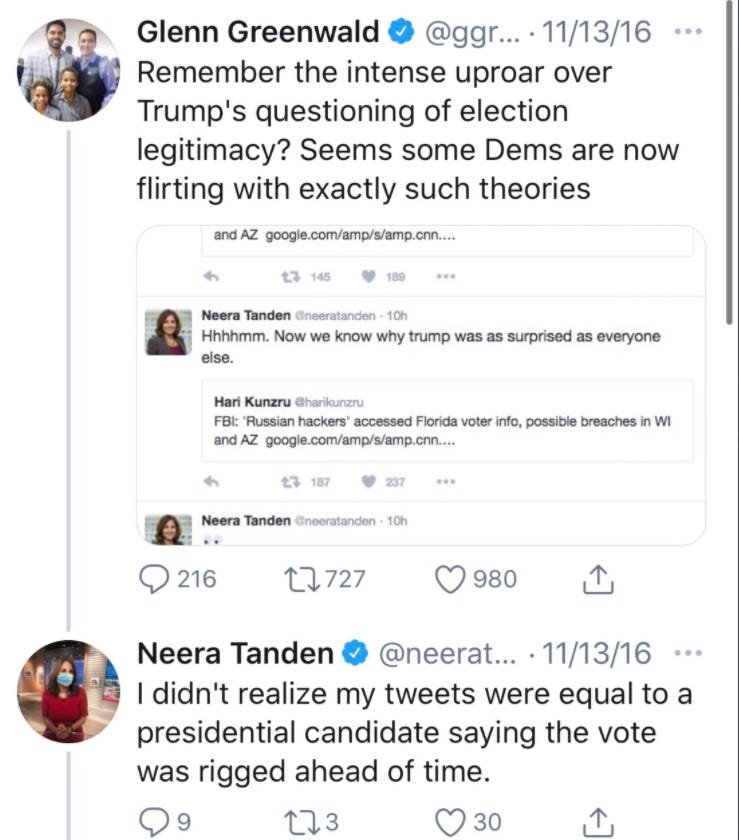
Tanden’s insistence that Russia changed the voting results through hacking did not once her traumatic shock in the weeks after Hillary’s loss dissipated (if it ever did). After The Intercept published an anonymous, evidence-free document in June, 2017, allegedly sent by NSA employee Reality Winner, which led that site to claim that “Russian military intelligence executed a cyberattack on at least one U.S. voting software supplier and sent spear-phishing emails to more than 100 local election officials,” Tanden returned to pushing this bizarre conspiracy theory, demanding that I “retract” my post-election criticism of her for peddling this Russia-changed-the-votes madness — as if this NSA document published by The Intercept proved vote-changing hacking by Russia.
This conspiracy-mongering led by Tanden and other prominent liberal activists had a corrosive effect on the ability of Democrats to perceive basic reality, to put that mildly. A 2018 poll from Economist/YouGov — conducted more than a year after Trump’s inauguration — found that a large majority of Democrats (66%) believe that “Russia tampered with vote tallies in order to get Donald Trump elected President.”
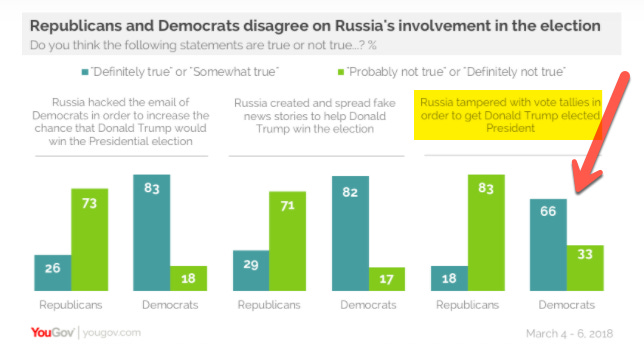
Economist/YouGov poll, published Mar. 9, 2018
Thereafter, Hillary herself took to calling Trump an “illegitimate” president, further fueling the destruction of confidence and faith among Democrats in the legitimacy of the vote totals and specifically the outcome of the 2016 presidential election.
Democratic leaders and their media allies love to patronizingly warn that conservative media outlets and their audiences are prone to spread and believe crazy conspiracy theories. They purport particular worry when such conspiracies are designed to undermine faith and trust in the U.S. electoral system itself.
Yet few have done more to destroy such confidence and faith than Neera Tanden, achieved by disseminating over the course of several years some of the most unhinged, evidence-free and deranged conspiracy theories in which she deliberately deceived Democratic partisans into believing that Moscow’s dastardly hackers invaded the sanctity of the U.S. voting system to change Hillary’s votes to Trump’s. And it worked: at least as of 2018, large majorities of Democrats believe that this utterly unproven but dangerous assertion is true.
If Joe Biden succeeds in empowering someone like Neera Tanden without extreme opposition from supposedly adversarial journalists, not only Democrats but also these media outlets will lose whatever lingering credibility they have to denounce conspiracy theories and to defend the legitimacy of U.S. elections. And they will deserve that fate. You can’t run around expecting people will take you seriously when you warn of the dangers of toxic, moronic conspiracy theories when you yourself embrace, elevate and promote the most prolific and reckless purveyors of them.
IMF refuses to help Ukraine
By Lucas Leiroz | December 1, 2020
Ukraine’s economic situation is getting more and more complicated. The country is going through a moment of great crisis, from which it hoped to mitigate the effects by receiving emergency financial aid from the International Monetary Fund. However, the IMF now refuses to provide a large part of such emergency aid and launches Kiev into a danger of financial collapse. Now, the country must look for other ways to end this fiscal year after facing a large debt in its budget.
The new support program for Ukraine, approved by the IMF Board of Governors in early June, provides for the sending of 5 billion dollars over a period of one and a half years. Kiev has already received the first payment, valued at 2.1 billion. The remaining amount was expected to be sent in four installments of around 700 million dollars each one, in late June and late September, with two revisions next year. However, there will be no further installment until the end of 2020. Therefore, Ukraine must work within the current amount and meet its targets, which is truly complicated, if not impossible.
According to Yaroslav Zhelezniak, the first vice-chairman of the Ukrainian Parliament’s Financial and Fiscal Policy Committee, more than a billion dollars are missing – adding to the amount already collected – for the state to be able to pay the so-called “protected expenses”, which are those that according to Ukrainian national law cannot be cut, such as salaries, pensions, defense industry, among others. In any event, spending considered “secondary” would be canceled, but now, with the IMF’s delay, Kiev will not even be able to afford its protected expenses.
The accumulation of debts with protected expenses is precisely the greatest current threat to the Ukrainian state, as it represents a structural danger not only for finances but also for all strategic sectors affected by the lack of resources. For reasons of confidentiality, current Treasury information does not show which specific items of protected expanses have stopped receiving funding, but currently protected sectors account for 80% of all budgetary expenses.
As for unprotected items, everything is clear: simply, nothing is paid. In November, nothing outside the strategic sectors was financed from the Ukrainian state budget. That is, the authorities simply decided not to pay service providers and public-private partnerships in November. Obviously, this was a forced choice: without money available, there is no way to pay. However, it is undeniable that the social consequences of such default will be severe and will only further weaken Ukraine.
Given this scenario, the draft budget for 2021 has already been rewritten by the Council of Ministers. The new version was approved at an extraordinary meeting on 26 November and sent to Parliament for evaluation. In particular, the first budget plan for 2021 was one of the reasons for the refusal by the IMF of the aid to Ukraine, considering that the project had a deficit forecast of 6%, instead of the 5.3% agreed with the IMF. In the revised version, the deficit was reduced to 5.5%. This required increasing revenues and cutting expenses. Still, Ukraine remains hopeful of receiving aid with such a reduction.
In the draft of the second version of the 2021 budget, GDP growth remains estimated at 4.6%. However, it is important to note that this forecast appeared in the middle of the year, when nothing was known about the second wave of the coronavirus pandemic in Ukraine and the current crisis, which means that the calculations must be updated. Currently, the World Bank expects Ukrainian GDP growth of less than 1.5%, contrary to the optimism of Kiev’s experts.
It is interesting to note how Ukraine has struggled over the past six years to establish a political and economic orientation totally focused on the interests of Western powers, having been completely abandoned by such powers during its most fragile moment. In recent years, Kiev has entered a crisis that is already considered by many experts to be the worst since World War II. And the positioning of its western allies in the face of this scenario of imminent national collapse has been an absolute omission. Washington, for example, constantly announces military cooperation projects with Ukraine valued at millions of dollars, providing equipment and human resources, but at least in the past five years no effective financial aid project to the Ukrainian state has been established, having been limited to one small participation in European aid announced in 2014.
Amid the pandemic and the rise of economic isolationism, Ukraine will only be more and more alone. Perhaps the best path to follow is a general review of state priorities. For example, why include the defense industry in protected expenses when the country is experiencing a deep social crisis? It would be more strategic – and in line with the humanitarian values that Kiev claims to defend – to retreat in military spending and invest capital in partnerships with the private sector that can improve the lives of the Ukrainian people. This is currently the only possible way to Kiev.
Lucas Leiroz is a research fellow in international law at the Federal University of Rio de Janeiro.
Featured Video
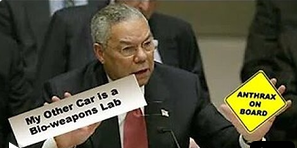
From Anthrax to Iraq
or go to
Aletho News Archives – Video-Images
Book Review
New paperback: Butchered by “Healthcare”
Lies are Unbekoming | October 20, 2026
 Butchered by “Healthcare” is Robert Yoho’s plain-spoken account of how American medicine stopped being a profession and became an industry. 341 pages. Over a thousand references. Thirty-eight chapters.
“Screening Tests Are Useless”, on tests that find diseases that would never have hurt you. “The FDA Protects the Big Drug Companies”, on an agency funded by the companies it regulates. “The Journals’ Sins Are the Editors’ Sins”, on ghostwritten studies and captured peer review. “Opioids and ‘Pain Management’”, on how a generation was prescribed its way into addiction. “Prozac and Relatives” and “Antipsychotics Are Disastrous”, on what psychiatry does to adults and children. “Surgery: Money Before Patients”. “Failed Cancer Treatments”. “Futile CPR and Overprescribing”. “Billing Scams & Specialty Warfare”. “Hospitals Are Sharks”. Each with a Patient Tips section at the end on how to survive it.
If you have ever walked out of a doctor’s office with a prescription you didn’t ask for, or watched a parent put through a treatment that made them worse, this is the book you want on your shelf before the next appointment. … Full review
Butchered by “Healthcare” is available on Lulu now.
Blog Roll
 Aletho News
- Undersea Internet cables could be targeted in retaliation for attacks on Iran: IRGC deputy chief
- EU sending ‘biased’ observers to interfere in Serbian election – president
- White House envoy declares kinetic action against Yemen ‘fruitless’
- Ukraine deployed thousands of microdrones in Iraqi Kurdistan: Tasnim
- Iran calls for emergency UNSC meeting over Trump’s ‘brazen’ bomb talk, Israeli threats
- Iranian sources reveal details of Russia-China Hormuz proposal
- Plan for more US-Israel integration puts our military tech at risk
- Another Round Against Iran Will Break What Is Left of the Gulf
- SVR Report on Ukraine’s Mexican Drug Gang Links Could Pressure Zelensky, Won’t Change US Policy
- British Government Employees Were Fact-Checking the News at the BBC. Nobody Told You.
- If Americans Knew
- Israel’s war on Iran is the final move in a decades-old strategy
- Israel Denies Entry to French Journalist, U.S. Researcher Amid Rise in Entry Denials
- Gaza’s hospitals are running out of life-saving fuel – Daily Update
- Mysterious bot accounts reportedly spread fake ‘man on the street’ videos for Michigan Senate candidate
- Israeli Defense Minister Katz Says Over 60 Lebanon Villages Have Been Destroyed
- Why Is Israel Running TV Ads in Iowa Ahead of the Midterms?
- Hind Rajab’s Alleged Killer Is in the United States. HRF Demands His Arrest.
- US Officials Face Fresh Pressure After Another American ‘Brutalized’ by Israeli Settlers in West Bank
- Israel-Backed Palestinian Militias Terrorize Displaced Families in Gaza
- FBI subpoenas pro-Palestine activists over Israeli weapons plant disruption
- No Tricks Zone
- E-Cars Reduce CO2 Emissions By Only 41% Compared To Internal Combustion Engine Vehicles
- Predictions Made By Renowned Climate Professor Over Past Decades Have Been Proven To Be Poor
- New Study Suggests Large Regions Of The Pacific Ocean Have Been Cooling For The Last 80 Years
- Germany’s Green Energy Debacle: High Energy Costs Force Kahla Porzellan to Close After 182 Years!
- New Study: 50 Years Of The Most Aggressive ‘Net Zero’ Policies Can Only Affect The Global Climate By 0.03°C
- US September “Heat” Was No Record…Many Records Set Decades Ago
- Latest European Green Energy Debacle; Portugal’s Largest Flagship Solar Park Insolvent!
- Green Energy Debacle: German Expert Professor Fritz Vahrenholt Warns Of Severe Economic And Social Consequences
- Two More Paleo Reconstructions Affirm Meters-Higher Sea Levels Across Ireland, Brazil 7000-6000 Years Ago
- New Study: Earth And Venus Surface Warmth Largely Explained By Convection And Lapse Rate, Not CO2 Or Radiation

