Baltic countries seek relevance on the international scene
By Lucas Leiroz | March 20, 2020
In 2017, RAND Corporation published in its associated media Small Wars Journal an article by the researchers Marta Kepe and Jan Osburg, outlining a strategic defense plan for the Baltic countries in the event of a Russian invasion. The authors claim that Estonia, Lithuania and Latvia will manage their weaknesses to face the Russians, overcoming their population and military deficit through the participation of civilians in the conflicts, working with the armed forces to create a “total defense” plan that would make the invasion too costly and laborious for Russia. Subsequently, the RAND Corporation article was mentioned in a paper by the National Interest magazine, authored by Michael Peck, in which the author studies the Baltic defense strategy, speculating about “total defense” and its efficiency in a possible case of Russian invasion. The researcher, finally, takes a pessimistic conclusion, stating that, despite all efforts, nothing will change the fact that Russia is a large country and the Baltic States are small and weak.
In March last year, the renowned American magazine Foreign Policy published an article by Mikheil Saakashvili, former president of Georgia, claiming that Russia’s next “targets” would be European nations. In the text, Saakashvili considers the possibility of a Russian attack on the Baltic countries, saying that President Vladimir Putin sees them as real threats because they are “functional democracies on the Russian border”. After developing his reasoning, the author comes to the conclusion that this invasion will not occur, pointing other countries as future “targets” of Russia. However, even though Saakashvili does not believe in the possibility of a Russian invasion, rumors about a Russian plan to invade and annex the Baltic nations have generated unfounded tensions in the region.
The height of media alarmism regarding relations between Russia and the Baltic countries was, however, an article published by the American expert Hall Brands on Japan Times website, whose title is “How Russia could force a nuclear war in the Baltics”. Referring again to the studies of the RAND Corporation, the author considers the possibility of a nuclear escalation on the frictions between Moscow and NATO in the Baltics, concluding that the geographic condition of these states would hinder rapid action by the West in the event of Russian action, raising the risks of forced annexation.
Apparently, media agencies aligned with the liberal establishment are working together to spread the idea that there is a Russian interest in invading and annexing the Baltics. For these agencies, the interest is so great that it would even justify a nuclear action. However, when we investigate the reasons for such despair, we found no concrete argument to justify such speculations. The great Western think tanks, such as the RAND Corporation, are spreading this myth with the specific purpose of instilling fear and tension in the Baltic States, so that, in the face of “Russian terror”, they will increasingly align themselves with Washington and NATO.
The concrete data indicate exactly the opposite of the rumors spread by RAND analysts. In January last year, Estonian Prime Minister Juri Ratas publicly expressed an interest in improving relations between his country and Russia, with a view to pacifying bilateral tensions and envisioning a future of peace and cooperation, despite divergent interests. Also, Latvia remains the only member country of the European Union that is totally dependent on Russian gas – a situation Lithuania has only recently withdrawn from. So why Moscow would be interested in invading and annexing such countries, when the threat they pose to the Russian political structure is absolutely nil? In a way, it is much more logical to think that for the Baltic countries it is more profitable and interesting to maintain good relations with Russia than to embark on unfounded conspiracies by Western experts who are extremely ideologically involved. However, there is a second hypothesis.
It is still likely that the Baltic States are simply acting in the interest of increasing their role on the international scene. Unable to form a solid political, military and economic force, even if united, capable of facing the great world powers, these States may be anchoring themselves in NATO’s military apparatus to seek the affirmation of their own interests in Europe and in the world. By this logic, Lithuania, Latvia and Estonia would be voluntarily adopting the alarmist discourse of the West and reaffirming it in order to, increase the western military presence on its borders, try to increase its regional and global influence, moving from being small European States to becoming potencies in the global geopolitical game.
Indeed, the Baltic countries are making a big mistake in adopting either of these two stances. Unlike Moscow, for whom the interest in “invading” the Baltic is nil, Washington has clear interests in occupying the region, so as to face Russia. That is the main reason for the presence of NATO troops in the Baltic expected for the Defender Europe 2020 drills – now canceled by the coronavirus pandemic.
The Baltic States are adhering to the discourse of Western think tanks, however, under no perspective can this opposition to Russia be profitable for them. Following the interests of Washington, Estonia, Latvia and Lithuania have too much to lose.
Lucas Leiroz is a research fellow in international law at the Federal University of Rio de Janeiro.
US urged to explain military lab shutdown
By Leng Shumei – Global Times – 2020/3/15
Netizens and experts are calling for the US government to release information on the suspension of an infectious disease research lab under the US Army, as a petition on the White House website listed coincident events between the closure and the outbreak of COVID-19, urging the US government to clarify whether the lab was related to the deadly virus.
While the origin of the novel coronavirus is still unknown and conspiracy theories have caused widespread panic, experts said that timely information disclosure to the public would benefit global unity and cooperation against the pandemic, which had infected more than 150,000 people and killed 5,400 around the world as of Saturday.
The Fort Detrick laboratory that handles high-level disease-causing material, such as Ebola, in Fredrick, Maryland was shut after the US Centers for Disease Control and Prevention issued a cease and desist order to the organization in July, 2019 according to local media.
The suspension was due to multiple causes, including failure to follow local procedures and a lack of periodic recertification training for workers in the biocontainment laboratories. The wastewater decontamination system of the lab also failed to meet standards set by the Federal Select Agent Program, media reported.
The lab, which was closed more than half a year ago, recently caught public attention as a petition submitted to the White House website on March 10 listed some coincidences in time between the closure and the COVID-19 outbreak.
For example, “a large-scale ‘influenza’ killed more than 10,000 people” in the US in August 2019 following the closure; and the COVID-19 epidemic broke out globally in February 2020 after the US organized Event 201 – A Global Pandemic Exercise – in October 2019.
The petition also noted that many English-language news reports about the closure of Fort Detrick were deleted amid the worsening COVID-19 pandemic, raising suspicions over the lab’s relationship with the novel coronavirus.
Petitioners urged the US government to publish the real reason for the lab’s closure and to clarify whether the lab was related to the novel coronavirus and whether there was a virus leak.
The petition had received just more than 400 signatures as of Sunday.
Chinese netizens urged the US government to respond to the public’s appeals as soon as possible.
“It’s not a small issue, the truth should be published,” an internet user commented.
“The world deserves to know the truth,” said another.
Ni Feng, a deputy director of the Institute of American Studies of the Chinese Academy of Social Sciences, called on the US government to increase transparency in the COVID-19 pandemic related issues in response to wide-spread doubts.
The origin of the virus should be decided according to scientific research, but the urgent issue at the current stage is to cooperate in the global battle against the pandemic, Ni noted.
Wang Yiwei, a professor with the School of International Relations at Renmin University of China, agreed with Ni, noting that the US had behaved badly to China when the latter was struggling with the epidemic – accusing China of low transparency and blaming a Chinese lab for leaking the virus.
Now China has won the conviction of the world with practical efforts and improvements. The US should cooperate sincerely with China and the world against the virus, according to Wang.
Australia assigned to be the U.S. Policeman in the Pacific
By Paul Antonopoulos | March 19, 2020
The U.S. is ramping up pressure on Australia to support hostilities against China in Southeast Asia and the South Pacific. Last week in Sydney, the U.S. Ambassador to Australia, Arthur Culvahouse, said that “We’ll be pushing Australia to expand its step-up from the Pacific islands region to south-east Asia and to look north as well.” The U.S., Australia and like-minded countries need to win in this strategic competition, the diplomat said. The Ambassador emphasized that in consultations between American and Australian foreign and defense ministers, the two sides will focus their efforts to further strengthen the Pacific step-up strategy.
The US Ambassador told the gathering of business leaders last Tuesday that Australia “sits on the frontline of the great strategic competition of our time.” “If the security and prosperity enjoyed by our countries and the region is to continue, this is a competition that we must win,” he said in indirect reference to China being the competition that must lose.
Australia’s Pacific strategy was adopted in 2016 under Prime Minister Malcolm Turnbull to assert Australia’s position as the policeman for the U.S. in the South Pacific and Southeast Asia. The Pacific step-up strategy defines the Australian government’s approach to economic and strategic interaction with Pacific Island nations. However, this is just the friendly face of the strategy and rather it is primarily aimed at maintaining regional balance to counter China’s growing influence in the region. China signed an Action Program with eight Pacific Island nations at the October 2019 3rd China Economic Development Cooperation Forum and Pacific Islands held in Samoa. These countries’ support for China’s Belt and Road Initiative was confirmed.
As the U.S. is dealing with the growing influence of China and attempting to counter it all over the globe, Washington is relying on Australia to serve as a counterbalance to China in the South Pacific and Southeast Asia. However, as the coronavirus continues to grow out of control in the U.S., it is likely that Washington is going to take its focus off the South Pacific for a long while. This will give Australia autonomy to act on Washington’s behalf and it appears that U.S. President Donald Trump immensely trusts the Australians in this role, so-much-so that he honored the fellow Anglo-settler state by naming a new navy ship the USS Canberra, the only U.S. Navy warship named after a foreign city.
Australia wilfully wants to play a role that the U.S. assigned to them in Southeast Asia and the South Pacific so that it can more strongly assert its power on the region. Australia considers the small island countries of the South Pacific as an area within its sphere of influence. Canberra has a need to expand its weight in Southeast Asia, but finds this challenging as the region includes countries of larger populations and economies, such as Thailand and Indonesia.
Although Canberra wants to serve Washington’s interests in the region, Australia is a completely deindustrialized neoliberal country that does not have the means or capacity to challenge rising Southeast Asian countries and rather serves as a raw resource marketplace for the world. The U.S. is losing influence in Southeast Asia to China, and therefore Washington is relying on Australian support, hedging its bet on a common Anglo colonial-settler history to make Canberra receptive.
In this situation, Australia faces a very difficult choice as there is a clear divide between the economic community and the political class in regards to China policy. China is Australia’s most important economic partner, while the U.S. is Canberra’s most important security partner, so-much-so that Australia followed the U.S. to adventurist wars of aggression in Korea, Vietnam, Afghanistan and Iraq. China and Australia have established free trade areas and this agreement allows them to quickly increase the volume of bilateral trade. Therefore, the political will of Canberra is certain to face resistance from capitalist interests in the country as it wholly relies on China and other Southeast Asian countries for trade.
However, Australia is bound by the U.S. Indo-Pacific Strategy that aims to use American allies like Australia, Japan, India and others, to counter China’s increasing influence. This is done by enhancing military cooperation between these countries and does not serve any economic role like the Belt and Road Initiative. As China finds the Indo-Pacific Strategy as an aggressive force aimed against it, it is likely that under economic pressure, Australia will try to balance relations, despite the political will and determination of Canberra to act as the U.S’ policeman in Southeast Asia and the South Pacific.
Paul Antonopoulos is a Research Fellow at the Center for Syncretic Studies.
Why has NATO Failed to Exploit Turk-Russia “Tensions” in Syria?
By Salman Rafi Sheikh – New Eastern Outlook – 17.03.2020
In any other sort of circumstances, the NATO countries from Europe and North America would have rushed to help Turkey fight the “Russian invaders” in Syria and accomplish their avowed mission. This, however, did not happen when Turkey and Russia came “eye ball to eye ball” in Syria over the question of the liberation and control of Syria’s Idlib province and the adjoining strategically important areas, including the M-4 highway. Tensions are already disappearing with a Turkey-Russia “deal”, paving the way for an eventual settlement of interests. The question, however, that begs attention here is: why could the NATO countries not change Turkey’s position in a way that would have re-established it as a NATO ally in Syria, pitched against the Russians, Syrians and the Iranians?
While the US did “offer” its support to Turkey, words could not be translated into action, even though a number of Western political pundits have been writing and speaking about the “fragility” of the Turkey-Russia alliance and the need for the West to win Turkey back. A number of reasons explain why this has not happened.
First of all, there is little doubt in that Turkey is an important regional player even for Russia. This explains why the Russians have, despite crisis after crisis, continued to manage their relations with Turkey through intensive diplomatic engagements, leaving no room for big and unbridgeable gaps to occur. The latest deal and the deals before the crisis reflect the strength of their diplomatic channels working at the highest possible levels.
However, notwithstanding the resilience of their bi-lateral ties, NATO’s lethargy is due largely to the crisis that NATO is itself facing from within.
On the one hand, the US and European members of the alliance are increasingly pushing for changes in different and opposing directions, and on the other hand, even Turkey itself is reluctant to project its policies in Syria as a NATO member. At the same time, the European members of the alliance are up in arms over Erdogan’s bold and cynical effort to pressure NATO to come to its aid by opening its border with Greece to Syrian refugees, thereby threatening a repeat of the 2015 refugee crisis. NATO, therefore, has no interest in coming to Turkey’s aid and help start a war that would ultimately come to bite them hard.
NATO countries, therefore, continue to think that delivering more humanitarian aid and financial support via the European Union for Syrian refugees already in Turkey is a better option that militarily committing to a war between Turkey and Syria/Russia, which will inevitably involve a massive inflow of refugees, causing both political and economic problems for them to handle. This, for them, is unnecessary and needs to be avoided.
It was perhaps this very reason in the first place which led NATO to discourage Turkey from starting its military operations in Syria in 2019. In fact, NATO countries cannot militarily help Turkey inside Syria even if Turkey really wanted them to.
The Article 5 of the NATO charter cannot be applied to the Syrian scenario. Whereas any NATO country can invoke Article 5, the actual application of this article is limited by the Article 6 which defines the ‘territorial scope’ of the Article 5. Among other areas, Article 6 defines Article 5’s ambit as including the territory of Turkey and the forces, vessels and aircraft of NATO members located in the Mediterranean Sea. But it crucially doesn’t cover attacks on Turkish forces on Syrian territory.
NATO countries would be morally obliged to help Turkey if only Turkey’s territory comes under attack from an offensive originating from within Syria. For this support to come, however, relations between NATO and Turkey need to be perfect, which has not been the case since the 2016 failed coup attempt.
At the same time, there is a strong realisation in NATO that Turkey has increasingly been acting as an ‘independent player’ in the region since at least 2016. It explains why Turkey chose to buy Russia’s S-400 system despite opposition from the NATO alliance.
This brings us to another aspect of why NATO has not ‘intervened’ in Syria on behalf of Turkey. Whereas Article 5, as mentioned earlier, does not apply to this situation, NATO has not always acted in strict accordance with its charter. For instance, it intervened in Libya even though it had no mandate for such an intervention, and no attack or direct threat was originating from Libya against any NATO countries. However, NATO still decided to intervene in Libya to topple the Col. Muammar Gaddafi regime. Why has NATO not done a similar thing in Syria even though the increasing Turkey-Russia “tensions” provided just the context for such an intervention.
The Russian military presence is certainly a factor, but an equally important factor is the “tension” that exists between Turkey and the rest of the NATO allies specifically, and within the alliance more generally, giving the US and European members of the alliance no material reasons to exploit the Russo-Turk “tensions” to their advantage.
Salman Rafi Sheikh is a research-analyst of International Relations and Pakistan’s foreign and domestic affairs.
More American Blunders in the Middle East: U.S. Envoys Embrace Terrorists Yet Again
By Philip Giraldi | American Herald Tribune | March 14, 2020
The spread of the coronavirus has meant that much of the other news about developments around the world has disappeared from the normal news cycle. The situation in Syria, which involves not only the government in Damascus but also Turkey, Russia, Iran and a remaining American force in part of the country has been proving increasingly unstable. Russian President Vladimir Putin has met face-to-face with Turkish President Recep Tayyip Erdogan to come up with a de-escalation plan that would avoid any head-to-head confrontation. An agreement was reached that included a cease fire, which most observers are describing as a surrender by Erdogan that accepted all Russian-Syrian army gains in the Idlib Province, but it remains to be seen what exactly will be sustainable. There have been subsequent reports that have included claims of the downing of two Syrian aircraft and several helicopters.
The United States for its part has been sending mixed messages to appeals from the Turks for support. Donald Trump has had an on and off again relationship with Erdogan and he has more-or-less approved the Turkish presence in the border areas and continues to endorse something like regime change in Damascus. Though it seems that at least for the moment the danger of a major armed conflict between Russia and Turkey has faded, many believe that more incidents are likely and could easily escalate.
And there is a truly dangerous connection in that Turkey and the United States are, of course, members of NATO. Under Article 5 of the NATO treaty, an attack on any one member is considered to be the same as an attack on all members and all members must respond by coming to the defense of the victim of the attack. Turkey has asked the United States for Patriot missiles to defend its troops on the ground in Syria. It has also called for NATO to enforce a no-fly zone in Idlib Province, air space that is currently controlled by Russia. Omer Celik, speaking for Erdogan’s Justice and Development Party, said that in his government’s view “The attack against Turkey is an attack against NATO. NATO should have been with Turkey, not starting today but from before these events.” Washington, for its part, has reportedly offered to provide Patriot batteries if the Turks do not deploy their recently purchased Russian built S-400 missiles. Trump has otherwise deferred to the Europeans for any direct assistance and NATO has not entertained seriously any no-fly commitment.
Under normal circumstances and in a normal world, the very idea that a member of a defensive alliance should be able to attack another country, as Turkey has done in Syria, and then demand assistance from other members of the alliance when the attacked country fights back would be a non-starter. But the problem with that kind of rational thinking is that NATO has long since ceased to be a defensive alliance. Both as an alliance and also acting through several of its member states, it has been actively involved in wars that have nothing to do with defense of Europe or of the Atlantic relationship with Washington. NATO troops are currently in Afghanistan and have also been in Iraq, Syria and Libya. Alliance members including the U.S. fought in Bosnia and Kosovo.
And there are the usual head cases on the American side also demanding action against Russia and Syria. Senator Marco Rubio of Florida tweeted that “The prospects of a direct military confrontation between Turkey & Russia in Syria are very high & increasing by the hour… [Erdogan] is on the right side here. Putin & Assad are responsible for this horrific humanitarian catastrophe.”
The American ambassador to NATO Kay Bailey Hutchison told reporters “This is a big development, and our alliance is with Turkey, it is not with Russia. We want Turkey to understand that we are the ones that they’ve been allied with.”
The United States has further complicated the game through a recent visit made by the entourages of two senior U.S. officials who visited Syria’s Idlib on March 3rd and pledged $108 million aid for Syrian civilians, hours after Turkey downed its second Syrian warplane in the province. Who exactly would receive the money and how it would be distributed was, inevitably, not immediately clear.
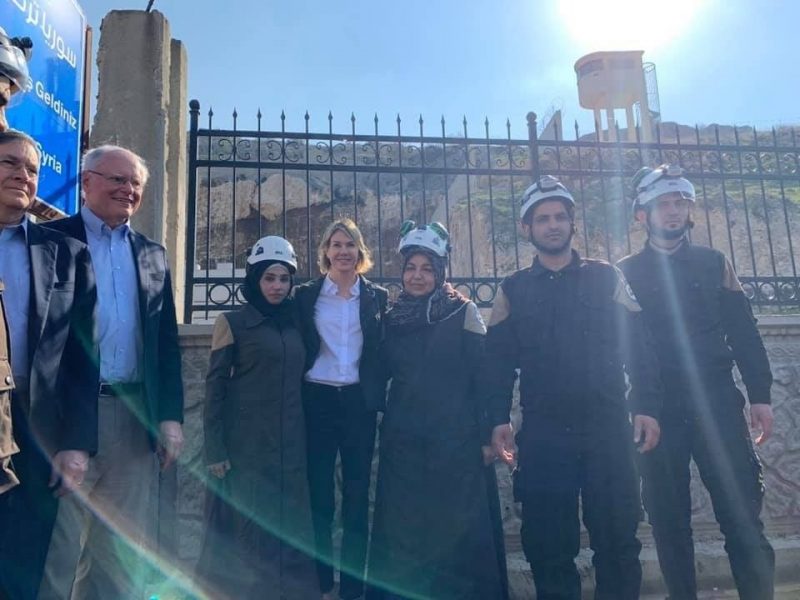
The two diplomats slipped over the border from Turkey with the connivance of Ankara and several Syrian “resistance” groups. They conspicuously met with the so-called White Helmets, a group that claims to be involved in nonpartisan humanitarian rescue missions but which really is affiliated with terrorists, most notably the Hayat Tahrir al-Sham (HTS), which is affiliated with al-Qaeda. HTS is the principal terrorist group operating in Idlib.
The group of American diplomats was headed by U.S. representative to the United Nations Kelly Craft, along with U.S. Special Envoy for Syria James Jeffrey. It was the first visit by American diplomats to Idlib. Craft announced that the aid package was for “the people of Syria in response to the ongoing crisis caused by Assad regime, Russian, and Iranian forces”. Jeffrey struck a more directly belligerent pose, saying that Washington would be providing ammunition in addition to the humanitarian assistance. “Turkey is a NATO ally. Much of the military uses American equipment. We will make sure that equipment is ready and usable.”
U.S. policy in Syria serves no American interest, but both Craft and Jeffrey are well known to be in the pocket of Israel. Craft, a big time GOP donor, who, in her fifteen months spent as Ambassador to Canada was remarkable for flying back to the U.S. from Ottawa 128 times, 70 of which were to her home in Kentucky. All on the government dime even though she is an extremely wealthy woman.
Craft left Canada when she replaced the arch Zionist Nikki Haley at the U.N. She emphasized in her confirmation hearing before the Senate Foreign Relations Committee that she would “fight against anti-Israel resolutions and actions by the U.N. and its affiliated agencies.” She also “made a case for America returning to a leading role at Turtle Bay [the U.N.] as a way of protecting Israel… Without U.S. leadership, our partners and allies would be vulnerable to bad actors at the U.N. This is particularly true in the case of Israel, which is the subject of unrelenting bias and hostility in U.N. venues. The United States will never accept such bias, and if confirmed I commit to seizing every opportunity to shine a light on this conduct, call it what it is, and demand that these outrageous practices finally come to an end.”
Jeffrey is even more the zealot. His full title is as United States Special Representative for Syria Engagement and the Special Envoy for the Global Coalition to Defeat ISIL. He is, generally speaking, a hardliner politically, closely aligned with Israel and regarding Iran as a hostile destabilizing force in the Middle East region. He was between 2013 and 2018 Philip Solondz distinguished fellow at the Washington Institute for Near East Policy (WINEP), a think tank that is a spin-off of the American Israel Public Affairs Committee (AIPAC). He is currently a WINEP “Outside Author” and go-to “expert.”
Professor John Mearsheimer of the University of Chicago and Stephen Walt, academic dean at Harvard University ‘s Kennedy School of Government, describe WINEP as “part of the core” of the Israel Lobby in the U.S. They examined the group on pages 175-6 in their groundbreaking book The Israel Lobby and US Foreign Policy and concluded as follows:
“Although WINEP plays down its links to Israel and claims that it provides a ‘balanced and realistic’ perspective on Middle East issues, this is not the case. In fact, WINEP is funded and run by individuals who are deeply committed to advancing Israel’s agenda … Many of its personnel are genuine scholars or experienced former officials, but they are hardly neutral observers on most Middle East issues and there is little diversity of views within WINEP’s ranks.”
Jeffrey set the tone for his term of office shortly after being appointed by President Trump back in August 2018 when he argued that the Syrian terrorists were “. . . not terrorists, but people fighting a civil war against a brutal dictator.” Jeffrey, who must have somehow missed a lot of the head chopping and rape going on, subsequently traveled to the Middle East and stopped off in Israel to meet Prime Minister Benjamin Netanyahu. It has been suggested that Jeffrey received his marching orders during the visit.
So, Trump bleats incessantly about how he wants to withdraw the U.S. from the senseless wars that it has been drawn into but at the same time his State Department sends two Zionist hardliners to Syria on a semi-secret mission to support a policy of regime change in Damascus while also providing aid that will inevitably fall into the pockets of an al-Qaeda linked terrorist group. And ammunition will also be forthcoming for the invading Turks to shoot Syrians, Russians and Iranians. If anyone is seriously interested in what is wrong with U.S. foreign policy, the activity of Craft and Jeffrey might serve as a decent case study on how not to do it. Unless, of course, the actual objective is to screw things up and involve the United States in quarrels that it could easily avoid.
Philip M. Giraldi is a former CIA counter-terrorism specialist and military intelligence officer who served nineteen years overseas in Turkey, Italy, Germany, and Spain. He was the CIA Chief of Base for the Barcelona Olympics in 1992 and was one of the first Americans to enter Afghanistan in December 2001. Phil is Executive Director of the Council for the National Interest, a Washington-based advocacy group that seeks to encourage and promote a U.S. foreign policy in the Middle East that is consistent with American values and interests.
‘Where was your patient zero?’ Chinese official speculates AMERICANS may have infected Wuhan at army games & calls to ‘come clean’
RT | March 13, 2020
Chinese foreign ministry spokesperson Lijian Zhao has demanded US authorities reveal what they’re hiding about the origins of Covid-19, going as far as to suggest the coronavirus may have been brought to China by the US military.
Pointing to a video of Centers for Disease Control and Prevention (CDC) director Robert Redfield apparently admitting the US had several deaths from Covid-19 before they were able to test for it, Zhao called on the American watchdog to come clean in a tweet posted on Thursday.
“It might be US army who brought the epidemic to Wuhan,” Zhao suggested, calling for the CDC – and the US in general – to “be transparent” and share what they know about where and when “Patient Zero” was first diagnosed.
In the video, Redfield acknowledged that some cases of coronavirus were misclassified as influenza as the medics did not have an accurate test for the new epidemic at the time. He did not elaborate on when these misdiagnosed cases first appeared – saying only that “some cases have been diagnosed that way.”
In the absence of any patients’ details or chronology of deaths, speculation has swirled. Zhao’s “theory” in particular focused on the military delegation that traveled to Wuhan in October for the Military World Games, weeks before the city confirmed the outbreak in December. The delegation was part of the 300-member group of American athletes taking part in the multi-sport event held every four years.
Zhao is not the only high-profile political figure to voice suspicions about the timing of the Games and the introduction of the coronavirus in Wuhan. Former Malaysian PM Matthias Chang offered similar speculation back in January, zeroing in on the event as the launch point for what he deemed a biological war waged by the US against China.
The World Health Organization (WHO) states that what is now the Covid-19 pandemic was first reported as a coronavirus outbreak in Wuhan, China, on 31 December 2019. The search for the deadly disease’s origin has been ongoing, with conflicting versions blaming the Wuhan food market and bats – a local delicacy – sold there in particular, while others opined humans might have gotten the virus from pangolins, an endangered scaly mammal.
Less orthodox theories suggest malicious intent, with the head of Iran’s elite Revolutionary Guards sensationally claiming last week that Covid-19 could possibly be “a product of a biological attack by America which initially spread to China and then to Iran and the rest of the world.”
So far, the problem with all of those theories, blaming both animals and humans, is that no direct causal proof has been established, while the identity of China’s “patient zero” also remains unclear. And it’s not China alone: in Washington state – which seemingly identified and successfully isolated its first infected traveler, with dozens of contacts identified and monitored – the virus somehow began spreading anyway. Even Steve Wozniak, Apple’s co-founder, at one point claimed he and his wife may have been the US’ “patient zero” after developing a bad cough on return from China. It has since emerged his wife’s diagnosis was “a sinus infection,” however.
Also on rt.com
‘Arm’s-length’ military institution promotes belligerent worldview
By Yves Engler · March 12, 2020
 Not satisfied with Canada’s largest public relations machine, the Canadian Forces also employ various “arm’s-length” institutions to push their influence over the discussion of military and international affairs.
For example, the Conference of Defence Associations (CDA) Institute recently published a half-page ad in the Globe and Mail to announce its Conference on Security and Defence. The March 3 and 4 meeting at the venerable Château Laurier was sponsored by the Department of National Defence (DND) and Global Affairs as well as Lockheed Martin, Raytheon and other arms companies. As in previous years, CDA’s confab in Ottawa drew leading military and political officials, including the Chief of the Defence Staff, who heard speakers hype security threats and push for increased military spending.
The headlines the conference generated included: “Russia poses most immediate military threat to Canada, top general says” (Globe and Mail ), “Canada and the West are at war with Russia whether they want it or not: military experts” (Global ) and “Top Canadian general calls out Russia and China for ‘antagonistic actions’” (CTV).
None of these stories explained what the CDA Institute actually is. The group describes itself as a “non-partisan, independent, non-profit organization [that] expresses its ideas and opinions with a view to influencing government security and defence policy.” Established in 1932, then Minister of Defence Donald Matheson Sutherland backed CDA’s creation. Since its inception CDA has been directly or indirectly financed by DND. Initially, member associations paid a small part of the funds they received from DND to CDA. But, three decades later the role was reversed. CDA received a block grant from DND and parcelled out the money to its various member associations.
Since its creation, defence ministers and governor generals (as commander in chief) have regularly appeared at CDA’s annual conference. The governor general, prime minister, defence minister and chief of the defence staff are honorary patrons or vice patrons of the organization.
At the height of Canada’s war in Afghanistan CDA received a highly politicized five-year $500,000 contract from DND. University of Ottawa professor Amir Attaran wrote, “that money comes not with strings, but with an entire leash.” To receive the money CDA committed to producing 15 opinion pieces or letters to the editor in major Canadian newspapers, generating 29 media references to the organization and eliciting 100 requests for radio/television interviews. The media work was part of a requirement to “support activities that give evidence of contributing to Canada’s national policies.” CDA didn’t initially disclose its 2007–12 DND sponsorship agreement, which was reviewed by cabinet.
CDA represents over 50 military associations ranging from the Naval Association of Canada to the Canadian Infantry Association, Royal Canadian Legion to the Military Intelligence Association. It is run by high-ranking former officers.
CDA publishes Security and Defence Briefings, Vimy Papers and Presentations and Position Papers. The organization’s quarterly journal ON TRACK “promotes informed public debate on security and defence issues and the vital role played by the Canadian Armed forces in society.” CDA has also published influential books such as Queens professor Douglas Bland’s A Nation at Risk: The Decline of the Canadian Forces.
To encourage militarist research, CDA awards a number of prizes. It puts on an annual graduate student symposium where $3,000 goes to the winning paper, $2,000 to second place and $1,000 to third place. CDA co-sponsors the Ross Munro Media Award to a “journalist who has made a significant contribution to understanding defence and security issues” and gives the Vimy Award to a “Canadian who has made a significant and outstanding contribution to the defence and security of Canada and the preservation of (its) democratic values.”
CDA advocates militarism. Its first official resolution noted “the urgent need for an increased appropriation for national defence.” At almost every CDA convention between 1946 and 1959 a resolution passed in favour of compulsory military training. A 1968 resolution called for universal military training, expressing concern that a generation of Canadians had become “unused to the idea of military service.”
In the 1980s CDA developed the idea of the “Total Defence of Canada”. In 1985 Colonel H. A. J. Hutchinson told a CDA meeting: “I would say that the Total Defence of Canada requires much more than just the support of the Canadian Armed Forces, it involves the organization of our total economy, our industrial base, towards a single objective — the defence of this country.” Hinting at the need to talk up US President Ronald Reagan’s revival of Cold War rhetoric, Hutchison said this “can only be made [possible] if the Canadian people perceive that it is necessary and that, in fact, it is the only course of action open to them.”
A 2000 CDA report funded by the Business Council on National Issues, the Molson Foundation and DND advocated increased military spending to defend free trade. It claimed “the defence establishment, including the Canadian Forces, plays a key role in an international policy which provides the insurance and the means which allow the national interest to flourish. It contributes to stability at home and abroad, thus supporting the development of an environment congenial to trade.”
In November Richard Fadden told CDA’s Vimy Dinner Canada had to be “clear-eyed” about Russia and China, which are prepared to “use virtually any means to attain their goals.” Fadden claimed, “the risks posed by these two countries are certainly different, but they are generally based on advancing all their interests to the detriment of the West.”
For the military and the industries that profit from militarism, it is important to have “arms-length” organizations that create the illusion of a diversity of voices. But honest writers should be blunt about the CDA. It is a war machine front group, created and controlled by the military.
NATO and COVID-19: a Parasitical Disease in Europe
By Finian Cunningham | Strategic Culture Foundation | March 12, 2020
The decision to go-ahead with NATO’s biggest-ever war games in Europe at a time of heightened fears over the coronavirus sure raises questions about the military alliance’s stated purpose of maintaining security.
NATO secretary-general Jens Stoltenberg has said the Defender-Europe 20 exercises will not be cancelled due to the flu-like disease which has now spread to every country in the European Union causing hundreds of deaths so far.
Over the next five months some 17 allied NATO members will participate in military maneuvers across seven European states: in Belgium, Netherlands, Germany, Poland, Estonia, Latvia and Lithuania. All of the host nations have reported infections from the COVID-19 virus. “Host” being an operative word when it comes to also talking about the relationship with the U.S.-led NATO alliance.
Germany’s health minister Jens Spahn is quoted as saying that the coronavirus outbreak has “become a global pandemic” and the “worst has yet to come.”
In all, 37,000 troops are involved in the Defender-Europe 20 war games, the biggest contingency since the end of the Cold War nearly three decades ago. The U.S. is sending 20,000 personnel. Most of those troops will return to bases located in at least 20 American states. Thus, the risk factor of spreading the disease across Europe and the U.S. is significantly increased by the NATO events.
Going ahead with the European war games looks especially ill-advised given that U.S. forces in Asia-Pacific have cancelled similar military exercises that were scheduled in South Korea out of fears about coronavirus (COVID-19).
The Defender-Europe 20 events underway come amid reports that the U.S. Commander in Europe, Lt. General Christoper Cavoli, may have been infected after attending a recent military conference in Wiesbaden, Germany.
The top health advisor to the U.S. Joint Chiefs of Staff, Air Force Brig. General Paul Friedrichs has also admitted that the number of COVID-19 cases among the Pentagon’s armed forces may be far higher than is being reported.
The seeming lack of cautionary measures by the U.S.-led NATO alliance is in contrast to growing public concerns for containing the disease. Italy – which has recorded the second highest fatalities worldwide after China – has placed a total lockdown on public travel for its 60 million population. Airlines across Europe have cancelled thousands of flights as some carriers go out of business altogether.
Sporting events across Europe including major soccer matches are being cancelled or will be held without attendance by fans. The six-nations rugby tournament has been thrown into disarray from match fixtures being rescheduled; a big match between Ireland and France due this weekend is postponed until October.
In Britain there are calls for parliament to be suspended after health minister Nadine Dorries was reported to have been infected. Boris Johnson’s government has been accused of complacency in dealing with the virus.
U.S. President Donald Trump has also come under fire for not taking sufficient containment measures or providing adequate resources such as testing kits. The official number of U.S. cases of COVID-19 is relatively low so far, but that is thought to be due to limited testing.
It would therefore seem reasonable in this context of pandemic risk that such a multinational event like NATO’s Defender-Europe 20 be called off. As it proceeds, the war games appear to a perfect vector for accelerating disease spread between two continents and beyond. Indeed, not parking these war games seems the height of carelessness.
How fitting that NATO should be so unresponsive to real need. This lumbering 29-nation military organization which consumes a combined annual budget of $1 trillion is a creature of habit and slavish ideology. Nearly 30 years after the Cold War with the Soviet Union, the world has moved on. But not, it seems, NATO. It continues to hold its war games supposedly defending Europe from “Russian invasion”.
If NATO can’t adjust to such glaring world realities as the end of the Soviet Union three decades ago, then no wonder its response to coronavirus is hardly fleet-footed. It’s the military equivalent of a dinosaur whose functioning is no longer supported by its environment.
The irony is that NATO’s obscene military largesse is crushing public finances that would otherwise be more usefully spent, such as building up healthcare infrastructure that would help mitigate crises like the coronavirus. Many other societal needs are chronically neglected because of exorbitant military budgets among NATO members. Donald Trump brags that he has cajoled European allies to fork out hundreds of billions more dollars on military budgets.
The coronavirus is but a stress-test on whole societies that have become hollowed out by excessive militarism and the corporate capitalist super-structure it serves.
Even before the coronavirus problem emerged in China earlier this year, the NATO war games in Europe (and elsewhere) have been a cause for much criticism. The geopolitical tensions that this U.S.-led militarism is engendering towards Russia and China have been deplored. Moscow has denounced the Defender-Europe 20 event as a “rehearsal for war” which is completely disconnected from reality. The inveterate Cold War ideology that drives NATO is imposing insecurity and risk of war on Europe in a way that makes a mockery of NATO claims about being dedicated to “security and defense”.
The reckless risk-taking with regard to inflaming a coronavirus pandemic is typical of NATO’s obsolete purpose. Like the disease itself, NATO is a parasite on host nations draining vital public resources. This organization should be “self-isolating”… 30 years too late.
COVID-19: Further Evidence that the Virus Originated in the US
By Larry Romanoff | Global Research | March 11, 2020
It would be useful to read this prior article for background:
China’s Coronavirus: A Shocking Update. Did The Virus Originate in the US?
By , March 4, 2020
***
As readers will recall from the earlier article (above), Japanese and Taiwanese epidemiologists and pharmacologists have determined that the new coronavirus almost certainly originated in the US since that country is the only one known to have all five types – from which all others must have descended. Wuhan in China has only one of those types, rendering it in analogy as a kind of “branch” which cannot exist by itself but must have grown from a “tree”.
The Taiwanese physician noted that in August of 2019 the US had a flurry of lung pneumonias or similar, which the Americans blamed on ‘vaping’ from e-cigarettes, but which, according to the scientist, the symptoms and conditions could not be explained by e-cigarettes. He said he wrote to the US officials telling them he suspected those deaths were likely due to the coronavirus. He claims his warnings were ignored.
Immediately prior to that, the CDC totally shut down the US Military’s main bio-lab at Fort Detrick, Maryland, due to an absence of safeguards against pathogen leakages, issuing a complete “cease and desist” order to the military. It was immediately after this event that the ‘e-cigarette’ epidemic arose.
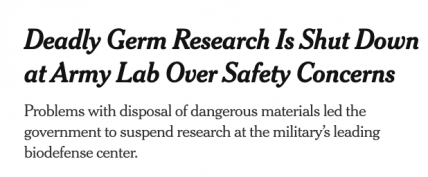
Screenshot from The New York Times August 08, 2019
We also had the Japanese citizens infected in September of 2019, in Hawaii, people who had never been to China, these infections occurring on US soil long before the outbreak in Wuhan but only shortly after the locking down of Fort Detrick.
Then, on Chinese social media, another article appeared, aware of the above but presenting further details. It stated in part that five “foreign” athletes or other personnel visiting Wuhan for the World Military Games (October 18-27, 2019) were hospitalised in Wuhan for an undetermined infection.
The article explains more clearly that the Wuhan version of the virus could have come only from the US because it is what they call a “branch” which could not have been created first because it would have no ‘seed’. It would have to have been a new variety spun off the original ‘trunk’, and that trunk exists only in the US. (1)
There has been much public speculation that the coronavirus had been deliberately transmitted to China but, according to the Chinese article, a less sinister alternative is possible.
If some members of the US team at the World Military Games (18-27 October) had become infected by the virus from an accidental outbreak at Fort Detrick it is possible that, with a long initial incubation period, their symptoms might have been minor, and those individuals could easily have ‘toured’ the city of Wuhan during their stay, infecting potentially thousands of local residents in various locations, many of whom would later travel to the seafood market from which the virus would spread like wildfire (as it did).
That would account also for the practical impossibility of locating the legendary “patient zero” – which in this case has never been found since there would have been many of them.
Next, Daniel Lucey, an infectious disease expert at Georgetown University in Washington, said in an article in Science magazine that the first human infection has been confirmed as occurring in November 2019, (not in Wuhan), suggesting the virus originated elsewhere and then spread to the seafood markets. “One group put the origin of the outbreak as early as 18 September 2019.” (2) (3)
Wuhan seafood market may not be source of novel virus spreading globally.
Description of earliest cases suggests outbreak began elsewhere.
The article states:
“As confirmed cases of a novel virus surge around the world with worrisome speed, all eyes have so far focused on a seafood market in Wuhan, China, as the origin of the outbreak. But a description of the first clinical cases published in The Lancet on Friday challenges that hypothesis.” (4) (5)
The paper, written by a large group of Chinese researchers from several institutions, offers details about the first 41 hospitalized patients who had confirmed infections with what has been dubbed 2019 novel coronavirus (2019-nCoV).
In the earliest case, the patient became ill on 1 December 2019 and had no reported link to the seafood market, the authors report. “No epidemiological link was found between the first patient and later cases”, they state. Their data also show that, in total, 13 of the 41 cases had no link to the marketplace. “That’s a big number, 13, with no link”, says Daniel Lucey . . . (6)
Earlier reports from Chinese health authorities and the World Health Organization had said the first patient had onset of symptoms on 8 December 2019 – and those reports simply said “most” cases had links to the seafood market, which was closed on 1 January. (7)
“Lucey says if the new data are accurate, the first human infections must have occurred in November 2019 – if not earlier – because there is an incubation time between infection and symptoms surfacing. If so, the virus possibly spread silently between people in Wuhan – and perhaps elsewhere – before the cluster of cases from the city’s now-infamous Huanan Seafood Wholesale Market was discovered in late December. “The virus came into that marketplace before it came out of that marketplace”, Lucey asserts.
“China must have realized the epidemic did not originate in that Wuhan Huanan seafood market”, Lucey told Science Insider. (8)
Kristian Andersen is an evolutionary biologist at the Scripps Research Institute who has analyzed sequences of 2019-nCoV to try to clarify its origin. He said the scenario was “entirely plausible” of infected persons bringing the virus into the seafood market from somewhere outside. According to the Science article,
“Andersen posted his analysis of 27 available genomes of 2019-nCoV on 25 January on a virology research website. It suggests they had a “most recent common ancestor” – meaning a common source – as early as 1 October 2019.” (9)
It was interesting that Lucey also noted that MERS was originally believed to have come from a patient in Saudi Arabia in June of 2012, but later and more thorough studies traced it back to an earlier hospital outbreak of unexplained pneumonia in Jordan in April of that year. Lucey said that from stored samples from people who died in Jordan, medical authorities confirmed they had been infected with the MERS virus. (10)
This would provide impetus for caution among the public in accepting the “official standard narrative” that the Western media are always so eager to provide – as they did with SARS, MERS, and ZIKA, all of which ‘official narratives’ were later proven to have been entirely wrong.
In this case, the Western media flooded their pages for months about the COVID-19 virus originating in the Wuhan seafood market, caused by people eating bats and wild animals. All of this has been proven wrong.
Not only did the virus not originate at the seafood market, it did not originate in Wuhan at all, and it has now been proven that it did not originate in China but was brought to China from another country. Part of the proof of this assertion is that the genome varieties of the virus in Iran and Italy have been sequenced and declared to have no part of the variety that infected China and must, by definition, have originated elsewhere.
It would seem the only possibility for origination is the US because only that country has the “tree trunk” of all the varieties. And it may therefore be true that the original source of the COVID-19 virus was the US military bio-warfare lab at Fort Detrick. This would not be a surprise, given that the CDC completely shut down Fort Detrick, but also because, as I related in an earlier article, between 2005 and 2012 the US had experienced 1,059 events where pathogens had been either stolen or escaped from American bio-labs during the prior ten years – an average of one every three days.
***
Larry Romanoff is a retired management consultant and businessman. He has held senior executive positions in international consulting firms, and owned an international import-export business. He has been a visiting professor at Shanghai’s Fudan University, presenting case studies in international affairs to senior EMBA classes. Mr. Romanoff lives in Shanghai and is currently writing a series of ten books generally related to China and the West. He can be contacted at: 2186604556@qq.com. He is a frequent contributor to Global Research.
Notes
(1) https://mp.weixin.qq.com/s/CjGWaaDSKTyjWRMyQyGXUA
(2) https://science.sciencemag.org/content/367/6477/492.full
(3) Science; Jon Cohen; Jan. 26, 2020
https://www.sciencemag.org/news/2020/01/wuhan-seafood-market-may-not-be-source-novel-virus-spreading-globally
(4) https://www.thelancet.com/journals/lancet/article/PIIS0140-6736(20)30183-5/fulltext
(5) https://www.thelancet.com/journals/lancet/article/PIIS0140-6736(20)30183-5/fulltext
(6) http://wjw.wuhan.gov.cn/front/web/showDetail/2020011109036
(7) http://wjw.wuhan.gov.cn/front/web/showDetail/2020011509040
(9) http://virological.org/t/clock-and-tmrca-based-on-27-genomes/347
(10) http://applications.emro.who.int/emhj/v19/Supp1/EMHJ_2013_19_Supp1_S12_S18.pdf
Copyright © Larry Romanoff, Global Research, 2020
Large-scale military drill in Europe to go ahead despite coronavirus outbreak
By Max Civili | Press TV | March 11, 2020
Rome – As the coronavirus crisis intensifies in Italy and in many other EU countries, authoritative Italian daily Il Manifesto and independent broadcasters and websites have started to report on a large-scale military operation that is to take place across the Old Continent from April to July this year.
The operation, dubbed Defender Europe 20, will see the deployment of 20,000 US troops, equipment, and gear across European countries, where they will be joined by NATO allies’ military forces and partner nations for a series of drills and war games.
Defender Europe 20 comprises three phases, involving a total of 37,000 participants deployed in Germany — which is the main hub of the exercise — Belgium, Poland, and the Baltic states of Latvia, Lithuania, and Estonia.
There have been rumors that the Defender Europe 20 operation might be called off because of the coronavirus crisis that is affecting most member states of the bloc. However, according to the NATO and the US Army Europe website, all the parts involved will continue with the execution of the operation and all linked exercises as planned.
On March 4, in Zagreb, Croatia, NATO Secretary General Jens Stoltenberg confirmed that the 29-member alliance will press ahead with the operation, mobilizing thousands of troops despite worries about the coronavirus. Stoltenberg said NATO was making contingency plans in case of a significant outbreak, but for the time being, exercises would go ahead as planned.
Last February, the first contingent of US troops, tanks, and equipment taking part in the Defender Europe 20 military exercise arrived in the northern German port of Bremerhaven.
If You Like War, You’ll Love Joe
By Arshad Khan | CounterPunch | March 10, 2020
Like a cat with nine lives, Joe Biden keeps returning to the presidential race with a consistency akin to his votes for war — hard to find a war Joe did not like.
He voted for the Iraq war, still running in one form or another with American troops on the ground — despite a vote in the Iraqi parliament for their withdrawal. As Obama’s vice-president, his hands are soiled with the bombings and killings in Yemen; extending the Afghan war by increasing US force levels there; the airstrikes in Syria; and the death and destruction in Libya that included the wanton bombing of the hugely expensive system to transport water from the south to the capital, Tripoli.
It has been calamitous for these countries. They have suffered millions of dead and wounded, many, many more millions displaced, and a refugee problem that is straining EU ties and its policy of open borders. Economic migrants from Africa used to come to a previously prosperous Libya, work a while, then return home. With Libyan opportunities gone, they continue on to Europe from where it is difficult to return home, so they stay becoming permanent immigrants.
In fact, if we examine Europe’s refugee problem, a good portion of the blame rests with US wars. The migrants are from Afghanistan and its spillover in Pakistan; they come from Iraq, from Somalia, from Syria, from Libya, and from adjoining countries.
How much of all this included Joe Biden? Over 30 years practically everything, particularly for someone who proudly proclaims himself a ‘patriot’ … read support for every war. Yet during the Vietnam war he received student draft deferments, then asked to be reclassified because of asthma when he was a teen.
Accused of plagiarism in law school, he claimed he was confused about the rules for citation. He was given an F, and had to retake the course — the F later expunged from his transcript. He was also caught lifing phrases from others in his speeches causing him to drop out of the 1988 presidential nomination race. What is worrisome is that the last was carefully contrived to build a persona, as David Greenberg described in Slate (“The Write Stuff”, August 25, 2008). It is worth reading for it indicates a habit of mind that is lacking in ethics, perhaps just the kind corporate elites would prefer in the White House.
Poor Bernie. What chance does he have against the choice of corporate bulldozers and their associated media, the latter now painting him as a Russian agent? As propagandists maintain, the more ridiculous the story, the more believable it is in the public marketplace.
Before the current crop of Buttigiegs and the if-he-can-run-so-can-I types and, of course, Bernie and Warren splitting the progressive vote, Joe Biden had never won a presidential primary despite many, many attempts. South Carolina was the first, and now he has topped that with nine more on Super Tuesday this week.
In Joe’s dotage, unable to complete sentences or quotes, changing Super Tuesday into a ‘Super Thursday’, the onset of dementia has to be obvious. But then how many actually hear him speak or watch debates?
Nothing left but to hunker down and prepare ourselves for four more years of Trump. An addled, demented nominee is unlikely to be much of a challenge.
Arshad M. Khan is a former professor who has, over many years, written occasionally for the print and often for online media outlets.
All-star warmonger Lindsey Graham urges NATO to ‘get more involved’ in Idlib, Syria to stop ‘Syrian aggression’
RT | March 10, 2020
Veteran chickenhawk Lindsey Graham once again beat his over-used war drum, this time because he wants NATO to get involved in Idlib, Syria to stop “Syrian aggression.” Yes, when will Syria stop intervening in its own country?
The South Carolina senator said that he fully supports US President Donald Trump’s efforts to “get NATO more involved in Syria,” arguing that the defensive alliance should aid Turkey as it “defends Idlib against Russian/Syrian aggression.” He further argued that the “fall” of Idlib would result in a humanitarian crisis felt around the world, which is why NATO should be more “supportive” of its Turkish ally.
The senior statesman apparently doesn’t seem particularly fazed by the fact that Idlib is part of Syria – making accusations of “Syrian aggression” slightly nonsensical. The province is now home to the last bastion of extremist jihadist militias, some of which are directly affiliated with Al-Qaeda.
This is hardly the first time that the US hawk has demanded direct intervention in Idlib. In February, he called on the Pentagon to impose a no-fly zone over the Syrian province, claiming it would help stop the “destruction” of Idlib by Syrian, Iranian, and Russian forces.
As far back as September, Graham was issuing statements warning over “the wholesale massacre” of civilians in Idlib, insisting that “we either act now [in Syria] or pay a heavy price later.”
The senator’s melodramatic representation of a terrorist-infested Syrian province being under siege by the Syrian military shouldn’t come as a surprise to US political observers. Graham has been portrayed as part of former Arizona Senator John McCain’s “foreign policy club” – a euphemism for hardcore neocon interventionism.
Last week, Turkey and Russia brokered a ceasefire in the region, ending the fighting between Syrian and Turkish forces. But this hasn’t stopped the United States from trying to raise the stakes in northwestern Syria. The US reportedly offered to provide Turkey with ammunition to help in the conflict in Idlib. Turkish Foreign Minister Mevlut Cavusoglu said on Tuesday that Washington also offered land, sea, and air intelligence regarding the northwestern region. Although US “assistance” remains moderate at the moment and Graham’s fantasy of a NATO operation in Idlib seem unlikely, the warmongering section of US politics remains strong and its efforts to get Washington into more bloody conflicts with the blessings of the military-industrial complex are not likely to stop any time soon.
Featured Video

Iran’s Next Strike May Not Explode. It Could Shut You Down
or go to
Aletho News Archives – Video-Images
Book Review
New paperback: Butchered by “Healthcare”
Lies are Unbekoming | October 20, 2026
 Butchered by “Healthcare” is Robert Yoho’s plain-spoken account of how American medicine stopped being a profession and became an industry. 341 pages. Over a thousand references. Thirty-eight chapters.
“Screening Tests Are Useless”, on tests that find diseases that would never have hurt you. “The FDA Protects the Big Drug Companies”, on an agency funded by the companies it regulates. “The Journals’ Sins Are the Editors’ Sins”, on ghostwritten studies and captured peer review. “Opioids and ‘Pain Management’”, on how a generation was prescribed its way into addiction. “Prozac and Relatives” and “Antipsychotics Are Disastrous”, on what psychiatry does to adults and children. “Surgery: Money Before Patients”. “Failed Cancer Treatments”. “Futile CPR and Overprescribing”. “Billing Scams & Specialty Warfare”. “Hospitals Are Sharks”. Each with a Patient Tips section at the end on how to survive it.
If you have ever walked out of a doctor’s office with a prescription you didn’t ask for, or watched a parent put through a treatment that made them worse, this is the book you want on your shelf before the next appointment. … Full review
Butchered by “Healthcare” is available on Lulu now.
Blog Roll
 Aletho News
- Iran’s Next Strike May Not Explode. It Could Shut You Down /Col Doug Macgregor
- Iran: US political targets legitimate if assassinations return
- Iraq shuts key border crossing with Iran under US pressure: Report
- Undersea Internet cables could be targeted in retaliation for attacks on Iran: IRGC deputy chief
- EU sending ‘biased’ observers to interfere in Serbian election – president
- White House envoy declares kinetic action against Yemen ‘fruitless’
- Ukraine deployed thousands of microdrones in Iraqi Kurdistan: Tasnim
- Iran calls for emergency UNSC meeting over Trump’s ‘brazen’ bomb talk, Israeli threats
- Iranian sources reveal details of Russia-China Hormuz proposal
- Plan for more US-Israel integration puts our military tech at risk
- If Americans Knew
- Americans at National Conservatism Conference held in Israel this year criticize Israel
- Christiane Amanpour exits CNN with a legacy shaped by the debate over Israel
- Israel’s war on Iran is the final move in a decades-old strategy
- Israel Denies Entry to French Journalist, U.S. Researcher Amid Rise in Entry Denials
- Gaza’s hospitals are running out of life-saving fuel – Daily Update
- Mysterious bot accounts reportedly spread fake ‘man on the street’ videos for Michigan Senate candidate
- Israeli Defense Minister Katz Says Over 60 Lebanon Villages Have Been Destroyed
- Why Is Israel Running TV Ads in Iowa Ahead of the Midterms?
- Hind Rajab’s Alleged Killer Is in the United States. HRF Demands His Arrest.
- US Officials Face Fresh Pressure After Another American ‘Brutalized’ by Israeli Settlers in West Bank
- No Tricks Zone
- E-Cars Reduce CO2 Emissions By Only 41% Compared To Internal Combustion Engine Vehicles
- Predictions Made By Renowned Climate Professor Over Past Decades Have Been Proven To Be Poor
- New Study Suggests Large Regions Of The Pacific Ocean Have Been Cooling For The Last 80 Years
- Germany’s Green Energy Debacle: High Energy Costs Force Kahla Porzellan to Close After 182 Years!
- New Study: 50 Years Of The Most Aggressive ‘Net Zero’ Policies Can Only Affect The Global Climate By 0.03°C
- US September “Heat” Was No Record…Many Records Set Decades Ago
- Latest European Green Energy Debacle; Portugal’s Largest Flagship Solar Park Insolvent!
- Green Energy Debacle: German Expert Professor Fritz Vahrenholt Warns Of Severe Economic And Social Consequences
- Two More Paleo Reconstructions Affirm Meters-Higher Sea Levels Across Ireland, Brazil 7000-6000 Years Ago
- New Study: Earth And Venus Surface Warmth Largely Explained By Convection And Lapse Rate, Not CO2 Or Radiation

