Out of 26 Major Editorials on Trump’s Syria Strikes, Zero Opposed
By Adam Johnson | FAIR | April 18, 2018
A survey by FAIR of the top 100 papers in the US by circulation found not a single editorial board opposed to Trump’s April 13 airstrikes on Syria. Twenty supported the strikes, while six were ambiguous as to whether or not the bombing was advisable. The remaining 74 issued no opinion about Trump’s latest escalation of the Syrian war.
This is fairly consistent with editorial support for Trump’s April 2017 airstrikes against the Syrian government, which saw only one editorial out of 47 oppose the bombing (FAIR.org, 4/11/17). The single paper of dissent from last year, the Houston Chronicle, didn’t publish an editorial on last week’s bombing.
Seven of the top 10 newspapers by circulation—USA Today, Wall Street Journal, Los Angeles Times, New York Post, Chicago Tribune, Newsday and Washington Post—supported the airstrikes. The New York Daily News and San Jose Mercury News offered no opinion, while the New York Times (4/13/18) was ambiguous—mostly lamenting the lack of congressional approval, but not saying that this meant the strikes were illegal or unwise. “Legislation should…set limits on a president’s ability to wage war against states like Syria,” is the Times’ conclusion. A complete list of editorials on the airstrikes can be viewed here.
Almost every editorial spoke in the same Official, Serious tone that demanded “action” be taken and “international norms” be “enforced.” Some, such as the Wall Street Journal (4/16/18), went further, insisting on a wider war against the Syrian regime, Iran and/or Russia in vague but menacing terms.
“Barack Obama dealt Mr. Trump a bad hand by letting Russia, Iran and China believe they could advance their goals of regional domination without US resistance,” the Journal insisted. “In Syria as elsewhere, Mr. Trump has to decide if he wants to ratify that American retreat or develop a strategy to stop it.”
The mid-market Toledo Blade (4/15/18) punched above its weight class and delivered the most bellicose and jingoistic editorial of them all with “The West Stands Up”:
Make no mistake, this was a warning to Vladimir Putin as well as Bashar al-Assad.
The United States and its two longtime allies redrew the red line that had been obliterated by a failure of nerve by the US and the West generally: There will be cost for your barbarities….
But in the larger sense, the West did what it should have done a long time ago. It stood up for decency and international law. It stood up for those who are defenseless. It stood up for itself, and for simple humanity, and redeemed some self-respect.
If Assad regime officials find themselves catching up on news from the greater Northwest Ohio region, they will surely take heed.
None of the top 100 newspapers questioned the US’s legal or moral right to bomb Syria, and all accepted US government claims to be neutral arbiters of “international law.” Many editorials handwrung about a “lack of strategy” or absence of congressional approval, but none so much that they opposed the bombing. Strategy and legal sanction are add-on features—nice but, by all accounts, not essential.
The total lack of editorial board dissent is consistent with major papers’ tradition of uniform acceptance of US military action. The most influential paper in the country, the New York Times, has not opposed a single US war—from the Persian Gulf to Bosnia, to Kosovo to Iraq to Libya to the forever war on ISIS—in the past 30 years.
The scope of debate among major editorial boards is not if Trump should bomb the Syrian regime, but how much bombing he should undertake—and when, roughly speaking, he should maybe get around to letting Congress know.
Iran rejects ‘baseless’ UK, US accusations on Yemen missiles
Press TV – April 18, 2018
Iran has firmly rejected fresh US and British allegations of Tehran sending missiles to Yemen, saying the two are seeking to whitewash their “shameful” complicity in the crisis gripping the war-torn country by leveling “false” charges against others.
“The US and UK complicity in Yemen crisis is shameful,” Iran’s Permanent Mission to the United Nations said in a press release on Tuesday.
The Iranian mission was reacting to remarks by the American and British ambassadors to the UN, Nikki Haley and Karen Pierce during a Security Council meeting on Yemen earlier in the day.
Haley claimed that Iran was interfering in the Yemeni affairs and violating the arms embargo on the impoverished state. Pierce also accused Tehran of “non-compliance with Security Council Resolution 2216.”
The Iranian mission, however, said the American and British officials had “repeated their derogatory allegations about Iran to cover up their own role in the disastrous situation created in Yemen. Iran categorically rejects those allegations as baseless propaganda.”
“The fact is that the war of aggression of Saudi Arabia in Yemen is the main underlying reason for the escalation of the crisis. It is regrettable that Saudi Arabia and its warmonger supporters, as the main party responsible for such a catastrophic humanitarian situation, are trying to cover up their shameful crimes by introducing false charges against others or trying to spread the crisis beyond Yemen’s borders,” it added.
“The US and UK are enjoying a blood business in Yemen now” by providing bombs to the Saudi warplanes that are targeting Yemeni civilians, the Iranian mission added.
Saudi Arabia and its allies launched the war in March 2015 in support of Yemen’s former Riyadh-friendly government and against the Houthi Ansarullah movement, which is currently running state affairs.
The military campaign has killed and injured over 600,000 civilians, according to the latest figures released by the Yemeni Ministry of Human Rights.
Several Western countries, the US and the UK in particular, are accused of being complicit in the aggression as they supply the Riyadh regime with advanced weapons and military equipment.
North & South Korea may announce official end to war – local media
RT | April 17, 2018
Seoul and Pyongyang are reportedly set to make a huge step in the peace settlement on the Korean Peninsula, as officials from the two states are negotiating a joint statement outlining a formal end to hostilities.
North Korean leader Kim Jong-un and the South’s president, Moon Jae-in, are scheduled to meet at a rare inter-Korean summit on April 27. A local media report indicated that the date could put an end to more than half a century of confrontation.
Kim Jong-un and Moon Jae-in are to meet in the demilitarized zone in the village of Panmunjom, 53km north of Seoul. It will be the third event of its kind in the history of the two nations. Two previous meetings in 2000 and 2007 focused on political and economic issues.
Delegations from the North and the South have been holding meetings prior to the high-level talks to discuss a joint statement. The document may lead to “the end of confrontation,” newspaper Munhwa Ilbo reported Tuesday, citing a government official.
War broke out between the two Koreas in 1950, and they formally remain at war despite the de facto end of hostilities in 1953.
The thaw in relations began on the eve of the 2018 Olympic Winter Games in PyeongChang, South Korea, when the two nations formed a joint women’s ice-hockey team and agreed to march under a unified banner at the opening ceremony.
On Monday, South Korean envoy to Russia Wu Yun Gin said that Seoul will “do its utmost” to persuade the North to support the denuclearization of the Korean peninsula during the forthcoming talks. North Korea has repeatedly stressed that it is not going to stop its nuclear program until the US abandons its ‘hostile’ policy towards Pyongyang and halts military drills on the country’s doorstep.
Neutral and unbiased? Why ‘think tanks’ lobby for war in Syria
By Danielle Ryan | RT | April 17, 2018
When US President Donald Trump fired a barrage of Tomahawk missiles at Syrian government targets last week, it was a good day for defense contractors, at least.
In the aftermath of the strike, which Trump claimed was in retaliation for an alleged chemical attack by the Syrian government, stocks in Tomahawk missile manufacturer Raytheon surged. Raytheon stock has climbed more than 18 percent in 2018 so far. In fact, stocks in defense companies have been climbing in general since Trump entered office promising “historic” increases in military spending.
Almost a year ago to the day, Trump delivered another bump to the defense companies after attacking Syrian government positions for the first time – also in response to an alleged chemical attack, evidence for which remains in question.
After that strike Boeing, Lockheed Martin, Northrop Grumman and General Dynamics also rose, gaining nearly $5 billion in market value when trading began the next day, even as the wider market slumped.
Later, when Trump appointed the famously militaristic John Bolton as his national security adviser in March, guess what happened? Shares in US energy and defense companies surged yet again. It doesn’t take a rocket scientist to figure this one out: war is profitable. The more missiles Trump fires, the more money these companies make.
But where do the think tanks come in?
There is a pervasive myth that Washington DC ‘think tanks’ are neutral and unbiased players in foreign policy analysis. But where do these centers for foreign policy ‘analysis’ get their money from? You guessed it: defense companies.
There are a few think tanks which dominate in American foreign policy debates. They include the Center For European Policy Analysis (CEPA), the Atlantic Council, the German Marshall Fund (GMF), the Brookings Institution and the Heritage Foundation. All five of them receive generous donations from Lockheed Martin and Raytheon. Three of them also receive funding from the Boeing Company.
Corporations like Exxon Mobil, Northrop Grumman, BAE Systems, and Bell Helicopter are also big donors to think tanks. Bell Helicopter is a funder of CEPA, while Exxon funds Brookings, GMF and the Atlantic Council. BAE Systems donates to CEPA, while Northrop Grumman gives to the Atlantic Council. This is not to even mention the money they get directly from US government departments and NATO, which also helps explain their consistently anti-Russian analysis.
Nonetheless, these think tanks enjoy an undue air of independence. Experts who work for these defense contractor-funded institutes are quoted frequently in mainstream newspapers and invited on mainstream channels, where they are presented as independent voices. But those independent voices somehow always seem to be in favor of policies that benefit weapons manufacturers.
War profiteers are filling their coffers in return for ‘analysis’ which promotes military action and massively inflates the threat posed to America by countries like Russia, for example.
A glance at the Twitter feed of CEPA reveals almost obsession-like focus on the so-called threat from Russia. In 2016, the Lockheed and BAE Systems-funded think tank suggested in a report on information warfare that people who have “fallen victim to Kremlin propaganda” should be “deradicalized” in special programs.
The NATO-funded Atlantic Council has consistently lobbied for regime change in Syria. In the days surrounding Trump’s military actions against Syria last week, the Atlantic Council published multiple pieces of analysis and interviews with a single theme: that Trump did not or would not go far enough with one night of strikes. Earlier, when the alleged chemical attack took place, the think tank argued that Syrian President Bashar Assad was “indulging an addiction” and called on the US to take new military action against him. For some reason, diplomacy does not seem to be high on the Atlantic Council’s agenda.
It seems the more money defense contractors throw at think tanks, the more those think tanks will argue in favor of the military policies that will make those companies the most money. It’s a vicious cycle, but one which doesn’t take much think tank-style ‘analysis’ to figure out.
The sad thing for the think tank lobbyists, is that the money they make calling for war is nothing in comparison to the money Lockheed, Raytheon, Boeing and the rest make from it. Maybe they should ask for a raise.
War, Abuse and Other Peoples: A Personal Account
By Tim Anderson | American Herald Tribune | April 17, 2018
Why support other peoples, especially during conflict? Some explanation seems necessary because wartime debates often degenerate into simplistic clichés, personal abuse and confusion. I am one of many who have been subject to this abuse. Even the sanity of the critics of war is attacked, in attempts to disqualify opposing voices. Confusion is sown through the extreme nature of war propaganda, and its invented pretexts.
In the most recent half dozen Middle East wars, all driven by Washington and its minions, it has become common to dismiss dissenters as ‘apologists’ for this or that enemy. In reality, whatever the virtues or flaws of these ‘regimes’, they are all independent, and targeted precisely for their independence. For this same reason they are branded ‘dictatorships’. Consequently the loyal western corporate and state media, on a war footing, replaces reasonable discussion with abuse and shows little interest in respect for other peoples under attack.
The clichés and abuse replicate the aggression of war mentality. People abandon their normal rules of verbal engagement, reducing discussion to combative point scoring. Having been subject to some of these attacks in recent years, mainly for my defence of Syria, here is a personal account of motives and some of that abuse.
As I see it, human society is founded on cooperation and reinforced by communities determining their own affairs and building their own social structures. We are social beings and our natural human urge is to help others. Social dysfunction comes after social cooperation, and the most toxic of all such dysfunctions is imperialism. Those outside interventions are always disastrous, destructive and tainted with the ambitions of the interveners. That is why uninvited interventions are rightly banned, these days, under international law.
I believe that support for popular self-determination, and the defence of peoples under attack, is an essentially human urge. In my opinion this comes before the pathological drive to dominate. The natural sense of support for other human communities must especially include support for formerly colonised peoples. That is consistent with human values such as respect for others, and not putting one’s voice in the place of others.
At any rate, that is the thinking behind my support for independent peoples under threat or attack. In my experience of recent decades this has included support for the peoples of Cuba, Venezuela, Papua New Guinea, East Timor, Palestine, Iraq, Iran and Syria. However I have refused to be part of the multi-billion dollar aid industry, remaining an independent writer, academic and volunteer.
This is not only altruism. Engaging with other peoples in this way is a rewarding learning experience, indeed a privilege. I believe in and remain open to learning from other cultures.
Yet imperial pathology is also a reality. Its demands, the refusal to listen, domineering, interventions and outright war represent a fundamentally anti-social mentality. From that perspective I came to see the wars of the 21st century – propaganda, economic and real wars – as a continuation of the older politics of imperialism, while often adopting the contemporary language of ‘human rights’.
I saw such abuses in my own country’s intervention in neighbouring East Timor, in 2006. There an internal conflict attracted Australian intervention, largely on false pretexts. Australian state media gave prominence to claims that East Timor’s then Prime Minister Mari Alkatiri had killed dozens of political opponents (Jackson 2006). The Prime Minister was deposed, the journalists involved were given awards; but the claims turned out to be quite false (Anderson 2006).
I spent years defending Cuba and Venezuela from a barrage of fake ‘human rights’ propaganda, including from supposedly independent agencies such as Human Rights Watch and Amnesty International (Anderson 2005; Anderson 2010, Anderson 2013).
Amnesty International, for example, attacked Cuba in 2003 for arresting several dozen US-paid agents (dubbed ‘dissidents’ in the US media), just as Havana anticipated that the mad emperor George W. Bush, having just invaded Iraq, was about to invade Cuba (Amnesty 2003). In fact, Cuba had documented US payments to these people as part of a Washington program to overthrow the Cuban government and its constitution (Elizalde and Baez 2003). There is virtually no state in the world that would not criminalise such activity.
Yet these agents became the ‘Cuban dissidents’ of Amnesty, which used ‘human rights’ as the pretext to back US aggression against its island neighbour (Barahona 2005; Anderson 2008; Lamrani 2014). That same human rights group took several years to say anything about the torture prison President Bush established at an illegally occupied part of Cuba, in Guantanamo Bay (Anderson 2009). The prisoners there (unlike the US agents in Cuba) faced no charges or trial, abuses that used to be the substance of Amnesty International’s activity.
Human Rights Watch (HRW), for its part, made repeated savage political attacks on Venezuela and Cuba, while saying next to nothing about the appalling human rights violations by Washington and its close allies. Many western liberals went along for the ride, but the partisan nature of HRW was obvious to any serious observer. A group of academics and writers assailed HRW over its heavily politicised reports on Venezuela (NACLA 2009). Later several Nobel Prize winners condemned HRW for its refusal to cut ties with the US Government (Alternet 2014).
So when this ‘human rights’ industry (Anderson 2018) turned on Libya and Syria I was half-prepared. I had already written on my own country’s shameful involvement in the aggressions against Afghanistan and Iraq, detailing Australian involvement in war crimes in both countries (Anderson 2005b; Kampmark 2008; Doran and Anderson 2011). [I would go on to document Australian war crimes against Syria (Anderson 2017a).]
However in early 2011 I did not have detailed knowledge about Libya or Syria. In March 2011 I had to look on a map to find Daraa, the border town where the violence in Syria began (Anderson 2013a). Further, I did not then know that the petro-monarchy Qatar – owner of the successful Al Jazeera media network – was funding and arming sectarian Islamist terrorists in both Benghazi (Libya) and Daraa (Syria) (Khalaf and Smith 2013; Dickinson 2014).
Once President Gaddafi was murdered and the state was destroyed, Amnesty International (France) would admit that most of the claims they had made against the Libyan President were baseless (Cockburn 2011). US analysts confirmed the fakery (Kuperman 2015).
The violence in both countries deserved scrutiny, especially when Washington, the main aggressor in the world, was urging ‘regime change’, and most independent countries were urging caution. I wrote a dozen articles against the war on Libya, over the NATO ‘double speak’, ‘regime change’ motives and NATO’s ‘humanitarian’ missile attacks (Anderson 2011a, 2011b). Yet that little country, with the highest living standards in Africa, was rapidly destroyed.
My first article on Syria in May 2011, ‘Understanding the Syrian Violence’, simply urged people to read more widely. The conflict was clearly not just ‘demonstrators v. police’ (Anderson 2011). After that I searched on a wider range of sources, of course including Syrian sources. I began to document the ‘propaganda war’, the deceptive doctrine of ‘humanitarian intervention’, the failures of the western ‘left’, and ‘the lies that fuel regime change’. I shared a detailed list of sources for ‘Reading Syria’ and began to explore several ‘false flag’ massacres (Anderson 2011c, 2012, 2012a, 2012b, 2012c).
There was very little western critical discussion of the conflict in Syria so, in 2012, a number of us, mainly Syrian-Australians, formed the group ‘Hands Off Syria’. Later that year I wrote of a ‘malignant consensus’ which had been created over Syria, one which supported a foreign-backed insurgency and a drive to wider war (Anderson 2012d). It was clear to me that a campaign of lies was afoot, just as there had been with the attacks on Afghanistan, Iraq and Libya.
The official war narrative – from Washington and its minions – was that ‘peaceful protestors’ were being slaughtered by the forces of a ‘brutal dictator’ intent on ‘killing his own people’. This was said to be a ‘civil war’, with no foreign aggression (see Anderson 2016: Chapter 3). It was an extraordinary claim, with little reason, but reliance on jihadist-linked sources and repetition of the claims made it effective, at least amongst western populations.
Yet sectarian Islamist insurrections, linked to the banned Muslim Brotherhood, had a long history in Syria. Since the 1950s such violence had always been backed by Syria’s enemies, particularly Washington and Israel. There was virtually no recognition of this in the loyal western media. Their governments demanded an extreme, fabricated story which could serve as a basis for ‘humanitarian’ intervention.
However the ‘peaceful protestor’ lie was contradicted by independent witnesses and fatally undermined by multiple admissions of US Government officials. The witnesses spoke of sectarian violence from the beginning, which drove political reform rallies off the streets. The leaked documents showed that Washington knew, from the beginning, that extremists were fomenting the violence, with the aim of imposing a religious state.
Regardless, Washington, Israel and the former colonial powers Britain and France armed these extremists, both directly and indirectly, through allies such as Saudi Arabia and Qatar (Anderson 2016: Chapters 2, 4, 6 and 12). The ‘peaceful protestors v regime’ fiction served as the basis for arming terrorists, while imposing a cruel economic blockade on the entire Syrian nation.
In late 2013 I helped organise an Australian delegation to Syria, to meet with government and non-government people to find out more about Syria and to express solidarity with a people under attack. Most of us stayed on after the official tour to meet new friends, exploring Damascus. On our return we were attacked by much of the Australian state and corporate media, in particular for a meeting we had with President Bashar al Assad, the principal target of mindless western demonization (Worthington 2013). I had expected criticism from those who backed the war, but the Murdoch media made some special efforts.
In January 2014 Christian Kerr from The Australian newspaper rang me up for a very brief interview about the trip. It lasted less than one minute. The next day Kerr published a 1,600 front page article ‘Academic with a murky past stirs fresh controversy with trip to Damascus’ (Kerr 2014). This was mainly a personal attack, with little reference to the actual visit. The reporter dishonestly claimed that I was on “a pilgrimage to honour a dictator”. The hit piece says I was an ‘extremist’ for supporting Cuba, Venezuela and Palestine, for opposing Aboriginal deaths in custody and for writing about the destructive role of the World Bank in the Pacific.
The Murdoch paper called on then then Education Minister, Christopher Pyne, to “remind” universities that they “should be partners” to the government in the goal to “build revenue … by growing the international student market … and ensure that their reputations support rather than hinder that ambition”. This meant that universities should distance themselves from controversy. Pyne presented a nice summary of the commercial imperatives placed by successive Australian governments on universities. These days that same commercialisation is regarded by an overwhelming majority (84%) of academics as at the root of a decline in the quality of Australian tertiary education (Evans 2017).
Soon after that the Channel Seven television program Today Tonight invited me into their studio for an interview with presenter Nick Etchells. However, once there, the Chanel Seven people placed me in a separate room of the same building, so that I could not hear Etchells’ introduction, which was a vicious personal attack on me. They had only pretended an interest in the Syria visit. They cut out any answers they did not like. The Australian and Channel Seven personal attacks show how closed the Australian corporate media was to hearing another side to the war in Syria.
Over 2014-2015 I wrote a book ‘The Dirty War on Syria’ (Anderson 2016), to address the western myths and to begin a documented history of the conflict. The book was published in Canada in January 2016 and, over the next two years, was translated into and published in ten languages (English, Arabic, German, Greek, Italian, Spanish, Bosnian, Swedish, Farsi and Icelandic). Over 2016-2018 I did an average of 4 or 5 interviews per week, from media in Iran, Lebanon, Syria, Iraq, Korea, Italy, China, Canada, Germany, Russia and the USA. I was invited to speak at conferences in Greece, Iraq and Germany. There was less interest in my own country.
After September 2015, when Russia and Iran began a more direct involvement in the conflict, in defence of Syria, the tide of the war began to turn in Syria’s favour. But the propaganda war remained strong. Personal attacks against me and other prominent defenders of Syria became more organised. Dissident voices were seen as a threat to the war’s legitimacy.
Independent journalists Eva Bartlett (Canada) and Vanessa Beeley (England), in particular, attracted hostile attention for helping expose the grossly distorted western media coverage of the liberation of the city of Aleppo, in late 2016. The UK Guardian for example – a strong backer of the ‘humanitarian war’ against Syria – commissioned a long hit piece from a San Francisco based journalist with no experience in the Middle East (Solon 2017). Britain’s Channel 4 (Worrall 2016) and self-appointed ‘fact checkers’ – like the US family business ‘Snopes’ – pretended to debunk the consistent critical reports from Bartlett and Beeley. The would-be gatekeepers backed the Washington-led ‘humanitarian’ war story on Syria: this was a ‘civil war’ in which ‘we’ had to help the people of Syria overthrow their ‘brutal dictator’.
In early 2017 the new US President Donald Trump ordered a missile attack on Syria’s Shayrat airbase, after a chemical weapon provocation had been carried out by terrorist groups in Khan Sheikhoun (Idlib). This happened just as we were preparing an academic conference on the Syrian conflict at the University of Sydney (CCHS 2017). On social media I called Trump, Obama and Bush ‘the masterminds of terrorism in the Middle East’ (Anderson 2017).
The Murdoch media responded with another personal attack, running front page smears against myself and a colleague. This abuse began with a Daily Telegraph article by Kylar Loussikian (2017), titled ‘Sarin Gasbag: academic claims Trump a terrorist and tyrant Assad didn’t launch chemical attack’, next to a picture of me in Syria. This was a response to my assertions – based on detailed research – that chemical weapons claims against the Syrian Army were baseless (Anderson 2016: Chapter 9). There was not the slightest corporate media interest in evidence over the chemical weapons allegations. When we criticised journalist Loussikian on social media, he ran to university authorities, complaining he was a victim of a ‘personal attack’.
Underlining the absurdity of Trump’s 2017 attack, in 2018 the US Secretary of Defence admitted that, while ‘others’ were saying it, ‘we do not have evidence’ of Syria’s use of sarin gas (Wilkie 2018; Graphic 1). This had been one of the key pretexts for US aggression against Syria, over several years. But war propaganda was never concerned with evidence.

Graphic 1
A similar media attack occurred after I visited North Korea, in July 2017. By this time I had begun studying several countries subject to Washington-led ‘sanctions’. These included Cuba, Lebanon, Syria, Iran, Venezuela and North Korea (DPRK). Not that the loyal western media was interested in any such study.
On seeing some social media photos, Murdoch reporter Loussikian penned another smear story, titled ‘Sydney University’s Tim Anderson praises North Korean leader Kim Jong Un during a solidarity visit’. An introductory paragraph read:
“A controversial Sydney University lecturer who backed Syria’s murderous al Assad regime has travelled to Pyongyang and pledged “solidarity with the North Korean dictatorship against “aggression” from the west (Loussikian 2017a).
It certainly was a solidarity visit, but the lie behind the headline and its sub-head should have been obvious. There was no quote in Loussikian’s article to justify that claim that I had praised any North Korean leader. I did not even mention them. Nor had I mentioned solidarity with the government (‘dictatorship’). In principle, solidarity is always with peoples.
Further, the night before the article Loussikian had asked me, by email: “It was unclear whether you were expressing concern about warfare … or whether you had a view in supporting the North Korean Government”. Because of his previous dishonesty over Syria I did not reply.
This sort of abuse, mostly launched because of my defence of Syria, also came from some of the western ‘left’; or rather what many of us now call ‘the imperial left’. These are small groups of Trotskyists and Anarchists who swallowed the Washington line that the conflicts in Libya and Syria were popular ‘revolutions’. They repeated the western state and corporate media clichés that the highly internationalised conflict in Syria was a ‘civil war’, and that the fanatical jihadist-terrorists were ‘revolutionaries’ (e.g. Karadjis 2014; and in Norton 2014).
Some of these people – having observed that some extreme right wing figures also questioned the war on Syria, or supported Russia, or opposed Israel – decided to smear me with the lie that I ‘work with’ or am ‘friends’ with fascists. The ‘evidence’ they show for this is that some extremist and right figures attended some of my many public talks; and that those figures and I both attended a funeral wake for the murdered Russian Ambassador to Turkey, at the Russian consulate in Sydney. On that basis I was said to ‘work with Nazis’ (see Graphic 2).

Graphic 2
My first response to this sort of childish abuse was to just ignore it. Now I think there might be some educational value in showing others the worst cases.
Such attacks do not mean much from tiny groups, barely relevant except when they oppose imperial wars. Yet many western liberal-leftists today join with Washington, NATO, the Saudis, Israel – and their fanatical, reactionary mercenaries – against the remaining independent states of the Middle East.
What these left-liberals miss is that the new fascism in the world is precisely that chain of wars aimed at destroying independent African, Arab and other West Asian states. Western cheer squads for these wars are necessary to minimise opposition and keep imperial plans alive.
This century’s military, economic and propaganda wars against Afghanistan, Iraq, Iran, Lebanon, Libya and Syria have successfully conscripted western liberals, leftists, NGOs and of course the corporate and state media. Very few question the war narrative; and those who do are abused.
But that is not the future. The world is changing. BRICS and other regional groupings and states, especially in Africa, Asia and Latin America, are on the rise. In my opinion, support and respect is due to all independent peoples. It is not about whether we agree with everything they do. It is about respect for other peoples. Their self-determination is also our human responsibility.
Sources:
Alternet (2014) ‘Nobel Peace Laureates Slam Human Rights Watch’s Refusal to Cut Ties to U.S. Government’, 8 July, online: https://www.alternet.org/world/nobel-peace-laureates-slam-human-rights-watchs-refusal-cut-ties-us-government
Amnesty International (2003) ‘Cuba: Massive crackdown on dissent’, April, AMR 25/008/2003, online: https://www.amnesty.org/download/Documents/104000/amr250082003en.pdf
Anderson, Tim (2005) ‘Contesting ‘Transition’: the US plan for a Free Cuba’, Latin American Perspectives, Vol 32, No 6, November, pp.28-46
Anderson, Tim (2005a) ‘Cuba: the propaganda offensive’, Online Opinion, 15 March, online: http://www.onlineopinion.com.au/view.asp?article=3243&page=0
Anderson, Tim (2005b) ‘Indictment and prosecution of John Winston Howard’, The Guardian, Sydney, 17 August, p.2, online: http://www.cpa.org.au/guardian-pdf/2005/Guardian1241_17-08-2005_screen.pdf
Anderson, Tim (2006) ‘Timor Leste: the second Australian intervention’, Journal of Australian Political Economy, December, pp.62-93
Anderson, Tim (2008) ‘Cuba and the ‘independent journalists’, Green Left Weekly, 24 May, online: https://www.greenleft.org.au/content/cuba-and-independent-journalists
Anderson, Tim (2009) ‘Hypocrisy over Cuba’s ‘political prisoners’, Green left Weekly, 19 September, online: https://www.greenleft.org.au/content/hypocrisy-over-cubas-political-prisoners
Anderson, Tim (2010) ‘How Credible Is Human Rights Watch on Cuba?’, MRonline, 16 February, online: https://mronline.org/2010/02/16/how-credible-is-human-rights-watch-on-cuba/
Anderson, Tim (2011) ‘Understanding the Syrian violence – check your sources’, 7 May, Facebook, online: https://www.facebook.com/notes/tim-anderson/understanding-the-syrian-violence-check-your-sources/10150186018711234
Anderson, Tim (2011a) ‘The Double Speak on Libya: conflict resolution or regime change?’, Facebook, March 19, online: https://www.facebook.com/notes/tim-anderson/the-double-speak-on-libya-conflict-resolution-or-regime-change/10150125374666234
Anderson, Tim (2011b) ‘Humanitarian attack on Libya – first volley, 112 tomahawk missiles hit two cities’, Facebook, 20 March, online: https://www.facebook.com/notes/tim-anderson/humanitarian-attack-on-libya-first-volley-112-tomahawk-misiles-hit-two-cities/10150126117161234
Anderson, Tim (2011c) ‘Propaganda war rages over Syrian violence’, Facebook, 8 August, online: https://www.facebook.com/notes/tim-anderson/propaganda-war-rages-over-syrian-violence/10150273915031234
Anderson, Tim (2012) ‘Humanitarian Intervention and the Left in Imperial Cultures’, Facebook, 1 March, online: https://www.facebook.com/notes/tim-anderson/humanitarian-intervention-and-the-left-in-imperial-cultures/10150603967576234
Anderson, Tim (2012a) ‘The lies that fuel intervention and ‘regime change’ – Iraq, Timor Leste, Libya, Syria’, Facebook, 8 May, online: https://www.facebook.com/notes/tim-anderson/the-lies-that-fuel-intervention-and-regime-change-iraq-timor-leste-libya-syria-/10150806025926234
Anderson, Tim (2012b) ‘Reading Syria’, Facebook, 24 May, online: https://www.facebook.com/notes/tim-anderson/reading-syria/10150862173381234
Anderson, Tim (2012c) ‘Massacres in Syria: the awful truth’, Facebook, online: https://www.facebook.com/notes/tim-anderson/massacres-in-syria-the-awful-truth/10150895942696234
Anderson, Tim (2012d) ‘The malignant consensus on Syria’, The Conversation, 19 September, online: https://theconversation.com/the-malignant-consensus-on-syria-9565
Anderson, Tim (2013) ‘Hugo Chávez, Venezuela and the Corporate Media’, Online Opinion, 9 April, online: http://onlineopinion.com.au/view.asp?article=14882&page=0
Anderson, Tim (2013a) ‘Syria: how the violence began, in Daraa’, OpEd Opinion, 13 May, online: https://www.opednews.com/articles/Syria-how-the-violence-be-by-Tim-Anderson-130513-875.html
Anderson, Tim (2016) The Dirty war on Syria, Global Research, Montreal
Anderson, Tim (2017) ‘Masterminds of terrorism in the Middle East.’, Twitter, 7 April, online: https://twitter.com/timand2037/status/850516689036861440
Anderson, Tim (2017a) ‘Implausible Denials: The Crime at Jabal al Tharda. US-led Air Raid on Behalf of ISIS-Daesh Against Syrian Forces’, Global Research, 17 December, online: https://www.globalresearch.ca/implausible-denials-the-crime-at-jabal-al-tharda-us-led-air-raid-on-behalf-of-isis-daesh-against-syrian-forces/5623056
Anderson, Tim (2018) ‘Syria: the human rights industry in ‘humanitarian war’’, Centre for Counter Hegemonic Studies, Research Paper 1/18, online: https://counter-hegemonic-studies.net/humanitarian-war-rp-1-18/
Barahona, Diana (2005) ‘Reporters Without Borders Unmasked’, Counter Punch, 17 May, online: https://www.counterpunch.org/2005/05/17/reporters-without-borders-unmasked/
CCHS (2017) ‘Syria Conference 2017’, online: https://counter-hegemonic-studies.net/category/conf/sc-2017/
Cockburn, Patrick (2011) ‘Amnesty questions claim that Gaddafi ordered rape as weapon of war’, The Independent, 23 June, online: https://www.independent.co.uk/news/world/africa/amnesty-questions-claim-that-gaddafi-ordered-rape-as-weapon-of-war-2302037.html
Dickinson, Elizabeth (2014) ‘The Case Against Qatar’, Foreign Policy, 30 September, online: http://foreignpolicy.com/2014/09/30/the-case-against-qatar/
Doran, Chris and Tim Anderson (2011) ‘Iraq and the case for Australian war crimes trials’, Crime, Law and Social Change: An Interdisciplinary Journal, 23 August, online: http://www.mapw.org.au/files/downloads/doran-anderson-war-crimes-2011%20%282%29.pdf
Elizalde, Rosa Miriam and Luis Baez (2003) “The Dissidents”, Editora Política, La Habana; partially online here: http://www.redandgreen.org/Cuba/Disidents/index.html
Evans, Michael (2017) ‘State of the Uni Survey: Thousands of uni staff have their say’, NTEU Advocate, online: https://www.nteu.org.au/article/State-of-the-Uni-Survey%3A-Thousands-of-uni-staff-have-their-say-%28Advocate-24-03%29-20157
Jackson, Elizabeth (2006b) ‘E Timor Prime Minister denies new ‘hit squad’ claims’, ABC
Radio, AM, 10 June, online: http://www.abc.net.au/am/content/2006/s1660023.htm
Kampmark, Binoy (2008) ‘John Howard and War Crimes’, CounterPunch, 26 June, online: https://www.counterpunch.org/2008/06/26/john-howard-and-war-crimes-2/
Karadjis, Michael (2014) ‘Why the Syrian rebels oppose U.S. air strikes’, Socialist Worker, 6 October, online: https://web.archive.org/web/20161105044008/https://socialistworker.org/2014/10/06/why-syrian-rebels-oppose-us-air-strikes
Kerr, Christian (2014) ‘Academic with a murky past stirs fresh controversy with trip to Damascus’, The Australian, 4 Jan 2014
Khalaf, Roula and Abigail Fielding Smith (2013) ‘Qatar bankrolls Syrian revolt with cash and arms’, FT, 16 May, online: http://ig-legacy.ft.com/content/86e3f28e-be3a-11e2-bb35-00144feab7de#axzz5BBZYAcu2
Kuperman, Alan J. (2015) ‘Obama’s Libya Debacle’, Foreign Affairs, March/April, online: https://www.foreignaffairs.com/articles/libya/obamas-libya-debacle
Lamrani, Salim (2014) Cuba, the Media, and the Challenge of Impartiality, Monthly review Press, New York
Loussikian, Kylar (2017) ‘Sarin Gasbag: academic claims Trump a terrorist and tyrant Assad didn’t launch chemical attack’, Daily Telegraph, Sydney, 10 April
Loussikian, Kylar (2017a) ‘Sydney University’s Tim Anderson praises North Korean leader Kim Jong Un during a solidarity visit’, Daily Telegraph, 4 September
NACLA (2009) ‘Critics Respond to Human Rights Watch’s Defense of Venezuela Report’, North American Congress on Latin America, 13 January, online: https://nacla.org/news/critics-respond-human-rights-watchs-defense-venezuela-report
Norton, Ben (2017) ‘Michael Karadjis whitewashes Syrian al-Qaeda as “decent revolutionaries”’, 10 May, online: https://bennorton.com/michael-karadjis-syrian-al-qaeda-jabhat-al-nusra/
Solon, Olivia (2017) ‘How Syria’s White Helmets became victims of an online propaganda machine’, The Guardian, 18 September, online: https://www.theguardian.com/world/2017/dec/18/syria-white-helmets-conspiracy-theories
Wilkie, Ian (2018) ‘Now Mattis admits there was no evidence Assad used poison gas on his people’, Newsweek, 8 February, online: http://www.newsweek.com/now-mattis-admits-there-was-no-evidence-assad-using-poison-gas-his-people-801542
Worrall, Patrick (2016) ‘Eva Bartlett’s claims about Syrian children’, 20 December, 4 News, online: https://www.channel4.com/news/factcheck/factcheck-eva-bartletts-claims-about-syrian-children
Worthington, Kerri (2013) ‘Australian delegation condemned for Syria visit’, SBS, 2 January, online: https://www.sbs.com.au/news/australian-delegation-condemned-for-syria-visit
Dr. Tim Anderson is a Senior Lecturer in Political Economy at the University of Sydney. He researches and writes on development, human rights and self-determination in the Asia-Pacific, Latin America and the Middle East. He has published dozens of articles and chapters in academic journals and books, as well as essays in a range of online journals. His work includes the areas of agriculture and food security, health systems, regional integration and international cooperation.
Senseless and Futile Strike Against Syria Achieves Nothing
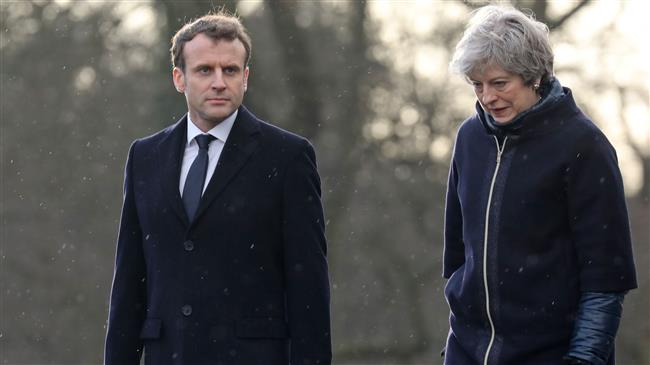
Photo credit – AFP
By Alex GORKA | Strategic Culture Foundation | 16.04.2018
The West’s unity is cracking and the United States’ world leadership is being questioned. The alleged but never proven “chemical attack” in Syria offers an opportunity to become a unifying factor. By striking that country, the US administration pursued the goal of solidifying its image as the world number one leading other nations in an effort to stand up to “evil”. It wanted to display the West’s unity, bolster its standing in the Middle East and boost the president’s approval ratings at home. Russia was portrayed as a rogue state backing the “animal” Assad and allied with Iran to pose a common threat. Has the mission been accomplished?
The world did not rush to display its support. UN Secretary-General Antonio Guterres wants no escalation in Syria. China opposed the use of force. Indonesia expressed concern over the attack not mandated by the UN. Serbian President Aleksandar Vucic warned the strikes could lead to a global conflict. Bolivian President Evo Morales slammed the act of aggression.
Formally, NATO approved the strikes but reservations followed regarding the stance on Russia. For instance, German President Frank-Walter Steinmeier warned against demonizing Moscow on April 15 saying that there should be no animosity between the West and Russia amid growing tensions. He insists a dialogue should be maintained. Germany approved the operation but refused to participate.
British opposition Labor Party leader Jeremy Corbyn criticized the move and said the UK joined the strikes under US pressure. Only a quarter of Britons approve the UK’s participation in the operation. 43% of them disapprove it.
French President Macron has come under criticism from the right as well as from the left for his decision to join the operation. Italy refused to let the allies use its territory for launching the strikes. Luxembourg’s Foreign Minister Jean Asselborn questioned the legality of the attack. The SYRIZA party, the larger member of Greece’s ruling coalition, condemned the strikes. Finland, Cyprus and Switzerland expressed concern over the use of force against Syria. Finland’s Foreign Minister Timo Soini still believes peace would have a chance in Syria if international law were observed.
There was no unanimous support of the attack inside the US. The move came under harsh criticism from the two sides of the aisle. For instance, Sen. Tim Kaine, D-Va., believes that the attack launched without Congress’s approval is illegal and reckless. This view was backed by Rep. Justin Amash, R-Mich. Sen. Tom Udall, D-NM., issued a special statement to strongly disagree with the president’s decision to use force. He thinks Donald Trump is dangerously escalating the situation by acting without legal authority. The influential Arms Control Association slammed the strikes as a short-sighted and illegal action, violating domestic legislation and international law.
The largest Arab nations did not approve the strikes. The Iraqi government believes that the strikes marked “a very dangerous development” to give terrorists another opportunity to strengthen their positions. Egypt expressed “deep concern” saying the strikes undermined the prospects for peace in Syria. Algeria condemned the move. Lebanon raised its voice to strongly oppose the act of aggression.
The military one-off operation rather divides than unites the world, including the “collective West”. The British government has failed to rally popular support. Instead, it made its position weaker than it had been. The NATO, as well as EU, backing was mainly vocal. Only three nations actually joined the operation. The contribution of Great Britain and France was very limited. The US administration is in for a lot of questions on its strategy in Syria.
The legality of the act is universally questioned and many governments realize that international law does not protect anyone from US-led attacks and prompts them seek to weapons to defend themselves. As Syria’s experience shows, Russia has a lot to offer not only as arms supplier but also as an alternative pole of power.
The situation in Syria has not changed. Its government retains the capability to continue its successful offensive on all fronts. The strikes have not diminished Moscow’s and Tehran’s unswerving support of Damascus. The air strike has achieved nothing. It only demonstrated how limited is the US ability to influence the events in Syria, putting into question its claims to global leadership.
Canada should support peace in Syria, not US missiles
By Yves Engler · April 14, 2018
The US has once again flagrantly violated international law. Without UN approval, they launched dozens of airstrikes on Syria.
Ottawa immediately supported the US bombing. In a statement Prime Minister Justin Trudeau said, “Canada supports the decision by the United States, the United Kingdom, and France to take action to degrade the Assad regime’s ability to launch chemical weapons attacks against its own people.”
Over the past week the Trudeau government has helped lay the foundation for the US-led attack. Twenty-four hours after the alleged April 7 attack foreign minister Chrystia Freeland put out a statement claiming, “the repeated and morally reprehensible use of chemical weapons by the Assad regime in the past has been confirmed by independent international investigators…. Canada condemns the Assad regime—and its backers, Russia and Iran—for its repeated, gross violations of human rights and continued, deliberate targeting of civilians.” Without presenting any evidence of the alleged chemical weapons use in Douma, Freeland said on Friday “when it comes to this use of chemical weapons, it is clear to Canada that chemical weapons were used and that they were used by the Assad regime.”
In her initial statement Freeland expressed Canada’s “admiration for … the White Helmets.” Also known as the Syrian Civil Defence, the White Helmets produced the video purporting to show chemical weapons use in Douma.
On Friday Russian foreign minister Sergei Lavrov claimed the White Helmets staged the video with help from the UK. Former British ambassador to Syria Peter Ford largely endorsed Moscow’s position.
Credited with rescuing people from bombed out buildings, the White Helmets have long fostered opposition to Assad and promoted western intervention. The White Helmets operated almost entirely in areas of Syria occupied by the Saudi Arabia–Washington backed Al Nusra/Al Qaeda rebels and other jihadist groups. They criticized the Syrian government and disseminated images of its violence while largely ignoring those targeted by the opposition. Their members were repeatedly photographed with Al Qaeda-linked Jihadists and reportedly enabled their executions.
Canada has provided significant support to the White Helmets. Two weeks ago Global Affairs Canada announced they “provided $12 million for groups in Syria, such as the White Helmets, that are saving lives by providing communities with emergency response services and removing explosives.” At that time White Helmet representatives were in Ottawa to meet with government officials and in late 2016 Global Affairs Canada sponsored a five-city White Helmets tour of Canada.
The White Helmets received at least $23 million US from USAID. The British, Dutch, German and French governments have also provided the group with tens of millions of dollars. The White Helmets are closely associated with the Syria Campaign, which was set up by a British billionaire of Syrian descent, Ayman Asfari, actively opposed to the Bashar al-Assad regime.
The conflict in Syria is multilayered and messy. Thousands of US and Turkish troops are in the country in contravention of the UN charter. Similarly, Israel has bombed Syria more than 100 times since the outbreak of the conflict and continues to illegally occupy part of its territory. Saudi Arabia and Qatar have plowed billions of dollars worth of weaponry and other forms of support to opposition rebels while the CIA spent a billion dollars backing anti-Assad groups.
On a number of occasions Ottawa has denounced Iran, Hezbollah and Russia’s substantial support of Assad, but they’ve ignored the significant role the US, Saudi Arabia, Turkey, Qatar and Israel have played in the conflict. In fact, Ottawa has ramped up arms sales to Saudi Arabia and deepened its ties to Israel and the US in recent years.
Syrians needs an end to fighting. Hundreds of thousands have been killed and millions more displaced over the past seven years of conflict. The US, which unleashed sectarian war in Iraq, bears significant responsibility for the horrors in that country. Syria requires political negotiation, the withdrawal of foreign troops and a real arms embargo, not more bombing and violations of international law.
Canadians should oppose the Trudeau government’s support for the recent US air strikes.
Featured Video
Trita Parsi: Israel Set a Trap for Total War in the Region
or go to
Aletho News Archives – Video-Images
From the Archive
Zionism’s Violent Legacy
By Donald Neff | Washington Report On Middle East Affairs | January 1996
On January 4, 1948, Jewish terrorists drove a truck loaded with explosives into the center of the all Arab city of Jaffa and detonated it, killing 26 and wounding around 100 Palestinian men, women and children.[1] The attack was the work of the Irgun Zvai Leumi – the “National Military Organization,” also known by the Hebrew letters Etzel – the largest Jewish terrorist group in Palestine. The Irgun was headed by Revisionist Zionist Menachem Begin and had been killing and maiming Arabs, Britons and even Jews for the previous ten years in its efforts to establish a Jewish state.
This terror campaign meant that at the core of Revisionist Zionism there existed a philosophical embrace of violence. … continue
Blog Roll
 Aletho News
- Trita Parsi: Israel Set a Trap for Total War in the Region
- Trump’s Iran war is on an Israeli leash
- Saudi oil boss issues global supply warning
- Riyadh Says Its Oil System Is Intact. The Numbers Say Otherwise.
- Trump and Netanyahu Want to “Finish the Job” on Iran
- US ‘one-sided dictation’ not Iran’s beliefs makes rational talks impossible: Baghaei
- Iran’s Next Strike May Not Explode. It Could Shut You Down /Col Doug Macgregor
- Iran: US political targets legitimate if assassinations return
- Iraq shuts key border crossing with Iran under US pressure: Report
- Undersea Internet cables could be targeted in retaliation for attacks on Iran: IRGC deputy chief
- If Americans Knew
- The Israel Lobby’s Changing Fortunes
- AIPAC has become such a political liability that it’s shifting to a more “nimble” approach to buying politicians
- At least 160 Israeli settler attacks in 2 weeks
- Will Gaza’s Ancient Christian Community Disappear Forever?
- Israel’s vision of regional security rests on keeping Arab states weak
- Heidi Levine recounts how Palestinian youths helped save her in settler attack
- DAILY UPDATE: Latest essential news on Palestine, Israel, & region
- Trump’s Intensifying Sabotage of the ICC, for Israel’s Sake
- Israeli military detain US and UK volunteers in West Bank including Democratic NY politician Brad Lander
- Americans at National Conservatism Conference held in Israel this year criticize Israel
- No Tricks Zone
- E-Cars Reduce CO2 Emissions By Only 41% Compared To Internal Combustion Engine Vehicles
- Predictions Made By Renowned Climate Professor Over Past Decades Have Been Proven To Be Poor
- New Study Suggests Large Regions Of The Pacific Ocean Have Been Cooling For The Last 80 Years
- Germany’s Green Energy Debacle: High Energy Costs Force Kahla Porzellan to Close After 182 Years!
- New Study: 50 Years Of The Most Aggressive ‘Net Zero’ Policies Can Only Affect The Global Climate By 0.03°C
- US September “Heat” Was No Record…Many Records Set Decades Ago
- Latest European Green Energy Debacle; Portugal’s Largest Flagship Solar Park Insolvent!
- Green Energy Debacle: German Expert Professor Fritz Vahrenholt Warns Of Severe Economic And Social Consequences
- Two More Paleo Reconstructions Affirm Meters-Higher Sea Levels Across Ireland, Brazil 7000-6000 Years Ago
- New Study: Earth And Venus Surface Warmth Largely Explained By Convection And Lapse Rate, Not CO2 Or Radiation

