‘Violence is not the way.’ How often did we hear Tony Blair say it? We know that violence should not be the way but we know that it is often is. The ‘we’ definitely does not include Blair, an architect of extreme violence in the Middle East. We know from history that violent states can often leave the peaceful with nothing left but violence to stop them going any further. This is the paradoxical trap in human behavior: the violent can ultimately impose violence on the peaceful.
We would be deluding ourselves if we think that such a point has not been reached with Israel or has not been almost reached; we have to leave open the slim possibility that somehow it will come to its senses and do what it could have done decades ago, make peace with the Palestinians and through them with the Arab and Muslim worlds and, in fact, with the world in general, but this does not seem likely.
The Zionist leaders knew from the beginning that the only way they could take Palestine would be through war. Jabotinsky was blunt about it, Ben-Gurion honest only in his private correspondence: only by fire and sword could Israel be created out of Palestine and having stepped on this path Israel has never stepped off it.
Over seven decades it has waged war after war: against the Palestinians, against Egypt, Syria, Lebanon, Jordan, Tunisia, against any state, organisation or individual that gets in its way. It has massacred, assassinated and bombed ambulances, hospitals, schools, UN compounds and apartment blocks. It has never shown concern for the human lives it takes: on the contrary, one of its pilots even joked when asked how he felt when firing a missile at an apartment building in Gaza. His reply was that he felt a ‘slight tremor’ in the wings of his plane.
Over the years Israel’s rabbis and generals have declared all Palestinians as the enemy or as cancers, snakes and cockroaches to be crushed or cut out. The Palestinian enemy even includes the children not yet born, giving Golda Meir nightmares when she went to bed, not knowing how many Palestinians might have been born by the time she woke up.
These frightful sentiments are reflected on the street and in the mainstream culture, in polls showing hatred of Palestinians, even amongst schoolchildren, and in the unending violence of West Bank settlers. The soldiers and border police who protect these settlers do what they like, knowing they will not be punished, or punished so lightly that the punishment only adds insult to injury to the victim and his/her family. The murder of Abd al Fatah al Sharif as he lay wounded in the streets of Hebron last year and the recent murder by a sniper of the wheelchair-bound Ibrahim Abu Thuraya, whose legs were severed by an Israeli missile strike on Gaza in 2008, are not brutal anomalies but entirely consistent with Israel’s violent history.
Destroying the enemy before he becomes too strong has been Israel’s guiding maxim since 1948. Egypt was kept off balance by repeated attacks across the armistice line before the tripartite aggression of 1956. That failed because of the intervention of the US once British treachery was revealed. Israel then reverted to more attacks across the armistice line before the attack of 1967 on Egypt and Syria. The myth of invincibility lasted only until the first week of the 1973 war, during which Israel’s forces were routed in Sinai. Had Sadat not betrayed Hafez al Assad they would have been driven off the Golan Heights as well, but that still would have left the probability of direct intervention by the US to save Israel from the consequences of its own folly.
This was the last war Israel fought against a regular army. Its ‘wars’ on Lebanon and Gaza were no more than military onslaughts on a mostly defenseless population and even then it could not win them. Gaza has managed to stand upright despite the carnage of Israel’s attacks and in Lebanon the uprooting of the PLO in 1982 only cleared the way for a Shia resistance taking political and military shape in the form of Hezbollah. By 2000 this guerrilla army had driven the Zionists out of southern Lebanon and in 2006 it heaped further humiliation on them when they returned, which brings us to considerations of the present situation.
The first is that Israel’s geopolitical situation is not what it was. The days when Israel could call on the sympathy of the world, as an allegedly beleaguered little state threatened with extinction, have long since gone. With the exception of the US and its hangers-on, the world knows what Israel is, a bully.
In the Middle East Israel’s geopolitical situation is not what it was either. The treaties it has signed with Egypt and Jordan are moribund. The popular antagonism to Israel in both countries is as strong now as the day these treaties were signed, and probably even stronger following Trump’s inflammatory statement, the killing of Ibrahim Abu Thuraya and the powerful stand taken by a Palestinian teenager, Ahad Tamimi, in slapping the face of a Zionist soldier.
Militarily, Israel’s decline could be charted on a graph. The slide since 1967 has been slow but continuous. Yes, Israel has nuclear weapons and intermittently sends out signals that it is prepared to use them, as it did in 1973. Yes, it has supreme air power but even this has not been sufficient to give it the victories it wants and as Israel’s intelligence and military chiefs know, Israel’s enemies are working all the time on the means of countering Israel’s technological superiority. The Zionist media might jeer at Hasan Nasrallah but Israel’s military commanders do not.
Israel has tried to destroy Hezbollah but has failed. It has tried to intimidate Iran through the assassination of its scientists and repeated threats of military attack but it has failed, even with the additional weapon of US sanctions. The law of unintended consequences has prevailed: the attempt to destroy Syria has also failed, ultimately, despite the massive destruction and loss of life, and so has the attempt to destroy Iraq, which is regaining its shattered unity under a Shia-dominant government close to Iran and sympathetic to Hezbollah. The collapse of Kurdish secessionism is another blow to Israel. The obverse of these failures is the growing military strength of Hezbollah and Iran, far greater now than a decade ago.
It is for these reasons that the Middle East is facing perhaps the most dangerous moment in its modern history. Psychologically, strategically, Israel cannot allow the present situation to continue unchecked, cannot allow Hezbollah and Iran to grow even stronger in the coming years. It must reassert its military dominance and all the signals pouring out of the political and military establishment indicate that after a year of intensive preparations it is ready to go. The target will be Lebanon, which Israel’s propagandists are portraying as no more than a Hezbollah enclave manipulated by Iran, which Israel will want to draw into the conflict. The war will be one of massive destruction, with Israel’s ministers differing only on whether Lebanon is to be bombed back to the Stone Age (Yisrael Katz) or the Middle Ages (Naftali Bennett).
Israel’s war preparations in the past year include the biggest land maneuvers for two decades. Held in northern occupied Palestine right on the armistice line with Lebanon the ‘Light on the Grain’ maneuvers in September, 2017, began with the evacuation of civilians in the region. An estimated 30,000-40,000 soldiers and reservists were involved, in 20 brigades, with jet fighters, helicopters, drones, submarines, gunboats and patrol boats providing backup and reconnaissance for troops on the ground. Electronic warfare, the use of robot fighters in tunnels and mock battles with soldiers wearing ‘enemy’ uniforms and carrying fake explosive belts were all on the agenda. The exercises were based on the assumption of a ten-day war with Hezbollah. According to Walid Sukkariya, a retired Lebanese general and member of parliament, the number of soldiers deployed indicated the deployment of 150,000 troops in a real war.
In November, 2017, the largest aerial exercise in Israel’s history was held in southern occupied Palestine. This multilateral two-week ‘Blue Flag’ exercise involved about 1000 pilots from nine countries, including, for the first time in the history of such maneuvers, Germany. Hundreds of jet fighters flew an estimated 1000 missions from the Uvda base as the ‘blue’ forces ‘attacked’ the ‘red alliance’, an unspecified enemy whose pilots, however, were all given an Arabic name. Helicopters, drones and UAVs were used: electronic warfare was central to the maneuvers, as was the assumption that the ‘enemy’ would be armed with SAMs and MANPAD missile launchers.
Offshore, Cyprus has been used by Israel as it prepares for its next war. In March, 2017, Israel and the government of southern Cyprus staged the three-day ‘Onsilos-Gedeon’ military maneuvers in and over a large area around Nicosia. In June an estimated 500 Israeli soldiers, many from the ‘elite’ Egoz unit, along with 100 soldiers from the Cypriot National Guard took part in a two- week war exercise in the Troodos mountains, where the terrain is similar to southern Lebanon. The combat involved ‘fighting’ above and below ground, fighting in dense bush in mountainous terrain and airborne maneuvers night and day. The aerial component included five Israeli squadrons, C130 transport planes, Blackhawk helicopters and Unit 669, whose core mission is to rescue pilots and soldiers trapped behind enemy lines.
In late October, 2017, Cypriot-Israeli military ‘cooperation’ moved to southern occupied Palestine, where soldiers from the Cypriot National Guard and the Egoz unit staged exercises held over two weeks at the Tzeelim military base. The focus was on urban warfare in the setting of a mock ‘Arab’ town.
These ongoing military maneuvers are part of a new strategic (military and commercial) axis developing in the eastern Mediterranean between Israel, Cyprus and Greece and drawing in other countries because of the lucrative profits that will eventually come from the deep sea natural gas deposits drilled by southern Cyprus in its Aphrodite field and Israel in its Leviathan and Tamar fields 140 kms from the coast of occupied Palestine. Haifa.
The military engagement with Israel and the holding of maneuvers on Cypriot soil which, for Israel, are clearly directed at an ‘Arab’ enemy, have caused consternation in the ranks of the Cypriot opposition. In June the Akel party noted that the Troodos mountains had been chosen for their similarity to the topography of southern Lebanon. It said the exercises had involved Cyprus in dangerous war games ‘with an army that has been an occupying power for 50 years in the Palestinian territories.’ The militarization of cooperation with Israel was dangerous to Cyprus and regional peace.
The scale of these exercises leaves no room for doubt that Israel is not merely upgrading and monitoring its military preparedness but actively preparing for war. The alarm bells have been sounding continuously for the past year: according to Channel Two, given access to Israeli positions along the armistice line with Lebanon, Israel is preparing for ‘a very violent war.’ Already in 2008 the then head of the Zionist military’s northern command, now the chief of staff, Gadi Eisenkot, presented the ‘Dahiya doctrine’, focusing on the massive damage that would be done in areas associated with Hezbollah. According to Eisenkot: ‘In every village from which Israel is fired upon we will apply disproportionate force against it and cause great damage and destruction there. From our standpoint these are not civilian villages, they are military bases. This is not a recommendation. It is a plan and it has been approved.’
Dahiya, of course, was the largely Shia suburb of Beirut pulverized from the air by Israel in 2006. Others think the ‘doctrine’ should be applied even more widely. In the words of education minister Naftali Bennett, uttered in March, 2017, ‘The Lebanese institutions, its infrastructure, airports, power stations, traffic junctions, Lebanese army bases, they should all be legitimate targets if a war breaks out. That’s what we should already be saying to them and they would know that if Hezbollah fires missiles at the Israeli home front this will mean sending Lebanon back to the Middle Ages.’ From Bennett this is not empty rhetoric. After all, in 1996 it was he who called in the artillery barrage that killed more than 100 people, half of them children, in the UN compound at Qana, southern Lebanon; ‘I am proud of how I functioned during operation Grapes of Wrath’, he remarked later. ‘Leave the warriors alone.’ After all, again, it was Bennett who once said ‘I have killed lots of Arabs in my life and there is no problem with that.
According to intelligence minister Yisrael Katz, speaking this December with a Saudi newspaper, ‘What happened in 2006 will be a picnic compared to what we can do now. I remember a Saudi minister saying they will send Hezbollah back to their caves in southern Lebanon. I am telling you that we will return Lebanon to the Stone Age … and bury Nasrallah under the rocks.’ These are genocidal threats, plain and simple, and both Iran and Hezbollah are preparing for the onslaught. Hezbollah has already said it has missiles that can reach any part of occupied Palestine and has hinted that ports and refineries would be among the targets in any coming war.
Nasrallah’s response to these threats, made in his address marking the 10th of Ashura in October this year, warrants attention because he is not a man to indulge in idle talk. This was a long speech in which he distinguished Judaism from Zionism, in which he said the Jews brought to Palestine from all over the world were cannon fodder in a British-western colonialist war against the Arabic and Muslim people of the region and were still serving as fuel for US policies.
Addressing ‘Jewish scholars, their eminent personalities, their thinkers’ he warned that Netanyahu is leading ‘your people’ in Palestine to annihilation and destruction. He was working with Trump to tear up the agreement with Iran and push the region into a new war but neither he nor his government and military officials had an accurate picture of what awaited them if they started another war. ‘That is why I call first of all on Jews except the Zionists to detach their considerations from Zionist calculations which will only lead them to their final destruction. I call on all those who came into occupied Palestine believing the promises that they would find the land of milk and honey, I call on them to leave Palestine and go back to the countries from which they came so they do not become mere fuel in any war to which the stupid Netanyahu will lead them. For if Netanyahu launches a war in this region there may be no more time for them to leave Palestine and there may be no safe place for them in occupied Palestine.’ Such a war could bring about ‘the end of all things for you and for the Zionist entity.’
This was possibly the strongest and most direct speech Nasrallah has ever made. The confidence in what he had to say suggests that Hezbollah has attained or developed weaponry that Israel may find it hard to counter. The speech indicates that after more than seven decades, Nasrallah fully understands that the conflict with Israel is rapidly moving towards the existential level of either/or: either Hezbollah will be destroyed and Iran crippled or Israel will suffer blows of such magnitude as to threaten its survival. Right now this may seem improbable but history is nothing if not a trickster, especially for those who make their calculations on the basis of power they will never lose. For either side defeat is not an option: Israel is preparing to fight a war of unprecedented savagery to finish off its enemies and they are ready to defend themselves and (as Nasrallah has warned) take the war into enemy territory. This seems close to the point at which we now stand, without anyone in the ‘international community’ putting on the brakes to stop the momentum towards war.
– Jeremy Salt taught at the University of Melbourne, at Bosporus University in Istanbul and Bilkent University in Ankara for many years, specializing in the modern history of the Middle East. Among his recent publications is his 2008 book, The Unmaking of the Middle East. A History of Western Disorder in Arab Lands (University of California Press).
December 28, 2017
Posted by aletho |
Ethnic Cleansing, Racism, Zionism, Militarism, Timeless or most popular | Cyprus, Israel, Lebanon, Middle East, Palestine, Zionism |
Leave a comment
One area where America has a significant advantage over any putative adversary is in logistics. No other nation can challenge the US ability to conduct overseas operations, deploy and sustain joint forces worldwide, including remote corners of the globe. But it’s not enough! The capability is being urgently enhanced. Summing up pieces of information coming from various sources leads to the conclusion that preparations for combat actions conducted far from home bases are in full swing.
US Air Force exercise capstone Joint Forcible Entry (JFE) – the largest ever – was held on Dec.9-10 to check the readiness for airlifting Army paratroopers. The transport aircraft were escorted by F-15 and F-16 warplanes fighting their way through contested air space to the enemy’s rear. Once landed, the forces on the ground were supported from air. 37 C-17 Globemaster III and 21 C-130 Hercules cargo aircraft took off from 12 air bases across the country to support the largest JFE event in history. Troops were landed in Nevada. In total, over 100 aircraft took place in the drills.
The training event took place after Mobility Guardian – a large NATO power projection exercise – was held in July bringing together roughly 30 nations. The exercise included all elements of forcible entry operation, including electronic attack and cyber warfare. A С-17 ready to land in any part of the world in 24 hours to deliver the equipment needed to provide for further operations of 4 F-22 или F-35 fighters was an element of the fully integrated scenario.
This month, US and South Korea held “Vigilant Ace”, the largest ever joint air exercise. The five-day Vigilant Ace drill involved 230 aircraft, including F-22 Raptor stealth jet fighters, and tens of thousands of troops.
The exercises of such large scale held one by one showed that the capability to conduct power projection operations in the faraway regions is a priority. The infrastructure of other countries as well as pre-positioned stocks is widely used to enhance effectiveness. For instance, on Dec. 1, 2017, the Defense Logistics Agency issued an amendment to a contract notice regarding prepositioned supplies at jet fuel at sites throughout Europe and Africa in support of US military activities. The change specifically added a requirement for supplies of commercial Jet A fuel at three sites: Manu Dayak Airport in the central Nigerien city of Agadez, Houari Boumediene Airport in the Algerian capital Algiers, and Tamanrasset/Aguenar Airport.
The plans are on the way to beef up logistics infrastructure for offensive operations in Europe, including the creation of logistics command and the creation of a military free transit zone modeled on the 1996 Schengen agreement to allow free forces movements across the borders of European NATO members. Powidz, Poland, a village with a population of 1,000, is to become a strategically important NATO hub described as the «center of the center of gravity». The plans include the delivery of more than a brigade’s worth of military vehicles, equipment, artillery and personnel.
This month, the new US C-130J Super Hercules military transport aircraft arrived at Ramstein Air Base (AB) in Germany, to replace one of 14 C-130J’s at Ramstein AB. The aircraft features upgraded avionics, improved lift capacity, superior climb performance, and long-range landing field capabilities. It is part of a rotational process to upgrade existing aircraft.
Looks like the US military really needs the airlift capability expanded and it needs it now. The Air Force is bringing back C-5M Super Galaxy transports recently mothballed due to budget cuts. The C-5 is the largest airlifter built by the United States, capable of carrying a maximum of 135 tons of cargo. It can haul up to 36 standard pallets and 81 troops at the same time or a wide variety of gear, including tanks, helicopters, submarines, equipment, and food and emergency supplies. The Galaxy can 120,000 pounds of cargo more than 5,500 miles — the distance from Dover Air Force base in Delaware to Incirlik airbase in Turkey — without refueling. Without cargo, that range jumps to more than 8,000 miles. The Air Force purchased 131 C-5 Galaxies between 1968 and 1989. Starting in 2013, the service decided to upgrade 52 of them to the new -M “Super Galaxy” standard, which involved swapping older TF-39 engines for new F138 commercial engines. The new engine generates 22 percent more thrust and allows for more cargo to be carried. The planes also received all-glass cockpits, a new autopilot system, new navigation and safety upgrades, an all-weather flight control system, and new flight and engine instrument suite.
An idea is floating to convert transport aircraft like the C-130 Hercules into the airborne aircraft carrier, capable of launching a volley of drones that could fly into a battle space to provide reconnaissance and surveillance. These drones would simultaneously communicate and swarm, confusing the enemy with their numbers and distracting its air defenses.
Military Sealift Command (MSC) routinely employs around 50 ships, a combination of government owned/contractor operated vessels and commercial transports to meet its worldwide responsibilities. The Navy relies on private contractors to maintain both prepositioned logistics ships loaded with equipment and stored at several locations around the world and the Ready Reserve Fleet for mobilization. For example, Crowley Maritime Corporation and its subsidiaries manage some 24 prepositioned and Ready Reserve ships. Private companies also provide routine transportation and logistics services both within CONUS and globally. The Navy is completing construction of the landing platform dock (LPD) 17 class and is set to begin recapitalization of the dock landing ship (LSD) class in 2020, using a hull based on the LPD 17.
LHA 8 is programmed in 2024 as a replacement for the first Wasp-class amphibious assault ship.
Naval Supply Systems Command (NAVSUP) Global Logistics Support (GLS) provides global logistics for a global Navy. The organization is made up of approximately 6,300 military and civilian logistics professionals operating from 105 locations worldwide, providing an extensive array of integrated global logistics and contracting services to Navy, Marine Corps, joint operational units, and allied forces across all warfare enterprises.
The facts and events summed up above are not front-page stories. They don’t tell much separately but tell a lot when put together and systematized. They lead to believe the United States is urgently preparing for a truly big war waged far away from its borders. The US military is sized, organized, and globally postured to fight it. A doctrine of expanding forces is not as straightforward as producing more fighters and weapon systems. Nothing is possible without logistics. That’s what is given the highest priority as the preparations are intensified.
December 27, 2017
Posted by aletho |
Militarism, Timeless or most popular | NATO, United States |
Leave a comment
This week saw another deadly bomb attack in the Afghan capital, Kabul, only days after US Vice President Mike Pence promised American troops “victory was in sight.”
This war is far from over, and signs are it will get much worse in the year ahead.
Lurking behind the cheery seasonal tidings brought by Pence lies a forthcoming year of much-increased violence in Afghanistan. Away from the upbeat headlines are portents of ever-deeper involvement by US elite forces in the country’s unrelenting mayhem.
In particular, the US military is moving toward a new strategy under President Trump of unleashing killer units in an apparent bid to drown the Afghan insurgency in blood. It’s a policy America has tried elsewhere, for example, the infamous Phoenix program of assassination during the Vietnam War. The policy usually fails in its stated objectives of “peace and security.”
The “surprise” nature of Pence’s whirlwind visit just before the weekend shows the Central Asian country’s security is on a knife-edge. The unannounced trip by the vice president – his first to Afghanistan – was reportedly “shrouded in secrecy” for security reasons.
Arriving on board a C-17 military plane at the giant US air base at Bagram, then flown by helicopter to meet with Afghan President Ashraf Ghani, the logistics were an unmistakable indicator of how dangerous the country is. This after 16 years of the most protracted US war ever – supposedly to defeat Taliban militants.
Earlier in September, when US Secretary of Defense James Mattis flew into Kabul International Airport, Taliban insurgents were reportedly able to launch a rocket attack on his aircraft. Mattis and his delegation did not come to harm. This time, however, US officials seemed to be taking no chances with Pence, flying the vice president under cover of darkness to the high-security military airbase.
Wishing troops a “Merry Christmas,” Pence said: “I believe victory is closer than ever before.” He assured American forces that President Trump’s new “fight-to-win strategy” for Afghanistan was “bearing fruit.”
“The results are really beginning to become evident around the country,” claimed Pence after meeting with Ghani. The question is: what “evidence” was he referring to?
It was nearly four months ago, in August, that President Donald Trump announced a new plan for military involvement in Afghanistan. It was something of U-turn on his election campaign pledges last year to wind down American overseas wars.
Under Trump, up to 4,000 troops are to return to the country taking the total US presence there to 15,000. The numbers are set to substantially increase, according to Stars and Stripes, citing US Army Undersecretary Patrick Murphy.
The re-deployment to Afghanistan is still a lot less than the peak numbers during the Obama years when troop levels surged to 100,000. But there seems to be a qualitative shift under Trump marking more deadly involvement.
Trump’s “fight-to-win” strategy suggests US troops are to pursue much more aggressive tactics. Officially, the American military is supposed to be only “advising and training” local Afghan forces. But what the Trump administration is signaling is a return to heavy combat with elite infantry troops.
The Washington Post reported that Pence was briefed by the Afghan officials that “more senior Taliban leaders have been eliminated this year than in all previous years combined.”
If that’s confirmed, that marks a dramatic increase in US combat violence under Trump. It would also tally with Trump’s declared aim to give American commanders in Afghanistan a “freer hand” to carry out missions. This gloves-off policy under Trump has the hallmarks of US troops stepping up assassination squads to go after insurgents.
Another foreboding indicator is that US military journals are reporting, according to Stars and Stripes, elite combat troops being sent to Afghanistan in anticipation of sharper fighting in the Spring season. Those forces include infantry brigades from Fort Carson, Colorado, which are trained in “unconventional warfare” and operating deep inside enemy territory. Unconventional warfare can be seen as a euphemism for extrajudicial killings, torture, and terroristic operations.
The 1st Stryker Brigade Combat Team is reportedly replacing forces from the 82nd Airborne Division, who have completed a tour of duty under Trump’s new strategy. The latter are out of Fort Bragg, North Carolina, another center for elite killer forces trained in unconventional warfare.
Stars and Stripes quotes Army General John Nicholson, the top US commander in Afghanistan, as saying he is “optimistic” that under Trump’s freer-hand instructions it would “help push the long-stalemated war in favor of the US-backed Afghan government.”
In another sign of the covert operations underway, General Nicholson said: “more than 1,000 Americans would be operating away from bases at any given time once the fighting season begins.” In other words, the Trump administration has signed off on commando-warfare in Afghanistan, not with large troop numbers strewn across the country but with hunter-combat units operating behind enemy lines. In short, elite killer teams.
Given the briefings received by Pence while in Kabul of a seeming dramatic increase in killings of senior Taliban militants, what appears to be underway in Afghanistan is a Phoenix-style assassination campaign similar to what US elite forces carried out in the early years of the Vietnam War. That was where US personnel, along with local forces, went on murder sprees targeting enemy “suspects.” In Vietnam, it is believed that thousands of innocent, non-combatants were assassinated as part of a lethal trawl against militants.
It seems sinister that while Trump is giving US military commanders the green light to expand the war with elite forces operating behind enemy lines, his vice president Mike Pence is crowing about “real progress on the ground.”
It also seems impossibly doomed. Afghanistan is now a foothold for Daesh (Islamic State) as well as the Taliban. The former terror group claimed responsibility this week for the suicide bomb attack outside the Afghan security intelligence headquarters in Kabul, reportedly killing at least 10 bystanders. In recent months, bombings have apparently surged in the capital.
Up to half of all Afghan territory is now under control of insurgent groups. Opium drug production is soaring, and the US-backed state institutions are groaning from corruption.
Former Afghan President Hamid Karzai recently claimed that terrorism and lawlessness have flourished during the US presence in his country. Indeed, Karzai said the US forces and terror groups were working “hand in hand” across Afghanistan. He cited cases where militants have been allegedly transported to various parts of the country using US helicopters. Similar claims of US collusion with terror groups have also been made by the Russian government regarding Afghanistan and Syria.
So, just what “progress” the Trump administration is referring to in Afghanistan remains cryptic.
The US-backed regime in Kabul is losing more control of territory, while the country descends further into chaos and violence. More than 30,000 civilians have been killed during 16 years of “Operation Enduring Freedom” launched by Washington in October 2001.
Fiendishly, the Afghan population is set to endure more such American-style freedom with Trump’s dispatch of killer troops.
December 25, 2017
Posted by aletho |
Illegal Occupation, Militarism, Timeless or most popular, War Crimes | Afghanistan, United States |
Leave a comment
As the US Congress contemplates reviving a Cold War-era program of putting ballistic-missile interceptors in space, scientists have lambasted the idea as impractical at best, and life-threatening at least.
Echoing 20th century political moves, Congress has asked the Pentagon the investigate the possibility of deploying ballistic-missile interceptors in space as a means of intercepting a nuclear attack, Space.com reported.
An orbital satellite network would, according to program proponents, be able to hammer incoming enemy ICBMs while they are still in the initial boost phase.
The idea is simple on paper, but a deeper look into the logistics required to make it work reveal the plan to be impossible at the current level of human technological development within the constraints of the Washington budget.
Researchers and scientists with The Center of Strategic and International Studies (CSIS) have warned that — just like earlier ideas for the space weapon — attempting to reanimate the legacy project is a very bad idea.
Putting aside the global political challenges posed by a weaponization of space, there are many more mundane reasons why an orbital network of armed satellites controlled by one group should never exist.
To hit a missile in its boost phase, the satellite would have to be as close to Earth as possible. Geostationary satellites — those that stay at the same spot over the surface of the planet — are much too high at 22,000 miles to strike an enemy a missile in time.
Low Earth Orbit (LEO) satellites — those constantly traveling around the Earth — would require that the US place hundreds of satellites in orbit just to increase the possibility of hitting a single target.
As ICBMs in an all-out attack are launched in salvos, a few hundreds of satellites would not be enough to ensure an accurate defense, and the network would then have to be increased to thousands of space-based armed satellites, CSIS noted.
And even if you have thousands of deadly remote drones circling the globe it still does not take into account defensive countermeasures and evasion tactics used by ICBMs.
A study performed by the American Physical Society in 2004 found that at least 1,646 satellites would be needed to fully cover the Earth. The study estimated the cost of such a system to be between $67 billion and $109 billion. Even with the entire US military budget being almost $640 billion — that’s near to the amount of the military budgets of the next eight nations combined — the figure would be a bill too steep to pay.
The UN Office for Outer Space Affairs reported a total of 4,635 satellites orbiting the Earth in 2017, noting that just 1,738 are currently operational, according to statistics compiled by the Union of Concerned Scientists.
But let’s follow the increasingly absurd notion of a US-controlled space-based orbital network of killer satellites to its logical conclusion. If it was done, if the money was spent and the devices were launched, we’d be safe from enemy ICBMs, right?
Wrong, notes CSIS Aerospace Security Project program coordinator Thomas Roberts, observing at the least that if an enemy first launches a decoy so as to make a gap in the interceptor shield, and then launches an actual salvo through that gap, the Pentagon cannot close that gap fast enough.
According to Roberts, defense dollars are better spent on conventional interceptors, or on launching additional satellites to surveil, track and identify incoming enemy missiles.
“Space-based missile interceptors are a bad idea because of their inefficiency and vulnerability,” Roberts observed. “Investments in missile defense would be better directed to other, more effective areas.”
“The fact that [putting non-nuclear weapons into space] is not prohibited does not make it a good idea,” he added.
December 24, 2017
Posted by aletho |
Militarism | United States |
Leave a comment
Russia has reacted fiercely to the end of week breaking news that President Trump plans to approve the legal sale of US antitank missiles and possibly other advanced systems to the Ukrainian government in a move that could change the battlefield calculus of the war between Ukrainian and Russian-aligned forces in the Donbass region along the Russian border. ABC News described the “total defense package of $47 million includes the sale of 210 anti-tank missiles and 35 launchers” which will be sure to harm Trump’s longtime stated goal of improving relations with Moscow.
Though Kiev has long had limited access to US lethal arms through private contracts with American and international arms producers, this represents a significant escalation involving the likelihood that advanced US systems would be used directly on Russian-aligned militias in the eastern Donbass region and potentially Russian forces along the border. Up until now, the White House has been reluctant to escalate the war so openly, as it did when it supplied anti-Assad fighters in Syria with sophisticated TOW anti-tank missiles.
While the US State Department claims the move is “defensive” in nature, Russian deputy foreign minister Sergei Ryabkov charged the US with deliberately “crossing the line” and pushing the Ukrainian authorities “towards new bloodshed,” adding that “American weapons can lead to new victims”.
“Kiev revanchists are shooting at Donbass every day, they don’t want to conduct peace negotiations and dream of doing away with the disobedient population. And the United States has decided to give them weapons to do that,” Ryabkov said. He further slammed the US as an “accomplice in igniting a war” whose political leadership is “blinded by Russophobia and eagerly applaud the Ukrainian nationalist punitive battalions.”
Indeed a number of outspoken Russia hawks in Congress were enthusiastic over the possibility of heavier and direct arms flow to Ukraine, including John McCain, Bob Corker, and Tom Cotton – all supporters of the original Ukraine Freedom Support Act signed into law by President Obama in December 2014, though never fully enacted.
Cotton for example – recently rumored to be Trump’s pick for CIA Director – said of the new initiative for arms exports to Ukraine: “This is a break from failed Obama era policies to make Russia pay a cost for its aggression. With this decision, the Trump administration is reminding Vladimir Putin and his cronies that they lost the Cold War, and we won’t tolerate their bullying of our friend Ukraine.”
But Russian leaders have warned that through the decision the US may be dragged deeper into a quagmire which could result in direct confrontation with pro-Russian rebels in Ukraine’s east. Aleksey Pushkov, member of the Russian Senate security committee, told RT News that delivery of the more advanced systems like the Army’s M-148 Javelin Portable Anti-Tank Missile would require US military advisers on the ground, which could be targeted by separatist forces.
Pushkov told RT, the US “has enough problems already to allow itself to be involved in adventures of the [Ukrainian] regime. And we know too well how adventurous Kiev may be.” This comes as authorities in Kiev are already requesting that Washington adds anti-aircraft missiles to its shopping list as well, according to multiple reports.
Meanwhile German Chancellor Angela Merkel and French President Emmanuel Macron issued a statement calling for “disengagement and the withdrawal of heavy weapons” in the Ukrainian conflict, a scenario now much further away from taking shape than ever. But after years of covert American involvement in the Ukrainian proxy and civil war which has raged since 2014 – and which a leaked recording confirmed was precipitated by the US State Department – it appears that hawks like McCain, Cotton, and Corker are finally getting their way.
December 24, 2017
Posted by aletho |
Militarism | Russia, Ukraine, United States |
Leave a comment
Donald Trump tweeted that the US “foolishly spent” $7 trillion in the Middle East, urging for money to be invested in rebuilding his own country.
Trump’s Twitter statement published on Friday initially focused on economic issues, but eventually took aim at the US policy in the Middle East. “At some point, and for the good of the country, I predict we will start working with the Democrats in a Bipartisan fashion.”
“Infrastructure would be a perfect place to start,” the tycoon-turned-president tweeted, adding: “After having foolishly spent $7 trillion in the Middle East, it is time to start rebuilding our country!”
The tweet came a day after 128 UN members supported a General Assembly resolution which condemned the Trump administration’s recognition of Jerusalem as Israeli capital. The vote took place during a rare UN General Assembly emergency session, convened at the request of Arab and Muslim states.
Trump warned before the session that the US could punish nations which vote against Washington’s decision at the General Assembly, saying on Wednesday that there are countries that “take hundreds of millions of dollars and even billions of dollars, and then they vote against us.”
“Well, we’re watching those votes. Let them vote against us, we’ll save a lot. We don’t care.”
US military ventures in the Middle East over just the last decade and a half have indeed cost Washington a pretty sum. Even though the Pentagon said in June that it had spent only $1.5 trillion on war-related costs since September 11, 2001, the real figures could be much higher.
According to a report prepared by the Congressional Research Service back in 2014, the costs of the US war on terror already amounted to at least $1.6 trillion at that time. Later, a 2016 Brown University study put the costs of US wars in Iraq, Afghanistan, Pakistan, and Syria at about $3.6 trillion over the period between 2001 and 2016, adding that they would likely reach $4.79 trillion by the end of 2017.
A 2013 Harvard University working paper said that the cost of just two US wars – in Iraq and Afghanistan – could eventually amount to between $4 and 6 trillion, including long-term medical care and disability compensation for service members, veterans and families, military replenishment, and social and economic expenses.
Bonnie Kristian, a fellow at the Washington-based Defense Priorities think tank put the total costs of the US wars in Iraq and Afghanistan, including the “relevant legacy costs,” at $5 trillion. In her article published by Forbes magazine, she also predicted that this already hefty bill would grow to $12 trillion by 2053 even if the US is “done in Iraq and Afghanistan by the end of 2017,” as it includes healthcare commitments to US veterans and “interest on the debt incurred by these wars.”
And that does not include the costs of other US military endeavors, such as the 2011 intervention in Libya or overseas operations in countries such as Pakistan, Somalia, or Yemen. Apart from that, since 2001, the US has also spent $164.3 billion worth of aid to Iraq and Afghanistan, according to USAID.
December 23, 2017
Posted by aletho |
Economics, Militarism, Timeless or most popular, Wars for Israel | Middle East, United States |
Leave a comment
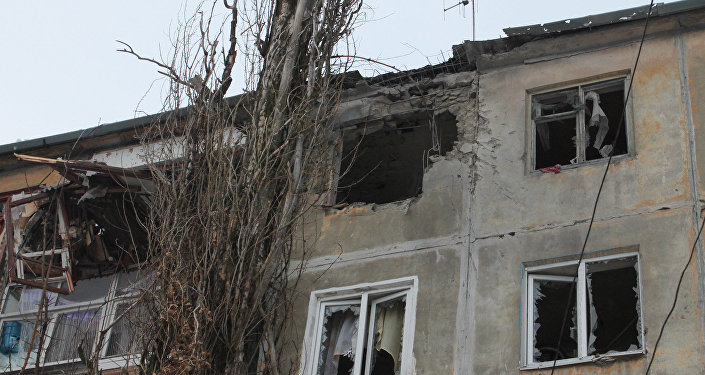
In a move that hardly seems coincidental, Washington made two announcements Friday which seem to outline its foreign policy priorities in Ukraine. Approving the supply of lethal weapons to the country, Washington threatened to partially suspend Kiev’s trade preferences with the US. Sputnik considers what may be behind the seemingly incoherent move.
Following months of internal debate, the State Department announced Friday that the US has “decided to provide Ukraine enhanced defensive capabilities” aimed at building up Kiev’s “defense capacity.” The move follows reports from earlier this week that the State Department had approved export licenses for the commercial sale of small parties of weapons to the instability-wracked country by US arms makers.
Also Friday, the US Trade Representative’s Office announced that President Trump would partially suspend Ukraine’s benefits under a US preferential trade program in 120 days unless the country makes major steps to better protect intellectual property rights. Kiev, according to the US trade office, has “failed” to adequately protect intellectual property, “despite years of encouragement and assistance from the US government.”
Trade officials did not clarify which part of the US Generalized System of Preferences agreement Ukraine would be nixed from, but the tendency seems clear: Washington is cutting out its economic support for Kiev, all the while upping its military assistance to the country, as tensions in the frozen Donbass conflict continue to smolder.
Economic Nationalism vs. Neoconservative Foreign Policy
President Trump’s economic nationalist approach to foreign policy hit Kiev particularly hard. Earlier this year, administration plans on US foreign aid for fiscal year 2018 leaked to US media outlined a whopping 68.8% cut in assistance to Ukraine. Ukraine’s Embassy in Washington quibbled over the scale of the cut, saying the proposal is really “around 30%.” At the same time, the Trump administration enthusiastically approved Kiev’s decision to buy US thermal coal, despite its price being almost double that which Ukraine would pay for the heating source from nearby Donbass or Russia.
At the same time, the US president has had considerably more difficulty challenging the neoconservative agenda on US Ukraine policy. Trump’s campaign promises of curbing US involvement overseas and trying to work together with Moscow on global issues, including the Ukraine conflict, haven’t panned out. Possibly under pressure from Congress and the US bureaucratic apparatus, Trump appointed John McCain ally Kurt Volker as the US’s special envoy to Ukraine. Making several trips to the country, Volker immediately began accusing Russia of engaging in ‘hybrid warfare’ in Ukraine’s breakaway Donbass region, and has pushed aggressively for a more active US policy vis-à-vis Kiev, including through the supply of lethal weapons to the country.
This past week, Volker warned that the situation in eastern Ukraine has significantly deteriorated, and even suggested that 2017 has become the “deadliest year” since the civil war began in 2014. Volker accused ‘Russian-backed forces’ of escalating the conflict.
Volker’s comments were echoed by the State Department on Tuesday, with spokesperson Heather Nauert openly accusing “Russia and its proxies” of being “the source of violence in eastern Ukraine,” and alleging that Moscow “continues to perpetuate an active conflict and humanitarian crisis” in the region. Nauert denied any possibility that the Donbass militia were “organic” entities which sprang up to resist Kiev in the months following the Maidan coup d’état in the Ukrainian capital in February 2014.Earlier this month, Russian Foreign Minister Sergei Lavrov and US Secretary of State Rex Tillerson met to discuss global hot spots, including Ukraine. Lavrov stuck firmly to the position Moscow has held since the signing of the Minsk accords in February 2015, stressing that the accords must be implemented, and arguing that Kiev has played the key role in stalling this process.
Cause for Dangerous Escalation
As far as US arms deliveries to Ukraine are concerned, Russia has vocally objected to the idea, and cautioned that the move would only threaten escalate the conflict. Earlier this year, President Vladimir Putin stressed that although the delivery of lethal weapons was a “sovereign decision of the United States” which Moscow could not stop, “the supply of weapons to the conflict zone is not beneficial to the peacekeeping process, and only exacerbates the situation. If this occurs, this action will not change the [strategic] situation… But the number of victims may certainly increase.”
With these issues in mind, the reaction from Moscow over Washington’s Friday announcement has been highly critical. Deputy Foreign Minister Grigory Karasin told RIA Novosti that the arms deliveries threaten to disrupt the peace process and hamper the implementation of the Minsk accords. Deputy Foreign Minister Sergei Rybakov echoed his colleague, saying that in the present situation the US in Ukraine looks “less like an intermediary and more like an accomplice in fueling the war.” Finally, Senator Franz Klintsevich, a senior member of the Senate’s security committee, warned that US weapons will encourage Kiev to use force. “The Americans, in essence, are directly pushing Ukraine’s military toward war,” he said.
With Ukraine recently approving a whopping 14.8% increase in its defense spending for the 2018 fiscal year, Washington’s decision to provide the country with lethal weapons is a worrying development. However, facing growing political instability at home, including a slew of street protests in the capital and more and more calls for the country’s government to resign, it’s unclear whether Kiev will dare to try to fulfill its dream of pacifying the Donbass by force.
December 23, 2017
Posted by aletho |
Economics, Militarism, Timeless or most popular | Ukraine, United States |
Leave a comment
Presenting themselves as shocked bystanders to the growing famine in Yemen, the US and UK are in fact prime movers in a new strategy that will massively escalate it.
The protagonists of the war on Yemen – the US, UK, Saudi Arabia and the United Arab Emirates – have been beset by problems ever since they launched the operation in March 2015. But these problems seem to have reached breaking point in recent months.
First and foremost, is the total lack of military progress in the war. Originally conceived as a kind of blitzkrieg – or “decisive storm” as the initial bombing campaign was named – that would put a rapid end to the Houthi-led Ansarallah movement’s rebellion, almost three years later it has done nothing of the sort. The only significant territory recaptured has been the port city of Aden, and this was only by reliance on a secessionist movement largely hostile to ‘President’ Hadi, whose rule the war is supposedly being fought to restore. All attempts to recapture the capital Sanaa, meanwhile, have been exposed as futile pipe dreams.
Secondly, the belligerents have been increasingly at war with themselves. In February of this year, a fierce battle broke out between the Emiratis and Saudi-backed forces for control of Aden’s airport. According to the Carnegie Endowment for International Peace, the struggle “prevented an Emirati plan to move north to Taiz,” adding that “the risk of such confrontations remains… Lacking ground forces anywhere in Yemen, the Saudis worry that the UAE could be carving out strategic footholds for itself, undermining Saudi influence in the kingdom’s traditional backyard.” Notes intelligence analysts the Jamestown Foundation, “The fight over Aden’s airport is being played out against a much larger and far more complex fight for Aden and southern Yemen. The fighting between rival factions backed by Saudi Arabia and the UAE clearly shows that Yemen’s already complicated civil war is being made more so by what is essentially a war within a war: the fight between Saudi Arabia and the UAE and their proxies.” This tension flared up again in October, with Emirati troops arresting 10 members of the Saudi-aligned Islah movement, the Muslim Brotherhood’s Yemeni faction.
And finally, the war is undergoing a serious crisis of legitimacy. Aid agencies are usually doggedly silent on the political causes of the disasters they are supposed to ameliorate. Yet on the issue of the blockade – and especially since it was made total on November 6th this year – they have been uncharacteristically vocal, placing the blame for the country’s famine – in which more than a quarter of the population are now starving – squarely on the blockade and its supporters. Jamie McGoldrick, the UN’s humanitarian coordinator for Yemen, put it starkly: “150,000 will die before the end of the year because of the impact of this blockade” he told ABC news last month. Save the Children had already stated back in March 2017 that “food and aid are being used as a weapon of war”, and called for an end to UK arms sales to Saudi Arabia, whilst in November 2017, Oxfam’s Shane Stevenson said: “All those with influence over the Saudi-led coalition are complicit in Yemen’s suffering unless they do all they can to push them to lift the blockade.” Paolo Cernuschi, of the International Rescue Committee, added that: “We are far beyond the need to raise an alarm. What is happening now is a complete disgrace.” The governments of Donald Trump and Theresa May were being painted – by the most establishment-aligned of charities – as essentially mass murderers, accomplices to what Alex de Waal has called “the worst famine crime of this decade”. Even the Financial Times carried a headline that Britain “risks complicity in the use of starvation as a weapon of war”. “Is complicit” would be more accurate than “risks complicity”, but nevertheless: still a pretty damning indictment.
To confront these problems, a new strategy has clearly emerged. It appears to have been inaugurated by Theresa May and Boris Johnson on November 29th. On that date, whilst the British Prime Minister met with King Salman and Crown Prince Mohammed Bin Salman in Riyadh, the Foreign Secretary was hosting a London meeting of the foreign ministers of Saudi Arabia and the UAE and the US under-secretary of state, representing all four of the belligerent powers in Yemen.
The first element of this strategy was for Britain and the US to pacify the NGO fraternity by distancing themselves from the blockade, as if it were somehow separate from the war in which they were so deeply involved. This actually came about in the days preceding those meetings, when Theresa May told the press she would “demand” the “immediate” lifting of the blockade during her forthcoming visit to the king. That was disingenuous; after all, had she really wanted the blockade ended, she could have achieved this immediately simply by threatening to cut military support for the Saudis until they ended it. According to War Child UK, arms sales to Saudi Arabia have now topped £6billion, and Britain runs a major training programme for the Saudi military, with 166 personnel deployed within the Saudi military structure. Former US presidential advisor Bruce Riedel is entirely correct when he states that “the Royal Saudi Air Force cannot operate without American and British support. If the United States and the United Kingdom, tonight, told King Salman [of Saudi Arabia] ‘this war has to end,’ it would end tomorrow.”
In fact, the meeting seems to have been more about reassuring the Saudis that her words were but rhetoric for domestic consumption, and not meant to be taken seriously. In the event, far from an “immediate” end, the UK government website reported that May and Salman merely “agreed that steps needed to be taken” and that “they would take forward more detailed discussions on how this could be achieved”. Just to make it absolutely clear that the UK’s support for the war was not in question in any way, the very next line of the statement was “They agreed the relationship between the UK and Saudi Arabia was strong and would endure”. A deeply complicit press ensured that the actual contents of this meeting was barely reported; the last word on the matter, as far as they were concerned, was May’s pledge to “demand” an end to the blockade. Donald Trump followed suit last week, likewise calling on the Saudis to “completely allow food, fuel, water and medicine to reach the Yemeni people” whilst doing nothing to bring this about. Thus have the UK and US governments attempted to manipulate the media narrative such that the blockade they continue to facilitate no longer reflects badly on them.
The next aspect of the strategy became obvious before the Johnson and May meetings had even finished, as fighting broke out between the Houthis and forces loyal to former President Ali Abdullah Saleh the same day. Saleh had made an alliance with his erstwhile enemies the Houthis in 2015 in a presumed attempt to seize back power from his former deputy Abdrabbuh Mansur Hadi, to whom he was forced to abdicate power in 2012. But he had never been fully trusted by the Houthis, and their suspicions were to be fully confirmed when on Saturday 2nd December he formally turned on them and offered himself up to the Saudis. Saleh had always been close to the Saudis whilst in power, positioning himself largely as a conduit for their influence; now he was returning to his traditional role. The swiftness and intensity of the Saudi airstrikes supporting his forces against the Houthis following his announcement suggests some degree of foreknowledge and collaboration had preceded it, as does the Saudi’s reported house arrest of their previous favourite Hadi the previous month. This restoration of the Saleh-Saudi alliance represents a victory for the UAE, who had been pushing the Saudis to rebuild its bridges with him for some time. Analyst Neil Partrick, for example, had written just weeks before the move that “The Emiratis are advising the Saudis to go back to the former Yemeni president Ali Abdullah Saleh, believing his growing disputes with the Houthis, his tactical allies, can be encouraged to become a permanent breach.” Thus was the problem of the military stalemate supposed to be solved by splitting the Houthi’s alliance with Saleh, paving the way for a dramatic rebalancing of forces in favour of the belligerents. The execution of Saleh two days later has only partially scuppered this plan, with many of his forces either openly siding with the invaders or putting up no resistance to them.
At the same time as the Saudis have finally been brought round to the UAE’s preference for a reconciliation with Saleh’s forces, the UAE have now, it seems, accepted an alliance with the Saudi-backed Islah party. Despite the Saudi’s usual antipathy to the Muslim Brotherhood, it has backed their Yemeni offshoot in this war, a move hitherto firmly opposed by the Emirates. Yet, following earlier meetings between Saudi crown prince Mohammed bin Salman and Islah leader Abdullah al-Yidoumi, the two men met last Wednesday (13th December) with Emirati crown prince Mohammed bin Zayed. Maged Al Da’arri, editor of Yemen’s Hadramout newspaper, explained to The National that “the Gulf leaders are trying to combine the different sides in Yemen to work collaboratively in order to be able to liberate the provinces that are still held by the Houthis.”
It seems likely that Emirati support for Islah was a quid-pro-quo for Saudi support for Saleh, both moves suggesting perhaps that the two powers’ divisions were to some extent being overcome. But this rapprochement was formalised with the formal announcement of a new military alliance between them on December 5th, the day after Saleh’s death.
Thus, within a week of the London and Riyadh meetings, the coalition’s three seemingly intractable problems – the paralysing divisions between UAE and Saudi Arabia, the military stalemate, and the West’s legitimacy crisis over the blockade – had all apparently been turned around. This readjustment was and is intended to pave the way for a decisive new page in the war: an all-out attack on Hodeidah, as a prelude to the recapture of Sanaa itself.
This new strategy is now well under way. On December 6th – four days after Saleh switched sides, and one day after the new UAE-Saudi alliance was announced – the invaders’ Yemeni assets mounted “a major push… to purge Al Houthis from major coastal posts on the Red Sea including the strategic city of Hodeida.” The Emiratis had been advocating an attack on Hodeidah for at least a year, but, according to the Emirati newspaper The National, President Obama had vetoed it in 2016, whilst in March 2017, the Saudis got cold feet due to fears that the plan was “an indication of [the Emirates’] attempt to carve out strategic footholds in Yemen”. Now, it seems, it is finally under way.
The following day, the red sea town of Khokha, in Hodeidah province, was captured by Emirati forces and their Yemeni assets, backed by Saudi airstrikes. Gulf News reported that “Colonel Abdu Basit Al Baher, the deputy spokesperson of the Military Council in Taiz, told Gulf News that the liberation of Khokha would enable government forces and the Saudi-led coalition to circle Hodeida from land and sea”. The day after that, Houthi positions in Al Boqaa, between Khokha and Hodeidah, were taken by Emirati-backed forces.
The following Sunday, 10th December, Boris Johnson met with the Emirati crown prince and de facto ruler Mohammed bin Zayed in Abu Dhabi, where he “underlined the depth of strategic relations between the two countries and his country’s keenness on enhancing bilateral cooperation”, before attending another “Quartet committee” meeting with his Emirati and Saudi counterparts and the US acting secretary of state for Near Eastern affairs. The four of them “agreed to hold their meetings periodically, with the next meeting scheduled for the first quarter of 2018.”
This intensive activity in the space of just two weeks, bookended by high-level meetings of the ‘quartet’ on either side, is clearly coordinated. But what it heralds is truly horrifying. Presenting themselves as shocked bystanders to the growing famine in Yemen, the US and UK are in fact prime movers in a new strategy that will massively escalate it.
When an attack on Hodeidah was being contemplated back in March 2017, aid agencies and security analysts alike were crystal clear about its impact. A press release from Oxfam read: “Reacting to concern that Hodeidah port in Yemen is about to be attacked by the Saudi-led coalition, international aid agency Oxfam warns that this is likely to be the final straw that pushes the country into near certain famine…Mark Goldring, Oxfam GB Chief Executive said: “If this attack goes ahead, a country that is already on the brink of famine will be starved further as yet another food route is destroyed… An estimated 70 percent of Yemen’s food comes into Hodeidah port. If it is attacked, this will be a deliberate act that will disrupt vital supplies – the Saudi-led coalition will not only breach International Humanitarian Law, they will be complicit in near certain famine.” The point was reiterated by the UN’s World Food Programme, whilst the UN International Organisation for Migration warned that 400,000 people would be displaced were Hodeidah to be attacked.
“The potential humanitarian impact of a battle at Hodeidah feels unthinkable,” Suze Vanmeegen, protection and advocacy advisor at the Norwegian Refugee Council, told IRIN recently. “We are already using words like ‘catastrophic’ and ‘horrendous’ to describe the crisis in Yemen, but any attack on Hodeidah has the potential to blast an already alarming crisis into a complete horror show – and I’m not using hyperbole.”
In the Independent, Peter Salisbury noted that “it is by no means certain that taking Hodeidah will be easy” as the (then) “Houthi-Saleh alliance is well aware of the plan” and preparing accordingly. He added that “While the Saudi-led coalition claims that taking the port would help alleviate the humanitarian crisis in the medium term, aid agencies fret that the short-term effect of cutting off access to a major port could be a killing blow to some of Yemen’s starving millions.” The Jamestown foundation were even more wary, writing that the city’s capture would be impossible without major US involvement and that “Even with U.S. assistance, the invasion will be costly and ineffective. The terrain to the east of Hodeidah is comprised of some of the most forbidding mountainous terrain in the world. The mountains, caves, and deep canyons are ideal for guerrilla warfare that would wear down even the finest and best disciplined military.” Yet the US’s current efforts to argue that Houthis are being supplied with Iranian missiles via Hodeidah may well be aimed at legitimising just such direct US involvement in an attack on the port. After all, continues Jamestown, “the Saudi effort in Yemen hinges on the invasion of Hodeidah. The reasoning behind the invasion is that without Hodeidah and its port — where supplies trickle through — the Houthis and their allies, along with millions of civilians, can be starved into submission.”
This, then – the ramping up of the ‘weapon of starvation’ – is the ultimate end of this new phase in the war. Basic humanity demands it be vigorously opposed.
Dan Glazebrook is currently crowdfunding to finance his second book; you can order an advance copy here: http://fundrazr.com/c1CSnd.
December 22, 2017
Posted by aletho |
Militarism, Timeless or most popular, War Crimes | Human rights, Saudi Arabia, UAE, UK, United States, Yemen |
Leave a comment
Russian Defense Minister Sergei Shoigu said on Friday that NATO has doubled the number of its military drills since 2012 in the vicinity of Russia’s borders, adding that Moscow is scrutinizing the exercises.
Speaking at the final meeting of the Defense Ministry’s board, Sergei Shoigu said that the US missile defense system in Europe has been brought to the level of “initial operational readiness.” The number of the bloc’s servicemen deployed near Russian borders has grown from 10 to 40 thousand in three years, he added.
While the bloc conducted 282 military exercises near Russia’s borders in 2014, in 2017 the number of drills grew to 548.
He also said that the NATO member-states have intensified their surveillance operations near Russia. “We resolutely suppress any attempts to violate the Russian air and sea borders,” the Minister of Defense added.
Shoigu has added that the Russian military is determined to keep the pace of modernizing hardware and acquiring new equipment next year. The armed forces will receive 10 S-400 missile systems and put in service 11 Yars missile systems.
“The share of modern weapons in the Russian army should grow to 61 percent by the end of 2018, including 82 percent in the strategic nuclear forces, 46 percent in the land forces, 74 percent in the aerospace forces, 55 percent in the navy.”
NATO-Russia relations deteriorated in 2014 when the alliance decided to suspend cooperation with Moscow over the Ukrainian crisis that was triggered by the coup in Kiev.
December 22, 2017
Posted by aletho |
Militarism | NATO, Russia |
Leave a comment
Washington’s new national security strategy is “aggressive,” Russian President Vladimir Putin has said, adding that Moscow will take the US stance into consideration.
Both the US and NATO have been “accelerating build-up of infrastructure in Europe,” the Russian leader said Friday. Referring to the “defense strategy recently put out” by Washington, Putin said it was “definitely offensive… speaking in diplomatic language.”
“And if we switch to military language, then its character is definitely aggressive,” the president added, speaking at a Russian Defense Ministry meeting.
With NATO’s build-up in Europe, the US has violated the 1987 treaty on the elimination of intermediate-range and shorter-range missiles, Putin pointed out.
“Formally,” America’s missile-defense launchers now based in Poland are meant to counter threats, he said. “The point is, and specialists know about it very well, those launchers are all-purpose. They can also be used with existing sea-launched cruise missiles with the flight range of up to 2,500 km [1,550 miles]. And in this case, these missiles are no longer sea-launched missiles, they can be easily moved to land,” Putin added.
Russia’s Defense Ministry “should take into account” Western military strategies, Putin said, adding that “Russia has a sovereign right and all possibilities to adequately and in due time react to such potential threats.”
There are efforts to disrupt strategic parity through deployment of global anti-missile defense system and other strike systems “equatable to nuclear weapons,” the Russian leader told military officials. At the moment, Russia’s strategic nuclear forces are a reliable deterrent to such a military build-up, he added. However, it is necessary to develop them further, Putin said. “I’m talking about missile systems fit to steadily counter not only existing, but also future ABMs.”
Read more:
US to spend $214mn on Europe air bases on pretext of ‘Russian aggression’
December 22, 2017
Posted by aletho |
Militarism | NATO, Russia, United States |
Leave a comment
Ahead of a vote in the United Nations’ General Assembly on a resolution condemning US recognition of Jerusalem as Israel’s capital, president Donald Trump and UN ambassador Nikki Haley threatened states voting for the resolution with the loss of US financial aid. “We’re watching those votes” said Trump. “Let them vote against us, we’ll save a lot. We don’t care. But this isn’t like it used to be where they could vote against you and then you pay them hundreds of millions of dollars and nobody knows what they’re doing.”
A good call on Trump’s part. Now it’s time to follow through. Not because the US lost the UN vote, but because US foreign aid is an inherently disastrous budget item that needs to go. Trump seems to understand that. This is an issue he’s already begun to address with his 2018 budget proposal, which if adopted as written would have cut the US foreign aid budget from $30 billion to $25 billion per year. The more quickly that number moves toward $0, the better for America and the better for recipients of largess from the American government.
Supporters of foreign aid love to point out that it constitutes less than 1% of the federal budget. True, but that 1% comes with lots of strings attached for both parties.
When the US government throws money at another country’s government, it instantly becomes entangled in that country’s problems — internal and external, economic and military, every problem of every sort. For every action there’s an equal and opposite reaction — when America tries to be the good guy for Country A, America also ends up being the bad guy for Country B, and/or for domestic opponents of Country A’s political establishment. The potential negative consequences of such entanglements include, but aren’t limited to, terrorism and war.
On the receiving side, well, there’s no such thing as a free lunch. Washington wants things for its money — things ranging from support for its military adventures to distortions on the recipients’ economies imposed through politics for the benefit of this or that set of corporate cronies. In many cases, the lunch is not just un-free, but insanely over-priced.
Even at current levels, the US foreign aid budget comes to less than $10 per year per American. That’s not an argument for keeping it. It’s an argument for leaving foreign aid to the private charitable “market.” Americans spend one hundred times as much on coffee each year!
If you or I want to “support Israel” or “donate to Kenya” or “fight starvation in India,” we can easily afford to do so in like or greater amounts than the federal government does, individually or as members of voluntary organizations, and without those terrible strings attached.
December 22, 2017
Posted by aletho |
Corruption, Militarism, Timeless or most popular | Israel, United States |
Leave a comment
Drain the swamp’ was a popular Donald Trump campaign slogan that referred to reducing the influence of Washington lobbyists. While the three words reflect an extreme lack of ecological consciousness — wetlands need to be protected and recreated, not destroyed — the image of politicians slogging their way through lobbyist infected, tangled, dense vegetation and deep oozing mud is a useful one.
Like the US capital, much of Ottawa was also built on mosquitoes’ favourite habitat and both cities today have an ongoing pest problem: blood sucking influence peddlers swarming the countries’ decision makers. That image helps explain why there is little deviation from Canada’s official foreign policy positions even amongst social democratic members of Parliament.
The recently re-established Canada-Palestine Parliamentary Friendship Group (CPPFG) offers a window into the dearth of opposition, notably from the NDP, to the foreign policy establishment. Chaired by Liberal MP Marwan Tabbara, CPPFG has nine MPs representing all the parties in the House of Commons except the Conservatives. But, CPPFG isn’t one of 17 official parliamentary associations or groups so it doesn’t receive public financial or administrative support, unlike the Canada-Israel Interparliamentary group.
In an equitable world the Palestinian parliamentary group — not the Israeli one — would be subsidized to offer MPs a counterpoint to Canada’s pro-Israel ideological climate. Supporters of Israel have established a slew of programs at high schools and universities, as well as media ‘flak’ organizations and advocacy groups, to promote that country’s viewpoint. Additionally, the dominant media favours the Israeli perspective and the Centre for Israel and Jewish Affairs is among the most aggressive lobbyists on Parliament Hill so MPs are not lacking for access to this outlook.
The Israel vs. Palestine parliamentarian bodies offer a unique window into how international power relations are reflected in House of Commons associations. But, the parliamentary association system more broadly reflects inequities in global power and wealth.
Nearly half the 17 associations that share a $4.5 million public envelope are focused on Europe. There is a Canada-Europe Parliamentary Association and an associated Canadian Delegation to the Organization for Security and Co-operation in Europe Parliamentary Assembly as well as country-specific groups for France, Germany, Italy, Ireland and the United Kingdom. Alongside Canada’s European G7 allies, there are Japan and US parliamentary associations.
Though it is a competitor to the US-led geopolitical order, China’s economic might warrants a parliamentary group. There are also associations promoting the Francophone and Commonwealth, which are rooted in European colonialism (previously it was called the Empire Parliamentary Association).
The only two associations focused on the Global South are the Canadian Section of ParlAmericas Bilateral Associations, representing 35 countries in the Western hemisphere, and the Canada-Africa Parliamentary Association, representing 53 countries on the continent. (As is usual with Africa-related bodies, that association’s mission statement includes ‘benevolent Canada’ paternalism. It says “Canadian parliamentarians also have the opportunity to witness the local impact of programs funded by the Canadian International Development Agency (CIDA) and to learn about Canada’s efforts in Africa from Canadian officials in the field.”)
There is no Cuba or Venezuela parliamentary association. Nor are there any focused on 1.3 billion Indians or 180 million Nigerians or a parliamentary association devoted to the counterhegemonic Non-Aligned Movement or ALBA (Bolivarian Alliance for the Peoples of Our America).
Another way the Ottawa swamp forms MPs’ international views is through events and parties put on by diplomats. In The Blaikie Report long time NDP defence and foreign critic Bill Blaikie describes “enjoying many fine evenings” at the home of the British High Commissioner. Wealthier countries are more likely to have representation in Ottawa and have greater capacity to organize events promoting their country’s international positions.
Sometimes connected to diplomatic postings in the capital, MPs regularly travel on international trips organized and paid for by third parties. While the Globe and Mail has recently devoted significant attention to China sponsored trips, Israel and Taiwan have long been the principal destinations. A 2014 calculation found that a quarter of all federal MPs had been to Israel with an Israeli nationalist organization.
Opposition MPs are absorbed into the foreign policy establishment in other ways. At the start of year B.C. NDP MP Wayne Stetski participated in a House of Commons Standing Committee on Foreign Affairs and International Development mission to Ukraine, Latvia, Poland and Kazakhstan while last month Tom Mulcair went on a Committee mission to Beijing, Hong Kong, Hanoi and Jakarta. Last year NDP foreign critic Hélène Laverdière traveled to Israel with representatives of the other parties and in 2014 then NDP foreign critic Paul Dewar joined foreign minister John Baird and Liberal MP Marc Garneau on a visit to Iraq. Global Affairs Canada and diplomats in the field usually organize these visits.
The Canadian Group of the Inter-Parliamentary Union and the Canadian NATO Parliamentary Association are the final officially recognized parliamentary associations. A presentation at a NATO meeting convinced Bill Blaikie to support the organization’s bombing of the former Yugoslavia in 1999. “I myself”, Blaikie writes, “had been affected by the presentation at a 1998 NATO parliamentary meeting in Barcelona of an Albanian woman from Kosovo, who tearfully pleaded for an intervention to stop the anticipated wholesale slaughter of Kosovar Albanians.”
No official parliamentary association is devoted to de-militarization.
Beyond the NATO Parliamentary Association, MPs are drawn into the military’s orbit in a variety of other ways. Military officials regularly brief MPs. Additionally, the slew of ‘arms length’ military organizations/think tanks I detail in A Propaganda System: How Government, Corporations, Media and Academia Sell War and Exploitation speak at defence and international affairs committee meetings.
The Canadian Forces Parliamentary Program is, according to the Globe and Mail, a “valuable public-relations tool.” Set up by the Department of National Defence’s Director of External Communications and Public Relations in 2000, the Parliamentary Program embeds MPs in military training (Army in Action or Experience the Navy). According to the Canadian Parliamentary Review, the MPs “learn how the equipment works, they train with the troops, and they deploy with their units on operations. Parliamentarians are integrated into the unit by wearing the same uniform, living on bases, eating in messes, using CF facilities and equipment.” As part of the program, the military even flew MPs to the Persian Gulf to join a naval vessel on patrol.
Alongside the military, the arms industry lobbies MPs. Lockheed Martin’s name appeared 39 times in a “12-Month Lobbying Activity Search” of the Office of the Commissioner of Lobbying of Canada. CAE, General Dynamics, Raytheon, BAE and Airbus Defence were also listed dozens of times in the lobbyist registry. The Canadian Association of Defence and Security Industries has four registered lobbyists in Ottawa. Many of CADSI’s 800 members are also part of the Canadian Manufacturers & Exporters, Council of Chief Executives, Canadian Chamber of Commerce or Aerospace Industries Association of Canada. These groups also promote militarism and a pro-US foreign policy to government officials, though rarely do they speak in favour of withdrawing from military alliances or bucking Washington on an international issue.
Other corporations with international interests also have a significant presence on Parliament Hill. In a high-profile example, registered lobbyists representing Barrick Gold, Vale Canada, IAMGOLD, Goldcorp, Mining Association of Canada and Prospectors and Developers Association of Canada launched a ferocious campaign in 2010 to derail An Act Respecting Corporate Accountability for the Activities of Mining, Oil or Gas Corporations in Developing Countries (Bill C300), which would have restricted some public support for firms found responsible for significant abuses abroad.
Canada’s international banking, engineering, oil, etc. firms also shape attitudes in Ottawa. SNC Lavalin, CIBC, Bombardier and other Canadian-based multinationals’ names appear repeatedly in a “12-Month Lobbying Activity Search”.
The corporate/military/Global Affairs nexus predominates on foreign policy because there is little in terms of a countervailing force in Ottawa. Non-Governmental Organizations are sometimes considered critics of Canadian foreign policy, but NGOs are not well placed to challenge the federal government. Reliance on government aid and charitable status hampers their political independence.
On many domestic issues organized labour represents a countervailing force to the corporate agenda or state policies. But, unions rarely lobby MPs on international affairs.
The influence peddlers in the Ottawa foreign policy swamp represent a narrow range of interests.
So how do Canadians who want this country to be a force for good in the world effect change? Step one is to understand the system, then challenge the foreign policy establishment’s grip in Ottawa.
December 22, 2017
Posted by aletho |
Corruption, Militarism | Canada, United States |
Leave a comment

 Aletho News
