Russia Warns Norway over Missile Defense Plans
By Alex GORKA | Strategic Culture Foundation | 23.03.2017
Russia has warned Norway over consequences of joining NATO ballistic missile defense (BMD) plans. According to Russian ambassador to Oslo, Moscow will retaliate. Norway’s possible accession to NATO’s missile shield «will be a new factor that will be considered in our strategic planning as the emergence of an additional problem in the Arctic region», Teimuraz Ramishvili told the Norwegian state media network NRK.
In 2017, Norway may become a part of BMD. The Norwegian government has appointed an expert group to consider a possible Norwegian contribution to the missile shield. A detailed report on the issue is currently being prepared by experts from the Norwegian Defense Research Establishment and the US Missile Defense Agency to be submitted the year.
Norway has no interceptors on its soil but there are other ways to contribute into the anti-missile plans. Denmark does not host missiles but it committed itself to the bloc’s BMD in 2014, working to equip its frigates with advanced radar systems capable of detecting and tracking ballistic missiles. The missile defense program continues to be implemented despite the fact that after the nuclear agreement with Iran in 2015, there is no rationale for it.
Оslo is a participant in the US-led Maritime Theater Missile Defense Forum. The Norwegian contribution to the missile defense system has not yet been decided on. Even without interceptors, Norway could contribute by integrating into the BMD system its Globus II/III radar in the Vardøya Island located near the Russian border just a few kilometers from the home base of strategic submarines and 5 Aegis-equipped Fridtjof Nansen-class frigates. The Vardøya radar can distinguish real warheads from dummies.
Another radar located in Svalbard (the Arctic) can also be used by US military for missile defense purposes. Senior US officials and politicians have visited the site during the last few years, including former Defense Secretary Ash Carter, former State Secretary John Kerry and Republican Senator John McCain. The radar is installed in violation of the 1925 treaty which states that Svalbard has a demilitarized status. The visitors invented different reasons, like viewing the effects of climate change (John Kerry) or highlighting the plight of polar bears (John McCain) to justify the need to inspect the site.
Installation of BMD sites might potentially undermine the efficiency of Russian strategic nuclear forces as a means of deterrence.
Norway is executing a drastic change in its military policy towards a far more aggressive posture. Even though the country is small, it has the sixth biggest military budget per capita, after the United States, Israel, Singapore and some ‘monarchies’ in the Persian Gulf. The country spends 7.3 billion dollars on the military, more than Sweden (5.7 billion), a country with twice the population. Its geographic position makes it a key element of NATO military planning. The nation’s leading political parties want an increased focus on ‘strategic assets’ like F-35, capable of striking deep into Russian territory, submarines and surveillance capabilities.
Norway hosts 330 US Marines in the central areas of the country, formally on a ‘rotating’ basis. The rotation does not change the fact that the forces are permanently present in Norway. They are deployed at the Vaernes military base, about 1,500 km (900 miles) from the Russian territory, but the training program involves traveling closer to the border. Norway and Russia share a small land border far in the north.
The Marines can be easily reinforced. The US forward storage areas have been upgraded to store cutting edge weapons and equipment for about 16,000 Marines. Building up stockpiles is a key part of US strategy to enhance its capabilities in Europe. There are plans to warehouse tanks, artillery and other fighting vehicles at other locations around the Old Continent.
The only purpose for the deployment is preparation for an attack against Russia. The Marines are first strike troops. The provocative move is taking place at the time the Russia-NATO relationship hit a new low as the bloc’s forces deploy in Eastern Europe and tensions run high in the Black Sea and elsewhere. According to Heather Conley, the director of the Center for Strategic and International Studies’ Europe Program, Northern Europe is now being viewed as a «theatre of operations».
There are other plans to increase US military presence in Norway. According to a report of Washington-based Center for Strategic and international Studies (CSIS), «The former Royal Norwegian Navy base at Olavsvern is ideal for supporting submarine operations in the extreme North Atlantic and Arctic Seas». The think tank believes it may be possible for Norway to nationalize and reopen a portion of the facility to support the rotational presence of US, UK, French, and Norwegian submarines. Olavsvern was NATO’s closest naval base to Russia’s submarine bases along the coast of the Kola Peninsula west of Murmansk.
It was reported last year that a study group from the US Navy visited both Andøya and Evenes airports in northern Norway to see if any of the two airports could be suitable to serve as a base for American P-8 Poseidon patrol aircraft.
The deployment of NATO forces to Norway is clearly a provocative act directed at Moscow. Norway shares a 121 mile border with Russia, while the Russian Northern Fleet is based in the Murmansk region, approximately 100 miles from the border.
Norway has pledged not to host foreign forces on its territory. It had stashed stockpiles of weapons in preparation for a possible conflict, but until recently, foreign troops were allowed into the country only temporarily for training purposes. Oslo had adhered to this principle even at the height of the Cold War.
Shifting away from the «no foreign forces on national soil» policy is fraught with consequences. Turning the national territory into a spearhead for an offensive against Russia inevitably makes Norway a target for a retaliatory strike. Russia did not start it. Actually, very few NATO members take part in the BMD plans. The decision to join would be seen as an outright provocation staged by a neighboring state. By doing so, Norway will deteriorate the relations and greatly reduce its own security which can only be achieved through developing of partnership and strengthening of centuries of good neighborly relations.
NDP Leadership Debate Fails to Mention Canadian Foreign Policy
By Yves Engler | Dissident Voice | March 18, 2017
Is the NDP establishment scared to have party members discuss Canada’s international posture?
At the party’s first leadership debate last weekend there wasn’t a single foreign policy question despite a host of contentious recent party positions on international affairs.
Certainly at a time when the mainstream media is giving prominence to militarist voices, many members would be keen to hear the four candidates’ positions on military spending. The party’s 2015 platform said an NDP government would “meet our military commitments by maintaining Department of National Defence budget allocations.” In addition to backing Stephen Harper’s budget allocations, the NDP aggressively promoted the National Shipbuilding Procurement Strategy, a $40 billion effort to expand the combat fleet over three decades (over its lifespan the cost is expected to top $100 billion). Defence critic Jack Harris bemoaned “Conservative delays” undermining “our navy from getting wanted equipment” and the platform said the NDP would “carry forward the National Shipbuilding Procurement Strategy to ensure Canada has the ships we need” even if this naval build-up strengthens Canadian officials’ capacity to bully weaker countries.
It would also be good to know the candidates’ views on the Trudeau government repeatedly isolating Canada from world opinion regarding Palestinian rights. In November, for instance, Canada joined the US, Israel, Marshall Islands, Nauru, Federated States of Micronesia and Palau in opposing UN motions titled “Israeli settlements in the Occupied Palestinian Territory, including East Jerusalem, and the occupied Syrian Golan” and “persons displaced as a result of the June 1967 and subsequent hostilities.” One hundred and fifty-six countries voted in favour of the motions, but the NDP stayed silent on the UN votes.
During the 2015 federal election the NDP responded to Conservative party pressure by ousting as many as eight individuals from running or contesting nominations because they defended Palestinian rights on social media. In the most high profile incident, Morgan Wheeldon was dismissed as the party’s candidate in a Nova Scotia riding because he accused Israel of committing war crimes in Gaza, when it killed 2,200 mostly civilians in the summer of 2014. Do leadership candidates plan to continue purging critics of Israel?
The grassroots would also be interested to know the candidates’ views on Ottawa ramping up its military presence on Russia’s doorstep. The NDP backed the 2014 coup in Kiev, war in eastern Ukraine and NATO military buildup in Eastern Europe. During a 2015 election debate party leader Tom Mulcair called for stronger sanctions against Russian officials and last summer NDP defence critic Randall Garrison expressed support for Canada leading a NATO battle group to Latvia as part of ratcheting up tensions with Russia. Alongside ongoing deployments in Poland and Ukraine, 450 Canadian troops will soon be deployed to Latvia while the US, Britain and Germany head missions in Poland, Lithuania and Estonia.
Are the candidates troubled by the protracted civil war in Libya that grew out of NATO’s bombing? In 2011 the NDP supported two House of Commons votes endorsing the bombing of Libya, which was justified based on exaggerations and outright lies about the Gaddafi regime’s human rights violations (see my The Ugly Canadian: Stephen Harper’s Foreign Policy for details). Additionally, the NATO forces explicitly contravened the UN resolutions sanctioning a no-fly zone by dispatching troops and expanding the bombing far beyond protecting civilians, while Ottawa directly defied the two Libya-related UN resolutions by selling drones to the rebels.
It would also be good to hear the candidates speak out against diplomatic efforts to promote mining interests abroad or Ottawa signing Foreign Investment Promotion and Protection Agreements (FIPAs) to protect mineral corporations in Africa.
But party insiders likely don’t want to discuss foreign policy because there is a substantial gap between members’ views on the issues and what the dominant media considers acceptable. The party’s grassroots would be open to reducing the $20 billion (plus) military budget and withdrawing from NATO. A good number would also be concerned about stoking tension with Russia and a new poll confirms that NDP members — and most Canadians — are critical of Israel and open to the Palestinian civil society’s call to boycott that country.
Fundamentally, party insiders do not want to rock the foreign policy status quo boat. The media backlash that would result from adopting progressive foreign policy positions terrifies the NDP establishment. Even debating the subjects mentioned above would drop the party’s stock in the eyes of the dominant media.
But maybe that’s a good thing. Maybe being perceived as outside the mainstream political consensus — fresh ideas and promoters of open debate — is exactly what the NDP needs.
If a leadership campaign is not a time for a rigorous foreign policy debate, when is?
Yves Engler is the author of A Propaganda System: How Canada’s Government, Corporations, Media and Academia Sell War and Canada in Africa: 300 years of aid and exploitation.
Korean War 2.0? Why US ‘Prompt Global Strike’ Won’t Work Against Pyongyang
Sputnik – 17.03.2017
US Secretary of State Rex Tillerson signaled on March 17 that military action against North Korea is “on the table.” Speaking to Sputnik, Russian political analyst Dmitry Verkhoturov described a three-phase war scenario which the Pentagon is likely to implement.
US Secretary of State Rex Tillerson stated Friday that military action against North Korea is “an option.”
“If they [Pyongyang] elevate the threat of their weapons program to a level that we believe requires action then that option is on the table,” Tillerson told journalists during his visit to South Korea.
“Certainly we do not want for things to get to a military conflict. But obviously if North Korea takes actions that threaten the South Korean forces or our own forces then that would be met with an appropriate response,” he added, as quoted by NBC News.
A day earlier, while in Tokyo, the US Secretary of State announced that “the policy of strategic patience [toward North Korea] has ended.”
Speaking to Sputnik Korean, Russian political analyst and expert on North Korea Dmitry Verkhoturov shed light on the potential consequences of a US military operation against the Democratic People’s Republic of Korea (DPRK).
While it is highly unlikely that Washington wants history to repeat itself for the US in North Korea, Verkhoturov noted, referring to the Korean War (1950-1953), they definitely have a blitzkrieg plan.
That said, the Russian expert described a three-phase war scenario which the Pentagon may be considering.
“The first element — a strike by hypersonic high-precision weapons on the most important military facilities,” Verkhoturov suggested.
The expert drew attention to the Trump administration’s “kinetic options,” mentioned by the Washington Post Friday.
According to Verkhoturov, the options allegedly envisage the use of penetrating munitions, such as BLU-113 bombs used by US Air Force in Iraq, or an X-51A Waverider hypersonic missile, tested in real flight in 2013.
“Both types use kinetic energy,” he remarked.
Most likely the Pentagon is planning to test its latest military strategy — the so-called Prompt Global Strike (PGS) that can deliver a precision-guided conventional weapon airstrike anywhere in the world within one hour, the expert believes.
“If it works against the DPRK, it will show the world the irresistible power superiority of the United States,” he said.
“The second element is a massive air raid with the newest unobtrusive F-22 aircraft (at least four F-22s have been transferred to South Korea) and F-35 (which are currently based at Iwakuni airbase in Japan),” he noted.
It is assumed that the DPRK air defense system will not be able to repel the raid of the newest aircraft and they will manage to destroy the country’s control systems and the most important facilities already struck by high-precision hypersonic weapons, according to Verkhoturov.
“The third element is the landing of a limited contingent of ground forces to promptly seize or eliminate the North Korean political and military leadership. After this, the war must be completed,” the expert suggested.
However, there is many a slip between the cup and the lip, as the proverb goes.
Verkhoturov underscored that North Korea is not Iraq or Libya: it is a hard nut to crack. Moreover, the US may face blowback from Pyongyang.
“First, there is a developed system of underground shelters in the DPRK to survive air strikes, which had been built in the course of more than 60 years after the Korean War. There are a lot of them and all of them cannot be destroyed,” the Russian expert stressed.
“Second, in the event of strike against military headquarters and communications, [Pyongyang] has spare command posts, special procedures for transferring powers and comprehensive plans for independent action in case of war. Third, the DPRK has the capability of launching its own preventive or rapid retaliation strike with new solid-fuel missiles,” he elaborated.
In this light, it is doubtful that Washington would be able to eliminate the country’s control system, command posts and ballistic missile silos with the Prompt Global Strike, the expert remarked. Given this, the US army would face a number of hurdles, giving the opportunity for the North Korean Army to swing the balance in its favor.
At the same time, the war of the Korean Peninsula may turn into a longstanding conflict and deal a heavy blow to South Korea’s economy; it may also seriously undermine Japan and upset the post-World War II balance of power in the region, according to Verkhoturov.
Therefore, the “military option” against North Korea should be off table, according to the Russian expert.
“One can only hope that the ‘new approach’ of the US toward the Korean peninsula will be truly ‘different’,” he concluded.
Russia calls UNSC meeting, warns against Saudi raid on Yemeni city
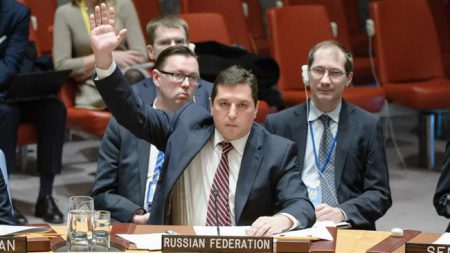
Russian Deputy Permanent Representative to the UN Vladimir Safronkov
Press TV – March 18, 2017
During a meeting of the UN Security Council convened by Russia, the Kremlin has warned about “grave humanitarian consequences” that would come if Saudi Arabia goes ahead with a plan to attack Yemen’s western port city of Hudaydah.
The attendants in the UNSC meeting discussed the grave humanitarian situation in Yemen and efforts toward a peaceful conclusion of the two-year-long war imposed by the Saudi regime on the Yemeni people, Russian Deputy Permanent Representative to the UN Vladimir Safronkov told reporters after the closed-door meeting in New York, which had been requested by Moscow on Wednesday.
Russia’s state news agency TASS quoted the Russian official as saying the meeting had been held in an attempt “to urge the UN to step up its efforts to establish a real diplomatic process.”
Elsewhere in his remarks, Safronkov said all the 15 member states of the council supported a non-military approach to the resolution of the crisis. It is, the Kremlin believes, “necessary to search for a political settlement,” Safronkov added.
Hudaydah is currently under the control of Yemen’s Houthi Ansarullah fighters, who have been defending the impoverished country against the Saudi aggression since March 2015. The city, Yemen’s fourth largest and its biggest port, served as a thoroughfare for the transit of about 70 percent of Yemen’s food imports in the pre-war years.
When the Saudi regime started pounding the crisis-hit country, Hudaydah turned into a primary entry point for humanitarian aid and fuel meant for areas inside Yemen, including the capital, Sana’a. If the city falls under the control of Saudi forces and mercenary soldiers, the flow of humanitarian assistance toward those areas would be blocked.
On March 13, Moscow also warned about the critical situation of the port city in providing its people with much-needed humanitarian aid.
The “plans to storm Yemen’s biggest port of Hudaydah give rise to serious concerns,” said Russian Foreign Ministry spokeswoman Maria Zakharova, adding that the fall of the city would cut Sana’a from “food and humanitarian aid supplies.” She also said the humanitarian situation in Yemen was “catastrophic.”
On Wednesday, the World Food Programme (WFP) said 60 percent of Yemenis, some 17 million people, faced a “crisis” and were in urgent need of food as a direct result of the Saudi war.
The Saudi campaign has so far killed over 12,000 Yemenis. The aggression was meant to reinstate Abd Rabbuh Mansur Hadi, Yemen’s president who has resigned and is a staunch ally of Riyadh. The campaign also sought to undermine Houthis. However, due to resistance from the Yemeni nation, the regime in Riyadh has so far failed to achieve success and suffered considerable human loss in its military.
US Citizens to Join Protests of US Nuclear Weapons Deployed in Germany

Blockaders cover the Front Gate at the Luftwaffe’s Buchel Air Base in Germany, which deploys and trains to use up to 20 U.S. B61 hydrogen bombs on Germany Tornado jet fighter
By John Laforge | CounterPunch | March 17, 2017
On March 26, nuclear disarmament activists in Germany will launch a 20-week-long series of nonviolent protests at the Luftwaffe’s Büchel Air Base, Germany, demanding the withdrawal of 20 U.S. nuclear weapons still deployed there. The actions will continue through August 9, the anniversary of the US atomic bombing of Nagasaki, Japan in 1945.
For the first time in the 20-year-long campaign to rid Büchel of the U.S. bombs, a delegation of U.S. peace activists will take part. During the campaign’s “international week” July 12 to 18, disarmament workers from Wisconsin, California, Washington, DC, Virginia, Minnesota, New Mexico and Maryland will join the coalition of 50 German peace and justice groups converging on the base. Activists from The Netherlands, France and Belgium also plan to join the international gathering.
The U.S. citizens are particularly shocked that the U.S. government is pursuing production of a totally new H-bomb intended to replace the 20 so-called “B61” gravity bombs now at Büchel, and the 160 others that are deployed in a total of five NATO countries.
Under a NATO scheme called “nuclear sharing,” Germany, Italy, Belgium, Turkey, and The Netherlands still deploy the U.S. B61s, and these governments all claim the deployment does not violate the Non-Proliferation Treaty (NPT). Articles I and II of the treaty prohibit nuclear weapons from being transferred to, or accepted from, other countries.
“The world wants nuclear disarmament,” said US delegate Bonnie Urfer, a long-time peace activist and former staffer with the nuclear watchdog group Nukewatch, in Wisconsin. “To waste billions of dollars replacing the B61s when they should be eliminated is criminal — like sentencing innocent people to death — considering how many millions need immediate famine relief, emergency shelter, and safe drinking water,” Urfer said.
Although the B61’s planned replacement is actually a completely new bomb — the B61-12 — the Pentagon calls the program “modernization” — in order to skirt the NPT’s prohibitions. However, it’s being touted as the first ever “smart” nuclear bomb, made to be guided by satellites, making it completely unprecedented. New nuclear weapons are unlawful under the NPT, and even President Barak Obama’s 2010 Nuclear Posture Review required that “upgrades” to the Pentagon’s current H-bombs must not have “new capabilities.” Overall cost of the new bomb, which is not yet in production, is estimated to be up to $12 billion.
Historic German Resolution to Evict US H-bombs
The March 26 start date of “Twenty Weeks for Twenty Bombs” is doubly significant for Germans and others eager to see the bombs retired. First, on March 26, 2010, massive public support pushed Germany’s parliament, the Bundestag, to vote overwhelmingly — across all parties — to have the government remove the U.S. weapons from German territory.
Second, beginning March 27 in New York, the United Nations General Assembly will launch formal negotiations for a treaty banning nuclear weapons. The UNGA will convene two sessions — March 27 to 31, and June 15 to July 7 — to produce a legally binding “convention” banning any possession or use of the bomb, in accordance with Article 6 of the NPT. (Similar treaty bans already forbid poison and gas weapons, land mines, cluster bombs, and biological weapons.) Individual governments can later ratify or reject the treaty. Several nuclear-armed states including the US government worked unsuccessfully to derail the negotiations; and Germany’s current government under Angela Merkel has said it will boycott the negotiations in spite of broad public support for nuclear disarmament.
“We want Germany to be nuclear weapons free,” said Marion Küpker, a disarmament campaigner and organizer with DFG-VK, an affiliate of War Resisters International and Germany’s oldest peace organization, this year celebrating its 125th anniversary. “The government must abide by the 2010 resolution, throw out the B61s, and not replace them with new ones,” Küpker said.
A huge majority in Germany supports both the UN treaty ban and the removal of US nuclear weapons. A staggering 93 percent want nuclear weapons banned, according to a poll commissioned by the German chapter of the International Physicians for the Prevention of Nuclear War published in March last year. Some 85 percent agreed that the US weapons should be withdrawn from the country, and 88 percent said they oppose US plans to replace current bombs with the new B61-12.
U.S. and NATO officials claim that “deterrence” makes the B61 important in Europe. But as Xanthe Hall reports for the International Campaign to Abolish Nuclear Weapons, “Nuclear deterrence is the archetypal security dilemma. You have to keep threatening to use nuclear weapons to make it work. And the more you threaten, the more likely it is that they will be used.”
For more information and to sign a “Declaration of Solidarity.”
Additional information about the B61 and NATO’s “nuclear sharing” at CounterPunch:
“Wild Turkey with H-Bombs: Failed Coup Brings Calls for Denuclearization,” July 28, 2016.
“Undeterred: Amid Terror Attacks in Europe, US H-bombs Still Deployed There,” June 17, 2016.
“Nuclear Weapons Proliferation: Made in the USA,” May 27, 2015.
“US Defies Conference on Nuclear Weapons Effects & Abolition,” Dec. 15, 2014.
“German ‘Bomb Sharing’ Confronted with Defiant ‘Instruments of Disarmament”, Aug. 9, 2013.
John LaForge is a Co-director of Nukewatch, a peace and environmental justice group in Wisconsin, and edits its newsletter.
US admits strike on ‘Al-Qaeda meeting’ in Syria amid reports of deadly mosque attack nearby
RT | March 17, 2017
Dozens of worshipers have reportedly been killed in an airstrike on a mosque in Syria’s Aleppo province. While the Pentagon only admitted to striking terrorists several miles away in Idlib, some reports suggest US missile debris were recovered from the mosque’s rubble.
Details of the strike on the Al-Jinah mosque are scarce, but over 50 people might have been killed in the incident, according to various reports. Images from the scene shared on social media show the wide-scale destruction.
None of the forces present in the area have taken responsibility for the strike yet. Both Russian and Syrian planes in addition to American-led air power are conducting operations against terrorist units in the area.
Some rushed to blame Moscow or Damascus for the carnage, after activists of the so-called White Helmets rescue organization and no less the notorious UK-based Syrian Observatory for Human Rights shared first images from the scene.
“We did not target a mosque, but the building that we did target — which was where the meeting took place — is about 50 feet (15 meters) from a mosque that is still standing,” said Colonel John J. Thomas, spokesman for US Central Command according to AFP.
Journalist Samuel Oakford, who was previously UN correspondent at Vice News, said that the US central Command confirmed it had carried out a strike in relative close proximity to the mosque.
“US official says that they were targeting an ‘Al Qaeda meeting place” that was across from the mosque in Aleppo. ‘We took the strike’”, he tweeted. Earlier, the reporter claimed the US Central Command told him the Americans conducted a strike on a target just several miles away, in the bordering Idlib province, and was looking into the Aleppo suburb mosque strike.
CENTCOM spokesperson, Maj. Josh Jacques, told the London-based Airwars monitoring group that the target was “assessed to be a meeting place for al Qaeda, and we took the strike.”
“It happened to be across the street from where there is a mosque,” said Jacques, specifying that the mosque was not the target and that it wasn’t hit directly.
“To be clear: this was a unilateral US strike, not part of anti-ISIS Coalition activities,” Oakford emphasized in another tweet.
Meanwhile Sakir Khader, who identifies himself as a journalist with a focus on Syria, Turkey, and the wider Middle East, posted a picture of the missile debris, which he claims to have come from the rubble of the destroyed mosque.
While the location and authenticity of the photo are yet to be independently investigated, the picture shows latin inscription on a metal plate alleged to be a piece of the missile.
Neither the Russian nor the US militaries, as well as Damascus, have yet to officially comment on the incident.
Saudi strike on refugee boat kills over 44 off Yemen coast
Press TV – March 17, 2017
At least 44 people have been killed and dozens of others wounded after a Saudi airstrike hit a refugee boat off Yemen’s western coast.
Yemen’s al-Masirah television reported on Thursday that the boat which came under attack was carrying Somali refugees near Bab al-Mandeb Strait.
According to the report, there are a number of women and children among the victims.
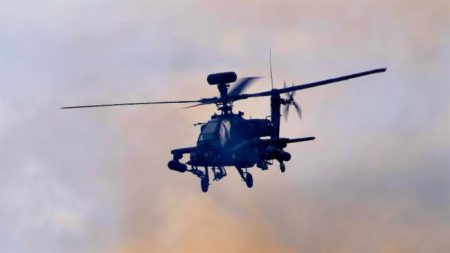
Reuters quoted a local official in Hudaydah as saying that the boat had come under attack by an Apache helicopter.
The refugees were on their way from Yemen to Sudan, the unnamed official said.
Earlier in the day, Saudi fighter jets bombed a food transport truck in the western province of al-Hudaydah, killing all the passengers, al-Masirah reported, without giving the number of those killed.

The remains of a truck hit by a Saudi strike in Hudaydah Province, Yemen, March 16, 2017.
Saudi Arabia has been leading a deadly military campaign against Yemen since March 2015. The kingdom has also imposed an aerial and naval blockade on its southern neighbor.
Britain and the US have provided huge amounts of arms and military training to the Saudi forces.
According to the United Nations humanitarian coordinator for Yemen, Jamie McGoldrick, the Saudi military campaign has claimed the lives of 10,000 Yemenis and left 40,000 others wounded.
McGoldrick told reporters in Sana’a earlier this year that the figure was based on casualty counts given by health facilities and that the actual number might be higher.
However, local Yemeni sources have put the death toll from the Saudi war at over 12,000, including many women and children.
US 2018 Budget Guarantees Foreign Assistance Only for Israel, State Dept. Says
Sputnik – 16.03.2017
WASHINGTON – US foreign assistance to nations other than Israel is not yet determined in the fiscal year 2018 Department of State budget, acting spokesperson Mark Toner said in a briefing on Thursday.
Israel secured $3.1 billion in foreign funding in President Donald Trump’s 2018 budget that was made public on Thursday.
“Our assistance to Israel is a cutout on the budget, and that’s guaranteed,” Toner told reporters. “With respect to other assistance levels — foreign military assistance levels, those are still being evaluated and decisions are going to be made going forward.”
Toner pointed out the State Department was still at the beginning of the budget process and would consider US treaty obligations when determining assistance.
Last September former President Barack Obama’s administration signed a 10-year, $38 billion memorandum of understanding that represents the single largest bilateral military pledge of defense aid in US history.
The agreement included $33 billion in foreign military financing and $5 billion for missile defense from fiscal year 2019-2028.
Tillerson’s Asia Visit: Could US Change Stance on N. Korea Even If It Wanted To?
Sputnik – 16.03.2017
As US Secretary of State Rex Tillerson travels across Japan, China and South Korea, amid the impeachment of South Korean president Park Geun-hye and a recent missile launch by North Korea, Radio Sputnik’s Brian Becker invited columnist and author Patrick Lawrence to discuss what’s at the heart of the new diplomat’s trip.
The impeachment of South Korean president Park Geun-hye has plunged South Korea into a time of uncertainty. Between America’s undecided foreign policy and the massive unpopularity of its THAAD system deployment in South Korea, Park’s successor may take an unexpected stance. This seems likely, given that the most probable candidate to win the elections is Moon Jae-in, a supporter of the Sunshine Policy, the idea of close cooperation with North Korea without military intervention.
According to Lawrence, the visit to South Korea is the key leg of Tillerson’s trip, as Park’s impeachment has jeopardized US plans to deploy the THAAD anti-missile system in the country. The move, to counter the North Korean nuclear threat, is facing fierce opposition among South Koreans. President Park has been playing along with the United States on this issue.
Acting President Hwang Kyo-ahn, however, is obliged by law to call new elections in 60 days. Described by Lawrence as a “creature of Park Geun-hye,” Hwang’s tenure may create a short window of opportunity for the US to deploy the controversial system. But, as he is associated with the impeached president, Hwang’s chances of winning the election are extremely low. South Korea’s celebrated democracy, then, may very well backfire on the US.
Aside from the THAAD issue, Washington must decide on its approach to North Korea.
“There is no standing still on North Korean question,” Lawrence says. “Either we open the new negotiations with them, or we become more aggressive militarily.”
In fact, military confrontation is not the only way the United States might approach North Korea. While the DPRK is consistently portrayed as aggressive, irrational and totalitarian, it was not until Nobel Peace Prize winner Barack Obama’s presidency that that the US ceased negotiations with DPRK in 2009: both Presidents Clinton and Bush engaged in negotiations with Pyongyang, while South Korea implemented the Sunshine Policy which opened opportunities for cooperation between the two countries.
Lawrence reminded listeners that during the Korean War, the US Air Force destroyed every structure higher than one story in the country.
“The main complaint of the US pilots during the war was that there was nothing left to bomb,” Lawrence says.
Bombings also eliminated 20% of North Korean population, and this, according to Lawrence, is the real reason behind North Korea’s determination to ensure its safety through nuclear weapons and its reluctance to negotiate.
“This has been erased [from history textbooks],” Lawrence says. “That’s how we maintain the fiction of wild North Korean irrationality.”
Lawrence pointed out that, in theory, there could be a deal between Washington and Pyongyang: the US ceases the military drills in the region and North Korea in return halts its nuclear program. But North Korea has a lengthy record of having the United States violate their own agreements: Lawrence recalls that each time an agreement on nuclear weapons was signed with North Korea, the United States started picking on Pyongyang’s missile program, which was never covered in the agreement. Lawrence compares it to the nuclear deal with Iran, since Washington also criticized Tehran for a missile program which has to be perceived separately from the nuclear deal itself.
Should it nevertheless resort to negotiations, the United States will have to face a very strong resistance from within, since the military industrial complex is the force that is critically interested in keeping tensions in the region high; keeping significant numbers of US armed forces in the region is necessary to project US power in Asia, but this can only be justified if there is a clear and present danger: “demonic” North Korea and its nuclear weapons.
“We are heavily dependent on the conflict in this country. We are absolutely dependent on maintaining the high degree of tension on the Korean Peninsula,” Lawrence says.
There is even a possibility that US generals will denounce President Trump’s direct order to withdraw from the region. This happened in 1977, right after then-President Jimmy Carter announced the withdrawal of US troops from South Korea. A very similar thing, according to Lawrence, happened after President Trump announced his intention to de-escalate, or “normalize” US relations with Russia.
“Nobody should be under any illusion as to the limited extent to which the civilian government in Washington is in actual control of the Pentagon,” Lawrence says.
Featured Video

New positive ivermectin evidence
or go to
Aletho News Archives – Video-Images
From the Archives
Fanatical Followers of the Covid Regime: A Jim Jones-Style Cult?
By Professor Roger Watson and Dr. Niall McCrae | The Daily Sceptic | November 15, 2021
As scholars at leading British universities over recent decades, we witnessed the replacement of critical thinking and debate by narrative: facts are discrimination and scientific method is imperialism; truth, instead, is derived from ‘progressive’ values. This educational trend may be a major contributory factor to the ease in which society has been inculcated to the Covid ‘new normal’ of masking, testing, and repeated doses of vaccines for a disease of similar risk to severe influenza.
One doesn’t need much critical reasoning to observe the flawed logic of some vaccination enthusiasts, such as people who respond to experiencing any side effects, however debilitating, by saying “at least I know it’s working”, or, after contracting the disease despite their promised inoculation (over 90% effective, according to initial drug company claims), “I’d have been worse off without the jab.” … continue
Blog Roll
 Aletho News
- Najaf airport to reopen to Iranian flights within 24 hours: Ambassador
- From ‘How Will This End For Iran’ to ‘When America Walks Away’: A tale of two Economist covers
- Tehran blasts ‘baseless’ speculation linking Iran to alleged bomb plot at UK air base
- The Rise And… Rise Of ‘Color Revolutions’
- The Coming GOP Bloodbath?
- Arctic Scare Stories Melt Away
- Wrong, Euronews: Climate Change Has Not Created a Food, Energy, and Economic “Meta-Crisis”
- New positive ivermectin evidence
- Met Office Caught Fabricating Daily Temperature Record Claims
- Merck Virologists Admitted to Falsely Certifying Vaccine Efficacy
- If Americans Knew
- Netanyahu Asked UAE Leader to Deny Report on Oct. 7 Warning in Secret Visit, Sources Say
- CNN Chief Int’l Correspondent Clarissa Ward on Journalists in Gaza
- Democratic Party Consultants Surround Troy Jackson with Pro-Israel Donors
- Christian Leader Responds To Netanyahu’s Claims Regarding Palestinian Christians
- In Gaza, ‘Whoever Survives the Bombing Won’t Survive the Rubble’
- Israel kills more Palestinians, amid push to resettle Gaza – Daily Update
- Israel forces Gazans to live in constant peril – Daily Update
- Deconstructing Netanyahu’s pants-on-fire UN rant – Daily Update
- Trump betrayed voters with his campaign lies and prioritized a foreign country once he took office
- Netanyahu calls Israel’s war in Gaza ‘opposite of genocide’ in UN speech to near-empty hall
- No Tricks Zone
- New Study: Earth And Venus Surface Warmth Largely Explained By Convection And Lapse Rate, Not CO2 Or Radiation
- 2025 Nature Paper Claiming Worsening Global Drought Gets RETRACTED …Heavily Flawed
- New Study: ‘Global Drought Shows No Detectable Recent Acceleration Under Climate Warming’
- Economic Masterminds: German Socialists Suggest Taxing Productivity Gains Stemming From Using AI
- The South China Sea Has Not Been Cooperating With The Climate Change Narrative
- Energy Crisis: Germany Enters Heating Season With Historically Low Gas Reserve Fill Levels
- New Study: The Antarctic Ice Sheet Gained Mass From 2020-2024 Due To Staggering Snow And Ice Accumulation
- Study: Ocean Heating Rates From Thousands Of Years Ago ‘Dwarf’ Modern Ocean Heating Rates
- Climate Extremists Target, Attack Large-Scale Power Grid Infrastructure In Germany!
- New Study: Antarctic Ice Melt Has Contributed Less Than 1 Centimeter To Sea Level Rise In The Last 30 Years

