Civilians killed in US drone attacks: Rights group
Press TV – November 28, 2014
A rights group says many civilians have been targeted and killed in US drone attacks in Pakistan and other countries where such raids are carried out, Press TV reports.
The UK-based rights group Reprieve revealed that civilians have been killed in Pakistan and other places before militants were targeted by US assassination drones.
Reprieve has presented several cases on how ruthlessly the US Central Intelligence Agency (CIA) has killed civilians but declared them militants through dubious reports in the media, which regularly cite anonymous Pakistani and US officials.
In one such case, the CIA killed 221 people, including over 100 children, in Pakistan in search of just four militants. This is while three of the militants are reportedly still alive and the fourth one has died of natural causes.
In another example, the report pointed out that on average each militant was targeted and reported killed more than three times before they were actually killed.
To kill one militant, sometimes “more than 300 people have been killed,” said Mirza Shazad Akbar, Reprieve’s representative in Pakistan.
“A former US drone operator said that by looking at the monitor and looking at people’s movement, he could actually tell who is a bad person and who is a good person… This is the extent of… the [US] flawed intelligence,” Akbar added.
But this is just the tip of the iceberg of the scale of tragedy in Pakistan’s tribal areas, where more than 3,800 people have been killed with the same pattern of the so-called precise surgical drone strikes.
The US carries out targeted killings through drone strikes in several Muslim countries, such as Afghanistan, Yemen, Pakistan and Somalia. Washington claims the targets of the drone attacks are militants, but local officials and witnesses maintain that civilians have been the main victims of such raids over the past few years.
The United Nations and several human rights organizations have identified the US as the world’s number-one user of “targeted killings,” largely due to its drone attacks in Pakistan and Afghanistan.
EU chief calls for decentralization and federalization of Ukraine
RT | November 27, 2014
To solve the current crisis in Ukraine, the country should become decentralized and federalized, Herman Van Rompuy, the president of the European Council, announced in his political anniversary speech in Paris this week.
Quoting “1,000 deaths” in the country since the cease-fire agreement was reached in Minsk on September 5, Van Rompuy said he could no longer call the situation a cease-fire. And a new cessation of conflict, if controlled by the same players, would have the identical outcome, the politician said in his speech, marking his five years presidency of the European Council.
Urging a “global solution,” the EU chief said a way for Ukraine to become a “decentralized (or federalized) country” must be found. He called for the country’s closer ties with the EU. However, he also said, “Europe has become unpopular among Europeans” in the past five to six years.
Kiev should “establish a correct relationship with Russia, its neighbor, with which it shares history, culture and language,” Van Rompuy said, adding that the interests of minorities in Ukraine should be respected.
Sharing his EU “experiences and perspectives” with students at the Sciences Po institute of political studies in Paris, he pointed out that the current crisis in Ukraine is “the most grave geopolitical crisis we’ve experienced in Europe since the end of the Cold war.” What makes it even worse, according to the Rompuy, is the fact that the “war” is happening on European soil.
Van Rompuy is not the first European politician to suggest Ukraine’s federalization. Earlier in August, Germany’s Vice Chancellor Sigmar Gabriel, who is also the country’s economy minister, spoke out for federalization to be introduced in Ukraine once the conflict in the east of the country is resolved.
The same measures to help settle the crisis in eastern Ukraine have been voiced by Moscow. However, Ukraine’s President Petro Poroshenko keeps ruling out such political changes, saying the country’s federalization is out of question.
Pope: Door of dialogue with Islamic State should not be closed
MEMO | November 26, 2014
Pope Francis said on Tuesday that although it is “almost impossible” to have a dialogue with the Islamic State, or ISIS, the “door should never be closed”, Anadolu news agency reported.
Speaking to Vatican Radio after his return from a visit to the EU parliament in Strasburg, he said: “I never say all is lost, never. Maybe there cannot be a dialogue but you can never shut a door.”
He continued: “It is difficult, one could say almost impossible, but the door is always open.”
Responding to a question about whether or not it would be possible to communicate with rather than fight the militants, he said: “I repeat what I have said: when you want to stop an unjust oppressor, you must do so with international consensus.”
ISIS has been controlling wide areas in the east of Syria and north and west of Iraq for several months. In June, the organisation, which most of the international community has labelled as terrorist, announced a caliphate with Abu-Baker Al-Baghdadi as its leader.
Despite doubts about the relations between Al-Baghdadi, who was a prisoner in an American facility in Iraq, and the US, the latter has been leading an international alliance against ISIS. Some political experts even argue that ISIS is an American made militant group.
French Polynesia to demand nearly $1bn from Paris over tests
RT | November 25, 2014
In an unprecedented move, French Polynesia, an overseas territory governed by France, is to ask Paris for nearly $1 billion in compensation for damage caused by nuclear weapons tests carried out by France in the South Pacific between 1966 and 1996.
The Assembly of French Polynesia has prepared a demand for $930 million (754,2 million euros) over “major pollution” caused by the 193 tests carried out by France for 30 years, La Dépêche de Tahiti reported. On top of this, the proposed resolution seeks an additional $132 million for the continued occupation of the Fangataufa and Mururoa atolls, used for nuclear testing.
The conservative Tahoera’a Huiraatira party committee has been acting independently of Polynesian President Edouard Fritch, who said he was “sorry” for the motion “written without consulting him,” local press reported.
Meanwhile, the text of the resolution, set for approval by the Assembly, highlights a “very poor situation of the atolls,” and a clean-up “impossible in the current state of scientific knowledge,” Tahiti Infos reported. They write that French Polynesia has been “too long sidelined” from decisions on “waste conservation and monitoring modes whatever their nature as well as the rehabilitation options of the atolls.”
On 24 August 1968, France conducted its first multi-stage thermonuclear test at Fangataufa atoll in the South Pacific Ocean, the so-called ‘Canopus’ test. With a 2.6 megaton yield, its explosive power was 200 times that of the Hiroshima bomb, according to the Comprehensive Nuclear-Test-Ban Treaty Organization (CTBTO).
France began its last series of nuclear tests in the South Pacific in 1995, breaking a three-year moratorium, provoking international protests and the boycott of French goods. It conducted its final nuclear test in January 1996 and then permanently dismantled its nuclear test sites. Later in that year, France signed the Comprehensive Nuclear-Test-Ban Treaty (CTBT).
In 1996, in the wake of the nuclear testing, a $150 million annual payment was granted to French Polynesia, a territory of over 100 islands and atolls with its own government.
France, together with China, is not party to the 1963 Partial Test Ban Treaty, which bans nuclear explosions in the atmosphere, under water and outer space but not underground.
Last year it came to light that French nuclear tests carried out in the South Pacific had proved to be far more toxic than previously thought. According to declassified documents, seen by Le Parisien, plutonium fallout covered a much broader area than Paris had initially admitted, with Tahiti allegedly exposed to 500 times the maximum accepted levels of radiation.
According to the CTBTO, a study conducted between 2002 and 2005 of thyroid cancer sufferers in Tahiti, who had been diagnosed between 1984 and 2002, established a “significant statistical relationship” between cancer rates and exposure to radioactive fallout from French nuclear tests. Another survey carried out by an official French medical research body, Inserm, in 2006, also detected an increase in thyroid cancer among people who had been living within some 1,300 km of the nuclear tests conducted on the Polynesian atolls between 1969 and 1996.
In 2010, France pledged that veterans and survivors would be elegible for compensation, noting that this process would take time.
There to stay: US troops keep Poland, Baltic deployment for 2015
RT | November 24, 2014
A ‘temporary’ deployment of US troops in Poland and the Baltic states has been extended through 2015, a US commander in Europe said. NATO sells its presence as a deterrent to an ‘aggressive Russia’, with Moscow countering that it only escalates tension.
The alliance deployed several hundred US troops in Poland, Latvia, Lithuania and Estonia earlier this year. The move was explained by a desire to give confidence to these NATO members after the political crisis in Ukraine and the secession of its region of Crimea to rejoin Russia. The alliance called it an annexation and said countries in the region feared that Moscow would militarily attack them.
Originally the troops were supposed to stay until the end of the year, but now NATO wants to keep them for at least 12 months more, said Lieutenant-General Frederick Ben Hodges, Commanding General of US Army Europe.
“We have planned rotations out through next year. Units are designated that will continue to do this,” Hodges told journalist in the Lithuanian capital, Vilnius.
“There are going to be US Army forces here in Lithuania, as well as Estonia and Latvia and Poland, for as long as is required to deter Russian aggression and to assure our allies,” he said as cited by Reuters.
A 1997 Russia-NATO agreement forbids the alliance from having troops permanently stationed in the Baltic States, so the deployment remains a temporary mission. However, it’s not immediately clear when, if ever, NATO would consider the perceived threat of a Russian aggression no longer valid and withdraw the troops.
Washington’s assurances to its eastern NATO partners were also delivered last week through diplomatic channels.
“When NATO and the US as part of NATO took new members into the alliance, this means that we are ready to participate in the defense of the security of these countries, and this means that we are ready to give our lives for the security of these countries,” said US Assistant Secretary of State for European and Eurasian affairs Victoria Nuland during a visit to Latvia.
Amid the Ukrainian crisis, Poland and the Baltic states have been among the most vocal critics of Russia. Lithuanian President Dalia Grybauskaite went as far as branding Russia ‘a terrorist state’ last week, prompting some Russian MPs to call for the severing of diplomatic ties with Vilnius.
Russia considers the build-up of NATO troops close to its borders provocative and dangerous. Moscow’s envoy to the alliance Aleksandr Grushko said NATO “is turning the Baltic region, which used to be militarily calm, into an area of military confrontation with Russia.”
The Russian military said it would respond to the emerging NATO threat from the Baltic with appropriate counter-moves.
Russia urges cutting off financial flows to Islamic State
The BRICS Post | November 22, 2014
Even as the US Central Command on Friday said the US and its allies have staged 30 air strikes on Islamic State targets in Syria and Iraq since Wednesday, Russia has insisted that major impact in the fight against the group would come from straining financial support for the group.
Russian Deputy Foreign Minister Mikhail Bogdanov said Friday financial support provided for the Islamic State of Iraq and Levant (ISIL) must be stopped through a campaign in strict accordance with international law.
“International financial flows to the ISIL must be cut off by approaches based on international law and with respect for the sovereignty of related countries,” Bogdanov said.
Earlier last month, the US and Russia announced an agreement to share intelligence on the armed rebel group.
The ISIL has become the most affluent terrorist organization ever, with financial support from outside and by amassing wealth through drug trafficking and oil proceeds from the sites it has seized, the Russian diplomat said.
The group’s assets are used to finance arms purchase and recruit mercenaries from around the world, Bogdanov said.
Meanwhile, he stressed that the UN Security Council must take the principal responsibility of fighting with extremist groups like the ISIL.
Bogdanov also accused the United States of not complying with international law in the fight against the ISIL.
“Actions of the US-led coalition do not comply with the international law and generally-accepted practice of countering terrorism,” charged Bogdanov.
The coalition does not coordinate its operations with the Syrian government, Bogdanov said, adding that ground operations to fight the militants should only be conducted by the armed forces of Iraq and Syria.
Earlier last month, Russian President Vladimir Putin had raised questions about the financing of ISIL.
“Where does all this come from? How did the notorious ISIL manage to become such a powerful group, essentially a real armed force?” asked Putin.
“The terrorists are getting money from selling oil too. Oil is produced in territory controlled by the terrorists, who sell it at dumping prices, produce it and transport it. But someone buys this oil, resells it, and makes a profit from it, not thinking about the fact that they are thus financing terrorists who could come sooner or later to their own soil and sow destruction in their own countries,” said the Russian President.
ISIL, an alternate acronym of the group Islamic State, has seized vast swaths of territory in northern Iraq since June and announced the establishment of a caliphate in areas under its control in Syria and Iraq.
TBP and Agencies
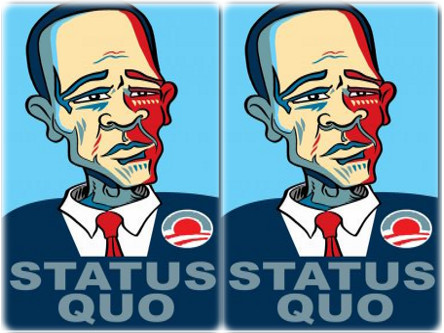
Obama secretly extends US combat operation in Afghanistan
RT | November 22, 2014
President Barack Obama has secretly signed an order that expands the United States’ direct combat role in Afghanistan throughout 2015, the New York Times reported.
Signed over the last few weeks, the secret order permits American forces to continue to battle the Taliban and other militants that pose a threat to either the Afghan government or US personnel. According to the Times, US jets, bombers, and drones will be able to aid ground troops – be they Afghan or US forces – in whatever mission they undertake.
Under the order, ground troops could join Afghan troops on missions, and airstrikes could be carried out in their support.
If true, this marks a significant expansion of America’s role in Afghanistan in 2015. Previously, President Obama said US forces would not be involved in combat operations once the new year begins. He did say troops would continue training Afghan forces and track down remaining Al-Qaeda members.
Obama signed the secret order after tense debates within the administration. The military reportedly argued that it would allow the US to keep the pressure on the Taliban and other groups should details emerge that they are planning to attack American troops. Civilian aides, meanwhile, said the role of combat troops should be limited to counter-terror missions against Al-Qaeda.
The Times said an administration official painted the secret order’s authorization as a win for the military… Full article
All-Out War in Ukraine: NATO’s ‘Final Offensive’
By James Petras :: 11.20.2014
Introduction
There are clear signs that a major war is about to break out in Ukraine: A war actively promoted by the NATO regimes and supported by their allies and clients in Asia (Japan) and the Middle East (Saudi Arabia).
The war over Ukraine will essentially run along the lines of a full-scale military offensive against the southeast Donbas region, targeting the breakaway ethnic Ukraine- Russian Peoples Republic of Donetsk and Lugansk, with the intention of deposing the democratically elected government, disarming the popular militias, killing the guerrilla resistance partisans and their mass base, dismantling the popular representative organizations and engaging in ethnic cleansing of millions of bilingual Ukraino-Russian citizens. NATO’s forthcoming military seizure of the Donbas region is a continuation and extension of its original violent putsch in Kiev, which overthrew an elected Ukrainian government in February 2014.
The Kiev junta and its newly ‘elected’ client rulers, and its NATO sponsors are intent on a major purge to consolidate the puppet Poroshenko’s dictatorial rule. The recent NATO-sponsored elections excluded several major political parties that had traditionally supported the country’s large ethnic minority populations, and was boycotted in the Donbas region. This sham election in Kiev set the tone for NATO’s next move toward converting Ukraine into one gigantic US multi-purpose military base aimed at the Russian heartland and into a neo-colony for German capital, supplying Berlin with grain and raw materials while serving as a captive market for German manufactured goods.
An intensifying war fever is sweeping the West; the consequences of this madness appear graver by the hour.
War Signs: The Propaganda and Sanctions Campaign, the G20 Summit and the Military Build Up
The official drum- beat for a widening conflict in Ukraine, spearheaded by the Kiev junta and its fascist militias, echoes in every Western mass media outlet, every day. Major mass media propaganda mills and government ‘spokesmen and women’ publish or announce new trumped-up accounts of growing Russian military threats to its neighbors and cross-border invasions into Ukraine. New Russian incursions are ‘reported’ from the Nordic borders and Baltic states to the Caucusus. The Swedish regime creates a new level of hysteria over a mysterious “Russian” submarine off the coast of Stockholm, which it never identifies or locates – let alone confirms the ‘sighting’ of. Estonia and Latvia claim Russian warplanes violated their air space without confirmation. Poland expels Russian “spies” without proof or witnesses. Provocative full-scale joint NATO-client state military exercises are taking place along Russia’s frontiers in the Baltic States, Poland, Romania and Ukraine.
NATO is sending vast arms shipments to the Kiev junta, along with “Special Forces” advisers and counter-insurgency experts in anticipation of a full-scale attack against the rebels in the Donbas.
The Kiev regime has never abided by the Minsk cease fire. According to the UN Human Rights office 13 people on average –mostly civilians –have been killed each day since the September cease fire. In eight weeks, the UN reports that 957 people have been killed –overwhelmingly by Kiev’s armed forces.
The Kiev regime, in turn, has cut all basic social and public services to the Peoples’ Republics’, including electricity, fuel, civil service salaries, pensions, medical supplies, salaries for teachers and medical workers, municipal workers wages; banking and transport have been blockaded.
The strategy is to further strangle the economy, destroy the infrastructure, force an even greater mass exodus of destitute refugees from the densely populated cities across the border into Russia and then to launch massive air, missile, artillery and ground assaults on urban centers as well as rebel bases.
The Kiev junta has launched an all-out military mobilization in the Western regions, accompanied by rabid anti-Russian, anti-Eastern Orthodox indoctrination campaigns designed to attract the most violent far right chauvinist thugs and to incorporate the Nazi-style military brigades into the frontline shock troops. The cynical use of irregular fascist militias will ‘free’ NATO and Germany from any responsibility for the inevitable terror and atrocities in their campaign. This system of ‘plausible deniability’ mirrors the tactics of the German Nazis whose hordes of fascist Ukrainians and Ustashi Croats were notorious in their epoch of ethnic cleansing.
G20-plus-NATO: Support of the Kiev Blitz
To isolate and weaken resistance in the Donbas and guarantee the victory of the impending Kiev blitz, the EU and the US are intensifying their economic, military and diplomatic pressure on Russia to abandon the nascent peoples’ democracy in the south-east region of Ukraine, their principle ally.
Each and every escalation of economic sanctions against Russia is designed to weaken the capacity of the Donbas resistance fighters to defend their homes, towns and cities. Each and every Russian shipment of essential medical supplies and food to the besieged population evokes a new and more hysterical outburst – because it counters the Kiev-NATO strategy of starving the partisans and their mass base into submission or provoking their flight to safety across the Russian border.
After suffering a series of defeats, the Kiev regime and its NATO strategists decided to sign a ‘peace protocol’, the so-called Minsk agreement, to halt the advance of the Donbas resistance into the southern regions and to protect Kiev’s soldiers and militias holed-up in isolated pockets in the East. The Minsk agreement was designed to allow the Kiev junta to build up its military, re-organize its command and incorporate the disparate Nazi militias into its overall military forces in preparation for a ‘final offensive’. Kiev’s military build-up on the inside and NATO’s escalation of sanctions against Russia on the outside would be two sides of the same strategy: the success of a frontal attack on the democratic resistance of the Donbas basin depends on minimizing Russian military support through international sanctions.
NATO’s virulent hostility to Russian President Putin was on full display at the G20 meeting in Australia: NATO-linked presidents and prime ministers, especially Merkel, Obama, Cameron, Abbott, and Harper’s political threats and overt personal insults paralleled Kiev’s growing starvation blockade of the besieged rebels and population centers in the south-east. Both the G20’s economic threats against Russia and the diplomatic isolation of Putin and Kiev’s economic blockade are preludes to NATO’s Final Solution – the physical annihilation of all vestiges of Donbas resistance, popular democracy and cultural-economic ties with Russia.
Kiev depends on its NATO mentors to impose a new round of severe sanctions against Russia, especially if its planned invasion encounters a well armed and robust mass resistance bolstered by Russian support. NATO is counting on Kiev’s restored and newly supplied military capacity to effectively destroy the southeast centers of resistance.
NATO has decided on an ‘all-or-nothing campaign’: to seize all of Ukraine or, failing that, destroy the restive southeast, obliterate its population and productive capacity and engage in an all-out economic (and possibly shooting) war with Russia. Chancellor Angela Merkel is on board with this plan despite the complaints of German industrialists over their huge loss of export sales to Russia. President Hollande of France has signed on dismissing the complaints of trade unionists over the loss of thousands French jobs in the shipyards. Prime Minister David Cameron is eager for an economic war against Moscow, suggesting the bankers of the City of London find new channels to launder the illicit earnings of Russian oligarchs.
The Russian Response
Russian diplomats are desperate to find a compromise, which allows Ukraine’s ethnic Ukraine- Russian population in the southeast to retain some autonomy under a federation plan and regain influence within the ‘new’ post-putsch Ukraine. Russian military strategists have provided logistical and military aid to the resistance in order to avoid a repeat of the Odessa massacre of ethnic Russians by Ukrainian fascists on a massive scale. Above all, Russia cannot afford to have NATO-Nazi-Kiev military bases along its southern ‘underbelly’, imposing a blockade of the Crimea and forcing a mass exodus of ethnic Russians from the Donbas. Under Putin, the Russian government has tried to propose compromises allowing Western economic supremacy over Ukraine but without NATO military expansion and absorption by Kiev.
That policy of conciliation has repeatedly failed.
The democratically elected ‘compromise regime’ in Kiev was overthrown in February 2014 in a violent putsch, which installed a pro-NATO junta.
Kiev violated the Minsk agreement with impunity and encouragement from the NATO powers and Germany.
The recent G20 meeting in Australia featured a rabble-rousing chorus against President Putin. The crucial four-hour private meeting between Putin and Merkel turned into a fiasco when Germany parroted the NATO chorus.
Putin finally responded by expanding Russia’s air and ground troop preparedness along its borders while accelerating Moscow’s economic pivot to Asia.
Most important, President Putin has announced that Russia cannot stand by and allow the massacre of a whole people in the Donbas region.
Is Poroshenko’s forthcoming blitz against the people of southeast Ukraine designed to provoke a Russian response – to the humanitarian crisis? Will Russia confront the NATO-directed Kiev offensive and risk a total break with the West?
James Petras latest book is THE POLITICS OF IMPERIALISM:THE US,ISRAEL AND THE MIDDLE EAST (CLARITY PRESS:ATLANTA)
What Really Happened to the Wobblies
By STAUGHTON LYND | CounterPunch | November 21, 2014
 The Wobblies are back. Many young radicals find the Industrial Workers of the World (IWW) the most congenial available platform on which to stand in trying to change the world.
This effort has been handicapped by the lack of a hard-headed history of the IWW in its initial incarnation, from 1905 to just after World War I. The existing literature, for example Franklin Rosemont’s splendid book on Joe Hill, is strong on movement culture and atmosphere. It is weak on why the organization went to pieces in the early 1920s.
Eric Chester’s new book, The Wobblies in their Heyday: The Rise and Destruction of the Industrial Workers of the World during the World War I Era, fills this gap. It is indispensable reading for Wobblies and labor historians. One way to summarize what is between these covers is to say that Chester spells out three tragic mistakes made by the old IWW that the reinvented organization must do its best to avoid.
Macho Posturing
Labor organizing flourished during World War I because of the government’s need for a variety of raw materials. Among these were food, timber, and copper. Wobbly organizers made dramatic headway in all three industries. At its peak in August 1917 the IWW had a membership of more than 150,000.
Nine months later, Chester writes, “the union was in total disarray, forced to devote most of its time and resources to raising funds for attorneys and bail bonds.”
This sad state of affairs was, of course, partly the result of a calculated decision by the federal government to destroy the IWW. But only partly.
According to Chester another cause of the government’s successful suppression of the Wobblies was that during and after the Wheatlands strike in California hop fields in 1913 some Wobblies threatened to “burn California’s agricultural fields if two leaders of the strike were not released from jail.”
For years, Wobbly leaders had insisted that sabotage could force employers to make concessions, Chester writes. But what Chester terms “nebulous calls for arson” and “macho bravado” only stiffened the determination of California authorities not to modify jail sentences for Wobbly leaders Ford and Suhr.
Chester finds that there is no credible evidence that any fields were, in fact, burned. But after the United States entered World War I in April 1917, this extravagant rhetoric calling for the destruction of crops apparently helped to convince President Wilson to initiate a systematic and coordinated campaign to suppress the Wobblies.
Efforts to Avoid Repression by Discontinuing Discussion of the War and the Draft
International solidarity and militant opposition to war and the draft were central tenets of the IWW. Wobblies who had enrolled in the British Army were expelled from the union. At the union’s tenth general convention in November 2015, the delegates adopted a resolution calling for a “General Strike in all industries” should the United States enter the war.
What actually happened was that general secretary-treasurer Bill Haywood and a majority of IWW leaders agreed that the union should desist from any discussion of the war or the draft, in the vain hope that this policy would persuade the federal government to refrain from targeting the union for repression. At the same time, the great majority of rank-and-file members, with support of a few leaders such as Frank Little, insisted that the IWW should be at the forefront of the opposition to the war.
Self-evidently, what Chester terms the IWW’s “diffidence” was the very opposite of Eugene Debs’ defiant opposition to the war. When Wobbly activists “flooded IWW offices with requests for help and pleas for a collective response to the draft,” the usual response was that what to do was up to each individual member. Haywood, Chester writes, “consistently sought to steer the union away from any involvement in the draft resistance movement.” Debs notwithstanding, however, the national leadership of the Socialist Party like the national leadership of the IWW “scrambled to avoid any confrontation with federal authorities.” Radical activists from both organizations formed ad hoc alliances cutting across organizational boundaries.
The IWW General Executive Board, meeting from June 29 to July 6, 1917, was unable to arrive at a decision about the war and conscription, and a committee including both Haywood and Little, tasked to draft a statement, likewise failed to do so. In the end, Chester says, “the IWW sought to position itself as a purely economic organization concerned solely with short-run gains in wages and working conditions.”
Disunity Among IWW Prisoners Fostered by the Government
The reluctance of the Wobbly leadership to advocate resistance to the war and conscription carried over to a legalistic response when the government indicted IWW leaders. Haywood urged all those named in the indictment to surrender voluntarily and to waive any objection to being extradited to Chicago. In the mass trial that followed, the defendants were represented by a very good trial lawyer who was also an enthusiastic supporter of the war and passed up the opportunity to make a closing statement to the jury. Judge Landis’ superficial fairness deluded Wobs into hoping for a good outcome.
The jury took less than an hour to find all one hundred defendants guilty of all counts in the indictment. Ninety-three received lengthy prison terms. Judge Landis ordered that they be imprisoned in Leavenworth, described by Chester as “a maximum-security penitentiary designed for hardened, violent criminals.” Forty-six more defendants were found guilty after another mass conspiracy trial in Sacramento.
Thereafter, Chester writes, the “process of granting a commutation of sentence was manipulated during the administration of Warren Harding to divide and demoralize IWW prisoners.” The ultimate result was “the disastrous split of 1924, leaving the union a shell of what it had been only seven years earlier.” Executive clemency, like that granted to Debs, was the only hope of the Wobblies in prison for release before the end of their long sentences. President Harding rejected any thought of a general amnesty, obliging each prisoner to fill out the form requesting amnesty as an individual. The application form for amnesty contained an implicit admission of guilt. The newly-created ACLU supported this process.
Twenty-four IWW prisoners opted to submit a form requesting amnesty. A substantial majority refused to plead for individual release. More than seventy issued a statement in which they insisted that “all are innocent and all must receive the same consideration.” The government insisted on a case-by-case approach. Fifty-two prisoners responded that they refused to accept the president’s division of the Sacramento prisoners, still alleged to have burned fields, from the Chicago prisoners. Moreover they considered it a “base act” to “sign individual applications and leave the Attorney General’s office to select which of our number should remain in prison and which should go free.”
Initially, the IWW supported those prisoners who refused to seek their freedom individually. Those who had submitted personal requests for presidential clemency were expelled from the union. In June 1923, the government once again dangled before desperate men the prospect of release, now available for those individual prisoners promising to remain “law-abiding and loyal to the Government.” This time a substantial majority of the remaining prisoners accepted Harding’s offer, and IWW headquarters, in what Chester calls “a sweeping reversal,” gave its approval.
Eleven men at Leavenworth declined this latest government inducement. In addition, those who were tried in California did not receive the same offer.
In December 1923 the remaining IWW prisoners at Leavenworth including twenty-two who had been convicted in Sacramento were released unconditionally. The damage had been done. Those who had held out the longest launched a campaign within the IWW to expel those who had supported a form of conditional release. There were accusations against anyone who had allegedly proved himself “a scab and a rat.” When a convention convened in 1924 both sides claimed the headquarters office and went to court. An organization consisting of the few hundred members who had supported the consistent rejection of all government offers “faded into oblivion by 1931.”
Conclusion
It is not the intent of brother Chester’s book, or of this review, to trash the IWW. This review has dealt with only about half of the material in the book, for example passing by the story of Wobbly organizing in copper, both at Butte, Montana and Bisbee, Arizona. Moreover, any one who lived through the disintegration of SDS, SNCC and the Black Panthers is familiar with tragedies like those described here. The heroism of members of all three groups who were martyrs, such as Frank Little, Fred Hampton, and the Mississippi Three (Chaney, Goodman, and Schwerner), remains. The vision of a qualitatively different society, as the Zapatistas say “un otro mundo,” remains also.
What it seems to me we must soberly consider is what practices we can adopt to forestall disintegration when different members of a group make different choices. Hardened secular radicals though we may be, we can learn something from King Lear’s words to his daughter Cordelia: “When you ask me blessing, I’ll kneel down and ask of you forgiveness.”
Staughton Lynd is an American conscientious objector, Quaker, peace activist and civil rights activist, tax resister, historian, professor, author and lawyer. Staughton Lynd’s most recent book is From Here to There: the Staughton Lynd Reader.
Do Wars Really Defend “America’s Freedom”?
By Lawrence Wittner | CounterPunch | November 17, 2014
U.S. politicians and pundits are fond of saying that America’s wars have defended America’s freedom. But the historical record doesn’t bear out this contention. In fact, over the past century, U.S. wars have triggered major encroachments upon civil liberties.
Shortly after the United States entered World War I, seven states passed laws abridging freedom of speech and freedom of the press. In June 1917, they were joined by Congress, which passed the Espionage Act. This law granted the federal government the power to censor publications and ban them from the mail, and made the obstruction of the draft or of enlistment in the armed forces punishable by a hefty fine and up to 20 years’ imprisonment. Thereafter, the U.S. government censored newspapers and magazines while conducting prosecutions of the war’s critics, sending over 1,500 to prison with lengthy sentences. This included the prominent labor leader and Socialist Party presidential candidate, Eugene V. Debs. Meanwhile, teachers were fired from the public schools and universities, elected state and federal legislators critical of the war were prevented from taking office, and religious pacifists who refused to carry weapons after they were drafted into the armed forces were forcibly clad in uniform, beaten, stabbed with bayonets, dragged by ropes around their necks, tortured, and killed. It was the worst outbreak of government repression in U.S. history, and sparked the formation of the American Civil Liberties Union.
Although America’s civil liberties record was much better during World War II, the nation’s participation in that conflict did lead to serious infringements upon American freedoms. Probably the best-known was the federal government’s incarceration of 110,000 people of Japanese heritage in internment camps. Two-thirds of them were U.S. citizens, most of whom had been born (and many of whose parents had been born) in the United States. In 1988, recognizing the blatant unconstitutionality of the wartime internment, Congress passed the Civil Liberties Act, which apologized for the action and paid reparations to the survivors and their families. But the war led to other violations of rights, as well, including the imprisonment of roughly 6,000 conscientious objectors and the confinement of some 12,000 others in Civilian Public Service camps. Congress also passed the Smith Act, which made the advocacy of the overthrow of the government a crime punishable by 20 years’ imprisonment. As this legislation was used to prosecute and imprison members of groups that merely talked abstractly of revolution, the U.S. Supreme Court ultimately narrowed its scope considerably.
The civil liberties situation worsened considerably with the advent of the Cold War. In Congress, the House Un-American Activities Committee gathered files on over a million Americans whose loyalty it questioned and held contentious hearings designed to expose alleged subversives. Jumping into the act, Senator Joseph McCarthy began reckless, demagogic accusations of Communism and treason, using his political power and, later, a Senate investigations subcommittee, to defame and intimidate. The president, for his part, established the Attorney General’s List of “subversive” organizations, as well as a federal Loyalty Program, which dismissed thousands of U.S. public servants from their jobs. The compulsory signing of loyalty oaths became standard practice on the federal, state, and local level. By 1952, 30 states required some sort of loyalty oath for teachers. Although this effort to root out “un-Americans” never resulted in the discovery of a single spy or saboteur, it did play havoc with people’s lives and cast a pall of fear over the nation.
When citizen activism bubbled up in the form of protest against the Vietnam War, the federal government responded with a stepped-up program of repression. J. Edgar Hoover, the FBI director, had been expanding his agency’s power ever since World War I, and swung into action with his COINTELPRO program. Designed to expose, disrupt, and neutralize the new wave of activism by any means necessary, COINTELPRO spread false, derogatory information about dissident leaders and organizations, created conflicts among their leaders and members, and resorted to burglary and violence. It targeted nearly all social change movements, including the peace movement, the civil rights movement, the women’s movement, and the environmental movement. The FBI’s files bulged with information on millions of Americans it viewed as national enemies or potential enemies, and it placed many of them under surveillance, including writers, teachers, activists, and U.S. senators Convinced that Martin Luther King, Jr. was a dangerous subversive, Hoover made numerous efforts to destroy him, including encouraging him to commit suicide.
Although revelations about the unsavory activities of U.S. intelligence agencies led to curbs on them in the 1970s, subsequent wars encouraged a new surge of police state measures. In 1981, the FBI opened an investigation of individuals and groups opposing President Reagan’s military intervention in Central America. It utilized informers at political meetings, break-ins at churches, members’ homes, and organizational offices, and surveillance of hundreds of peace demonstrations. Among the targeted groups were the National Council of Churches, the United Auto Workers, and the Maryknoll Sisters of the Roman Catholic Church. After the beginning of the Global War on Terror, the remaining checks on U.S. intelligence agencies were swept aside. The Patriot Act provided the government with sweeping power to spy on individuals, in some cases without any suspicion of wrongdoing, while the National Security Agency collected all Americans’ phone and internet communications.
The problem here lies not in some unique flaw of the United States but, rather, in the fact that warfare is not conducive to freedom. Amid the heightened fear and inflamed nationalism that accompany war, governments and many of their citizens regard dissent as akin to treason. In these circumstances, “national security” usually trumps liberty. As the journalist Randolph Bourne remarked during World War I: “War is the health of the state.” Americans who cherish freedom should keep this in mind.
Dr. Lawrence Wittner is Professor of History emeritus at SUNY/Albany. His latest book is a satirical novel about university corporatization and rebellion, What’s Going On at UAardvark?
Featured Video
10K More U.S. Troops Deploy as Trump Weighs New Iran Strikes
or go to
Aletho News Archives – Video-Images
From the Archives
Genetic baloney in thick slices
MAYBE COULD BE INC.
By Jon Rappoport | No More Fake News | July 8, 2021
Gene research companies tend to come and go. They start out banging and popping like fireworks in the sky, and then they fade out—selling themselves to larger outfits who’ve hired better liars…
Once upon a time, it sounded easy. Start with a disease, find the gene responsible for the disease, and correct the problem.
Then, researchers wondered, was disease the result of one gene or a group of genes acting together?
Either way, the proof would be in devising cures for diseases using gene therapy. “Not yet, but soon…”
And regardless, the major need was: money. Lots and lots of money.
This need required good PR people. “We have to pump up the idea that we’re on the edge of tremendous breakthroughs. We’re always on that edge…”
This hype also needed to obscure the fact that there wasn’t (and isn’t) ANY gene cure for ANY disease. … continue
Blog Roll
 Aletho News
- Florida AG Sues Pfizer, Bourla Over Deceptive Marketing of COVID Vaccines
- Von der Leyen gifts her spin doctor a job for life
- 10K More U.S. Troops Deploy as Trump Weighs New Iran Strikes /Suliaman Ahmed
- Iranian crew declared Dena training vessel ‘unarmed’ to US warship before deadly torpedo strike: Report
- Iran’s NPT debate moves beyond parliament
- Houthis condemn Saudi claims of attack on Medina
- Fatuous False Flags
- Are Europe’s Smallest Nations Dragging the Continent into War?
- EU draws up contingency plans for possible Merz exit
- G7 caves to US blackmail, announces ‘massive’ release of diesel reserves
- If Americans Knew
- The Israeli Right Portrays Islam as Murderous. It Serves a Political Purpose
- Jordan Has Had Enough: King Abdullah’s Scathing Warning to Israel
- Israeli Colonizers (i.e. Settlers) Kill Palestinian Man Near Salfit
- New Google Maps images reveal massive scale of devastation in Gaza
- Jewish supremacy, anti-Palestinian bigotry on display in Israel – Daily Update
- Israeli Soldiers Abduct At Least 22 Across Occupied West Bank
- Eight Palestinians Killed in Israeli Attacks on Gaza
- Israeli former leaders and security chiefs threaten legal action over ‘Jewish terrorism’
- Israel map in LA Times ad includes all land from the river to the sea
- Inside Lebanon’s 200-page dossier on Israeli war crimes
- No Tricks Zone
- Green Energy Debacle: German Expert Professor Fritz Vahrenholt Warns Of Severe Economic And Social Consequences
- Two More Paleo Reconstructions Affirm Meters-Higher Sea Levels Across Ireland, Brazil 7000-6000 Years Ago
- New Study: Earth And Venus Surface Warmth Largely Explained By Convection And Lapse Rate, Not CO2 Or Radiation
- 2025 Nature Paper Claiming Worsening Global Drought Gets RETRACTED …Heavily Flawed
- New Study: ‘Global Drought Shows No Detectable Recent Acceleration Under Climate Warming’
- Economic Masterminds: German Socialists Suggest Taxing Productivity Gains Stemming From Using AI
- The South China Sea Has Not Been Cooperating With The Climate Change Narrative
- Energy Crisis: Germany Enters Heating Season With Historically Low Gas Reserve Fill Levels
- New Study: The Antarctic Ice Sheet Gained Mass From 2020-2024 Due To Staggering Snow And Ice Accumulation
- Study: Ocean Heating Rates From Thousands Of Years Ago ‘Dwarf’ Modern Ocean Heating Rates

