Biden, Neocons Didn’t Stop Easily Preventable Ukraine Crisis Because They See War as a ‘Table Game’
Sputnik – 11.12.2025
Former Biden European security policy architect Amanda Sloat’s bombshell admission that the conflict in Ukraine could have been prevented if the US pushed Kiev to drop its aspirations to join NATO reveals a deep rot in Washington, Karen Kwiatkowski has told Sputnik.
“The diplomatic corps increasingly has not experienced war, so many see it completely as a table game,” the retired US Air Force Lt. Col. and former DoD analyst-turned Iraq War whistleblower explained.
Beyond that, “the type and quality of the people advising the decisionmakers is amateurish,” the prolific commentator said. “Biden himself never met a war he didn’t want someone else to die in, as his Senate record bears out.”
Throughout his tenure, “a powerful neoconservative network was in place in the State Department and the National Security Council. Biden himself had several Ukrainian business associates who were enriching his family and friends. So believing in Ukraine as both a US partner and having a powerful military was a case of groupthink, probably fueled by personal friendship and neoconservative contempt for Russia,” Kwiatkowski believes.
As for attempts to pivot on the issue under Trump, these can be attributed to the removal of “many” neoconservative voices from his orbit, and listening to a younger generation of Republicans like JD Vance and Tulsi Gabbard, who understand and reject neoconservatism.
In addition, while Trump is also a “game player,” he’s one “who does not like to lose,” which through his life in business taught him to “seek out better information” and “determine what risks to take and which losing enterprises to disband and sell off.”
In a conversation with Russian pranksters Vovan and Lexus, Sloat, the ex-special assistant to the president and senior director for Europe at the US National Security Council, let slip that simply getting a “no NATO” commitment from Ukraine would have prevented the Ukraine crisis, and that Washington rejected the idea at multiple stages.
“I was uncomfortable with the idea of the US pushing Ukraine not to do that and sort of implicitly giving Russia some sort of sphere of influence or veto power,” Sloat said. “There is certainly a question…you know, would that have been better to do before the war started? Would that have been better to do in Istanbul talks? It certainly would have prevented the destruction and the loss of life,” she casually admitted, showing no remorse.
European Leaders ‘Willing to Pay for Their Hubris With Ukrainian Lives’
Sputnik – 10.12.2025
Ukrainians “who are being used as cannon fodder for Europeans pushing a failing narrative” have become the “greatest victims of this conflict,” London-based foreign affairs analyst Adriel Kasonta tells Sputnik while commenting on Russian Foreign Minister Sergey Lavrov’s recent statements to the Russian parliament.
“Thus far, these leaders are willing to pay for their hubris with Ukrainian lives,” Kasonta laments.
He also observes that, while European economies “are declining, and the cost-of-living crisis continues to worsen,” European elites refuse to acknowledge their mistakes – as it could discredit them politically – and instead opt to “double down on their hostile posture toward Moscow.”
In the meantime, Donald Trump essentially acknowledged the previous US administration’s “miscalculation” and had a change of heart on the Ukrainian conflict issue.
For his part, French geopolitical analyst Come Carpentier de Gourdon adds that the EU policy of fighting for Ukraine is part of a strategy aimed at stripping Russia of much of its land and power, and that “and it is not likely to change unless it becomes totally impossible for the Europeans to continue.”
Even if the powers that be in Ukraine agree to a peace deal, the European leadership believes that there will be a confrontation with Russia in the future, he warns.
Globalization Shaped Entirely by West is No Longer Effective
Western-led globalization is a no-goer as it is increasingly “dominated by factors that are outside Europe and to an extent outside the West, because even the U·S now has to make major concessions to China,” French geopolitical analyst Come Carpentier de Gourdon tells Sputnik.
He further speculated that there may be “some sort of reconnection between Russia, America, and Europe,” and that “an understanding or an agreement reached between the United States and Russia in the coming months or years would be the first step in bringing together the West again in a defense of its general interest.”
Global institutions like BRICS and their architects created “an alternative to the predatory institutions of the Bretton Woods system,” allowing nations to trade “on an equal footing” instead of suffering from exploitation, London-based foreign affairs analyst Adriel Kasonta adds.
“China has demonstrated that an alternative model of development is possible — one that is more beneficial for sustainable growth,” he notes.
This model, Kasonta explains, promotes a “win-win situation rather than the debt enslavement of weaker nations by Western powers,” whereas the dynamics imposed by the West “keep countries dependent and perpetually indebted, rendering the idea of genuine decolonization little more than a façade.”
The West Fears ‘Alternative Views That Challenge Their Narrative’
Europe is “becoming increasingly intolerant of and afraid of outside information channels that provide very distinct viewpoints and open minds to other perspectives,” Come Carpentier de Gourdon tells Sputnik.
The European leadership, he suggests, is especially fearful Russian media like RT and Sputnik, which “project a very different perspective and show facts that Europeans, are generally left to ignore.”
One such example of the information Europe was keen to suppress was the warnings about the risks of NATO’s expansion to the east and “the circumstances of the Ukraine conflict” that did not fit into the official Western narrative.
“The fact that Russian media are exposing a lot of these facts and also are exposing a lot of the things that are very wrong in the structure of the European Union and in American policy, in the American society and in the American political system, that is what generates a very hostile reaction with the attempt to ban any such information which is regarded as hostile propaganda,” De Gourdon says.
For his part, Adriel Kasonta adds that the West’s fear of alternative views “manifests as hostility toward free speech,” which drives Europeans “to engage” with outlets like RT and Sputnik.
“Western leaders adopt a paternalistic attitude toward their citizens, believing they cannot discern between truth and falsehood,” he remarks.
Kremlin responds to Zelensky’s energy ceasefire proposal
RT | December 10, 2025
Russia is seeking a durable, legally binding peace agreement with Ukraine rather than a limited ceasefire, Kremlin spokesman Dmitry Peskov said on Wednesday. His remarks came after Ukraine’s Vladimir Zelensky proposed a moratorium on energy strikes as the country faces worsening power outages.
Speaking to reporters on Wednesday, Peskov weighed in on Zelensky’s signal that Kiev was prepared to discuss a halt to energy-related attacks, which he said “is important for the people.”
According to Peskov, Russia remains focused on reaching a legally binding settlement rather than a temporary pause. “I’ll leave out some nuances, but we are working on peace, not on a ceasefire. A stable, guaranteed, long-term peace, achieved through the signing of appropriate documents, is an absolute priority,” the spokesman stressed.
In March, Russia and Ukraine agreed to a 30-day energy infrastructure ceasefire, which was reached after a phone call between President Vladimir Putin and his US counterpart, Donald Trump. Russian officials, however, accused Ukraine of constantly violating the truce, including by targeting oil refineries and other energy facilities. Moscow said at the time that it had opted not to retaliate as a goodwill gesture toward the US and its mediation efforts.
Zelensky’s latest proposal comes as Russia has targeted Ukraine’s military and energy infrastructure in recent weeks, prompting officials in Kiev to impose rolling blackouts.
Moscow has said the strikes are in response to Ukrainian “terrorist acts” deep into Russia, targeting critical infrastructure and residential areas. Russia maintains that its forces never target civilians and strike only military-related facilities.
The Deep State Targets Thomas Massie
By Matt Wolfson | The Libertarian Institute | December 9, 2025
With the retirement next month of Rep. Marjorie Taylor Greene (R-GA) in the face of vociferous attacks from President Donald Trump, Rep. Thomas Massie (R-KY) is the only member of any of the three branches of our government who consistently and on principle opposes American empire—and who also opposes the taxes, debt, and interventions that come with it. In a little over a year, he may not be.
For the first time in his seven-term congressional career, Massie is being challenged by a formidable primary opponent. That opponent is Ed Gallrein, a former Navy Seal who during his thirty years of meritorious service earned four Bronze Stars and whose extended family of small business owners is a multi-generational staple of Kentucky’s 4th District. As the last line in Gallrein’s X bio has it, he is “Trump-endorsed to defeat Thomas Massie and Deliver America First for Kentucky”—and, given the popularity Trump still enjoys among Republican voters as well as Gallrein’s sterling military reputation, and despite Massie’s strong endurability, Gallrein may succeed in realizing his goal.
Whether Gallrein’s election would actually mean delivering America first is a very different question. Putting America first presumably means putting the soldiers sworn to protect Americans, those individuals with whom Gallrein so valorously served, first as well. But a closer examination of the agenda Gallrein is running on makes clear that, unlike Massie’s prudent America first constitutionalism, it does not accomplish that goal. Instead it is the latest iteration, this time under Donald Trump, of a long-running play where small networks of ideologues ensconced in Washington’s military-corporate complex use America’s armed forces to run imperial plays for profit and power. The people running this version—connected Zionists tied to Trump’s re-election bid and now to his White House—are using Gallrein’s military service, which one might think would end up aiding our men and women in uniform, as an excuse to do the opposite. They are funding a decorated veteran to act as a front for imperial plays that mis-serve our armed forces and the Americans they’re sworn to protect.
Understanding the conditions that allowed this operation to happen and their consequences means going back to the creation of the current armed forces at the hands of the military-corporate complex after 1945—and tracing its abuses and misuses at the hands of a small number of players whose inheritors are now backing Trump and targeting Massie.
Americans’ rightful and deep respect for the men and women of our armed forces obscures an essential fact about the organization they serve: in its current form, it was never intended to exist. From Thomas Jefferson and James Madison to Dwight Eisenhower, people concerned for our liberties saw a large and expanding standing army and its support systems as inherent threats to our constitutional republic. These men were not unrealistic about the need for an armed forces—Jefferson founded West Point, and Eisenhower commanded D-Day—but they knew that an essentially defensive army equipped for a republic was very different than an aggressive army serving empire. In their view, this latter type of army would become a version of the British Army which Jefferson’s revolutionaries had fought against: an aggressive tool of imperial operators to use for power and profit.
With the start of the Cold War and the beginning of an arms race with the Soviet Union, Jefferson’s and Madison’s and Eisenhower’s fears came true, giving an enormous opportunity to a network that did not share them. Namely, old Northeastern WASPs and their allies who by 1945 had spent 150 years eschewing America’s constitutional politics in favor of building institutions and corporations in and around Washington DC. The Henry Cabot Lodges and the Brothers Harriman, the Rockefellers and the DuPonts and the Bushes, John Foster and Allen Dulles and John Jesus Angleton—these were the financial and corporate and military players who used the Cold War as an opportunity to make themselves into runners of American empire, for their own power and profit.
At their hands, the American Army became the British Army of a later age, with its own public-debt-fueled corporate outgrowths which purport to be serving our soldiers. In reality, as Dwight Eisenhower said publicly in his presidential farewell address of 1961, the new weapons-for-profit system made its minders into what Eisenhower called in his notes for the speech “merchants of death”: “flag and general officers retiring at an early age take positions in war based industrial complex shaping its decisions and guiding the direction of its tremendous thrust.” And these civilians running the weapons contractors were rotating not just through Pentagon and CIA consultancies and administrative agencies but through America’s new civilian intelligence service, the CIA. There, the profit motive—combined with a high level of ideological zeal—also distorted policy.
By 1961, Allen Dulles, John Jesus Angleton, and the lineup of other old-line WASPs running the CIA outside of meaningful oversight had put America into the Congo, Iran, Guatemala, Cuba, and the beginnings of Vietnam. After these came interventions in El Salvador, Lebanon, Nicaragua, Kuwait, Panama, Grenada, Somalia, Kosovo, Bosnia, Afghanistan, Iraq, Libya, Syria, Ukraine, Yemen, Venezuela, Palestine, and (again, this year) Iran. These were plays executed with input from McKinsey and Raytheon to Langley and the Pentagon via the Situation Room. They were increasingly run by new networks: once disproportionally WASP, these new networks were disproportionally made up of Jewish Zionists bent on using American empire to protect Israel. Among these were early operators like Henry Morgenthau and Theodore Kollek; and their later inheritors like Martin Peretz and William Kristol, Elliott Abrams and Paul Wolfowitz, Michael Ledeen and Thomas Pritzker, people who in many ways shaped the policies of the Bill Clinton, George W. Bush, Barack Obama, and Joe Biden administrations. At their hands, accelerated military corporate cronyism has been the order of the day starting in 1993, when the Clinton administration, which assumed power thanks in part to Zionist backing, pressured the fifty major weapons contractors active during the Cold War to consolidate in the nominal name of cutting costs. The ensuing distortion of our military has occurred via multiple forms, which I reported on for the Libertarian Institute in July.
One distortion has been cost overruns on weapons systems, which contractors feel free to allow or even encourage since no competition exists for their product. This has also allowed errors in construction which diminishes the equipment that’s supposed to serve our troops. Then, as I have reported elsewhere, in response to the overruns came budget cuts and the “fix” of “sequestration,” which reduced these cost overruns by cutting expenditures on the troops, further under-equipping and overstretching personnel. Exacerbating the problem, as I have also reported, were Pentagon-and-contractor funded think tanks, which covered the problem with “social initiatives” via mental health, climate, and DEI, further distracting the Pentagon from the imperatives of readiness and training. All the while, interventions urged by the same financial-military-intelligence networks attenuating the capacity of our armed forces also overstretched them: in Somalia and Bosnia and Kosovo, Afghanistan and Iraq and Libya, and (in an “advisory” capacity) Syria and Israel and Ukraine.
The result has not just been surging deficit spending that mortgages the future of Americans; nor backlash from affected populations to our imperial arrangements abroad. It has also, even more dramatically, been a spate of military embarrassments since 2018, most notably crashes of planes at the hands of overcommitted and demoralized troops and their commanders. These have racked up losses to the tune of nearly $500 million per crash and cost the lives of servicepeople. As I reported in January of this year, in an investigation of these crashes and their causes:
“For the Army, [the shrinking of budgets and personnel since the 2010s] meant “cut[ting] 40,000 active-duty soldiers, shrinking [the Armed Forces] to 450,000 by 2017.” For the Air Force, this meant a reduction of active-duty airmen from 333,370 to 310,000.”
“An Air Force report to Congress in 2018 said that, thanks to sequestration, the Air Force was ‘the smallest… it has ever been.’ Active-duty aircrew flying hours had been slashed from 17.7 to 13.2 hours per month. 31 squadrons, including 13 coded for combat, had stood down because of funding pressures. Plans had been announced to eliminate 500 planes, and, according to a Military.com report cited by The American Legion, the Air Force was ‘making do with ‘half-size squadrons.’’ The common refrain today is that hours in the air are even shorter—4.1 hours a month, by one estimate—and that efforts to replace real flying with “on-the-ground simulators” are dismal failures.”
“These shortages of manpower and training had immediate effects that took time to tally… 2018, the year after the sequester was complete, saw a spate of plane crashes. In late 2020, Congress found that, in just six years since the sequester began, ‘‘mishaps’ in training flights or routine missions killed 198 service members and civilians, destroyed 157 aircraft, and cost taxpayers $9.41 billion.’ Two weeks alone in 2022 saw three crashes on routine training missions in Alabama and California, costing at least five lives and two injuries. The last few months of 2023 saw four crashes. On December 22, 2024, a navy jet was shot down by friendly fire, and another narrowly avoided being shot down by the same barrage, in the Mediterranean.”
A year ago, given the stakes Donald Trump himself articulated for his re-election (a run against the “deep state”), it seemed unthinkable that Trump would adopt military corporatist priorities wholesale almost immediately on assuming office. But, influenced in part by Zionist operators who swung to support his re-election campaign in the summer of 2024 after pro-Palestinian protests on college campuses, he has done exactly that. As I reported for the Libertarian Institute in July, Trump has forgone actually reforming aspects of the military corporate complex to aid our soldiers. Instead he has committed to a “Big Beautiful Bill” that inflates ICE’s budget but does not direct military funding away from corporate cronyism; a surface-level crusade against “wokeness” and “DEI”; a military parade; superficial demonstrations of force in Yemen and Iran and Venezuela; the militarization of law enforcement via ICE recruiting; and the placement of American troops in American cities. He claims to be standing above all for our troops—but in reality he is standing for the military corporate complex that mis-serves them, to the demonstrable detriment of our men and women in uniform.
The most recent example of Trump’s demonstrably detrimental effect on our troops comes from The Washington Post, in a story published December 4, 2025. The subject was a deployment to the Middle East for the benefit of Israel and its Saudi and Emirati allies against Yemen; a campaign prosecuted in the Biden administration and before with the encouragement of Zionists but decisively and unprecedentedly accelerated by Trump in his second term:
“The U.S. Navy on Thursday released its findings from four investigations scrutinizing the significant challenges encountered by one of its aircraft carrier groups over nine months in the Middle East, where several major accidents occurred as the ships battled Yemeni militants.”
“The Truman carrier group departed its home port in Norfolk in September 2024 — and by the time it returned in May, the carrier itself had collided with a merchant vessel; its cruiser had shot down one of its fighter jets, another warplane was lost when it slid overboard as the carrier performed an evasive maneuver to dodge an incoming missile; and a third jet was lost when an arresting cable failed as the pilot attempted to land.”
“In three of the four incidents, investigators determined, either poor training, improper procedures or crew fatigue played significant roles. And while no service members died, those incidents could have led to multiple fatalities, the Navy found.”
All of which raises with some immediacy the question of Ed Gallrein, who was selected to run against Massie after the congressman repeatedly voted, along Jeffersonian constitutionalist lines, against using taxpayer money and deficit spending to benefit Israel. Gallrein’s selector was Chris LaCivita, Trump’s co-campaign manager in 2024 and Trump’s pick to spearhead the anti-Massie campaign, who is working with at least $2 million from an anti-Massie PAC funded by the Jewish Zionist billionaires Paul Singer, John Paulson, and Miriam Adelson. These three operators owe their easy entrée into Washington in part to the military-intelligence Zionist operators linked to the money and power at the origins of the CIA and of the host systems for the merchants of death 80 years ago—just as the decisive momentum was building for the creation of Israel.
And the $2 million they have committed so far on behalf of Israel’s interests has had its effect. At a recent gathering of campaign donors, Massie informed the group that before this primary campaign his approval/disapproval rating in polls was 62-12 (adding together very approved, somewhat approved, etc.) But, he went on to say, after $2 million in negative ads spent in his district, it’s now 51-37. He said hthat he personally expects $20 million to be spent against him, but will feel comfortable in his odds if he raises $5 million.
Gallrein was endorsed preemptively by Trump, which is to say before he entered the race, and he is by any measure a shrewd choice for Trump and Trump’s Zionist allies to back. He is not just a decorated veteran with thirty years of valorous service, he is also a fifth generation farmer and the scion of a Kentucky family with deep roots in the 4th District. The Gallrein Family Farm, founded in 1929, became the largest dairy producer in the state; expanded aggressively into tobacco and vegetables and grain along with a subset of trucking; and has now expanded into “agritourism” with weddings and a farmers market, along with a store and lunch counter which sells the farm’s “produce and product lines.” According to his LinkedIn CV, Gallrein worked at the farm from 1962, when he was four, to 1982, when he was 24, rising to vice president; then in 1984 he joined the U.S. Army, where “he served for 30 years and became a Navy SEAL officer… rose to the rank of captain and served in Panama, Afghanistan and Iraq.” Since retiring in 2014, Gallrein has experimented with careers: opening a farm and stables as well as two “leadership” and “startup” consultancy businesses, and running in the Republican primary for the District 7 state senate seat, going on to lose the race by 118 votes. He speaks, repeatedly, of his intention to bring the skills he learned during his military service to serve the 4th District.
Gallrein, having never served in office, has no voting record, and his policy platform amounts to loyalty to President Trump’s agenda, which now includes supporting interventions or operations abroad in Yemen, Palestine, Venezuela, Iran, and possibly Nigeria. In public statements this year, Gallrein has doubled down on interventionism, specifically defended our engagements in the Middle East, especially against Iran, as “leveraging” our “power” there and (echoing a favorite line from Trump-supporting media) “playing chess” against our enemies. He uses the authority of his service to help make the case—even to the extent of arguing that what may seem to be the Trump administration’s irresponsible ventures abroad and at home with authoritarian surveillance regimes like the Saudis and Emiratis via the ministrations of Israel are in fact necessary complements to our national security. (“Economic is the centerpiece of national power. [That concept is] called ‘Dime’ as we studied it in the War College.”)
What Gallrein doesn’t emphasize in his interviews is as telling as what he does. What he under-emphasizes is not just questions of taxes and debt and cost of living, which is not a surprise considering that he has said publicly that he “believes it’s his stance on foreign policy that put him on Trump’s radar.” What he under-emphasizes also relates to crucial questions when it comes to his nominal area of expertise, our military. He does not speak about meaningfully reforming our weapons contracting systems or their think tank outgrowths; or about the influence of money on the interventions we make in other sovereign nations. In other words, he does not speak about any actual structural problem in the military corporate complex that hurts the men and women with whom he once valorously served—or about any actual structural reform that would help them. And why would he? His financial and political backers are tied, directly, to those very structures—the military corporate systems and their financial supporters and their think tanks and advocacy groups and the state, Israel, that is their main priority and beneficiary and the beneficiary of our endless interventions.
Not just our sovereignty, but the safety of the people pledged to protect us, are under clear threat when they’re presided over by politicos like Gallrein run by networks, and operators, like these.
Europe needs to heed the invitation in the U.S. National Security Strategy and return power to its nation states
By Ian Proud | Strategic Culture Foundation | December 9, 2025
The publication of America’s new National Security Strategy has sent many European commentators into a collective rage. It is perhaps not surprising that those who are most enraged are the same people in favour of maintaining the war in Ukraine. The cold truth is that European citizens want their nations to focus on their national interests. The European Commission would sooner drag them into a war.
Despite the uproar on X and other social media, the U.S. National Security Strategy says relatively little about Europe, precisely because it focuses on U.S. core national interests. And, indeed, that is the core point made about Europe; that in trying to create a unified geopolitical role, it has neglected the core interests of its Member States.
The Strategy expresses a desire to see Europe regain its self-confidence and reestablish strategic stability with Russia. That aspiration appears driven by a desire to maintain Europe as an open market for U.S. goods and investment, and also to avoid it continuing to be a chaotic continent that diverts U.S. resources from its main peer competitor, which is China. There is also an underlying though unstated sense of Europe and Russia maintaining a healthier relationship in part to resist Chinese domination of both.
Europe’s supposed decline is framed in the context of its reduction in economic stature from 25% of global GDP to 14% now. European economic growth has never fully recovered from the shock of the Global Financial Crisis. With the economic centre of gravity shifting to Asia, the continent is being left behind.
Pundits have taken most offence to the notion that Europe faces civilisational erasure, driven by: ‘European Union and other transnational bodies that undermine political liberty and sovereignty.., censorship of free speech and suppression of political opposition, cratering birthrates, and loss of national identities and self-confidence.’
Right at the heart of this critique is the idea that the current ‘trajectory of Europe’ which the U.S. wants to ‘cultivate resistance to’, is eroding national sovereignty and the value of the nations within Europe. The Strategy is shot through with bemusement that culturally rich and diverse Europeans nations, which are the well spring of America’s citizenry, are abandoning their interests in favour of an inchoate supranational identity that is simultaneously unattainable self-harming.
In the aftermath of World War II and centuries of conflict, the European project emerged as a way to allow for the peaceful coexistence of very different nations, linguistically, politically and historically. The adrenalin running through the veins of unprecedented levels of peace and stability until 2014 was the dismantling of economic social and cultural barrier nations, that did not erode their unique sense of self of any nation.
It may well be true that a U.S. security shield avoided the domination of Europe by a hostile Soviet Union until 1991, and for that we should be thankful. But the reason why European states learned to live in peace with each other after that period was largely because politics and security were largely left out of the conversation.
The reason European nations spent less on defence after the Soviet Union collapsed was not because their security was underwritten by American troops in Europe, but because they faced no external threat of invasion either in military terms of through unchecked migration.
The irony, of course, is that the factors that precipitated Europe’s contemporary decline, the ever greater weight and importance given to undemocratic transnational groupings such as NATO – were U.S. led. Impetus from the U.S. to keep expanding NATO gradually reintroduced very real risk to Europe as Russia felt increasingly left out in the cold and threatened. Needing to justify a role for itself, the European Institutions have grabbed ever more competence from Member States to resist so-called Russian aggression.
Once and for all, at least it is hoped, the Strategy attempts to kill ‘the perception… of NATO as a perpetually expanding alliance’. That is being interpreted by the usual pro-war commentators as a sop to Russia. In fact, it is an invitation to European nations to refocus on their national interests, for the benefit of the European continent as a whole.
Without digging over again the history of NATO expansion, the key point is that neither NATO nor the institutions of Europe are states. They have no core interests beyond the bureaucratic need to exist, grow and accrete ever greater powers. You will never see the European Commission or NATO advancing recommendations on how they might reduce in size or hand power back to their members.
At this time of unprecedented threat of a reemergence of continent-wide conflict in Europe, the Americans are simply suggesting that nation states start to wrest back control. Both NATO and the European Commission, in my opinion, have both undermined the national and inflamed the international, while contributing to the stagnation of Europe as an idea of community, rather than a confederation.
A core principle of the U.S. Strategy is to ‘seek good relations and peaceful commercial relations with the nations of the world without imposing on them democratic or other social change that differs widely from their traditions and histories’.
How Trump seeks to coexist with other nations of the world is exactly how European states sought to coexist peacefully with each other after World War II. The European Economic Community, as it was called for a while, didn‘t seek to erode the primacy of the nation state, focussing instead on the economic, social and cultural features to create the idea of common purpose, without the shackles of common identity.
Yet, the European Commission’s concept of expansion – which in any case Europe cannot afford – is rooted in a desire to homogenise states under a fictious notion of common European values, and to prioritise conformity over identity.
Any existing European Member that seeks to raise a hand is called out by the collective as a back-slider, a quisling and a Putin stooge, taking Hungary, as a prime example.
Yet, European nations that focussed first and foremost on their economic wellbeing and the maintenance and protection of their industrial bases would buy Russian gas because it made good economic sense to do so.
A Europe that focussed on the protection of its citizens would seek a negotiated end to the war in Ukraine as soon as possible, instead of rejecting every possibility of dialogue, and raising the spectre of a future war that would kill and displace millions of their citizens.
A Europe that focussed on good neighbourly relations would seek a way to live on good terms with Russia and for Russia and Ukraine to live on good terms with each other, however long it may take to recreate that balance.
And in my experience of engaging with the Russians, they reciprocate with friendship as vigorously as they do with hostility, so the possibility of peace is far less of a mirage than people would have you believe.
Of course, war with Ukraine is used as a reason for why this is neither possible nor desirable. But then, unfortunately, the arguments in favour of perpetual conflict with Russia become self-reinforcing, with both Europe and Russia arguing to their quite separate allies about who is to blame, and no one seeking reconciliation, through the cutting off of contact.
So the European Commission has increasingly sought to dominate continent-wide diplomacy and marshalled the tools of its willing legions of media talking heads who insist that nothing must change, that talking to Russia is tantamount to treason. The bellicose response to the U.S. National Security Strategy is proof of that. Moscow’s signalling of their alignment with its principles offered as further evidence that Trump is selling us out.
Yet, restoring strategic balance between Europe and Russia, which the U.S. strategy claims to want, requires restoring the primacy of the individual Member States of Europe over its institutions, and handing back control to capitals in how to govern their relations with Russia and other countries.
The European institutions have succeeded in defining Europe as something distinct from Russia, when in fact, Russia is a part of Europe. Calls by Defence Commissioner Kubilius to develop a common European geopolitical strategy, is merely another effort to grasp more competence from the nation states of Europe. These should be roundly rejected. The common foreign and security policy has been an abject failure and should be dismantled.
It is the institutions of Europe who are blocking the door of efforts to restore some normality in relations with Russia, most notably in the form of rabid Russophobes such as Kaja Kallas. She would happily take Europe to war from the comfort of a safe distance. I’d invite more European citizens to heed the invitation of the Americans to seek a way out with the implication that she, and other unelected war-mongers, are stripped of their powers.
NATO corruption scandal triggers Israeli arms contracts cuts – media
RT | December 9, 2025
Multiple NATO-Israel arms contracts have been suspended over a massive bribery scandal in the heart of the US-led military bloc’s buying section that has already triggered multiple arrests across Europe, several investigative media outlets have reported.
The scandal has exposed a shadowy network of private operators exploiting a revolving-door system that allows former NATO Support and Procurement Agency (NSPA) staff to become consultants in the defense industry, where they flourish in “the new geopolitical situation” as a result of “the explosion in European defense budgets,” according to La Lettre.
The NSPA has been forced to suspend multiple contracts with Israel’s largest weapons producer, Elbit Systems, over mounting evidence that the Israeli company used a former NSPA staff member to bribe ex-colleagues to secure deals for the company.
A 60-year-old Italian national, Eliau Eluasvili, has been on the run since late September, when a Belgian court issued an international arrest warrant for him.
The decision was made over the summer in response to a multi-nation investigation into brivery allegations, with new details revealed on Monday by La Lettre, Le Soir, Knack, and Follow the Money.
An internal NSPA email dated July 31 lists 15 suspended contracts, 13 of them involving Elbit Systems or its subsidiary Orion Advanced Systems, according to investigative reporters. The deals under scrutiny include deals for fuzes, aircraft flares, 155mm artillery shells, and upgrades for Portuguese naval patrol ships, according to the outlets.
Documents also indicate that the Israeli manufacturer has been barred from bidding on new contracts until the inquiry concludes.
The sharp rise in defense spending among EU members has been driven by efforts to arm Ukraine against Russia and by Brussels’ claims that member states must prepare for a possible direct confrontation with Moscow.
Russian officials have long argued that corrupt interests within Europe are influencing the West’s increasingly confrontational policies.
As former CIA chief joins board of Ukraine’s Fire Point, more questions need answered
By George Samuelson | Strategic Culture Foundation | December 8, 2025
With a closet full of skeletons to his name, Mike Pompeo has joined a major Ukrainian defense company that produces weapons capable of targeting Moscow. Is it time to end the ‘revolving door’ between the world of politics and business, especially now with World War III on the line?
Michael Pompeo is the ultimate Washington insider. His decades-long stint on Capitol Hill has seen him serve under Donald Trump as both the Secretary of State (2018-2021) and CIA Director (2017-2018). Before that, he served for six years in the U.S. House of Representatives (2011-2017). His multilevel experience and vast contacts give him tremendous sway over Washington DC to this day. In other words, he is the perfect candidate to sell his connections to a defense contractor.
In November, Pompeo joined the advisory board of Ukrainian defense company Fire Point, which develops long-range missile systems that allow Ukraine to strike deep into Russian territory. Pompeo’s new position represents a dangerous conflict of interest since his extremely hawkish views on the Ukrainian conflict are already well known. In 2023, he advised the Biden administration to “reverse its policy of denying weapons and adequate weapons supplies” that would help Ukraine. The Biden administration responded to the plea with billions of dollars’ worth of expenditures, which served to enflame the situation on the ground in Ukraine.
The move by Pompeo to join Fire Point, reflective of America’s well known “revolving door” phenomenon, which sees opportunistic individuals move effortlessly between public service and the commercial sector, should raise some major red flags. Unfortunately, the tradition is too deeply embedded in the U.S. political system to end anytime soon. That’s because the defense industry revolving door pays rich dividends. In 2019, a government watchdog reported that the Pentagon’s 14 largest contractors had hired 1,700 former Department of Defense senior civilian and military officials. That same year, the six largest defense contractors reported $18.4 billion in profits. To many taxpaying Americans, this reeks of blatant corruption.
The problem with Pompeo working for a foreign agency, however, is rather new and very problematic. On the one hand, we see the Trump administration attempting to broker a peace agreement between Moscow and Kiev, while on the other hand, we have a powerful former American official working on behalf of the pro-war lobby. Pompeo is the face of those hawks in Washington, DC and Kiev who stand to be handsomely rewarded if war continues to drag on indefinitely in Ukraine. It’s a hard truth to swallow, but no defense contractor wants to see the end of hostilities in Ukraine. And let’s not forget Pompeo’s sinister background. As the former CIA Director, he once admitted that “We lied, we cheated, we stole. We had entire training courses. It reminds you of the glory of the American experiment.”
Ah, yes. Another “American experiment,” this time smack on Russia’s border. With no loss of irony, bringing Pompeo on board with Fire Point could be an effort to whitewash the reputation of the company, which is currently under investigation for its alleged price gouging practices, and for its connections to Tymur Mindich, a Zelensky associate being investigated for corruption charges. NABU, Ukraine’s Western-backed anti-corruption bureau, exposed a money laundering scheme in the energy sector of Ukraine, through which some $100 million passed, leaving the Zelensky regime deeply red-faced in the process. Pompeo cannot magically make these problems disappear, however, as his own history is a deeply stained one.
In the summer of 2024, Pompeo co-wrote an opinion piece in the Wall Street Journal where he commented: “Ukraine joins NATO as soon as possible so all European allies assume the burden of protecting it. NATO should establish a $100 billion fund for arming Ukraine, with the U.S. share capped at 20%, as is the case with other alliance common budgets. The European Union should swiftly admit Ukraine and help it modernize and develop its economy.”
Surely the pompous Pompeo is aware that Russia views the admission of Ukraine into NATO as a clear red line, not to mention the militarization of its Western neighbor. Yet in full-blown CIA style he is actively fomenting the situation to the peril of the Russian and Ukrainian people. And now that Pompeo is sitting on the board of advisors of one of Ukraine’s most profitable defense companies, he will obviously see no reason to tone down the pro-war rhetoric in favor of corporate profit. That would certainly not make the company’s stockholders pleased. Pompeo is sitting many miles away from the battle zone and has no reason to view his blatant self-interest as a personal risk.
In his 1961 farewell address, President Dwight D. Eisenhower warned that the influence of the military-industrial complex could “endanger our liberties or democratic processes.” We have reached the point when personal self-interest trumps what is best for the nation, with America’s standing on the international stage disregarded. It’s time to end the revolving door between public service and corporate interests before it’s too late.
NATO Is a Menace, Not a Benefit, to America
By Ted Galen Carpenter | The Libertarian Institute | December 8, 2025
Since its creation in 1949, NATO has been the keystone of U.S. foreign policy in Europe. Indeed, the alliance has been the most important feature of Washington’s overall strategy of global primacy. America’s political and policy elites have embraced two key assumptions and continue to do so. One is that NATO is essential to the peace and security of the entire transatlantic region and will remain so for the indefinite future. The other sacred assumption is that the alliance is highly beneficial to America’s own core security and economic interests.
Whatever validity those assumptions may have had at one time, they are dangerously obsolete today. The toxic, militaristic views toward Russia that too many European leaders are adopting have made NATO into a snare that could entangle the United States in a large-scale war with ominous nuclear implications. It is urgent for Donald Trump’s administration and sensible proponents of a U.S. foreign policy based on realism and restraint to eliminate such a risky and unnecessary situation.
Throughout the Cold War and its immediate aftermath, NATO’s European members followed Washington’s policy lead on important issues with little dissent or resistance. That situation is no longer true. The governments and populations in the alliance’s East European members (the countries that the Kremlin held in bondage during the Cold War but that eagerly joined NATO once the Soviet Union collapsed) have adopted an especially aggressive, uncompromising stance toward Russia as the USSR’s successor. They have lobbied with special fervor in favor of admitting Ukraine to NATO, despite Moscow’s repeated warnings over the past two decades that such a step would constitute an intolerable provocation. The East European states also have been avid supporters of the proxy war that NATO has waged against Russia following Moscow’s invasion of Ukraine in February 2022.
Their toxic hostility toward Russia has inexorably made inroads even among the previously more restrained, sensible members of the alliance. With a few partial exceptions, such as Hungary and Slovakia, NATO governments now push for unrealistic, very risky policies with respect to the Ukraine-Russia war. Washington’s volatile, ever-changing policy under President Trump regarding that armed conflict has not helped matters.
The Trump administration’s latest approach has been to try to inject some badly needed realism into the position that Ukraine and its NATO supporters pursue. Realities on the battlefield confirm that Russia is winning, albeit slowly and at considerable cost, the bloody war against its neighbor. Moscow’s forces are gradually expanding the amount of territory they control. Kiev’s propaganda campaign to portray Ukraine as a stalwart democracy and a vital symbol of resistance to an authoritarian Russia is collapsing as well. Corruption scandals now plague the government of President Volodymyr Zelensky, as does growing evidence of his regime’s authoritarianism. Proponents of NATO’s continuing military intervention now seek to downplay the once-dominant “moral case” for the alliance’s involvement and try to stress Ukraine’s alleged strategic importance to both the United States and its allies.
Stubbornness and lack of realism on the part of NATO’s European members (as well as too many American policy analysts and media mavens) is worrisome and dangerous. They have launched a concerted effort to torpedo the Trump administration’s latest peace initiative. Proponents of continuing the alliance’s proxy war insist that no peace accord include territorial concessions by Ukraine. They also demand that Kiev retain the “right” to join NATO. Finally, they insist that any settlement contain a NATO “security guarantee” to Ukraine, and that a peacekeeping force that includes troops from alliance members enforce that settlement. Britain and France have explicitly made the demand to send troops.
Such demands amount to a poison pill designed to kill any prospect of an agreement that Moscow might accept. The insistence on a security guarantee to Kiev and a peacekeeping contingent especially fits that description. Any accord that puts NATO military personnel in Ukraine would make the country a protectorate of the alliance, even if Kiev did not receive an official membership card. The commitment itself would have NATO’s military might perched on Russia’s border. That is precisely the outcome that Moscow has sought to prevent for decades.
Extremely inflammatory and combative rhetoric on the part of high-level European officials increasingly accompany such provocative, anti-Russia policy stances. Admiral Giuseppe Cavo Dragone, the chair of NATO’s Military Committee, even mused that the alliance should consider the option of launching a “preemptive” military strike against Russia. Other officials in NATO member governments have asserted that the alliance (or “Europe”) must be prepared to wage war against Russia, if relations continue to deteriorate.
NATO’s European hawks are flying high, and the irresponsible options they toy with put the United States in grave danger. The NATO alliance is no longer even arguably a security asset for the American people. Instead, it has become an increasingly worrisome, perilous liability – a loose cannon that poses a grave danger to our country.
NATO was created so that the United States could protect a collection of weak democracies in Western Europe still suffering from the aftermath of World War II against a strong, menacing totalitarian state: the Soviet Union. That world no longer exists. Today, a much larger, stronger collection of democratic and quasi-democratic European states confronts Russia – a weaker, non-totalitarian power. Even without the United States, the European countries are capable of building and deploying whatever forces they deem necessary to sustain their security interests. NATO’s European contingent also has its own, extremely assertive (indeed, aggressive) policy agenda toward Moscow. That agenda endangers rather than benefits the United States and the American people. It is now imperative for America to sever the transatlantic security tie and say farewell to NATO.
Ukrainians mob vehicle to free men captured by draft officers
RT | December 7, 2025
Ordinary Ukrainians came to rescue people from conscription officers trying to force young males into a minibus in the middle of the day, a video that began circulating on social media on Saturday shows.
Reportedly filmed in the city of Odessa, the footage shows a crowd surrounding a vehicle belonging to military conscription officers and throwing tires at it, smashing its windows with a metal bar. In the clip, passersby can be heard saying, “The people have had enough!” and appears to show young men being pulled out through the shattered windows.
In response to a conscription officer’s objections, people shouted back that he should go to the front himself.
The video is the latest in a series of clips that have emerged online showing Ukrainian males being violently snatched from the streets by draft officers as Kiev experiences military setbacks and manpower shortages at the front. The term ‘busification’ has become widespread in the country, in reference to the minibuses used to transport involuntary recruits.
There have also been reports of injuries, torture, and deaths among those subject to forced mobilization, fueling public outrage and sparking protests. In October, the Ukrainian authorities urged people not to film or share videos of press gangs forcibly detaining men.
The exodus from Kiev’s armed forces is mounting. More than 21,000 soldiers deserted without leave in September alone – the highest monthly total since the start of the Ukraine conflict. According to a report by BBC Ukraine in October, this marked the largest single-month spike, based on the most recent data from the Prosecutor General’s Office.
In July, the Council of Europe’s commissioner for human rights, Michael O’Flaherty, sounded the alarm over “systematic and widespread” abuse by Ukrainian draft enforcers, urging the authorities in Kiev to properly investigate the incidents and prevent further human rights violations.
New NSS Signals US Ready to ‘Forget’ Ukraine, Snubs ‘Weak’ EU – Analyst
Sputnik – 07.12.2025
Donald Trump’s National Security Strategy (NSS) sketches a future in which the US is “ready to throw the current political leadership in Ukraine under the bus, much as several NATO countries and EU leadership expect,” believes retired US Air Force Lt. Col. Karen Kwiatkowski.
The US signals in the document, where Ukraine is downgraded to just four mentions, that it expects peace and some form of a “viable sovereign state” afterward, Karen Kwiatkowski, a former analyst for the US Department of Defense, tells Sputnik.
“This is a practical US acceptance that the cost of the US/NATO proxy war is not worth it,” stresses the analyst.
The NSS reflects a realization that “no NATO army or combination of armies can stop Russia’s advance or the achievement of its goals,” which include the end of the current neo-Nazi regime in Ukraine, she underscores.
NSS Puts Europe on Notice
Unprecedentedly, the NSS “directly alienates and demeans the current political leadership of the EU and many key NATO countries,” says the pundit.
The strategy depicts the EU as economically frail, politically fractured, and dependent on US support “for a price.”
The message to the EU hawks is: the US will not assist the European establishment in “holding off the new generation of nationalists and populists from taking power.”
According to Kwiatkowski, it is unlikely that the US deep state will “tactically and strategically aid European elites, through money, deals, and color revolutions, or even help with NATO expansion, as they have for the past 30 years.”
As for Europe’s policy toward Ukraine—if determined by the populist movements likely to prevail in coming European elections, it will “settle for a smaller, possibly landlocked Ukraine, and investment in Ukraine will not be charitable but geared primarily to recoup European economic losses.”
EU planning for war with Russia by 2030 – Orban
RT | December 7, 2025
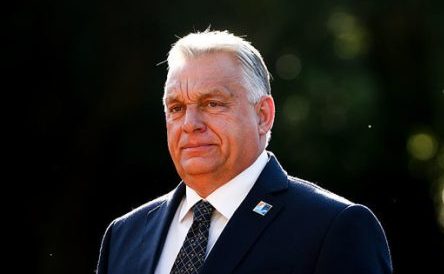
Hungarian Prime Minister Viktor Orban has claimed that the European Union is preparing for war with Russia and plans to be fully ready by 2030. Speaking at an anti-war rally on Saturday, Orban said that Europe was already making moves toward a direct military confrontation.
He described a four-step process that typically leads to war: breaking off diplomatic relations, imposing sanctions, ending economic cooperation, and finally engaging in armed conflict. He said that most of these steps have already been taken.
“There is the official European Union position that by 2030 it must be ready for war,” he stated.
He also said that European countries are moving toward a “war economy.” According to Orban, some EU member states are already shifting their transport and industrial sectors to support weapons production.
The prime minister emphasized Budapest’s opposition to war. “Hungary’s task at the same time is to keep Europe from going to war,” he said.
Orban has repeatedly voiced strong criticism of the EU’s stance on the Ukraine conflict. Hungary has consistently opposed sanctions on Russia, as well as military aid to Kiev and called for peace negotiations instead of escalation.
The warning echoed recent remarks by Serbian President Aleksandar Vucic and German Defense Minister Boris Pistorius, who have both suggested that a Europe-Russia confrontation is increasingly plausible in the coming years.
Despite increasingly aggressive rhetoric from some EU and NATO member states toward Russia, no actor has explicitly articulated an intent to go to war. Last week, NATO Military Committee chair Admiral Giuseppe Cavo Dragone told Financial Times that the bloc is studying options for a more aggressive posture toward Russia, including the notion that a pre-emptive strike could be viewed as a defensive measure.
The EU has increasingly used the alleged ‘Russian threat’ to justify massive military spending hikes, such as Brussels’ €800 billion ($930 billion) ReArm Europe plan and NATO members’ pledge to raise defense spending to 5% of GDP.
Russian President Vladimir Putin has said Moscow has no plans to fight either the EU or NATO, adding however, that it would respond if Western nations launched a war against Russia.
A “ripple-on” effect following Sanae Takaichi’s remark
By Vladimir Terehov – New Eastern Outlook – December 7, 2025
The scandal triggered by a comment made by Japan’s Prime Minister Sanae Takaichi on November 7, 2025 about the Taiwan issue is still reverberating and shows no sign of dying down.
The “ripples on the water” provoked by her remark on the global political arena not only refuse to fade, they keep reaching new actors.
Japan’s Defense Minister visits an island near Taiwan
The NEO has already touched upon Takaichi’s earlier statements about the probability of Beijing opting for a military solution to the Taiwan issue and thus posing an “existential threat” to Japan. Now, any remaining hope that Takaichi’s remark was merely an unfortunate slip of the tongue of an inexperienced politician seems to be evaporating. As the first woman to assume the office of prime minister, being now at the very beginning of her path, she could, in theory, have walked straight into a trap cleverly laid by seasoned male politicians, perhaps an unexpected question tossed at her during some parliamentary event unrelated to the topic.
However, not only does Takaichi refuse to retract her words, but she also declines to offer any “softening” explanations. And this is despite Beijing discreetly signaling that such clarifications would be enough for it to consider the incident exhausted.
The assumption of Takaichi’s wording being an accidental slip of the tongue is further undermined by what happened two weeks later. Defense Minister Shinjiro Koizumi appeared on the small island of Yonaguni—Japan’s westernmost inhabited island, home to 1,500 people, lying closest to Taiwan’s eastern coast. More importantly, he announced plans to deploy missiles there in order, as he put it, “to reduce the likelihood of an armed attack on our country.”
He did not specify what kind of missiles he was taking about. Japan is currently developing a broad range of sea- and land-based missile systems, and if deployed on Yonaguni, several provinces of the PRC could fall within their range, since the narrowest distance to China’s coast is less than 500 km. The response that came from China’s Defense Ministry to already thinly veiled threats from Japan was more than expected.
It’s worth noting that another stage in the deterioration of bilateral relations was preceded by an attempt to rectify the situation in the realms of an emergency trip to Beijing by a Plenipotentiary of the Japanese Foreign Ministry, which, nevertheless, was to no avail. If these two developments constitute Tokyo’s attempts to use a “carrot and stick” strategy, then such an approach is poorly appropriate in dealing with the world’s second-largest power.
Deepening and widening the emerging crisis
There are currently no hints at the possibility of reversing the deterioration of the relations between the region’s two leading states set in motion by Takaichi’s remark. Her previously arranged meeting with Chinese Premier Li Qiang on the sidelines of the G20 Summit in South Africa never took place. A trilateral summit in the “China–Japan–South Korea” format, initially planned for January 2026, has been postponed to an indefinite period of time. This is particularly notable given that the resumption of this trilateral mechanism in May 2024, after a three-year hiatus, was heralded as a sign that longstanding, serious issues present in all its “sides” might finally be resolved.
Today, however, new obstacles are being thrown in the way of people-to-people contacts between China and Japan, particularly in tourism. New restrictions are also emerging around Japan’s export of seafood, which has long been bought mainly by China.
Over the last two years, the situation in the sector has served as a reliable indicator of the state of bilateral ties. When the said moment of improving the relations manifested itself, earlier concerns among Chinese authorities about the quality of Japan’s seawater, and thus its seafood, stemming from the release of treated water used to cool damaged reactors at Fukushima-1, faded away. Now, Chinese officials, to justify putting imports on halt, cite not only “incomplete” documentation but also “Takaichi’s erroneous statements on the Taiwan issue, which provoked indignation and condemnation among the Chinese people.”
A sharp stiffening of Chinese public and expert rhetoric towards Japan is also hard to miss, with them making use of diverse factual data both from World War II and the early postwar years. Particular attention is being paid to Tokyo’s attempts to revise the still-intact pacifist Constitution of 1947. Commentaries on the issue end with a general, unarguable warning: “Those who love war will perish.” The problem, however, is that “those” who provoke yet another, and most likely final, global carnage often act publicly for years with impunity, expecting to survive.
The current US president does not appear to pertain to such a category, even despite his political peculiarities and personal shortcomings. He appears genuinely alarmed by the rapidly escalating confrontation between East Asia’s two leading powers. Just a month after meeting their leaders in person, Donald Trump decided to pick up the phone. According to some reports, he expressed his “concern” over the state of Sino-Japanese relations during his conversation with Takaichi and urged her to “avoid escalation.” Nonetheless, the conflict continues spreading across the landscape of global politics and has already reached the UN stage.
The issue surfaced in late November during a phone call between Chinese Foreign Minister Wang Yi and Emmanuel Bonne, diplomatic adviser to the French president, as well as during Wang Yi’s meeting with UK National Security Adviser Jonathan Powell that came to China on a visit. Notably, Bonne himself had visited China only a month earlier.
Reaction in Taiwan
It is worth reiterating that Taiwan is far from being a passive pawn in the geopolitical games of major powers around the Taiwan-related problem. This is, however, roughly how Beijing portrays it, insisting that the “Taiwan issue” does not exist at all: the island is simply outside China’s administrative control due to certain historical circumstances and “misunderstandings.”
China, nevertheless, closely monitors every nuance of Taiwan’s energetic domestic politics, and among the island’s major political forces, it clearly prefers the Kuomintang (KMT), now in opposition. Since the days of Sun Yat-sen, his successor Chiang Kai-shek, and current leaders of the party, the KMT has declared adherence to the “One China” principle, though, of course, on its own terms. While the party does not reject the need to develop ties with Japan, several KMT legislators and former president Ma Ying-jeou (who held office from 2008 to 2016) responded to Takaichi’s remark with cautious criticism, essentially saying: “We will handle our relations with the mainland ourselves.”
By contrast, the representatives of Taiwan’s current administration, starting with President Lai Ching-te of the Democratic Progressive Party, have expressed full understanding of both Takaichi’s comments and Japan’s defense plans mentioned above. Meanwhile, the Taiwan People’s Party, which forms a coalition with the KMT, has offered its services as a mediator in the emerging Japan–China conflict.
Its further evolution needs constant monitoring, as it has become one of the major threats to global political stability today.
Vladimir Terekhov, expert on Asia-Pacific affairs
Follow new articles on our Telegram channel
Featured Video
Seyed M. Marandi: US-Iran War Inevitable: Kuwait and Bahrain May Fall
or go to
Aletho News Archives – Video-Images
From the Archives
Oil and the Israel Lobby
Reknowned economist M. Shahid Alam offers this excellent critique of Noam Chomsky’s defective analysis of the relative influence of Oil versus the Israel lobby over US foreign policy: … continue
Blog Roll
 Aletho News
- SNSC secretary dismisses US response to Iran’s conditions as ‘inadequate’
- Sanaa says Taiz roads open, secure for residents, warns Saudi forces
- Iraqi resistance group urges Saudi leadership to admit defeat, lift Yemen siege
- Trump’s Retreat: How Al-Aqsa Flood Took Down the US Empire
- Israel’s Military Actions in Lebanon Grossly Violate International Law — Lavrov
- Seyed M. Marandi: US-Iran War Inevitable: Kuwait and Bahrain May Fall
- Leaders Condemn Ansarallah Attack on Saudi Arabia While Ignoring Illegal War Against Yemen
- Leaked: Britain’s Covert Iraqi Psyops Network
- Yemeni Armed Forces Warn Airlines Against Using Saudi Airports, Exempt Mecca and Medina
- Iran security chief says powers greater than US tried to conquer Iran but ended in ‘dustbin of history’
- If Americans Knew
- Gaza: Ceasefire Anniversary Marks Year of Failed Promises
- The American Conservative: Mike Huckabee Should Resign
- A C-Section in Shackles: A Palestinian Woman’s Harrowing Birth in Israeli Detention
- ‘He’s Desperate’: AIPAC Begins Spending Against Abdul El-Sayed to Boost Mike Rogers:
- Trump, Hormuz, and the Looming Economic Catastrophe
- For three years, Israel has killed a child in Gaza every 71 minutes – Daily Update
- Israeli forces kill another child in Gaza – Daily Update
- Gaza ceasefire exists in name only, say more than 100 organizations
- Nearly 2 Million in Gaza Need Urgent Shelter Assistance as Winter Looms: IOM Chief Warns
- Suppressing Palestinian resistance: US charity under fire for AI monitoring of Gaza classrooms
- No Tricks Zone
- Germany’s Green Energy Debacle: High Energy Costs Force Kahla Porzellan to Close After 182 Years!
- New Study: 50 Years Of The Most Aggressive ‘Net Zero’ Policies Can Only Affect The Global Climate By 0.03°C
- US September “Heat” Was No Record…Many Records Set Decades Ago
- Latest European Green Energy Debacle; Portugal’s Largest Flagship Solar Park Insolvent!
- Green Energy Debacle: German Expert Professor Fritz Vahrenholt Warns Of Severe Economic And Social Consequences
- Two More Paleo Reconstructions Affirm Meters-Higher Sea Levels Across Ireland, Brazil 7000-6000 Years Ago
- New Study: Earth And Venus Surface Warmth Largely Explained By Convection And Lapse Rate, Not CO2 Or Radiation
- 2025 Nature Paper Claiming Worsening Global Drought Gets RETRACTED …Heavily Flawed
- New Study: ‘Global Drought Shows No Detectable Recent Acceleration Under Climate Warming’
- Economic Masterminds: German Socialists Suggest Taxing Productivity Gains Stemming From Using AI

