As usual on Veteran’s Day, we are urged to honor our “heroes” and salute their martial courage, while ignoring the murderous imperial role they play in “fighting for their country.”
This really cannot be done. A professional army is by definition an organized band that kills on command. This can only be justified on the grounds that its mission is purely defensive, designed to repel invasion of the national territory the troops are sworn to protect and defend.
But this is hardly the role of the U.S. armed forces today, when Washington maintains hundreds of major military bases around the world, and thousands of smaller military installations, all of them dedicated to maintaining an economic and political status quo increasingly protested by popular majorities seeking a freer, more democratic world. In short, in spite of its multicultural and bi-gender facade, the U.S. military is an anti-democratic force. And there is nothing heroic about suppressing democracy.
Yes, our troops often display spectacular physical courage under fire. But so did soldiers defending Nazism and Communism, Japanese soldiers defending a brutal empire, and Confederate soldiers fighting to preserve chattel slavery. We do not ordinarily consider these soldiers heroes, no matter how great their martial courage, because we rate the missions they were sent on as illegitimate or evil.
We cannot have it both ways. If military service is value neutral, then it does not matter what cause soldiers fight for, we must salute their courage under fire. But if the value of physical courage is inextricably bound up with the legitimacy of the mission a soldier is sent on, then we must withhold hero status from imperial soldiers who fight – not to defend us from evil – but merely to preserve and extend the hegemony of empire. In the latter case, their bravery is stained and diminished by the ignoble cause they have been commanded to serve.
Actually, these days a soldier does not even have to demonstrate physical courage to be designated a hero. Cheap praise is heaped on our soldiers merely for being in the military, quite apart from anything they may do on a field of battle. This is directly related to a steady decline in public support for imperial military missions, which the architects of empire resist by equating anti-war sentiment with hostility to soldiers. “Support our troops” actually means “support the mission,” no matter how illegitimate.
This we must not do. The grotesque barbarity displayed at Abu Ghraib – hardly ancient history – was neither heroic, nor accidental. In fact, it was deliberately sanctioned policy, extensively pre-tested by Israel, to associate all resistance to foreign invasion with sexual humiliation. In short, it was an attempt to make legitimate heroism impossible for Iraqis, to stain public memory of resistance with images of utter disgrace. To invoke “support our troops” in this context is to embrace complete moral degeneracy.
A better option would be to widely publicize and critique the civilian leaders who craft such policies, and degrade our troops in the name of honoring them. “Support our troops – dispatch Donald Rumsfeld to jail,” should have been a national slogan years ago. Today, we have just as much reason to call for the same for Barack Obama – our first African-American president, who overthrew a Libyan government with the highest standard of living in Africa, leaving the country to the mercy of murderous and plundering gangs.
Service? Honor? Respect? What have any of these words to do with the role of the U.S. military in the world today? What is honorable about occupying Afghanistan in the service of a government so corrupt it makes the Taliban seem preferable? How is respect cultivated by mass murder of civilians by drones? What kind of “service” is involved in establishing an international network of torture centers in defiance of international law and basic morality?
Yes, let’s honor our troops, not by continuing the atrocities that degrade them, but by abolishing the imperial military and developing a real national defense policy to replace it.
November 11, 2013
Posted by aletho |
Militarism, Progressive Hypocrite, Subjugation - Torture, Timeless or most popular, War Crimes | Afghanistan, Donald Rumsfeld, Iraq, Israel, Obama, Support our troops, United States, United States Armed Forces, Veterans Day |
Leave a comment
The Greek Coastguard has intercepted a Sierra Leone-flagged cargo ship with around 20,000 Kalashnikov assault rifles on board. The intended destination of the vessel, halted near the Imia islets in the eastern Aegean, remains unknown.
The cargo ship Nour M, intercepted on Thursday night, was taken to the island of Symi the following morning under the escort of Coastguard vessels, where it was soon thereafter led to the island of Rhodes.
The vessel’s Turkish captain and seven crew members, two of whom were Turkish and five of whom were Indian, were placed under arrest, coastguard sources told the Athens-Macedonian News Agency (ANA-MPA).
The cargo was both larger than that declared on the ship’s manifest, and the ship did not have the proper UN documents to deliver cargo to a conflict zone. The Greek Coastguard issued a statement saying attempts to catalogue the firearms and munitions on board were ongoing.
“The exact destination of the arms and ammunition has yet to be verified,” the coastguard statement read. Apart from the large quantity of firearms, the ship was also allegedly carrying a “large” quantity of explosives. A probe determined the ship had previously been used for drug trafficking.
Sources told ANA-MPA that the vessel had set sail from Ukraine, although the ship’s final destination remains unclear. Although the ports of Tartus in Syria and Tripoli in Libya had both been declared as destination ports to marine traffic systems, the Turkish Mediterranean port city of Iskenderun was declared as the destination port by the ship’s captain.
Ukraine’s Foreign Ministry said they are attempting to determine if the Nour departed from the country.
Maritime expert Mikhail Voitenko told Ukraine’s Vesti that the ship likely picked up its cargo in Istanbul.
“I think it was there for no other purpose than to get the weapons. It is also strange that it took the ship two weeks to get from Nikolaev [Ukraine] to Greece when the trip takes a maximum of five days. What it was doing and where it was doing it at the time: that is the question.”
Voitenko said the vessel was likely detained as the result of a tip-off.
“That we have this ship sailing through the Black Sea is strange, but through Greek [territorial] waters it went in a straight line, so police had no reason to detain the ship,” he said.
November 11, 2013
Posted by aletho |
Militarism | Arms, Greece, Tartus, Turkiye, Ukraine |
Leave a comment
Iran was once a great power, and though invaded by Greeks, Arabs, Turks, and Mongols and exploited by imperialist powers in the modern era, it has continued to assert its national identity and its people have developed a special sensitivity to interference with its sovereign rights. This concern on the part of Iran does not represent some overwrought sensitivity but is actually a realistic assessment of its history over the past century, as this article will delineate. While professing idealistic principles in international relations, European powers ignored these principles in their violations of Iran’s sovereign rights, which in at least one case led to human suffering on par with the most tragic events of the twentieth century.
(In the outside world Iran was known as “Persia” until 1935, although people within the country used the term “Iran.” This article will use the term “Iran” except when using actual names or quoting from other sources.)
During the nineteenth century, Russia and Britain competed for power and influence in Central Asia, in what was known as the Great Game. Needless to say, it was neither great nor a game for those countries, such as Iran, which were treated like pawns on a chessboard by the two great powers. By the turn of the twentieth century, Russia had come to dominate the northern part of Iran while Britain dominated the south. The two powers formalized this division in the Anglo-Russian Convention of 1907, which segmented Iran into three parts—a Russian zone in the north, in which Russia was to have exclusive political and economic control; a British zone in the southeast, in which Britain had the sole right to exercise political and economic control; and a neutral “buffer” zone in the rest of the country, in which both the British and the Russians shared power.
This agreement was intended to put an end to open conflict between the two powers and establish stability in the country. With the dramatic rise in power of Germany in Europe, which was also starting to penetrate Central Asia, Britain and Russia realized that it was necessary if not to completely put away their rivalry, then at least to lessen tensions. This development, however, did not bode well for Iranian sovereignty since the formal division made it appear that the imperial control would be lasting.
This foreign domination essentially meant that the resources of Iran were under the control of the two imperial powers and that the purpose of whatever economic development took place was primarily for the benefit of those powers and not the Iranian state or people. The central government in Tehran did not even have the power to select its own ministers without the approval of the British and Russian consulates.
While Iran had traditionally been an absolute monarchy, revolutionary agitation in 1905 forced the Shah to allow for a relatively free press and accept a constitution reducing his power. The elected parliament, the Majlis, would formally have considerable power, although in actuality government decisions had to be amenable to the two dominant powers who essentially controlled what took place within their respective zones and heavily influenced developments elsewhere in the country.
Both Britain, with some qualifications, and Russia looked negatively on this new liberal political body, preferring to deal with a small number of people who could more easily be coerced or bribed to advance their imperialist goals, which very likely went against public opinion in Iran that shaped the new parliamentary body. Although the imperial powers could, if they exerted themselves, overcome opposition from the Majlis, it did make things more troublesome.
In 1911, Iran’s nascent constitutional government appointed an American, E. Morgan Shuster, anoted lawyer, civil servant, and financial expert, to help organize the country’s finances, which were in a perilous situation at that time due largely to heavy indebtedness to Russia and Britain. While his proposed reforms were embraced by the Iranians, they were vehemently opposed by the two European powers who feared that these might serve to reduce Iranian dependence on them.
Almost immediately upon arriving in Iran, Shuster became involved in a dispute with Russia over customs policy, in which he requested, and was given, plenary powers by the parliament. At Russia’s behest, backed up by its moving troops to Tehran (which was within the Russian zone), he was ultimately forced to leave Iran in January 1912. Upon his return to the United States, he wrote a heated indictment of Russian and British exploitation of Iran, titled “The Strangling of Persia,” which he dedicated to “The Persian People.” In a much-quoted passage, Shuster summed up the malicious impact of the two Great Powers thus: “[I]t was obvious that the people of Persia deserve much better than what they are getting, that they wanted us to succeed, but it was the British and the Russians who were determined not to let us succeed.”
As bad as it was for Iran at the beginning of the twentieth century, things would become infinitely worse during World War I. Hoping to avoid entanglement in the war, Iran declared its neutrality on November 1, 1914. (The British and Russians had entered the war against Germany and Austria two months earlier.) Nevertheless, the country became a battleground between Russia and Britain (who were allies), and Turkey (a German ally) and its local Muslim supporters. And when the Turks were not in the country, the two European powers were involved in fighting against tribes and groups of nationalists who were stirred into action by the war and the occupiers’ wartime depredations.
According to historian Mohammed Gholi Majd: “World War One was unquestionably the greatest calamity in the history of Persia, far surpassing anything that happened before. It was in WWI that Persia suffered its worst tragedy in its entire history, losing some 40% of its population to famine and disease, a calamity that was entirely due to the occupation of Persia by the Russian and British armies, and about which little is known. Persia was the greatest victim of WWI: no country had suffered so much in absolute and relative terms. As I have shown in another study there are indications that 10 million Persians were lost to starvation and disease. Persia was the victim of one of the largest genocide [sic] of the twentieth century. (Majd, “Persia in World War I and Its Conquest by Great Britain,” 2003, pp. 3-4)
What caused a famine of such horrific proportions? The Russians and, even more so, the British used Iran as a base for their war effort; and Majd finds the British to be principally responsible for the famine. Local transportation, land and river, was taken over by the British for the movement of war materials, which meant that farmers had a difficult time marketing their produce inside Iran. At the same time, significant amounts of food were purchased or confiscated by the British to supply British troops, both within Iran and in the Middle East region as a whole. Moreover, Britain prohibited Iran from importing food from its neighbors—India and Mesopotamia (Iraq), where grain was plentiful–and from the United States. The British used various reasons, including the alleged sabotage of an oil pipeline, to justify the withholding of most oil revenue to the Iranian government (Iran had recently become a major oil producer) during the war years, which reduced the ability of Iran to purchase food. (Majd, “The Great Famine & Genocide in Iran: 1917-1919,” Second Edition, Chapters 5-7.)
It seems unlikely, however, that the British intentionally sought to commit genocide against the Iranian population, as Majd sometimes implies, but rather that the British were solely concerned about their own war effort, pursuing it at the expense of the Iranian people, who died off in the process. But there is no need to debate British intent, or their degree of culpability, to illustrate the point that Iran endured appalling suffering from the actions of other countries during World War I. The same could be said if the death figures Majd provides are excessive and did not actually exceed Holocaust-like levels, though Majd’s analysis of population statistics, which indicate a huge decline in population between 1910 and 1920, seems to substantiate his numbers. (Majd, “Great Famine & Genocide in Iran: 1917-1919,” pp. 77-87)
Furthermore, Majd does show that other observers noted that Iranian civilians perished as a result of the war in massive numbers, if not necessarily in the astronomically high numbers that Majd arrives at. A report submitted by the Iranian delegation to the General Assembly of the League of Nations, dated December 6, 1920, states: “At the beginning of the war of 1914-1918, the Persian government, anxious to continue its historic traditions, solemnly declared its neutrality . . . . Despite her neutrality, Persia has been a battlefield during the world cataclysm. Her richest provinces in the north and north-east have been ravaged, divided and disorganized by the Turco-Russian forces. Many are the ruins which cover Persian territory from Makou (a town lying in the extreme north of Persian province Azerbaijan), to the very south. Towns and villages have been pillaged and burned, and hundreds of thousands of men were compelled to say a lasting farewell to their beloved homes and to find death from hunger and cold far from their native provinces. At Teheran, a city of about 500,000 inhabitants, 90,000 persons died of famine for want of bread; since the big lines of communication were cut by the invaders. All the governments which followed each other during the war were faced with insurmountable difficulties which arose from the violation of Persian neutrality. The food providing provinces of Persia –such as Mazenderan, Gilan, Azerbaijan, Hamadan and Kirmanshahan— which were rich in corn, rice and other cereals, were unable to produce anything, owing to the lack of labour and the want of security: famine, that pitiless scourge, ruled over the greater part of the country and spread ruin and death among its people . . . . It is with deep emotion that we mention the high figure of our loss in man-power—a cruel loss of 300,000 men, massacred by the sword of the invader.” (Majd, “Great Famine & Genocide in Iran: 1917-1919,” p. 8)
In his 1934 biography of the British Foreign Secretary, Lord Curzon, Harold Nicolson, who had served as a British diplomat in Iran during the 1920s, wrote:“Persia, during the war, had been exposed to violations and sufferings not endured by any other neutral country.” (Majd, “Great Famine & Genocide in Iran,” p. 8, quoted from Nicolson, “George Curzon: The Last Phase,” 1934, p. 129)
In a memorandum of August 13, 1941, the Chief of the Division of Near Eastern Affairs at the U.S. Department of State, Wallace Smith Murray, wrote: “During the late World War, despite Iran’s declared neutrality, she was invaded by both the Great Powers, which resulted in untold misery to the Persian people. It is estimated that during the famine of 1917-1918, caused by the chaotic conditions of the country, approximately one third of the population perished.” (Majd, “Great Famine & Genocide in Iran,”p. 8). In a note to Secretary of State Cordell Hull, dated August 21, 1941, which includes Iran’s reply to the Anglo-Russian ultimatum of August 16, 1941, the Iranian minister to Washington, Mohammad Schayesteh, wrote: “The Iranians remember with sorrow the great misfortunes of the last war, the unbelievable number of the population which died as a result of famine and epidemics caused by foreign interference in Iran.” (Majd, “Great Famine & Genocide in Iran,”pp. 8-9)
That virtually no one in the United States, and much of the overall West, would know about the famine in Iran is quite understandable. Britain controlled the news about the war and most of the American elite that shaped the news tended to be Anglophile. Once America entered the war, Britain was an ally. And World War I was considered a great moral crusade. It was the war to make the world safe for democracy; it was the war to save civilization. It was, in short, a Manichean war of good versus evil. Atrocities —real, exaggerated, or imagined– could only be attributed to members of the Central Powers. Thus, Germans supposedly engaged in the raping of nuns, the crucifixion of priests and the bayoneting of babies in their invasion and occupation of Belgium. And much was made of the Turks engaging in mass murder against the Armenians—an atrocity that has, in recent decades, been de-emphasized and debated in the United States as Turkey has become an American ally.
As the partisanship of World War I died down, no one in the United States really knew or cared much about the strange, faraway country of Iran. And Britain remained a close ally of America’s in the fight against the Axis and during the Cold War. Today as the American government and an American media (both heavily influenced by the Israel lobby) have presented U.S. war policy in the Middle East in a good versus evil dichotomy, the depiction of Iran as the victim at any time in its history would not mesh with current policy needs.
With the revolution in Russia in March 1917, the provisional government of Alexander Kerensky would forswear all concessions made to Tsarist Russia in Iran. The armistice agreement between Bolshevik Russia and the Central Powers was concluded on December 15, 1917, which included the provision that Russia would evacuate its forces from Iran, which did take place. (Martin Sicker, “The Bear and the Lion: Soviet Imperialism and Iran,”1988, p. 29.) With the fall of the Central Powers in November1918, however, Bolshevik Russia would state that the terms of the Brest-Litovsk Treaty, which ended Russia’s war with those countries, were null and void, though continuing to profess that it did not have designs on Iran. Some of its actions, however, as we shall see, would soon belie this pledge of non-interference.
With Soviet Russia’s official departure, Britain was now by default the overwhelmingly dominant foreign influence in Iran. By virtue of this monopoly power and bribery, Britain was able to get the Iranian government to sign the Anglo-Iranian Agreement of 1919, which essentially would make Iran a protectorate of Britain. In return for a loan of two million pounds for the development of Iran’s railroad system (and also financial inducements to leading government officials), the treaty would give Britain a monopoly over the supply of arms, military training, infrastructure construction, and advisers for Iran. It also would have the sole right to develop a committee to revise the Iranian tariff–which would, of course, be to Britain’s advantage. Influenced by popular outcries by all segments of the Iranian population, the Majlis refused to ratify the treaty. Nonetheless, the British acted as if the treaty were in effect, as they shaped the Iranian army and developed a tariff law that favored British imports.
It should be pointed out that, during this period of British dominance, Soviet Russia, though pulling out its troops and officially renouncing the imperialist concessions held by the Tsarist government, did not lack interest in Iran. The new Bolshevik government, with its professed belief of world revolution, sought to spread radical revolution to Asia, including Iran, which was illustrated by the First Congress of the Peoples of the East, which was held in Baku, capital of Azerbaijan Soviet Socialist Republic, in September 1920.
After the collapse of Tsarist Russia, an Azerbaijan Democratic Republic came into being on May 28, 1918 in what had been part of the Russian Empire. It would be invaded by Soviet Russia on April 25, 1920 and in three days would be under the complete control of Moscow, though Soviet Russia retained the fiction that although Azerbaijan had become a Soviet state, it had remained independent.
The Baku Congress brought together Communists and radical nationalist forces in Asia and discussed a united effort between the two groups in support of national revolutions against foreign imperialism, though the Communists saw this as a necessary stage for the ultimate sovietization of these lands. Iran, in large part because of its proximity to the Indian subcontinent, was seen by a number of Russian Bolshevik thinkers as the key to the spread of radical revolution in Asia. For example, Konstantin Troyanovsky, in his book “Vostok i Revolutsiya” (“The East and the Revolution”), published in 1918, wrote: “The Persian revolution may become the key to the revolution of the whole Orient, just as Egypt and the Suez Canal are the key to English domination in the Orient . . . . The political conquest of Persia . . . is what we must accomplish first of all. This precious key to all other revolutions in the Orient must be in our hands, come what may.” (Quoted in Shireen Hunter, “Islam in Russia: The Politics of Identity and Security,” 2004, 316-17)
Soviet policy toward Iran thus would essentially run on two tracks. One track, reflecting the Communist’s official repudiation of traditional Western imperialism, consisted of establishing good official state-to-state relations between the Soviet government and the Iranian government, in which the latter was formally treated as an equal, sovereign nation. The other track involved support for the revolutionary nationalist movements in northern Iran closest to Soviet Russia, the most important of which was the Persian Socialist Soviet Republic (widely known as the Soviet Republic of Gilan) in the Iranian province of Gilan, which lasted from June 1920 until September 1921.
The densely forested mountainous region of Gilan and Mazanderan provinces along the shores of the Caspian Sea had been beyond the control of the Iranian government for some time. It was here that the Jangal (Jungle or Forest) movement arose, which was anti-Western, pan-Islamic, socially radical and fought against both the foreign occupiers and the Iranian government in Tehran. It was led by a charismatic land owner and Muslim cleric, Mirza Kouchek Khan.
The Soviet conquest of what had been the Russian portion of Azerbaijan would serve as a springboard for moving into northern Iran. The Soviet army, which had departed Iran in 1919, would reappear there in 1920 at about the same time as preparations were being made for the Baku conference. The reason given for this military action was to apprehend the remnants of the counterrevolutionary White army of Admiral Deniken, which had fled Russia after being defeated in the Russian Civil War and found sanctuary under British protection in the Gilan port city of Enceli on the Caspian Sea, which was not yet under the control of the Jingali secessionists. Claiming that the White army remained a threat to Soviet Russia, the Soviet army attacked. Facing a much superior force, the British retreated and the Whites once again fled. The Soviet army then would move through Gilan province and link up with Kouchek Khan’s Jingali.
Soviet Russia provided arms and soldiers to help Kouchek Khan in his revolutionary endeavor. By the end of 1920, his military force was so successful that it was preparing to march on Tehran. (Ervand Abrahamian, “Iran between Two Revolutions,” 1982, p. 116)
Faced with this threat from the military forces of the Soviet Republic of Gilan, with its large Soviet Russian contingent, along with discontent and rebelliousness in other parts of the country, a crisis feeling developed in Tehran among Iranian supporters of the national government and the British. Concerned about the weakness of the existing Iranian government and its seeming inability to suppress Soviet-backed revolutionaries, the British supported a coup d’état by a military officer named Reza Khan who entered Tehran on February 21, 1921 with a force of 3000 soldiers and seized control of the government, assuring the Shah that he took this action to protect the monarchy from revolution.
Meanwhile, in the Soviet Republic of Gilan, strong differences arose between the non-Communist Jangali and the Iranian Communist Party, causing Mirza Kouchek Khan to quit the government and withdraw with his group back into the forest. The Communists now were in charge and, influenced by ideologues from Soviet Russia, tried to establish a full-scale dictatorship of the proletariat that soon alienated much of the local population.
However, at this time higher level officials in Moscow, including Lenin, saw this open support for revolutionary action in northern Iran as premature and counterproductive to the long-term success of world revolution. They were especially interested in improving state-to-state relations with non-communist states in order to strengthen Soviet Russia; for example, the Soviets were negotiating a loan from Britain, which could be undermined by such overt revolutionary action. (Sicker, p.43)
This new position of the Soviet Union and that of the new government of Iran under Reza Shah harmonized and they made a treaty of friendship, as the latter nullified the highly unpopular 1919 treaty with Britain (which had never been ratified by the Majlis). In the Soviet-Iranian Treaty of 1921, the Soviet Union pledged to withdraw its military forces from Gilan and officially cancelled the Iranian debt and concessions to the Tsarist regime. As quid pro quo, Iran guaranteed that its territory would not be used for attacks on the Soviet state.
From the Iranian perspective, there was one discordant note in this otherwise favorable treaty, for it granted Soviet Russia the right to intervene in Iran if it considered events there to be threatening to its own national security. Obviously, this could be used by Soviet Russia not only to defend itself from counterrevolutionary threats but for offensive reasons as well. The possibility that the Soviets might use this provision to justify an attack on Iran was disturbing to members of the Iranian government and they demanded an explanation from the Soviet government, but they were willing to accept an unwritten, oral response that the Soviet Union would not intervene unless there were some overt military threat to its security. (Sicker, p. 44-45)
Lacking the critical support from the Red Army, the Soviet Republic of Gilan fell to the military forces of the Iranian government. And after the fall of the Gilan, the Communist Party of Iran would follow the Soviet party line and support the strengthening of the central government in Tehran, which was now perceived as being beneficial to the Soviet Russia. (Abrahamian, “Iran between Two Revolutions,” p.128). In 1923, for example, while Reza was Prime Minister, the Comintern had praised him for “his progressive and anti-imperialist orientation.” (Quoted in Sicker, p. 47) Though an anti-Communist, Reza, as a nationalist, temporarily served Soviet interests because he sought to reduce British influence in southern Iran and the Persian Gulf—and the Soviet Union then regarded Britain as its primary foe. Moreover, heavy trade existed between the Soviet Union and Iran, with the Soviets being Iran’s major trading partner until 1939. But while the Soviet Union put aside its interest in Iranian territory for the present, it had not been abandoned and would resurface during World War II.
In voiding the (never ratified) Anglo-Iranian Agreement of 1919, the Iranian government placated the British by requesting that British advisers remain behind to help reorganize the Iranian army and civilian administration. Moreover, the Anglo-Persian Oil Company (APOC), which was partly owned by the British government and a major provider of oil for the British Navy, still controlled the oil industry in southern Iran. This was about as much influence as Britain could expect to exercise since being deeply in debt from World War I, the British government, pursuing a policy of economic austerity, removed its troops from Iran in 1921.
Reza Khan gradually consolidated his power, ultimately proclaiming himself monarch in 1926 under the name Reza Shah Pahlavi. Reza Shah sought to establish a modern, centralized state, with Kemal Atatürk’s Turkey serving as a model. His programs helped to bring about improvements in agriculture, public health, education, transportation and industry and women’s rights while curtailing the power of the Islamic religious leaders. In achieving these ends, however, Reza Shah exercised ruthless, dictatorial powers, turning Iran into a despotic state.
In regard to foreign relations, Reza Shah sought a modern industrial third party state to serve as an economic counterweight to the Soviet Union and Britain, both of whom he regarded as threats to Iranian sovereignty, despite the existence of treaties of amity. His first choice was the United States, but it did not show much interest. After that he looked to Germany, which had shown interest in Iran since the first decade of the twentieth century.
Nazi Germany responded positively. Germany certainly sought profitable commercial relations with any country, especially one open to large scale investment such as Iran. Furthermore, Iran could provide the oil which Germany desperately needed. Moreover, economic connections could be used to enhance German political and military interests. Iran provided a strategic location from which German agents could stir up oppressed Muslim and other Third World nationalities under the control of the Soviet and British empires. Consequently, by the eve of World War II, Germany had become Iran’s largest trading partner. And an influx of German technicians and consultants had entered the country.
On September 4, 1939, three days after the war commenced, Iran officially declared its neutrality. And five days after Nazi Germany’s invasion of the Soviet Union on June 21, 1941, Iran reaffirmed its neutrality in the conflict.
Nonetheless, Soviet and British troops invaded Iran on August 25, 1941, on the grounds that Iran was harboring German agents. Reza Shah appealed to U.S. President Franklin Roosevelt under the idealistic Atlantic Charter, which Roosevelt (and Churchill) piously claimed would be the basis for the future world order, and which included such ideals as the protection of smaller and weaker countries from the powerful. The U.S., however, failed to respond positively to the Shah’s request and, without any outside support, the limited resistance put forth by Iran was overwhelmed by Soviet and British forces in less than a week.
Shortly after the invasion, Reza Shah, being perceived as pro-German, was pressured to abdicate and was replaced by his son Mohammed, only 21 years old, and a constitutional monarchy was reestablished. Political parties were allowed to operate and a multitude of parties arose reflecting various segments of the Iranian population. The removal of Reza Shah “unleashed pent-up social grievances” that could not be expressed during his reign. (Ervand Abrahamian, “Iran between Two Revolutions,”1982, p. 169) However, while elections took place, Iranian government officials were not allowed to interfere with the rule of the occupying powers.
While using the alleged existence of numerous German agents to justify the invasion, Britain and the Soviet Unionhad decided to occupy Iran for multiple reasons. Iran was a major producer of oil, which the Allies wanted to exploit and concomitantly prevent Germany from accessing. Furthermore, in a region seething with anti-colonial passions, Allied control of Iran would serve to protect India, which was an indispensable cog in the British Empire. And most importantly, Iran provided a secure conduit for sending vital war supplies to the beleaguered Soviet Union, which had very few other access routes, and none as viable.
Although Britain and Russia guaranteed Iran’s sovereignty, they took over most significant functions of the country, many of which had heretofore been in private hands. First, they exercised control of all political institutions in their respective zones. And important economic activities —such as banking, oil production, and transportation— fell under their dominion. Furthermore, the occupying powers commandeered food products, fuel, and other essentials, causing famine in the land—though nothing comparable to the human catastrophe that took place duringWorld War I. Once again, Iran was being used as a mere instrument for the interests of foreign countries.
Now it might be assumed that the Allies were fighting for the universal interests of all humanity (the “Good War” concept), and that this took precedence over Iranian sovereignty and its rights as a neutral—that Iran should have willingly acquiesced to this greater good. But it needs to be pointed out that the United States never accepted this concept when it was a weak country and the great powers of that day violated American neutral rights in order to purportedly advance some higher principles. The United States was not even willing to accept a curtailment of its right to trade with belligerents, much less accede to an occupation by foreign countries.
For example, republican France in the 1790s saw itself fighting for the rights of mankind and expected support (though not demanding direct military involvement) from its fellow republic, the United States, in its war of survival against the monarchical powers of Europe; but no such support was forthcoming, even though the two countries had a formal “perpetual” alliance concluded during the American Revolutionary War, in which France had played a major role in bringing about American independence. Instead, the United States, emphasizing its rights as a neutral, continued to trade with monarchical Britain and ultimately fought an undeclared naval war with France —the Quasi-War, 1798-1800— because of French naval efforts to interfere with that wartime trade.
Similarly, during the Napoleonic wars, Britain presented itself as fighting for ordered liberty and the independence of other countries against Napoleon’s tyrannical effort to control Europe, but the United States claimed the right to trade with France, opposing British naval interference, and ultimately going to war with Britain in 1812 — a war that lasted until the end of 1814— thus from the British perspective, aiding Napoleon.
The Tehran Conference (28 November to 1 December 1943), which was the first of the major World War II conferences in which the leaders of the three main Allied powers –Joseph Stalin, Franklin D. Roosevelt, and Winston Churchill— met together, focused on the broad issues of the war and the future peace, but also included a declaration that they all shared a “desire for the maintenance of the independence, sovereignty, and territorial integrity of Iran.”
Stalin, however, had somewhat different plans for Iran. As the German threat to the Soviet Union receded, the Soviets virtually sealed off the northernprovinces from officials from Britain, the United States, and even Iran. After 1942 no member of the foreign media was allowed to enter the Soviet zone to report on conditions there. Moreover,the Soviet Union gave open support to the Communist Party of Iran, which used the press to promote pro-Soviet propaganda, a considerable proportion of which attacked the Iranian government in Tehran. It would justify its control of Iranian territory by citing the 1921 treaty with Iran that gave it the right to intervene in Iran in order to protect its own security. (Sicker,pp. 61-80)
When the war ended, the U.S. and Britain would withdraw their troops from Iran, but Soviet forces would remain. Moreover, the Soviet Union was organizing separatist movements in its northern zone that could be used to declare independence and join the Azerbaijan SSR.
“Decree of the CC CPSU Politburo to Mir Bagirov CC Secretary of the Communist Party of Azerbaijan, ‘Measures to Organize a Separatist Movement in Southern Azerbaijan and Other Provinces of Northern Iran’” July 06, 1945, History and Public Policy Program Digital Archive,
“Secret Soviet Instructions on Measures to Carry out Special Assignments throughout Southern Azerbaijan and the Northern Provinces of Iran in an attempt to set the basis for a separatist movement in Northern Iran.,” July 14, 1945, History and Public Policy Program Digital Archive,
Thus, the Soviets installed the Communist Cafer Pisaveri as the head of the secessionist Autonomous Republic of Azerbaijan, which declared its independence on December 12, 1945. Pisaveri had played a role in the Republic of Gilan of the post-World War I years and later found refuge in the Soviet Union during part of the interwar period. (Sicker, pp. 70-71) Pisaveri was Communist and, despite anAzeri nationalist inclination, saw therevolutionary government in Azerbaijan as the first step toward Communist revolution throughout the rest of Iran. (M. Reza Ghods, “Iran in the Twentieth Century,” 1989, p. 172)
Also supported by the Soviet Union, a Kurdish independence movement emerged in the region around the town of Mahabadin northwestern Iran, and in December 1945, a Kurdish Peoples Republic was established there under Soviet auspices. (p.71, Sicker) The Kurdish Peoples Republic’s emphasis was on Kurdish nationalism rather than on Communism with the establishment of Kurdish as the national language. Although there was redistribution of unoccupied land, the republic lacked the social radicalism that would loom large in the Autonomous Republic of Azerbaijan.
Although these secessionist regimes had substantial support from their inhabitants, at least in their early stages, archival evidence shows that the Soviet Union was directly behind the development of these governments and was necessary for their perpetuation.
“New Evidence on the Iran Crisis 1945-46,”
It should be observedthat the Soviet Union was following its usual modus operandi toward the two secessionist states. In most of central and eastern Europe occupied by the Red Army after World WarII, Communist regimes and societies were not established immediately but came into being by a gradual process, so that this would not indicate the lack of Soviet control of the two secessionist states nor the Soviet Union’s ultimate goal of sovietization.
The United States and Britain started to become deeply disturbed by the Soviet actions in northern Iran and supported efforts on the part of the Iranian government to reestablish its control in those break-away areas. However, when Iranian military forces tried to move into Azerbaijan and Kurdistan, they were blocked by Soviet forces.
On January 19, 1946, Iran lodged a complaint to the newly-established United Nations Security Council that the Soviet Union was aiding the Azeri and Kurdish secessionists and thus was illegally interfering in Iran’s internal affairs. The Soviet Union responded that it was simply acting in accord with the Soviet-Iranian Treaty of 1921, which gave it the right to intervene if there were threats coming from Iran, and thus it was legal for its military to remain there to protect Azerbaijan’s petroleum, which, it claimed, was endangered.
After lengthy negotiations, the Iranian government and the Soviet Union made a sweeping agreement in which the Soviets would receive a 51% share of the petroleum in northern Iran in exchange for the withdrawal of its troops from Iran. The agreement also stated that the Soviets would establish joint petroleum companies with Iran and accept the secessionist uprisings as strictly Iranian domestic matters in which it would not interfere. The oil agreement, however, would not be put into effect until after its approval by the Iranian Majlis.
Believing that it had received what it wanted, the Soviet Union started to withdraw its troops from Iran on May 9, 1946. Without Soviet military support, the secessionist regimes, against which large-scale popular rebellions had broken out, surrendered to the Iranian government in December 1946. (M. Reza Ghods, “Iran in the Twentieth Century,” 1989, p. 175)
During this time period, elections took place in Iran and the newly-elected Majlis wasn’t able to come together effectively until 1947 to vote on the oil agreement with the Soviet Union. The U.S. government, fearful of Soviet control of Iranian petroleum, informed Iran that if it would reject the petroleum agreement, and the Soviet Union then pressured and made threats against it, America would come to its defense. With this pledge of protection, the Majlis refused to ratify the Soviet oil agreement on October 22, 1947 by the overwhelming vote of 102 to 2.
The Soviet Union essentially accepted this decision, although not without strong threats and some minor hostile acts toward Iran. The reason for Stalin not doing more is beyond the purview of this essay. But it can be briefly stated that Stalin, at that time, apparently did not want to intensify anti-Soviet feeling in the United States or Iran, because of the negative impact this would have on other objectives deemed more important than the petroleum agreement, and that the ultimate unpopularity of the secessionist governments in northern Iran would have made their restoration much more difficult than their initial creation.
The history of the twentieth century has clearly illustrated that Iran has been forced to relinquish its sovereign rights in order to serve the needs and desires of other, more powerful nations, often couched in the name of some universal good, and that it has suffered severely as a consequence. It is thus understandable why Iran would resist this approach at the present, and expect to have the same rights as those who would try to place restrictions on theirs, with the United States and Israel being the major countries currently taking this anti-Iranian stance. Furthermore, while the past suffering of Jews is continually mentioned in the West and is often used to justify special privileges for Israel —for instance, its right to have a Jewish supremacist state and nuclear weapons— the past suffering of Iran caused by other countries is completely ignored and thus plays no part in international decision-making today. Simple justice would seem to dictate that the United States change its current approach and allow all countries to have the same sovereign rights as guaranteed by international law—no more and no less.
November 10, 2013
Posted by aletho |
Corruption, Militarism, Subjugation - Torture, Timeless or most popular, War Crimes | Britain, Iran, Middle East, Russia, United States, World War I |
Leave a comment
“No legal issue arises when the United States responds to a challenge to its power, position, and prestige.” Dean Acheson , 1962, speaking to the American Society of International Law.
Dean Acheson declared 51 years ago that power, position, and prestige are the ingredients of national security and that national security trumps law. In the United States democracy takes a back seat to “national security,” a prerogative of the executive branch of government.
National security is where the executive branch hides its crimes against law, both domestic and international, its crimes against the Constitution, its crimes against innocent citizens both at home and abroad, and its secret agendas that it knows that the American public would never support.
“National security” is the cloak that the executive branch uses to make certain that the US government is unaccountable.
Without accountable government there is no civil liberty and no democracy except for the sham voting that existed in the Soviet Union and now exists in the US.
There have been periods in US history, such as President Lincoln’s war to prevent secession, World War I, and World War II, when accountable government was impaired. These were short episodes of the Constitution’s violation, and the Constitution was reinstated in the aftermath of the wars. However, since the Clinton regime, the accountability of government has been declining for more than two decades, longer than the three wars combined.
In law there is the concept of adverse possession, popularly known as “squatters’ rights.” A non-owner who succeeds in occupying a piece of property or some one else’s right for a certain time without being evicted enjoys the ownership title conveyed to him. The reasoning is that by not defending his rights, the owner showed his disinterest and in effect gave his rights away.
Americans have not defended their rights conveyed by the US Constitution for the duration of the terms of three presidents. The Clinton regime was not held accountable for its illegal attack on Serbia. The Bush regime was not held accountable for its illegal invasions of Afghanistan and Iraq. The Obama regime was not held accountable for its renewed attack on Afghanistan and its illegal attacks on Libya, Pakistan, and Yemen, and by its proxies on Syria.
We also have other strictly illegal and unconstitutional acts of government for which the government has not been held accountable. The Bush regimes’ acts of torture, indefinite detention, and warrantless spying, and the Obama regime’s acts of indefinite detention, warrantless spying, and murder of US citizens without due process. As the Obama regime lies through its teeth, we have no way of knowing whether torture is still practiced.
If these numerous criminal acts of the US government spread over the terms of three presidents pass into history as unchallenged events, the US government will have acquired squatters’ rights in lawlessness. The US Constitution will be, as President George W. Bush is reported to have declared, “a scrap of paper.”
Lawlessness is the hallmark of tyranny enforced by the police state. In a police state law is not a protector of rights but a weapon in the hands of government. [see Roberts & Stratton, The Tyranny of Good Intentions] The accused has no recourse to the accusation, which does not require evidence presented to a court. The accused is guilty by accusation alone and can be shot in the back of the head, as under Stalin, or blown up by a drone missile, as under Obama.
As a person aware of the long struggle against the tyrannical state, I have been amazed and disheartened by the acceptance not only by the insouciant American public, but also by law schools, bar associations, media, Congress and the Supreme Court of the executive branch’s claim to be above both law and the US Constitution.
As Lawrence Stratton and I show in our book about how the law was lost, liberals and conservatives chasing after their favorite devils, such as child abusers and drug pushers, and prosecutors, judges, and police devoted to conviction and not to justice, have gradually eroded over time the concept of law as a protection of the innocent, With the atmosphere of threat created by 9/11, the final destruction of the protective features of law was quickly achieved in the name of making us safe from terrorists.
The fact that we are no longer safe from our own government did not register.
This is how liberty was lost, and America with it.
Can liberty be regained? Probably not, but there is a chance if Americans have the necessary strength of character. The chance comes from the now known fact that the neoconservative Bush/Cheney regime took America and its puppet states to war in Afghanistan and Iraq entirely on the basis of lies. As all evidence proves, these wars were not the results of mistaken intelligence. They were the products of intentional lies.
The weapons inspectors told the Bush regime that there were no weapons of mass destruction in Iraq. Despite this known fact, the Bush regime sent Secretary of State Colin Powell to the UN with fabricated evidence to convince the world that Saddam Hussein had “weapons of mass destruction” and was a threat to the world. Even if such weapons had existed in Iraq, many countries have them, including the US and Israel, and the presence of weapons does not under the Nuremberg Laws justify unprovoked aggression against the possessor. Under the Nuremberg Laws, unprovoked military aggression is a war crime, not the possession of weapons that many countries have. The war crime was committed by the US and its “coalition of the willing,” not by Saddam Hussein.
As for the invasion of Afghanistan, we know from the last video of Osama bin Laden in October 2001, attested by experts to be the last appearance of a man dying of renal failure and other diseases, that he declared that he had no responsibility for 9/11 and that Americans should look to their own government. We know as a reported fact that the Afghan Taliban offered to turn over Osama bin Laden to Washington if the Bush regime would provide the evidence that indicated bin Laden was responsible. The Bush regime refused to hand over the (non-existent) evidence and, with support of the corrupt and cowardly Congress and the presstitute media, attacked Afghanistan without any legal justification. Remember, the FBI has stated publicly that it has no evidence that Osama bin Laden was responsible for 9/11 and that that is why the crimes for which the FBI wanted bin Laden did not include responsibility for the 9/11 attack.
The war propaganda campaign was well prepared. Yellow ribbon decals were handed out for cars proclaiming “support the troops.” In other words, anyone who raises the obvious questions is not supporting the troops. Still today insouciant Americans sport these decals on their cars unaware that what they are supporting are the murder of foreign women, children and village elders, the death and physical and mental maiming of American soldiers, and the worldwide destruction of the reputation of the United States, with America’s main rival, China, now calling for a “de-Americanized world.”
A country with a population as insouciant as Americans is a country in which the government can do as it pleases.
Now that we have complete proof that the criminal Bush regime took our country to wars in Afghanistan and Iraq solely on the basis of intentional lies, how can the legal institutions, the courts, the American people possibly tolerate the Obama regime’s ignoring of the obvious crimes? How can America simply accept Obama’s statement that we mustn’t look back, only move ahead? If the US government, which has committed the worst crimes of our generation, cannot be held accountable and punished, how can federal, state, and local courts fill up American prisons with people who smoked pot and with people who did not sufficiently grovel before the police state.
Doubtless, the Obama regime, should it obey the law and prosecute the Bush regime’s crimes, would have to worry about being prosecuted for its own crimes, which are just as terrible. Nevertheless, I believe that the Obama regime could survive if it put all the blame on the Bush regime, prosecuted the Bush criminals, and desisted from the illegal actions that it currently supports. This would save the Constitution and US civil liberty, but it would require the White House to take the risk that by enforcing US law, US law might be enforced against its own illegal and unconstitutional acts by a succeeding regime.
The Bush/Cheney/John Yoo neoconservative regime having got rid of US law, no doubt the Obama regime thinks it is best to leave the situation as it is, rid of law.
Without accountability, America is finished. Not only will Americans live in a police state with no civil liberties, but the rest of the world is already looking at America with a jaundiced eye. The US is being reconstituted as an authoritarian state. All it takes is one failure of accountability for the police state to become entrenched, and we have had numerous failures of accountability. Does anyone really believe that some future government is going to make restitution to persecuted truth-tellers, such as Bradley Manning, Julian Assange, and Edward Snowdon, as was done for Japanese Americans?
Now that we know for a certain fact that the invasions of Afghanistan and Iraq were based on propaganda and lies, Congress and the world media should demand to know what was the real secret agenda. What are the real reasons for which Afghanistan and Iraq were invaded?
No truthful explanation for these wars exists.
Paul O’Neill, the Bush regime’s first Treasury Secretary, is on public record stating that at the very first cabinet meeting, long prior to 9/11, the agenda was a US attack on Iraq.
In other words, the Bush regime’s attack on Iraq had nothing whatsoever to do with 9/11.
What was the Bush regime’s secret agenda, kept secret by the Obama regime, that required an illegal, war criminal, attack on a sovereign country, an action for which officials of Hitler’s government were executed? What is the real purpose of Washington’s wars?
It is totally and completely obvious that the wars have nothing to do with protecting Americans from terrorism. If anything, the wars stir up and create terrorists. The wars create hatred of America that never previously existed. Despite this, America is free of terrorists attacks except for the ones orchestrated by the FBI. What the fabricated “terror threat” has done is to create a thorough-going domestic police state that is unaccountable.
Americans need to understand that they have lost their country. The rest of the world needs to recognize that Washington is not merely the most complete police state since Stalinism, but also a threat to the entire world. The hubris and arrogance of Washington, combined with Washington’s huge supply of weapons of mass destruction, make Washington the greatest threat that has ever existed to all life on the planet. Washington is the enemy of all humanity.
November 7, 2013
Posted by aletho |
Civil Liberties, Deception, False Flag Terrorism, Militarism, Progressive Hypocrite, Timeless or most popular, War Crimes | Afghanistan, George W. Bush, Iraq, Obama, United States |
Leave a comment
The US’s use of drones is nothing if not controversial, and the overall secrecy around the program — including the belief that it can be used against Americans as well — has worried an awful lot of people. Even those in the administration who support the program apparently are uncomfortable with it implicitly, as the Obama administration had drawn up a whole bunch of rules that would limit drone killing… which they wanted to put in place in case Romeny won the election. But, when Obama won, they abandoned the idea. In other words, the position of the administration is basically, “trust us with these drone killing programs… but no one else.” Under significant pressure about all of this, the President finally announced in May that the drone killing program would be moved from the CIA to the Defense Department, where it would have more oversight (slightly) and limits.
Except, as Foreign Policy is now reporting, that isn’t actually happening and may never happen. The main reason appears to be fairly simple: the CIA loves killing people with these drones, and people in the Defense Department are kind of uncomfortable with doing so. So, the CIA wants to keep control, and the Defense Department doesn’t want it.
The U.S. official said that while the platforms and the capabilities are common to either the Agency or the Pentagon, there remain distinctly different approaches to “finding, fixing and finishing” terrorist targets. The two organizations also use different approaches to producing the “intelligence feeds” upon which drone operations rely. Perhaps more importantly, after years of conducting drone strikes, the CIA has developed an expertise and a taste for them. The DOD’s appetite to take over that mission may not run very deep.
Yes, the CIA has developed a taste for killing people from the skies with drones controlled from far away. It’s like a sport.
Remember when the US banned assassinations by the CIA? Yeah. Weren’t those the days?
November 6, 2013
Posted by aletho |
Militarism, Progressive Hypocrite, Timeless or most popular, War Crimes | Central Intelligence Agency, CIA, Human rights, Obama, United States |
Leave a comment
After 17 years and the death of six million Congolese, the United States has finally shifted gears in its efforts to dominate central Africa. Earlier this year, Washington cut off military aid to Rwanda, which, along with Uganda, another U.S. ally, has been looting and terrorizing the mineral-rich eastern Congo since 1996. All those years, U.S. Democratic and Republican administrations have lavished arms and money on the two client states, and protected them from sanction by international forums and courts. The genocide in the Congo was central to U.S. policy in the region. While 8 percent of the Democratic Republic of Congo’s population was dying, Rwanda and Ugandan soldiers and thugs got rich acting as middlemen, funneling Congo’s precious minerals to multinational corporations. Meanwhile, both Rwanda and Uganda supplied soldiers to every U.S.-approved military mission on the continent, acting as America’s mercenaries in Africa.
So, why did the U.S. alter its policy? First, international pressure finally made it untenable for Washington to continue deploying its Black henchmen to destabilize central Africa. President Obama appointed former Wisconsin Senator Russ Feingold, a liberal by American standards, as his emissary to the Great Lakes region of Africa, and halted delivery of weapons to Rwanda. The Americans allowed the United Nations to form a special, 3,000-man intervention brigade empowered to use force against the so-called rebel group M23, which is actually led by the Tutsi-dominated government of Rwanda. This week, UN intervention forces backed up the Congolese army defeated the M23, sending its remnants fleeing across the Rwandan and Ugandan borders. The “rebels” announced they would end their insurgency.
However, Rwanda has pulled these tricks before, and has never acknowledged that M23 is its own creation, or that many of the fighters’ top officers are, in fact, members of the Rwandan armed forces. According to Friends of Congo, the Washington-based advocacy group, there is only one way to ensure that M23 will not resurface by some other name, and that is to bring these genocidal criminals to trial. However, this would require that Rwanda turn them over to the Democratic Republic of Congo or some international authority. Rwandan dictator Paul Kagame cannot be expected to turn on his own men, and the United States would not relish a series of trials in which its own role in the slaughter of millions would be revealed in embarrassing detail.
Therefore, although Washington has put distance between itself and Rwanda, the U.S. has no intention of allowing anything approximating justice to break out in central Africa. The U.S. military command, AFRICOM, has grown by leaps and bounds under President Obama – who has permanently stationed a brigade of U.S. troops in Africa – and the reinforced United Nations military presence in the region does exactly what the United States tells it to. And finally, at the end of the day, the Rwandan and Ugandan regimes understand that they are only cogs in the imperial machine, and must do as they are told. The U.S. empire is alive and growing in central Africa.
Glen Ford can be contacted at Glen.Ford@BlackAgendaReport.com.
November 6, 2013
Posted by aletho |
Illegal Occupation, Militarism, Progressive Hypocrite, Timeless or most popular | Africa, Congo, Democratic Republic of Congo, Paul Kagame, Rwanda, Uganda, United States |
Leave a comment
The results of a new poll show that most Americans are opposed to supporting foreign-backed Takfiri militants fighting the Syrian Government.
The poll was conducted by HuffPost/YouGov between October 7 and 10 and its results were published on October 29. The aim of the study was to discover the American respondents’ view on providing militants with arms.
The findings of the poll revealed that 62 percent of the American respondents were against backing militants by supplying arms to them. This is while only 13 percent believed the militants should be provided with weapons.
The remaining 25 percent of the respondents had answered, “I don’t know.”
The results also indicated that around 66.6 percent of the Americans were against the US policies toward the Middle Eastern country.
Media reports indicate that the US trains the foreign-sponsored militants in the crisis-hit country, in addition to coordinating arms shipments to them.
Syria has been gripped by deadly unrest since 2011 in which more than 100,000 people have been killed. According to reports, the Western powers and their regional allies — especially Qatar, Saudi Arabia, and Turkey — are supporting the militants operating inside Syria.
November 6, 2013
Posted by aletho |
Militarism | Middle East, Press TV, Syria, United States |
Leave a comment
The only surprising thing about the news that the US is sabotaging peace moves in Afghanistan and Pakistan is that anyone should find the news surprising.
As reported on RT, Pakistan has accused the US of sabotaging peace talks between the authorities in Islamabad and the Taliban following last Friday’s drone assassination of the Pakistani Taliban leader Hakimullah Mehsud.
“The murder of Hakimullah is the murder of all efforts at peace,” Pakistani Interior Minister Chaudhry Nisa said. “Brick by brick, in the last seven weeks, we tried to evolve a process by which we could bring peace to Pakistan and what have you [the US] done?”
The killing of Hakimullah Mehsud comes less than a month after the US effectively wrecked the Afghan government’s efforts to engage with the Taliban by capturing Latif Mehsud, Hakimullah’s lieutenant. Latif Mehsud was the man that the Afghan government hoped would be a go-between for peace talks with the Taliban. Afghan President Hamid Karzai was reported to have been furious about the US operation. Karzai has also said that the drone strike against Hakimullah Mehsud “took place at an unsuitable time.”
The fact is that on several important occasions in the last 30 years or so, the US has wrecked peace efforts and used its power to provoke or prolong conflicts which could have been avoided or solved without further bloodshed.
1. Iraq 1990-1991
From August 1990 to January 1991, there were plenty of chances to achieve a diplomatic solution in relation to Iraq’s invasion of Kuwait and which would have resulted in an Iraqi withdrawal, but Washington was determined to go to war. When the war started, they rejected diplomatic moves, such as the plan put forward by the Soviet leader Mikhail Gorbachev, to end the conflict before ground troops were deployed in Kuwait.
Saddam Hussein’s forces could have been removed from Kuwait without a war in which many thousands were killed, but Washington didn’t want it.
2. Kosovo
That was at the start of the ’90s. Now let‘s fast forward to the end of that decade. In order to complete the destruction of Federal Yugoslavia, Washington aggressively championed the cause of a hardcore terrorist group, the Kosovo Liberation Army, in the late 1990s. The US marginalized Kosovar leaders who wanted to pursue a peaceful path towards independence, such as the politician Ibrahim Rugova, who urged passive resistance. Instead they pushed for a violent solution to the problem of Kosovo’s status: their strategy being to provoke a retaliation from the government in Belgrade, which would then provide the pretext for the NATO bombing of Yugoslavia.
The Rambouillet Conference of March 1999 was ostensibly about trying to broker a peace deal between the Kosovar Albanian delegates and the Yugoslav authorities. But the terms were deliberately made so onerous – Appendix B allowed NATO forces freedom of movement throughout the whole of Yugoslavia – so as to guarantee its rejection by Belgrade.
“I think certain people were spoiling for a fight in NATO at that time,” revealed Lord Gilbert, a UK minister of state for defense procurement, in 2000. “If you ask my personal view, I think the terms put to Milosevic at Rambouillet were absolutely intolerable. How could he possibly accept them? It was quite deliberate.”
Even Henry Kissinger, the former US secretary of state and a man who can hardly be labeled a ‘peacenik‘, admitted: “The Rambouillet text, which called on Serbia to admit NATO troops throughout Yugoslavia, was a provocation, an excuse to start bombing.”
Again, Washington had sabotaged a peaceful solution to a dispute and war ensued, with all its horrors.
3. Iraq 2002-2003
In 2002/3 we had the contrived WMD ’crisis’ with Iraq.
If Washington had genuinely been concerned about the possibility of Iraq being in possession of WMDs, they would simply have waited for Hans Blix and his team of UN weapons inspectors to finish their job. However, as we all know, the WMDs issue was merely a pretext for war, with the US knowing full well that the country was disarmed. The Iraqis were desperate to avert an attack on their country, but diplomatic offers from Baghdad in the lead-up to the illegal invasion were dismissed.
The result of the US opting for war and not peace in Iraq has been the deaths of at least 500,000 people since 2003.
4. Libya
In 2011, a UN resolution ostensibly about protecting civilians was used by the US and its NATO allies as a pretext for forcibly removing from power the government of Libya. During this ‘humanitarian’ intervention, which led to a sharp spike in the death toll, Washington and its allies frequently rejected calls for a ceasefire and a diplomatic solution. Today, Libya is – like Iraq – a wrecked country. But it all could have been very different, if Washington, instead of opting for war, had worked to bring warring factions to the negotiating table.
5. Syria
In Syria too, the US has set out since 2011 to prevent a peaceful solution to the country’s internal divisions. While an outright NATO attack on Syria has, at least for the time being, been avoided, it’s been public opinion in Western countries and adroit Russian diplomacy which has prevented World War III from breaking out in the Middle East this year, rather than America’s leaders suddenly turning over a new leaf.
If the US genuinely wanted an end to the terrible bloodshed in Syria they’d be encouraging the so-called ‘rebels’ to halt their campaign of violence and sign up to the political process and contest elections.
The Baathists have made significant reforms in Syria in the past two years, not least ending the party’s near five-decade long political monopoly, but Washington hasn’t been interested in peaceful democratic change, only in the violent overthrow of President Assad and his replacement by someone who will do its bidding. The result of this policy has been catastrophic for the people of Syria who, like the people of Iraq and Libya, watch as their country is destroyed before their very eyes.
While promoting itself as the great ‘peacemaker’, it’s the sober truth that no country has done more to stoke up conflicts and sabotage peaceful solutions to them in recent years than the US, with the killing of Hakimullah Mehsud being only the latest example.
Why does the US act in this destructive way? It’s important to understand that the US government doesn’t act in the interests of the ordinary, decent Americans, who are sick and tired of war and military ‘interventions’, but in the interests of Wall Street and what President Eisenhower famously referred to as ‘the military-industrial complex’.
The very last thing that Wall Street and the military-industrial complex want is peace. They thrive on wars and conflicts. Wars and conflicts mean profits. Nice, big, juicy profits. As Charlie Chaplin‘s anti-hero Monsieur Verdoux put it, “Wars, conflicts – it’s all business.”
Last month a report by the Public Accountability Initiative revealed that many of the leading ‘commentators’ who went on US TV stations to call for military strikes against Syria had undisclosed ties to military contractors. The report “identifies 22 commentators who weighed in during the Syria debate in large media outlets, and who have current industry ties that may pose conflicts of interest. The commentators are linked to large defense and intelligence contractors like Raytheon, smaller defense and intelligence contractors like TASC, defense-focused investment firms like SCP Partners, and commercial diplomacy firms like the Cohen Group.”
Among the ‘commentators’ supporting strikes on Syria was Madeline Albright, the US secretary of state at the time of the phony ‘peace’ conference at Rambouillet in 1999.
Bombing Yugoslavia, bombing Syria. With the violent destruction of Iraq and Libya along the way, to say nothing of the turmoil US policies have brought to Afghanistan and Pakistan. John Lennon implored us to ‘give peace a chance’, but until the US radically changes its political system and power is returned to ordinary people and away from those with a vested interest in endless war, its stoking up of conflicts and sabotaging of peace initiatives will only continue.
November 6, 2013
Posted by aletho |
Corruption, Militarism, Timeless or most popular, War Crimes | Afghanistan, Conflict, Hakimullah Mehsud, Iraq, Kosovo, Pakistan, Politics, Saddam Hussein, Taliban, United States, USA |
Leave a comment
America’s Iran policy is at a crossroads. Washington can abandon its counterproductive insistence on Middle Eastern hegemony, negotiate a nuclear deal grounded in the Nuclear Non-Proliferation Treaty (NPT), and get serious about working with Tehran to broker a settlement to the Syrian conflict. In the process, the United States would greatly improve its ability to shape important outcomes there. Alternatively, America can continue on its present path, leading ultimately to strategic irrelevance in one of the world’s most vital regions—with negative implications for its standing in Asia as well.
U.S. policy is at this juncture because the costs of Washington’s post-Cold War drive to dominate the Middle East have risen perilously high. President Obama’s self-inflicted debacle over his plan to attack Syria after chemical weapons were used there in August showed that America can no longer credibly threaten the effective use of force to impose its preferences in the region. While Obama still insists “all options are on the table” for Iran, the reality is that, if Washington is to deal efficaciously with the nuclear issue, it will be through diplomacy.
In this context, last month’s Geneva meeting between Iran and the P5+1 brought America’s political class to a strategic and political moment of truth. Can American elites turn away from a self-damaging quest for Middle Eastern hegemony by coming to terms with an independent regional power? Or are they so enthralled with an increasingly surreal notion of America as hegemon that, to preserve U.S. “leadership,” they will pursue a course further eviscerating its strategic position?
The proposal for resolving the nuclear issue that Iran’s foreign minister, Javad Zarif, presented in Geneva seeks answers to these questions. It operationalizes the approach advocated by Hassan Rohani and other Iranian leaders for over a decade: greater transparency on Iran’s nuclear activities in return for recognizing its rights as a sovereign NPT signatory—especially to enrich uranium under international safeguards—and removal of sanctions. For years, the Bush and Obama administrations rejected this approach. Now Obama must at least consider it.
The Iranian package provides greater transparency on Tehran’s nuclear activities in two crucial respects. First, it gives greater visibility on the conduct of Iran’s nuclear program. Iran has reportedly offered to comply voluntarily for some months with the Additional Protocol (AP) to the NPT—which it has signed but not yet ratified and which authorizes more proactive and intrusive inspections—to encourage diplomatic progress. Tehran would ratify the AP—thereby committing to its permanent implementation—as part of a final deal.
Second, the package aims to validate Iran’s declarations that its enrichment infrastructure is not meant to produce weapons-grade fissile material. Iran would stop enriching at the near-20 percent level of fissile-isotope purity needed to fuel the Tehran Research Reactor and cap enrichment at levels suitable for fueling power reactors. Similarly, Iran is open to capping the number of centrifuges it would install—at least for some years—at its enrichment sites in Natanz and Fordo.
Based on conversations with Iranian officials and political figures in New York in September (during Rohani and Zarif’s visit to the UN General Assembly) and in Tehran last month, it is also possible to identify items that the Iranian proposal almost certainly does not include. Supreme Leader Ayatollah Seyed Ali Khamenei has reportedly given President Rohani and his diplomats flexibility in negotiating a settlement—but he has also directed that they not compromise Iran’s sovereignty. Thus, the Islamic Republic will not acquiesce to American (and Israeli) demands to suspend enrichment, shut its enrichment site at Fordo, stop a heavy-water reactor under construction at Arak, and ship its current enriched uranium stockpile abroad.
On one level, the Iranian package is crafted to resolve the nuclear issue based on the NPT, within a year. Iran’s nuclear rights would be respected; transparency measures would reduce the proliferation risks of its enrichment activities below what Washington tolerates elsewhere. On another level, though, the package means to test America’s willingness and capability to resolve the issue on this basis. It tests this not just for Tehran’s edification, but also for that of other P5+1 states, especially China and Russia, and of rising powers like India and South Korea.
America can fail the Iranian test in two ways. First, the Obama administration—reflecting America’s political class more broadly—may prove unwilling to acknowledge Iran’s nuclear rights in a straightforward way, insisting on terms for a deal that effectively suborn these rights and violate Iranian sovereignty.
There are powerful constituencies—e.g., the Israel lobby, neoconservative Republicans, their Democratic “fellow travelers,” and U.S.-based Iran “experts”—that oppose any deal recognizing Iran’s nuclear rights. They understand that acknowledging these rights would also mean accepting the Islamic Republic as an enduring entity representing legitimate national interests; to do so, America would have to abandon its post-Cold War pretensions to Middle Eastern hegemony.
Those pretensions have proven dangerously corrosive of America’s ability to accomplish important objectives in the Middle East, and of its global standing. Just witness the profoundly self-damaging consequences of America’s invasion and occupation of Iraq, and how badly the “global war on terror” has eviscerated the perceived legitimacy of American purposes in the Muslim world.
But, as the drama over Obama’s call for military action against Syria indicates, America’s political class remains deeply attached to imperial pretense—even as the American public turns away from it. If Washington could accept the Islamic Republic as a legitimate regional power, it could work with Tehran and others on a political solution to the Syrian conflict. Instead, Washington reiterates hubristic demands that President Bashar al-Assad step down before a political process starts, and relies on a Saudi-funded “Syrian opposition” increasingly dominated by al-Qa’ida-like extremists.
If Obama does not conclude a deal recognizing Iran’s nuclear rights, it will confirm suspicions already held by many Iranian elites—including Ayatollah Khamenei—and in Beijing and Moscow about America’s real agenda vis-à-vis the Islamic Republic. It will become undeniably clear that U.S. opposition to indigenous Iranian enrichment is not motivated by proliferation concerns, but by determination to preserve American hegemony—and Israeli military dominance—in the Middle East. If this is so, why should China, Russia, or rising Asian powers continue trying to help Washington—e.g., by accommodating U.S. demands to limit their own commercial interactions with Iran—obtain an outcome it does not actually want?
America can also fail Iran’s test if it is unable to provide comprehensive sanctions relief as part of a negotiated nuclear settlement. The Obama administration now acknowledges what we have noted for some time—that, beyond transitory executive branch initiatives, lifting or even substantially modifying U.S. sanctions to support diplomatic progress will take congressional action.
During Obama’s presidency, many U.S. sanctions initially imposed by executive order have been written into law. These bills—signed, with little heed to their long-term consequences, by Obama himself—have also greatly expanded U.S. secondary sanctions, which threaten to punish third-country entities not for anything they’ve done in America, but for perfectly lawful business they conduct in or with Iran. The bills contain conditions for removing sanctions stipulating not just the dismantling of Iran’s nuclear infrastructure, but also termination of Tehran’s ties to movements like Hizballah that Washington (foolishly) designates as terrorists and the Islamic Republic’s effective transformation into a secular liberal republic.
The Obama administration may have managed to delay passage of yet another sanctions bill for a few weeks—but Congressional Democrats no less than congressional Republicans have made publicly clear that they will not relax conditions for removing existing sanctions to help Obama conclude and implement a nuclear deal. If their obstinacy holds, why should others respect Washington’s high-handed demands for compliance with its extraterritorial (hence, illegal) sanctions against Iran?
Going into the next round of nuclear talks in Geneva on Thursday, it is unambiguously plain that Obama will have to spend enormous political capital to realign relations with Iran. America’s future standing as a great power depends significantly on his readiness to do so.
Flynt Leverett and Hillary Mann Leverett are authors of Going to Tehran: Why the United States Must Come to Terms with the Islamic Republic of Iran (New York: Metropolitan, 2013) and teach international relations, he at Penn State, she at American University.
November 5, 2013
Posted by aletho |
Militarism, Wars for Israel | Flynt Leverett, Iran, Israel, Middle East, Obama, United States |
Leave a comment
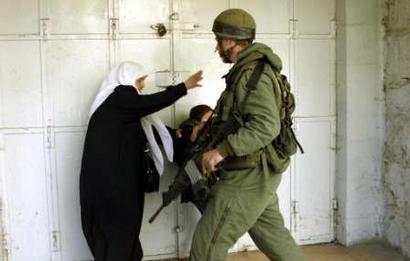
The Israeli Military’s Advocate General ruled Sunday that Palestinian villages can continue to be used for Israeli military training under the principle of “belligerent occupation”.
This is an Israeli military concept that allows its soldiers virtual impunity with regard to their behavior in the Occupied West Bank and Gaza Strip, under the pretext that the Israeli military is the sovereign authority over the entire territory. This edict contradicts international law and numerous United Nations resolutions that question the Israeli claim to sovereignty over all Palestinian land.
The Israeli military frequently invades Palestinian towns and villages, with soldiers running through streets and alleys with loaded automatic weapons, ransacking homes and terrorizing residents, for the purposes of ‘training’.
When a human rights organization filed a challenge to this practice earlier this year after several particularly egregious ‘training’ raids, the Israeli military said they would respond to the complaint. Today, several months later, the military ruled that the training is all in accordance with the dictates of martial law as it applies to the Israeli military occupation of Palestinian land in the West Bank and Gaza Strip.
According to the military Advocate General’s statement, there is “no legal obstacle to holding training in inhabited areas as part of maintaining security in the area. The orders issued for the drills that take place in populated urban areas include a statute requiring coordination with the ones doing the drill. It will also be made clear that as part of the training exercises, the soldiers must avoid putting the population at risk, damaging their property or causing unreasonable disturbance to their daily routine.”
However, the Palestinian residents subjected to these ‘training exercises’ and the human rights groups representing them have provided numerous examples of the soldiers tearing through homes and yards, breaking into houses, running up and down stairs and taking over rooftops of family homes as part of these exercises.
All of the villages where this training take place have experienced actual Israeli military invasions on a regular basis, and since the military makes no attempt to differentiate or announce that any particular invasion is a ‘training exercise’, the villagers are just as terrorized as they are during actual raids.
November 4, 2013
Posted by aletho |
Ethnic Cleansing, Racism, Zionism, Illegal Occupation, Militarism, Subjugation - Torture, Timeless or most popular, War Crimes | Human rights, Palestine, West Bank, Zionism |
Leave a comment
Some 47 million poor Americans – one in four children – see their already meager federal food allowances slashed this week.
The cuts amount to $4 billion a year over the next decade.
That $4 billion figure should ring a bell. It is equivalent to the official annual subvention that the US government sends to Israel – courtesy of the American taxpayer.
This week that $4 billion annual donation to the regime in Tel Aviv was on display with the following items: Israeli tanks, warplanes and troops carried out deadly raids on occupied Palestinian territories, resulting in at least nine deaths and dozens of wounded; dozens of Palestinians continued to be kidnapped (“arrested”) from their homes and streets by Israeli troops; also the dominant Likud party of Benjamin Netanyahu announced that illegal settlements in the West Bank and East Al Quds “will be intensified” with plans to build an additional 5,000 housing units.
The accelerated construction on Palestinian land is in blatant contravention of international law.
In other words, this week, as in every other week, the war crimes that the US-backed Israeli regime has been committing since at least 1967 continued apace. This in the same week that millions of Americans are on notice that they are being put on starvation rations because their government would rather send $4 billion to a genocidal regime than pay for basic human nutrition.
The fact is that the Israeli criminal regime gets away with this genocide only because the US rulers hand over $4 billion every year to a state that comprises some seven million Israeli nationals.
It is astounding that tens of millions of Americans are going hungry because the same amount of money being cut from their social welfare is bankrolling Israel.
Ironically, some 900,000 of those hungry Americans are believed to be former US soldiers, many of whom are mentally and physically broken from fighting in the so-called Wars on Terror in Iraq and Afghanistan.
The Israeli regime, its American lobbyists and its bought-and-paid-for politicians created the false premises for these criminal wars – and many others besides.
But the men and women who served as cannon fodder in these criminal wars are now being abandoned in hunger, while the regime that helped cause their misery is still creaming off American taxpayers.
Hunger, poverty, suffering, death, genocide are all consonant and consistent in this grotesque system deified as capitalism.
Here are a few other figures to round out the abject picture. If just 0.6 per cent were shaved off the annual $700 billion US military budget, that would be enough to cover the cuts in the food stamp program this year.
If the $52-billion-a-year NSA spying program that is operated against our own citizens was cancelled that would pay for the immediate food needs of all Americans and, moreover, help build an economy for genuine social development, with good paying jobs, welfare and infrastructure. But, again, that won’t happen because the US economy is a war economy based on fear and paranoia.
US lawmakers, both Republican and Democrat – they are all the same puppets – want to axe a total of $40 billion from the food program over 10 years. This is the same figure – $40 billion – that these same minions throw at Wall Street and the mega-banks every two weeks under the scam known as “Quantitative Easing.” Taxpayers, many of them on food stamps, are bailing out corporations that crashed the world economy and which are up to their necks in militarism. Yet, this bloated elite turns around and snatches the crumbs out of people’s mouths.
But we return to the Zionist regime. These crimes are subsidized and enabled by money that would otherwise feed hungry Americans. People will die this year in the US simply from poverty and the lack of food. These American deaths will be for the same reason that Palestinians will die from poverty and hunger.
The choice is revealingly simple. Stop funding genocide in the Middle East or start feeding Americans.
November 3, 2013
Posted by aletho |
Ethnic Cleansing, Racism, Zionism, Militarism, Progressive Hypocrite, Wars for Israel | Israel, Middle East, Military budget of the United States, United States, Wall Street |
Leave a comment

Pentagon officials have said the US nuclear arsenal needs an overhaul over the coming decade which could cost hundreds of billions of dollars.
In a meeting with US lawmakers on the House of Representatives Armed Services Committee on Tuesday, Assistant Defense Secretary Madelyn Creedon said Washington has to spend at least a decade to modernize its aging nuclear weapons.
“Modernization work of this kind is expensive, but there is no doubt that the investment … is necessary,” Reuters quoted Creedon as telling US congressmen.
“There is not a cost-effective alternative that meets the military requirements and policy objectives.”
Last year, the non-partisan Stimon Center think-tank estimated that modernizing the US nuclear arsenal, including weapons, infrastructure, and delivery systems, over the next decade would cost American taxpayers up to $400 billion.
On Monday, US Secretary of State John Kerry emphasized that nuclear weapons form an important part of Washington’s defense doctrine.
“It ensures that a strong nuclear deterrent remains the cornerstone of US national security and that of our allies and our partners,” he said during a speech at the US Institute of Peace in Washington.
In September, US Air Force tested two nuclear-capable missiles. The first one was launched on Sep. 22, one day after the International Day of Peace, and the second one was launched on Sep. 26, the same day heads of states and foreign ministers from around the world held a high-level meeting on nuclear disarmament at the United Nations headquarters in New York.
At the UN’s high-level meeting on nuclear disarmament on Sep. 26, Iranian President Hassan Rouhani stressed that “no nation should possess nuclear weapons.”
The US is the only country in the world that has used atomic bombs in war. US atomic bombs were dropped on Hiroshima and Nagasaki in Japan in August 1945.
November 2, 2013
Posted by aletho |
Militarism, War Crimes | International Day of Peace, John Kerry, Press TV, United States |
Leave a comment
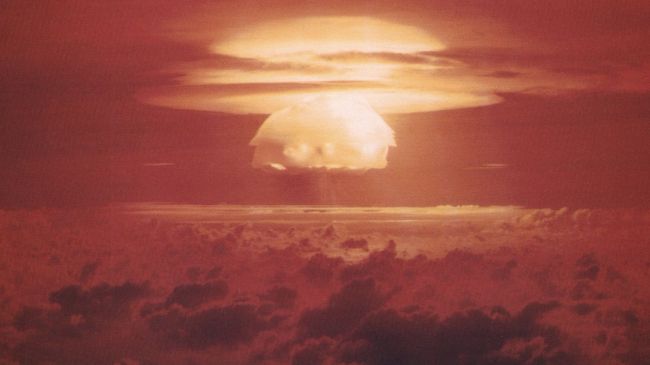

 Aletho News
