A State of Permanent War
The American people are told, again and again, that 9/11 “changed everything.” Is this really true?
The answer is both yes, and no.
Yes, because 9/11 prompted policies of regime change, preemptive strike, and humanitarian intervention, which, in turn, triggered the wars and military interventions in Afghanistan, Iraq, Pakistan, Yemen and Libya. At home, it provided justification for the institution of the Patriot Act, Homeland Security, outsourcing of torture, restriction of personal/civil liberties and the ballooning of the Pentagon budget.
And no, because the militaristic policies and security measures that were thus put into effect in the immediate aftermath of the 9/11 attacks had been in the making for nearly a dozen years before the attacks took place.
There is overwhelming evidence that the US policies of preemptive strike and regime change started not with the collapse of the World Trade Center in 2001 but with the collapse of the Berlin Wall in 1989. Beneficiaries of war dividends, that is, the military-industrial-security complex, were alarmed by the demise of the Soviet Union, by the end of the “communist threat” as the ready-made justifier of continued escalation of the Pentagon budget, and by the demands for “peace dividends.” “What we were afraid of was people who would say . . . ‘Let’s bring all of the troops home, and let’s abandon our position in Europe,’” acknowledged Paul D. Wolfowitz, Undersecretary of Defense under President Bush Sr. “It’s hard to imagine just how uncertain the world looked after the end of the Cold War.”
Not surprisingly, in the immediate aftermath of the Cold War, and in the face of widespread demands for “peace dividends,” the powerful interests vested in the military-security capital moved swiftly to fend off such demands by successfully inventing all kinds of “new threats to the national interests of the United States.” Instead of the Soviet Union, the “menace of rogue states, global terrorism, and militant Islam” would have to do as new enemies. Having thus effectively substituted “new sources of threat” for the “communist threat” of the Cold War era, powerful beneficiaries of military spending (working through the Pentagon and a number of militaristic think tanks like the Project for the New American Century, Center for Security Policy, Jewish Institute for National Security Affairs and National Institute for Public Policy) managed not only to maintain but, in fact, expand the Pentagon budget beyond the Cold War years.
The 9/11 attacks, Osama bin Laden, global terrorism, and US military aggressions in Afghanistan, Iraq, Pakistan, Yemen, Libya and elsewhere in the Muslim-Arab world can be better understood against this background: the systemic or internal dynamics of the military-industrial-security complex as an existentially-driven juggernaut to war and militarism that, in the aftermath of the Cold War era, needed all kinds of enemies and boogiemen in order to justify its continued usurpation of the lion’s share of the public finance, or the US treasury.
Major post-Cold War US military strategies such as regime change were formulated not after the 9/11 attacks, or under President Bush Jr., but under President Bush Sr., that is, soon after the demise of the Soviet Union. The early 1990s Pentagon architects of those strategies included the then Secretary of Defense Richard Cheney, Paul D. Wolfowitz, then Undersecretary of Defense, Zalmay Khalilzad, then a Wolfowitz aide, I. Lewis “Scooter” Libby, then principal Deputy Undersecretary of Defense for Strategy and Colin L. Powell, then chairman of the Joint Chiefs of Staff. Most of what the Pentagon team crafted in the immediate aftermath of the Cold War was published as a government document under Cheney’s name as America’s “Defense Strategy for the 1990s”—the document also came to be known as Defense Planning Guidance.
Almost all of the Pentagon’s post-Cold War aggressive military strategies such as preemptive strike, expansion of NATO, regime change, nation building, or humanitarian intervention can be traced back to the notorious Defense Planning Guidance of the early 1990s. As James Mann (of the Center for Strategic & International Studies) put it, “What the Pentagon officials had succeeded in doing, within months of the Soviet collapse, was to lay out the intellectual blueprint for a new world dominated—then, now and in the future—by U.S. military power.”
Although President Clinton did not officially embrace Cheney’s Defense Planning Guidance, he did not disclaim it either. And while he slightly slowed down the growth in the pentagon budget, he too had his own share of military operations abroad—in Somalia, Iraq, Haiti, and various provinces of the former Yugoslavia. The Federation of American Scientists has recorded a list of US foreign military engagements in the 1990s which shows that in the first decade after the collapse of the Berlin Wall, that is, under Presidents Bush Sr. and Bill Clinton, the United States engaged in 134 such operations. Here is a sample: Operation Eagle Eye (Kosovo), Operation Determined Effort (Bosnia-Herzegovina), Operation Quick Lift (Croatia), Operation Nomad Vigil (Albania), Operation Desert Thunder (Iraq), Operation Seva Verde (Columbia), Operation Constant Vigil (Bolivia), Operation Fundamental Response (Venezuela), Operation Infinite Reach (Sudan/Afghanistan), Operation Safe Border (Peru/Ecuador), Operation United Shield (Somalia), Operation Safe Haven/Safe Passage (Cuba), Operation Sea Signal (Haiti), Operation Safe Harbor (Haiti), Operation Desert Storm (Southwest Asia), and many more.
With the accession of George W. Bush to the presidency, all the Pentagon contributors to the notorious 1992 Defense Planning Guidance also returned to positions of power in the government. Cheney of course became Vice President, Powell became Secretary of State, Wolfowitz moved into the number two position at the Pentagon, as Donald Rumsfeld’s deputy, and Lewis “Scooter” Libby, became the Vice President’s chief of staff and national security adviser.
Although George W. Bush’s administration thus arrived in the White House with plans of “regime change” in the Arab-Muslim world, it could not carry out those plans without a pretext. The 9/11 attacks (regardless of who planned and carried them out) provided the needed pretext. The evidence thus clearly shows that, contrary to the claims of many critics, including some distinguished figures like Noam Chomsky, 9/11 served more as an excuse, or boogieman, than a “trap” laid by Osama bin Laden in order to bleed and disgrace the United States by prompting it to wage war and military aggression against the Arab-Muslim world.
The administration wasted no time manipulating the public’s fear of further terrorist attacks to rally support for the invasion of Afghanistan and Iraq. As the administration was preparing for the invasion of Iraq in early 2003, it also dusted off the Pentagon’s 1992 Defense Planning Guidance and promoted it as the “Bush Doctrine” for the new, post-9/11 world. The post-9/11 version of Defense Planning Guidance retains—indeed, strengthens—all the major elements of the 1992 version, although at times it uses slightly modified terminology.
That the U.S. military response to the collapse of the Berlin Wall in 1989 and its response to the collapse of the World Trade Center in 2001 were basically the same should not come as a surprise to anyone familiar with the dynamics and profit imperatives of the business of war: continued increase of the Pentagon budget and continued expansion of the sales markets for the war industry. The pretexts or tactics for pursuing higher war dividends may change (from the “threat of communism” to the “threat of rogue states, or global terrorism, or militant Islam”) but the objective or strategy remains the same—permanent war and, consequently, continuous escalation of the Pentagon budget and higher profits for the interests vested in military/security capital.
~
Ismael Hossein-Zadeh, author of The Political Economy of U.S. Militarism (Palgrave-Macmillan 2007), teaches economics at Drake University, Des Moines, Iowa.
September 15, 2011
Posted by aletho |
Deception, Economics, False Flag Terrorism, Militarism, Timeless or most popular |
Leave a comment
Americans are frustrated, angry and disappointed in the political leadership of our country. We are enduring one crisis after another: housing, war, jobs, budget, debt and deficit. We are also shouldering our own personal and professional crises. We are governed by political ideologies that are inflexible, uncompromising and that ignore the long-term well-being of our country.
Yet, with all of these pressing and unrelenting national challenges, a record 81 House members, about a fifth of the chamber, spent a week in Israel last month, courtesy of a foundation set up by the American Israel Public Affairs Committee (AIPAC), the largest pro-Israel lobby group in the US.
As a participant in the Interfaith Peace-Builders’ African Heritage Delegation to Israel/Palestine, who recently returned from a two-week fact-finding study tour, I can attest that Israelis have their own urgent and pressing issues to deal with: ongoing maintenance of the 63-year-old occupation (yes, it dates to the 1948 ethnic cleansing of approximately 750,000 Palestinians), expensive and unjust military rule over the Palestinian people in the occupied West Bank and Gaza Strip, seized in 1967, massive Israeli youth protests regarding the rising cost of housing, food, and gas, and the ongoing oppression of Jews of color and Palestinians citizens of Israel.
Congressman Jesse Jackson, Jr., one of the Democrats who visited Israel, said that he was looking forward to learning about Israel’s business and commercial sectors as well as the latest tools and technology the country is using to fight terror, but what did he really see? I doubt he saw and experienced what the 14 members of the African Heritage Delegation witnessed.
More than likely, his delegation saw and experienced the beauty and opulence of Tel Aviv. They enjoyed the finest of foods and perhaps sampled wines from the colonized Golan Heights. They probably witnessed well-orchestrated military exercises and political speeches. I suspect they did not hear, as we did, from Palestinians who are displaced from their homes, whose lands, farms and olive trees have been confiscated or from the mothers who worry about their sons being bullied, abused and imprisoned by the Israeli police using the most technologically advanced counterinsurgency practices.
I’m sure they did not see, as my delegation did, the rationing of water to Palestinians, the daily blackouts of electricity or the lack of health care services to the elderly or those suffering from post-traumatic occupation stress syndrome. No doubt, they did not meet Palestinians, as we did, in Hebron who live each day under the assault of angry, militant Jewish settlers.
Democracy means more than voting rights
House Majority Leader Eric Cantor, who led one of two Republican delegations, stated, “I am pleased to be bringing so many of our new Members of Congress to Israel so that they can learn firsthand about Israel and the important role our key ally plays in the Middle East. The United States and Israel share similar core values of democracy, human rights and a strong national defense.”
Yet Israel is not living up to the definition of a democracy. Israel has dominated Palestinians for 63 years while illegally occupying the West Bank, including East Jerusalem, and Gaza for the past 44 years. It routinely denies full participation of Palestinian citizens of Israel. Inside Israel, it is well documented that Jews of color (Sephardi and Mizrahi Jews), African Palestinians and non-Jewish residents are treated as second- and third-class citizens with diminished human and civil rights. Democracy means more than voting rights for Palestinian citizens. There must be equality under the law, yet that is significantly absent in Israel and dramatically lacking in how Israel administers the occupied West Bank and Gaza Strip.
There is simply too much at stake in America for our congressional members to meet with Israeli and Palestinian leaders without the complete picture of the Israeli-Palestinian conflict. The situation is vastly different from the one Israel’s prime minister depicted recently to Congress.
What if we stopped the $3 billion in aid?
What if we stopped the $3 billion in aid we give to Israel annually and used the savings to create a national jobs-deficit reduction program? Our African Heritage Delegation believes, as many Americans do, that we need a jobs growth and deficit reduction program here at home now. This is the time to reallocate financial resources to American families and communities and to fix our obsolete, dilapidated infrastructure.
The two-tier system of law Israel has established in the occupied West Bank, documented by Human Rights Watch, recalls the Jim Crow laws of the American South and the discriminatory practices of apartheid South Africa. Our members of Congress should loudly reject such discrimination. And they should spend more time with constituents in dire need of their leadership as well as modeling democratic values in their respective congressional districts.
Rev. Carolyn L. Boyd lives in Alexandria, Virginia.
September 10, 2011
Posted by aletho |
Corruption, Militarism, Wars for Israel |
Leave a comment
“One Hell of a Killing Machine”
When David Petraeus walks into the Central Intelligence Agency today, he will be taking over an organisation whose mission has changed in recent years from gathering and analysing intelligence to waging military campaigns through drone strikes in Pakistan, as well as in Yemen and Somalia.
But the transformation of the CIA did not simply follow the expansion of the drone war in Pakistan to its present level. CIA Director Michael Hayden lobbied hard for that expansion at a time when drone strikes seemed like a failed experiment.
The reason Hayden pushed for a much bigger drone war, it now appears, is that it had already created a whole bureaucracy in the anticipation of such a war.
During 2010, the CIA “drone war” in Pakistan killed as many as 1,000 people a year, compared with the roughly 2,000 a year officially estimated to have been killed by the SOF “night raids” in Afghanistan, according to a report in the Sep. 1 Washington Post.
A CIA official was quoted by the Post as saying that the CIA had become “one hell of a killing machine”, before quickly revising the phrase to “one hell of an operational tool”.
The shift in the CIA mission’s has been reflected in the spectacular growth of its Counter-terrorism Center (CTC) from 300 employees in September 2001 to about 2,000 people today – 10 percent of the agency’s entire workforce, according to the Post report.
The agency’s analytical branch, which had been previously devoted entirely to providing intelligence assessments for policymakers, has been profoundly affected.
More than one-third of the personnel in the agency’s analytical branch are now engaged wholly or primarily in providing support to CIA operations, according to senior agency officials cited by the Post. And nearly two-thirds of those are analysing data used by the CTC drone war staff to make decisions on targeting.
Some of that shift of internal staffing to support of the drone has followed the rise in the number of drone strikes in Pakistan since mid-2008, but the CIA began to lay the institutional basis for a bigger drone campaign well before that.
Crucial to understanding the role of internal dynamics in CIA decisions on the issue is the fact that the drone campaign in Pakistan started off very badly. During the four years from 2004 through 2007, the CIA carried out a total of only 12 drone strikes in Pakistan, all supposedly aimed at identifiable high-value targets of Al-Qaeda and its affiliates.
The George W. Bush administration’s policy on use of drones was cautious in large part because the President of Pakistan, Gen. Pervez Musharraf, was considered such a reliable ally that the administration was reluctant to take actions that would risk destabilising his regime.
Thus relatively tight constraints were imposed on the CIA in choosing targets for drone strikes. They were only to be used against known “high-value” officials of Al-Qaeda and their affiliates in Pakistan, and the CIA had to have evidence that no civilians would be killed as a result of the strike.
Those first 12 strikes killed only three identifiable Al-Qaeda or Pakistani Taliban figures, But despite the prohibition against strikes that would incur “collateral damage”, the same strikes killed a total of 121 civilians, as revealed by a thorough analysis of news media reports.
A single strike against a madrassa on Oct. 26, 2006 that killed 80 local students accounted for two-thirds of the total of civilian casualties.
Despite that disastrous start, however, the CIA had quickly become deeply committed internally to building a major programme around the drone war. In 2005, the agency had created a career track in targeting for the drone programme for analysts in the intelligence directorate, the Post article revealed.
That decision meant that analysts who chose to specialise in targeting for CIA drone operations were promised that they could stay within that specialty and get promotions throughout their careers. Thus the agency had made far-reaching commitments to its own staff in the expectation that the drone war would grow far beyond the three strikes a year and that it would continue indefinitely.
By 2007, the agency realised that, in order to keep those commitments, it had to get the White House to change the rules by relaxing existing restrictions on drone strikes.
That’s when Hayden began lobbying President George W. Bush to dispense with the constraints limiting the targeting for drone attacks, according to the account in New York Times reporter David Sanger’s book “The Inheritance”. Hayden asked for permission to carry out strikes against houses or cars merely on the basis of behaviour that matched a “pattern of life” associated with Al-Qaeda or other groups.
In January 2008, Bush took an unidentified first step toward the loosening of the requirements that Hayden sought, but most of the restrictions on drone strikes remained in place. In the first six months of 2008, only four strikes were carried out.
In mid-2008, however, Director of National Intelligence Mike McConnell returned from a May 2008 trip to Pakistan determined to prove that the Pakistani military was covertly supporting Taliban insurgents – especially the Haqqani network – who were gaining momentum in Afghanistan.
A formal assessment by McConnell’s staff making that case was produced in June and sent to the White House and other top officials, according to Sanger. That forced Bush, who had been praising Musharraf as an ally against the Taliban, to do something to show that he was being tough on the Pakistani military as well as on the Afghan insurgents who enjoyed safe havens in northwest Pakistan.
Bush wanted the drone strikes to focus primarily on the Afghan Taliban targets rather than Al-Qaeda and its Pakistani Taliban allies. And according to Sanger’s account, Bush quickly removed all of the previous requirements for accurate intelligence on specific high-value targets and for assurances against civilian casualties.
Released from the original constraints on the drone programme, the CIA immediately increased the level of drone strikes in the second half of 2008 to between four and five per month on average.
As Bob Woodward’s account in “Obama Wars” of internal discussions in the early weeks of the Barack Obama White House shows, there were serious doubts from the beginning that it could actually defeat Al- Qaeda.
But Leon Panetta, Obama’s new CIA director, was firmly committed to the drone war. He continued to present it to the public as a strategy to destroy Al-Qaeda, even though he knew the CIA was now striking mainly Afghan Taliban and their allies, not Al-Qaeda.
In his first press conference on Feb. 25, 2009, Panetta, in an indirect but obvious reference to the drone strikes, said that the efforts to destabilise Al-Qaeda and destroy its leadership “have been successful”.
Under Panetta, the rate of drone strikes continued throughout 2009 at the same accelerated pace as in the second half of 2008. And in 2010 the number of strikes more than doubled from 53 in 2009 to 118.
The CIA finally had the major drone campaign it had originally anticipated.
Two years ago, Petraeus appeared to take a somewhat skeptical view of drone strikes in Pakistan. In a secret assessment as CENTCOM commander on May 27, 2009, which was leaked to the Washington Post, Petraeus warned that drone strikes were fueling anti-U.S. sentiments in Pakistan.
Now, however, Petraeus’s personal view of the drone war may no longer be relevant. The CIA’s institutional interests in continuing the drone war may have become so commanding that no director could afford to override those interests on the basis of his own analysis of how the drone strikes affect U.S. interests.
~
Gareth Porter is an investigative historian and journalist with Inter-Press Service specialising in U.S. national security policy. The paperback edition of his latest book, “Perils of Dominance: Imbalance of Power and the Road to War in Vietnam“, was published in 2006.
September 6, 2011
Posted by aletho |
Militarism, Progressive Hypocrite, Timeless or most popular, War Crimes |
Leave a comment
One Hell of a Humanitarian Mission
After some 8,000 bombing raids, with estimates of 4 bombs used per attack NATO has already dropped over 30,000 bombs on Libya. That’s almost 200 bombs per day for 6 months, some tens of thousands of tons of high explosives. With an estimated 2 Libyans killed per bomb and without a single NATO casualty the Western regimes have massacred over 60,000 Libyans in the past half year with the rebels themselves having said there have been 50,000 Libyan deaths. One hell of a humanitarian intervention isn’t it?
How the “civil war” in Libya has proceeded can best be described in light of the events of August 21. On that Sunday afternoon a BBC film crew showed a rebel column fleeing the approaches to Zawiya outside of Tripoli. With their tails between their legs, glancing fearfully over their shoulders as they fled wildly back down the road from whence they came, even the BBC presstitute on the scene could not contain his disgust at the sight. Once again the rebels had run into stiff resistance and had shown their true mettle by fleeing the fight.
The next morning a France24 reporter recounted how later that Sunday night she had accompanied these same rebels as they drove almost unopposed through Zawiya into Green Square in the heart of Tripoli, this time passing row upon row of bombed out still burning buildings.
This has been NATO’s war and while the world may not understand this, the Libyan rebels certainly do.
A major problem for NATO and its Libyan Quisling League a.k.a the National Transitional Council (NTC) is that most of the rebel military is now under the leadership of the Libyan Islamic Fighting Group (LIFG), a self described affiliate of Al Queda in the Maghreb (North Africa). The “general” in command of the mainly ethnic Berber rebel fighters that have captured the Libyan capital, known as the Tripoli Military Council, is the head of the LIFG. One of his top commanders is head of the Benghazi based rebel army. With the recent murder of “General” Younnis, former head of the Libyan secret police and once considered the most feared man in the country, the LIFG has now taken over leadership of almost all of the most effective fighting forces of the Libyan rebellion.
Quite an accomplishment and Al Queda in the Maghreb’s sincere thanks must go to the USA and its allies in NATO.
As the former LIFG terrorists turned “freedom fighters” go house to house arresting and executing “Gaddafi supporters” and “African mercenaries” in Tripoli life for the ordinary people of the city has become one of survival. Without water for almost two weeks now, without cooking gas or fuel for their cars and with food in short supply the future for the people of Tripoli remains uncertain.
Some reports in the international media have claimed that the Great Man Made River (GMMR), the irrigation system that supplies northern Libya with almost all its water was bombed by NATO. Other reports claim that “Gaddafi loyalists” still control the southern water wells and have shut off the water supply. If the later is true then even Benghazi’s water supply is in jeopardy. In any case, Tripoli is going to be dependent on imported water for quite some time and how a city of almost 2 million is to survive using water imported via water trucks is a question the western media has stopped talking about.
The “Transitional National Council” now recognized as “the legitimate government of Libya” by NATO governments and their allies is made up of many former high ranking Libyan Government officials and is increasingly caught in a tough spot. With the African Union trying to block the release of Libyan Government funds held in western banks there is little time to spare if this NTC’s control is to remain in place.
South African President Jacob Zuma has condemned the NTC leaders as embezzlers and demanded they return the tens of millions of dollars the NTC top leadership is charged with stealing during their days in office in the Libyan government before the AU lifts its opposition to Gaddafi government funds being released to the NTC.
NATO leaders are having to scramble to keep the NTC afloat. Images of pallets stacked 6 feet high with 200 million Libyan Dinars flown in from London show just how touch and go it has become for the NTC’s attempts to maintain its influence. While NATO’s “Friends of LIbya” circus held in Paris promises the release of Libya’s $billions held ransom by the west, implementing these promises is another matter all together. Corruption and incompetence mark the NTC leadership’s past and it will come as no surprise to hear reports of massive embezzlement of these funds in the future
How much longer the LIFG/Al Queda lead rebel armies will stand by and allow their former bitter enemies in the TNC to remain in power is the $60 billion question. Already the rebel “government” in the port city of Misrata has announced they do not recognize the authority of the TNC and rallies demanding the removal of the former Libyan government officials in the TNC have been reported taking place on an almost daily basis there.
In the mean time the vast reaches of the southern Libyan desert have not been conquered by NATO and almost all of Libya’s water and much of its oil remains outside of the control of the NTC.
With hundreds of villages and small towns scattered across an immense area Col. Gaddafi and his supporters still have a vast area at their disposal. With Algeria fighting Al Queda in the Maghreb their border on Libya’s western flank remains open and allows opponents of the NATO backed rebels a safe haven. The NTC has already raised the alarm about a nasty long term insurrection based in southern Libya using Algeria as base.
So far the Al Queda lead rebel fighters and the west’s bully boys in the NTC have yet to begin to eat each other though it seems almost inevitable that internal warfare amongst the rebels will take place. We may yet see NATO warplanes bombing its erstwhile allies in the Libyan rebellion.
The one thing that is clear is that the Libyan Tragedy has just begun and that the capture of most of northern Libya by the NATO backed rebels is just its first phase. 30,000 bombs over Libya killing some 60,000 Libyans marks the beginning rather than the end of this disaster.
~
Thomas C. Mountain was a member of the 1st US Peace Delegation to Libya in 1987
September 2, 2011
Posted by aletho |
Corruption, Militarism |
Leave a comment
As reports have been published about Israel’s refusal to present an official apology to Turkey over the Israeli Navy’s attack against Turkish Mavi Marmara that was carrying aid to the besieged Gaza strip in 2010, Turkey has assured that it will respond to such a step by imposing sanctions against Israel.
Turkish Foreign Minister Ahmet Davutoglu was quoted by the Turkish Hurriyet Daily as saying that “if Israel did not apologize and did not declare its willingness to financially compensate the families of the dead and those injured, Turkey will put in place certain sanctions.”
The sanctions include limiting diplomatic relations between the two countries and expelling the Israeli ambassador from Turkey, as well as launching a campaign in the United Nations against the Zionist entity.
Ynet news quoted an Israeli official as saying that “the (Israeli) Prime Minister knows that the public objects to apologizing to Turkey, and he apparently chose to go with what the public thinks.”
On Friday, the Turkish Foreign Minister held a press conference in which he announced the expulsion of the Israeli ambassador.
“At this point the measures we are taking are: The relations between Turkey and Isreal will be downgraded to second secretary level. All officials over the level of second secretary, primarily the ambassador, will turn back to their country at the latest on Wednesday,” Davutoglu said.
“Second, all the military agreements between Israel and Turkey are suspended… “Third, as the country with the longest coastline on the Mediterrenean, Turkey will take every precaution it considers necessary for the safety of maritime navigation to East Mediterranean,” he added.
~
Also from Reuters:
Davutoglu said some of the [Palmer/Uribe] report’s findings were questionable and that Turkey did not recognize the legitimacy of the blockade of Gaza.
“Turkey will take all measures which it sees as necessary for freedom of navigation in the eastern Mediterranean,” Davutoglu said.
“Turkey does not recognize Israel’s blockade of Gaza. It will secure the study of this blockade at the International Court of Justice. We are beginning initiatives to get the U.N. General Assembly moving (on this),” he added.
He also said support would be given to Turkish and foreign victims to seek justice from courts.
September 2, 2011
Posted by aletho |
Militarism, Subjugation - Torture, War Crimes |
Leave a comment
Lockerbie and the Belgian Nurses
The current ideology to justify aggressive war is based on a dogmatic dichotomy between Democracy and Dictators. The pro-war party in the West has been shifting the center of international law and order from the United Nations to a more exclusive club of “democracies” which alone have “legitimacy”. The core of this club is the English-speaking world, plus Israel, the European Union, and Japan. This “International Community” of democracies is understood to possess the unique moral right to decide when the leader of any country outside their charmed circle may be denounced as a “dictator” and overthrown with the help of a NATO bombing campaign.
This ideology assumes that Democracies respect human rights, whereas dictators by definition are criminals who systematically violate human rights and may be contemplating “genocide against their own people”. Certain details, such as the fact that the United States has the largest prison population in the world in both absolute and relative terms, and uses convicts for cheap labor in the arms industry, are not allowed to interfere with this dualistic world view.
The mainstream media maintain this dichotomy by sustained bias in their coverage of countries labeled “dictatorships” – which may include some countries whose leaders are in fact elected, such as Venezuela, Russia, Serbia under Milosevic, Belarus, but who attempt to follow policies contrary to the dictates of the self-designated “International Community”. Not all such countries may actually by attacked militarily, but the image created will make military attack easily justifiable if and when the time comes.
Selective reporting reduces the country to its Dictator and a minority of “pro-democracy protesters”. The Dictator is portrayed as a criminal, with no virtues that could possibly justify any popular support within his own country.
The Case of Libya
The case of Libya illustrates the way this works. Decades of one-sided media coverage firmly established Libyan leader Moammer Gaddafi as an insane criminal. To the Western public whose only knowledge of Libya came from Western media reports, it would seem obvious that the Libyan people must unanimously want to get rid of such a leader.
It is obvious that there are people in Libya who hate Gaddafi and want to get rid of him. What is not obvious is exactly what they want to put in his place and just how representative they really are of the population as a whole.
In the West, the main reason to hate Gaddafi in recent years has been the Lockerbie bombing. For two decades, the allegation that the Libyan leader was responsible for the 1988 terrorist bombing of Pan Am flight 103 over Lockerbie, Scotland, has been kept in the public eye by mainstream media.
Last February, leaders of the emerging rebellion in Libya gave interviews with Western media claiming to have documentary proof that Gaddafi ordered the terrorist attack that killed 270 people. Mustafa Abdel Jalil, former Libyan justice minister who heads the “National Transitional Council” in Benghazi told The Daily Telegraph that: “The orders were given by Gaddafi himself”.
Few in the West are likely to object that if the NTC leaders really possess such proof , they have been complicit in the crime for decades. Nor will Western media raise the question as to why the wily Gaddafi would leave “documentary proof” of orders to commit a terrorist act lying around for 23 years.
These claims serve to bond the NTC leaders with the Western powers, notably the United States and the United Kingdom, and to suggest a community of legality between them against “the criminal Gaddafi”. They help build the fiction of “legitimate, representative leaders of the Libyan people” whose views of human rights, democracy and the misdeeds of the evil dictator Gaddafi coincide with Western attitudes, as expressed by Western politicians and media.
By implication, the Libyan people have known all along that their leader is a mass murderer. This must be one reason the decent citizens want to get rid of him. But is this true?
Lockerbie in Libya
My visit to Libya in January 2007, to attend an international conference on the International Criminal Court, gave me the opportunity to hold private conversations with a number of well-educated Libyans who clearly knew a lot more about the West than the West knew about them. I was particularly interested in getting the take of unofficial Libyan citizens on two issues that at the time dominated Western perception of Libya: Lockerbie and the affair of the Bulgarian nurses. I should mention that I never got near Gaddafi, and the conference was sponsored by academics who held diverse opinions on important issues, often unlike those of the Leader, which didn’t seem to bother anyone. But on the issue of Lockerbie, I discovered two general widespread points of agreement.
On the one hand, nobody believed that Libya was responsible for the Lockerbie bombing. It was taken for granted that Libya had been unfairly accused for political reasons.
On the other hand, it was clear that the sanctions imposed by the West to punish Libya for its alleged guilt had caused hardship and discontent. The power of the West both to impose sanctions and to project its images amounts to serious interference in the domestic politics of targeted countries, since very many people, especially the young, want to live in a “normal” country and may resent leaders who cause them to be treated as pariahs by the West. Therefore, it was understood that Gaddafi had finally given in to Western pressure to accept responsibility – but not guilt – for Lockerbie merely in order to get the unpopular sanctions lifted. The fact that he agreed to turn over two Libyan citizens to a Western court to be tried for the crime and to pay over two billion dollars of compensation to the victims was explicitly not an admission of guilt, but rather a response to blackmail by Great Powers in order to normalize relations and improve daily life.
This did not surprise me, since over the years I had read a lot about the Lockerbie case. Indeed, a great deal has been written exposing the weakness of the prosecution’s case, based on a totally implausible scenario (a bomb to blow up a trans-Atlantic flight was allegedly sent via airports in Malta, Frankfurt and London), technical “evidence” that had been tampered with by CIA agents, and a witness who was richly rewarded for testimony which did not fit the facts. All this has been told many times, for instance by Andrew Cockburn in the CounterPunch newsletter, or the London Review of Books, “The Framing of al-Megrahi” by British lawyer Gareth Peirce. But the fact that the case has been repeatedly exposed by careful analysis as a probable frame-up has not made the slightest impression on mainstream media and politicians who continue to blast Gaddafi as the monster who ordered the Lockerbie massacre.
One may add that at the time of the event in 1988, it was widely assumed that Iran had ordered the attack in retaliation for U.S. downing of an Iranian airliner over the Persian Gulf. When the United States, switching from its anti-Iran alliance with Iraq to war against Saddam Hussein, decided to accuse Libya instead, no motive was ever produced. But when a “dictator” has been stigmatized as a monster, no motive is needed. He just did it because that is the sort of thing evil dictators are supposed to do.
The two accused Libyan airline employees working in Malta had been put on trial in 2000 by three Scottish judges without a jury in a specially built court in the Netherlands. One of the Libyans was acquitted and the other, Abdel Basset al-Megrahi, was convicted and sentenced to 27 years in prison. The United Nations observer at this peculiar trial, Hans Köchler, called the guilty verdict “incomprehensible”, “arbitrary, even irrational” and noted “an air of international power politics” surrounding the proceedings.
On November 12, 2006, the Glasgow Sunday Herald quoted top State Department legal advisor Michael Scharf, who was the counsel to the US counter-terrorism bureau when the two Libyans were indicted for the bombing, as calling the case “so full of holes it was like Swiss cheese” and said it should never have gone to trial. He claimed the CIA and FBI had assured State Department officials there was an “iron-clad” case against the two Libyans, but that in reality the intelligence agencies knew well in advance of the trial that their star witness was “a liar”. But Great Powers can’t back down. Their sacred “credibility” is at stake. In short, they must keep lying to preserve the illusion of infallibility.
At the time I was in Tripoli, the defense team of the convicted Libyan was trying to appeal the conviction to a higher court. I was able to call on one of the lawyers on Megrahi’s defense team. I spent a long time in her office, trying to overcome her reluctance to speak about the case. Finally, she agreed to talk to me when I promised to keep our conversation to myself, so as not to risk harming the appeal. By now, the circumstances have changed drastically.
Here, briefly, is what she told me.
The Scottish judges were under enormous pressure to convict the two Libyans. After all, for years their guilt had been trumpeted by the United States demanding that they be “brought to justice”. A special court had been set up with the obvious purpose of convicting them. Yet the evidence which would merit conviction in a proper Scottish court was simply not there. The best the judges dared to do was to acquit one of the defendants and pass along the responsibility for acquitting the other to a higher court. But to the dismay of the Libyan defense team, the designated court of appeals evaded the dangerous issue by disqualifying itself. So now an appeal was being prepared for another high court, complete with new evidence further discrediting the prosecution case.
And in fact, five months later, on June 28, 2007, the Scottish Criminal Cases Review Commission, which had been investigating the case since 2003, recommended that Abdel Basset al-Megrahi be granted a second appeal against his conviction. The Commission said it had uncovered six separate grounds for considering that the conviction may have been an injustice. The announcement caused a sensation in the small circles following the affair. It seemed that Scottish justice was courageous enough to assert itself and allow hearings that would expose the CIA frame-up.
That sort of thing may happen in movies, but the real world is something else.
A sordid bargain
What happened after that helped set the stage for the NATO attack on Libya this year.
Time passed. It was two years later, in April 2009, that the appeal finally was due to get underway. But meanwhile, behind the scenes, secret bargaining was going on, amid leaks and rumors.
On August 21, 2009, on grounds that he was suffering from terminal cancer, Abdel Basset Ali Mohmed al-Megrahi was released from prison in Scotland by the Scottish justice minister Kenny MacAskill and allowed to “go home to die”.
Now, it so happens that in 2007, Tony Blair went to Libya to negotiate a British-Libyan agreement with Gaddafi covering law, extradition and prisoner transfer. Under this Prisoner Transfer Agreement, Libyan authorities asked for Megrahi to be sent home due to his illness.
The catch was that the Prisoner Transfer Agreement could be applied only when no legal proceedings were outstanding. So in order to benefit from it, Megrahi had to drop his appeal.
The matter is confused by the fact that he was formally released on “compassionate” grounds. One way or another, the deal was clear: al-Megrahi could go home, but the appeal was dead. Hans Kochler, UN-appointed special observer to the Lockerbie trial, thought Megrahi may have been subjected to “morally outrageous” blackmail to abandon his appeal against his will.
The sordid aspect of this bargain is that it deprived Megrahi of the right to clear his name, while leaving the CIA frame-up officially unexposed. There was nothing to counter the chorus of protestations from Hillary Clinton on down denouncing Scotland for having “freed the Lockerbie bomber”. Two years later, news that Megrahi has failed to die has elicited further indignation from Western media, who see this as proof that the UK had “sold the Lockerbie bomber for Libyan oil”. Naturally, the impression must be conveyed that the sly Libyan dictator tricked the naïve but greedy Brits into selling out their principles for petroleum.
But it is just as likely that it was the naïve Libyan dictator who was tricked by the unscrupulous British into thinking he had made a “gentleman’s agreement”. Rather than pursue an appeal which risked causing acute embarrassment to Western authorities, Megrahi could be released and the matter forgotten. The popular rejoicing at Megrahi’s return home was muted in Libya, but Western media pretended to be scandalized that a convicted mass murderer received a hero’s welcome. In reality, he was welcomed home discreetly as an innocent man who had been unjustly convicted, not as a mass murderer. And whenever he has been able to make himself heard, he has reiterated his desire to clear his name.
The Bulgarian nurses
The other subject I asked about while I was in Tripoli in 2007 was the plight of the Bulgarian nurses. In 2004, five Bulgarian nurses and a Palestinian doctor working in a Benghazi hospital were sentenced to death for allegedly having infected children with the HIV virus. Everyone in the West, myself included, assumed this was an outrageous injustice. When I raised the issue with highly Westernized, liberal Libyan intellectuals, I fully expected to hear strong criticism of the dictator for persecuting defenseless health workers. I was quite surprised when the reaction was somewhat different.
“Of course they are innocent”, I said.
The gentleman with whom I was talking, whom I could loosely describe as anti-Gaddafi, shook his head. “That’s not so clear”, he replied. And so I began to learn what was explained a few months later by Harriet Washington in a New York Times column, namely that:
“The evidence against the Bulgarian medical team, like H.I.V.-contaminated vials discovered in their apartments, has seemed to Westerners preposterous. But to dismiss the Libyan accusations of medical malfeasance out of hand means losing an opportunity to understand why a dangerous suspicion of medicine is so widespread in Africa.
“Africa has harbored a number of high-profile Western medical miscreants who have intentionally administered deadly agents under the guise of providing health care or conducting research.”
My conversations in Libya did not convince me that the Bulgarian health workers were guilty, but they did give me a new insight into the Libyan viewpoint. On the African continent, it was easy for even highly rational people to believe that foreign health workers might have been paid to infect children, either for experimental purposes or to “destabilize” the public health system. Secondly, it became clear that this was not a case of “the dictator Gaddafi” persecuting innocents. The arrest, alleged torture and conviction of the Bulgarian nurses were carried out by authorities in Benghazi. Indeed, last March 11, the day after France recognized the rebel National Transitional Council as the “sole legitimate representative of the Libyan people”, Bulgarian prime minister Boyko Borisov complained to a European summit in Brussels that key members of that council in Benghazi “are the people who tortured the Bulgarian medics for eight years and that this cost us nearly $60 million” in reparations to the infected children and their families.
In January 2007, I was also assured by people in Tripoli that the death sentence against the nurses would never be carried out. This was true. In August of that same year, the medical workers were freed by the Gaddafi family and allowed to go home to Bulgaria after a much publicized trip to Libya by President Sarkozy’s wife at the time, Cecilia. This liberation was presented as a final reconciliation between Gaddafi’s Libya and Europe.
I abstained from writing about this for years, because I feel I do not know enough about Libya. But now I see others, who know even less, loudly advocating NATO support to rebels in a civil war whose real motives and consequences are obscure.
My first conclusion is to point out that just because a country is not a Western-style democracy does not mean that everything that happens there is “dictated” by a “dictator”. The term “dictator” serves to comfort the laziness of media and politicians who do not care to bother to investigate the complexities of an unfamiliar society.
My second and final conclusion is that we in the West have neither the right nor the ability to “fix” those unfamiliar societies such as Libya which we dismiss as “dictatorships”. As the financial crisis threatens to bring living standards in much of the West below what they were in Gaddafi’s Libya before NATO intervened there, our Western “democracy” is in danger of being gradually reduced to a mere ideological excuse to attack, ravage and pillage other people’s countries.
Diana Johnstone is author of Fools’ Crusade. She can be reached at diana.josto@yahoo.fr
August 31, 2011
Posted by aletho |
Deception, Mainstream Media, Warmongering, Militarism, Timeless or most popular |
Leave a comment
The post-9/11 years at the Department of Defense have seen an enormous increase in no-bid contracts, with the lack of competition approaching 50% during the first six months of this year.
Over the course of the last 10 years, the amount of money spent by the Pentagon on non-competitive contracts has almost tripled, from $50 billion in 2001 to $140 billion in 2010, according to the Center for Public Integrity’s iWatch News. And the reliance on no-bid deals has only gone up so far in 2011—to 45%—the highest rate recorded since 2001.
Like other federal agencies, the Defense Department is supposed to demand competitive bidding. But numerous loopholes in federal law make it possible for contracting officers to bypass restrictions and select a single company to provide goods and services. For example, the government may claim “an unusual and compelling urgency” to skip competition, when in fact, according to iWatch News, “the urgency stemmed from the agency’s lack of planning for requirements that have been known for years.”
Another problem is “bridge contracts”, in which the Pentagon extends an existing contract rather than put the contract out for rebidding. These account for one quarter of all sole source contracts.
The Pentagon defends itself by pointing that, on a dollar spent basis, in 2010 62% of all contracts were competitive. However, this figure does not compare well with other departments of the federal government. For example, the Department of Energy has a 94% competition rate, the Department of Homeland Security 77% and the State Department 74%.
August 31, 2011
Posted by aletho |
Corruption, Economics, Militarism |
Leave a comment
August 2011 has become the deadliest month for US troops in the decade-long war in Afghanistan with 66 American soldiers killed in the month.
The figure, released by the Associated Press on Tuesday, eclipsed the earlier figure of 65 belonging to July 2010.
Most fatalities were those of an August 6 helicopter crash in which 30 US troops lost their lives. The victims were aboard a Chinook shot down by Taliban militants in Afghanistan’s Wardak Province in the single deadliest incident of the Afghan war.
Twenty-three other American troops died this month in Kandahar and Helmand Provinces in southern Afghanistan. The remaining 13 were killed in eastern Afghanistan.
Besides the 66 Americans killed so far this month, the US-led NATO coalition also suffered the loss of two British, four French, one New Zealander, one Australian, one Polish and five other troops whose nationalities have not yet been disclosed.
So far this year, 403 US-led soldiers, including at least 299 Americans, have been killed in Afghanistan, according to the AP tally.
There are currently about 150,000 US-led foreign troops in Afghanistan, almost 100,000 of them American forces.
August 30, 2011
Posted by aletho |
Militarism |
Leave a comment
By JOHN WALSH | August 30, 2011
Juan Cole is a brand name that is no longer trusted. And that has been the case for some time for the Professor from Michigan. After warning of the “difficulties” with the Iraq War, Cole swung over to ply it with burning kisses on the day of the U.S. invasion of Iraq. His fervor was not based on Saddam Hussein’s fictional possession of weapons of mass destruction but on the virtues of “humanitarian imperialism.”
Thus on March 19, 2003, as the imperial invasion commenced, Cole enthused on his blog: “I remain (Emphasis mine.) convinced that, for all the concerns one might have about the aftermath, the removal of Saddam Hussein and the murderous Baath regime from power will be worth the sacrifices that are about to be made on all sides.” Now, with over 1 million Iraqis dead, 4 million displaced and the country’s infrastructure destroyed, might Cole still echo Madeline Albright that the price was “worth it”? Cole has called the Afghan War “the right war at the right time” and has emerged as a cheerleader for Obama’s unconstitutional war on Libya and for Obama himself.
Cole claims to be a man of the left and he appears with painful frequency on Amy Goodman’s Democracy Now as the reigning “expert” on the war on Libya. This is deeply troubling – on at least two counts. First, can one be a member of the “left” and also an advocate for the brutal intervention by the Great Western Powers in the affairs of a small, relatively poor country? Apparently so, at least in Democracy Now’s version of the “left.” Second, it appears that Cole’s essential function these days is to convince wavering progressives that the war on Libya has been fine and dandy. But how can such damaged goods as Cole credibly perform this marketing mission so vital to Obama’s war?
Miraculously, Cole got just the rehabilitation he needed to continue with this vital propaganda function when it was disclosed by the New York Times on June 15 that he was the object of a White House inquiry way back in 2005 in Bush time. The source and reason for this leak and the publication of it by the NYT at this time, so many years later, should be of great interest, but they are unknown. Within a week of the Times piece Cole was accorded a hero’s welcome on Democracy Now, as he appeared with retired CIA agent Glenn Carle who had served 23 years in the clandestine services of the CIA in part as an “interrogator.” Carl had just retired from the CIA at the time of the White House request and was at the time employed at the National Intelligence Council, which authors the National Intelligence Estimate.
It hit this listener like a ton of bricks when it was disclosed in Goodman’s interview that Cole was a long time “consultant” for the CIA, the National Intelligence Council and other agencies. Here is what nearly caused me to keel over when I heard it (From the Democracy Now transcript.):
AMY GOODMAN: So, did you know Professor Cole or know of him at the time you were asked? And can you go on from there? What happened when you said you wouldn’t do this? And who was it who demanded this information from you, said that you should get information?
GLENN CARLE: Well, I did know Professor Cole. He was one of a large number of experts of diverse views that the National Intelligence Council and my office and the CIA respectively consult with to challenge our assumptions and understand the trends and issues on our various portfolios. So I knew him that way. And it was sensible, in that sense, that the White House turned to my office to inquire about him, because we were the ones, at least one of the ones—I don’t know all of Mr. Cole’s work—who had consulted with him. (Emphases mine.)
That seems like strange toil for a man of the “left.” But were the consultations long drawn out and the association with the CIA a deep one? It would appear so. Again from the transcript:
AMY GOODMAN: Well, the way James Risen (the NYT reporter) writes it, he says, “Mr. Carle said [that] sometime that year, he was approached by his supervisor, David Low, about Professor Cole. [Mr.] Low and [Mr.] Carle have starkly different recollections of what happened. According to Mr. Carle, [Mr.] Low returned from a White House meeting one day and inquired who Juan Cole was, making clear [that] he wanted [Mr.] Carle to gather information on him. Mr. Carle recalled [his] boss saying, ‘The White House wants to get him.’”
GLENN CARLE: Well, that’s substantially correct. The one nuance, perhaps, I would point out is there’s a difference between collecting information actively, going out and running an operation, say, to find out things about Mr. Cole, or providing information known through interactions. (Emphasis mine.) I would characterize it more as the latter.
And later in the interview Carle continues:
On the whole, Professor Cole and I are in agreement. The distinction I make is it wasn’t publicly known information that was requested; it was information that officers knew of a personal nature about Professor Cole, which is much more disturbing. There was no direct request that I’m aware, in the two instances of which I have knowledge, for the officers actively to seek and obtain, to conduct—for me to go out and follow Professor Cole. But if I knew lifestyle questions or so on, to pass those along. (Emphasis mine.)That’s how I—which is totally unacceptable.
It would seem then that the interaction between the CIA operatives and Cole was long standing and sufficiently intimate that the CIA spooks could be expected to know things about Cole’s lifestyle and personal life. It is not that anyone should give two figs about Cole’s personal life which more than likely is every bit as boring as he claims. But his relationship with the CIA is of interest since he is an unreconstructed hawk. What was remarkable to me at the time is that Goodman did not pick up on any of this. Did she know before of Cole’s connections? Was not this the wrong man to have as a “frequent guest,” in Goodman’s words, on the situation in the Middle East?
This is not to claim that Cole is on a mission for the CIA to convince the left to support the imperial wars, most notably at the moment the war on Libya. Nor is this a claim that the revelation about the White House seeking information on Cole was a contrived psy-ops effort to rehabilitate Cole so that he could continue such a mission. That cannot be claimed, because there is as yet no evidence for it. But information flows two ways in any consultation, and it is even possible that Cole was being loaded with war-friendly information in hopes he would transmit it.
Cole is anxious to promote himself as a man of the left as he spins out his rationale for the war on Libya. At one point he says to Goodman (3/29), “We are people of the left. We care about the ordinary people. We care about workers.” It is strange that a man who claims such views dismisses as irrelevant the progress that has come to the people of Libya under Gaddafi, dictator or not. (Indeed what brought Gaddafi down was not that he was a dictator but that he was not our dictator.) In fact Libya has the highest score of all African countries on the UN’s Human Development Index (HDI) and with Tunisia and Morocco the second highest level of literacy. The HDI is a comparative measure of life expectancy, literacy, education and standards of living for countries worldwide.
Whither the Left on the Question of Intervention?
None of this is all too surprising given Cole’s status as a “humanitarian” hawk. But it is outrageous that he is so often called on by Democracy Now for his opinion. One of his appearances there was in a debate on the unconstitutional war in Libya, with CounterPunch’s estimable Vijay Prashad taking the antiwar side and Cole pro-war. It would seem strange for the left to have to debate the worth of an imperial intervention. Certainly if one goes back to the days of the Vietnam War there were teach-ins to inform the public of the lies of the U.S. government and the truth about what was going on in Vietnam. But let us give Democracy Now the benefit of the doubt and say that the debate was some sort of consciousness raising effort. Why later on invite as a frequent guest a man who was the pro-war voice in the debate? That is a strange choice indeed.
This writer does not get to listen to Democracy Now every day. But I have not heard a full-throated denunciation of the war on Libya from host or guests. Certainly according to a search on the DN web site, Cynthia McKinney did not appear as a guest nor Ramsey Clark after their courageous fact finding tour to Libya. There was only one all out denunciation of the war – on the day when the guests were Rev. Jesse Jackson and Vincent Harding who was King’s speechwriter on the famous speech “Beyond Vietnam” in 1967 in which King condemned the U.S. war on Vietnam. Jackson and the wise and keenly intelligent Harding were there not to discuss Libya but to discuss the MLK Jr. monument. Nonetheless Jackson and Harding made clear that they did not like the U.S. war in Libya one bit, nor the militarism it entails.
If one reads CounterPunch.org, Antiwar.com or The American Conservative, one knows that one is reading those who are anti-interventionist on the basis of principle. With Democracy Now and kindred progressive outlets, it’s all too clear where a big chunk of the so-called “left” stands, especially since the advent of Obama. In his superb little book Humanitarian Imperialism Jean Bricmont criticizes much of the left for falling prey to advocacy of wars, supposedly based on good intentions. And Alexander Cockburn has often pointed out that many progressives are actually quite fond of “humanitarian” interventionism. Both here and in Europe this fondness seems to be especially true of Obama’s latest war, the war on Libya . It is little wonder that the “progressives” are losing their antiwar following to Ron Paul and the Libertarians who are consistent and principled on the issue of anti-interventionism.
Democracy Now, quo vadis? Wherever you are heading, you would do well to travel without Juan Cole and his friends.
John V. Walsh can be reached at John.Endwar@gmail.com
After wading through Cole’s loose prose and dubious logic to write this essay, the author suspects that the rejection of Cole by the Yale faculty was the result of considerations that had little to do with neocon Bush/Cheney operatives.
Source
August 30, 2011
Posted by aletho |
Deception, Mainstream Media, Warmongering, Militarism, Progressive Hypocrite, Timeless or most popular | Amy Goodman, CIA, Democracy Now!, Juan Cole, Libya, National Intelligence Council, New York Times, Saddam Hussein |
Leave a comment
The majority of Jewish high school students in Israel have right-wing political views and would vote for Israeli Foreign Minister Avigdor Lieberman as Prime Minister, according to the results of a survey released yesterday in the Israeli media.
The survey, conducted for the sixth annual Haair Conference for Education held in Haifa, surveyed 1000 11th and 12th graders online and was analysed by Tel Aviv University’s Kamil Fox, professor of statistics.
75% of Israeli youth object to removing the siege from the Gaza Strip and 60% believe that Israel is better off giving up on a peace agreement with the Palestinians if it includes returning Palestinian neighbourhoods in East Jerusalem. Moreover, 83% of the youth preferred no peace agreement with Syria over returning the occupied Syrian Golan.
August 30, 2011
Posted by aletho |
Ethnic Cleansing, Racism, Zionism, Militarism |
Leave a comment
Britain has increased by about 30 percent its weapons exports to the Middle East and North African regions, where a wave of Islamic Awakening is challenging totalitarian regimes.
A new inquiry found that the UK has exported arms worth at least £30.5 million to various countries, including Bahrain and Saudi Arabia between February and June this year, as compared to £22million in the same period of 2010, The Times newspaper reported.
According to the report, arms exports to countries, where human rights records are deteriorating, have spiked by one third at the same time when the rulers of these countries are brutally repressing their own people.
The arms exports included weapons used for internal repression, such as small arms ammunition, rifles and sub-machine guns, the report said.
This was despite the Foreign Office promising in February an “immediate and rapid” review of all military exports to the region.
Shortly before the UN Security Council imposed an embargo on weapon supplies to Libya in February this year, Britain provided the Libyan regime with ammunition worth a total of £64,000, the report added.
Meanwhile, the UK weapons manufacturers continued selling weapons to Yemen, Bahrain and Egypt during the period from February to April. The Bahraini regime received the British-made weapons in April, several weeks after its troops violently broke up a pro-democracy rally in Manama’s Pearl Square.
The revelations add to the UK government’s double standard policy as it has been harshly denouncing Bahraini regime of al-Khalifa for gunning down pro-democracy activists in the country, and at the same time selling them weapons, which its regime used to suppress dissent.
It is also difficult to assume that the British authorities were unaware of weapon supplies to the troubled countries of the Middle East and North Africa, given that the country’s license to sell arms is under strict control of the government.
British laws accurately outline that the license should not be issued if weapons sold may be used for internal repressions, attacks against other countries, as well as heating up or extending armed conflicts.
Meanwhile, the UK’s largest peace campaign group, Stop the War Coalition (STWC) has said in a report that Britain is one of the prominent “gunrunners” to the world’s most oppressive and corrupt regimes.
“Britain is one of the world´s biggest arms traders, with a long history of arming the most oppressive regimes, like Libya, Bahrain and Saudi Arabia, who we can assume used UK arms in putting down Arab Spring rebellions,” STWC said.
“Out of the 26 countries that the UK has highlighted as being ‘countries of concern´ on human rights, we sell arms to 16 of them,” it said.
August 30, 2011
Posted by aletho |
Militarism, Subjugation - Torture |
Leave a comment
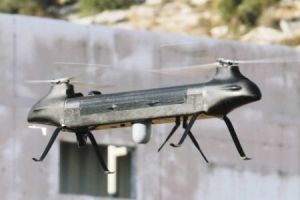 Israel has designed a miniature unmanned aerial vehicle (UAV) to help Israeli intelligence services identify and target leaders of Palestinian resistance movements.
The newly unveiled spying UAV, dubbed Ghost, is an almost silent drone that weighs 9 pounds (nearly 4 kilograms), UPI reported.
The twin-rotor vertical take-off drone is designed for special clandestine operations in urban areas and has a range of around 2.5 miles (four kilometers), a flight endurance of 6 hours and speed of around 37 miles (59.5 kilometer) an hour.
The device can be carried in backpacks, along with spare batteries and a computer, by two soldiers who control it from a laptop computer.
The mini-helicopter, 4.76 feet in length and with a rotor span of 2.46 feet, is said to be capable of flying into buildings through windows to provide real-time intelligence for special forces or company-size infantry units. It can also provide ground forces with a unique horizontal, eyelevel visibility. Which means a comprehensive view of their targets and operational environment that lookdown UAVs cannot offer.
First displayed in March, the Ghost is to be soon marketed in the United States, where it was first unveiled.
The UAV can track targets for assassination by war drones, helicopter gunships or F-16 strike jets using precision-guided munitions, a tactic frequently used against Palestinian leaders.
August 24, 2011
Posted by aletho |
Militarism, Subjugation - Torture |
Leave a comment
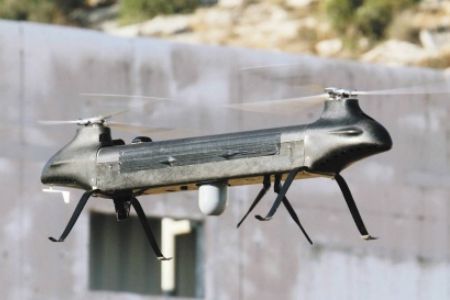 Israel has designed a miniature unmanned aerial vehicle (UAV) to help Israeli intelligence services identify and target leaders of Palestinian resistance movements.
 Aletho News
