Why Regime Change in Libya?
By ISMAEL HOSSEIN-ZADEH | CounterPunch | June 17, 2011
In light of the brutal death and destruction wrought on Libya by the relentless US/NATO bombardment, the professed claims of “humanitarian concerns” as grounds for intervention can readily be dismissed as a blatantly specious imperialist ploy in pursuit of “regime change” in that country.
There is undeniable evidence that contrary to the spontaneous, unarmed and peaceful protest demonstrations in Egypt, Tunisia and Bahrain, the rebellion in Libya has been nurtured, armed and orchestrated largely from abroad, in collaboration with expat opposition groups and their local allies at home. Indeed, evidence shows that plans of “regime change” in Libya were drawn long before the insurgency actually started in Benghazi; it has all the hallmarks of a well-orchestrated civil war [1].
It is very tempting to seek the answer to the question “why regime change in Libya?” in oil/energy. While oil is undoubtedly a concern, it falls short of a satisfactory explanation because major Western oil companies were already extensively involved in the Libyan oil industry. Indeed, since Gaddafi relented to the US-UK pressure in 1993 and established “normal” economic and diplomatic relations with these and other Western countries, major US and European oil companies struck quite lucrative deals with the National Oil Corporation of Libya.
So, the answer to the question “why the imperialist powers want to do away with Gaddafi” has to go beyond oil, or the laughable “humanitarian concerns.” Perhaps the question can be answered best in the light of the following questions: why do these imperialist powers also want to overthrow Hugo Cavez of Venezuela, Fidel Castro (and/or his successors) of Cuba, Mahmoud Ahmadinejad of Iran, Rafael Correa Delgado of Ecuador, Kim Jong-il of North Korea, Bashar Al-assad of Syria and Evo Morales of Bolivia? Or, why did they overthrow Mohammad Mossadeq of Iran, Jacobo Arbenz of Guatemala, Kusno Sukarno of Indonesia, Salvador Allende of Chile, Sandinistas in Nicaragua, Jean-Bertrand Aristide in Haiti and Manuel Zelaya in Honduras?
What does Gaddafi have in common with these nationalist/populist leaders? The question is of course rhetorical and the answer is obvious: like them Gaddafi is guilty of insubordination to the proverbial godfather of the world: US imperialism, and its allies. Like them, he has committed the cardinal sin of challenging the unbridled reign of global capital, of not following the economic “guidelines” of the captains of global finance, that is, of the International Monetary Fund, the World Bank and World Trade Organization; as well as of refusing to join US military alliances in the region. Also like other nationalist/populist leaders, he advocates social safety net (or welfare state) programs—not for giant corporations, as is the case in imperialist countries, but for the people in need.
This means that the criminal agenda of Messrs Obama, Cameron, Sarkozy, and their complicit allies to overthrow or kill Mr. Gaddafi and other “insubordinate” proponents of welfare state programs abroad is essentially part of the same evil agenda of dismantling such programs at home. While the form, the context and the means of destruction may be different, the thrusts of the relentless attacks on the living standards of the Libyan, Iranian, Venezuelan or Cuban peoples are essentially the same as the equally brutal attacks on the living conditions of the poor and working people in the US, UK, France and other degenerate capitalist countries. In a subtle (but unmistakable) way they are all part of an ongoing unilateral class warfare on a global scale—whether they are carried out by military means and bombardments, or through the apparently “non-violent” processes of judicial or legislative means does not make a substantial difference as far as the nature or the thrust of the attack on people’s lives or livelihoods are concerned.
In their efforts to consolidate the reign of big capital worldwide, captains of global finance use a variety of methods. The preferred method is usually non-military, that is, the neoliberal strategies of Structural Adjustment Programs (SAPs), carried out by representatives of big business disguised as elected officials, or by the multilateral institutions such as the IMF and the WTO. This is what is currently happening in the debt- and deficit-ridden economies of the United States and Europe. But if a country like Libya (or Venezuela or Iran or Cuba) does not go along with the neoliberal agenda of “structural adjustments,” of outsourcing and privatization, and of allowing their financial system to be tied to the network of global banking cartel, then the military option is embarked upon to carry out the neoliberal agenda.
The powerful interests of global capitalism do not seem to feel comfortable to dismantle New Deal economics, Social Democratic reforms and welfare state programs in the core capitalist countries while people in smaller, less-developed countries such as Libya, Venezuela or Cuba enjoy strong, state-sponsored social safety net programs such as free or heavily-subsidized education and health care benefits. Indeed, guardians of the worldwide market mechanism have always been intolerant of any “undue” government intervention in the economic affairs of any country in the world. “Regimented economies,” declared President Harry Truman in a speech at Baylor University (1947), were the enemy of free enterprise, and “unless we act, and act decisively,” he claimed those regimented economies would become “the pattern of the next century.” To fend off that danger, Truman urged that “the whole world should adopt the American system.” The system of free enterprise, he went on, “can survive in America only if it becomes a world system” [2].
Before it was devastated by the imperialist-orchestrated civil war and destruction, Libya had the highest living standard in Africa. Using United Nations statistics, Jean-Paul Pougala of Dissident Voice reports,
“The country now ranks 53rd on the HDI [Human Development Index] index, better than all other African countries and also better than the richer and Western-backed Saudi Arabia. . . . Although the media often refers to youth unemployment of 15 to 30 percent, it does not mention that in Libya, in contrast to other countries, all have their subsistence guaranteed. . . . The government provides all citizens with free health care and [has] achieved high coverage in the most basic health areas. . . . The life expectancy rose to 74.5 years and is now the highest in Africa. . . . The infant mortality rate declined to 17 deaths per 1,000 births and is not nearly as high as in Algeria (41) and also lower than in Saudi Arabia (21).
“The UNDP [United Nations Development Program] certified that Libya has also made ‘a significant progress in gender equality,’ particularly in the fields of education and health, while there is still much to do regarding representation in politics and the economy. With a relative low ‘index of gender inequality’ the UNDP places the country in the Human Development Report 2010 concerning gender equality at rank 52 and thus also well ahead of Egypt (ranked 108), Algeria (70), Tunisia (56), Saudi Arabia (ranked 128) and Qatar (94)” [3].
It is true that after resisting the self-centered demands and onerous pressures from Western powers for more than thirty years, Gaddafi relented in 1993 and opened the Libyan economy to Western capital, carried out a number of neoliberal economic reforms, and granted lucrative business/investment deals to major oil companies of the West.
But, again, like the proverbial godfather, US/European imperialism requires total, unconditional subordination; half-hearted, grudging compliance with the global agenda of imperialism is not enough. To be considered a real “ally,” or a true “client state,” a country has to grant the US the right to “guide” its economic, geopolitical and foreign policies, that is, to essentially forgo its national sovereignty. Despite some economic concessions since the early 1990s, Gaddafi failed this critical test of “full compliance” with the imperialist designs in the region.
For example, he resisted joining a US/NATO-sponsored military alliance in the region. Libya (along with Syria) are the only two Mediterranean nations and the sole remaining Arab states that are not subordinated to U.S. and NATO designs for control of the Mediterranean Sea Basin and the Middle East. Nor has Libya (or Syria) participated in NATO’s almost ten-year-old Operation Active Endeavor naval patrols and exercises in the Mediterranean Sea and neither is a member of NATO’s Mediterranean Dialogue military partnership which includes most regional countries: Israel, Jordan, Egypt, Tunisia, Algeria, Morocco and Mauritania [4].
To the chagrin of US imperialism, Libya’s Gaddafi also refused to join the U.S. Africa Command (AFRICOM), designed to control valuable resources in Africa, safeguard trade and investment markets in the region, and contain or evict China from North Africa. “When the US formed AFRICOM in 2007, some 49 countries signed on to the US military charter for Africa but one country refused: Libya. Such a treacherous act by Libya’s leader Moummar Qaddafi would only sow the seeds for a future conflict down the road in 2011” [5].
Furthermore, by promoting trade, development and industrialization projects on a local, national, regional or African level, Gaddafi was viewed as an obstacle to the Western powers’ strategies of unhindered trade and development projects on a global level. For example, Gaddafi’s Libya played a leading role in “connecting the entire [African] continent by telephone, television, radio broadcasting and several other technological applications such as telemedicine and distance teaching. And thanks to the WMAX radio bridge, a low cost connection was made available across the continent, including in rural areas” [3].
The idea of launching a pan-African system of technologically advanced network of telecommunication began in the early 1990s, “when 45 African nations established RASCOM (Regional African Satellite Communication Organization) so that Africa would have its own satellite and slash communication costs in the continent. This was a time when phone calls to and from Africa were the most expensive in the world because of the annual $500 million fee pocketed by Europe for the use of its satellites like Intelsat for phone conversations, including those within the same country. . . . An African satellite only cost a onetime payment of $400 million and the continent no longer had to pay a $500 million annual lease” [3].
In pursuit of financing this project, the African nations frequently pleaded with the IMF and the World Bank for assistance.
As the empty promises of these financial giants dragged on for 14 years, “Gaddafi put an end to [the] futile pleas to the western ‘benefactors’ with their exorbitant interest rates. The Libyan guide put $300 million on the table; the African Development Bank added $50 million more and the West African Development Bank a further $27 million – and that’s how Africa got its first communications satellite on 26 December 2007.
“China and Russia followed suit and shared their technology and helped launch satellites for South Africa, Nigeria, Angola, Algeria and a second African satellite was launched in July 2010. The first totally indigenously built satellite and manufactured on African soil, in Algeria, is set for 2020. This satellite is aimed at competing with the best in the world, but at ten times less the cost, a real challenge.
“This is how a symbolic gesture of a mere $300 million changed the life of an entire continent. Gaddafi’s Libya cost the West, not just depriving it of $500 million per year but the billions of dollars in debt and interest that the initial loan would generate for years to come and in an exponential manner, thereby helping maintain an occult system in order to plunder the continent” [3].
Architects of global finance, represented by the imperialist governments of the West, also viewed Gaddafi as a spoiler in the area of international or global money and banking. The forces of global capital tend to prefer a uniform, contiguous, or borderless global market to multiple sovereign markets at the local, national, regional or continental levels. Not only Gaddafi’s Libya maintained public ownership of its own central bank, and the authority to create its own national money, but it also worked assiduously to establish an African Monetary Fund, an African Central Bank, and an African Investment Bank.
The $30 billion of the Libyan money frozen by the Obama administration belong to the Central Bank of Libya, which “had been earmarked as the Libyan contribution to three key projects which would add the finishing touches to the African Federation – the African Investment Bank in Syrte (Libya), the establishment in 2011 of the African Monetary Fund to be based in Yaoundé (Cameroon) . . ., and the Abuja-based African Central Bank in Nigeria, which when it starts printing African money will ring the death knell for the CFA franc [the French currency] through which Paris has been able to maintain its hold on some African countries for the last fifty years. It is easy to understand the French wrath against Gaddafi.
“The African Monetary Fund is expected to totally supplant the African activities of the International Monetary Fund which, with only $25 billion, was able to bring an entire continent to its knees and make it swallow questionable privatization like forcing African countries to move from public to private monopolies. No surprise then that on 16-17 December 2010, the Africans unanimously rejected attempts by Western countries to join the African Monetary Fund, saying it was open only to African nations” [3].
Western powers also viewed Gaddafi as an obstacle to their imperial strategies for yet another reason: standing in the way of their age-old policies of “divide and rule.” To counter Gaddafi’s relentless efforts to establish a United States of Africa, the European Union tried to create the Union for the Mediterranean (UPM) region. “North Africa somehow had to be cut off from the rest of Africa, using the old tired racist clichés of the 18th and 19th centuries, which claimed that Africans of Arab origin were more evolved and civilized than the rest of the continent. This failed because Gaddafi refused to buy into it. He soon understood what game was being played when only a handful of African countries were invited to join the Mediterranean grouping without informing the African Union but inviting all 27 members of the European Union.” Gaddafi also refused to buy into other imperialist-inspired/driven groupings in Africa such as ECOWAS, COMESA, UDEAC, SADC and the Great Maghreb, “which never saw the light of day thanks to Gaddafi who understood what was happening” [3].
Gaddafi further earned the wrath of Western powers for striking extensive trade and investment deals with BRIC countries (Brazil, Russia, India and China), especially with China. According to Beijing’s Ministry of Commerce, China’s contracts in Libya (prior to imperialism’s controlled demolition of that country) numbered no less than 50 large projects, involving contracts in excess of $18 billion. Even a cursory reading of U.S. Africa Command (AFRICOM) strategic briefings shows that a major thrust of its mission is containment of China. “In effect, what we are witnessing here,” points out Patrick Henningsten, “is the dawn of a New Cold War between the US-EURO powers and China. This new cold war will feature many of the same elements of the long and protracted US-USSR face-off we saw in the second half of the 20th century. It will take place off shore, in places like Africa, South America, Central Asia and through old flashpoints like Korea and the Middle East” [5].
It is obvious (from this brief discussion) that Gaddafi’s sin for being placed on imperialism’s death row consists largely of the challenges he posed to the free reign of Western capital in the region, of his refusal to relinquish Libya’s national sovereignty to become another unconditional “client state” of Western powers. His removal from power is therefore designed to eliminate all “barriers” to the unhindered mobility of the US/European capital in the region by installing a more pliant regime in Libya.
Gaddafi’s removal from power would serve yet another objective of US/European powers: to shorten or spoil the Arab Spring by derailing their peaceful protests, containing their non-violent revolutions and sabotaging their aspirations for self-determination. Soon after being caught by surprise by the glorious uprisings in Egypt and Tunisia, the imperialist powers (including the mini Zionist imperialism in Palestine) embarked on “damage control.” In pursuit of this objective, they adopted three simultaneous strategies. The first strategy was to half-heartedly “support” the uprisings in Egypt and Tunisia (of course, once they became unstoppable) in order to control them—hence, the military rule in those countries following the departure of Mubarak from Cairo and Ben Ali from Tunis. The second strategy of containment has been support and encouragement for the brutal crackdown of other spontaneous and peaceful uprisings in countries ruled by “client regimes,” for example, in Bahrain and Saudi Arabia. And the third policy of sabotaging the Arab Spring has been to promote civil war and orchestrate chaos in countries such as Libya, Syria and Iran.
In its early stages of development, capitalism promoted nation-state and/or national sovereignty in order to free itself from the constraints of the church and feudalism. Now that the imperatives of the highly advanced but degenerate global finance capital require unhindered mobility in a uniform or borderless world, national sovereignty is considered problematic—especially in places like Libya, Iran, Syria, Venezuela, Bolivia and other countries that are not ruled by imperialism’s “client states.” Why? Because unhindered global mobility of capital requires doing away with social safety net or welfare state programs; it means doing away with public domain properties or public sector enterprises and bringing them under the private ownership of the footloose-and-fancy-free global capital.
This explains why the corporate media, political pundits and other mouthpieces of imperialism are increasingly talking about Western powers’ “responsibility to protect,” by which they mean that these powers have a responsibility to protect the Libyan (or Iranian or Venezuelan or Syrian or Cuban or …) citizens from their “dictatorial” rulers by instigating regime change and promoting “democracy” there. It further means that, in pursuit of this objective, the imperialist powers should not be bound by “constraints” of national sovereignty because, they argue, “universal democratic rights take primacy over national sovereignty considerations.” In a notoriously selective fashion, this utilitarian use of the “responsibility to protect” does not apply to nations or peoples ruled by imperialism’s client states such as Saudi Arabia or Bahrain. [6].
This also means that the imperialist war against peoples and states such as Libya and Venezuela is essentially part of the same class war against peoples and states in the belly of the beast, that is, in the United States and Europe. In every instance or place, whether at home or abroad, whether in Libya or California or Wisconsin or Greece, the thrust of the relentless global class war is the same: to do away with subsistence-level guarantees, or social safety net programs, and redistribute the national or global resources in favor of the rich and powerful, especially the powerful interests vested in the finance capital and the military capital.
There is no question that global capitalism has thus woven together the fates and fortunes of the overwhelming majority of the world population in an increasingly intensifying struggle for subsistence and survival. No one can tell when this majority of world population (the middle, lower-middle, poor and working classes) would come to the realization that their seemingly separate struggles for economic survival are essentially part and parcel of the same struggle against the same class enemies, the guardians of world capitalism. One thing is clear, however: only when they come to such a liberating realization, join forces together in a cross-border, global uprising against the forces of world capitalism, and seek to manage their economies independent of profitability imperatives of capitalist production—only then can they break free from the shackles of capitalism and control their future in a coordinated, people-centered mode of production, distribution and consumption.
Ismael Hossein-Zadeh, author of The Political Economy of U.S. Militarism (Palgrave-Macmillan 2007), teaches economics at Drake University, Des Moines, Iowa.
References
1. Michel Chossudovsky, “When War Games Go Live: Staging a ‘Humanitarian War’ against ‘SOUTHLAND’ Under an Imaginary UN Security Council Resolution 3003,” Global Research: http://www.globalresearch.ca/index.php?context=va&aid=24351
2. D. F. Fleming, The Cold War and Its Origins (New York: Double Day, 1961), p. 436.
3. Jean-Paul Pougal, “Why the West Wants the Fall of Gaddafi?” Dissident Voice: http://dissidentvoice.org/2011/04/why-is-gaddafi-being-demonized/
4. Rick Rozoff, “Libyan Scenario for Syria: Towards A US-NATO ‘Humanitarian Intervention’ directed against Syria?” Global Research: http://www.globalresearch.ca/index.php?context=va&aid=24562
5. Patrick Henningsten, “WEST vs. CHINA: A NEW COLD WAR BEGINS ON LIBYAN SOIL,” 21st Century Wire: http://21stcenturywire.com/2011/04/12/2577/
6. For an insightful and informative discussion of this issue see (1) F. William Engdahl, “Humanitarian Neo-colonialism: Framing Libya and Reframing War—Creative Destruction Part III,” Global Research: http://www.globalresearch.ca/index.php?context=va&aid=24617; (b) Marjorie Cohn, “The Responsibility to Protect – The Cases of Libya and Ivory Coast,” Counter Punch: http://www.counterpunch.org/cohn05162011.html
2010 bonanza for Israeli arms sales
Press TV – June 16, 2011
Israel says it has reaped more benefit from its arms sales in 2010, earning more than USD seven billion, despite the worldwide financial crisis.
“Despite the global economic crisis, Israel’s military industries have experienced a period of stability and growth,” said Director General of Israel’s Ministry of Military Affairs, Major General Udi Shani, AFP reported.
However, the report does not provide details about countries that purchase weapons from the Israeli regime or what type of arms are involved in the deals.
Israeli officials attribute the 2010 boost of USD 300 million in arms sales compared to its previous year figures to Tel Aviv’s newly-deployed missile system known as the Iron Dome.
The apparatus has been jointly developed by Israel and the United States and awaits the injection of another billion dollars by Tel Aviv.
In its 2011 budget, Washington also allocates USD 415 million to the procurement, research and development of the missile projects jointly conducted with the Israeli regime, including USD 205 million for the Iron Dome system.
The amount of the US aid for the missile system is on top of the annual USD 3 billion allocated by Washington to Tel Aviv in mostly military grants.
‘US to stay in Afghanistan for decades’
Press TV – June 14, 2011
A new report has revealed that secret talks between American and Afghan officials could see foreign troops remain in Afghanistan for several decades.
In a report published Monday, The Guardian, quoted US and NATO sources, as saying that secret negotiations have reportedly been underway for more than a month.
American negotiators will be in Kabul for a new round of talks later this month. The talks are aimed at securing a strategic partnership agreement that includes US presence in Afghanistan beyond the 2014 withdrawal deadline.
According to the report, any such agreement is likely to see American troops, spies and air power stay in the country for decades.
Meanwhile, senior NATO officials have also predicted that their troops will remain in Afghanistan far beyond 2014. However, Russia, China and India have voiced concern over any such ‘strategic partnership’ deal that would prolong US presence in the region.
The report comes days after and Washington exchanged proposals on possible US presence in Afghanistan beyond 2014.
“Our proposal had gone to the US government in response to their proposal. A delegation will come from the United States to discuss this and that will determine the nature of US presence in Afghanistan (after 2014),” Karzai said during an official visit to the Pakistani capital, Islamabad, on Saturday.
Senior US and NATO officials have signaled that foreign troops will remain in the country beyond 2014. This is while US President Barack Obama had pledged a major drawdown from Afghanistan by July 2011.
Experts have described the new contradictory transition dates as a devastating truth for Americans.
Washington says the transition does not mean that Afghan forces will be in charge everywhere. Obama has promised to keep American forces in Afghanistan even after other Western countries withdraw their troops.
According to official figures, over 2,500 US-led soldiers have been killed in Afghanistan since the US-led invasion began in 2001.
The AfPak Tanker War
Moon of Alabama | June 9, 2011
The campaign against tankers trucking fuel for NATO from Karachi to Afghanistan is back in full force after a lull earlier this year.
While now only some 50% of the fuel needed in Afghanistan is coming through Pakistan, the total fuel need has nearly doubled over the last year due to the “surge”, the buildup of Afghan forces and an increased operations. It would be impossible to fight this war if that line-of-communication gets interrupted.
Here is a, likely incomplete, list of recent attacks on NATO tankers. The losses are significant:
Explosion destroys Nato tanker in Khyber, June 9
PESHAWAR: A Nato oil tanker was destroyed following an explosion in the Khyber tribal region on Thursday, DawnNews quoted security sources as saying.
Eight Nato supply tankers torched, June 8
KHYBER AGENCY – As many as eight Nato oil supply tankers were torched on Tuesday here in Torkham, political administration and Khasadar sources said.
Five Nato tankers burn in explosion, June 7
PESHAWAR: A Pakistani government official says five Nato oil tankers burned after an explosion at the Afghan border.
Two Nato tankers gutted, June 6
QUETTA – Two tankers carrying supplies for the Nato forces stationed in Afghanistan were torched in two separate incidents in Bolan and Khuzdar districts of Balochistan on Sunday.
Miscreants set NATO supply oil tanker on fire, June 5
According to details, an oil tanker was carrying oil for the NATO forces percent in Afghanistan from Karachi through Sibi, three unknown miscreants targeted this oil tanker near Konbari Bridge in Bolan.
Two NATO oil tankers torched in Nasirabad, June 1
QUETTA: The driver of a NATO oil tanker was injured while two tankers were torched in Mastung and Wadh areas, respectively, on Tuesday.
Two NATO tankers torched in Pakistan, May 31
The attack took place on Tuesday morning, when unknown gunmen opened fire on the oil tankers in Khuzdar district of the volatile Balochistan province, local police told Press TV.
3 NATO Tankers destroyed in separate incidents: One killed , May 31
QUETTA: Three NATO Tankers were destroyed and a person was killed in two separate incidents in Mastong and Khuzdar hereon Tuesday.
Driver killed, 4 injured in 3 NATO oil tankers collision, May 26
NOWSHERA: Driver was killed and four were injured when three NATO oil tankers collided with each other on Nowshera-Peshawar G.T. Road while overtaking from the wrong side hereon Thursday.
…
Two of the tankers were completely destroyed and thousands liters of oil spilled over the G.T. Road.
15 dead in NATO tanker fire in Pakistan: officials, May 20
PESHAWAR, Pakistan — A bomb attack Saturday on a NATO fuel tanker headed to Afghanistan sparked a huge fire that killed 15 people who had rushed to collect petrol leaking from the bombed-out vehicle.
…
Earlier, 11 other NATO supply vehicles, “most of them oil tankers” were destroyed at a terminal in nearby Torkham town, another administration official, Iqbal Khattak, said, but there were no casualties.
19 Nato tankers torched near Torkham, May 15
LANDIKOTAL: The number of Nato oil tankers that were burnt in bomb blast near Afghan border Friday night reached 19, as 14 more tankers caught fire early Saturday, official sources said.
Caught red-handed: British assassins in the Horn of Africa
By Thomas C. Mountain | Intrepid Report | June 8, 2011
ASMARA, Eritrea—In early February of this year, a six-man squad of British mercenaries were caught red-handed in the midst of preparing an attempt to assassinate the top leadership of the Eritrean government in the port city of Massawa on the Red Sea.
Of the six, four were apprehended and two managed to escape, abandoning their mates while blazing out of Massawa Bay into the Red Sea in an inflatable speedboat, never to be seen again by Eritrean eyes.
A search of the vessel they arrived on uncovered a cache of tools of the assassins’ trade. Included was a small arsenal of automatic weapons, a sophisticated satellite communications system, state of the art electronic target range finders, and most damning, several sniper rifles.
All of those arrested have since been confirmed as employees of a British “security” firm akin to the notorious US company Blackwater/Xe. At least two of the four are former British Special Forces. As in the case of Richard Davis, the CIA killer caught in the act in Pakistan, the British Foreign Office has been claiming Vienna Convention protections for these gun thugs all but confirming their being on an official mission for the British Government.
Their arrest took place just a few hundred yards from our Red Sea home in Massawa, and happened while we were there. In the weeks and months that followed, each time I have driven by that spot I have felt a sick feeling in my stomach for the salt embankment they were hiding behind has an unobstructed view of the site where just a few days later all the top leadership of the Eritrean government would be gathering for the annual outdoor celebration of the 1990 capture of the Port of Massawa by Eritrean liberation fighters.
These professional killers were discovered almost by accident by a woman, taking a short cut home through an adjacent out of service salt flat, who noticed, as all good Eritreans should, that sa’ada, white people, were taking photos (with telephoto lenses) somewhere they were not allowed. These Brit “diplomats” took their sweet time scoping out their firing points and parameters of their potential killing field for their discoverer had to walk almost a mile to the nearest police station to report this and then the police had to drive the roundabout route to the spot in question.
But for the vigilance of one Eritrean woman Eritrea might have experienced an unthinkable disaster, the loss of Eritrea’s president and only god knows how many of Eritrea’s top leaders.
This is not the first time I have written about an attempt to assassinate Eritrea’s leadership. In 2002 and 2003, I wrote of how during the Western backed Ethiopian invasion of Eritrea in 2000 a series of long range artillery attacks destroyed Eritrean front line command centers within minutes of President/Commander-in-Chief Issias Aferworki departure. In one case, there is strong evidence that a missile caused the destruction, and if this is true, it is almost certain to have been launched by a US fighter aircraft at high altitude.
Again, the question must be asked, why would the West want to kill Eritrea’s leaders?
Maybe its because Eritrea’s economy is once again about to don the mantle of the fastest growing economy in Africa, and this without significant Western aid projects or predatory loans from the IMF and World Bank.
More likely it’s the fact Eritrea has long been a thorn in the side of Western attempts to dominate the Horn of Africa, one of the most strategically important regions in the world. With some 40 percent of the world maritime traffic passing Eritrean shores everyday, including much of the world’s oil and the entire trade between China, Japan and India with the EU, the Horn of Africa may not be of concern to the average Westerner, but those in power in Western capitals know better.
The policy of the USA and its Western allies is one of “crisis management” here in Africa. The West creates a crisis and then manages, or exploits the war and chaos that follows, to divide and conquer, the better to loot and plunder the natural and human resources of a region.
Eritrea has been the main obstacle to the Western implementation of this policy in the Horn of Africa, and this explains this desperate attempt to assassinate Eritrea’s leadership.
The saying is “that all roads to peace in the Horn of Africa run through Asmara [Eritrea]” and I have witnessed firsthand its truth. Peace in Sudan was born and nurtured here in Asmara, first in Eastern Sudan, then with the South and now the ongoing Darfur peace efforts.
A grand attempt was made here in Asmara to reconstitute a new government in Somalia, though this was sabotaged by the West and its Ethiopian enforcers.
The denizens of the intelligence offices in the West responsible for Africa remember all too well how a short two decades ago it was a rag-tag, Afro coiffed army of Eritrean guerilla fighters driving captured Ethiopian tanks that smashed their way across northern Ethiopia, drove the dictator Mengistu from power and brought peace to Ethiopia for the first time in 30 years.
This past year I have witnessed a disparate collection of leaders of far-flung ethnic-based Ethiopian guerilla fighters gathering here in Asmara, beginning to build a consensus on how to construct a new, national unity government to help keep the peace in Ethiopia once the Meles Zenawi regime is driven from power.
All of this is the main threat to the West’s implementing its policy of “crisis management” in the Horn of Africa.
With its empire in decline, suffering defeat after defeat, unable even to drive Muammar Gaddafi from power, despite the combined airpower of most of NATO’s European members, one would be wise to expect ever more desperate measures from the Western regimes.
The Western elite may loudly preach about the rule of law but reality is that international law is the law of the jungle where only the strong survive. Eritrea is not only surviving but ever so slowly growing stronger and more influential every day, which should help explain why British mercenaries brought their assassins’ tools to Eritrean shores.
Note; Some of the information in this article comes from the independent.co.uk, including the employment confirmation of the British mercenaries, their background and the British Foreign Office claims of Vienna Convention protections for them. Firsthand interviews with Eritreans directly involved are the basis for the rest of the story.
Thomas C. Mountain is the only independent Western journalist in the Horn of Africa, living and reporting from Eritrea since 2006.
See also:
US Air Force C17 transport caught smuggling arms and drugs into Argentina
US says dropping bombs is not war, but guessing a computer password is
By Ethan A. Huff – Natural News – June 5, 2011
The US government sure has an interesting way of defining war these days. Just a few months after the Obama administration played word games with the public by insisting that air strikes in Libya were just “kinetic military action,” not acts of war, the Pentagon has now come on the record stating that it will treat all acts of cyber-hacking against the US as “acts of war.”
The announcement came on the heels of a supposed cyber-attack that occurred a few weeks ago against defense contractor Lockheed Martin. Officials say when hacking incidents like this occur in the future, retaliation in the form of reverse cyber-attacks, economic sanctions, and even “military strike[s]” may take place.
“A response to a cyber-incident or attack on the US would not necessarily be a cyber-response,” said Col. Dave Lapan, a Pentagon spokesman. “All appropriate options would be on the table.” A White House statement also said the US plans to “respond to hostile acts in cyberspace as we would to any other threat to our country,” implying that computer hackers could soon face retaliatory attacks by the US military.
So when the US decides to invade foreign nations, often times without necessary congressional approval, it is just a simple act of exerting kinetic energy. But when a computer hacker correctly guesses a password and breaches the security protocols of the US government or one of its contracted companies, this is an act of war. And so it goes in the arbitrary world of the military-industrial complex, where definitions of war are applied only when it benefits the corporate oligarchy.
In truth, this latest cyber fear mongering out of the Pentagon is just another excuse for those running the US government to widen the scope of those it considers to be terrorists and enemies of the state. And now that the announcement has been made, you can expect to hear about many more “cyber-attacks” that will predicate convenient excuses to launch new kinetic military actions against nations, groups, and perhaps even fellow American citizens.
Sources for this story include:
http://www.bbc.co.uk/news/world-us-…
Israel kills 6 as Syrians march on Golan
Press TV – June 5, 2011
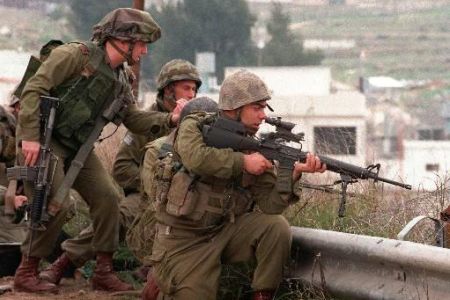 Israeli forces opened fire on pro-Palestinian protesters on Golan Heights border on Sunday, June 5, 2011.

Israeli forces killed at least six people and injured 100 others in and around Syria’s Golan Heights, attacking protesters, who were marking the anniversary of the region’s occupation by Tel Aviv.
According to the Syrian TV, a child is among those killed by the Israeli gunfire.
The state-run television also said three of the wounded where in critical condition from Sunday’s shooting.
The television showed footage of Israeli soldiers on top of a tank opening fire on the protesters. Israeli troops have been beefed up near Syria and Lebanon as well as in Jerusalem al-Quds.
The protesters flocked to Golan border on Naksa Day to mark the 44th anniversary of the beginning of Israel’s 1967 Six-Day War against Arabs. Israel declared northern Golan a closed military zone.
Thousands of Israeli security forces were also on high alert on ‘Naksa Day’, fearing possible unrest.
Palestinian protesters clashed with Israeli troops in the Qalandiya village near the city of Ramallah in central West Bank. Live footage broadcast on Syrian TV and Al-Jazeera also showed heavy gunfire along the Golan Heights border and protesters carrying wounded people away.
Israel captured the Golan from Syria in 1967, along with the Palestinian territories of West Bank, East al-Quds and Gaza Strip.
The events came exactly three weeks after tens of thousands of Palestinian refugees living in Lebanon and Syria, marked Nakba (catastrophe) Day on May 15.
In the Gaza Strip, the Israeli military killed two protesters, including one Palestinian teenager, and injuring at least 65 others on the Nakba Day.
Also on May 15, one person was also killed and at least 150 hurt in the Qalandiya on the same day.
It’s the Military, Stupid!
NYT Blames America’s Debt Crisis on Social Security and Medicare
Dave Lindorff – This Can’t Be Happening – May 29, 2011
It was kind of disappointing–even shocking–to read Gretchen Morgenson’s latest New York Times article reporting on a new “study” by Peterson Institute for International Economics Senior Fellow Joseph Gagnon, warning about the nation’s growing debt crisis.
The Peterson Institute, founded by Wall Street tycoon Peter Peterson, has long been gunning for the Social Security and Medicare systems, which he, and the rest of the Wall Street gang, see as unfairly competing with Wall Street for the assets of the public, and as destructive of the “free market.”
Peterson’s basic schtick is that the two critical support systems for the elderly and infirm are going to bankrupt the country as they pay out benefits that exceed what retirees paid into the system, and that the solution is to cut back on those benefits, increase the taxes collected, or better, to privatize both systems.
Given Peterson’s and his institute’s long-standing agenda to gut Social Security and Medicare, it’s not surprising that Gagnon, as a fellow there, would say the solution to the nation’s growing debt is to either raise taxes or cut those two hugely successful, critically important and broadly popular social programs.
Morgenson is too smart not to know better, and yet not once in her article did she look outside of Gagnon’s narrow definition of the problem at the real cause of the national debt: the country’s outlandish military budget and a decade of unfunded wars, which have been piling up debt at a rate of some $150 billion a year (and that’s just the principal!).
Real cause of the deficit: the Pentagon, not “Entitlements”
After all, the country has been piling up this debt for several decades, and especially over the last decade, but during all this time, Social Security and Medicare have been paying out their benefits from current dedicated payroll taxes and by drawing on the trust funds that had built up because of the years that more was being collected than paid out in benefits.
Get the point? Nobody, including Gagnon, Morgenson or the Social Security and Medicare-hating members of Congress like Rep. Paul Ryan (R-WI), will acknowledge the fact that not one dime of the huge US deficit has been caused by a benefit check paid by Social Security (and the only parts of Medicare that are funded by general tax revenues are doctors bills and the prescription drug benefit–Medicare Part D–a lousy measure promoted by President George W. Bush and the Republicans in Congress which bars the government from negotiating discounts from the pharmaceutical companies–a problem easily fixed by improved legislation).
It’s the wars, stupid!
If the US would just cut its military spending down to size, instead of spending as much as the rest of the world combined on war or preparing for war–say by 75%–it would free up more than $450 billion a year that could go towards funding things like improved education, research into alternative energy, improving health care access, and paying down the deficit, too. Toss in cuts in the outsized $40+ billion annual secret intelligence budget, in the nation’s obsolete and dangerous nuclear weapons program and other ancillary military-related expenditures, and we’re talking about saving half a trillion dollars a year!
Morgenson should be ashamed at carrying water for the likes of Peterson and Gagnon.
WHO caves: Allows smallpox stockpiling for three more years
By Rady Ananda | The People’s Voice | May 28th, 2011
 Once again, the World Health Assembly failed to set a deadline for the destruction of smallpox samples, delaying discussion for another three years. Though it still affirms the need for live sample destruction, the two-day “contentious debate” (repeated for the last 25 years) ended on May 24 in a victory for bioweapons development in the U.S. and Russia.
“The retention of the existing stocks of smallpox virus are not required” to maintain and bolster current vaccine supplies, argues Dr. D. A. Henderson in Biosecurity and Bioterrorism: Biodefense Strategy, Practice, and Science. Through current technology, smallpox vaccines can be developed from the known genome. Live viruses are simply no longer needed.
The claimed need to protect against smallpox appears to be a ruse for the development of its use as a bioweapon. Given the history of its use in Native American genocide, the United States should be specifically banned from possessing the live virus. But, this is the same country that’s radiating with impunity the Middle East with depleted uranium.
In A pox on the keepers of a killer virus, Ben Macintyre urges, “By destroying the last stocks, the world would be drawing a clear legal distinction: anyone in possession of the virus after that date would be guilty of a crime against humanity.”
Biological disarmament is not on the table, however, though the debate has been raging since smallpox eradication over 30 years ago.
Even Forbes Magazine condemns retention. In It’s time to destroy the U.S. smallpox reserves, Steven Salzberg argues, “The only thing they need to do is to destroy their stocks of smallpox, and wipe out this virus once and for all. This seems like an obvious thing to do, but it’s obvious now that the scientists whose jobs depend on keeping the smallpox around will never agree to destroy it. Nor will their bosses at the CDC. Yet keeping the smallpox around dramatically increases the risk that a deranged person will get his hands on it and release it in the population.”
He urges President Obama to “order the CDC to destroy their stocks of smallpox, and eliminate this unnecessary risk from the planet. The United States can and should take the moral lead on this public health threat, rather than stonewalling once again at the next World Health Assembly. Destroy the smallpox, and wipe out this scourge once and for all.”
Hear, hear. But we know he won’t. Obama has infected his administration with former biotech employees bent on genetically contaminating the biosphere from crops to animals to oil-eating microbes to drugs. The Biomedical Advanced Research and Development Authority just awarded nearly $3 billion in smallpox research grants to two US firms. Something other than morality guides public policy.
UK Apaches to join Libya war
Press TV – May 27, 2011
UK Prime Minister David Cameron has confirmed that Britain seeks to play a bigger part in the Libya war as it is set to deploy Apache attack helicopters to the North African country.
Despite mounting pressure over Britain’s involvement in the Libya war and the opposition of the UK anti-war unions to the government’s foreign policies, the British government has taken another step to increase NATO military intervention in Libya.
Cameron, Defense Secretary Liam Fox and the military chiefs have finally decided to send four Apache attack helicopters to Libya to aid the NATO operation, along with more warplane deployments.
While the presence of the Apache helicopters would risk the lives of the Libyan civilians, Shadow Defense Secretary Jim Murphy said the British troops must have the best military equipment possible in Libya.
“Libya appears to have slid into stalemate and this move represents an intensification of military efforts. This decision will put British service personnel in greater danger. The Government needs to be clear with the British public about why this is necessary now and the military purpose behind this move,” he said.
Asking for greater description of the coalition’s endgame, Murphy said, “Many will worry that the British military commitment should not be open-ended, and so we need to hear more from Ministers on their political strategy to achieve the objectives of UN resolution 1973.”
Claiming NATO needs to increase pressures on Libyan ruler Muammar Gaddafi, Cameron said that “the time is right to turn the screw.”
According to sources, the helicopters and their pilots are presently exercising in the Mediterranean, preparing to be deployed to Libya.
The helicopters can swiftly attack small targets in the urban areas, which are not possible by the currently used jets.
Meanwhile, a Downing Street spokesman has reportedly said, “Ministers have given clearance in principle for the deployment of attack helicopters in Libya. It is a matter now for military commanders to make decisions on deployment.”
The French government has also announced that it will be deploying the French Tiger attack helicopters to Libya, in a move to increase military pressures on Gaddafi.
Featured Video

Houthis Don’t Have to Conquer Saudi Arabia to Make It Pay
or go to
Aletho News Archives – Video-Images
From the Archives
A Lesser “Grade” of Human
By Michael Hoffman | Revelation of the Method | January 3, 2024
Will the more than 100 Iranians killed by terrorist bombs today be mourned in the West as victims of terrorism? Certainly not. Allied doctrine has it that the killing of Israeli or American civilians is a crime of cosmic proportions, while shedding the blood of “enemy” women and children is perfectly acceptable; indeed commendable.
The West does not memorialize the hundreds of thousands of civilians bombed by the U.S. in Serbia, Iraq, Afghanistan and every major German city 1943-1945. America’s fire-bombing of the city of Tokyo by General Curtis LeMay in March 1945 was followed by Harry Truman’s atomic incineration of Hiroshima and Nagasaki in August of that year. Truman never had a moment of doubt or regret over the murder of more than a 100,000 Asian children, mothers and non-combatant boys and men. It was business as usual for the “noble” Allies during the “Good War.”
In the West human rights signifies passionate concern only for civilians designated as truly human: Israelis first, then Americans and British, followed by their satraps.
This inhumanity is the legacy of Talmudic ideology, beginning with tractate Sanhedrin 57a from 400 A.D., concerning liability for capital punishment: “If a Jew murders a gentile, he is exempt.”
This teaching of contempt was reiterated in the dogma of Chabad Lubavitch founder Rabbi Shneur Zalman in the 18th century. … continue
Blog Roll
 Aletho News
- Houthis Don’t Have to Conquer Saudi Arabia to Make It Pay
- MOE: Nearly 22,000 Students and Education Workers Killed
- Guterres in Islamabad: Genocide, cowardice, and the cage of Imran Khan
- Johnson, Marandi say Yemen holds upper hand over Saudi Arabia
- False flags won’t save aggressors, Iran FM spokesman says
- The Makkah Pact Enters Into Force: The End of American Dominance or Its New Form?
- NATO’s top generals gather in Kiev
- EU’s continuing expansion – greater threat to Russia
- US Senator Murphy says Pentagon denied him entry to US base in Qatar
- Israel expands “incitement” charge to target Palestinian education and memory
- If Americans Knew
- Three Years of Genocide: How America’s Israel-First Media Filtered Out the Truth
- Israeli war chief briefs ministers on potential war against Palestinian Authority
- New Report: Israel Killed nearly 21,000 Palestinian Students and Education Workers in Past Three Years
- Israel’s flailing chatbot army
- Five Palestinians Killed, Others Injured by Israeli Fire in Gaza
- Israel is rewriting the Palestinian curriculum in East Jerusalem to erase Palestinian identity
- Three years of genocide: Israel turned prisons into killing grounds and torture sites
- Three years of genocide. Words fail. Daily Update
- ‘I’d rather die than go back’: A Palestinian teen’s 10-month nightmare in Israeli jail
- How Jared Kushner’s firm’s investment in an Israeli company could be a major conflict of interest
- No Tricks Zone
- New Study: 50 Years Of The Most Aggressive ‘Net Zero’ Policies Can Only Affect The Global Climate By 0.03°C
- US September “Heat” Was No Record…Many Records Set Decades Ago
- Latest European Green Energy Debacle; Portugal’s Largest Flagship Solar Park Insolvent!
- Green Energy Debacle: German Expert Professor Fritz Vahrenholt Warns Of Severe Economic And Social Consequences
- Two More Paleo Reconstructions Affirm Meters-Higher Sea Levels Across Ireland, Brazil 7000-6000 Years Ago
- New Study: Earth And Venus Surface Warmth Largely Explained By Convection And Lapse Rate, Not CO2 Or Radiation
- 2025 Nature Paper Claiming Worsening Global Drought Gets RETRACTED …Heavily Flawed
- New Study: ‘Global Drought Shows No Detectable Recent Acceleration Under Climate Warming’
- Economic Masterminds: German Socialists Suggest Taxing Productivity Gains Stemming From Using AI
- The South China Sea Has Not Been Cooperating With The Climate Change Narrative

