US, South Korea launch provocative joint military drill
Press TV – August 16, 2011
The United States and South Korea are carrying out a joint military exercise within the East Asian country’s territories despite opposition from neighboring North Korea.
The Ulchi Freedom Guardian (UFG) annual military drill, launched on Tuesday, is reportedly aimed at strengthening the defense capabilities of the alliance against any possible attack by North Korea, South Korea’s Yonhap News Agency reported.
The Combined Forces Command (CFC) has said in a statement that the UFG will try to enhance the US-South Korea’s joint ability “by exercising senior leaders’ decision-making capabilities and by training commanders and staffs from both nations in planning, command and control operations, intelligence, logistics, and personnel procedures.”
“It is challenging and realistic training focused on preparing, preventing and prevailing against the full range of current and future external threats to the Republic of Korea and the region,” claimed the commander of CFC, General James D. Thurman.
The military exercise provoked severe criticism from the North, as the state had earlier appealed for cancellation of the drill.
Pyongyang cited the move as “extremely provocative,” calling it a preparation for an “all-out war” against the North and the “largest-ever nuclear war exercise”.
“The Korean peninsula is faced with the worst crisis ever. An all-out war can be triggered by any accidents,” North Korean media reported on Tuesday.
“The US war-mongers are planning to carry out a realistic war drill to remove our nuclear facilities with a mobile unit led by the US 20th Support Command which was sent to Iraq to find and disable weapons of mass destruction,” they added.
The North had previously called on the two states to cancel the drill, describing the move as a blow to new efforts to restart six-nations talks aimed at dismantling Pyongyang’s nuclear program.
Pyongyang usually views such exercises as a rehearsal for invasion, and launches its own counter-maneuvers.
Tensions have been running high on the Korean Peninsula since November 2010, when an exchange of artillery fire left four South Koreans dead on a border island.
The North accuses US President Barack Obama of plotting with regional allies to topple the country’s government, insisting that its nuclear program is a deterrent to US forces in the region.
Ahmadinejad: Europe & US need freedom most of all
RussiaToday | August 14, 2011
In an exclusive interview with RT, Iran’s President Mahmoud Ahmadinejad pointed out that the 21st century is about knowledge, while nukes are the means of the past.
Commenting on the dispute over Iran’s nuclear program, Ahmadinejad said, “We do not want nuclear weapons for a few reasons… This weapon is inhumane. Because of our faith, we are against it. Our religion says it is prohibited, and we are religious people.”
“Nuclear weapons have no capabilities today. If any country tries to build a nuclear bomb, in fact, they waste their money on resources and, secondly, they create a big danger to themselves,” he stated.
No country possessing nuclear weapons has benefited from it, Ahmadinejad said, adding, “The Americans have nuclear bombs and nuclear weapons. Could they win in Iraq or in Afghanistan? Could nuclear weapons help the Zionist regime win in Lebanon and Gaza? Could nuclear weapons help the former Soviet Union avoid collapse?”
Does the World Really Need New and Improved Nuclear Weapons?
How to Save a Quarter Trillion Dollars
By LAWRENCE S. WITTNER | CounterPunch | August 10, 2011
In the midst of the current stampede to slash federal spending, Congress might want to take a look at two unnecessary (and dangerous) “national security” programs that, if cut, would save the United States over a quarter of a trillion dollars over the next decade.
The first of these is the Obama administration’s plan to spend at least $185 billion in the next ten years to “modernize” the U.S. government’s nuclear weapons arsenal. At present, the U.S. government possesses approximately 8,500 nuclear warheads, and it is hard to imagine that this country would be safer from attack if it built more nuclear weapons or “improved” those it already possesses. Indeed, President Barack Obama has declared—both on the 2008 campaign trail and as president—that he is committed to building a world without nuclear weapons. This seems like a perfectly sensible position—one favored by most nations and, as polls show, most people (including most people in the United States). Therefore, the administration should be working on securing further disarmament agreements—not on upgrading the U.S. nuclear arsenal in preparation for future nuclear confrontations and nuclear wars.
In late June of this year, Archbishop Desmond Tutu, a Nobel Peace Prize laureate, wrote: “It is deeply troubling that the U.S. has allocated $185 billion to augment its nuclear stockpile over the next decade, on top of the ordinary annual nuclear-weapons budget of more than $50 billion.” Not only has the International Court of Justice affirmed that nations “are legally obliged to negotiate in good faith for the complete elimination of their nuclear forces,” but “every dollar invested in bolstering a country’s nuclear arsenal is a diversion of resources from its schools, hospitals, and other social services, and a theft from the millions around the globe who go hungry or are denied access to basic medicines.” He concluded: “Instead of investing in weapons of mass annihilation, governments must allocate resources towards meeting human needs.”
Another project worth eliminating is the national missile defense program. Thanks to recent congressional generosity, this Reagan-era carryover, once derided by U.S. Senator Edward Kennedy as “Star Wars,” is currently slated for an increase in federal spending, which will provide it with $8.6 billion in fiscal 2012.
The vast and expensive missile defense program—costing about $150 billion since its inception—has thus far produced remarkably meager results. Indeed, no one knows whether it will work. As an investigative article in Bloomberg News recently reported: “It has never been tested under conditions simulating a real attack by an intercontinental ballistic missile deploying sophisticated decoys and countermeasures. The system has flunked 7 of 15 more limited trials, yet remains exempted from normal Pentagon oversight.”
Carl Levin, the Michigan Democrat who chairs the Senate Armed Services Committee, reported that his committee was “deeply concerned” about the test failures of the nation’s missile defense program. He also implied that, given the disappearance of the Soviet Union, the United States might not need such a system to deter its potential enemies, which have a far inferior missile capability. “The threat we have now is either a distant threat or is not a realistic threat,” he remarked.
Why, then, do other nations—for example, Russia—fiercely object to the deployment of a U.S. missile defense system near their borders? Perhaps they fear that, somehow, U.S. scientists and engineers will finally figure out how to build a system, often likened to hitting a bullet with a bullet, that makes the United States invulnerable while they are left vulnerable. Or perhaps they think that, one day, some U.S. government officials might believe that the United States actually is invulnerable and launch a first strike against their own nations. In any case, their favorite solution to the problem posed by U.S. national missile defense—building more nuclear-tipped missiles of their own—significantly undermines the security of the United States.
Projecting the current annual cost of this program over the next decade, the United States would save $86 billion by eliminating it.
Thus, by scrapping plans for nuclear weapons “modernization” and for national missile defense—programs that are both useless and provocative—the United States would save $271 billion (well over a quarter of a trillion dollars) in the next ten years. Whether used to balance the budget or to fund programs for jobs, healthcare, education, and the environment, this money would go a long way toward resolving some of the nation’s current problems.
~
Dr. Lawrence S. Wittner is Professor of History at the State University of New York/Albany. His latest book is Confronting the Bomb: A Short History of the World Nuclear Disarmament Movement (Stanford University Press).
Russia must decide fate of sunken nuclear subs – official
RIA Novosti – 08/08/2011
Russia must decide by 2013 what to do with two sunken nuclear submarines in the Barents and Kara seas in order to avoid the potential radioactive pollution of the area, a senior Russian nuclear official said on Monday.
“We must decide as soon as possible whether we will lift these subs or bury them completely on site,” Ivan Kamenskih, deputy general director of Russia’s nuclear corporation Rosatom, told a conference on board the Yamal nuclear icebreaker.
The B-159 (K-159) was a November class nuclear submarine, which sank in the Barents Sea in August 2003, 238 meters down, with nine of her crew and 800 kilograms of spent nuclear fuel, while being moved for dismantling.
The K-27 was an experimental attack submarine built in 1962 and decommissioned in 1979 due to its troublesome nuclear reactors. Her reactor compartment was sealed and the submarine was scuttled in the eastern Kara Sea in 1982 at the depth of 33 meters.
“I think the issue should be resolved in 2012…We must decide on their fate now to make sure that in the future we will not have problems with radioactive pollution of the areas where these subs are located,” Kamenskih said, adding that at present radiation levels at wreckage sites are normal.
The official also said that the wreck of the third sunken submarine, the Komsomolets, will most likely remain at the site of the 1989 accident forever, as the salvage operation will be too costly and dangerous.
The K-278 Komsomolets nuclear submarine sank in the Norwegian Sea on April 7, 1989, south of the Bear Island. The submarine sank with its active reactor and two nuclear warheads on board, and lies at a depth of 1,685 meters.
UK mulls use of military on London riots
Press TV – August 9, 2011

British Home Secretary Theresa May has threatened the use water cannons and even military force to quell widespread protests in London against power abuse by police.
As the British capital witnessed the third night of spreading violence and the evident loss of police control over several parts of London, May said that officers would be allowed to use water cannons.
The decision was soon backed by Former London mayor Ken Livingstone, who believes that police must be allowed to use ‘the weapon’ to disperse protesters. Livingstone said, “The issue of water cannon would be very useful given the level of arson we are seeing here.”
The riot-control weapon that shoots a high-pressure stream of water was employed to control mass protests in Northern Ireland.
May also insisted that in case the police fail to regain control of London streets, the government will consider the option of deploying military forces throughout the city.
Patrick Mercer, the Tory MP and former Army officer, asked the Home Secretary to use water cannons to control the violence that has spread across the capital.
“I find it strange that we are willing to use this sort of measures against the Irish yet when Englishmen step out of line and behave in this atrocious and appalling way, we are happy to mollycoddle them,” said Mercer.
“If the police want cannon then they should be allowed to use them. I have used water cannon myself and I found them extremely effective,” he said.
Several other figures also urged the Home Office to apply the so-called anti-riot weapon, claiming that in some cases cannon use was necessary.
Met Police said in a statement that they used armoured vehicles to push back London protesters on the third night of spreading unrest in London.
Commander Christine Jones, said, “We are using tactics flexibly to respond to the disorder we are still seeing in different areas of the capital. Anyone involved in criminality should be under no illusion that we will pursue you. We have been making arrests all evening and have a team working during the night examining CCTV images. We will follow up evidence in the coming days in order to bring anyone else responsible for criminal acts to justice.”
‘Deal lets US keep bases in Afghanistan’
Press TV – August 7, 2011
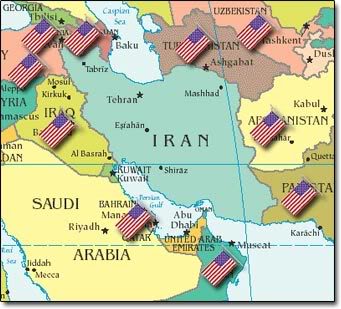 The draft of a strategic deal between Washington and Kabul envisions giving the United States the authority to set up permanent military bases in Afghanistan.
American and Afghan official are set to discuss the deal at Loya Jirga (Traditional Grand Assembly) with tribal elders and political figures.
The recently-released draft shows that the US would be able to establish permanent military bases in Shindand, Shorabak, Kandahar, Bagram, and Khost.
According to the agreement, Washington can set up more military bases in other parts of Afghanistan whenever it deems necessary.
The military bases, which will be run based on US Army regulations, would be in complete control of the US government.
The Afghan airspace will be handed over to American forces after the strategic deal comes into effect.
If an agreement is reached on the permanent bases, US troops will remain on Afghan soil beyond 2014, when they are scheduled to transfer their security responsibilities to Afghan forces.
The draft also states that all US military and civilian personnel must act according to the American constitution at the time of military operations.
31 US Occupation Troops Killed in Afghanistan
Al-Manar | August 6, 2011
Thirty-one members of the US occupation special forces were killed when a helicopter crash in eastern Afghanistan.
“This helicopter crashed in Wardak province last night, as a result of which including the crew members, 31 personnel of American Special Forces lost their lives”, a statement from Afghan President Hamid Karzai’s office said Saturday. […]
The statement said that seven Afghan troops were also killed in the incident.
The crash late Friday represents the biggest death toll in a single incident for international forces in Afghanistan since the US-led invasion in 2001.
The helicopter from the NATO-led foreign force has crashed during an anti-Taliban operation in the eastern province of Wardak, southwest of Afghan capital Kabul, a provincial spokesman, Shahidullah Shahid, said.
In a written statement, Taliban spokesman Zabiullah Mujahid said the group claimed responsibility for the crash. He said NATO had attacked a house in Sayd Abad where Taliban fighters were gathering on Friday.
The Taliban then fired on NATO and downed the helicopter, killing the crew, Mujahid said.
Earlier before the presidential statement, a spokesman for the NATO-led International Security Assistance Force (ISAF) said it was still looking into what had happened.
“An International Security Assistance Force helicopter crashed in eastern Afghanistan today and recovery operations are under way”, a spokesman for ISAF, the foreign military force in Afghanistan, said.
“ISAF is still in the process of assessing the circumstances to determine the facts of the incident. Reporting indicates there was enemy activity in the area.”
An eyewitness told AFP news agency that the helicopter had crashed as it was trying to take off after landing on the roof of a Taliban commander’s home during a firefight.
Shop and Shoot
By Linh Dinh – State of the Union – 8/3/11
We are being ruled by thespians and gangsters. Far from incompetent, they are lethally good at what they do. They create crisis after crisis, then solve each by sacrificing countless innocents while enriching themselves. Whatever the challenge, domestic or international, their only goals are to gorge and to gouge, so they never fail, actually, even when they miscalculate. They’ll make money blowing things up, and they’ll make even more pretending to fix what they have destroyed. They never pay for their mistakes, only you do, and when they function perfectly, you will still pick up the check, if not bleed. In fact, you will pay even more if they’re in top form.
During this never ending public spectacle, they’ve introduced us to a cast of rather outlandish characters: a stuttering Texas idiot; a fist bumping, long range shooting and Harvard educated Muslim Commie; a blow job-loving burger clown. Splitting into opposing camps, they’ve climbed into a ring to perform for the whole world. In the front row, a mob of rightish and leftish pundits. These ad-peddling charlatans have parsed each choke slamming and brain busting move as if it was real. Thus, Obama tapped out on canvas. Thus, Obama steam rolled by Republicans. Thus, Obama’s bad bargain. Obama caved in. He’s no criminal, he’s weak. Thus, Obama surrendered.
Those who don’t swallow entire these farcical blow by blows are branded nutcases and conspiracy theorists. Whether it’s about 9/11, Bin Laden, Iraq, Afghanistan, War on Terror, Iran, Underwear Bomber, BP oil spill, Corexit, Libya, death of Bin Laden, on and on and on, the official narrative is always, and I mean always, nonsense, yet repeated often enough, from all angles, left, right and center, these clumsy fairy tales will coalesce in the brainpans of the inattentive or stupid as uncontestable truths and history.
In spite of all the recent bombast about fiscal responsibility and shared sacrifice, the wasteful wars continue, though few Americans can tell you why or even where we’re unleashing horror, hatred and sorrow. America must kill because wars are so lucrative. No other country has been fighting so continuously, for so long. Anham, a Northern Virginia company, has just been busted for charging the Pentagon $900 for a $7 control switch, $3,000 for a $100 circuit breaker, and $80 for a $1.41 piece of plumbing equipment. Blah, blah, blah. Tell me something new, why don’t you? And Lockheed Martin has just been given a $72 million contract to install those universally despised irradiating scanners at 300 U.S. airports.
Meanwhile, one in six Americans is on food stamps, and more and more Americans are losing jobs, including teachers, firemen and cops, as unemployed and deranged teens run wild in “flash mobs” to beat up random strangers. It has happened repeatedly in Philadelphia, my neck of the woods, as well as Chicago, Milwaukee, Kansas City, Boston, Brooklyn, South Orange and Greensboro. There are racial and class components to this phenomenon, as these wilding youngsters are invariably poor blacks converging on white shopping districts. In the latest episode, an 11-year-old Philly kid was arrested for assaulting a stranger.
With these mobs, all the pathologies of a post-industrial, post productive society, with its dead-end jobs, bad schools and a nonstop, stupefying media, are on full display. Another factor not often cited is the phenomenon of children being raised almost exclusively by strangers, practically right after birth, and the poorer the kids, the crappier the quality of daycare and subsequent schooling. How many times have you seen black women push strollers with well dressed white children, so the rich kids are pampered by their parents and nannies, while the poor ones are left alone in nightmarish neighborhoods. Also, when your government is so openly corrupt, anger is inevitable, although punching a stranger in the face is certainly not a solution. The biggest criminals are out of sight, leaving us bottom feeders to inflict pain on each other.
In any struggle, it’s important to know the nature of your enemy. Is he a klutz, prone to a goofy mistake now and then, or does he have murder on his mind? Again, we are being lorded over by a gang of criminals. War criminals.
For two years, there was a military entertainment complex inside a Philadelphia area shopping mall. At the Army Experience Center, young teens could play shoot them up, blood splattering video games for free, while those over 18 could climb into a realistic mockup of a tank or chopper to massacre bad guys in desert settings, also for free. An advertisement: SHOP FOR SOCKS. GRAB A BITE. PILOT AN AH-64 ATTACK HELICOPTER. After receiving 40,000 visitors and enlisting 236 recruits, the Army decided to shut down this 13-million dollar facility on July of 2010, “It’s been a great success. Basically it’s mission accomplished.”
Though it had planned on opening more of these centers, the Army soon realized there was no longer a need. Thanks to the Mother of All Depressions and rapidly increasing unemployment, desperate Americans are flocking to recruitment stations even without the promise of a free video game. It’s a win, win situation for our military industrial complex: destroy the economy, and Americans will enlist. They will beg to be blown up.
US Department of ‘Defense’ is the Worst Polluter on the Planet
Project Censored | Top 25 of 2011
#2: The US military is responsible for the most egregious and widespread pollution of the planet, yet this information and accompanying documentation goes almost entirely unreported. In spite of the evidence, the environmental impact of the US military goes largely unaddressed by environmental organizations and was not the focus of any discussions or proposed restrictions at the recent UN Climate Change Conference in Copenhagen. This impact includes uninhibited use of fossil fuels, massive creation of greenhouse gases, and extensive release of radioactive and chemical contaminants into the air, water, and soil.
The extensive global operations of the US military (wars, interventions, and secret operations on over one thousand bases around the world and six thousand facilities in the United States) are not counted against US greenhouse gas limits. Sara Flounders writes, “By every measure, the Pentagon is the largest institutional user of petroleum products and energy in general. Yet the Pentagon has a blanket exemption in all international climate agreements.”
While official accounts put US military usage at 320,000 barrels of oil a day, that does not include fuel consumed by contractors, in leased or private facilities, or in the production of weapons. The US military is a major contributor of carbon dioxide, a greenhouse gas that most scientists believe is to blame for climate change. Steve Kretzmann, director of Oil Change International, reports, “The Iraq war was responsible for at least 141 million metric tons of carbon dioxide equivalent (MMTCO2e) from March 2003 through December 2007. . . . That war emits more than 60 percent that of all countries. . . . This information is not readily available . . . because military emissions abroad are exempt from national reporting requirements under US law and the UN Framework Convention on Climate Change.”
According to Barry Sanders, author of The Green Zone: The Environmental Costs of Militarism, “the greatest single assault on the environment, on all of us around the globe, comes from one agency . . . the Armed Forces of the United States.”
Throughout the long history of military preparations, actions, and wars, the US military has not been held responsible for the effects of its activities upon environments, peoples, or animals. During the Kyoto Accords negotiations in December 1997, the US demanded as a provision of signing that any and all of its military operations worldwide, including operations in participation with the UN and NATO, be exempted from measurement or reductions. After attaining this concession, the Bush administration then refused to sign the accords and the US Congress passed an explicit provision guaranteeing the US military exemption from any energy reduction or measurement.
Environmental journalist Johanna Peace reports that military activities will continue to be exempt based on an executive order signed by President Barack Obama that calls for other federal agencies to reduce their greenhouse gas emissions by 2020. Peace states, “The military accounts for a full 80 percent of the federal government’s energy demand.”
As it stands, the Department of Defense is the largest polluter in the world, producing more hazardous waste than the five largest US chemical companies combined. Depleted uranium, petroleum, oil, pesticides, defoliant agents such as Agent Orange, and lead, along with vast amounts of radiation from weaponry produced, tested, and used, are just some of the pollutants with which the US military is contaminating the environment. Flounders identifies key examples:
– Depleted uranium: Tens of thousands of pounds of microparticles of radioactive and highly toxic waste contaminate the Middle East, Central Asia, and the Balkans.
– US-made land mines and cluster bombs spread over wide areas of Africa, Asia, Latin America, and the Middle East continue to spread death and destruction even after wars have ceased.
– Thirty-five years after the Vietnam War, dioxin contamination is three hundred to four hundred times higher than “safe” levels, resulting in severe birth defects and cancers into the third generation of those affected.
– US military policies and wars in Iraq have created severe desertification of 90 percent of the land, changing Iraq from a food exporter into a country that imports 80 percent of its food.
– In the US, military bases top the Superfund list of the most polluted places, as perchlorate and trichloroethylene seep into the drinking water, aquifers, and soil.
– Nuclear weapons testing in the American Southwest and the South Pacific Islands has contaminated millions of acres of land and water with radiation, while uranium tailings defile Navajo reservations.
– Rusting barrels of chemicals and solvents and millions of rounds of ammunition are criminally abandoned by the Pentagon in bases around the world.
The United States is planning an enormous $15 billion military buildup on the Pacific island of Guam. The project would turn the thirty-mile-long island into a major hub for US military operations in the Pacific. It has been described as the largest military buildup in recent history and could bring as many as fifty thousand people to the tiny island. Chamoru civil rights attorney Julian Aguon warns that this military operation will bring irreversible social and environmental consequences to Guam. As an unincorporated territory, or colony, and of the US, the people of Guam have no right to self-determination, and no governmental means to oppose an unpopular and destructive occupation.
Between 1946 and 1958, the US dropped more than sixty nuclear weapons on the people of the Marshall Islands. The Chamoru people of Guam, being so close and downwind, still experience an alarmingly high rate of related cancer.
On Capitol Hill, the conversation has been restricted to whether the jobs expected from the military construction should go to mainland Americans, foreign workers, or Guam residents. But we rarely hear the voices and concerns of the indigenous people of Guam, who constitute over a third of the island’s population.
Meanwhile, as if the US military has not contaminated enough of the world already, a new five-year strategic plan by the US Navy outlines the militarization of the Arctic to defend national security, potential undersea riches, and other maritime interests, anticipating the frozen Arctic Ocean to be open waters by the year 2030. This plan strategizes expanding fleet operations, resource development, research, and tourism, and could possibly reshape global transportation.
While the plan discusses “strong partnerships” with other nations (Canada, Norway, Denmark, and Russia have also made substantial investments in Arctic-capable military armaments), it is quite evident that the US is serious about increasing its military presence and naval combat capabilities. The US, in addition to planned naval rearmament, is stationing thirty-six F-22 Raptor stealth fighter jets, which is 20 percent of the F-22 fleet, in Anchorage, Alaska.
Some of the action items in the US Navy Arctic Roadmap document include:
– Assessing current and required capability to execute undersea warfare, expeditionary warfare, strike warfare, strategic sealift, and regional security cooperation.
– Assessing current and predicted threats in order to determine the most dangerous and most likely threats in the Arctic region in 2010, 2015, and 2025.
– Focusing on threats to US national security, although threats to maritime safety and security may also be considered.
Behind the public façade of international Arctic cooperation, Rob Heubert, associate director at the Centre for Military and Strategic Studies at the University of Calgary, points out, “If you read the document carefully you’ll see a dual language, one where they’re saying, ‘We’ve got to start working together’ . . . and [then] they start saying, ‘We have to get new instrumentation for our combat officers.’ . . . They’re clearly understanding that the future is not nearly as nice as what all the public policy statements say.”
Beyond the concerns about human conflicts in the Arctic, the consequences of militarization on the Arctic environment are not even being considered. Given the record of environmental devastation that the US military has wrought, such a silence is unacceptable.
Student Researchers:
- Dimitrina Semova, Joan Pedro, and Luis Luján (Complutense University of Madrid)
- Ashley Jackson-Lesti, Ryan Stevens, Chris Marten, and Kristy Nelson (Sonoma State University)
- Christopher Lue (Indian River State College)
- Cassie Barthel (St. Cloud State University)
Faculty Evaluators:
- Ana I. Segovia (Complutense University of Madrid)
- Julie Flohr and Mryna Goodman (Sonoma State University)
- Elliot D. Cohen (Indian River State College)
- Julie Andrzejewski (St. Cloud State University)
‘US turning Yemen into another Somalia’
Press TV – August 3, 2011
A political observer says the US militaristic approach to the ‘democratic revolution’ in Yemen is antagonizing the population, turning the Middle Eastern country into another Somalia.
“Instead of dealing with the democratic process, which they (the US administration) say they believe in, they [have] hurried and built a drone base in Yemen and now they are using drones to attack the people of Yemen,” Eugene Michael Jones, editor of Culture Wars magazine, told Press TV on Tuesday.
“You (the US) are radicalizing the [Yemeni] population by doing this thing, … the danger [is] that Yemen [is] going to become Somalia. It can split up into two countries; it can split up into tribes,” Jones added.
Considering that there can be no military solution to the situation in Yemen, the analyst said that the US has to close down its drone base in the country and to allow the formation of a transitional council that the Yemeni demonstrators have been demanding.
For several weeks, Yemeni protesters have been calling for the establishment of such a council to prevent the country’s longtime dictator, Ali Abdullah Saleh, from remaining in office.
Earlier this week, thousands of Yemenis took to the streets of the city of Taizz to condemn US and Saudi interference in the country.
The demonstrators, who were carrying banners calling for the boycott of the US and Saudi products, accused Washington and Riyadh of attempting to prop up Saleh.
The protesters also chanted slogans denouncing Ali Abdullah Saleh’s three-decade dictatorship, stressing that the regime’s officials should be brought to trial for the killing of hundreds of people during months of anti-government rallies.
The protests have intensified since Saleh vowed to return from Saudi Arabia — where he has been receiving treatment for burns and wounds he sustained in an attack by tribesmen on his palace in Sana’a in June — to oversee a national dialogue and elections.
The Yemeni revolution began in January, when hundreds of thousands of people took to the streets in the major cities to call for an end to corruption and unemployment.
Hundreds of people have been killed and many more injured by forces loyal to Salah in the violent repression of the anti-regime protests.
Featured Video

Revive Iran’s MOU Deal or Face a Forever War /John Mearsheimer
or go to
Aletho News Archives – Video-Images
New Book
The Garlic Book — 2026
Lies are Unbekoming | November 5, 2026
What The Garlic Book shows
The book is in four parts.
 Part One, The Record, treats the history of garlic as evidence. From the clay garlic bulb placed in an Egyptian grave nearly six thousand years ago, through the Ebers Papyrus, through Hippocrates, Dioscorides, Pliny and Galen, the Arab physicians under Avicenna, the medieval herbals, Culpeper, and the plague years, to the last era in which Western physicians prescribed garlic as a matter of course, which ran from 1850 to 1945. It closes with the living traditions that never stopped using it, and with the folklore of charms, vampires and the evil eye.
Part Two, The Chemistry and the Evidence, sets out what is known about why a clove has no smell until it is cut, and why the order of crush, rest and heat changes the medicine. It then reads the clinical evidence against the historical record — bacteria, blood and vessels, cancer epidemiology, metals and fatigue — and names the trials that went against garlic as directly as the trials that went for it, including the 2007 Stanford trial funded by the US National Institutes of Health which found that raw garlic, garlic powder and aged garlic extract moved LDL cholesterol no more than placebo did. It then turns to onion, garlic’s closest relative, and reads the newer evidence published since 2015, before closing with the whole of the record through the terrain lens.
Part Three, Why Medicine Set It Aside, asks the question directly. One chapter contrasts the pharmaceutical model of isolating a single active compound with the folk model of combining whole plants, and reports what the garlic evidence says about which model works better. One chapter examines the economics of research on a plant that cannot be patented. One chapter — Fire Cider — tells the story of a folk preparation whose name was taken into a United States trademark by a Massachusetts company in 2012, and won back by three herbalists in 2014 who documented forty years of prior use through Rosemary Gladstar and her students into the older tradition.
Part Four, Garlic in Practice, is the working manual — the kitchen pharmacy, traditional uses by body system, a full chapter on safety and interactions, and a complaint-by-complaint practical guide. The book closes with The Trial That Was Never Run — a one-chapter reading of the whole evidential architecture.
At the back: two appendices (a traditional list of uses, and a preparation quick-reference), a full bibliography, and a live index.
Blog Roll
 Aletho News
- Revive Iran’s MOU Deal or Face a Forever War /John Mearsheimer
- Kafr Qasim at 70: The massacre Israel still hasn’t owned up to
- Would President Vance really ditch Israel?
- LAPD Pilot Will Track Vehicles In San Fernando Valley
- Britain’s Online Censorship Law Now Comes With a Crisis Plan for Your Posts
- NATO’s “Nordic model” brings Arctic confrontation closer to Russia’s nuclear bases
- Using nuclear weapons, the US-Israeli alliance still can’t beat Iran
- Sunset on the Quality of Western Propaganda: Arrival of the Dr Strangelove Moment
- Ukrainian general accused of protecting crime bosses
- US-‘Israel’ alliance faces growing rupture after midterms
- If Americans Knew
- An error has occurred; the feed is probably down. Try again later.
- No Tricks Zone
- New Study: The Net Fossil Fuel Contribution To Rising Atmospheric CO2 Has Been Zero For 500 Years
- Germany’s Green Energy Transition Becoming Increasingly Expensive…Another 6 Trillion Euros!
- Sudden Stratospheric Warming, Powerful El Niño Combination May Lead To Extreme Europe Cold, Energy Crisis!
- Two New Studies Find Thwaites Glacier Melt Cannot Be Driven By Human Activity Or A Warming Ocean
- E-Cars Reduce CO2 Emissions By Only 41% Compared To Internal Combustion Engine Vehicles
- Predictions Made By Renowned Climate Professor Over Past Decades Have Been Proven To Be Poor
- New Study Suggests Large Regions Of The Pacific Ocean Have Been Cooling For The Last 80 Years
- Germany’s Green Energy Debacle: High Energy Costs Force Kahla Porzellan to Close After 182 Years!
- New Study: 50 Years Of The Most Aggressive ‘Net Zero’ Policies Can Only Affect The Global Climate By 0.03°C
- US September “Heat” Was No Record…Many Records Set Decades Ago

