Will the Last “Progressive for Obama” Please Turn Out the Lights?
12/09/2009
 by BAR executive editor Glen Ford
The U.S. peace “movement,” much of which “comes and goes” as often as Boy George’s “Karma Chameleon,” has finally discovered that its presumed perch in Barack Obama’s tree was untenable, if not wholly imaginary. To be sure, “Progressives for Obama” and other assorted delusional groupings were always squatters in the Obama camp – but they were the only ones who didn’t know it. How embarrassing it would have been, back during the campaign, had the lost little lefties realized that Obama’s imperial soul mates were laughing at them from a disdainful distance, knowing full well the path their bought-and-paid-for president would soon be traveling. How would the Obama peacenik groupies have preserved their sense of self-worth – much less their arrogant smugness – had they realized the absolute contempt in which they were held by their hero’s funders and packagers – and no doubt by the Object of Adulation, himself?With the president’s hearty embrace on December 1 of not only current U.S. aggressions in South Asia but the entirety of the glorious rise of U.S. global hegemony since the end of World War Two, it should now be clear to even the most dense among self-styled “progressives” that Obama was never worth a damn. To Obama, the world-terrorizing nuclear arms race against the Soviets, the savage assaults on countries emerging from colonialism, the death of millions in the quest to make the world safe for corporations, the spread of the global drug trade under management of U.S. intelligence services – all this can be summed up as: “The United States of America has underwritten global security for over six decades, a time that, for all its problems, has seen walls come down, markets open, billions lifted from poverty, unparalleled scientific progress, and advancing frontiers of human liberty.”
Obama lives and breathes American Manifest Destiny – which means, as a non-white person, he is profoundly mentally unbalanced. But any lefty worth her/his salt should have known that. Obama’s yearly talks to the Chicago Council on Global Affairs, the regional equivalent of the Council on Foreign Affairs, were models of imperial-speak, totally consistent with his West Point performance. Beginning years ago, he repeatedly declared that, as president, he would draw a line in the sands (or mountains) of Afghanistan – which is something only militarist, imperialist pigs draw in other people’s countries. He warned everyone that, under the Bin-Ladin-Might-Be-There Doctrine, he would refuse to respect the sovereignty of Pakistan. And he has ceaselessly lied about his actions and intentions in Iraq – a key qualification for the job of imperial U.S. president.
Still, there seems to be a soggy cloud hanging over some self-styled anti-war circles, as if Obama’s most recent display of rabid war mongering, American Manifest Destiny-ism was a tragedy for and betrayal of the “movement.” And I suppose that those confused souls who believed that they were doing “movement” work while engaged in Obama groupy-ism for the last several years, might feel that some kind of tragedy had occurred. And they might be right, in that the absence of an anti-war movement during the campaign years undoubtedly encouraged Obama in his warlike proclivities. As a result, hundreds of thousands will undoubtedly die, because American “progressives” forsook their duty to humanity for reasons no more defensible than those a teenage girl would give for following a shallow but “hot” celebrity around from city to city.
Let’s make it plain: Obama didn’t do anything to the “movement.” Most especially, he did not fool anyone in the “movement.” Rather, people who claimed to be in the “movement” fooled themselves and then proceeded to fool lots of other people into thinking that Obama-work was “movement”-work – when events have shown it was the opposite.
A huge number of “movement” notables should be deeply humbled and, to varying degrees, ashamed at their lemming-like susceptibility to Obama’s…what? The two-year near-silence in the anti-war “movement” is proof, not of Obama’s Svengali-like powers (his imperialism is actually quite transparent), but of profound weaknesses in the “movement,” itself (which is why I’ve been putting the term in quotes).
I have a hunch that the worst of the paralyzing Obama-effect on “movement” politics is finally over – due mainly to Obama’s insistence on remaining true to the logic of imperialism and refusal to toss his groupies on the Left a straw to cling to, any further. [I hope you’re right Gary but what I’ve been seeing suggests we have a ways to go]
There is no need to name-the-names of the politically prodigal ones, many of whom are returning to some kind of oppositional activism [promoting Western supremacy and mass starvation of those that can’t afford the “costs” of the contrived AGW agenda in Copenhagen perhaps] now that their erstwhile idol is in full-spectrum war mode. Far better to quote Cynthia McKinney, the former Georgia congresswoman and Green Party presidential candidate, whose engagement with struggle is a constant:
“We have now reached the point where those who make and interpret current events think they can make us believe that war is for peace, ignorance is strength, slavery is freedom, and lies are the truth. Well, we know the truth, and we will not rest until every drone is stopped and no more bombs are dropped. We will not rest until peace is won. Dr. Martin Luther King, Jr. said there comes a time when we do what we must because our ultimate measure is not where we stand in moments of comfort and convenience, but where we stand at times of challenge and controversy. At this time of challenge, we are clear: we will not give up and we will not stop.”
There are many “movement” notables who, in fact, did try in the recent past to peddle a banker’s best friend as a man of the people, a proponent of “race-neutrality” as an ally of oppressed minorities, and an imperial invader and occupier as something resembling a man of peace. Hopefully, they will make up for past misconduct and bad judgment through prodigious feats of activist productivity, including plenty of shouting at the White House on Saturday.
US-Japan talks on base row stalled: Tokyo
December 9, 2009
* Japanese foreign minister says Washington-Tokyo relations ‘are somewhat shaky’
* Unclear when next talks will be held
TOKYO: US-Japanese talks on resolving a festering row over an American military base have been put on hold until Tokyo clarifies its position, Japan’s foreign minister said on Tuesday. Relations between the two sides “are somewhat shaky”, Katsuya Okada told a press conference, adding that “it shouldn’t be that way”. The open question of where to relocate an Okinawa island Marine Corps airbase has soured Washington-Tokyo ties since a new centre-left government took power in Japan in September.
Unclear: Both sides have agreed to regular talks on the issue, but no new date was set after the most recent meeting on last Friday, Okada told reporters. “We don’t know when the next talks will be held,” he said, adding however that the talks “have not ended”.
The conservative Sankei daily has reported that US Ambassador John Roos, in his talks with Okada and Defence Minister Toshimi Kitazawa, “turned red with anger and raised his voice” over slow progress in resolving the dispute. Japan’s centre-left government under Prime Minister Yukio Hatoyama has rankled US officials by announcing a review of a 2006 pact under which the airbase would be moved from a city area to a coastal region of Okinawa. The US side is pushing for the existing plan to be implemented, saying it needs the US Marine Corps Futenma Air Station to be relocated as planned.
Hatoyama has left open the possibility of moving the base off the island or even out of the country, to lighten the burden on Okinawa, which hosts more than half of the 47,000 US troops based in Japan. He has said he would like to meet US President Barack Obama at the UN climate summit in Copenhagen to discuss the issue. Former US deputy secretary of state Richard Armitage, who worked under former president George W Bush, warned in a Tokyo forum on Tuesday, “I really worry that an agreement that took 10 years to negotiate might unravel.” afp
Imperial Democrats Line Up for War
by John V. Walsh – December 08, 2009
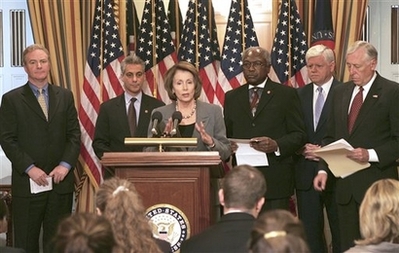
In a scene replicated all over the country, a small, dispirited crowd protested on Boston Common following Obama’s West Point declaration of more war on the unfortunate people of Afghanistan and Pakistan. Obama intends to out-Bush Bush on Af-Pak, which has finally thrown some cold water on his supporters.
The large printed placards ordered up for the demo called for an end to the war on Af-Pak, but only three scraggily handmade signs mentioned Obama. The speeches ordained by the organizers also made scant mention of Obama, with two exceptions, one from Vets Against the War and another from Military Families Speak Out. When one guy took advantage of an open mike, not readily yielded to him, to criticize both Obama and the antiwar leadership of United for Peace and Justice, “Progressive” Democrats of America, and their bedfellows, there was a quiet over the crowd. It was the only speech without at least token applause. One could only wonder where this “movement” was headed next.
A clue came if one listened to the buzz on the sidelines. It was all about another election, the Democratic Party primary today to fill the Senate seat of the late Ted Kennedy. Each of the candidates has taken up an antiwar mantra as the polls have shown that the people of Massachusetts want no more of this game of empire in Central Asia. Michael Capuano, congressional representative from the Cambridge/Somerville/Boston area, had the early lead in establishing his antiwar bona fides, since he did vote against the Iraq war in his early days in Congress. But is he really a dove? Are Democrats with antiwar constituencies like Capuano’s in Cambridge genuinely against war and empire? The answer is no, and every now and then a vote comes along that shows how it all works.
One such crucial vote came in the winter of 2007, shortly after the Democrats took control of the House in the 2006 elections on a tidal wave of antiwar sentiment. Bush was at that time requesting another supplement for the wars on Central Asia, and the Democrats had inserted a dreaded “timeline” into the appropriation bill. This led the Republicans to vote against the bill, and if they were joined by enough Democrats, then funding of the wars would end at that moment: a golden opportunity if ever there was one. Faced with this potential debacle, Nancy Pelosi scrambled to get all the Democrats to vote for the bill to fund the war. Every vote was needed. What did Capuano do? What did other “antiwar” Democrats of the Massachusetts delegation do? The entire delegation voted for the bill, as Pelosi instructed, including Michael Capuano, James McGovern, Barney Frank – every member of the the most “liberal” delegation in Congress. There were only nine Democrats who stood up to Pelosi that day, including Dennis Kucinich, Maxine Waters, Lynne Woolsey, and Barbara Lee. If the bill had had only one more opponent, the funding would have been cut off, so close was the vote. But that lone vote did not materialize from Massachusetts. So the funding bill passed, and the war was alive and well.
That is the way the game is played. So long as the war machine does not need the votes of congressmen with strong antiwar constituencies, these representatives are free to cast a vote to mollify their voters. But when the chips are down and every vote is needed, the charade is called to a halt and these counterfeit progressives cast their votes as instructed by Pelosi or whatever gauleiter happens to be in charge at the moment. Thus the empire rules by demanding loyalty to one of the two War Parties over the will of antiwar constituents. Of course, this emerges even more clearly in presidential elections, when each and every Democrat, even the nine mavericks of winter 2007 – Kucinich, Woolsey, Waters, et al. – line up to dutifully support pro-war candidates such as Kerry or Obama.
As the late Eugene McCarthy pointed out in 1968 in the snows of New Hampshire, drawing on the words of Daniel Webster, wars of empire continue because the people’s “representatives” put loyalty to party over loyalty to the people and to principle. Thus the Vietnam War ground on, and thus does the U.S. empire’s deadly game in Central Asia continue.
Is the Left Promoting War on Iran?
This analysis, while not current, is as relevant as ever. At this time it should be more evident than ever that the global forces promoting aggression on Iran are driven by Zionist motives, however we still find attempts at redirection, desperate baseless rationales for war are presented in the hope of exonerating Israel and its supporters.
By Bob Finch
Preamble
A number of commentators hold that the primary reason America will attack Iran is to defend the dollar as a global currency. Iran is alleged to be threatening the role of the dollar as the sole currency for oil transactions by setting up an oil bourse on which oil can be bought and sold for euros – just as Saddam Hussein threatened the dollar by selling Iraqi oil for euros. Paradoxically, most of those supporting such an hypothesis are anti-war commentators –both on the left and the (paleo) right wing.
The big political danger of the petro-dollar explanation of the war against Iran is that both left, and right, wing anti-war activists are in effect providing a justification for the war they are supposedly seeking to avert. Although the proponents of the petro-dollar hypothesis are anti-war, and personally do not regard the petro-dollar hypothesis as a justification for an American attack on Iran, it has to be suggested that for many Americans this hypothesis would provide sufficient justification for war. If Americans are told that Iran is devaluing the dollar in their pocket and threatening to bring about the collapse of the American economy they are going to want to know why America hasn’t started bombing iran. In their eyes, such a war would be self-defence, defending their way of life. There is a considerable danger that anti-war critics are going to find their explanation for the likelihood of an American attack on Iran is a self fulfilling prophesy which helps to win popular support for the war.
This article highlights the commentators promoting the petro-dollar hypothesis but does not seek to examine the merits of this hypothesis.
The Economic Origins of the Petro-Dollar/Oil Bourse Thesis
The idea that iran’s proposed oil bourse would pose a threat to the global supremacy of the dollar started primarily as an economic speculation.
William Clarke:
“The Iranians are about to commit an “offense” far greater than Saddam Hussein’s conversion to the euro of Iraq’s oil exports in the fall of 2000. Numerous articles have revealed Pentagon planning for operations against Iran as early as 2005. While the publicly stated reasons will be over Iran’s nuclear ambitions, there are unspoken macroeconomic drivers explaining the Real Reasons regarding the 2nd stage of petrodollar warfare – Iran’s upcoming euro-based oil Bourse. In 2005-2006, The Tehran government developed a plan to begin competing with New York’s NYMEX and London’s IPE with respect to international oil trades – using a euro-denominated international oil-trading mechanism. This means that without some form of US intervention, the euro is going to establish a firm foothold in the international oil trade. Given U.S. debt levels and the stated neoconservative project for U.S. global domination, Tehran’s objective constitutes an obvious encroachment on U.S. dollar supremacy in the international oil market.” (William Clark ‘The Real Reasons Why Iran is the Next Target’).
Krassimir Petrov:
“The Iranian government has finally developed the ultimate “nuclear” weapon that can swiftly destroy the financial system underpinning the American Empire. That weapon is the Iranian Oil Bourse slated to open in March 2006. Whatever the strategic choice, from a purely economic point of view, should the Iranian Oil Bourse gain momentum, it will be eagerly embraced by major economic powers and will precipitate the demise of the dollar.” (Krassimir Petrov ‘The Proposed Iranian Oil Bourse’).
Emilie Rutledge:
“This is primarily because of Iran’s reported intention to invoice energy contracts in euros rather than dollars. The contention that this could unseat the dollar’s dominance as the de facto currency for oil transactions may be overstated, but this has not stopped many commentators from linking America’s current political disquiet with Iran to the proposed Iranian Oil Bourse (IOB).” (Emilie Rutledge ‘Iran – a threat to the petrodollar?’).
The Left Wing, Anti-war Commentators who have taken up the Oil Bourse Thesis
The left/anti-war wing of the political spectrum (in both America and Britain) is so dominated by Zionist sympathizers that it will support any fantasy to avoid blaming Israel, the significantly Jewish owned and directed media in America, the Jewish lobby in America, and the Israel firsters in the Bush [Obama] administration, for pushing America into an invasion of Iraq and an attack on Iran. The petro-dollar hypothesis has three main advantages for the Jewish dominated left wing, anti-war movement. Firstly, it reinforces the idea of an American empire thereby implying that the Jewish separatist state in Palestine and the Jewish lobby in America are insignificant agents of American global power. Secondly, it suggests that America’s economic/financial interests are under threat when they are not. Thirdly, it diminishes the role played by Israel, the Jewish dominated American media, the Jewish lobby in America, and the Israel firsters in the Bush [Obama] administration, in pushing America into a war against Iran for the benefit of Israel.
The Jewish dominated left finds it impossible to countenance the idea that Jews have taken control of the American political and economic system and are using America’s colossal military power to boost the regional supremacy of the Jews-only state – at the expense of American interests. For the Jews on the left, the petro-dollar hypothesis is invaluable because it helps to protect Israel from adverse political criticism.
The influence of Jews on the left/ anti-war movement has become so poisonous and corrupting that in order to protect the Jews-only state in Palestine they are willing to promote a thesis which provides the American public with a rationale for an attack on Iran. Although left wing Jews pretend they are opposed to the war against Iran many would secretly applaud such a war because of the benefits it will bring to Israel – even though it will have calamitous consequences on America’s economic and military interests.
Thierry Meyssan:
“Tehran is optimistic about putting in place an oil spot market which doesn’t accept dollars. This is already working at an experimental stage. If no nation has officially announced its participation, many are encouraging participation through private companies acting as intermediaries. Now, the dollar is an overvalued currency whose value is maintained essentially by its role as a petro-currency. Such a spot market, once really up and running, would provoke a collapse of the dollar, comparable to that of 1939, even if its transactions only amounted to a tenth of the world turnover. US power would be undermined by the falling dollar and, in time, Israel would also find itself bankrupt.” (Thierry Meyssan ‘The hidden stakes in the Iran crisis’).
Michael Keefer:
“The coming attack on Iran has nothing whatsoever to do with concerns about the proliferation of nuclear weapons. Its primary motive, as oil analyst William Clark has argued, is rather a determination to ensure that the U.S. dollar remains the sole world currency for oil trading.” (Michael Keefer ‘Petrodollars and Nuclear Weapons Proliferation: Understanding the Planned Assault on Iran’).
Geov Parrish:
“It preferably wants regime change before Tehran follows through on its threat to convert the currency in which it sells its oil from dollars to euros – a precedent-setting move that could have dire global consequences for the dollar as the international currency of choice, and, hence, ugly long-term consequences for the debt- and trade-deficit-riddled American economy.” (Geov Parrish ‘The next war?’).
Toni Straka:
“A decline of the dollar’s position in oil trading might also open the floodgates in other commodity markets where the dollar is the medium of exchange but where the US has only a minority market share.” (Toni Straka ‘Killing the dollar in Iran’).
The Laboratoire Européen d’Anticipation Politique Europe:
“The Laboratoire Européen d’Anticipation Politique Europe 2020, LEAP/E2020, now estimates to over 80% the probability that the week of March 20-26, 2006 will be the beginning of the most significant political crisis the world has known since the Fall of the Iron Curtain in 1989, together with an economic and financial crisis of a scope comparable with that of 1929. This last week of March 2006 will be the turning-point of a number of critical developments, resulting in an acceleration of all the factors leading to a major crisis, disregard any American or Israeli military intervention against Iran. In case such an intervention is conducted, the probability of a major crisis to start rises up to 100%, according to LEAP/E2020. The announcement of this crisis results from the analysis of decisions taken by the two key-actors of the main on-going international crisis, i.e. the United States and Iran:
– on the one hand there is the Iranian decision of opening the first oil bourse priced in Euros on March 20th, 2006 in Tehran, available to all oil producers of the region ;
– on the other hand, there is the decision of the American Federal Reserve to stop publishing M3 figures (the most reliable indicator on the amount of dollars circulating in the world) from March 23, 2006 onward1.
These two decisions constitute altogether the indicators, the causes and the consequences of the historical transition in progress between the order created after World War II and the new international equilibrium in gestation since the collapse of the USSR. Their magnitude as much as their simultaneity will catalyse all the tensions, weaknesses and imbalances accumulated since more than a decade throughout the international system.” (The Laboratoire européen d’Anticipation Politique Europe 2020, LEAP/E2020 ‘Iran-USA, beginning of a major world crisis’).
Heather Wokusch:
“In the eyes of the Bush administration, however, Iran’s worst transgression has less to do with nuclear ambitions or anti-Semitism than with the petro-euro oil bourse Tehran is slated to open in March 2006. Iran’s plan to allow oil trading in euros threatens to break the dollar’s monopoly as the global reserve currency, and since the greenback is severely overvalued due to huge trade deficits, the move could be devastating for the US economy.” (Heather Wokusch ‘WWIII or Bust: Implications of a US Attack on Iran’).
While heather wokusch’s sympathies clearly lay on the left and are anti-war she does surprisingly manage to slip an extreme right wing Zionist idea into her article, “It would incite the Lebanese Hezbollah, an ally of Iran’s, potentially sparking increased global terrorism.”
She even peddles Chomsky’s argument that Turkey will support a Zionist attack on Iran, “Given what’s at stake, few allies, apart from Israel, can be expected to support a US attack on Iran. While Jacques Chirac has blustered about using his nukes defensively, it’s doubtful that France would join an unprovoked assault, and even loyal allies, such as the UK, prefer going through the UN Security Council. Which means the wild card is Turkey. The nation shares a border with Iran, and according to Noam Chomsky, is heavily supported by the domestic Israeli lobby in Washington, permitting 12% of the Israeli air and tank force to be stationed in its territory. Turkey’s crucial role in an attack on Iran explains why there’s been a spurt of high-level US visitors to Ankara lately, including Secretary of State Condoleeza Rice, FBI Director Robert Mueller and CIA Director Porter Goss. In fact, the German newspaper Der Spiegel reported in December 2005 that Goss had told the Turkish government it would be “informed of any possible air strikes against Iran a few hours before they happened” and that Turkey had been given a “green light” to attack camps of the separatist Kurdistan Workers’ Party (PKK) in Iran “on the day in question.” (Heather Wokusch ‘WWIII or Bust: Implications of a US Attack on Iran’).
The Right Wing, Anti-War Commentators who have taken up the Oil Bourse Thesis
Ron Paul:
“It’s not likely that maintaining dollar supremacy was the only motivating factor for the war against Iraq, nor for agitating against Iran. Though the real reasons for going to war are complex, we now know the reasons given before the war started, like the presence of weapons of mass destruction and Saddam Hussein’s connection to 9/11, were false. The dollar’s importance is obvious, but this does not diminish the influence of the distinct plans laid out years ago by the neo-conservatives to remake the Middle East. Israel’s influence, as well as that of the Christian Zionists, likewise played a role in prosecuting this war.” (Ron Paul ‘The End of Dollar Hegemony’).
Paul Sheldon Foote:
Paul sheldon foote accepts the Iranian oil bourse thesis. He circulated an article highlighting the supposed dangers of an Iranian bourse, “The neo-conservatives (neo-Trotskyites) have been lying about exporting American democracy and values. These are some of the real reasons why these American traitors want to bomb Iran and establish a totalitarian regime for the Iranian Communist MEK (Rajavi Cult) terrorists.” (pfoote@fullerton.edu).
The Bush [Obama] Regime’s Disinterest in the Petro-Dollar/Oil Bourse Thesis to Promote a War against Iran
Despite the fact that both left and right wing anti-war commentators believe that the real reason for the war against Iran is the establishment of Iran’s oil bourse nobody in the Bush [Obama] administration or the neo-con media has made any comment about it.
The Right Wing use of the Petro-Dollar/Oil Bourse Thesis to Promote a War against Iran
The petro-dollar hypothesis is a legitimate economic speculation but politically it could be used to provide America with a seemingly legitimate excuse for a war against Iran. This section highlights the commentators seeking to do precisely that.
Jerome R. Corsi:
The first right wing commentator to start using left wing arguments to support the war is Jerome R. Corsi who acknowledges the source of his ideas, “Many administration critics argue today that the real reason for invading Iraq in 2003 was not to remove WMD from Iraq or to establish freedom but to preserve the dollar dominance of the world’s oil market. These same critics argue today that the real reason for the ramp-up of concern over Iran has nothing to do with Iran’s secret nuclear weapons program or with President Ahmadinejad’s threats to destroy Israel but everything to do with oil.” (Jerome R. Corsi ‘Will Iran’s ‘petroeuro’ threat lead to war?’).
Corsi points out that, “Today, about 70 percent of the world’s international foreign currency reserves are held in dollars. If the petroeuro begins to challenge the petrodollar, this percentage could diminish drastically. The United States depends on the dollar foreign-currency reserves in order to sell the Treasury debt that sustains budget deficits. What if foreign-exchange portfolios from oil sales fell to 60 percent being held in dollars – would that cause a crisis in the U.S. economy? Or would it take 55 percent? Most Americans are completely unaware of this threat Iran represents to the U.S. economy.” (Jerome R. Corsi ‘Will Iran’s ‘petroeuro’ threat lead to war?’). He points out the dangers of a challenge to the petro-dollar to America’s poor, “Clearly, any threat to petrodollar holdings could undermine social programs in the U.S., including Medicare and key welfare programs such as Temporary Assistance for Needy Families.” (Jerome R. Corsi ‘Will Iran’s ‘petroeuro’ threat lead to war?’). He concludes, “If the Iranians persist in creating a market mechanism to settle world oil transactions in the euro, the United States will attack just to preserve the oil market for the dollar. If Iran does open an oil bourse next month, we should expect the warplanes will soon thereafter begin to fly.” (Jerome R. Corsi ‘Will Iran’s ‘petroeuro’ threat lead to war?’). Corsi is the author of some highly illuminating works such as co-authoring with John O’Neill the No. 1 New York Times best-seller, “Unfit for Command: Swift Boat Veterans Speak Out Against John Kerry.” and the sizzler, “Atomic Iran: How the Terrorist Regime Bought the Bomb and American Politicians.”
Critics of the Petrodollars Hypothesis
Paul Craig Roberts:
“Will an Iranian oil bourse hurt the dollar? Not really. The dollar’s value depends on the world’s willingness to hold dollar denominated assets, not on the currency used to pay oil bills. If payments were not made in dollars, there could be a slight negative impact on the dollar from countries reducing their dollar cash balances and from the psychological shock of pricing oil in Euros (or some other currency). However, what really counts is what do the oil producers, for example, do with the currency that they are paid. If they are paid in dollars, but exchange the dollars for Euros or Yen and purchase equities or bonds or real estate in Europe and Japan, it doesn’t help that oil is billed in dollars. Or if they are paid in Euros but exchange the Euros for dollars and purchase US assets, it doesn’t hurt that the oil is billed in Euros.” (Paul Craig Roberts ‘Paul Craig Roberts on the Iranian Oil Bourse’). “The negative impact on the dollar will be far greater from the additional red ink necessary to finance an attack on Iran than from an oil bourse.”
Jeff Blankfort:
Blankfort sent out the following email concerning Michael Keefer’s article ‘Petrodollars and Nuclear Weapons Proliferation’. “I am forwarding this, not because I agree with the writers’ premise, that there will be a US attack on Iran -which I don’t -but because it has become typical of the scholarship, or lack of same, that has come to distinguish what passes for the opposition to US foreign policy. I am also aware that it will be spread by unthinking, well-meaning others as the gospel truth. Apart from the glaring absence of any mention what effect an attack on Iran would have on the situation in Iraq which has a very long border with Iran, Keefer’s noting that “Michel Chossudovsky wrote in May 2005, (about) widespread reports that George W. Bush had “signed off on” an attack on Iran,” is but one example of the lack of scholarship as well as analysis on the writer’s part, a failing he shares with other pundits who have taken that allegation seriously.
First, there were no “widespread reports” of Bush taking this action. It was dropped as an aside by Scott Ritter, in February, 2005, when he was speaking in Seattle, and neither he nor anyone else has been able to substantiate it. Why Ritter, an ex-Marine and now a famous ex-WMD inspector (as well as a strong supporter of Israel, who acknowledges having worked with Israeli intelligence under Barak) would have access to such information, he and no one else, did not seem to trouble those who were sure that the US was going to bomb Iran in 2005 as Ritter had stated (and which he subsequently rationalized when it didn’t happen as did Chussodovsky in the statement below).
It is also curious that when Ritter recently stated and has written that John Bolton’s speech writer told him that he has already written the speech Bolton will make at the UN to justify a forthcoming US attack, that no one, at least publicly, has wondered why this speech writer would not only violate a speech writer’s required anonymity, but why he would tell this to someone who appears, at least publicly, to oppose the US war on Iraq.
What Keefer and the others never write about is critical and its absence from their analysis is inexcusable, namely, that given that a sizable segment of the Iraqi troops being trained in Iraq are loyal to the pro-Iranian SCIRI and Dawa parties, both of which were founded in Iran in 1982, it is logical that their guns would be turned on the US and British soldiers as Mokata Sadr has already promised to do with his Mahdi army should the US attack Iran. Add to this, the ability of Iran to block the Straits of Hormuz. Blocked shipping in the Gulf would be devastating for world oil supplies and for economies. Gas at $8 a gallon is not what the voters want to see.”(Jeff Blankfort” jblankfort@earthlink.net).
Chris Cook:
One of the financial directors involved in setting up the bourse is amused at the prospect that he is about to bring down the global economy, “It is therefore with wry amusement that I have seen a myth being widely propagated on the Internet that the genesis of this “Iran bourse” project is a wish to subvert the US dollar by denominating oil pricing in euros.” (Chris Cook ‘What the Iran ‘nuclear issue’ is really about’).
Mathew Maavak:
The Iranians have not even decided on a marker for the oil to be sold. “The Iranians so far have not indicated whether they have come up with an oil marker – a euro-denominated oil pricing standard – like the dollar denominated West Texas Intermediate crude (WTI), Norway Brent crude, and the UAE Dubai crude.” (Mathew Maavak ‘Beware The Ides Of March’).
Ann Berg:
“If you’re waiting for the Iranian oil bourse (IOB) – the proposed euro-based petroleum futures exchange in Tehran – to overthrow the global dollar-based economy, don’t hold your breath. Establishing a futures-trading mechanism to compete with the powerhouses of the New York Mercantile Exchange (NYMEX) and the Intercontinental Exchange (ICE) for the oil trade is as probable as U.S. energy independence in our lifetime.” (Ann Berg ‘Is the IOB DOA?: The Iranian oil bourse: theory and reality’).
Somali PM Calls for Plan Like US Afghan Strategy
Voice of America – December 5, 2009
Somalia’s prime minister is asking for U.S. President Barack Obama’s vision for Afghanistan to be applied to his country.
In a letter published Saturday in the British newspaper The Times, Omar Sharmarke said Obama’s plan for Afghanistan, announced in a speech Tuesday, “marks a sea change in international support to troubled countries.”
Prime Minister Sharmarke said Somalia needs similar aid, to restore an effective government and train security forces, to police Somalia’s waters to ensure only Somalis profit from the fish, oil, and gas, and to launch a vocational training program for young people.
Mr. Sharmarke said the chaos and conflict Somalia has endured since the last stable central government fell in 1991 may appear “beyond repair,” but he said it can be fixed.
Referring to warships sent by the international community to combat Somali pirates, he said his proposal would cost a quarter as much, and would “solve the problems rather than simply chasing them round the Indian Ocean.”
On Tuesday, Mr. Obama announced he would send 30,000 additional troops to Afghanistan to fight insurgents and accelerate the transition of responsibility to Afghanistan’s own security forces. He also pledged to support Afghan ministries, governors and local leaders, while holding them accountable for corruption.
Some information for this report was provided by Reuters.
Dr Kelly WAS murdered and there has to be a new inquest, say six top doctors
By Tim Shipman – Daily Mail – December 5, 2009
Six doctors who believe government scientist David Kelly was murdered have launched a ground-breaking legal action to demand the inquest into his death is reopened.
They are to publish a hard-hitting report which they claim proves the weapons expert did not commit suicide as the Hutton Report decided.
They have also engaged lawyers to write to Attorney General Baroness Scotland and the coroner Nicholas Gardiner calling for a full re-examination of the circumstances of his death.
The doctors are asking for permission to go to the High Court to reopen the inquest on the grounds that it was improperly suspended. If Baroness Scotland rejects that demand, or the court turns them down, their lawyers say they will have grounds to seek judicial review of the decision.
Dr Kelly was found dead at a beauty spot near his Oxfordshire home in 2003, days after he was exposed as the source of a story that Tony Blair’s government ‘sexed-up’ its dossier on Saddam Hussein’s weapons of mass destruction to justify invading Iraq.
In one final phone conversation, he told a caller he wouldn’t be surprised ‘if my body was found in the woods’.
The inquest into Dr Kelly’s death was suspended before it could begin by order of the then Lord Chancellor Lord Falconer. He used the Coroners Act to designate the Hutton Inquiry as ‘fulfilling the function of an inquest’.
Lord Falconer, a former flatmate of Tony Blair, was also responsible for picking Lord Hutton to run the inquiry.

A police officer stands next to a cordon near Harrowdown Hill in Oxfordshire where Dr David Kelly’s body was found in July, 2003
But the doctors claim that the original inquest was never formally closed and should now be allowed to hold a proper inquiry.
The six are Michael Powers, a QC and former coroner; trauma surgeon David Halpin; Andrew Rouse, an epidemiologist who established that deaths from cutting the ulnar artery – as claimed in Dr Kelly’s case – are extremely rare; Martin Birnstingl, another surgeon; plus Stephen Frost and Chris Burns-Cox.
Lord Hutton concluded that Dr Kelly killed himself by severing an ulnar artery in his left wrist after taking an overdose of prescription painkillers but he skated over the controversies about the causes of death.

Lord Hutton concluded Dr David Kelly killed himself
The bulk of his report was dedicated to the political row between Downing Street and the BBC, which revealed the sexing-up of the dossier.
Dr Kelly’s death certificate states that he died of a haemorrhage, but the results of a post mortem examination have never been made public.
Crucially, the doctors say that Lord Hutton had no witnesses on oath and did not have to make a finding, as the coroner does, beyond a reasonable doubt.
The doctors tried to persuade the coroner to reopen his inquest in 2004 but were rejected because they were not judged to be ‘properly interested persons’ with the authority to demand an inquiry.
Now they have hired human rights lawyers Leigh Day & Co to challenge the use of the Coroners Act to close the inquest.
A source close to the doctors said: ‘Lord Falconer is on record saying this is a “useful little law” but it was set up to avoid multiple inquests in cases where there were multiple deaths.
It has been used for victims of train crashes and the Harold Shipman case but Dr Kelly’s was not a multiple death.
‘We argue that that’s an abuse of due process. The lawyers have sent the letters this week.
We have concentrated on the finding on the death certificate that the primary cause of death was a haemorrage. We are spelling out why he could not have died from a cut to the small ulnar artery.’
One of the doctors, who preferred not to be named, added: ‘When the Romans committed suicide they would slit all four arteries in a warm bath, which keeps the blood flowing. The arteries would close up in the open air and you would not lose that much blood.’
A book on the unanswered questions surrounding the case by Liberal Democrat MP Norman Baker concluded that Dr Kelly may have been murdered by Iraqi exiles – but the finger has also been pointed at MI5 and the CIA.
Dr Kelly’s family have never commented publicly on his death.

Study: Elite papers marginalize public opposition to war
Fairness and Accuracy in Reporting searches for missing debate on withdrawal and finds leading papers at odds with public views
By Steve Rendall
FAIR – Excerpt
December 5, 2009
FAIR’s study looked at all opinion columns in the New York Times and the Washington Post during the first 10 months of 2009 that addressed what the U.S. should do in the Afghanistan War. Columns were counted as antiwar if they called for withdrawal or clearly called into question the need or rationale for the war. Columns that supported continuing the war were counted as pro-war; these were divided into those that endorsed the idea of escalating the war and those that advocated some sort of alternative strategy, including reducing the number of troops.
Both newspapers marginalized antiwar opinion to different degrees. Of the New York Times’ 43 columns on the Afghanistan War, 36 supported the war and only seven opposed it—five times as many columns to war supporters as to opponents. Of the paper’s pro-war columns, 14 favored some form of escalation, while 22 argued for pursuing the war differently.
In the Washington Post, pro-war columns outnumbered antiwar columns by more than 10 to 1: Of 67 Post columns on U.S. military policy in Afghanistan, 61 supported a continued war, while just six expressed antiwar views. Of the pro-war columns, 31 were for escalation and 30 for an alternative strategy.
At times the Post’s editors seemed unaware that an antiwar position even existed. For instance, in an op-ed roundtable (9/27/09) appearing in its recurring “Topic A” feature, the section’s editors, in their words, “asked foreign policy experts whether President Obama should maintain a focus on protecting the population and rebuilding the country, or on striking terrorists.”
Excluding withdrawal from the discussion was a theme echoed by Post columnist Fareed Zakaria, who began a column (9/14/09): “It is time to get real about Afghanistan. Withdrawal is not a serious option.”
Some columnists changed positions during the study period, which spanned two separate escalation discussions. Zakaria, for instance, supported the first escalation but opposed the one debated in the fall of 2009. The Post’s David Ignatius mostly opposed escalation, calling instead for continuing the war while paying more attention to humanitarian concerns, but he wrote one column that supported sending additional troops (10/30/09).
Pro-war columns opposing escalation included a variety of views. The Post’s Ignatius argued (10/4/09) that the U.S. should “[keep] our troop levels firm and reliable, until the Afghans acquire the tools and political consensus to secure their country”; Ignatius’ Post colleague George Will (9/1/09) wanted to replace ground troops in Afghanistan with more long-distance aerial attacks—which are notoriously hazardous to civilian populations:
“So, instead, forces should be substantially reduced to serve a comprehensively revised policy: America should do only what can be done from offshore, using intelligence, drones, cruise missiles, airstrikes and small, potent Special Forces units, concentrating on the porous 1,500-mile border with Pakistan, a nation that actually matters.”
Calls for a scale-back or drawdown but not an end to the war were counted as pro-war, including columns that expressed some antiwar sentiments but suggested that the war should continue at some level—such as Times columnist Bob Herbert’s January 6 op-ed, which criticized the war but ultimately seemed to call merely for scaling down the troop commitment, arguing that “our interest in Afghanistan is to prevent it from becoming a haven for terrorists bent on attacking us,” a mission that he said “does not require the scale of military operations that the incoming administration is contemplating” or “a wholesale occupation.”
Herbert’s five subsequent columns on Afghanistan policy, on the other hand, made him by far the loudest antiwar voice in the study period, and the author of the majority of the Times’ seven antiwar columns. His October 26 column was a clear example, concluding: “Let’s explore creative alternatives to endless warfare and start bringing the weary troops home.”
Only one of the Times’ antiwar columns was written by a guest columnist (Leslie Gelb, 3/13/09); by contrast, only one of the Post’s antiwar columns was written by a regular columnist (Eugene Robinson, 10/27/09). And three of the Post’s six antiwar columns were short “Topic A” responses rather than full-length columns.
The voices the papers featured on the Afghanistan debate were overwhelmingly male, with only 12 of 110 columns written or co-written by women. Though women oppose escalation more strongly than men—according to a Clarus poll (10/1–4/09), 45 percent of men but only 33 percent of women favored additional troops—women’s columns were overall more pro-escalation than the male-penned op-eds. All nine columns appearing in the Post written or co-written by women were pro-war, with seven calling for an escalation; all three Times columns bearing female bylines supported the war, with two arguing for escalation. No antiwar column by a woman appeared in either paper.
Only two columns in the study period were written or co-written by Afghan nationals (New York Times, 4/20/09; Washington Post, 10/18/09); both generally supported the war, though neither called for escalation. Neither paper published a single column written by an antiwar activist or peace movement leader.
As hawkish advocates are ramping up their pro-war campaigns—including on the country’s leading op-ed pages—opposition to the war is not diminishing. In fact, according to the latest poll from AP/GfK, the opposite is happening: Its November 5–9 survey found 57 percent opposed to the war and just 39 percent in support.
So the American public’s majority view is a decidedly minority view on the op-ed pages on the country’s most prestigious newspapers. That’s good and bad news for democracy: It’s good news that the public is not entirely captive to the narrow, elite range of debate prescribed by newspapers.
It’s bad news because, however diminished their roles as opinion leaders may be, the New York Times and the Washington Post continue to wield an unmatched influence in the nation’s capital and in newsrooms across the country. One can only imagine what public opinion would be, and what policy might result, if these papers truly offered a wide-ranging debate on the Afghanistan War.
Research assistance by Valerie Doescher and Taylor Moore.
Germany Almost Has World War One Reparations Paid Off
Germany is just 10 short months away from finally paying off one of the most onerous post-war reparations debts in human history, its massive war debt from the Treaty of Versailles.
The German Empire entered World War One in 1914 on the side of Austro-Hungary. In June 1919 they were forced to sign the Treaty of Versailles, ceding West Prussia to Poland and Alsace-Lorraine to France. In addition, Germany was forced to pay for all damages suffered by every Allied state during the war, roughly 100 million kilograms of gold.
With hard currency flowing out of the country en masse to pay the reparations, post-war Germany’s Weimar Republic saw massive hyperinflation and a huge drop in standard of living. Resentment of the Treaty of Versailles and the economic strife the reparations brought led to growing nationalism and eventually World War Two.
But Germany’s reparation debt came back after World World Two, and was quickly frozen again when the nation was split into West and East Germany. Following the 1990 reunification, the debt was again renewed and, several generations and several regime changes later, Germany was expected to continue paying for the war.
The good news is the debt is finally almost paid off. Another 56 million Euros are owed, and it is expected that the last payment will be made on October 3, 2010.
The Hidden Story of the Americans that Finished the Vietnam War
October 01, 2009

Graphics by Saatchi and Saatchi
Excerpts and adaptation:
The Soldier’s Revolt
by Joel Geier
Our army that now remains in Vietnam is in a state approaching collapse, with individual units avoiding or having refused combat, murdering their officers and noncommissioned officers, drug-ridden, and dispirited where not near-mutinous Conditions exist among American forces in Vietnam that have only been exceeded in this century by…the collapse of the Tsarist armies in 1916 and 1917.
Armed Forces Journal, June 1971
The most neglected aspect of the Vietnam War is the soldiers’ revolt–the mass upheaval from below that unraveled the American army. It is a great reality check in an era when the U.S. touts itself as an invincible nation. For this reason, the soldiers’ revolt has been written out of official history.
The army revolt pitted enlisted soldiers against officers who viewed them as expendable. Liberal academics have reduced the radicalism of the 1960s to middle-class concerns and activities, while ignoring military rebellion. But the militancy of the 1960s began with the Black liberation struggle, and it reached its climax with the unity of White and Black soldiers.
A working-class army
From 1964 to 1973, from the Gulf of Tonkin resolution to the final withdrawal of U.S. troops from Vietnam, 27 million men came of draft age. A majority of them were not drafted due to college, professional, medical or National Guard deferments. Only 40 percent were drafted and saw military service. A small minority, 2.5 million men (about 10 percent of those eligible for the draft), were sent to Vietnam.
This small minority was almost entirely working-class or rural youth. Their average age was 19. Eighty-five percent of the troops were enlisted men; 15 percent were officers. The enlisted men were drawn from the 80 percent of the armed forces with a high school education or less. At this time, college education was universal in the middle class.
In the elite colleges, the class discrepancy was even more glaring. The upper class did none of the fighting. Of the 1,200 Harvard graduates in 1970, only 2 went to Vietnam, while working-class high schools routinely sent 20 percent, 30 percent of their graduates and more to Vietnam.
College students who were not made officers were usually assigned to noncombat support and service units. High school dropouts were three times more likely to be sent to combat units that did the fighting and took the casualties. Combat infantry soldiers, “the grunts,” were entirely working class. They included a disproportionate number of Black working-class troops. Blacks, who formed 12 percent of the troops, were often 25 percent or more of the combat units.
When college deferments expired, joining the National Guard was a favorite way to get out of serving in Vietnam. During the war, 80 percent of the Guard’s members described themselves as joining to avoid the draft. You needed connections to get in–which was no problem for Dan Quayle, George W. Bush and other draft evaders. In 1968, the Guard had a waiting list of more than 100,000. It had triple the percentage of college graduates that the army did. Blacks made up less than 1.5 percent of the National Guard. In Mississippi, Blacks were 42 percent of the population, but only one Black man served in a Guard of more than 10,000.
The middle-class officers corps
The officer corps was drawn from the 7 percent of troops who were college graduates, or the 13 percent who had one to three years of college. College was to officer as high school was to enlisted man. The officer corps was middle class in composition and managerial in outlook.
Superfluous support officers lived far removed from danger, lounging in rear base camps in luxurious conditions. A few miles away, combat soldiers were experiencing a nightmarish hell. The contrast was too great to allow for confidence–in both the officers and the war–to survive unscathed.
Westmoreland’s solution to the competition for combat command poured gasoline on the fire. He ordered a one-year tour of duty for enlisted men in Vietnam, but only six months for officers. The combat troops hated the class discrimination that put them at twice the risk of their commanders. They grew contemptuous of the officers, whom they saw as raw and dangerously inexperienced in battle.
Even a majority of officers considered Westmoreland’s tour inequality as unethical. Yet they were forced to use short tours to prove themselves for promotion. They were put in situations in which their whole careers depended on what they could accomplish in a brief period, even if it meant taking shortcuts and risks at the expense of the safety of their men–a temptation many could not resist.
The outer limit of six-month commands was often shortened due to promotion, relief, injury or other reasons. The outcome was “revolving-door” commands. As an enlisted man recalled, “During my year in-country I had five second-lieutenant platoon leaders and four company commanders. One CO was pretty good…All the rest were stupid.”
Aggravating this was the contradiction that guaranteed opposition between officers and men in combat. Officer promotions depended on quotas of enemy dead from search-and-destroy missions. Battalion commanders who did not furnish immediate high body counts were threatened with replacement. This was no idle threat–battalion commanders had a 30 to 50 percent chance of being relieved of command. But search-and-destroy missions produced enormous casualties for the infantry soldiers. Officers corrupted by career ambitions would cynically ignore this and draw on the never-ending supply of replacements from the monthly draft quota.
Officer corruption was rife. A Pentagon official writes, “the stench of corruption rose to unprecedented levels during William C. Westmoreland’s command of the American effort in Vietnam.” The CIA protected the poppy fields of Vietnamese officials and flew their heroin out of the country on Air America planes. Officers took notice and followed suit. The major who flew the U.S. ambassador’s private jet was caught smuggling $8 million of heroin on the plane.
The war was fought by NLF troops and peasant auxiliaries who worked the land during the day and fought as soldiers at night. They would attack ARVN (Army of the Republic of Vietnam) and American troops and bases or set mines at night, and then disappear back into the countryside during the day. In this form of guerrilla war, there were no fixed targets, no set battlegrounds, and there was no territory to take. With that in mind, the Pentagon designed a counterinsurgency strategy called “search and destroy.” Without fixed battlegrounds, combat success was judged by the number of NLF troops killed–the body count. A somewhat more sophisticated variant was the “kill ratio”–the number of enemy troops killed compared to the number of Americans dead. This “war of attrition” strategy was the basic military plan of the American ruling class in Vietnam.
For each enemy killed, for every body counted, soldiers got three-day passes and officers received medals and promotions. This reduced the war from fighting for “the hearts and minds of the Vietnamese” to no larger purpose than killing. Any Vietnamese killed was put in the body count as a dead enemy soldier, or as the GIs put it, “if it’s dead, it’s Charlie” (“Charlie” was GI slang for the NLF). This was an inevitable outcome of a war against a whole people. Everyone in Vietnam became the enemy–and this encouraged random slaughter. Officers further ordered their men to “kill them even if they try to surrender–we need the body count.” It was an invitation to kill indiscriminately to swell a tally sheet.
Rather than following their officers, many more soldiers had the courage to revolt against barbarism.
Ninety-five percent of combat units were search-and-destroy units. Their mission was to go out into the jungle, hit bases and supply areas, flush out NLF troops and engage them in battle. If the NLF fought back, helicopters would fly in to prevent retreat and unleash massive firepower–bullets, bombs, missiles. The NLF would attempt to avoid this, and battle generally only occurred if the search-and-destroy missions were ambushed. Ground troops became the live bait for the ambush and firefight. GIs referred to search and destroy as “humping the boonies by dangling the bait.”
Without helicopters, search and destroy would not have been possible–and the helicopters were the terrain of the officers. “On board the command and control chopper rode the battalion commander, his aviation-support commander, the artillery-liaison officer, the battalion S-3 and the battalion sergeant major. They circled…high enough to escape random small-arms fire.” The officers directed their firepower on the NLF down below, but while indiscriminately spewing out bombs and napalm, they could not avoid “collateral damage”–hitting their own troops. One-quarter of the American dead in Vietnam was killed by “friendly fire” from the choppers. The officers were out of danger, the “eye in the sky,” while the troops had their “asses in the grass,” open to fire from both the NLF and the choppers.
When the battle was over, the officers and their choppers would fly off to base camps removed from danger while their troops remained out in the field.
Of the 543,000 American troops in Vietnam in 1968, only 14 percent (or 80,000) were combat troops. These 80,000 men took the brunt of the war. They were the weak link, and their disaffection crippled the ability of the world’s largest military to fight. In 1968, 14,592 men–18 percent of combat troops–were killed. An additional 35,000 had serious wounds that required hospitalization. Although not all of the dead and wounded were from combat units, the overwhelming majority were. The majority of combat troops in 1968 were either seriously injured or killed. The number of American casualties in Vietnam was not extreme, but as it was concentrated among the combat troops, it was a virtual massacre. Not to revolt amounted to suicide.
Officers, high in the sky, had few deaths or casualties. The deaths of officers occurred mostly in the lower ranks among lieutenants or captains who led combat platoons or companies. The higher-ranking officers went unharmed. During a decade of war, only one general and eight full colonels died from enemy fire. As one study commissioned by the military concluded, “In Vietnam…the officer corps simply did not die in sufficient numbers or in the presence of their men often enough.”
The slaughter of grunts went on because the officers never found it unacceptable. There was no outcry from the military or political elite, the media or their ruling-class patrons about this aspect of the war, nor is it commented on in almost any history of the war. It is ignored or accepted as a normal part of an unequal world, because the middle and upper class were not in combat in Vietnam and suffered no pain from its butchery. It never would have been tolerated had their class done the fighting. Their premeditated murder of combat troops unleashed class war in the armed forces. The revolt focused on ending search and destroy through all of the means the army had provided as training for these young workers.
Tet–the revolt begins
The Tet Offensive was the turning point of the Vietnam War and the start of open, active soldiers’ rebellion. At the end of January 1968, on Tet, the Vietnamese New Year, the NLF sent 100,000 troops into Saigon and 36 provincial capitals to lead a struggle for the cities. The Tet Offensive was not militarily successful, because of the savagery of the U.S. counterattack. In Saigon alone, American bombs killed 14,000 civilians. The city of Ben Tre became emblematic of the U.S. effort when the major who retook it announced that “to save the city, we had to destroy it.”
Westmoreland and his generals claimed that they were the victors of Tet because they had inflicted so many casualties on the NLF. But to the world, it was clear that the U.S. had politically lost the war in Vietnam. Tet showed that the NLF had the overwhelming support of the Vietnamese population–millions knew of and collaborated with the NLF entry into the cities and no one warned the Americans. The ARVN had turned over whole cities without firing a shot. In some cases, ARVN troops had welcomed the NLF and turned over large weapons supplies. The official rationale for the war, that U.S. troops were there to help the Vietnamese fend off Communist aggression from the North, was no longer believed by anybody. The South Vietnamese government and military were clearly hated by the people.37
Westmoreland’s constant claim that there was “light at the end of the tunnel,” that victory was imminent, was shown to be a lie. Search and destroy was a pipe dream. The NLF did not have to be flushed out of the jungle, it operated everywhere. No place in Vietnam was a safe base for American soldiers when the NLF so decided.
What, then, was the point of this war? Why should American troops fight to defend a regime its own people despised? Soldiers became furious at a government and an officer corps who risked their lives for lies. Throughout the world, Tet and the confidence that American imperialism was weak and would be defeated produced a massive, radical upsurge that makes 1968 famous as the year of revolutionary hope. In the U.S. army, it became the start of the showdown with the officers.
Mutiny
The refusal of an order to advance into combat is an act of mutiny. In time of war, it is the gravest crime in the military code, punishable by death. In Vietnam, mutiny was rampant, the power to punish withered and discipline collapsed as search and destroy was revoked from below.
Until 1967, open defiance of orders was rare and harshly repressed, with sentences of two to ten years for minor infractions. Hostility to search-and-destroy missions took the form of covert combat avoidance, called “sandbagging” by the grunts. A platoon sent out to “hump the boonies” might look for a safe cover from which to file fabricated reports of imaginary activity.
But after Tet, there was a massive shift from combat avoidance to mutiny. One Pentagon official reflected that “mutiny became so common that the army was forced to disguise its frequency by talking instead of ‘combat refusal.'” Combat refusal, one commentator observed, “resembled a strike and occurred when GIs refused, disobeyed, or negotiated an order into combat.”
Acts of mutiny took place on a scale previously only encountered in revolutions. The first mutinies in 1968 were unit and platoon-level rejections of the order to fight. The army recorded 68 such mutinies that year. By 1970, in the 1st Air Cavalry Division alone, there were 35 acts of combat refusal. One military study concluded that combat refusal was “unlike mutinous outbreaks of the past, which were usually sporadic, short-lived events. The progressive unwillingness of American soldiers to fight to the point of open disobedience took place over a four-year period between 1968-71.”
The 1968 combat refusals of individual units expanded to involve whole companies by the next year. The first reported mass mutiny was in the 196th Light Brigade in August 1969. Company A of the 3rd Battalion, down to 60 men from its original 150, had been pushing through Songchang Valley under heavy fire for five days when it refused an order to advance down a perilous mountain slope. Word of the mutiny spread rapidly. The New York Daily News ran a banner headline, “Sir, My Men Refuse To Go.” The GI paper, The Bond, accurately noted, “It was an organized strike…A shaken brass relieved the company commander…but they did not charge the guys with anything. The Brass surrendered to the strength of the organized men.”
This precedent–no court-martial for refusing to obey the order to fight, but the line officer relieved of his command–was the pattern for the rest of the war. Mass insubordination was not punished by an officer corps that lived in fear of its own men. Even the threat of punishment often backfired. In one famous incident, B Company of the 1st Battalion of the 12th Infantry refused an order to proceed into NLF-held territory. When they were threatened with court-martials, other platoons rallied to their support and refused orders to advance until the army backed down.
As the fear of punishment faded, mutinies mushroomed. There were at least ten reported major mutinies, and hundreds of smaller ones. Hanoi’s Vietnam Courier documented 15 important GI rebellions in 1969. At Cu Chi, troops from the 2nd Battalion of the 27th Infantry refused battle orders. The “CBS Evening News” broadcast live a patrol from the 7th Cavalry telling their captain that his order for direct advance against the NLF was nonsense, that it would threaten casualties, and that they would not obey it. Another CBS broadcast televised the mutiny of a rifle company of the 1st Air Cavalry Division.
When Cambodia was invaded in 1970, soldiers from Fire Base Washington conducted a sit-in. They told Up Against the Bulkhead, “We have no business there…we just sat down. Then they promised us we wouldn’t have to go to Cambodia.” Within a week, there were two additional mutinies, as men from the 4th and 8th Infantry refused to board helicopters to Cambodia.
In the invasion of Laos in March 1971, two platoons refused to advance. To prevent the mutiny from spreading, the entire squadron was pulled out of the Laos operation. The captain was relieved of his command, but there was no discipline against the men. When a lieutenant from the 501st Infantry refused his battalion commander’s order to advance his troops, he merely received a suspended sentence.
The decision not to punish men defying the most sacrosanct article of the military code, the disobedience of the order for combat, indicated how much the deterioration of discipline had eroded the power of the officers. The only punishment for most mutinies was to relieve the commanding officer of his duties. Consequently, many commanders would not report that they had lost control of their men. They swept news of mutiny, which would jeopardize their careers, under the rug. As they became quietly complicit, the officer corps lost any remaining moral authority to impose discipline.
For every defiance in combat, there were hundreds of minor acts of insubordination in rear base camps. As one infantry officer reported, “You can’t give orders and expect them to be obeyed.” This democratic upsurge from below was so extensive that discipline was replaced by a new command technique called working it out. Working it out was a form of collective bargaining in which negotiations went on between officers and men to determine orders. Working it out destroyed the authority of the officer corps and gutted the ability of the army to carry out search-and-destroy missions. But the army had no alternative strategy for a guerrilla war against a national liberation movement.
The political impact of the mutiny was felt far beyond Vietnam. As H.R. Haldeman, Nixon’s chief of staff, reflected, “If troops are going to mutiny, you can’t pursue an aggressive policy.” The soldiers’ revolt tied down the global reach of U.S. imperialism.
Fragging
The murder of American officers by their troops was an openly proclaimed goal in Vietnam. As one GI newspaper demanded, “Don’t desert. Go to Vietnam, and kill your commanding officer.” And they did. A new slang term arose to celebrate the execution of officers: fragging. The word came from the fragmentation grenade, which was the weapon of choice because the evidence was destroyed in the act.
In every war, troops kill officers whose incompetence or recklessness threatens the lives of their men. But only in Vietnam did this become pervasive in combat situations and widespread in rear base camps. It was the most well-known aspect of the class struggle inside the army, directed not just at intolerable officers, but at “lifers” as a class. In the soldiers’ revolt, it became accepted practice to paint political slogans on helmets. A popular helmet slogan summed up this mood: “Kill a non-com for Christ.” Fragging was the ransom the ground troops extracted for being used as live bait.
No one knows how many officers were fragged, but after Tet it became epidemic. At least 800 to 1,000 fragging attempts using explosive devices were made. The army reported 126 fraggings in 1969, 271 in 1970 and 333 in 1971, when they stopped keeping count. But in that year, just in the American Division (of My Lai fame), one fragging per week took place. Some military estimates are that fraggings occurred at five times the official rate, while officers of the Judge Advocate General Corps believed that only 10 percent of fraggings were reported. These figures do not include officers who were shot in the back by their men and listed as wounded or killed in action.
Most fraggings resulted in injuries, although “word of the deaths of officers will bring cheers at troop movies or in bivouacs of certain units.” The army admitted that it could not account for how 1,400 officers and noncommissioned officers died. This number, plus the official list of fragging deaths, has been accepted as the unacknowledged army estimate for officers killed by their men. It suggests that 20 to 25 percent–if not more–of all officers killed during the war were killed by enlisted men, not the “enemy.” This figure has no precedent in the history of war.
Soldiers put bounties on officers targeted for fragging. The money, usually between $100 and $1,000, was collected by subscription from among the enlisted men. It was a reward for the soldier who executed the collective decision. The highest bounty for an officer was $10,000, publicly offered by GI Says, a mimeographed bulletin put out in the 101st Airborne Division, for Col. W. Honeycutt, who had ordered the May 1969 attack on Hill 937. The hill had no strategic significance and was immediately abandoned when the battle ended. It became enshrined in GI folklore as Hamburger Hill, because of the 56 men killed and 420 wounded taking it. Despite several fragging attempts, Honeycutt escaped uninjured.
As Vietnam GI argued after Hamburger Hill, “Brass are calling this a tremendous victory. We call it a goddam butcher shop…If you want to die so some lifer can get a promotion, go right ahead. But if you think your life is worth something, you better get yourselves together. If you don’t take care of the lifers, they might damn well take care of you.”
Fraggings were occasionally called off. One lieutenant refused to obey an order to storm a hill during an operation in the Mekong Delta. “His first sergeant later told him that when his men heard him refuse that order, they removed a $350 bounty earlier placed on his head because they thought he was a ‘hard-liner.'”
The motive for most fraggings was not revenge, but to change battle conduct. For this reason, officers were usually warned prior to fraggings. First, a smoke grenade would be left near their beds. Those who did not respond would find a tear-gas grenade or a grenade pin on their bed as a gentle reminder. Finally, the lethal grenade was tossed into the bed of sleeping, inflexible officers. Officers understood the warnings and usually complied, becoming captive to the demands of their men. It was the most practical means of cracking army discipline. The units whose officers responded opted out of search-and-destroy missions.
An Army judge who presided over fragging trials called fragging “the troops’ way of controlling officers,” and added that it was “deadly effective.” He explained, “Captain Steinberg argues that once an officer is intimidated by even the threat of fragging he is useless to the military because he can no longer carry out orders essential to the functioning of the Army. Through intimidation by threats–verbal and written…virtually all officers and NCOs have to take into account the possibility of fragging before giving an order to the men under them.” The fear of fragging affected officers and NCOs far beyond those who were actually involved in fragging incidents.
Officers who survived fragging attempts could not tell which of their men had tried to murder them, or when the men might strike again. They lived in constant fear of future attempts at fragging by unknown soldiers. In Vietnam it was a truism that “everyone was the enemy”: for the lifers, every enlisted man was the enemy. “In parts of Vietnam fragging stirs more fear among officers and NCOs than does the war with ‘Charlie.'”
Counter-fragging by retaliating officers contributed to a war within the war. While 80 percent of fraggings were of officers and NCOs, 20 percent were of enlisted men, as officers sought to kill potential troublemakers or those whom they suspected of planning to frag them. In this civil war within the army, the military police were used to reinstate order. In October 1971, military police air assaulted the Praline mountain signal site to protect an officer who had been the target of repeated fragging attempts. The base was occupied for a week before command was restored.
Fragging undermined the ability of the Green Machine to function as a fighting force. By 1970, “many commanders no longer trusted Blacks or radical whites with weapons except on guard duty or in combat.” In the American Division, fragmentation grenades were not given to troops. In the 440 Signal Battalion, the colonel refused to distribute all arms. As a soldier at Cu Chi told the New York Times, “The American garrisons on the larger bases are virtually disarmed. The lifers have taken the weapons from us and put them under lock and key.” The U.S. army was slowly disarming its own men to prevent the weapons from being aimed at the main enemy: the lifers.
Peace from below–search and avoid
Mutiny and fraggings expressed the anger and bitterness that combat soldiers felt at being used as bait to kill Communists. It forced the troops to reassess who was the real enemy.
In a remarkable letter, 40 combat officers wrote to President Nixon in July 1970 to advise him that “the military, the leadership of this country–are perceived by many soldiers to be almost as much our enemy as the VC and the NVA.
After the 1970 invasion of Cambodia enlarged the war, fury and the demoralizing realization that nothing could stop the warmongers swept both the antiwar movement and the troops. The most popular helmet logo became “UUUU,” which meant “the unwilling, led by the unqualified, doing the unnecessary, for the ungrateful.” Peace, if it were to come, would have to be made by the troops themselves, instituted by an unofficial troop withdrawal ending search-and-destroy missions.
The form this peace from below took came to be called “search and avoid,” or “search and evade.” It became so extensive that “search and evade (meaning tacit avoidance of combat by units in the field) is now virtually a principle of war, vividly expressed by the GI phrase, ‘CYA’ (cover your ass) and get home!”
In search and avoid, patrols sent out into the field deliberately eluded potential clashes with the NLF. Night patrols, the most dangerous, would halt and take up positions a few yards beyond the defense perimeter, where the NLF would never come. By skirting potential conflicts, they hoped to make it clear to the NLF that their unit had established its own peace treaty.
Another frequent search-and-avoid tactic was to leave base camp, secure a safe area in the jungle and set up a perimeter-defense system in which to hole up for the time allotted for the mission. “Some units even took enemy weapons with them when they went out on such search-and-avoid missions so that upon return they could report a firefight and demonstrate evidence of enemy casualties for the body-count figures required by higher headquarters.”
The army was forced to accommodate what began to be called “the grunts’ cease-fire.” An American soldier from Cu Chi, quoted in the New York Times, said, “They have set up separate companies for men who refuse to go out into the field. It is no big thing to refuse to go. If a man is ordered to go to such and such a place, he no longer goes through the hassle of refusing; he just packs his shirt and goes to visit some buddies at another base camp.”
An observer at Pace, near the Cambodian front where a unilateral truce was widely enforced, reported, “The men agreed and passed the word to other platoons: nobody fires unless fired upon. As of about 1100 hours on October 10,1971, the men of Bravo Company, 11/12 First Cav Division, declared their own private cease-fire with the North Vietnamese.”
The NLF responded to the new situation. People’s Press, a GI paper, in its June 1971 issue claimed that NLF and NVA units were ordered not to open hostilities against U.S. troops wearing red bandanas or peace signs, unless first fired upon. Two months later, the first Vietnam veteran to visit Hanoi was given a copy of “an order to North Vietnamese troops not to shoot U.S. soldiers wearing antiwar symbols or carrying their rifles pointed down.” He reports its impact on “convincing me that I was on the side of the Vietnamese now.”
Colonel Heinl reported this:
That ‘search-and-evade’ has not gone unnoticed by the enemy is underscored by the Viet Cong delegation’s recent statement at the Paris Peace Talks that Communist units in Indochina have been ordered not to engage American units which do not molest them. The same statement boasted–not without foundation in fact–that American defectors are in the VC ranks.
Some officers joined, or led their men, in the unofficial cease-fire from below. A U.S. army colonel claimed:
I had influence over an entire province. I put my men to work helping with the harvest. They put up buildings. Once the NVA understood what I was doing, they eased up. I’m talking to you about a de facto truce, you understand. The war stopped in most of the province. It’s the kind of history that doesn’t get recorded. Few people even know it happened, and no one will ever admit that it happened.
Search and avoid, mutiny and fraggings were a brilliant success. Two years into the soldiers’ upsurge, in 1970, the number of U.S. combat deaths were down by more than 70 percent (to 3,946) from the 1968 high of more than 14,000. The revolt of the soldiers in order to survive and not to allow themselves to be victims could only succeed by a struggle prepared to use any means necessary to achieve peace from below.
The army revolt had all of the strengths and weaknesses of the 1960s radicalization of which it was a part. It was a courageous mass struggle from below. It relied upon no one but itself to win its battles.
The only organizing tools were the underground GI newspapers. But newspapers became a substitute for organization.
The hidden history of the 1960s proves that the American army can be split. But that requires the long, slow patient work of explanation, of education, of organization, and of agitation and action. The Vietnam revolt shows how rank-and-file soldiers can rise to the task.
Are They Really Oil Wars?
By Ismael Hossein-zadeh
July 9, 2008
A most widely-cited factor behind the recent U.S. wars of choice is said to be oil. “No Blood for Oil” has been a rallying cry for most of the opponents of the war. While some of these opponents argue that the war is driven by the U.S. desire for cheap oil, others claim that it is prompted by big oil’s wish for high oil prices and profits. Interestingly, most antiwar forces use both claims interchangeably without paying attention to the fact that they are diametrically-opposed assertions.
Not only do the two arguments contradict each other, but each argument is also wanting and unconvincing on its own grounds; not because the U.S. does not wish for cheap oil, or because Big Oil does not desire higher oil prices, but because war is no longer the way to control or gain access to energy resources. Colonial-type occupation or direct control of energy resources is no longer efficient or economical and has, therefore, been abandoned for more than four decades.
The view that recent U.S. military adventures in the Middle East and the broader Central Asia are driven by energy considerations is further reinforced by the dubious theory of Peak Oil, which maintains that, having peaked, world oil resources are now dwindling and that, therefore, war power and military strength are key to access or control of the shrinking energy resources.
In this study I will first argue that the Peak Oil theory is unscientific, unrealistic, and perhaps even fraudulent. I will then show that war and military force are no longer the necessary or appropriate means to gain access to sources of energy, and that resorting to military measures can, indeed, lead to costly, not cheap, oil. Next, I will demonstrate that, despite the lucrative spoils of war resulting from high oil prices and profits, Big Oil prefers peace and stability, not war and geopolitical turbulence, in global energy markets. Finally, I will argue a case that behind the drive to war and military adventures in the Middle East lie some powerful special interests (vested in war, militarism, and geopolitical concerns of Israel) that use oil as an issue of “national interest”—as a façade or pretext—in order to justify military adventures to derive high dividends, both economic and geopolitical, from war.
Has Oil Really Peaked—and Is It Running Out?
Peak oil thesis, as noted above, maintains that world oil reserves, having reached their maximum capacity, are now dwindling—with grave consequences of oil shortage and high energy prices. While this has led many to call for more vigorous conservation, it has led others to argue in favor of unrestrained exploration and extraction of oil reserves, especially those located in the Alaskan Wildlife regions.
Significant policy and/or political implications follow from the view that oil is running out. For one thing, this view provides fodder for the cannons of war profiteering militarists who are constantly on the look out to invent new enemies and find new pretexts for continued war and escalation of military spending. For another, it tends to disarm many antiwar forces that accept this thesis and, therefore, “internalize responsibility for U.S. foreign policy every time they fill their gas tank. Thus they own the wars.”[1]
The Peak Oil thesis serves as a powerful trap and a clever manipulation in that it lets the real forces of war and militarism (the military-industrial complex and the pro-Israel lobby) “off the hook; it is a fabulous redirection. All evils are blamed on a commodity upon which we are all utterly dependent.”[2]
The fact, however, is that there is no hard evidence that oil has peaked, or that global oil reserves are shrinking, or that the current skyrocketing price of oil is due to a supply shortage. (As shown below, there is actually an oil surplus, no shortage.)
Peak oil theory is not altogether new. It was originally floated around in the 1940s, arguing that world oil reserves would be exhausted within the next two decades or so. It then resurfaced in the 1970s and early 1980s in reaction to the oil price hikes of those years—which were, incidentally, precipitated not by oil shortages but by international political convulsions, revolutions and wars. But it died down once the price of oil fell back to pre-crises levels.
As recent geopolitical convulsions in the Middle East (especially the U.S. war on Iraq, and the resultant booming speculation in oil markets) have triggered a new round of oil price hikes, Peak Oil theory has once again become fashionable. The theory is being promoted not only by war profiteers and proponents of an unbridled domestic oil exploration and extraction, especially in Alaska, but also by some apparently antiwar liberals such as Michael T. Klare and James H. Kunstler.[3]
Peak oil theory is based on a number of assumptions and omissions that make it less than reliable. To begin with, it discounts or disregards the fact that energy-saving technologies have drastically improved (and will continue to further improve) the efficiency of oil consumption. Evidence shows that, for example, “over a period of five years (1994-99), U.S. GDP expanded over 20 percent while oil usage rose by only nine percent. Before the 1973 oil shock, the ratio was about one to one.”[4]
Second, Peak Oil theory pays scant attention to the drastically enabling new technologies that have made (and will continue to make) possible discovery and extraction of oil reserves that were inaccessible only a short time ago. One of the results of the more efficient means of research and development has been a far higher success rate in finding new oil fields. The success rate has risen in twenty years from less than 70 percent to over 80 percent. Computers have helped to reduce the number of dry holes. Horizontal drilling has boosted extraction. Another important development has been deep-water offshore drilling, which the new technologies now permit. Good examples are the North Sea, the Gulf of Mexico, and more recently, the promising offshore oil fields of West Africa.[5]
Third, Peak Oil theory also pays short shrift to what is sometimes called non-conventional oil. These include Canada’s giant reserves of extra-heavy bitumen that can be processed to produce conventional oil. Although this was originally considered cost inefficient, experts working in this area now claim that they have brought down the cost from over $20 a barrel to $8 per barrel. Similar developments are taking place in Venezuela. It is thanks to developments like these that since 1970, world oil reserves have more than doubled, despite the extraction of hundreds of millions of barrels.[6]
Fourth, Peak Oil thesis pays insufficient attention to energy sources other than oil. These include solar, wind, non-food bio-fuel, and nuclear energies. They also include natural gas. Gas is now about 25 percent of energy demand worldwide. It is estimated that by 2050 it will be the main source of energy in the world. A number of American, European, and Japanese firms have and are investing heavily in developing fuel cells for cars and other vehicles that would significantly reduce gasoline consumption.[7]
Fifth, proponents of Peak Oil tend to exaggerate the impact of the increased oil demand coming from China and India on both the amount and the price of oil in global markets. The alleged disparity between supply and demand is said to be due to the rapidly growing demand coming from China and India. But that rapid growth in demand is largely offset by a number of counterbalancing factors. These include slower growth in U.S. demand due to its slower economic growth, efficient energy utilization in industrially advanced countries, and increases in oil production by OPEC, Russia, and other oil producing countries.
Finally, and perhaps more importantly, claims of “peaked and dwindling” oil are refuted by the available facts and figures on global oil supply. Statistical evidence shows that there is absolutely no supply-demand imbalance in global oil markets. Contrary to the claims of the proponents of Peak Oil and champions of war and militarism, the current oil price shocks are a direct consequence of the destabilizing wars and geopolitical insecurity in the Middle East, not oil shortages. These include not only the raging wars in Iraq and Afghanistan, but also the threat of a looming war against Iran. The record of soaring oil prices shows that anytime there is a renewed U.S. military threat against Iran, fuel prices move up several notches.
The war also contributes to the escalation of fuel prices in indirect ways—for example, by plunging the U.S. ever deeper into debt and depreciating the dollar, or by creating favorable grounds for speculation. As oil is priced largely in U.S. dollars, oil exporting countries ask for more dollars per barrel of oil as the dollar loses value. Perhaps more importantly, an atmosphere of war and geopolitical instability in global oil markets serves as an auspicious ground for hoarding and speculation in commodity markets, especially oil, which is heavily contributing to the recently soaring oil prices.
As much as 60% of today’s crude oil price is pure speculation driven by large trader banks and hedge funds. It has nothing to do with the convenient myths of Peak Oil. It has to do with control of oil and its price. . . . Since the advent of oil futures trading and the two major London and New York oil futures contracts, control of oil prices has left OPEC and gone to Wall Street. It is a classic case of the ‘tail that wags the dog.’[8]
Wall Street financial giants that created the Third World debt crisis in the late 1970s and early 1980s, the tech bubble in the 1990s, and the housing bubble in the 2000s are now hard at work creating the oil bubble. By purchasing large numbers of futures contracts, and thereby pushing up futures prices to even higher levels than current prices, speculators have provided a financial incentive for oil companies to buy even more oil and place it in storage. A refiner will purchase extra oil today, even if it costs $115 per barrel, if the futures price is even higher.[9]
This has led to a steady rise in crude oil inventories over the last two years, “resulting in US crude oil inventories that are now higher than at any time in the previous eight years. The large influx of speculative investment into oil futures has led to a situation where we have both high supplies of crude oil and high crude oil prices. . . . In fact, during this period global supplies have exceeded demand, according to the US Department of Energy.”[10]
The fact that the skyrocketing oil prices of late have been accompanied by a surplus in global oil markets was also brought to the attention of President George W. Bush by Saudi officials when he asked them during a recent trip to the kingdom to increase production in order to stem the rising prices. Saudi officials reminded the President that “there is plenty of oil on the market. Iran has put some 30 million barrels of oil that it can’t sell into floating storage. ‘If we produced more oil, it wouldn’t find buyers,’ says the Saudi source. It wouldn’t affect the price at all.”[11]
And why producing more oil “wouldn’t affect the price at all”? Well, because what is driving the soaring oil prices is not shortage but speculation: “with so much investment money sloshing around in the commodities markets, the Saudis calculate they have no hope of controlling short-term price fluctuations. They blame the recent price run-ups on speculation and fear of shortages [not real shortages], factors they say are beyond their control.”[12]
War for Cheap Oil?
The widely-shared view that the U.S. desire for access to abundant and cheap oil lurks behind the Bush administration’s drive to war in the Middle East rests on the implicit but dubious assumption that access to energy resources requires direct control of oil fields and/or oil producing countries. There are at least three problems with this postulation.
First, if control of or influence over oil producing countries in the Middle East is a requirement for access to cheap oil, the United States already enjoys significant influence over some of the major oil producers in the region—Saudi Arabia, Kuwait, and a number of other smaller producers. Why, then, would the U.S. want to bring about war and political turmoil in the region that might undermine that long and firmly-established influence?
Let us assume for a moment that the neoconservative militarists are sincere in their alleged desire to bring about democratic rule and representational government in the Middle East. Let us further assume that they succeed in realizing this purported objective. Would, then, the thus-emerging democratic governments, representing the wishes of the majority of their citizens, be as accommodating to U.S. economic and geopolitical objectives, including its oil needs, as are its currently friendly rulers in the region? Most probably not.
Secondly, and more importantly, access to oil no longer requires control of oil fields or oil producers—as was the case in times past. For more than a century, that is, from the early days of oil extraction in the United States in the 1870s until the mid-1970s, the price of oil was determined administratively, that is, by independent producers operating in different parts of the world without having to compete with each other. Under those circumstances, colonial or imperial wars of conquest and occupation were crucial to the control of oil (and other) resources.
Beginning with the 1950s, however, that pattern of local, non-competitive price determination began to gradually change in favor of regional and/or international markets. By the mid 1970s, an internationally competitive oil market emerged that effectively ended the century-old pattern of local, administrative pricing. Today, oil prices (like most other commodity prices) are determined largely by the forces of supply and demand in competitive global energy markets; and any country or company can have as much oil as they wish if they pay the going market (or spot) price.[13]
To the extent that competitive oil markets and/or prices are occasionally manipulated, such subversions of competitive market forces are often brought about not so much by OPEC or other oil producing countries as by manipulative speculations of financial giants in New York and London. As was discussed earlier, gigantic Wall Street financial institutions have accomplished this feat through “innovative” financial instruments such as establishment of energy hedge funds and speculative oil futures markets in New York and London.[14]
It is true that collective supply decisions of oil producing countries can, and sometimes does, affect the competitively determined market price. But a number of important issues need to be considered here.
To begin with, although such supply manipulations obviously affect or influence market-determined prices, they do not determine those prices. In other words, competitive international oil markets determine its price with or without oil producers’ supply manipulations. Such supply managements are, however, designed not to create volatility in energy markets, or chronic oil price hikes. Instead, they are designed to stabilize global oil prices because oil exporting countries prefer stability, predictability and long-term planning for their economic development and industrialization projects. Here is how Cyrus Bina and Minh Vo describe this relationship:
As a result, we conclude that the global oil market is the prime mover [i.e., prime determinant of oil price] and OPEC indeed follows its trajectory accordingly and consistently. . . . When market price (both spot and futures) is falling, OPEC decreases its output; when market price is rising, OPEC attempts to increase its output; and when market price is steady, OPEC keeps its output unchanged. . . . And, this is a kind of oil market we have experienced after the dust settled following the crisis of de-cartelization and globalization of oil industry in the 1970s.[15]
Producers’ policy to sometimes curtail or limit the supply of oil, the so-called “limited flow” policy, is designed to raise the actual trading price above the market-determined price in order to keep high-cost U.S. producers in business while leaving low-cost Middle East producers with an above average, or “super,” profit. While for low-cost producers this limited flow policy is largely a matter of making more or less profits, for high-cost U.S. producers it is a matter of survival, of being able to stay in or go out of business—an important but rarely mentioned or acknowledged fact.
A hypothetical numerical example might be helpful here. Suppose that the market-determined, or free-flow, price of oil is $30 per barrel. Further, suppose this price entails an average rate of profit of 10 percent, or $3 per barrel. The word “average” in this context refers to average conditions of production, that is, producers who produce under average conditions of production in terms of productivity and cost of production. This means that producers who produce under better-than-average conditions, that is, low-cost, high productivity producers, will make a profit higher than $3 per barrel while high-cost, low efficiency producers will end up making less than $3 per barrel. This also means that some of the high-cost producers may end up going out of business altogether. Now, if the limited flow policy raises the actual trading price to $35 per barrel, it will raise the profits of all producers accordingly, thereby also keeping in business some high-cost producers that might otherwise have gone out of business.
Furthermore, supply manipulation (in pursuit of price manipulation) is not limited to the oil industry. In today’s economic environment of giant corporations and big businesses, many of the major industries try, and often succeed in controlling supply in order to control price. Take, for example, the automobile industry. Theoretically, automobile producers could flood the market with a huge supply of cars. But that would not be good business as it would lower prices and profits. So, they control supply, just as do oil producers, in order to manipulate price. During the past several decades, the price of automobiles, in real terms, has been going up every year, at least to the tune of inflation. During this period, the industry (and the economy in general) has enjoyed a many-fold increase in labor productivity. Increased labor productivity is supposed to translate into lower costs and, therefore, lower prices. Yet, that has not materialized in the case of this industry—as it has in the case of, for example, pocket calculators or computers.
Another example of price control through supply manipulation is the case of U.S. grain producers. The so-called “set aside” policy that pays farmers not to cultivate part of their land in order to curtail supply and prop up price is not different—nay, it is worse— than OPEC’s policy of supply and/or price manipulation.
It is also necessary to keep in mind that OPEC’s desire to sometimes limit the supply of oil in order to shore up its price is limited by a number of factors. For one thing, the share, and hence the influence, of Middle Eastern oil producers as a percentage of world oil production has steadily declined over time, from almost 40 percent when OPEC was established to about 30 percent today.[16] For another, OPEC members are not unmindful of the fact that inordinately high oil prices can hurt their own long-term interests as this might prompt oil importers to economize on oil consumption and search for alternative sources of energy, thereby limiting producers’ export markets.
OPEC members also know that inordinately high oil prices could precipitate economic recessions in oil importing countries that would, once again, lower demand for their oil. In addition, high oil prices tend to raise the cost of oil producers’ imports of manufactured products as high energy costs are bound to affect production costs of those manufactured products.
War for Expensive Oil?
Now let us consider the widely-shared view that attributes the Bush administration’s drive to war to the influence of big oil companies in pursuit of higher oil prices and profits. As noted, this is obviously the opposite of the “war for cheap oil” argument, as it claims that Big Oil tends to instigate war and political tension in the Middle East in order to cause an oil price hike and increase its profits. Like the “war for cheap oil” theory, this claim is not supported by facts. Although the claim has an element of a prima facie reasonableness, that apparently facile credibility rests more on precedent and perception than reality. Part of the perception is due to the exaggerated notion that both President Bush and Vice President Cheney were “oil men” before coming to the White House. But the fact is that George W. Bush was never more than an unsuccessful petty oil prospector and Dick Cheney headed a company, the notorious Halliburton, that sold (and still sells) services to oil companies and the Pentagon.
The larger part of the perception, however, stems from the fact that oil companies do benefit from oil price hikes that result from war and political turbulence in the Middle East. Such benefits are, however, largely incidental. Surely, American oil companies would welcome the spoils of the war (that result from oil price hikes) in Iraq or anywhere else in the world. From the largely incidental oil price hikes that follow war and political convulsion, some observers automatically conclude that, therefore, Big Oil must have been behind the war.[17] But there is no evidence that, at least in the case of the current invasion of Iraq, oil companies pushed for or supported the war.
On the contrary, there is strong evidence that, in fact, oil companies did not welcome the war because they prefer stability and predictability to periodic oil spikes that follow war and political convulsion: “Looking back over the last 20 years, there is plenty of evidence showing the industry’s push for stability and cooperation with Middle Eastern countries and leaders, and the U.S. government’s drive for hegemony works against the oil industry.”[18] As Thierry Desmarest, Chairman and Chief Executive Officer of France’s giant oil company, TotalFinaElf, put it, “A few months of cash generation is not a big deal. Stable, not volatile, prices and a $25 price (per barrel) would be convenient for everyone.”[19]
It is true that for a long time, from the beginning of Middle Eastern oil exploration and discovery in the early twentieth century until the mid-1970s, colonial and/or imperial powers controlled oil either directly or through control of oil producing countries—at times, even by military force. But that pattern of colonial or imperialist exploitation of global markets and resources has changed now. Most of the current theories of imperialism and hegemony that continue invoking that old pattern of Big Oil behavior tend to suffer from an ahistorical perspective. Today, as discussed earlier, even physically occupying and controlling another country’s oil fields will not necessarily be beneficial to oil interests. Not only will military adventures place the operations of current energy projects at jeopardy, but they will also make the future plans precarious and unpredictable. Big Oil interests, of course, know this; and that’s why they did not countenance the war on Iraq: “The big oil companies were not enthusiastic about the Iraqi war,” says Fareed Mohamedi of PFC Energy, an energy consultancy firm based in Washington D.C. that advises petroleum firms. “Corporations like Exxon-Mobil and Chevron-Texaco want stability, and this is not what Bush is providing in Iraq and the Gulf region,” adds Mohamedi.[20]
Big Oil interests also know that not only is war no longer the way to gain access to oil, it is in fact an obstacle to gaining that access. Exclusion of U.S. oil companies from vast oil resources in countries such as Russia, Iran, Venezuela, and a number of central Asian countries due to militaristic U.S. foreign policy is a clear testament to this fact. Many of these countries (including, yes, Iran) would be glad to have major U.S. oil companies invest, explore and extract oil from their rich reserves. Needless to say that U.S. oil companies would be delighted to have access to those oil resources. But U.S. champions of war and militarism have successfully torpedoed such opportunities through their unilateral wars of aggression and their penchant for a Cold War-like international atmosphere.
When Vladimir Putin first became president of Russia he was willing to allow American energy companies to continue with the one-sided contracts they had drawn up during Boris Yeltsin’s presidency. Putin built a seemingly trusting relationship with George Bush who looked into Putin’s soul and liked what he saw. The two leaders grew even closer in the aftermath of the 9/11 attacks on World Trade Centre and the Pentagon—when Russia provided “help for America’s invasion of Afghanistan.” Soon after this generous cooperation, however, “Bush repudiated the anti-ballistic missile treaty in the belief that America could develop the technology for winning a nuclear war. This posed a huge strategic threat to Russia.”[21]
Describing the heavy-handed, imperial U.S. policy toward Russia, Stephen F. Cohen writes: “The real US policy has been very different—a relentless, winner-take-all exploitation of Russia’s post-1991 weakness. Accompanied by broken American promises, condescending lectures and demands for unilateral concessions, it has been even more aggressive and uncompromising than was Washington’s approach to Soviet Communist Russia.”[22]
Bush’s withdrawal from the ABM treaty not merely posed an existential threat to Russia but was almost a betrayal of the trust that Putin had put in him. This led to Putin’s disenchantment with America. “Eventually he seems to have decided that every time America transgressed against Russian interests he would retaliate by stopping another American company from exploiting Russian resources.”[23]
During the past few decades, major oil companies have consistently opposed U.S. policies and military threats against countries like Iran, Iraq, and Libya. They have, indeed, time and again, lobbied U.S. foreign policy makers for the establishment of peaceful relations and diplomatic rapprochement with those countries. The Iran-Libya Sanction Act of 1996 (ILSA) is a strong testament to the fact that oil companies nowadays view wars, economic sanctions, and international political tensions as harmful to their long-term business interests and, accordingly, strive for peace, not war, in international relations.
On March 15, 1995 President Clinton issued Executive Order 12957 which banned all U.S. contributions to the development of Iran’s petroleum resources, a crushing blow to the oil industry, especially to the Conoco oil company that had just signed a $1 billion contract to develop fields in Iran. The deal marked a strong indication that Iran was willing to improve its relationship with the United States, only to have President Clinton effectively nullify it. Two months later, sighting “an extraordinary threat to the national security, foreign policy and economy of the U.S.,” President Clinton issued another order, 1259, that expanded the sanctions to become a total trade and investment embargo against Iran. Then a year later came ILSA which extended the sanctions imposed on Iran to Libya as well.
It is no secret that the major force behind the Iran-Libya Sanction Act was the America Israel Public Affairs Committee (AIPAC), the main Zionist lobby in Washington. The success of AIPAC in passing ILSA through both the Congress and the White House over the opposition of the major U.S. oil companies is testament to the fact that, in the context of U.S. policy in the Middle East, even the influence of the oil industry pales vis-à-vis the influence of the Zionist lobby.[24]
ILSA was originally to be imposed on both U.S. and foreign companies. However, in the end it was the U.S. companies that suffered the most due to waivers that were given to European companies after pressure from the European Union. In 1996 the EU pursued its distaste of ILSA by lodging complaints with the World Trade Organization (WTO) against the U.S. and through adopting “blocking legislation” that would prevent EU companies from complying with ILSA. Meanwhile, the contract that Iran had originally signed with Conoco was awarded to TotalFinaElf of France for $760 million; the deal also left the door open for Total to sign an additional contract with Iran for $2 billion in 1997 with their partners Gazprom and Petronas.
In May of 1997 major U.S. oil companies such as Conoco, Exxon, Atlantic Richfield, and Occidental Petroleum joined other (non-military) U.S. companies to create an anti-sanction coalition. Earlier that same year Conoco’s Chief Executive Archie Dunham publicly took a stance against unilateral U.S. sanctions by stating that “U.S. companies, not rogue regimes, are the ones that suffer when the United States imposes economic sanctions.” Texaco officials have also argued that the U.S. can be more effective in bringing about change in other countries by allowing U.S. companies to do business with those countries instead of imposing economic sanctions that tend to be counterproductive.
Alas, Washington’s perverse, misguided and ineffectual policy of economic sanctions for political purposes—often in compliance with the wishes of some powerful special interests—continues unabated. “Even with the increased pro-trade lobbying efforts of the oil industry and groups like USAEngage, whose membership ranges from farmers and small business owners to Wall Street executives and oilmen, the lack of support from Washington and the Bush administration could not allow them [major oil companies and other non-military transnational companies] to overtake or counteract the already rolling momentum of AIPAC’s influence on Middle East policy or the renewal of ISLA.”[25]
Despite the fact that oil companies nowadays view war and political turmoil in the Middle East as detrimental to their long-term interests and, therefore, do not support policies that are conducive to war and militarism, and despite the fact that war is no longer the way to gain access to oil, the widespread perception that every U.S. military engagement in the region, including the current invasion of Iraq, is prompted by oil considerations continues. The question is why?
Behind the Myth of War for Oil
The widely-shared but erroneous view that recent U.S. wars of choice are driven by oil concerns is partly due to precedence: the fact that for a long time military force was key to colonial or imperialist control and exploitation of foreign markets and resources, including oil. It is also partly due to perception: the exaggerated notion that both President Bush and Vice President Cheney were “oil men” before coming to the White House. But, as noted earlier, George W. Bush was never more than an ineffective minor oil prospector and Dick Cheney was never really an oil man; he headed the notorious Halliburton company that sold (and still sells) services to oil companies and the Pentagon.
But the major reason for the persistence of this pervasive myth seems to stem from certain deliberate efforts that are designed to perpetuate the legend in order to camouflage some real economic and geopolitical special interests that drive U.S. military adventures in the Middle East. There is evidence that both the military-industrial complex and hard-line Zionist proponents of “greater Israel” disingenuously use oil (as an issue of national interest) in order to disguise their own nefarious special interests and objectives: justification of continued expansion of military spending, extension of sales markets for military hardware, and recasting the geopolitical map of the Middle East in favor of Israel.
There is also evidence that for every dollar’s worth of oil imported from the Persian Gulf region the Pentagon takes five dollars out of the Federal budget to “secure” the flow of that oil! This is a clear indication that the claim that the U.S. military presence in the Middle East is due to oil consideration is a fraud .[26]
While anecdotal, an example of how partisans of war and militarism use oil as a pretext to cover up the real forces behind war and militarism can be instructive. In the early stages of the invasion of Iraq, when the anti-occupation resistance in Iraq had not yet taken shape and the invasion seemed to be proceeding smoothly, two of the leading champions of the invasion, Secretary of Defense Donald Rumsfeld and his deputy Paul Wolfowitz, often boasting of the apparent or pre-mature success of the invasion at those early stages, gave frequent news conferences and press reports. During one of those press reports (at the end of an address to delegates at an Asian security summit in Singapore in early June 2003), Wolfowitz was asked why North Korea was being treated differently from Iraq, where hardly any weapons of mass destruction had been found. Wolfowitz’s response was: “Let’s look at it simply. The most important difference between North Korea and Iraq is that economically, we just had no choice in Iraq. The country swims on a sea of oil.”[27]
Many opponents of the war jumped on this statement, so to speak, as corroboration of what they had been saying or suspecting all along: that the war on Iraq was prompted by oil interests. Yet, there is strong evidence—some of which presented in the preceding pages—that for the last several decades oil interests have not favored war and turbulence in the Middle East, including the current invasion of Iraq. Nor is war any longer the way to gain access to oil. Major oil companies, along with many other non-military transnational corporations, have lobbied both the Clinton and Bush administrations in support of changing the aggressive, militaristic U.S. policy toward countries like Iran, Iraq and Libya in favor of establishing normal, non-confrontational trade and diplomatic relations. Such efforts at normalization of trade and diplomatic relations, however, have failed time and again precisely because Wolfowitz and his cohorts, working through AIPAC and other war-mongering think tanks such as the American Enterprise Institute (AEI), Project for the New American Century (PNAC), and Jewish Institute for National Security Affairs (JINSA) oppose them.
These think tanks, in collaboration with a whole host of similar militaristic lobbying entities like Center for Security Affairs (CSA) and National Institute for Public Policy (NIPP), working largely as institutional façades to serve the defacto alliance of the military-industrial complex and the pro-Israel lobby, have repeatedly thwarted efforts at peace and reconciliation in the Middle East—often over the objections and frustrations of major U.S. oil companies. It is a well established fact that Wolfowitz has been a devoted champion of these jingoistic think tanks and their aggressive unilateral policies in the Middle East. In light of his professional record and political loyalties, his claim that he championed the war on Iraq because of oil considerations can be characterized only as demagogic: it contradicts his political record and defies the policies he has been advocating for the last several decades; it is designed to divert attention from the main forces behind the war, the armaments lobby and the pro-Israel lobby.
These powerful interests are careful not to draw attention to the fact that they are the prime instigators of war and militarism in the Middle East. Therefore, they tend to deliberately perpetuate the popular perception that oil is the driving force behind the war in the region. They even do not mind having their aggressive foreign policies labeled as imperialistic as long as imperialism implies some vague or general connotations of hegemony and domination, that is, as long as it thus camouflages the real, special interests behind the war and political turbulence in the Middle East.
The oil and other non-military transnational corporations’ aversion to war and military adventures in the Middle East stem, of course, from the logical behavior of global or transnational capital in the era of integrated world markets, which tends to be loath to war and international political convulsions. Considering the fact that both importers and exporters of oil prefer peace and stability to war and militarism, why would, then, the flow of oil be in jeopardy if the powerful beneficiaries of war and political tension in the Middle East stopped their aggressive policies in the region?
Partisans of war in the Middle East tend to portray U.S. military operations in the region as reactions to terrorism and political turbulence in order to “safeguard the interests of the United States and its allies.” Yet, a close scrutiny of action-reaction or cause-effect relationship between U.S. military adventures and socio-political turbulence in the region reveals that perhaps the causality is the other way around. That is, social upheavals and political convulsions in the Middle East are more likely to be the result, not the cause, of U.S. foreign policy in the region, especially its one-sided, prejudicial Israeli-Palestinian policy. The U.S. policy of war and militarism in the region seems to resemble the behavior of a corrupt cop, or a mafia godfather, who would instigate fights and frictions in the neighborhood or community in order to, then, portray his parasitic role as necessary for the safety and security of the community and, in the process, fill out his deep pockets.
No matter how crucial oil is to the world economy, the fact remains that it is, after all, a commodity. As such, international trade in oil is as important to its importers as it is to its exporters. There is absolutely no reason that, in a world free of the influence of the beneficiaries of war and militarism and their powerful lobbies (the armaments and the pro-Israel lobbies), the flow of oil could not be guaranteed by international trade conventions and commercial treaties.
Ismael Hossein-zadeh, author of the recently published The Political Economy of U.S. Militarism (Palgrave-Macmillan 2007), teaches economics at Drake University, Des Moines, Iowa.
References
[1] Ron Andreas, reporter/researcher, e-mail correspondence with the author.
[2] Ibid.
[3] Michael T. Klare, Resource Wars: The New Landscape of Global Conflict (New York: Holt paperbacks 2002); James Howard Kunstler, The Long Emergency: Surviving the Converging Catastrophes of the Twenty-first Century (Grove/Atlantic, 2005).
[4] Eliyahu Kanovsky, “Oil: Who’s Really Over a Barrel?” Middle East Quarterly (Spring 2003).
[5] Ibid.
[6] The Wall Street Journal (17 May 2001); cited in Eliyahu Kantovsky, Ibid.
[7] The Wall Street Journal (10 March 1998); cited in Eliyahu Kantovsky, Ibid.
[8] F. William Engdahl, “Perhaps 60% of Today’s Oil Price Is Pure Speculation,” financialsense.com (2 May 2008)
[9] Ibid.
[10] Ibid.
[11] Stanley Reed, “Help from the House of Saud: Why the leading oil producer wants to cool off the market,” Business Week (29 May 2008)
[12] Ibid.
[13] Cyrus Bina and Minh Vo, “OPEC in the Epoch of Globalization: An Event Study of Global Oil Prices,” Global Economy Journal, Vol. 7, Issue 1 (2007); for a discussion of the theory and history of oil price determination see also, Cyrus Bina, “The Rhetoric of Oil and the Dilemma of War and American Hegemony,” Arab Studies Quarterly 15, no. 3 (Summer 1993); also Cyrus Bina, “Limits of OPEC Pricing: OPEC Profits and the Nature of Global Oil Accumulation,” OPEC Review 14, no. 1 (Spring 1990).
[14] F. William Engdahl, “Perhaps 60% of Today’s Oil Price Is Pure Speculation,” financialsense.com (2 May 2008),
[15] Cyrus Bina and Minh Vo, “OPEC in the Epoch of Globalization: An Event Study of Global Oil Prices,” Global Economy Journal, Vol. 7, Issue 1 (2007).
[16] Gary S. Becker, “Why War with Iraq Is Not about Oil,” Business Week (17 March 2003): 30.
[17] Johnathan Nitzan and Shimshon Bichler. The Global Political Economy of Israel (London and Sterling, Virginia: Pluto Press, 2002).
[18] Melinda K. Ruby, “Is Oil the Driving Force to War?” unpublished Senior thesis, Dept. of Economics and Finance, Drake University, Des Moines, Iowa (spring 2004), 10.
[19] As quoted in Ruby, Ibid., P. 13.
[20] As cited by Roger Burbach, “Bush Ideologues vs. Big Oil: The Iraq Game Gets Even Stranger,” CounterPunch.
[21] Israel Shamir, The Writings of Israel Shamir, Contributor 45
[22] Stephen F. Cohen “The New American Cold War,” The Nation (10 July 2006); as quoted in Shamir, Ibid.
[23] Shamir, Ibid.
[24] Ruby, “Is Oil the Driving Force to War?” pp. 14-15; see also Herman Franssen and Elaine Morton, “A Review of U.S. Unilateral Sanctions Against Iran,” Middle East Economic Survey 45, no. 34 (26 August 2002), pp. D1-D5 (D section contains op eds. as opposed to staff-written articles).
[25] Ruby, “Is Oil the Driving Force to War?” pp. 16-17; see also David Ivanovich, “Conoco’s Chief Blasts Sanctions,” Houston Chronicle (12 February 1997).
[27] The statement was widely reported by many news papers and other media outlets. See, for example, The Guardian (4 June 2003)
Stop Trying To ‘Save’ Africa
By Uzodinma Iweala
July 15, 2007
Last fall, shortly after I returned from Nigeria, I was accosted by a perky blond college student whose blue eyes seemed to match the “African” beads around her wrists.
“Save Darfur!” she shouted from behind a table covered with pamphlets urging students to TAKE ACTION NOW! STOP GENOCIDE IN DARFUR!
My aversion to college kids jumping onto fashionable social causes nearly caused me to walk on, but her next shout stopped me.
“Don’t you want to help us save Africa?” she yelled.
It seems that these days, wracked by guilt at the humanitarian crisis it has created in the Middle East, the West has turned to Africa for redemption. Idealistic college students, celebrities such as Bob Geldof and politicians such as Tony Blair have all made bringing light to the dark continent their mission. They fly in for internships and fact-finding missions or to pick out children to adopt in much the same way my friends and I in New York take the subway to the pound to adopt stray dogs.
This is the West’s new image of itself: a sexy, politically active generation whose preferred means of spreading the word are magazine spreads with celebrities pictured in the foreground, forlorn Africans in the back. Never mind that the stars sent to bring succor to the natives often are, willingly, as emaciated as those they want to help.
Perhaps most interesting is the language used to describe the Africa being saved. For example, the Keep a Child Alive/” I am African” ad campaign features portraits of primarily white, Western celebrities with painted “tribal markings” on their faces above “I AM AFRICAN” in bold letters. Below, smaller print says, “help us stop the dying.”
Such campaigns, however well intentioned, promote the stereotype of Africa as a black hole of disease and death. News reports constantly focus on the continent’s corrupt leaders, warlords, “tribal” conflicts, child laborers, and women disfigured by abuse and genital mutilation. These descriptions run under headlines like “Can Bono Save Africa?” or “Will Brangelina Save Africa?” The relationship between the West and Africa is no longer based on openly racist beliefs, but such articles are reminiscent of reports from the heyday of European colonialism, when missionaries were sent to Africa to introduce us to education, Jesus Christ and “civilization.”
There is no African, myself included, who does not appreciate the help of the wider world, but we do question whether aid is genuine or given in the spirit of affirming one’s cultural superiority. My mood is dampened every time I attend a benefit whose host runs through a litany of African disasters before presenting a (usually) wealthy, white person, who often proceeds to list the things he or she has done for the poor, starving Africans. Every time a well-meaning college student speaks of villagers dancing because they were so grateful for her help, I cringe. Every time a Hollywood director shoots a film about Africa that features a Western protagonist, I shake my head — because Africans, real people though we may be, are used as props in the West’s fantasy of itself. And not only do such depictions tend to ignore the West’s prominent role in creating many of the unfortunate situations on the continent, they also ignore the incredible work Africans have done and continue to do to fix those problems.
Why do the media frequently refer to African countries as having been “granted independence from their colonial masters,” as opposed to having fought and shed blood for their freedom? Why do Angelina Jolie and Bono receive overwhelming attention for their work in Africa while Nwankwo Kanu or Dikembe Mutombo, Africans both, are hardly ever mentioned? How is it that a former mid-level U.S. diplomat receives more attention for his cowboy antics in Sudan than do the numerous African Union countries that have sent food and troops and spent countless hours trying to negotiate a settlement among all parties in that crisis?
Two years ago I worked in a camp for internally displaced people in Nigeria, survivors of an uprising that killed about 1,000 people and displaced 200,000. True to form, the Western media reported on the violence but not on the humanitarian work the state and local governments — without much international help — did for the survivors. Social workers spent their time and in many cases their own salaries to care for their compatriots. These are the people saving Africa, and others like them across the continent get no credit for their work.
Last month the Group of Eight industrialized nations and a host of celebrities met in Germany to discuss, among other things, how to save Africa. Before the next such summit, I hope people will realize Africa doesn’t want to be saved. Africa wants the world to acknowledge that through fair partnerships with other members of the global community, we ourselves are capable of unprecedented growth.
Uzodinma Iweala is the author of “Beasts of No Nation,” a novel about child soldiers.
Source
Featured Video
Nima R. Alkhorshid: US military bombs multiple targets on Iran’s Qeshm Island
or go to
Aletho News Archives – Video-Images
From the Archives
British Intel Tried to Make N Irish Gang ‘Shoot Up’ School, Documentary Claims
Sputnik – 23.02.2019
A new documentary, based on an interview with a self-confessed member of the Glennane Gang, gives some insights into allegations that British military intelligence was behind a shocking murder plot to cause the situation in Northern Ireland to “spiral out of control”.
In a documentary, Unquiet Graves: The Story of the Glennane Gang, John Weir, a former officer from the Royal Ulster Constabulary (RUC), alleges that British intelligence tried to persuade paramilitary group Ulster Volunteer Force (UVF) to attack a Catholic primary school at Belleeks in County Armagh.
Weir claimed that the UVF was urged to kill children and teachers in retaliation for the 1976 Kingsmill massacre, in which gunmen stopped a minibus carrying twelve workmen and shot them; only one person survived despite having been shot 18 times.
“The plan that was decided on was to shoot up a school in Belleeks”, he said, adding that the British intelligence plot was to make the situation in Northern Ireland “spiral out of control”. … continue
Blog Roll
 Aletho News
- Nima R. Alkhorshid: U.S. Military Bombs Multiple Targets on Iran’s Qeshm Island
- Iran-Linked Ships Spotted Hovering over Subsea Cables: Report
- New attack on Iran could devastate ‘Israel’, IOF general warns
- Nuclear deterrence: The US-Israeli military aggression against Iran made the unthinkable legitimate
- U.S. Midterms – a Referendum on Israel and Zionist Power
- Twice as many Canadian Jews serve in Israeli military as Canada’s armed forces: Report
- Thousands of Syrian troops set to join Saudi war on Yemen
- Jared Kushner’s Diplomacy for Hire
- Russia backs Tehran’s conditions in talks with US, Iran’s envoy says
- Irish ‘fake news’ expert exposed as fake
- If Americans Knew
- An error has occurred; the feed is probably down. Try again later.
- No Tricks Zone
- Zonal Asymmetry of Temperature Change in the Antarctic Circumpolar Current
- New Study: The Net Fossil Fuel Contribution To Rising Atmospheric CO2 Has Been Zero For 500 Years
- Germany’s Green Energy Transition Becoming Increasingly Expensive…Another 6 Trillion Euros!
- Sudden Stratospheric Warming, Powerful El Niño Combination May Lead To Extreme Europe Cold, Energy Crisis!
- Two New Studies Find Thwaites Glacier Melt Cannot Be Driven By Human Activity Or A Warming Ocean
- E-Cars Reduce CO2 Emissions By Only 41% Compared To Internal Combustion Engine Vehicles
- Predictions Made By Renowned Climate Professor Over Past Decades Have Been Proven To Be Poor
- New Study Suggests Large Regions Of The Pacific Ocean Have Been Cooling For The Last 80 Years
- Germany’s Green Energy Debacle: High Energy Costs Force Kahla Porzellan to Close After 182 Years!
- New Study: 50 Years Of The Most Aggressive ‘Net Zero’ Policies Can Only Affect The Global Climate By 0.03°C

