Oil and the Israel Lobby
Reknowned economist M. Shahid Alam
offers this excellent critique of Noam Chomsky’s defective analysis of the relative influence of Oil versus the Israel lobby over US foreign policy:
In the slow evolution of US relations with Israel since 1948, as the latter mutated from a strategic liability to a strategic asset, Israel and its Jewish allies in the United States have always occupied the driver’s seat.
President Truman had shepherded the creation of Israel in 1947 not because the American establishment saw it as a strategic asset; this much is clear. “No one,” writes Cheryl Rubenberg, “not even the Israelis themselves, argues that the United States supported the creation of the Jewish state for reasons of security or national interest.”(1) Domestic politics, in an election year, was the primary force behind President Truman’s decision to support the creation of Israel. In addition, the damage to US interests due to the creation of Israel – although massive – was not immediate. This was expected to unfold slowly: and its first blows would be borne by the British who were still the paramount power in the region.
Nevertheless, soon after he had helped to create Israel, President Truman moved decisively to appear to distance the United States from the new state. Instead of committing American troops to protect Israel, when it fought against five Arab armies, he imposed an even-handed arms embargo on both sides in the conflict. Had Israel been dismantled [at birth], President Truman would have urged steps to protect the Jewish colonists in Palestine, but he would have accepted a premature end to the Zionist state as fait accompli. Zionist pressures failed to persuade President Truman to lift the arms embargo. Ironically, military deliveries from Czechoslovakia may have saved the day for Israel.
Once Israel had defeated the armies of Arab proto-states and expelled the Palestinians to emerge as an exclusively Jewish colonial-settler state in 1949, these brute facts would work in its favor. Led by the United States, the Western powers would recognize Israel, aware that they would have to defend this liability. At the same time, the humiliation of defeat had given an impetus to Arab nationalists across the region, who directed their anger against Israel and its Western sponsors.
This placed Israel in a strong position to accelerate its transformation into a strategic asset. In tandem with the Jewish lobby in the United States, Israel sought to maximize the assistance it could receive from the West through policies that stoked Arab nationalism; and as Israel’s military superiority grew this emboldened it to increase its aggressive posture towards the Arabs. Israel had the power to set in motion a vicious circle that would soon create the Arab threat against which it would defend the West. As a result, at various points during the 1950s, France, the United States, and Britain began to regard Israel as a strategic asset.
America’s embrace of Israel did not begin in 1967. Israel’s victory in the June War only accelerated a process that had been underway since its creation – even before its creation. Indeed, the Zionists had decided in 1939 to pursue the United States as their new mother country; they knew that they could use the very large and influential population of American Jews to win official US backing for their goals.
This paid off handsomely in 1948; but thereafter, the United States sought to contain the damage that would flow from the creation of Israel. However, these efforts would be self-defeating; the die had been cast. Israel – not the United States – was in the driver’s seat; and Israel would seek to maximize the negative fallout from its creation. As Israel succeeded in augmenting – within limits – the Arab threat to itself and the United States, the Jewish lobby would regain confidence; it would re-organize to reinforce Israel’s claim that it was now a strategic asset.
We have here another vicious circle – virtuous, for Israel. The Jewish lobby would gain strength as the Arab-cum-Soviet threat to the Middle East grew. When Israel scaled back the Arab threat in 1967, the Jewish lobby would step in to spend the political capital the Jewish state had garnered in the United States. The Israeli capture of Jerusalem in 1967 also energized the Christian Zionists, who, with encouragement from Jewish Zionists, would organize, enter into Republican politics, and soon become a major ally of the Jewish lobby. The sky was now the limit for Israel and the Zionists in the United States. The special relationship would become more special under every new presidency.
Several writers on the American left have pooh-poohed the charge that the Jewish lobby has been a leading force shaping America’s Middle East policy. They argue that the United States has supported Israel because of the con-vergence of their interests in the region. (2) Oil, primarily Saudi Arabian oil, they maintain correctly, is “a stupendous source of strategic power, and one of the greatest material prizes in world history.”(3) Incorrectly, however, they insist that this is what has driven US policy towards the Middle East.
A priori, this is an odd position to maintain, since Britain – up until 1948 – had managed quite well to maintain complete control over Middle Eastern oil, a dominance the United States could not sustain ‘despite’ the ‘strategic support’ of Israel. Successively, they argue, Western control over oil came under threat from Arab nationalism and militant Islamism. Israel has demonstrated its strategic value by holding in check and, later, defeating, the Arab nationalist challenge. Since then, Israel has fought the Islamist challenge to US hegemony over the region.
It may be useful to examine Noam Chomsky’s analysis of this relationship, since he enjoys iconic status amongst both liberal and leftists in the United States. Chomsky frames his analysis of ‘causal factors’ behind the special relationship as essentially a choice between “domestic pressure groups” and “US strategic interests.” He finds two limitations in the argument that the “American Jewish community” is the chief protagonist of the special relationship between Israel and the United States.
First, “it underestimates the scope of the “support for Israel,” and second, it overestimates the role of political pressure groups in decision-making.” Chomsky points out that the Israel lobby is “far broader” than the American Jewish community; it embraces liberal opinion, labor leaders, Christian fundamentalists, conservative hawks, and “fervent cold warriors of all stripes.”(4) While this broader definition of the Israel lobby is appropriate, and this is what most users of the term have in mind, Chomsky thinks that the presence of this “far broader” support for Israel diminishes the role that American Jews play in this lobby.
Two hidden assumptions underpin Chomsky’s claim that a broader Israel lobby shifts the locus of lobbying to non-Jewish groups. First, he fails to account for the strong overlap – barring the Christian fundamentalists – between the American Jewish community and the other domestic pressure groups he enumerates. In the United States, this overlap has existed since the early decades of the twentieth century, and increased considerably in the post-War period. It is scarcely to be doubted that Jews hold – and deservedly so – a disproportionate share of the leadership positions in corporations, the labor movement, and those professions that shape public discourse. Starting in the 1980s, the ascendancy of Jewish neoconservatives – together with their think tanks – gave American Jews an equally influential voice in conservative circles. Certainly, the weight of Jewish neoconservative opinion during the early years of President Bush – both inside and outside his administration – has been second to that of none. The substantial Jewish presence in the leadership circles of the other pressure groups undermines Chomsky’s contention that the pro-Israeli group is “far broader” than the American Jewish community.
There is a second problem with Chomsky’s argument. Implicitly, he assumes that the different pro-Israeli groups have existed, acted and evolved independently of each other; alternatively, the impact of the lobbying efforts of these groups is merely additive. This ignores the galvanizing role that Jewish organizations have played in mobilizing Gentile opinion behind the Zionist project. The activism of the American Jews – as individuals and groups – has operated at several levels. Certainly, the leaders of the Zionist movement have directed a large part of their energies to lobbying at the highest levels of official decision-making. At the same time, they have created, and they orchestrate, a layered network of Zionist organizations who have worked very hard to create support for their aims in the broader American civil society.
American Jews have worked through several channels to influence civil society. As growing numbers of American Jews embraced Zionist goals during the 1940s, as their commitment to Zionism deepened, this forced the largest Jewish organizations to embrace Zionist goals. In addition, since their earliest days, the Zionists have created the organizations, allies, networks and ideas that would translate into media, congressional and presidential support for the Zionist project. In addition, since Jewish Americans made up a growing fraction of the activists and leaders in various branches of civil society – the labor, civil rights and feminist movements – it was natural that the major organs of civil society came to embrace Zionist aims. It makes little sense, then, to maintain that the pro-Israeli positions of mainstream American organizations had emerged independently of the activism of the American Jewish community.
Does our contention fail in the case of the Christian Evangelicals because of the absence of Jews in their ranks? In this case, the movement has received the strongest impetus from the ingathering of Jews that has proceeded in Israel since the late nineteenth century. The dispensationalist stream within Protestant Christians in the United States – who believe that the ingathering of Jews in Israel will precede the Second Coming – has been energized by every Zionist success on the ground. They have viewed these successes – the launching of Zionism, the Balfour Declaration, the creation of Israel, the capture of Jerusalem, ‘Judea’ and ‘Samaria’ in 1967 – as so many confirmations of their dispensationalist eschatology. The movement expanded with every Zionist victory. At the same time, it would be utterly naïve to rule out direct relations between the Zionists and the leaders of the evangelical movement. The Zionists have rarely shrunk from accepting support even when it has come from groups with unedifying beliefs.
Noam Chomsky raises a second objection against the ability of the Jewish lobby to influence policy on its own steam. “No pressure group,” he maintains, “will dominate access to public opinion or maintain consistent influence over policy-making unless its aims are close to those of elite elements with real power (emphases added).”(5) One problem with this argument is easily stated. It pits the Jewish lobby as one “pressure group” – amongst many – arrayed against all the others that hold the real power. This equation of the Jewish lobby with a narrowly defined “pressure group” is misleading. We have argued – a position that is well supported by the evidence – that Jewish protagonists of Zionism have worked through many different channels to influence public opinion, the composition of political classes, and political decisions. They work through the organs that shape public opinion to determine what Americans know about Israel, how they think about Israel, and what they can say about it. This is no little Cuban lobby, Polish lobby or Korean lobby. Once we recognize the scale of financial resources the Jewish lobby commands, the array of political forces it can mobilize, and the tools it commands to direct public opinion on the Middle East, we would shrink from calling it a lobby.
Chomsky quickly proceeds to undermine his own argument about “elite elements with real power.” He explains that the “[elite] elements are not uniform in interests or (in the case of shared interests) in tactical judgments; and on some issues, such as this one [policy towards Israel], they have often been divided.”(6) Yet, despite the differences in their interests, their tactics, and their divisions, Chomsky maintains that these “elite elements” have “real power.” Oddly, these “divided” elites – whoever they are – exercise the power of veto over the multi-faceted Jewish lobby with its deep pockets, hierarchical organizations, and influence over key organs of civil society, campaign contributions, popular votes, etc.
Chomsky’s argument shifts again – a second time in the same paragraph – away from “elite elements” to “America’s changing conceptions of its political-strategic interests” in the Middle East.(6) This suggests a new theory of the chief determinant of US policy towards Israel. At the heart of these “political-strategic interests” is the oil wealth of the Middle East – and the twin threats to American control over this oil wealth from Arab nationalists and the Soviets. Presumably, Israel protects these “political-strategic interests” by holding the Arabs and the Soviets at bay. Chomsky conveniently forgets that the Arab nationalist threat to US interests in the Middle East was – in large part – the product of Israel’s insertion into the region, its ethnic cleansing of Palestinians, and its aggressive posture towards Arabs since its creation. It is unnecessary to account for the Soviet threat, since they entered the region on the back of Arab nationalist discontent. Indeed, had Israel never been created, it is more than likely that all the states in the Middle East – just like Turkey and Pakistan – would have remained firmly within the Western sphere of influence.
In another attempt to convince his readers that oil has driven US policy towards the Middle East, Chomsky claims that the United States was “committed to win and keep this prize [Saudi oil].” Presumably, the United States could not keep this “prize” without help from Israel.
This argument fails because it ignores history. Starting in 1933, American oil corporations – who later merged to form Aramco – gained exclusive rights to explore, produce and market Saudi oil. Saudi Arabia first acquired a 25 percent ownership stake in Aramco in 1973. Had there emerged an Arab nationalist threat to US control over Saudi oil in the 1950s – in the absence of Israel – the United States could have handled it by establishing one or more military bases in Saudi Arabia or, preferably, in one of the Emirates, since American military presence in Saudi Arabia might inflame Islamic sentiments. Far from helping entrench American control of Saudi oil, Israel, by radicalizing Arab nationalism, gave Saudi Arabia the excuse to first gain a 25 percent stake in Aramco and then nationalize it in 1988.
Chomsky claims that the United States was committed to winning and keeping the “stupendous” oil prize. This claim is not supported by the results that America’s Middle Eastern policy has produced on the ground over the years. If the United States was indeed committed to this goal, it would have pursued a Middle East policy that could be expected to maximize – with the lowest risks of failure – the access of US oil corporations to exploration, production and distribution rights over oil in this region. This is not the case.
In creating, aiding and arming Israel, the United States has followed a policy that could easily have been foreseen to produce, as it did produce, exactly the opposite effects. It gave a boost to Arab nationalism, radicalized it, and led within a few years to the Arab nationalist takeover of three of the four key states in the Arab world. In turn, this contributed to the nationalization of oil wealth even in those Arab countries that remained clients of the United States, not to speak of countries that were taken over by Arab nationalists , who excluded the US oil corporations from this industry altogether. In addition, America’s Middle Eastern policy converted the Middle East into a leading arena of wars. It also became a source of deep tensions between the US and the Soviets, since US partisanship of Israel forced the Arab nationalist regimes to ally themselves with the Soviet Union. In the October War of 1973, the United States provoked the Arab nations – because of its decision to re-supply the Israeli army during the war – to impose a costly oil embargo against the United States. In opposition to the pleadings of its oil corporations, the United States has also prevented them from doing business with three oil-producing nations in the Middle East – Iran, Iraq and Libya.(8)
If oil had been driving America’s Middle East policy, we should have seen the fingerprints of the oil lobby all over this policy. In recent decades, according to Mearsheimer and Walt, the oil lobby has directed its efforts “almost entirely on their commercial interests rather than on broader aspects of foreign policy.” They focus most of their lobbying efforts on getting the best deals on tax policies, government regulations, drilling rights, etc. Even the AIPAC bears witness to this. In the early 1980s, Morris J. Amitay, former executive director of AIPAC, noted, “We rarely see them [oil corporations] lobbying on foreign policy issues…In a sense, we have the field to ourselves.”(9)
Why does it matter whether it is oil or the Jewish lobby that determines US policy towards Israel and the Middle East?
The answer to this question has important consequences. It will determine who is in charge, and, therefore, who should be targeted by people who oppose Israel’s war mongering and its destruction of Palestinian society. If US policy is driven by America’s strategic interests – and Israel is a strategic US asset – opposing this policy will not be easy. If Israel keeps the oil flowing, keeps it cheap, and keeps down the Arabs and Islamists – all this for a few billion dollars a year – that is a bargain. In this case, opponents of this policy face an uphill task. Sure, they can document the immoral consequences of this policy – as Noam Chomsky and others do. Such moral arguments, however, will not cut much ice. What are the chances that Americans can be persuaded to sacrifice their “stupendous prize” because it kills a few tens of thousands of Arabs?
On the other hand, if the Jewish lobby drives US policy towards the Middle East, there is some room for optimism. Most importantly, the opponents of this policy have to dethrone the reigning paradigm, which claims that Israel is a strategic asset. In addition, it is necessary to focus attention on each element of the real costs – economic, political and moral – that Israel imposes on the United States. Winning these intellectual arguments will be half the battle won; this will persuade growing numbers of Americans to oppose a policy because it hurts them. Simultaneously, those who seek justice for the Palestinians must organize to oppose the power of the Israel lobby and take actions that force Israel to bear the moral, economic and political consequences of its destructive policies in the Middle East.
M. Shahid Alam is professor of economics at Northeastern University. He is author of Challenging the New Orientalism (2007). Send comments to alqalam02760@yahoo.com. Visit the author’s website at http://aslama.org/ .
References
- “Virtually every professional in the for-eign affairs bureaucracy, including the secretaries of state and war (later, defense) and the joint chiefs of staff, opposed the creation of Israel from the standpoint of US national interests (Rubenberg: 1986, 9-10).”
- For criticisms of Chomsky, see James Petras, The Power of Israel in the United States (Atlanta: Clarity Press, 2006): 168-81; and Jeff Blankfort, Damage control: Noam Chomsky and the Israeli-Palestine conflict.
- This assessment comes from a 1945 re-port of the State Department (Chomsky: 1999, 17).
- Noam Chomsky, Fateful triangle: 13.
- Noam Chomsky, Fateful triangle: 17.
- Noam Chomsky, Fateful triangle:: 17.Noam Chomsky, Fateful triangle:: 17.
- Mearsheimer and Walt, The Israel lobby and US foreign policy (Farrar, Straus and Giroux, 2006): 143.
- Mearsheimer and Walt, The Israel lobby: 145.
Video: Occupation 101

A thought-provoking and powerful documentary film on the current and historical root causes of the Israeli-Palestinian conflict. Unlike any other film ever produced on the conflict — ‘Occupation 101′ presents a comprehensive analysis of the facts and hidden truths surrounding the never ending controversy and dispels many of its long-perceived myths and misconceptions.
The film also details life under Israeli military rule, the role of the United States in the conflict, and the major obstacles that stand in the way of a lasting and viable peace. The roots of the conflict are explained through first-hand on-the-ground experiences from leading Middle East scholars, peace activists, journalists, religious leaders and humanitarian workers whose voices have too often been suppressed in American media outlets.
The film covers a wide range of topics — which include — the first wave of Jewish immigration from Europe in the 1880’s, the 1920 tensions, the 1948 war, the 1967 war, the first Intifada of 1987, the Oslo Peace Process, Settlement expansion, the role of the United States Government, the second Intifada of 2000, the separation barrier and the Israeli withdrawal from Gaza, as well as many heart wrenching testimonials from victims of this tragedy.
Rwanda, the RPF and the Myth of Non-Intervention
December 02, 2009
originally published at lenin’s tomb
Jamie reports on a recent UN conference on the doctrine of ‘Responsibility to Protect’, attended by Gareth Evans, Noam Chomsky, Jean Bricmont and Ngugi wa Thiong’o. In the course of the debate, an interesting one as these things go, the assertion is repeatedly made by Evans, and accepted by others, that the story of the Rwandan genocide was one of non-intervention. The ‘West’, or the Euro-American powers so designated, demonstrated ‘indifference’.
They considered it just another example of ancient tribal hatreds finding an outlet in a new blood-letting, failing to accept that what was taking place was a genocide that demanded urgent intervention to protect the innocent. (These racist spiels about ancient tribal hatreds are certainly culpable, but I wonder if the reactionary discourse of ‘good-vs-evil’ that imperialists are fond of is really any better?)
The lesson drawn from this by those advocating ‘humanitarian intervention’ is that new norms of intervention, mandating the use of military force in emergency cases, have to be elaborated and embedded in international law. Now, even if it were true that the ‘West’ had not intervened, it would by no means follow that it should: you have to make another series of assumptions to justify that conclusion.
But it isn’t true, and the widespread acceptance of this idea cultivates the claim of US innocence, the obverse of ‘indifference’. Jamie links to this blog, obviously looking for a post where I have dealt with the myth of non-intervention. I did write a bit about the background to the genocide, but the only occasion on which I discussed this particular issue was briefly in this interview. So, this post deals with two themes. The first is the nature and conduct of the RPF before and during the 1990 invasion of Rwanda, and the second is the nature of US support for the RPF. I won’t have much to say about French intervention – a crucial part of the story, but one familiar enough to us, I hope.
 Our narrative does not conveniently begin on the night of April 6-7, 1994, following the assassination of Habyarimana, when the first massacres were reported by observers.
It doesn’t begin with the invasion of Rwanda by armed Tutsi exiles from Uganda in 1990, either. As usual, a much wider historical perspective is called for. As the origin of the ‘ethnic’* conflict in colonial rule has already been discussed here, though, we can confine ourselves to a number of simple points to start from. (And if you really want a good account of that history and its implications, see Mahmood Mamdani’s When Victims Become Killers, Princeton, 2001).
First, Belgian rule had created a sort of bipolar order of ethnicity, in which a minority of Tutsis were integrated into the elite, while most Hutus were subject to degrading forms of forced labour, including corvée.
Secondly, the Tutsi diaspora was created by the overthrow of a monarchical ruling caste after the defeat of Belgian rule, and the repressive policies pursued by the new Hutu rulers.
Thirdly, institutional discrimination against the Tutsi minority was accompanied by several refugee waves in response to state repression: in 1959-1961 immediately after the overthrow of the Belgians; in 1963-64 after an attempted insurgency by Tutsis from Burundi and Uganda, which the government responded to with violent repression; and in 1972-1973, just before Habyarimana’s coup d’etat, during the genocide against Hutus in Burundi.
The latter was the result of an attempt by a failing regime to brand itself as a friend of Hutus, and was effectively aborted by the coup.
Tens of thousands of Tutsis had been killed in these waves of repression, and hundreds of thousands driven out. For approximately two decades, though, that violence more or less abated. Most of the repression under Habyarimana was class-based.
Nonetheless, the forms of institutional discrimination mattered enough to maintain certain forms of separation, discouraging intermarriage for example – if a Hutu’s daughter married into a Tutsi family, it was sure that she would suffer from lack of education, jobs and prospects. And Habyarimana did ban the return of refugees based in Uganda in 1986.
(See Catherine Newbury, ‘Background to Genocide: Rwanda’, Issue: A Journal of Opinion, Vol. 23, No. 2, Rwanda, 1995; Mamdani, When Victims Become Killers, pp. 3-18; Mamdani, ‘From Conquest to Consent as the Basic of State Formation: Reflections on Rwanda’, New Left Review, March-April 1996).
The exiles in Uganda also faced repression and expulsions, particularly under Obote’s two presidencies. For that reason a minority allied with the Idi Amin regime from 1971 to 1980, and then with Yoweri Museveni’s National Resistance Movement which overthrew the second Obote presidency in 1985. It was in this period that the Rwandese Alliance for National Unity (RANU) was formed as the precursor to the Rwandan Patriotic Front (RPF). Representing a minority of the exiles, this movement initially tried to build a broad movement that could transform the Rwandan state. They articulated their goals in a quasi-marxist language, though this was later dropped, expressing what they believed were potentialy popular, liberatory aims.
By 1987, RANU was still trying to find a mass base, emphasising that it was ‘non-political’ and merely wanted to unite all Rwandans. It was in that spirit that it re-branded itself the Rwandan Patriotic Front and restricted its agenda to eight core aims, including democracy and national unity. But in private, it seems, the leadership had settled on a military option. And by 1988, Tutsis integrated into the Ugandan army were openly preparing to invade Rwanda.
(Alan J Kuperman, ‘Explaining the Ultimate Escalation in Rwanda: How and Why Tutsi Rebels Provoked a Retaliatory Genocide’, delivered to the American Political Science Association in August 2003; ‘Wm Cyrus Reed, ‘The Rwandan Patriotic Front: Politics and Development in Rwanda’, Issue: A Journal of Opinion, Vol. 23, No. 2, Rwanda, 1995; Mamdani, 2001, pp 159-185).
Increasingly, the RPF had became a project for conquering Rwandan state power. The question is, how did this happen? Part of the explanation is that the victory of the NRM in Uganda had proven that a small, self-sustaining military force could defeat an internationally recognised government. But this could not have become a successful strategy had the RPF not become the proxy army of United States intervention in Rwanda.
Increasingly, Museveni was under pressure to expel Rwandans from senior positions in the national government, and the sabre-rattling of the RPF was becoming a liability. For that reason, he dismissed General Rwigenya from his position of army chief-of-staff in November 1989, and relieved General Kagame of his title of military intelligence chief in Kampala. Both of these were RPF leaders, but it was Kagame who then made his way to Fort Leavenworth in Kansas to be trained by the US military. Having spent months in training by Special Forces, he departed to assist the invasion of Rwanda, already in progress.
Kagame was not the only RPF member to be trained under the IMET programme, but as the effective leader of the invasion following Rwigenya’s death on the battle field, his presence there has been widely noted. (According to journalist and former naval attache Wayne Madsen’s testimony to Congress, in 1999, Kagame’s subordinates were also given training at Luke Air Force base in Arizona, in such matters as the deployment of surface-to-air missiles.) As far as I can gather, however, the main way in which the US supported the RPF was through the application of its diplomatic muscle – with important consequences, as we will see.
The RPF’s martial adeptness and armaments mainly derived from the support it received from the Ugandan military (another US ally)
Initiatives undertaken between Museveni and Habyarimana to prevent an invasion resulted in pledges of political liberalisation, the legalisation of opposition parties, and proposals for the staged return of refugees, but these were flatly ignored by the RPF. In fact, it was a trifle inconvenient for them that the Rwandan state was suddenly prepared to, cautiously, address the issues that supposedly motivated the insurgents, for they were no longer interested merely in reforms: they wanted a share of state power.
Reportedly, the RPF even went to the extent of assassinating Tutsis who supported compromise deals. The steps taken by the Habyarimana regime could have something to do with the timing of the invasion, which was partially intended to thwart compromises of this kind. (Kuperman, 2003; Newbury, 1995). Three days before the invasion, Habyarimana declared before the UN that Rwanda would grant citizenship documents and travel rights to refugees, and that it would repatriarte those who did return.
Again the RPF did not respond. (Mamdani, 2001, p 159). I suppose it’s worth highlighting that at the time, the RPF were the ‘good guys’ as far as the British press were concerned. A report in the Independent claimed that “The rebel movement … aims to overthrow President Habyarimana and his clique … and replace it with a democratic, honest non-tribal regime.” Ah, bless.
When the invasion was launched, the RPF discovered to their chagrin that Hutu peasants weren’t altogether eager to ‘liberated’, and generally fled from guerilla zones. Habyarimana had responded to the invasion by locking up tens of thousands of political opponents, both Hutu and Tutsi, and launching a violent crackdown that killed hundreds of civilians.
This didn’t work to the RPF’s advantage since they had no base and most, barring a section of the Hutu opposition, resented them for bringing this repression down on them. The RPF began to rely on coercion, driving thousands of refugees into Uganda (irony alert) to create free-fire zones, and engaging in forced recruitment. They could not, unlike Museveni’s NRA, form alternative structures of government based on ‘resistance councils’ because they lacked a mass base.
Most Rwandans suspected that the RPF was about to re-impose Tutsi domination, a fact that Hutu nationalists could use to their advantage in opposing Habyarimana’s efforts at compromise. (Mamdani, pp 188-189).
It was often assumed in the early literature on the genocide that a lengthy and bloody battle with the Rwandan military was completely unanticipated by the RPF. Thus, Rene Lemerchand wrote: “On the eve of the October 1, 1990 invasion, no one within the RPF had the slightest idea of the scale of the cataclysm they were about to unleash.”
(Lemerchand, ‘Rwanda: The Rationality of Genocide’, Issue: A Journal of Opinion, Vol. 23, No. 2, Rwanda, 1995).
In retrospect, this was false – perhaps it was an image that the RPF preferred to project at that time. However, since then Alan Kuperman of Johns Hopkins has interviewed a number of senior RPF members who participated in the invasion and subsequent war. He writes that, in fact: “Rwigyema and other senior rebel officials anticipated a protracted struggle against a more numerous and better equipped Rwandan army.” (Kuperman, 2003).
But just as the RPF was being forced into retreat and looked weakest, the US stepped in and told the Habyarimana government that it should treat the RPF not as an invading army but as a legitimate opposition. This wasn’t just friendly advice: it came with America’s immense clout, including its ability to disburse aid and loans. In response to Rwandan concessions, Bush’s ambassador to Rwanda announced an increase of aid from $11.6m to $20m. (Barrie Collins, ‘New Wars and Old Wars? The Lessons of Rwanda’, in David Chandler, ed., Rethinking Human Rights: Critical Approaches to International Politics, Palgrave Macmillan, 2003, p. 161)
In stressing the concessions and negotiations available to the RPF, I will not imply that the Habyarimana regime was somehow the ‘nice guy’ of the conflict – far from it. The pogroms and massacres unleashed by the government even in the early years of the insurgency were part of a strategy of attempting to undermine the leverage of the invaders by punishing the Tutsi population. Their sole rationale for making any concessions at all was self-preservation.
But the RPF believed they could gain more, and were determined to press for maximum advantage. During the negotiations they had improved their military capability, and they now found that the world’s sole superpower was backing them. They launched a new offensive in March 1992 and continued with further attacks throughout the year. At the behest of the US, the Habyarimana government intensified negotiations at Arusha in July 1992. A seven month ceasefire ensued, broken by the RPF in February 1993. Claiming that they were responding to pogroms and massacres of Tutsi civilians by the Rwandan military and death squads (which certainly happened), they doubled the amount of territory under their control, and came within 20 miles of the capital, killing Hutu civilians as they did so and displacing about a million people.
At this point the Habyarimana regime was faced with an internal opposition that considered that he had conceded far too much to the RPF. This sentiment was galvanising the nationalists, increasing their standing among the general population. And after the RPF’s attacks in Spring 1993, even those elements of the Hutu opposition that were sympathetic to the RPF expressed a feeling of betrayal, and were forced on the retreat. Faustin Twagiramungu, the leader the opposition MDR party, criticised the RPF for being exactly like Habyarimana’s party, seeking total control rather than a negotiated settlement. Even so, the military successes of the RPF ensured further concessions, and the resulting agreement at Arusha was nothing short of a coup for the Front. If the accords had actually succeeded, the RPF would have been given a total of five cabinet seats out of a total of 21, and eleven seats in the transitional national assembly out of a total of 70, putting it on par with the ruling MNRD. This reflected military leverage, not popular support. During the Arusha negotiations, moreover, successful offensives by the RPF enabled [them] to demand that their representation in the army be increased from 40% to 50%. (they gained 50% representation in the officer corps, but 40% in the proposed combined army). (Kuperman, 2003; Collins, p 166).
US negotiators were fully aware that such concessions were impossible for Habyarimana to defend, but insisted that he offer them or risk losing the support of the ‘international community’ (the US). If he lost the ‘international community’, he would lose aid, and potentially lose the war. This is a crucial point: the US knew that nothing was surer to drive hardline factions in the army and state into a paranoid abyss than forcing them to accept what amounted to an effective coup. The RPF’s “unceasing demand that Habyarimana hand over to them effective political and military control of Rwanda” was hardly balanced by the few concessions on their part. If Habyarimana went through with it, he was sure to wind up dead: so he did the only thing that he could be counted on to do for the sake of his own political survival. He signed, but did everything he could to avoid implementation. He co-opted all the Hutu nationalist currents behind his ‘Hutu Power’ alliance, and – in light of ongoing attacks – could make a resonant case that success for the RPF represented an existential threat to the country’s Hutu population. (This can’t be reduced to the propaganda of a dying regime – it was because people could easily believe that this was what was at stake that substantial layers of the Hutu population, well beyond the small circles that planned the genocide, later participated in its execution. )
At the same time, according to former RPF officer Jean-Paul Mugabe, the RPF were advising their soldiers not to take the Arusha accords seriously and to prepare for a ‘final’ conflict with the Rwandan government. (Kuperman, 2003; Collins, p 167-171).
The RPF at this point had a choice, as Kuperman puts it: “They could finally make concessions in their demands for power – for example, by letting the now dominant Hutu Power wings pick the opposition parties’ representatives in the transitional government – in the hope of averting massive retaliatory violence against Tutsi civilians. Or the rebels could maintain their hard line and prepare a final military offensive to conquer Rwanda.
They chose the latter.” Their escalation and the atrocities that they certainly committed (especially during their final sweep to power) only assisted the invocation of an existential peril faced by the Hutu population. Even as the genocide was promulgated, they treated “retaliation against Tutsi civilians as the price of achieving” their goals “even as the price climbed much higher than expected.”
The Front did make some belated efforts to win over those it had expelled or mistreated, and even to try and organise some self-defence for the anticipated victims of the genocide. But that was secondary.
As Kuperman argues: “the battle plan was designed to conquer the country, rather than to protect Tutsi civilians from retaliatory violence”. The insurgents avoided the areas where genocide was being perpetrated, or where people were at most risk, for fear of the military costs that they would bear. Instead, they swept through the eastern half of the country, bypassing most of the fighting army units, and took the capital as the Hutu military was disintegrating. They accomplished their goal, capturing state power – though, of course, at a tremendous price.
To state the obvious, again, in stressing the RPF’s responsibility for its own decisions, there is no attempt to ‘balance’ their conduct with that of the Hutu Power faction that promulgated genocide.
The responsibility for the annihilation of 80% of the Tutsi population of Rwanda lies first and foremost with those who planned it, and those who executed it. Nothing could mitigate that responsibility.
But the RPF’s role was destructive, and American intervention on its behalf made it far more destructive than it might have been. And the reason for their ruthless conduct was rooted in their nature as an elitist military outfit that sought, through alliances with local and international powers, to impose minority rule on Rwanda regardless of the consequences for the Tutsi population. In fact, this is exactly what it succeeded in doing.
The resulting regime continued to benefit from US military training, has become one of the closest allies of the UK and US in the continent, has been party to genocidal violence in the Congo and has violently repressed opponents. If the Rwandan Patriotic Front had been a liberation movement of the kind sought in the early RANU, with popular interests at heart, it would have shown in their strategy, their tactics of war, their relationship to the masses, and their subsequent mode of rule. It did not: they were not.
If there had been no ‘Western’ intervention, as is often asserted, the ‘civil war’ that resulted from the invasion would probably have resulted in far less bloodshed. But the actual intervention that took place, so far from proving an excellent antidote to genocide, as ‘Western’ intervention is supposed to be, helped bring it about.
*The category of ethnicity almost always demands scare quotes. In this case it is particularly problematic since the terms ‘Hutu’, ‘Tutsi’ and ‘Twa’ were historically highly changeable in their meaning and tended, under colonial rule, to shade into ‘racial’ categories.
This polysemy has had implications for the course of present history. Mahmood Mamdani recalls that: “one of the issues hotly debated in the Rwandese Alliance for National Unity (RANU), formed by refugees in Uganda in 1979, was whether the difference between Bahutu and Batutsi was one of class or ethnicity”. (Mamdani, ‘From Conquest to Consent as the Basic of State Formation: Reflections on Rwanda’, New Left Review, March-April 1996)
This article is at 3quarksdaily.com, where it was entered in a contest for the best political blog posting of 2008. Visit the site and cast a vote. Hat tip – BAR
Obama Approval on Afghanistan at 35%
December 02, 2009
By Jeffrey M. Jones – 12/1, 2009
PRINCETON, NJ — Americans are far less approving of President Obama’s handling of the situation in Afghanistan than they have been in recent months, with 35% currently approving, down from 49% in September and 56% in July.

Israeli secret agency defends use of torture
December 01, 2009
By Saed Bannoura – IMEMC News
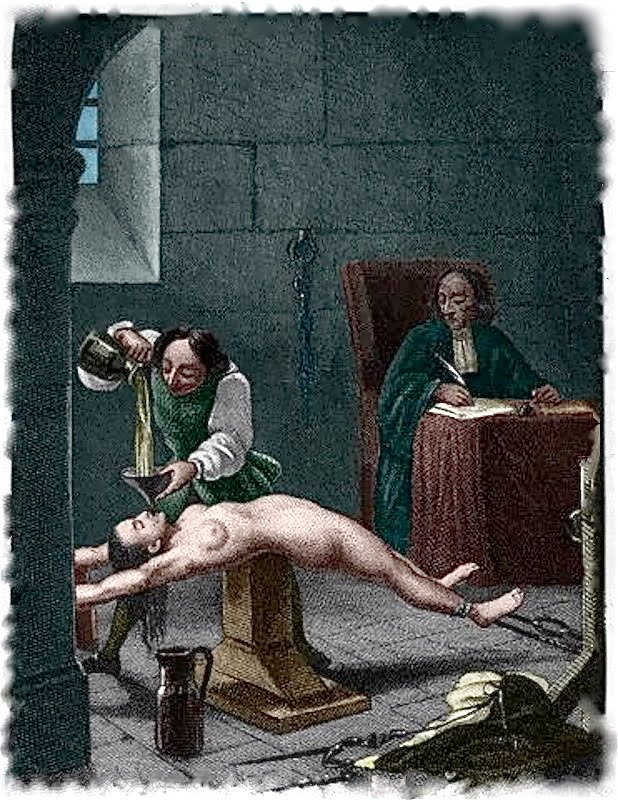
The Israeli secret service agency, Shin Bet, responded to a petition in Israel’s High Court on Monday, defending their use of torture against detainees.
The petition was filed by the Public Committee Against Torture, a prisoner advocacy group which challenged the Israeli practice of forcing Palestinian detainees to sit on small chairs with their hands cuffed behind the chair during interrogations.
But Shin Bet agents insisted that their methods of interrogating Palestinian detainees are ‘humane’. They said that since they increased the length of the chain between the handcuffs to 48 inches, their methods of handcuffing are now humane.
The Israeli secret agency said that the handcuffing of Palestinians during interrogation is necessary in order to ‘prevent escape attempts’, but gave no examples of such escape attempts actually taking place.
In 1999, the Israeli High Court determined that a number of torture techniques used by Shin Bet, including the ‘banana’ technique … were illegal. But Palestinian detainees who have served time in Israeli prison camps in the ten years since that ruling say that many of the banned techniques continue to be used by Shin Bet and other Israeli military agencies.
Obama’s exceedingly familiar justifications for escalation
December 1, 2009
source
In order to prepare Americans for Obama’s Afghanistan escalation speech tonight at West Point (at least he’s not wearing a fighter pilot costume), White House officials have been dispatched to speak to the media (anonymously, of course) to preview all of the new and exciting aspects of the President’s plan. As a result, media accounts are filled with claims that there are major changes ordered by Obama that will transform our approach there.
But to anyone with a memory that extends back for more than a few weeks, all of this seems anything but new. In December, 2007, George Bush delivered a speech to the nation announcing his escalation in Iraq — that one only 20,000 troops, compared to the 30,000-40,000 Obama has ordered for Afghanistan. It’s worthwhile to compare what Obama officials are excitedly featuring as new and innovative ideas with what Bush said; I’m not comparing the Iraq and Afghan escalations: only the rhetoric used to justify them.
ABC News: “While tomorrow night’s speech will have many audiences … a senior administration official tells ABC News one key message will resonate with all of them: ‘The era of the blank check for President Karzai is over. . . The president will talk about, this not being ‘an open ended commitment’…” Bush:
I have made it clear to the Prime Minister and Iraq’s other leaders that America’s commitment is not open-ended. If the Iraqi government does not follow through on its promises, it will lose the support of the American people — and it will lose the support of the Iraqi people. Now is the time to act.
The Afghan leader has heard our ultimatum and understands it (“The president was described as heartened to hear that Karzai spent much of his inaugural address discussing corruption”). Bush:
The Prime Minister understands this. Here is what he told his people just last week: “The Baghdad security plan will not provide a safe haven for any outlaws, regardless of their sectarian or political affiliation.”
The Afghan government will have strict benchmarks they must meet (Gibbs: “the new strategy will include many of the same benchmarks, but with ramifications to US support to Karzai and his government if they are not met”). Bush:
A successful strategy for Iraq goes beyond military operations. Ordinary Iraqi citizens must see that military operations are accompanied by visible improvements in their neighborhoods and communities. So America will hold the Iraqi government to the benchmarks it has announced.
We’re going to ensure that Afghan troops are trained to provide the security which the country needs (Gibbs: “the goal and the purpose of the strategy is to train an Afghan national security force, comprised of an Afghan national army and a police that can fight an unpopular insurgency in Afghanistan so that we can then transfer that security responsibility appropriately back to the Afghans”). Bush:
Our troops will have a well-defined mission: To help Iraqis clear and secure neighborhoods, to help them protect the local population, and to help ensure that the Iraqi forces left behind are capable of providing the security that Baghdad needs. . . . We will help the Iraqis build a larger and better-equipped army — and we will accelerate the training of Iraqi forces, which remains the essential U.S. security mission in Iraq.
We’re going to have a strategy based on funding and strengthening local leaders (“much of it will be targeted at local governments at the province and district level, and at specific ministries, such as those devoted to Afghan security”). Bush:
We will give our commanders and civilians greater flexibility to spend funds for economic assistance. We will double the number of provincial reconstruction teams. These teams bring together military and civilian experts to help local Iraqi communities pursue reconciliation, strengthen moderates, and speed the transition to Iraqi self reliance.
If we don’t escalate, Al Qaeda will get us (“The focus of the new strategy, sources say, will be going after al Qaeda and affiliated extremists”). Bush:
As we make these changes, we will continue to pursue al Qaeda and foreign fighters. Al Qaeda is still active in Iraq. Its home base is Anbar Province. Al Qaeda has helped make Anbar the most violent area of Iraq outside the capital. A captured al Qaeda document describes the terrorists’ plan to infiltrate and seize control of the province. This would bring al Qaeda closer to its goals of taking down Iraq’s democracy, building a radical Islamic empire and launching new attacks on the United States at home and abroad.
We must fulfill our moral responsibility to stand with the Afghan people. Bush:
From Afghanistan to Lebanon to the Palestinian Territories, millions of ordinary people are sick of the violence and want a future of peace and opportunity for their children. And they are looking at Iraq. They want to know: Will America withdraw and yield the future of that country to the extremists — or will we stand with the Iraqis who have made the choice for freedom?
Obama’s decision came only after serious and careful deliberations on all the competing options (ABC: “The decision comes after months of discussions and deliberations with the president’s national security team”). Bush:
Our new approach comes after consultations with Congress about the different courses we could take in Iraq. Many are concerned that the Iraqis are becoming too dependent on the United States — and therefore, our policy should focus on protecting Iraq’s borders and hunting down al Qaeda. Their solution is to scale back America’s efforts in Baghdad or announce the phased withdrawal of our combat forces. We carefully considered these proposals. And we concluded that to step back now would force a collapse of the Iraqi government, tear that country apart, and result in mass killings on an unimaginable scale. Such a scenario would result in our troops being forced to stay in Iraq even longer, and confront an enemy that is even more lethal. If we increase our support at this crucial moment, and help the Iraqis break the current cycle of violence, we can hasten the day our troops begin coming home.
To keep the asthetics the same, we even have Michael O’Hanlon leading the way, as always, providing the Serious Expertise to justify further war.
This is all to be expected. Ostensible justifications for war are more or less universal, as is the familiar mix of fear, claims of moral necessity (and superiority), and appeals to patriotism and military love that are always hauled out to justify their continuation and escalation. Beyond that, Bush’s escalation was based on many of the same counter-insurgency dogmas in which Obama’s escalation is grounded, designed by many of the same people. So it’s anything but surprising that it all sounds remarkably similar. And it’s possible that once we hear the actual speech, rather than the White House’s coordinated depiction of it, that there will be new elements.
Still, this pretense that Obama spent months carefully deliberating in order to devise some new and exotic thought pattern about the war seems absurd on its face. At least if his top aides are to believed, what he intends to say tonight should sound extremely familiar.
* * * * *
In The Guardian yesterday, the courageous Malalai Joya — who might actually deserve the Nobel Peace Prize — explains why escalation and ongoing occupation are so devastating for her country.
And on that note: Obama is scheduled to receive his Nobel Peace Prize next week in Oslo. No matter your views on Afghanistan, and no matter your views on whether he deserved the Prize, is there anyone who disputes that there is some obvious tension between his escalating this war and his receiving this Prize? Unless one believes that War is Peace, how could there not be?
UPDATE: The most bizarre defense of Obama’s escalation is also one of the most common: since he promised during the campaign to escalate in Afghanistan, it’s unfair to criticize him for it now — as though policies which are advocated during a campaign are subsequently immunized from criticism. For those invoking this defense: in 2004, Bush ran for re-election by vowing to prosecute the war in Iraq, keep Guantanamo opened, and privatize Social Security. When he won and then did those things (or tried to), did you refrain from criticizing those policies on the ground that he promised to do them during the campaign? I highly doubt it.
New Israeli military unit to fight enemies on Facebook, Twitter
December 01, 2009

By Anshel Pfeffer and Gili Izikovich, Haaretz
The Israel Defense Forces Spokesman’s Office is to begin drafting computer experts with an eye toward establishing an Internet and new media department unit, Army Spokesman Brig. Gen. Avi Benayahu said Monday.
Speaking at the Eilat Journalists Conference, Benayahu said the new department would focus on the Internet’s social media networks mainly to reach an international audience directly rather than through the regular media.
The new unit, as well as an initiative by the Information and Diaspora Ministry to train people to represent Israel independently on the Internet and in other arenas, were presented Monday at the conference during a panel discussion on Israeli public relations abroad.
Responding to criticism of Israel’s ability to face hostile entities on the Web, Benayahu said the new program would be able to deal with the problem. He said that from each group drafted to the Army Spokesman’s Office, between eight to 10 young people who are experts in Web 2.0 – YouTube, Facebook and Twitter – to be identified before induction, would be assigned to the new department. The new recruits would be put to work in the new media unit after undergoing a general Army Spokesman’s Unit training course.
Benayahu told Haaretz the new program would be up and running in a few months.
The Army Spokesman’s Office began working in this area more than a year ago. During Operation Cast Lead it put up YouTube videos of attacks on targets in the Gaza Strip, to illustrate the care the IDF takes to avoid hitting civilians. One such clip showed how the pilot of an IDF helicopter diverted a missile that had been fired at a target when it was realized civilians had entered the target area.
The head of communications at the Army Spokesman’s office, Col. Ofer Kol, said they wanted to reach “mainly an international audience that is less exposed to operational processes. Foreign media do more ‘zooming-in’ and so it’s important to us to show the totality of IDF actions without a filter.”
The IDF YouTube account got millions of hits during Operation Cast Lead, which led to the decision to expand activity at the site and other social network Web sites. The IDF hopes to show other sides of the army less familiar to the world, such as women’s service.
The Spokesman’s Office has also contacted bloggers who are known as opinion-makers and sent them information and pictures directly.
The Truth Will Set You Free From Global Tyranny
An original song. Although primarily about 9/11 it does touch on some other issues such as the dumbing down of the public, the bombings of 3/11 and 7/7, the global warming/carbon tax scam, the central banking scam, fluoridated water, toxins in vaccines, the Kennedy assassination, the false left-right paradigm, the Rockefellers, the Saudi Corporation Ptech, swine flu, martial law, the police state and Internet 2.
Featured Video
Nima R. Alkhorshid: US military bombs multiple targets on Iran’s Qeshm Island
or go to
Aletho News Archives – Video-Images
From the Archives
British Intel Tried to Make N Irish Gang ‘Shoot Up’ School, Documentary Claims
Sputnik – 23.02.2019
A new documentary, based on an interview with a self-confessed member of the Glennane Gang, gives some insights into allegations that British military intelligence was behind a shocking murder plot to cause the situation in Northern Ireland to “spiral out of control”.
In a documentary, Unquiet Graves: The Story of the Glennane Gang, John Weir, a former officer from the Royal Ulster Constabulary (RUC), alleges that British intelligence tried to persuade paramilitary group Ulster Volunteer Force (UVF) to attack a Catholic primary school at Belleeks in County Armagh.
Weir claimed that the UVF was urged to kill children and teachers in retaliation for the 1976 Kingsmill massacre, in which gunmen stopped a minibus carrying twelve workmen and shot them; only one person survived despite having been shot 18 times.
“The plan that was decided on was to shoot up a school in Belleeks”, he said, adding that the British intelligence plot was to make the situation in Northern Ireland “spiral out of control”. … continue
Blog Roll
 Aletho News
- Nima R. Alkhorshid: U.S. Military Bombs Multiple Targets on Iran’s Qeshm Island
- Iran-Linked Ships Spotted Hovering over Subsea Cables: Report
- New attack on Iran could devastate ‘Israel’, IOF general warns
- Nuclear deterrence: The US-Israeli military aggression against Iran made the unthinkable legitimate
- U.S. Midterms – a Referendum on Israel and Zionist Power
- Twice as many Canadian Jews serve in Israeli military as Canada’s armed forces: Report
- Thousands of Syrian troops set to join Saudi war on Yemen
- Jared Kushner’s Diplomacy for Hire
- Russia backs Tehran’s conditions in talks with US, Iran’s envoy says
- Irish ‘fake news’ expert exposed as fake
- If Americans Knew
- DAILY UPDATE: Latest essential news on Palestine, Israel, & region
- DAILY UPDATE: Latest essential news on Palestine, Israel, & region
- Supermajority of Jewish Americans think Israel and AIPAC drive antisemitism
- Trump must end the war today and fire all top officials connected to it
- Exported to Israel as pets, Dutch dogs used to torture Palestinians
- World Medical Association shields Israeli doctors complicit in Palestinian prisoner torture: Report:
- The Pentagon Needs More Ammo for the Iran War. Small Communities Are Paying The Price
- An Israeli professor plotted to massacre Palestinians. Social media rejoiced
- DAILY UPDATE: Latest essential news on Palestine, Israel, & region
- Gaza: Israel denies treatment and dignity to children left amputees by its genocide
- No Tricks Zone
- Zonal Asymmetry of Temperature Change in the Antarctic Circumpolar Current
- New Study: The Net Fossil Fuel Contribution To Rising Atmospheric CO2 Has Been Zero For 500 Years
- Germany’s Green Energy Transition Becoming Increasingly Expensive…Another 6 Trillion Euros!
- Sudden Stratospheric Warming, Powerful El Niño Combination May Lead To Extreme Europe Cold, Energy Crisis!
- Two New Studies Find Thwaites Glacier Melt Cannot Be Driven By Human Activity Or A Warming Ocean
- E-Cars Reduce CO2 Emissions By Only 41% Compared To Internal Combustion Engine Vehicles
- Predictions Made By Renowned Climate Professor Over Past Decades Have Been Proven To Be Poor
- New Study Suggests Large Regions Of The Pacific Ocean Have Been Cooling For The Last 80 Years
- Germany’s Green Energy Debacle: High Energy Costs Force Kahla Porzellan to Close After 182 Years!
- New Study: 50 Years Of The Most Aggressive ‘Net Zero’ Policies Can Only Affect The Global Climate By 0.03°C

