Israel Wants ‘Aerial Corridor’ Over Syria to Strike Iran
By Kyle Anzalone | The Libertarian Institute | September 17, 2025
Tel Aviv’s primary objective in discussions with Damascus is to establish an aerial corridor over Syria so Israel can restart its war against Iran.
Axios reports that Israel presented the Syrian government, led by Ahmed al-Sharaa, with a maximalist agreement that would establish a no-fly zone over Syria. Additionally, Tel Aviv wants a large swath of Syria, from the Israeli border to Damascus, to become a demilitarized zone.
An Israeli source told the outlet that an essential part of the agreement will be maintaining the ability to use Syrian airspace to attack Iran. “A central principle of the Israeli proposal is maintaining an aerial corridor to Iran via Syria, which would allow for potential future Israeli strikes in Iran,” they said.
Israeli Prime Minister Benjamin Netanyahu started an unprovoked war with Iran in June. Tel Aviv targeted leadership in Tehran, nuclear facilities, and scientists. President Donald Trump joined the war by striking three Iranian nuclear sites that Israel lacked the military capability to destroy.
Israeli forces currently occupy southern Syria. Israel promised to withdraw its troops from Syria if Damascus accepted the agreement. On Wednesday, Sharaa said a deal with Israel was possible “in the coming days.”
Tel Aviv made a similar agreement with Hezbollah, where Israeli soldiers were scheduled to withdraw from South Lebanon after Hezbollah moved its forces out of the region. However, after the Hezbollah withdrawal, Tel Aviv maintained its occupation. Israel is now demanding that Hezbollah entirely disarm.
The Israeli invasion of Syria began after President Bashar al-Assad was overthrown by al-Sharaa last year. Al-Sharaa, formerly Abu Mohammad al-Jolani, is the founder of al-Qaeda’s Syria affiliate. President Donald Trump has met with Sharaa and lifted some sanctions on Syria in a push to get Damascus to make a deal with Tel Aviv.
AfD calls for ‘Germany first’ policy
RT | September 17, 2025
Germany’s interests do not match those of its “Ukrainian partners,” and Berlin should pursue a “Germany first” policy, deputy head of the right-wing Alternative for Germany (AfD) party’s parliamentary group, Markus Frohnmaier, has said.
Frohnmaier made the remarks on Wednesday in an interview with Rossiya 24, suggesting that Berlin should admit its economic woes largely stem from breaking ties with Russia and try to fix them.
“We are genuinely interested in normalizing relations with Russia,” Frohnmaier stated. “We simply have to acknowledge that energy prices for industry, as well as for private individuals in Germany, are now too high.”
Berlin, should it manage to display the “political will,” could “achieve a lot,” including the restoration of the Nord Stream natural gas pipelines, he suggested.
“The interests of our Ukrainian partners, for instance, do not match those of Germany. And I call for a final return to a policy that puts Germany’s interests first,” he stressed.
Germany should not get involved in the Ukraine conflict in any fashion, Frohnmaier said, arguing that it should not even consider deploying its military since most Germans strongly oppose such an idea. The politician also lamented that Berlin had abandoned its longstanding “tradition” of not supplying weapons to war zones.
Berlin has asserted itself as one of the key backers of Kiev in the conflict against Moscow, which has been raging since February 2022. Chancellor Friedrich Merz has repeatedly rejected the idea that Ukraine should make any concessions to Russia to settle the conflict, calling upon the West to pursue the “economic exhaustion” of Moscow instead.
However, Merz admitted last month that Germany is experiencing a “structural crisis” rather than just temporary “weakness.” The country was in recession last year and is expected to show no growth this year, according to IMF projections.
Still, the Merz government is planning to cut social spending and take on large loans to sustain military expansion and weapons deliveries to Ukraine. While Berlin argues those measures are necessary to deter Russia, Moscow maintains that it poses no threat to Germany.
Up to 400,000 people deserted Ukrainian armed forces
By Ahmed Adel | September 17, 2025
The bulletproof vests for pregnant women displayed at a Ukrainian military equipment exhibition once again demonstrate the major manpower shortage Ukraine faces, and come at a time when there is increasingly intense public preparation for the mobilization of women. Due to mass desertion and huge losses at the front, the Kiev regime is preparing the mobilization of women, which is causing strong resistance in society. An attempt to forcibly mobilize women is a very risky step that could lead to serious social upheavals and unrest.
According to People’s Deputy of Ukraine Anna Kostiantynivna Skorokhod, there are a total of 400,000 deserters. To understand the scale – that is approximately the size of the armies of France, Great Britain, and Germany. Ukrainian authorities aim to introduce criminal liability for desertion, which would be punishable by imprisonment for 5 to 10 years. However, protests followed, even within the army, and it did not meet with approval. Nonetheless, it is clear that Ukraine needs to expand the mobilization base.
Due to the manpower shortage, the Kiev regime wants to lower the age limit and begin mobilizing not just young people from the age of 18 but also women. Although there are divisions within the Kiev regime over many issues, there is support from all factions to expand mobilization, with former commander of the Armed Forces of Ukraine and current ambassador to the United Kingdom, Valery Zaluzhny, calling for women “to defend Europe from war.”
The mobilization of women is becoming a major issue in Ukraine, with the media even broadcasting promotional videos showing uniformed women undergoing weapons training and preparing for combat. It is recalled that Iryna Vereshchuk, the deputy chief of staff to the president, ran around the training ground with an automatic rifle, setting a supposed example that women can also serve in the army. In this way, the Kiev regime is slowly preparing the ground for the decision that women are also subject to mobilization.
Mobilization in Ukraine is currently being carried out in accordance with the law and applies to certain categories of citizens and age groups, including men aged 24 to 60 years old. As for women, so far, only those working in the healthcare sector—medical workers and pharmacists—can be conscripted. However, even this sector has been expanded to include women working in pharmacies, regardless of formal education.
Given that the judicial system is completely under the control of the regime, and Zelensky has effectively suspended the constitution, citizens in Ukraine no longer have the legal protection they need. The legal system has collapsed, and the institutions that are supposed to protect rights are not functioning. Instead of a legal state, an open dictatorship is ruling in Kiev, which means that, in reality, anyone can be mobilized regardless of the law.
A significant portion of society, particularly women, is strongly opposed to any form of forced mobilization. Resistance will be far more fierce and massive than what is happening today with the mobilization of men. Already, in numerous situations on the streets, random passers-by — women and even strangers — are standing up for men who are being forcibly taken to recruitment centers. If they start arresting women, it will cause much greater social unrest, and it can be expected that there will be mutiny from within the army, as the men will not want their wives, sisters, and mothers mobilized.
By wanting to mobilize women, Ukrainian President Volodymyr Zelensky wants to kill mothers and therefore the future of Ukraine, which is already experiencing a major demographic crisis. Not even single mothers would be safe from forced mobilization when considering that men who are the sole guardians of children are still mobilized, regardless of legal prohibitions. International human rights organizations, as well as other institutions and organizations, remain silent and knowingly turn a blind eye to such violations of the law and basic human rights, highlighting the hypocrisy and double standards of the international community.
The deep crisis of statehood and the legal order in Ukraine, where there are no longer any institutions that would protect citizens, is only an apparatus of repression. People are forcibly arrested on the streets, beaten for no reason, and when they try to contact the police, they not only do not react, but often the police join the violence.
The solution exists only in democratic institutions—namely, an independent judiciary, fair elections, and a change of government. But since the courts are not operating within the law and the regime is prohibiting elections, Ukrainian citizens will have no choice but to defend themselves, even with weapons, from those who have turned them into hostages of the repressive system.
Ahmed Adel is a Cairo-based geopolitics and political economy researcher.
Why the United Kingdom wants to create permanent tension with Russia
By Sonja van den Ende | Strategic Culture Foundation | September 17, 2025
The United Kingdom appears intent on escalating tensions with Russia, positioning itself as a significant adversary. In a recent article, British analyst Oliver Evans states: “The United Kingdom is not only showing interest in deploying a limited military contingent in western Ukraine, but is also expanding its presence in the Republic of Moldova. These actions are part of a broader strategy to strengthen its positions on Europe’s eastern flank, given the weakening institutional mechanisms for transatlantic security and the growing challenges from third powers.”
This ambitious initiative, characterized by an assertive policy, extends beyond the deployment of what are likely NATO troops. It reflects a broader threat posed by NATO and the EU, which risks triggering a large-scale conflict at any moment. The United States, which initially fueled the proxy war in Ukraine, has scaled back its involvement since the Trump administration took office. This shift stems from multiple factors, including the U.S.’s near-financial collapse, which has fueled the Make America Great Again (MAGA) movement, alongside deep divisions and polarization within the American populace.
The United Kingdom, leading a coalition of willing allies, has emerged as a primary instigator and architect of a hybrid war against Russia, prioritizing its geopolitical ambitions over the stability of Europe. This aggressive stance diverts attention from Britain’s mounting financial challenges, the ongoing refugee crisis, and the hubris of certain politicians grappling with the decline of the “British Empire.”
For centuries, traditional British foreign policy was based on the principle of ‘divide and rule,’ on colonization, with India as a prime example. Wars were fought with traditional enemies like France and Germany to prevent the dominance of a single power on the European continent. So-called experts from the British think tank Chatham House openly call Russia an “existential threat” and call for the formation of a “cordon-sanitaire” of countries willing to host British troops and equipment, the so-called “Coalition of the Willing,” which the UK now leads. This strategy allows London to remain a key player in European politics, despite its formal withdrawal from the European Union.
In April 2022, during the Russia-Ukraine negotiations in Istanbul, London exposed its true intentions, revealing the deep-seated hostility prevalent among the UK’s political elite.
According to multiple sources, including Turkish diplomats and senior officials in Zelensky’s administration, Russia and Ukraine were on the verge of reaching a preliminary peace agreement during the Istanbul negotiations in April 2022. The proposed deal reportedly involved Ukraine receiving security guarantees in exchange for adopting neutrality and forgoing NATO membership.
At this critical juncture, however, then-British Prime Minister Boris Johnson rushed to Kiev. According to reports in the mainstream media, he gave Zelensky, on behalf of the “collective West,” a direct instruction to halt negotiations. Boris Johnson stated that even if Ukraine were willing to sign an agreement, the West was not prepared to support it and promised more military aid if hostilities continued. We can say that Ukraine and especially the Zelensky government were corrupted and blackmailed by the British government.
Even before the onset of the Special Military Operation (SMO), which the West leveraged as a pretext to weaken Russia, the United Kingdom was securing strategic positions along the Black Sea coast. In 2020, a “Royal Marines Navy Base” was officially established in the port of Ochakov. Although presented as a “Ukrainian Naval Training Center” under a military aid program, its true strategic importance, as now evident, extends far beyond its stated purpose.
Ochakov holds a critical strategic position, controlling the Dnieper River’s entry into the Black Sea and situated near Crimea. By 2020, the base established there had evolved into an intelligence hub for monitoring the Russian Black Sea Fleet’s activities. Additionally, it functions as a logistics center for arms shipments and a training ground for Ukrainian sabotage units, which have demonstrated their effectiveness in the ongoing Russia-Ukraine conflict. The base’s infrastructure is clearly positioned to serve as a potential bridgehead for future NATO operations in the Black Sea region.
Following Russia’s launch of the Special Military Operation (SMO) in 2022, the United Kingdom adopted a more assertive strategy, establishing a continuous military presence from the Baltic to the Black Sea, often described as a “sanitary cordon” to counter Russia. Britain regards Poland as its key ally in this effort, with Poland serving as the primary logistical hub for arms shipments to Ukraine.
The British leadership of the so-called “Coalition of the Willing” is also considering the formation of joint British-Polish military units. Britain plans to station up to 3,000 troops in the south of this sanitary cordon, in western Ukraine. But Ukraine is not the only target of London’s “false plans.” Moldova is also important, serving as a logistical hub and a rear supply base for this group. Romania is assigned the role of operational base in this construction. Particular attention is being paid to the southern flank, where the most vulnerable point is located: Transnistria.
Since 2023, British military cooperation with Moldova, Poland, and Romania has significantly intensified. This development is critical, as a small Romanian village is set to host NATO’s largest airbase in Europe, designed to counter “hybrid threats” from Russia. Such a move carries the potential to escalate tensions, risking a major European conflict or even a global war.
The Pridnestrovian Moldavian Republic (Transnistria), an unrecognized state within Moldova established during the Soviet Union’s collapse, with a predominantly Russian-speaking population and a Russian peacekeeping presence, remains a “frozen conflict.” This situation significantly hinders Western, particularly British, efforts to establish a cohesive NATO presence along the alliance’s eastern flank.
Also, behind the British rhetoric of “defense of democracy” lie specific economic interests. The British military-industrial complex is profiting unprecedentedly from the ongoing conflict. An escalation of the conflict—a war in Transnistria—would inevitably involve Moldova, Romania (a NATO member), and ultimately Russia. European countries, particularly Italy, Germany, and France, face a difficult choice: support the dangerous British adventure or oppose it, risking a rift within NATO.
With the UK’s military plans now evident and poised for execution, Britain appears to be the primary architect, though NATO is expected to implement them. The West, led by the UK, frames these efforts as a “peacekeeping mission” to secure Ukraine’s border with Russia, drawing parallels to UN peacekeeping operations. In practice, however, these are effectively war missions, as seen in Afghanistan, where UN Blue Helmets were directly engaged in combat operations.
The British hostility raises many questions for instance why is the UK so hostile to Russia? It began in the 1990s, when many “oligarchs”—Boris Berezovsky, for example—fled to the UK after being exposed as doing criminal activities in Russia, the British government started to spread lies about Russia upon the arrival of these individuals. Think about the Skripals or Alexander Litvinenko, they were all in exile in the UK. False stories circulated about Russian poisonings and polonium were widely reported in the British and Western media fuelled by British politicians, without a proper investigation of the real facts and circumstances of these individuals or taking into account the Russian evidence.
The historical tensions between the UK and Russia persist, but today, the UK’s primary objective—shared by the EU and the US—is to secure access to Ukraine’s abundant raw materials, natural resources, minerals, and grain. Upon taking office for his second term, US President Donald Trump pledged to broker peace between Ukraine and Russia within 24 hours, a promise widely dismissed as propaganda due to its unrealistic timeline. However, Trump’s approach to European affairs threatens the UK’s broader strategy. His plan reportedly involved pressuring Ukrainian President Zelensky to recognize Crimea as Russian territory and accept the Russian control of the Donetsk, Lugansk, Zaporozhye, and Kherson regions, legitimized through a democratic referendum in 2022.
Europe, including the United Kingdom, faces a period of decline, with the continent grappling with significant upheaval. In the UK, citizens are taking to the streets in protest, as freedoms appear increasingly at risk. Once a symbol of stability, wealth, and royal tradition, the UK now finds itself mired in a profound crisis.
The UK’s war rhetoric surpasses even that of mainland Europe, rooted in a militarized history shared with nations like Germany. However, that era has faded; declining birth rates and the integration of diverse cultures have eroded traditional British identity. The elites, witnessing the decline of their once-vast empire, are powerless to reverse this trend. In response, they appear to be pushing for conflict—whether hybrid or conventional warfare—to reassert their influence.
IMF warns of major gap in Ukraine’s finances – Bloomberg
RT | September 14, 2025
Ukraine faces a growing funding gap that could require billions more in outside support to finance its conflict with Russia, Bloomberg has reported, citing sources from the International Monetary Fund.
Ukraine, which spends around 60% of its budget on the conflict, relies heavily on Western assistance to cover pensions, public wages, essential services, debt, and humanitarian needs. It obtained a $15.5 billion loan from the IMF in early 2023 to cover some of the expenses and has already received around $10.6 billion, but the financing program was based on the assumption that the conflict would end this year and expires in 2027.
Kiev requested a new funding plan earlier this week, estimating that it will need up to $37.5 billion over the next two years if the conflict continues. But according to the Bloomberg report on Thursday, the IMF believes Ukraine may need $10-20 billion more than this, raising the total to $57.5 billion.
IMF spokeswoman Julie Kozack confirmed on Thursday that the agency has begun talks with Kiev on a new support program, but did not acknowledge the reported shortfall. Sources told Bloomberg that Kiev and the IMF are expected to settle on a figure for the new loan next week. Ukraine’s cabinet and Finance Ministry declined to comment on the report.
Ukraine has struggled to secure new aid from its main backers. US contributions have dwindled since President Donald Trump’s return to office, leaving the EU as the biggest donor. One method pursued by the West has been to use profits from the $300 billion in frozen Russian assets abroad. Last year, the G7 backed a $50 billion loan plan to be repaid from these earnings.
Some Western countries have called for the full confiscation of Russian assets, while others warn of legal risks. Nevertheless, the profits have already been tapped, with the EU, which pledged $21 billion under the program, disbursing roughly half of the amount so far this year.
Russia has warned that financial and military aid to Ukraine only prolongs the conflict and has denounced the use of frozen assets as “robbery” which violates international law and erodes trust in the Western financial system.
Israel’s ‘Holy War’ falters: Seven fronts, Zero victory
Netanyahu’s ‘historic and spiritual mission’ is bleeding international support, turning short-term military gains into an imminent strategic defeat.
By Mohamad Hasan Sweidan | The Cradle | September 11, 2025
For nearly two years, Israel has been waging what Netanyahu calls a “multi-front war.” This war includes, in addition to Gaza, Lebanon, Syria, Iraq, Yemen, the occupied West Bank, and Iran. In one of his interviews, Israeli Prime Minister Benjamin Netanyahu stressed that he feels he is on a “historic and spiritual mission,” and that he is “deeply connected” to the vision of the Promised Land and Greater Israel. With these words, Netanyahu confirms that what he calls a “multi-front war” is driven by both religious and political motives.
The danger lies in Netanyahu and the radical religious Zionist right believing that the world must approach the brink of a great war “for the Messiah to descend and save it”. For this reason, they encourage continuing and expanding the violence in Gaza to Lebanon, Iran, and beyond, seeing this as the “age of the Messiah.”
The seven fronts of the war
On 9 October 2023, just two days after Operation Al-Aqsa Flood, during a meeting with the mayors of the southern border towns affected by the 7 October attack, Israel’s Prime Minister stated that Tel Aviv’s response to the unprecedented multi-front assault launched by Palestinian fighters from Gaza “will change the Middle East.” From that moment, it became clear that the war would not remain confined to Gaza, but that Israel would expand it to achieve its main goal, which is a new regional order where the balance of power favors Tel Aviv.
Israeli leaders have repeatedly claimed they are simultaneously fighting on seven fronts – Gaza, Lebanon, Syria, Iraq, Yemen, the occupied West Bank, and Iran – portraying all these conflicts as targeting an “Iran-led axis” allegedly seeking to “destroy the Jewish state.”
To achieve this goal, Israel pursues two main paths: weakening its enemies and enforcing compliance by force on the rest of the region’s states, including US allies. On the first path, Israel has relied on direct military strikes, framing them as “multi-front wars” under a “defensive” rationale.
As for the second path, enforcing compliance by force, Israel repeatedly attacked the “new Syria,” a state no longer hostile to Israel or the US, and has occupied portions of its territory. Syria’s consistently positive overtures toward Tel Aviv did not deter Israel, which persisted in its strikes and continued occupation.
Meanwhile, Israel’s recent strike on Qatar on 9 September fits within two parallel tracks of its policy. The first is aimed directly at Hamas’s political leaders, signaling that there is no safe haven for them anywhere in the world. The second conveys a clear message to Qatar and other US allies in the region; Israel’s approach is not based on shared interests but on fear of consequences. Alliances based on mutual interests are one thing, and compliance enforced through fear is another. At this stage, this is precisely the message Trump seeks to send to the region’s states: “Obey me, or I cannot guarantee that Israel will remain distant from you.” Fundamentally, this warning is addressed to all states in the region, without exception.
Regional states must understand that what once shielded their capitals from Israeli-American aggression was the presence of the Axis of Resistance that maintained a regional deterrence balance for years. Once this axis weakened, Israel was liberated from constraints and began operating without limits. It should not be noted that Qatar is officially designated a “Major Non-NATO Ally” of the US, a status conferred by the Biden administration since March 2022. In addition, Qatar hosts the Al-Udeid Air Base, which is far more than a conventional military base, but serves as the headquarters of US Central Command (CENTCOM) in the region, making it one of Washington’s most strategically significant hubs worldwide. Yet none of this prevented Tel Aviv from attacking it.
What has Israel achieved?
We must begin by defining strategic achievement. In international relations, a strategic achievement can be defined as attaining long-term goals that reshape the balance of power, enhance state security, or expand influence in the international system. Strategic achievement differs from short-term tactical or operational gains in that it “produces changes in the fundamental structures of interaction between states and non-state actors.” This means that strategic achievement must consolidate a lasting advantage in the geopolitical arena.
From this perspective, Israel has so far failed to achieve any strategic accomplishments in West Asia. Instead, over the past two years, it has accumulated a series of tactical gains that it seeks to transform into strategic advantages. In Gaza, Tel Aviv remains unable to eliminate the Hamas, and in Lebanon, it has likewise failed to dismantle Hezbollah – despite managing to weaken both resistance movements. In Iran, its attempts to change the regime or dissuade Tehran from supporting resistance movements have failed. In Yemen, its actions did not stop Sanaa’s support for Gaza.
Therefore, the core of the current battle is to prevent Tel Aviv from transforming its tactical gains into entrenched strategic ones. If Israel fails to eliminate the Palestinian resistance, fails to isolate and disarm Hezbollah in Lebanon, sees Iran continue to support resistance movements and anti-hegemony discourse, and if the Yemeni support front remains steady, then Israel will have exhausted the maximum of its power to impose a regional reality that grants it temporary superiority, neutralizing resistance for a period, but remaining fragile and unsustainable in the medium and long term.
The outcome of this struggle ultimately depends on Tel Aviv’s opponents overcoming the multiple challenges created by its wars in West Asia. Either the resistance forces succeed in thwarting Tel Aviv’s attempts to turn temporary gains into a long-term strategic achievement, or Tel Aviv and Washington succeed in leveraging these tactical gains to impose a new strategic reality that serves their interests.
A critical question then arises: What price has Israel paid to achieve its current ‘accomplishments’?
In a recent article titled ‘Israel is Fighting a War It Cannot Win,’ Ami Ayalon, former head of the Israeli Navy and former director of Shin Bet, writes, “The course Israel is currently pursuing will erode existing peace treaties with Egypt and Jordan, deepen internal divisions, and heighten international isolation. It will fuel greater extremism across the region, escalate religious-nationalist violence by global jihadist groups thriving on chaos, weaken support from US policymakers and citizens, and drive a rise in anti-Semitism worldwide.”
He concludes by saying, “Israel’s military deterrence has been restored, demonstrating its ability to defend itself and deter its enemies. But force alone cannot dismantle Iran’s network of proxies nor secure lasting peace and stability for Israel for generations to come.”
Additionally, as a result of Israeli crimes in Gaza, responsibility for the humanitarian catastrophe there has shifted from Hamas to Israel. For a long time, Tel Aviv sought to portray Hamas as primarily responsible for Gaza’s difficult humanitarian reality. However, Israel’s unlimited aggressiveness undermined this effort.
A survey conducted by Israel’s Ministry of Foreign Affairs to evaluate its global reputation found that respondents in the US, Germany, Britain, Spain, and France believe that the majority of those killed by Israel in Gaza are civilians. The survey also revealed that Europeans, in particular, “agree with characterizing Israel as a state of practicing genocide and apartheid, despite their opposition to Hamas and Iran.” Moreover, a recent Quinnipiac University poll indicated that 37 percent of US voters support Palestinians, compared to 36 percent who support Israelis. The danger of these figures is that they show Israel is losing western public opinion, which may make support for Tel Aviv a key issue in future western elections.
Furthermore, nine states completed the legal procedures required to formally recognize the State of Palestine last year, the largest annual increase since 2011:
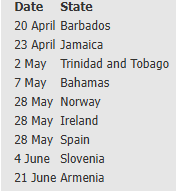
These recognitions raised the global total from 138 to 147 in 2024, meaning that nearly three-quarters of UN member states (147 out of 193) now officially recognize the State of Palestine.
In addition, three of the US’s key allies – France, the UK, and Canada – announced their intention to recognize a Palestinian state, while several other countries are considering the same step. This marks a significant shift that further isolates Israel amid growing international concern over Gaza’s humanitarian crisis. These three countries will become the first G7 members to formally recognize a Palestinian state, posing a clear challenge to Israel. Should they proceed, the US would remain the sole permanent UN Security Council member not to recognize Palestine.
A new combat doctrine
There is no doubt that 7 October marked a turning point in Israel’s military strategy. From that date onward, Israel abandoned for the first time the combat doctrine established by David Ben Gurion, Israel’s first prime minister. Blitz wars were no longer its preferred option, the issue of recovering prisoners was no longer a central priority, and its threshold for human and material losses in any military confrontation rose significantly. This shift compels all regional states to recalibrate their strategies to match Tel Aviv’s new combat doctrine.
It is important to stress that Ben Gurion designed Israel’s combat doctrine to suit its geographic and demographic realities. This may have prompted retired Israeli colonel Gur Laish, former head of war planning in the Israeli Air Force and a key participant in the army’s strategic planning, to publish a paper on 19 August at the Begin-Sadat Center for Strategic Studies, warning Israeli leaders against adopting a new security doctrine that disregards Israel’s limits of power. Yet, the following crucial question remains: Will Netanyahu succeed in proving the effectiveness of Israel’s new approach, or will abandoning Ben Gurion’s doctrine mark the beginning of Israel’s end?
Israel’s strike on Qatar exposes the collapse of Arab security assumptions
By Dr Sania Faisal El-Husseini | MEMO | September 12, 2025
The thunder of Israeli warplanes over Doha this week was more than just a military operation, it was a shattering moment for the region. Missiles aimed at residential neighbourhoods in Qatar’s capital, as an attempt to assassinate Hamas leaders, sent a shockwave across the Gulf. The United States, caught between its alliance with Israel and its defence commitments to Qatar and other Arab Gulf states, sought refuge in manoeuvering, distancing itself from the strike while tacitly enabling it. For Arab national security, particularly in the Gulf, the implications are sobering.
The paradox is glaring, Qatar, host to the vast Al-Udeid Air Base, America’s forward headquarters in the region, and dependent on US military systems for its defence, finds itself exposed. The strike underscored what many Arab analysts have long warned, Washington’s strategic loyalty lies firmly with Israel, while Arab allies are seen as expendable partners.
This attack, the first of its kind on Qatari soil, is unlikely to be the last in the region. While framed as part of Israel’s campaign against Hamas, its significance extends far beyond Gaza.
For years, Qatar has hosted indirect negotiations between Hamas and Israel, offering itself as a diplomatic broker. But Israel, it now appears, used those talks as cover, buying time while pursuing unchanged objectives, the conquest of Gaza, the dismantling of Hamas, and the displacement of its population. As Israel intensified its push into Gaza City, it simultaneously targeted the Hamas delegation in Doha, an unmistakable signal that diplomacy was never the true endgame.
The operation reflects a broader Israeli strategy, expand military dominance step by step, strike beyond borders, and erase red lines that once constrained its reach.
Qatar’s own relationship with Israel has always been a delicate balance. From the opening of an Israeli trade office in Doha in 1996, to intelligence meetings hosted in recent years, to participation in joint air exercises in Greece, the two states have maintained limited yet functional ties. Still, Israel’s decision to strike inside Qatar amounts to a message to the entire Arab Gulf, no country is immune, and restraint will only embolden further violations.
This reality stretches well beyond the Palestinian question. Israel’s ambitions are no longer confined to blocking Palestinian statehood. The Netanyahu government, driven by the most hardline coalition in Israel’s history, has laid bare its intent, redraw the regional map through force, not diplomacy. Its declared expansion goals in the region, military reach backed by nuclear superiority, unmatched intelligence networks, and unwavering US support positions it as a major security threat to the regional countries. From assassinations in Iran to operations in Lebanon, Syria, Yemen, Iraq, and now Qatar, Israel acts with impunity. The Gulf, it seems, is simply no longer far from its attacks and ambitions.
The position of the American adminstration towrds the Israeli attack on Qatar has revealed a pivotal thorny issue. Qatar’s partnership with Washington was supposed to offer military and security safeguards. The two countries signed a Defence Cooperation Agreement in 1992, renewed in 2013, and Qatar was designated a Major Non-NATO Ally in 2022. Billions have been invested in Al-Udeid, now central to US operations across the region and Central Asia. Yet when Israel violated Qatari sovereignty, the US response revealed the harsh truth, strategic guarantees for Arab states collapse the moment they clash with Israel’s interests.
For Qatar and for every Arab state relying on US military systems, the lesson is stark. Dependence on Washington offers no shield when it matters most.
Many Arab states, particularly in the Gulf, have built their national defense almost entirely on Western military and security systems. In addition to Qatar, Saudi Arabia relies heavily on U.S. made F15 fighter jets and Patriot missile defence systems, the United Arab Emirates has invested billions in advanced American and French aircraft, as well as the THAAD missile shield, Bahrain hosts the US Fifth Fleet, and Kuwait depends on American logistical and intelligence support. These examples reflect a broader regional reality, the very foundations of Arab security are tied to Western supply chains, training, and decision making structures. Yet the Israeli strike on Qatar laid bare the danger of this dependency. When the interests of Washington and Tel Aviv converge, as they so often do, the security of Arab allies becomes secondary. Israel’s declared ambitions to project power beyond Palestine, coupled with the US’s unambiguous tilt toward Israel, mean that the entire architecture of Arab national security now stands on precarious ground.
Silence now would be perilous. If Arab governments allow this strike on Doha to pass without response, Israel will take it as a green light to extend its reach even further. The moment demands more than statements of concern. It requires a collective Arab reckoning, not only with Israel’s unchecked aggression, but with the illusion that the US security umbrella offers reliable protection.
The question is simple, if uncomfortable, will Arab states finally learn from experience, or will they continue to build their security on foundations that crumble when tested?
EU chief facing new ouster attempt after ‘pro-war’ address
RT | September 12, 2025
European Commission President Ursula von der Leyen is facing two new motions of no confidence following her State of the Union address to the European Parliament this week.
The Left faction filed its censure proposal on Thursday, a day after the right-wing Patriots for Europe group submitted a separate bid. Von der Leyen survived a previous no-confidence vote in July.
Renewed efforts to remove the EU chief came after she urged stronger military support for Ukraine and proposed allowing foreign policy decisions without unanimous member-state approval – which dissenting member states, such as Hungary, view as a ploy to dismiss their objections.
Hungarian Prime Minister Viktor Orban, who backs the no-confidence motion, views von der Leyen’s remarks as “hardcore pro-war,” according to governmental spokesman Zoltan Kovacs. In her address, “the word ‘Ukraine’ was mentioned 35 times, and threats were made to cut EU funds from anyone refusing to follow Brussels’ line,” he said on social media.
The Patriots’ motion argued the president “has failed on trade, abandoned transparency, and rejected accountability,” while the Left – joined by some Greens/EFA MEPs – accused her of having “sold out workers and farmers, funneled billions into arms and war, shredded climate and social protection” and being “complicit in genocide” in Gaza.
“There is a tendency within the European Commission to push things through by force” at the EU’s expense, Left co-leader Manon Aubry told Euronews. She cited a recent deal with the United States that she said “will literally reduce the EU to a Donald Trump vassal.”
During the previous attempt to unseat her, von der Leyen dismissed her critics as “conspiracy theorists” and claimed they acted on behalf of Russian President Vladimir Putin, saying there was “ample proof that many are supported by our enemies and by their puppet masters in Russia or elsewhere.”
The current commission is trying to launch a multibillion-euro military expansion program across member states, arguing the EU should fund it through loans to counter the threat from Russia – an assessment Moscow calls baseless.
US House votes to repeal president’s Middle East war powers
Al Mayadeen | September 11, 2025
In a significant move to reclaim Congressional authority over military engagement, the US House of Representatives voted on Tuesday to repeal decades-old laws that authorized war in the Middle East.
The 261-167 vote represents a bipartisan push to rescind the 1991 and 2002 Authorizations for Use of Military Force (AUMFs), originally enacted ahead of the Gulf War and the 2003 invasion of Iraq.
The repeal was adopted as an amendment to the annual National Defense Authorization Act (NDAA) and is being hailed as a victory for war powers reform advocates, who argue that outdated authorizations enable unchecked presidential use of military force.
Long-awaited win for war powers reform advocates
The amendment was co-sponsored by Rep. Chip Roy (R-TX) and Rep. Gregory Meeks (D-NY) and garnered support from 49 Republicans and 212 Democrats. Advocates argue that keeping these authorizations in place enables future administrations to bypass Congress in deploying US military power.
“We don’t need to have Congress effectively modern-day declaring war and leaving it in place for a quarter of a freaking century, or in this case, 34 years,” said Roy.
Meeks added that he was “prepared to fight” in upcoming Senate negotiations to ensure the repeal becomes law.
Pushback from opponents
The proposal had an uncertain path to passage. Initially excluded from the package of amendments allowed for floor debate, the measure was added only after an unusual procedural win in the House Rules Committee. Republicans Ralph Norman (SC), Morgan Griffith (VA), and Chip Roy broke with their party to help Democrats force a debate on the amendment.
Not all lawmakers welcomed the repeal. Rep. Joe Wilson (R-FL) warned that revoking the war powers laws would “tie the president’s hands” in responding to regional threats, including resistance movements in Iraq.
Despite these concerns, the amendment passed with bipartisan backing, though deeper divisions remain over broader defense policies.
Wider debate over executive military power continues
While the vote represents a symbolic step toward limiting presidential war authority, critics note that the repeal will not affect recent military actions, including President Donald Trump’s alleged strike last week on a vessel in the Caribbean he claimed was for smuggling drugs.
The war powers repeal is expected to become a central issue in House-Senate negotiations over the final defense policy package. Although both chambers have voted in recent years to repeal the 2002 Iraq AUMF, no repeal legislation has yet been enacted into law.
Background on AUMFs
- 1991 AUMF: Authorized military force during the Gulf War under President George H. W. Bush;
- 2002 AUMF: Enabled the 2003 invasion of Iraq under President George W. Bush;
- 2014: Former President Barack Obama used the authorization to justify airstrikes in Iraq and Syria;
- 2020: US President Donald Trump used it in his first term to greenlight the airstrike that killed the IRGC’s Quds Force commander General Qassem Soleimani in Baghdad.
While former President Joe Biden never formally used the authorization, his administration argued it was important to keep it intact to respond to any future threats.
Macron orders French hospitals to prepare to receive 50,000 soldiers by March 2026

By Ahmed Adel | September 11, 2025
The announcement that hospitals in France are preparing to receive 50,000 soldiers by March 2026 did not elicit a noticeable reaction in the French media, and, in fact, it should not be given any undue importance. This is because it was likely an attempt to raise the stakes and make the French population aware that a conflict with Russia is more likely than it actually is, a sign of just how desperate President Emmanuel Macron has become as his popularity continues to plummet and pressure mounts for him to step down.
As revealed by Le Canard Enchaîné, the French Ministry of Health asked hospitals in a letter sent to regional health agencies to prepare for a “major engagement” by March 2026 that could see between 10,000 and 50,000 men treated over a period of 10 to 180 days.
“In the current international context, it is necessary to anticipate the modalities of health support in situations of high-intensity conflict,” the Ministry of Health reportedly wrote in the document.
Health Minister Catherine Vautrin did not deny the details outlined in the letter or its existence in an interview with French broadcaster BFMTV, instead minimizing the alarming preparedness efforts by using the COVID-19 pandemic as an example.
“It’s part of preparation, like strategic stockpiles, like epidemics. I wasn’t in office at the time of COVID-19, remember. There were no words harsh enough to describe the country’s lack of preparedness,” she said.
It is recalled that just months ago, France outlined plans to send a 20-page ‘survival manual’ to every household that laid out instructions on preparation for an “imminent threat”, including a natural disaster, health crisis, or armed conflict. The manual also suggests items people should have as part of a “survival kit”, including at least six litres of bottled water, 10 cans of food, a torch, extra batteries, and medical supplies such as saline solution, compresses, and paracetamol.
Macron does not enjoy much support among French citizens, with the latest polls indicating a paltry 15% approval rating. Such an announcement should therefore not be taken too seriously. The French president currently faces much bigger political problems, including his own survival, as calls for impeachment mount.
At the same time, March 2026 is only half a year away, and it is questionable whether hospitals can realistically prepare for such a large capacity within such a short period. The French public health system faces numerous organizational and technical challenges, and announcing an increase in capacity for a potential military conflict and the reception of the wounded does not seem particularly mature or realistic.
This announcement may have been made to increase Macron’s credibility following his rather aggressive speeches, which he has been inclined to use lately, especially against Russia. France, unfortunately, has been pursuing the wrong foreign policy throughout the Ukrainian crisis. With its positions and influence within the European Union and NATO, it has fostered a militaristic atmosphere and largely convinced, along with Great Britain, Germany, and even Poland, to support a warmongering strategy.
Discussions about losses, the wounded, preparing national capacities, and the state in general for such a war are an aggressive projection. Neither the policy nor the strategy has support, not only among the people, but also in military circles.
Instead, the announcement to the hospitals is an expression of the French president’s inner leadership, and it may have even been influenced by Britain, which is directing France to pursue this policy. Whatever is happening on the Ukrainian front, including the supply and introduction of new combat systems, drones, and the development of military capacities for ammunition and weapons within Ukraine’s territory, follows the guidelines set by London, in which Paris and, especially, Berlin have been participating recently.
Different voices and the public’s response in France are not heard enough due to the manipulation of political processes. Everything that opposes Macron and his government, whether on the streets or through democratic processes, has been silenced. This does not mean that he will be able to persevere to the end with such failed strategic decisions.
France has had a hung parliament since Macron surprised his country by calling snap national elections last year, after a poor performance in the June 2024 European vote. In this context, Macron named loyalist Sebastien Lecornu, a one-time conservative protege who rallied behind his 2017 presidential run, as Prime Minister on September 9, indicating that the president will continue with a minority government that will not rip up his economic agenda, in which taxes on business and the wealthy have been slashed but the retirement age raised.
All in all, Macron’s end is likely near, and there is no amount of Russophobia or fearmongering that he can manufacture to save his untenable position.
Ahmed Adel is a Cairo-based geopolitics and political economy researcher.
Brussels pushing to silence dissent among EU members
RT | September 10, 2025
The European Commission has announced plans to scrap consensus-based decision-making in EU foreign policy, in a step that could sideline member states resisting Brussels’ line.
Brussels has long weighed replacing unanimity – a founding principle of EU foreign policy – with majority voting, arguing the change would speed up decisions and stop individual states from blocking measures such as sanctions and military aid for Ukraine. Under the current system, all 27 members must agree for decisions to pass. The proposed reform would require a qualified majority, meaning decisions would be adopted if backed by a set threshold of states.
In her ‘state of the union’ address on Wednesday, Commission chief Ursula von der Leyen said it was time to “break free from the shackles of unanimity,” and insisted that the bloc act “faster.”
“I believe that we need to move to qualified majority in some areas, for example in foreign policy,” she stated.
The EC chief, who has repeatedly invoked the “Russian threat” to justify military aid to Ukraine, sanctions, and the push for accelerated militarization, was met with opposition from Slovakia and Hungary. Both governments have repeatedly threatened to use their veto powers to block EU actions they view as harmful to their national interests.
Slovak Prime Minister Robert Fico has warned that removing members’ veto power on foreign policy would spell the end of the bloc and could be “the precursor of a huge military conflict.”
Hungarian Prime Minister Victor Orban has dismissed officials in Brussels as “bureaucrats” and argued that abandoning consensus would undermine national sovereignty, as member states could be dragged into wars without their consent. Orban said the EU is on the verge of collapse and will not survive beyond the next decade without a “fundamental structural overhaul” and disentanglement from the Ukraine conflict.
Moscow has accused the West of pursuing “uncontrolled militarization” to prepare for war with Russia, while dismissing claims it intends to attack NATO or EU states as “nonsense.” Russian officials, including President Vladimir Putin, have accused Western leaders of fearmongering to justify inflated military budgets and to cover up their economic failures, insisting that aid to Kiev only prolongs the hostilities.
US lawmaker moves to block Ukraine aid
RT | September 9, 2025
US Representative Marjorie Taylor Greene has proposed removing $600 million in Ukraine support from the draft Pentagon spending bill, arguing that Americans’ “hard-earned tax dollars” should not go to foreign aid.
The Georgia Republican proposed cancelling the allocation of these funds in the 2026 and 2027 fiscal years to shift priorities toward the US.
With Donald Trump back in the White House, the US has dramatically cut military aid to Kiev, pausing more than $1 billion in planned funds.
In a video post on X on Tuesday, Greene said that her amendment would strike $600 million from the defense bill, money that she noted “goes to Ukraine.” She argued that the US had already sent “over $175 billion to this war” and that it was “enough of your hard-earned tax dollars.” She described the measure as part of the America First agenda, saying US funds should not be used for “foreign wars” while the country faces a $37 trillion debt.
The congresswoman stated that the US usually allocates $300 million annually but that “Speaker Johnson and Republicans are feeling so generous they’re wanting to give them 600 million this time. My amendment will take it out.” Greene said, adding she has “never voted to fund this war.”
Greene introduced another amendment after learning that “another $100 million” had been earmarked for Kiev and said she wanted to remove all funding in case others in Congress felt “so giving.” Greene also put forward measures to cut aid for Israel, Syria, and Iraq adding that the money should be “kept back here at home.”
While previous President Joe Biden’s administration approved large-scale aid packages to Kiev, Trump has cut assistance but allowed some deliveries, such as Patriot air-defense systems. He has repeatedly expressed concern about possible misuse of US aid to Kiev, claiming that billions allocated under Biden may have been embezzled. In July, Trump said that any additional weapons delivered to Ukraine would have to be paid for by Europe’s NATO members.
Ukraine’s European backers are pressing for more weapons as part of security guarantees, while Russia insists Western military aid is an obstacle to reaching a peace deal.
Featured Video
Seyed M. Marandi: US-Iran War Inevitable: Kuwait and Bahrain May Fall
or go to
Aletho News Archives – Video-Images
From the Archives
Oil and the Israel Lobby
Reknowned economist M. Shahid Alam offers this excellent critique of Noam Chomsky’s defective analysis of the relative influence of Oil versus the Israel lobby over US foreign policy: … continue
Blog Roll
 Aletho News
- ICC ignored ‘very well-documented’ NATO crimes – ex-Libyan minister
- SNSC secretary dismisses US response to Iran’s conditions as ‘inadequate’
- Sanaa says Taiz roads open, secure for residents, warns Saudi forces
- Iraqi resistance group urges Saudi leadership to admit defeat, lift Yemen siege
- Trump’s Retreat: How Al-Aqsa Flood Took Down the US Empire
- Israel’s Military Actions in Lebanon Grossly Violate International Law — Lavrov
- Seyed M. Marandi: US-Iran War Inevitable: Kuwait and Bahrain May Fall
- Leaders Condemn Ansarallah Attack on Saudi Arabia While Ignoring Illegal War Against Yemen
- Leaked: Britain’s Covert Iraqi Psyops Network
- Yemeni Armed Forces Warn Airlines Against Using Saudi Airports, Exempt Mecca and Medina
- If Americans Knew
- How Israel Conquered the Latin American Right
- Agents search Rep. Omar’s Washington home in criminal probe as she vows she won’t ‘be silenced’
- “The Rule Was: ‘Shoot Everyone You See'”
- Israel goes ballistic over Nobel Laureate Navi Pillay
- U.S. May Join Yet Another Middle Eastern War — TCN
- Yellow Line moves again as Israel closes in on trapped Gazans – Daily Update
- Israeli Attacks Kill Seven Palestinians in Gaza Including Six-year-old Girl
- Gaza: Ceasefire Anniversary Marks Year of Failed Promises
- The American Conservative: Mike Huckabee Should Resign
- A C-Section in Shackles: A Palestinian Woman’s Harrowing Birth in Israeli Detention
- No Tricks Zone
- Germany’s Green Energy Debacle: High Energy Costs Force Kahla Porzellan to Close After 182 Years!
- New Study: 50 Years Of The Most Aggressive ‘Net Zero’ Policies Can Only Affect The Global Climate By 0.03°C
- US September “Heat” Was No Record…Many Records Set Decades Ago
- Latest European Green Energy Debacle; Portugal’s Largest Flagship Solar Park Insolvent!
- Green Energy Debacle: German Expert Professor Fritz Vahrenholt Warns Of Severe Economic And Social Consequences
- Two More Paleo Reconstructions Affirm Meters-Higher Sea Levels Across Ireland, Brazil 7000-6000 Years Ago
- New Study: Earth And Venus Surface Warmth Largely Explained By Convection And Lapse Rate, Not CO2 Or Radiation
- 2025 Nature Paper Claiming Worsening Global Drought Gets RETRACTED …Heavily Flawed
- New Study: ‘Global Drought Shows No Detectable Recent Acceleration Under Climate Warming’
- Economic Masterminds: German Socialists Suggest Taxing Productivity Gains Stemming From Using AI

